Complimentary insured shipping, both waysEngagement ring diamonds certified by IGI or GIAGrown by light. Conflict-free by natureComplimentary insured shipping, both ways
Engagement RingsWedding BandsEarrings

NecklaceBraceletsAbout
Emerald cut engagement rings pair a long, step-cut center with a setting shaped around its straight lines. Start with the style, whether a bare solitaire, pavé, halo or three stone, then pick the metal. You select the center diamond afterward, either colorless or a fancy pink, blue or yellow (offered on most designs), and an IGI or GIA report comes with it.
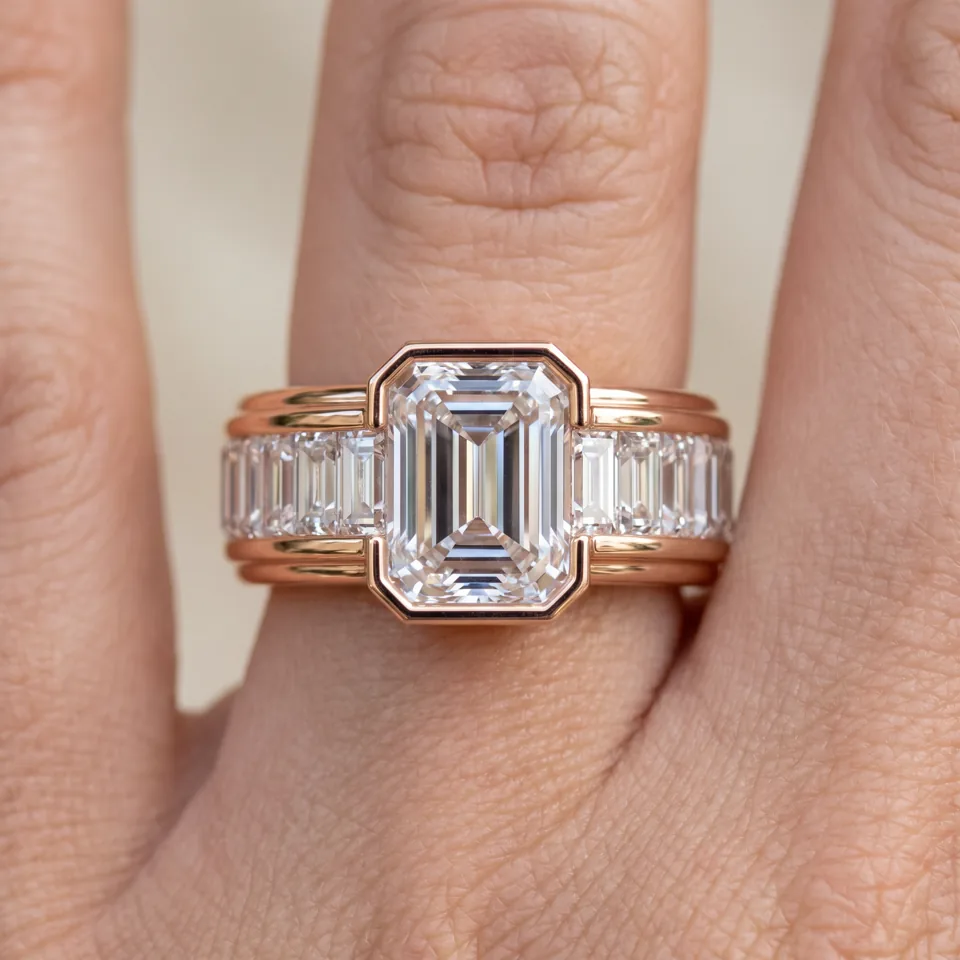 Emerald Cut Bezel Engagement Rings
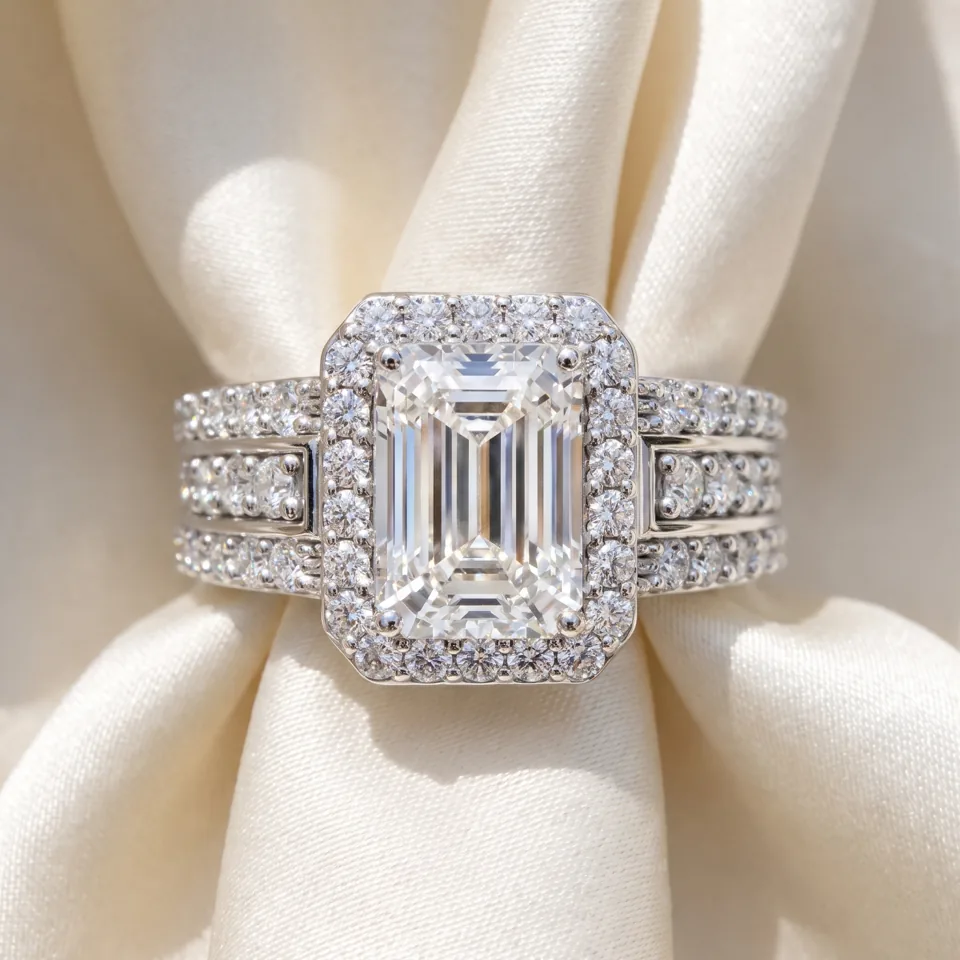 Antique Emerald Cut Engagement Rings
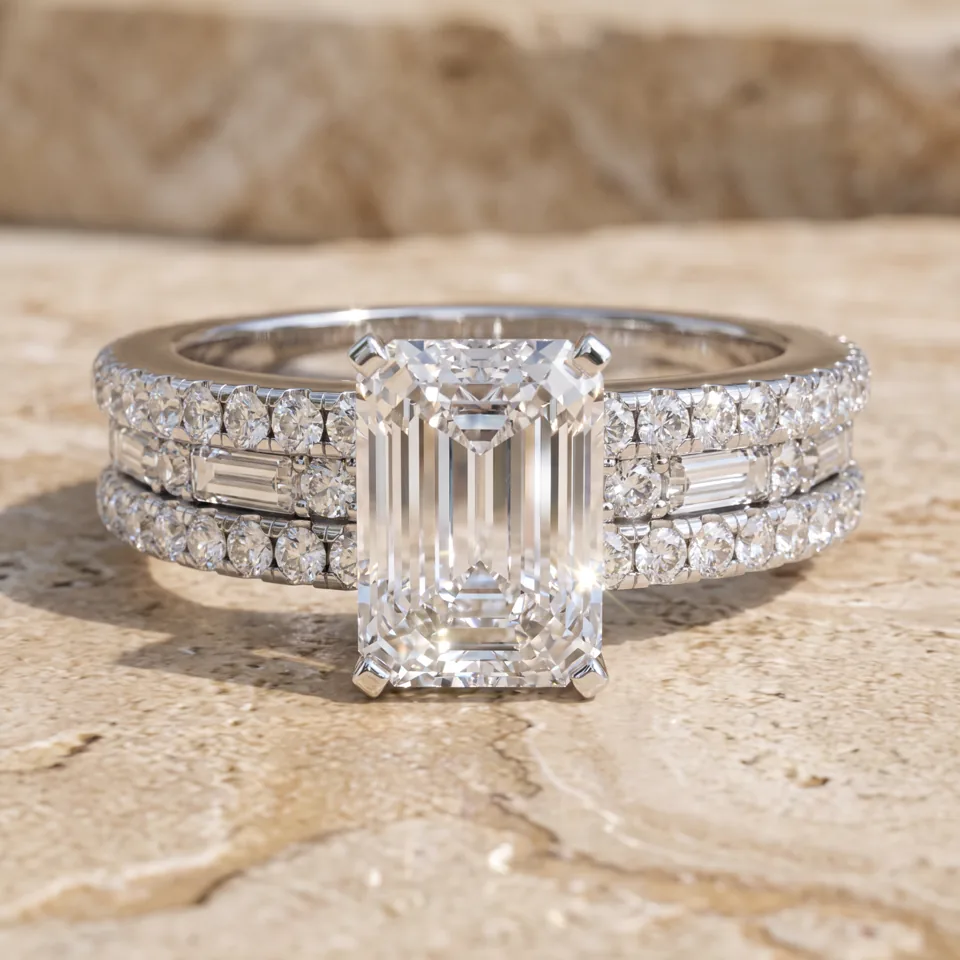 Emerald Cut Diamond Rings with Baguettes
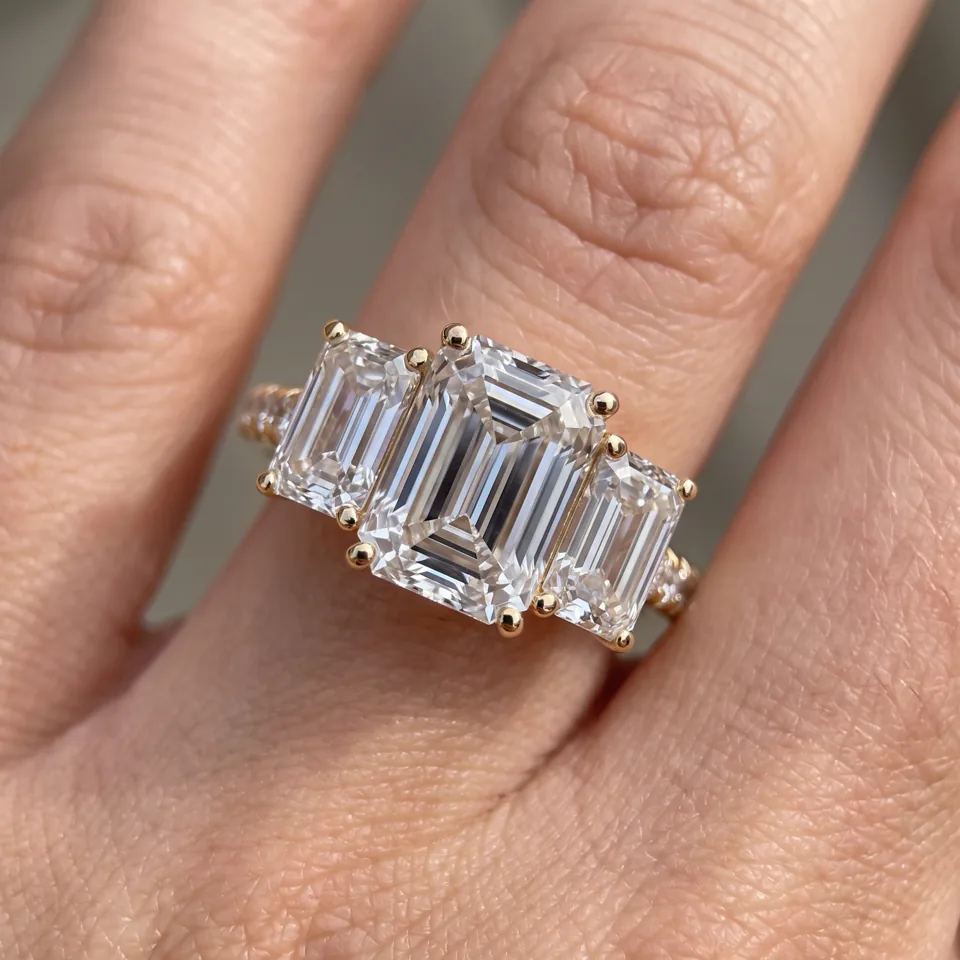 Emerald Cut Three Stone Engagement Rings
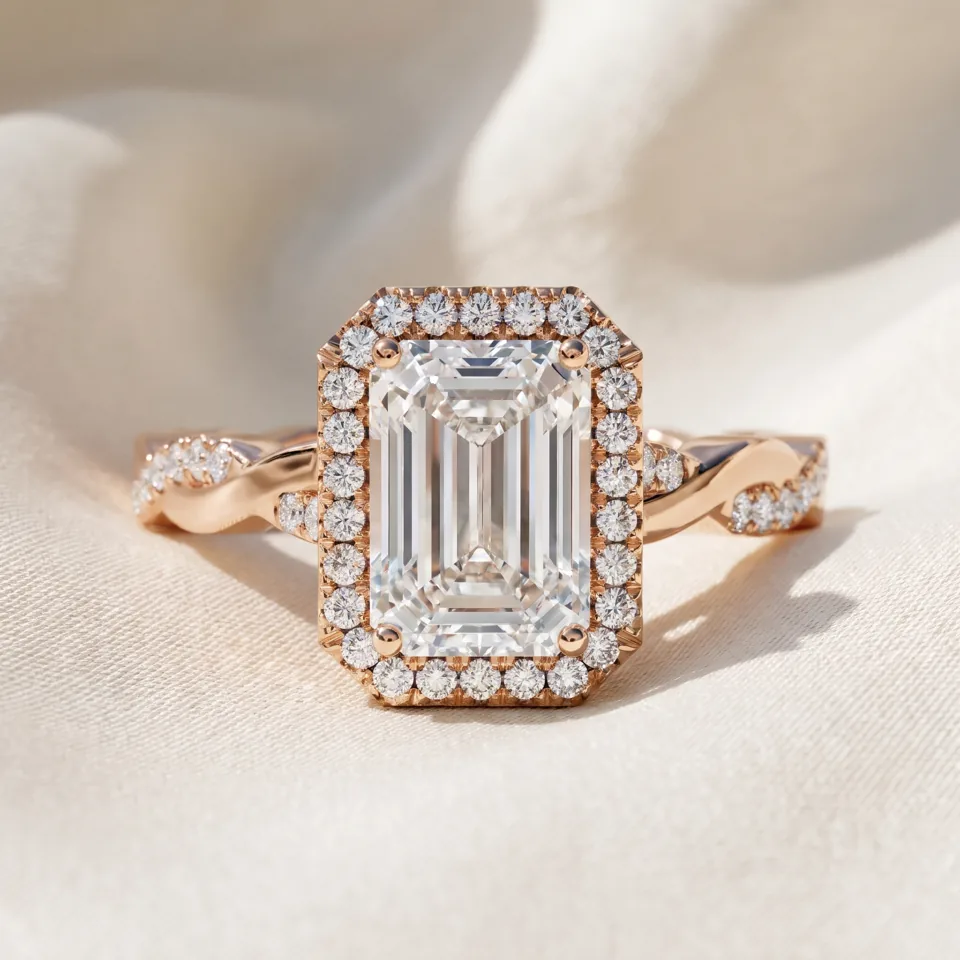 Emerald Cut Halo Engagement Rings
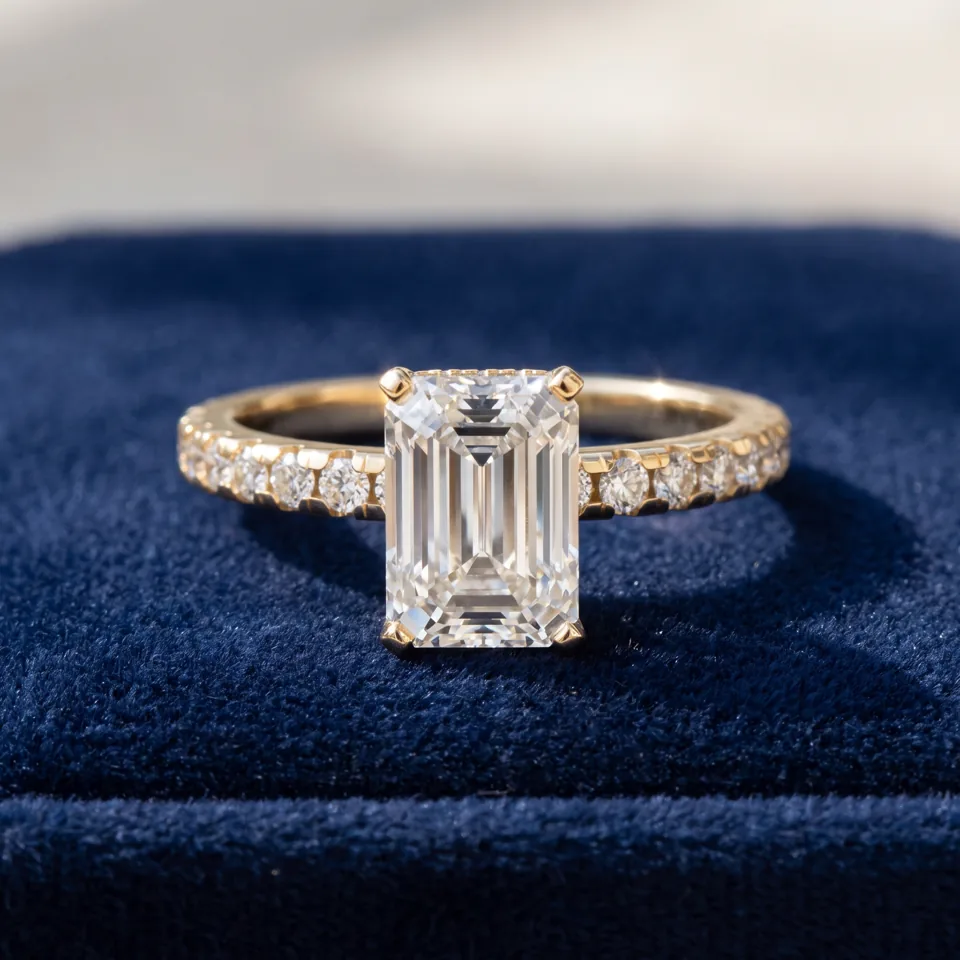 Emerald Cut Hidden Halo Engagement Rings
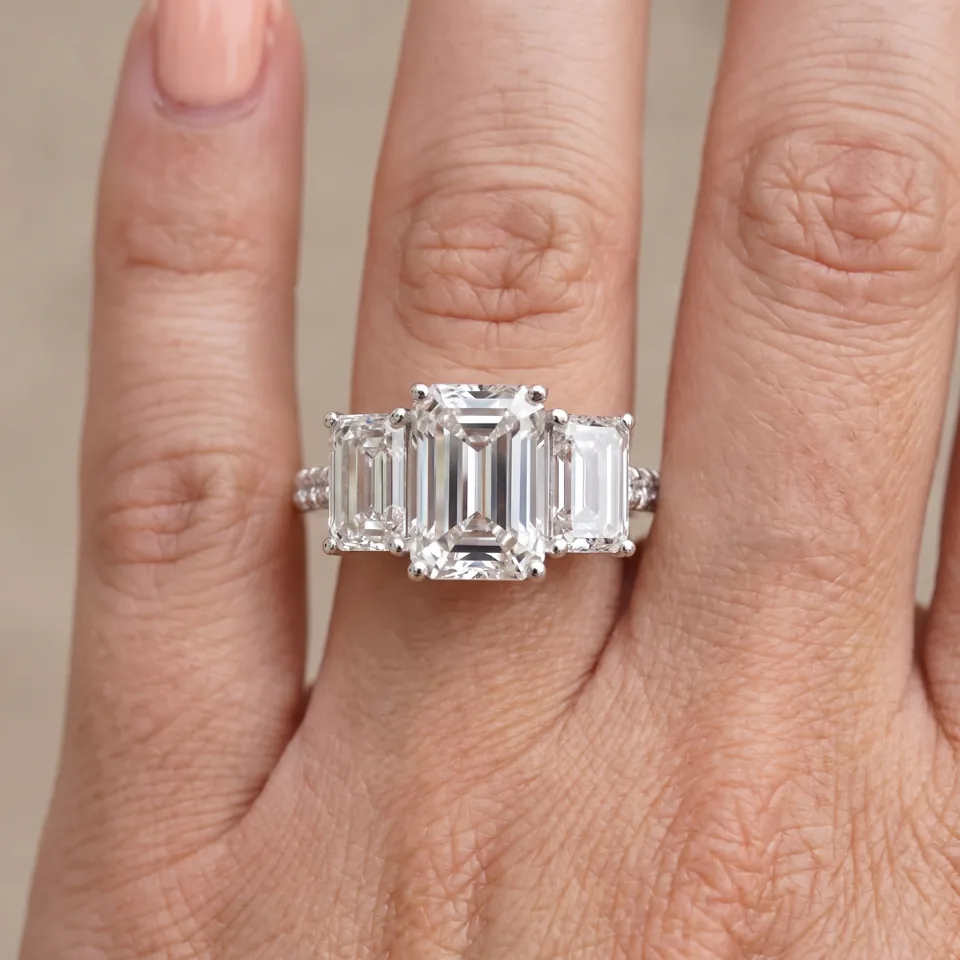 Emerald Cut Engagement Rings with Side Stones
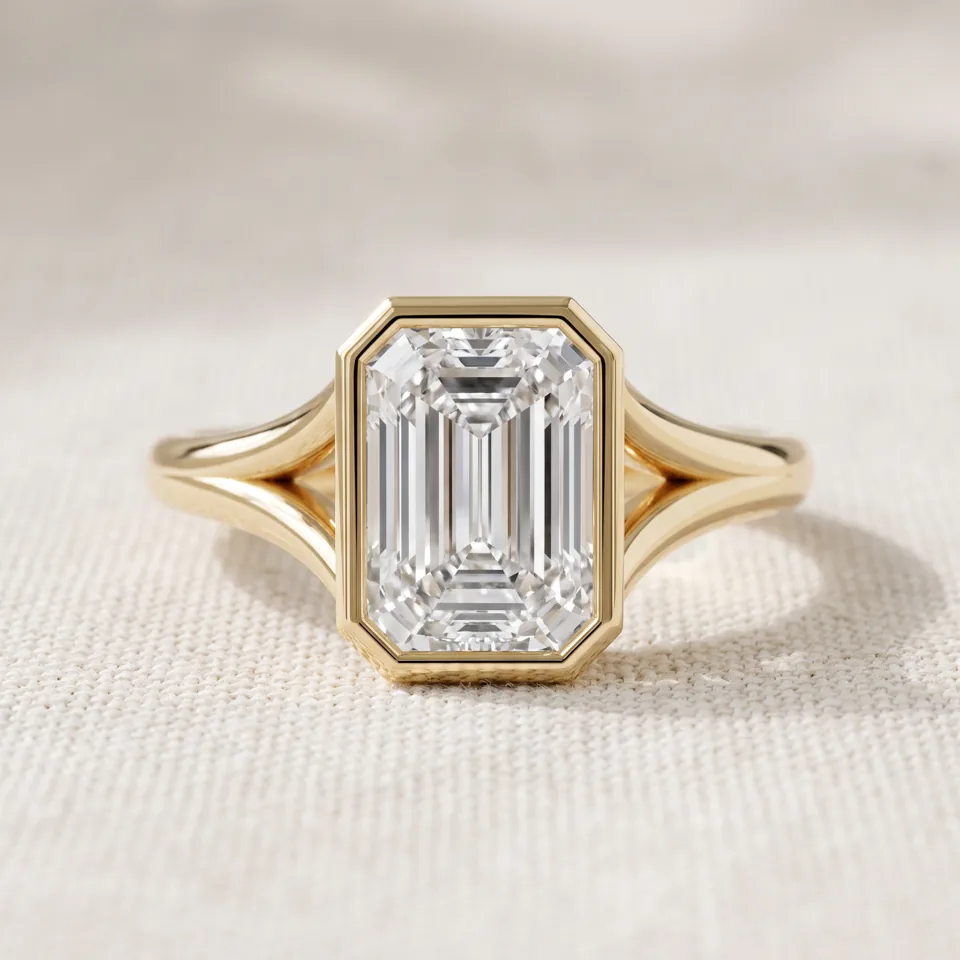 Emerald Cut Split Shank Engagement Rings
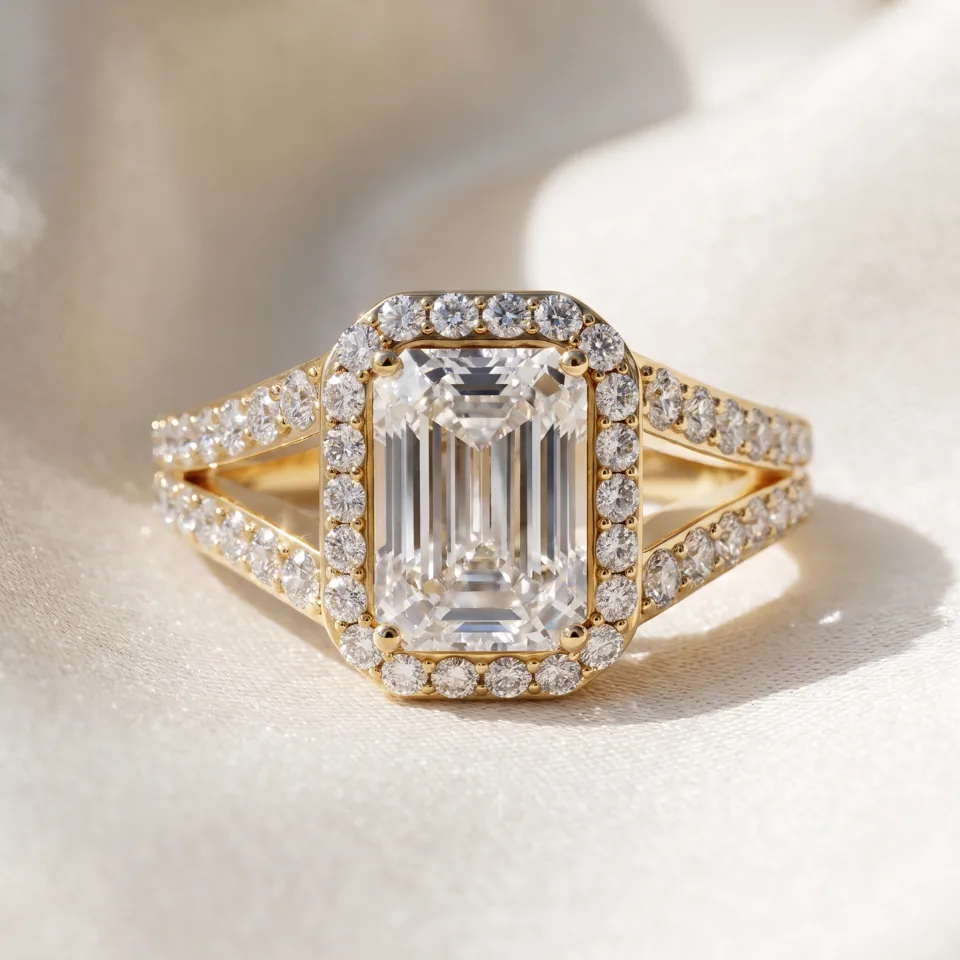 Emerald Cut Pave Engagement Rings
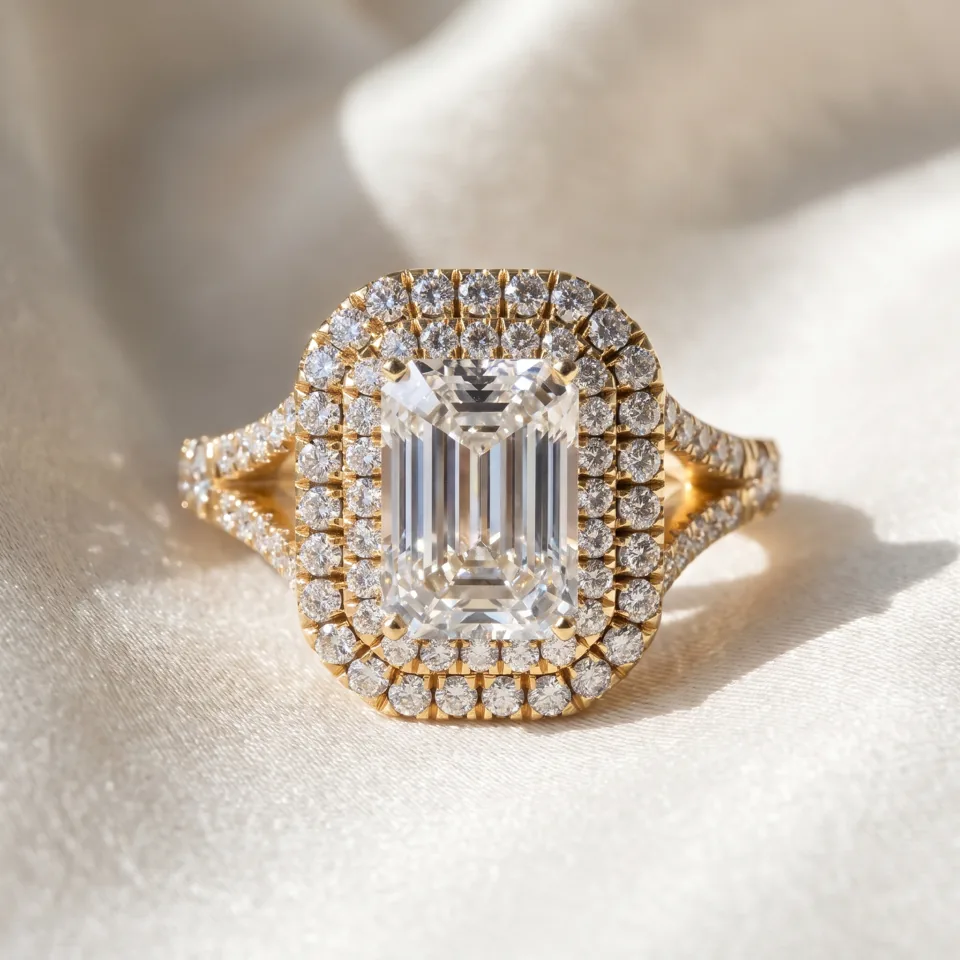 Emerald Cut Double Halo Rings
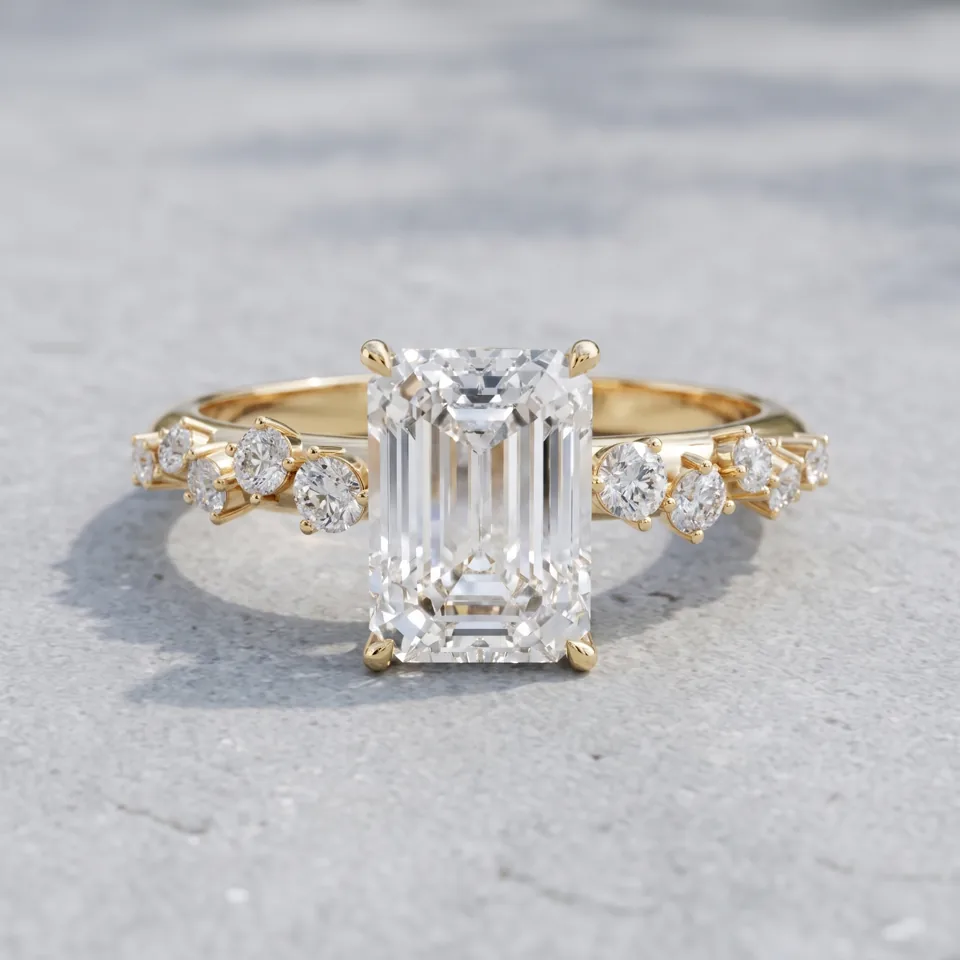 Emerald Cut Cluster Engagement Rings
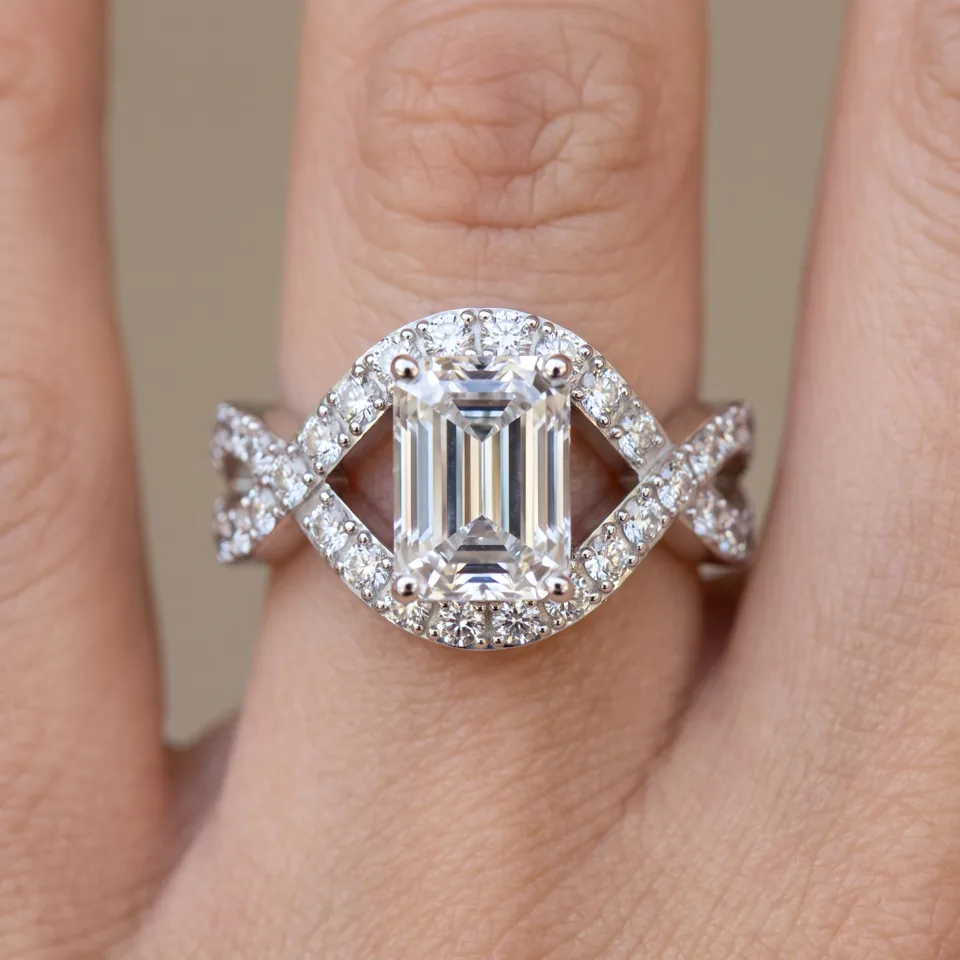 Emerald Cut Infinity Rings
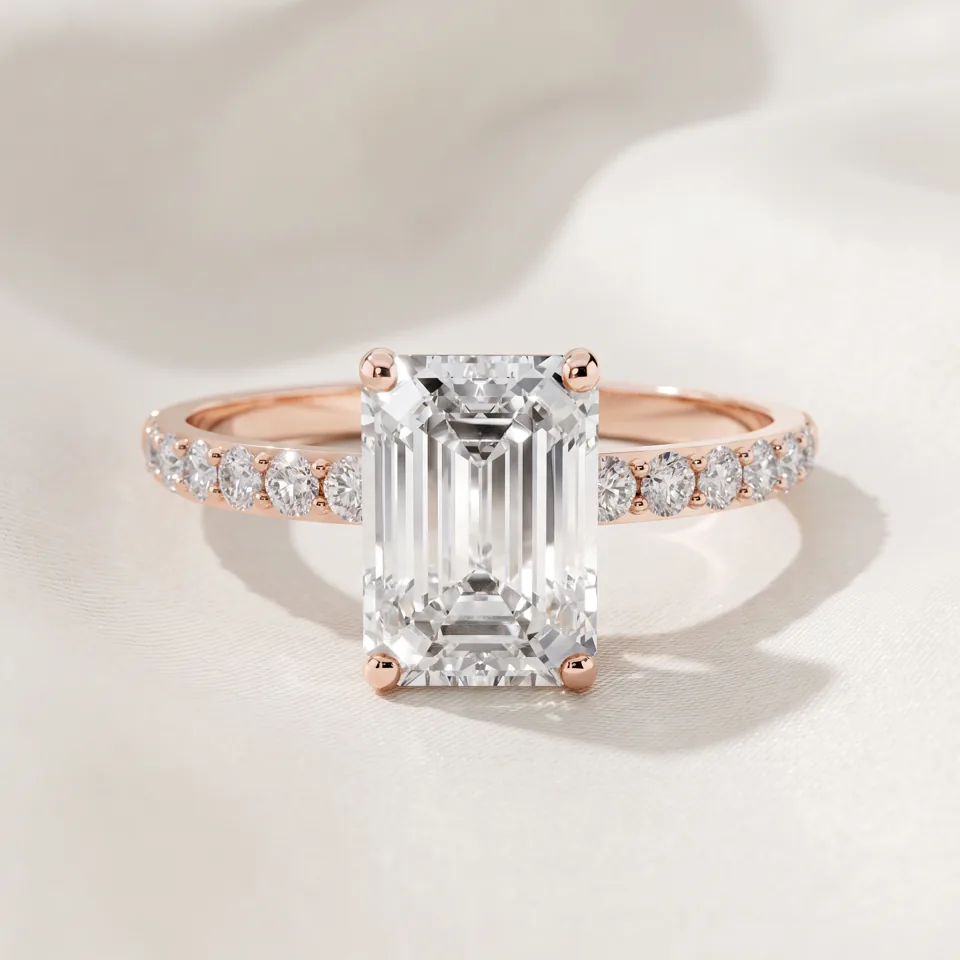 2 Carat Emerald Cut Lab-Grown Diamond Rings
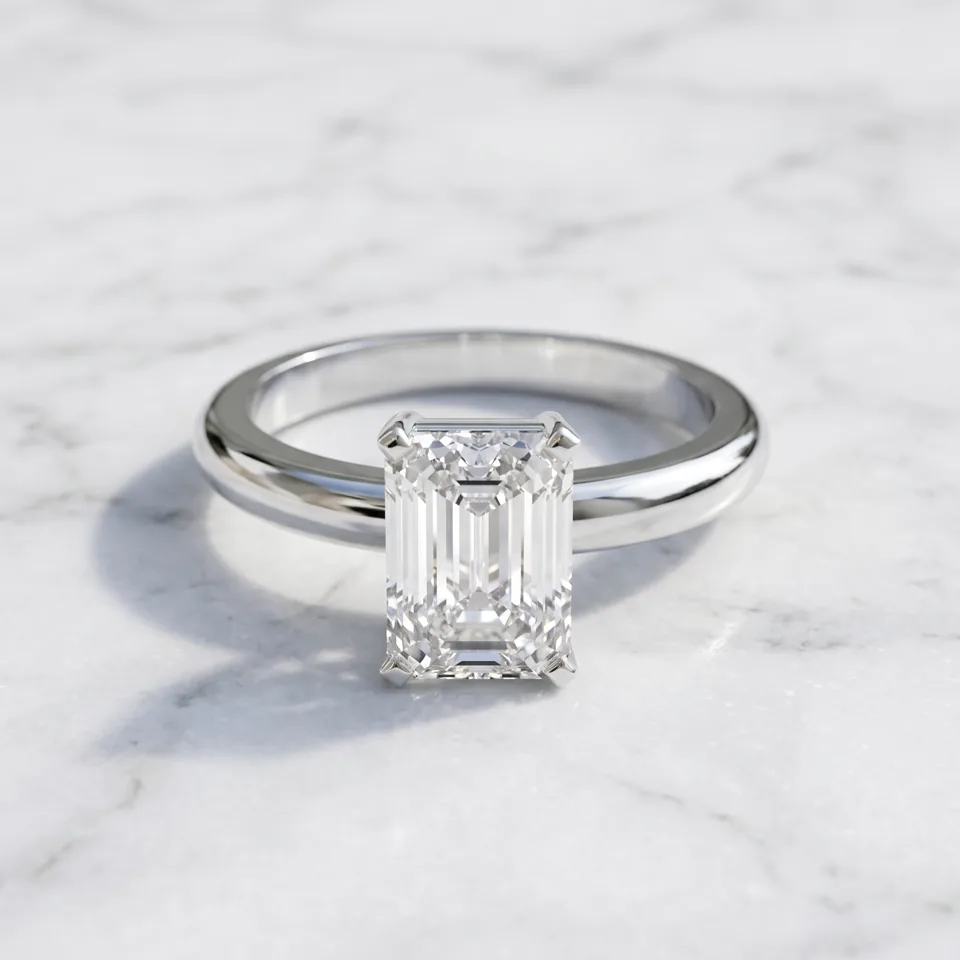 3 Carat Emerald Cut Lab-Grown Diamond Rings
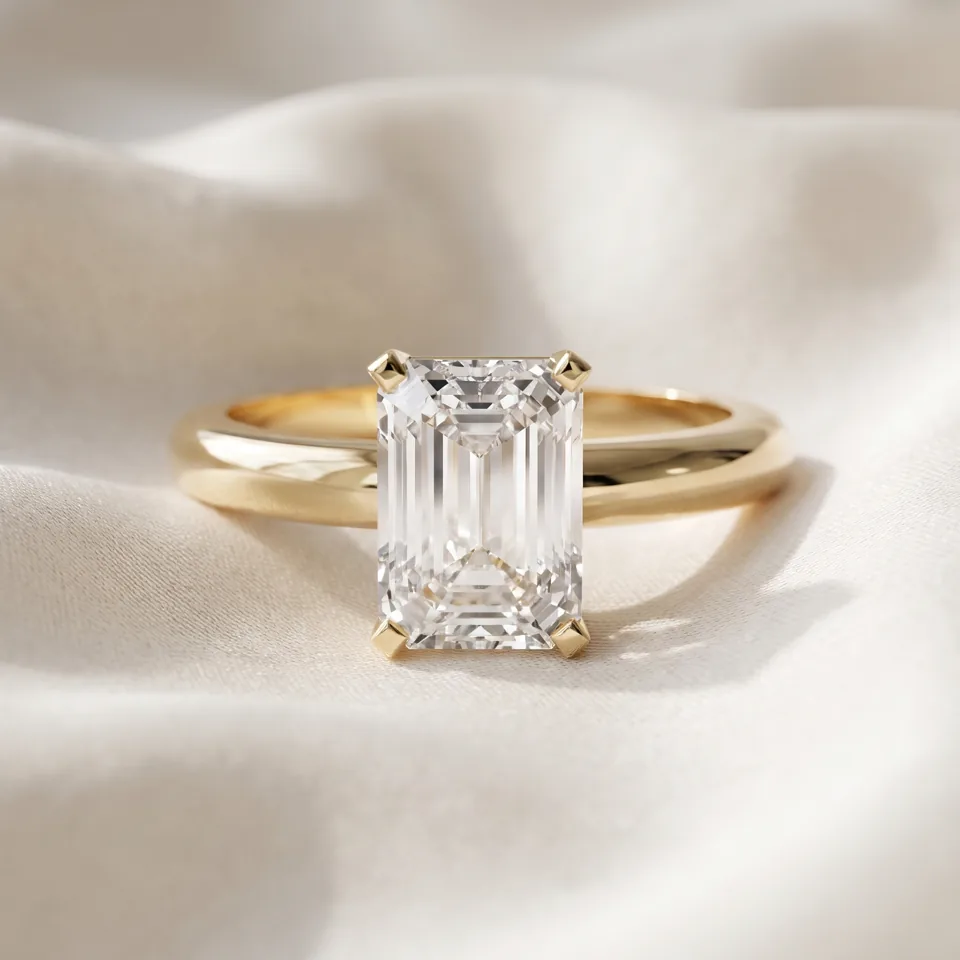 4 Carat Emerald Cut Lab-Grown Diamond Rings
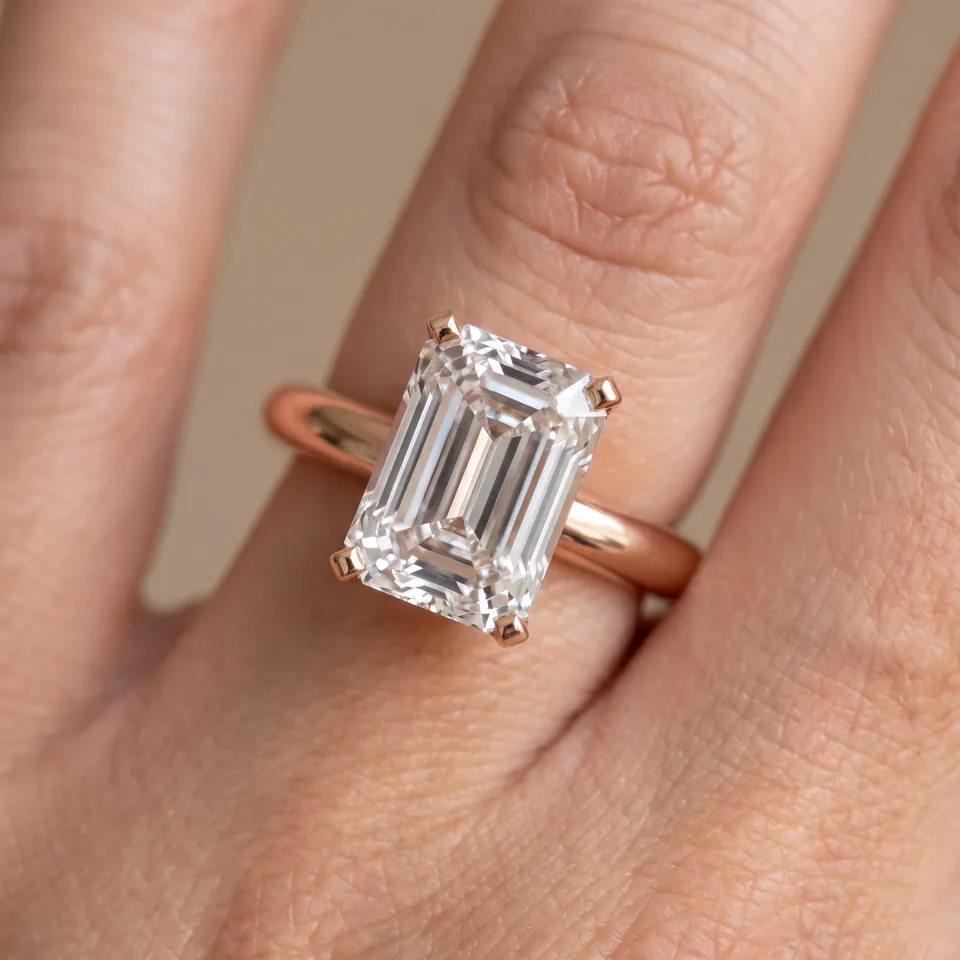 1.5 Carat Emerald Cut Lab-Grown Diamond Rings
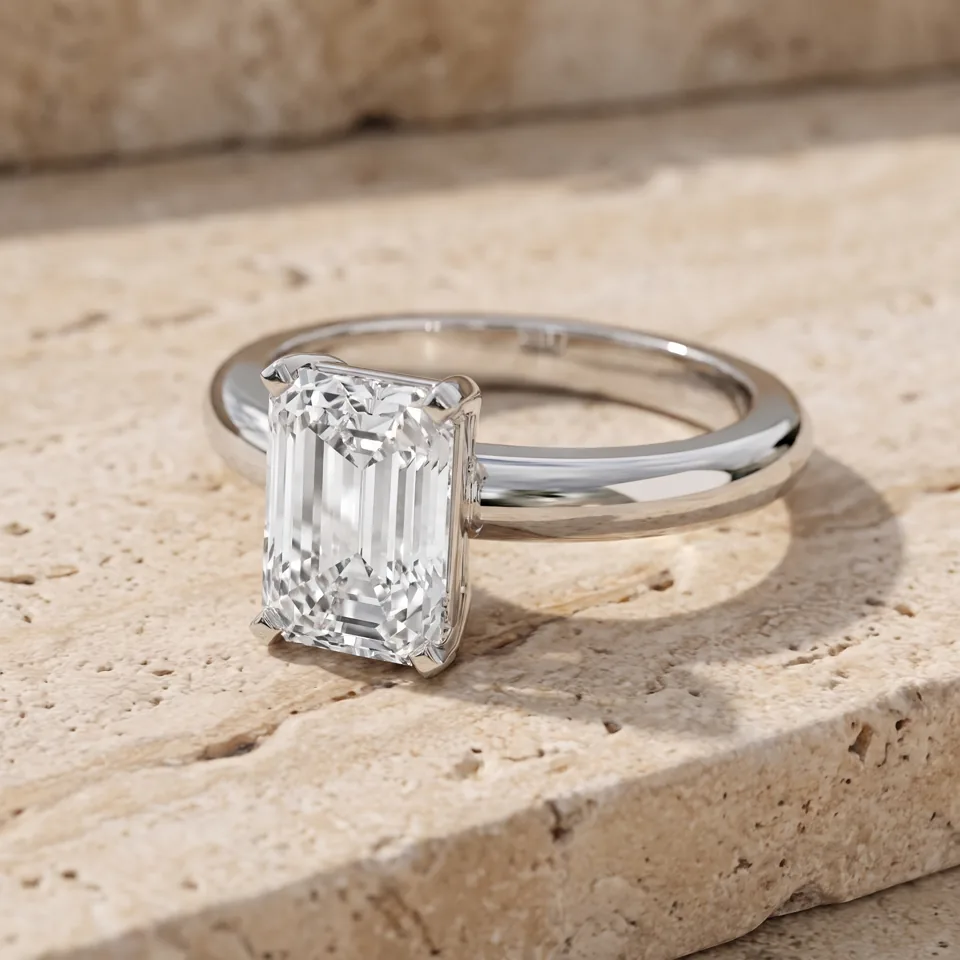 6 Carat Emerald Cut Lab-Grown Diamond Rings
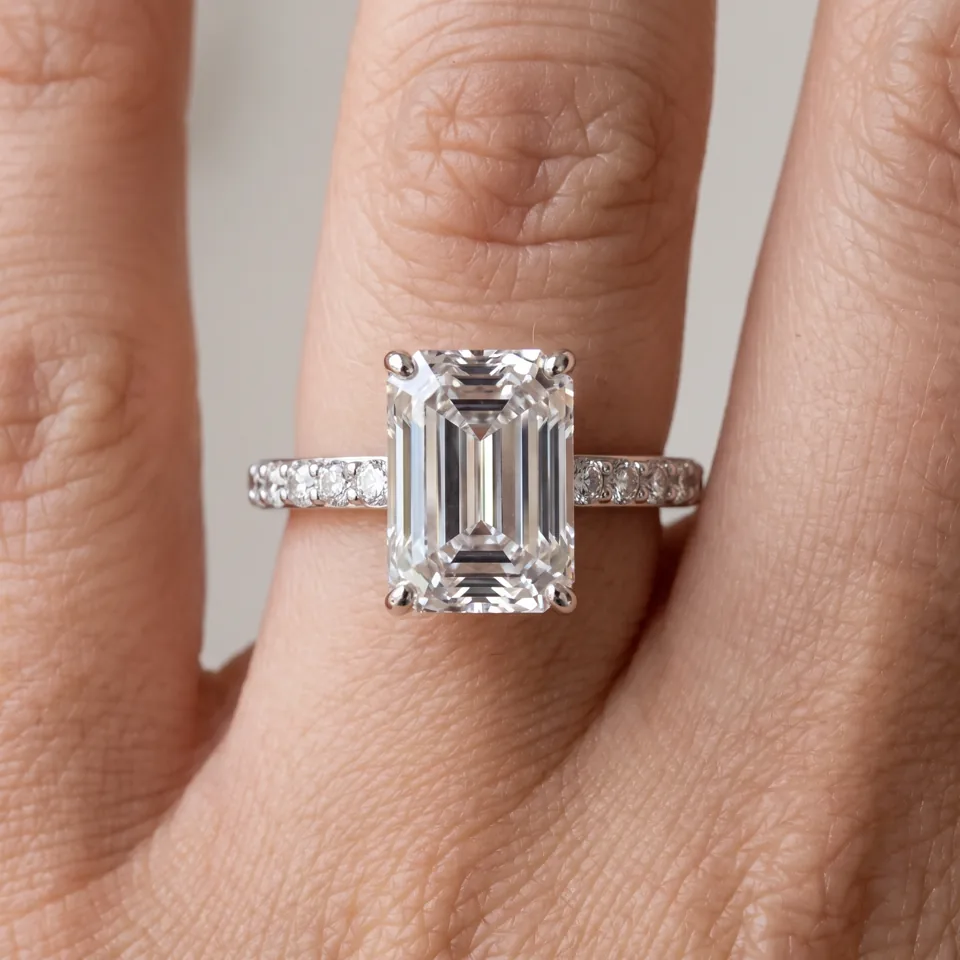 2.5 Carat Emerald Cut Lab-Grown Diamond Rings
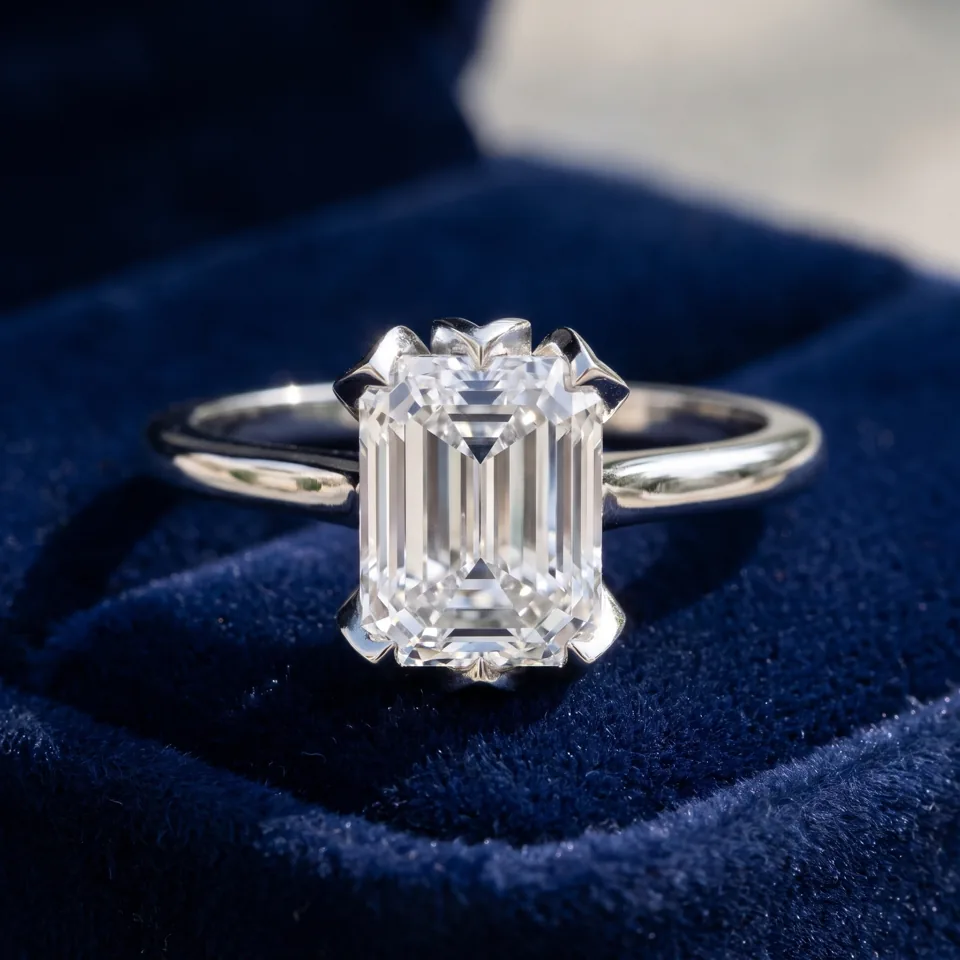 Sterling Silver Emerald Cut Engagement Rings
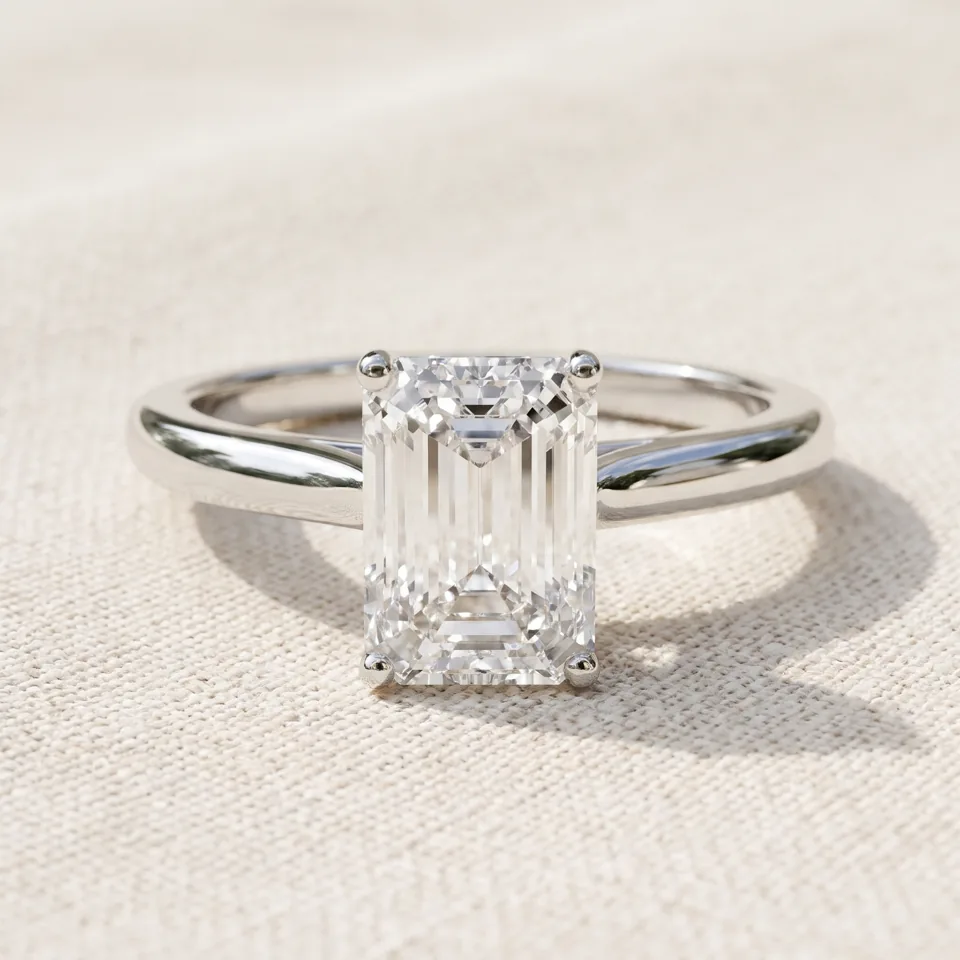 Emerald Cut Cathedral Engagement Rings
Light leaves an emerald cut in wide, slow flashes, unlike the busy glitter of a round brilliant. A solitaire lets those clean steps speak for themselves. Laboratory-grown diamond accents, run along a pavé band or ringed around the center as a halo, add glitter for anyone who wants more shine, and a hidden halo tucks that extra light under the stone so the top view stays simple.
Three stone designs flank the emerald cut diamond ring with a pair of smaller stones, which repeats its step-cut look when the side stones are baguettes. Some settings use marquise or pear side stones for a softer outline. Graduated lab-grown diamond accents that shrink toward the back of the band pull the eye up to the center.
Nearly all designs offer white, yellow and rose gold, each at a karat of your choice: 10K, 14K or 18K. Platinum is offered too. Platinum and white gold make a colorless center read icier; the warm golds tint it a touch, which can flatter a center with a hint of color. Our diamond color chart explains how color shows in step cuts. Silvadium, a tarnish-resistant sterling silver, costs least, though silver is softer and better for lighter wear.
Step cuts have a large open table, so inclusions and body color show more than in brilliant cuts. Our diamond clarity chart shows which grades stay clean to the eye in each cut. When you pick the center, lean toward higher clarity grades and look at the length-to-width ratio: around 1.4 gives the classic rectangle, 1.3 looks squarer, and 1.5 looks longer and slimmer on the hand. Our diamond shapes guide sets it beside the other shapes.
We build your setting once you order, which takes 10–15 days, and send it by insured shipping, with free return shipping too. The center diamond arrives with its IGI or GIA report. Returns are open for 30 days if the ring is unworn and the certificate is included, and one resize costs nothing within 60 days of delivery.
An emerald cut belongs to the step-cut family: rows of long, parallel facets descend its sides like stairs. That produces wide flashes and a deep, mirror-like look often called a hall of mirrors, instead of busy sparkle. Its rectangular face also covers more area when viewed from the top than an equal-weight round, and it works in both clean solitaires and detailed vintage settings.
Most emerald cut settings at Whitemoon cost about $850 to $1,150, and a few start under $150. You pay for the center separately once you choose it, so carat weight and grades drive most of the final total. Platinum and 18K gold settings cost more than 10K or 14K gold or silver.
Usually not. An emerald cut is generally priced below a round diamond of similar grades, carat for carat, because cutting it wastes less of the rough crystal. Since inclusions show more clearly through its open table, many buyers move up a clarity grade, which narrows the savings. Its long outline also looks larger than its weight suggests, so a slightly lighter stone can still look generous.
They do sparkle, just differently. An emerald cut has fewer, larger facets arranged in steps, so it returns light in wide, bright flashes rather than the many small sparkles of a round brilliant. In low light it can look calm and glassy. Framing it with pavé or a ring of tiny lab-grown diamond accents brings in extra glitter if you want color and sparkle together.
Neither wins outright; it comes down to taste. Both have a rectangular outline with trimmed corners, but a radiant has brilliant-style facets that throw far more sparkle and hide small inclusions well. An emerald cut has step facets that look sleek and architectural and show clarity more openly. Choose emerald for a clean, vintage feel and radiant for maximum shine.


