Complimentary insured shipping, both waysEngagement ring diamonds certified by IGI or GIAGrown by light. Conflict-free by natureComplimentary insured shipping, both ways
Engagement RingsWedding BandsEarrings

NecklaceBraceletsAbout
Every heart ring on this page is a setting shaped to hold a heart center, and you pick that center in a later step. Solitaires, halos, pavé bands and three stone designs are all on offer, and most can also hold a pink, yellow, blue or green center.
Pick the setting style and metal first. The price shown covers the setting alone; your heart-shaped center is added and priced once you select it.
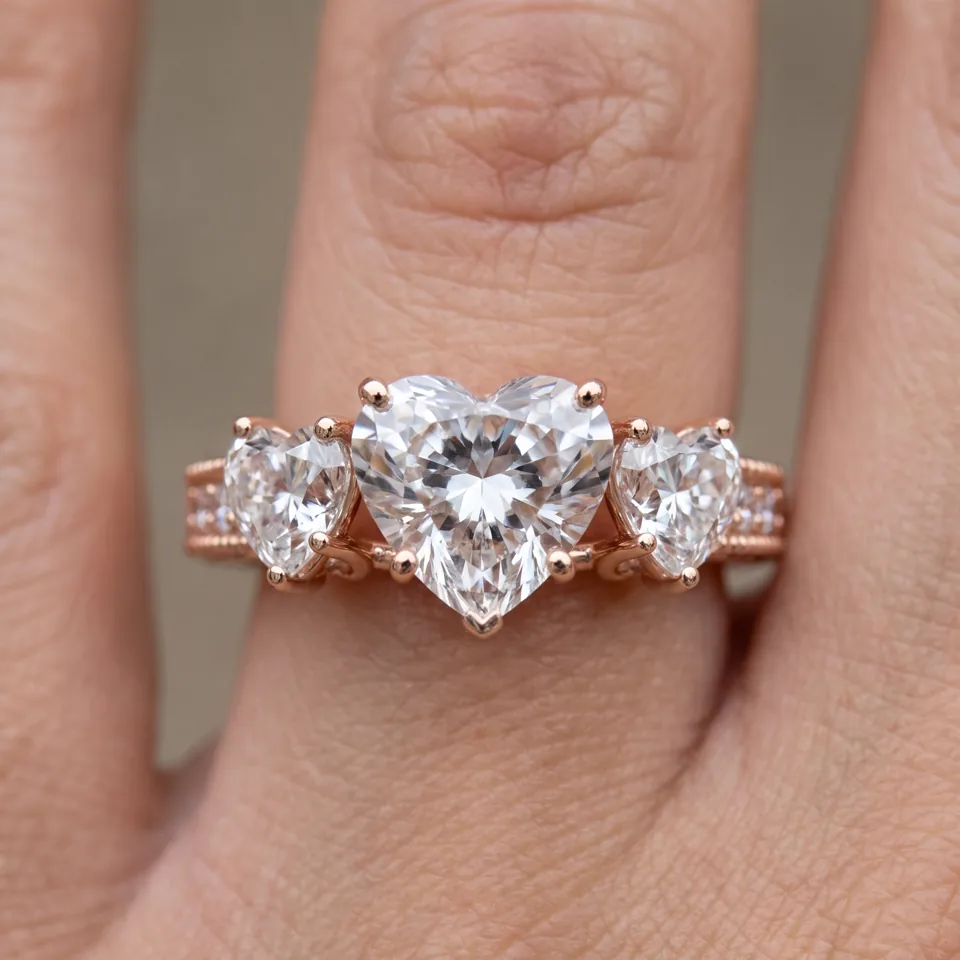 Vintage Heart Rings
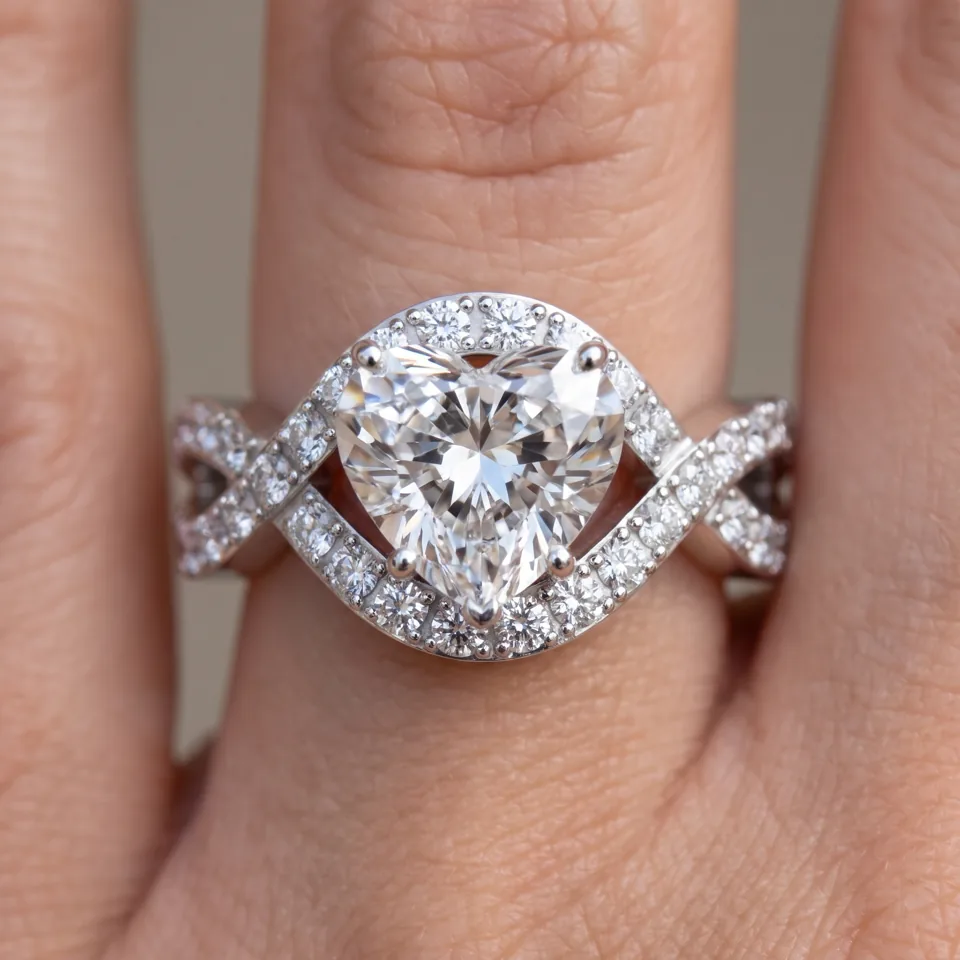 Heart Infinity Rings
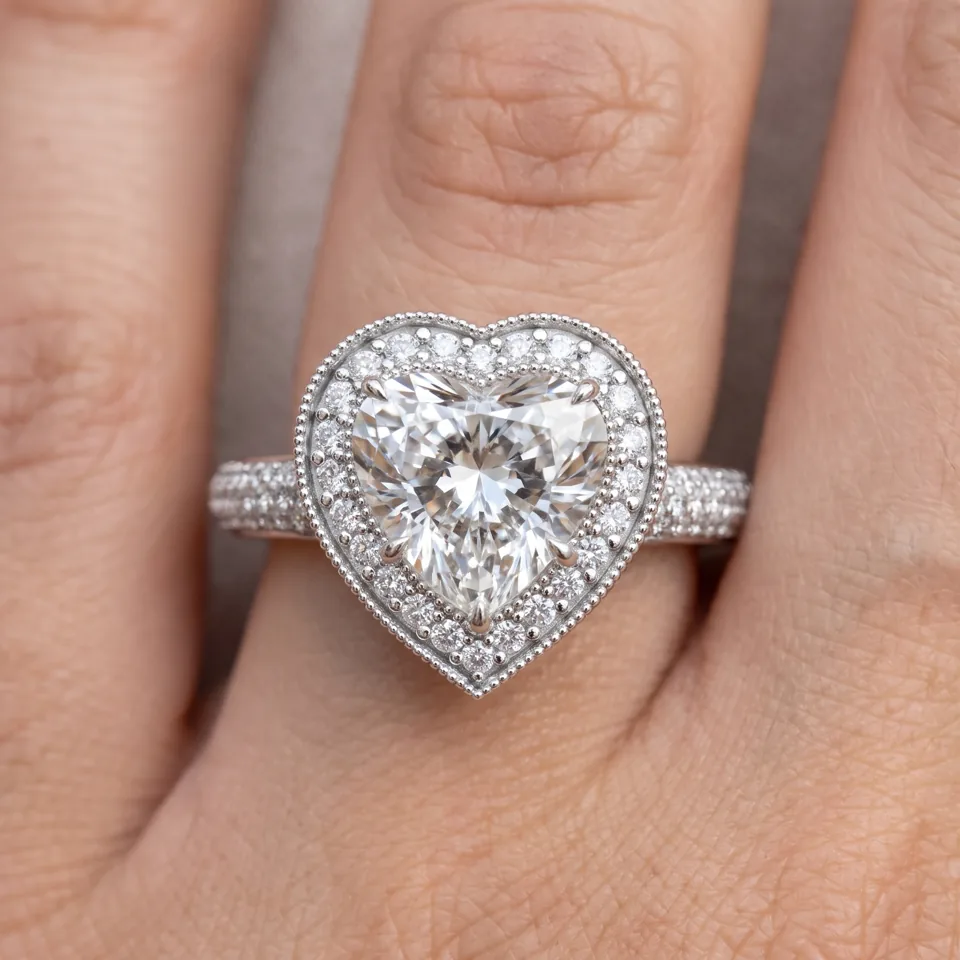 Heart Halo Rings
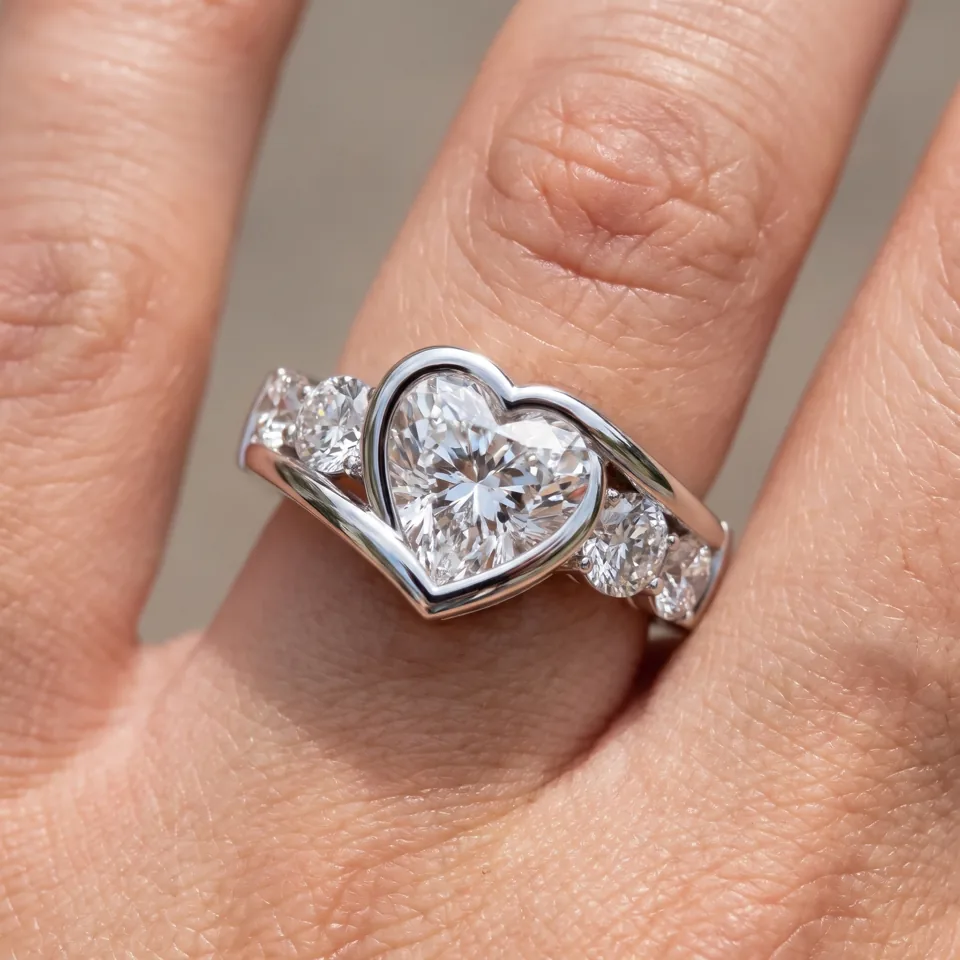 Heart Bezel Rings
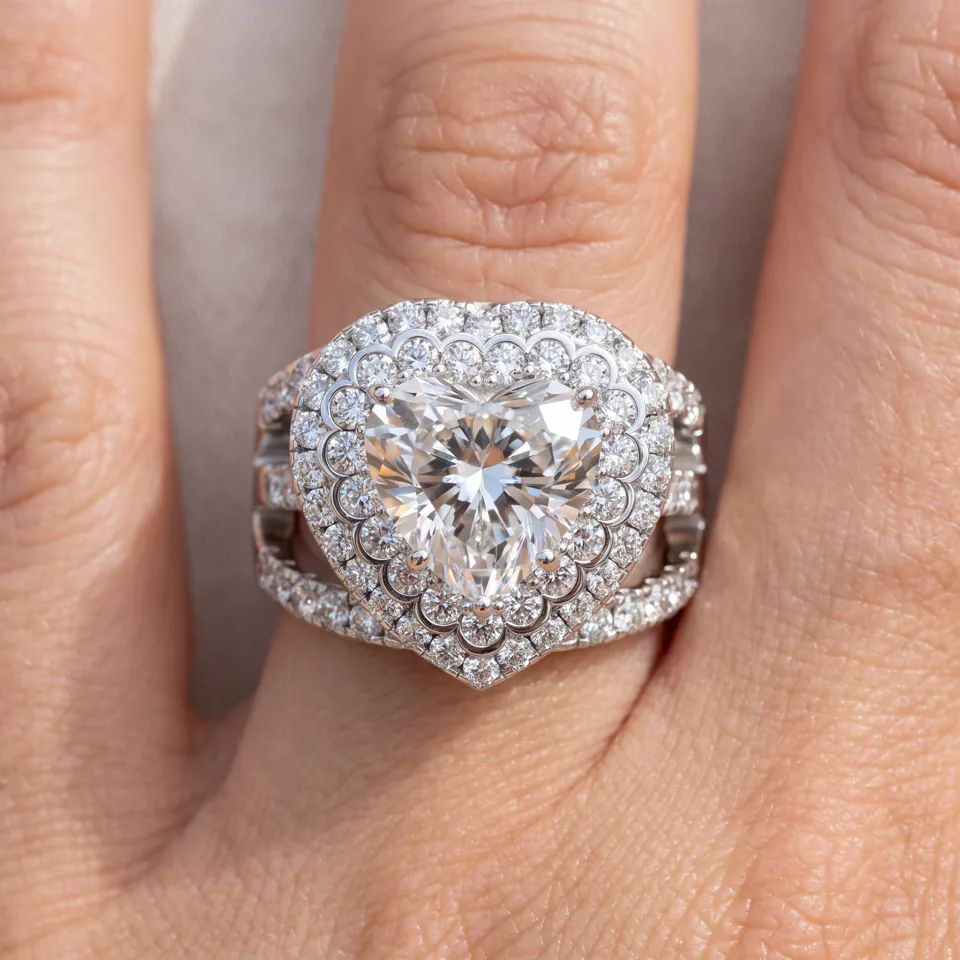 Double Halo Heart Rings
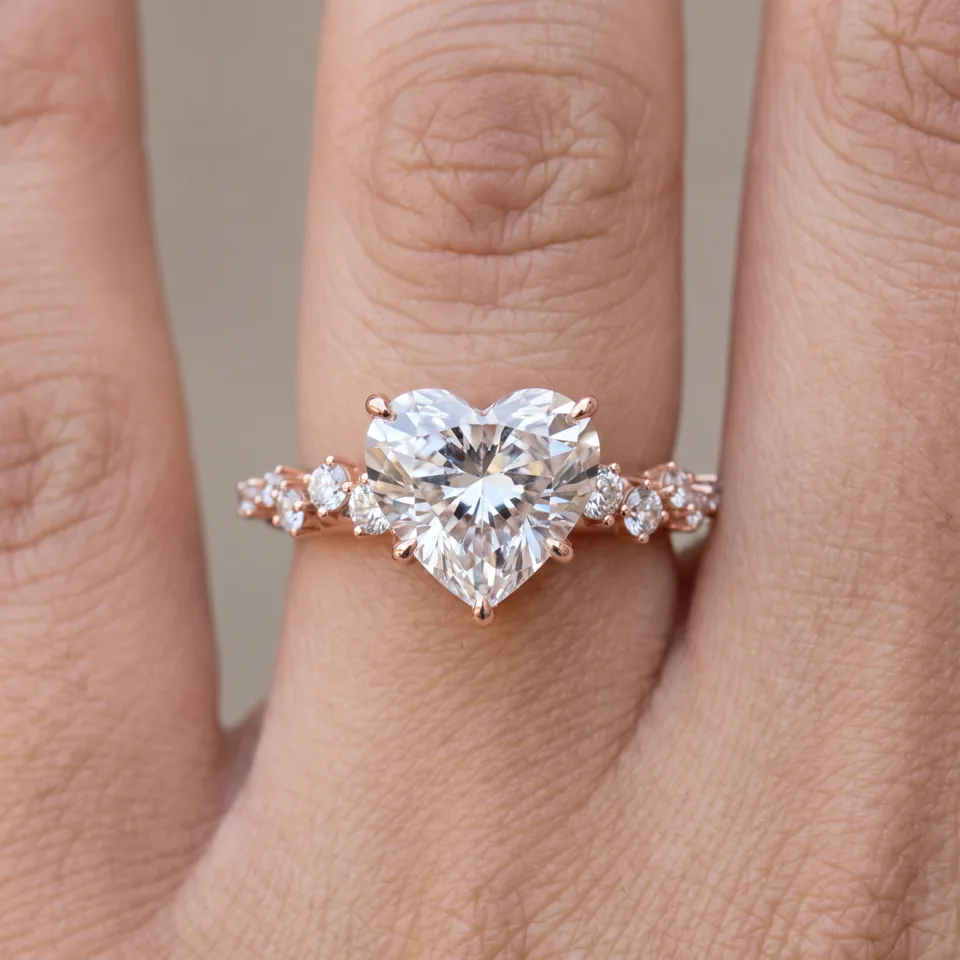 Heart Cluster Rings
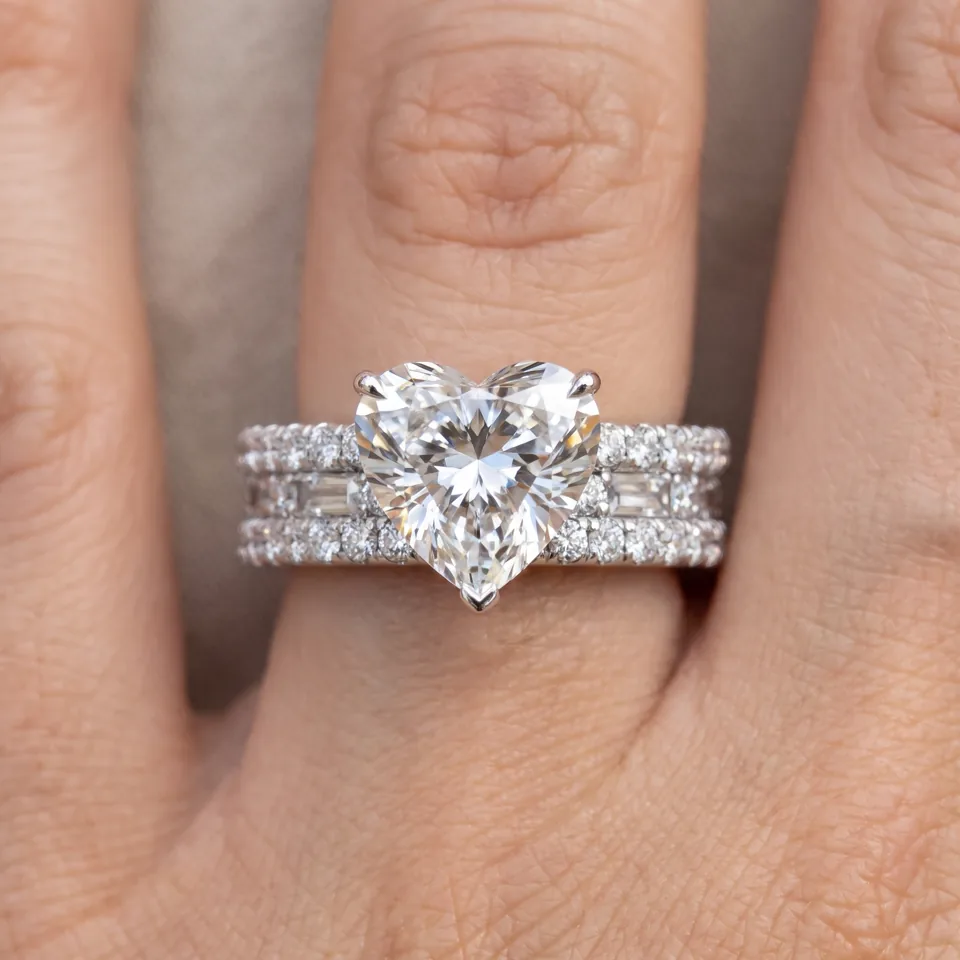 Heart Rings with Baguette Side Stones
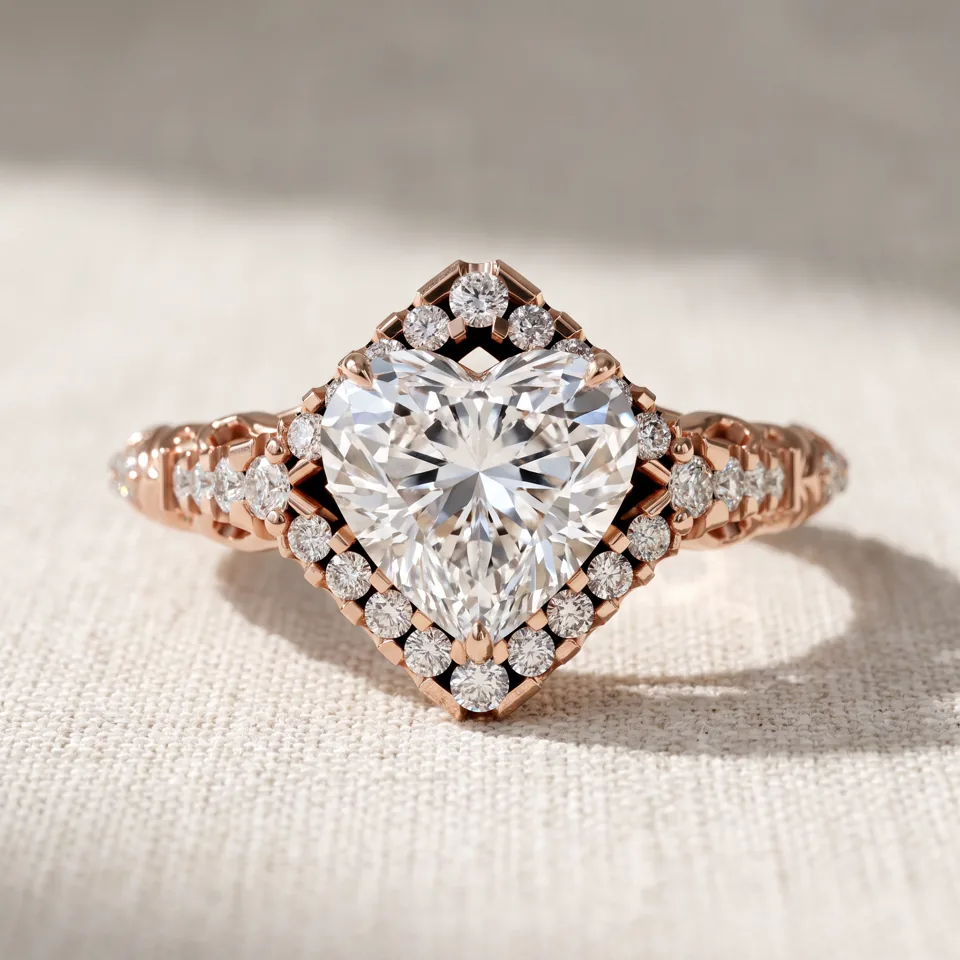 Filigree Heart Rings
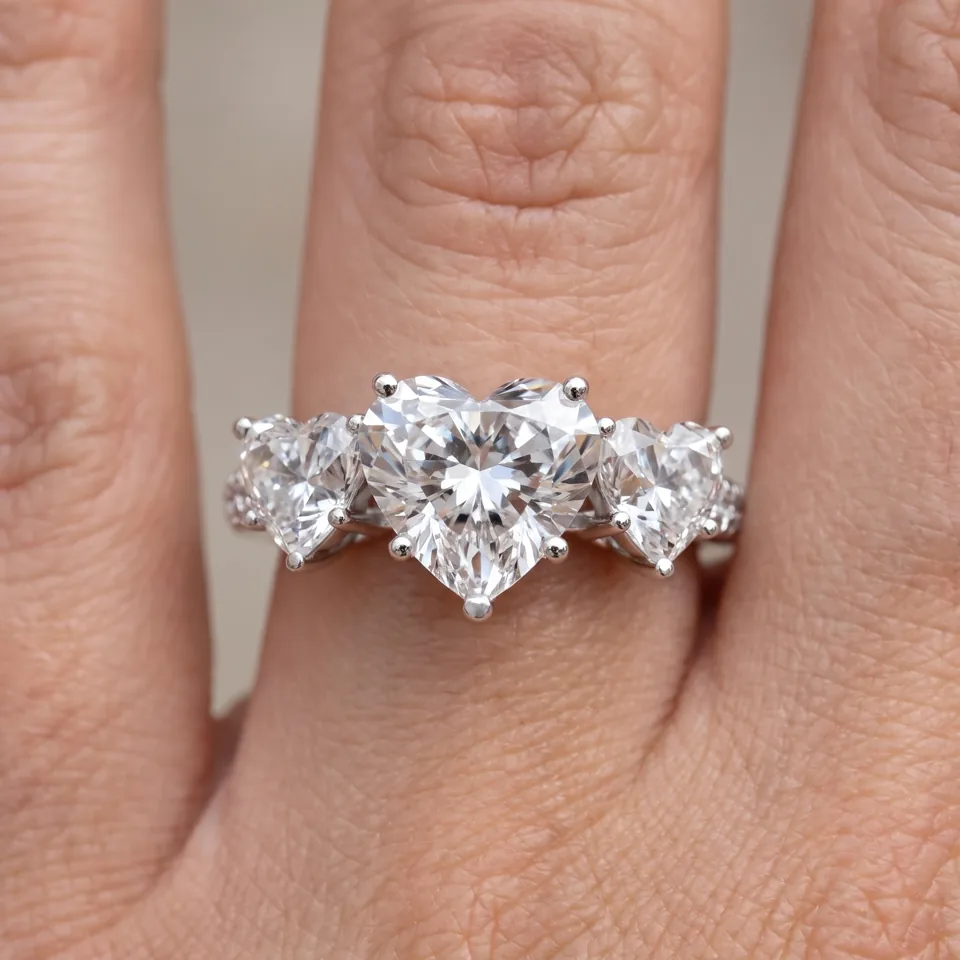 Heart Three Stone Rings
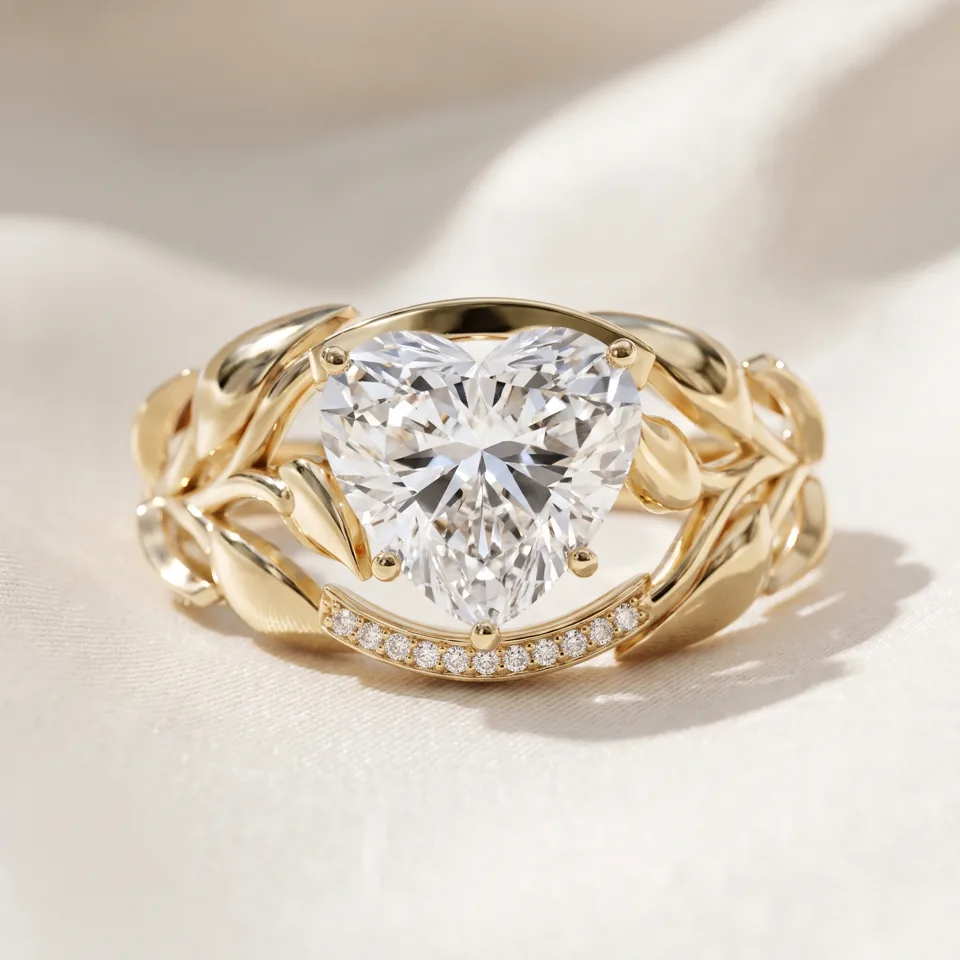 Heart Bypass Rings
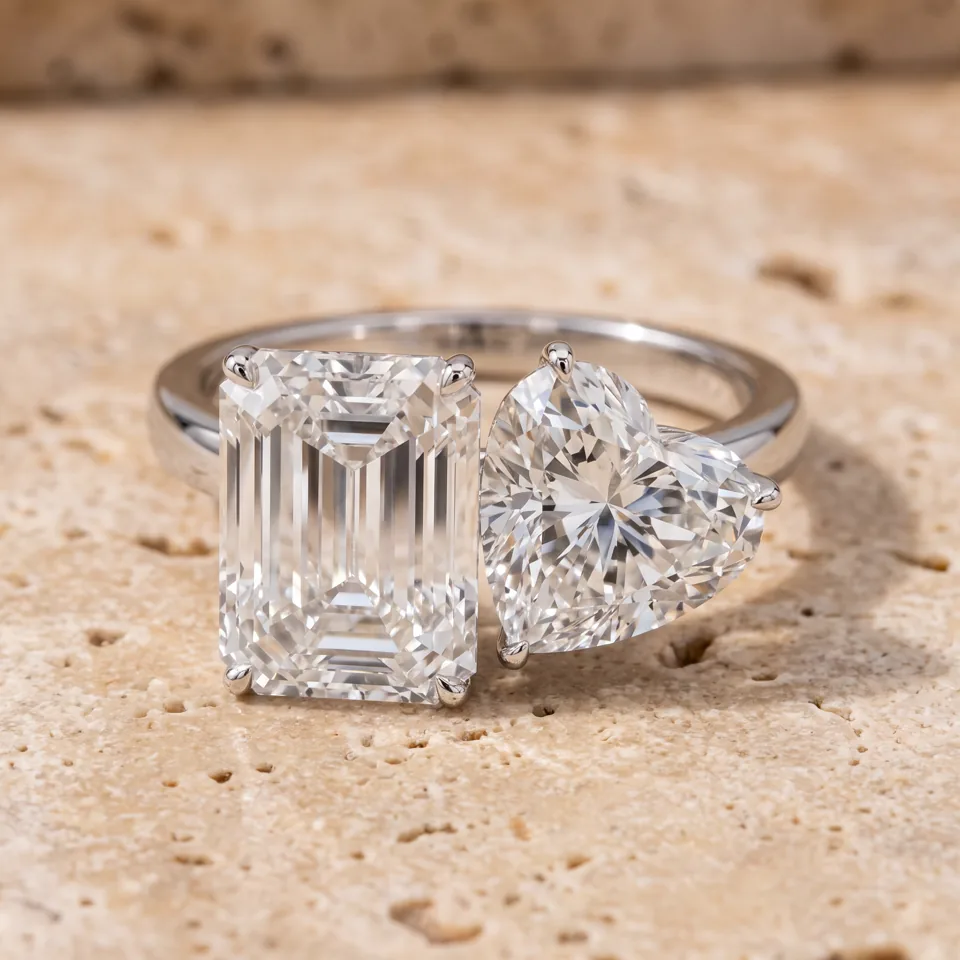 Heart Toi et Moi Rings
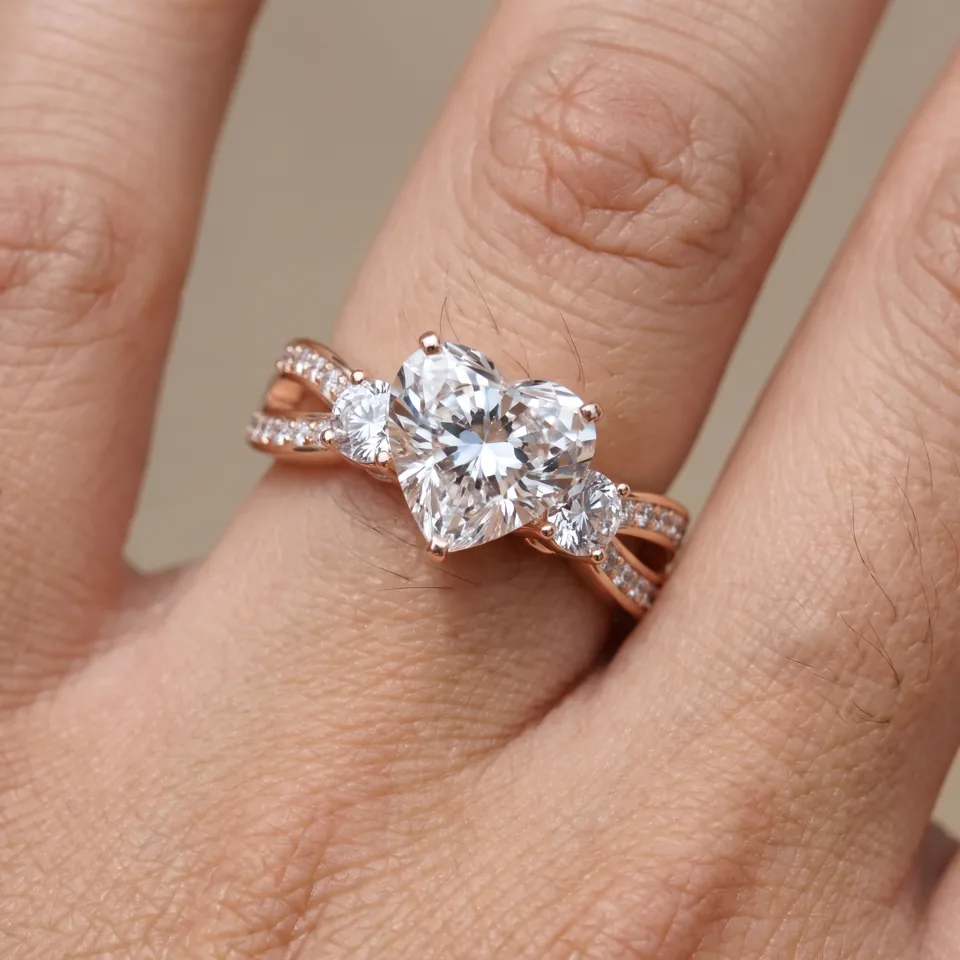 Twisted Heart Rings
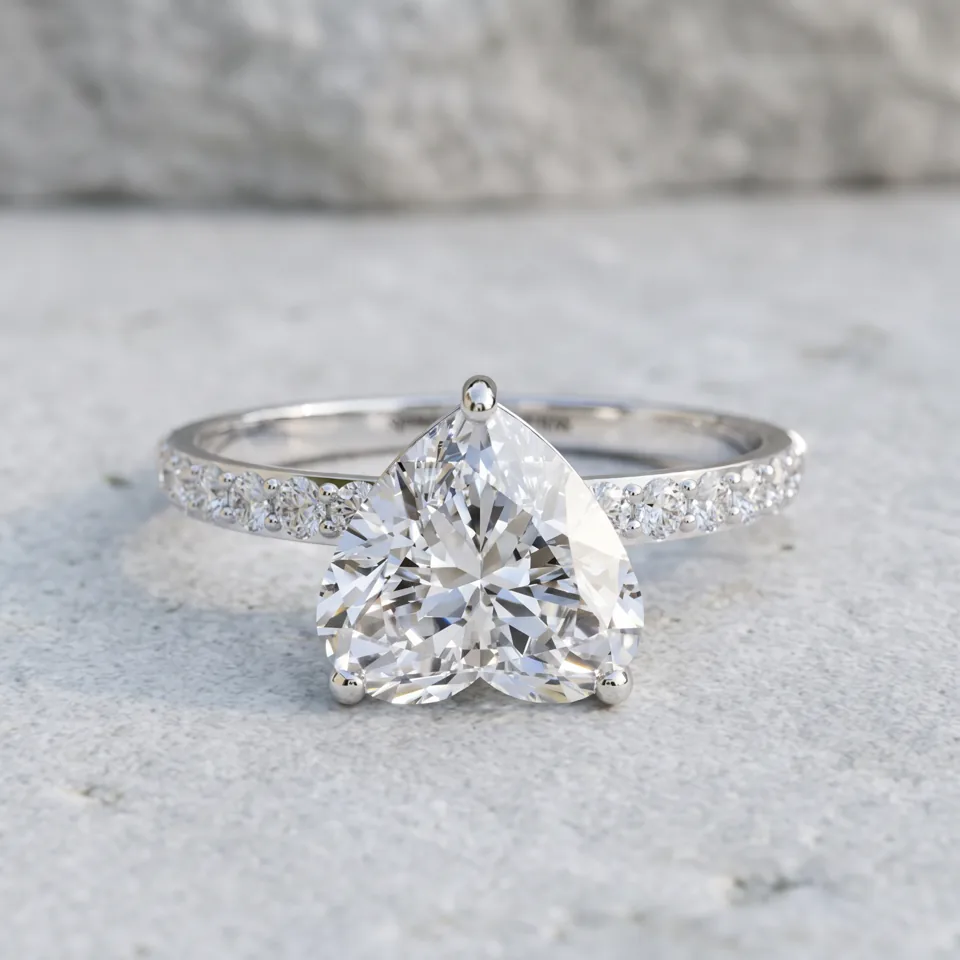 White Gold Heart Rings
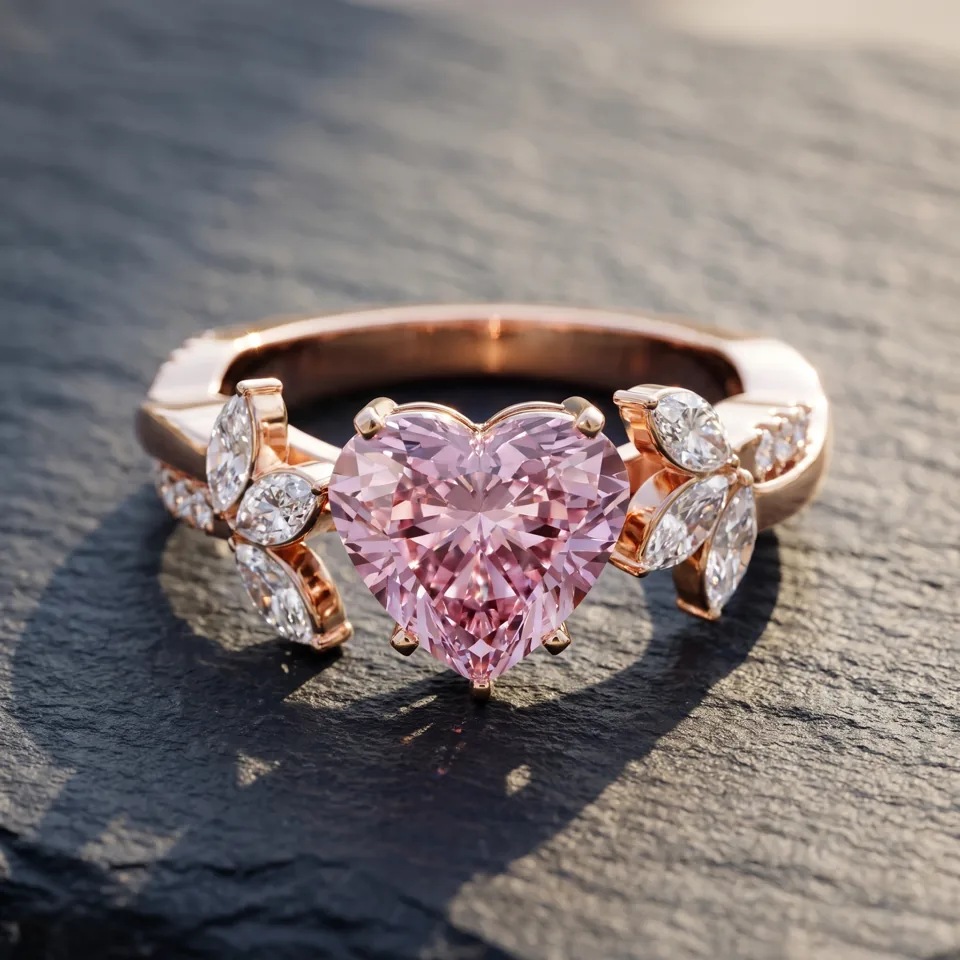 Pink Diamond Heart Rings
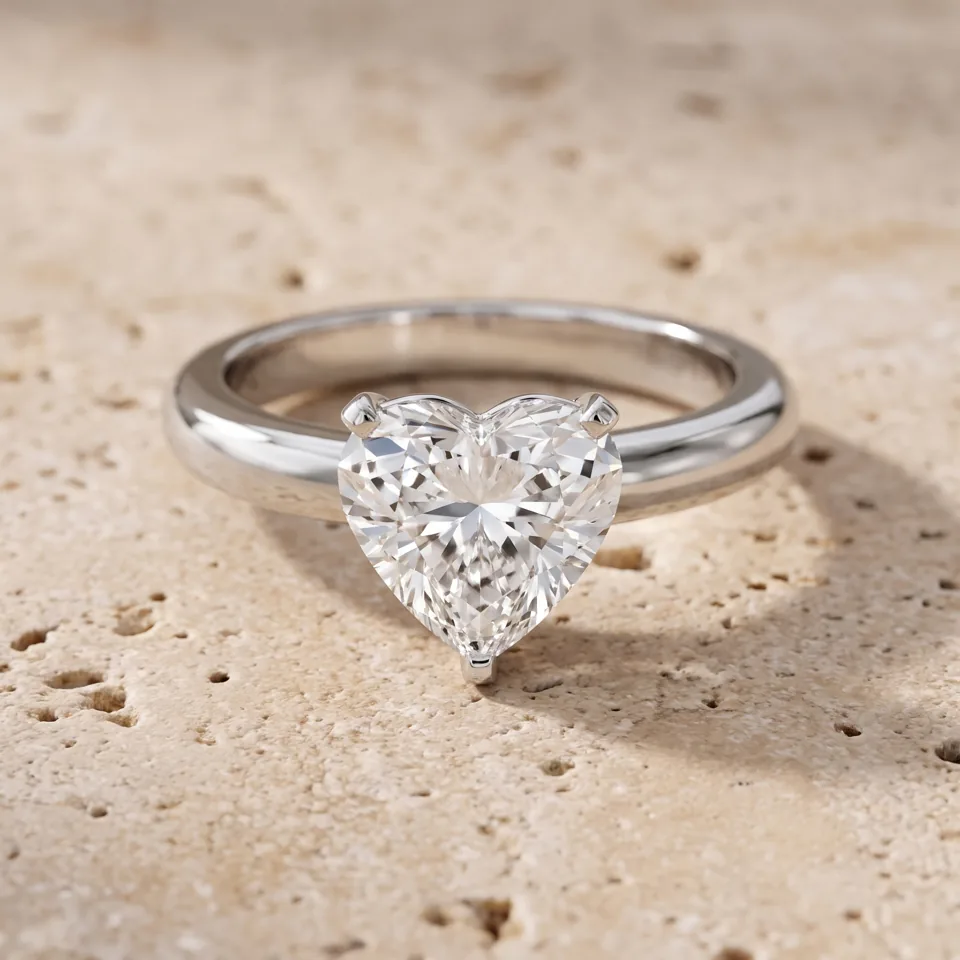 1 Carat Heart Shaped Lab-Grown Diamond Rings
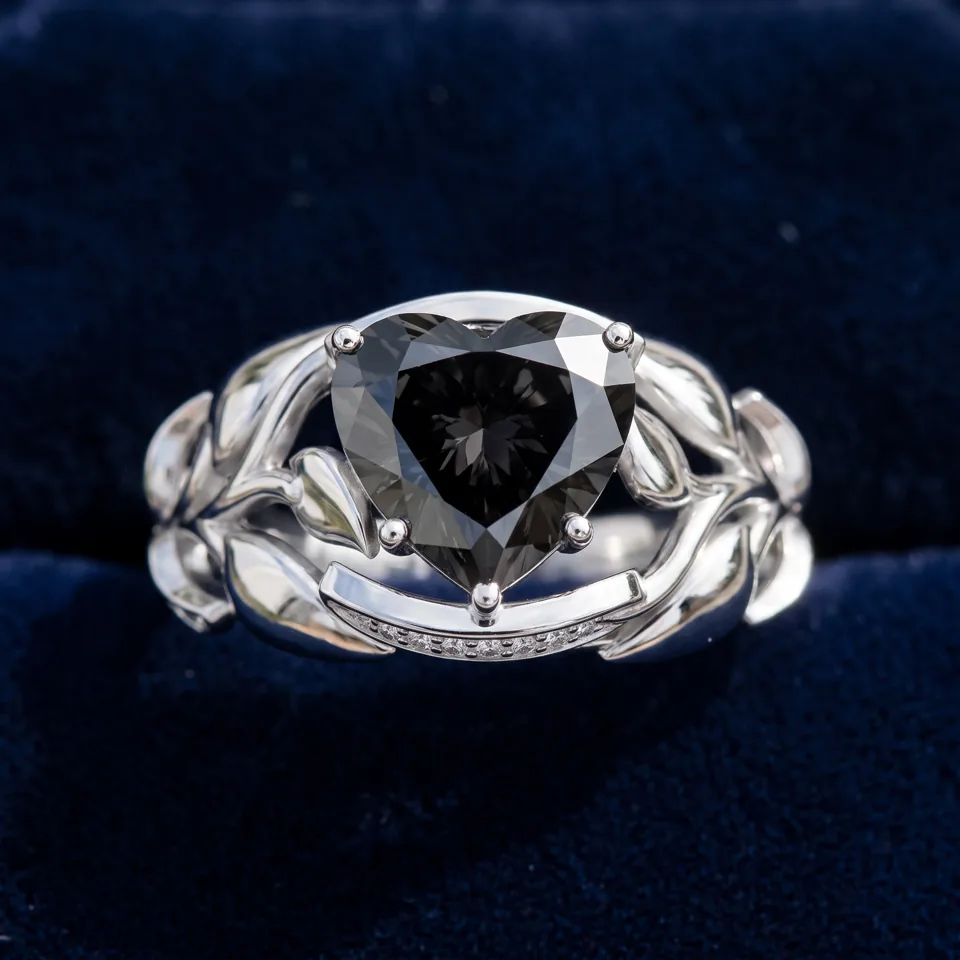 Heart Black Diamond Rings
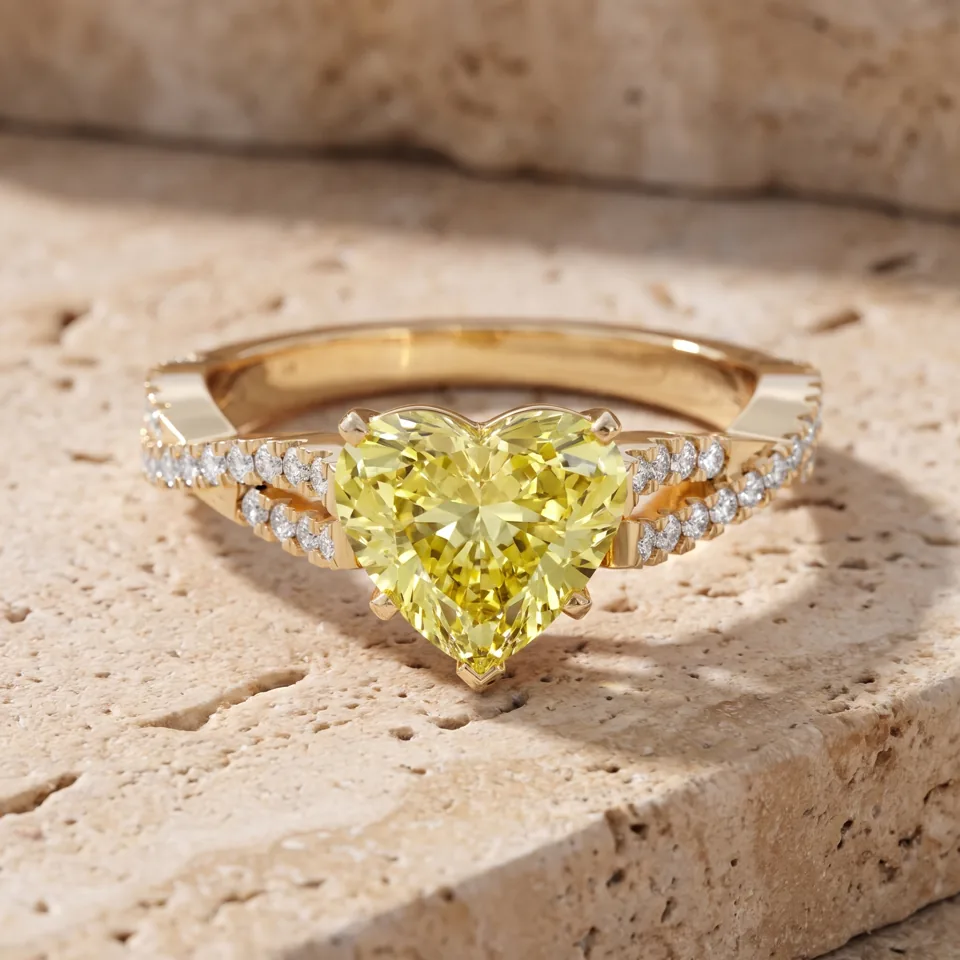 Heart Shaped Yellow Diamond Rings
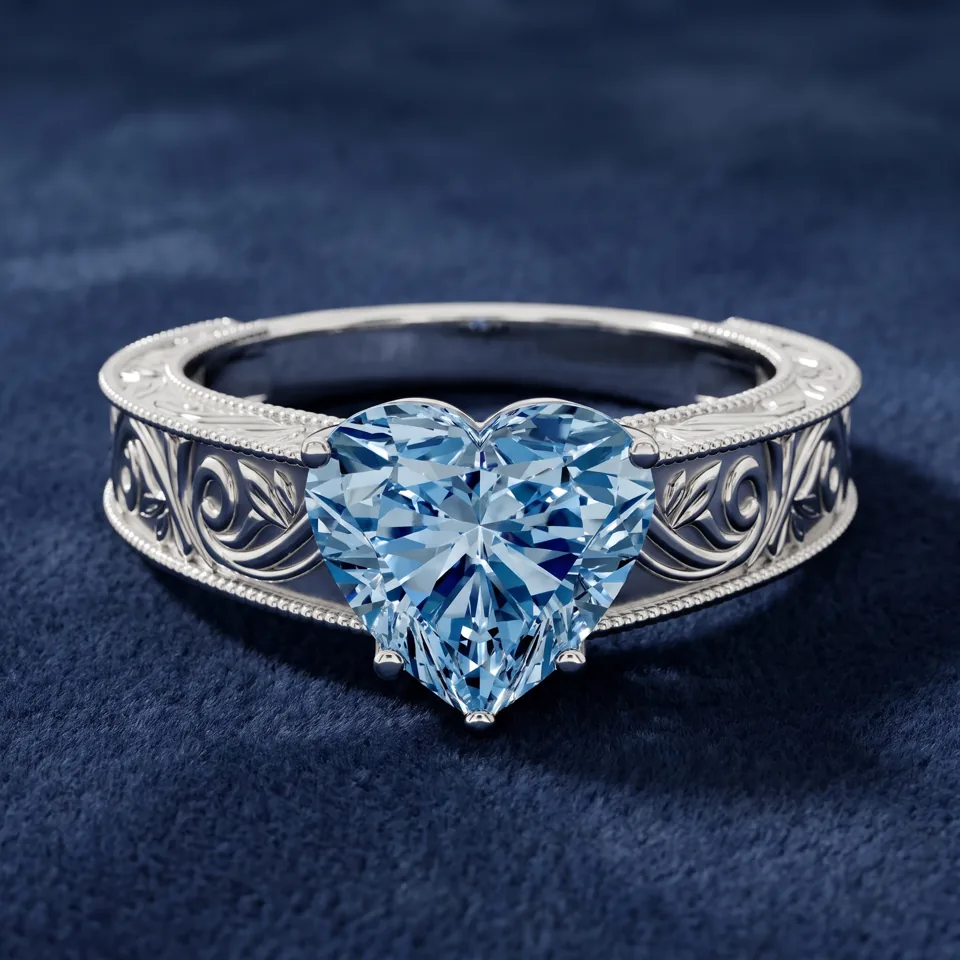 Blue Diamond Heart Rings
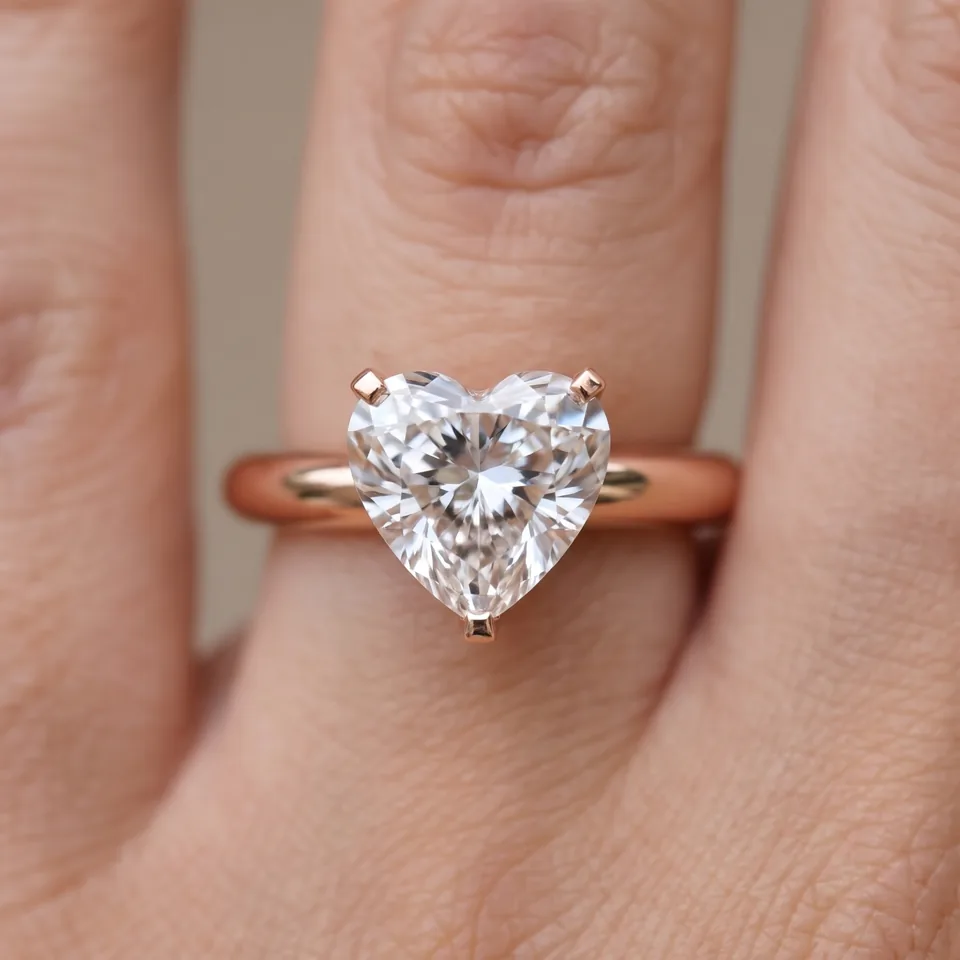 3 Carat Heart Shaped Lab-Grown Diamond Rings
A solitaire leaves the heart outline on its own, which keeps the shape easy to recognize from across a table. A halo surrounds the heart with a border of small stones, adds apparent size and softens any slight unevenness between the lobes. With three stone designs, a matching stone sits at each side of the heart and spreads the ring across more of the finger. A pavé band, used on about half the designs, carries laboratory-grown diamond accents down the shank.
A heart's tip is the thinnest edge of the stone and the spot most likely to chip. Look for a V-shaped prong or a bezel holding the tip, and some designs wrap the whole center in a bezel. The two rounded lobes are usually held by single prongs. For daily wear, a setting that covers the point is worth the small loss of visible stone.
Most settings accept a pink, yellow, blue or green center, and black is offered on some. Color is a property of the center you select later; the setting itself doesn't change. Rose gold warms a pink heart, while white gold or platinum keeps blue and green looking crisp.
Gold versions come in white, yellow or rose at 10K, 14K or 18K. Platinum is available on nearly every design, as is Silvadium, a tarnish-resistant sterling silver that keeps the cost down. Platinum holds prongs securely for many years. Silver is a lower-cost option best kept for lighter wear, since it scratches more easily than gold and the lab-grown diamond accents need firm metal around them.
Whitemoon makes your setting in 10–15 days, and the heart-shaped center arrives with an IGI or GIA report. Free insured shipping covers both directions, an unworn ring with its certificate can be returned within 30 days, and one resize within 60 days of delivery is free. Thinking of a heart ring as a promise? Our guide to promise rings explains what they mean.
Most people wear a heart-shaped ring with the point toward the fingertip, so the heart looks upright to anyone facing you. Some turn it the other way so the heart is upright when they glance down at their own hand, and either is fine. Pair it with a slim band in the same metal, and pick a curved band if the setting sits low.
Usually not. Per carat, a heart-shaped diamond tends to cost less than a round of equal weight and grade, because rounds are in highest demand and lose more of the rough crystal when cut. A well-made heart still needs a skilled cutter, so check that both lobes match and the cleft is crisp. On these settings, you'll see the center's price after you select it.
Heart ring settings at Whitemoon start under $150, and most sit in the $850–$1,150 range. Those figures are for the setting alone, before you add the heart-shaped center. Platinum and 18K gold push a setting toward the top of that range, while silver and 10K gold keep it lower.
Yes. A heart-shaped engagement ring can serve as the wedding ring, and many people pair it with a plain or pavé band. Because the point extends past the center, a curved or notched band usually sits closer than a straight one. Choose the same metal for both rings so they keep a matching color over the years.


