Complimentary insured shipping, both waysEngagement ring diamonds certified by IGI or GIAGrown by light. Conflict-free by natureComplimentary insured shipping, both ways
Engagement RingsWedding BandsEarrings

NecklaceBraceletsAbout
These round engagement rings are settings designed for a round center, which you pick in the next step. You'll find solitaires, halos, hidden halos, pavé bands and three stone designs, and most also accept a pink, blue or other fancy color center.
Choose the setting style and metal first. You'll see the setting's price here; the round center adds its own price once you select it.
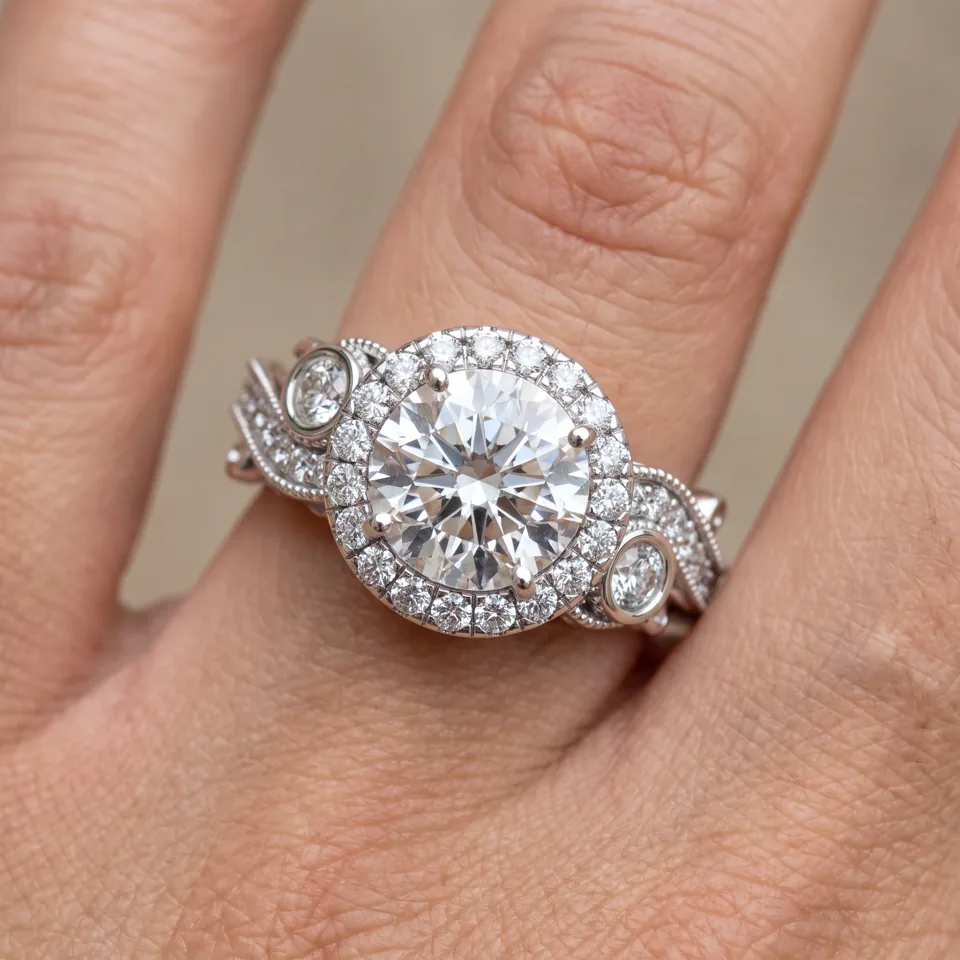 Round Halo Engagement Rings
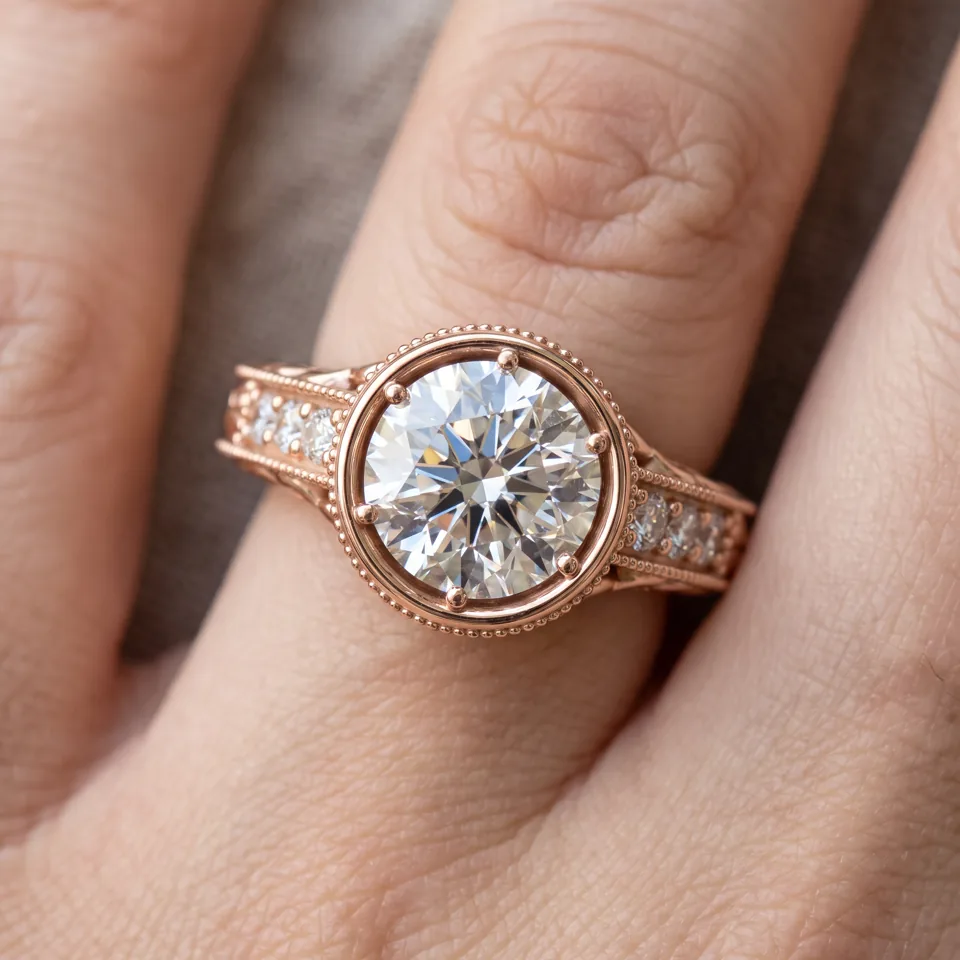 Round Bezel Engagement Rings
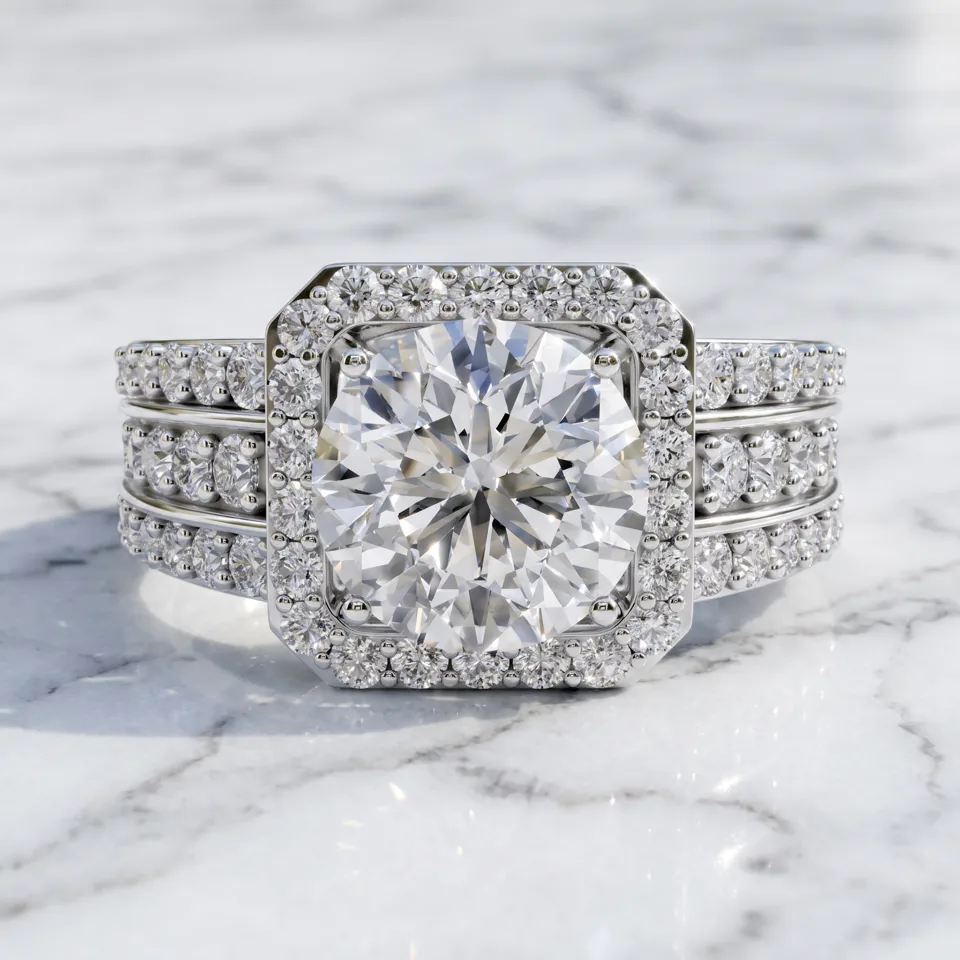 Round Vintage Engagement Rings
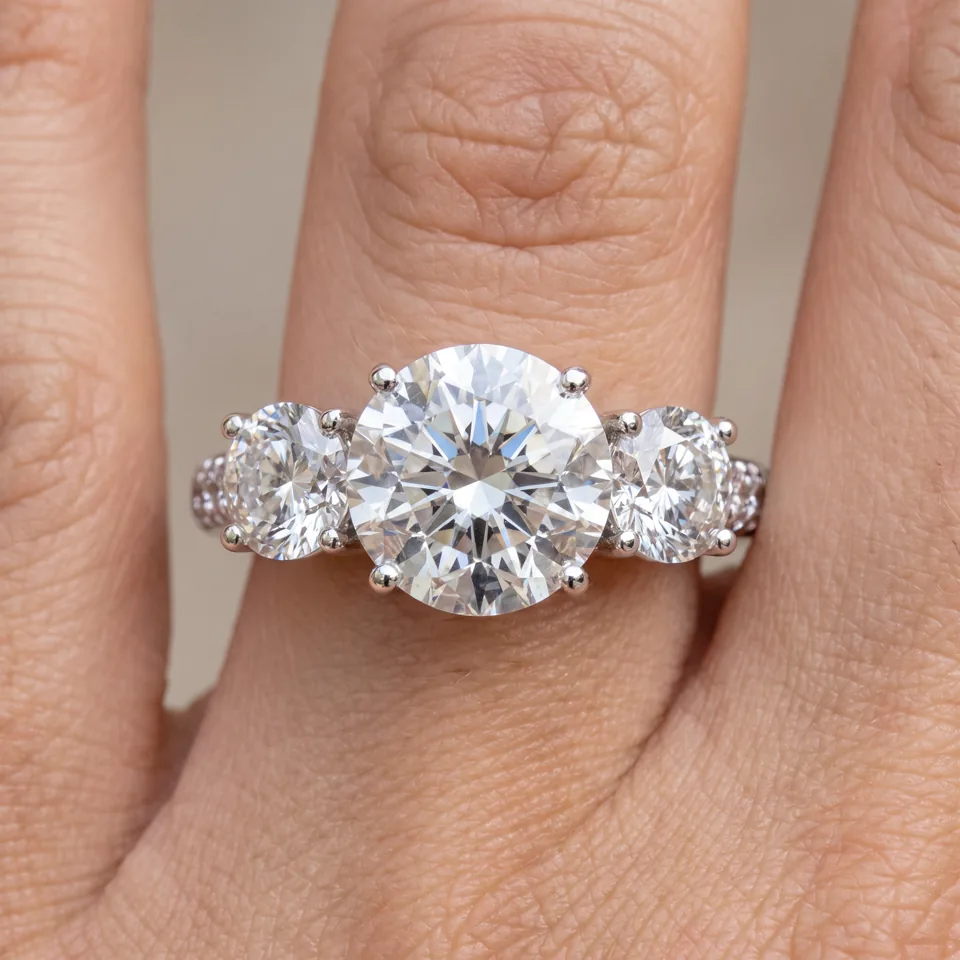 Round Three Stone Engagement Rings
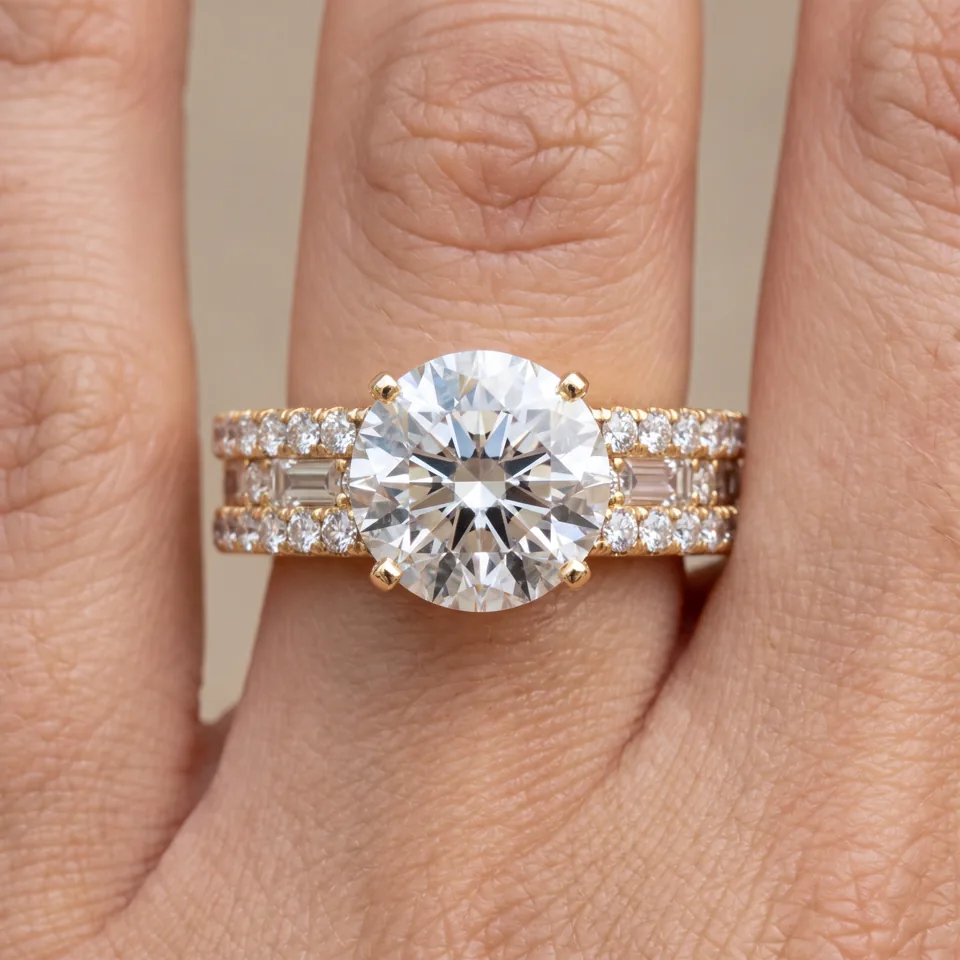 Round Diamond and Baguette Rings
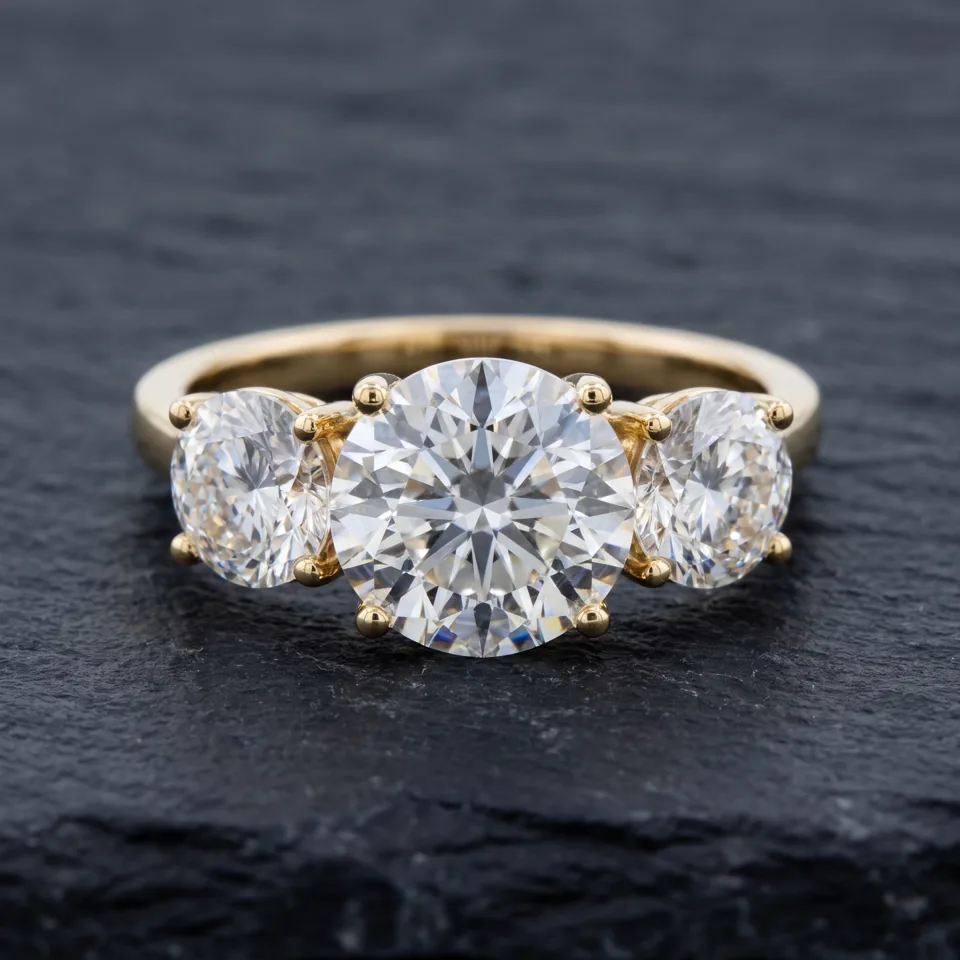 Round Side Stone Engagement Rings
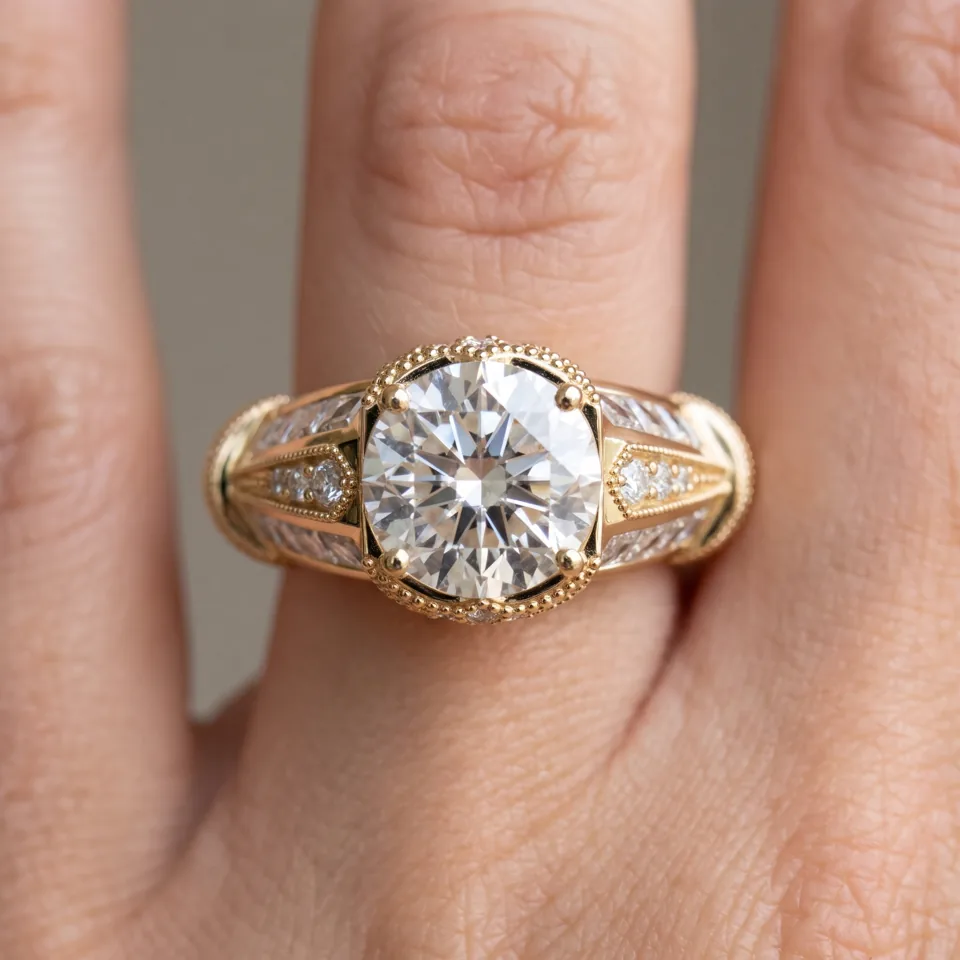 Round Hidden Halo Engagement Rings
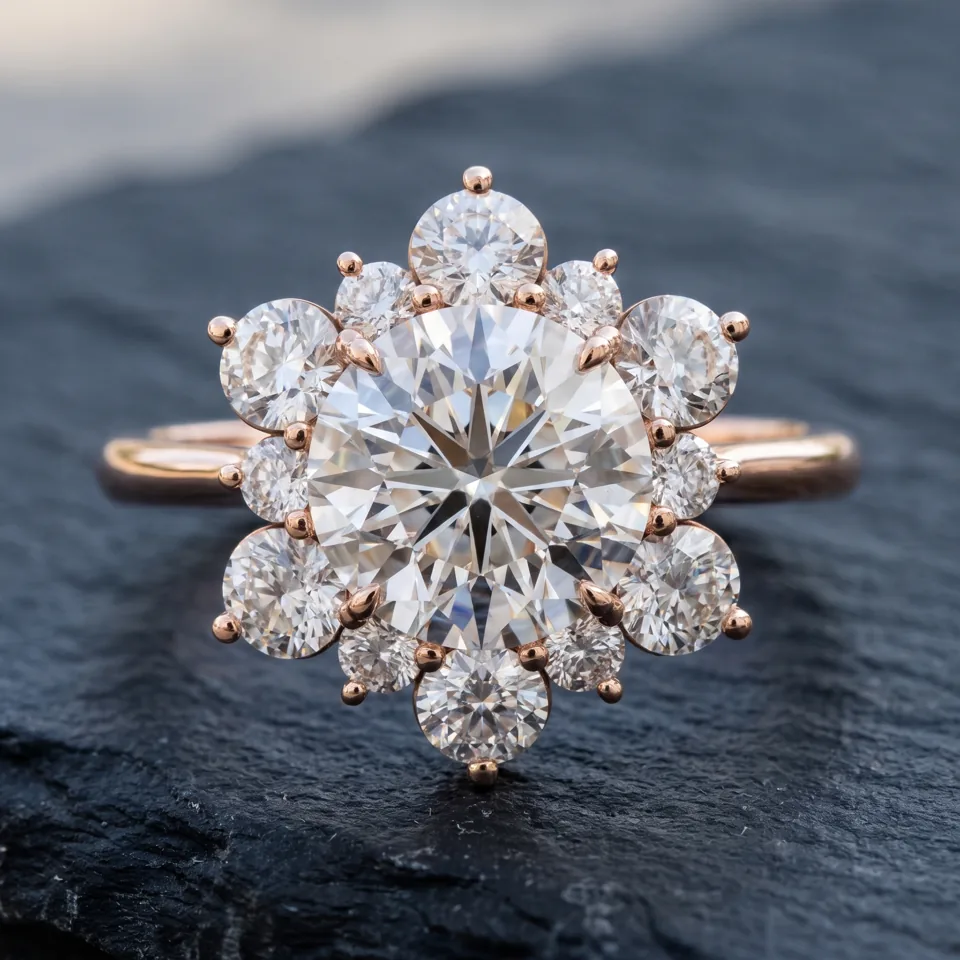 Round Cluster Rings
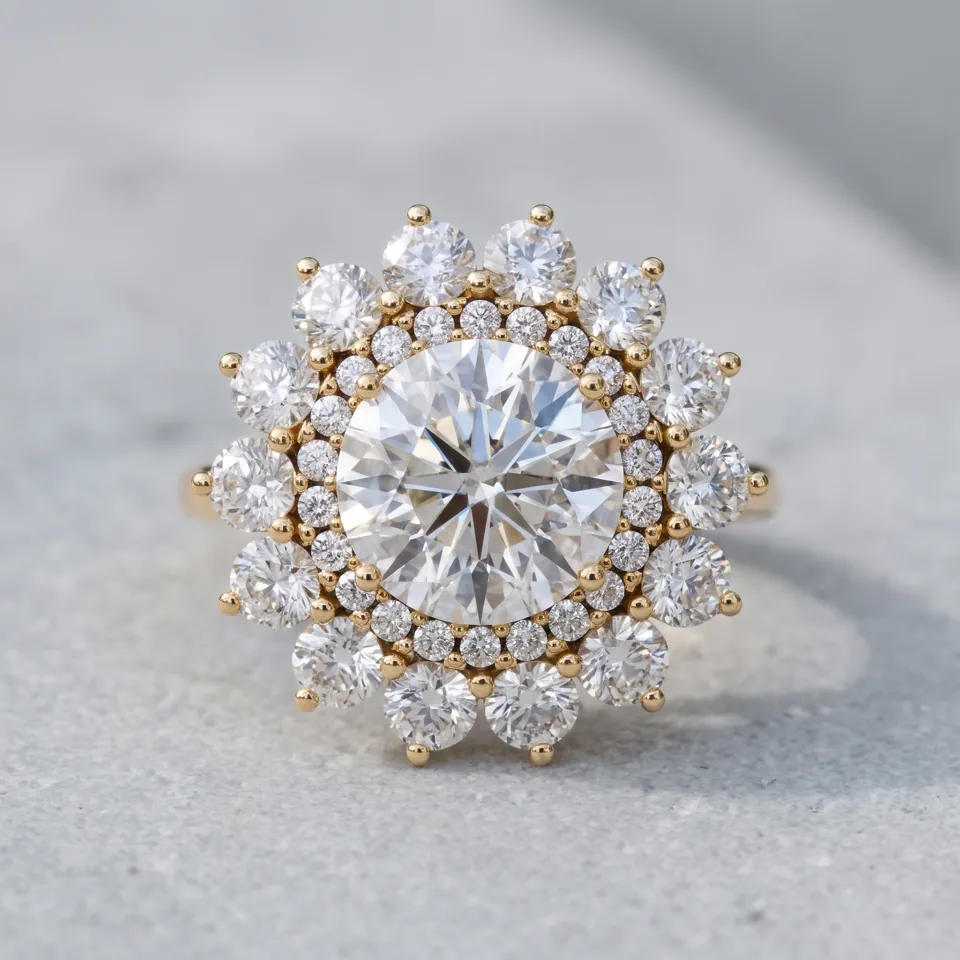 Round Double Halo Engagement Rings
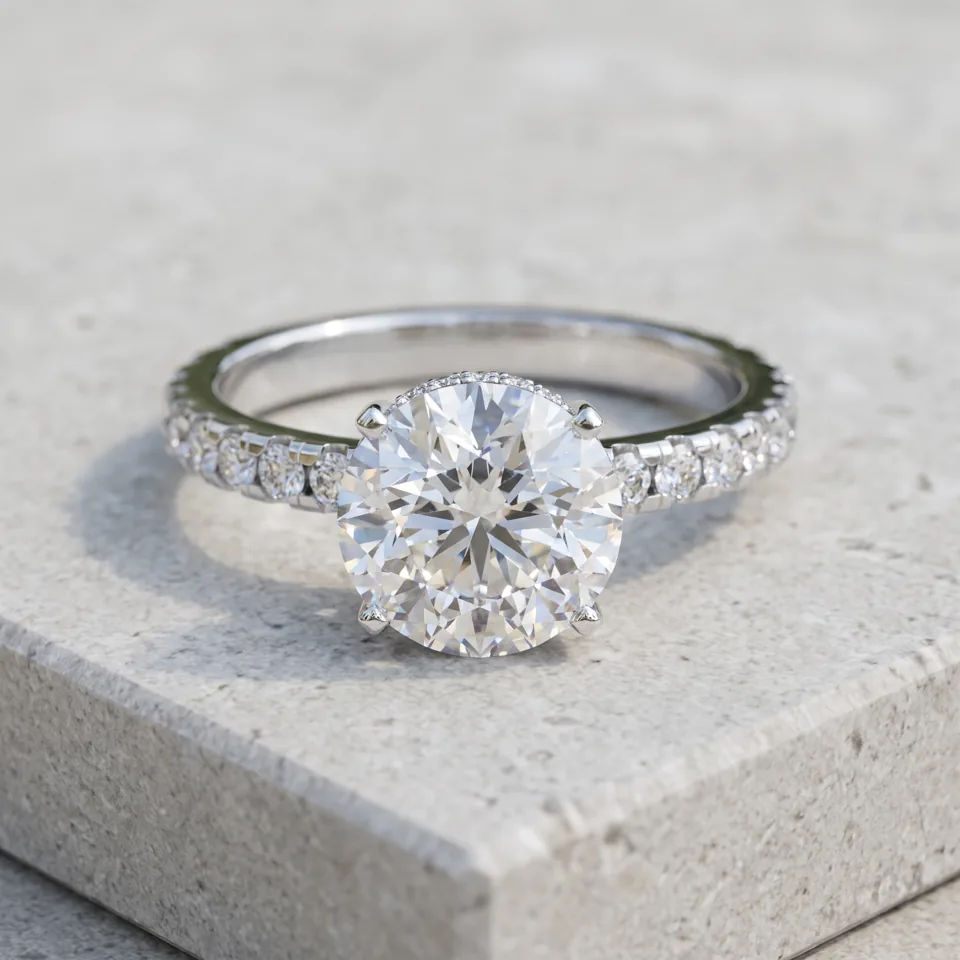 Round Pave Engagement Rings
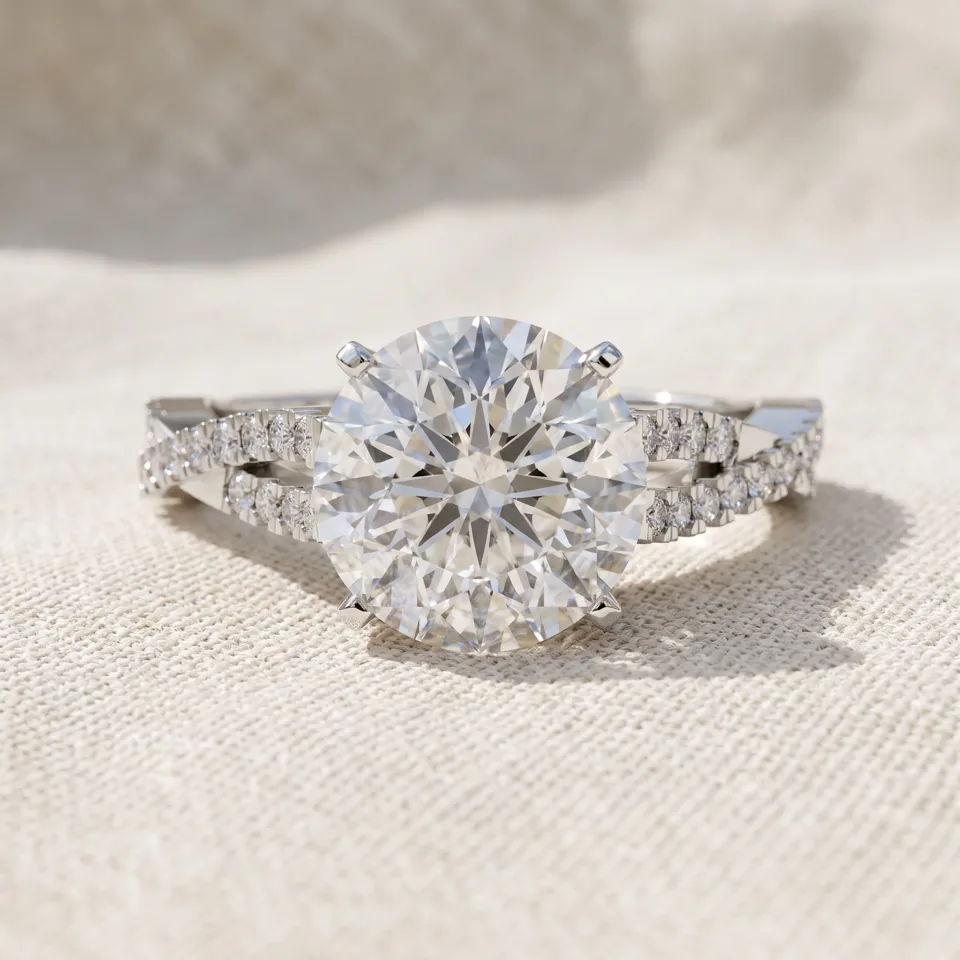 Round Split Shank Engagement Rings
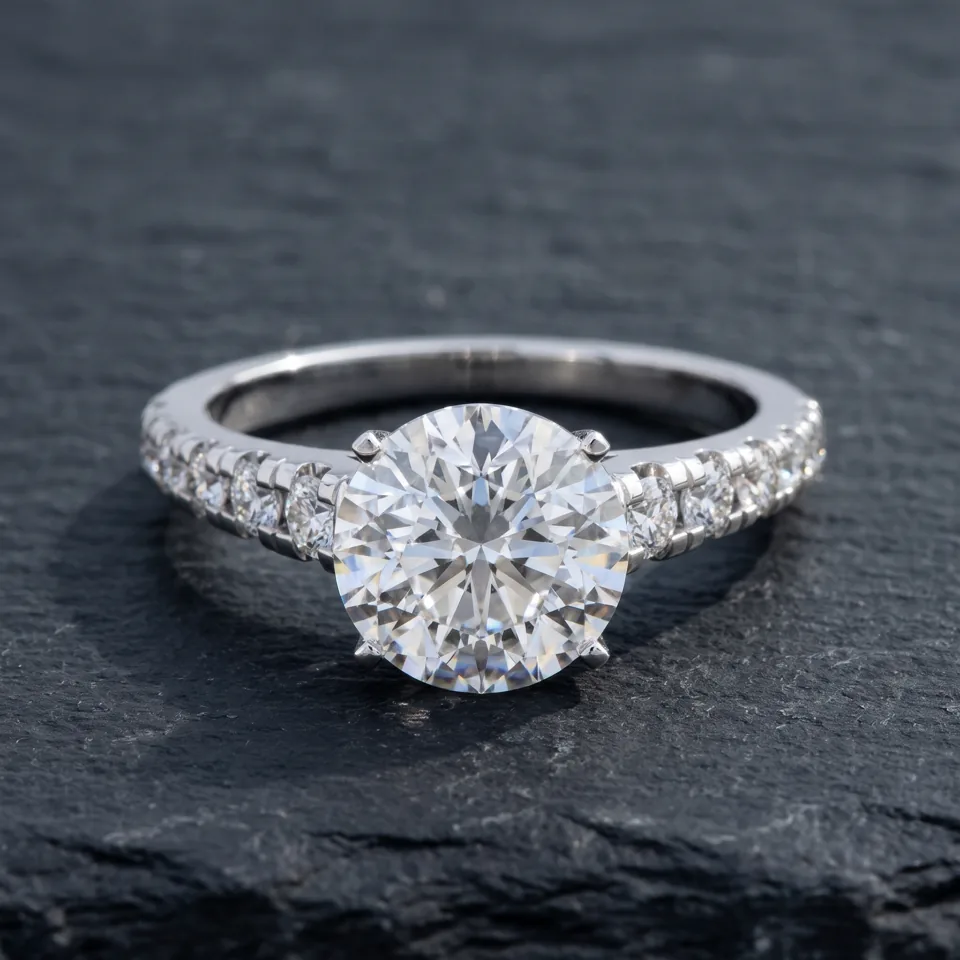 Round Cathedral Engagement Rings
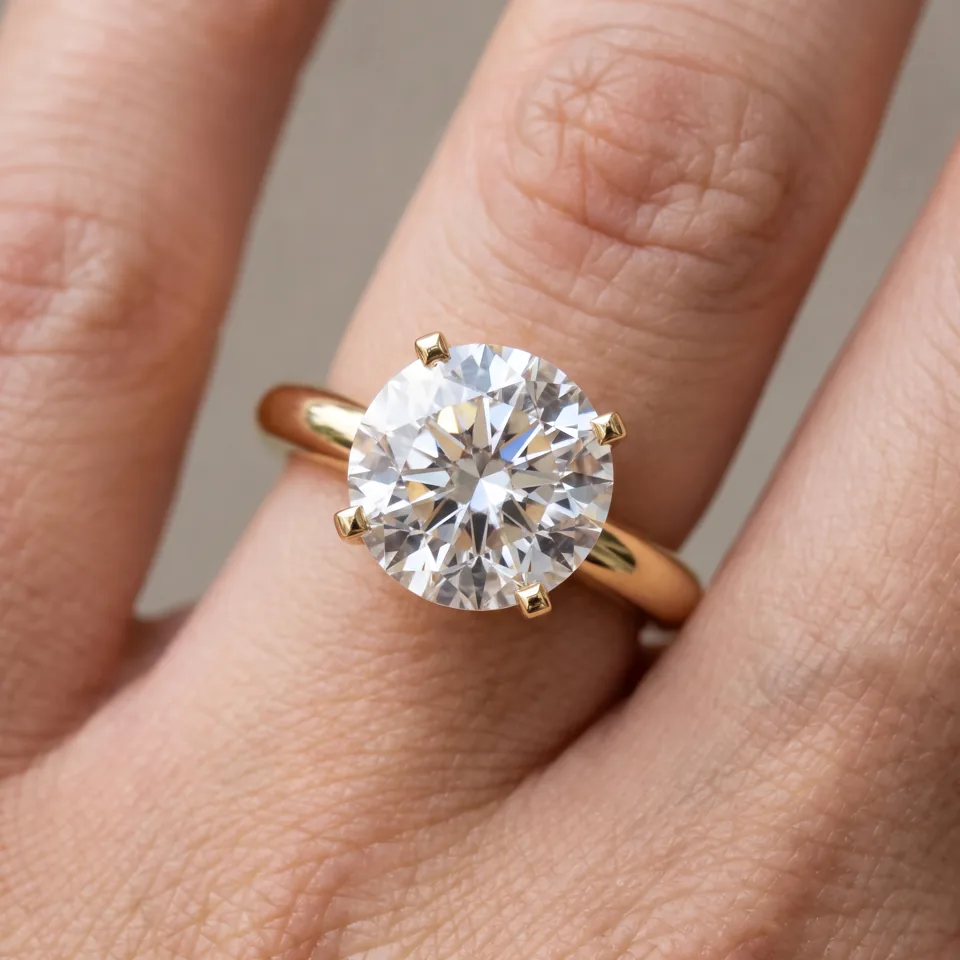 3 Carat Round Lab-Grown Diamond Rings
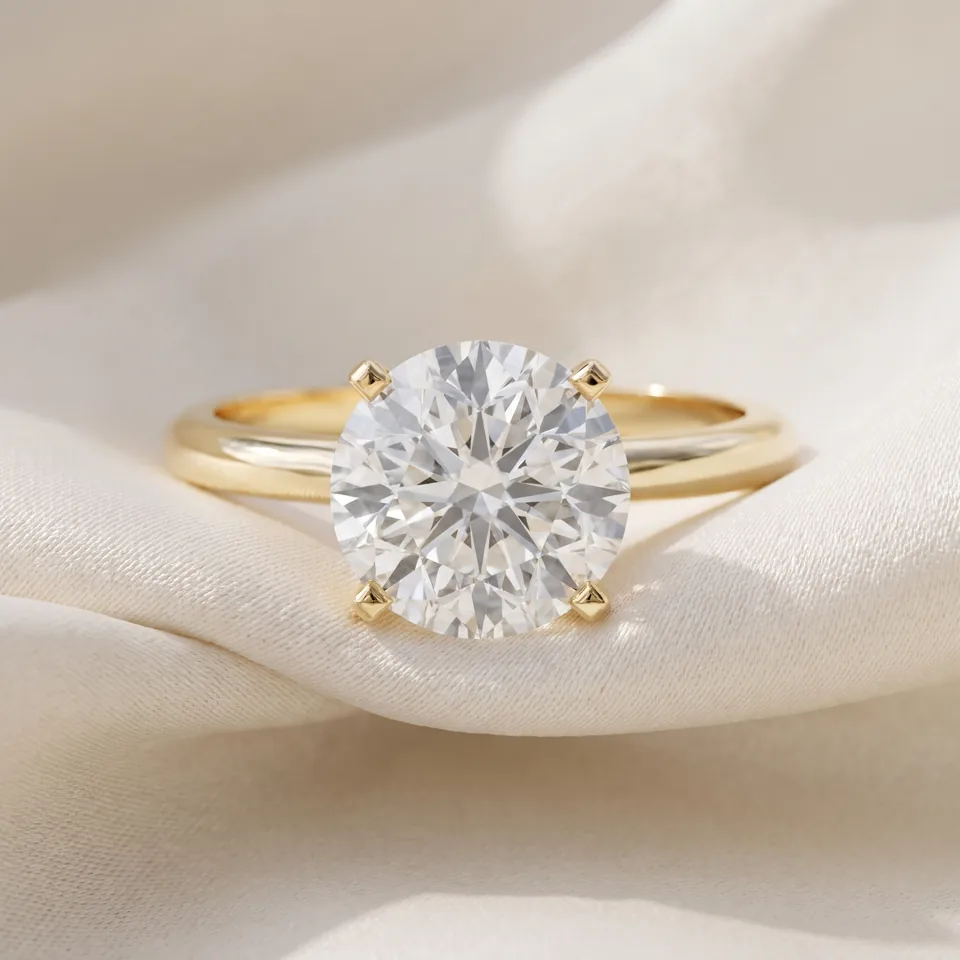 Gold Round Engagement Rings
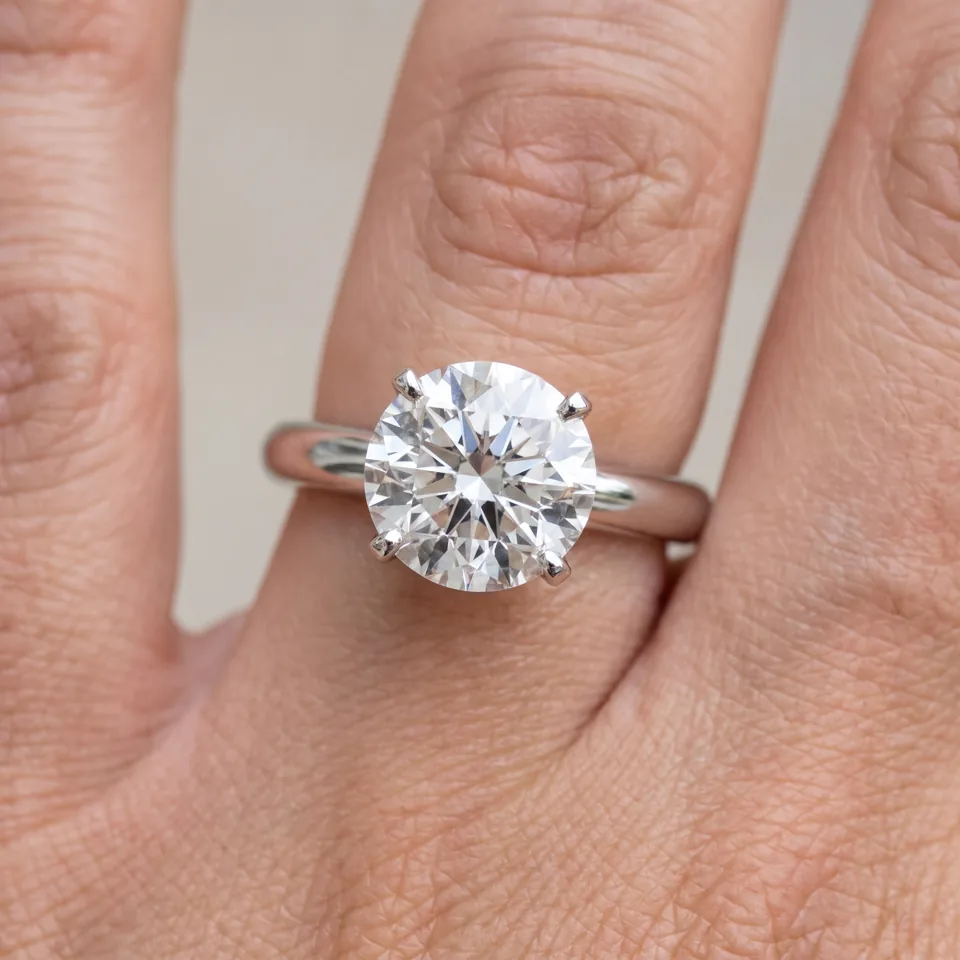 1 Carat Round Lab-Grown Diamond Rings
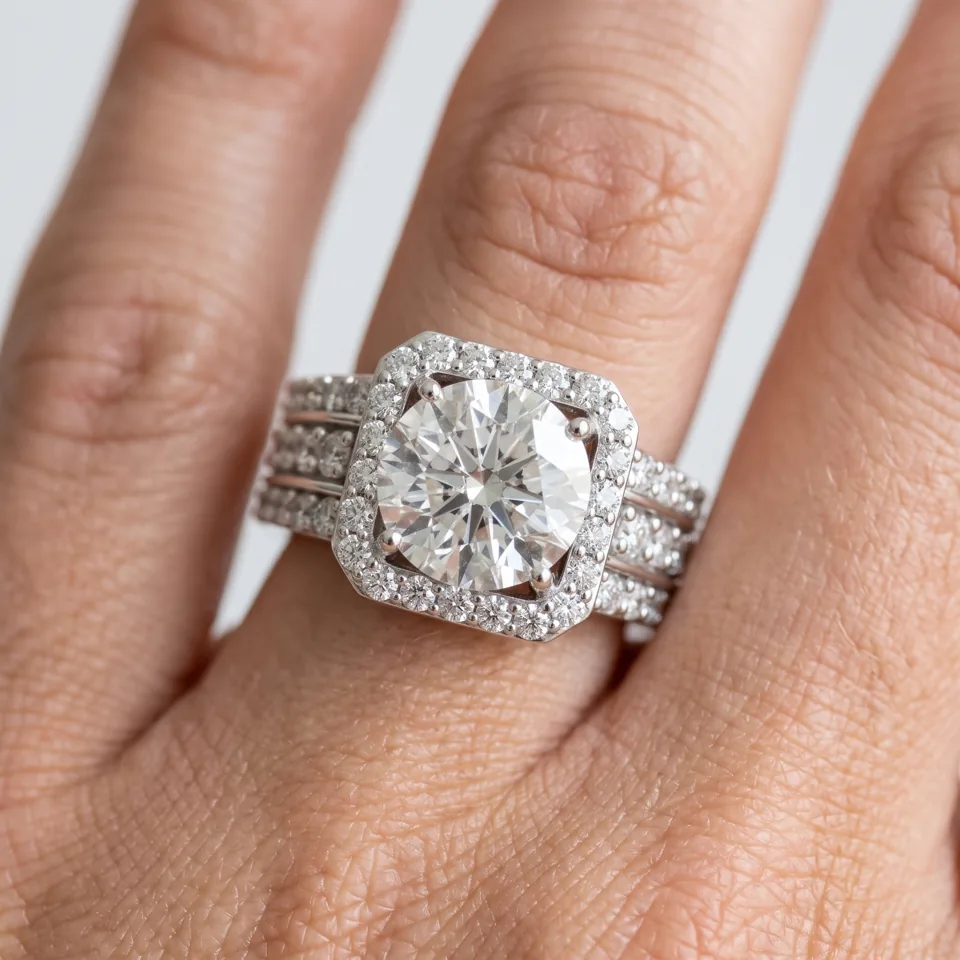 5 Carat Round Lab-Grown Diamond Rings
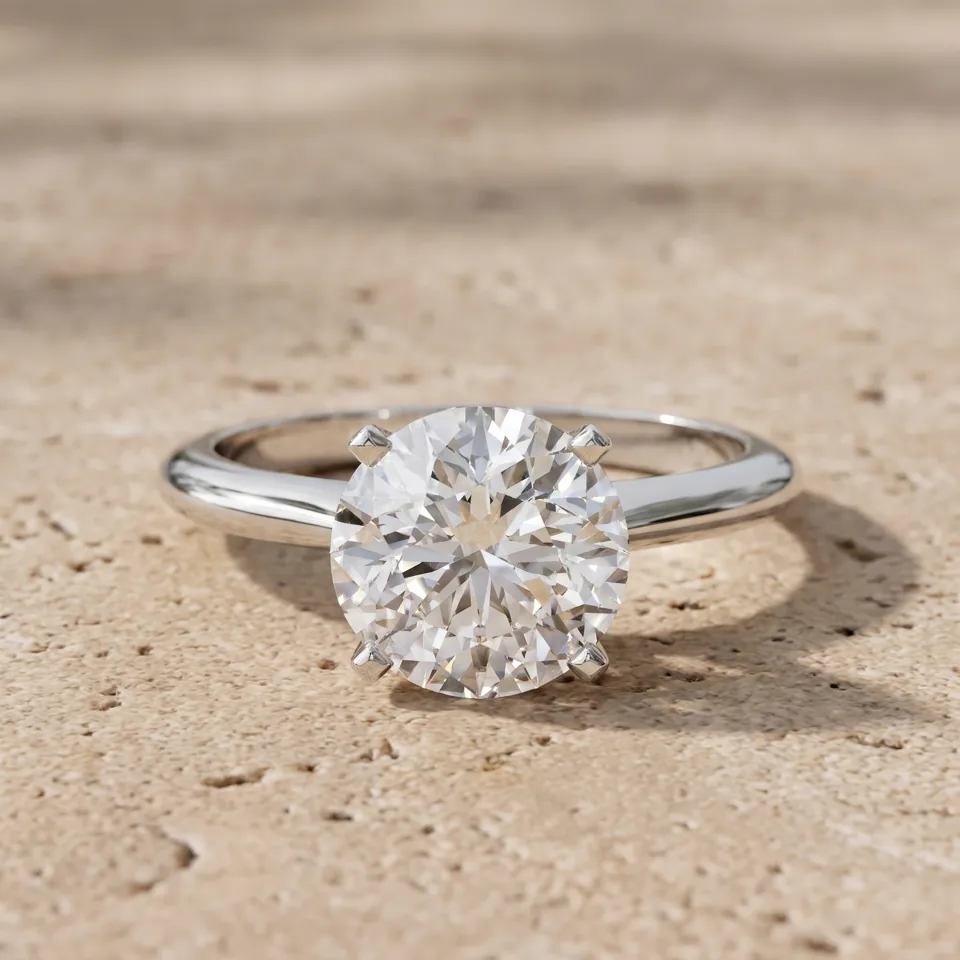 White Gold Round Engagement Rings
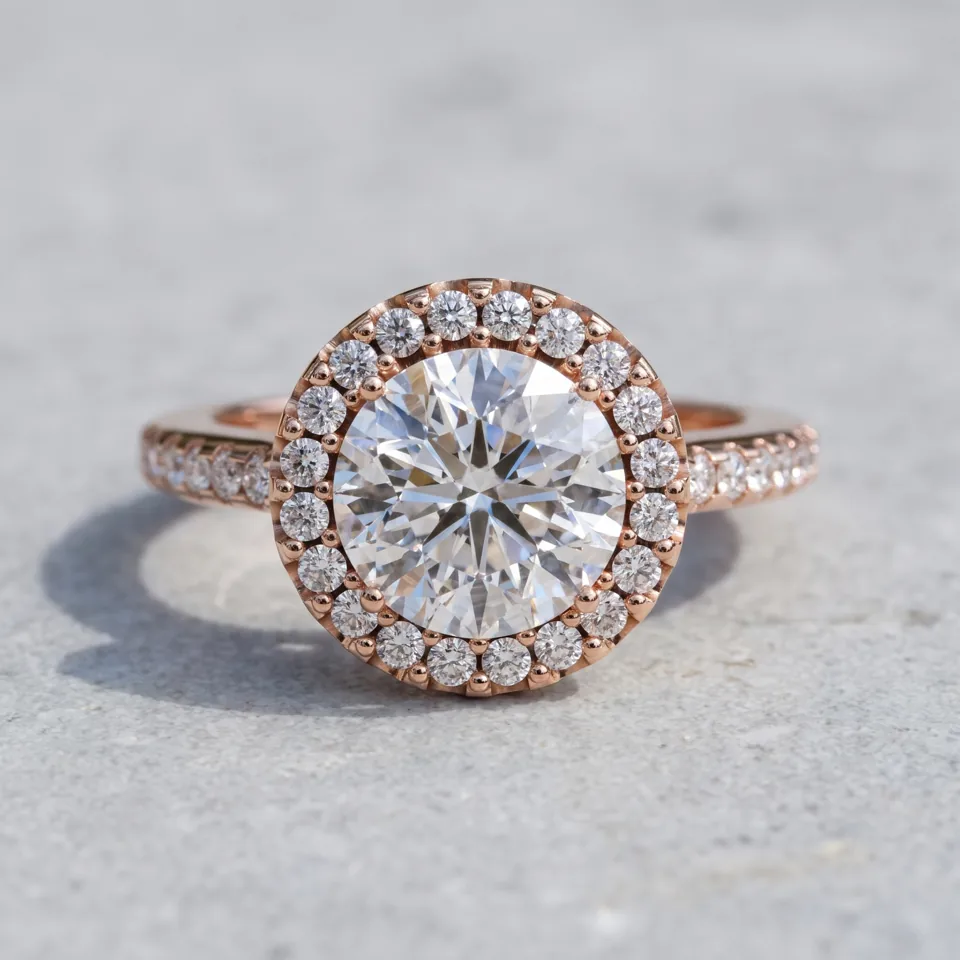 Rose Gold Round Engagement Rings
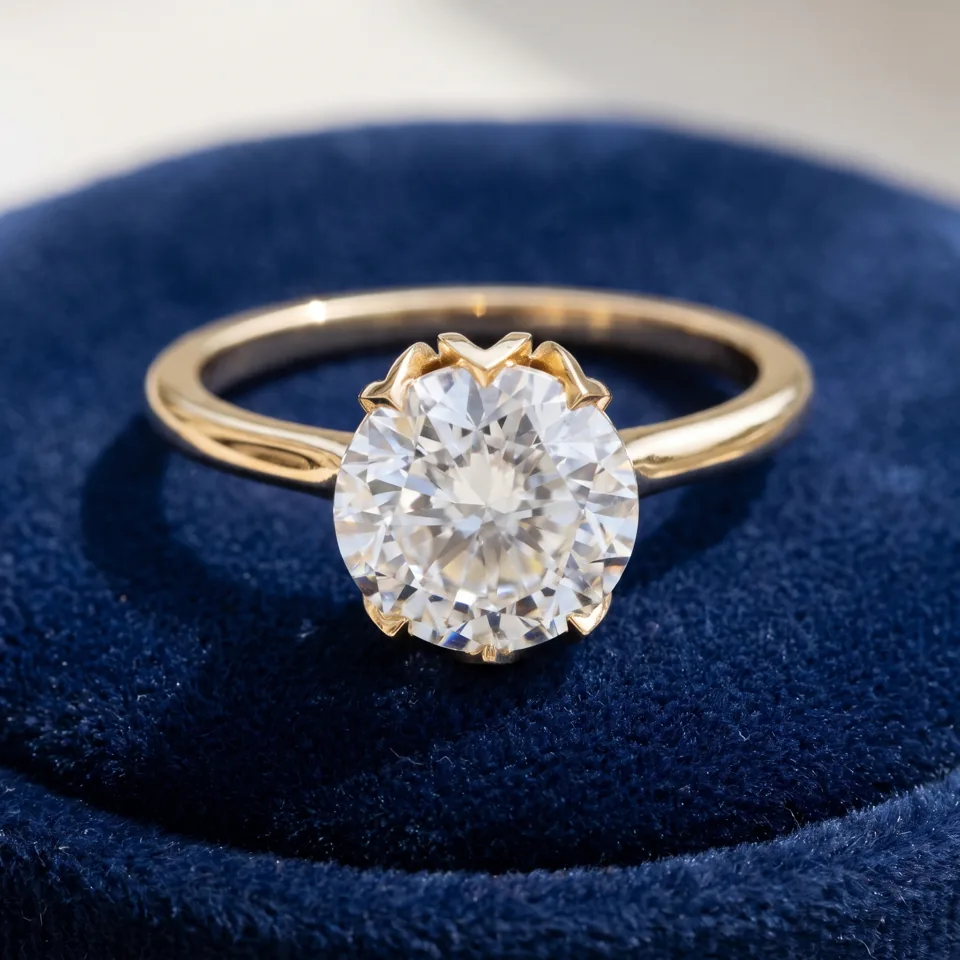 Yellow Gold Round Engagement Rings
The round brilliant's facets are laid out to return the most light, so no other shape matches its sparkle. Its symmetry also means no points to protect, which makes it easy to set in prongs, a bezel or a halo. That flexibility is why round settings cover such a wide range of styles, from plain solitaires to vintage milgrain designs.
With four prongs you see more of the center, which takes on a slightly square outline. Six prongs hold the stone more securely and keep it looking perfectly round. A bezel circles the center in metal for the most protection, a good choice for active hands. Hidden halo designs slip a band of tiny stones under the center that shows best in profile.
Pavé, the most popular style here, lines the band with laboratory-grown diamond accents. Larger lab-grown diamond accents sit beside the center on side stone and three stone settings, widening the look. A plain solitaire shank lets the round center do the talking and lines up neatly with most wedding bands.
Almost all designs are offered in 10K, 14K or 18K gold in three colors and in platinum. Silvadium, a tarnish-resistant sterling silver, is the lower-cost option. A white metal makes a colorless center face up whiter; yellow or rose gold leans warm and suits vintage styles. Platinum, the densest of these metals, stands up well to daily wear.
Your setting is crafted in 10–15 days, and the round center you choose comes with an IGI or GIA report. Free insured shipping runs both ways. You can return an unworn ring with its certificate within 30 days, and one resize in the first 60 days after delivery costs nothing.
A six-prong solitaire is the classic choice, because it holds a round center securely and keeps its outline circular. Choose a halo to make the center seem bigger, or a bezel for the most protection in daily wear. Hidden halo settings add sparkle from the side while keeping the top view clean. All of these are offered as round settings in this collection.
Neither is better; it depends on what you value. Round centers sparkle the most and have no corners to chip. Cutting a square princess saves more of the rough, so it usually costs less per carat, and its crisp lines suit a modern look. If daily durability and brilliance come first, round is the safer pick.
At equal carat weight, a round tends to look slightly larger from above than a princess cut. Our diamond shapes guide compares the face-up size of every shape. Much of a princess's weight sits deep below the table, leaving a slightly smaller face, even though its corner-to-corner span measures longer. A halo or a thin band makes either shape appear larger on the hand.
Ovals are usually the cheaper of the two when weight and grades match. More of the rough crystal is lost when it is cut into a round brilliant, and demand for rounds is highest. Ovals also look larger per carat because of their longer outline. On these round settings you pay for the setting first; the center's cost shows up in the next step.
Yes. Round has stayed the top choice for engagement rings, and it earns that: the strongest sparkle, no points to chip, and a fit with every setting style. It also matches nearly any wedding band. The trade-off is price per carat, which runs higher than for fancy shapes, so it suits buyers who rank brilliance above size.


