Complimentary insured shipping, both waysEngagement ring diamonds certified by IGI or GIAGrown by light. Conflict-free by natureComplimentary insured shipping, both ways
Engagement RingsWedding BandsEarrings

NecklaceBraceletsAbout
Pear engagement rings hold a teardrop center: rounded at one end, pointed at the other. The outline stretches the look of the finger, and the stone tends to read bigger than its carat weight. Each ring here is a setting, and you select the center diamond in the next step. Our guide to the bow-tie effect explains what to look for in a pear.
Start by choosing between a clean solitaire and a band with more sparkle, then pick your metal.
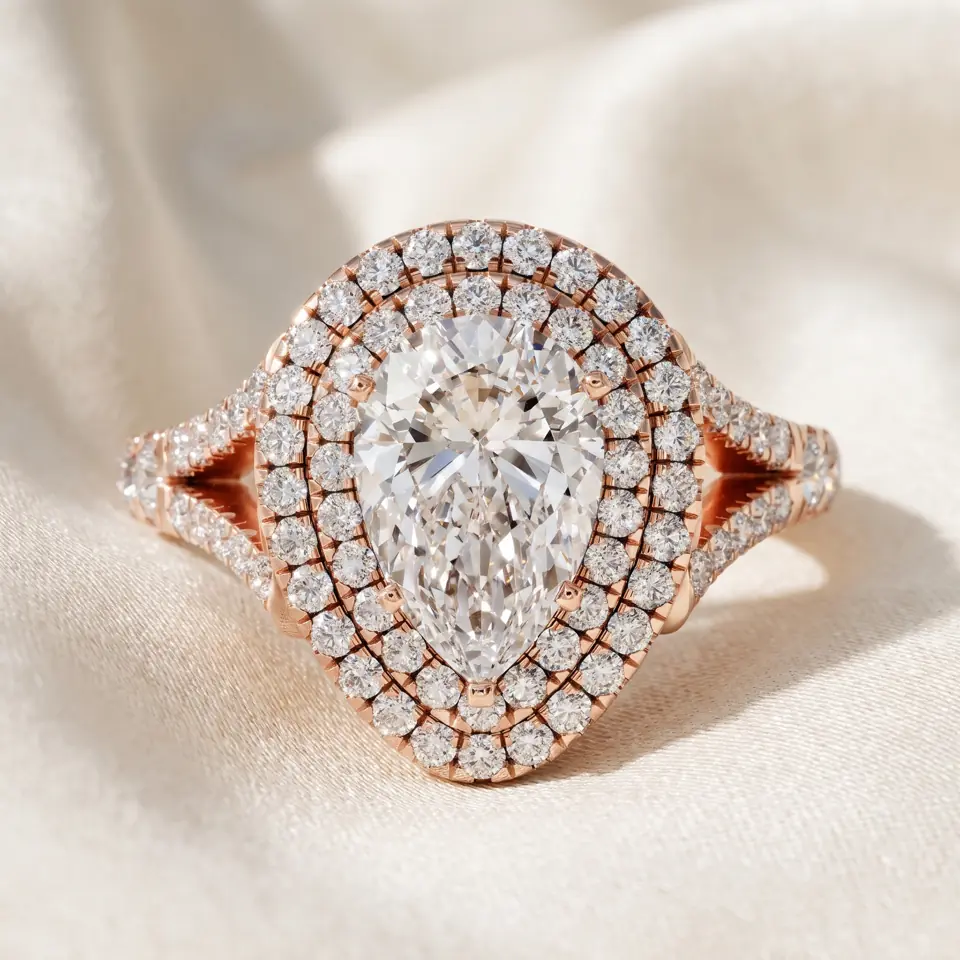 Pear Halo Engagement Rings
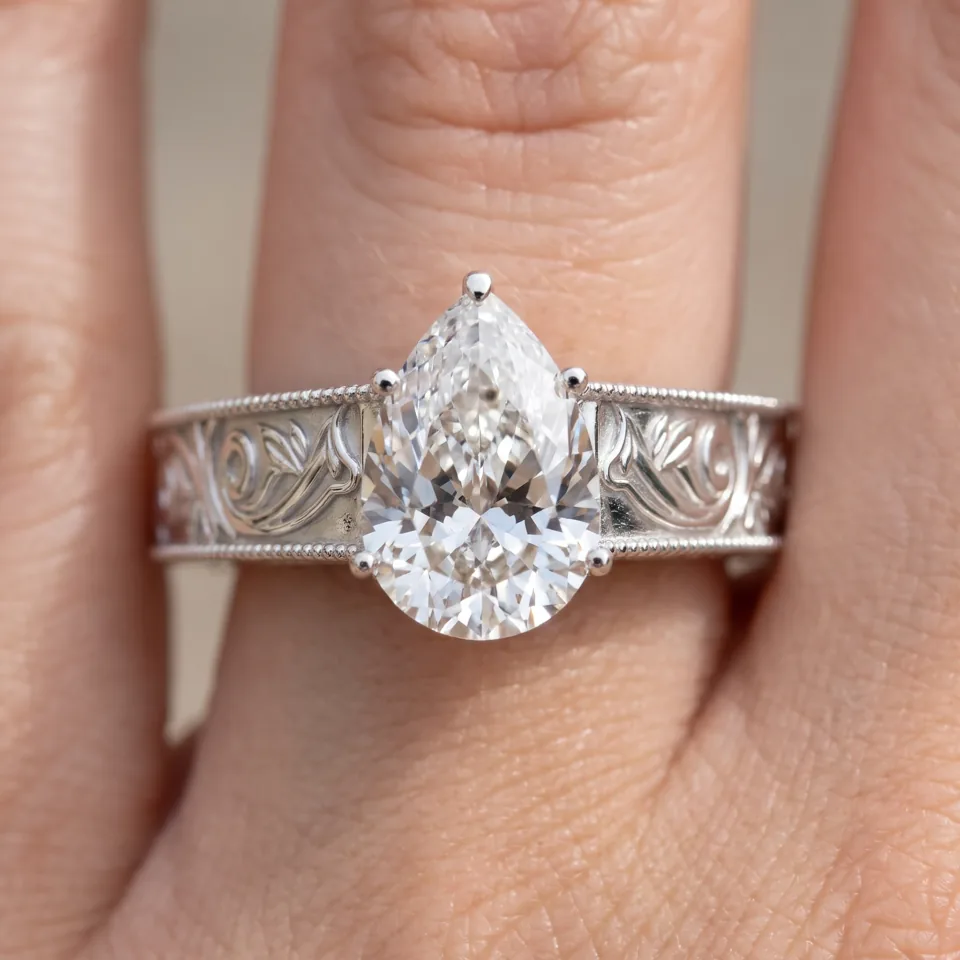 Vintage Pear Engagement Rings
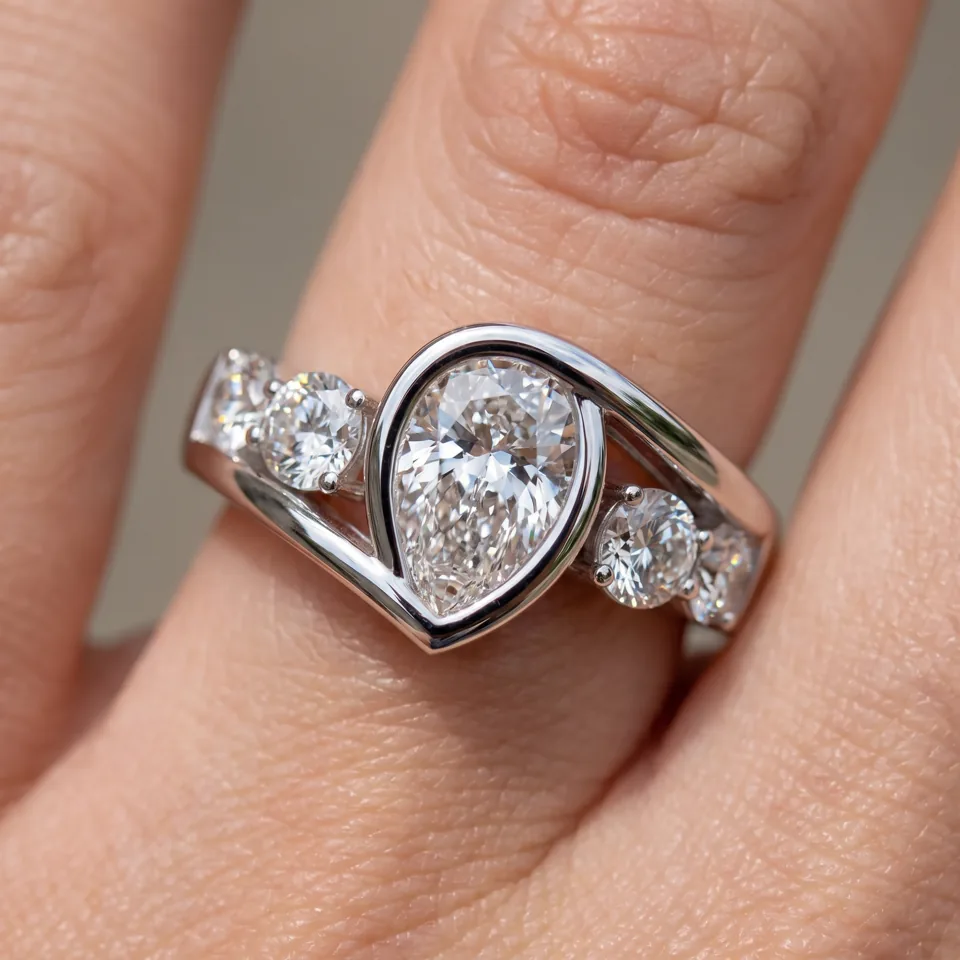 Pear Bezel Engagement Rings
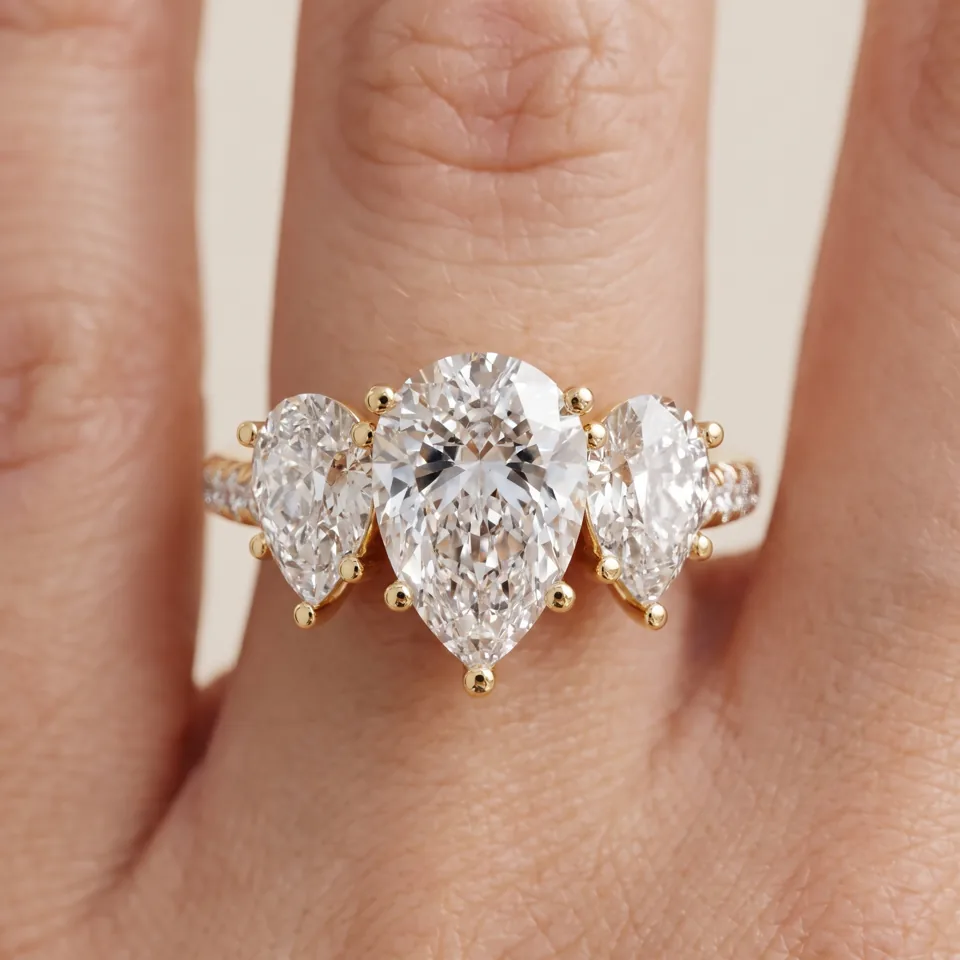 Pear Three Stone Engagement Rings
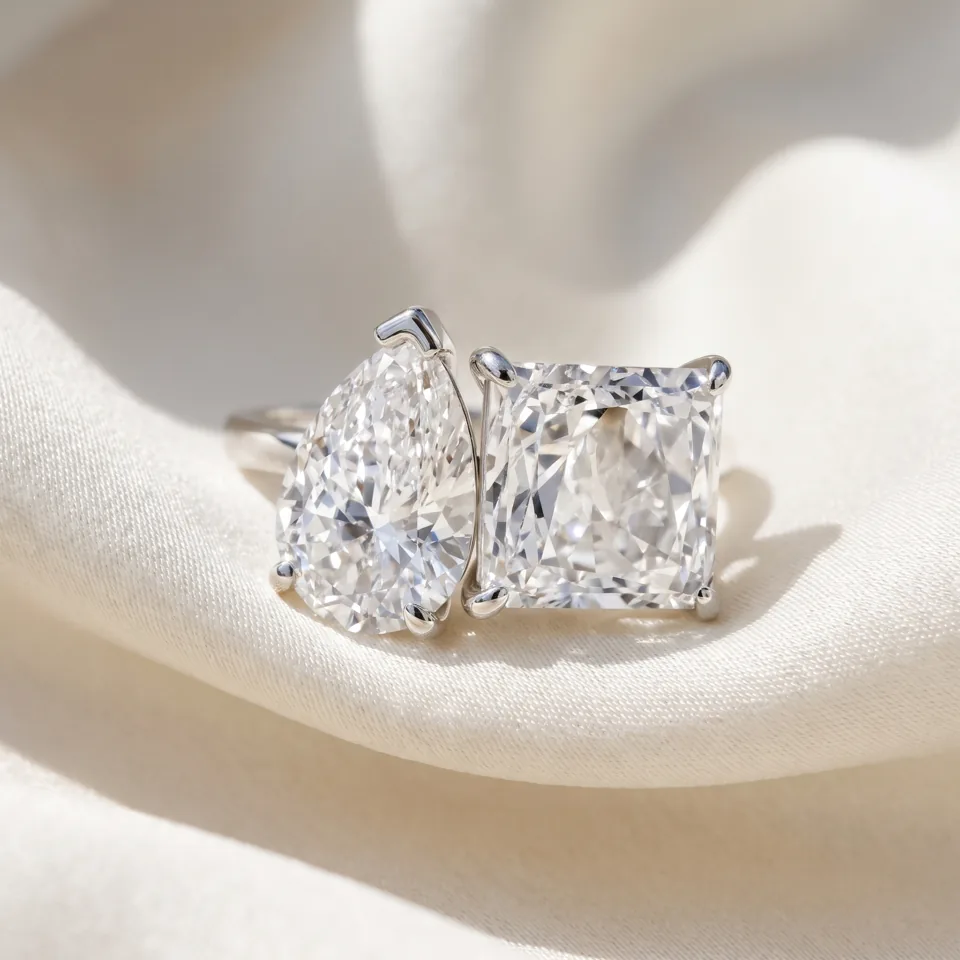 Pear Toi et Moi Rings
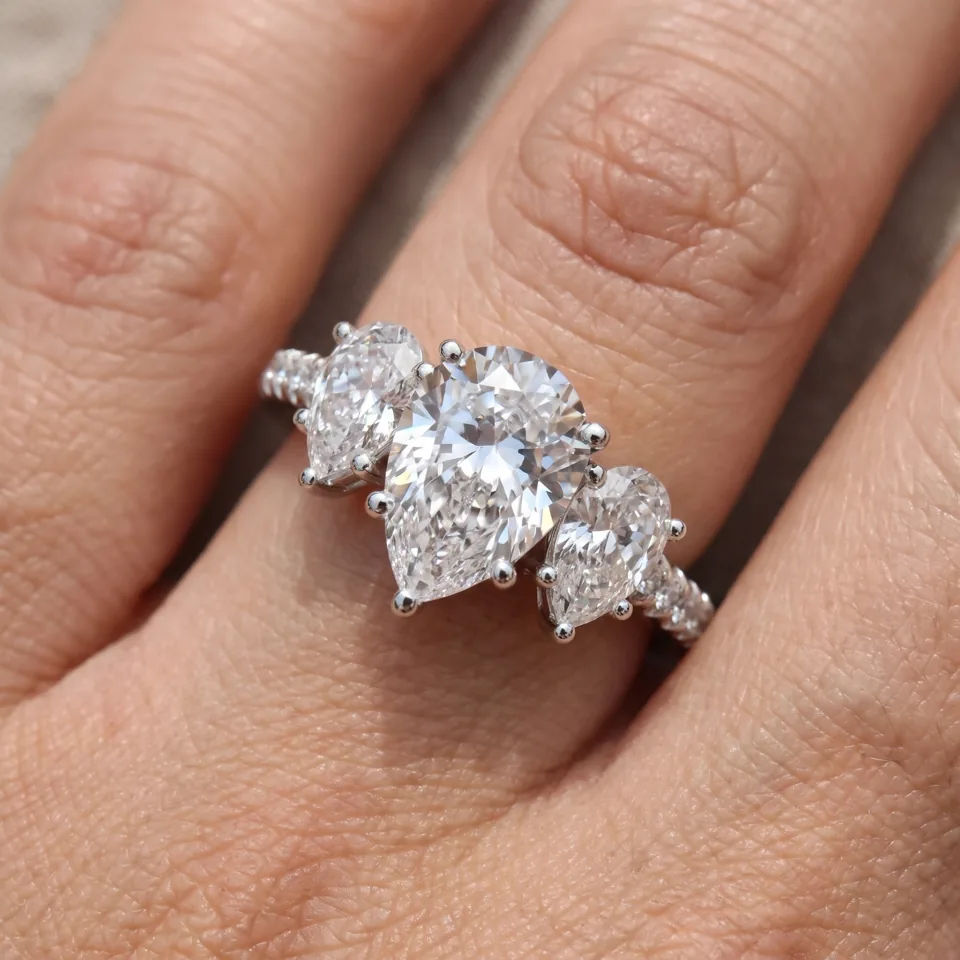 Pear Engagement Rings with Side Stones
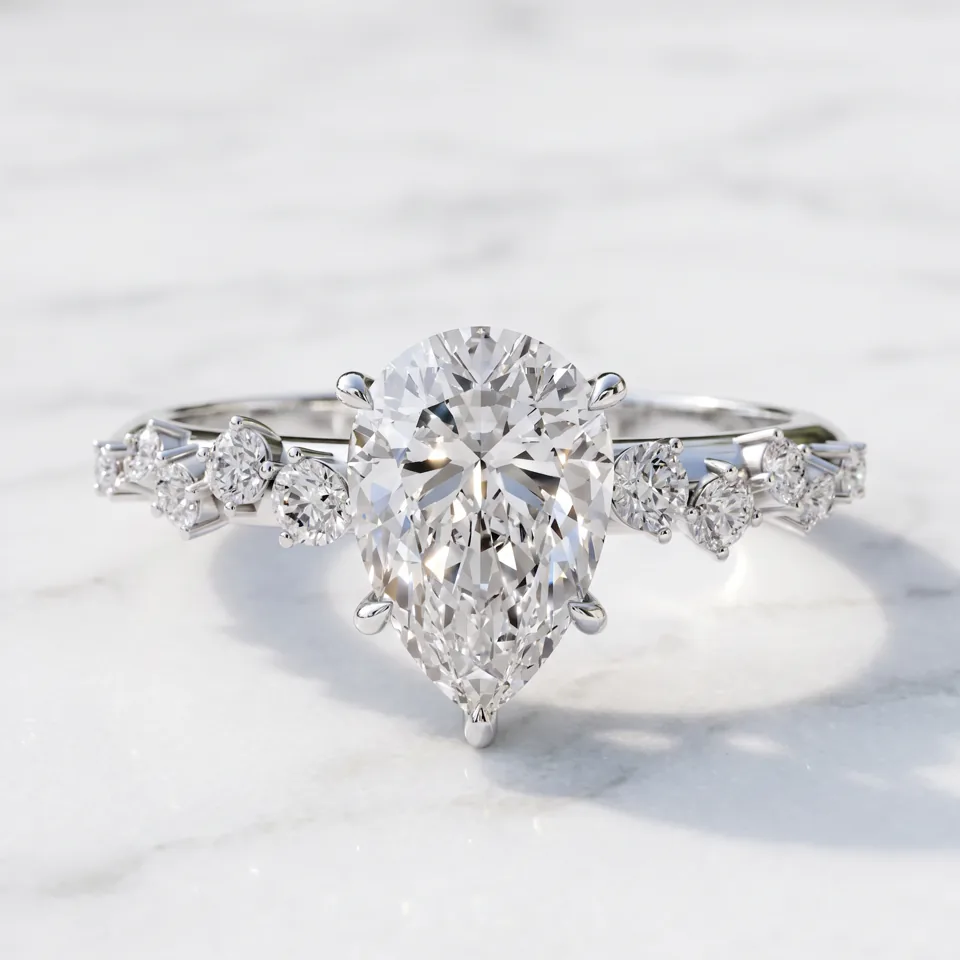 Pear Cluster Rings
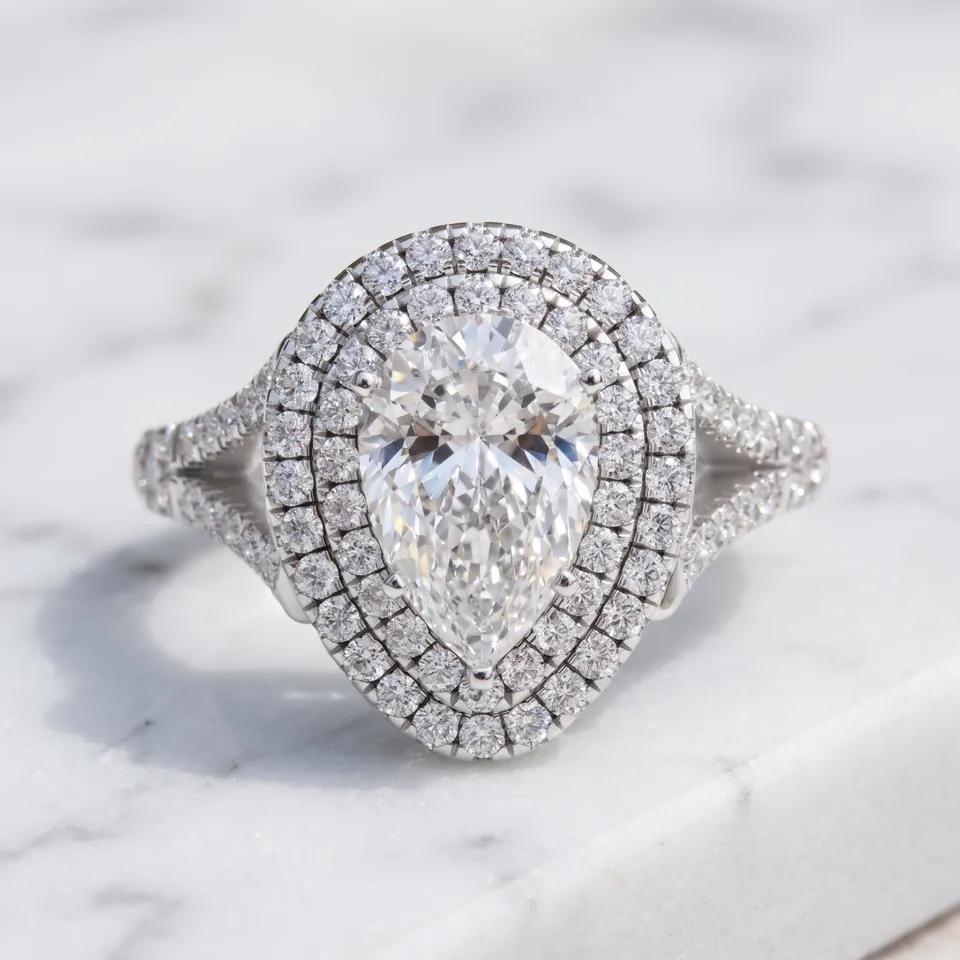 Double Halo Pear Engagement Rings
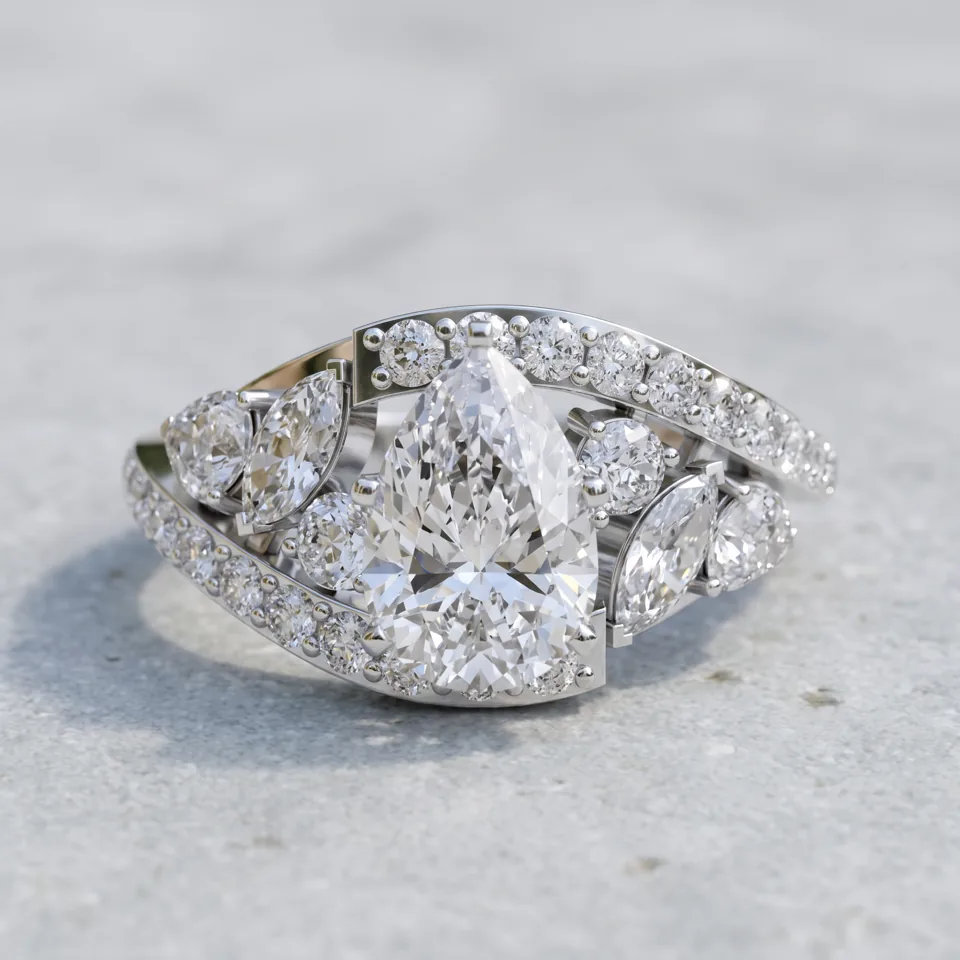 Pear Engagement Rings with Pear Side Stones
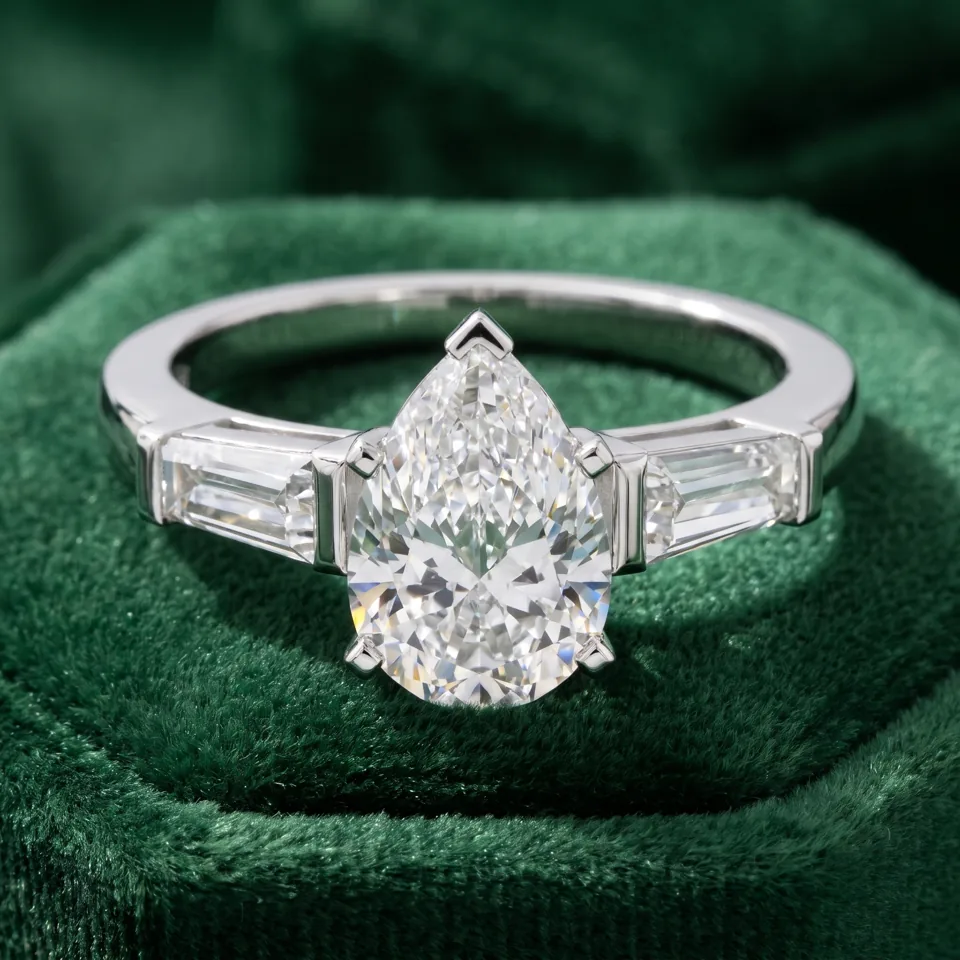 Pear-Shaped Rings with Baguette Side Stones
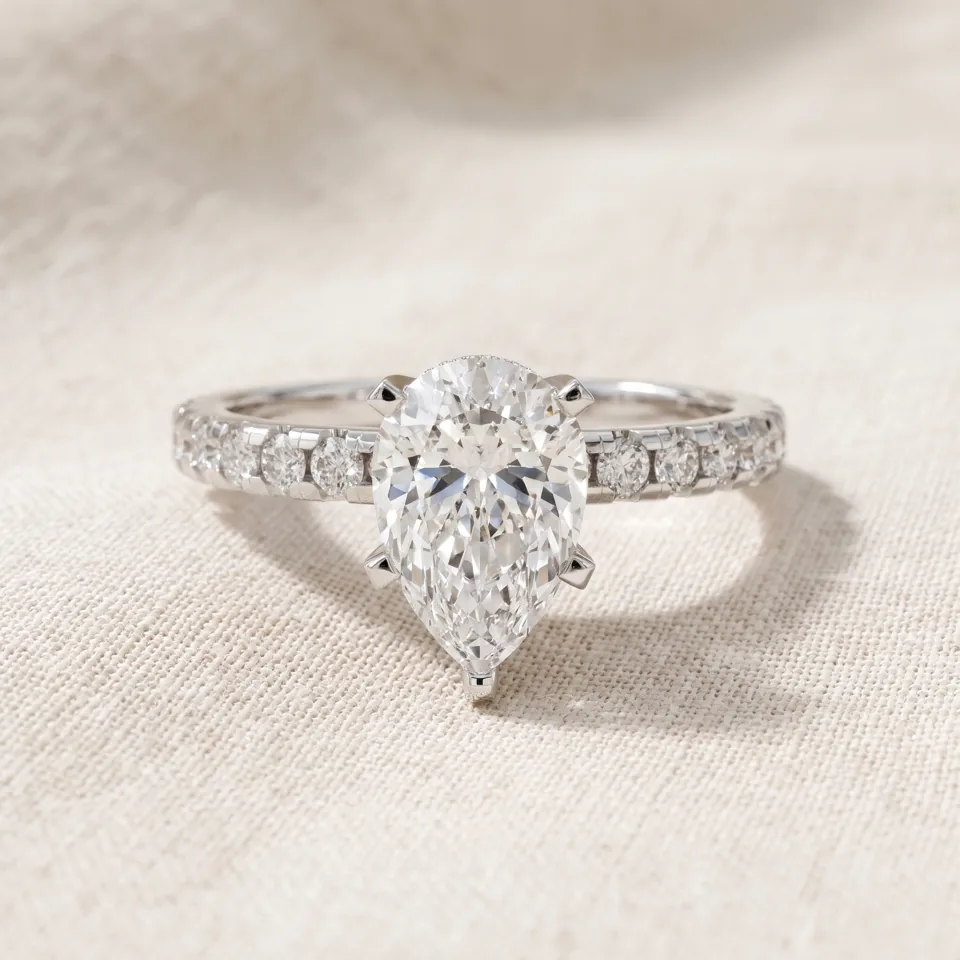 Pear Hidden Halo Engagement Rings
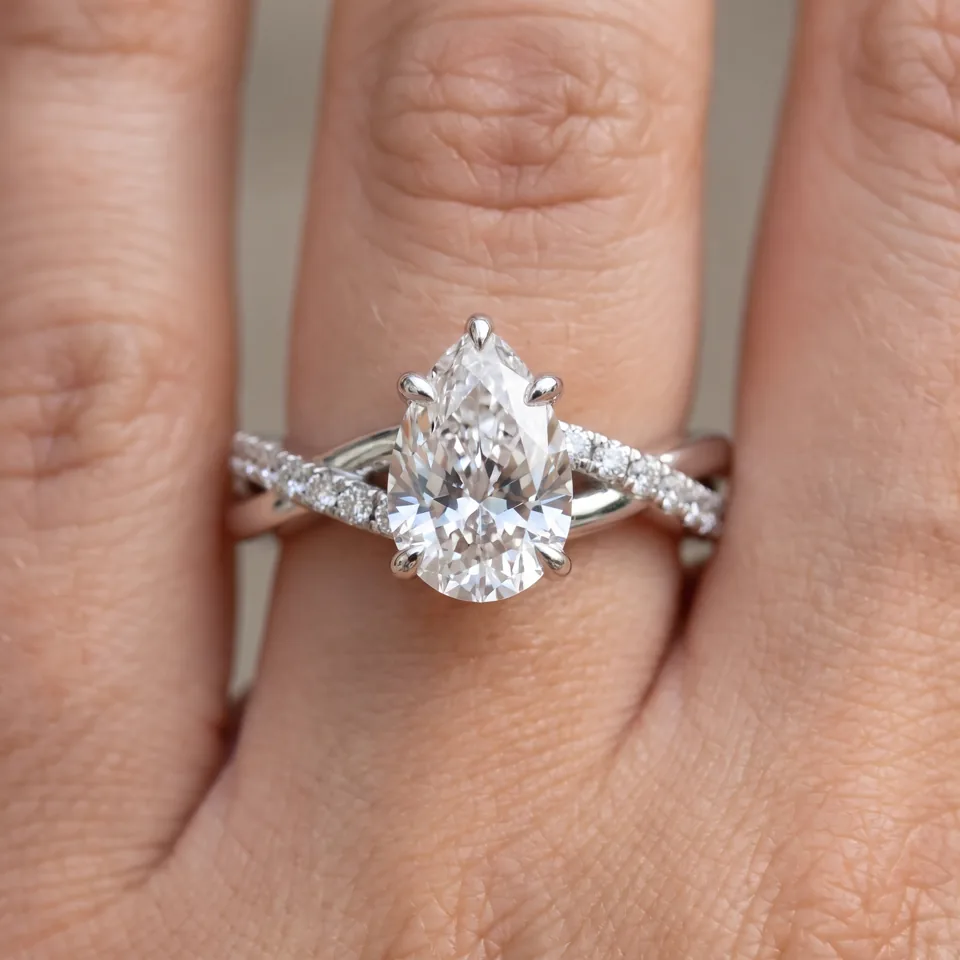 Pear Infinity Engagement Rings
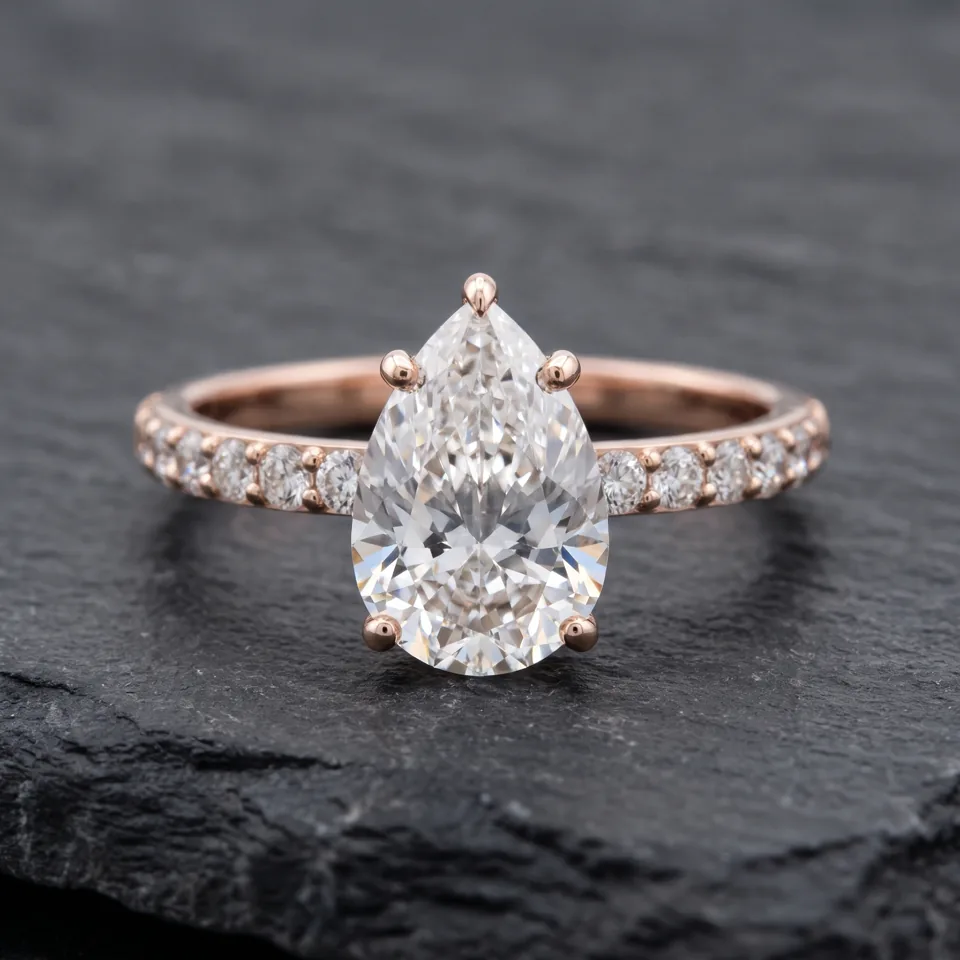 3 Carat Pear Shaped Lab-Grown Diamond Rings
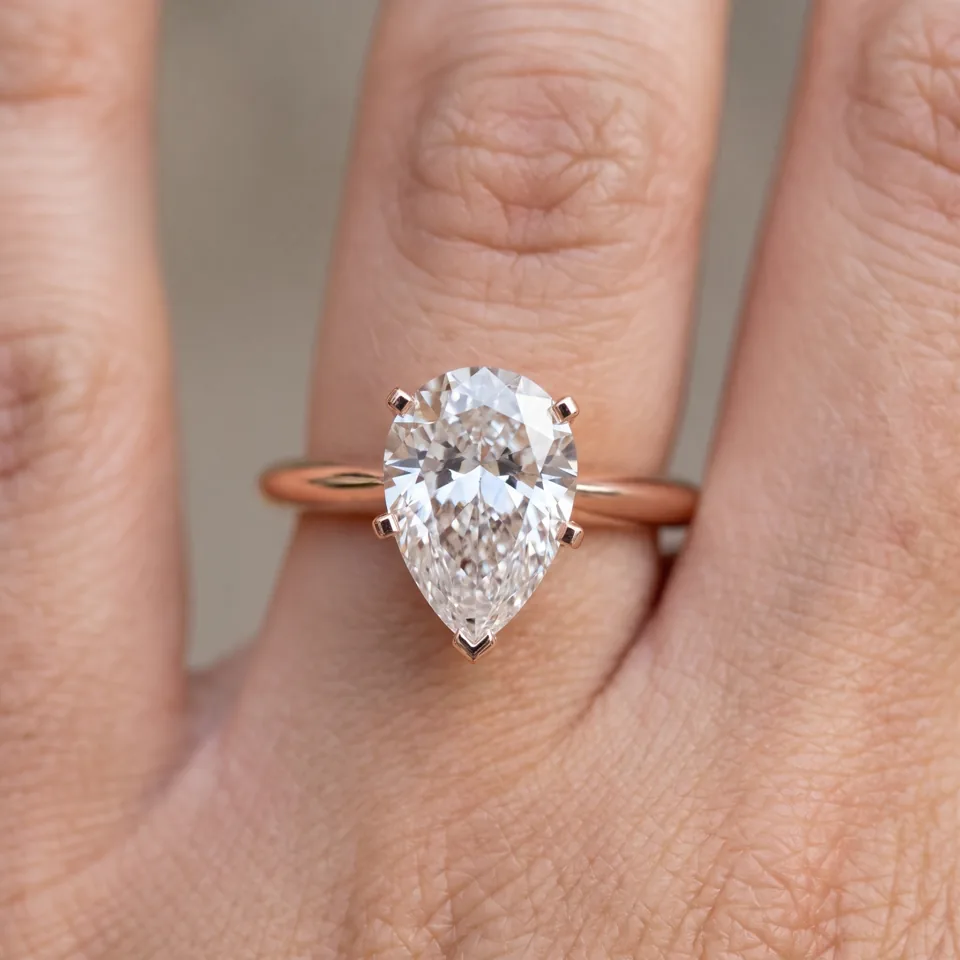 Rose Gold Pear Engagement Rings
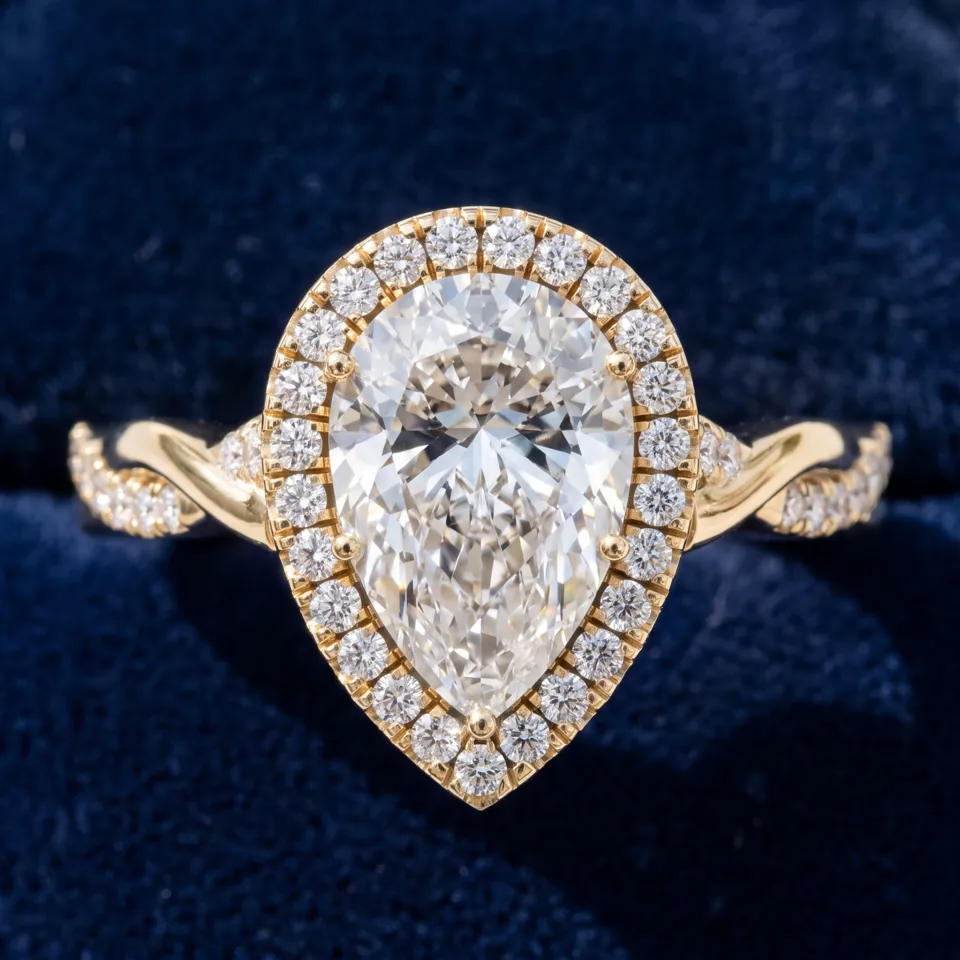 Yellow Gold Pear Engagement Rings
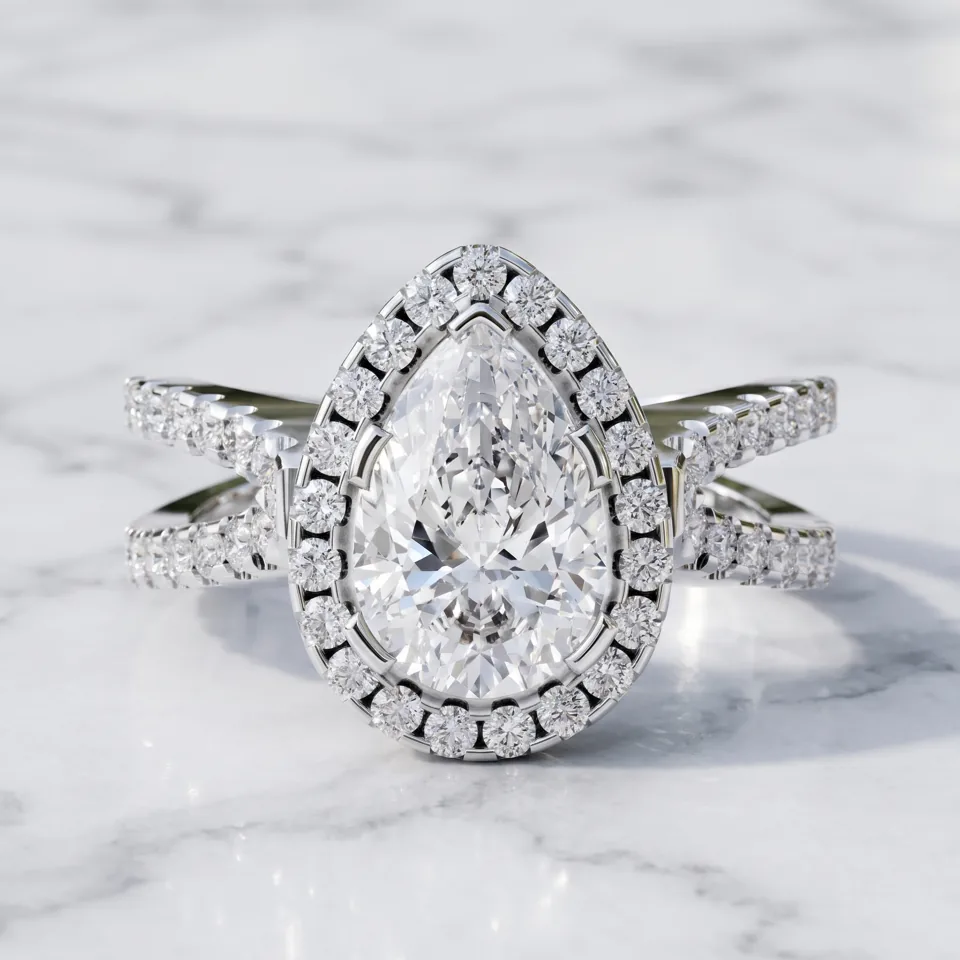 White Gold Pear Engagement Rings
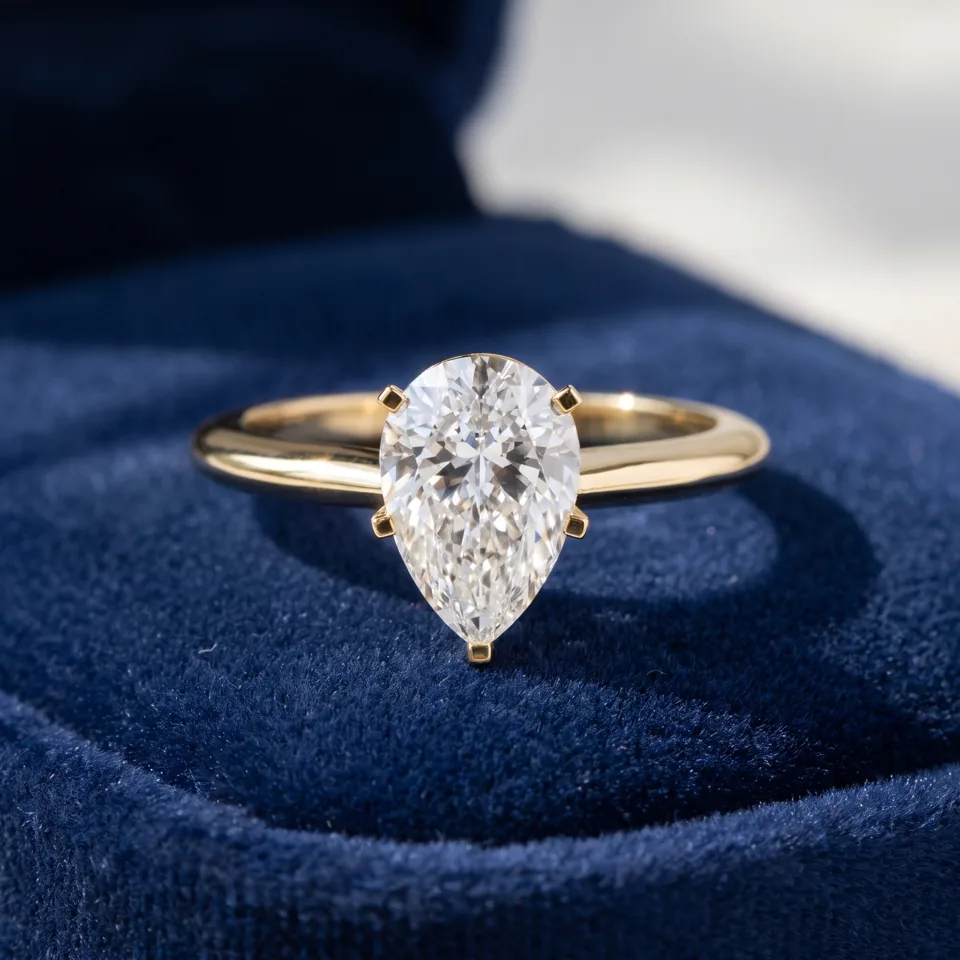 1 Carat Pear Lab-Grown Diamond Rings
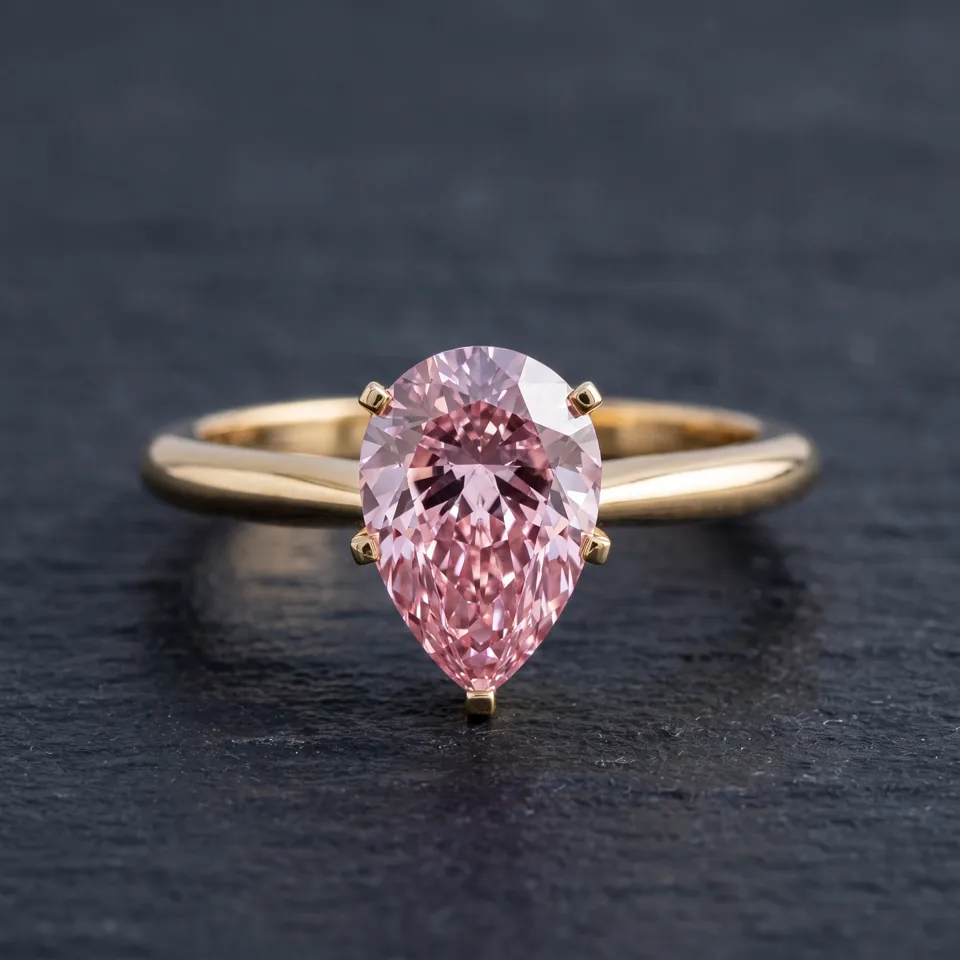 Pear Shaped Pink Diamond Rings
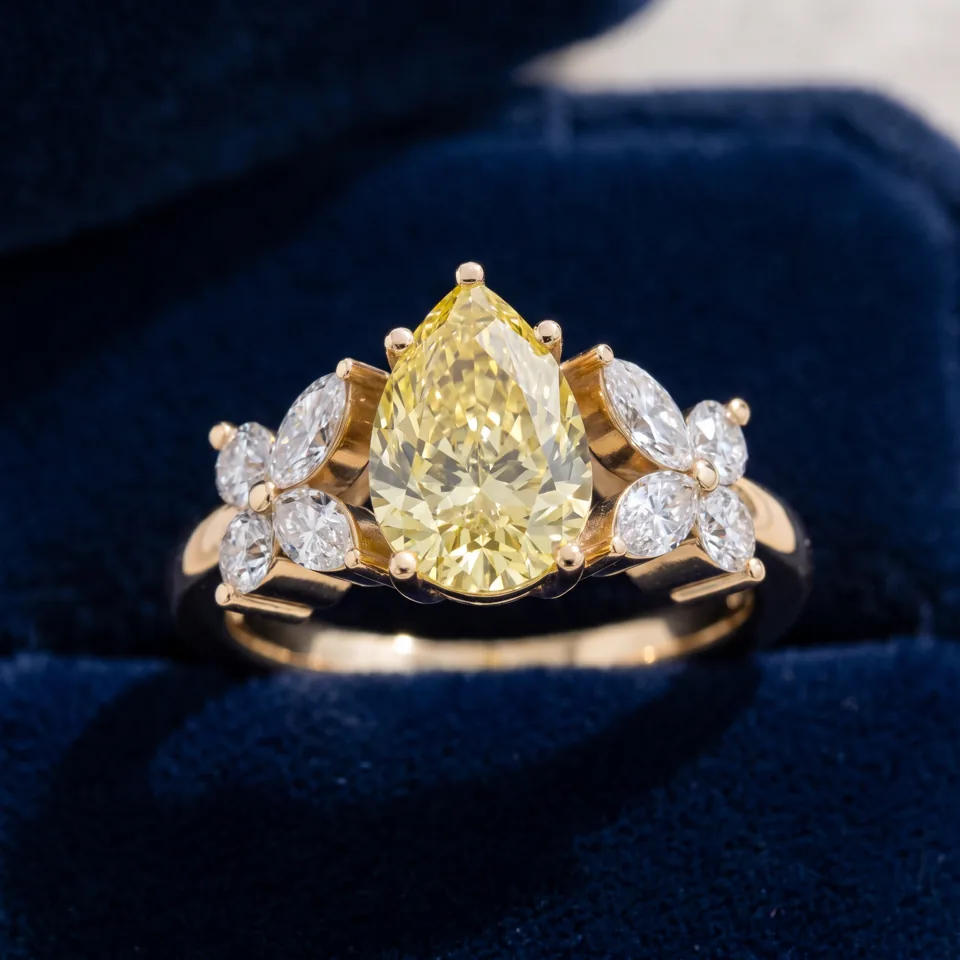 Pear Yellow Diamond Rings
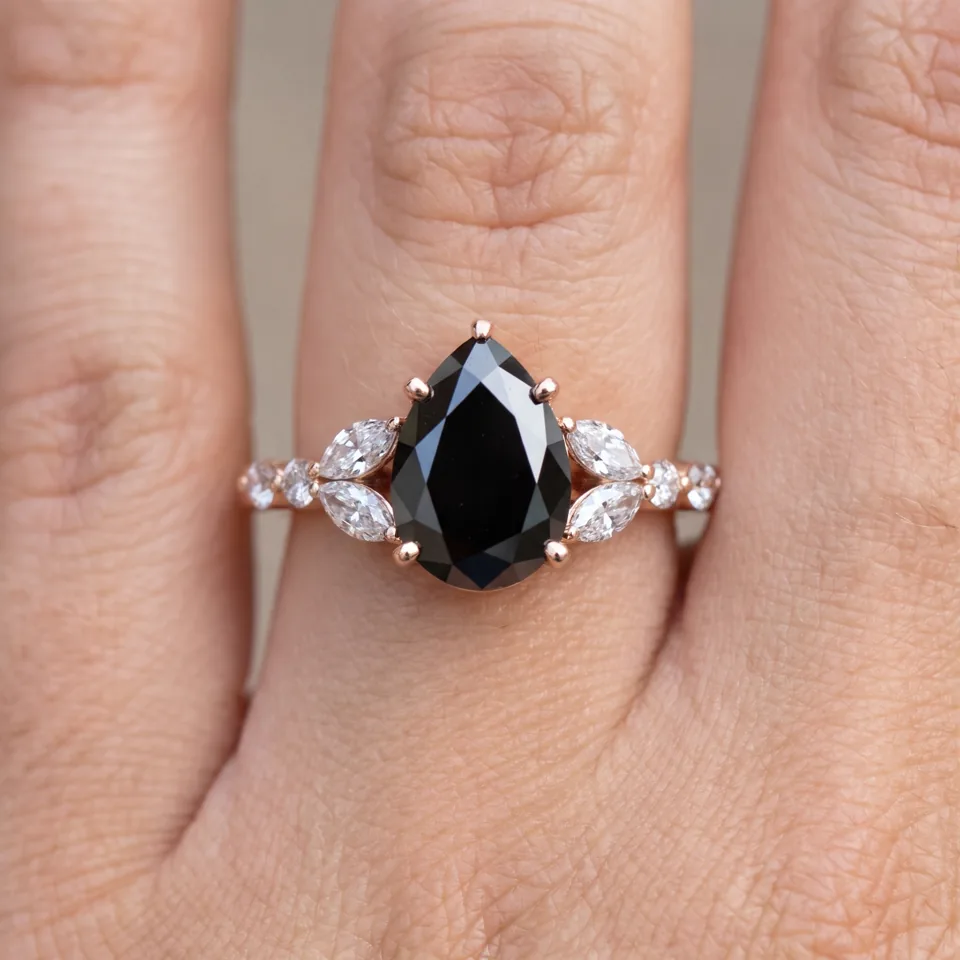 Pear Black Diamond Engagement Rings
Pavé bands and solitaires are the two biggest groups in this collection. A solitaire lets the teardrop outline carry the ring. A halo follows the pear's curve with laboratory-grown diamond accents and adds visible size. In three stone designs a matching pair sits either side of the center, side stone rings run smaller accents down the shoulders, and a few toi et moi rings set the pear next to a partner stone.
The pointed end is where a pear is most likely to chip. A V-prong over the tip, or a bezel around the whole stone, keeps it covered. Some designs here use a bezel center, which also sits lower and snags less. Whatever you choose, ask a jeweler to look over the prongs once a year.
Many pear rings in this range add milgrain, filigree or floral work for a softer, antique feel. Split shank and twisted bands give the center a wider base, and bypass designs curve around it. If you want a matching wedding band later, note that a low setting or halo often needs a curved band to sit flush.
Gold comes in three karats (10K, 14K, 18K) and three colors. Platinum is available too, or pick Silvadium, a tarnish-resistant sterling silver, when budget matters more. Most of the settings can be built around a fancy-color center as well: green, yellow, pink or blue, with black available on some. Rose gold flatters a pink pear, while white metals keep a colorless stone crisp.
We craft each pear setting to order over 10–15 days, and insured shipping is free both to you and back. Your center diamond arrives with an IGI or GIA report. You can have the ring resized once at no cost within 60 days of delivery, and unworn rings with the certificate may be returned within 30 days.
Traditionally, with the point aimed at your fingertip. That direction makes the hand look longer and is how most pear rings are set. Some people turn the point toward the wrist for a softer look, which is simply a matter of taste. Whichever way you wear it, a V-prong or bezel on the tip helps, and it is wise to remove the ring for heavy chores.
It is most often called a pear cut or teardrop diamond. In the trade it is sometimes called a pendeloque, a name used for pear-shaped brilliant cuts. The shape mixes a round end with a marquise-like point, which gives it both sparkle and a long outline. Our diamond shapes guide compares it with the other shapes. Every setting in this collection is designed around that teardrop shape.
Yes. Pear engagement rings are a popular choice right now, both as slim solitaires and in vintage-style settings. They stand out from round and oval rings while still feeling classic. Pear centers also work well in toi et moi rings and with chevron or curved wedding bands, which makes them easy to build a modern stack around.
Usually not. Carat for carat, a pear diamond is usually cheaper than a round of equal quality, since cutting it wastes less of the rough crystal. Thanks to its long outline, it seems bigger than its weight suggests. Lab-grown diamonds cost far less than mined diamonds of the same size. Whitemoon settings start under $150, and you see the center's price once you select one.
Pick a band that follows the pear's outline. A chevron or curved band wraps around the center so the rings sit flush, while a straight band works best with a raised solitaire. A thin pavé band adds sparkle without crowding the stone. Keep the metals matched, or mix gold colors on purpose for a layered look.


