Complimentary insured shipping, both waysEngagement ring diamonds certified by IGI or GIAGrown by light. Conflict-free by natureComplimentary insured shipping, both ways
Engagement RingsWedding BandsEarrings

NecklaceBraceletsAbout
Oval engagement rings carry an elongated center that shows its weight over a broad face and suits almost any hand. Everything on this page is a setting. You decide on the band design now and pick the oval center diamond in the step that follows. Our guide to the bow-tie effect explains what to look for in an oval.
Think about how much sparkle you want around the oval, then pick the metal and the center.
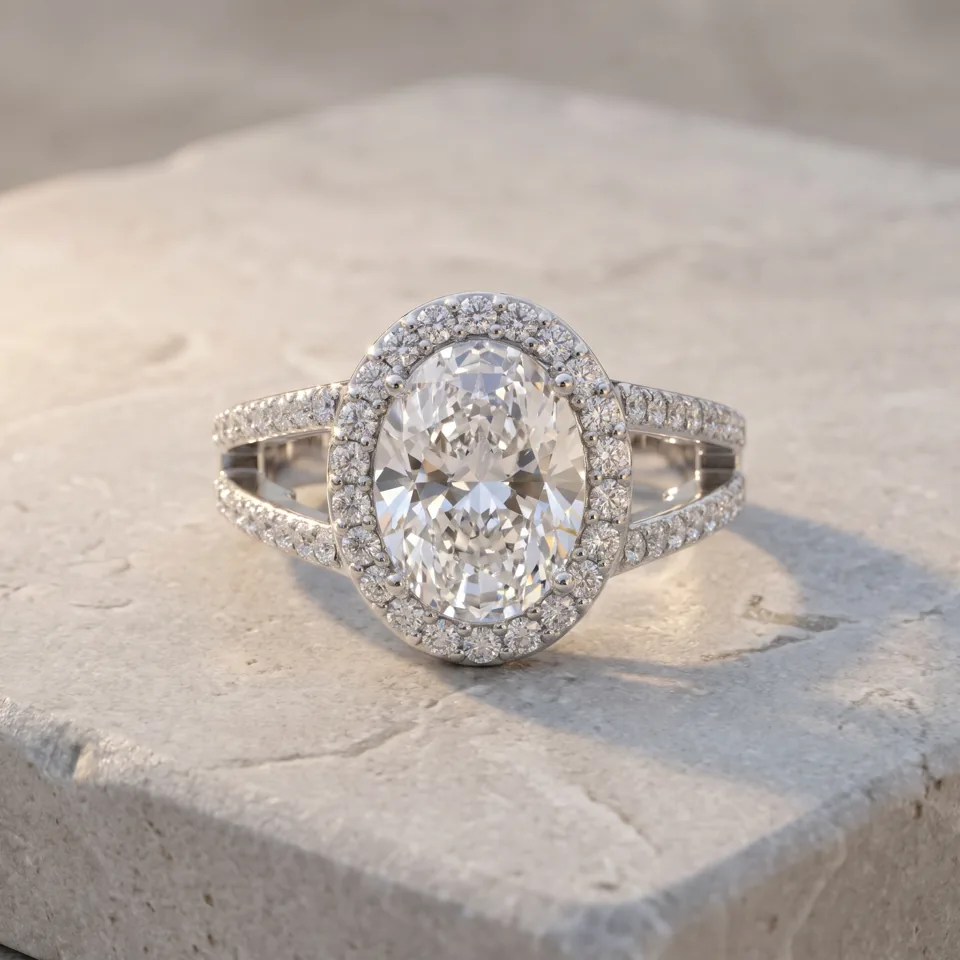 Oval Halo Engagement Rings
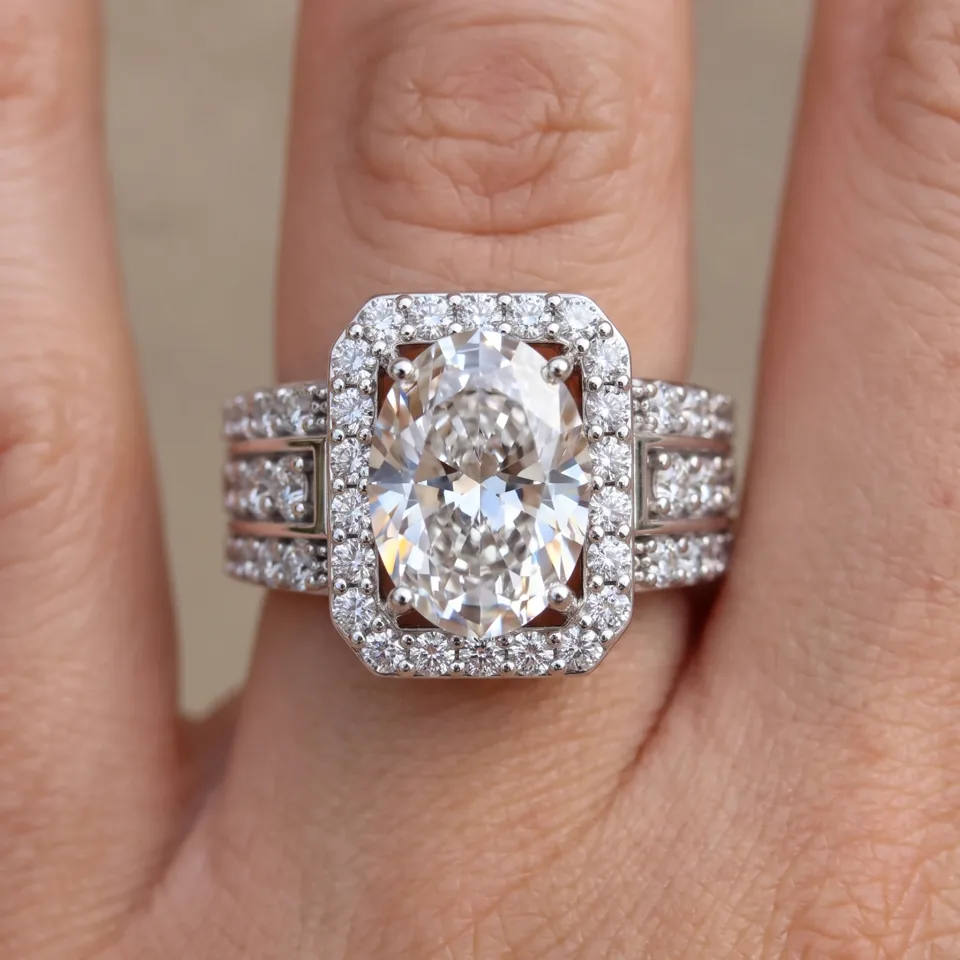 Oval Vintage Engagement Rings
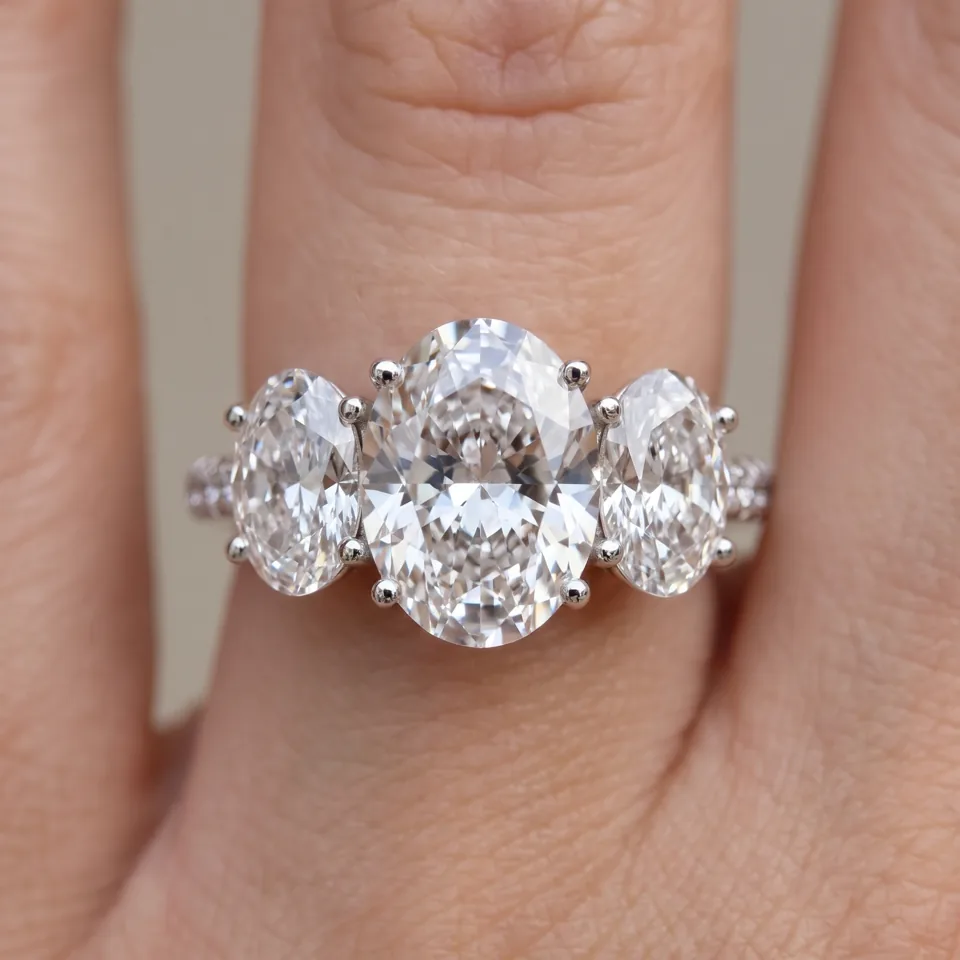 Oval Three Stone Engagement Rings
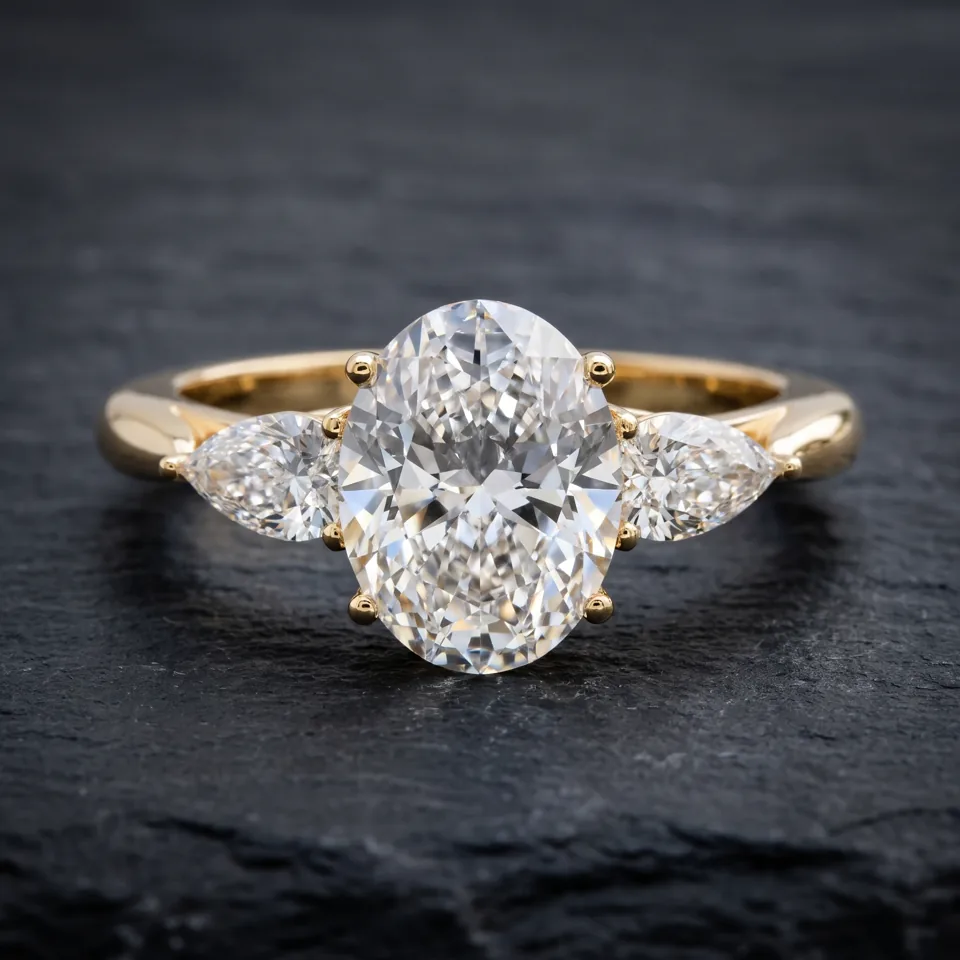 Oval Side Stone Engagement Rings
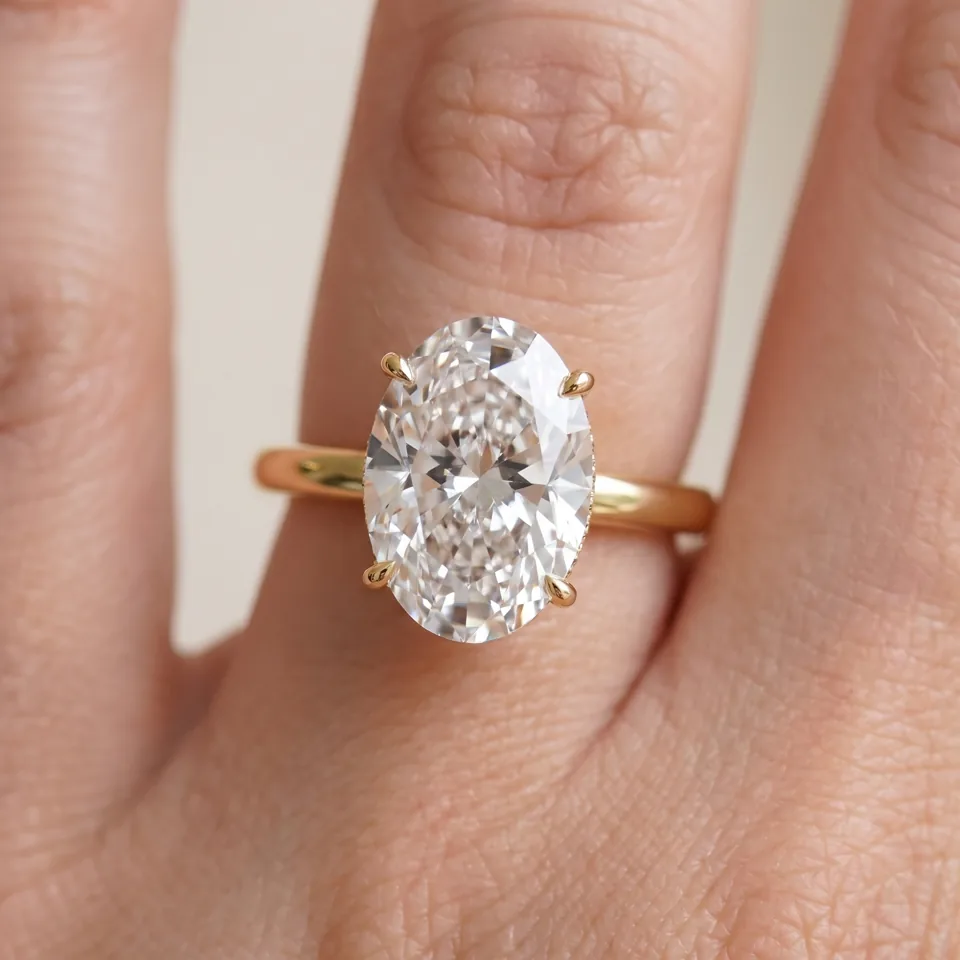 Oval Hidden Halo Engagement Rings
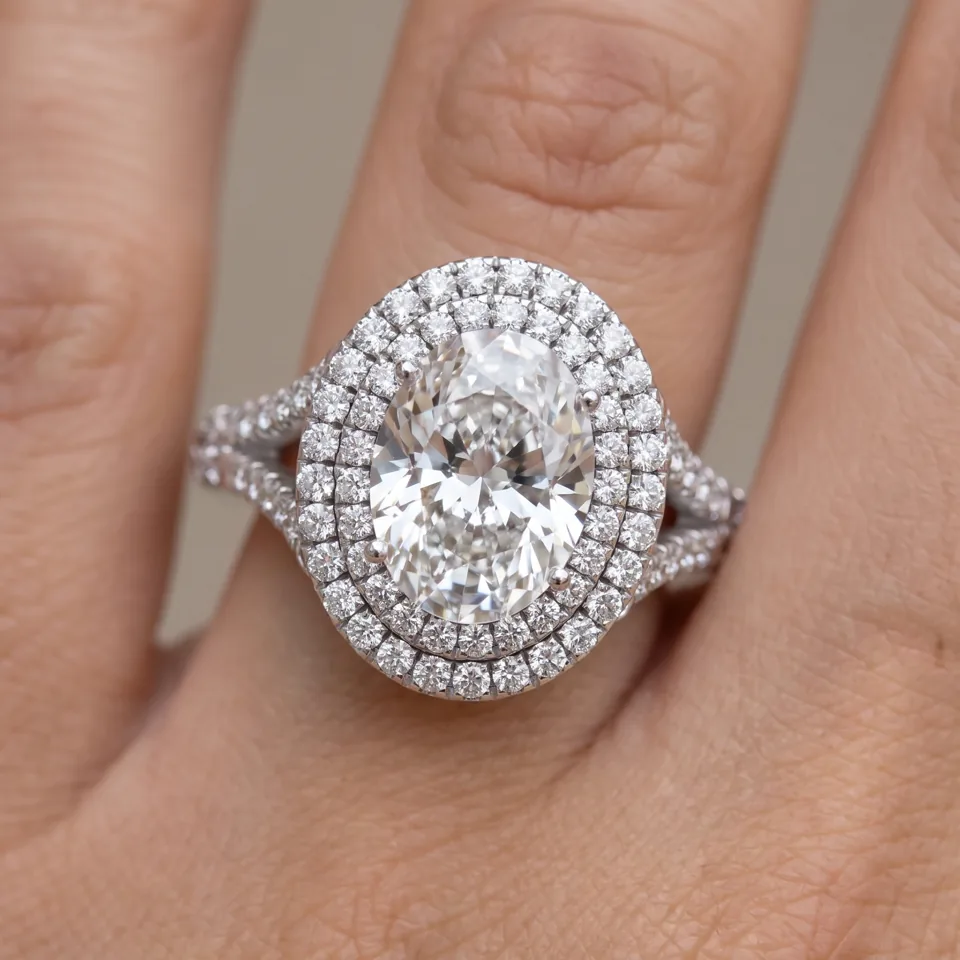 Oval Split Shank Engagement Rings
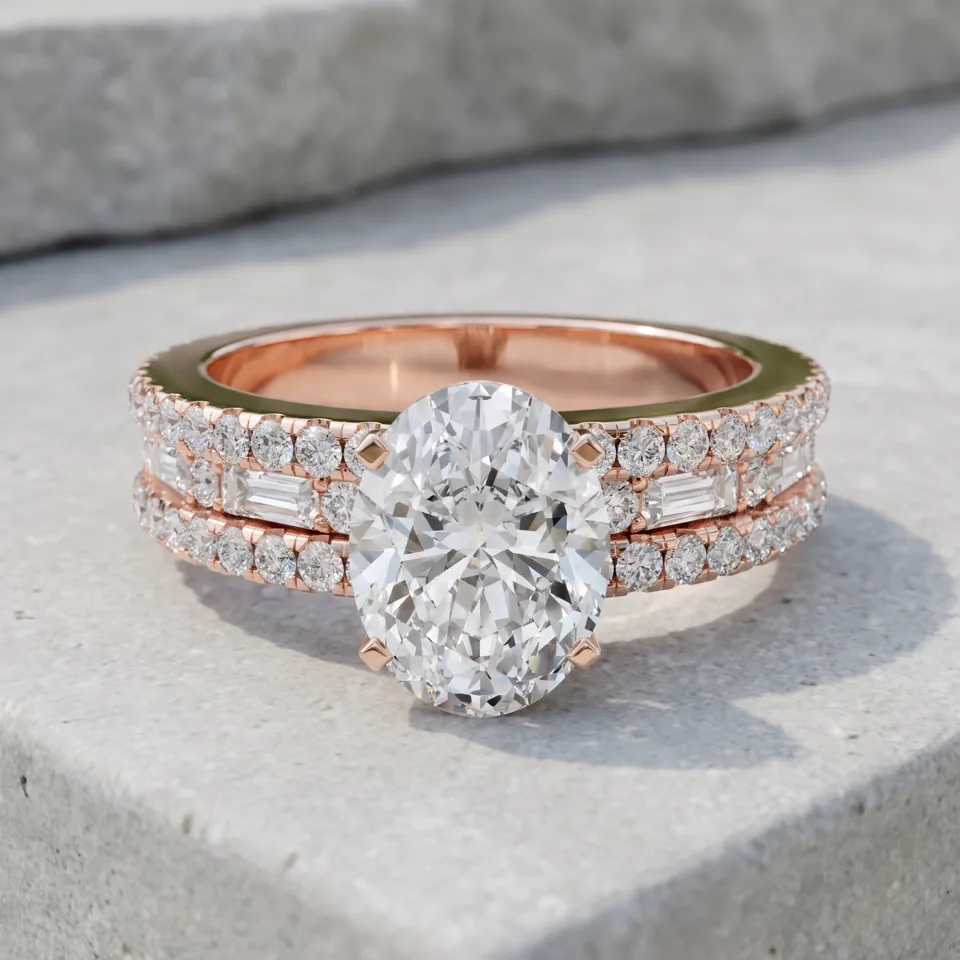 Oval Engagement Rings with Baguettes
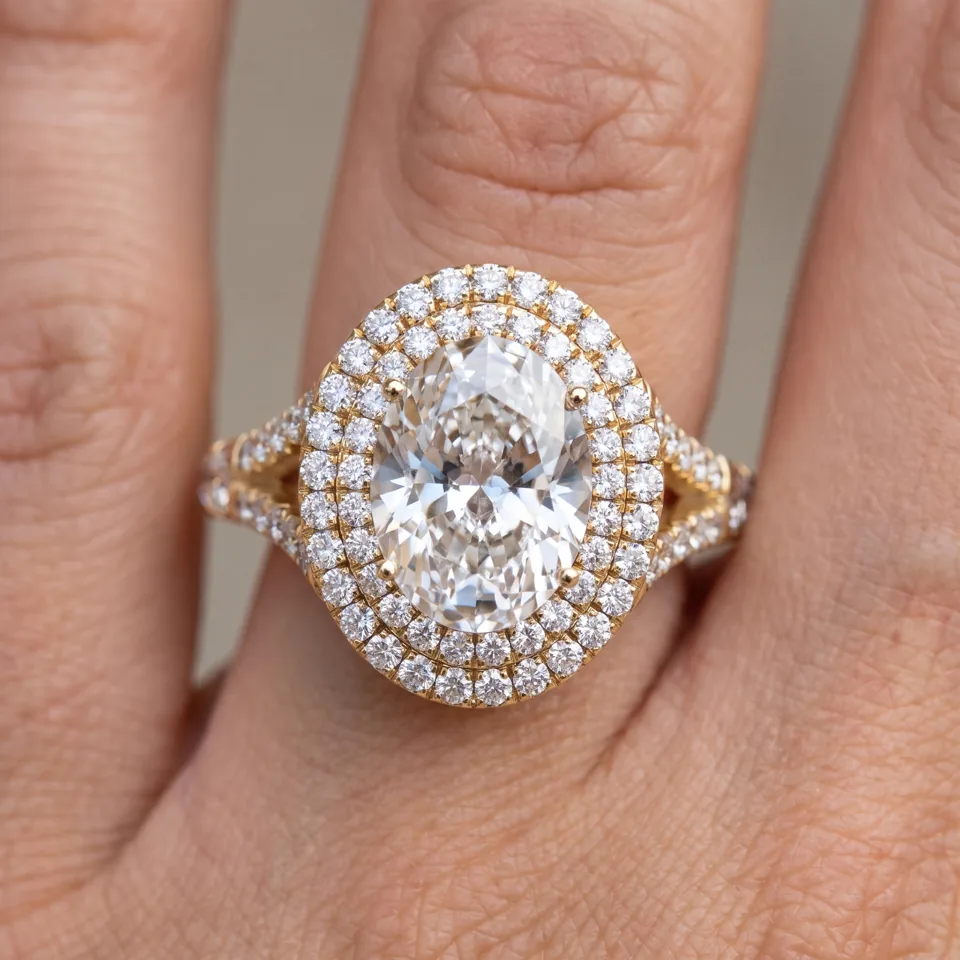 Oval Double Halo Engagement Rings
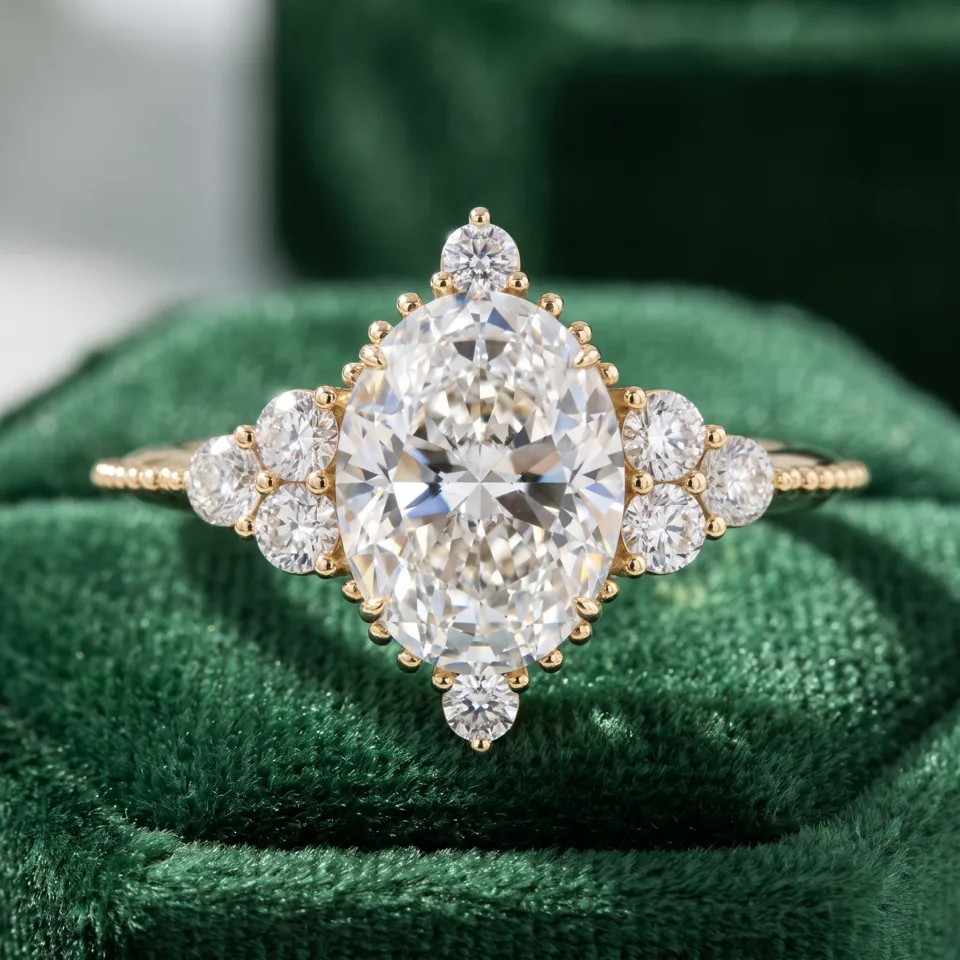 Oval Cluster Engagement Rings
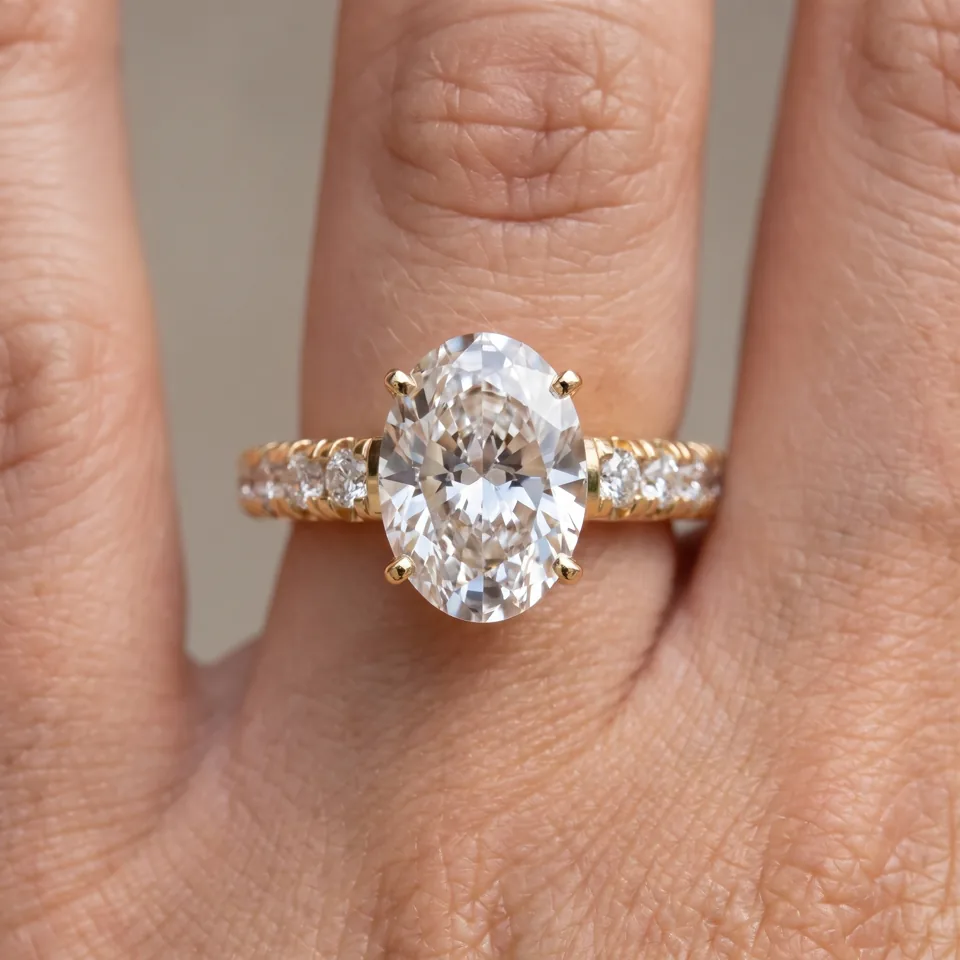 Oval Cathedral Engagement Rings
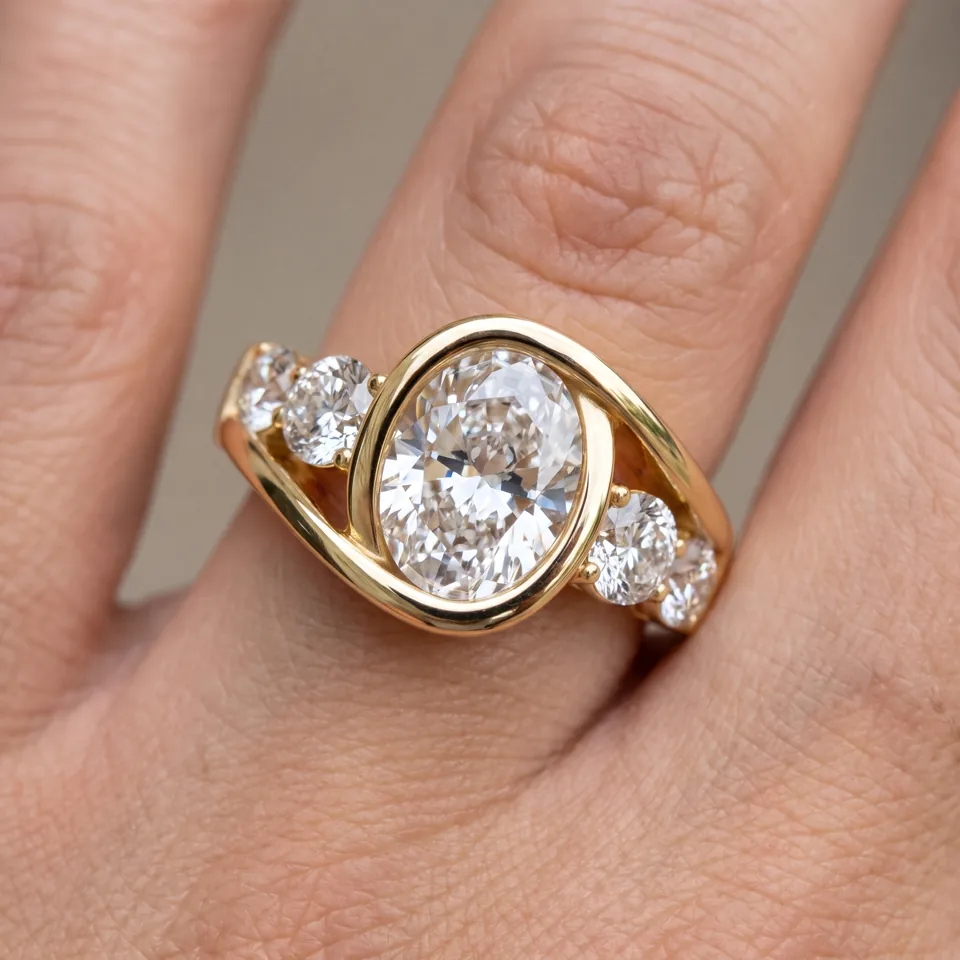 Oval Bypass Engagement Rings
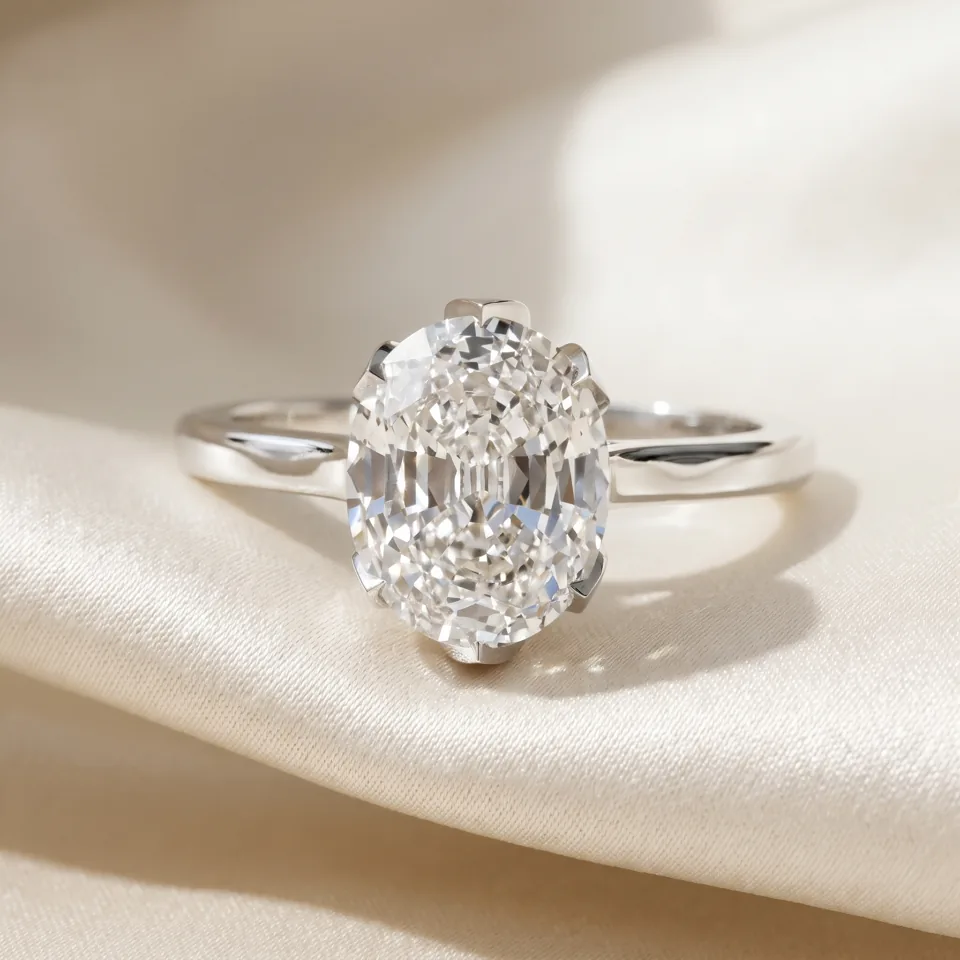 Oval Floral Engagement Rings
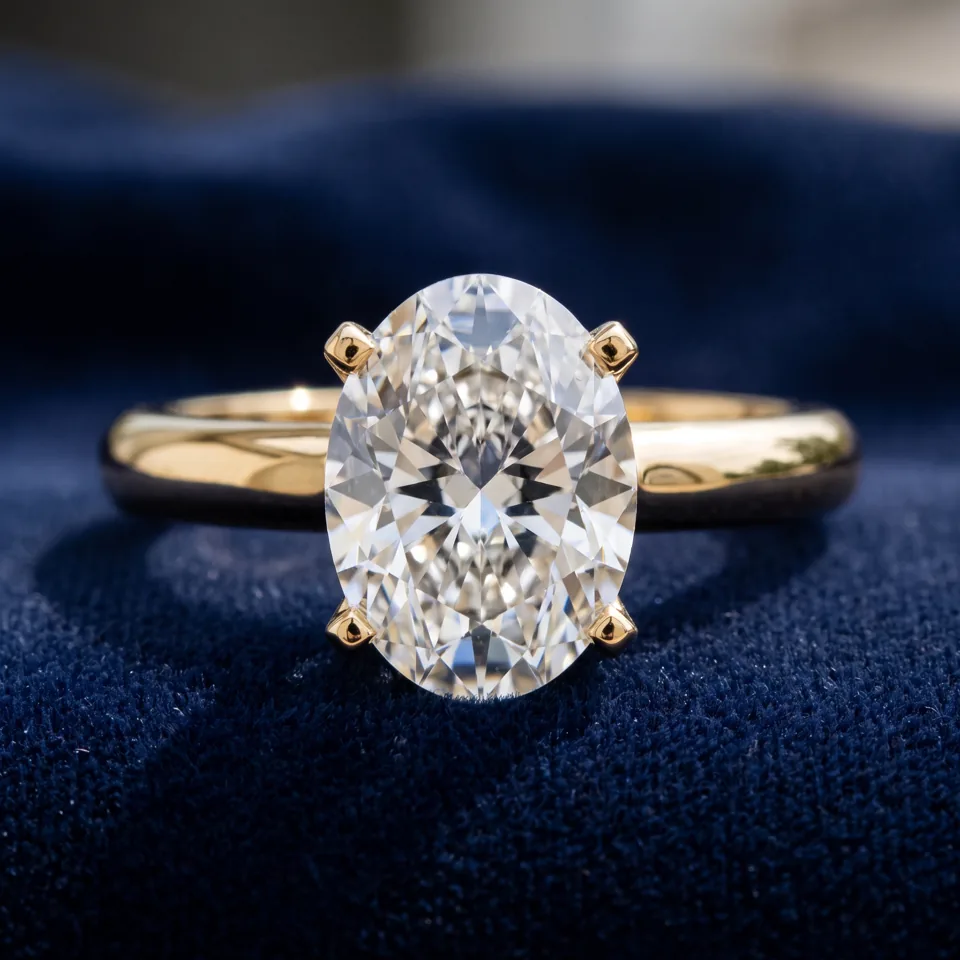 5 Carat Oval Lab-Grown Diamond Rings
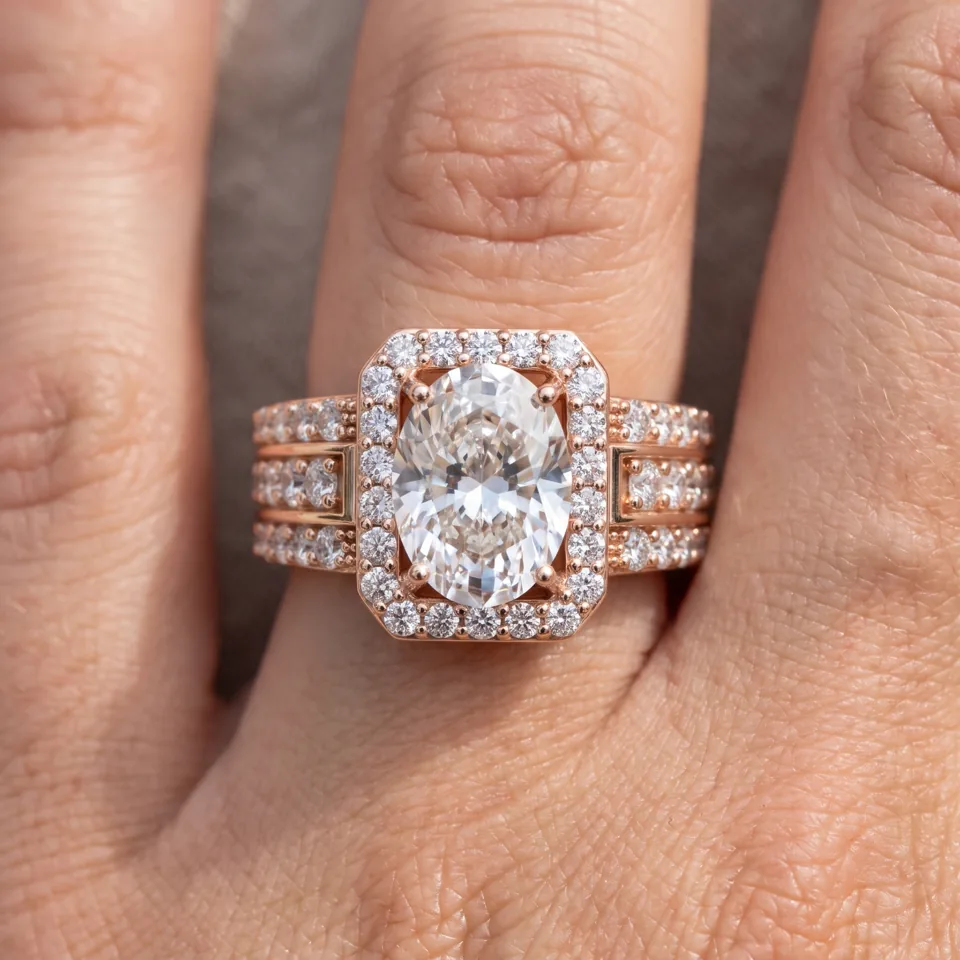 4 Carat Oval Lab-Grown Diamond Rings
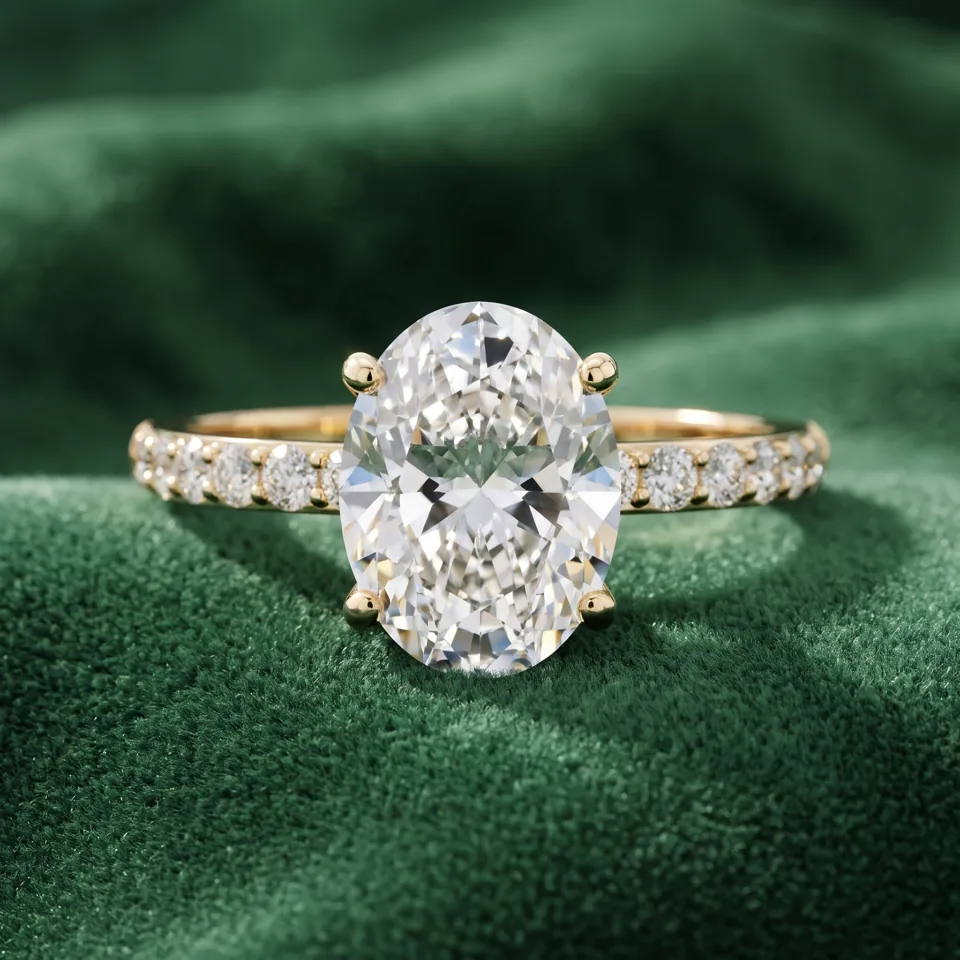 Yellow Gold Oval Engagement Rings
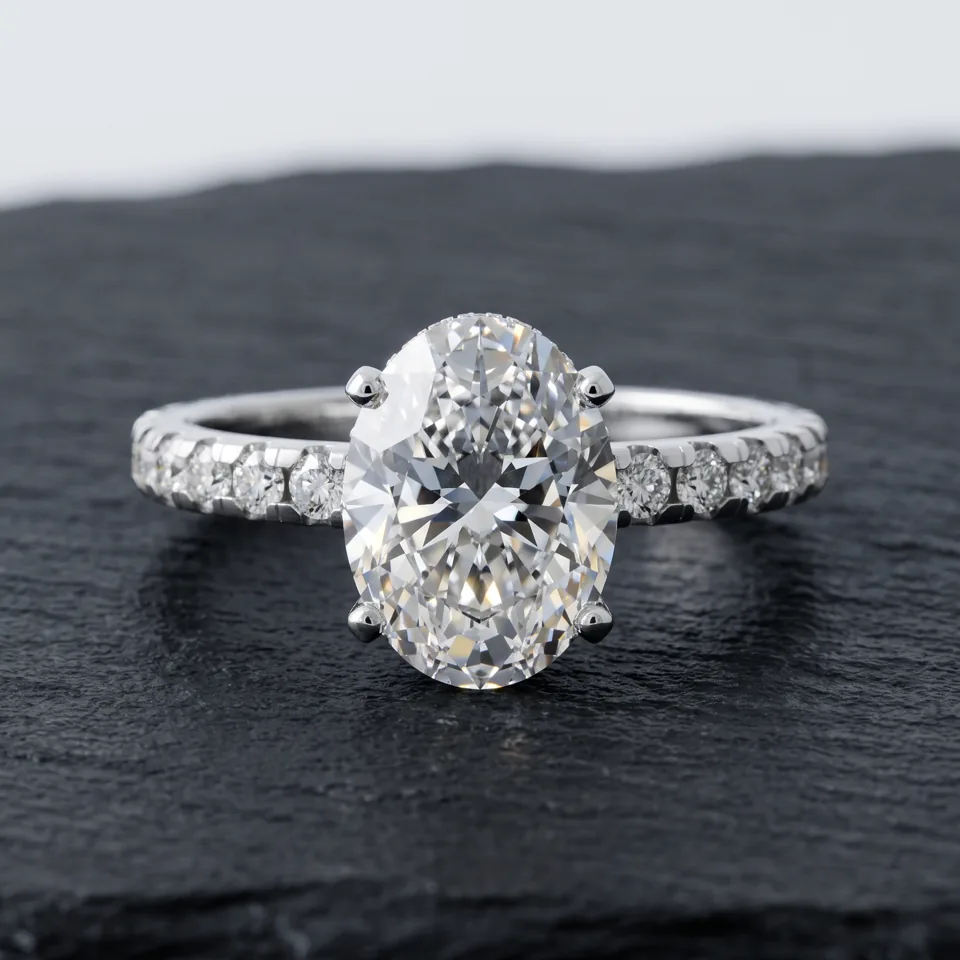 1.5 Carat Oval Lab-Grown Diamond Rings
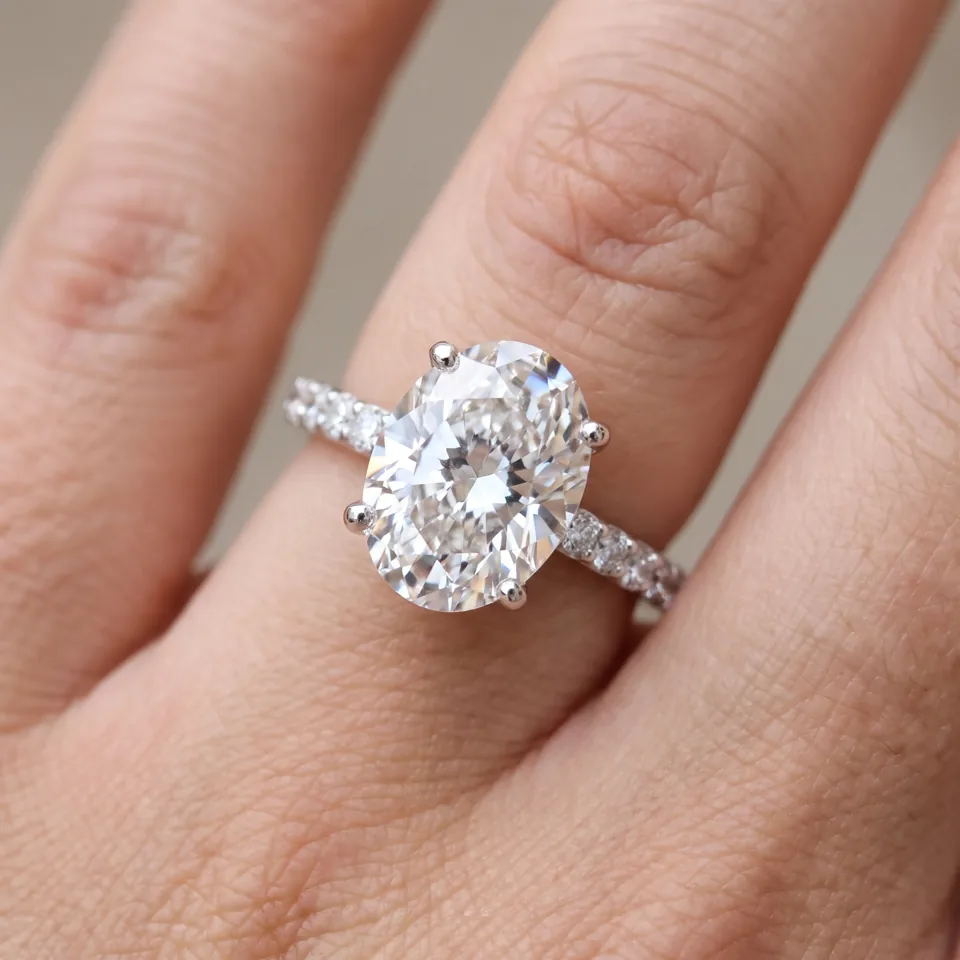 2.5 Carat Oval Lab-Grown Diamond Rings
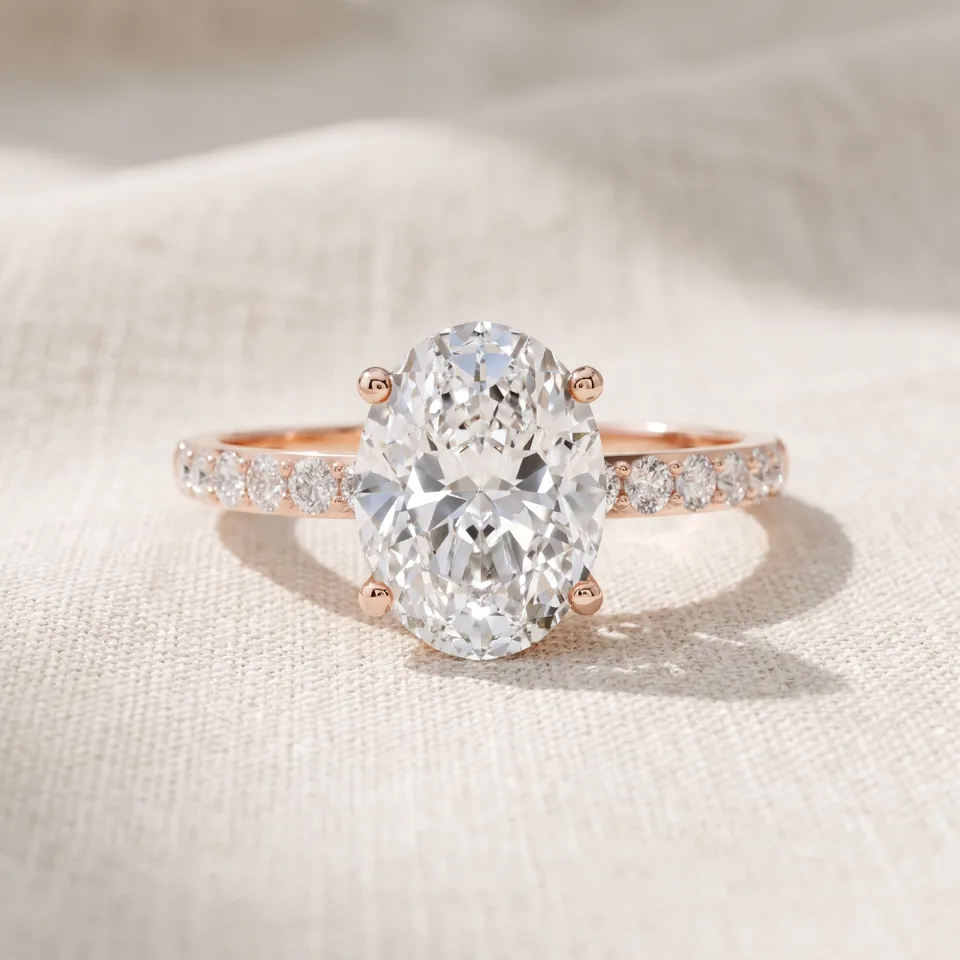 Rose Gold Oval Engagement Rings
Pavé bands and solitaires lead this collection. A plain or pavé solitaire keeps the oval's outline clean. A halo surrounds it with laboratory-grown diamond accents for more presence, while a hidden halo hides a thin collar of accents beneath the stone, visible mainly in profile. Three stone rings place a pair of smaller stones beside the oval, side stone designs line the shoulders, and some toi et moi settings join it with a second center.
Cathedral and raised settings lift the oval for a taller profile and let a straight wedding band sit underneath. Lower settings and bezels are easier on gloves and knitwear. For hands that are always busy, a bezel or a low basket head is the more practical pick.
Many designs add vintage touches like milgrain edges, filigree or floral galleries. Split shank and twisted bands open up beneath the center, giving a fuller look. Next to a slim pavé band, the center appears bigger.
Gold settings come at three karats, 10K, 14K and 18K, with white, yellow and rose to pick from. Platinum is the other premium metal, and for a smaller budget there is Silvadium, a tarnish-resistant sterling silver. Beyond colorless, most designs also accept a fancy-color oval center, whether yellow, blue, pink or green, and black suits some. Yellow gold lends an oval a warm, vintage feel; platinum and white gold read cooler and brighter.
Expect your oval ring 10–15 days after you order, since we make it for you, and insured shipping is free in both directions. The center diamond is sent with an IGI or GIA report. One free resize is yours within 60 days of delivery, and an unworn ring with its certificate can be returned within 30 days.
Above all, a heavy bow-tie: a shadowed band running across the middle of some ovals. Skip outlines that are very skinny or almost round too; many buyers like a length about 1.35 to 1.5 times the width. Our diamond shapes guide compares the ratios of every long shape. Make sure the two halves mirror each other, and avoid stones cut so shallow that they look glassy and lifeless.
The best size comes down to your hand, budget and taste. Many people choose an oval between about 1 and 2 carats, which looks generous because ovals spread their weight over a large face. On slender fingers a smaller oval still reads big. The center is picked and priced in the next step, so you can compare a few sizes before deciding.
Yes, the oval is a long-established shape that has stayed in demand for decades. It sits between the classic round and the more striking elongated cuts, so it rarely looks dated. Pairing it with a simple solitaire or a slim pavé band keeps it classic, while a hidden halo or toi et moi design gives it a more current feel.
Yes. Carat for carat, an oval tends to present a bigger top surface than a round, since a greater share of the stone faces upward. The long outline also runs down the finger, which adds to the impression of size. Pair it with a thin band or a hidden halo and the center looks larger still.
A slim band usually looks best, because it keeps attention on the oval. A plain metal band is the cleanest choice, while a thin pavé band adds sparkle without crowding the center. If the solitaire sits low, a curved band follows its edge. Matching the metal of the engagement ring keeps the pair looking like a set.


