Complimentary insured shipping, both waysEngagement ring diamonds certified by IGI or GIAGrown by light. Conflict-free by natureComplimentary insured shipping, both ways
Engagement RingsWedding BandsEarrings

NecklaceBraceletsAbout
Cushion cut engagement rings pair a softly squared center with rounded corners and a glow that reads a little vintage. Every setting here is shaped to hold a cushion cut diamond, which you pick in the next step.
Start with the look of the band, plain solitaire, halo or pavé shank, then choose your metal.
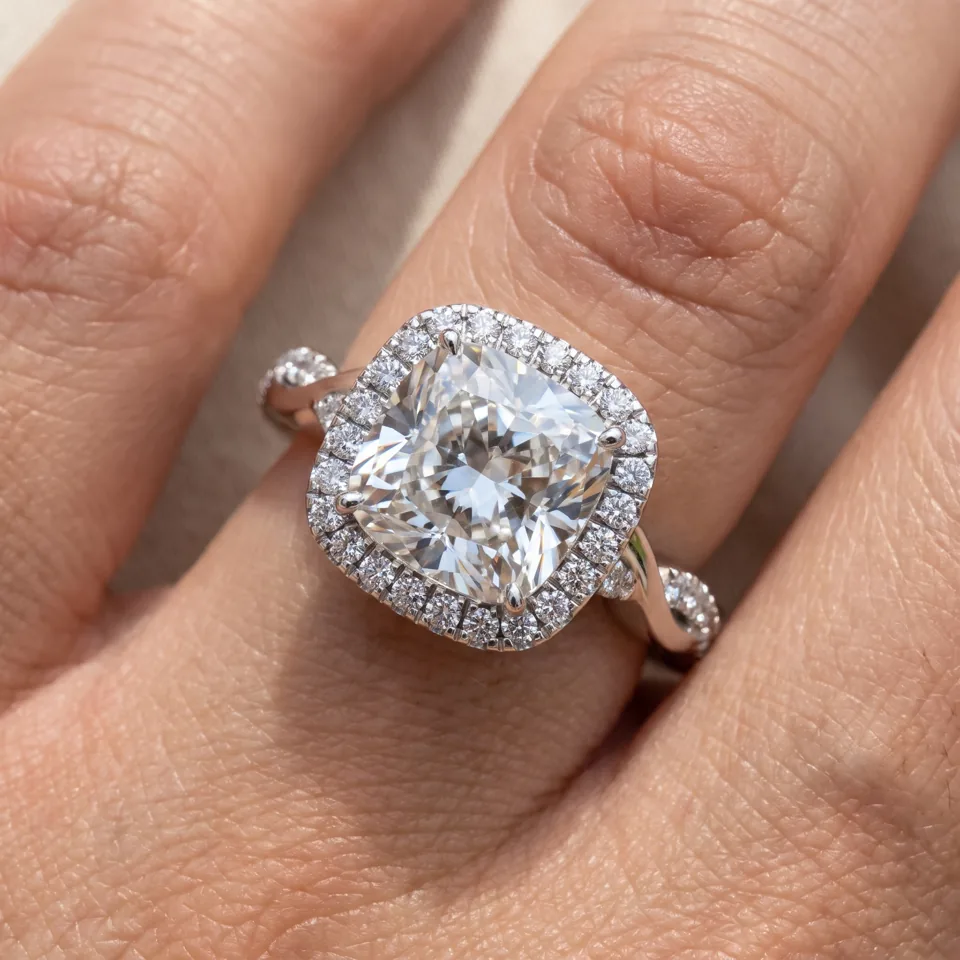 Cushion Cut Halo Engagement Rings
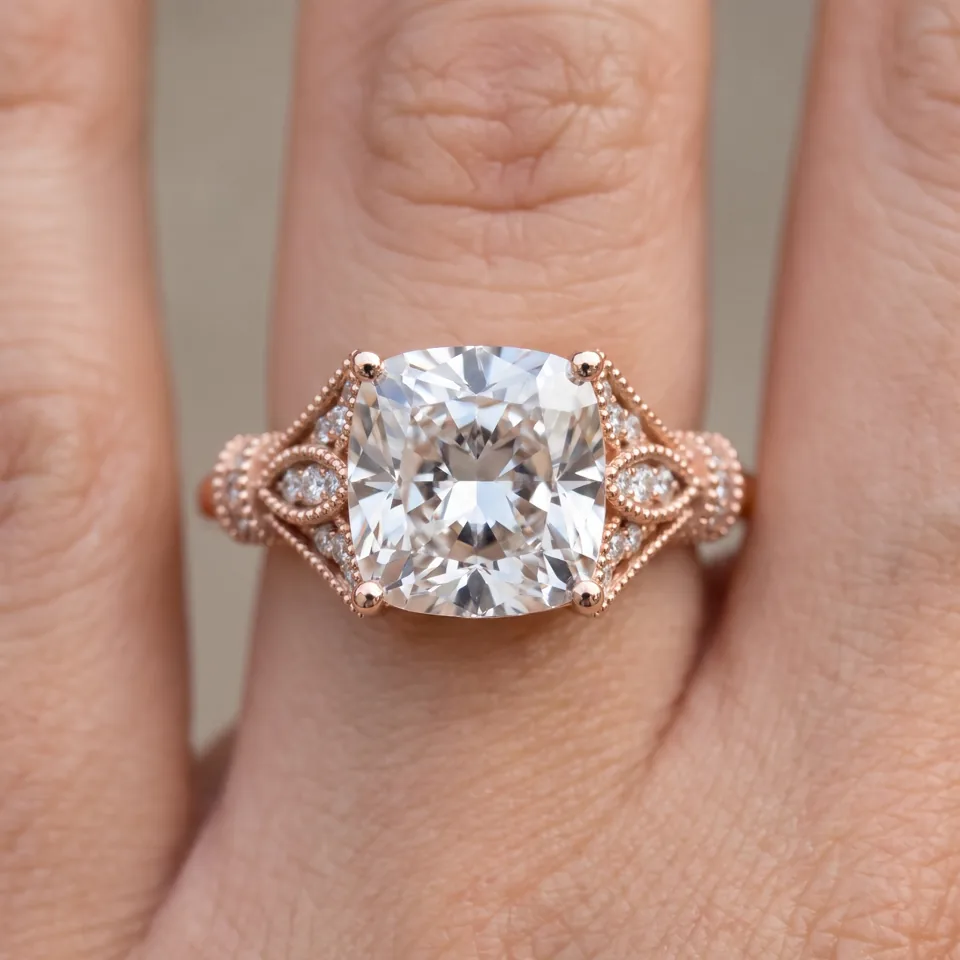 Antique Cushion Cut Engagement Rings
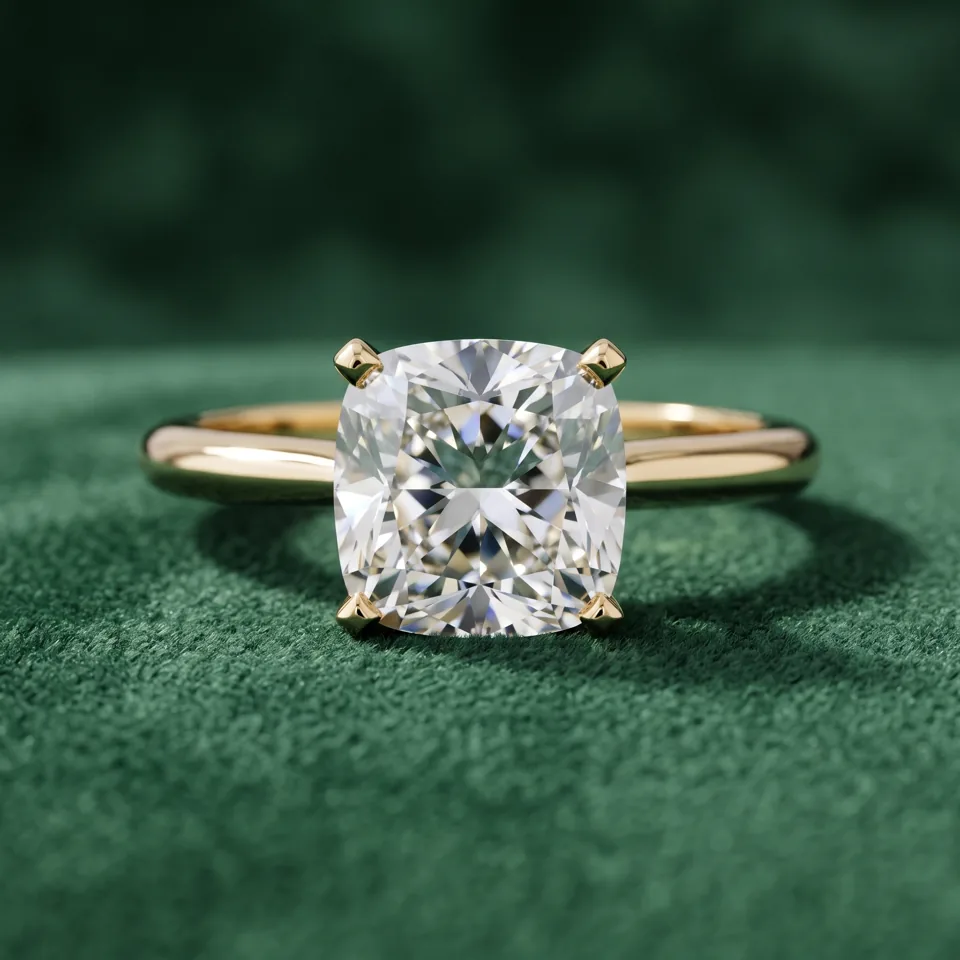 Cushion Cut Solitaire Engagement Rings
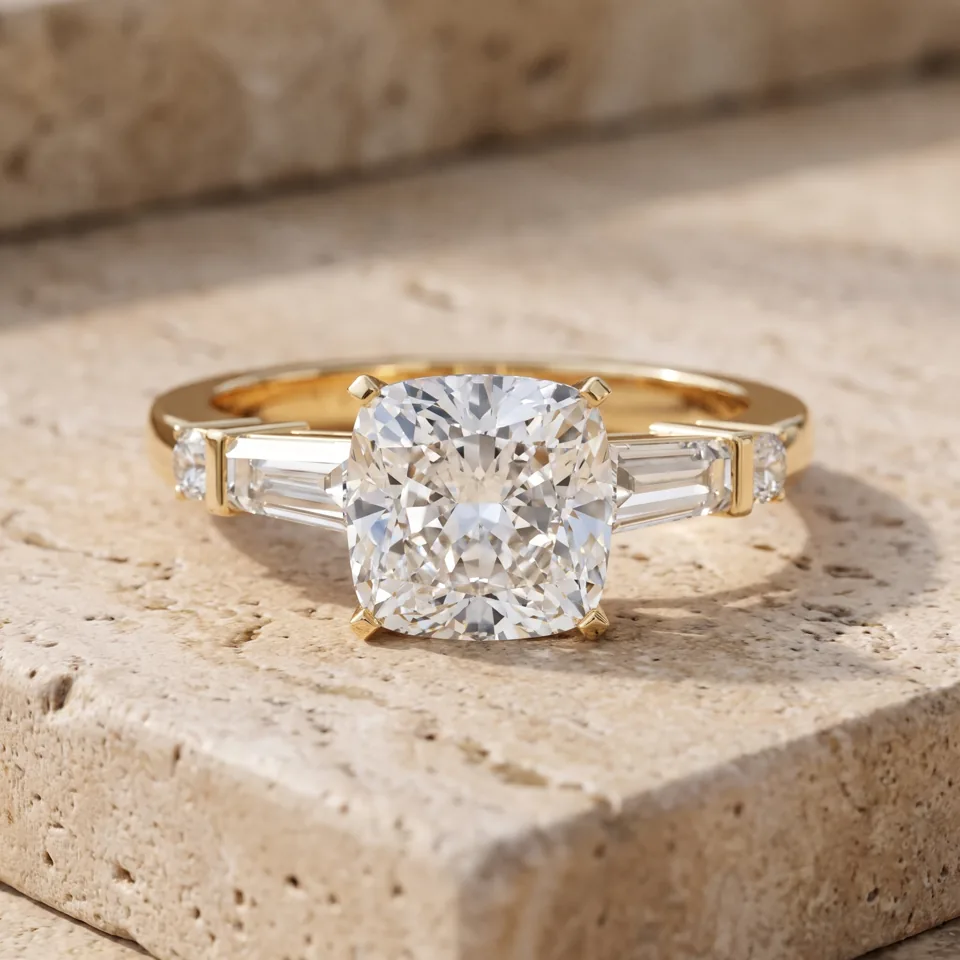 Cushion Cut Three Stone Engagement Rings
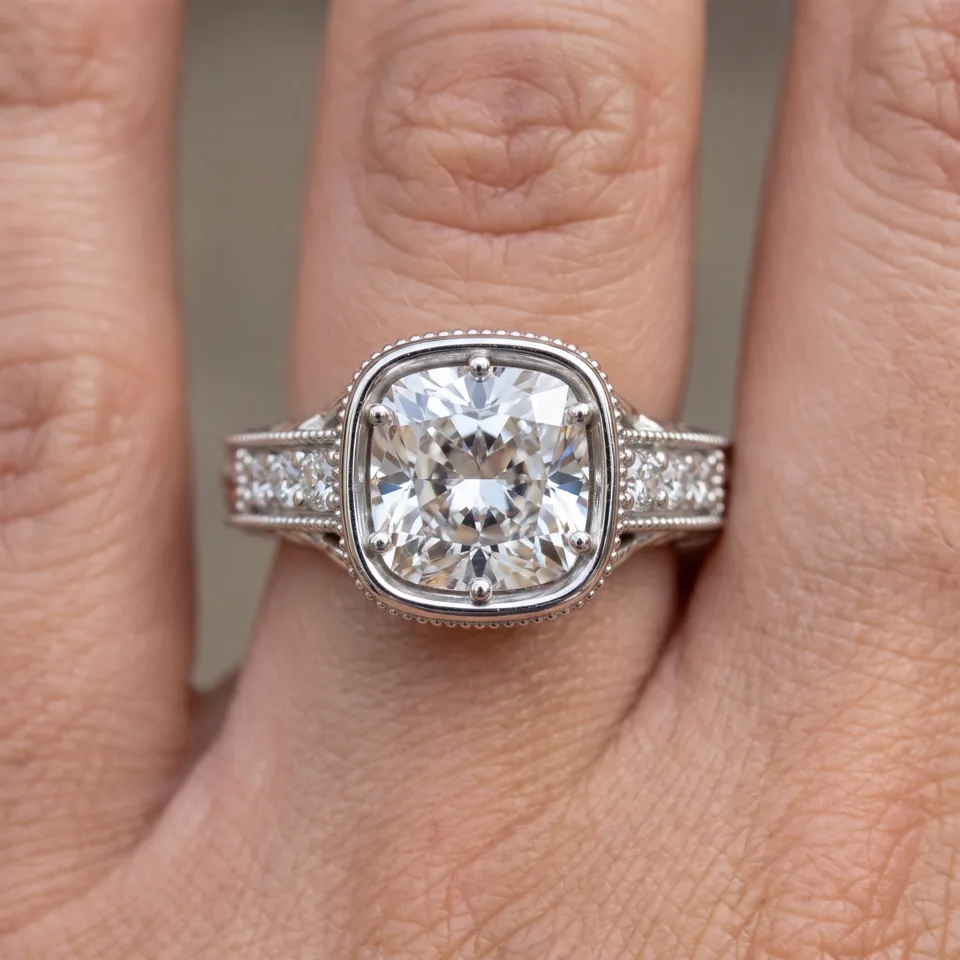 Cushion Cut Bezel Engagement Rings
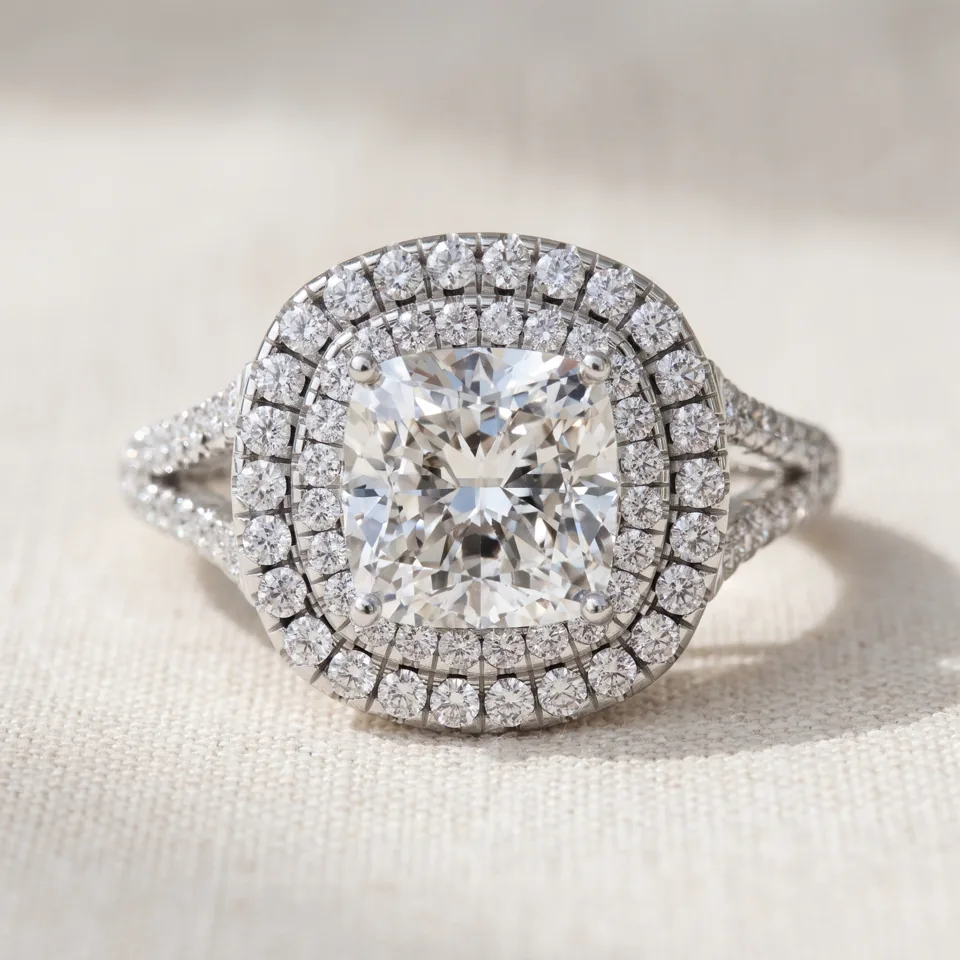 Cushion Cut Double Halo Engagement Rings
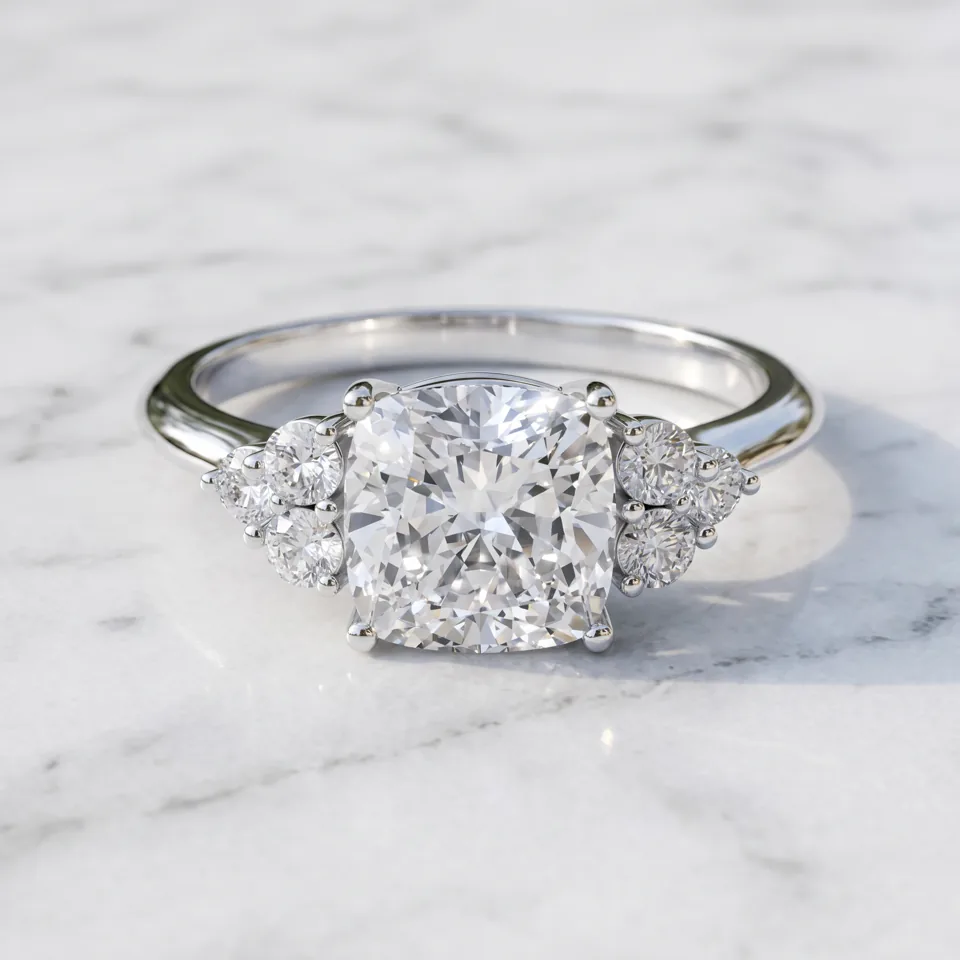 Cushion Cut Cluster Engagement Rings
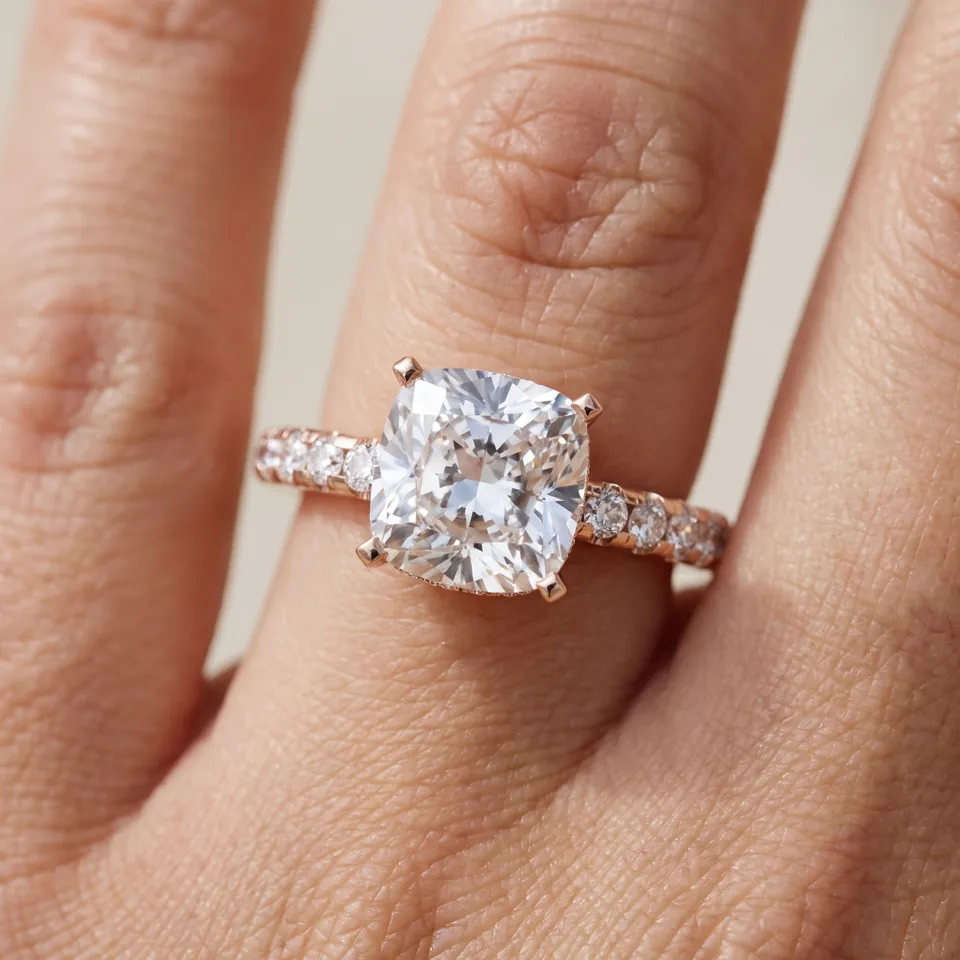 Cushion Cut Hidden Halo Engagement Rings
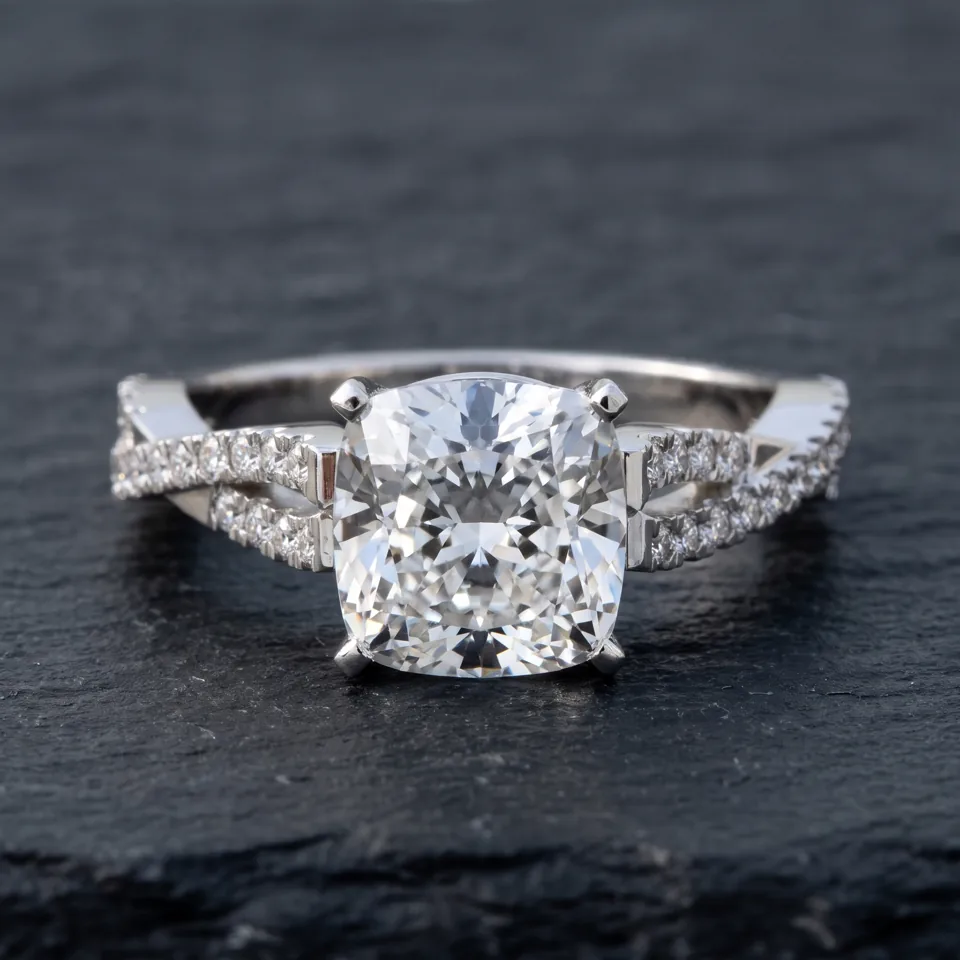 Cushion Cut Split Shank Engagement Rings
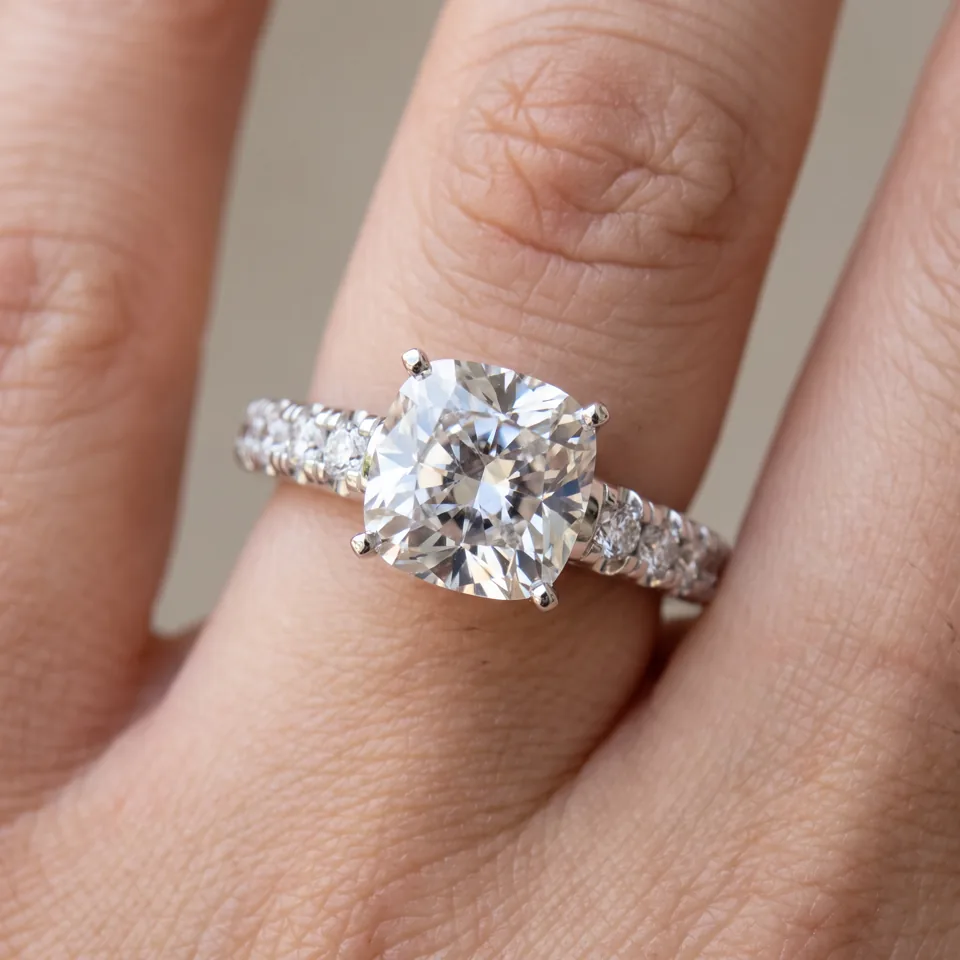 Cushion Cut Pave Engagement Rings
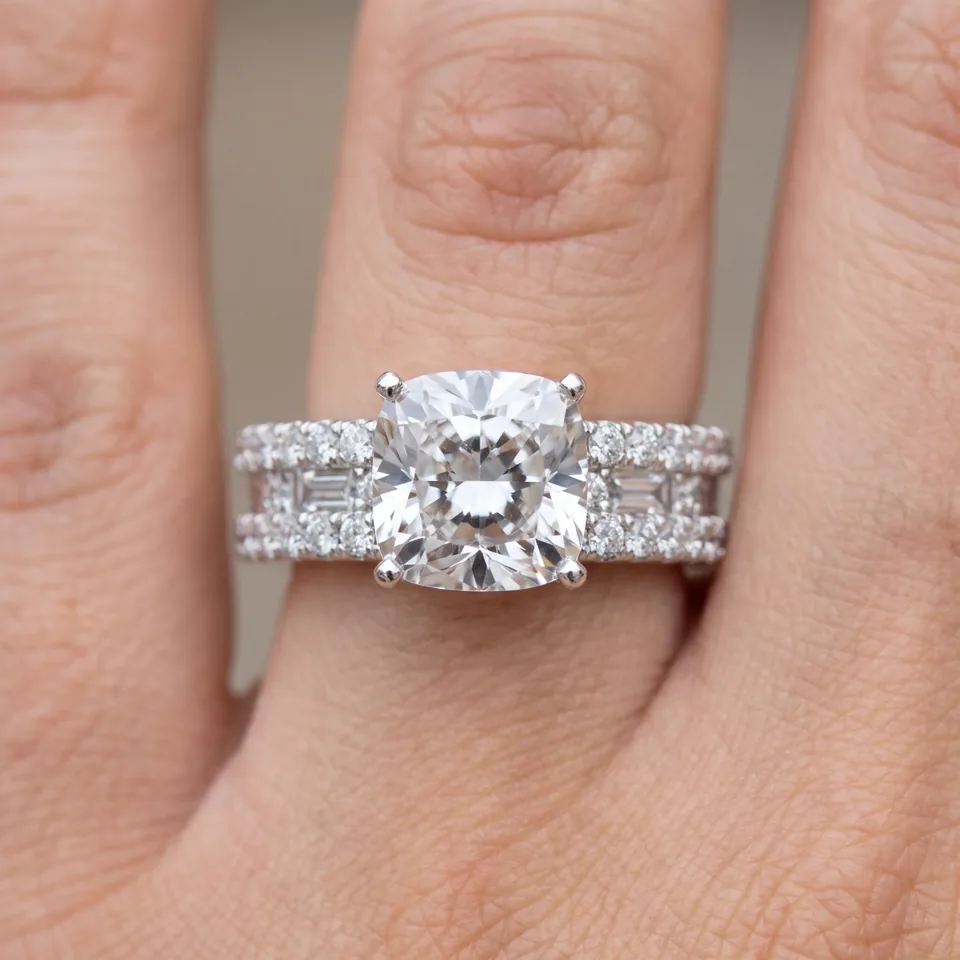 Cushion Cut Engagement Rings with Baguettes
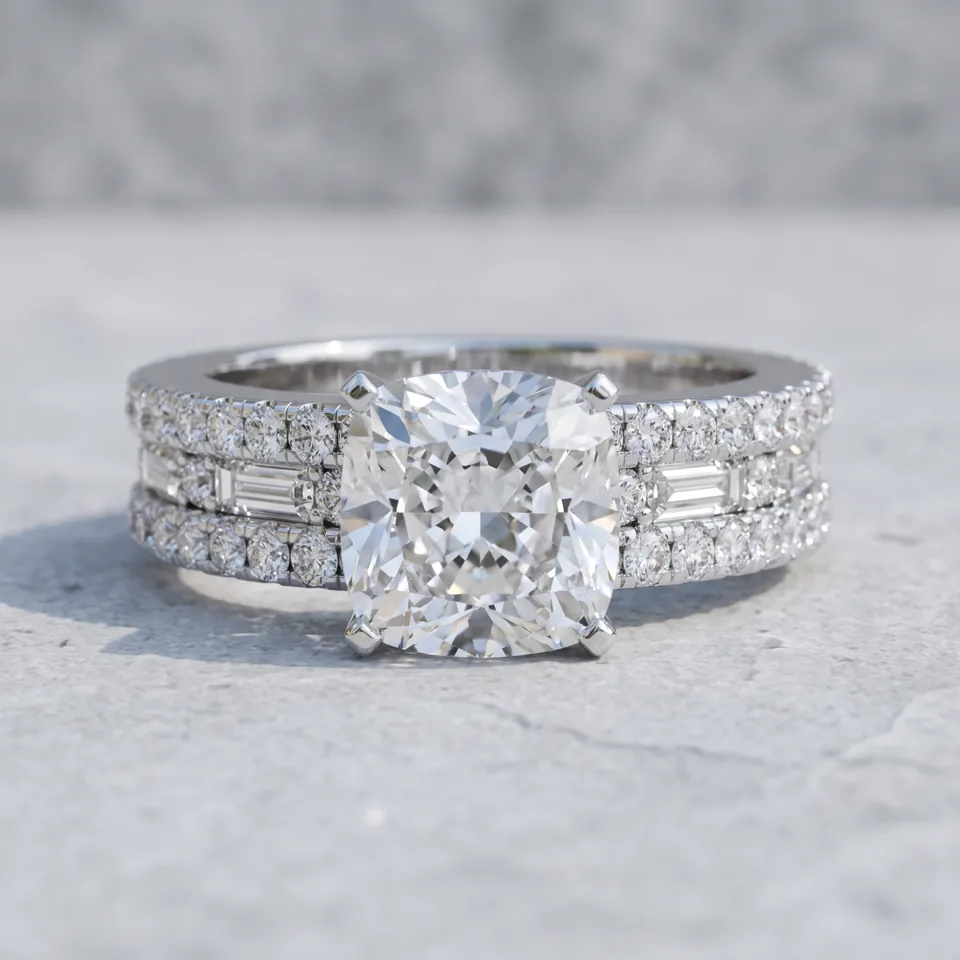 Cushion Cut Engagement Rings with Side Stones
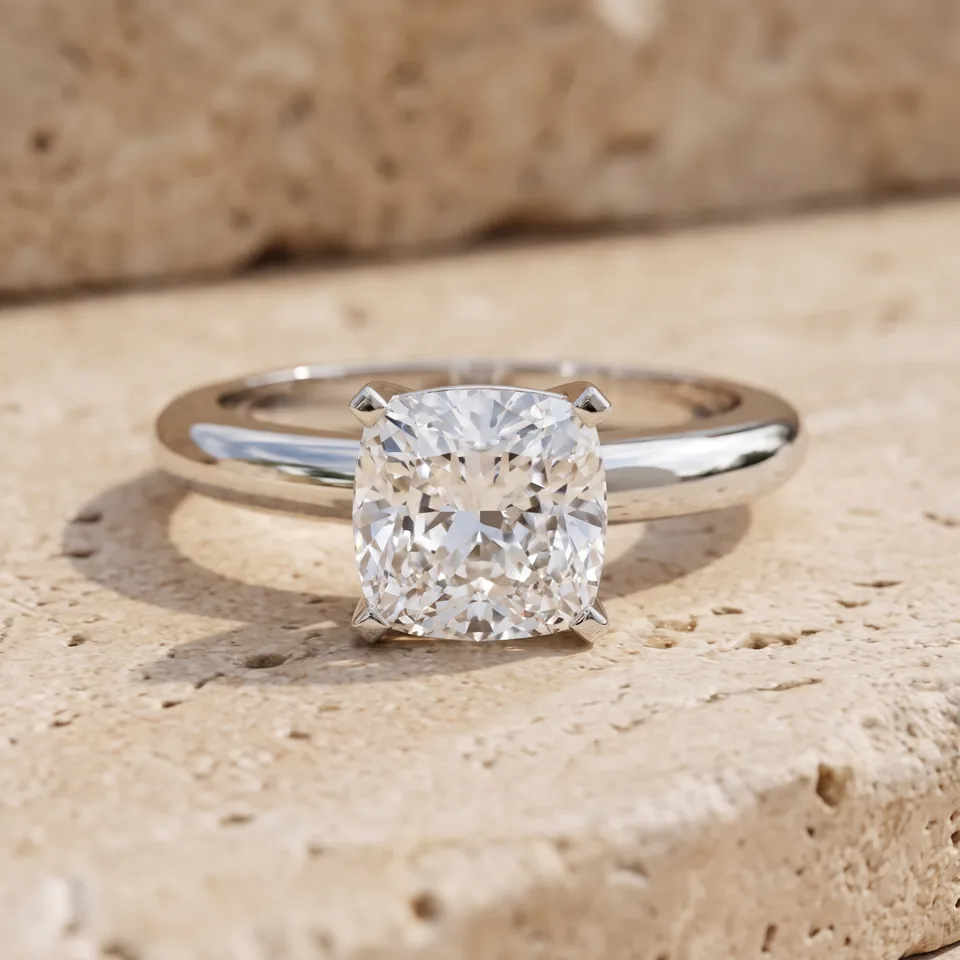 3 Carat Cushion Cut Lab-Grown Diamond Rings
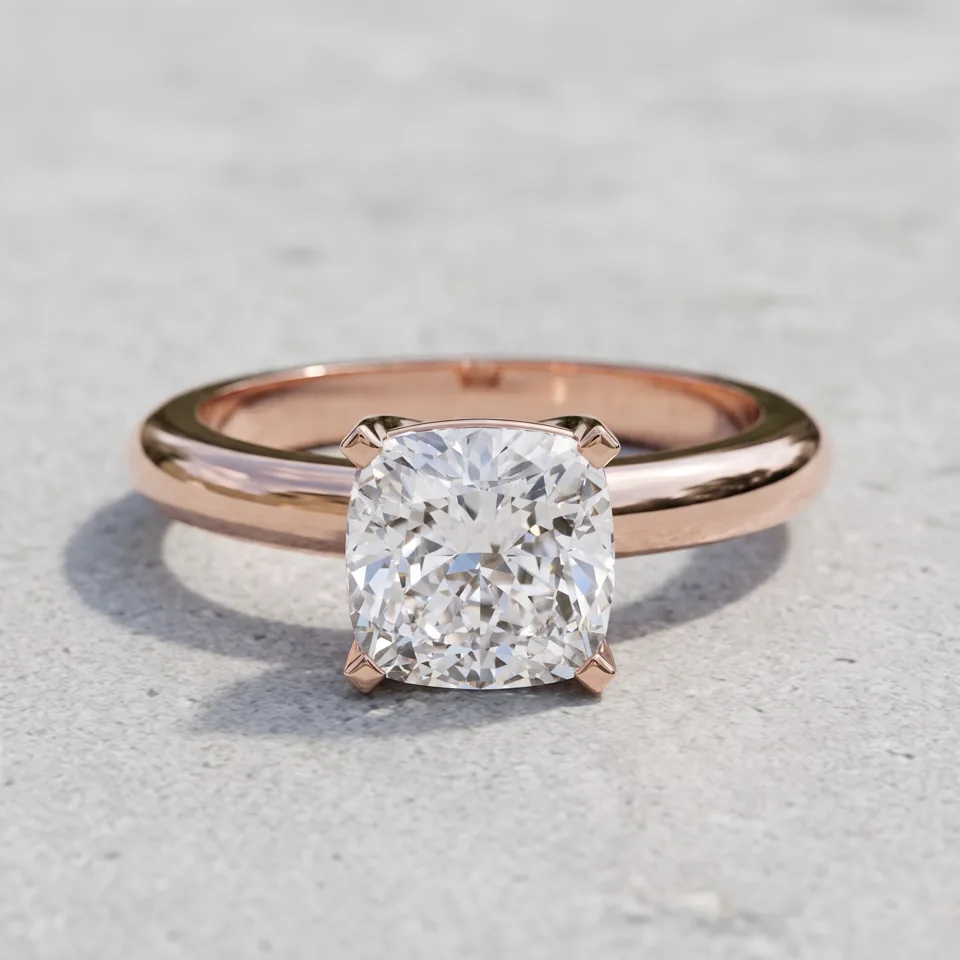 2 Carat Cushion Cut Lab-Grown Diamond Rings
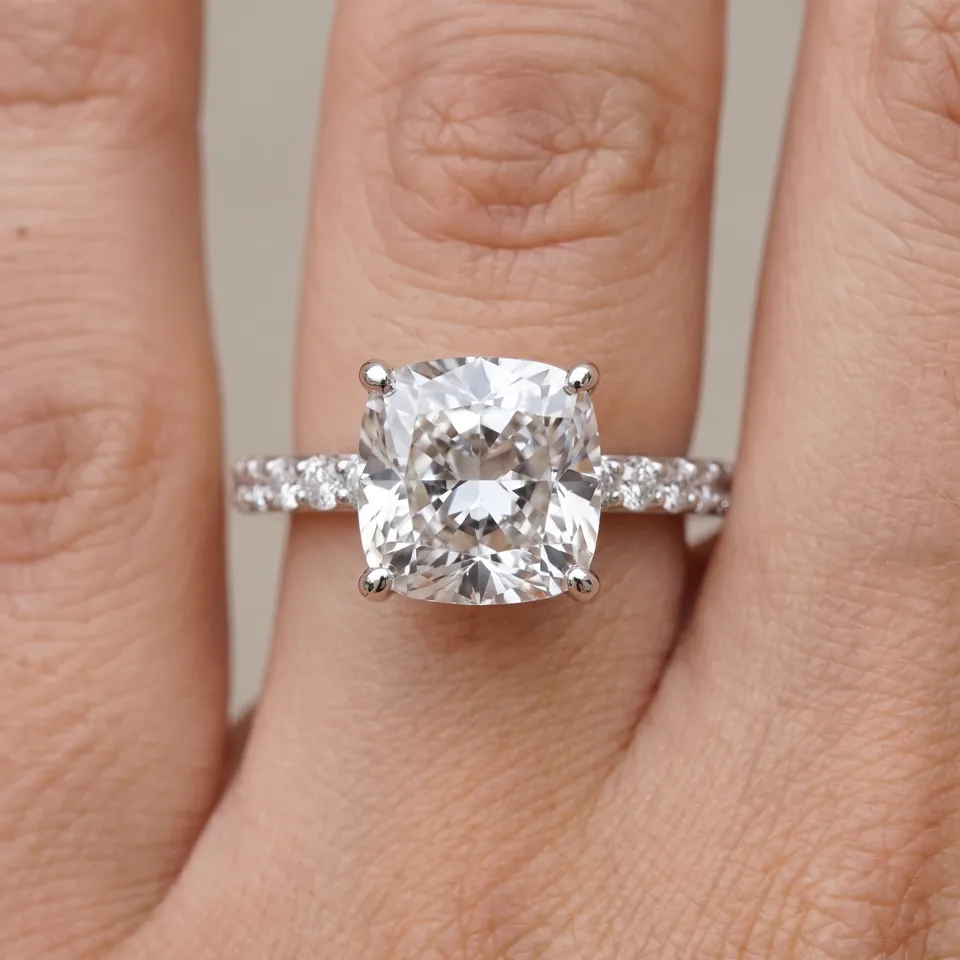 5 Carat Cushion Cut Lab-Grown Diamond Rings
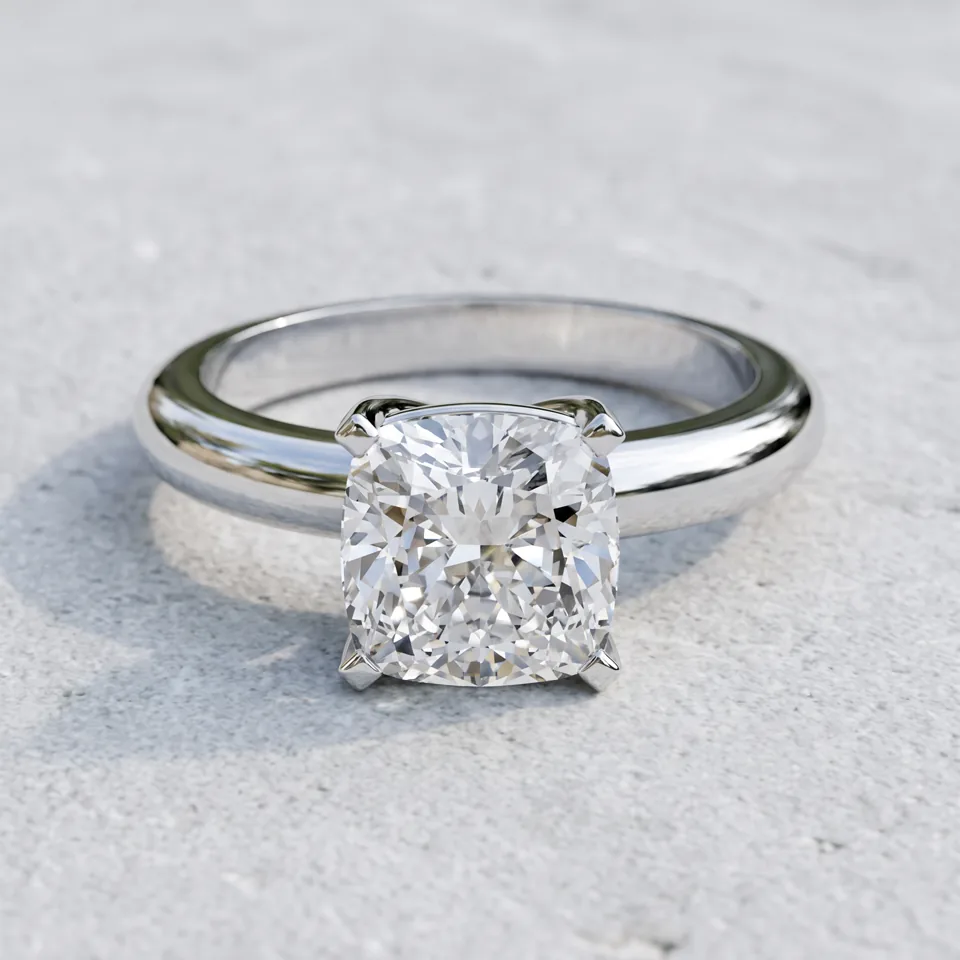 4 Carat Cushion Cut Lab-Grown Diamond Rings
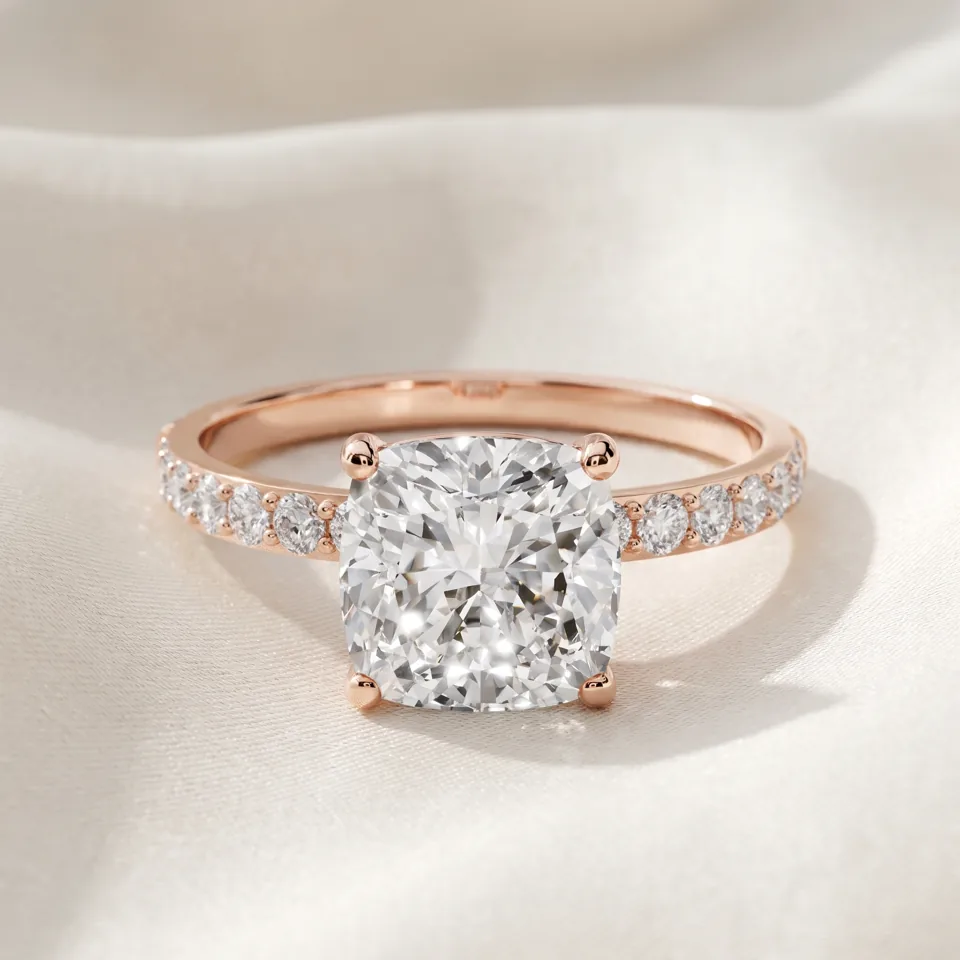 1 Carat Cushion Cut Lab-Grown Diamond Rings
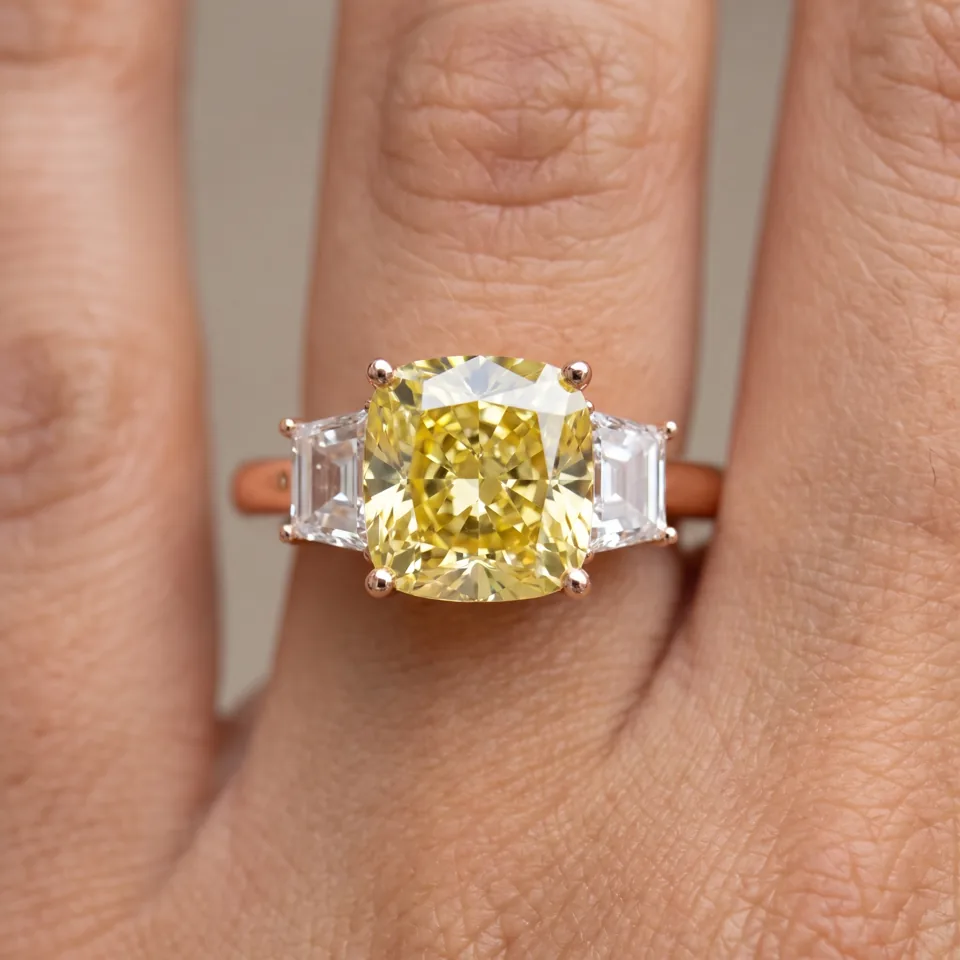 Cushion Cut Yellow Diamond Rings
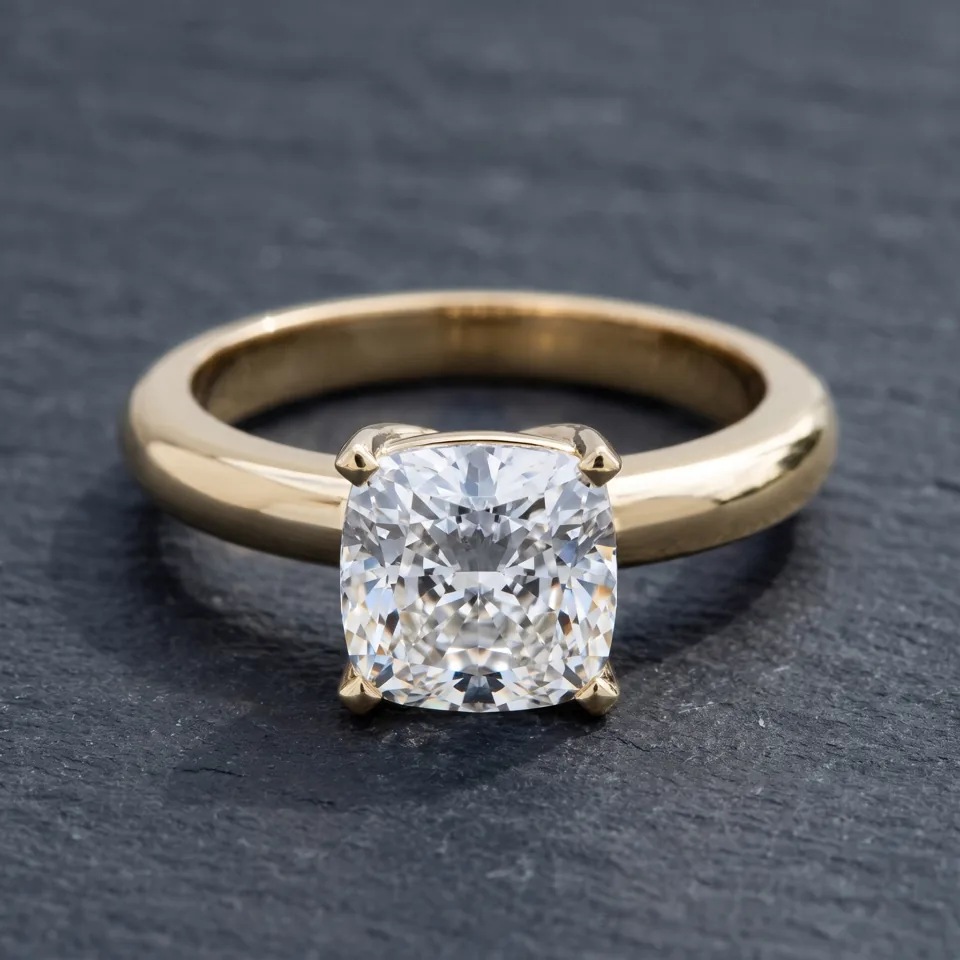 1.5 Carat Cushion Cut Lab-Grown Diamond Rings
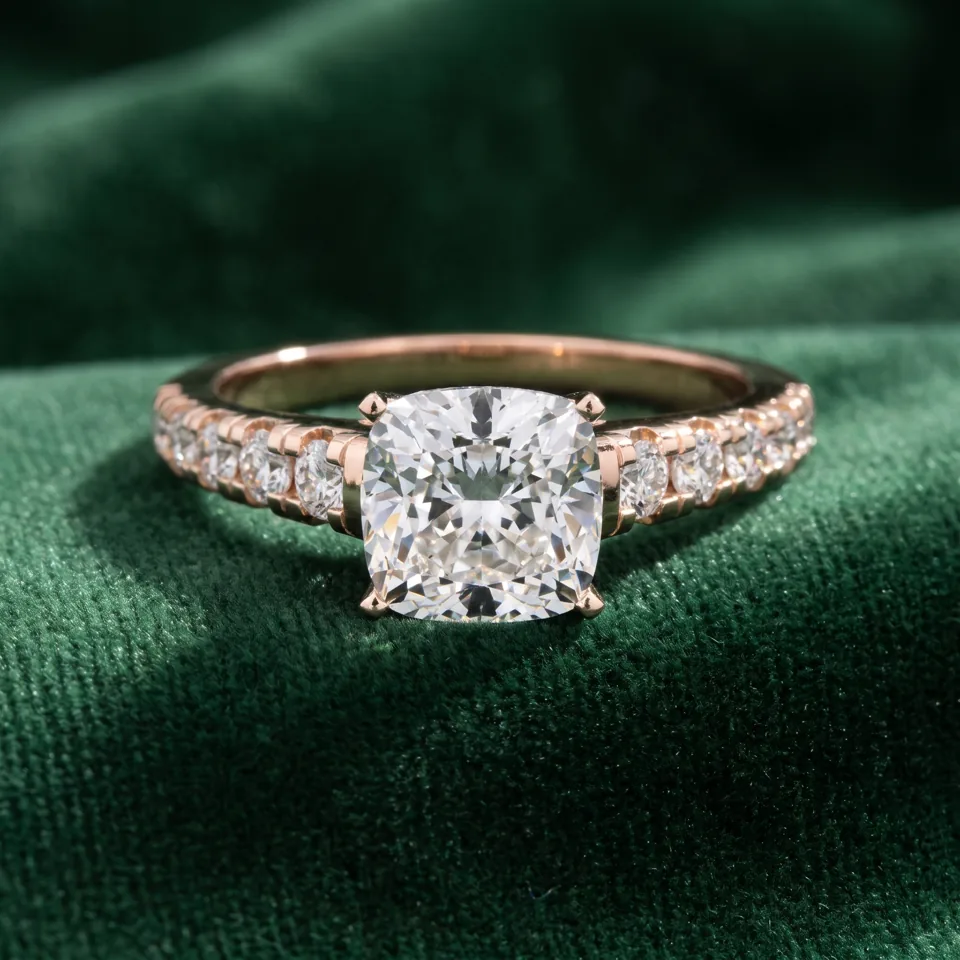 Cushion Cut Cathedral Engagement Rings
A square cushion sits close to 1:1 and looks soft and balanced on the hand. An elongated cushion stretches toward a rectangle, so it runs further along the finger and slims a shorter hand. Settle on the outline you prefer first, since it changes how every design here sits on your hand.
Prefer something quieter? A hidden halo tucks a circle of tiny stones under the center's girdle, where they show mainly in profile.
Nearly every design can be cast in platinum or in rose, white or yellow gold, at your pick of 10K, 14K or 18K. For most wearers 14K strikes the right mix of color and scratch resistance. Platinum is heavier and holds prongs very securely. Want to spend less on metal? Silvadium, a tarnish-resistant sterling silver, brings the price down, though silver marks more easily than gold.
Fancy-color centers work here too: pink, yellow, blue and green fit most designs, black a smaller share. Yellow and rose gold bring out warm colors, while white metal makes blue and green look crisper.
We craft your setting over 10–15 days, and the center diamond you select ships with an IGI or GIA report. You get free insured shipping in both directions, 30 days to return, and one resize within 60 days of delivery at no cost.
A cushion cut diamond has a squarish or gently rectangular outline, softened corners and slightly bowed sides, much like a pillow. Its facets are larger than a round's, so it throws bigger, bolder flashes instead of fine pinpoint sparkle. Some cushions have a crushed-ice look with many small reflections, while others show chunkier patterns, so compare photos of the center you pick.
Usually, yes. A cushion of the same carat weight and grades tends to cost less than a round, because cutting a round wastes more of the rough crystal. The gap varies with color, clarity and size. With these settings the center has its own price, set when you pick it next, which lets you weigh a cushion against a round on one design.
The main drawback is face-up size. Many cushions carry extra weight in their depth, so from above they can face up smaller than a round of equal carat. Larger facets can also show color and inclusions a little more. If those matter to you, check the measurements in millimeters and consider a halo, which makes the center read larger.
No, not usually. At the same carat weight, a cushion tends to face up about the same as a round or slightly smaller, because more of its weight sits below the girdle. An elongated cushion can look longer on the finger, while a surrounding halo of tiny lab-grown diamond accents widens the face-up view.
A length-to-width ratio between roughly 1.15 and 1.25 is the usual target for an elongated cushion. Around 1.15 the stretch is gentle; near 1.25 the stone looks clearly rectangular. Below about 1.08 it reads as square. Pick the ratio that suits your hand and the length you want the ring to cover.


