Complimentary insured shipping, both waysEngagement ring diamonds certified by IGI or GIAGrown by light. Conflict-free by natureComplimentary insured shipping, both ways
Engagement RingsWedding BandsEarrings
NecklaceBraceletsAbout
Each of these Asscher cut engagement rings is a setting made to hold a square, step-cut center. Pick a style first: vintage, halo, solitaire, three stone or side stone. Then choose the metal: platinum, silver, or rose, white or yellow gold.
You choose the center diamond in the next step, either colorless or in a fancy shade like blue, green, pink or yellow.
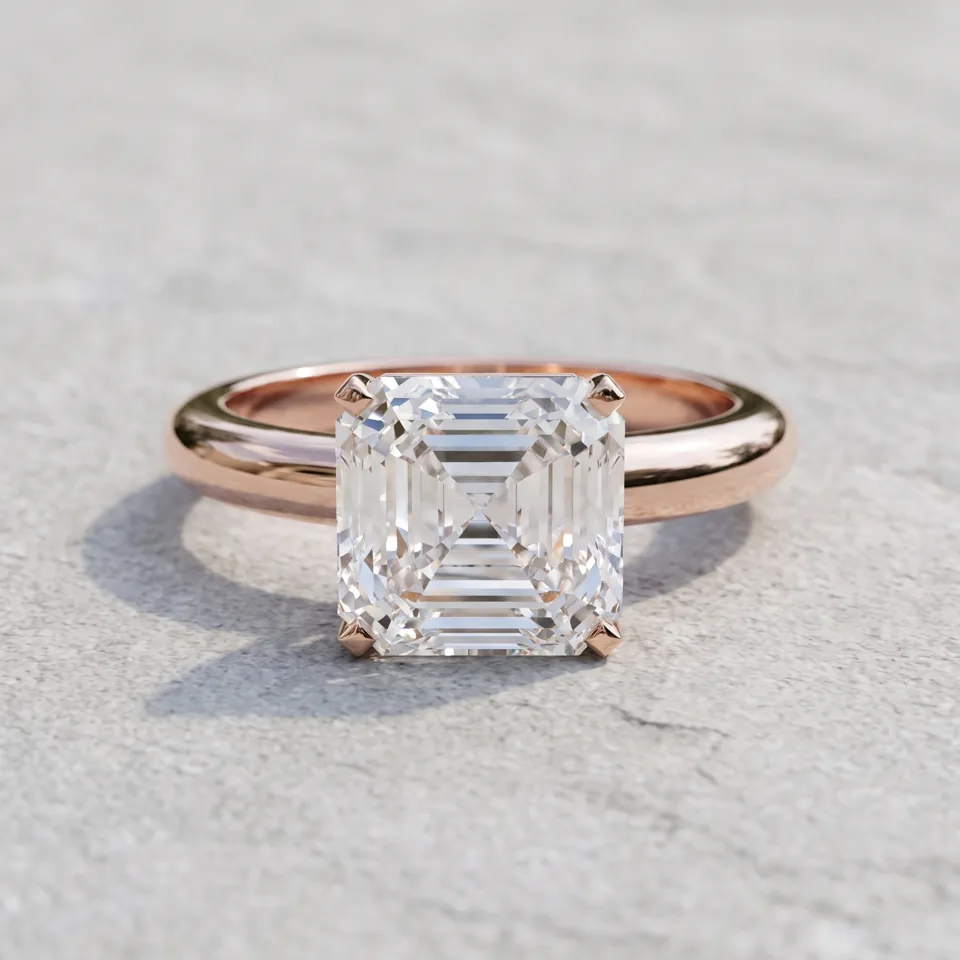
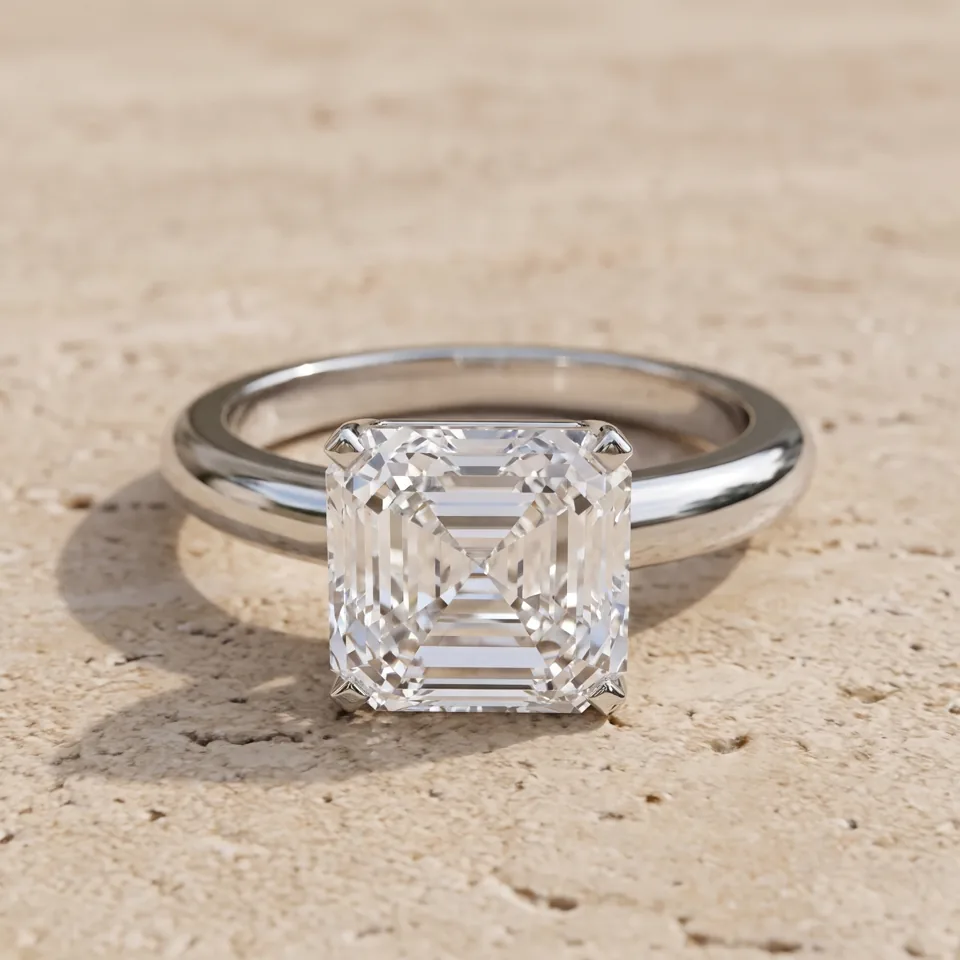
Think of the Asscher as a square step cut whose corners are clipped, leaving an eight-sided outline. Its tall crown and deep pavilion produce rings of nested squares when you look straight down, an effect often called a hall of mirrors. It flashes in bold, broad bursts and reveals inclusions easily, so a clean, well-cut center pays off.
Halo, solitaire or stones at the sides
Solitaire: corner prongs keep the square outline crisp
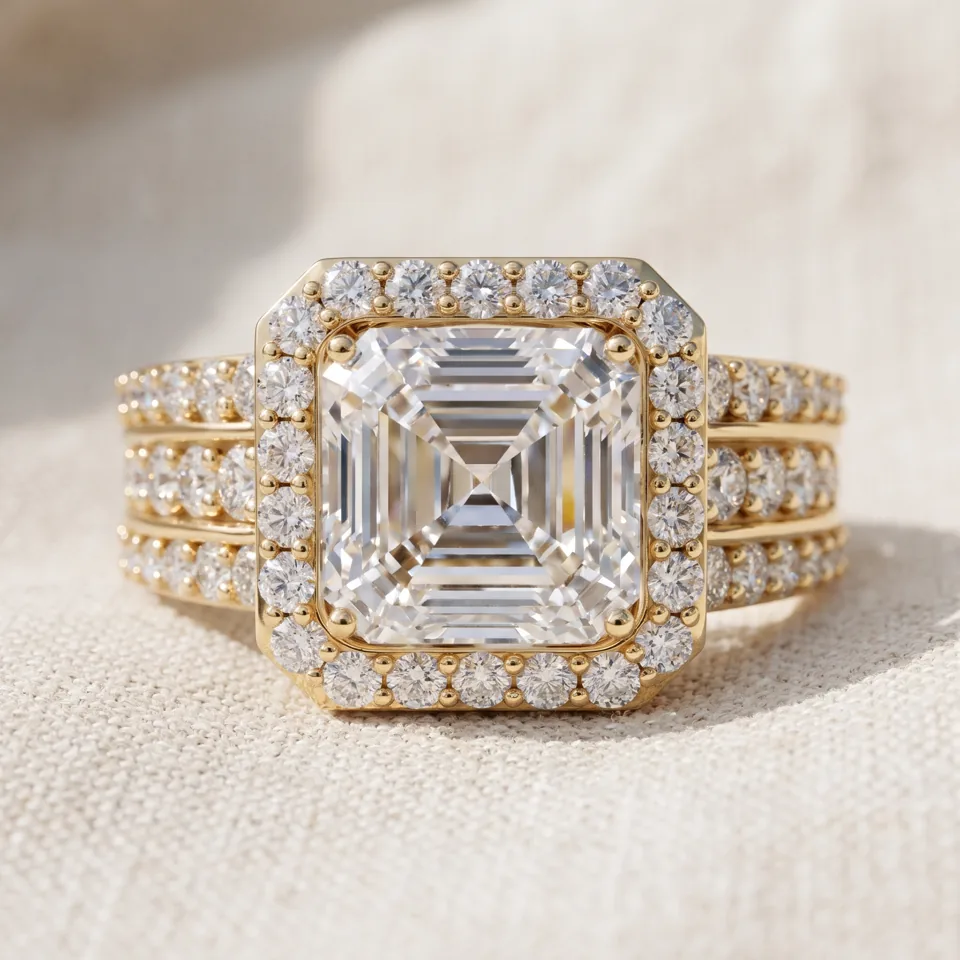
Halo and hidden halo: laboratory-grown diamond accents frame the Asscher or sit beneath it, adding face-up size
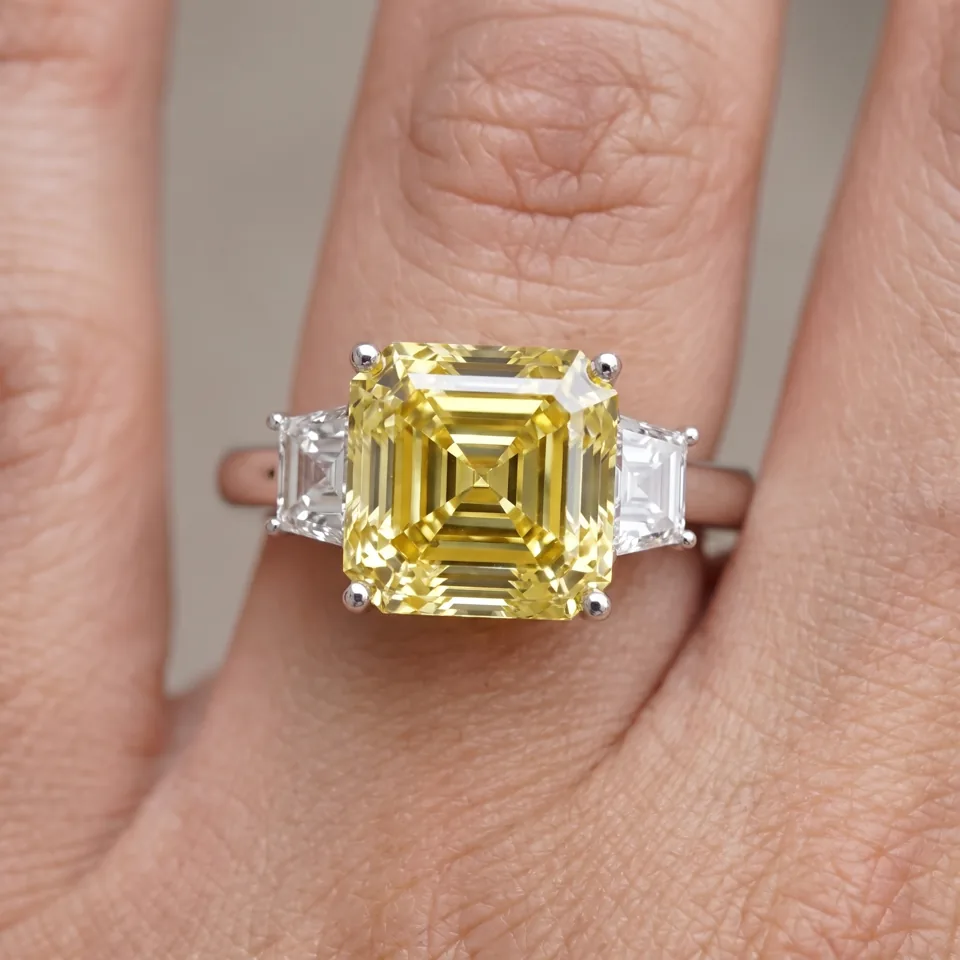
Three stone and side stone designs: lab-grown diamond accents flank the Asscher and widen the ring
Vintage, milgrain and floral: detail that suits the cut's Art Deco character
Choosing your metal
Gold designs come in 10K, 14K or 18K. Platinum and white gold match the icy look of a step cut, and a yellow or rose band warms the frame around it. Silvadium, a tarnish-resistant sterling silver, is the low-cost option; being softer than gold, silver is better for lighter wear. Setting prices open below $200, and the bulk run roughly $800 to $1,200, center not included.
Band details to check
Pave runs along the band on about half the designs; others use split shanks, twisted bands or a bezel. A bezel wraps the square edges in metal and guards the corners; prongs show more of the stone. Look at the band from the side too: a slim band makes a square center look larger.
Ordering from Whitemoon
We craft your ring after you choose its center, which takes 10–15 days, and the diamond comes with an IGI or GIA report. You get free insured shipping both ways, 30 days to return the ring, and one resize within 60 days of delivery.
FAQ
Questions about Asscher Cut Diamond Rings
What is an Asscher cut?
An Asscher cut is a square step-cut diamond with cropped corners. Its facets are long and flat, arranged in rows like steps, and its deep pavilion builds a nested-square pattern visible through the top. It is close to a square emerald cut but has a higher crown and a deeper, more windowed look.
Is Asscher cut more expensive?
Usually not. Per carat, an Asscher often costs a little less than a round of the same quality, because cutting it saves more of the rough crystal. Clarity matters more with step cuts, though, and choosing higher clarity narrows that gap. Here the setting starts under $200, and the center is quoted on its own in the next step.
How much does an Asscher cut diamond cost?
It depends on carat weight, color, clarity and whether the diamond is lab-grown or mined; lab-grown stones cost far less than mined ones of the same size. On this page you pay for the setting first, from below $200 and typically $800–$1,200, and you add the center afterwards, priced separately and sent with an IGI or GIA report.
How rare is an Asscher cut diamond?
Fairly uncommon. Asscher cuts make up a small share of the diamonds cut each year compared with rounds and ovals, partly because the shape needs a well-proportioned crystal and shows inclusions easily. That makes it a distinctive choice, yet you can still find one in most sizes, and nearly every setting in this collection is built for an Asscher center.
Does the Asscher cut look smaller?
Slightly, yes. Much of an Asscher's weight sits below the girdle, so face up it shows less surface than a round or oval at equal carats. To gain face-up size, pick a halo or hidden halo, a slim band, or go slightly up in carat weight. Its crisp square outline still gives it strong presence on the hand.

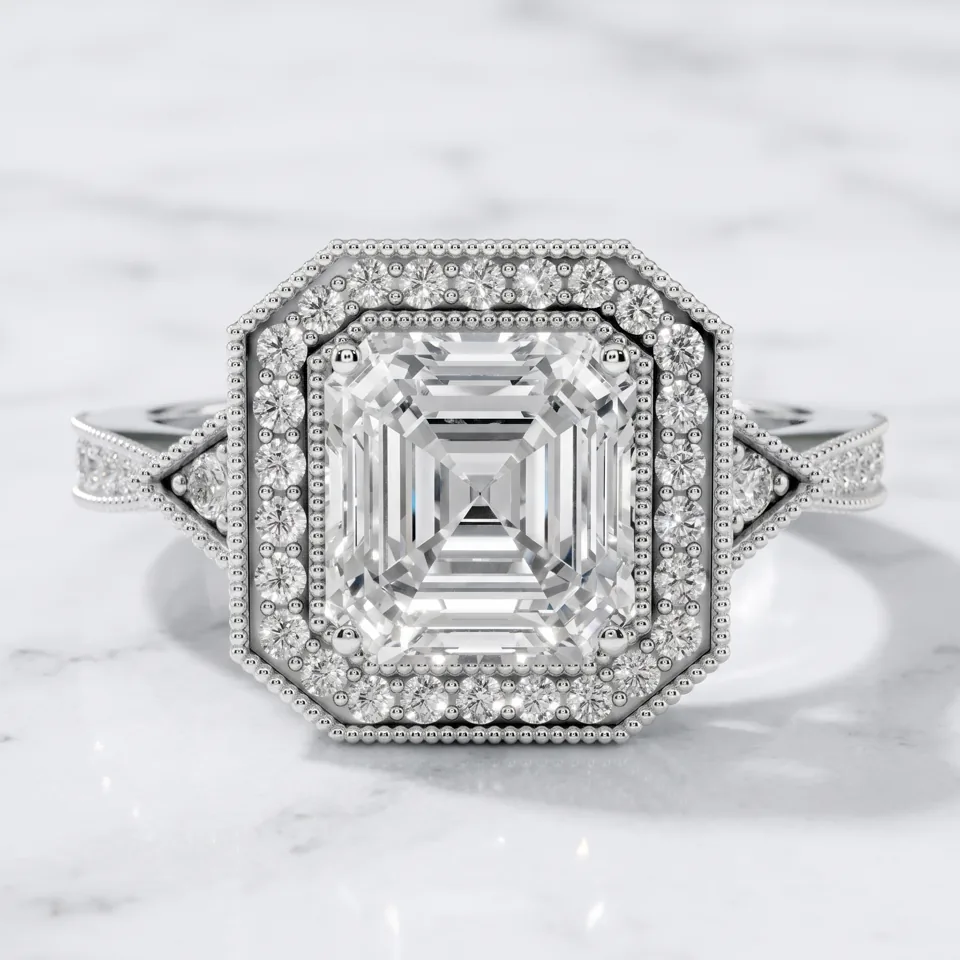 Vintage Asscher Cut Engagement Rings
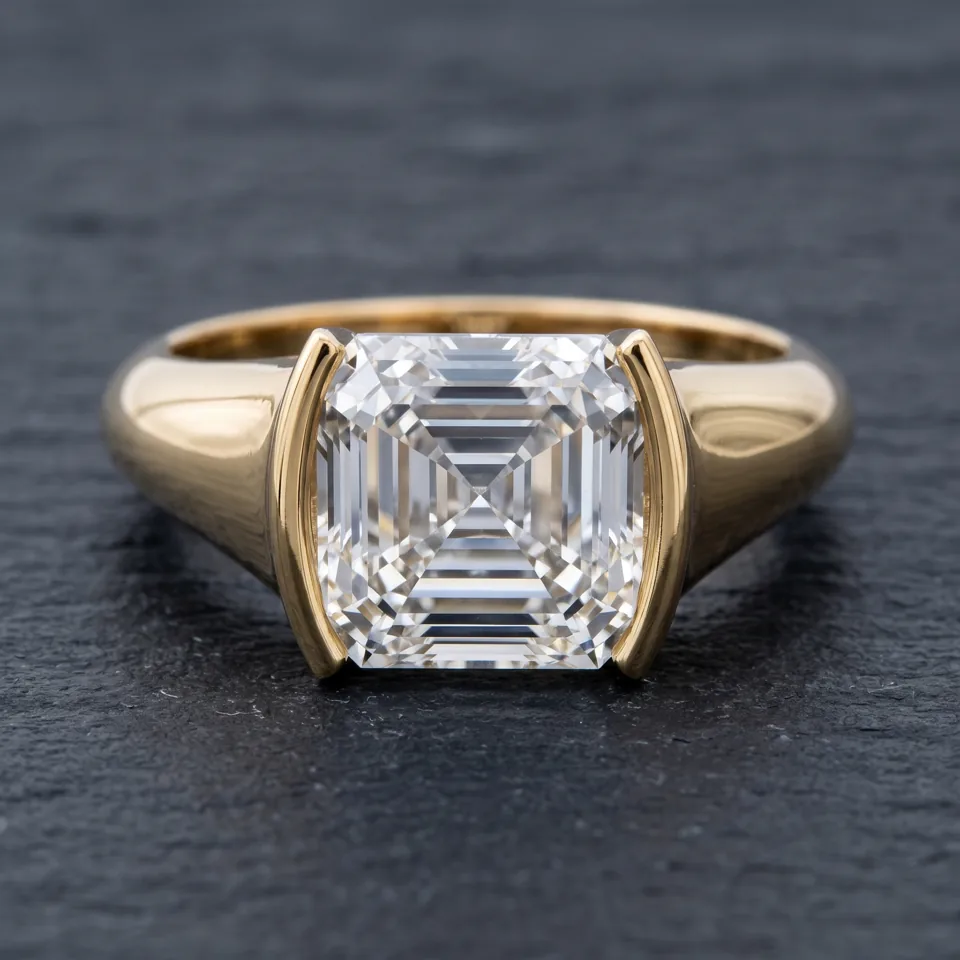 Asscher Cut Solitaire Rings
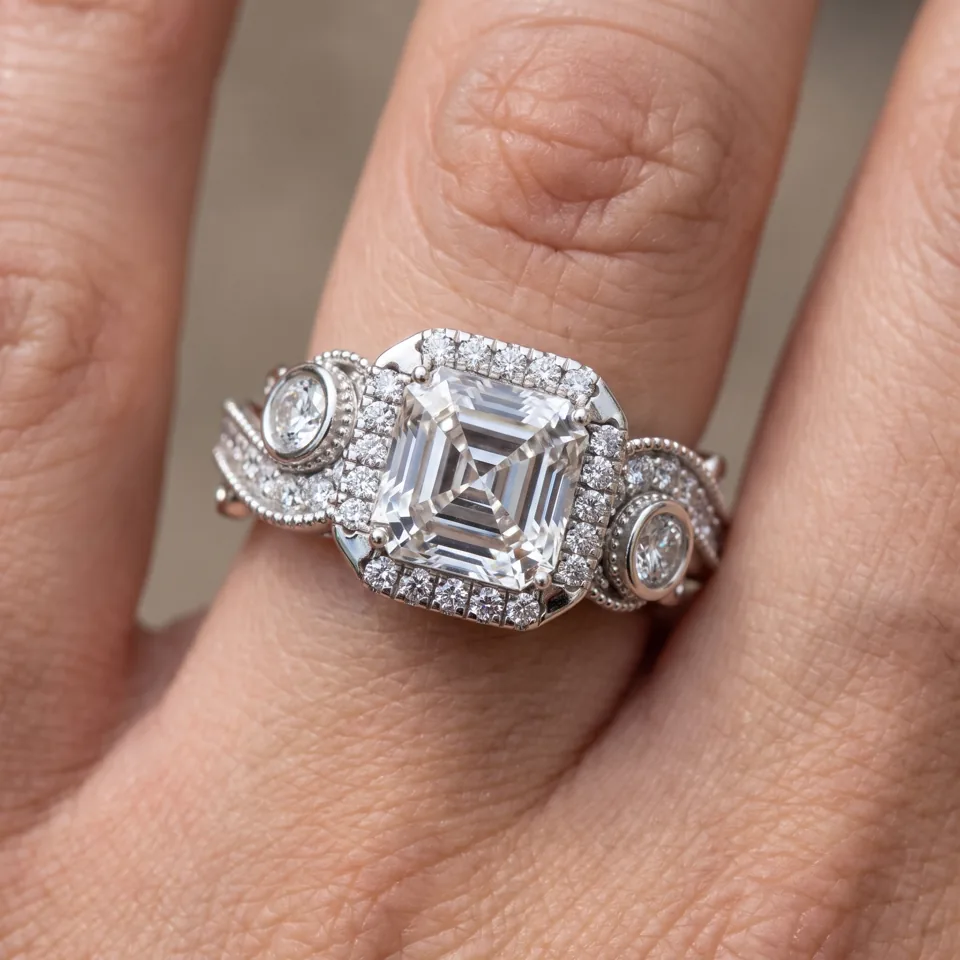 Asscher Cut Bezel Rings
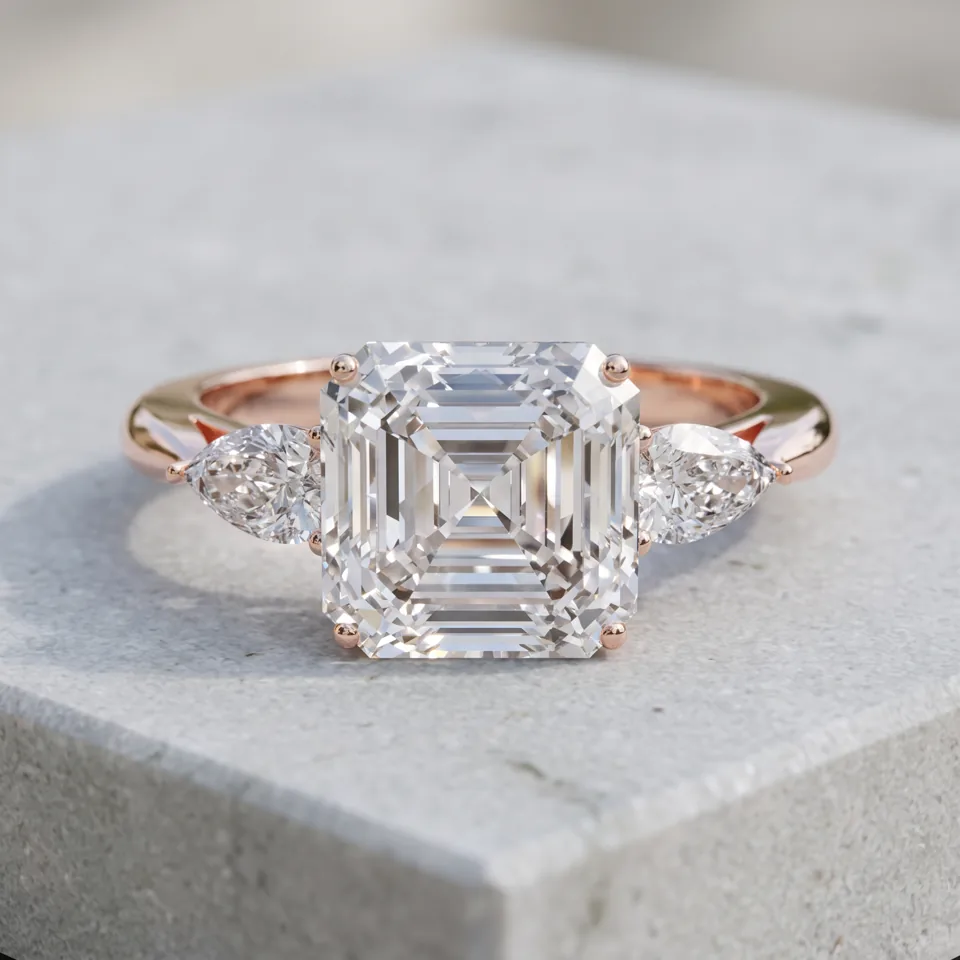 Asscher Cut Three Stone Rings
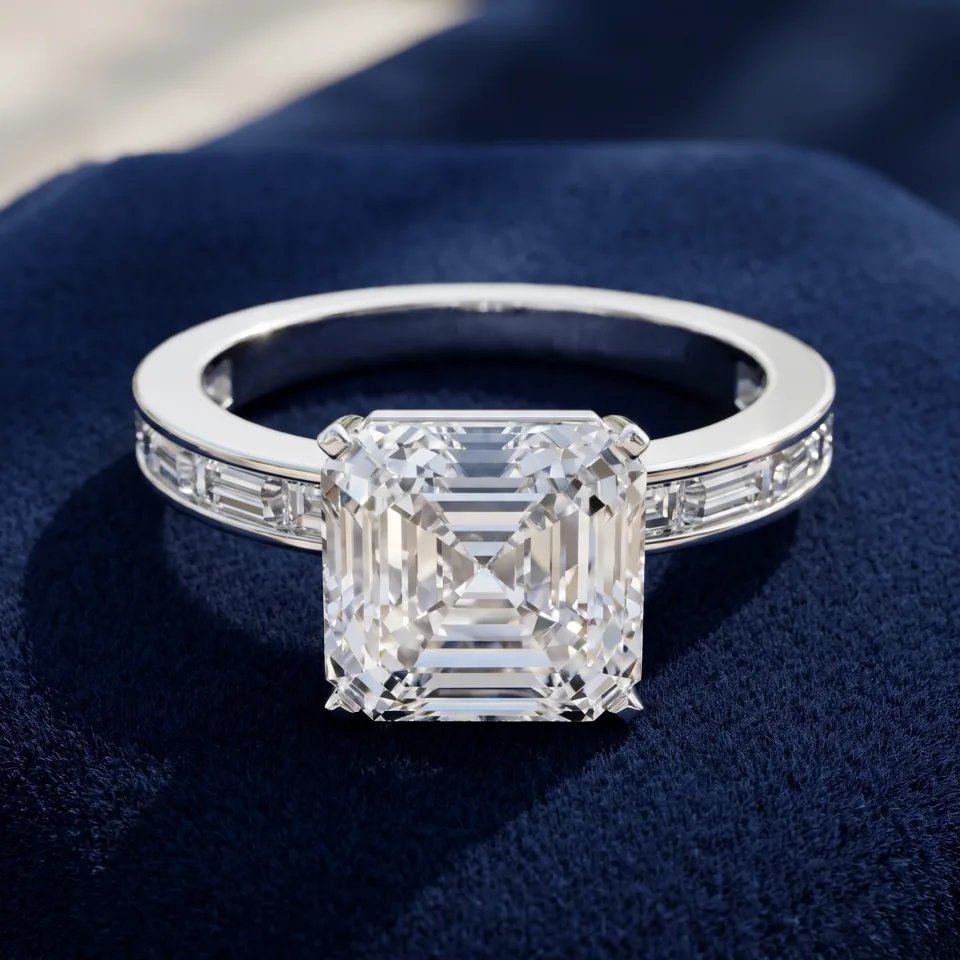 Asscher Cut Engagement Rings with Baguettes
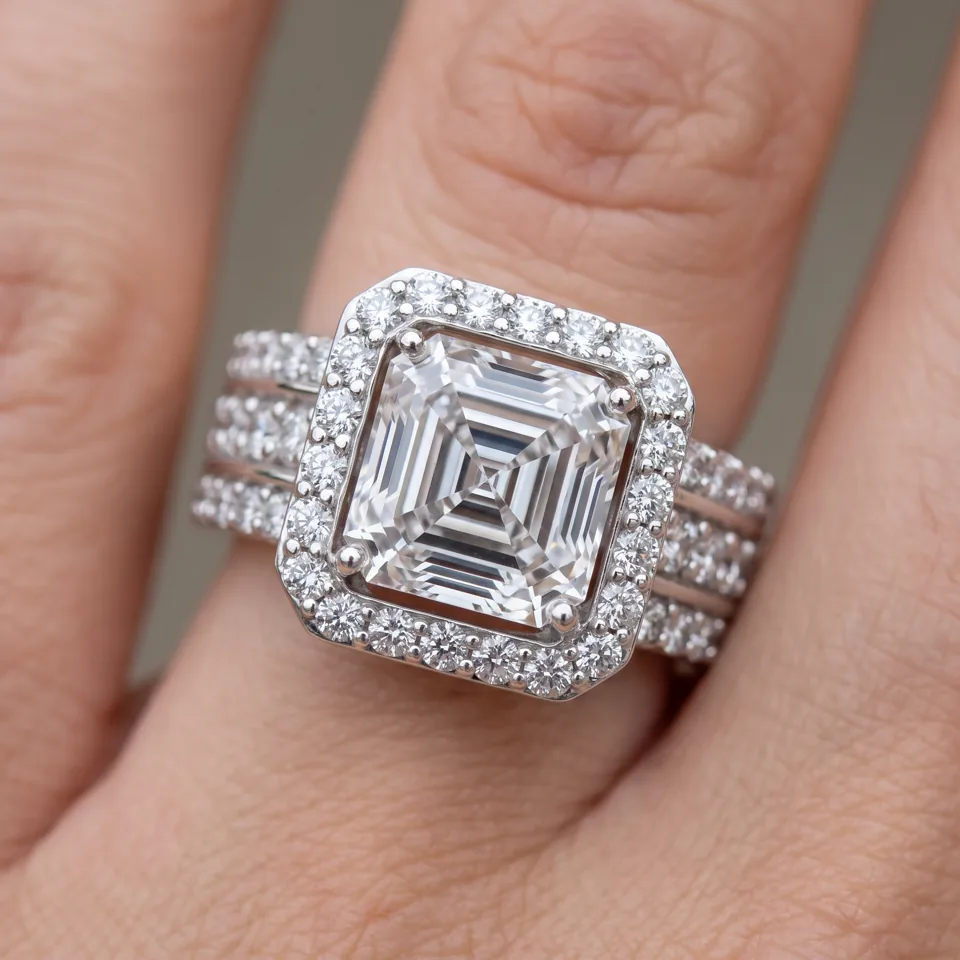 Asscher Cut Halo Engagement Rings
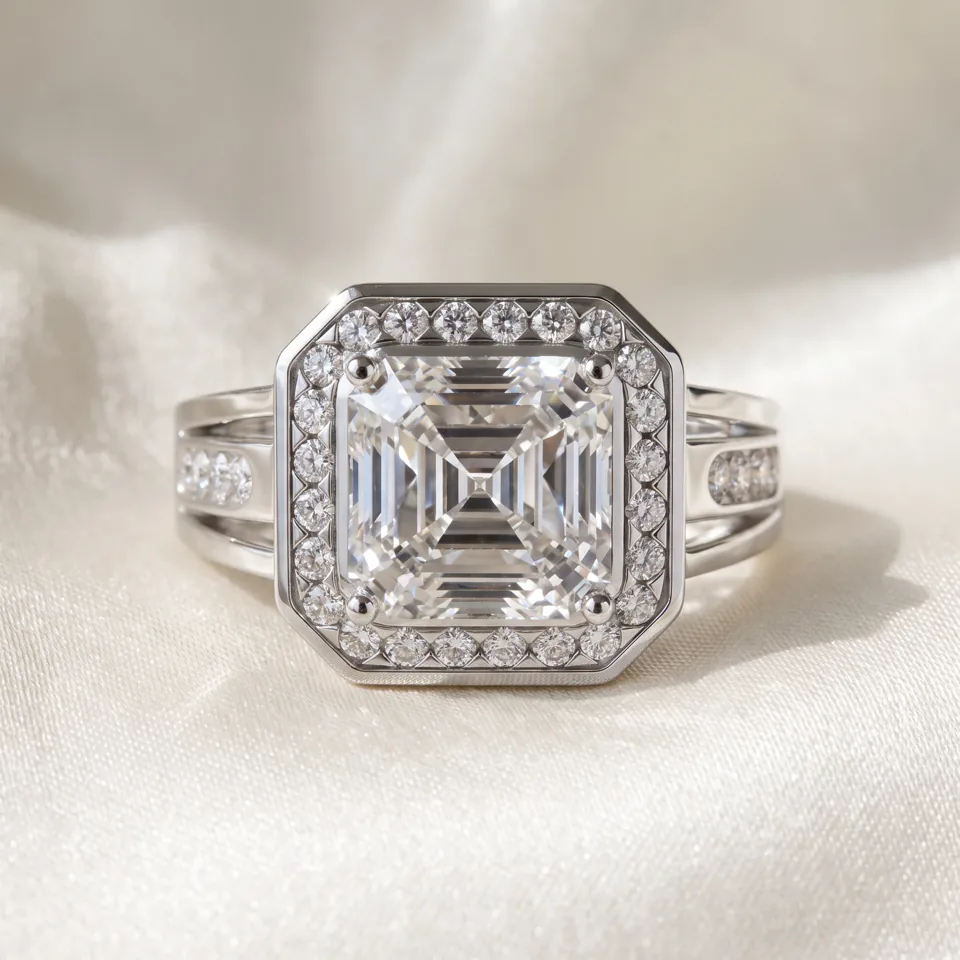 Asscher Cut Split Shank Engagement Rings
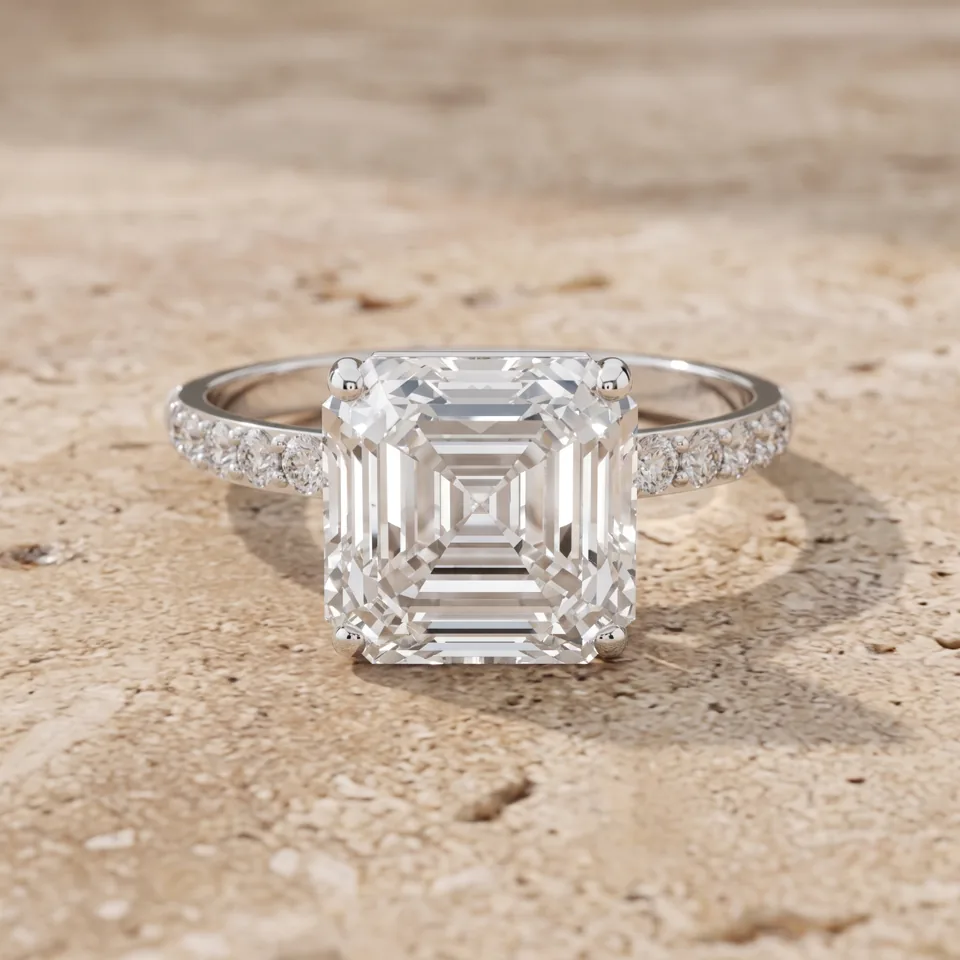 Asscher Cut Pave Engagement Rings
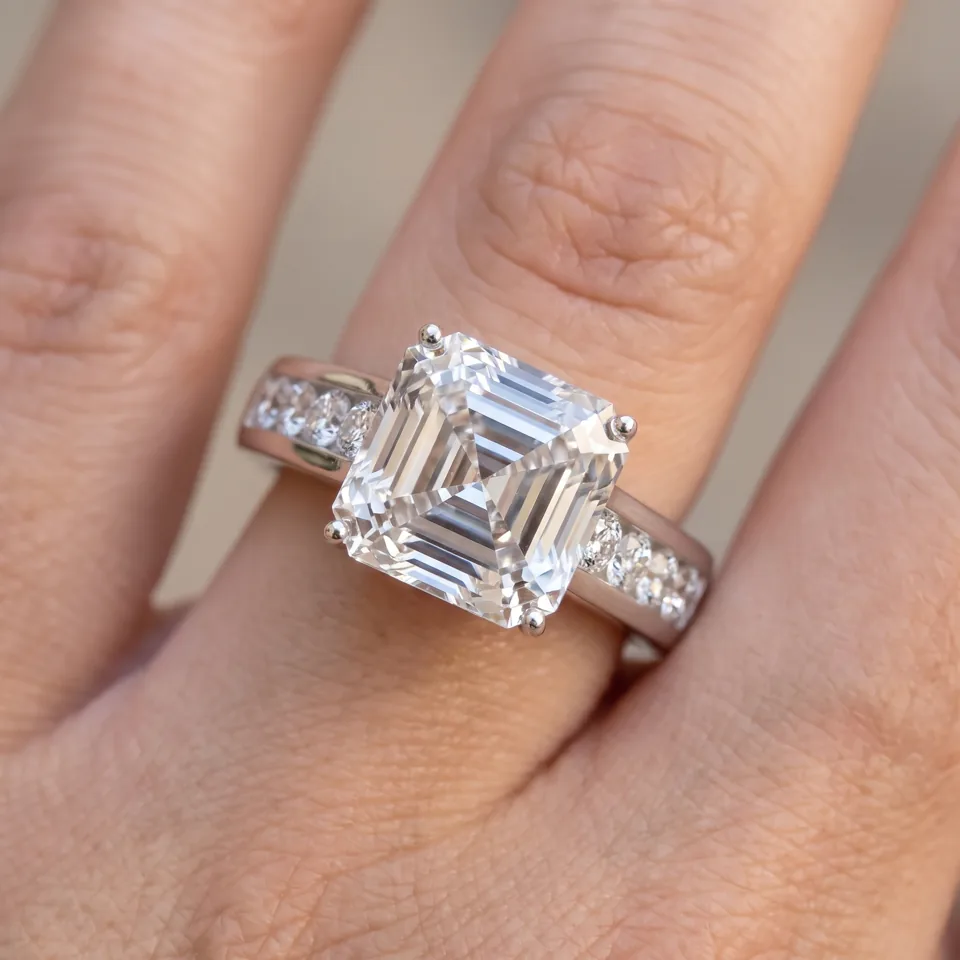 Channel Set Asscher Cut Diamond Rings
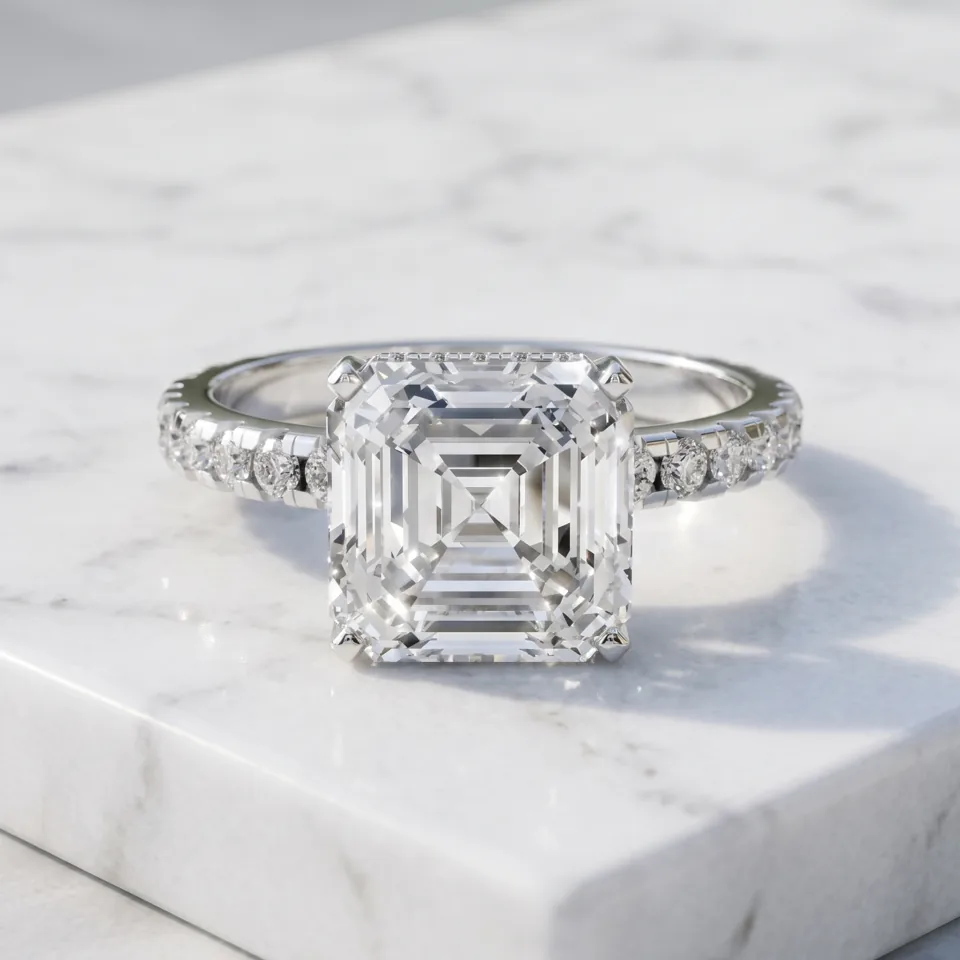 Asscher Cut Hidden Halo Engagement Rings
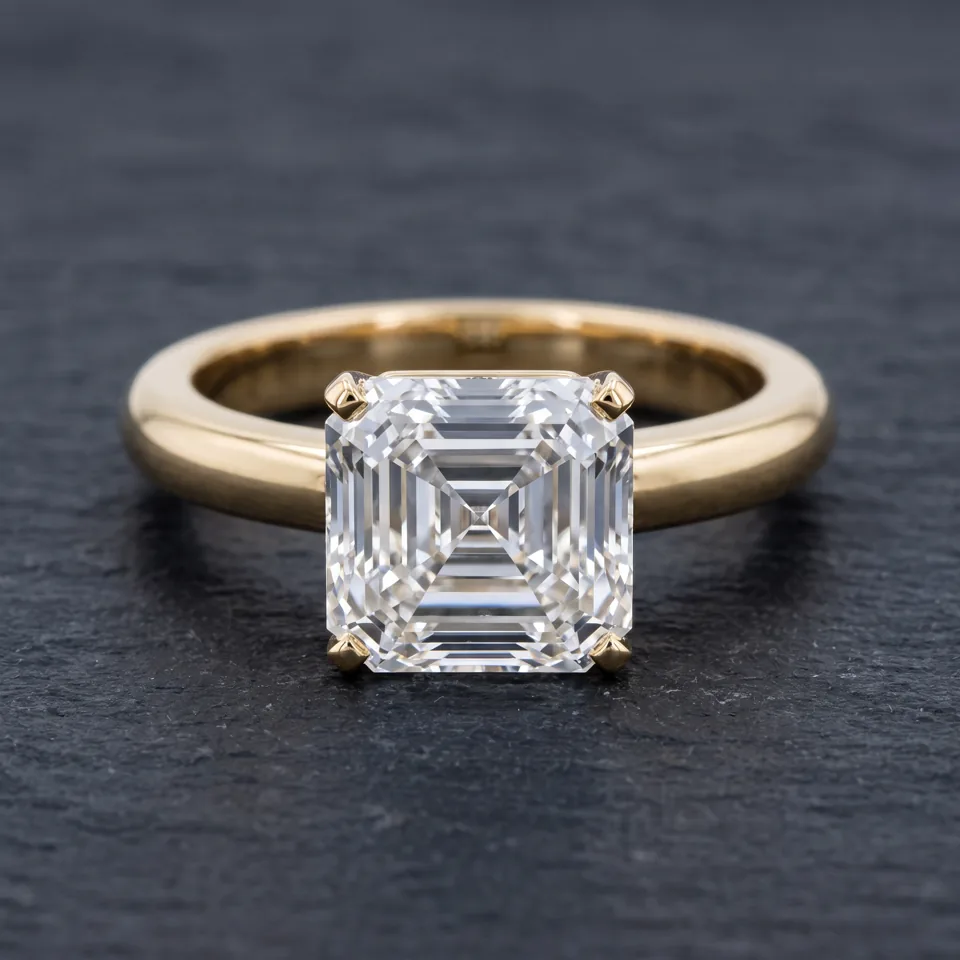 5 Carat Asscher Cut Rings
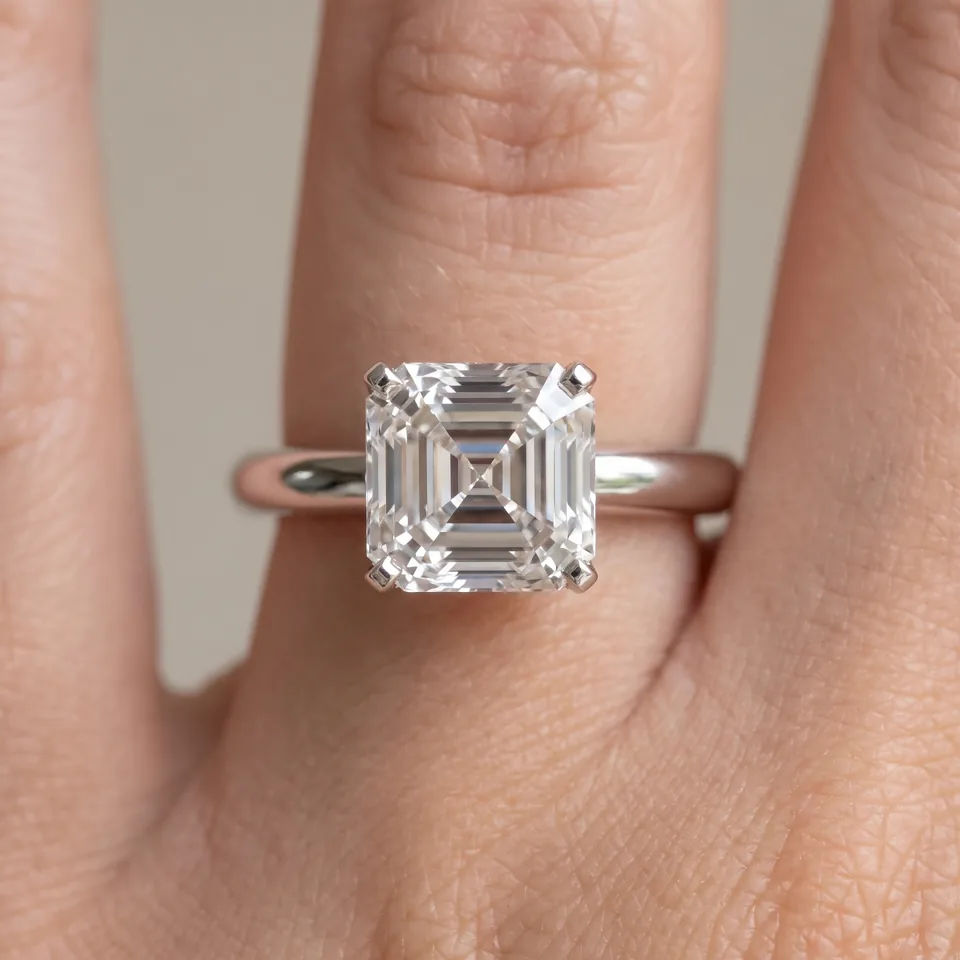 2 Carat Asscher Cut Lab-Grown Diamond Rings
 1 Carat Asscher Cut Lab-Grown Diamond Rings
 6 Carat Asscher Cut Lab-Grown Diamond Rings
 Asscher Cut Yellow Diamond Rings
 10 Carat Asscher Cut Lab-Grown Diamond Rings
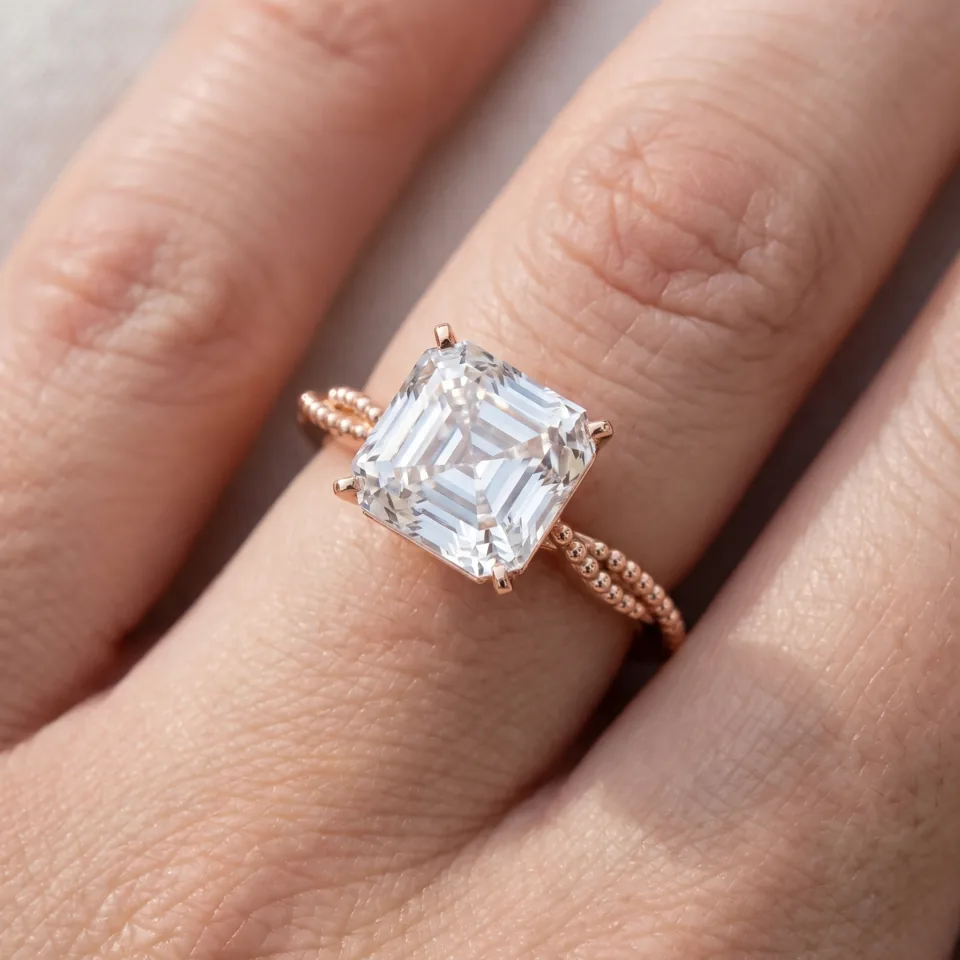 Rose Gold Asscher Cut Engagement Rings


