Complimentary insured shipping, both waysEngagement ring diamonds certified by IGI or GIAGrown by light. Conflict-free by natureComplimentary insured shipping, both ways
Engagement RingsWedding BandsEarrings

NecklaceBraceletsAbout
Radiant cut engagement rings center on a square or rectangular stone whose corners are trimmed off and whose facets are cut for brilliance, giving you an emerald cut's outline with much livelier sparkle. Choose a setting on this page, then pick your center diamond in the next step.
Solitaires and pavé bands lead the range, with halos, side stones and three-stone designs close behind.
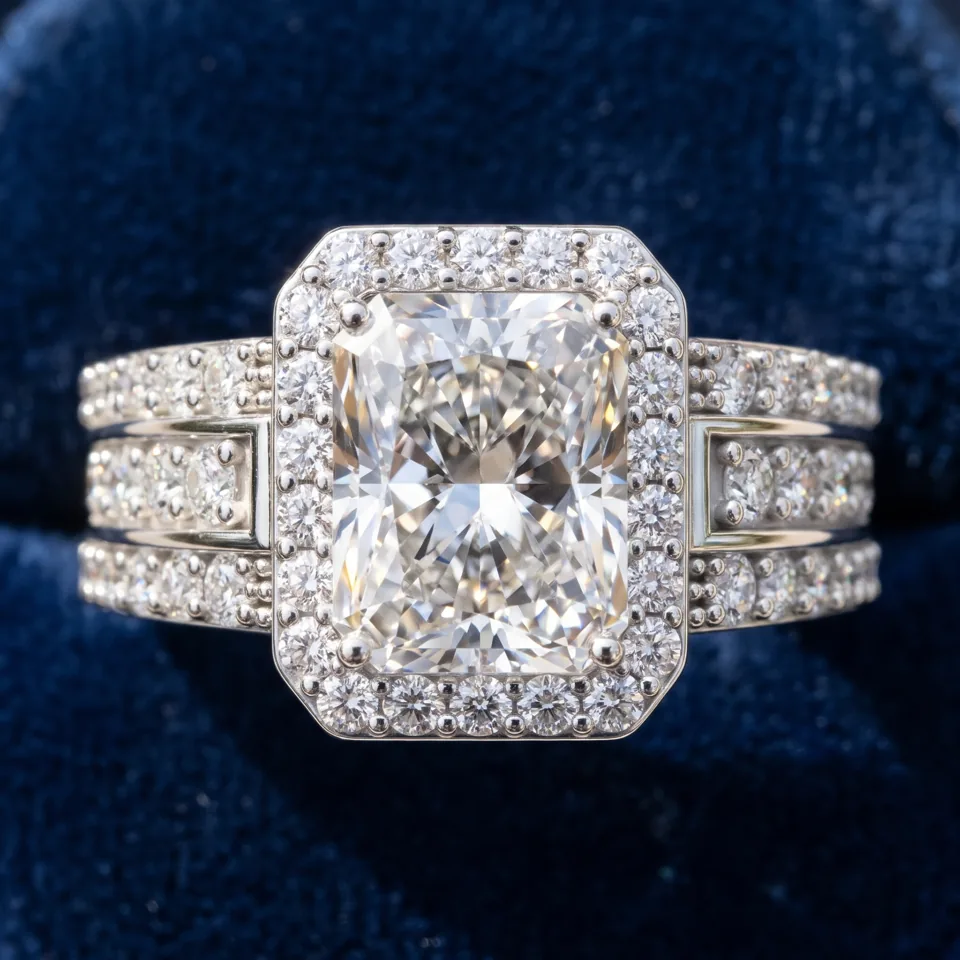 Radiant Cut Halo Engagement Rings
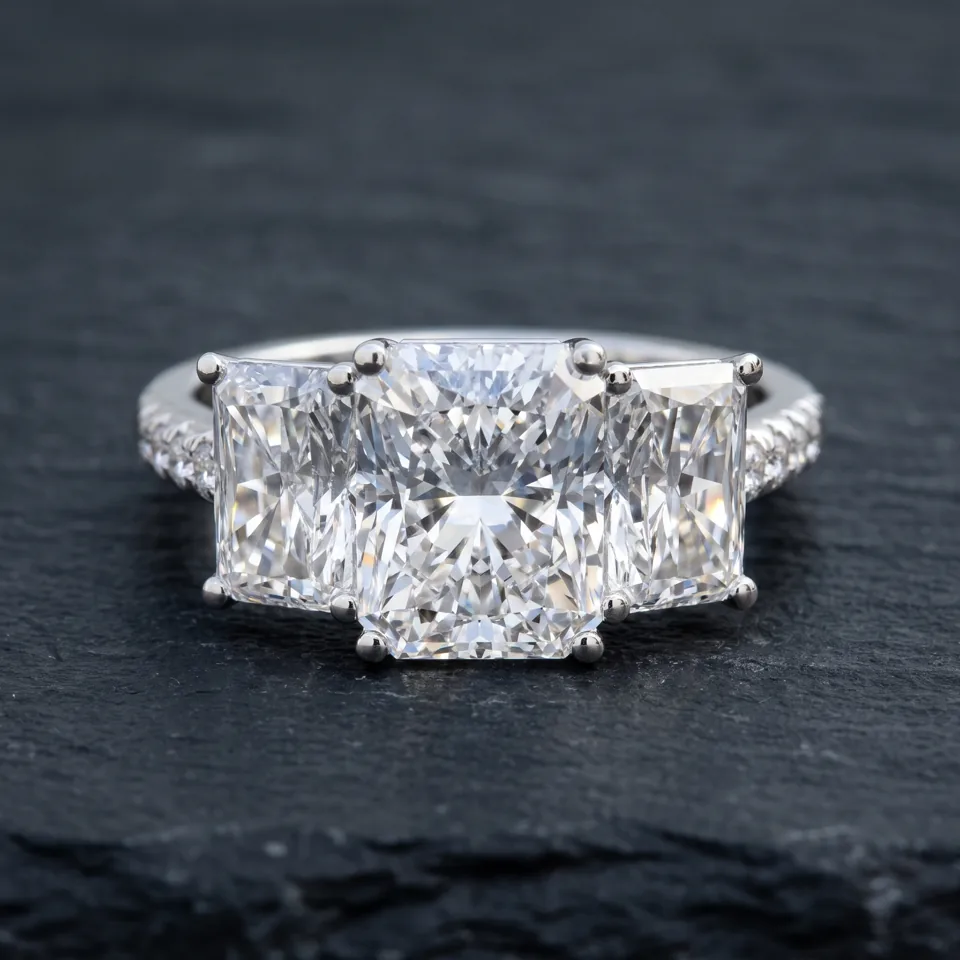 Radiant Cut Three Stone Engagement Rings
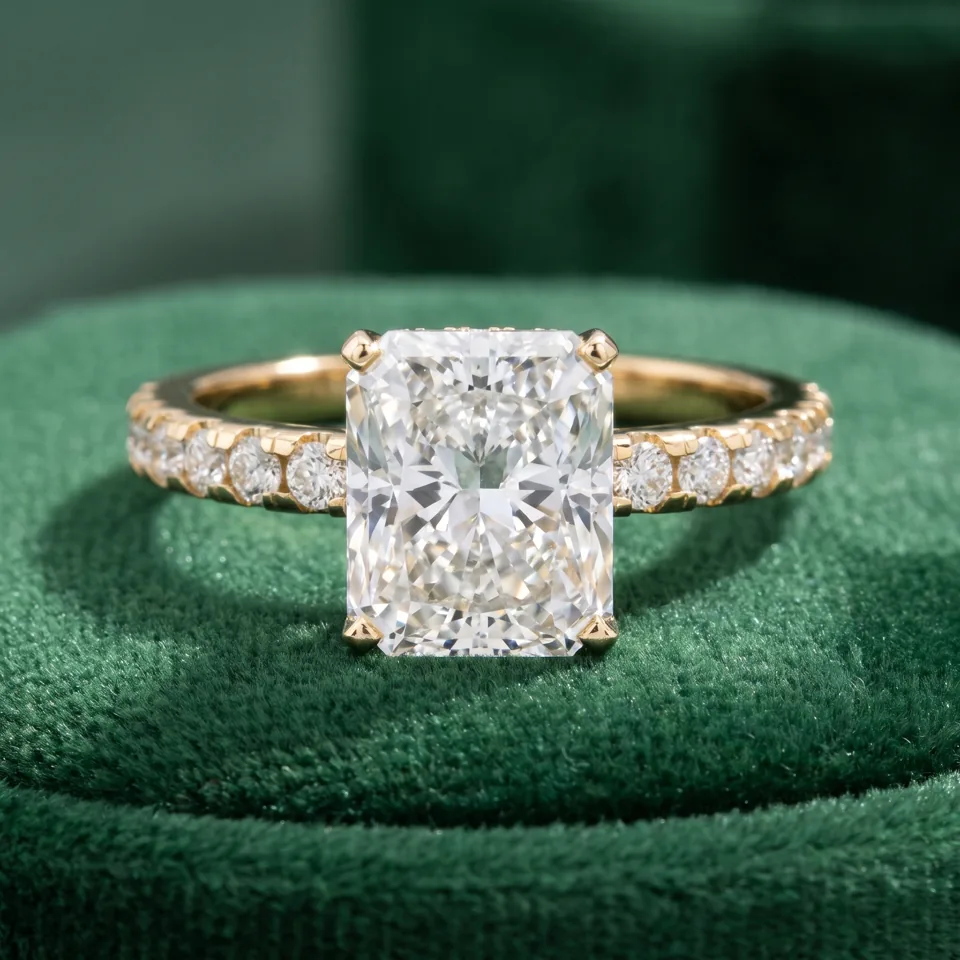 Radiant Cut Hidden Halo Engagement Rings
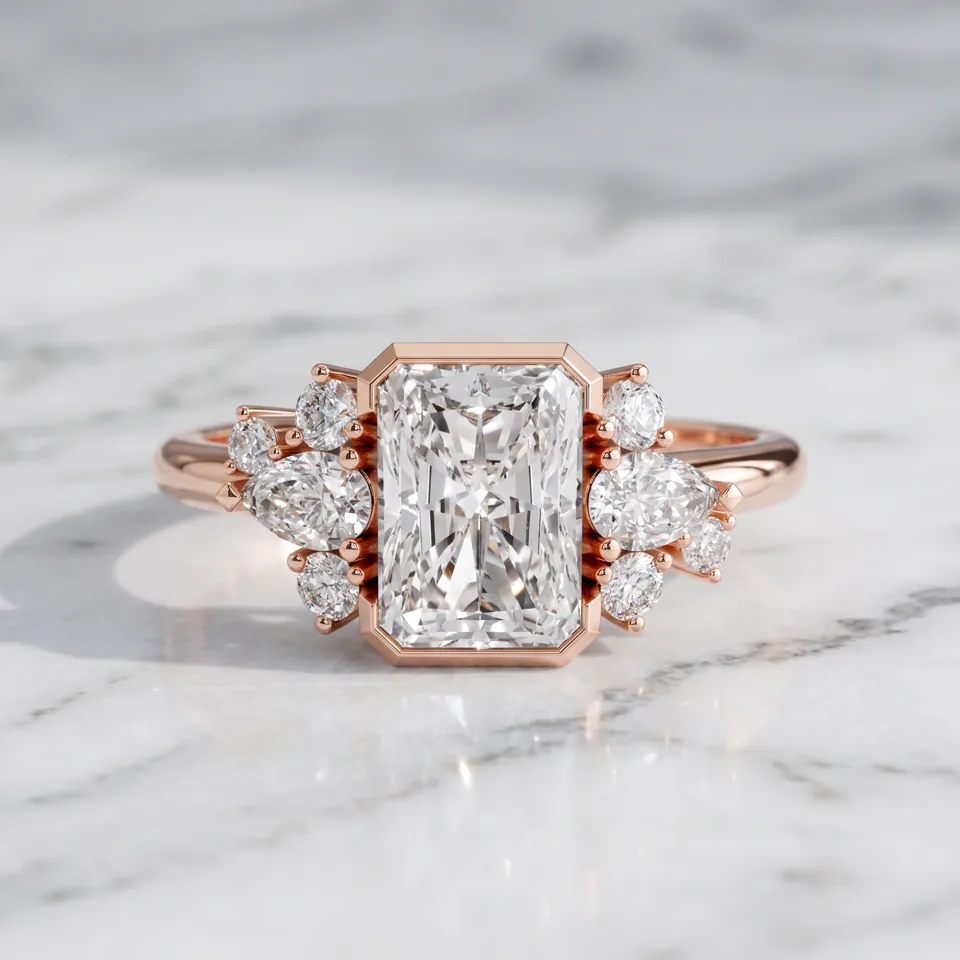 Radiant Cut Bezel Engagement Rings
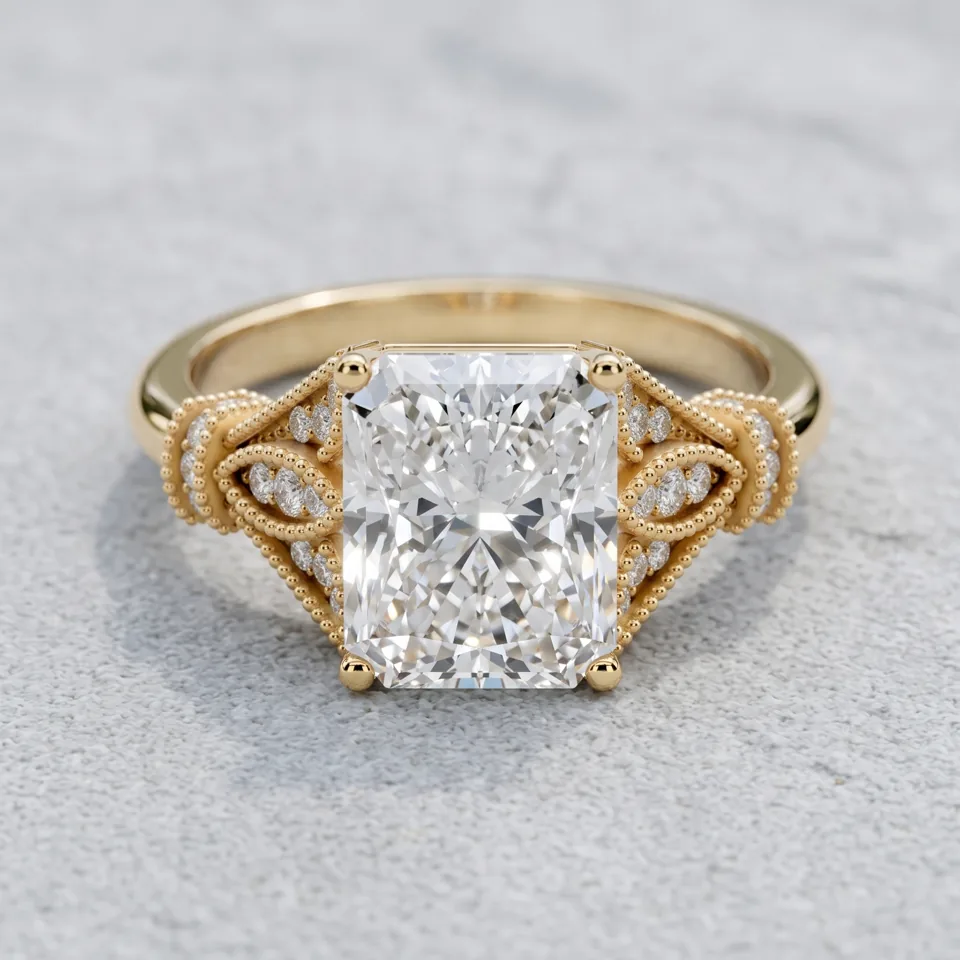 Radiant Cut Pave Engagement Rings
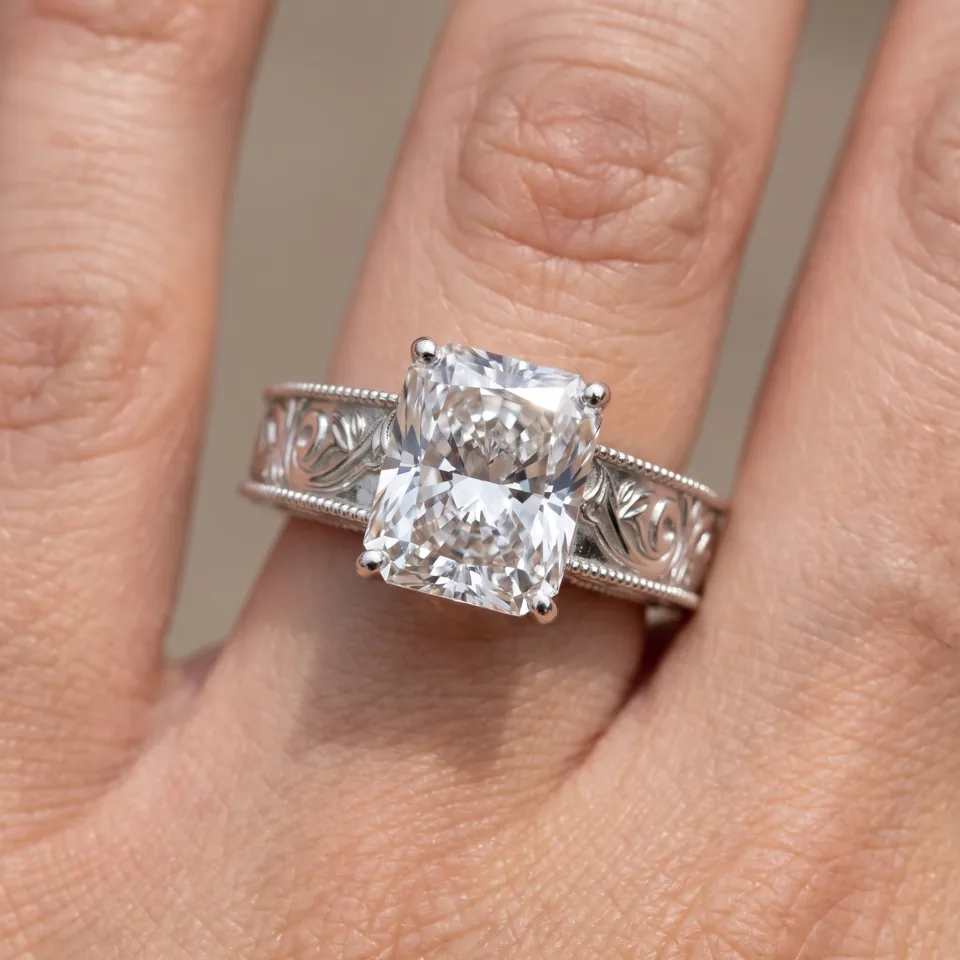 Vintage Radiant Cut Engagement Rings
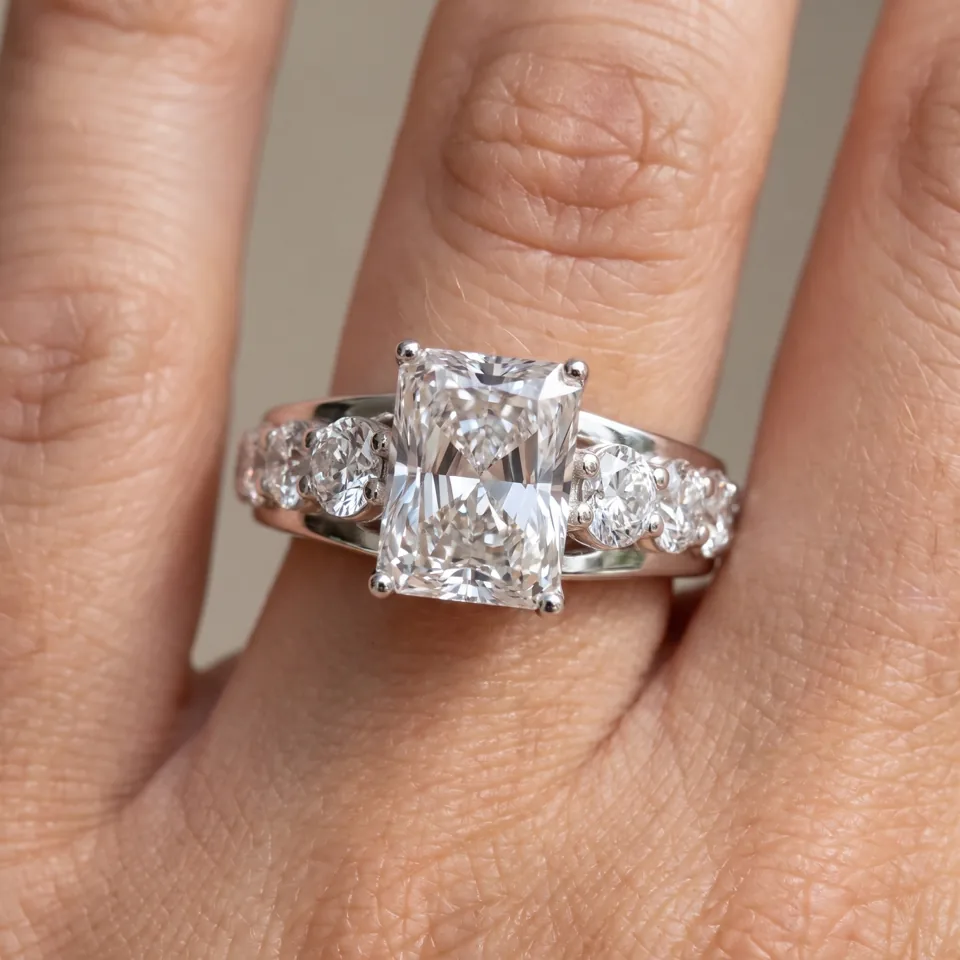 Radiant Cut Engagement Rings with Side Stones
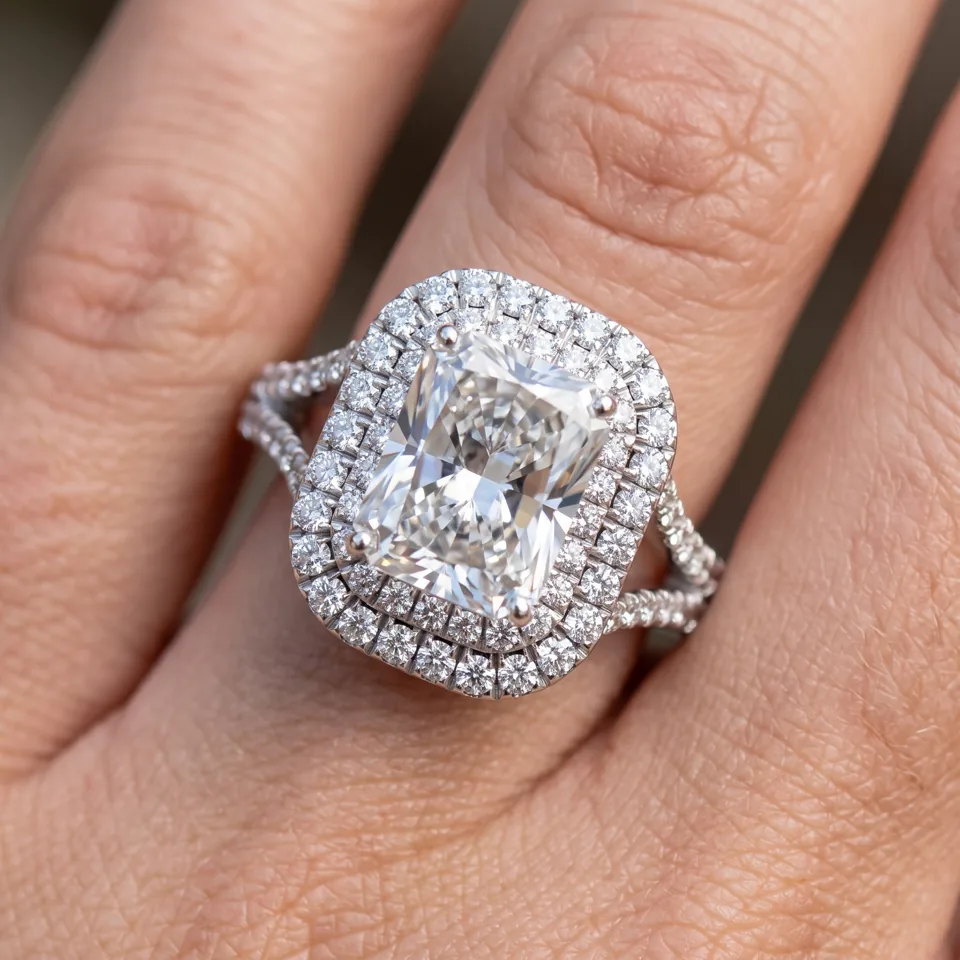 Radiant Cut Double Halo Engagement Rings
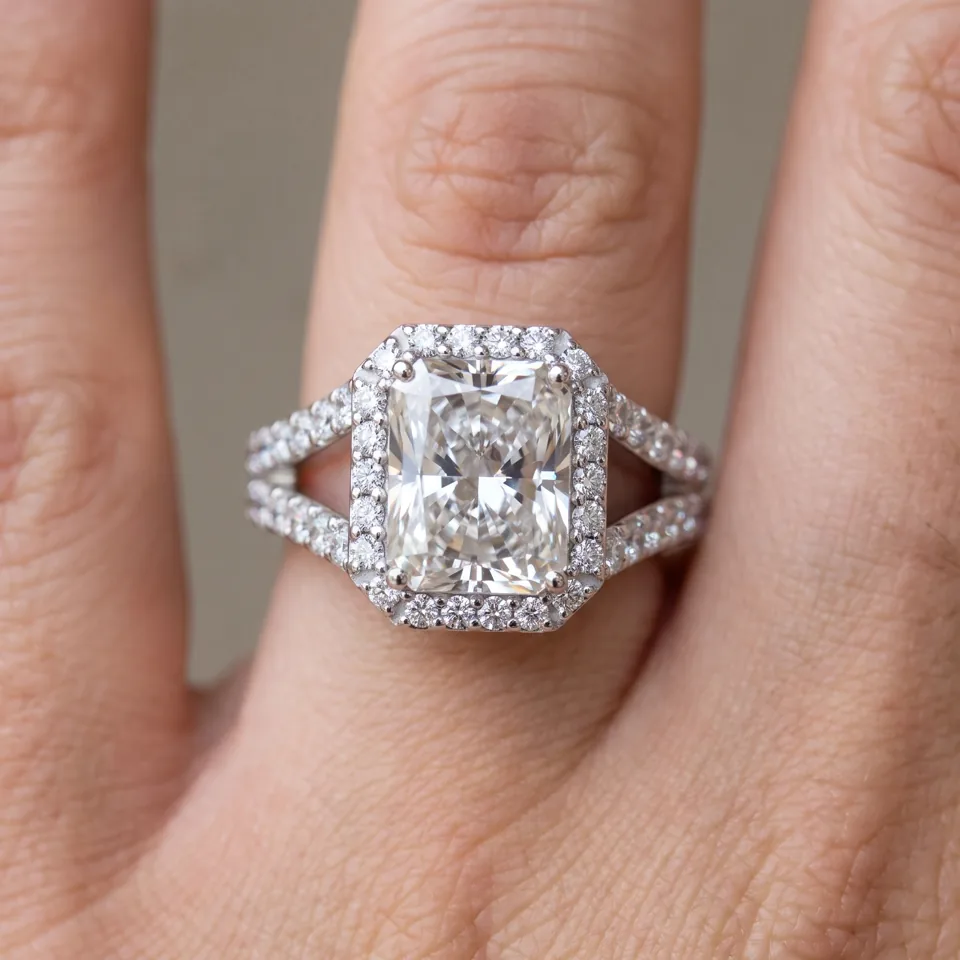 Radiant Cut Split Shank Engagement Rings
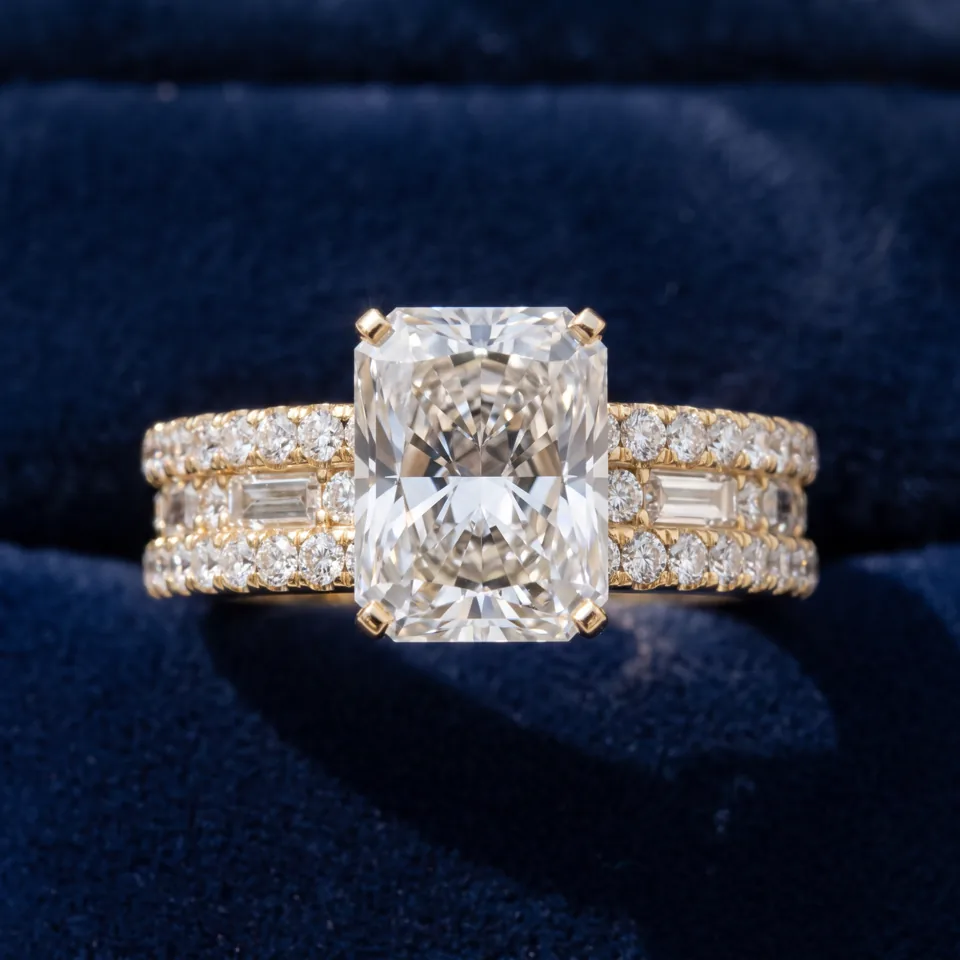 Radiant Cut Engagement Rings with Baguettes
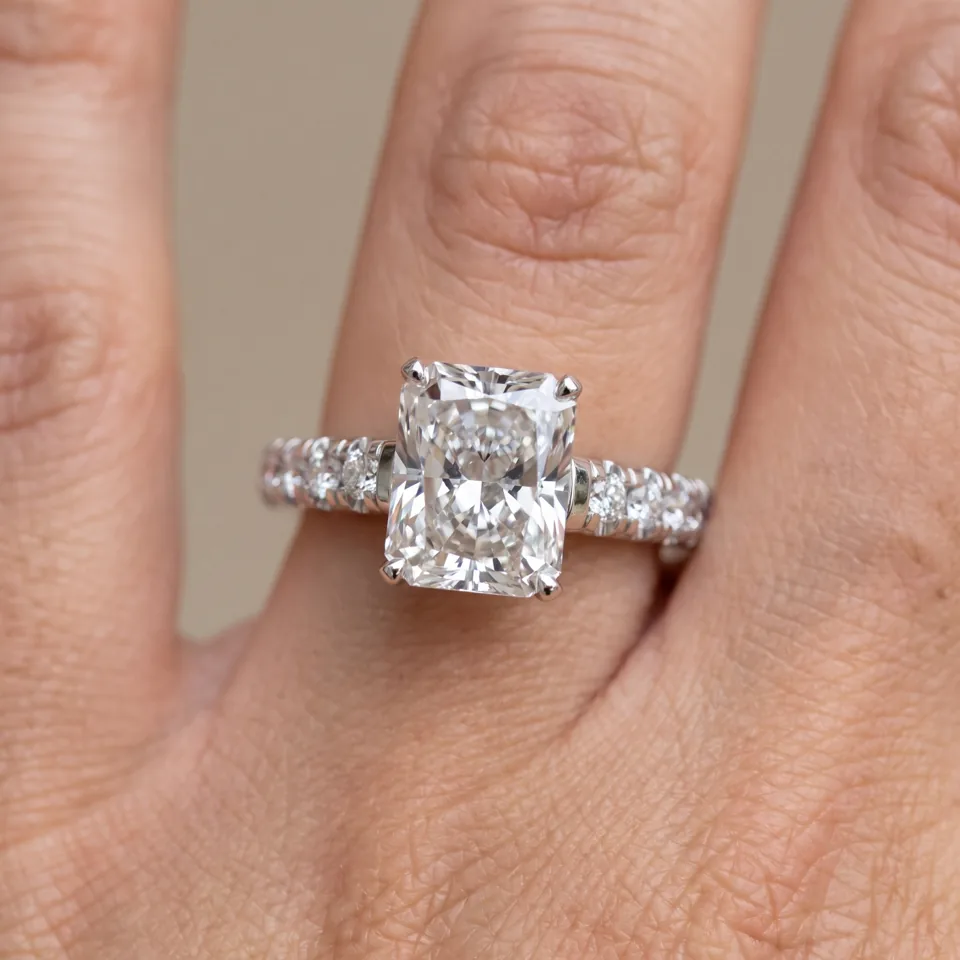 Radiant Cut Cathedral Rings
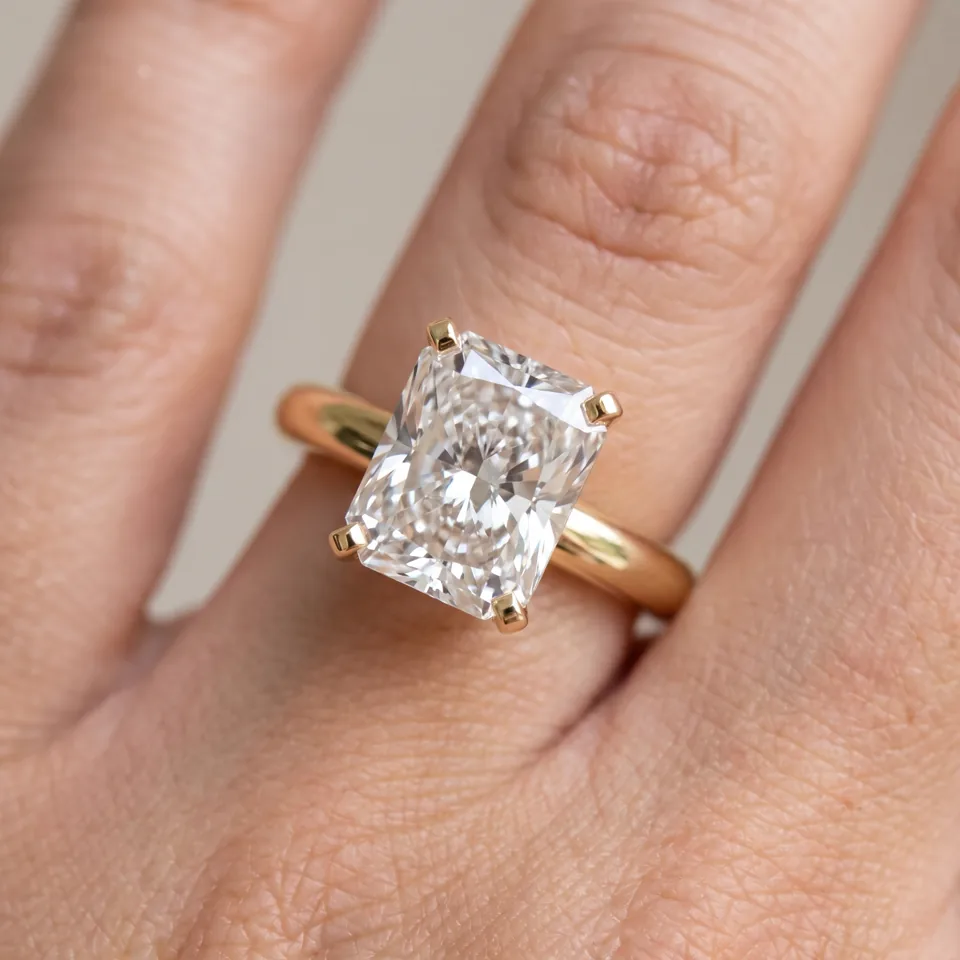 2 Carat Radiant Cut Lab-Grown Diamond Rings
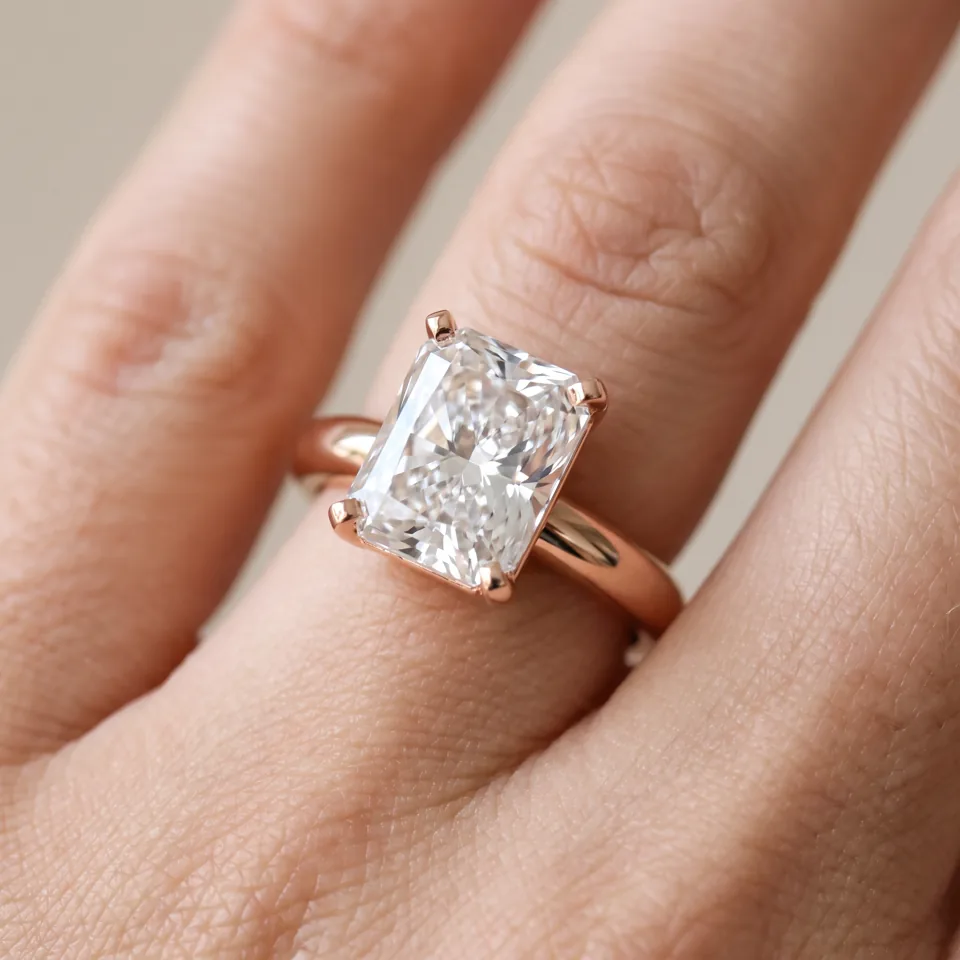 5 Carat Radiant Cut Lab-Grown Diamond Rings
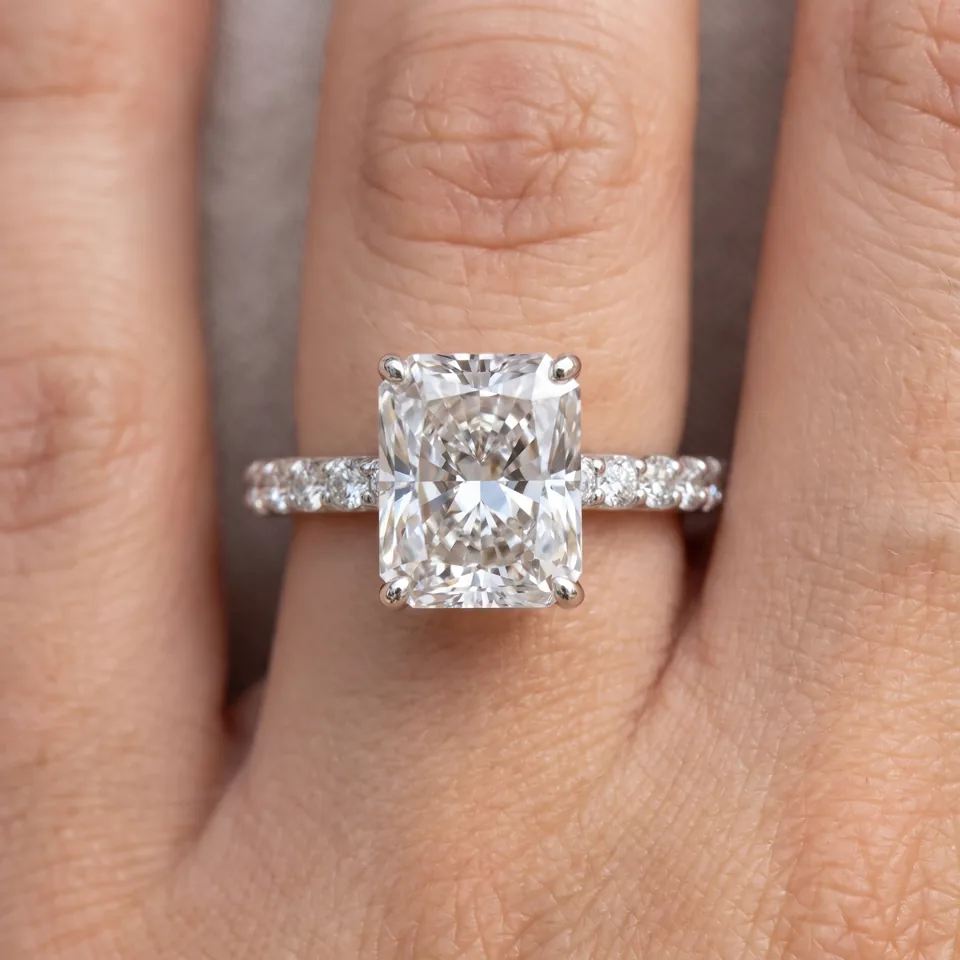 4 Carat Radiant Cut Lab-Grown Diamond Rings
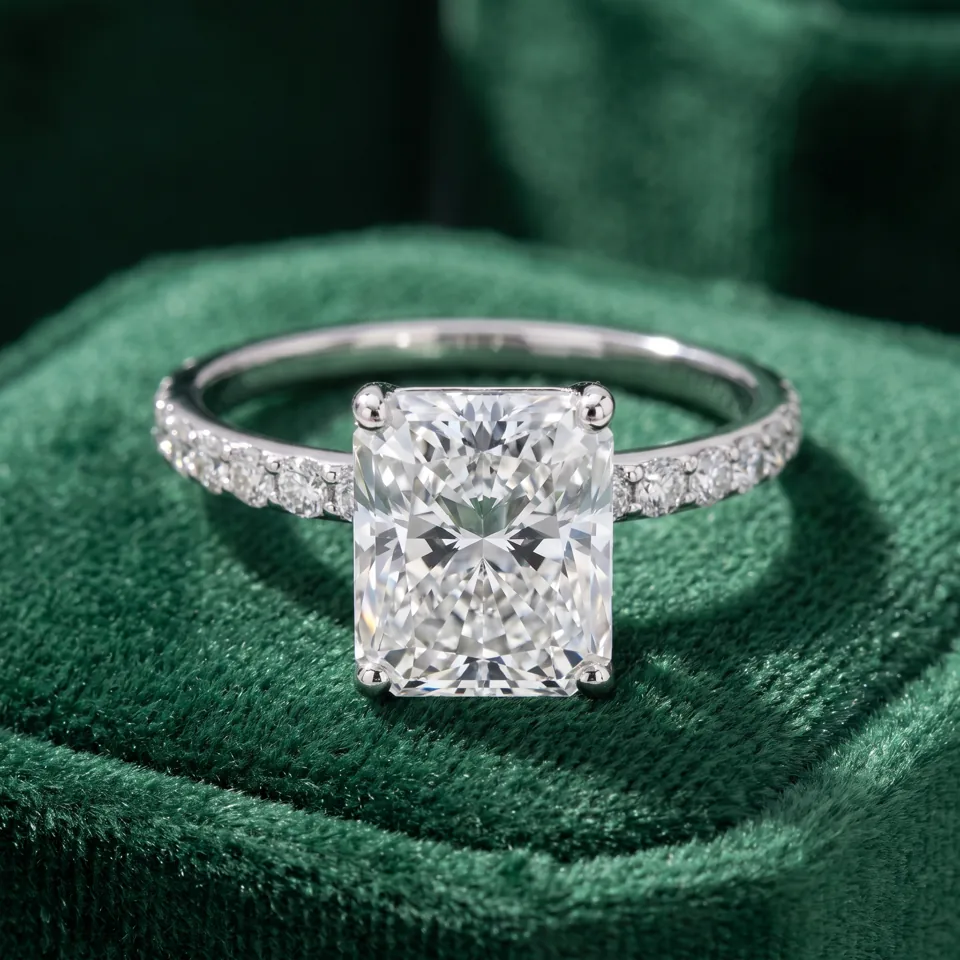 1 Carat Radiant Cut Lab-Grown Diamond Rings
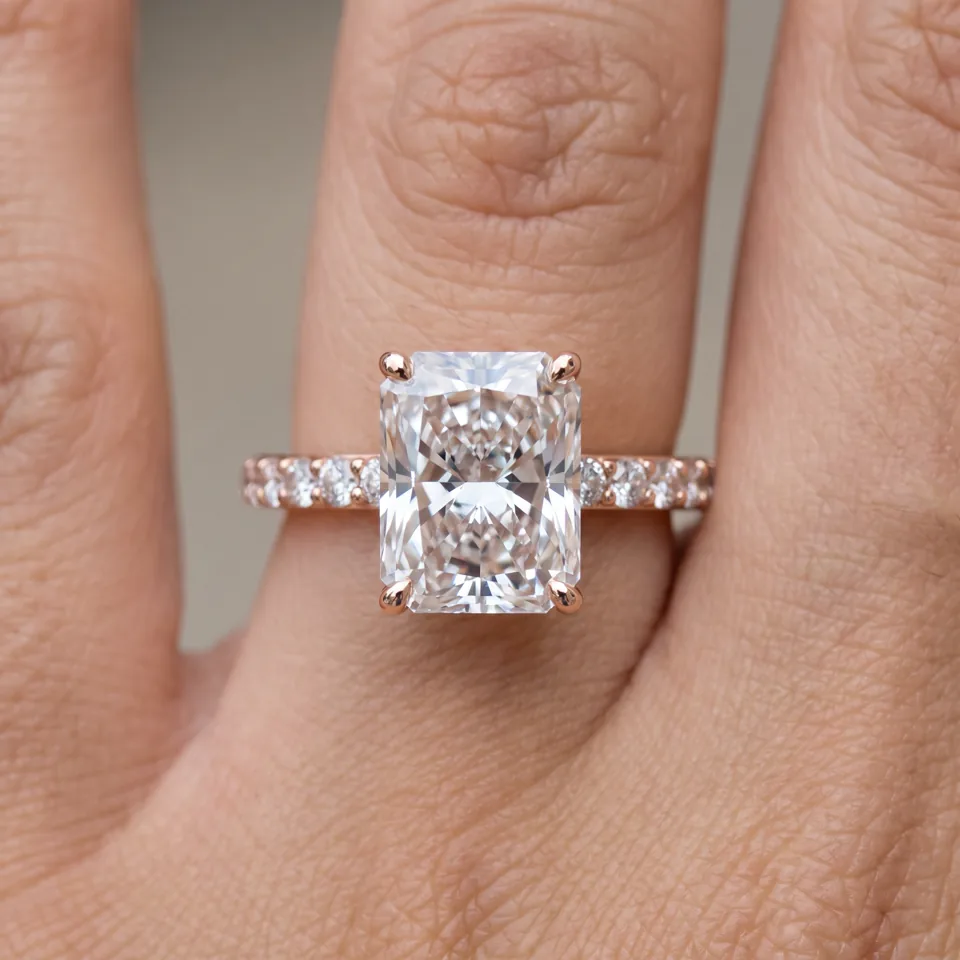 2.5 Carat Radiant Cut Rings
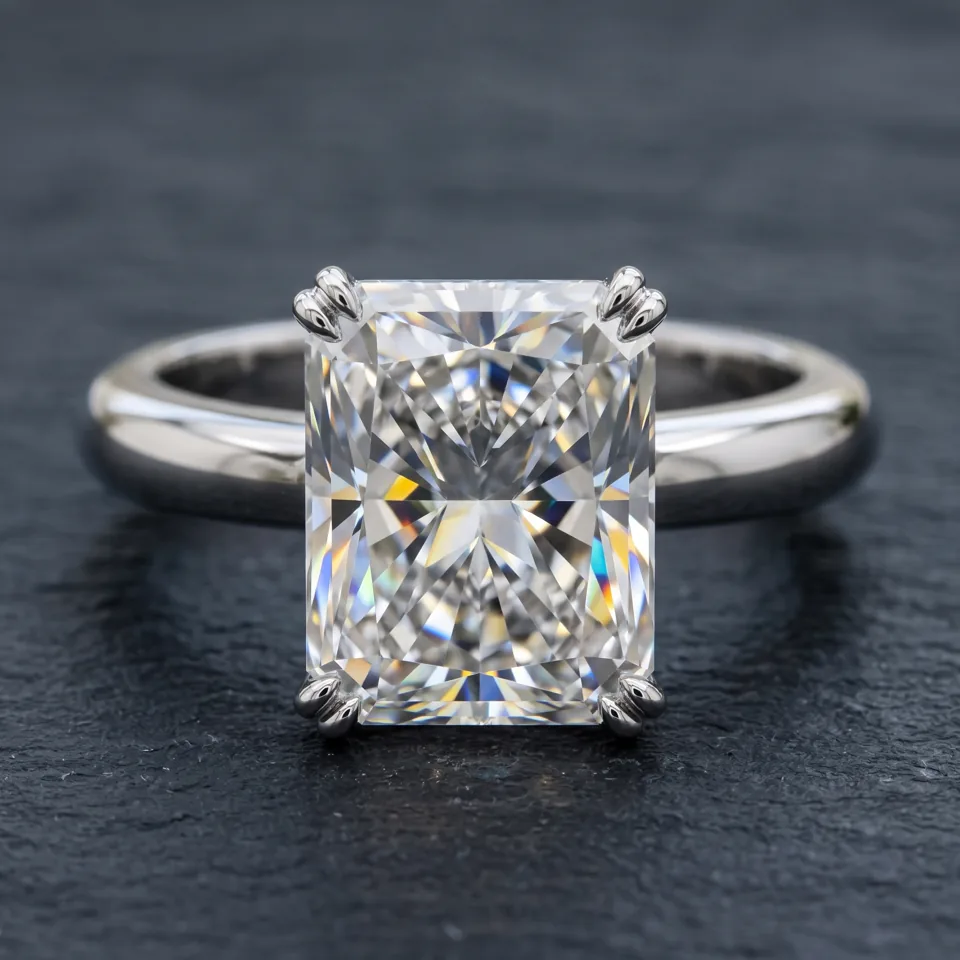 1.5 Carat Radiant Cut Rings
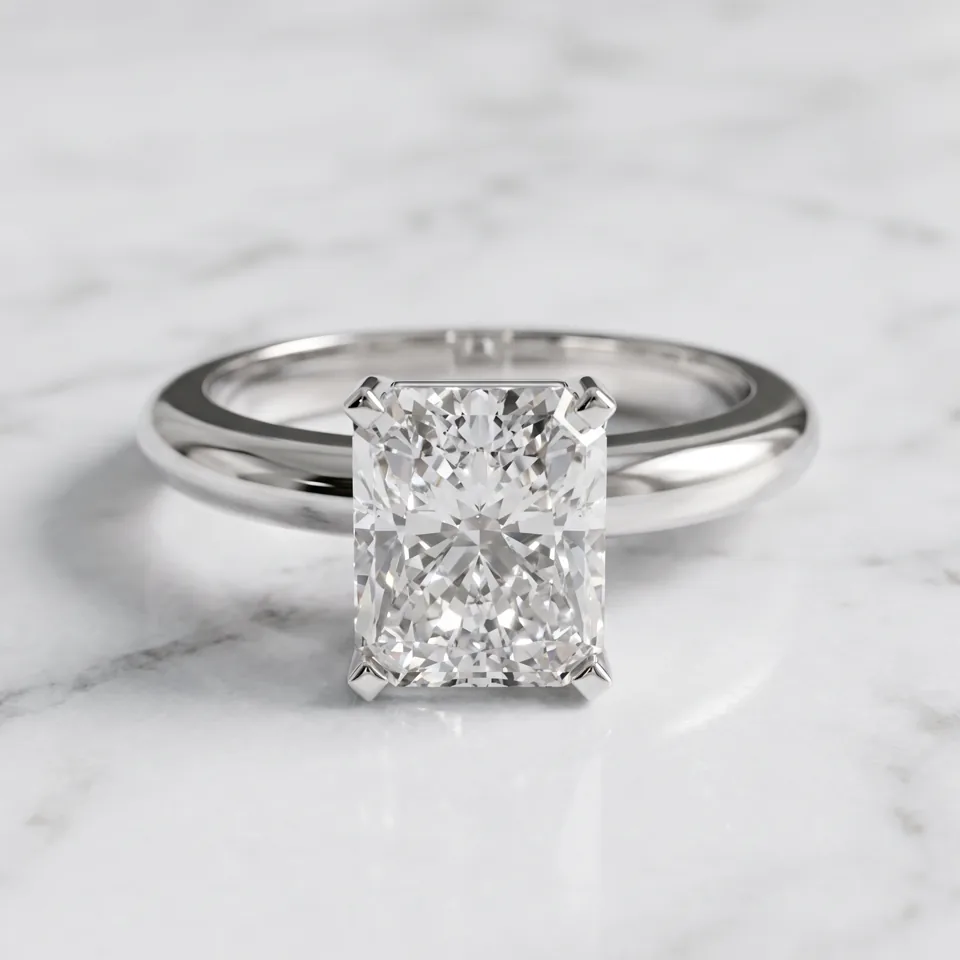 10 Carat Radiant Cut Lab-Grown Diamond Rings
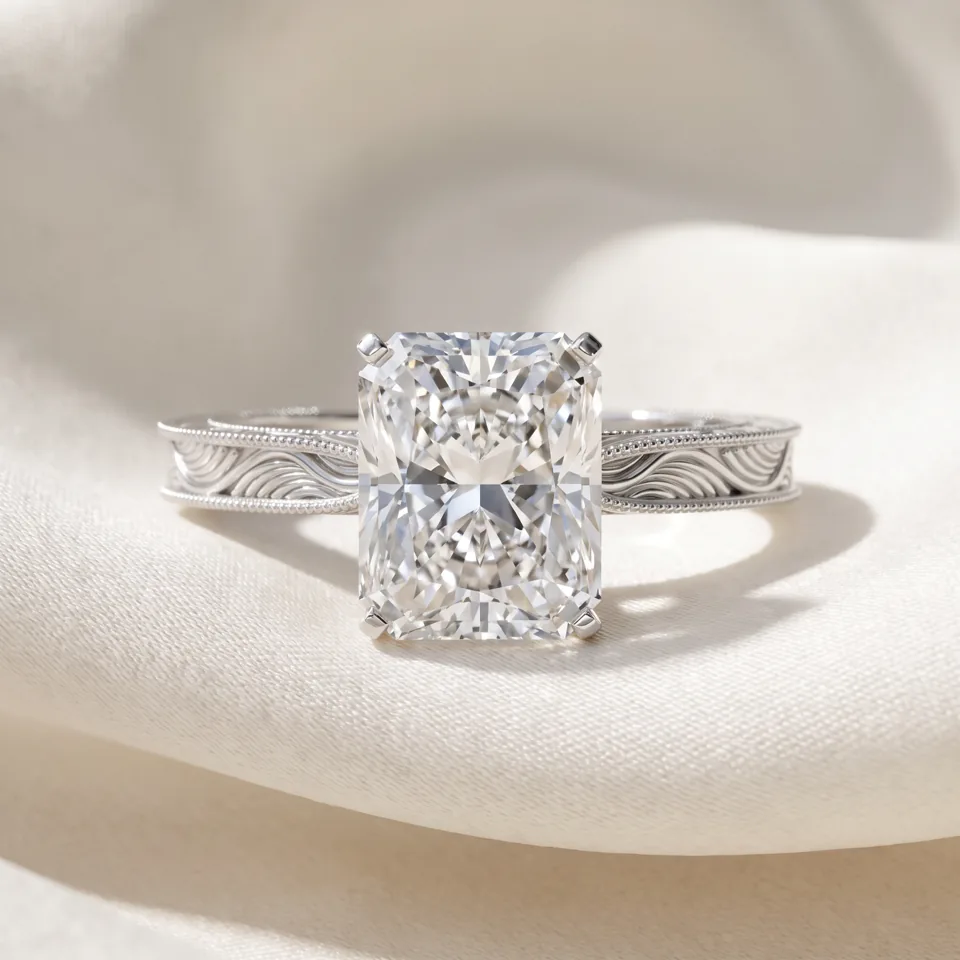 Sterling Silver Radiant Cut Engagement Rings
A solitaire leaves the radiant's straight sides and cut corners in full view. A halo rings the center with laboratory-grown diamond accents and makes it look bigger from above. With a hidden halo, the accents wrap the base of the center instead, visible in profile while the top stays clean.
Radiants range from nearly square to clearly rectangular. A longer stone, around 1.25 to 1.35 length to width, slims the finger and covers more area per carat. A square radiant looks bolder and pairs well with a three-stone setting. Because the corners are already clipped, a radiant chips less easily than a princess cut, and a simple four-prong head holds it well.
Side-stone designs line the shoulders with round, marquise, pear or baguette lab-grown diamond accents. Split shanks and twisted bands add width, and vintage settings bring milgrain and filigree. If you want a wedding band to sit flush, look for a plain or slim pavé band without a low gallery.
Nearly every setting can be made in platinum, in Silvadium (a tarnish-resistant sterling silver), or in 10K, 14K or 18K gold of whichever color you prefer. Pink, blue, green and yellow fancy centers fit most of the designs, with black on some; a yellow radiant in yellow gold makes a strong pairing. Settings begin under $200, and the bulk sit around $850 to $1,200 before the center.
Plan on 10–15 days for your ring to be made. Insured shipping is on us in both directions, the center diamond comes with an IGI or GIA report, and you get 30 days to return it plus a single free resize in the first 60 days after delivery.
A radiant cut ring is set with a square or rectangular diamond whose corners are trimmed and whose facets follow a brilliant pattern. The shape sits between an emerald cut, which has the same outline but long step facets, and a round brilliant, which has similar sparkle. The result is a crisp geometric outline with lively light, and Whitemoon offers it in solitaire, halo, side-stone and three-stone settings.
The pros: strong sparkle, clipped corners that resist chipping, and an elongated stone that faces up bigger than a round carrying the same carat weight. The cons: a deep pavilion can hide some weight in the bottom of the stone, a lower color grade can show warmth in the corners, and proportions vary widely. Compare length-to-width ratios and depth before you choose your center.
They're close, and it depends on the cut. A well-cut radiant usually throws sharper, more fragmented flashes, often called a crushed-ice look, while a classic cushion shows larger, softer flashes. Brilliant-style cushions can match a radiant's sparkle. If you can, look at both in daylight and under spotlights: the cushion reads softer and rounder, the radiant crisper and more angular.
No. A well-proportioned radiant looks crisp and bright, and its square or rectangular outline reads modern. A poorly cut one can look dark in the middle or show a bow-tie shadow, which is the main thing to check. Choose a center with good symmetry and a length-to-width ratio that suits your hand, and set it in prongs that frame the corners.
Usually not. Radiant cuts tend to cost less per carat than round brilliants, because cutting a radiant keeps more of the rough crystal. Against other fancy shapes such as cushion and princess, prices are similar at the same weight and grade. At Whitemoon you see the setting price first, and the center diamond's price is added once you pick it in the following step.


