Complimentary insured shipping, both waysEngagement ring diamonds certified by IGI or GIAGrown by light. Conflict-free by natureComplimentary insured shipping, both ways
Engagement RingsWedding BandsEarrings
NecklaceBraceletsAbout
A halo radiant cut engagement ring wraps the center in a border of laboratory-grown diamond accents that traces its rectangle.
Every piece here is a setting, and the center diamond is selected afterward. On this page you settle the style of the halo, the look of the band, and the metal: platinum, silver, or gold in three shades.
The frame of small lab-grown diamond accents makes the center appear bigger across a room and adds a second ring of sparkle. A radiant's clipped corners let the halo hug it closely, keeping the outline neat. A few designs change the frame itself: scalloped halos show small arcs of metal, and a starburst halo spreads outward for drama.
Pave band, split shank or plain metal
Most radiant cut engagement rings with a halo here continue the sparkle onto a pave band. A split shank divides just below the head, which widens the look of the top. To let the halo carry the ring alone, choose a plain, tapered or knife-edge band, which is also simpler to resize down the road.
Vintage and floral halo designs
A good share lean vintage, with milgrain beading, open scrollwork, filigree or floral shoulders. Such detail reflects less light than pave but gives texture and a handcrafted feel. After years of wear milgrain can flatten, and a jeweler can re-cut it.
Which metal to choose
Platinum is the densest and longest-wearing option. Gold comes in white, yellow or rose at 10K, 14K or 18K. Silvadium, a tarnish-resistant sterling silver, keeps the budget lowest, with settings from under $200. A white metal makes the halo merge with the center; yellow or rose gold draws a colored line around it.
Ordering from Whitemoon
Expect your ring within 10–15 days, together with the center's IGI or GIA report and free insured shipping both ways. Send an unworn ring back with its certificate inside 30 days if it isn't right, and we resize once at no charge within 60 days of delivery.

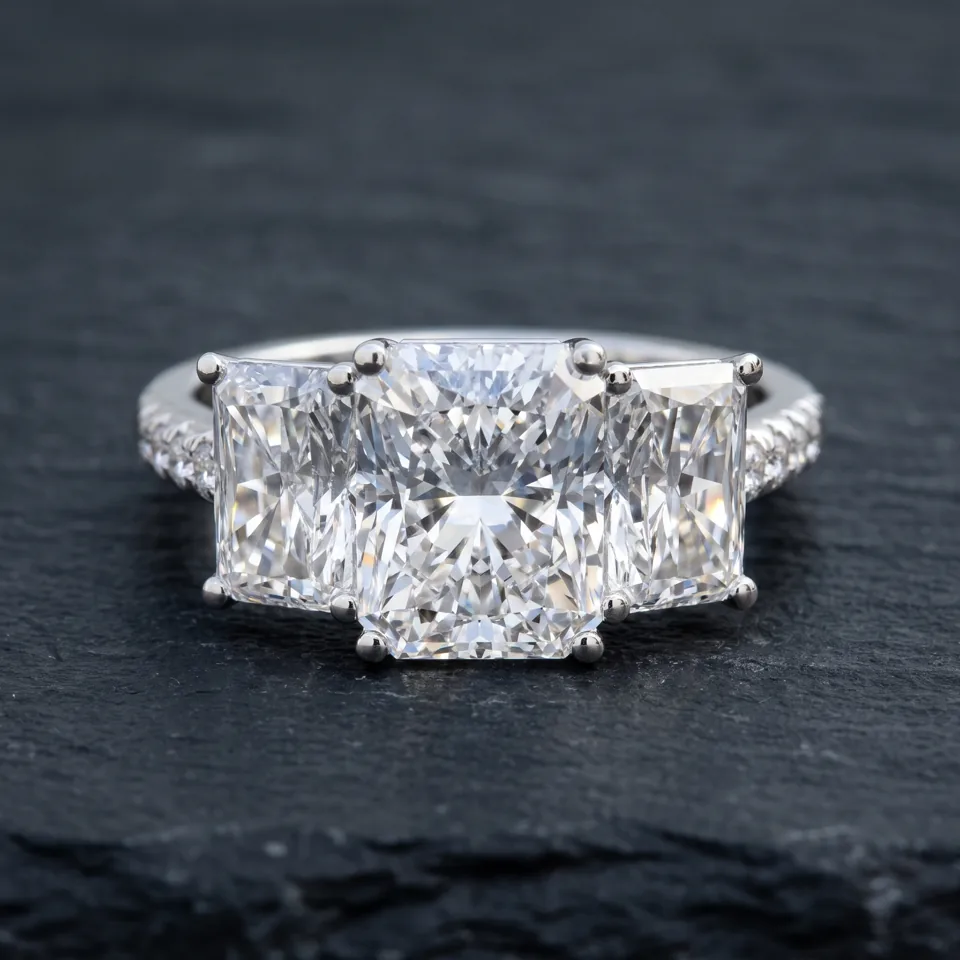 Radiant Cut Three Stone Engagement Rings
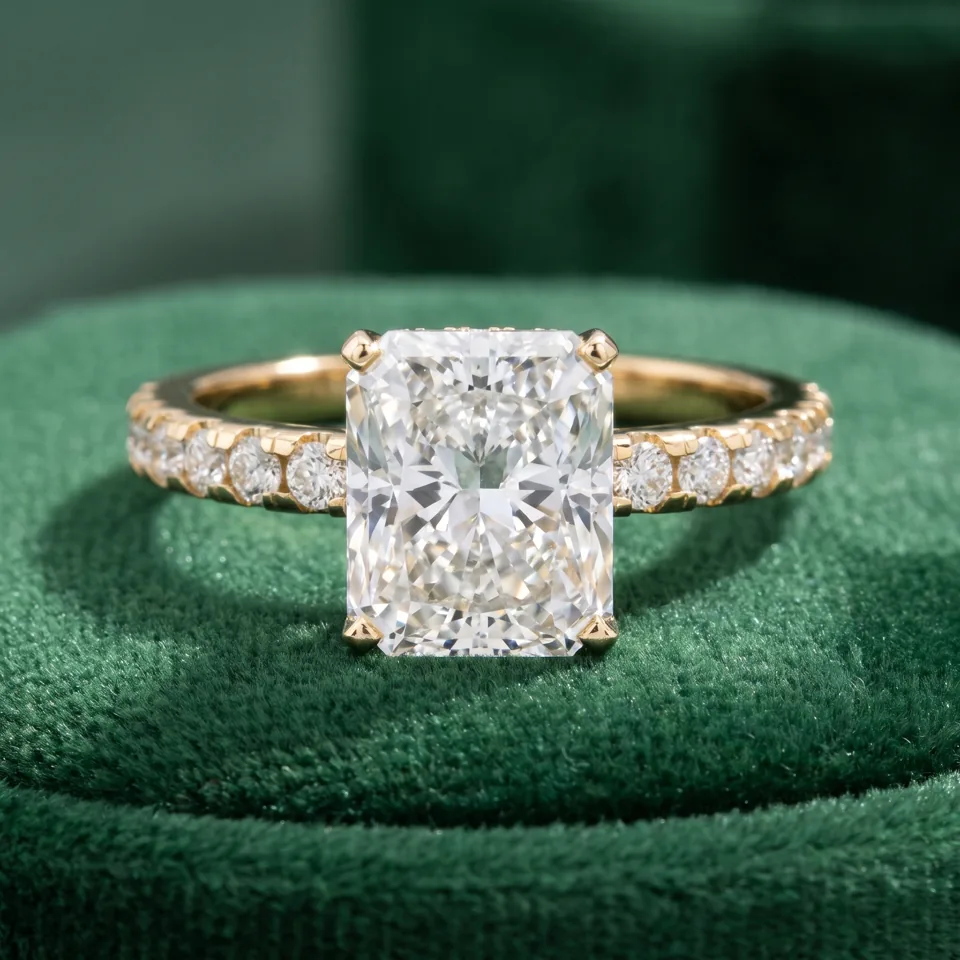 Radiant Cut Hidden Halo Engagement Rings
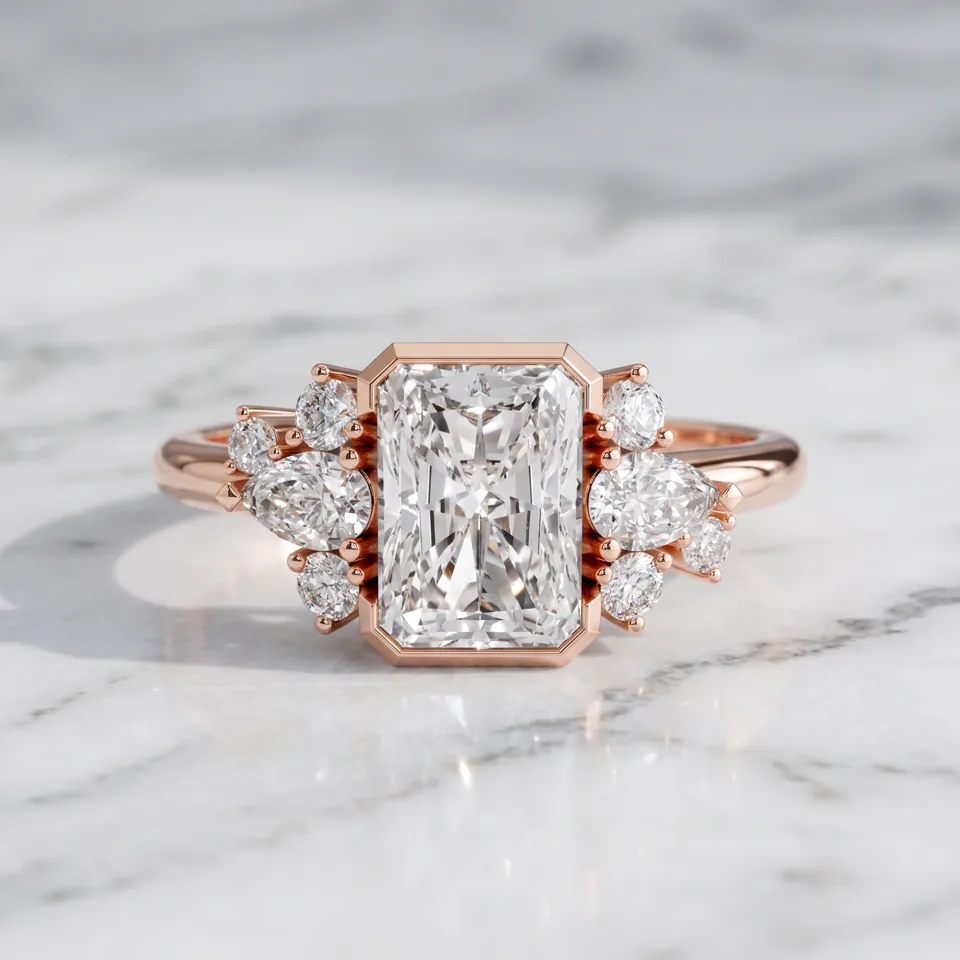 Radiant Cut Bezel Engagement Rings
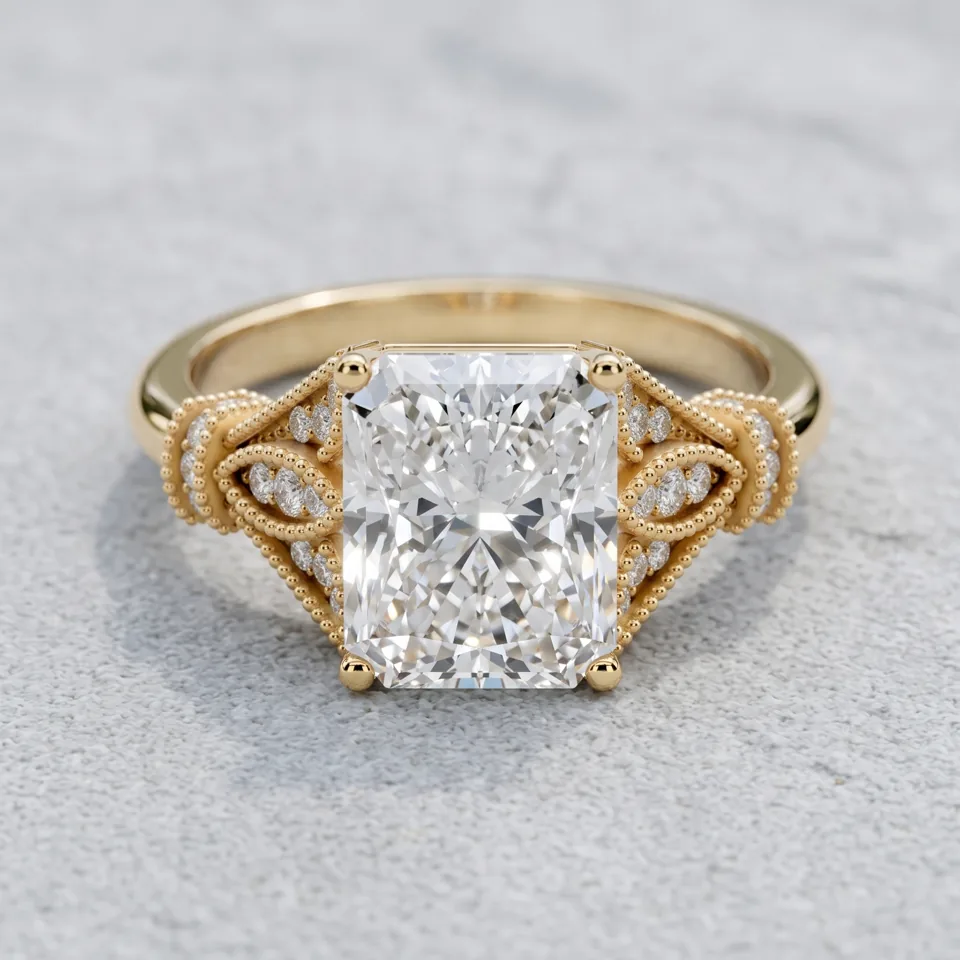 Radiant Cut Pave Engagement Rings
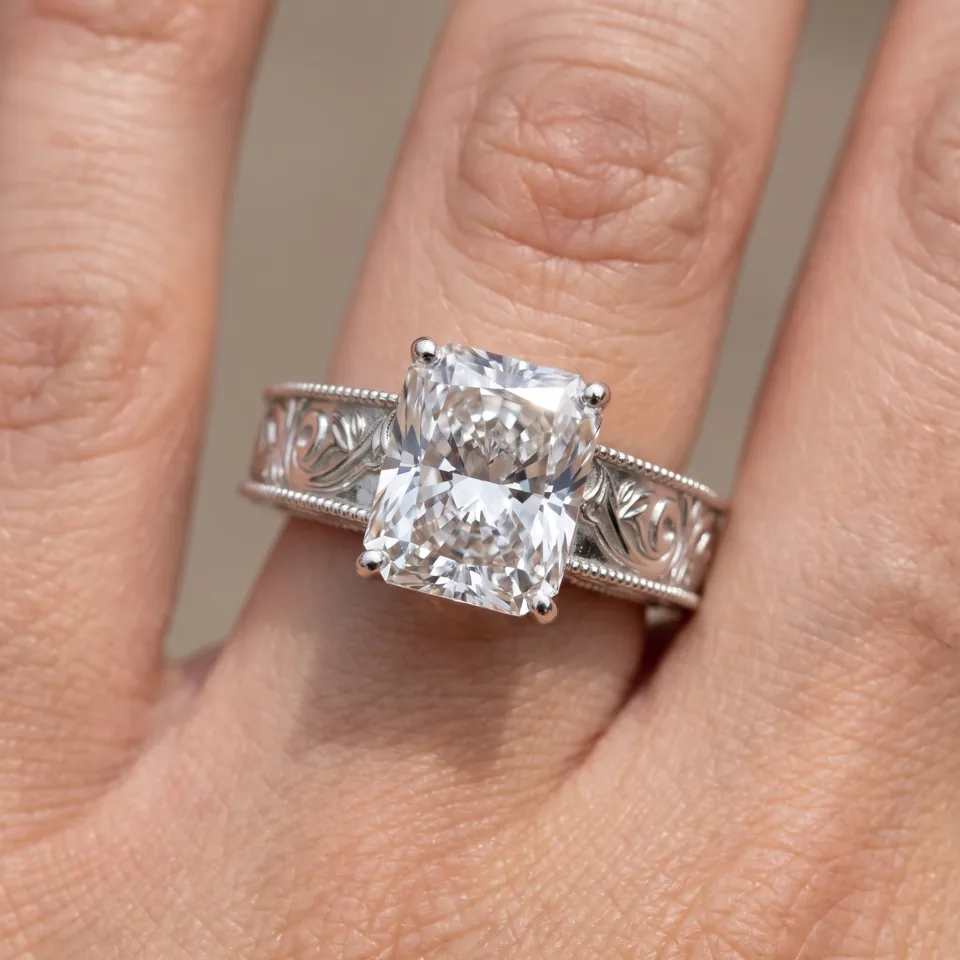 Vintage Radiant Cut Engagement Rings
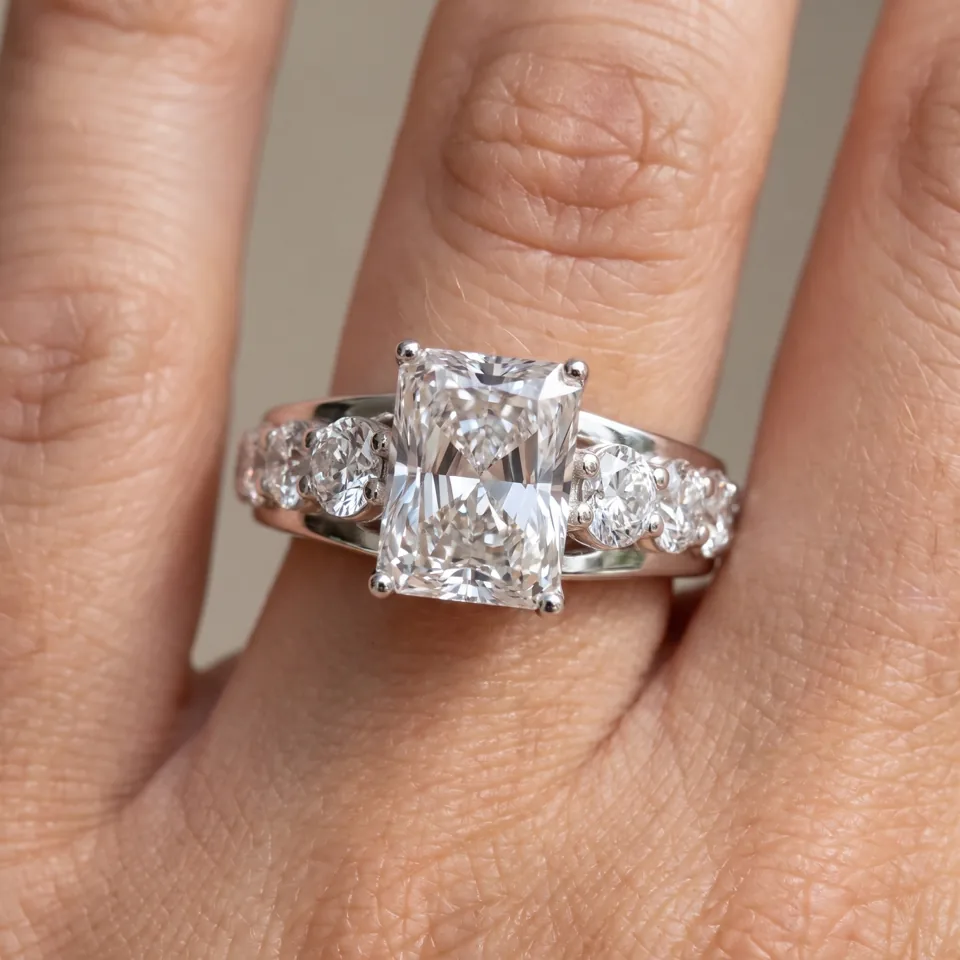 Radiant Cut Engagement Rings with Side Stones
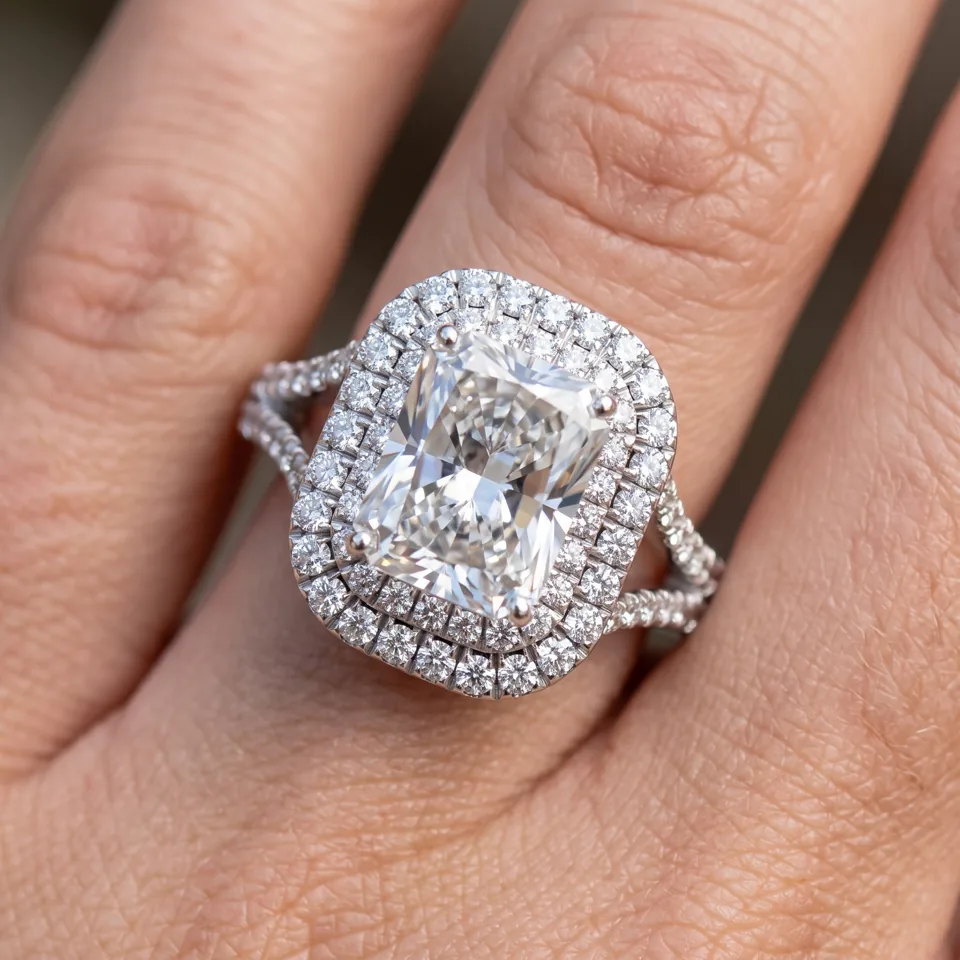 Radiant Cut Double Halo Engagement Rings
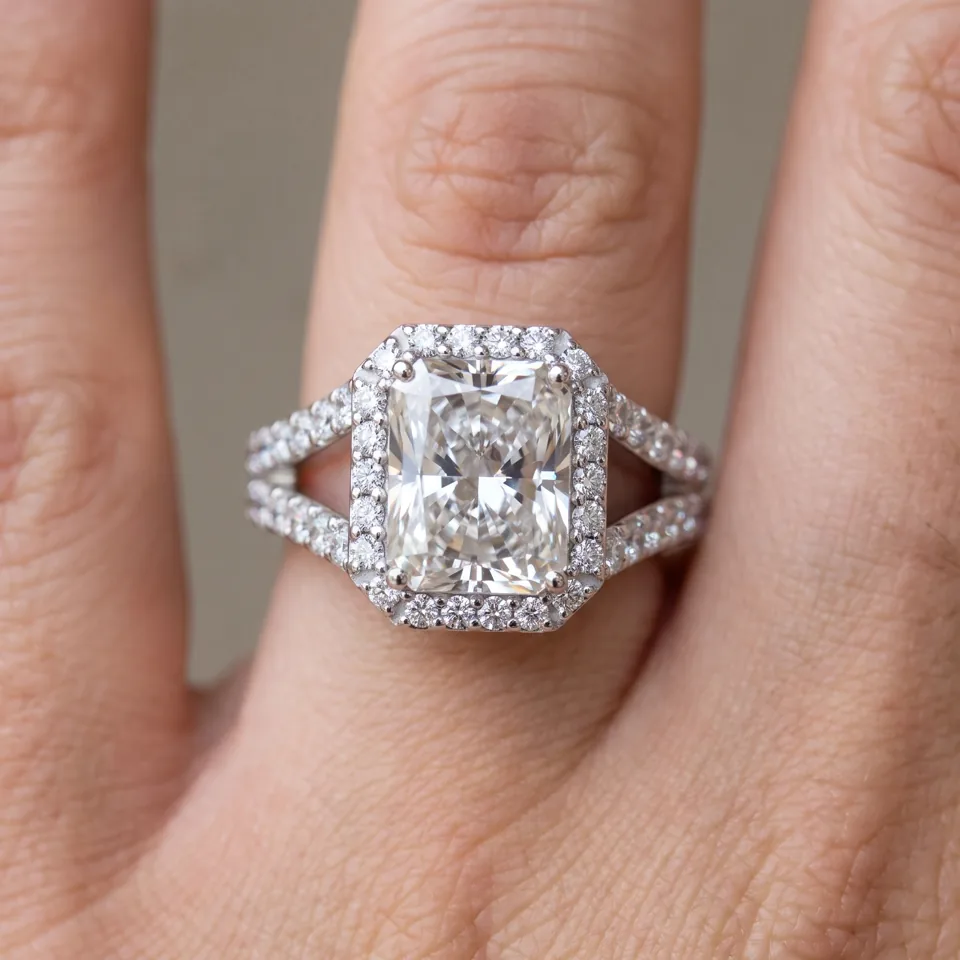 Radiant Cut Split Shank Engagement Rings
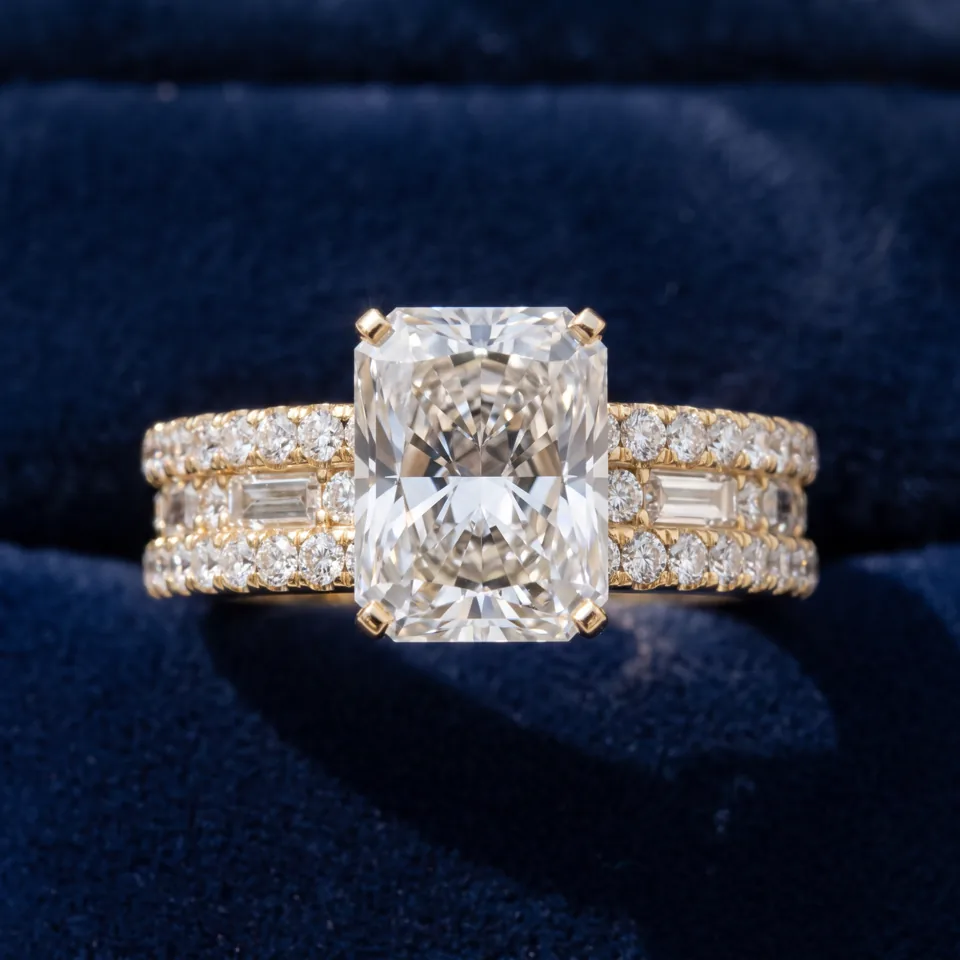 Radiant Cut Engagement Rings with Baguettes
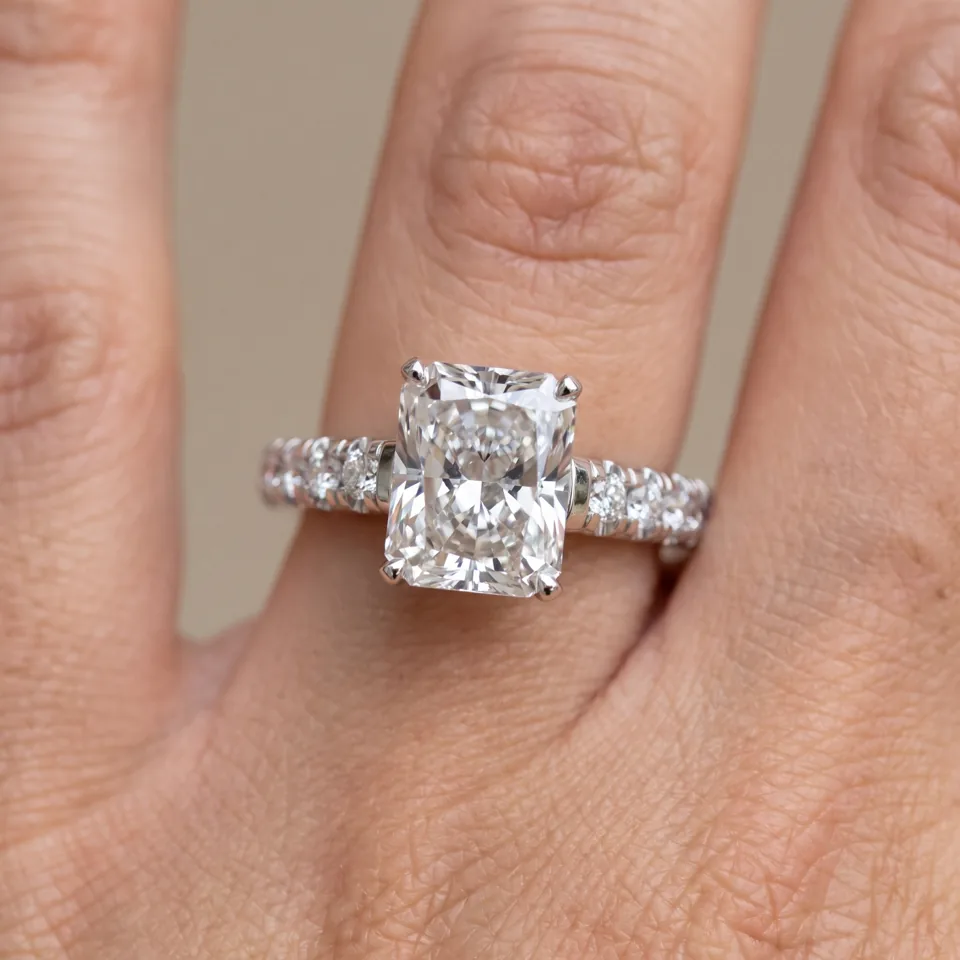 Radiant Cut Cathedral Rings


