Complimentary insured shipping, both waysEngagement ring diamonds certified by IGI or GIAGrown by light. Conflict-free by natureComplimentary insured shipping, both ways
Engagement RingsWedding BandsEarrings
NecklaceBraceletsAbout
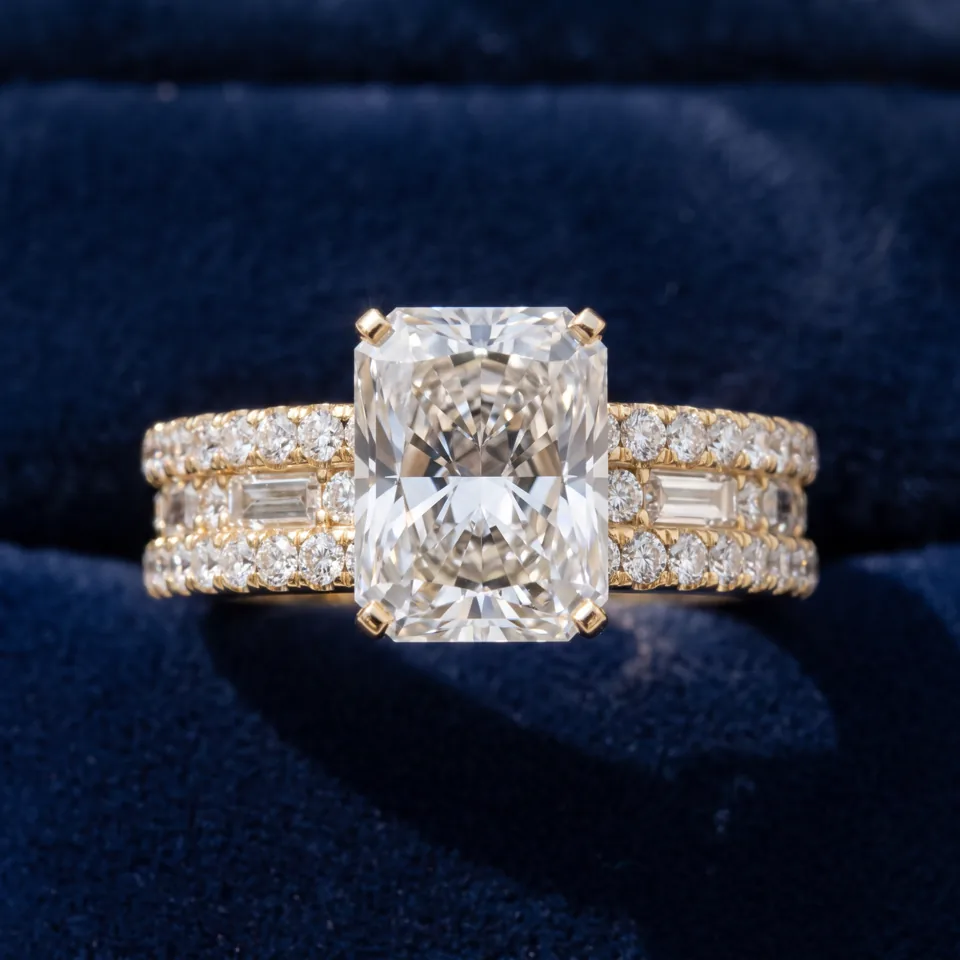
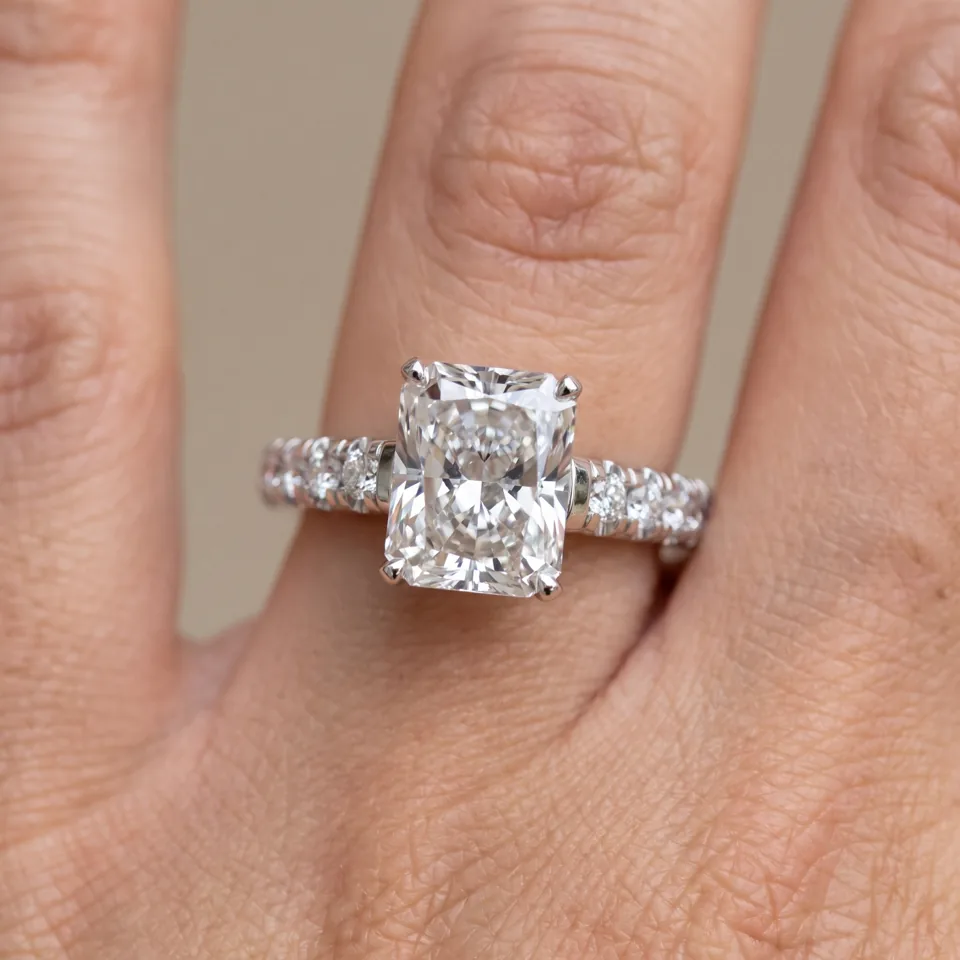
A radiant pave engagement ring sets a rectangular or square center, its corners clipped, above a band lined with small laboratory-grown diamond accents. This page is for the setting; the radiant center is picked on the step after.
The main decisions are the band style, whether you want a halo, and the metal. Proportions of the center come later, when you pick the stone itself.
Two directions cover most of this range. A pave solitaire leaves the center alone up top, with a sparkling band below it, so the stone's crisp outline stays the focus. A halo circles the radiant with lab-grown diamond accents, making the center look wider from across a room. Hidden halo designs put that ring under the stone instead, visible mainly from the side. Some designs also add a double halo, three stone heads or marquise and baguette side stones.
How the pave band is laid out
Pave rows differ more than photos suggest. Look at the product title for the pattern:
A single row of small rounds gives a fine, even line of light.
Larger stones in a scalloped band look bolder and catch more light per stone.
Shared prong and alternating-size bands show less metal between stones.
Multi-row shoulders, twisted strands and split shanks spread the sparkle wider.
Radiant cut micro pave engagement rings use even smaller accents; if you prefer that delicate look, choose a slim single-row band.
Caring for a pave radiant cut engagement ring
Small accents sit in tiny beads of metal, so have them looked over yearly, and slip the ring into a pocket before weights, digging in soil or moving boxes. Lotion collects under the stones; a toothbrush with a drop of dish soap lifts it out. If you expect to change size by more than one, pick a design whose lower band is plain metal, since a jeweler can cut and rejoin it far more easily than a fully stone-set shank.
Choosing the metal
Nearly every design is offered in platinum and in white, rose or yellow gold, with 10K, 14K or 18K on the gold versions, plus Silvadium, a tarnish-resistant sterling silver. A colorless center looks brighter against white metal; yellow and rose gold warm the band and suit a fancy yellow or pink center, which most designs accept along with blue and green. The simplest settings come in under $200, the typical ones at roughly $900–$1,250, and the center is added on top.
Ordering from Whitemoon
Your ring is crafted after you order and is ready in 10–15 days, with free insured shipping on the way to you and on any return. The center comes with its IGI or GIA report. Returns are accepted within 30 days if the ring is unworn and has its certificate, and one resize within 60 days of delivery is on us.

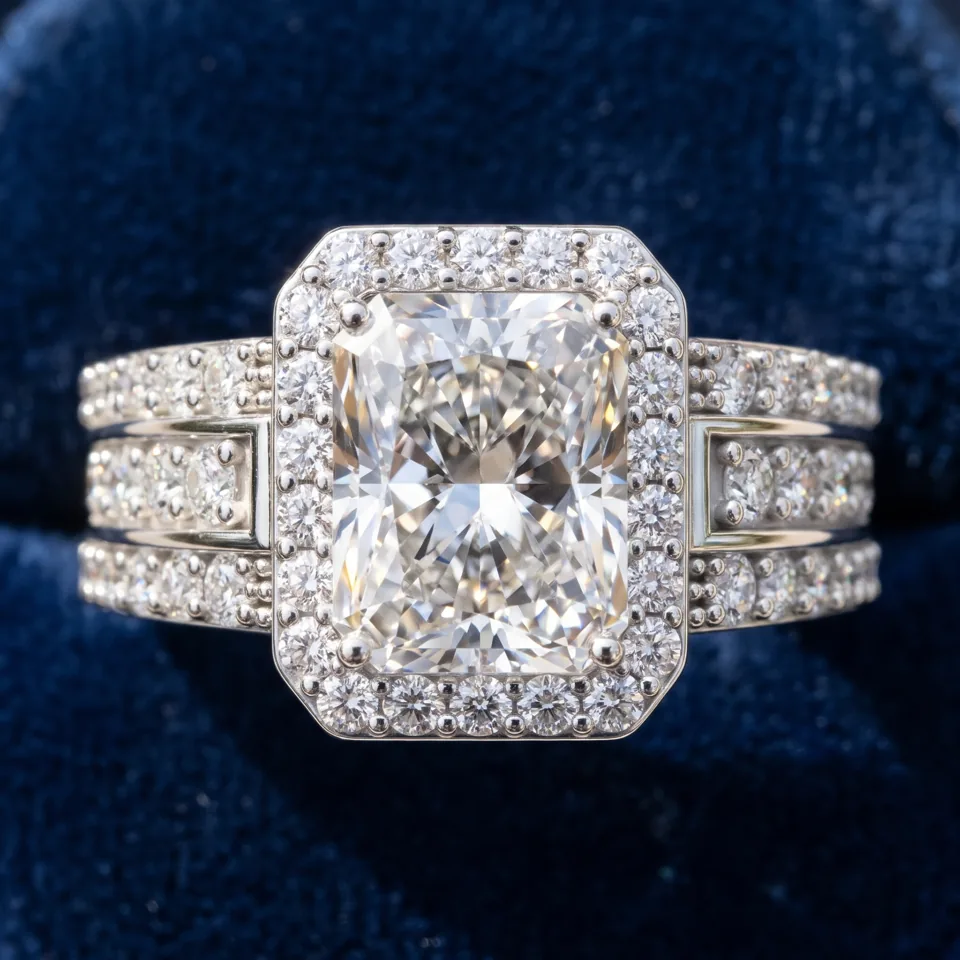 Radiant Cut Halo Engagement Rings
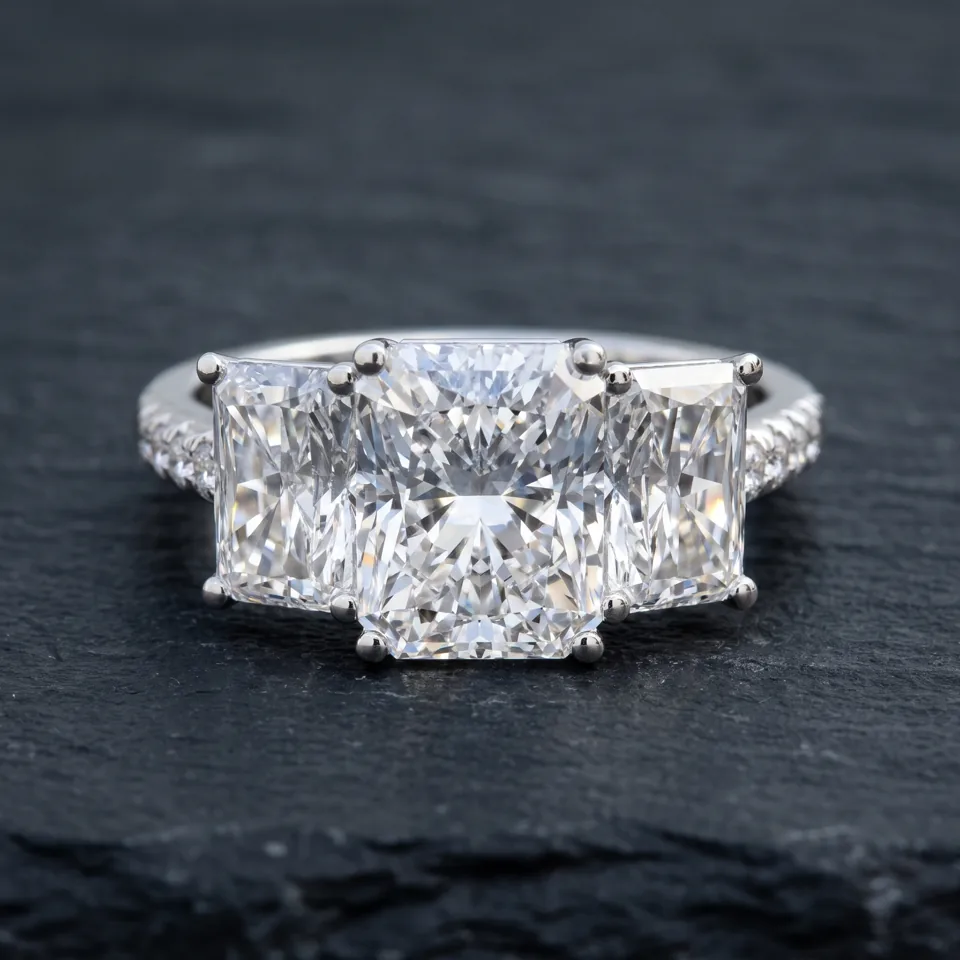 Radiant Cut Three Stone Engagement Rings
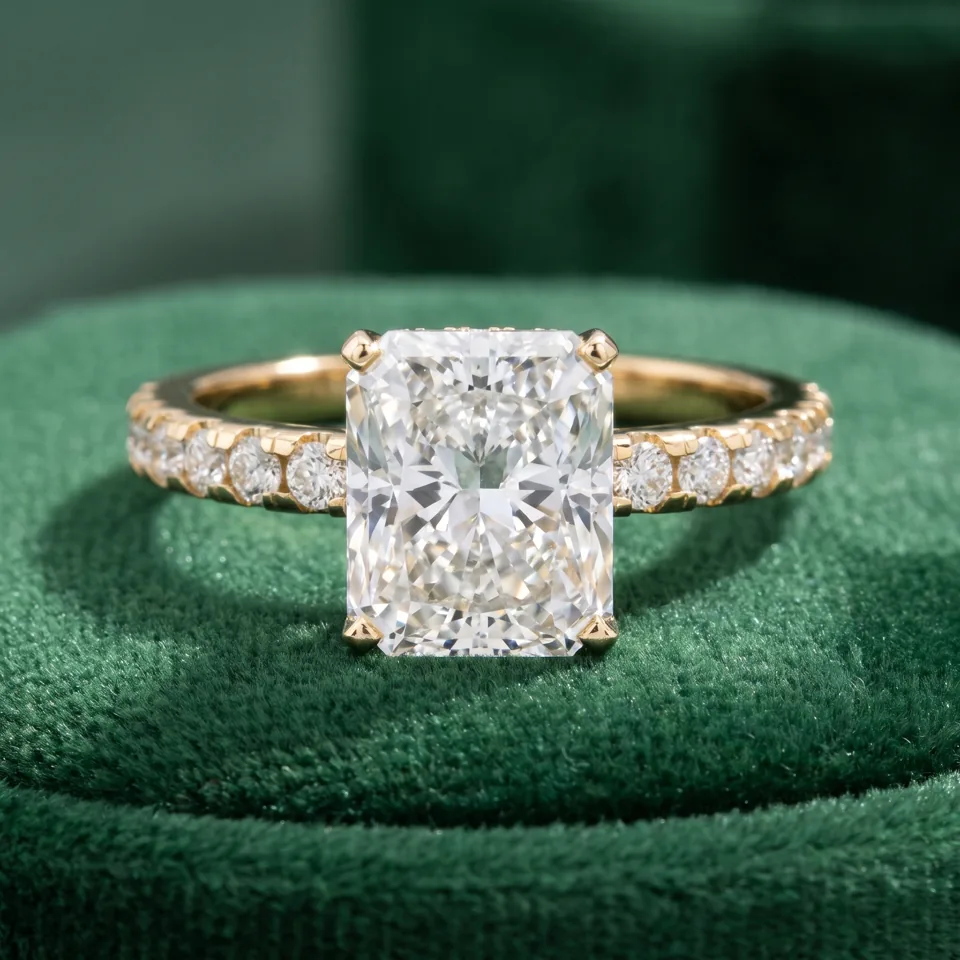 Radiant Cut Hidden Halo Engagement Rings
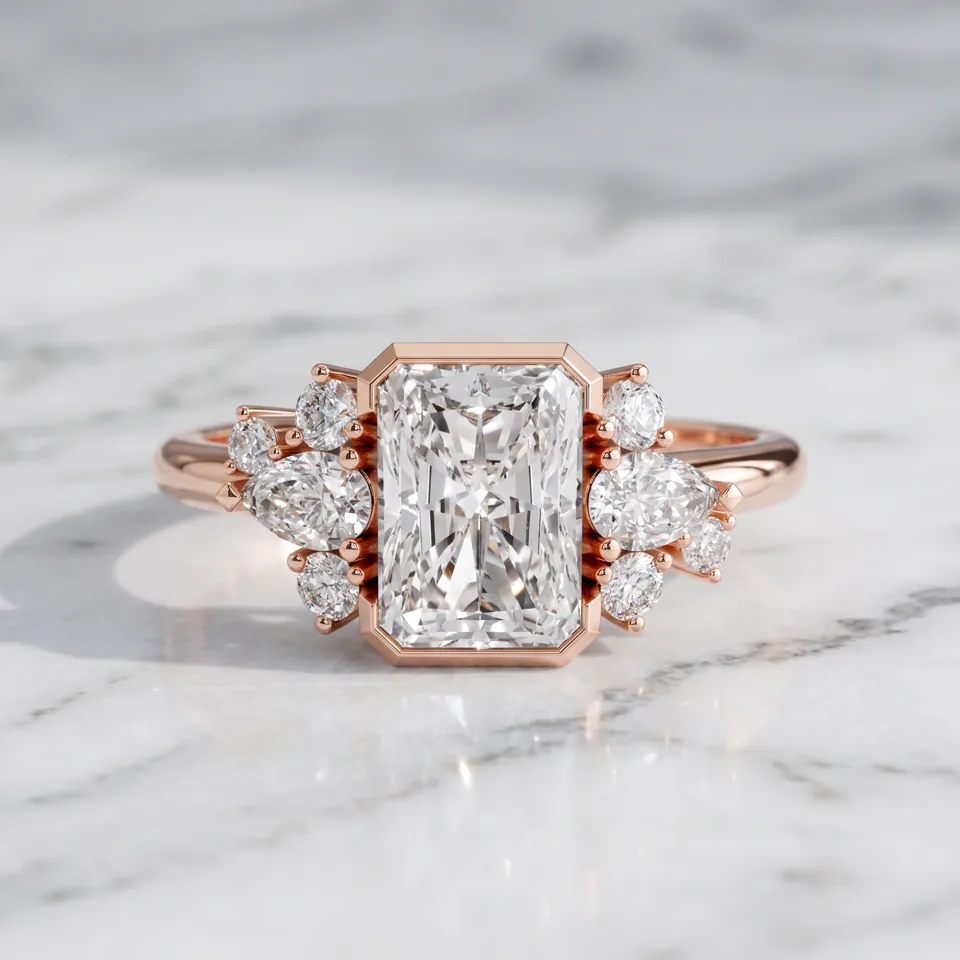 Radiant Cut Bezel Engagement Rings
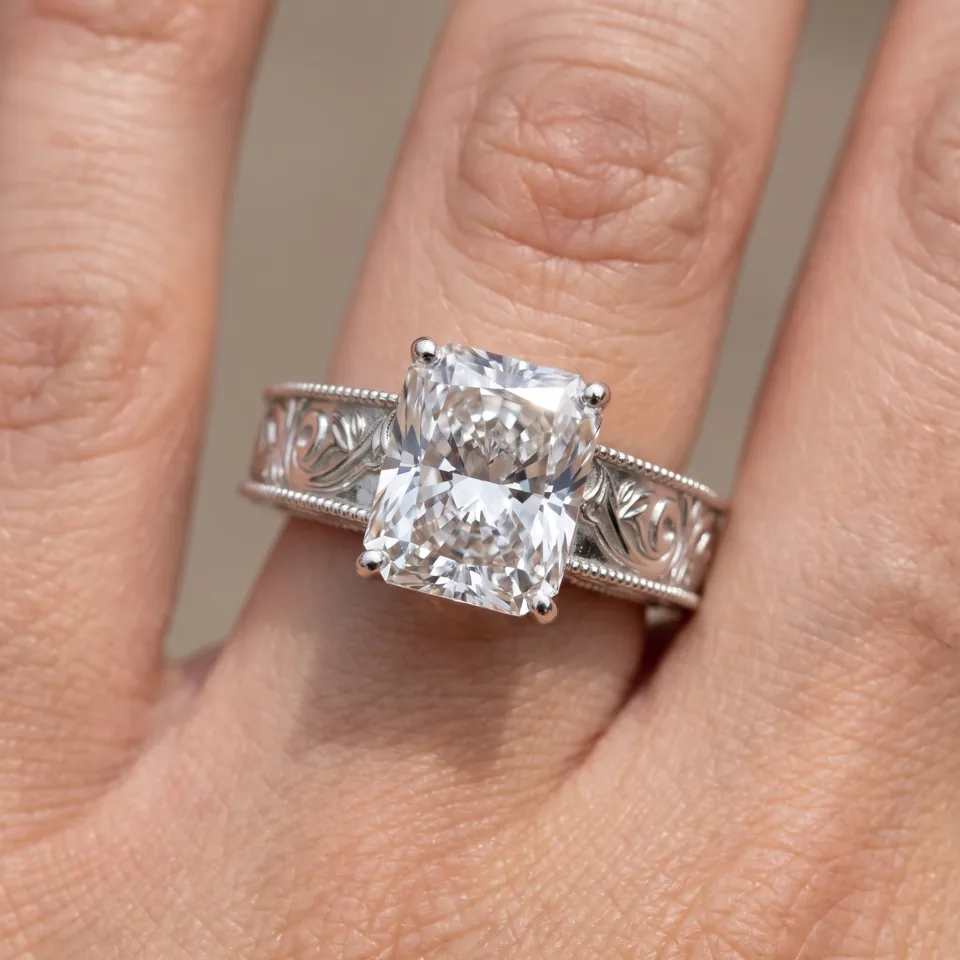 Vintage Radiant Cut Engagement Rings
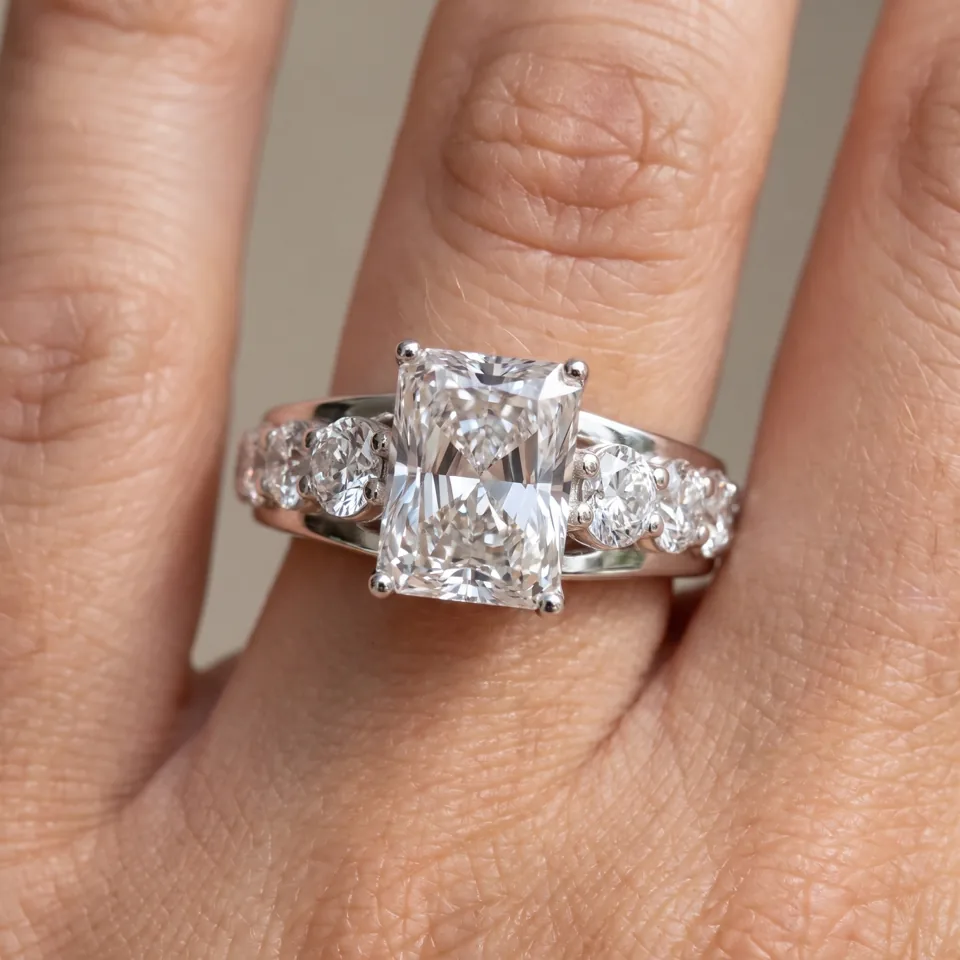 Radiant Cut Engagement Rings with Side Stones
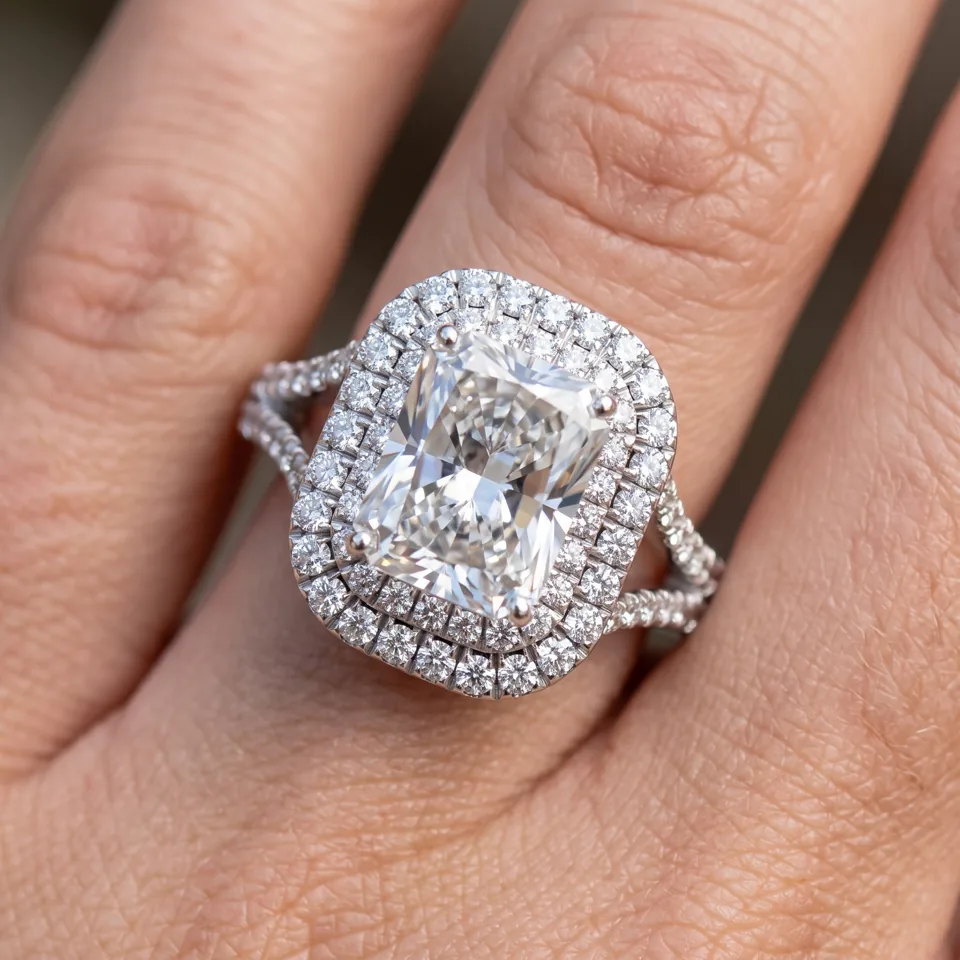 Radiant Cut Double Halo Engagement Rings
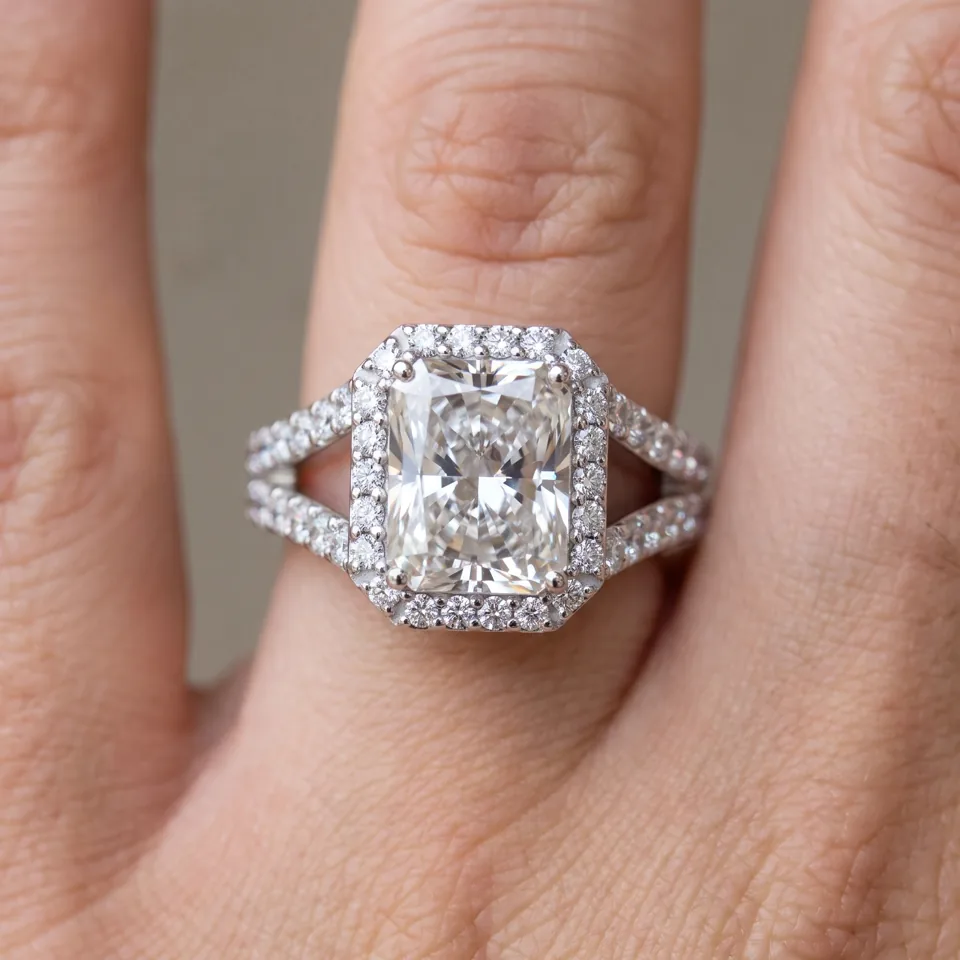 Radiant Cut Split Shank Engagement Rings
 Radiant Cut Engagement Rings with Baguettes
 Radiant Cut Cathedral Rings


