Complimentary insured shipping, both waysEngagement ring diamonds certified by IGI or GIAGrown by light. Conflict-free by natureComplimentary insured shipping, both ways
Engagement RingsWedding BandsEarrings
NecklaceBraceletsAbout
On radiant cut split shank engagement rings, the shank forks near the top, opening a gap on each shoulder that broadens the base under the rectangular radiant. These are settings, so you select the radiant center diamond in the next step.
The choices that shape the look are the style of the split, whether to add a halo, and the metal.
The open space between the two branches leads your eye up to the stone and lends the head visual weight. That suits a radiant, whose trimmed corners and long outline need a setting with some width. A narrow split stays delicate, while a wide open split makes a bolder statement on the hand.
Plain, pave or twisted strands
Most designs set laboratory-grown diamond accents along the split, so both strands sparkle. Some keep the strands plain for a cleaner line, and several twist them around each other or form open loops. A V-shaped fork aims at the stone and lets a straight wedding band slide in below.
Halo, double halo or solitaire head
Many designs circle the radiant with a halo; for maximum presence, a few stack two halos. Solitaire heads, a few with bezel rims or three stone heads, let the shape of the radiant show plainly. Fancy-color centers (pink, blue, yellow, green) fit most of these heads, and black fits some.
Metal and setting price
Platinum is on every design and stays white without plating.
Each gold color is available as 10K, 14K or 18K.
Silvadium, a tarnish-resistant sterling silver, costs the least.
Settings begin under $300 and mostly run $900 to $1,350; your radiant center is added on top.
Ordering from Whitemoon
Your ring is made to your selections in 10–15 days, and the radiant center arrives with an IGI or GIA report. You get free insured shipping both ways, returns within 30 days, and one free resize is yours within 60 days of delivery.

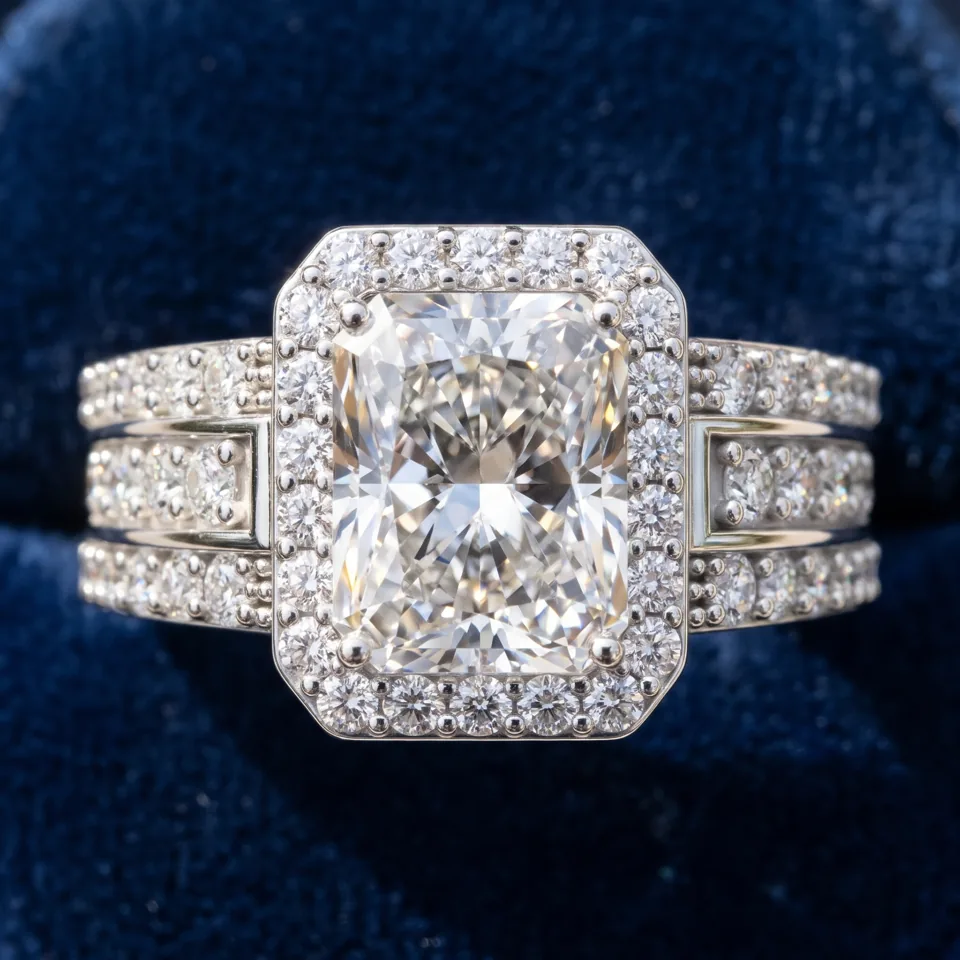 Radiant Cut Halo Engagement Rings
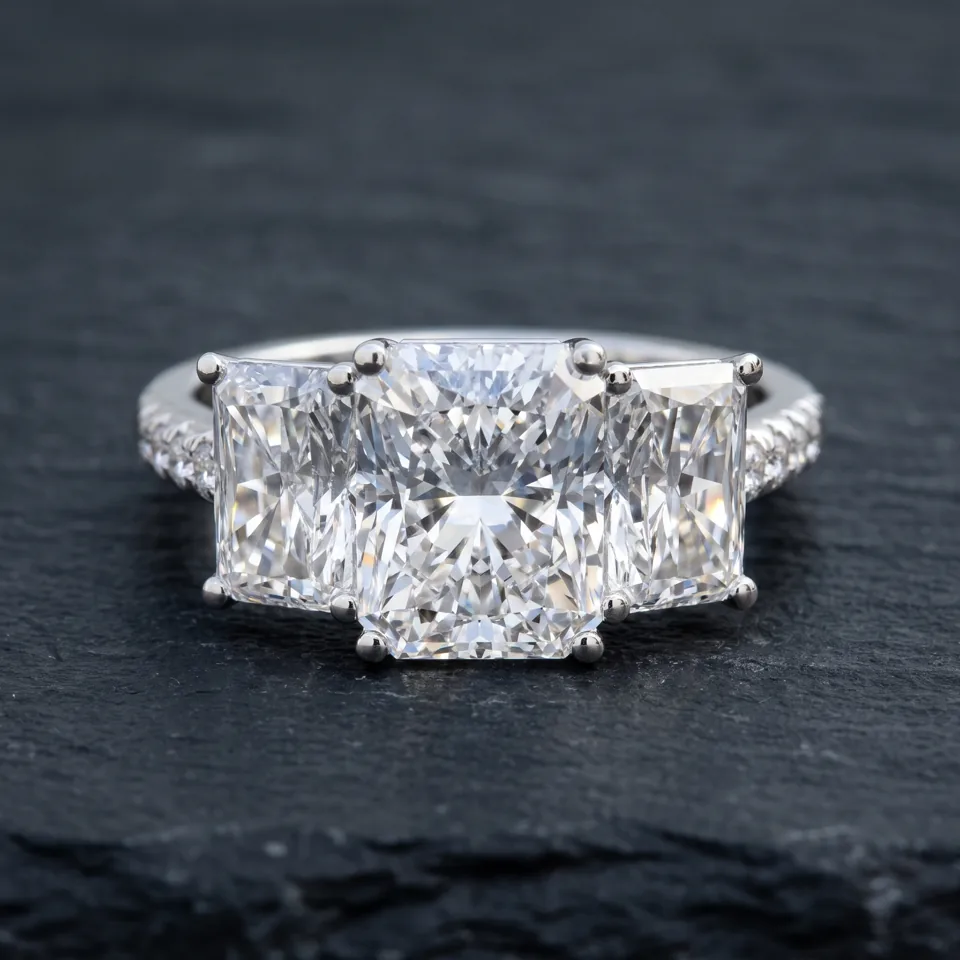 Radiant Cut Three Stone Engagement Rings
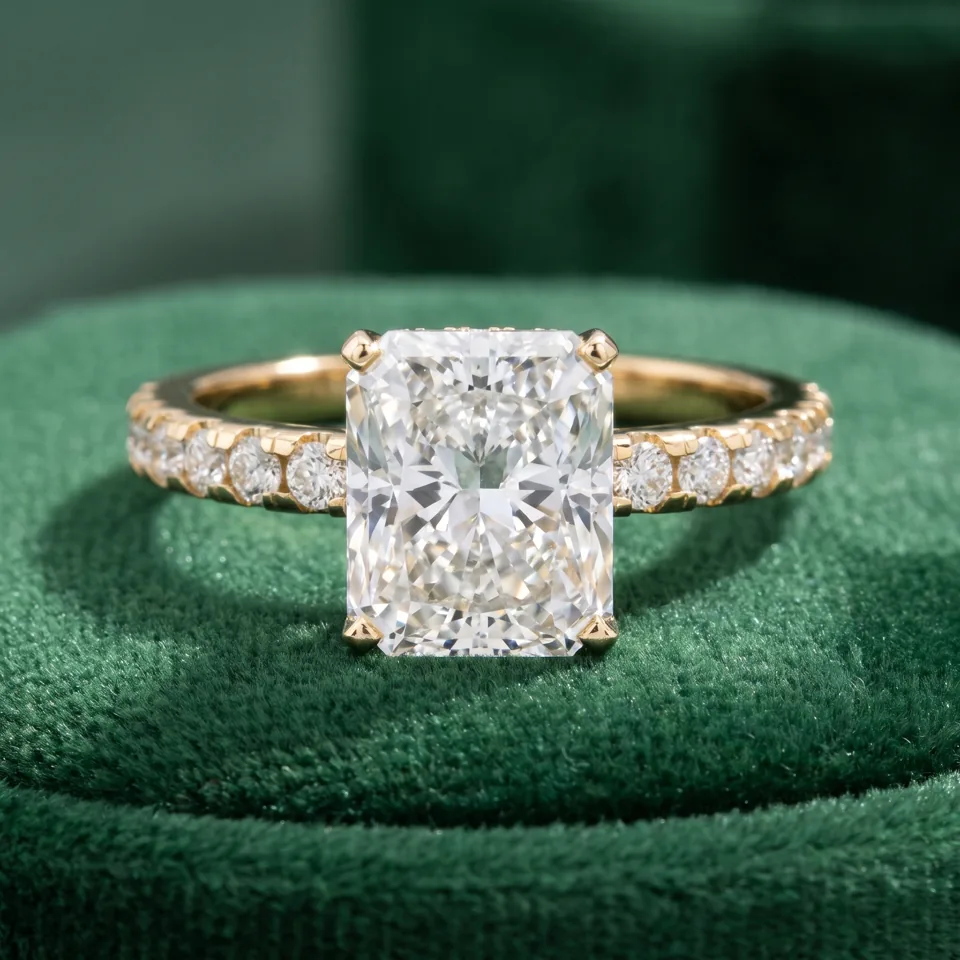 Radiant Cut Hidden Halo Engagement Rings
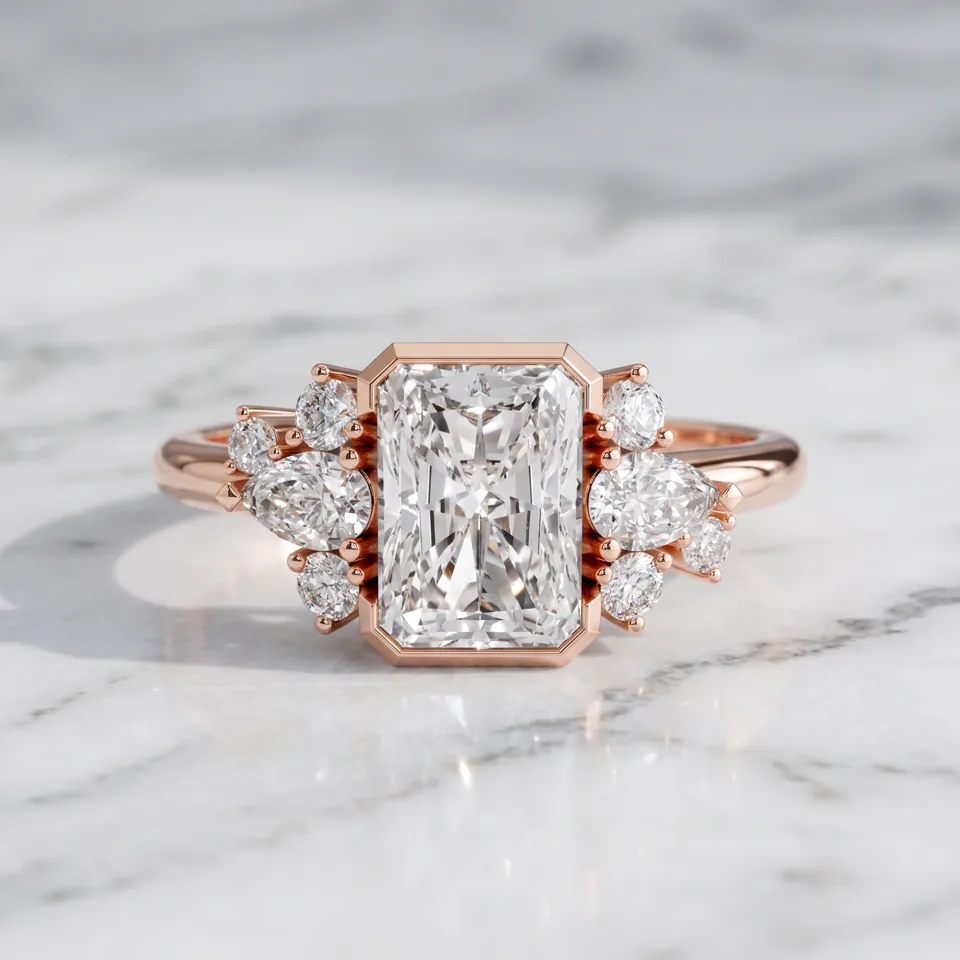 Radiant Cut Bezel Engagement Rings
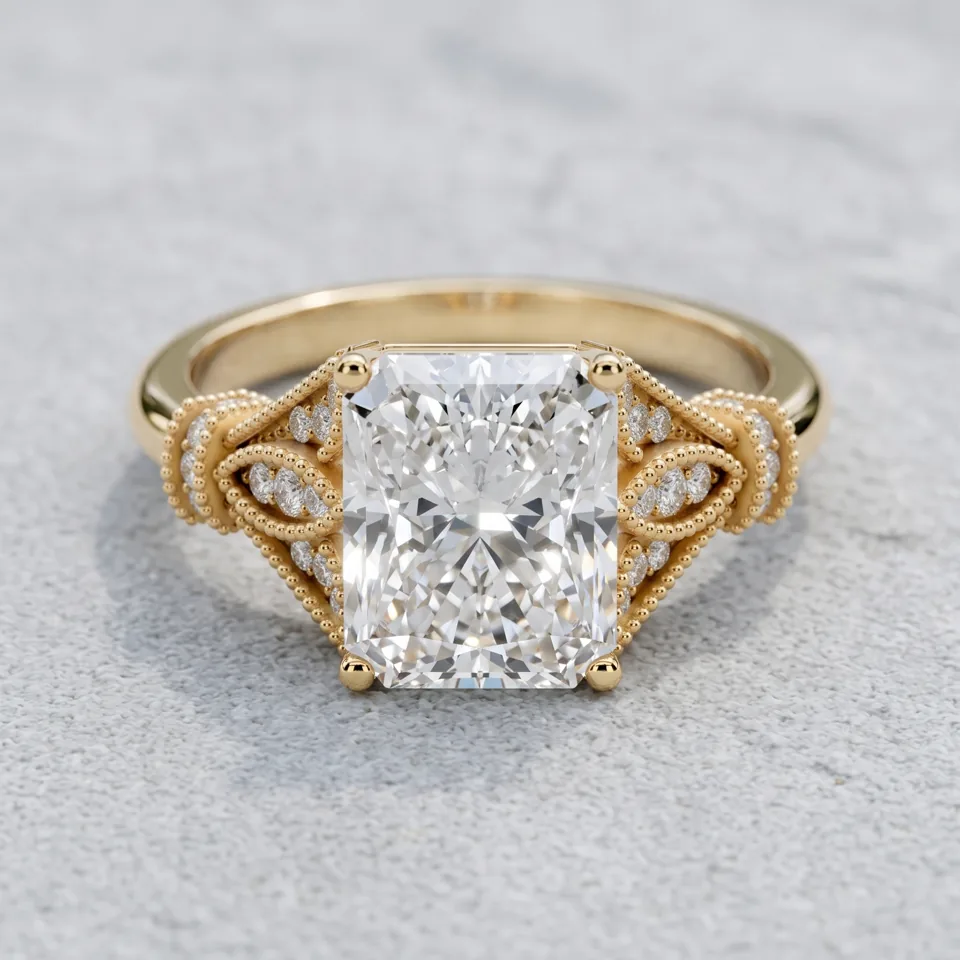 Radiant Cut Pave Engagement Rings
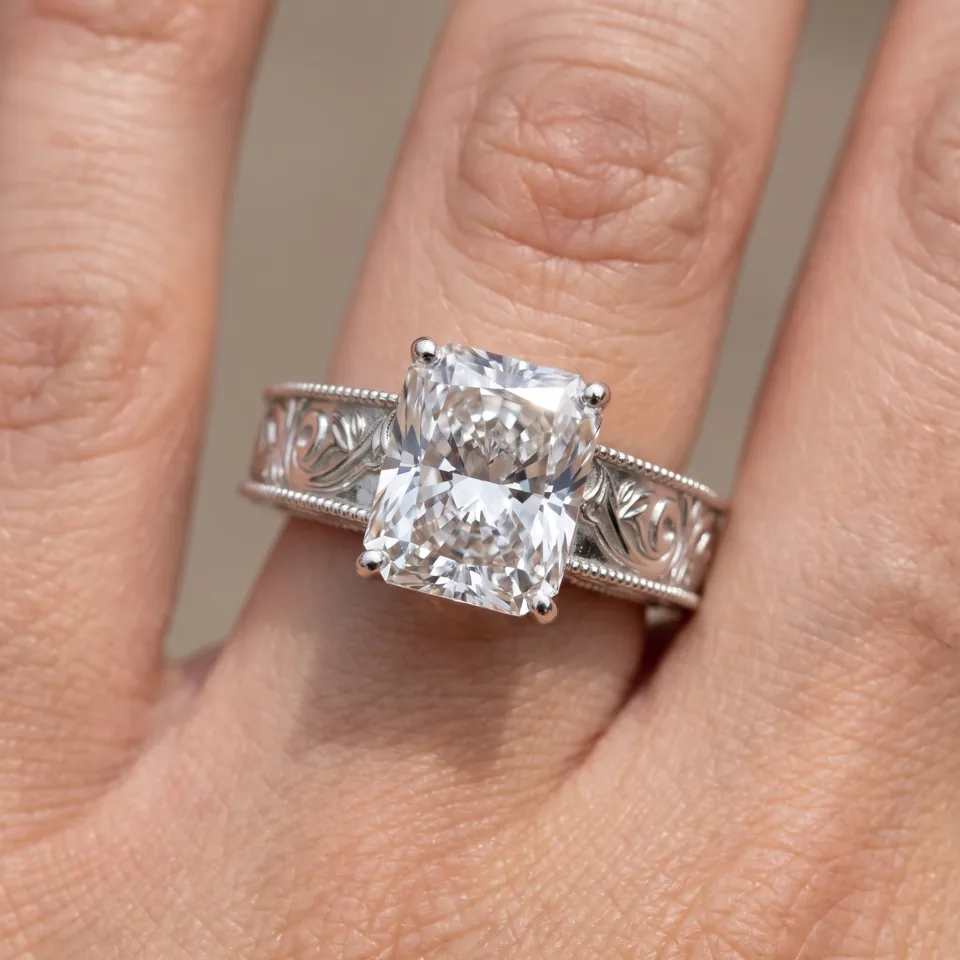 Vintage Radiant Cut Engagement Rings
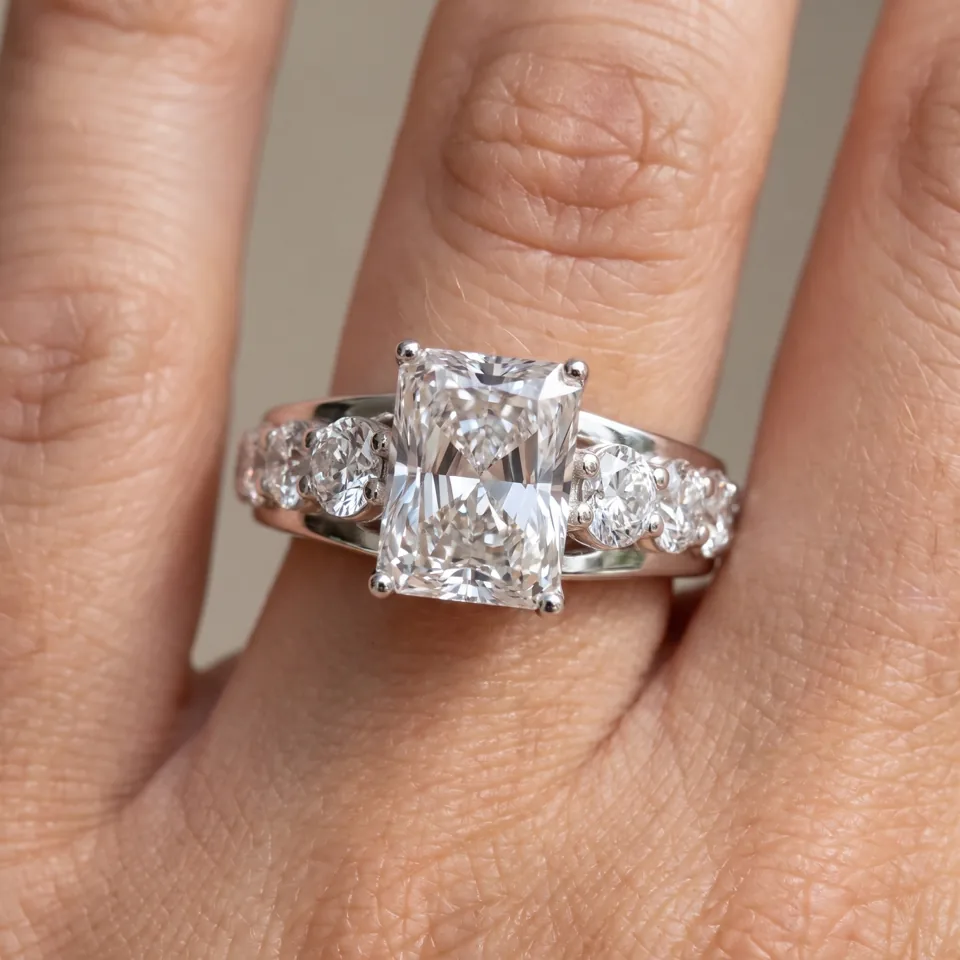 Radiant Cut Engagement Rings with Side Stones
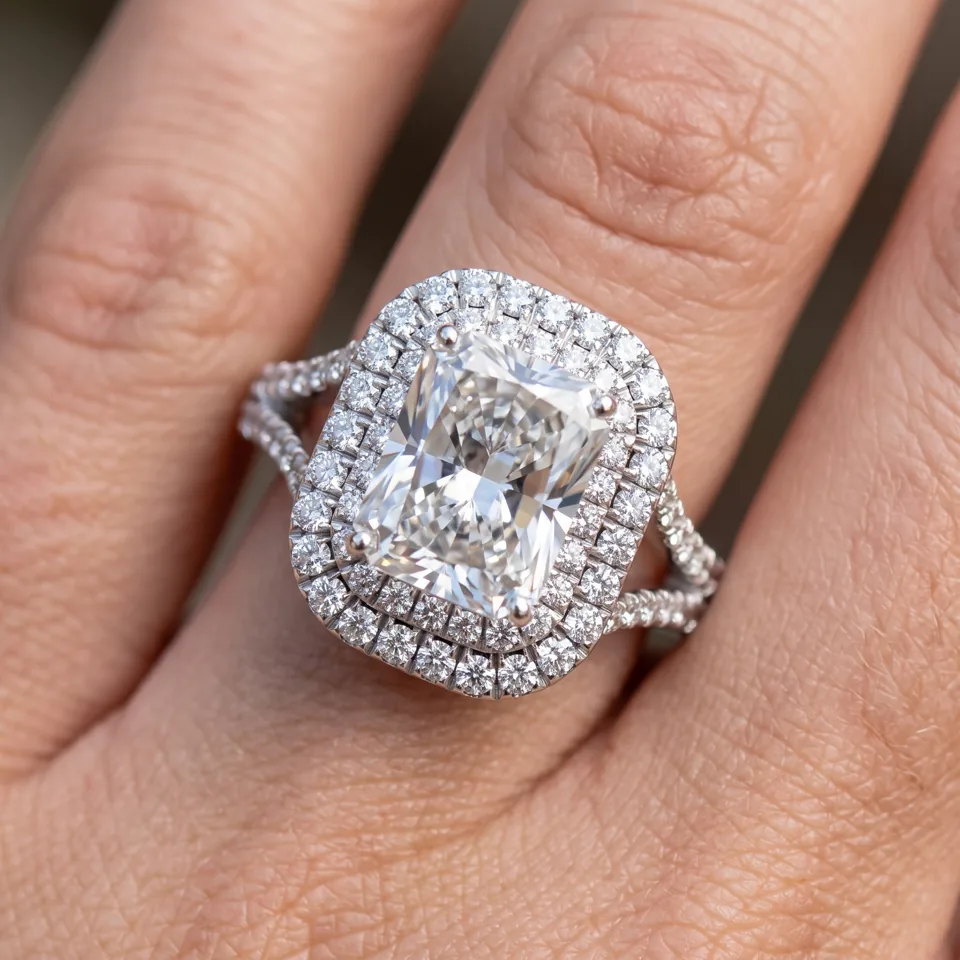 Radiant Cut Double Halo Engagement Rings
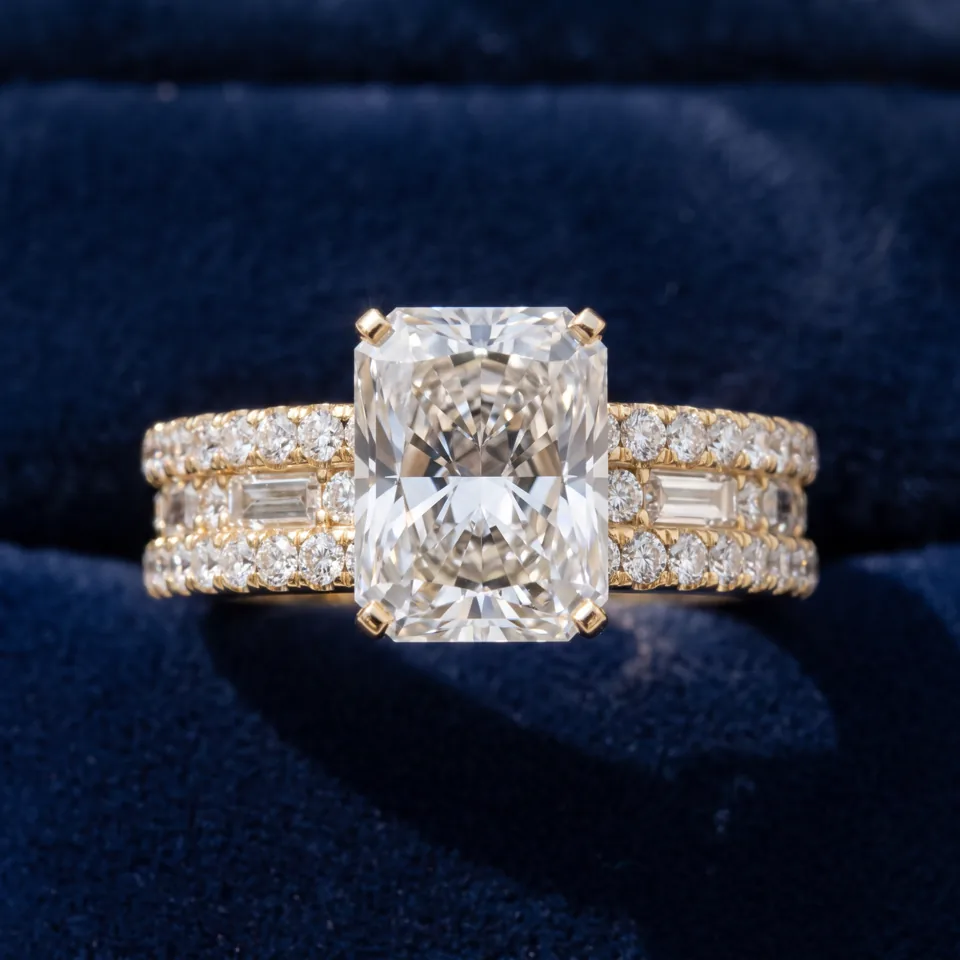 Radiant Cut Engagement Rings with Baguettes
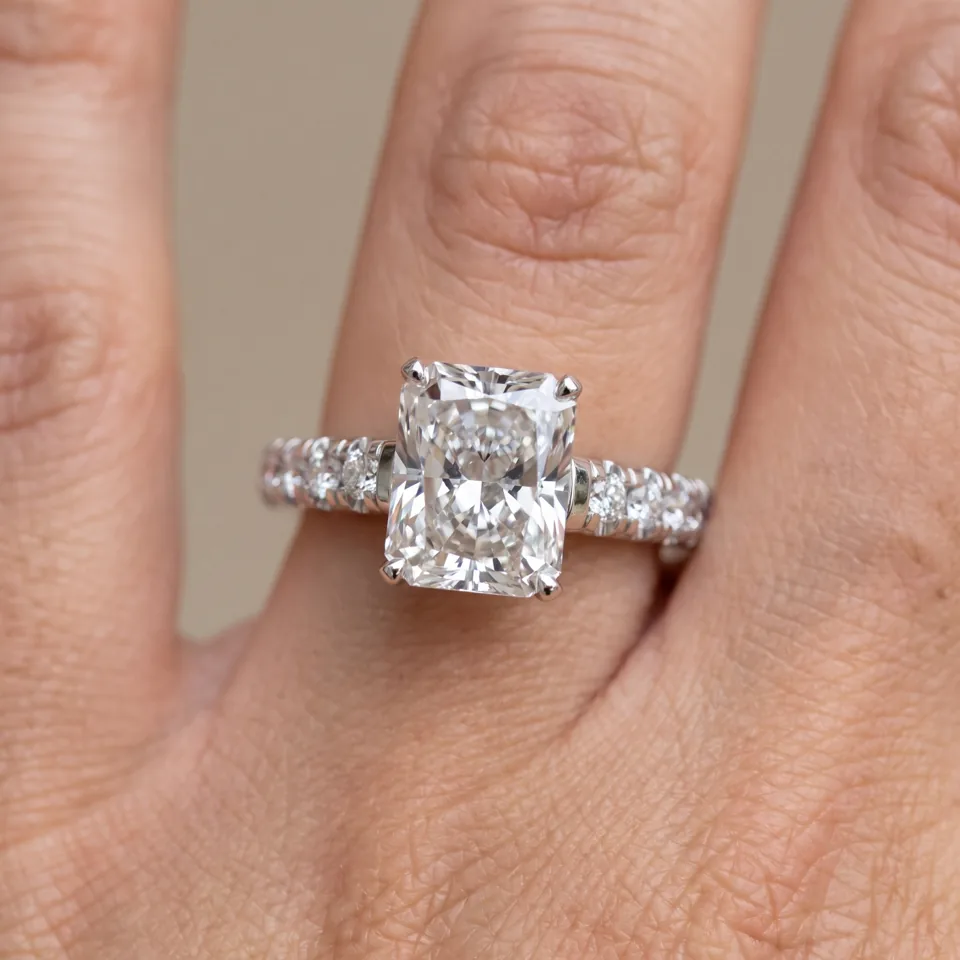 Radiant Cut Cathedral Rings


