Complimentary insured shipping, both waysEngagement ring diamonds certified by IGI or GIAGrown by light. Conflict-free by natureComplimentary insured shipping, both ways
Engagement RingsWedding BandsEarrings
NecklaceBraceletsAbout
On a pear split shank engagement ring, the shank forks into twin strands close to the head and leaves open space around the teardrop. Each listing here is a setting; the center diamond comes on the next step. Pave covers the split on most designs, roughly half wrap the pear in a halo, and others leave it alone as a solitaire. Pick that look, then a metal.
Halo and double halo styles trace the teardrop with laboratory-grown diamond accents, enlarging how the center reads and echoing its outline.
Solitaire styles let the pear stand by itself, occasionally in a bezel, so the forked shank supplies the detail.
Three stone styles place a round lab-grown diamond to either side of the pear.
Narrow, wide, twisted or V-shaped splits
Narrow forks stay tight and look like a single band from afar. Wide, open forks leave a visible gap that frames the stone and broadens the top. Twisted and infinity forks wrap the two strands around each other for a softer line, while V-shaped forks point toward the stone. Broader forks also spread pressure over the finger and help the ring stay upright.
Protecting the point of the pear
A pear is thinnest at its tip, so good settings shield that point with a V-prong or a bezel. Most wearers point the tip toward the fingernail, which also visually lengthens the finger. Most designs here can also carry a fancy-color center, whether pink, blue, yellow or green, and several work with black.
Metals and setting prices
Choose from white, yellow or rose gold in 10K, 14K or 18K, platinum, or Silvadium, a tarnish-resistant sterling silver. Settings start below $300 and mostly run about $900 to $1,450; whichever center you pick is billed on top.
Ordering from Whitemoon
Expect the setting 10–15 days after ordering, with free insured shipping both ways and an IGI or GIA report for your center. Unworn rings with their certificate may be returned within 30 days, and one free resize applies within 60 days of delivery.

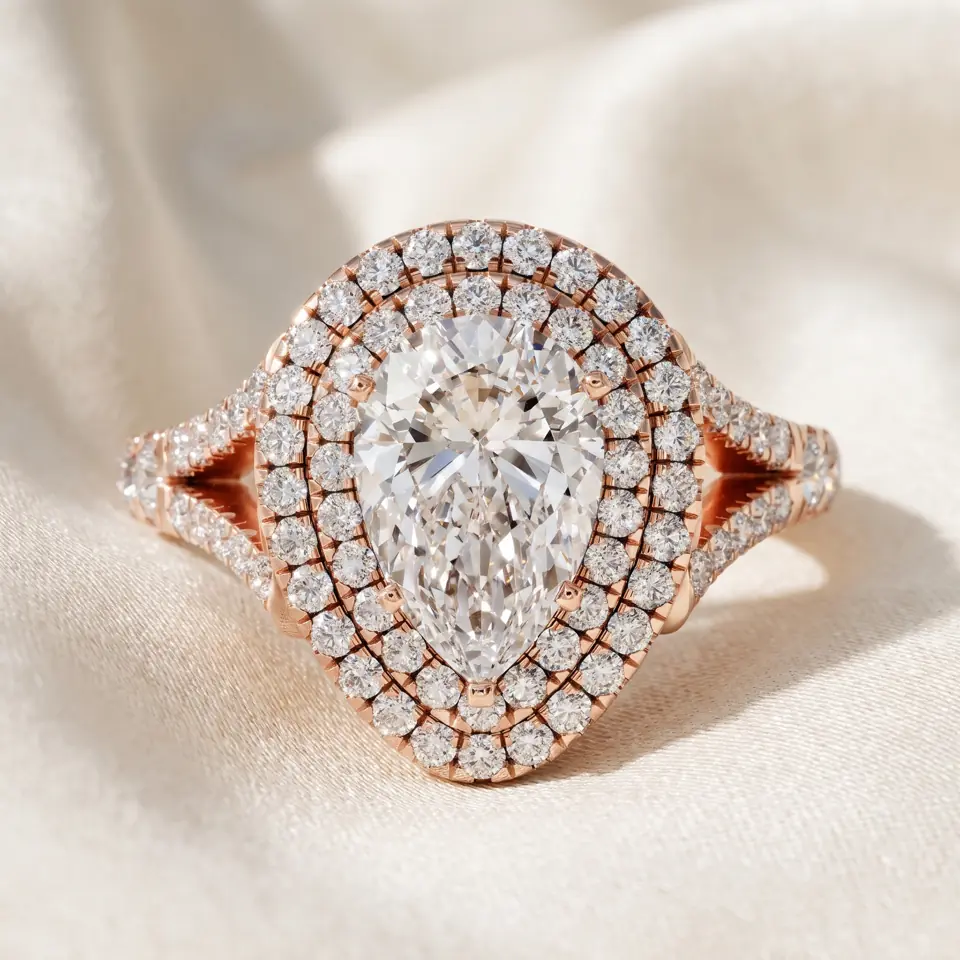 Pear Halo Engagement Rings
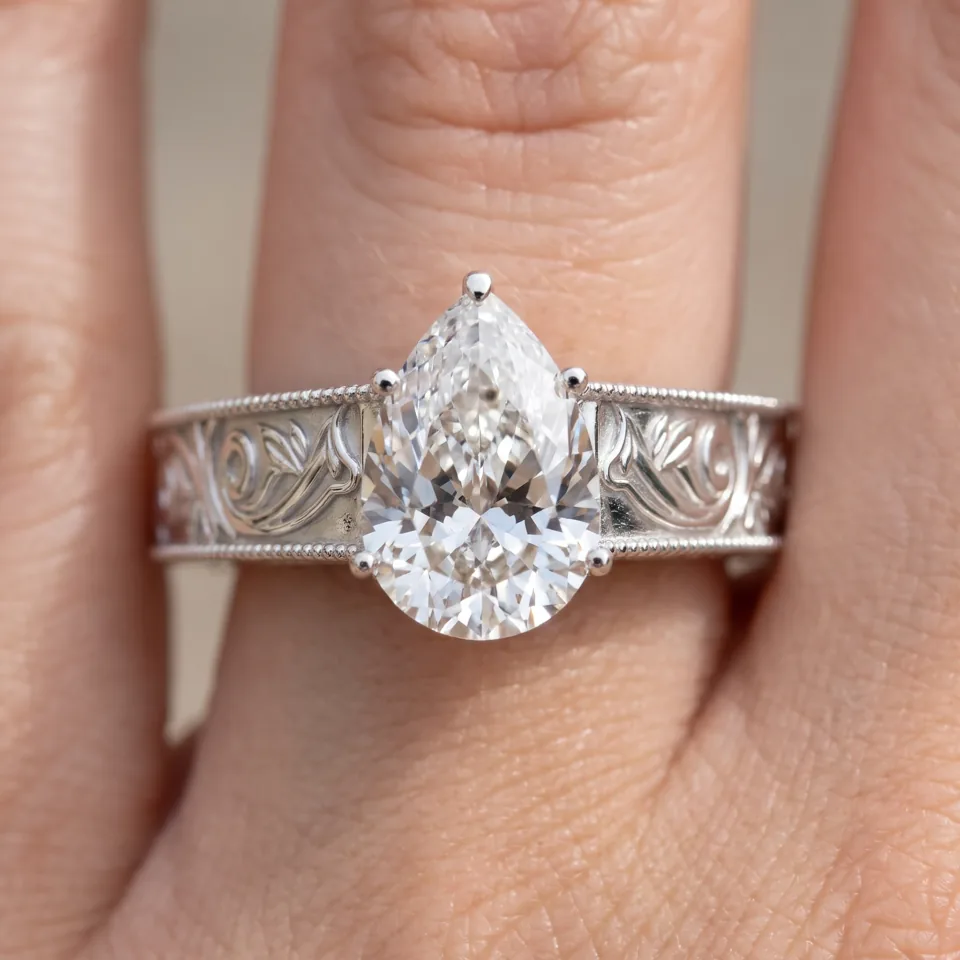 Vintage Pear Engagement Rings
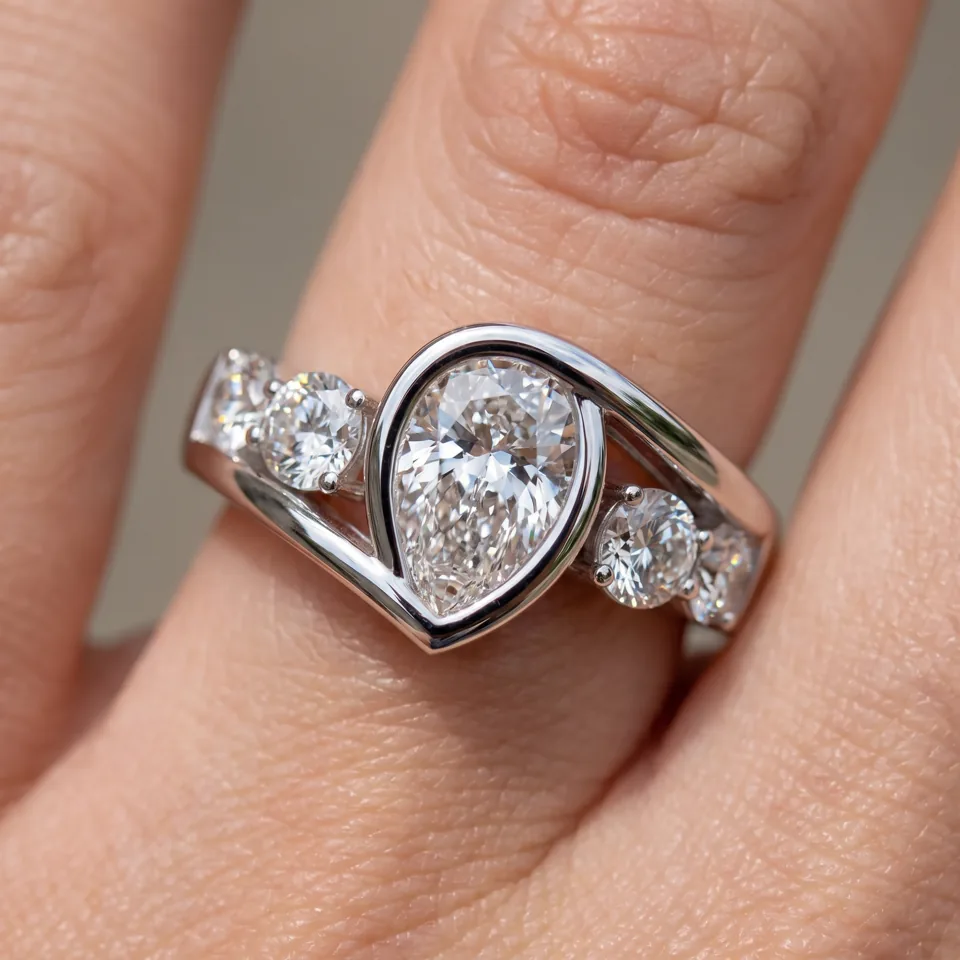 Pear Bezel Engagement Rings
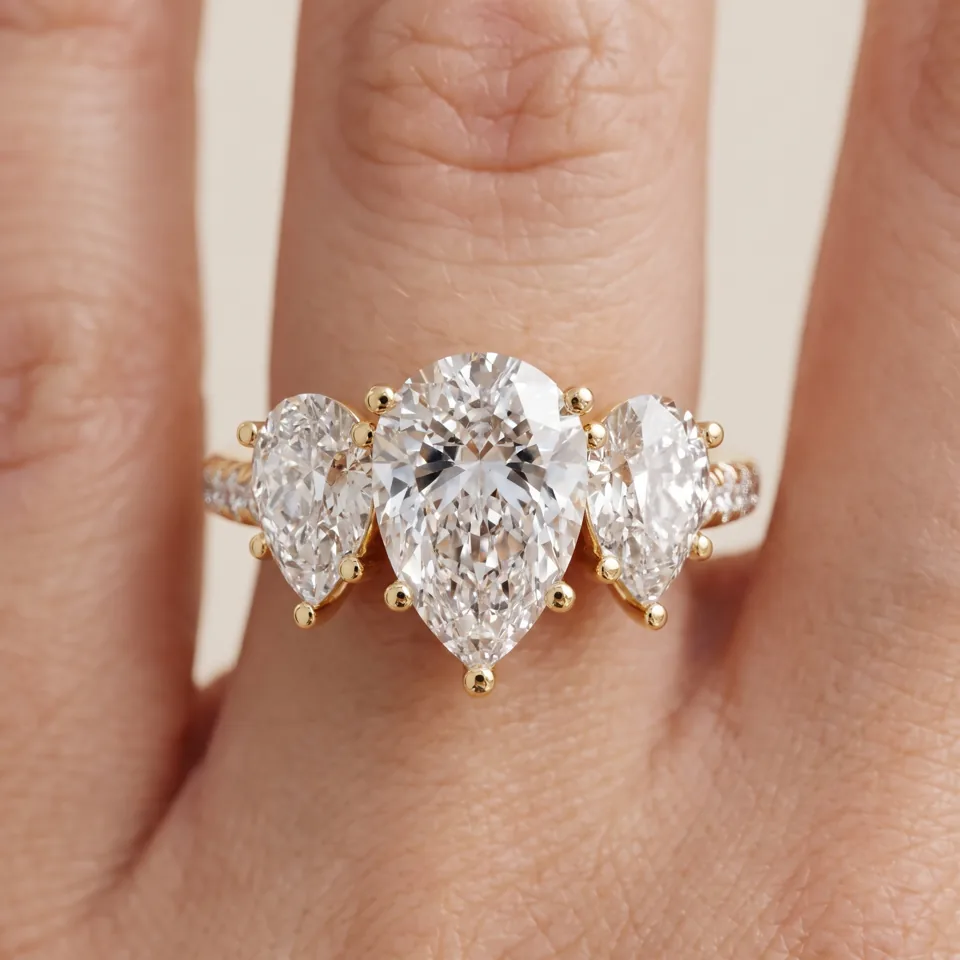 Pear Three Stone Engagement Rings
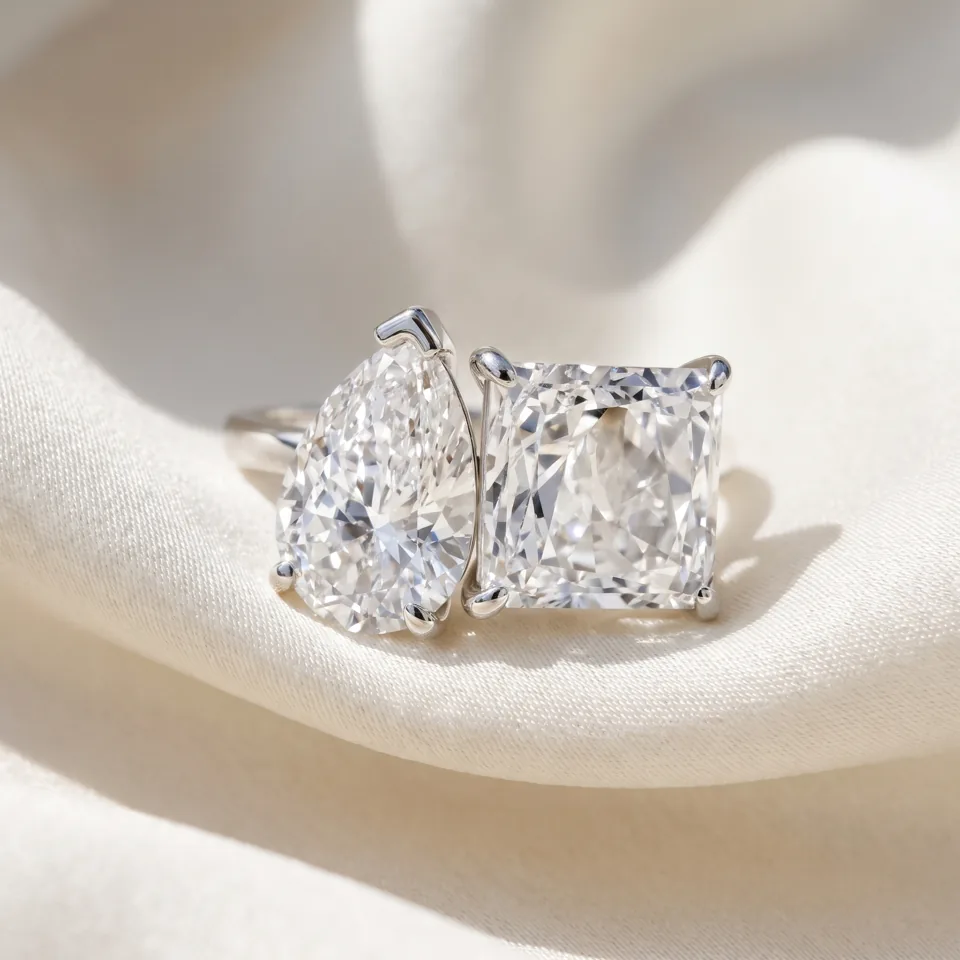 Pear Toi et Moi Rings
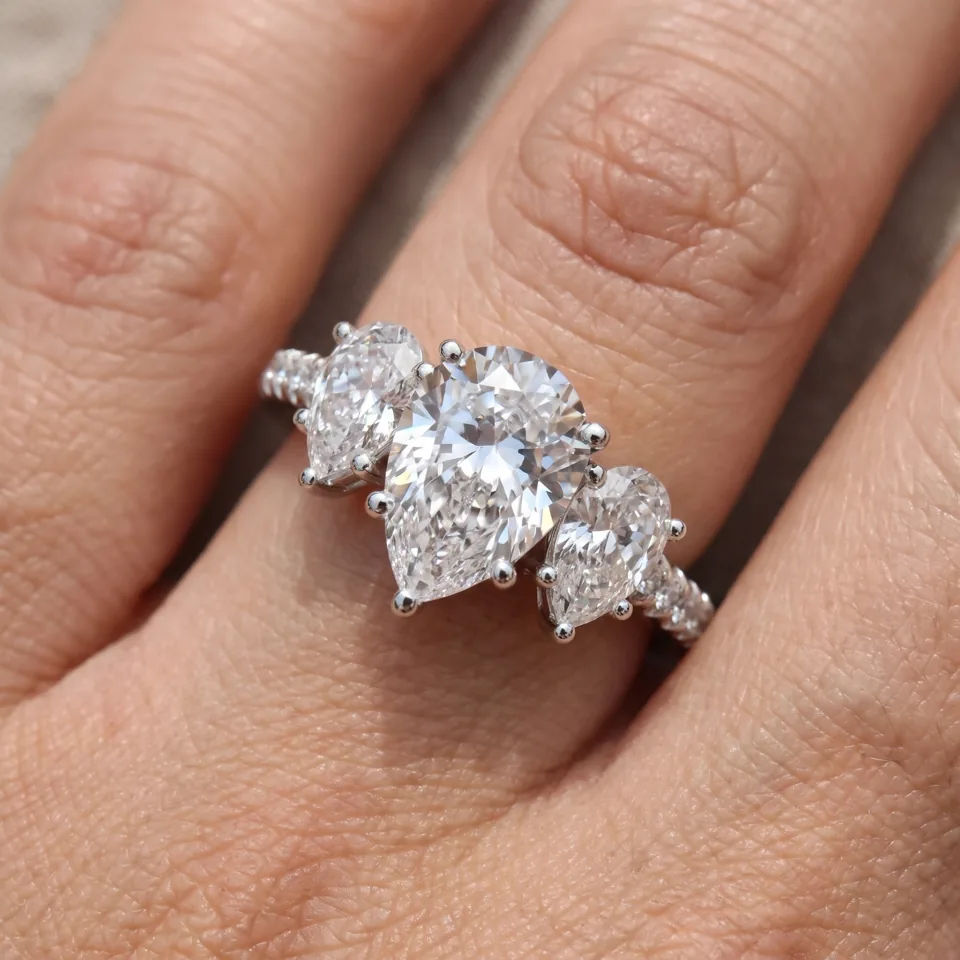 Pear Engagement Rings with Side Stones
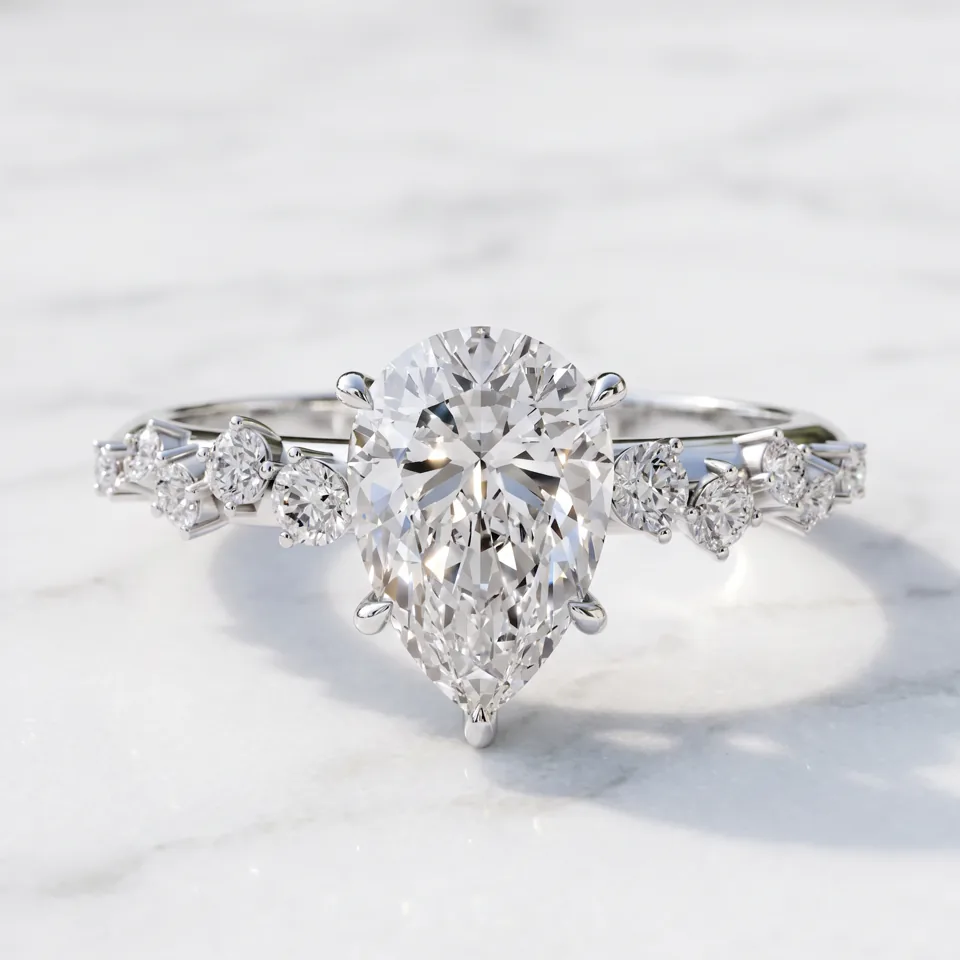 Pear Cluster Rings
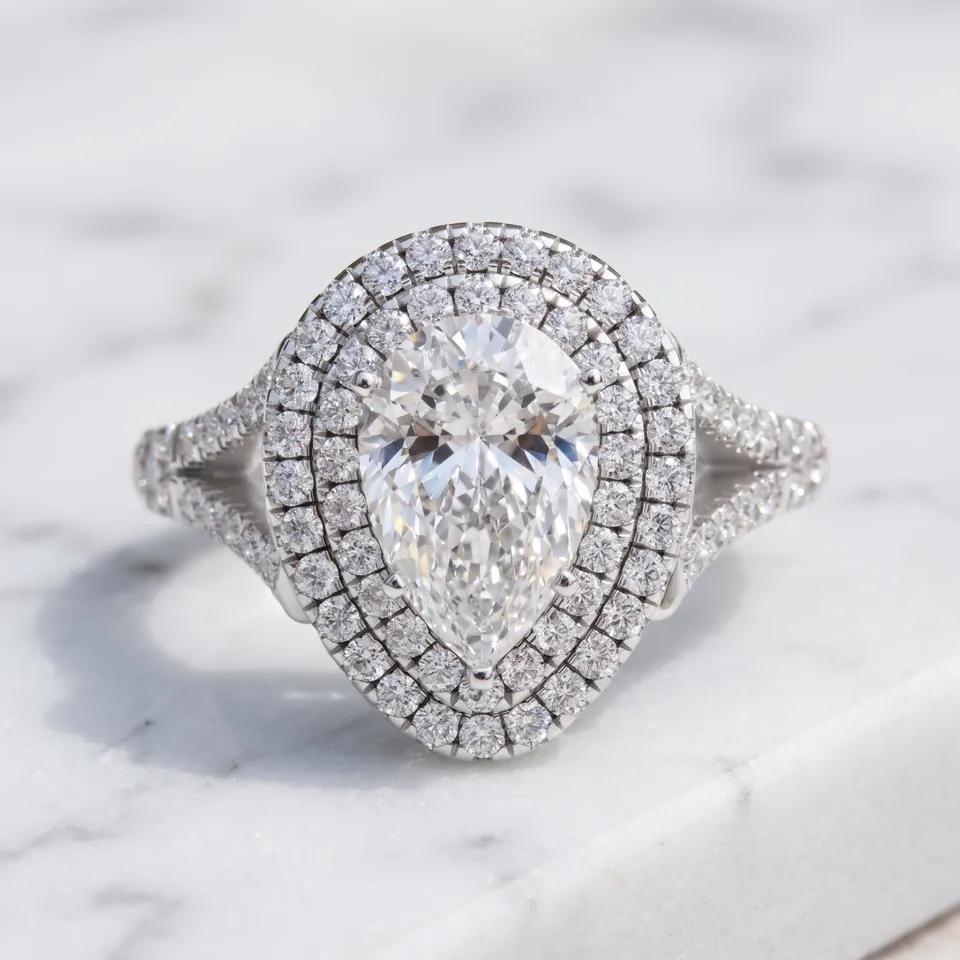 Double Halo Pear Engagement Rings
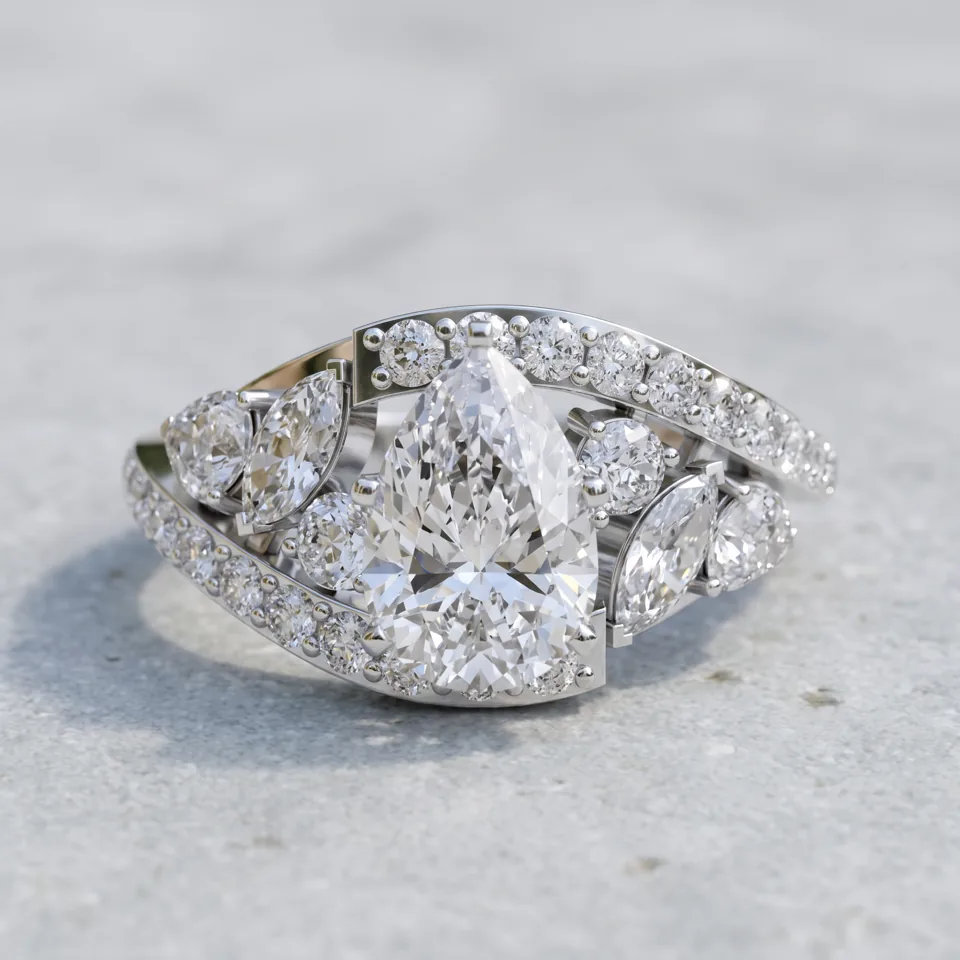 Pear Engagement Rings with Pear Side Stones
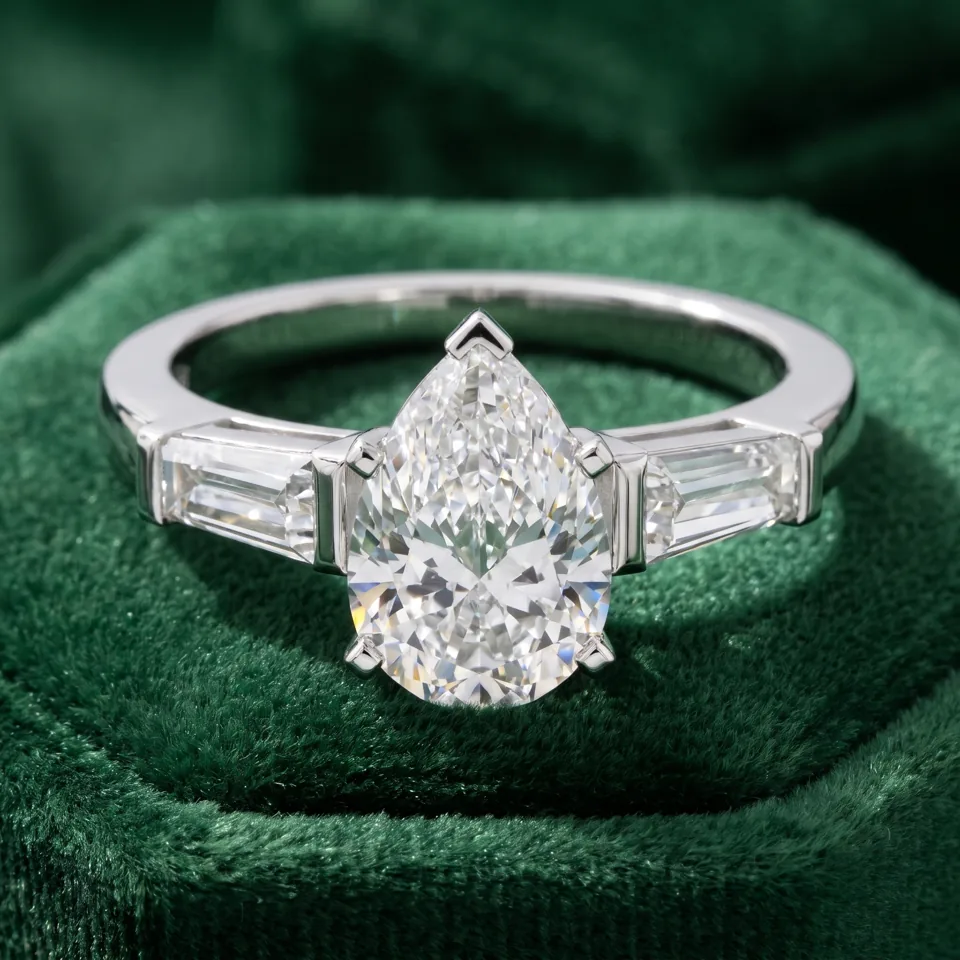 Pear-Shaped Rings with Baguette Side Stones
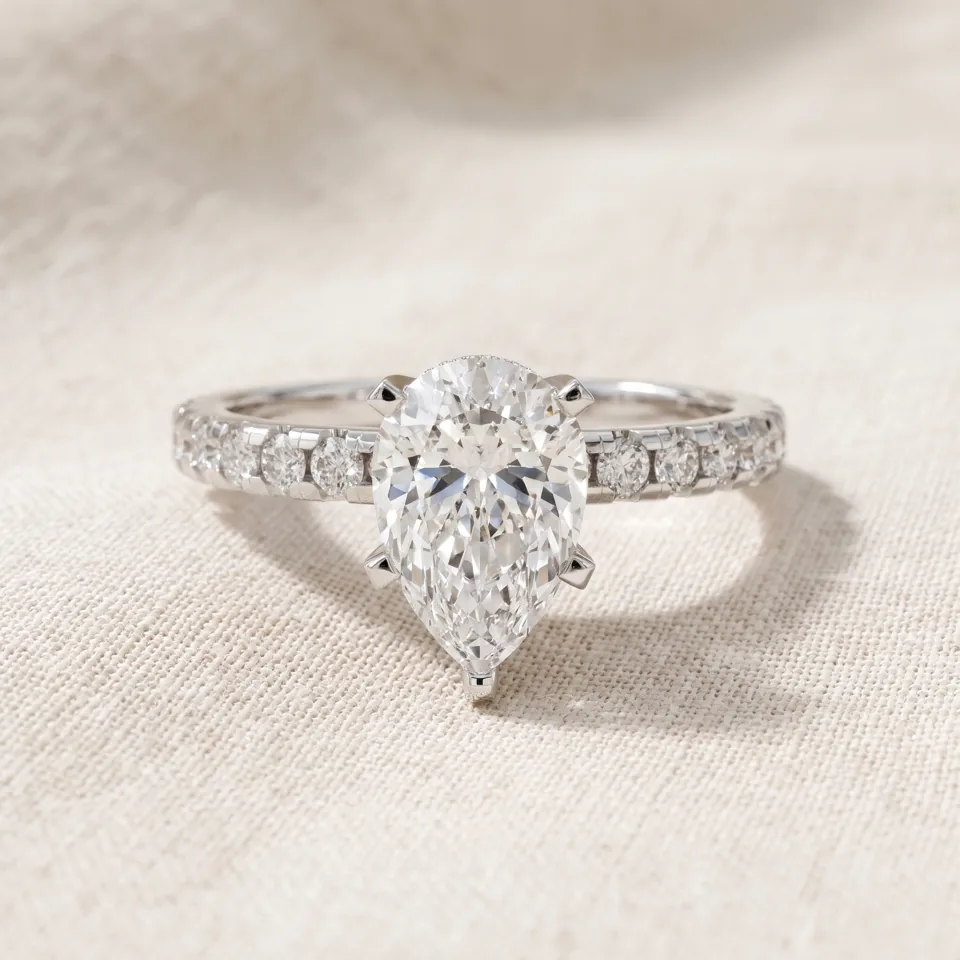 Pear Hidden Halo Engagement Rings
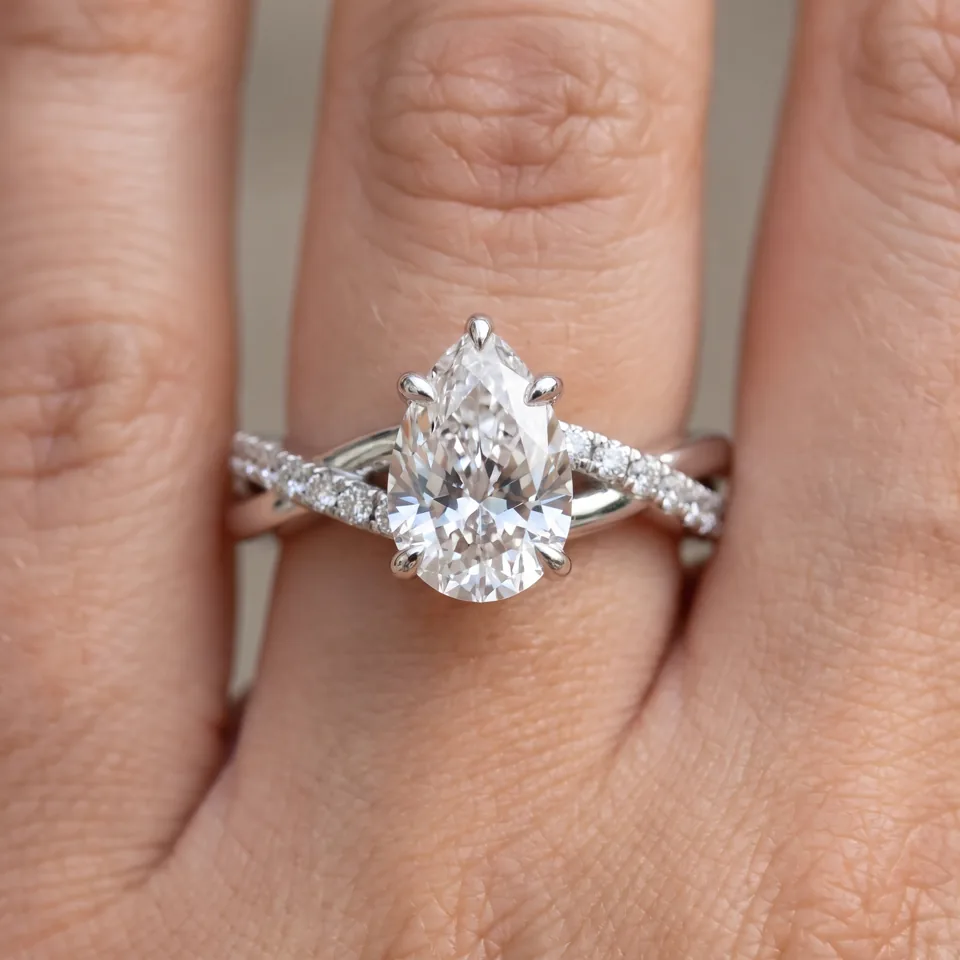 Pear Infinity Engagement Rings


