Complimentary insured shipping, both waysEngagement ring diamonds certified by IGI or GIAGrown by light. Conflict-free by natureComplimentary insured shipping, both ways
Engagement RingsWedding BandsEarrings

NecklaceBraceletsAbout
A radiant cut ring with side stones flanks a clipped-corner rectangle with extra sparkle along the shoulders. Choose it when a bare solitaire feels too plain but a halo feels like too much.
First you settle on a setting; then you add the radiant itself. Start with the shape of the side stones, then the band and metal.
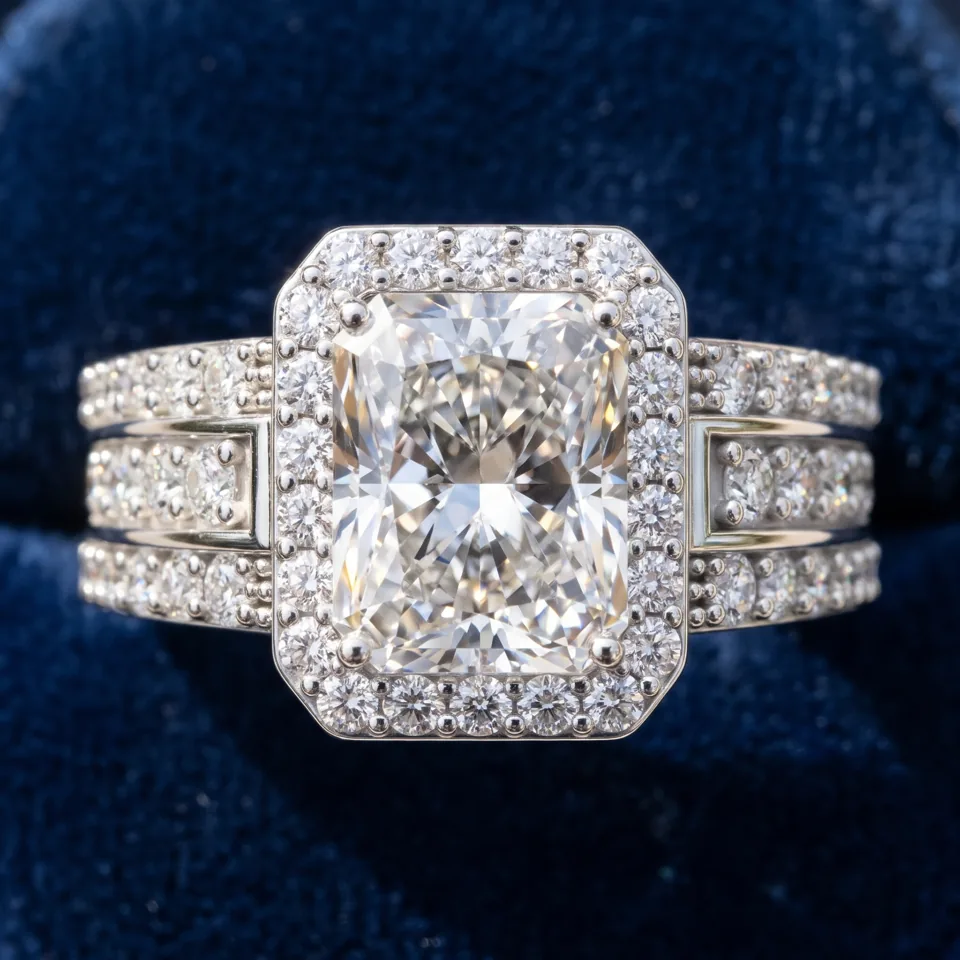 Radiant Cut Halo Engagement Rings
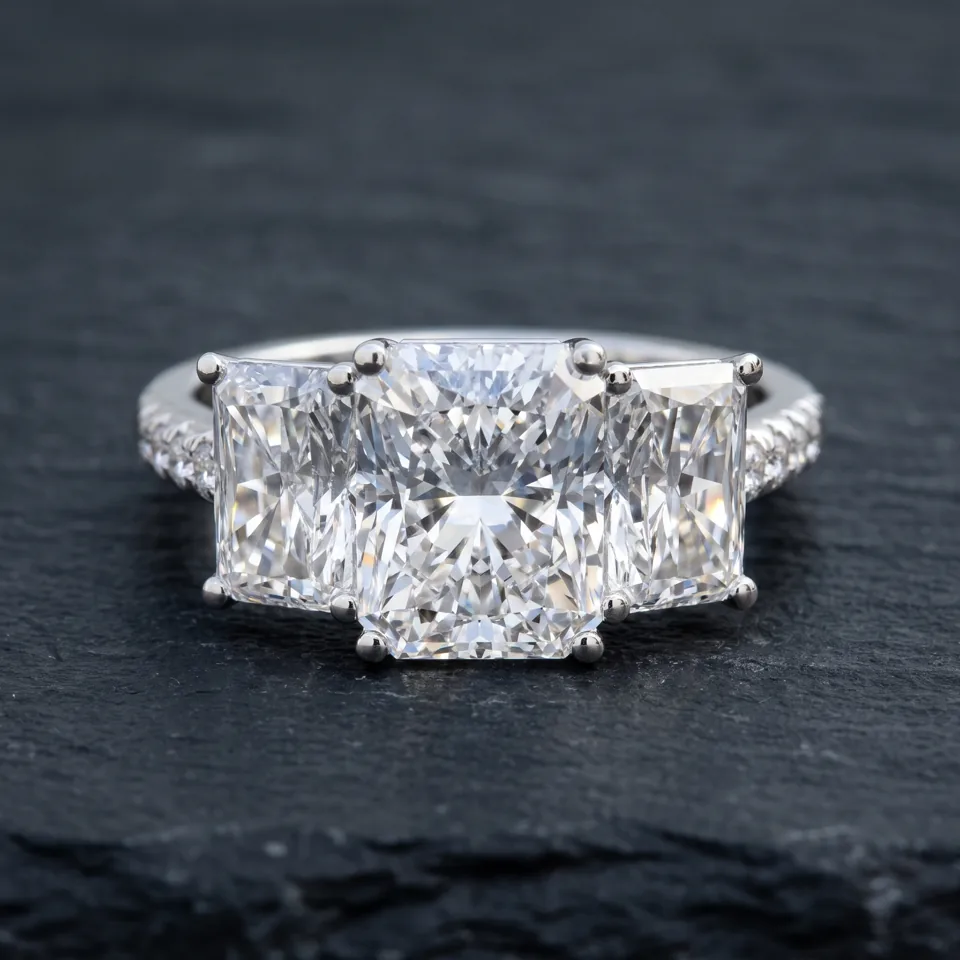 Radiant Cut Three Stone Engagement Rings
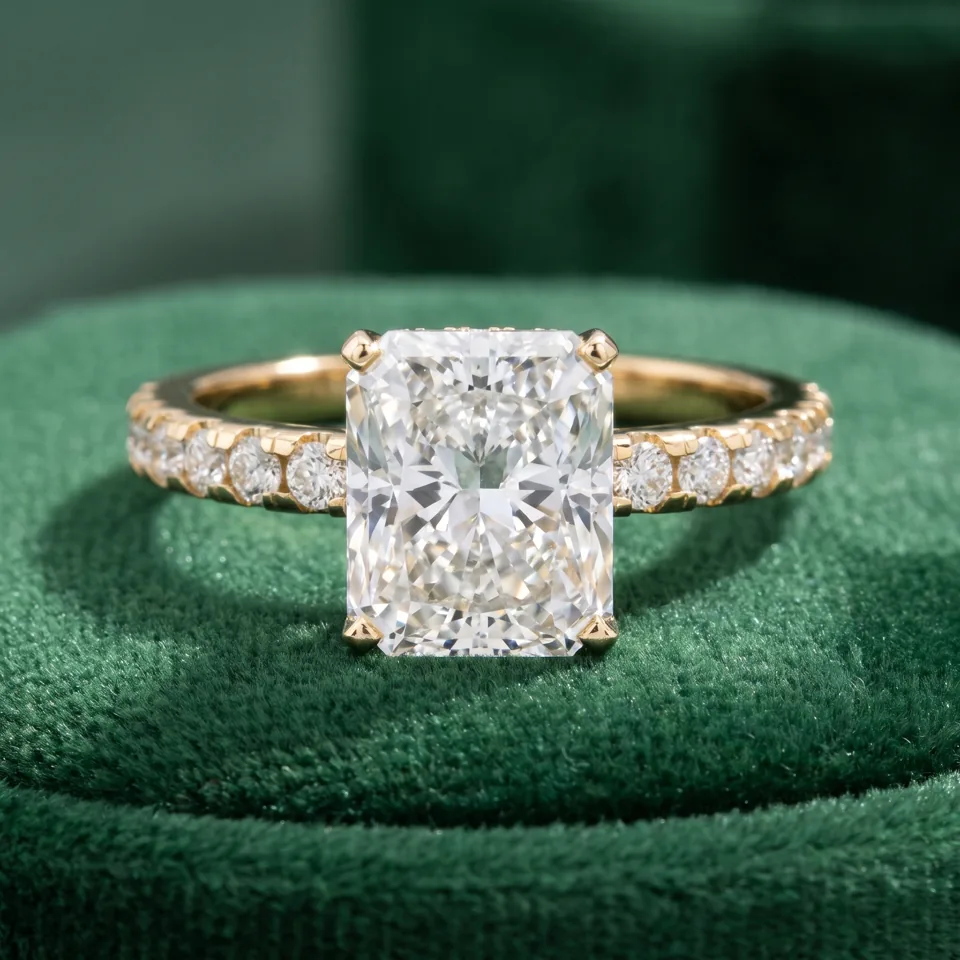 Radiant Cut Hidden Halo Engagement Rings
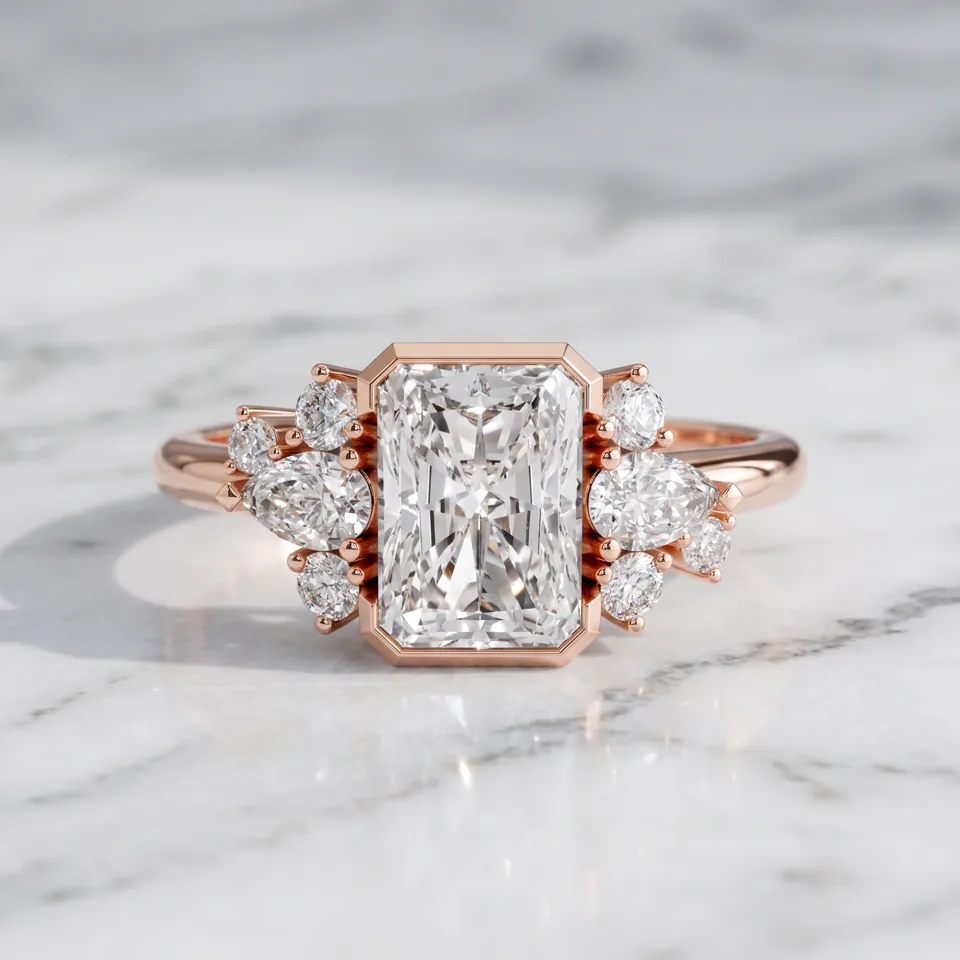 Radiant Cut Bezel Engagement Rings
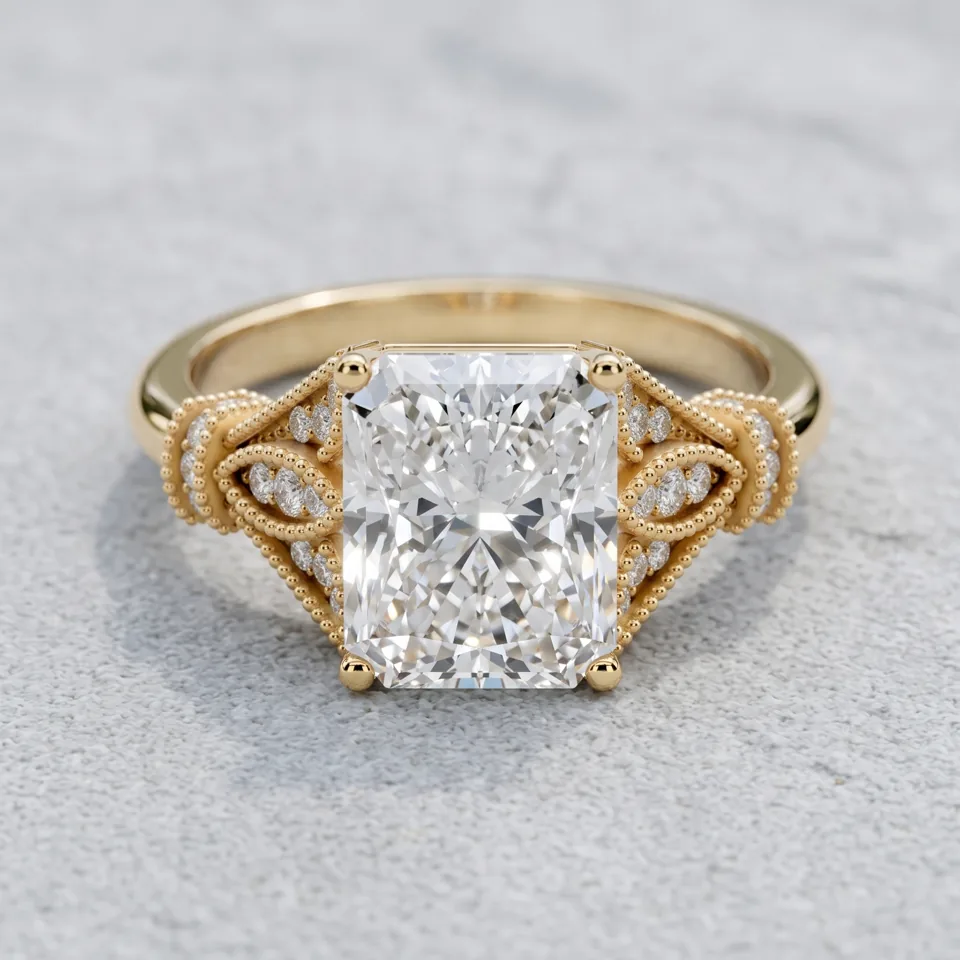 Radiant Cut Pave Engagement Rings
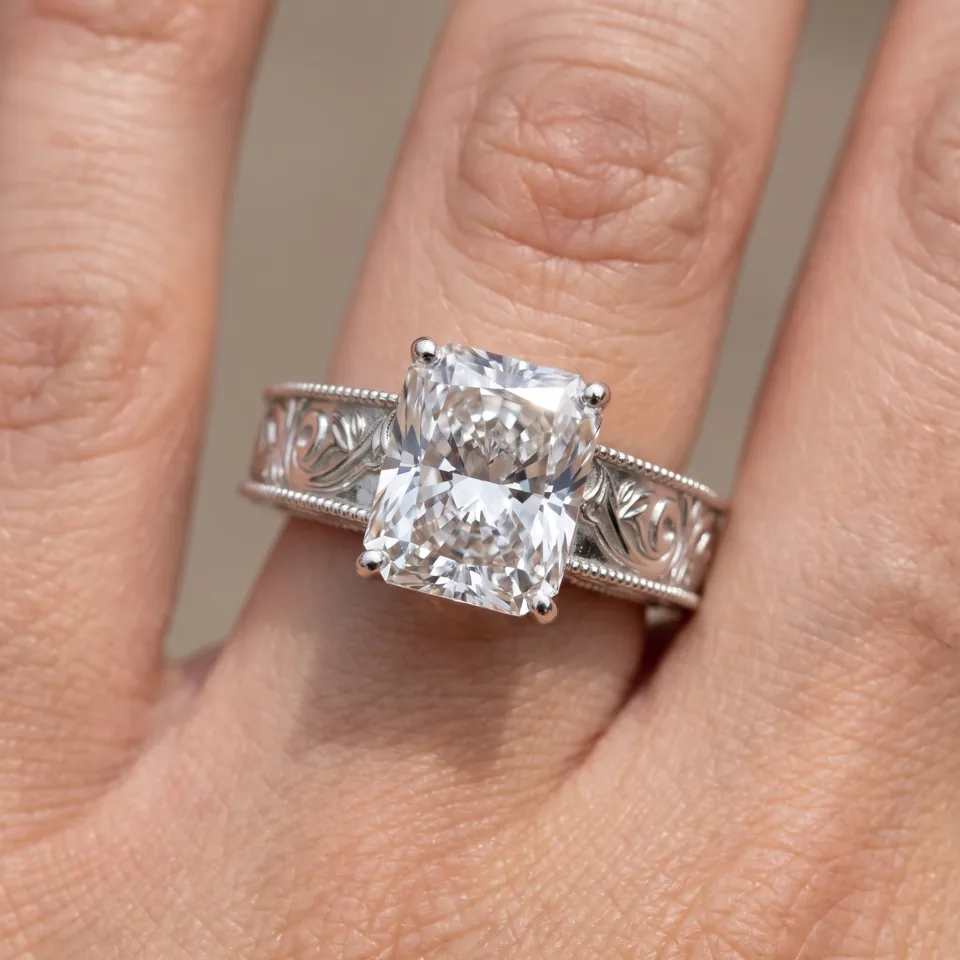 Vintage Radiant Cut Engagement Rings
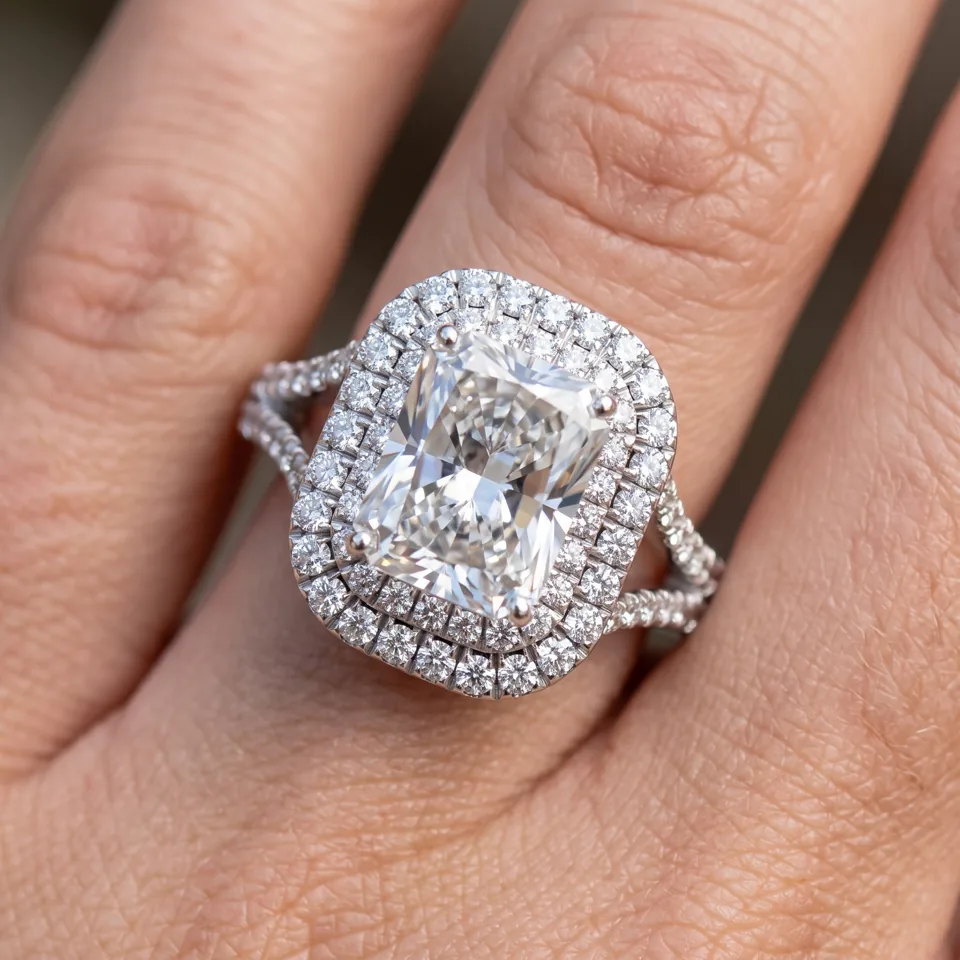 Radiant Cut Double Halo Engagement Rings
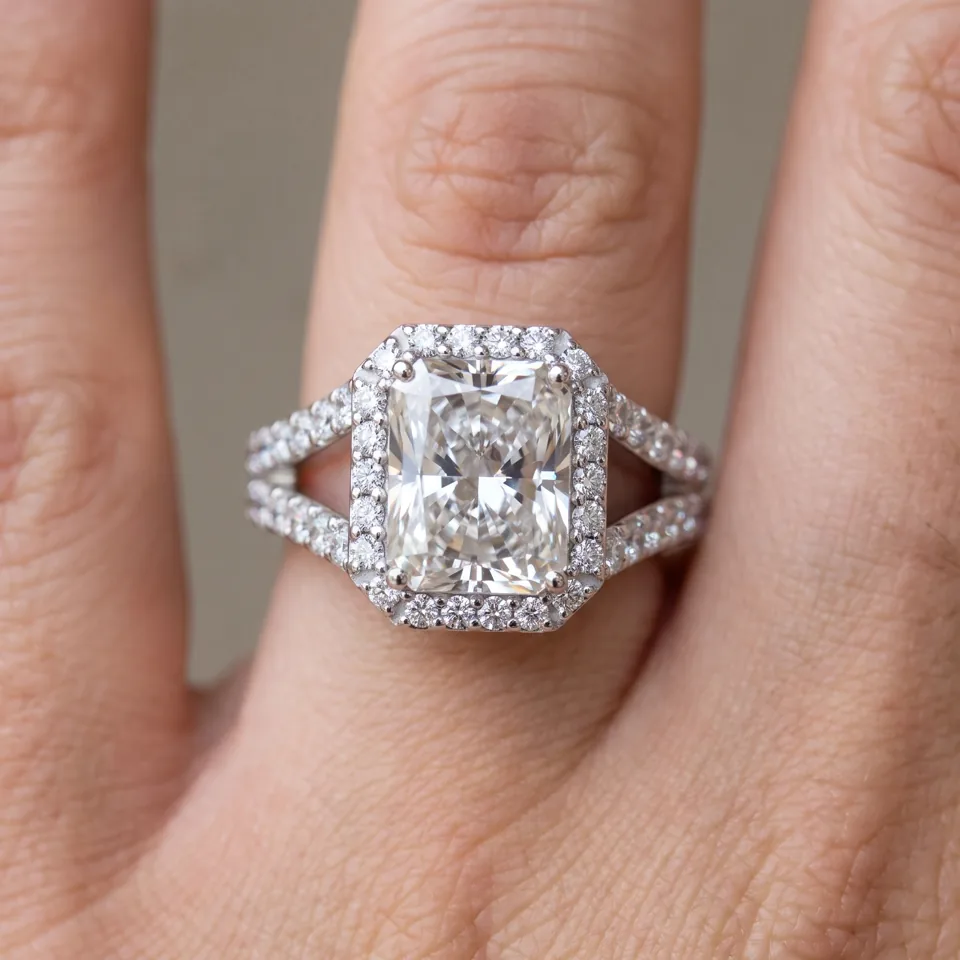 Radiant Cut Split Shank Engagement Rings
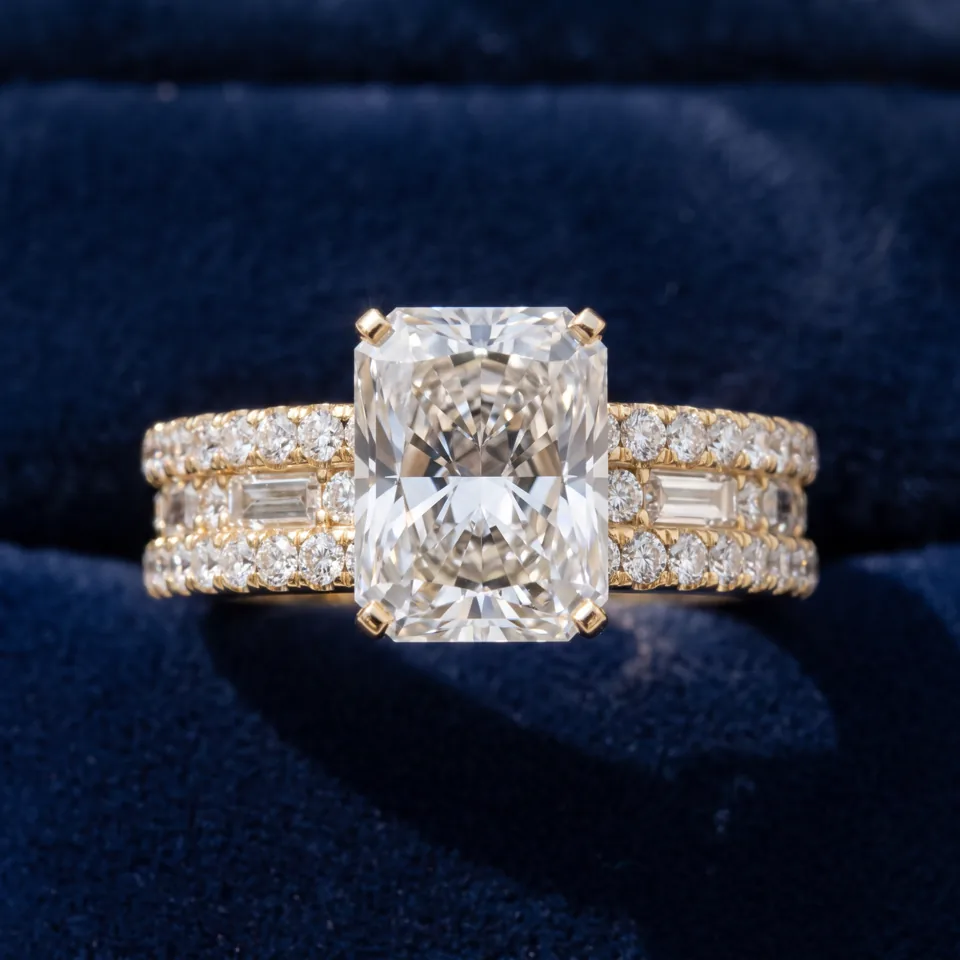 Radiant Cut Engagement Rings with Baguettes
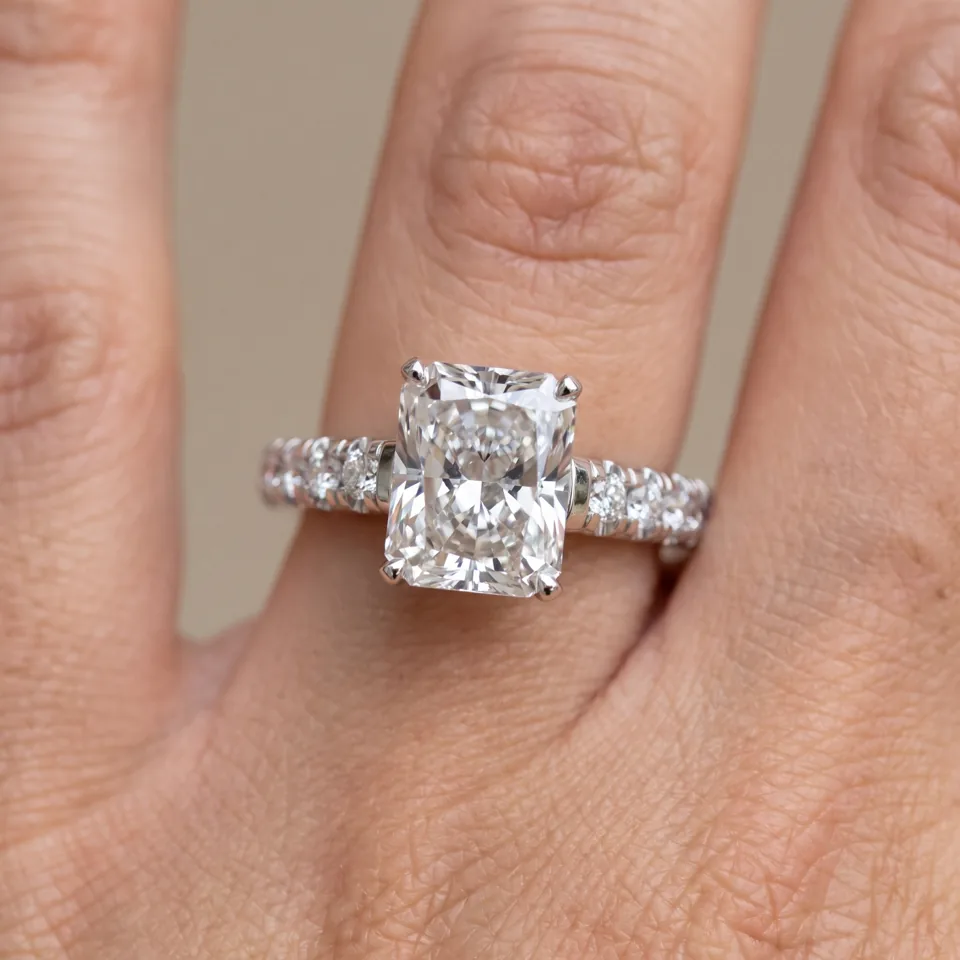 Radiant Cut Cathedral Rings
A radiant has straight sides and clipped corners, so it works with both straight and curved accents. Baguettes and channel-set rows echo its lines for a sleek look. Pear and marquise sides add curves. Round accents, prong-set or graduated, give an even sparkle along the band.
A big share follow the trio pattern of center plus two. The rest choose pavé shanks, clusters, swirls studded with bezels, or a bypass curve, and some add a halo before the side stones begin. Every accent here is a laboratory-grown diamond accent.
A stretched radiant makes fingers look slimmer and suits a narrow three-stone top. A squarer radiant looks bolder with a wide pavé band. Hold the side stones' size below the center's so the radiant stays the focus.
Gold is offered on all of them in white, yellow and rose at 10K, 14K or 18K, platinum too; nearly every design is also offered in Silvadium, a tarnish-resistant sterling silver. Settings start under $300, and most cost between about $1,000 and $1,400 before the center. For the radiant itself, colorless and yellow, pink, blue or green fancy shades fit almost every design, and black fits many.
Allow 10–15 days for us to make the setting, with free insured shipping to you and on any return. The center diamond includes an IGI or GIA report. Send it back within 30 days if it isn't right, and one free resize is yours within 60 days of delivery.


