Complimentary insured shipping, both waysEngagement ring diamonds certified by IGI or GIAGrown by light. Conflict-free by natureComplimentary insured shipping, both ways
Engagement RingsWedding BandsEarrings

NecklaceBraceletsAbout
Princess cut pave engagement rings bead the band with rows of small laboratory-grown diamond accents, adding sparkle below a square center. The center diamond is a separate choice in the next step.
On this page you decide how much pavé to wear, from one fine row on a solitaire to a full halo, and pick gold, platinum or Silvadium, a tarnish-resistant sterling silver.
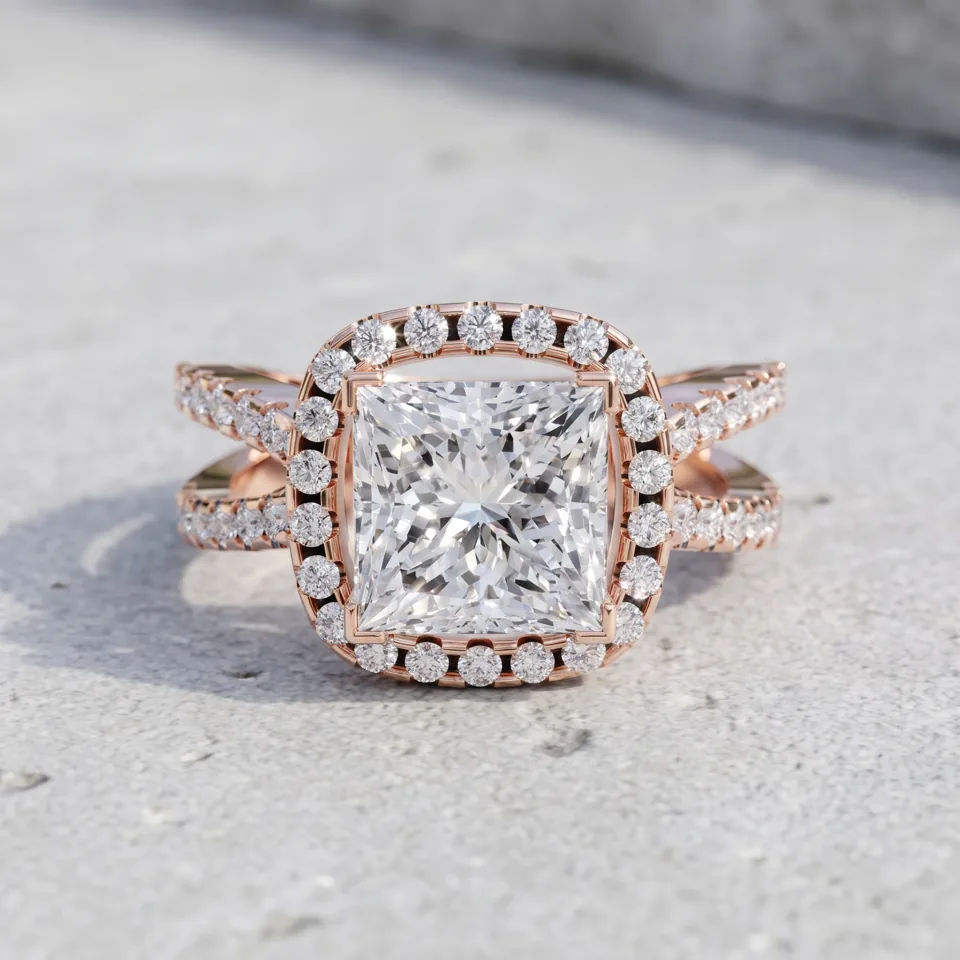
 Princess Cut Halo Engagement Rings
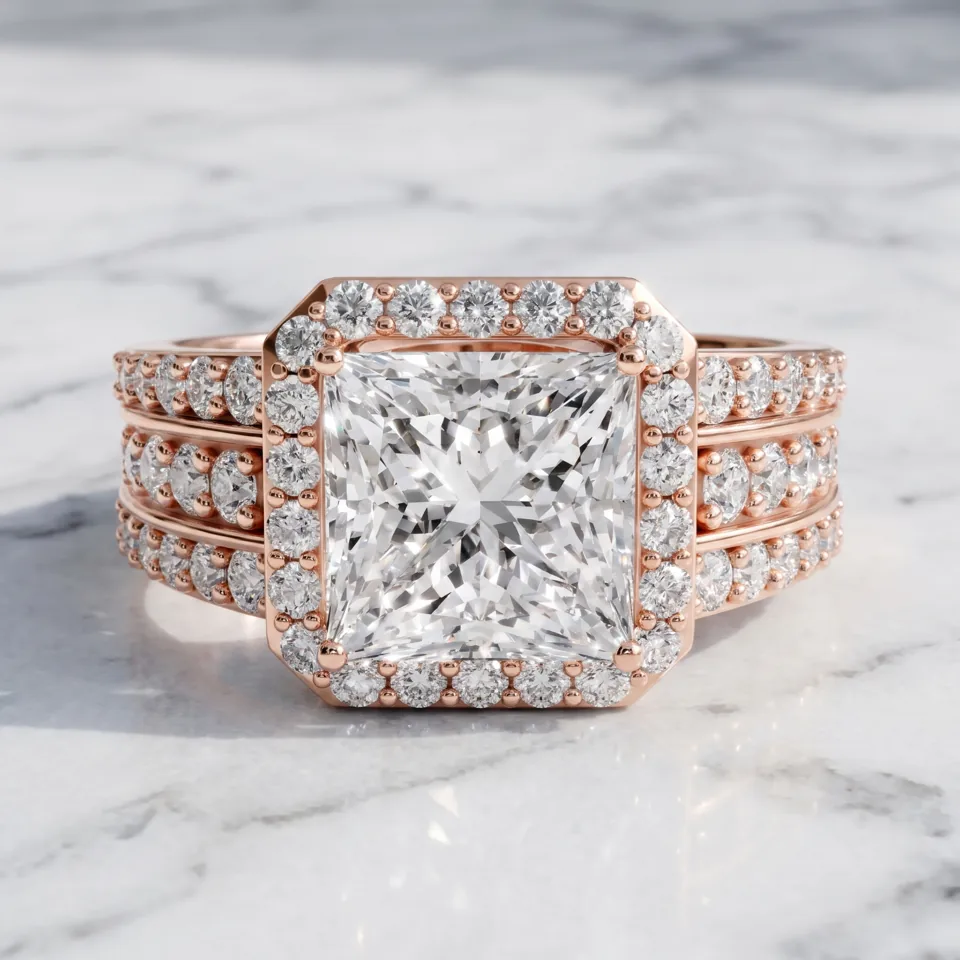
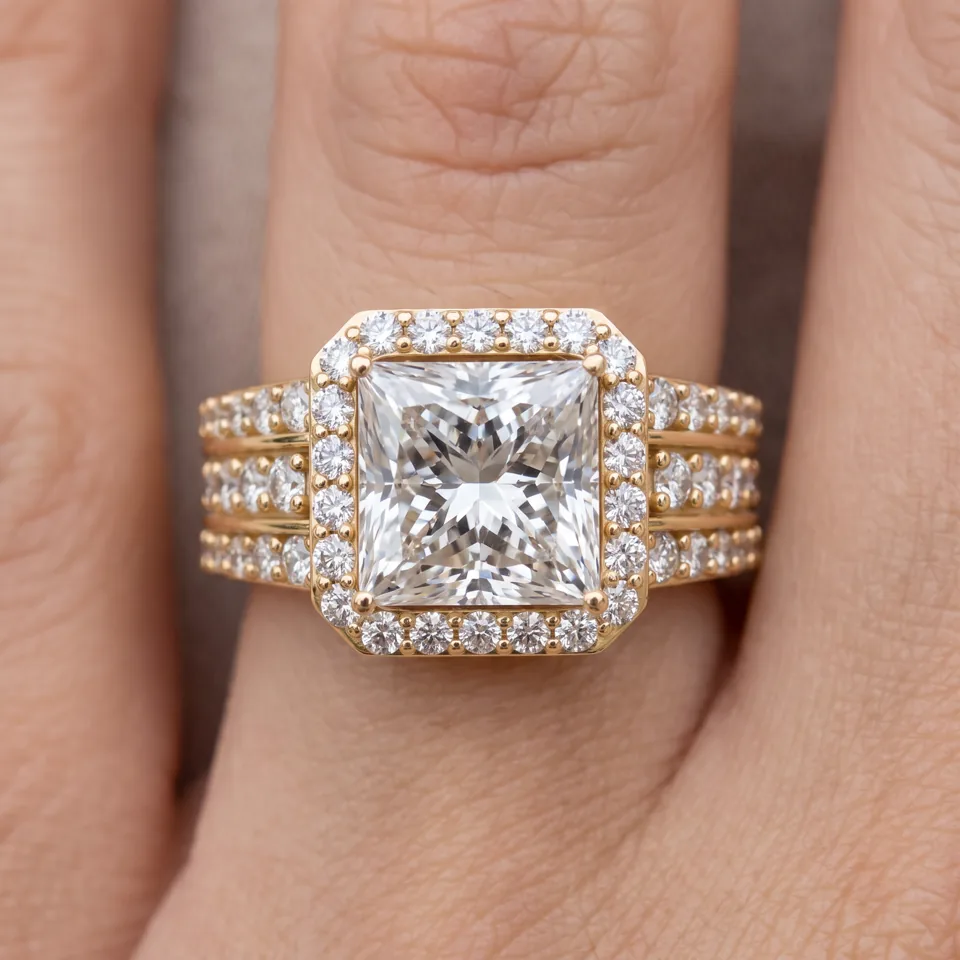 Vintage Princess Cut Rings
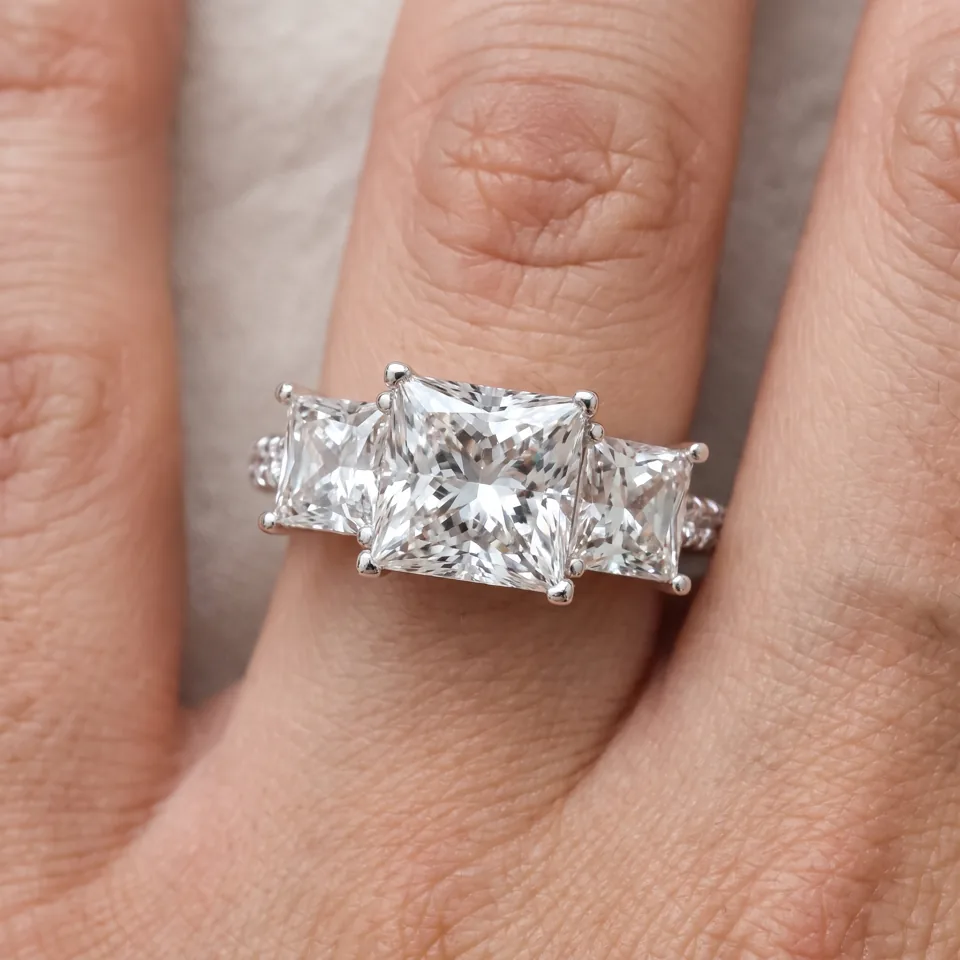 Princess Cut Three Stone Engagement Rings
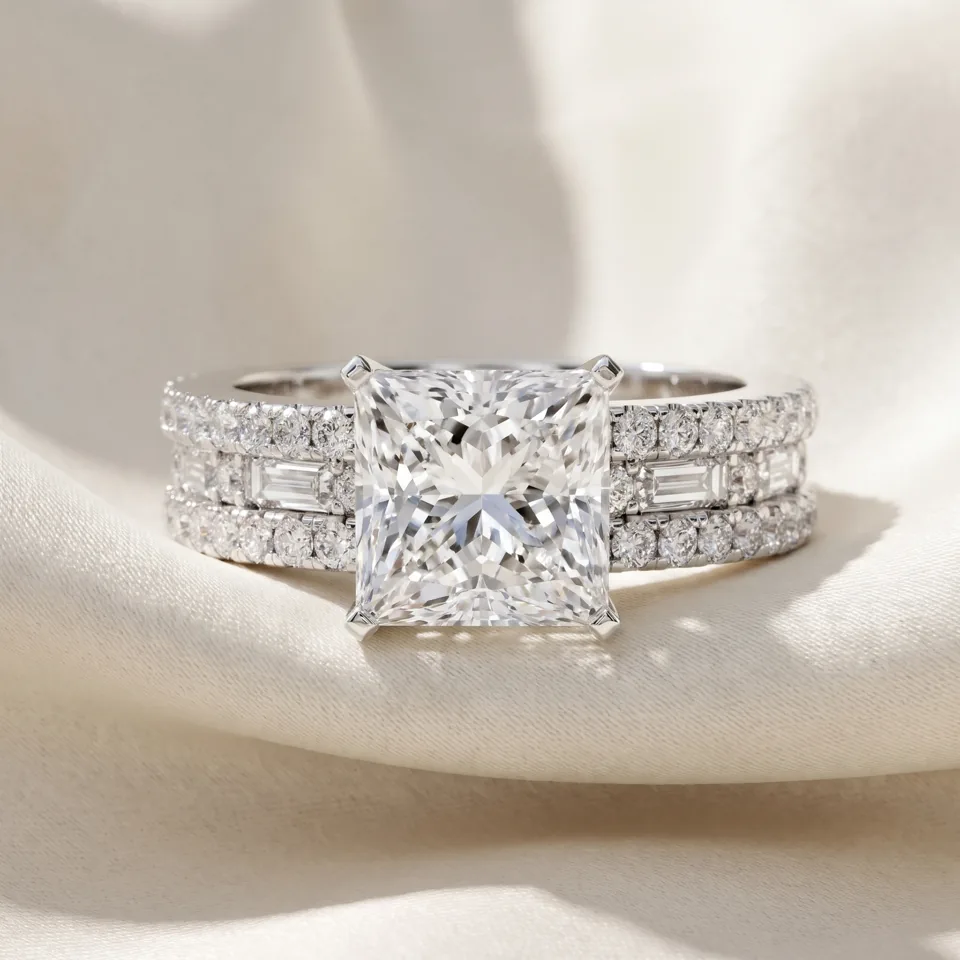 Princess Cut Rings with Baguette Side Stones
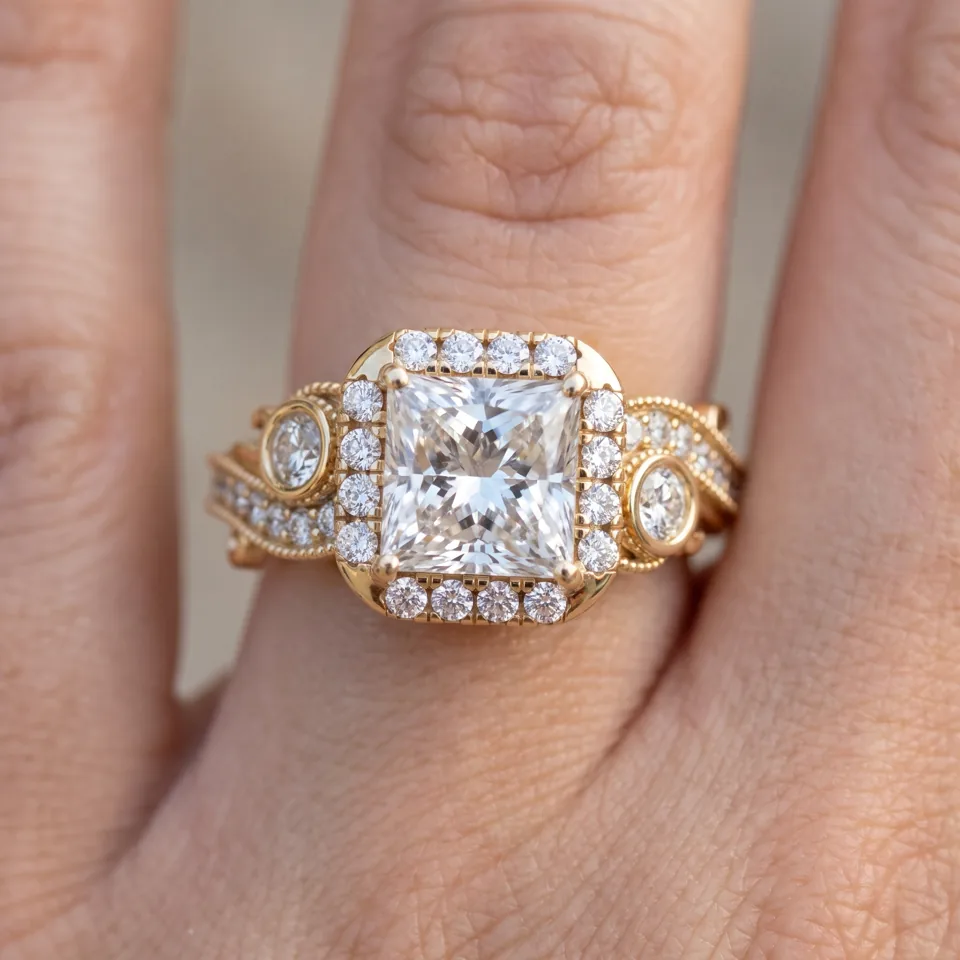 Princess Cut Bezel Rings
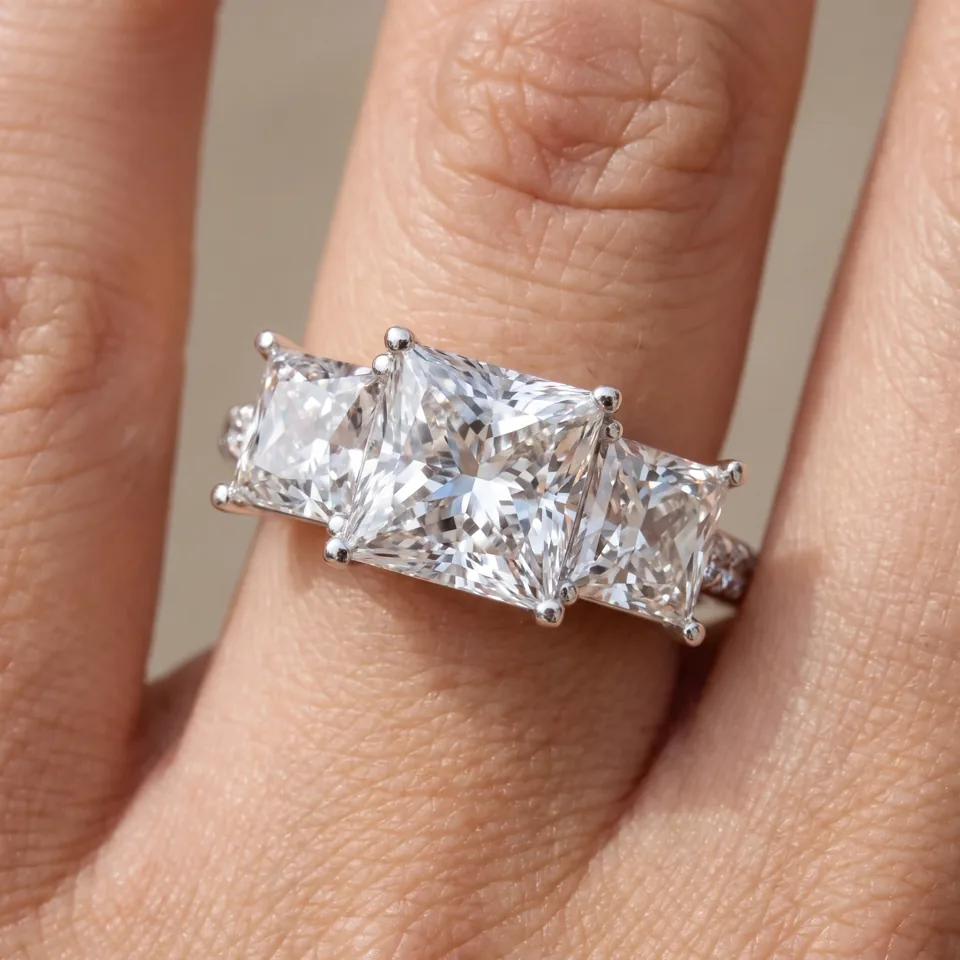 Princess Cut Engagement Rings with Side Stones
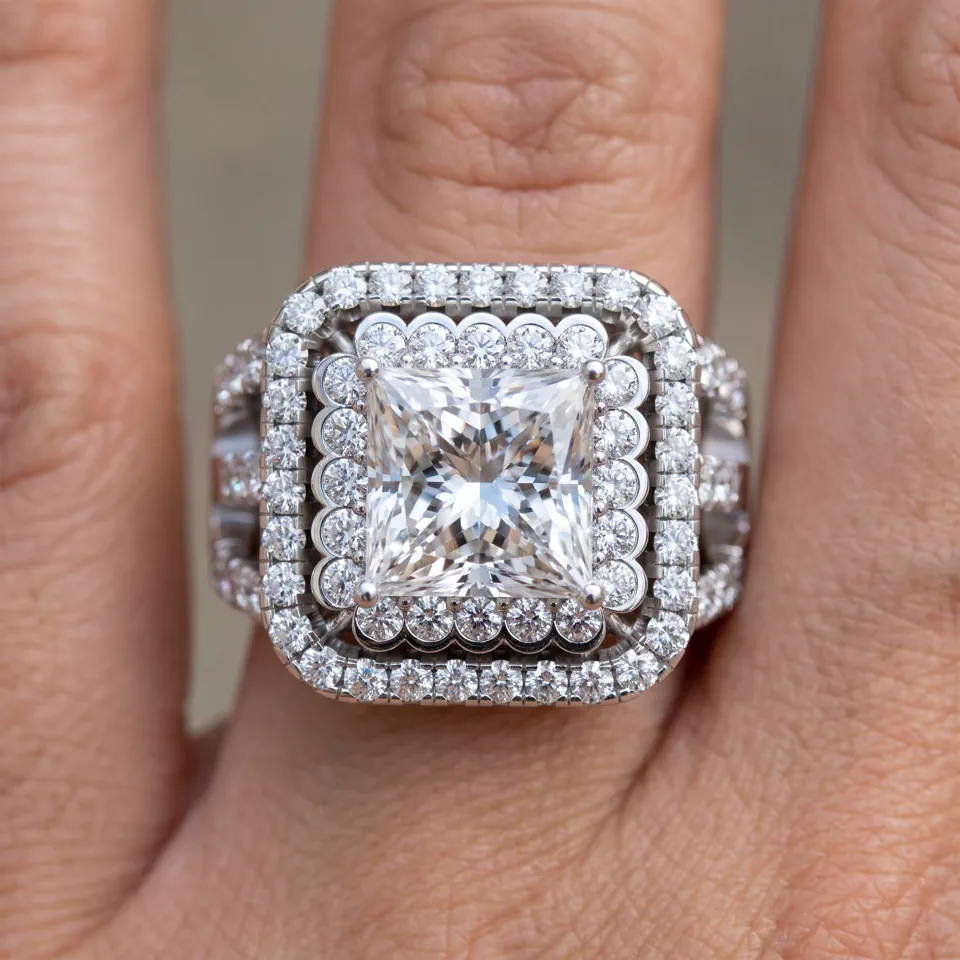 Princess Cut Double Halo Rings
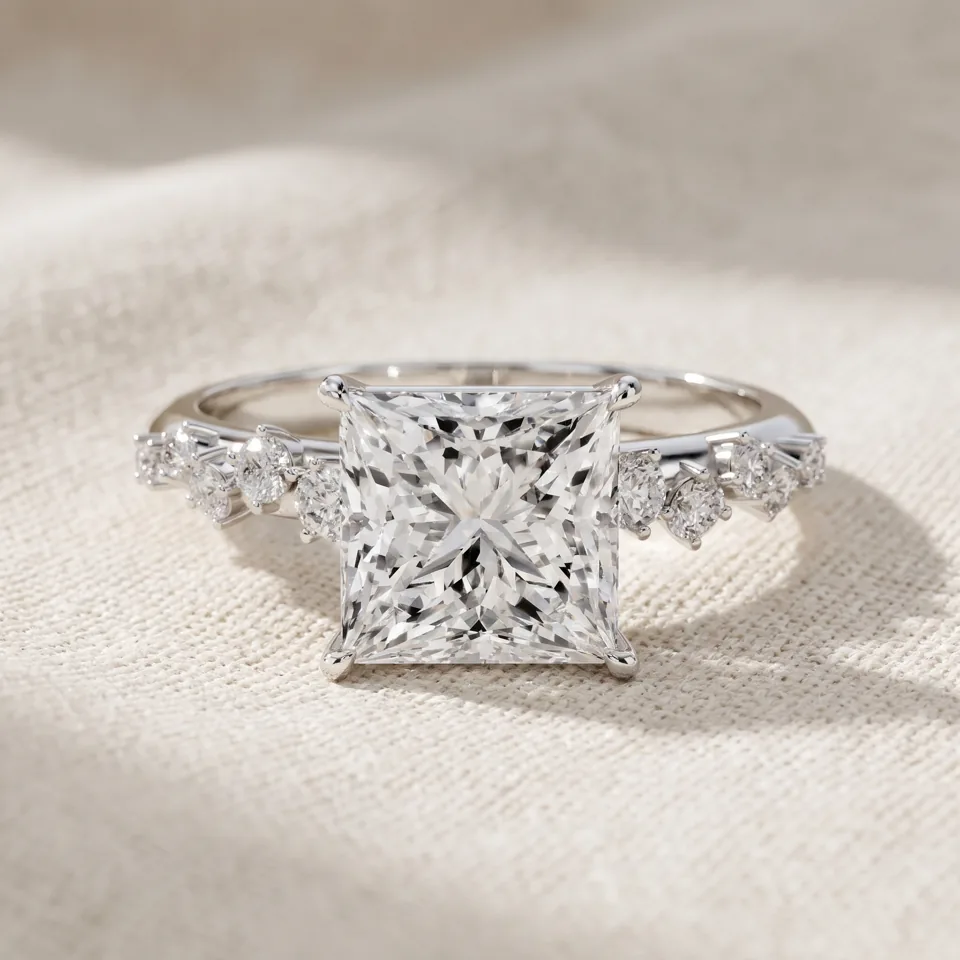 Princess Cut Cluster Engagement Rings
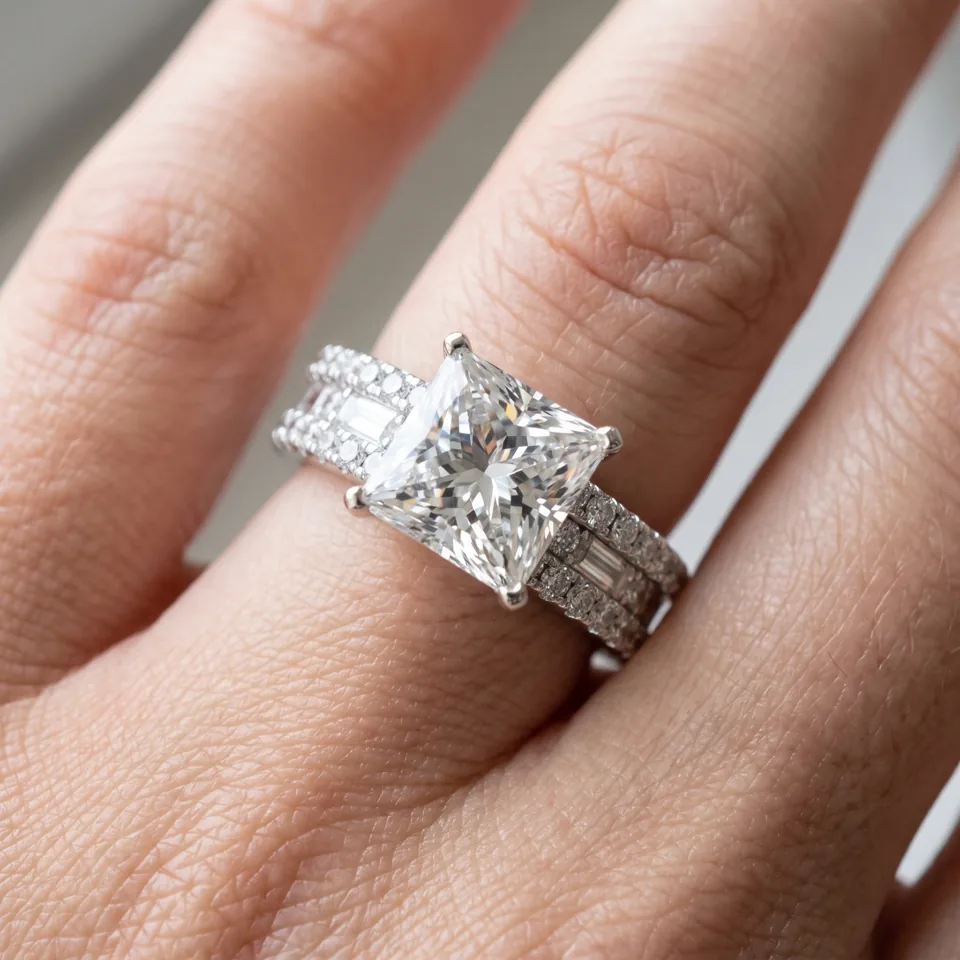 Princess Cut Channel Set Engagement Rings
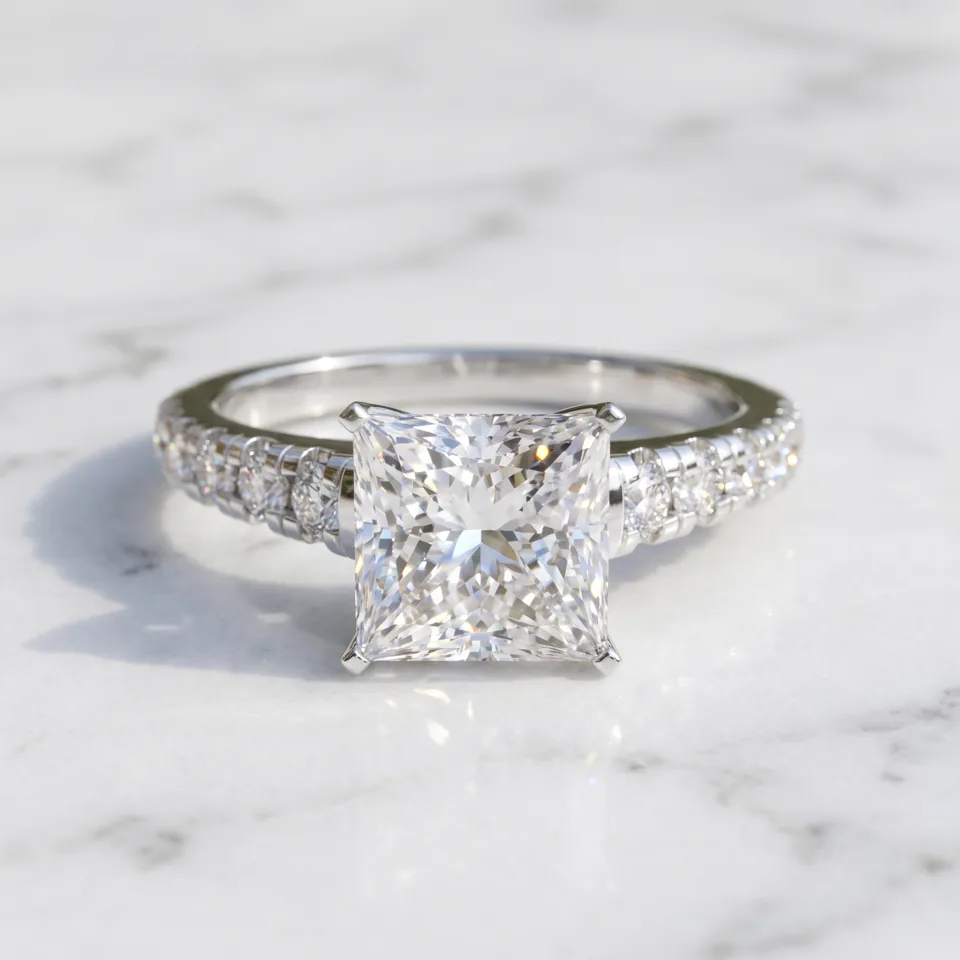 Princess Cut Cathedral Engagement Rings
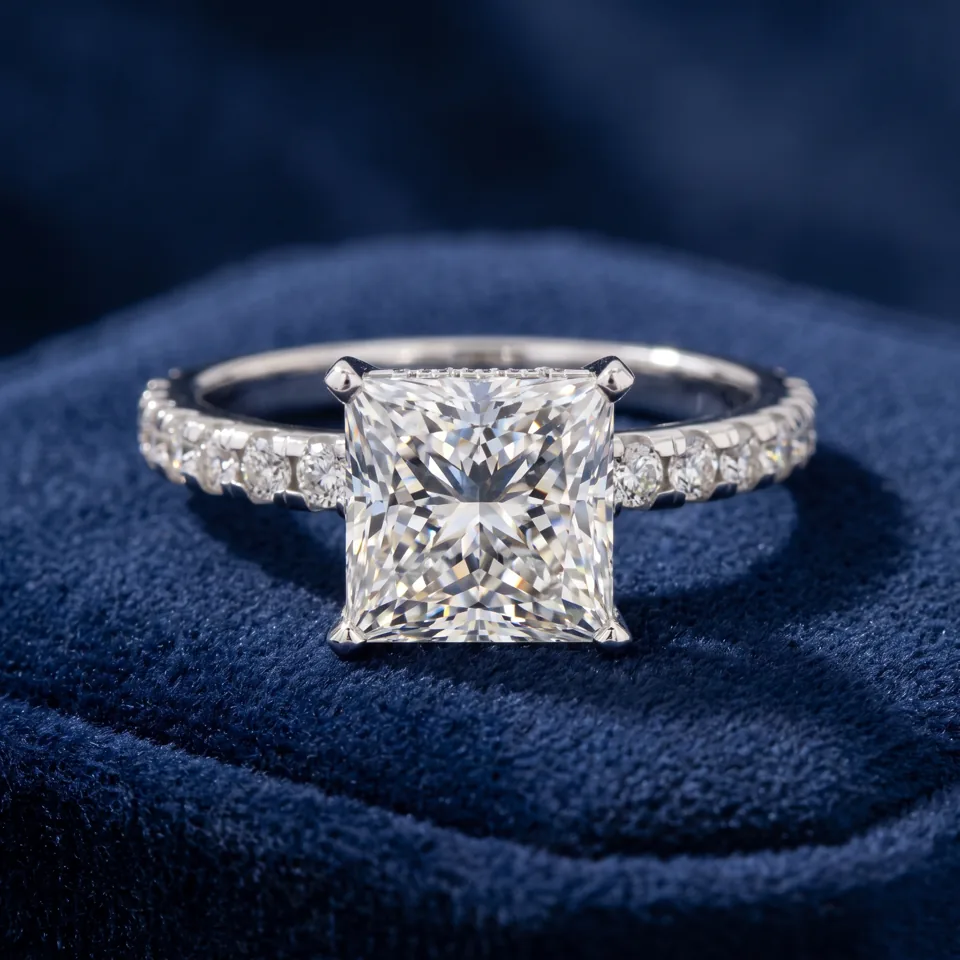 Princess Cut Hidden Halo Engagement Rings
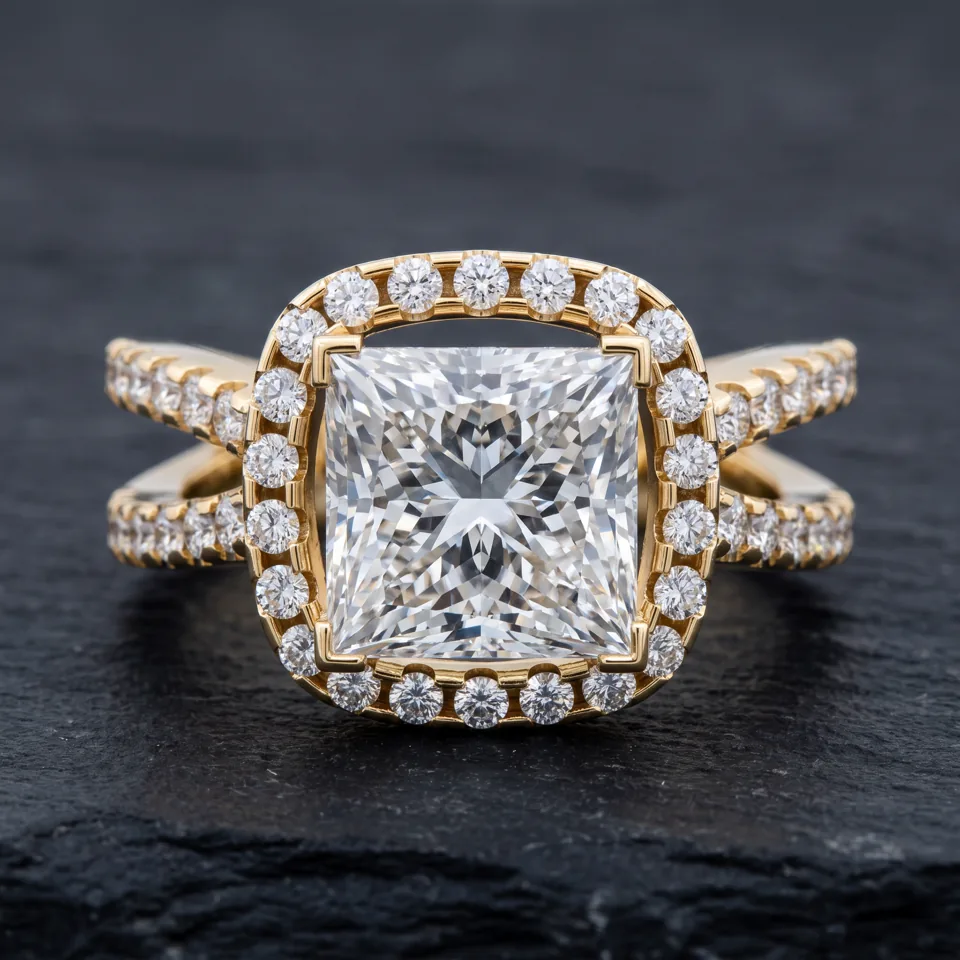 Princess Cut Split Shank Engagement Rings
A pavé solitaire leaves the princess standing alone, with lab-grown diamond accents running down the band. A pavé halo frames the square with an extra row of stones, so the center appears larger and its corners stay covered. Hidden halos tuck a row under the center, and double halos add a second frame for the most sparkle.
Princess cut micro pave engagement rings use the smallest accents for a fine, even line of light. A split shank opens into two pavé rows as it nears the center, and twisted bands spiral them around the finger. Vintage designs edge the pavé with milgrain beads for a softer border.
Pavé stones sit in tiny raised beads of metal, and hard knocks can loosen them over time. Book a quick check once a year, remove the ring for heavy lifting, and brush gently under the stones with a soft brush. Stones running all the way round make a band harder to resize than a plain shank, so confirm your size before ordering.
Almost all designs come in platinum, silver, and gold of any color at 10K, 14K or 18K. For pavé worn every day, gold or platinum holds the tiny prongs longer; silver lowers the price at the cost of some durability. Settings start under $200, and most run from about $900 to $1,200 before the center.
We make each ring for you in 10–15 days, with an IGI or GIA report for the center. Insured shipping is free both ways, unworn rings may be returned for 30 days, and one free resize is included within 60 days of delivery.