Complimentary insured shipping, both waysEngagement ring diamonds certified by IGI or GIAGrown by light. Conflict-free by natureComplimentary insured shipping, both ways
Engagement RingsWedding BandsEarrings
NecklaceBraceletsAbout
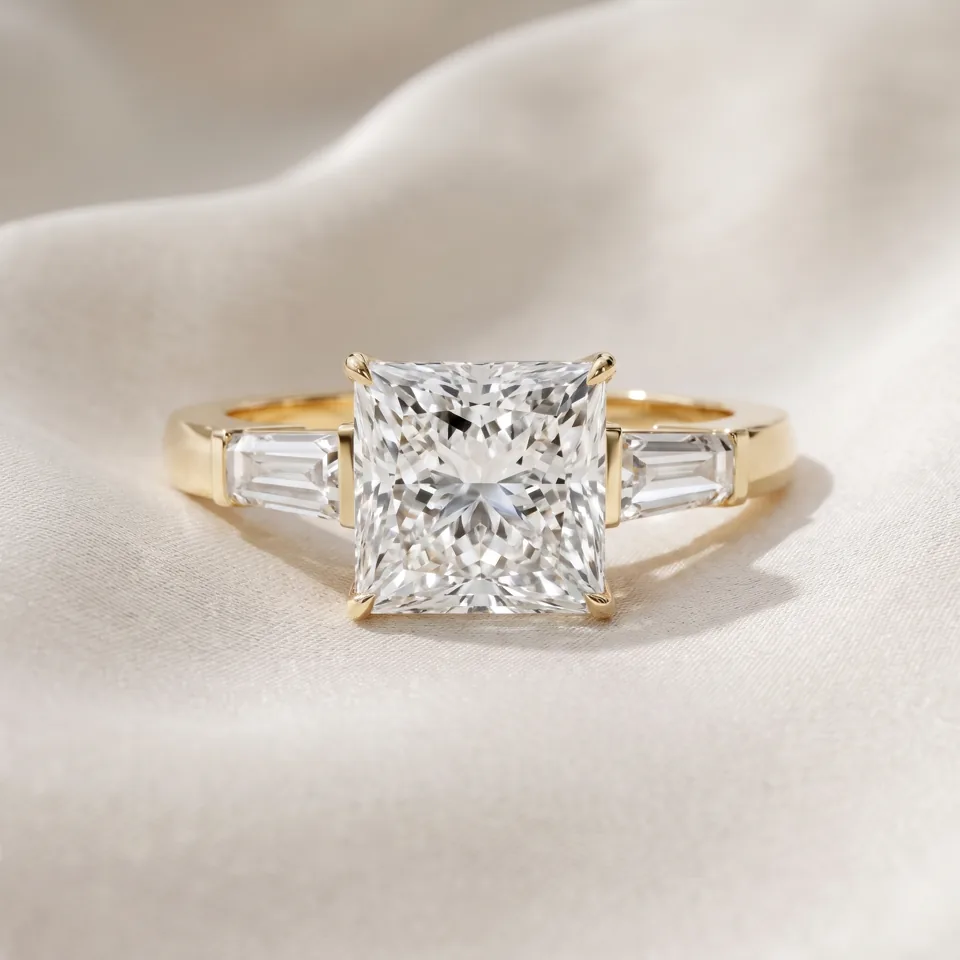
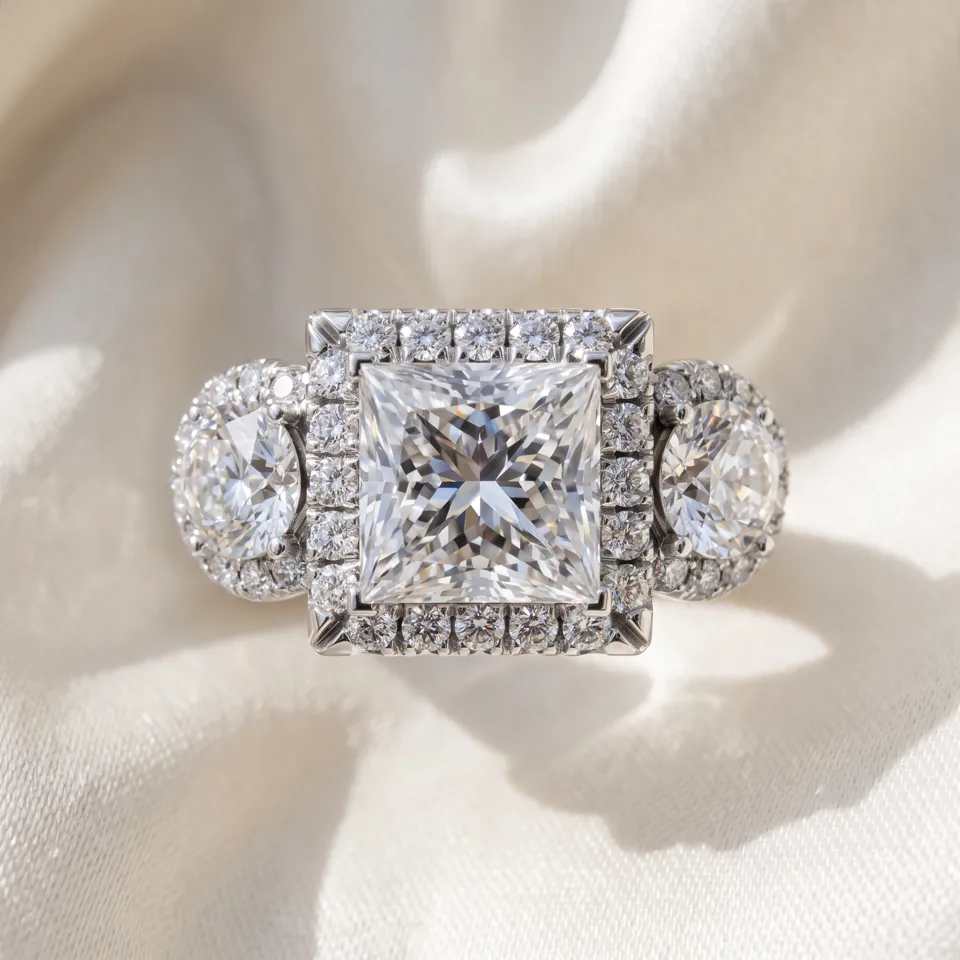
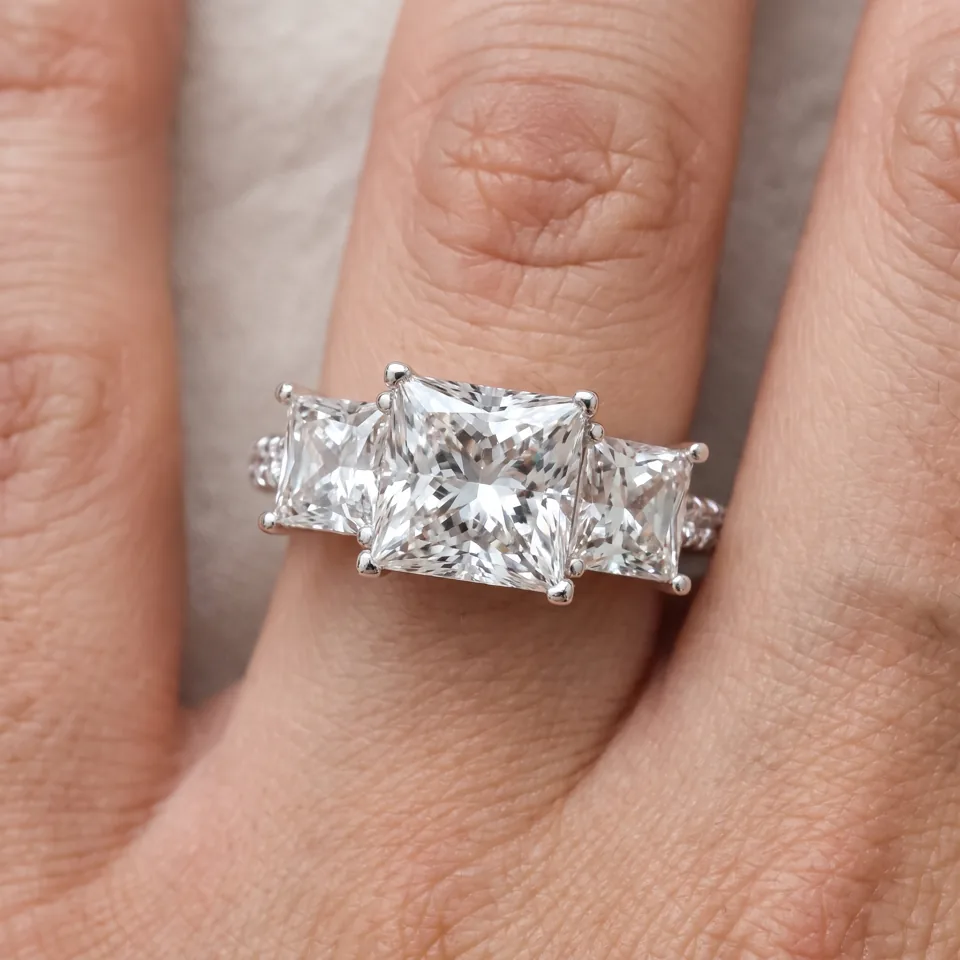
In a princess-cut three stone engagement ring, a square center sits between a pair of smaller stones, and those sides shape the look most: rounds, tapered baguettes, pears, trillions or trapezoids. Choose that pairing and a metal: white, yellow or rose gold in 10K, 14K or 18K, platinum, or Silvadium, a tarnish-resistant sterling silver. The center diamond comes later, in the next step.
Round: the pairing on most designs, soft against the square center.
Tapered baguette: step-cut sides that narrow toward the band for a sleek line.
Pear: points angle outward to widen the ring's face.
Trillion or trapezoid: angular sides that echo the princess cut's corners.
The side stones are laboratory-grown diamond accents set in the ring.
Touching stones or spaced apart
Some designs set the three stones so they touch, which reads as one unbroken line across the finger. Others leave a little metal between them for a lighter look. Flush-set baguettes sit low in the band, while prong-set side stones rise higher and catch more light.
Plain, pave or twisted band
A plain band keeps a 3 stone princess-cut ring simple and leaves room for a wedding band. Pave bands carry the lab-grown diamond accents down the shank, and a few designs add a twist, a split shank or vintage milgrain. The princess center's four sharp corners can chip, so prongs that cover each corner are worth having.
Metal and budget
Platinum and white gold make the trio look whiter and brighter, while a yellow or rose gold band warms it up. Silver keeps the cost lowest but scratches more easily than gold or platinum. Settings start under $300, and most run between about $950 and $1,350 before the center.
Ordering from Whitemoon
We craft the setting in 10–15 days, and your chosen center arrives with an IGI or GIA report. Free insured shipping both ways is part of every order, the return window is 30 days, and one resize in the first 60 days after delivery is included.

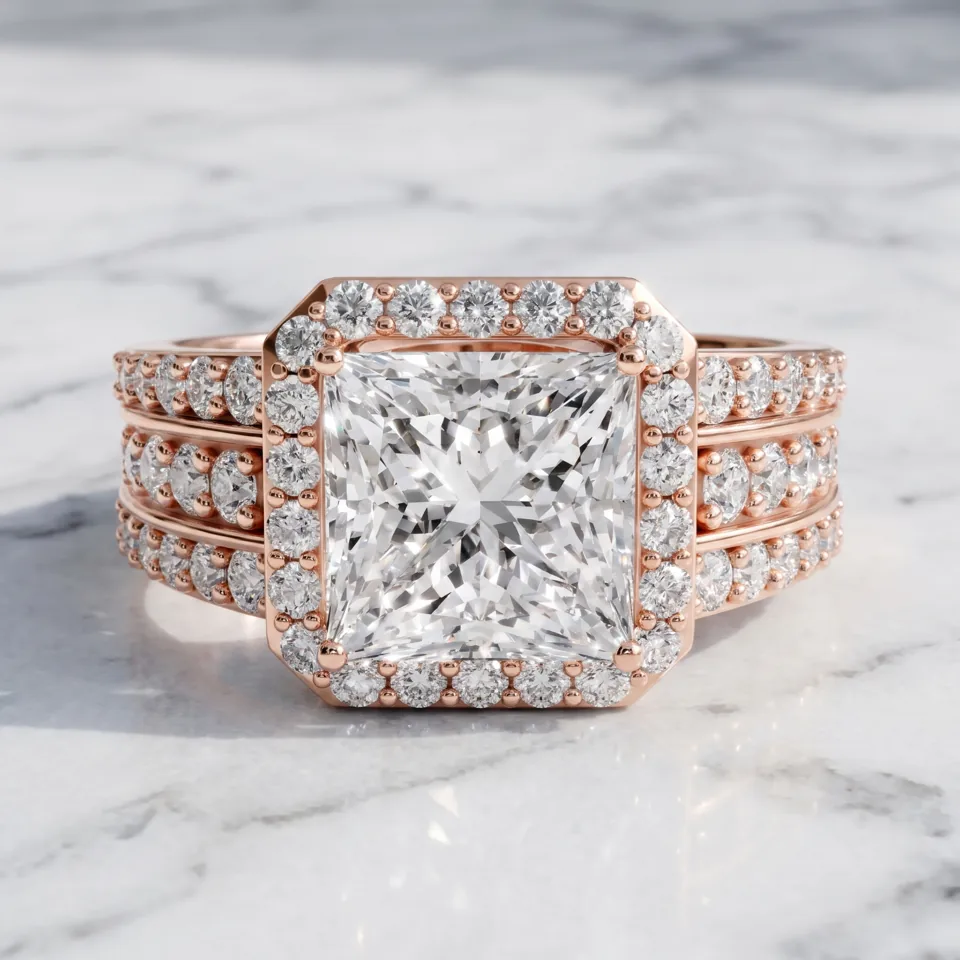 Princess Cut Halo Engagement Rings
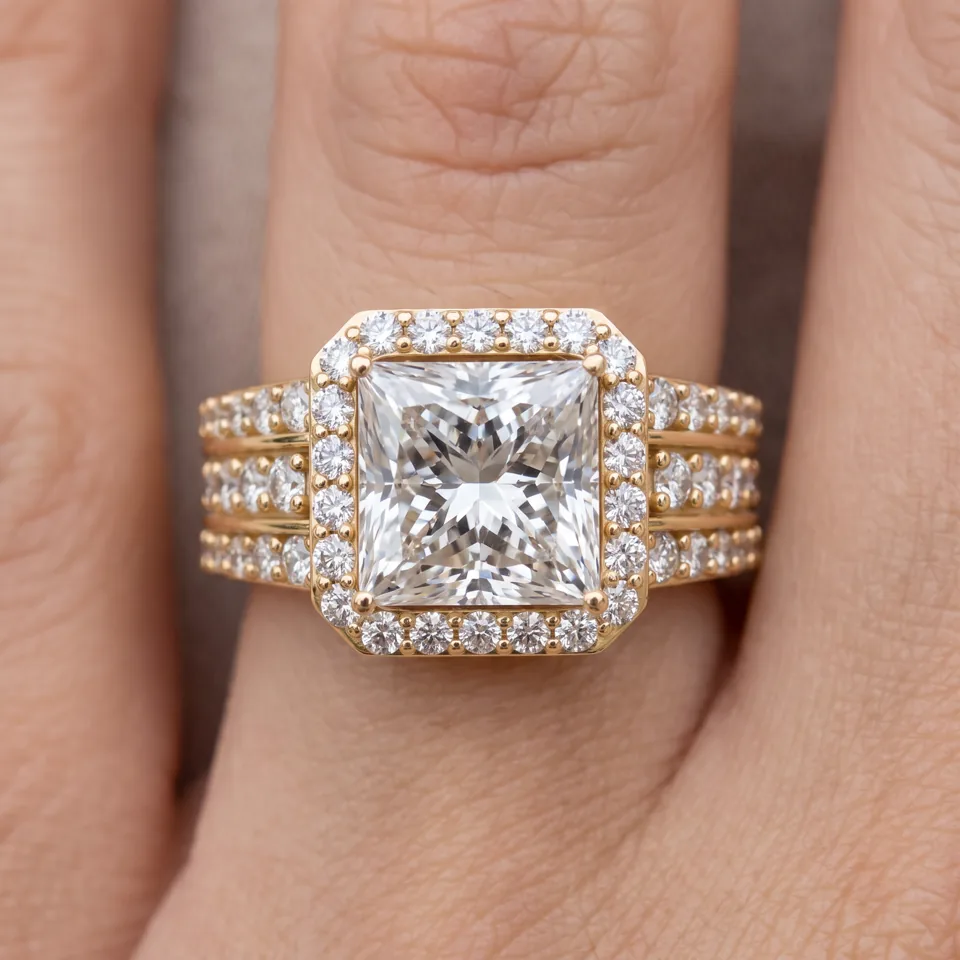 Vintage Princess Cut Rings
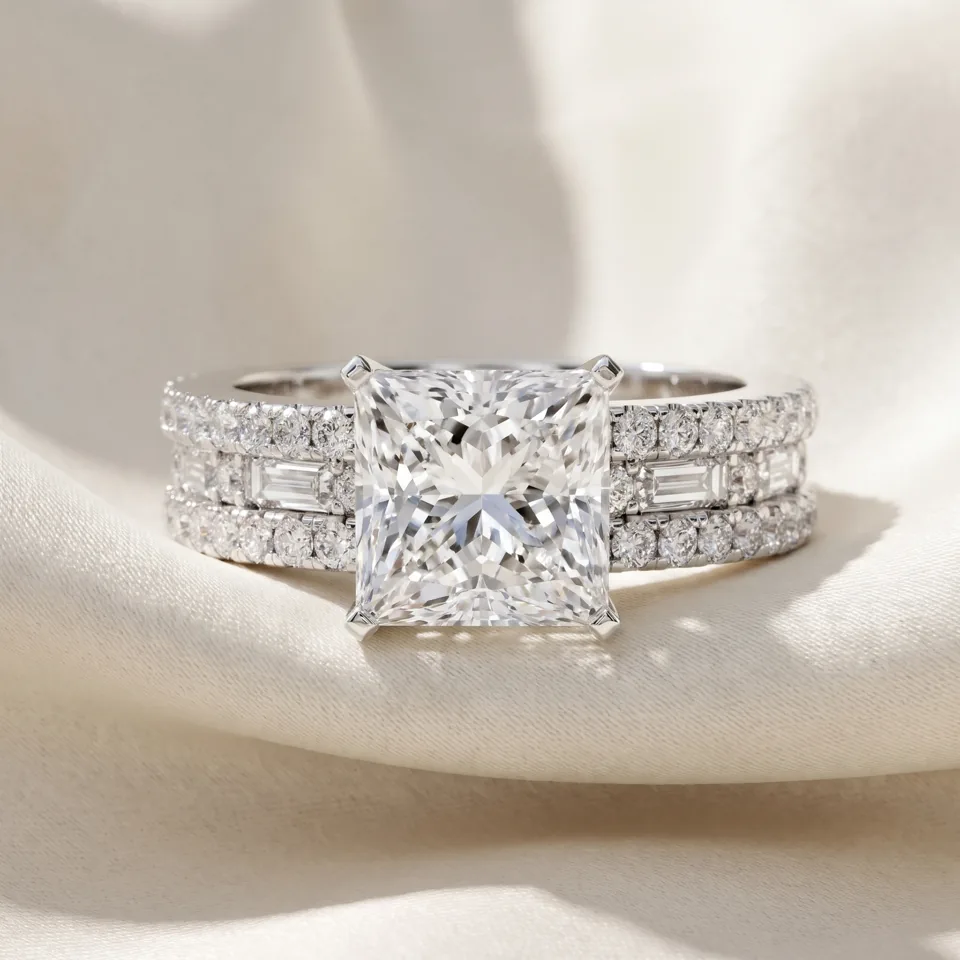 Princess Cut Rings with Baguette Side Stones
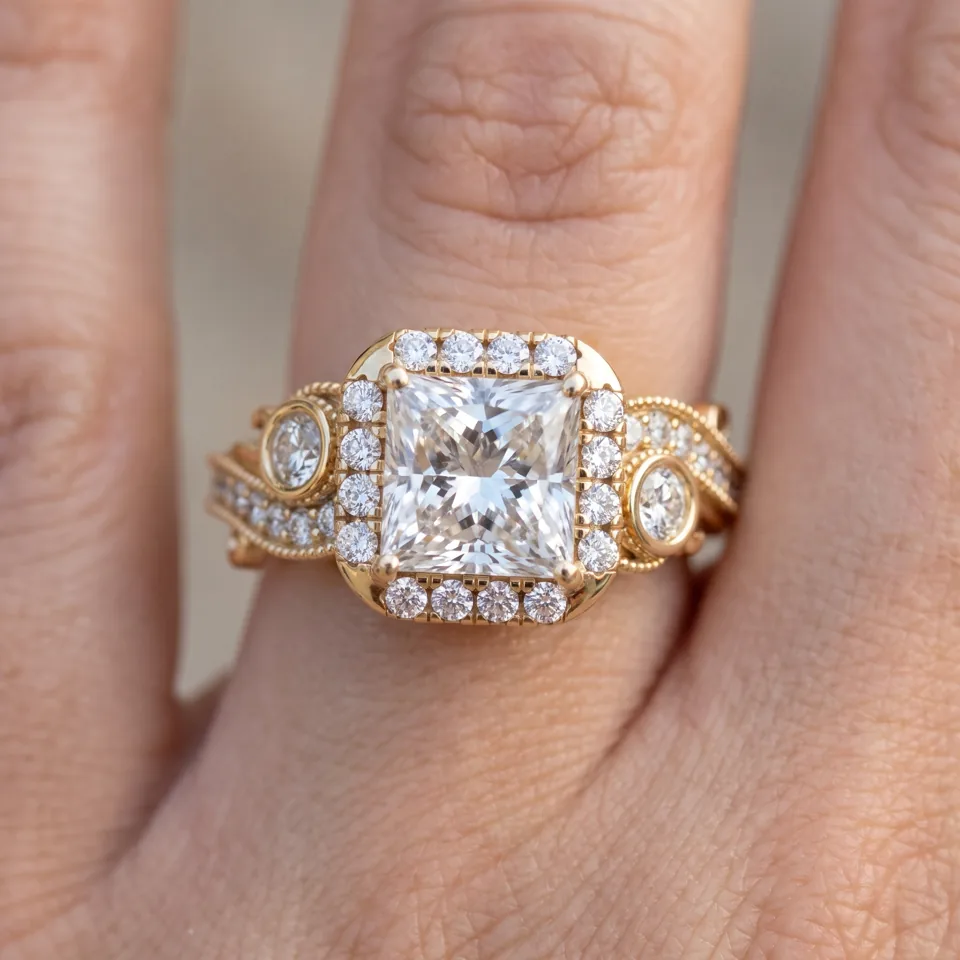 Princess Cut Bezel Rings
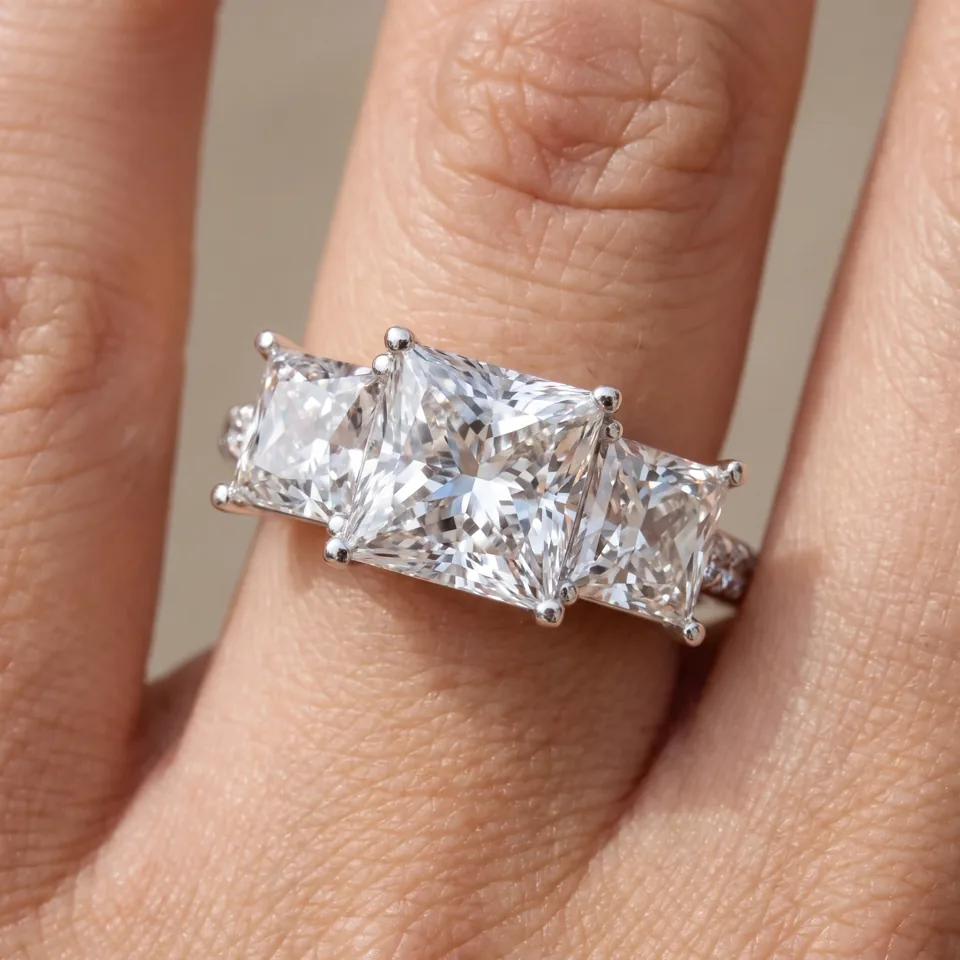 Princess Cut Engagement Rings with Side Stones
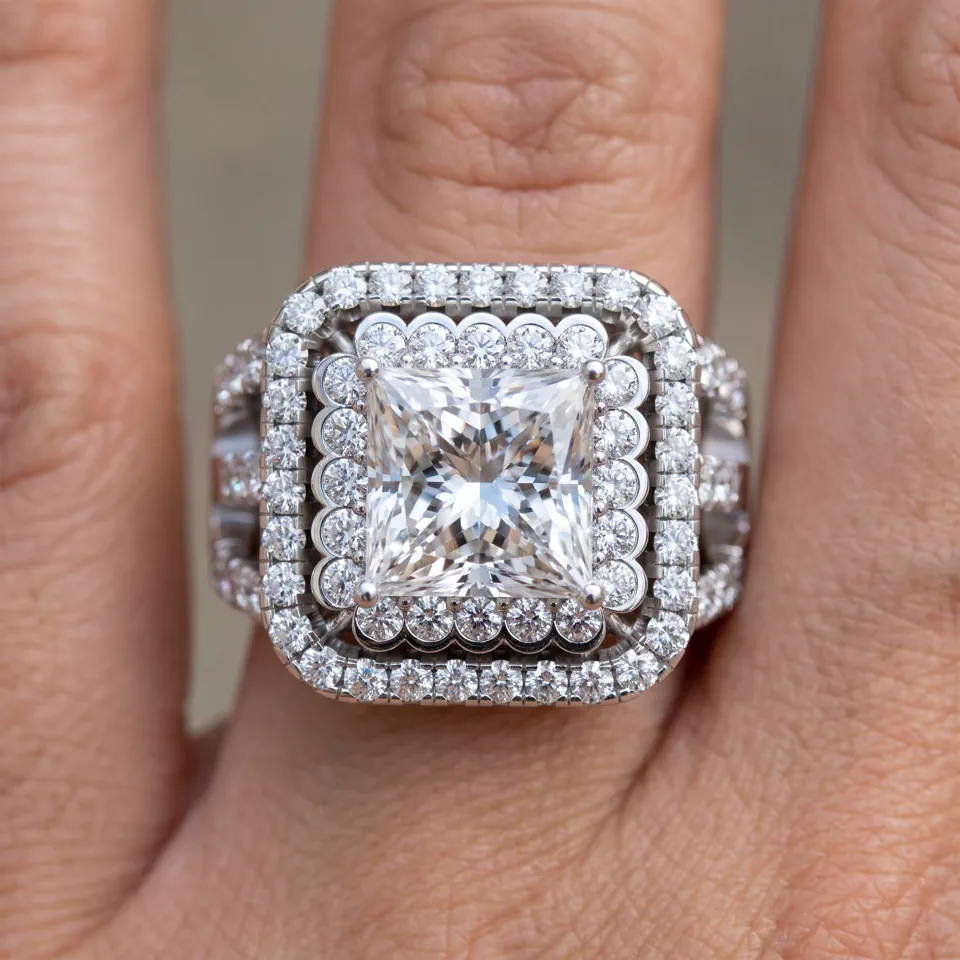 Princess Cut Double Halo Rings
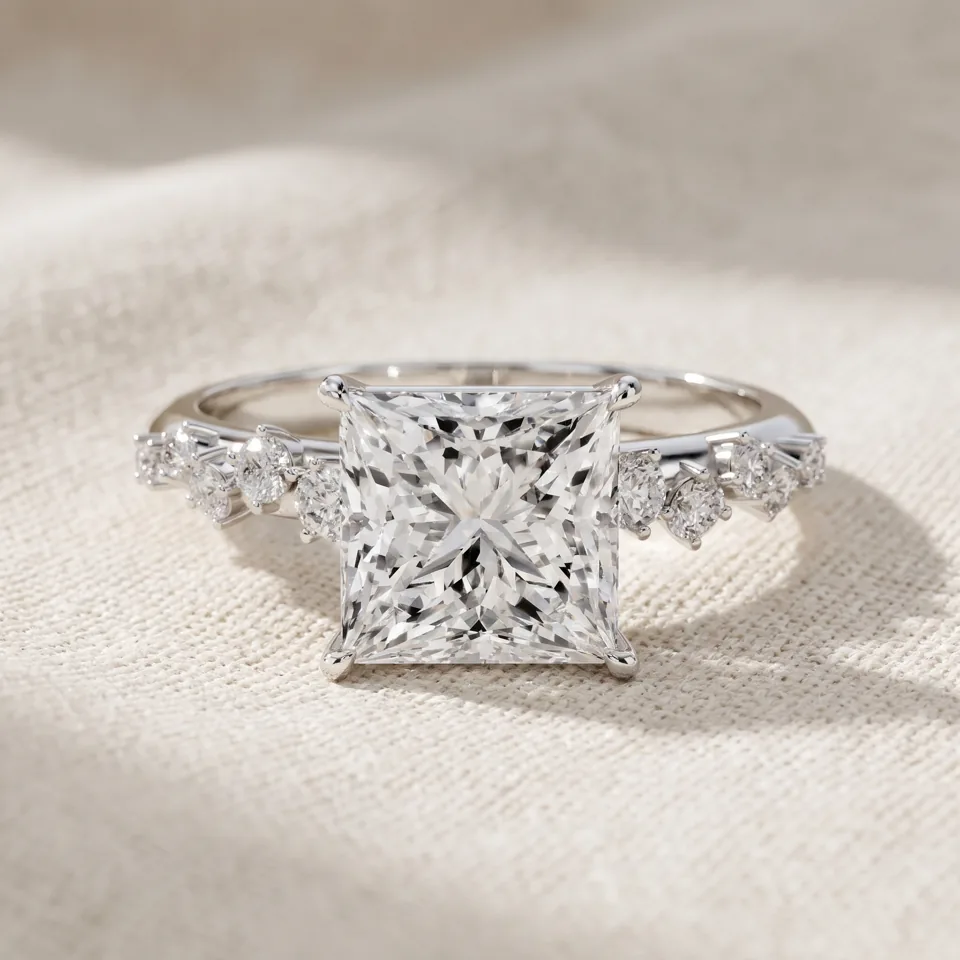 Princess Cut Cluster Engagement Rings
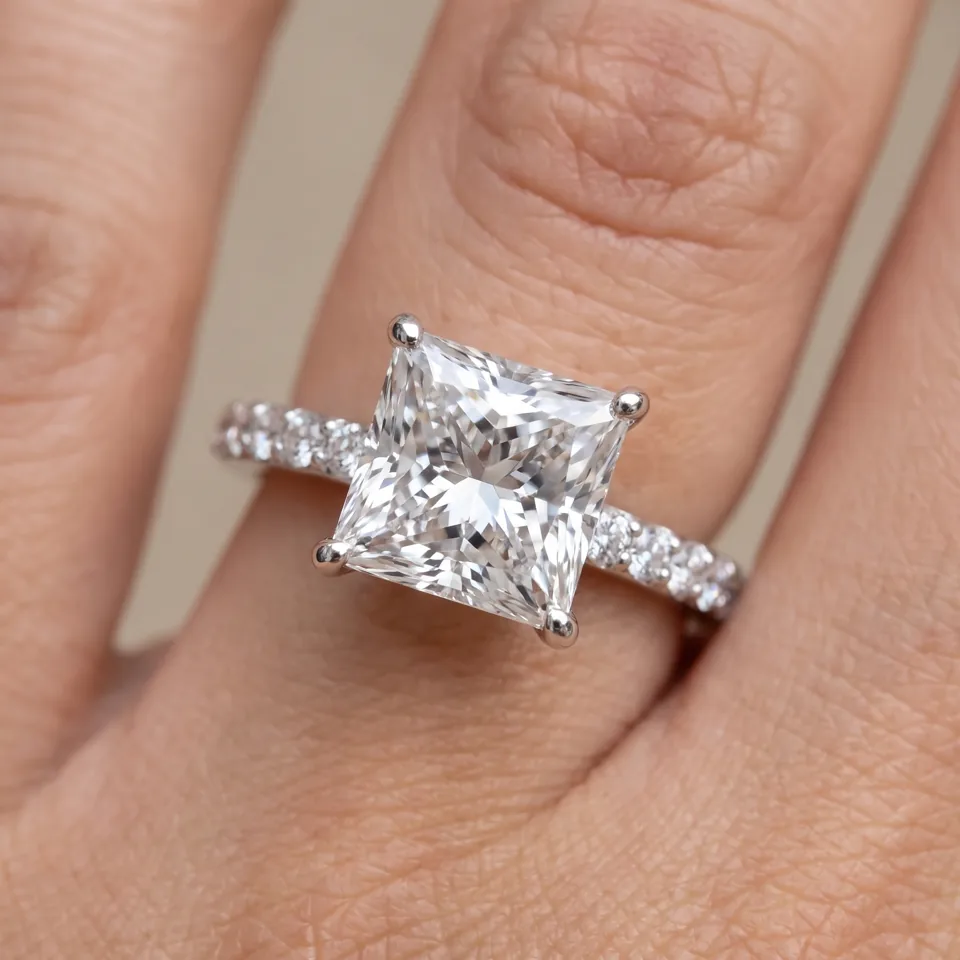 Princess Cut Pave Engagement Rings
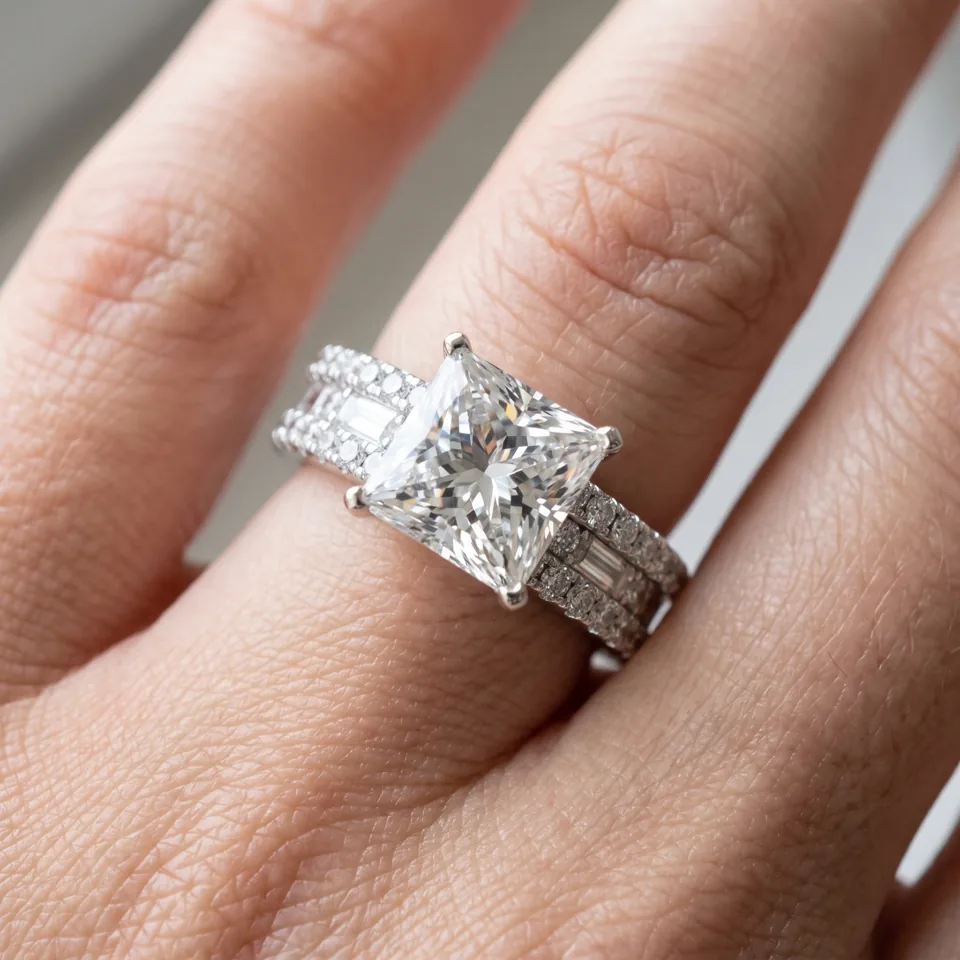 Princess Cut Channel Set Engagement Rings
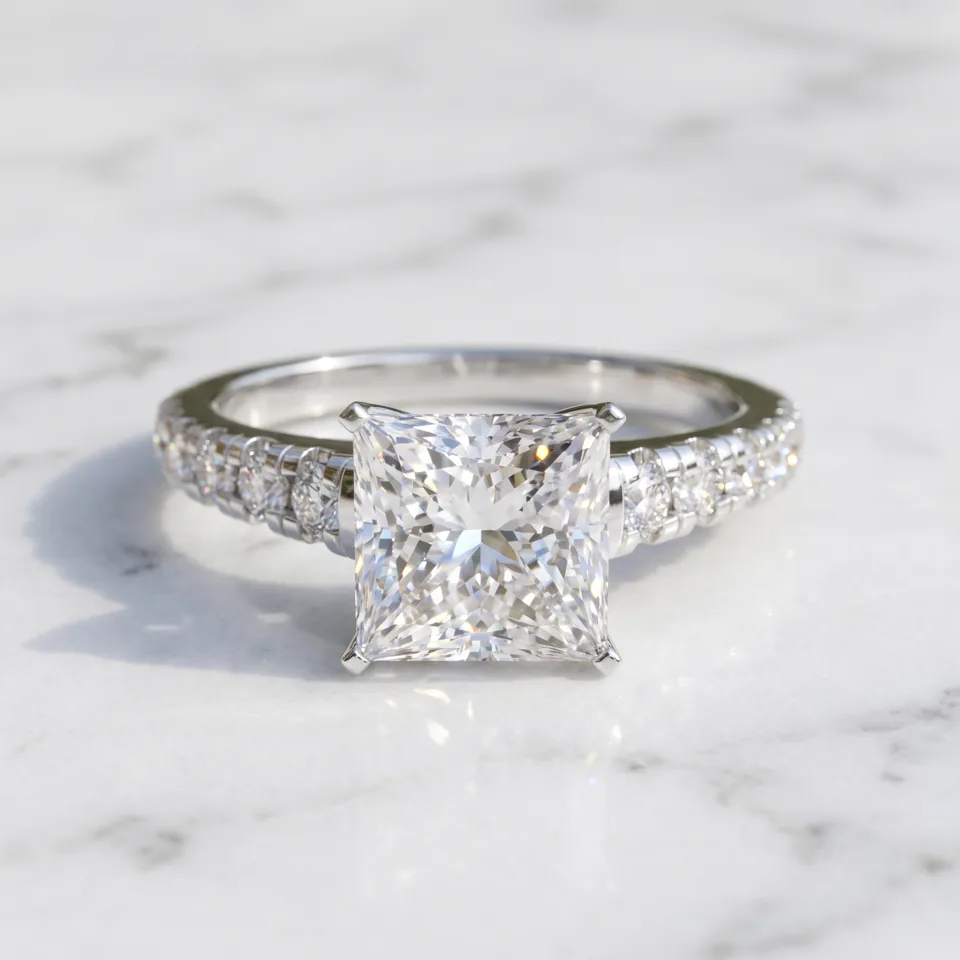 Princess Cut Cathedral Engagement Rings
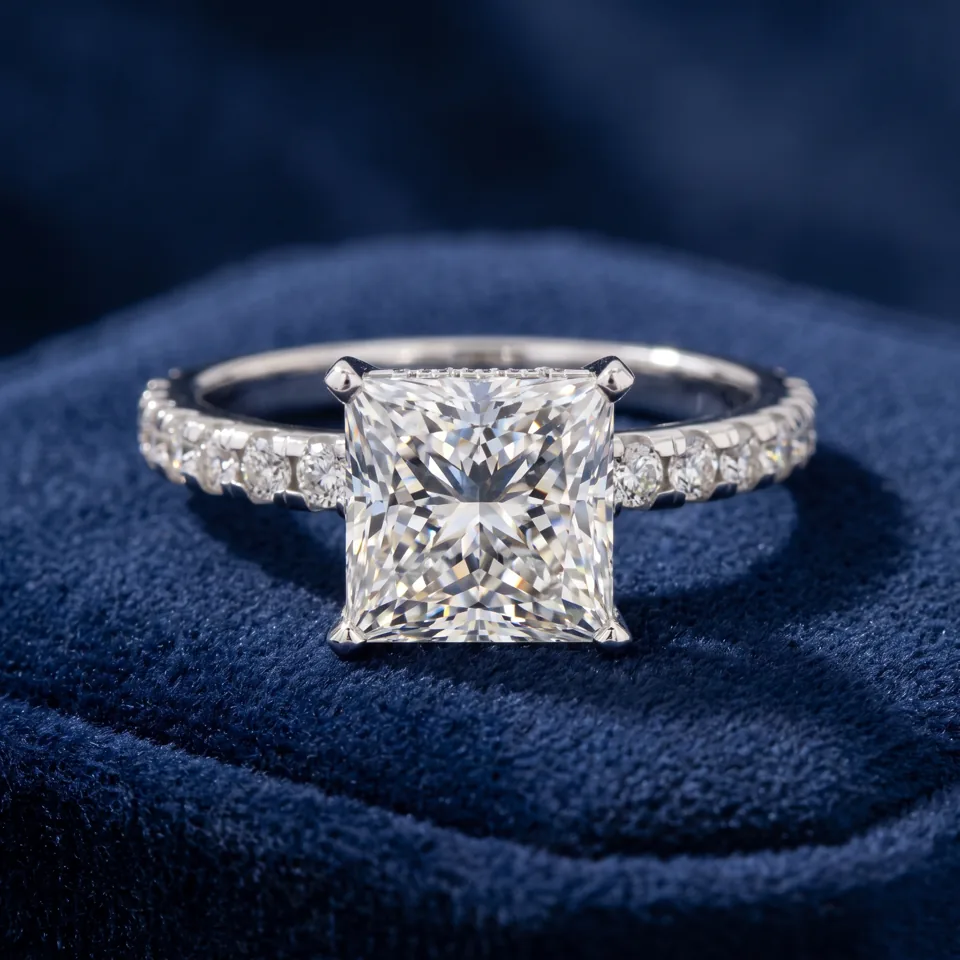 Princess Cut Hidden Halo Engagement Rings
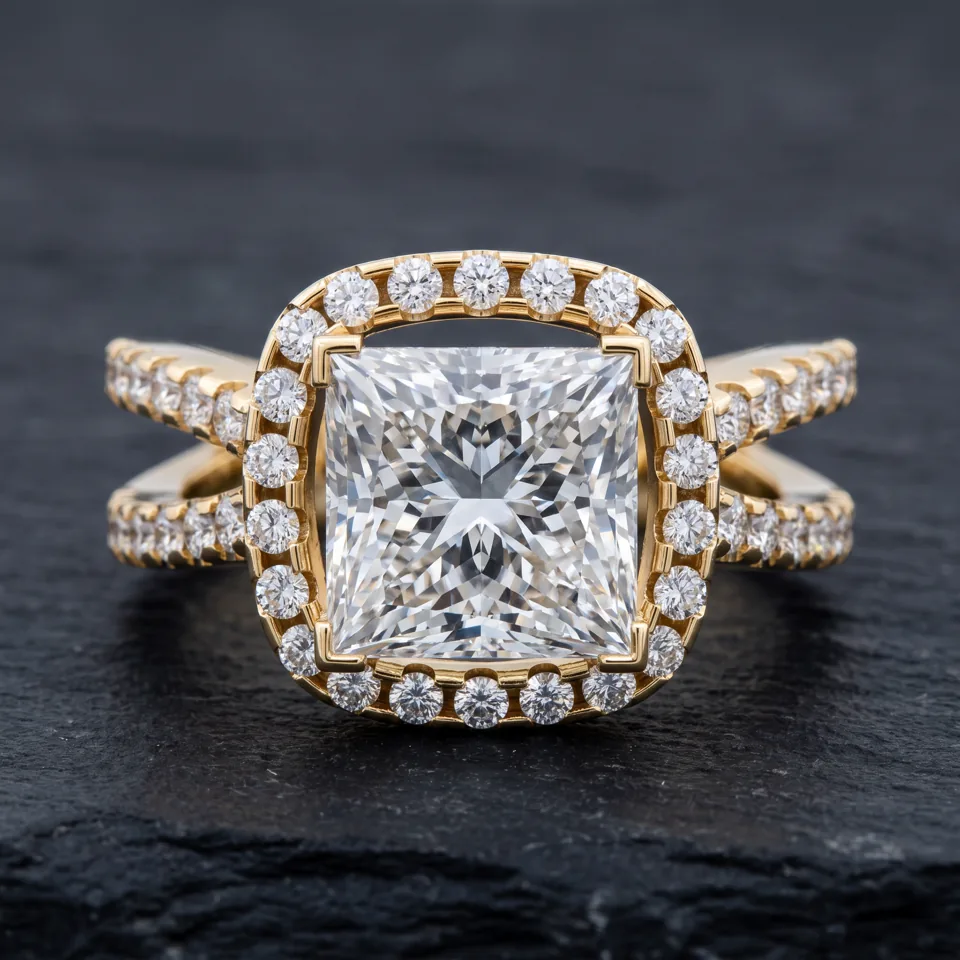 Princess Cut Split Shank Engagement Rings