Complimentary insured shipping, both waysEngagement ring diamonds certified by IGI or GIAGrown by light. Conflict-free by natureComplimentary insured shipping, both ways
Engagement RingsWedding BandsEarrings

NecklaceBraceletsAbout
A marquise ring sets a long, boat-shaped center with two pointed tips, a shape that slims the finger and reads bigger than its carat weight suggests. These are settings, so the band is chosen on this page and the center diamond in the following step. Our guide to the bow-tie effect explains what to look for in a marquise.
Settle the band style first, then the metal, then a center that fits your budget.
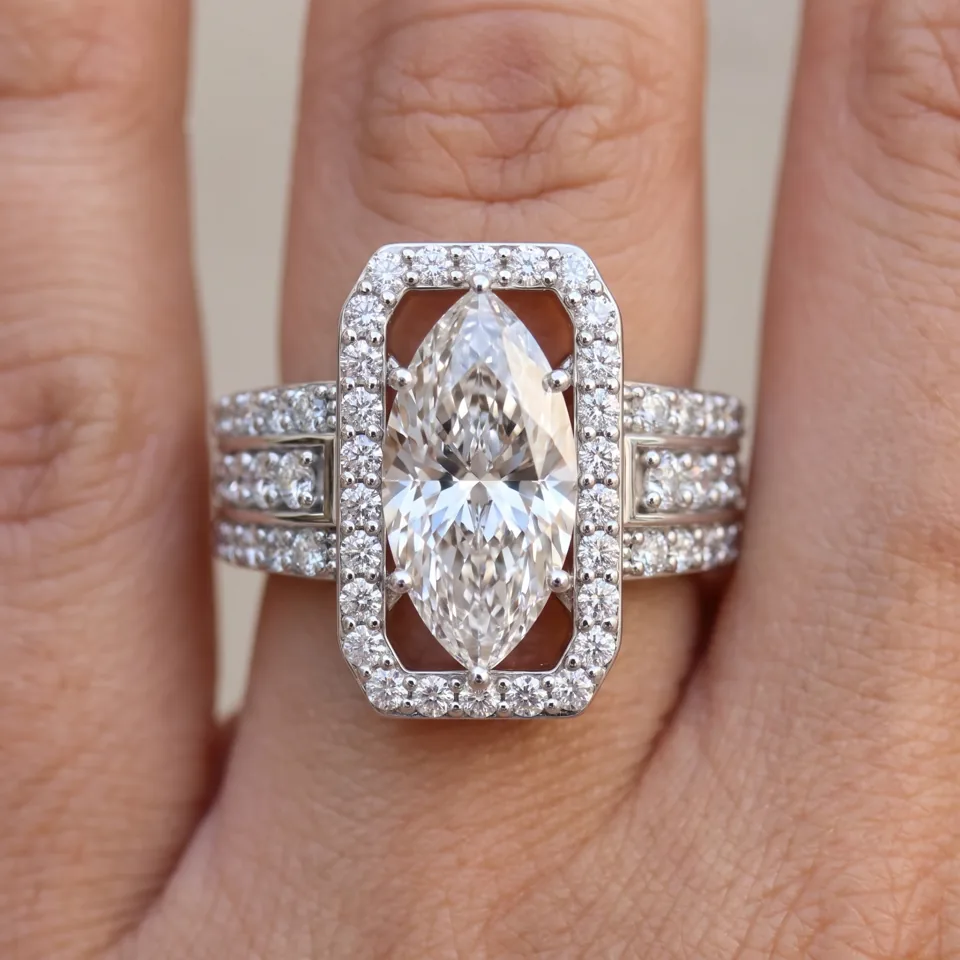 Marquise Vintage Engagement Rings
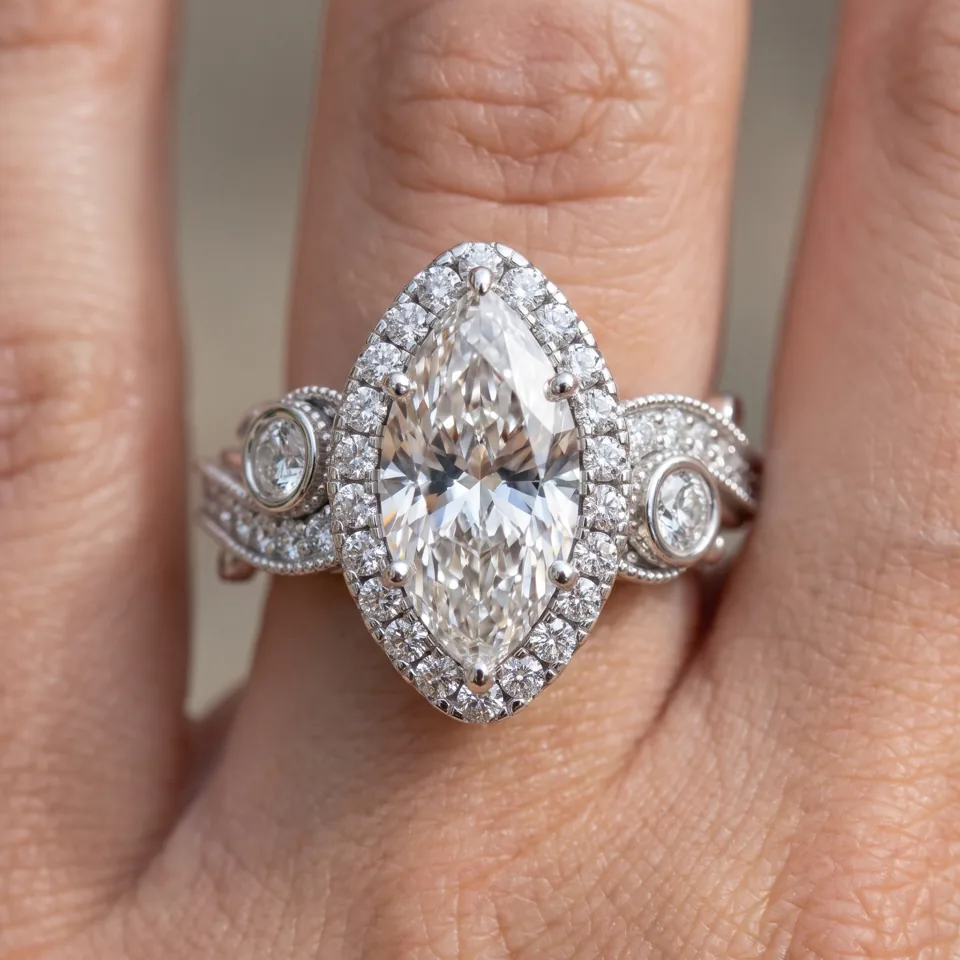 Marquise Halo Engagement Rings
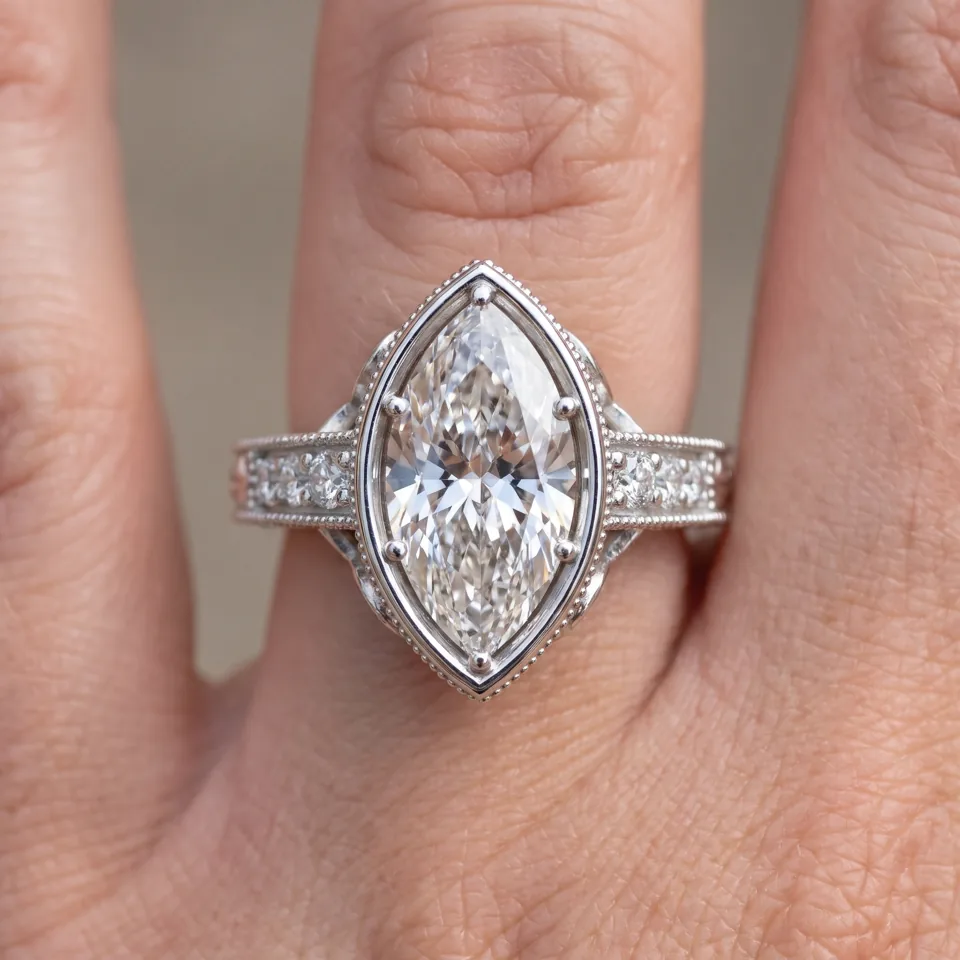 Marquise Bezel Rings
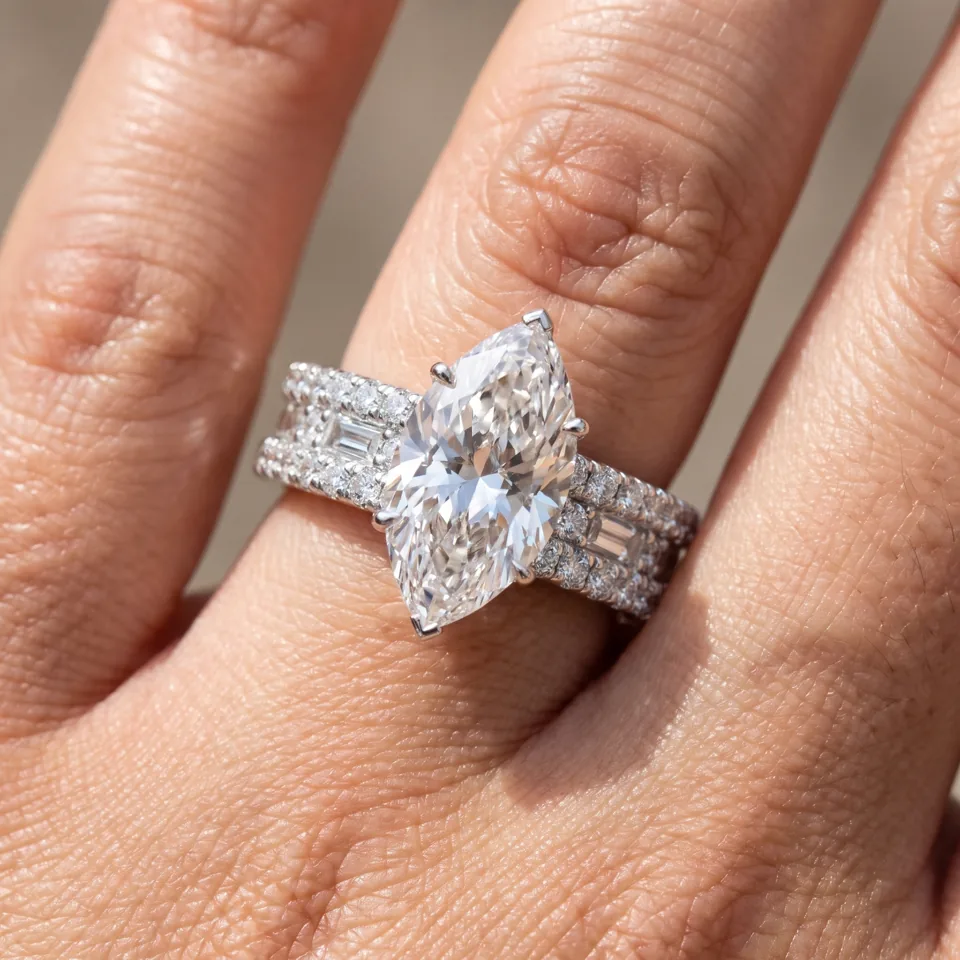 Marquise Engagement Rings with Baguette Side Stones
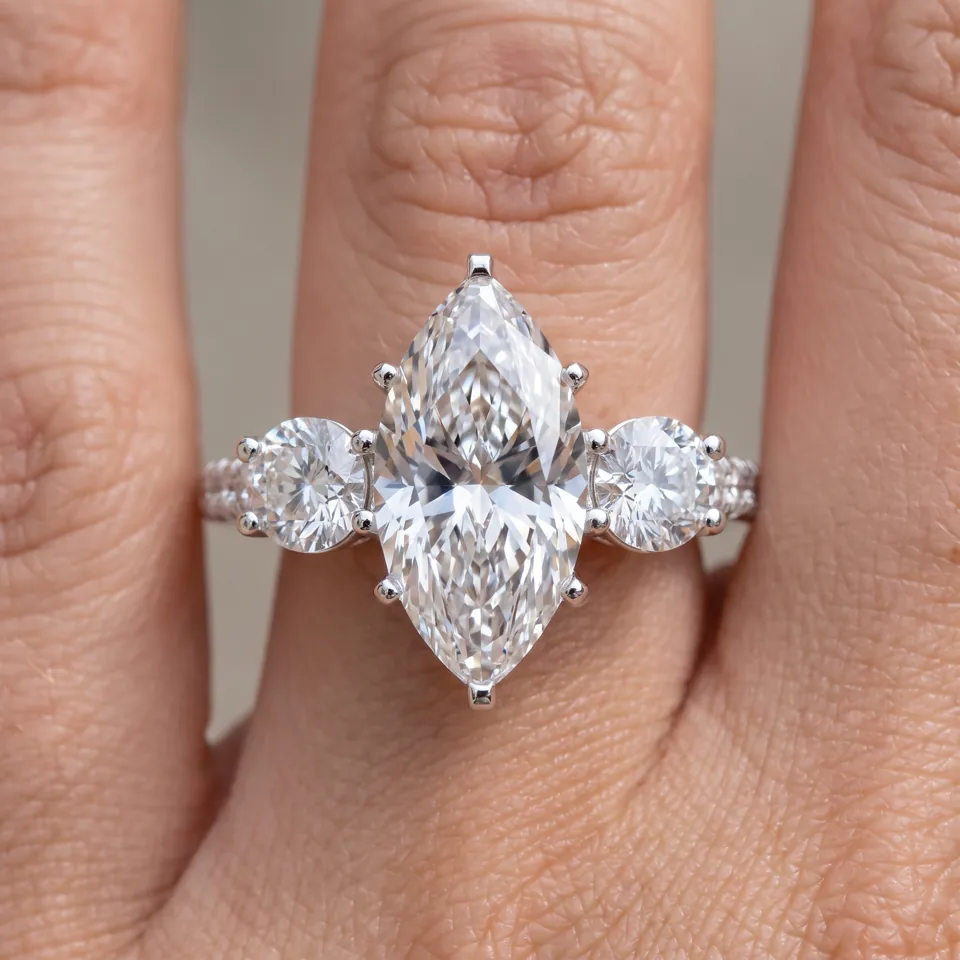 Marquise Three Stone Engagement Rings
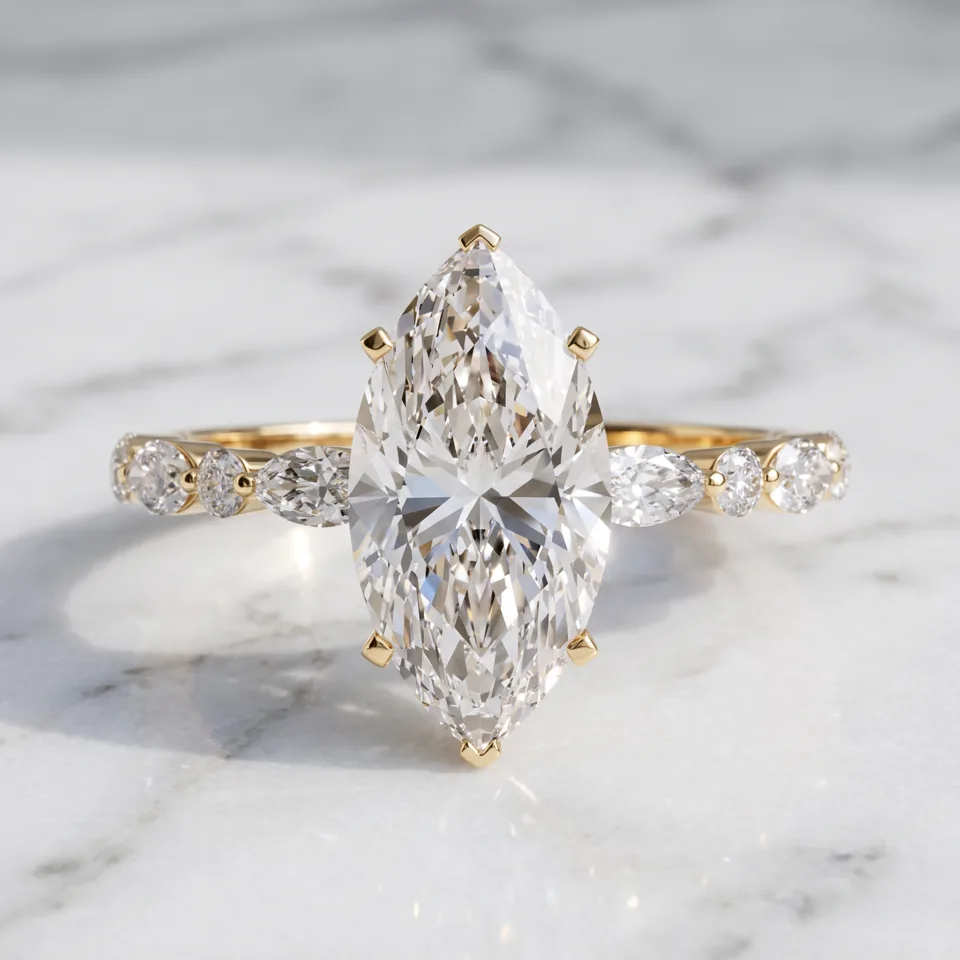 Marquise Side Stone Engagement Rings
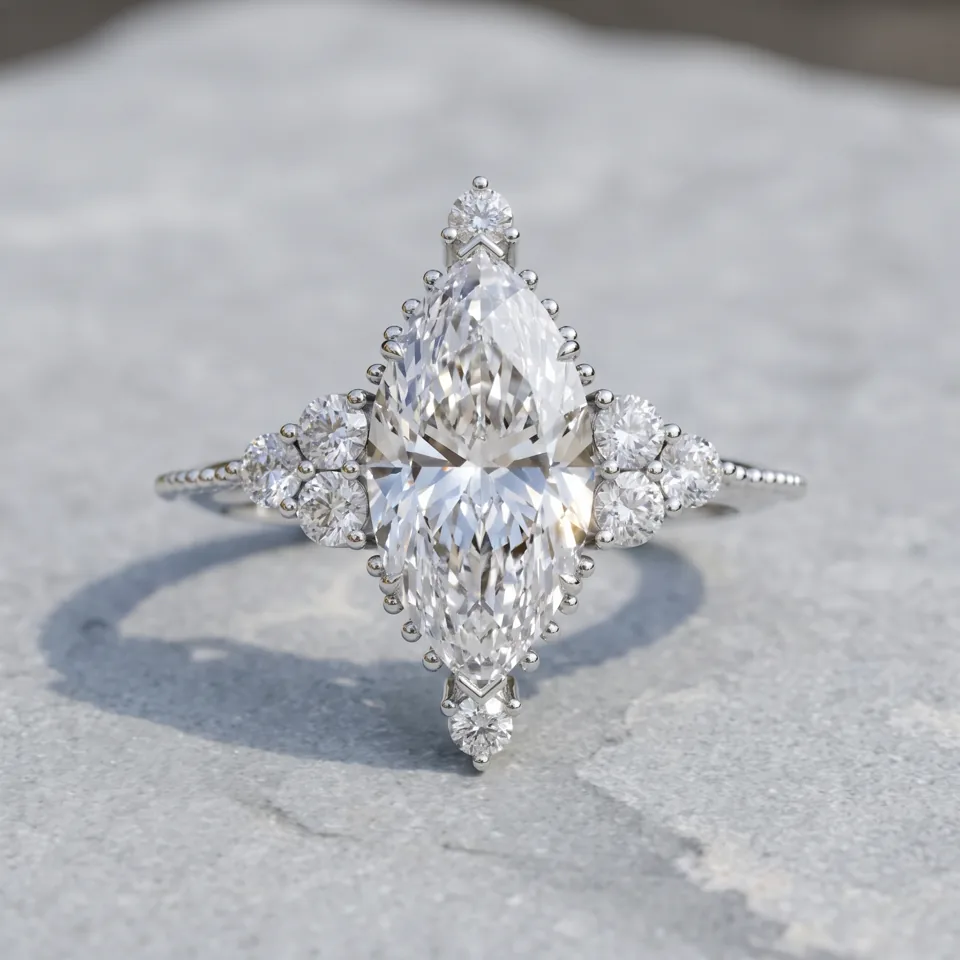 Marquise Cluster Rings
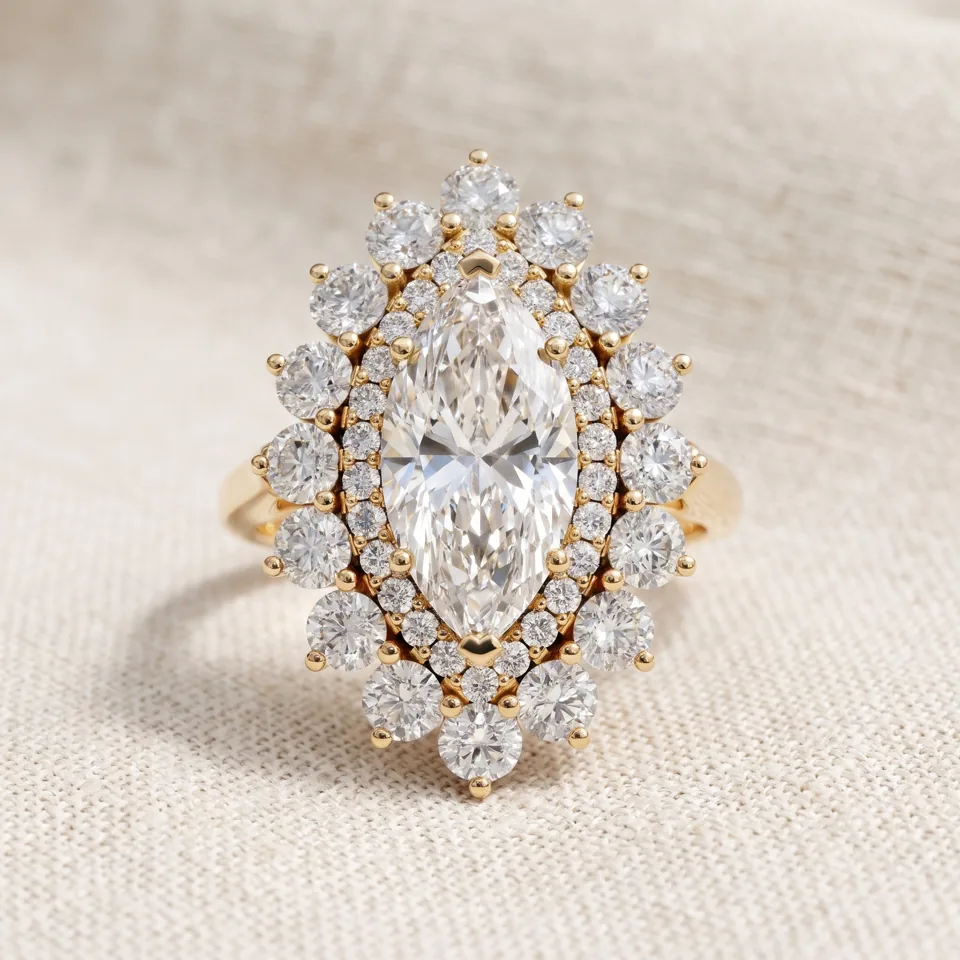 Marquise Floral Rings
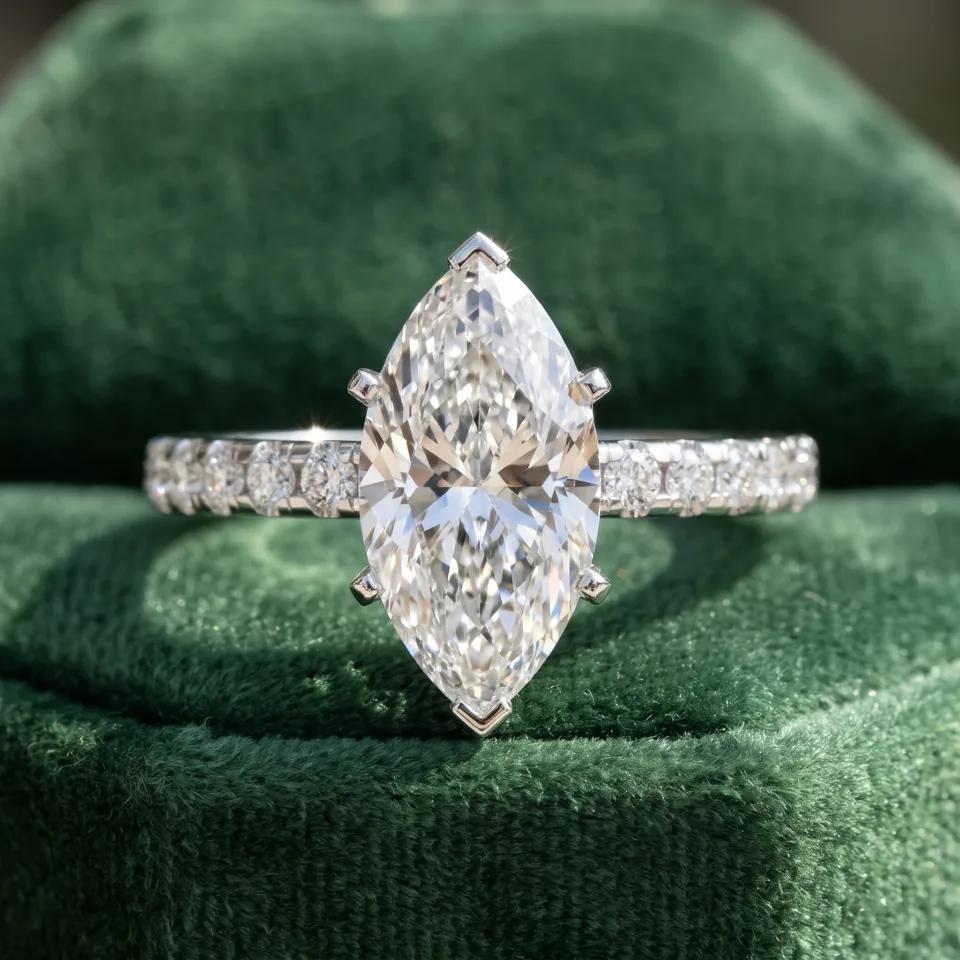 Marquise Hidden Halo Engagement Rings
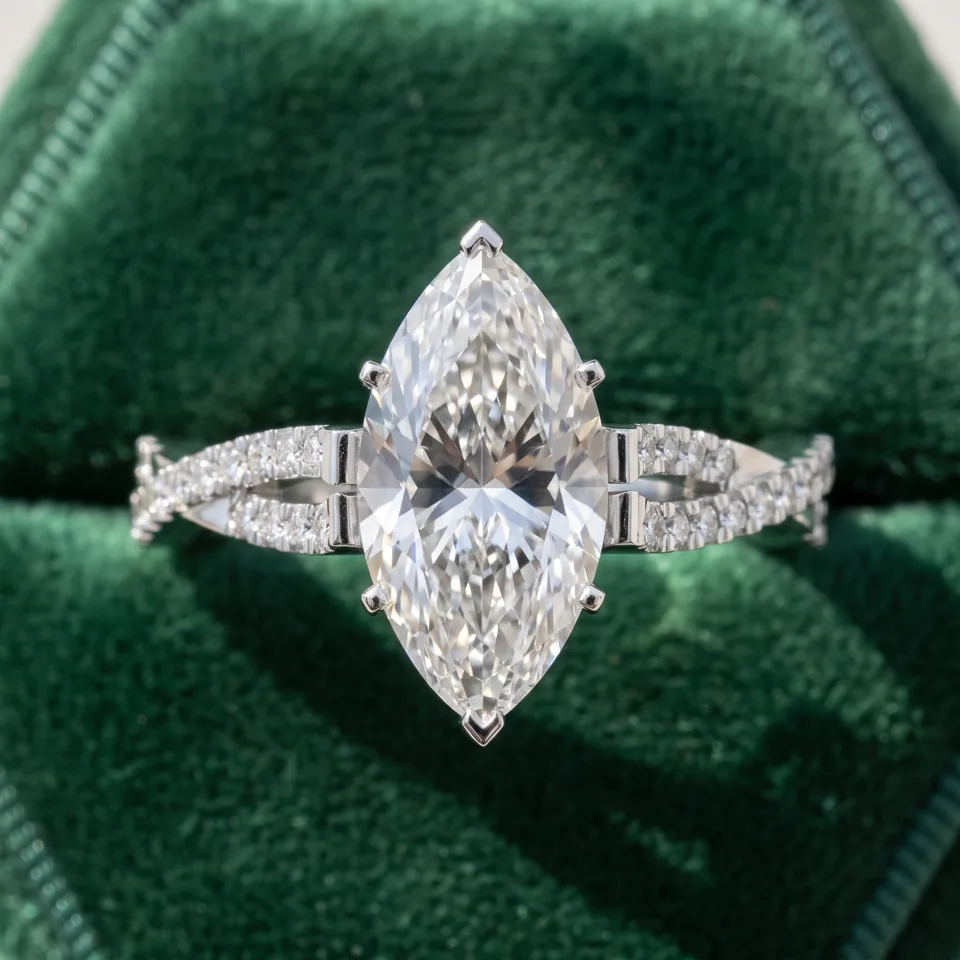 Marquise Split Shank Engagement Rings
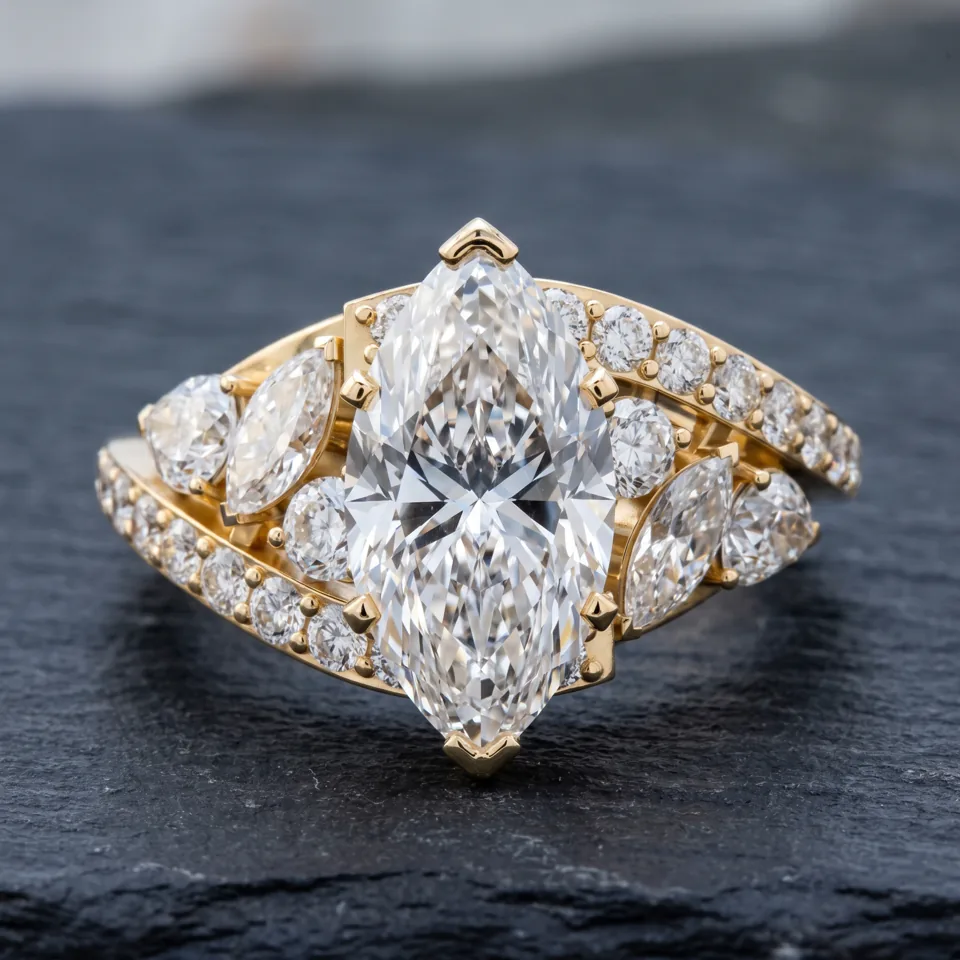 Marquise Bypass Rings
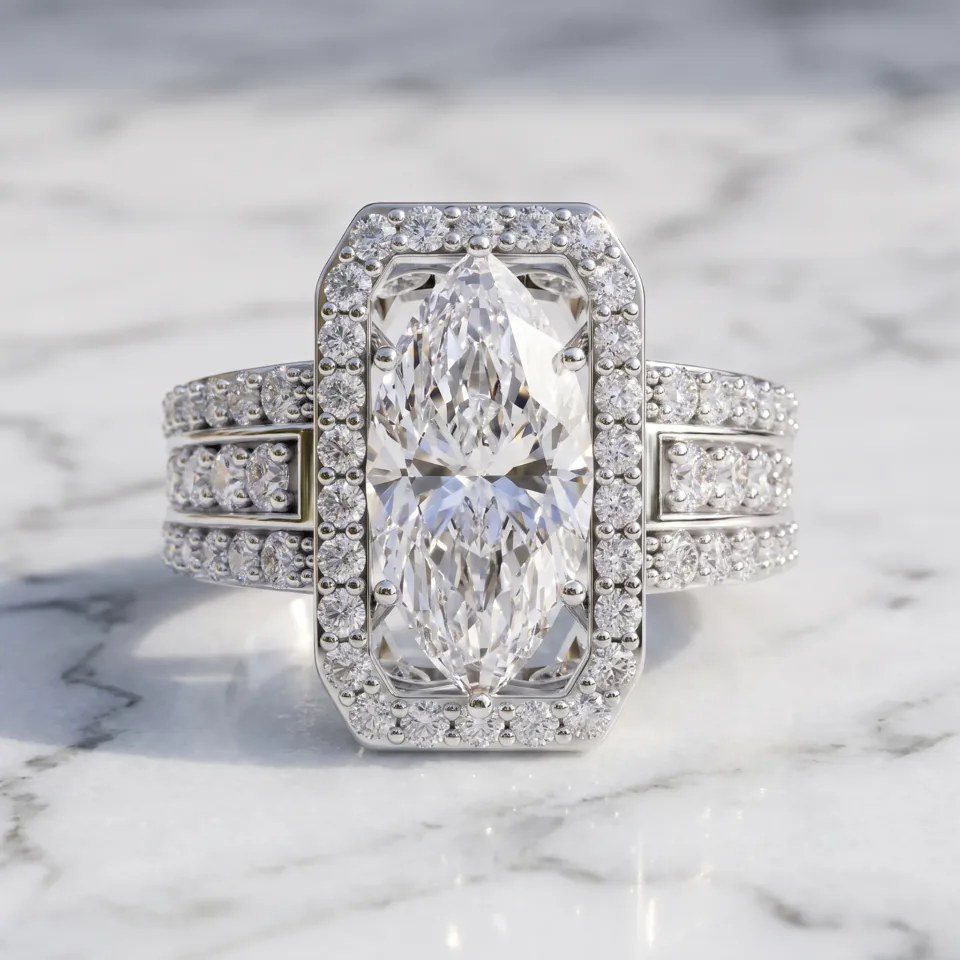 Marquise Filigree Rings
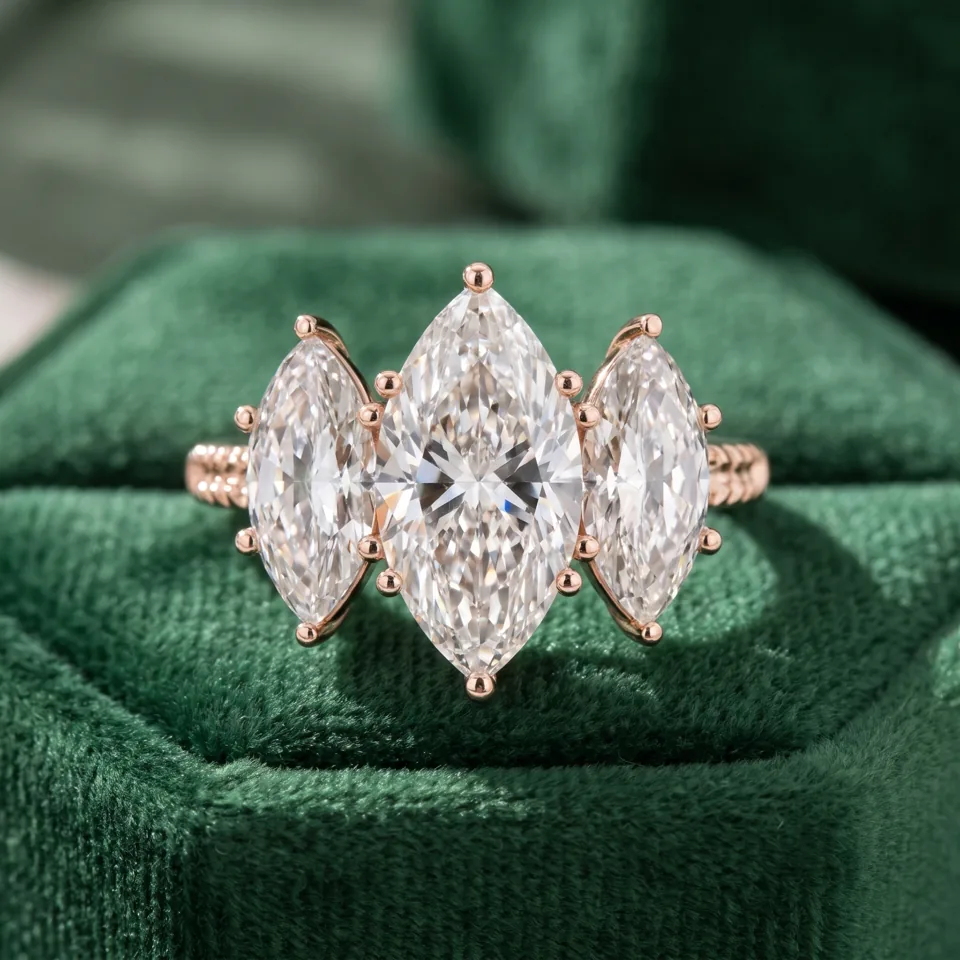 2 Carat Marquise Lab-Grown Diamond Rings
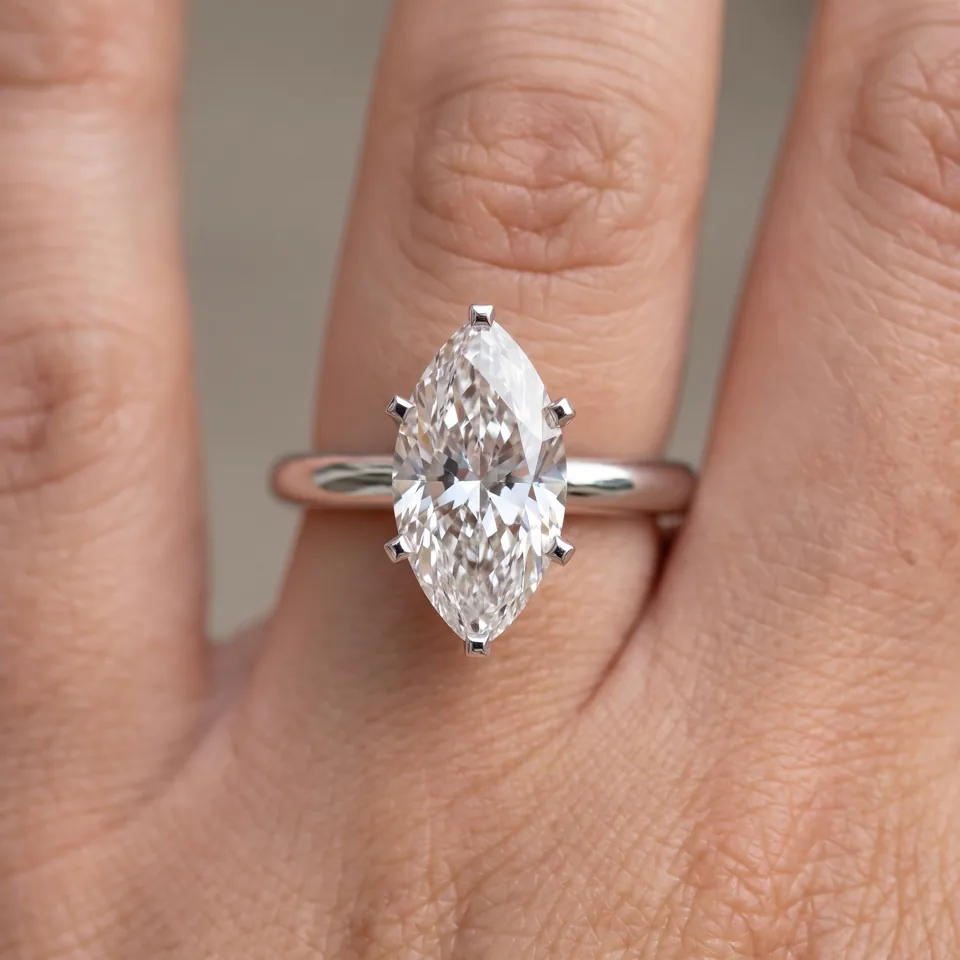 3 Carat Marquise Lab-Grown Diamond Rings
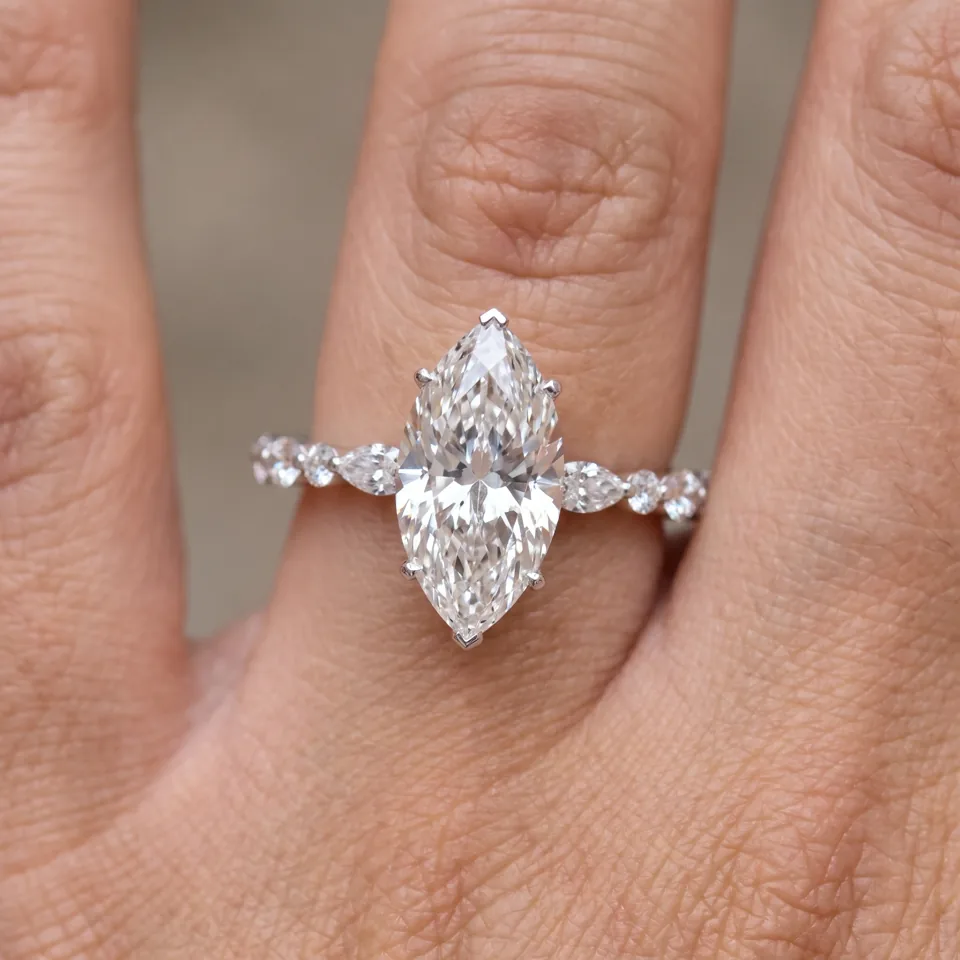 4 Carat Marquise Lab-Grown Diamond Rings
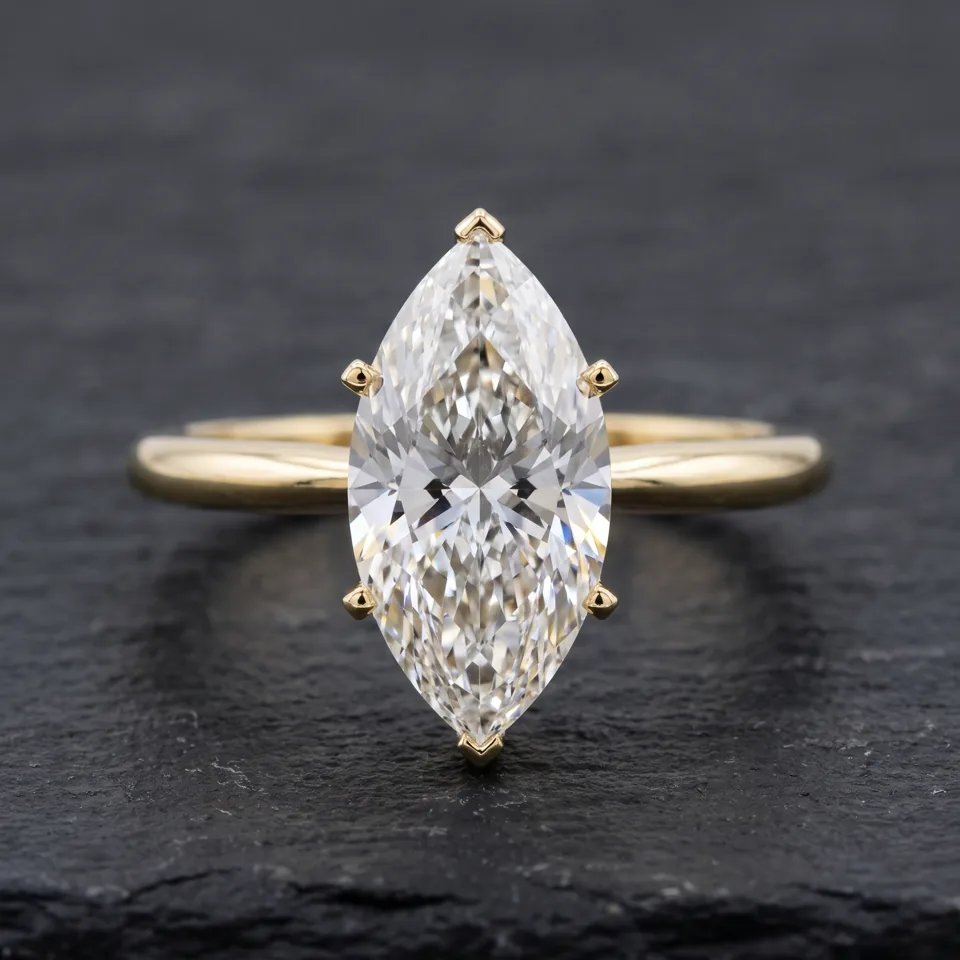 1 Carat Marquise Lab-Grown Diamond Rings
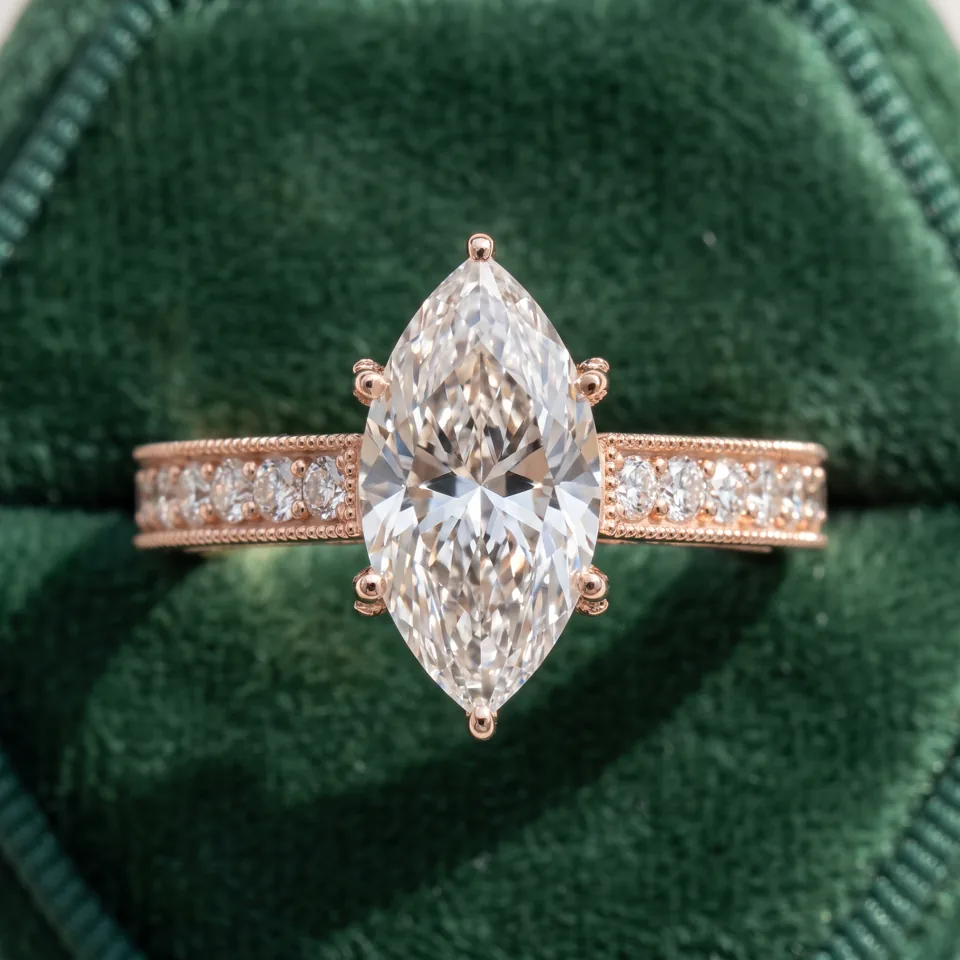 Rose Gold Marquise Engagement Rings
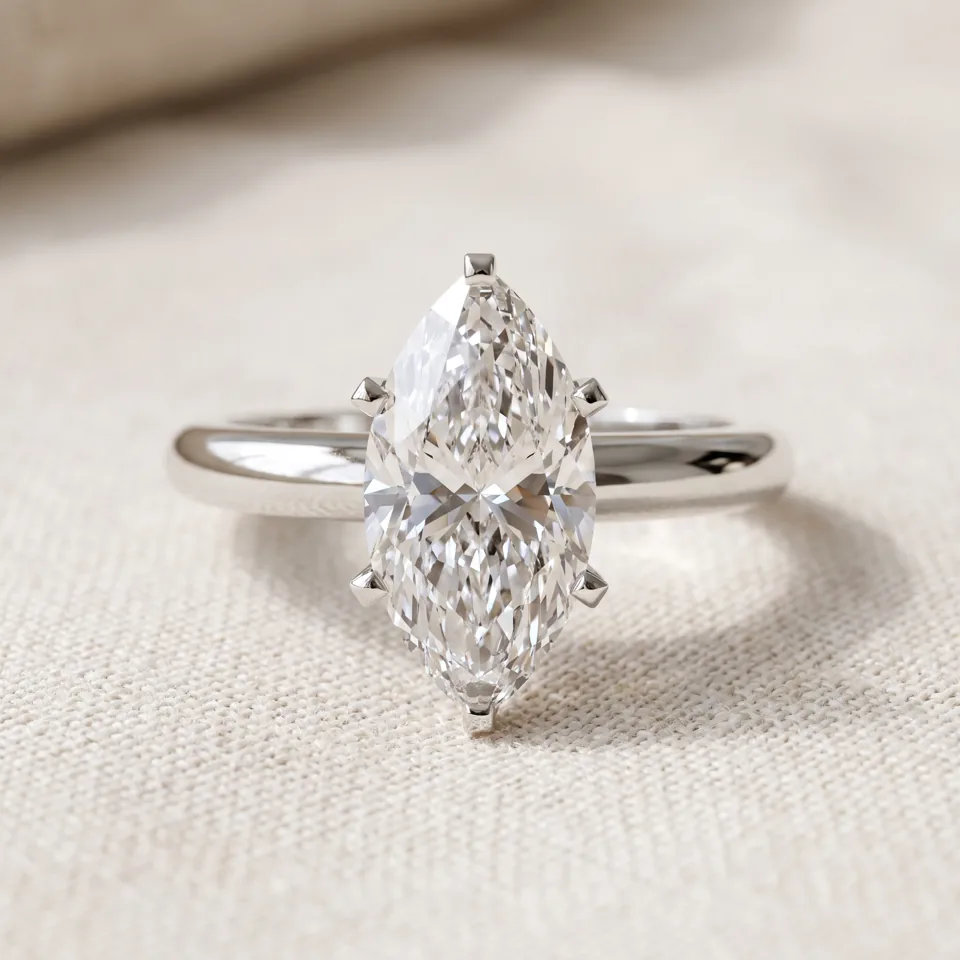 2.5 Carat Marquise Lab-Grown Diamond Rings
The marquise outline is already striking, so a plain or pavé solitaire band lets it speak for itself. Solitaires and pavé bands make up a large share of this collection. A halo frames the center in laboratory-grown diamond accents and adds width on the finger. Side stone and three stone designs, including some with smaller marquise or pear accents, stretch the line of sparkle across the hand.
The tips are the thinnest part of a marquise and the spots most likely to chip after a hard knock. Look for V-shaped prongs that cap each point, or a full bezel rim around the outline. A few designs here use a bezel center, a good fit if you work with your hands. Have the prongs checked once a year either way.
Most marquise rings set the stone pointing along the finger, which lengthens the hand. For something softer, many designs bring in milgrain beading, filigree or flower motifs that suit the shape's antique roots. Split shank and twisted bands give the center more lift and a fuller look from the side.
Gold in 10K, 14K or 18K comes in yellow, white and rose, and platinum is offered too, as is Silvadium, a tarnish-resistant sterling silver. On most designs you can also request a fancy-color center, with blue, green, pink and yellow on the list, and black possible on some. A white metal keeps a colorless marquise icy; yellow and rose gold deepen a pink or yellow stone.
We build your marquise ring in 10–15 days and cover insured shipping in both directions. The center diamond ships with an IGI or GIA report. Resizing is free once, any time in the first 60 days after delivery, and you have 30 days to return the ring if it is unworn and has its certificate.
It is less common than round or oval, mainly because its pointed tips need extra protection and some people find the shape bold. Its popularity has also moved in waves, peaking in earlier decades. That makes it a distinctive choice today. Settings with V-prongs or a bezel deal with the tip concern, and a marquise shows more face-up size than most shapes at an equal weight. Our diamond shapes guide measures it against the others.
No. The marquise has a long history, but it has come back in modern designs, especially in slim solitaires, vintage-inspired rings and two-stone toi et moi pairings. How current it looks depends mostly on the setting. A thin pavé band or a clean solitaire reads modern, while milgrain and filigree lean classic. This collection covers both directions.
Yes. A marquise stretches its weight along a long outline and appears generous, leading the eye down the length of the finger. The main thing to plan for is the two points, which should be protected by V-prongs or a bezel. Choose a center with good symmetry so both halves match, and expect a little more care than with a round stone.
They can, a little more than rounder shapes, because the pointed ends and their prongs stick out. A low setting, a bezel or smooth V-prongs reduce snagging on knits and hair. If you wear gloves or do hands-on work often, a solitaire set close to the band or a bezel design from this collection is the most practical pick.
It depends on carat weight, color, clarity and how well the stone is cut. Carat for carat, a marquise is usually priced below a round of matching quality, because cutting it wastes less rough. Lab-grown diamonds cost far less than mined diamonds of the same size. At Whitemoon, settings start under $150, and the center's price is added once you pick it.


