Complimentary insured shipping, both waysEngagement ring diamonds certified by IGI or GIAGrown by light. Conflict-free by natureComplimentary insured shipping, both ways
Engagement RingsWedding BandsEarrings

NecklaceBraceletsAbout
An emerald cut infinity ring combines a straight-edged, step-cut center with a band that curves and crosses beneath it. The contrast between the geometric stone and the flowing shank is what makes these rings stand out.
Each engagement ring setting here uses a twisting band. Choose your twist and metal; the center diamond is the stone you pick in the next step.
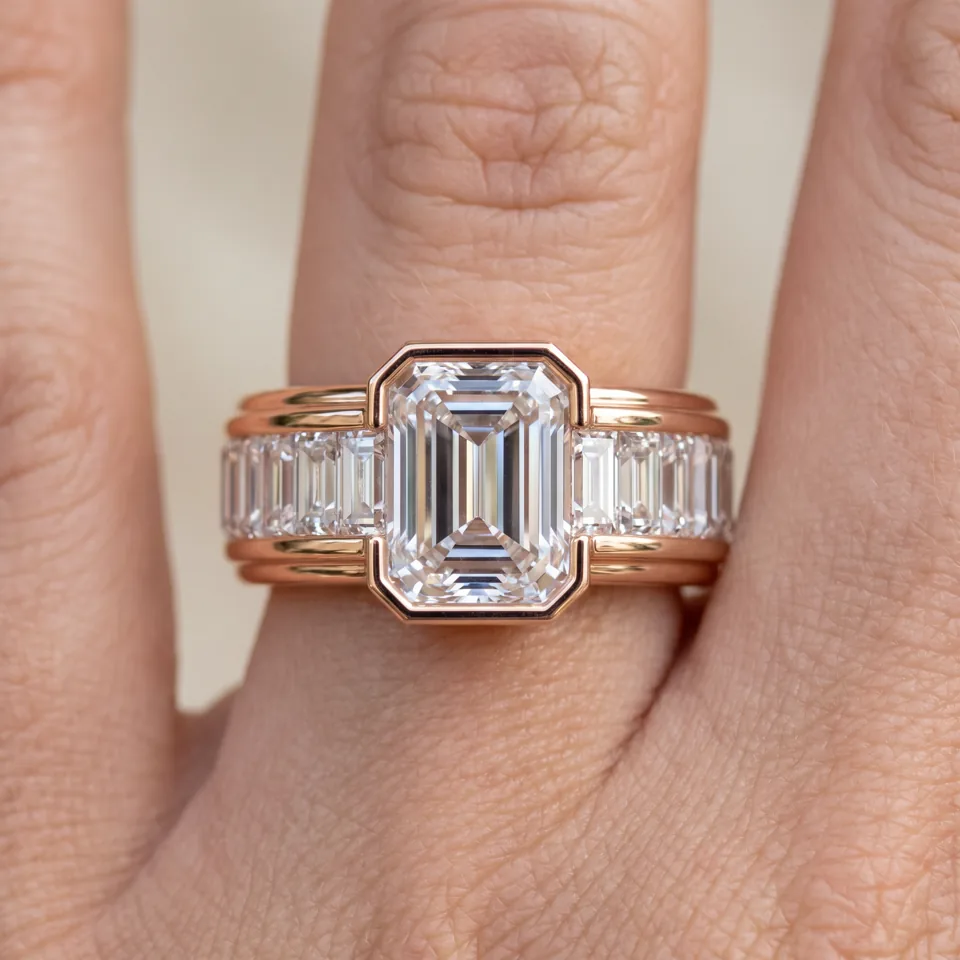 Emerald Cut Bezel Engagement Rings
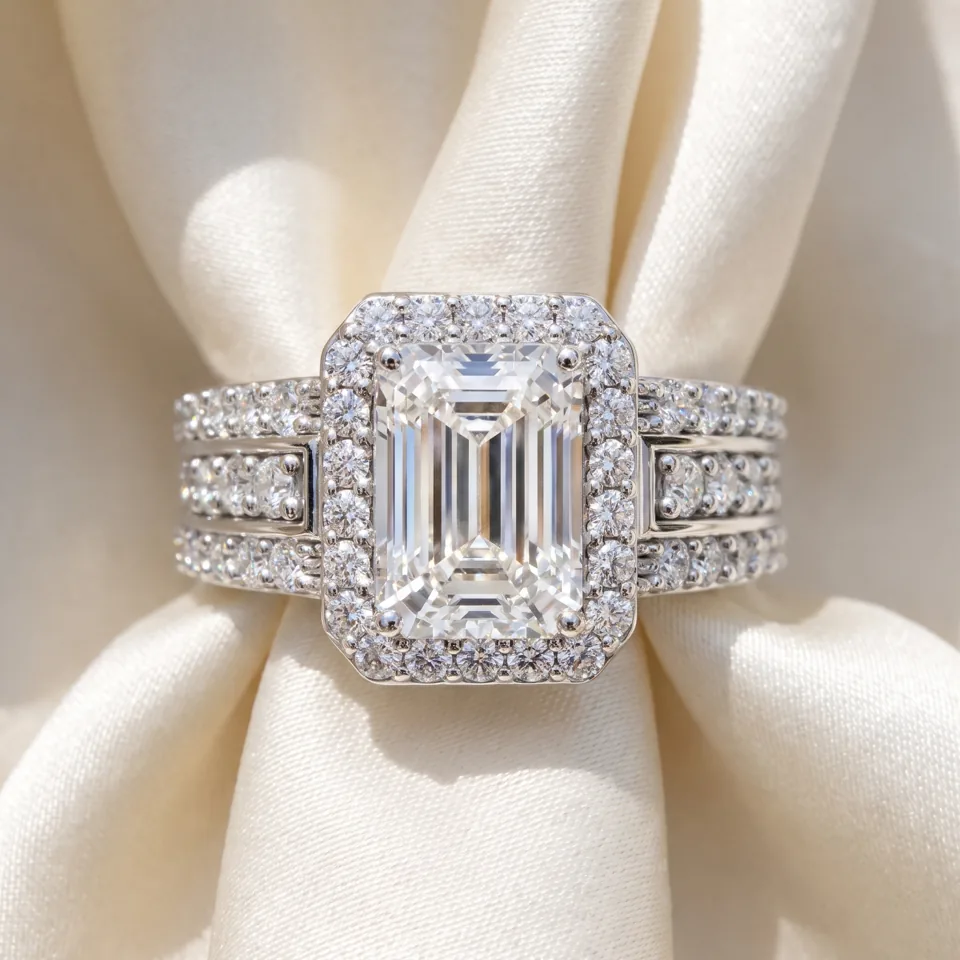 Antique Emerald Cut Engagement Rings
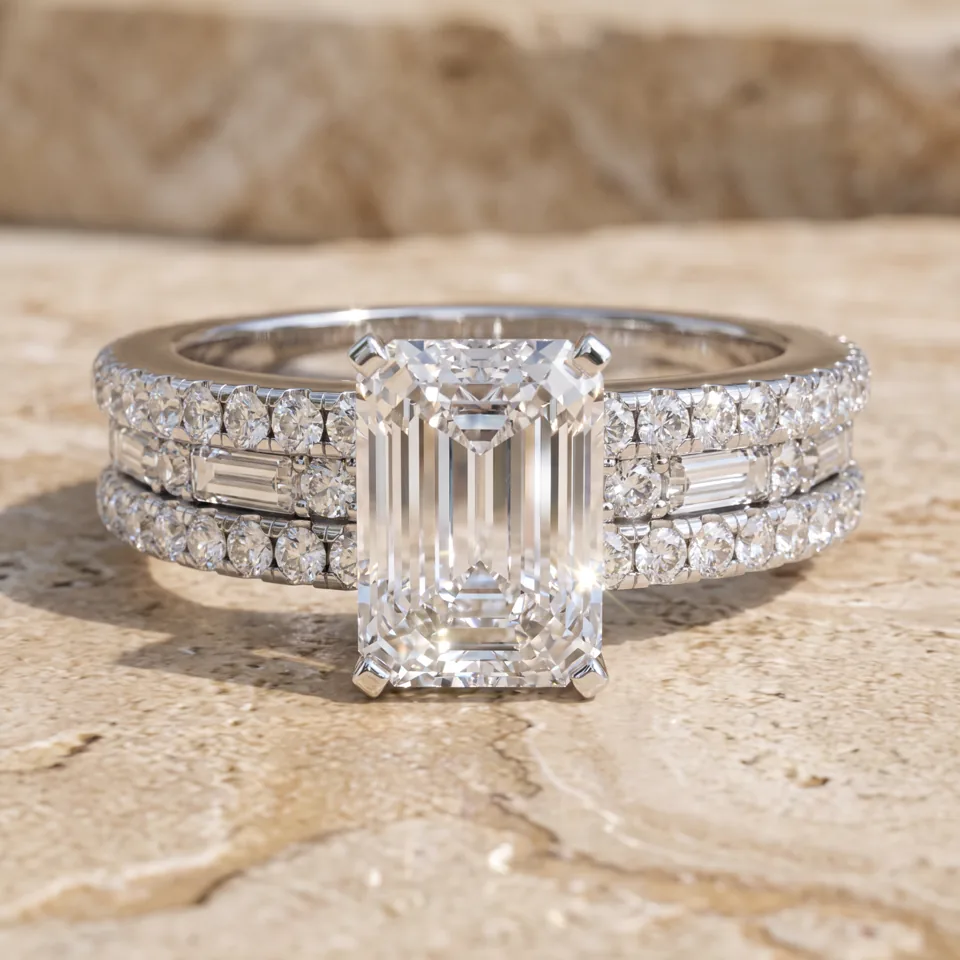 Emerald Cut Diamond Rings with Baguettes
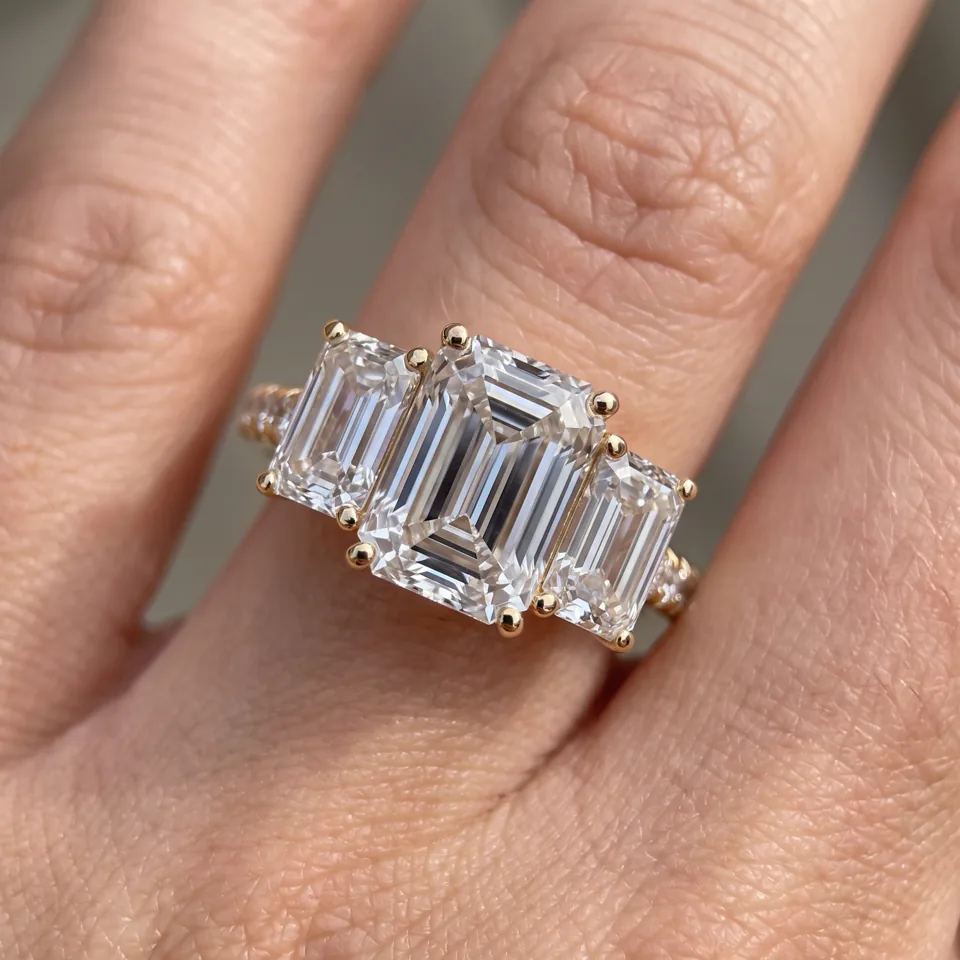 Emerald Cut Three Stone Engagement Rings
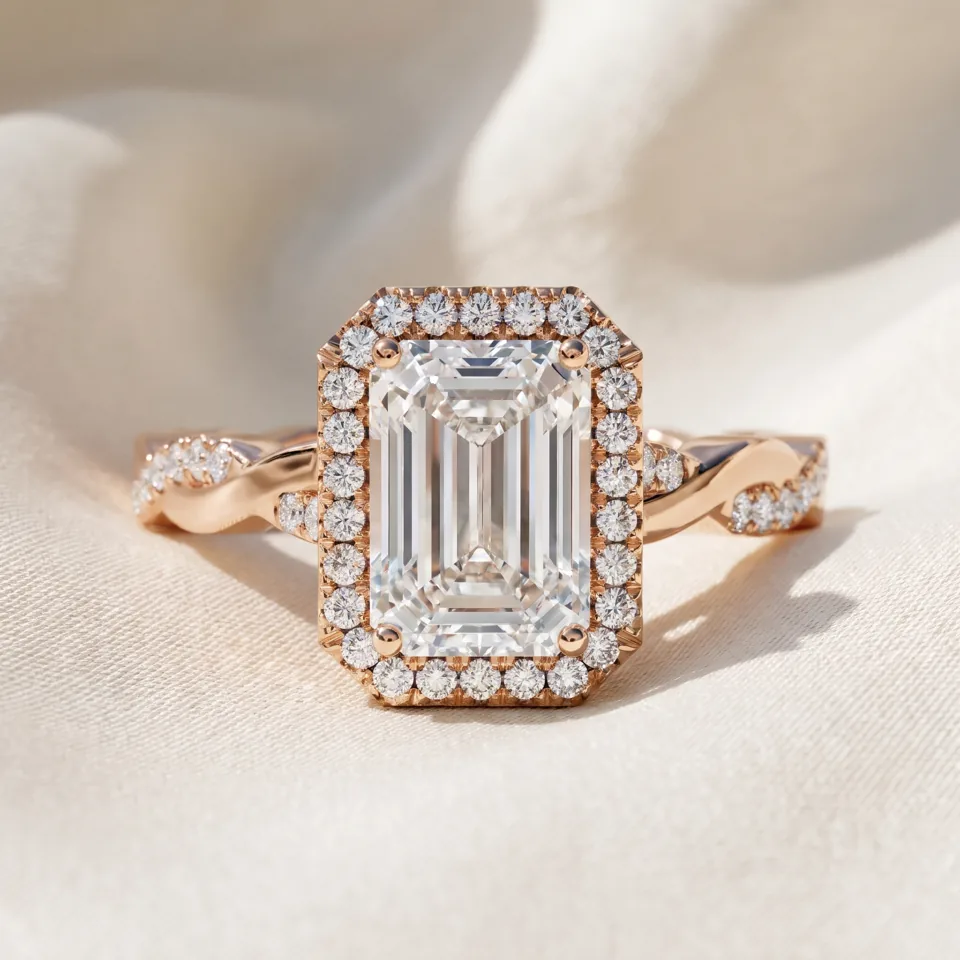 Emerald Cut Halo Engagement Rings
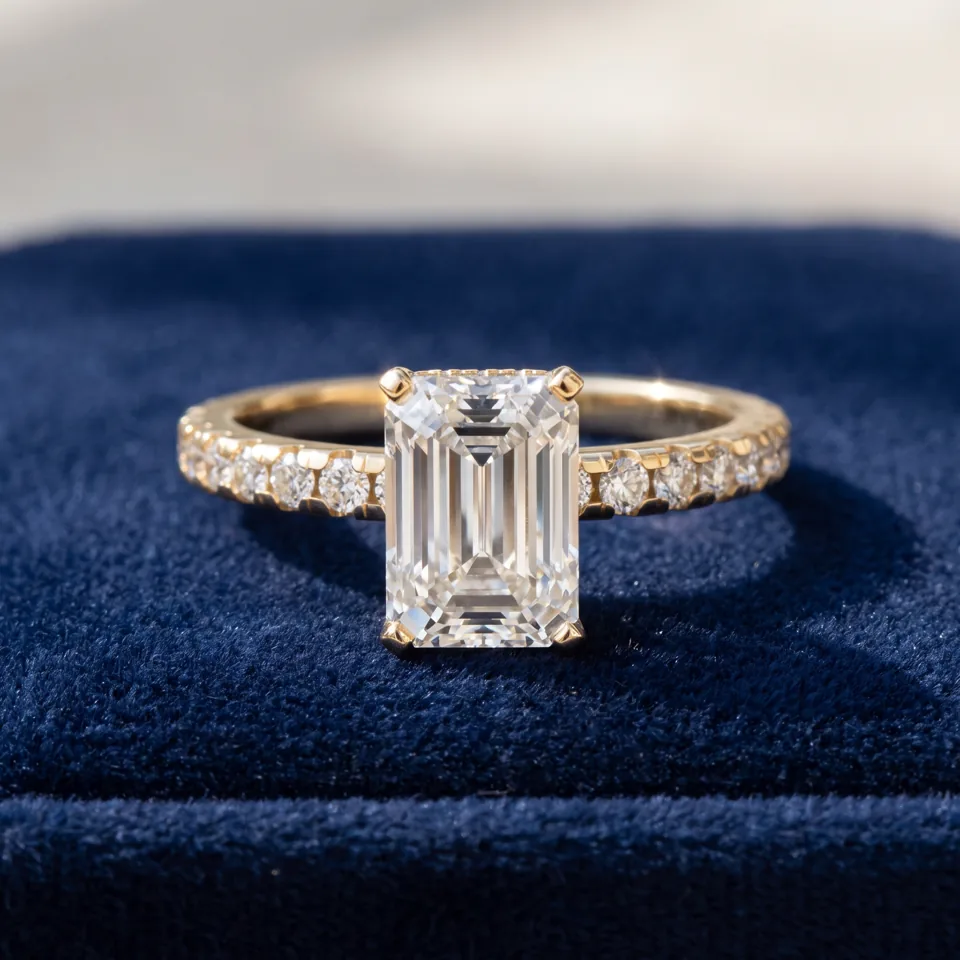 Emerald Cut Hidden Halo Engagement Rings
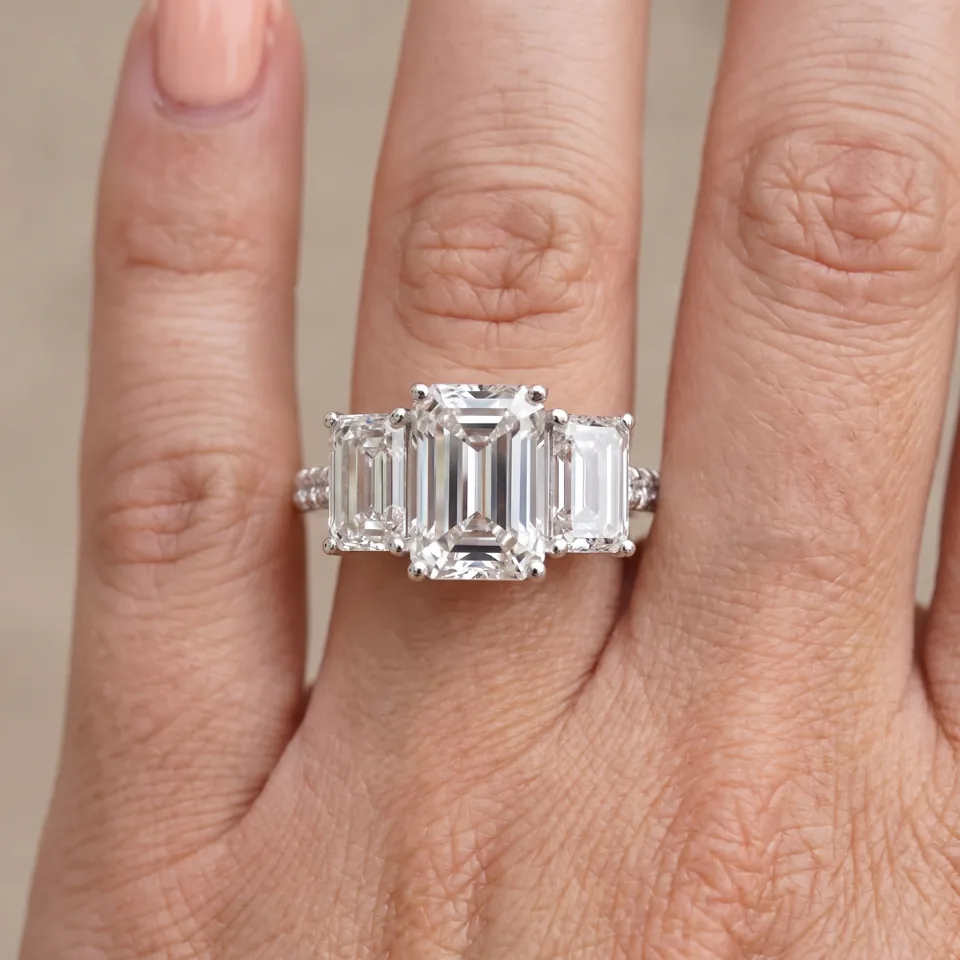 Emerald Cut Engagement Rings with Side Stones
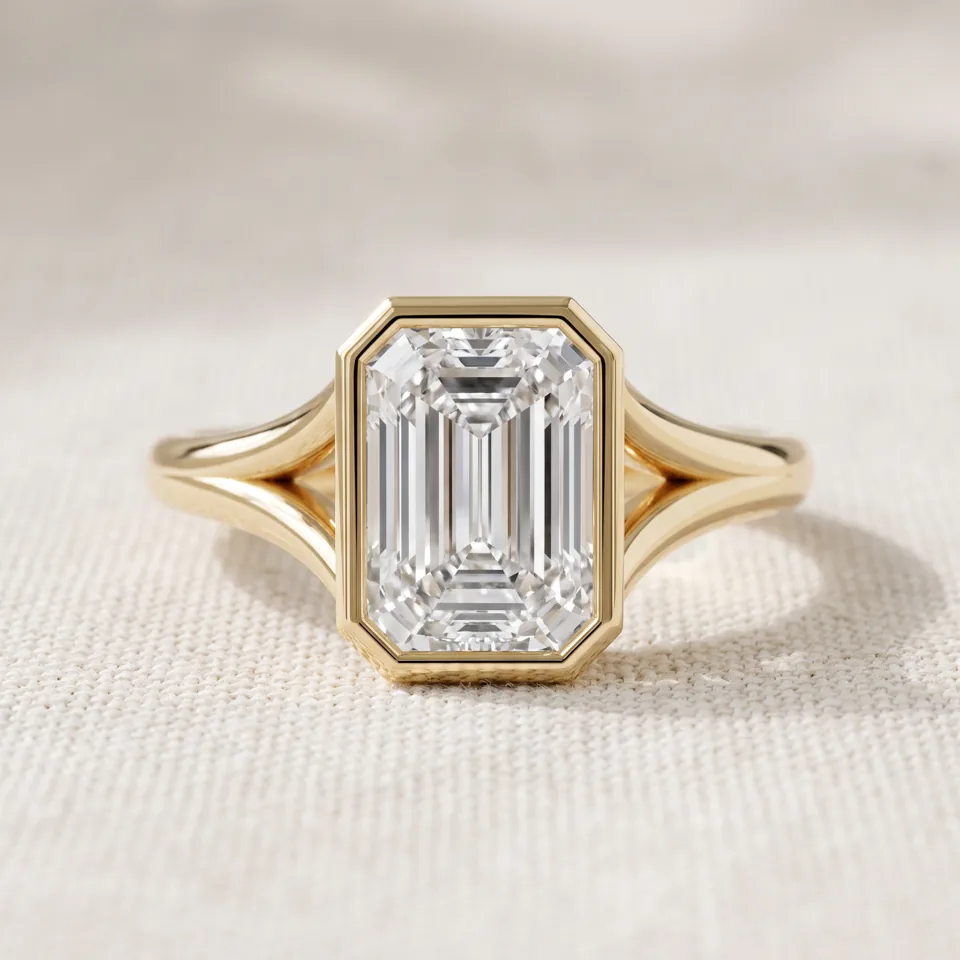 Emerald Cut Split Shank Engagement Rings
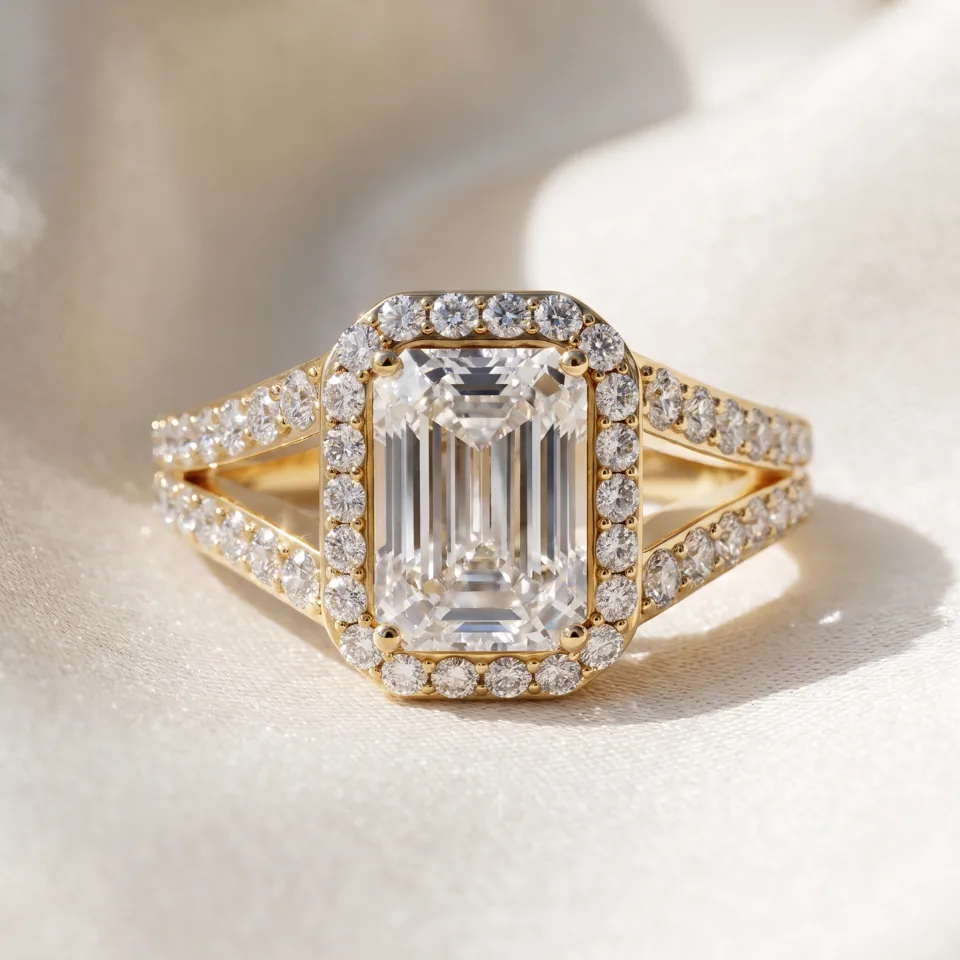 Emerald Cut Pave Engagement Rings
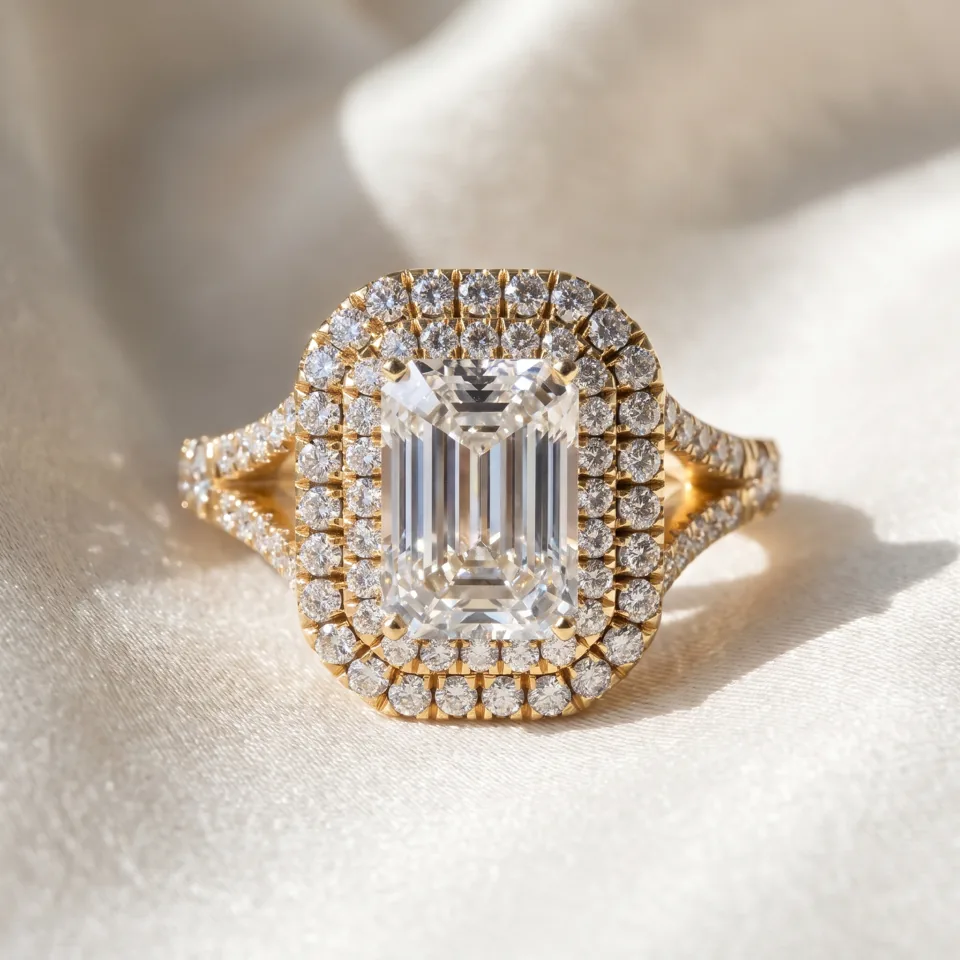 Emerald Cut Double Halo Rings
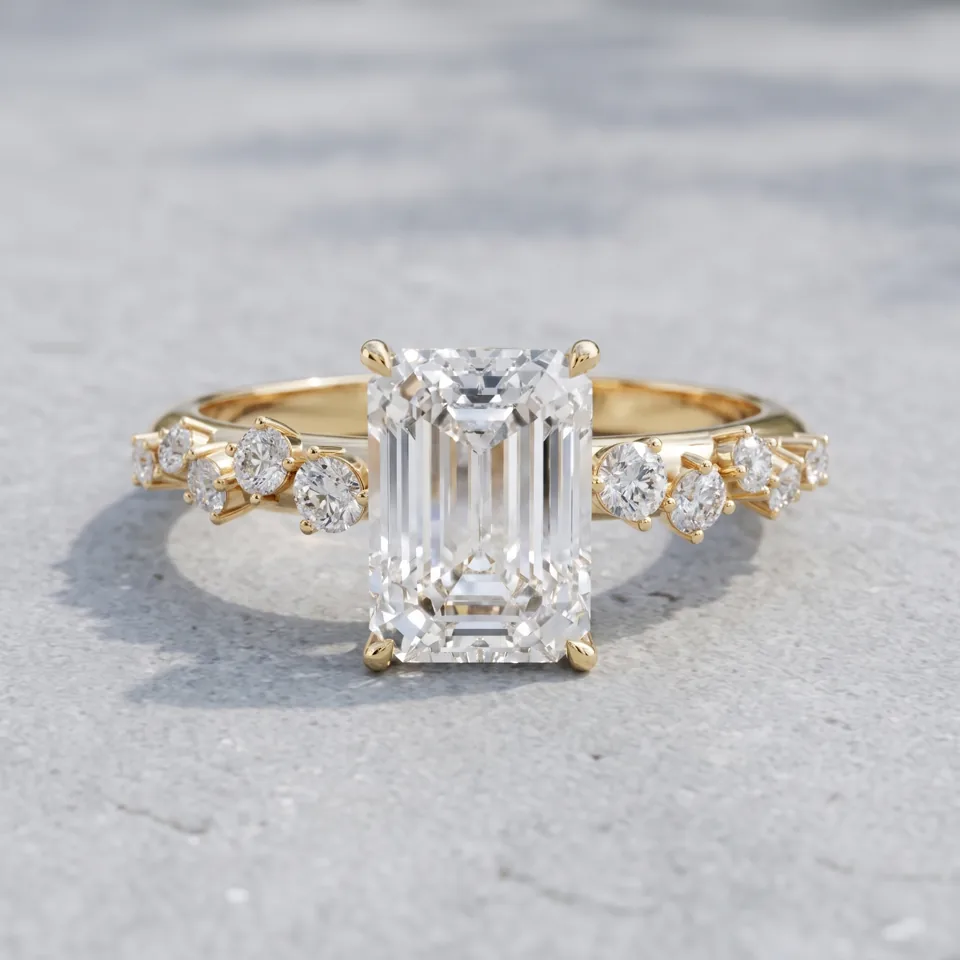 Emerald Cut Cluster Engagement Rings
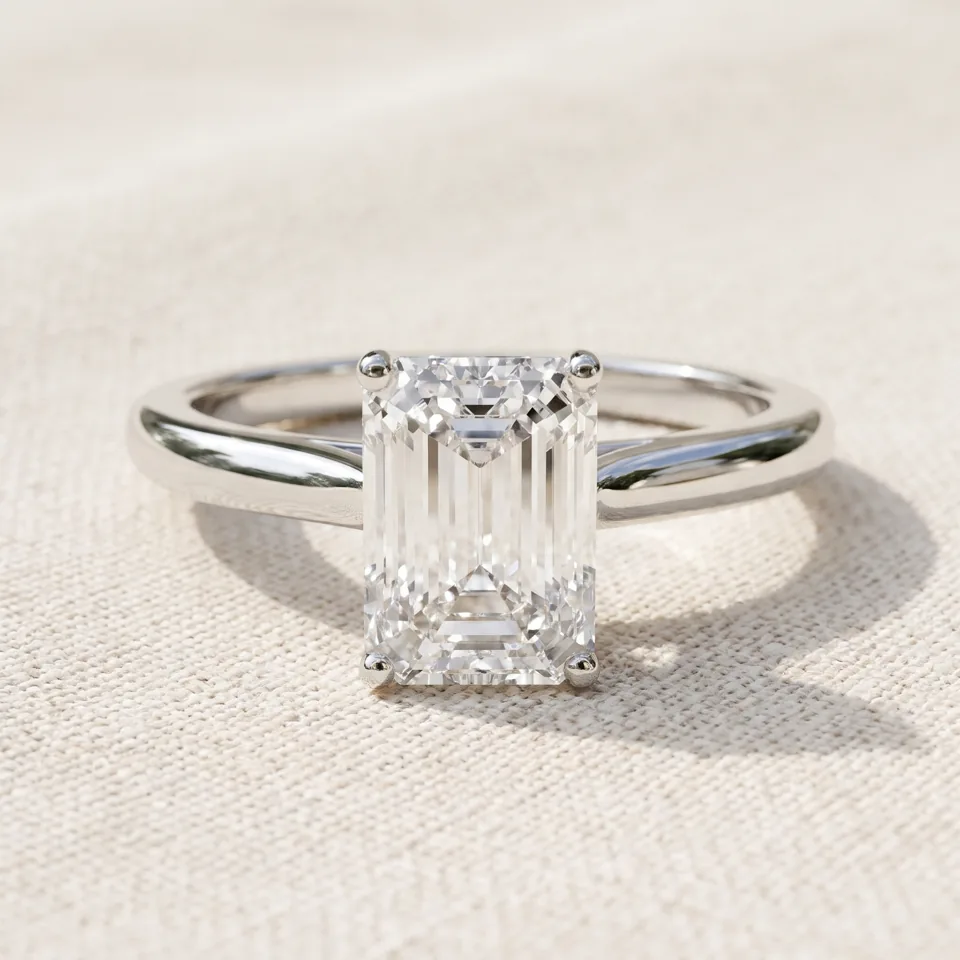 Emerald Cut Cathedral Engagement Rings
A long emerald cut points along the finger, while the twist moves across it. On a solitaire design the center's mirror-like step facets stay crisp above the curves. The halo design adds brightness around the rectangle and suits a smaller center. If you like a cleaner look, choose a crossover with accents rather than full pavé.
A twisted shank leaves an uneven edge, so a straight band beside it may show a small gap. A thin plain band is the simplest partner; a curved band fills the space. Compare photos of each pairing before you decide.
You can order white, yellow or rose gold (10K, 14K or 18K), platinum, or Silvadium, a tarnish-resistant sterling silver. Every design accepts a yellow, pink, blue or green center, and one takes black. Settings start from about $1,150, and most come to about $1,150 to $1,250 with their lab-grown diamond accents.
We craft your ring after you order, in 10–15 days, and the center diamond arrives with an IGI or GIA report. Free insured shipping both ways, 30 days for returns and a free resize once within 60 days of delivery are included.


