Complimentary insured shipping, both waysEngagement ring diamonds certified by IGI or GIAGrown by light. Conflict-free by natureComplimentary insured shipping, both ways
Engagement RingsWedding BandsEarrings
NecklaceBraceletsAbout
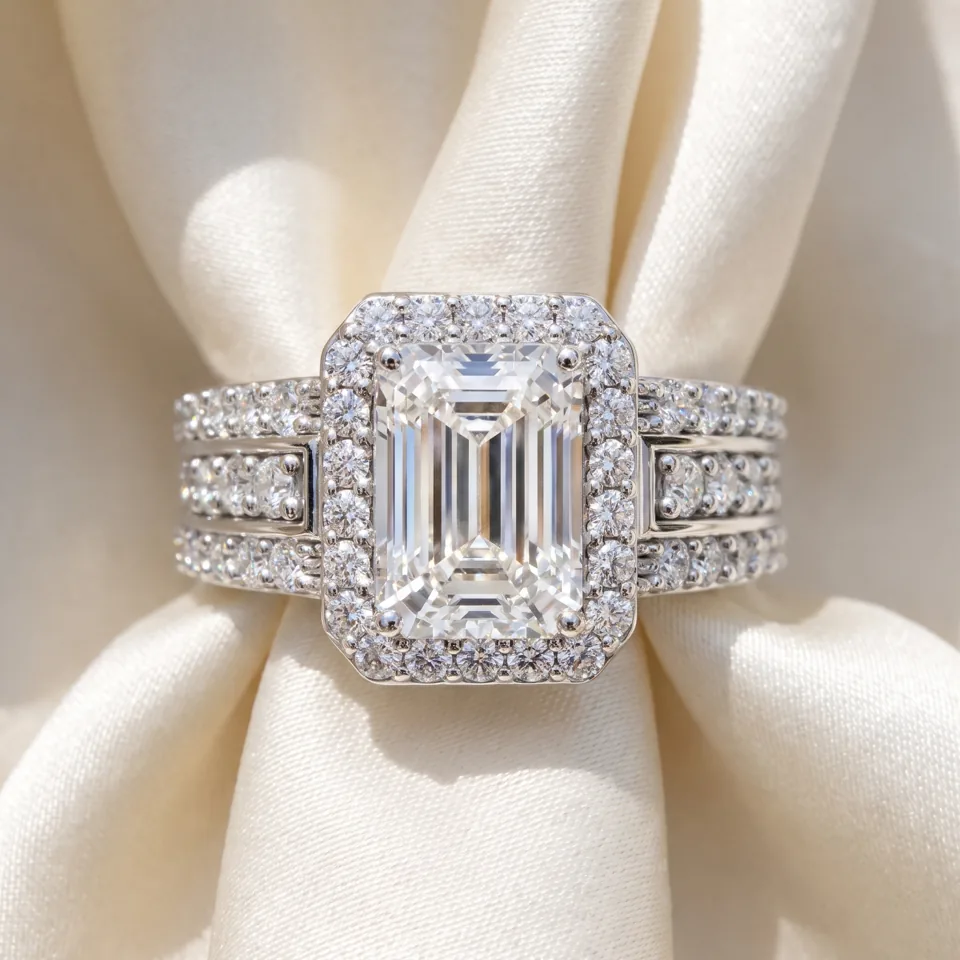
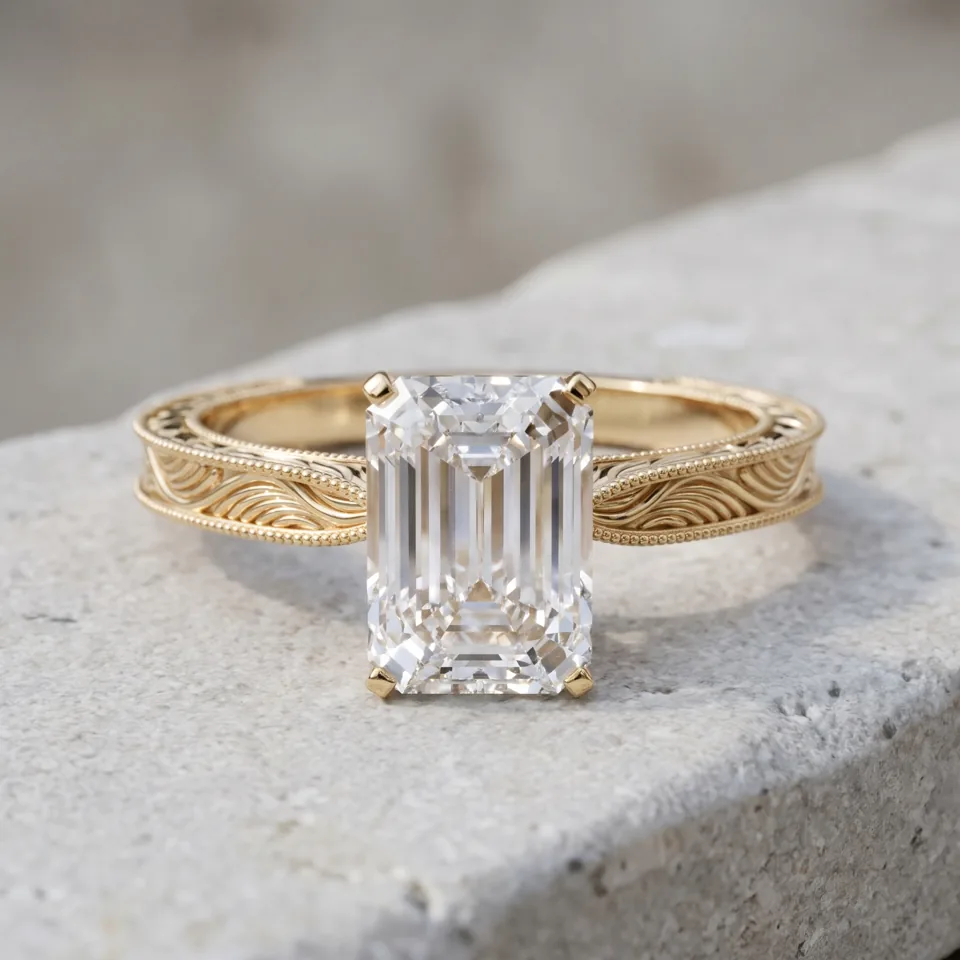
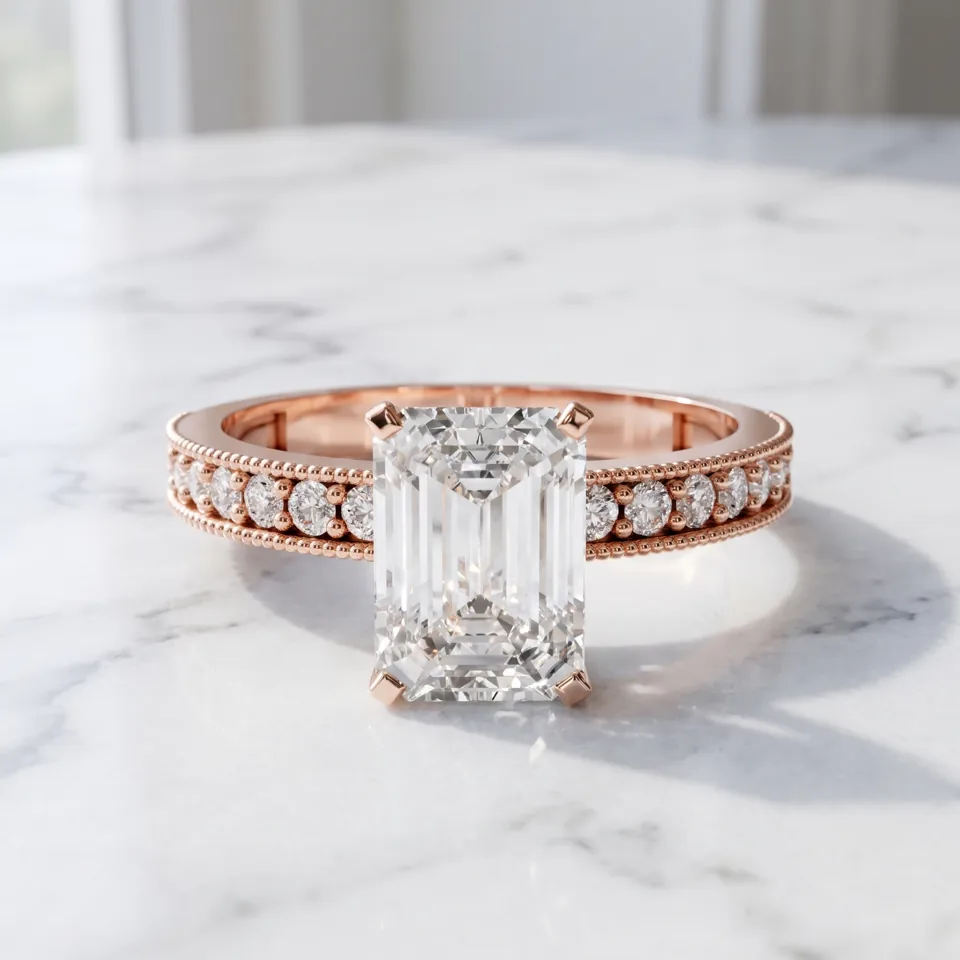
Antique emerald cut engagement rings borrow from the 1920s and 1930s, when long step-cut stones and geometric metalwork defined Art Deco jewelry. These settings pair a rectangular center with milgrain beading, filigree, engraving, bezel accents and vintage halos.
Settle the era and metal first; the center diamond is the stone you choose in the next step.
For a true Art Deco emerald cut engagement ring, look for straight pavé lines, bezel accents, marquise details and crisp halos. For an earlier, softer look, choose filigree baskets, scrollwork, floral heads and leaf engraving. Most designs use milgrain beading either way, which gives every edge a fine, textured border.
Solitaire or halo
Solitaire designs leave the step cut uncovered and put the period detail in the band and basket. Halo designs frame the center with laboratory-grown diamond accents, adding brightness around a shape that sparkles less than a brilliant cut. A few designs tuck a hidden halo under the head that peeks out in profile.
Choosing a center to suit the setting
Inclusions and tint are easier to see through step facets, which is why buyers of this shape often step up in clarity. A longer emerald cut looks slimmer and more elegant on the finger; a squarer one suits a halo. You can also request color: green, blue, pink and yellow centers suit most designs, black suits some.
Metal and price
Platinum and white gold were the Art Deco favorites, while yellow and rose gold feel warmer and older. Each design is offered in white, yellow or rose gold (10K, 14K or 18K), platinum, and Silvadium, a tarnish-resistant sterling silver. Settings start under $200, and most cost between about $800 and $1,100 with their lab-grown diamond accents.
Ordering from Whitemoon
We make each setting for you in 10–15 days, and the center diamond arrives with an IGI or GIA report. Free insured shipping both ways, 30 days to return and one free resize within 60 days of delivery are included.

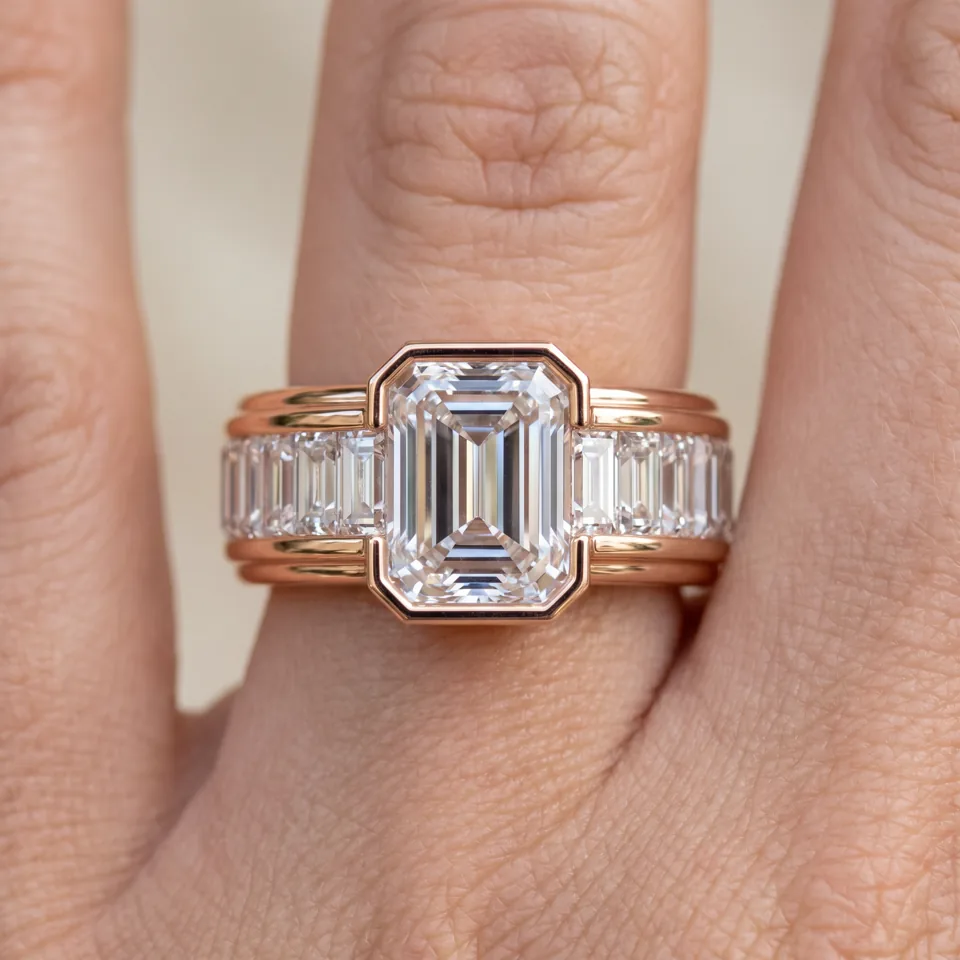 Emerald Cut Bezel Engagement Rings
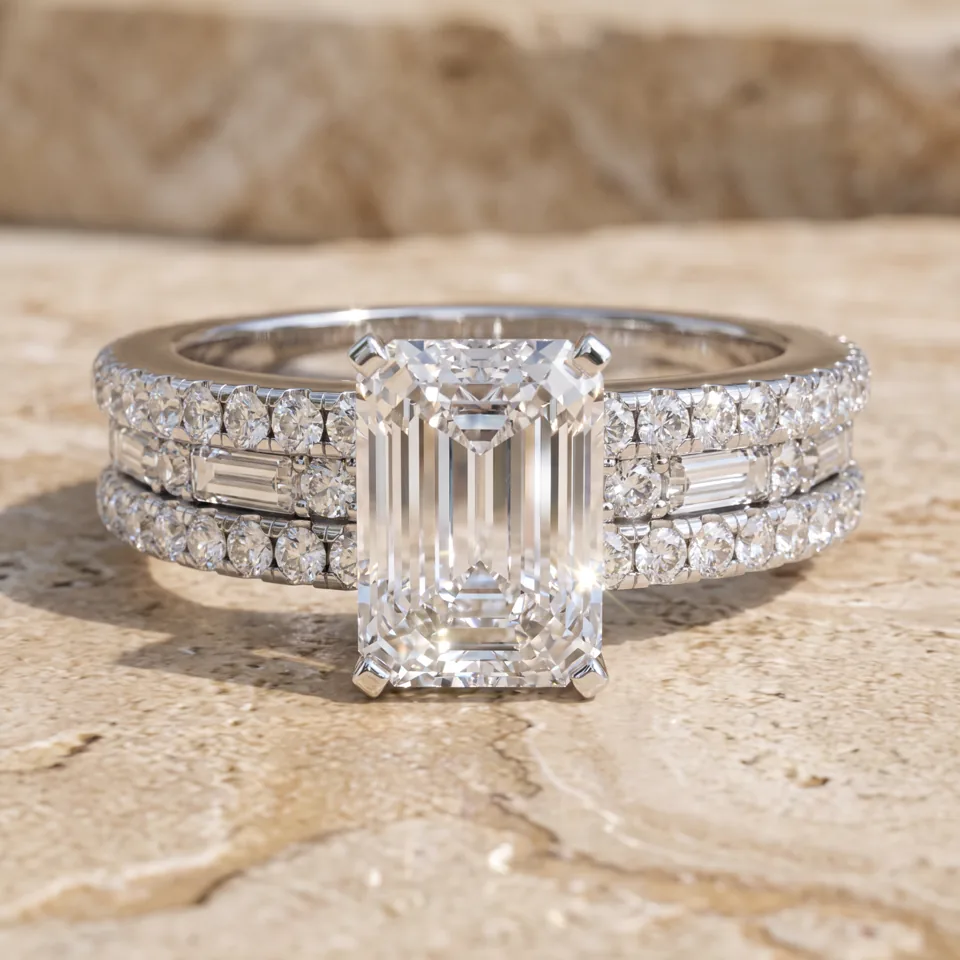 Emerald Cut Diamond Rings with Baguettes
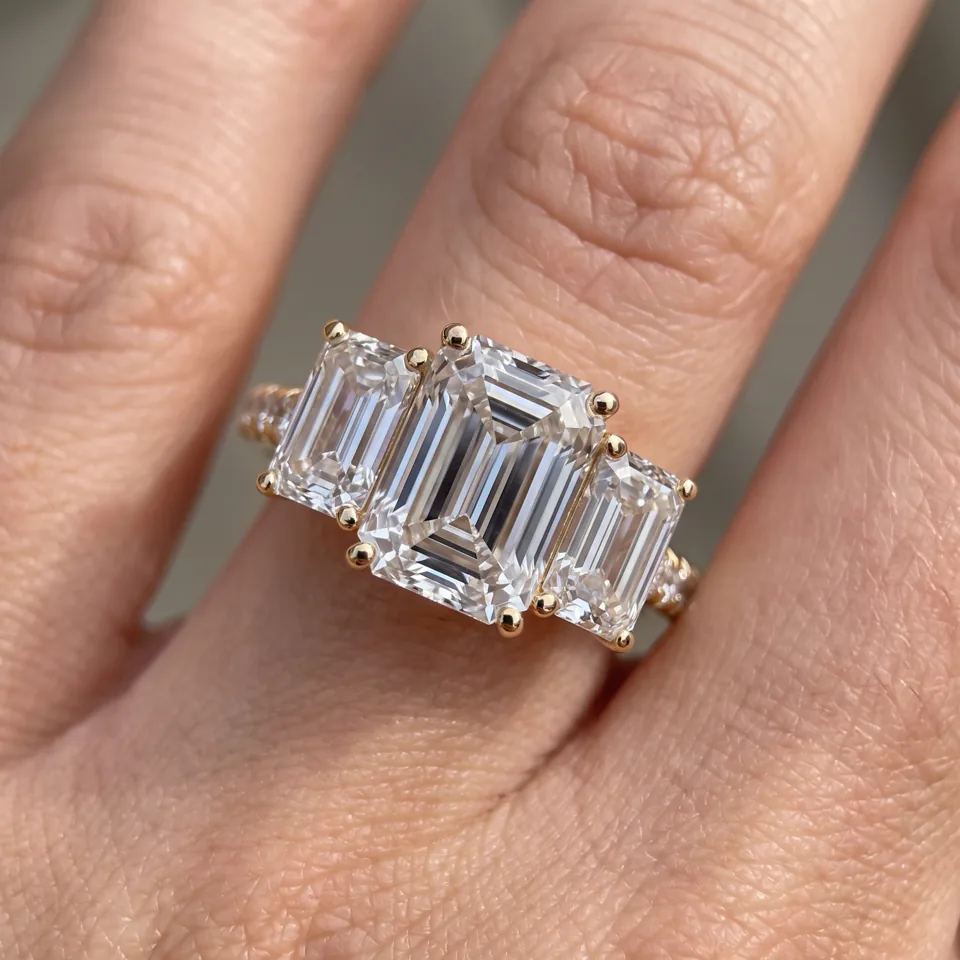 Emerald Cut Three Stone Engagement Rings
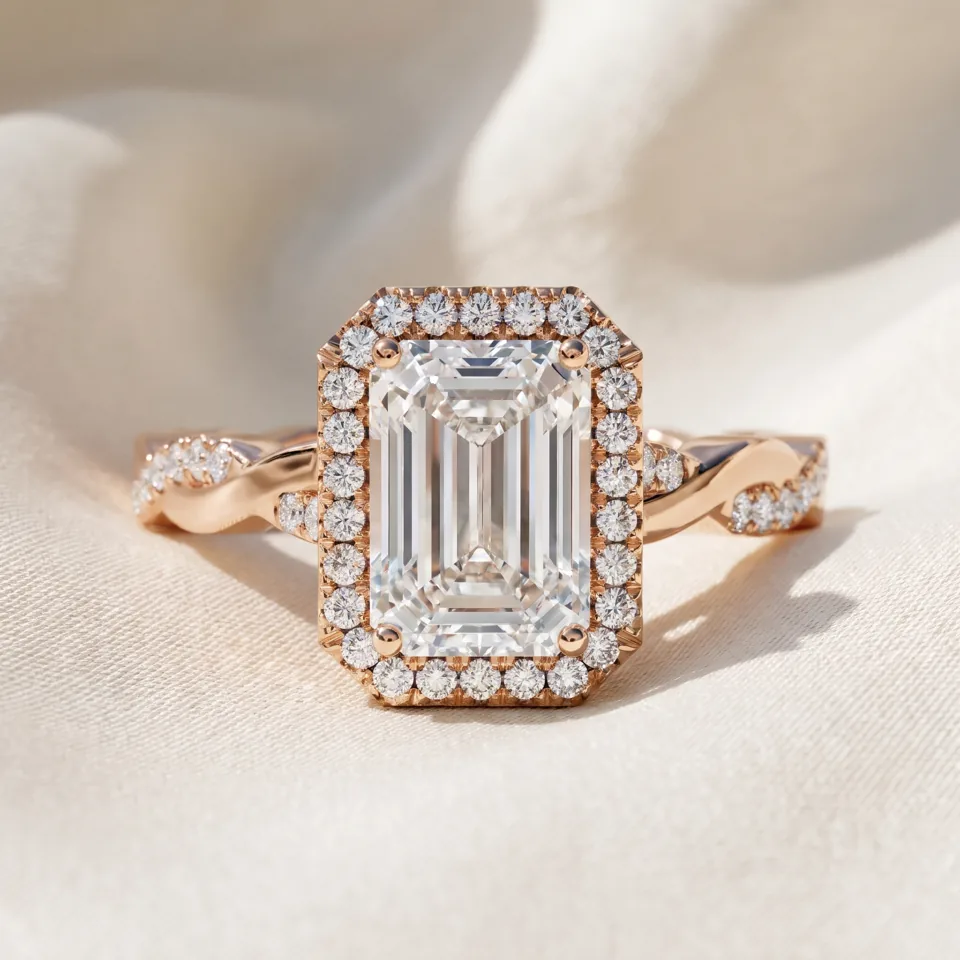 Emerald Cut Halo Engagement Rings
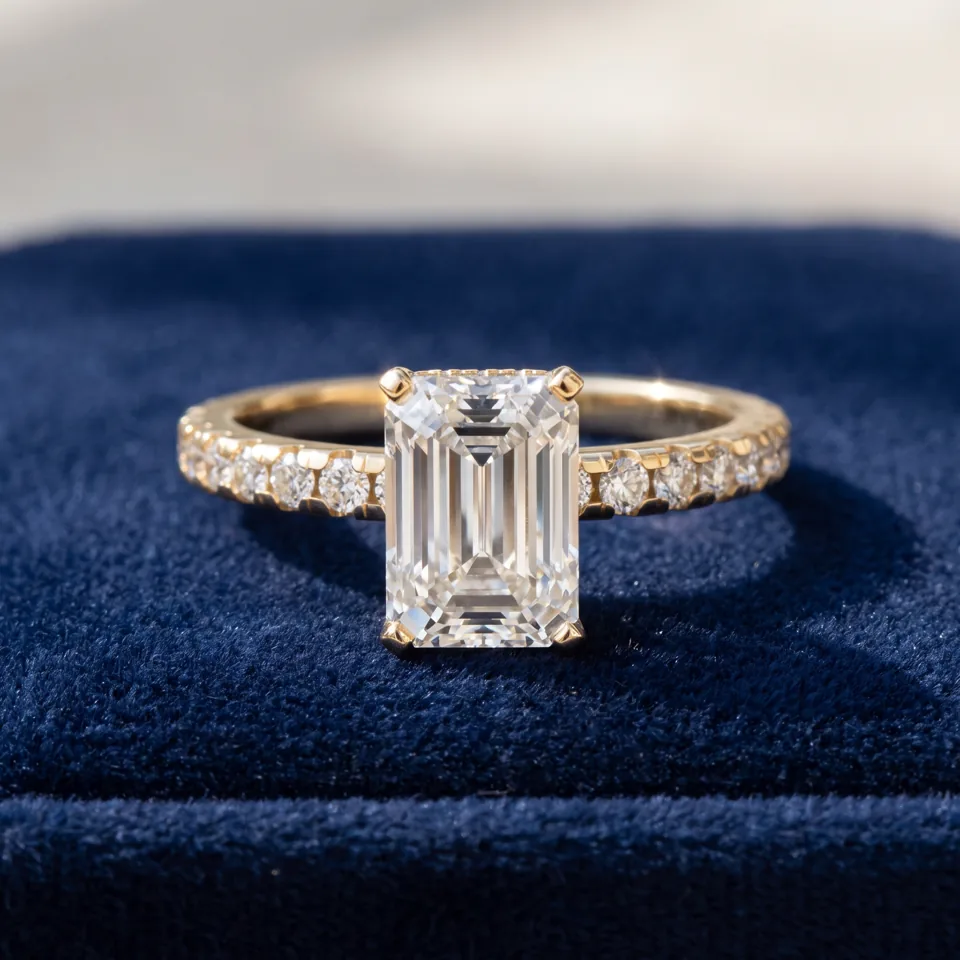 Emerald Cut Hidden Halo Engagement Rings
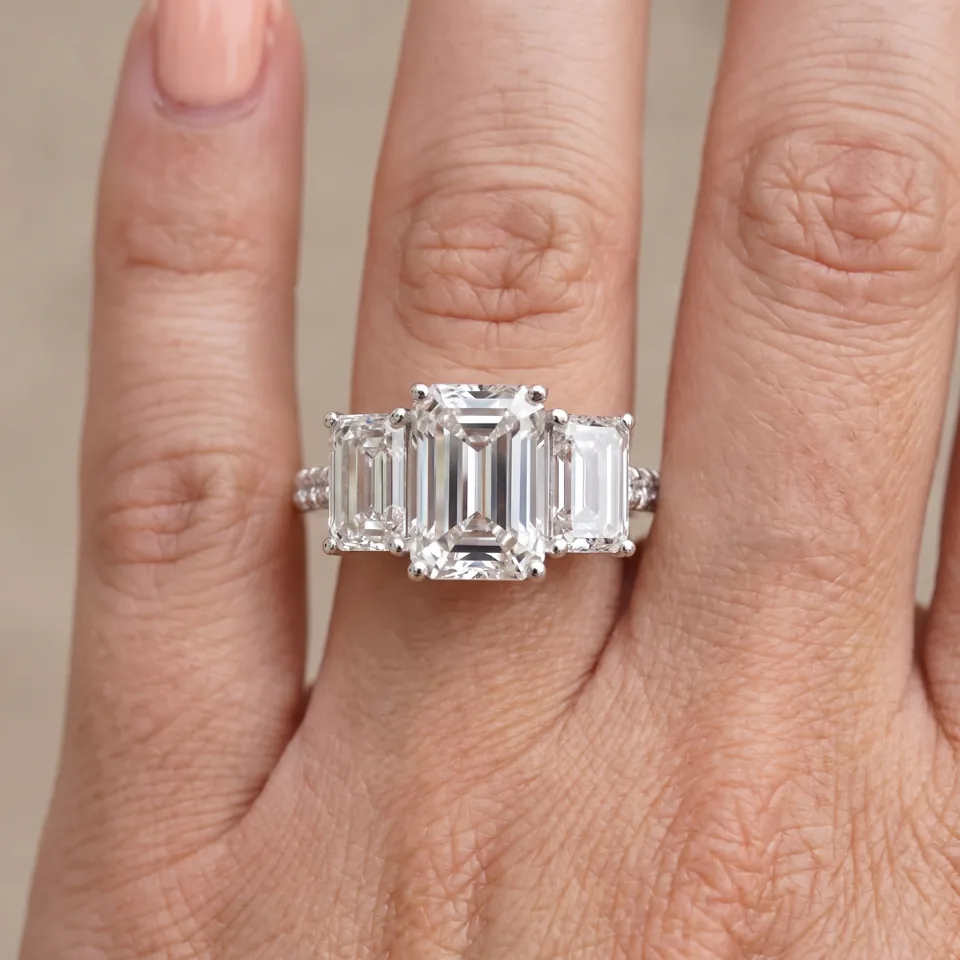 Emerald Cut Engagement Rings with Side Stones
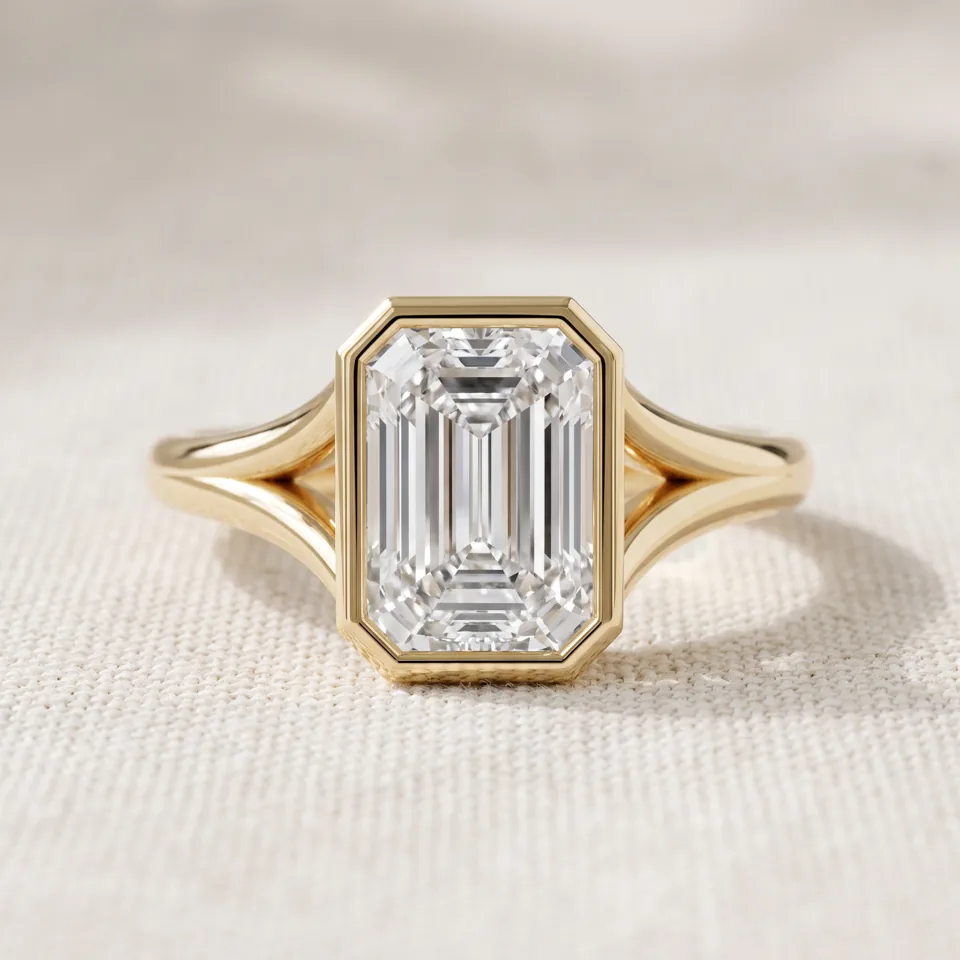 Emerald Cut Split Shank Engagement Rings
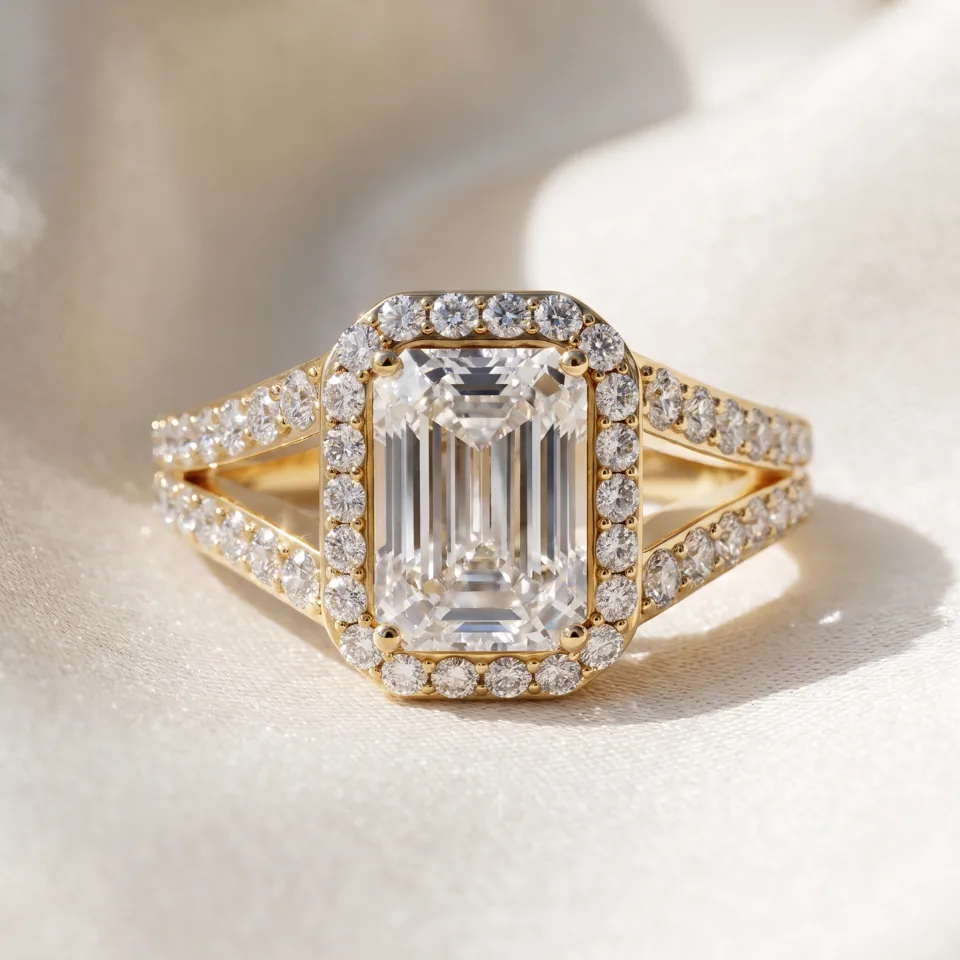 Emerald Cut Pave Engagement Rings
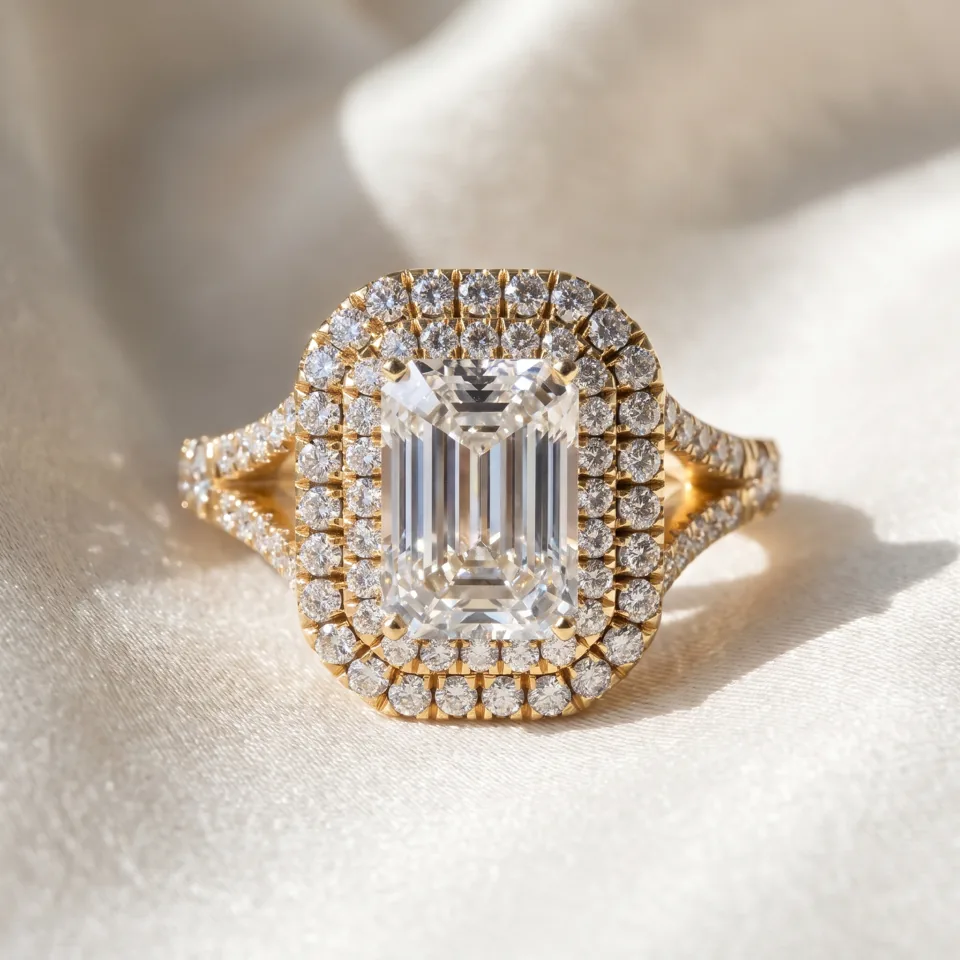 Emerald Cut Double Halo Rings
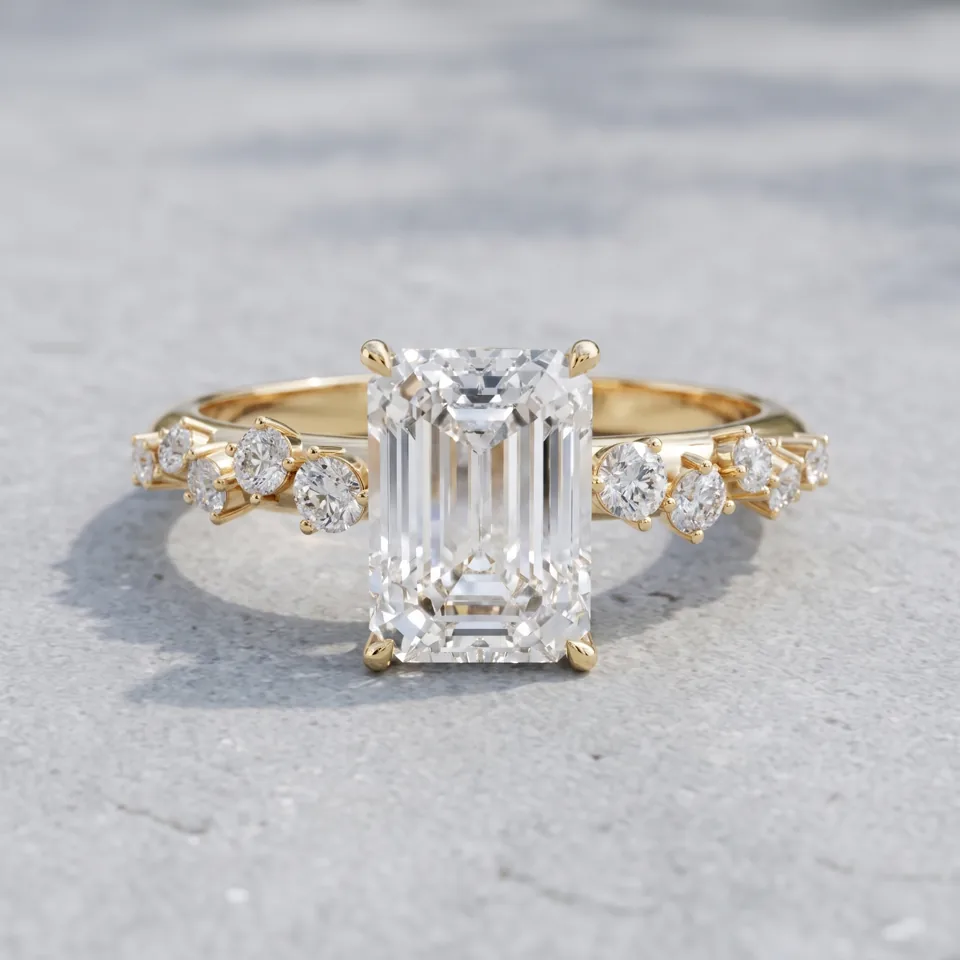 Emerald Cut Cluster Engagement Rings
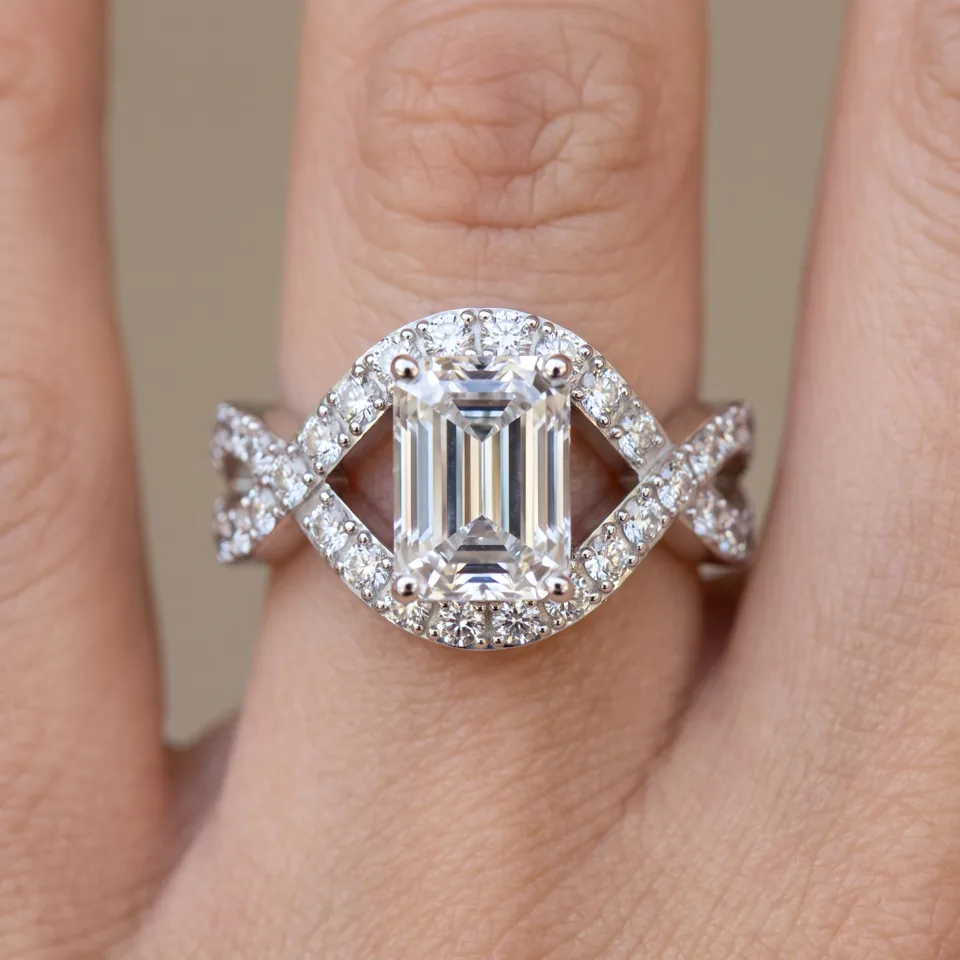 Emerald Cut Infinity Rings
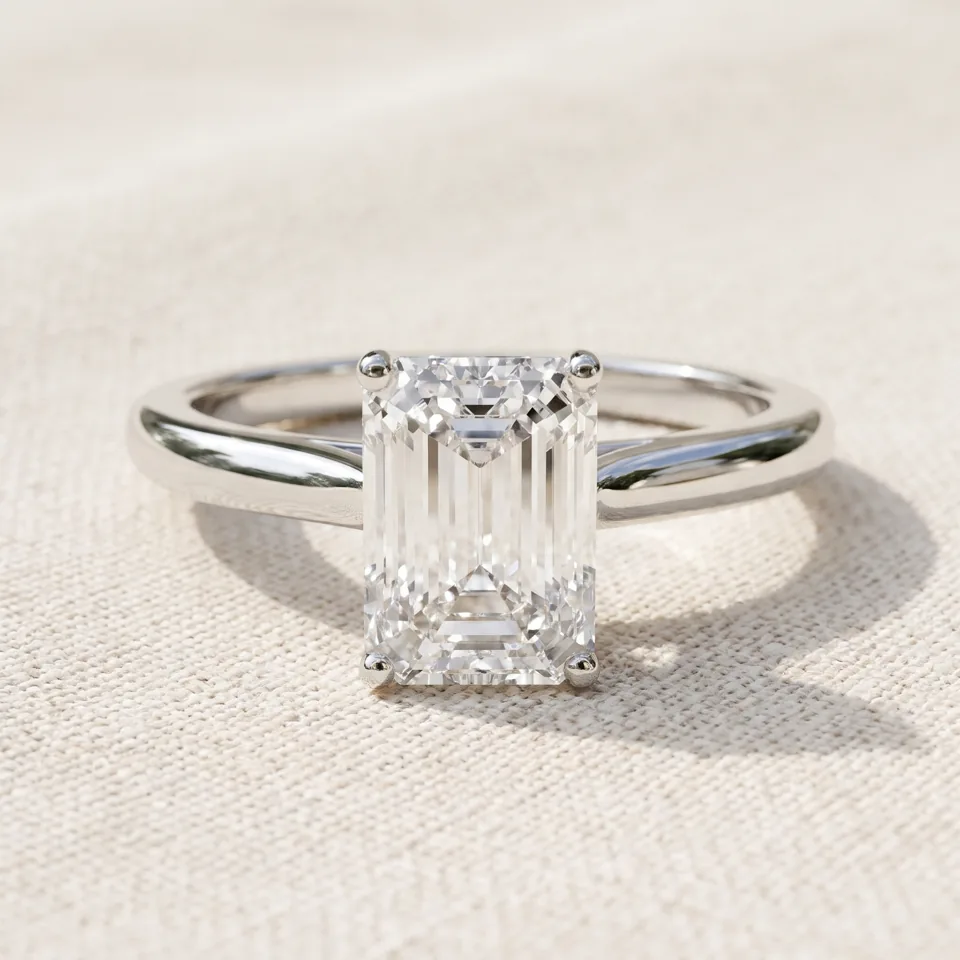 Emerald Cut Cathedral Engagement Rings