Complimentary insured shipping, both waysEngagement ring diamonds certified by IGI or GIAGrown by light. Conflict-free by natureComplimentary insured shipping, both ways
Engagement RingsWedding BandsEarrings

NecklaceBraceletsAbout
A princess cut infinity engagement ring perches the square center over strands that cross, twist or loop like a sideways eight. Here you're buying the band and head; picking the square center comes later.
Start with solitaire versus halo, then decide how much pavé you want on the twist.
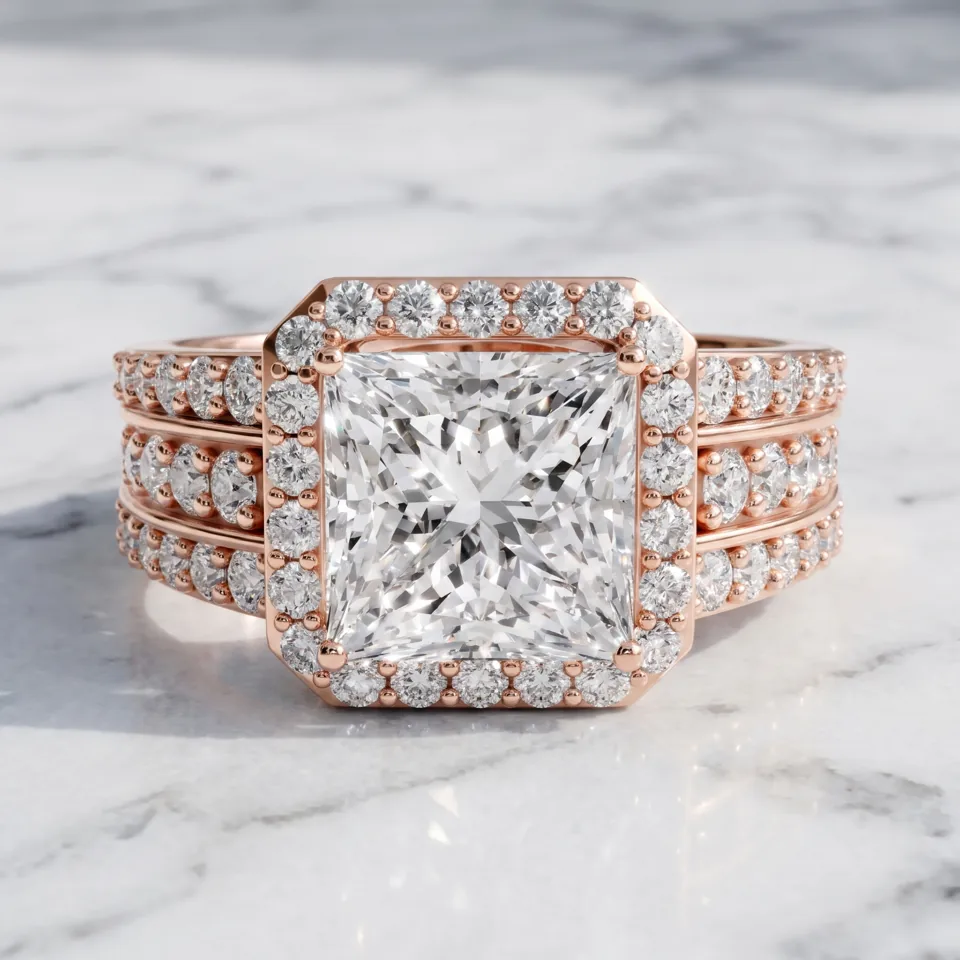 Princess Cut Halo Engagement Rings
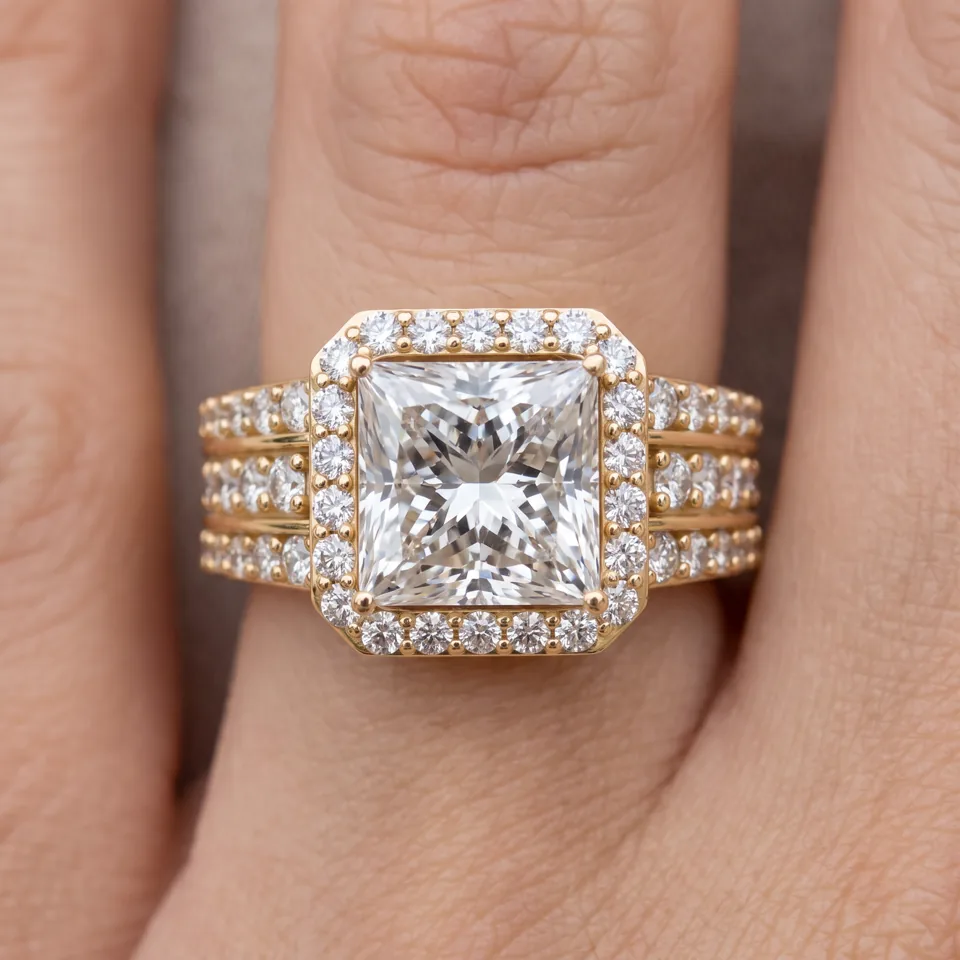 Vintage Princess Cut Rings
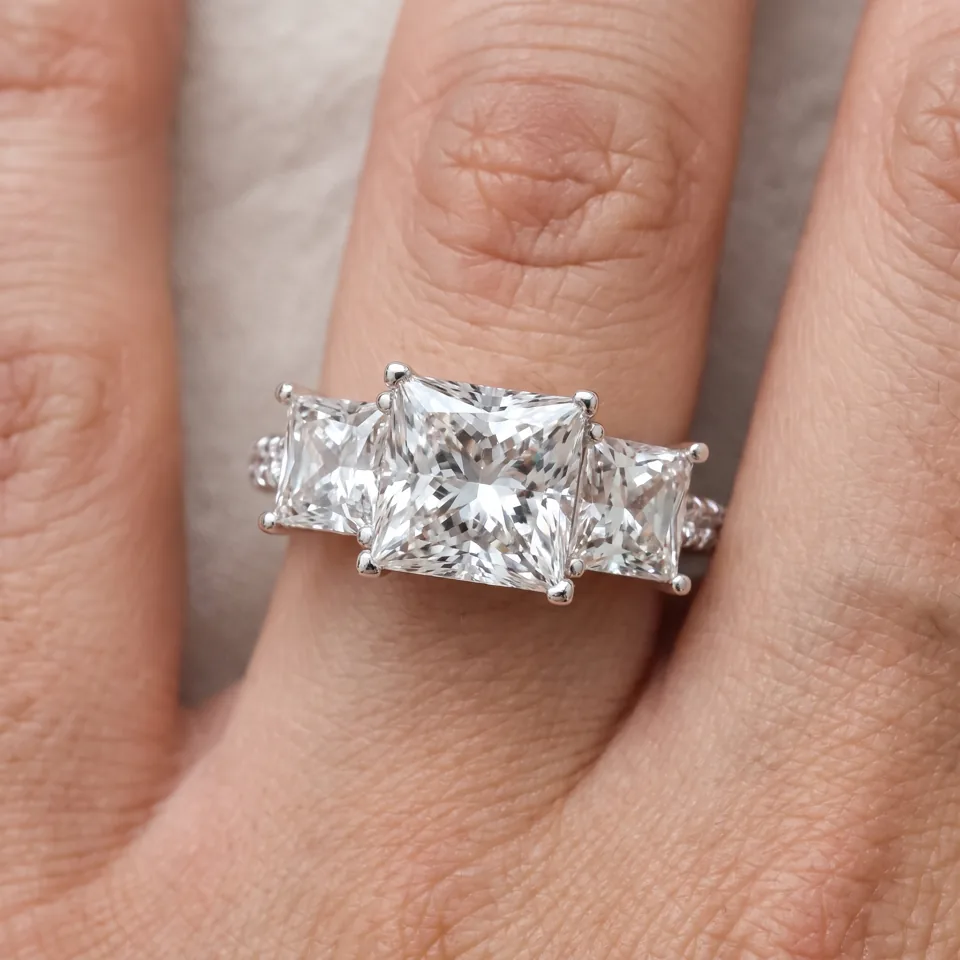 Princess Cut Three Stone Engagement Rings
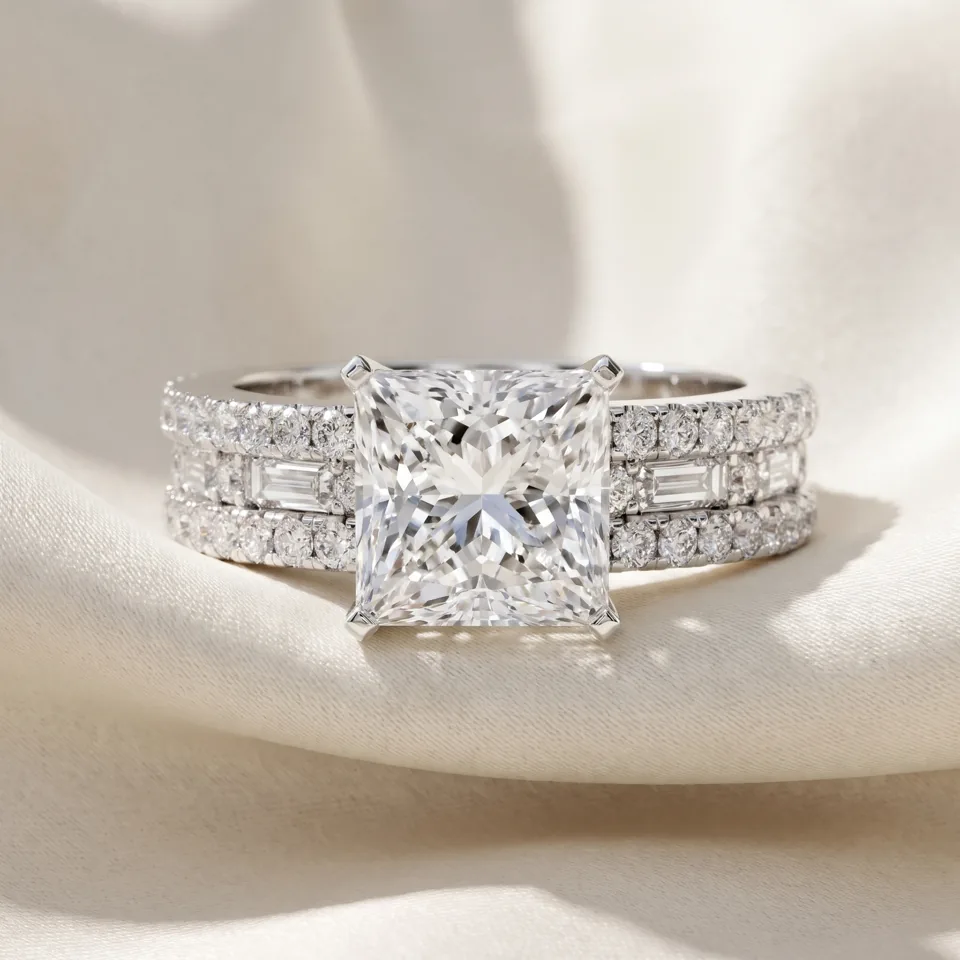 Princess Cut Rings with Baguette Side Stones
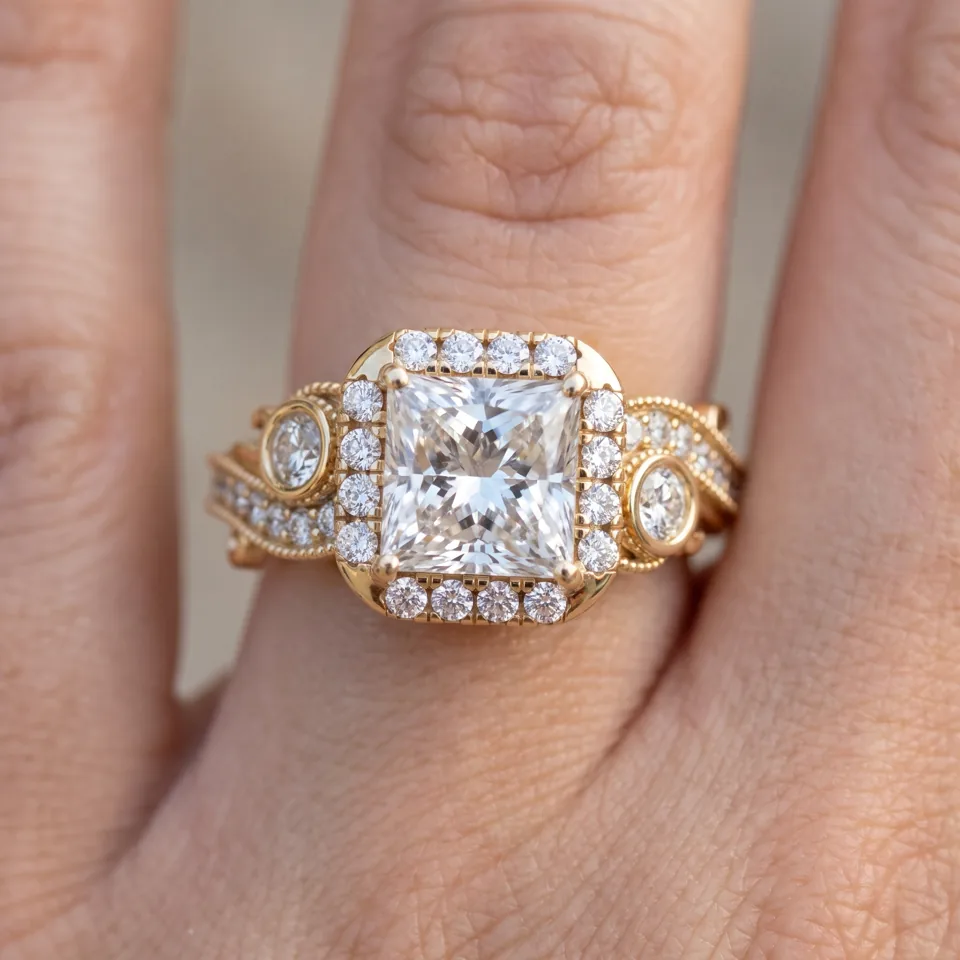 Princess Cut Bezel Rings
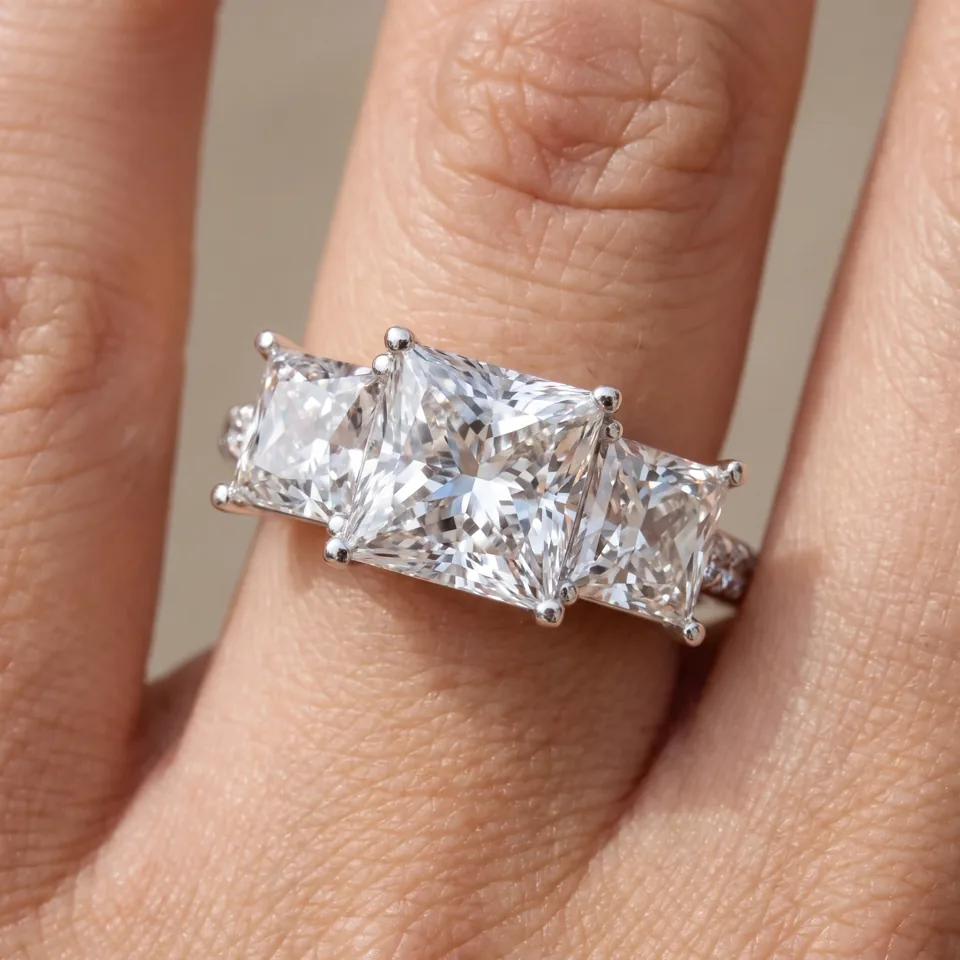 Princess Cut Engagement Rings with Side Stones
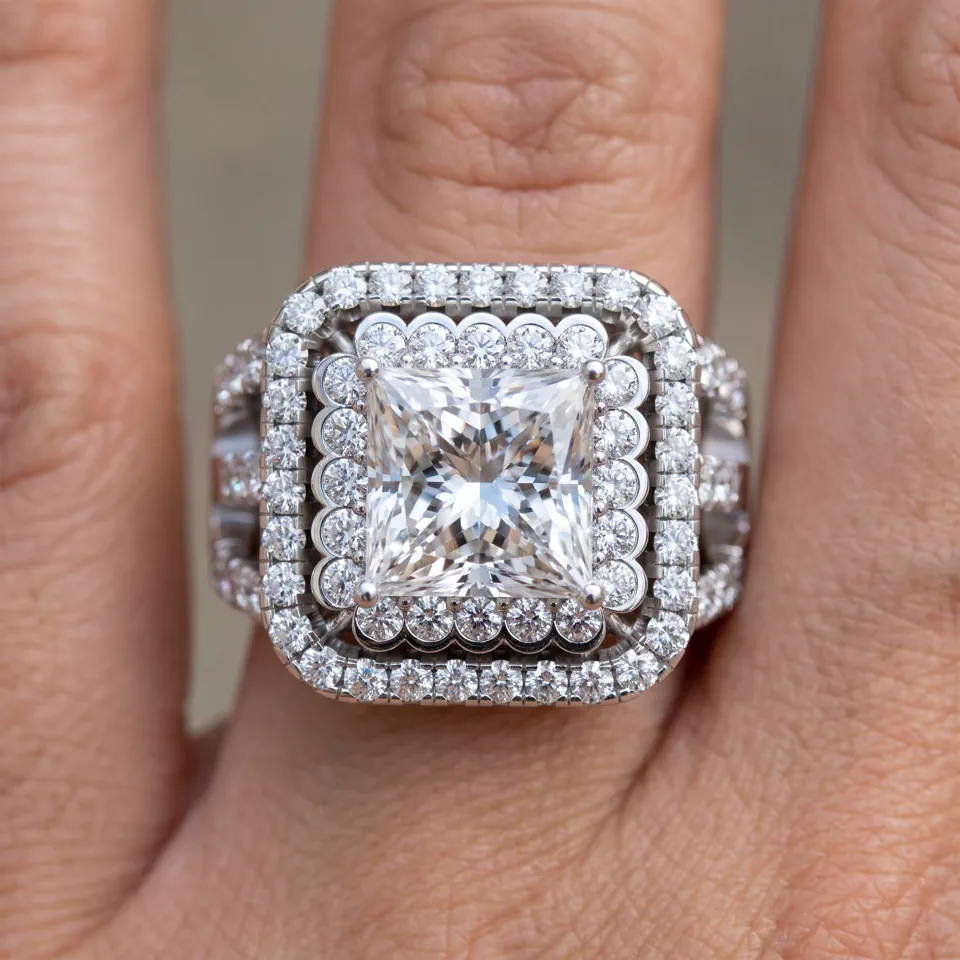 Princess Cut Double Halo Rings
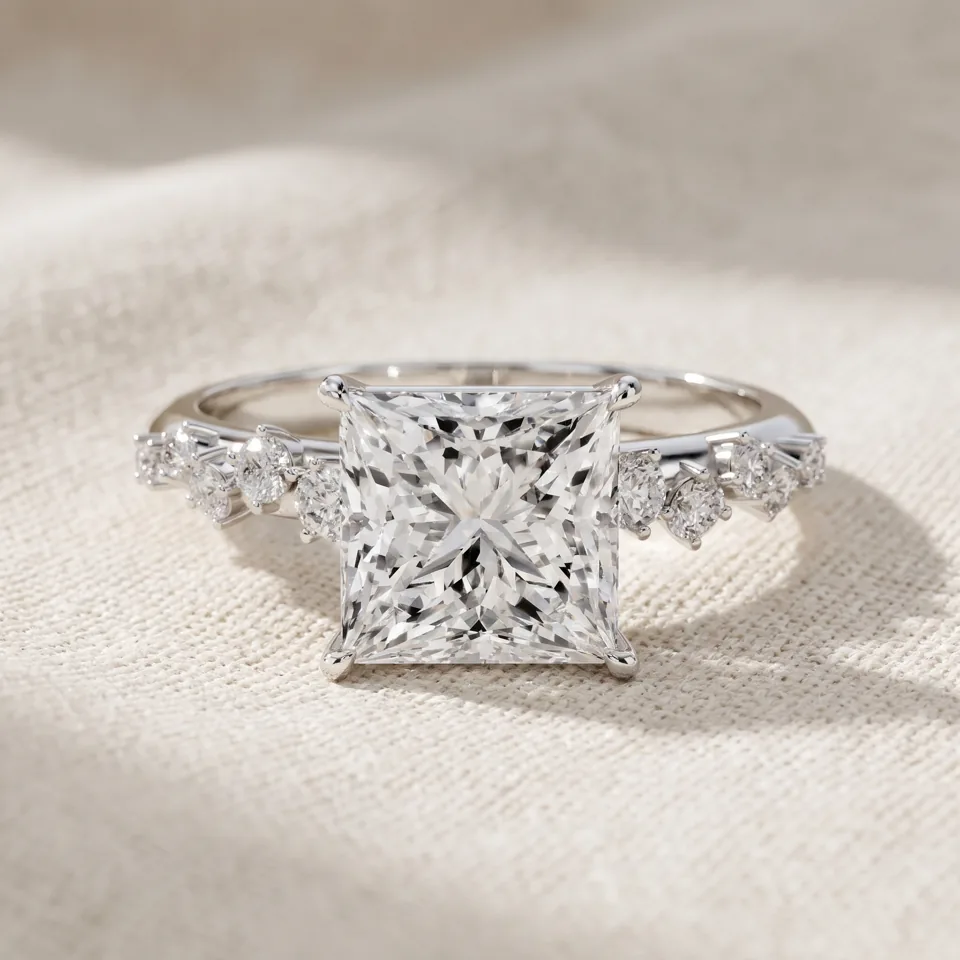 Princess Cut Cluster Engagement Rings
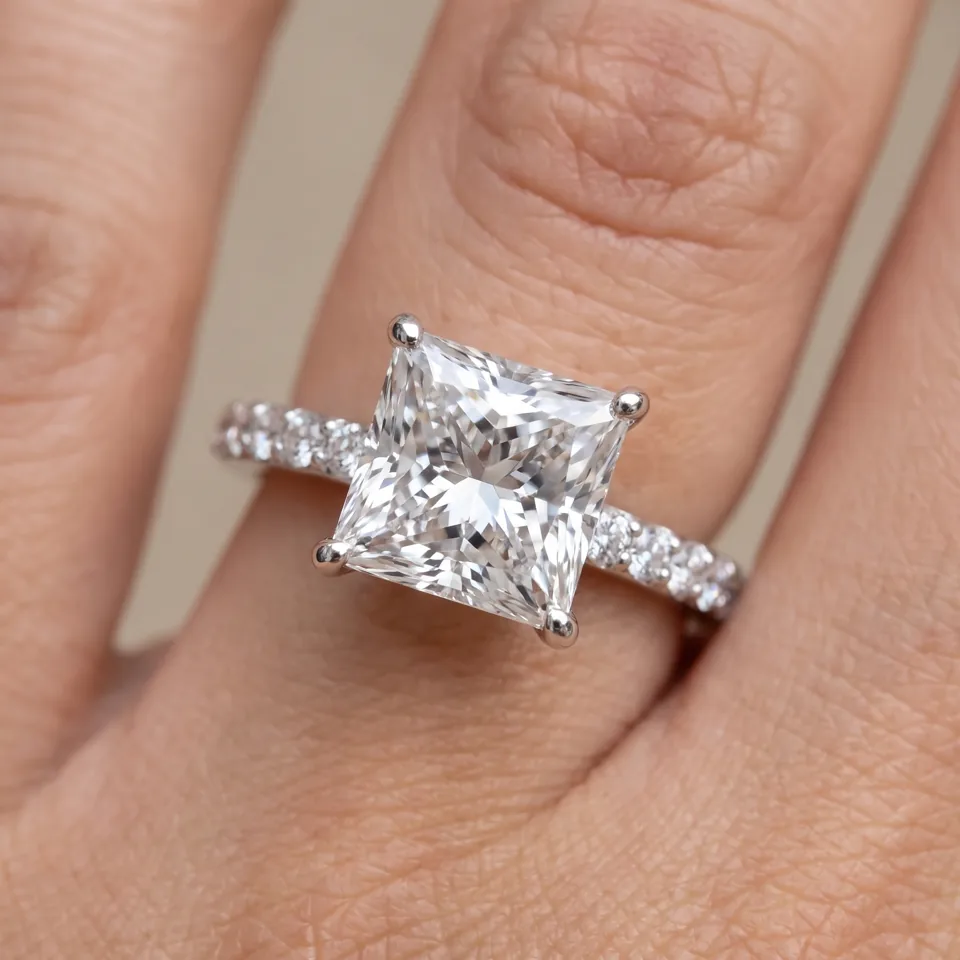 Princess Cut Pave Engagement Rings
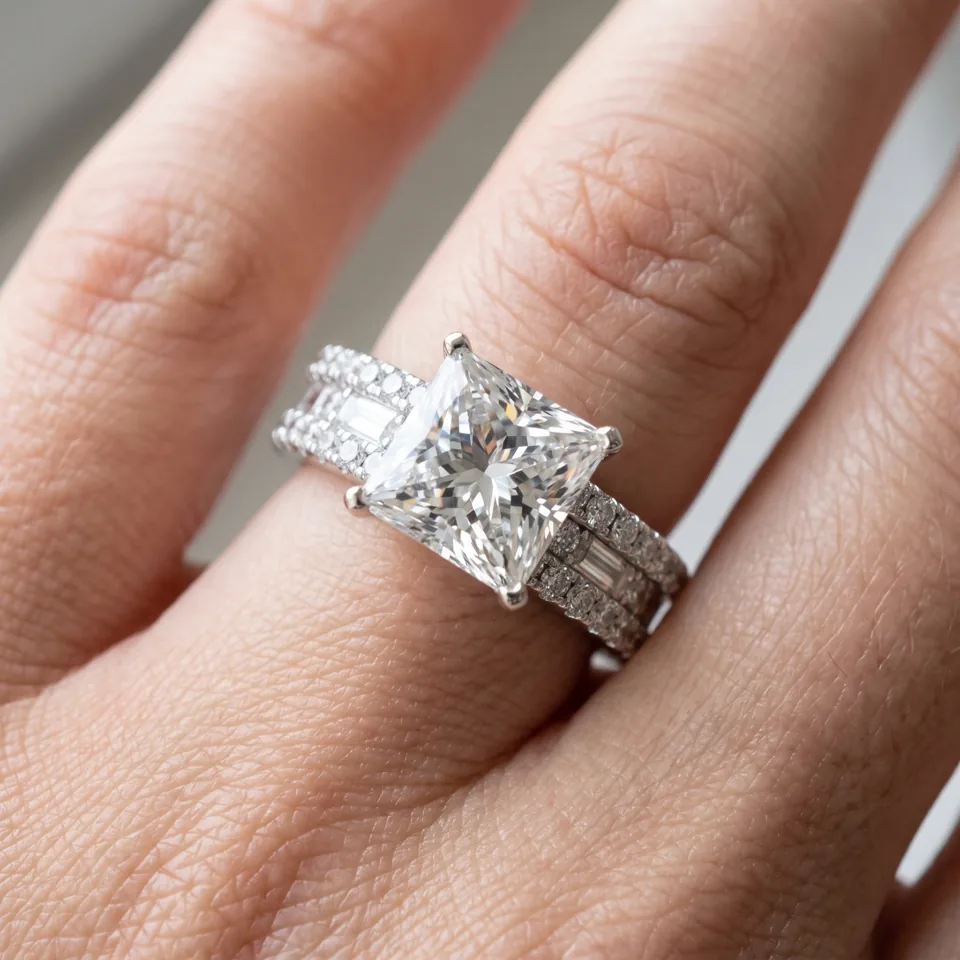 Princess Cut Channel Set Engagement Rings
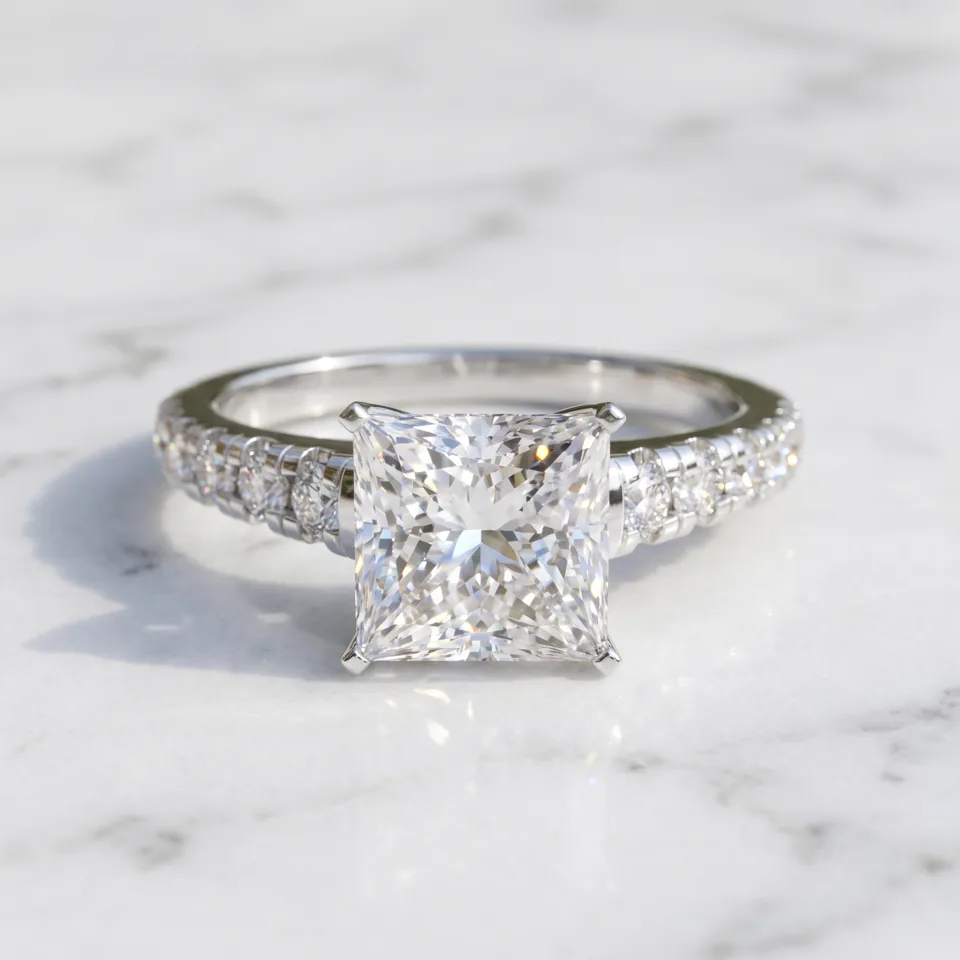 Princess Cut Cathedral Engagement Rings
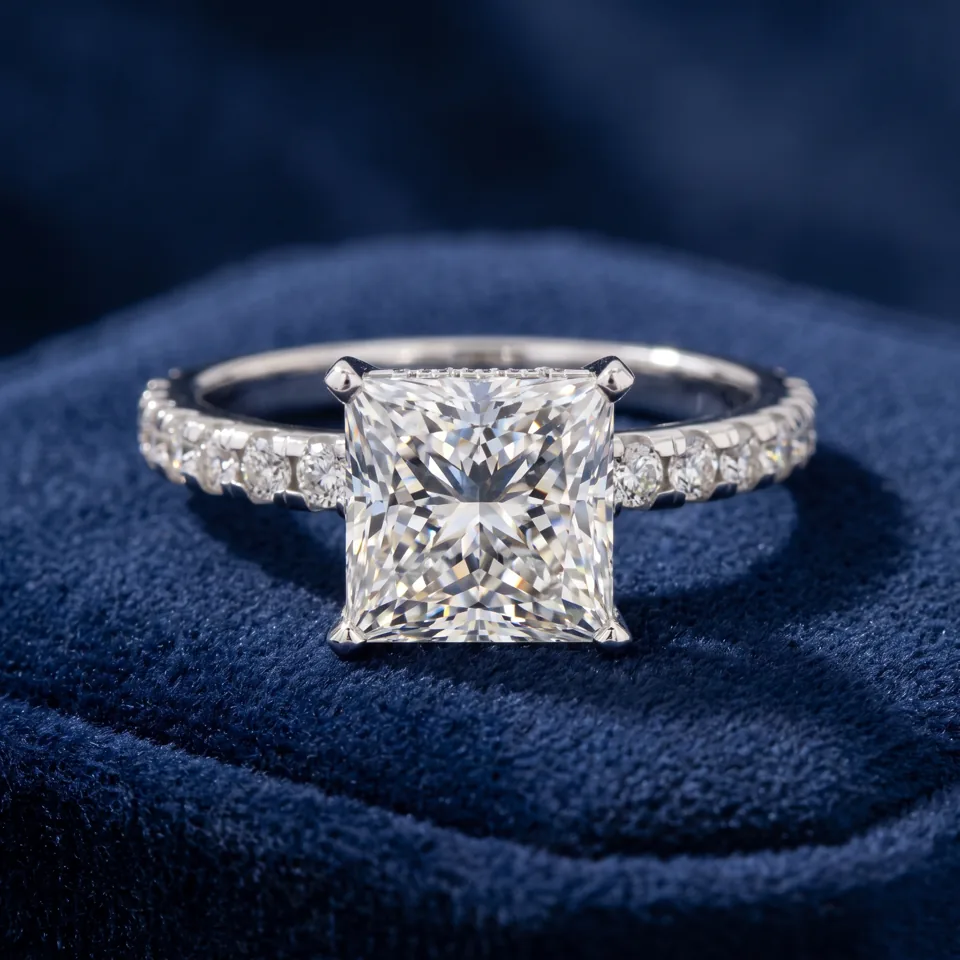 Princess Cut Hidden Halo Engagement Rings
Some designs leave the princess cut alone above a crossover band, so the looping metal does the talking. Others surround the square with laboratory-grown diamond accents; of these, one weaves pavé strands together and another pairs a square frame with looped shoulders.
A crossover band lets two strands swap sides under the center. Pavé ribbons split from a split shank and sweep up to the head. Loop shoulders draw a clear figure eight on each side. Pavé covers the strands on most designs, and where a polished strand sits beside a sparkling one, the figure eight is easiest to read.
The appeal of a princess cut infinity ring is contrast: sharp corners above soft curves. Look for claws or a frame guarding all four points, because those tips chip more readily than any other part of a princess cut.
Each is available in 10K, 14K or 18K white, yellow or rose gold, as well as platinum. Silvadium, a tarnish-resistant sterling silver, is the most affordable. Settings start from about $1,150, and most run up to about $1,400 before the center. Most can carry a white or a yellow, pink, blue or green fancy princess; one can carry black.
Your setting is made for you in 10–15 days and comes with free insured shipping, both directions. The center diamond has an IGI or GIA report. Returns are welcome within 30 days, and one free resize applies within 60 days of delivery.


