Complimentary insured shipping, both waysEngagement ring diamonds certified by IGI or GIAGrown by light. Conflict-free by natureComplimentary insured shipping, both ways
Engagement RingsWedding BandsEarrings

NecklaceBraceletsAbout
An oval infinity engagement ring sets the oval center on a band whose two strands loop over each other, a nod to the infinity symbol. Solitaire heads make up half the range, and the others add a halo or split the shank. Most strands carry pavé.
Pick the twist and the metal here, and choose the oval to go with it afterward.
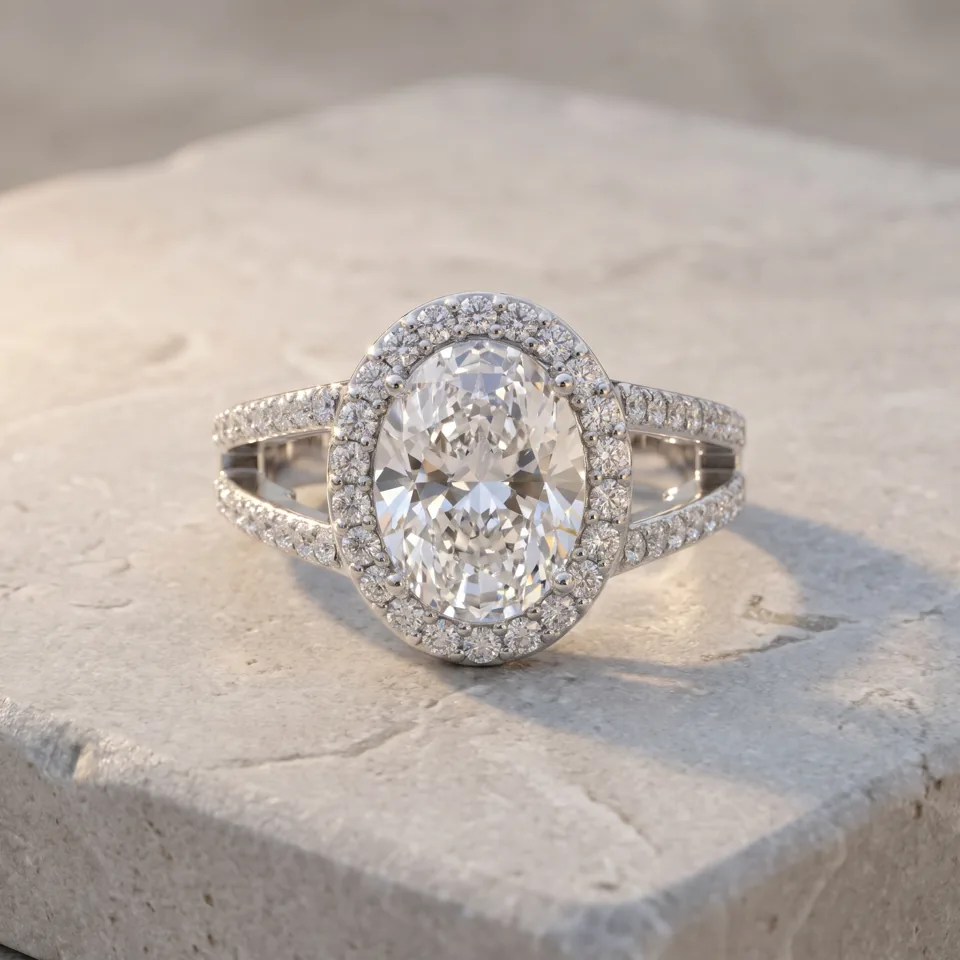 Oval Halo Engagement Rings
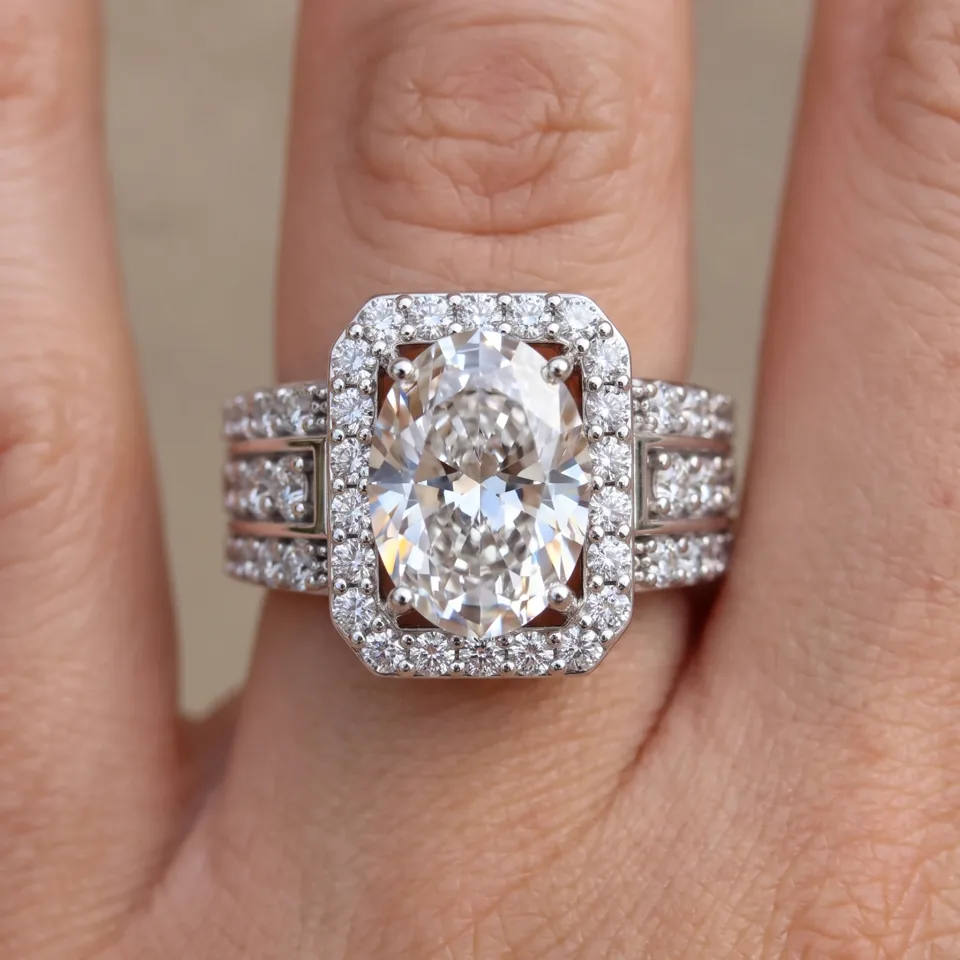 Oval Vintage Engagement Rings
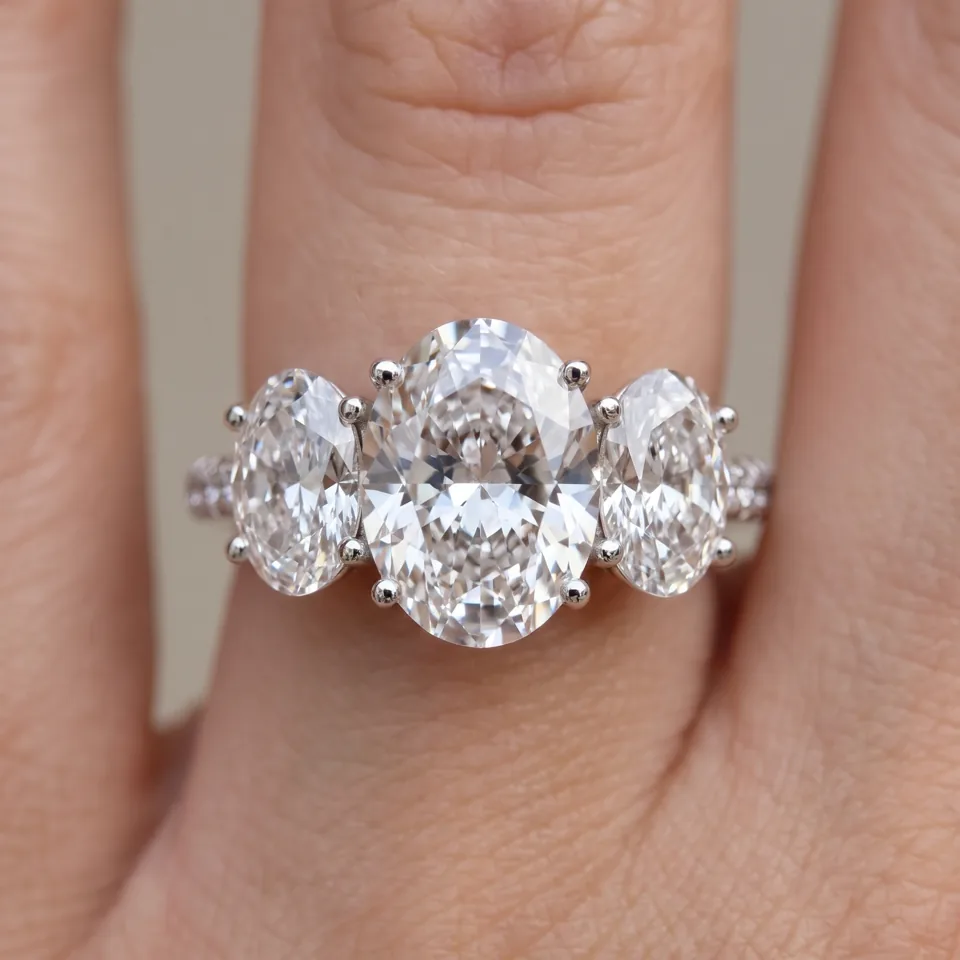 Oval Three Stone Engagement Rings
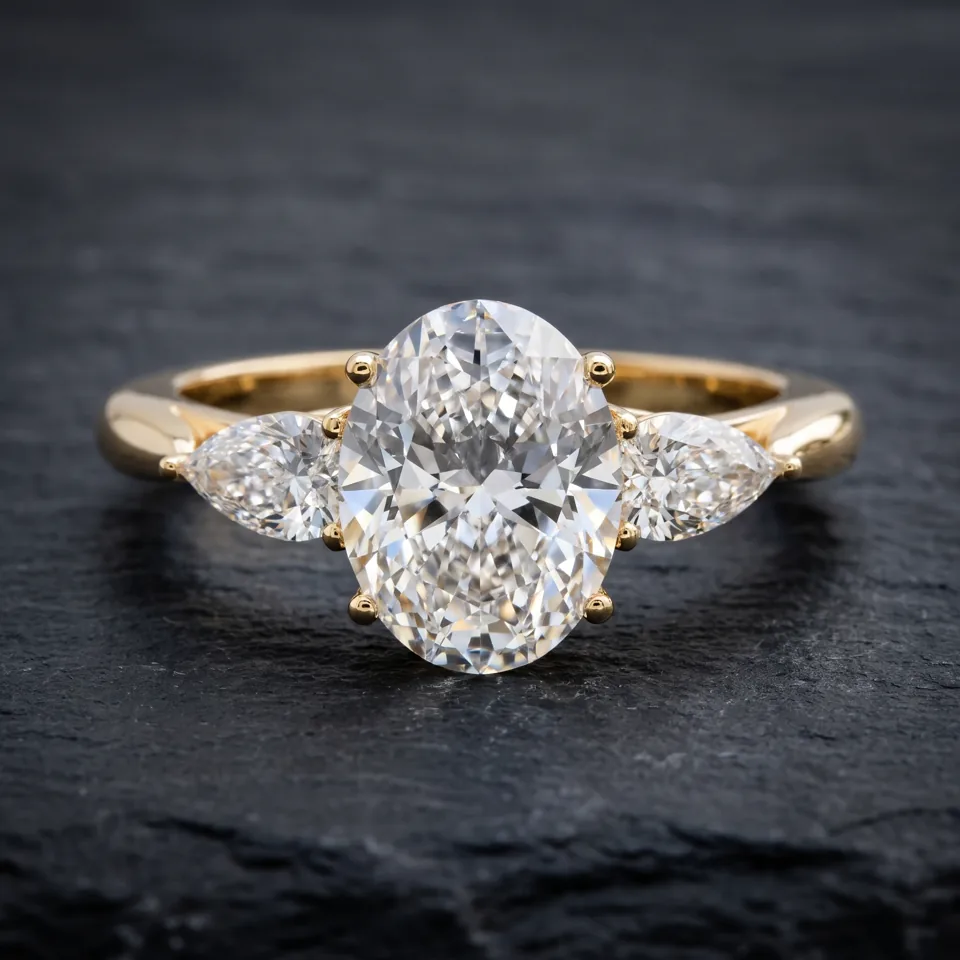 Oval Side Stone Engagement Rings
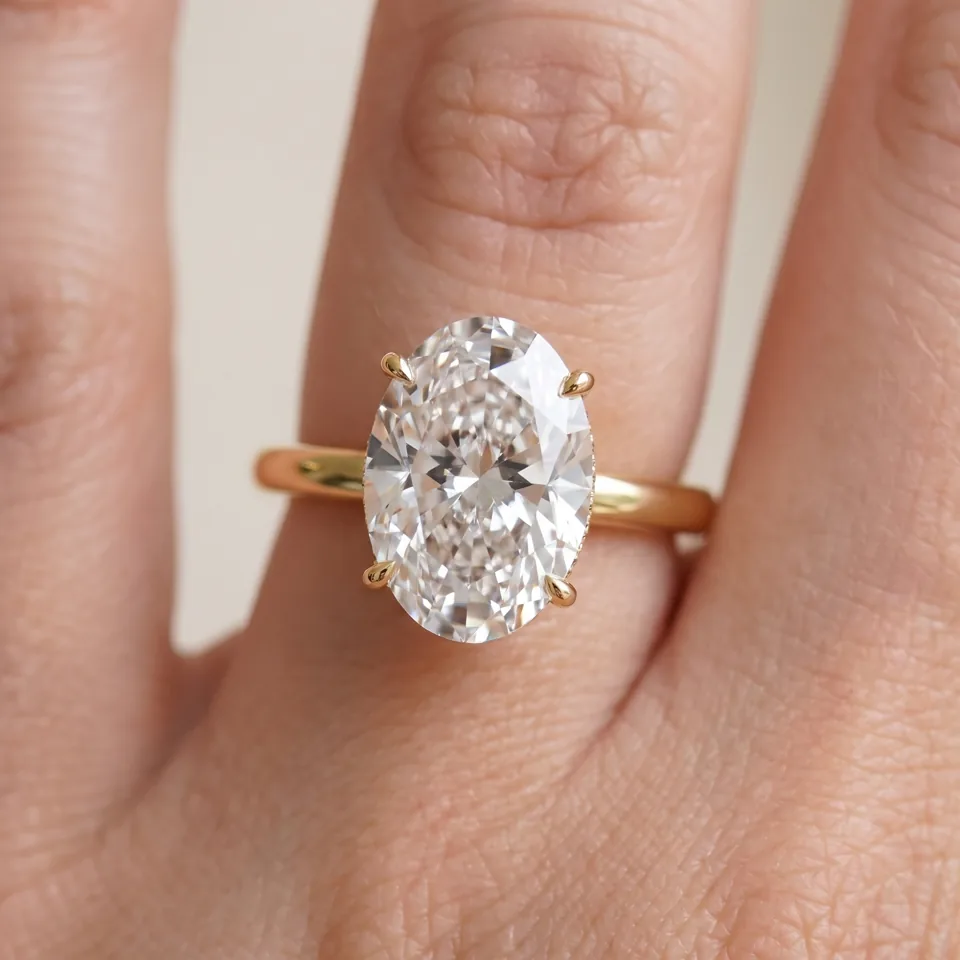 Oval Hidden Halo Engagement Rings
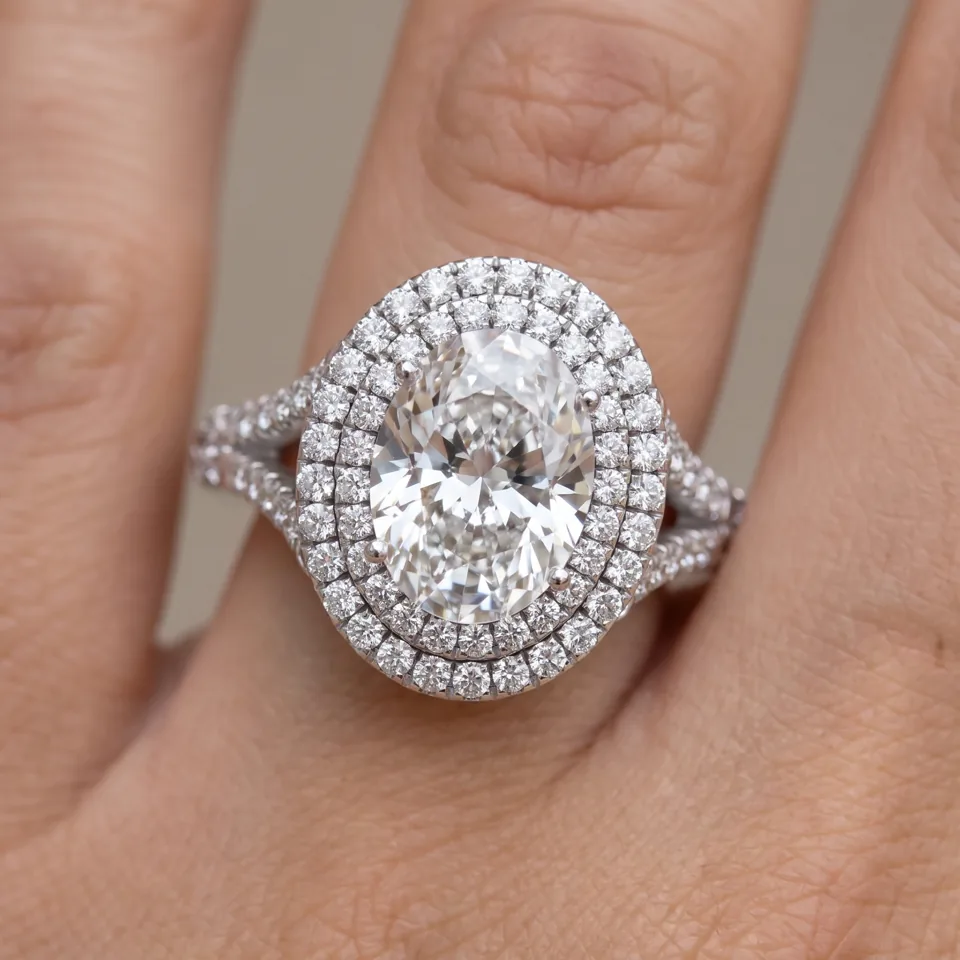 Oval Split Shank Engagement Rings
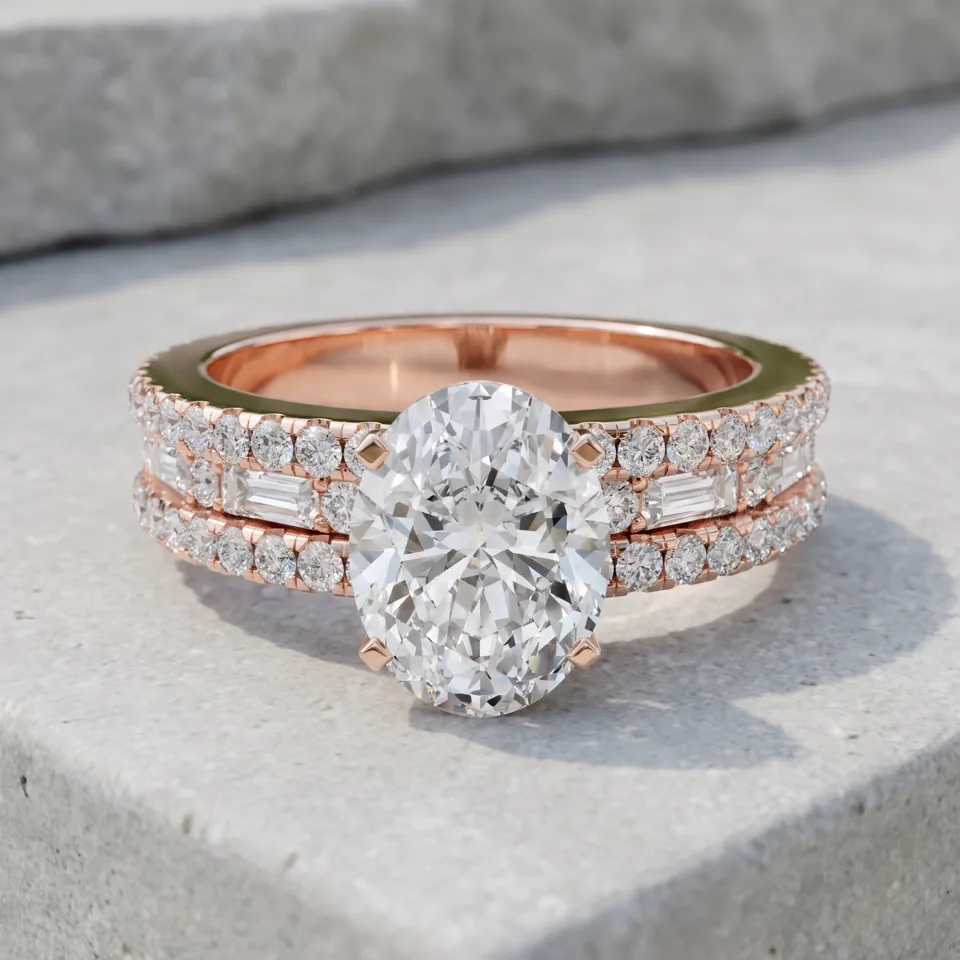 Oval Engagement Rings with Baguettes
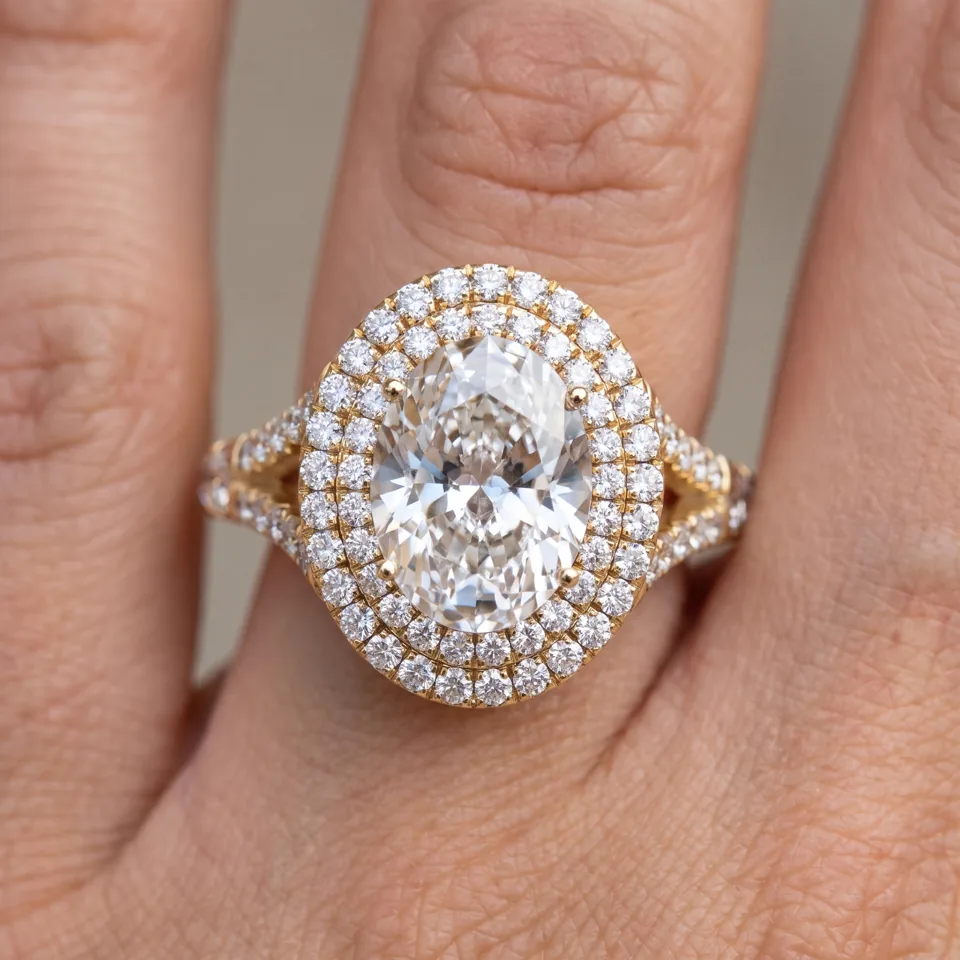 Oval Double Halo Engagement Rings
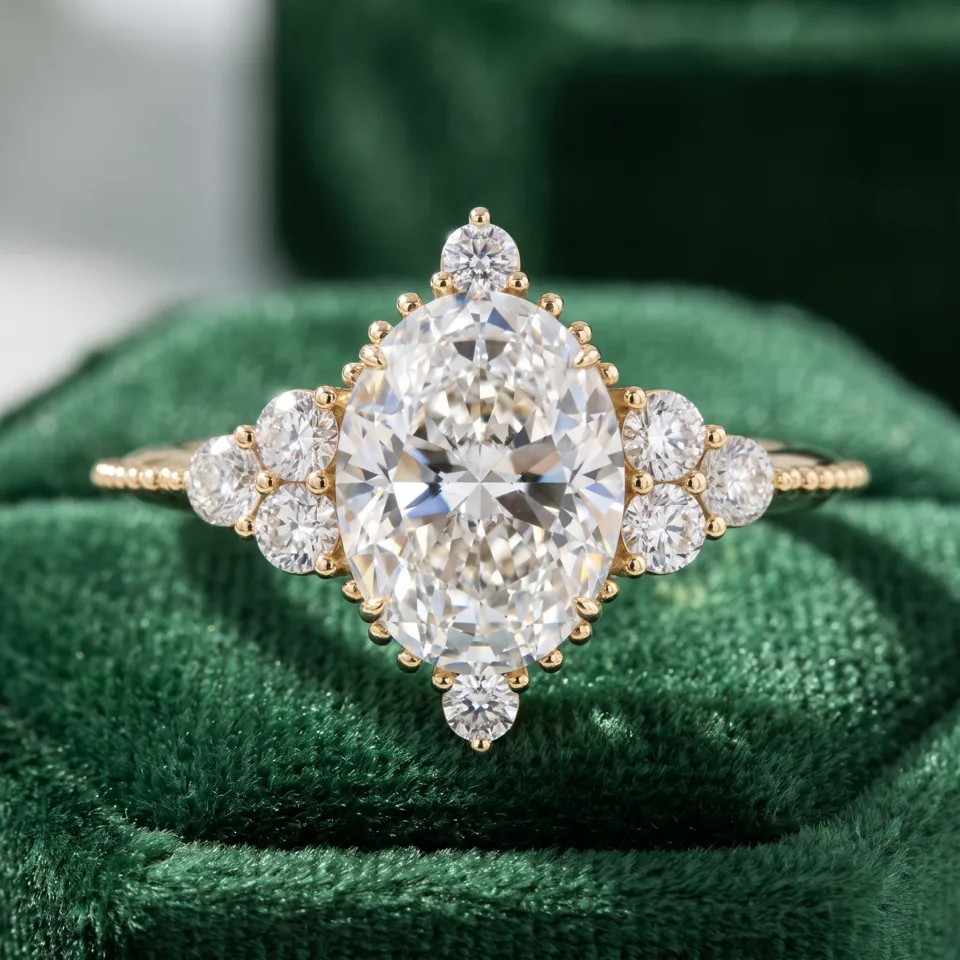 Oval Cluster Engagement Rings
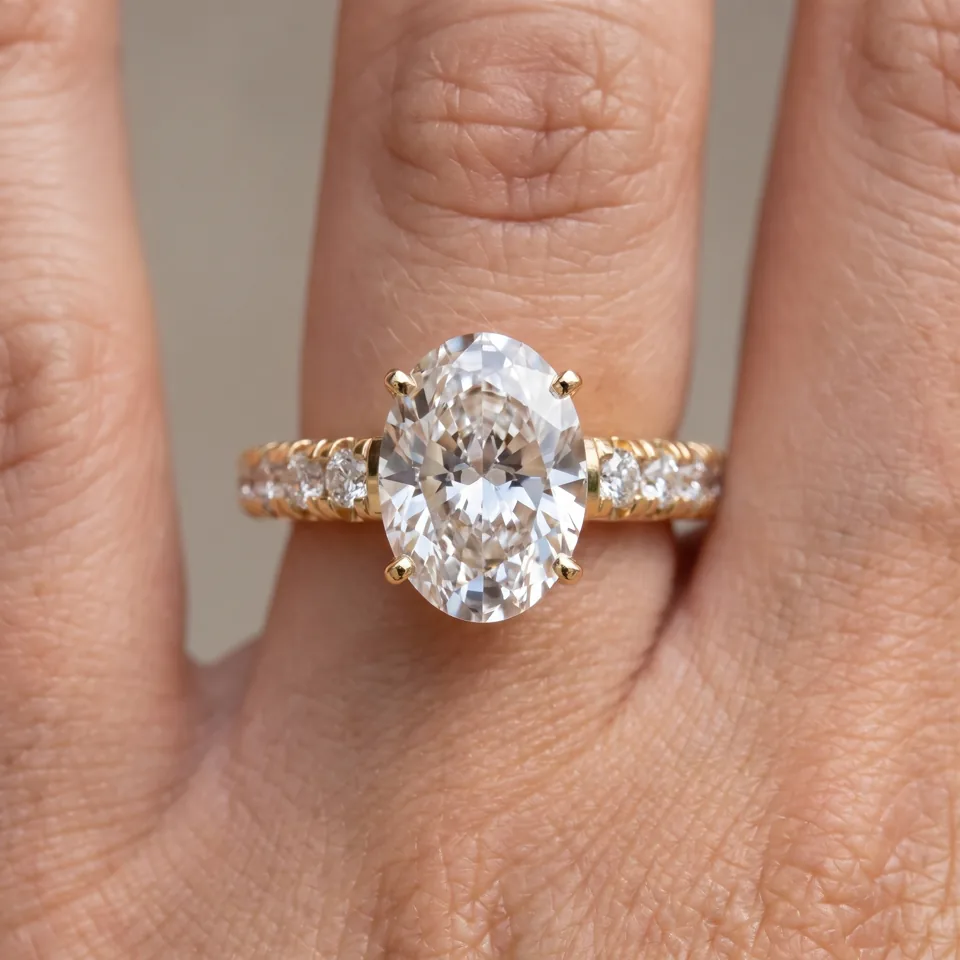 Oval Cathedral Engagement Rings
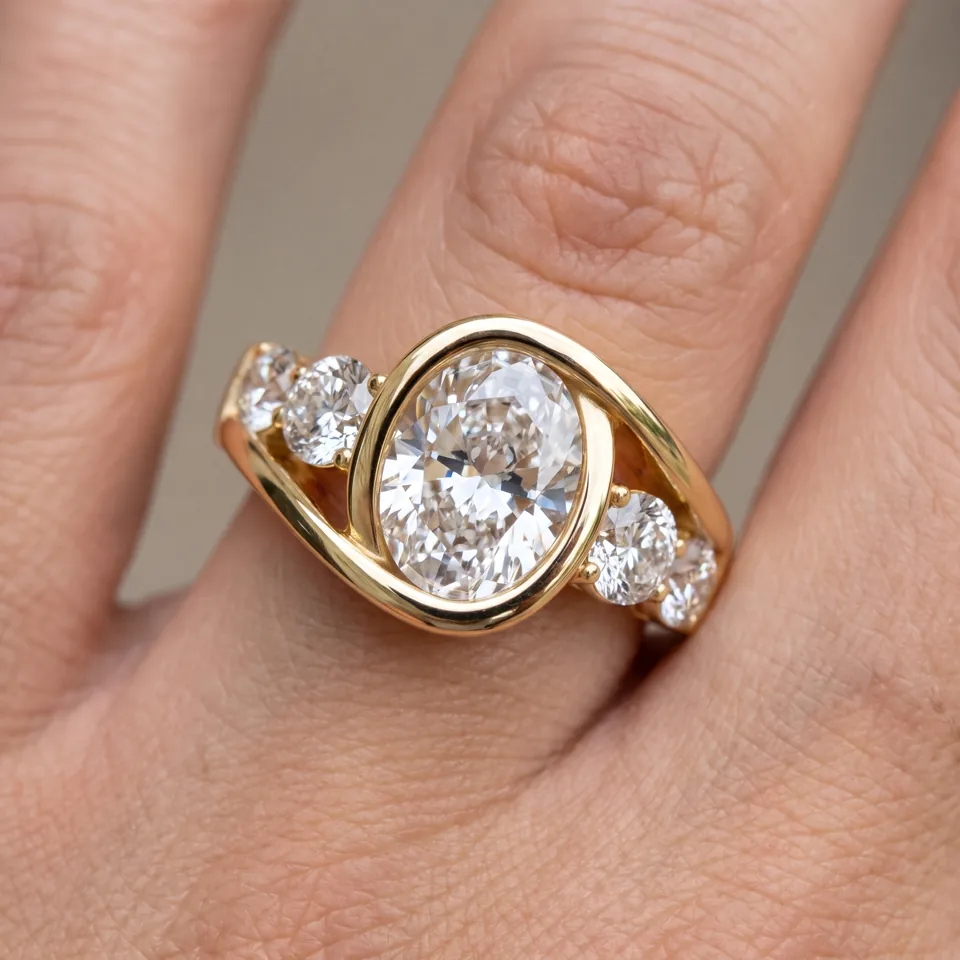 Oval Bypass Engagement Rings
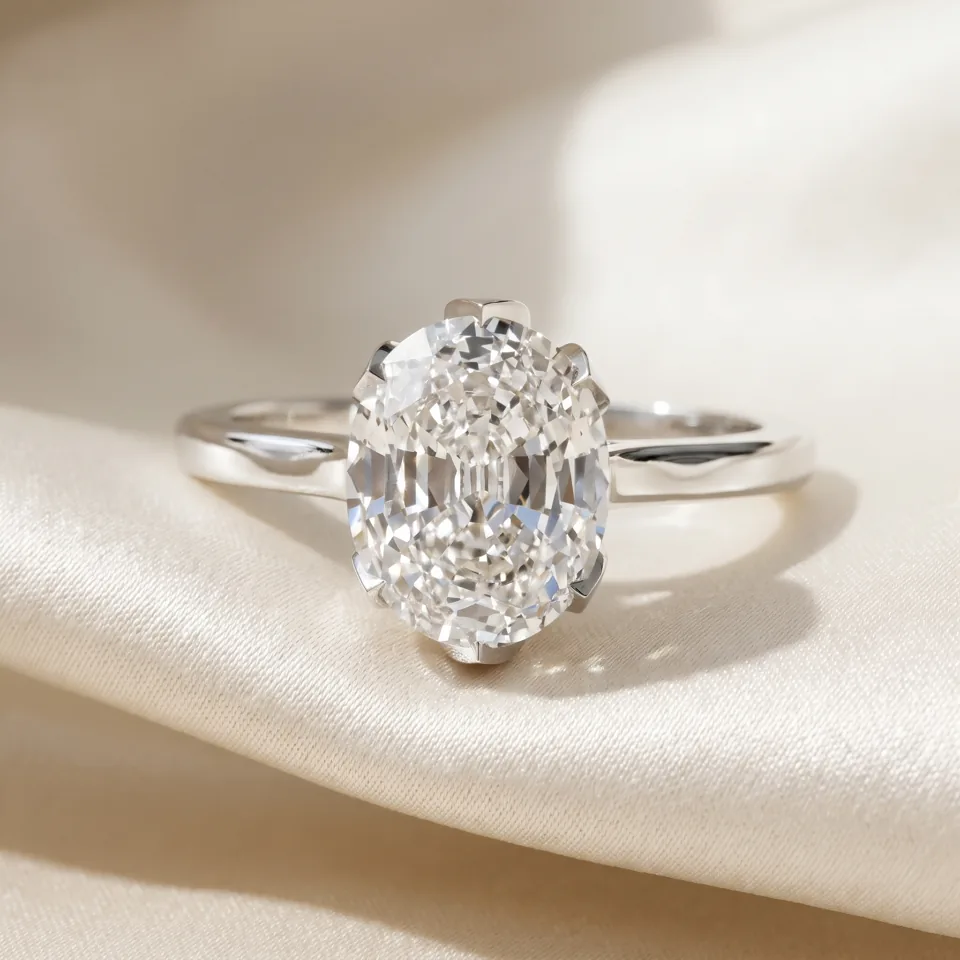 Oval Floral Engagement Rings
The two strands of the band cross beneath or beside the oval and continue around the finger. From above, the crossing frames the center; from the side, the strands rise and dip. Twisted bands like these look different from every angle, which keeps them interesting.
Pavé on the strands adds light along the whole loop. Where one strand stays polished, the twist itself is easier to see and simpler to clean. Because the loop crests right under the oval, a flat band beside it can leave a sliver of space; a twist-shaped band nests more closely.
Every design is made in platinum, in 10K, 14K or 18K gold in white, yellow or rose, and in Silvadium, a tarnish-resistant sterling silver. Each setting holds a green, pink, yellow or blue oval as well as white, and one also takes black. The oval you choose comes with an IGI or GIA report. Settings start from about $1,150, and most are about $1,160 to $1,280 before the center.
After you choose the oval, we make the ring in 10–15 days and ship it with free insured shipping. You can return it within 30 days, also free and insured, and you get one free resize within 60 days of delivery.


