
How to Read a Diamond Certificate: GIA and IGI Reports Explained
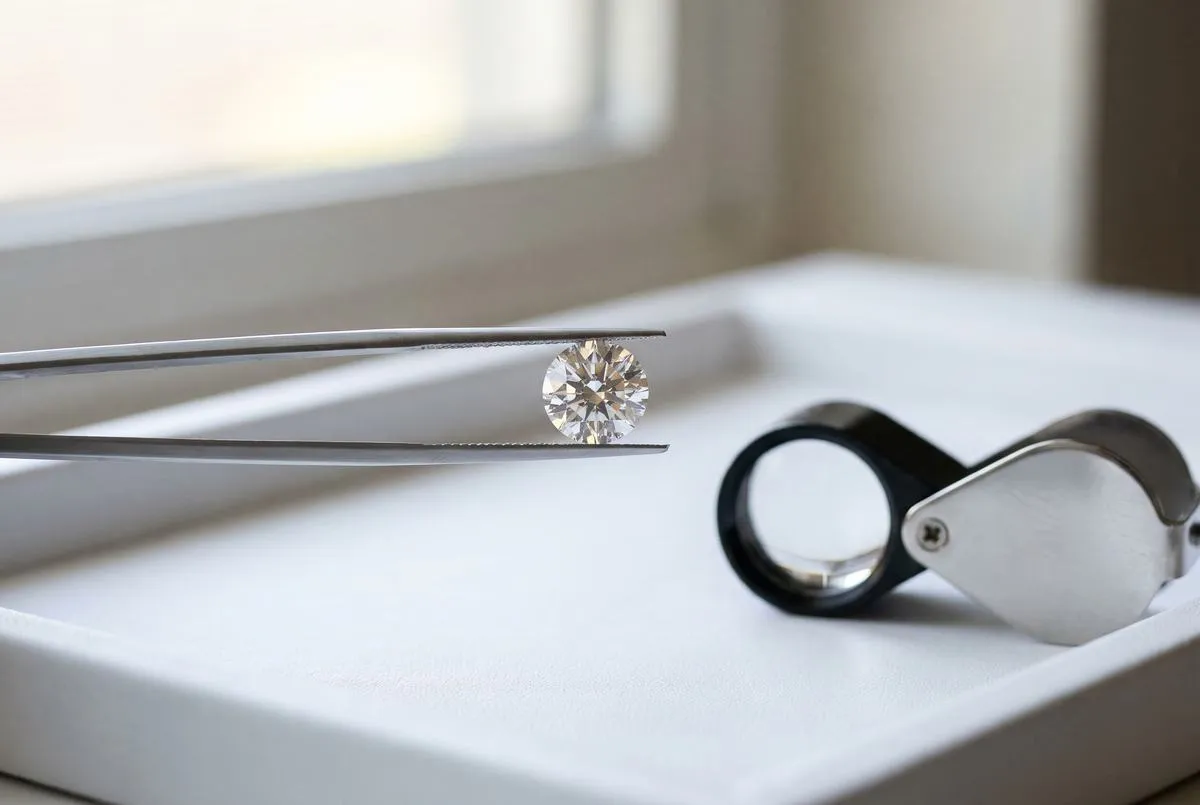
A diamond certificate is a gemological lab’s written record of one stone: its weight, color, clarity, cut, measurements and identifying marks. To read one, look up the report number on the lab’s website first, confirm whether the stone is natural or laboratory-grown, then work through the grades and the finish details. With the steps below it takes about five minutes.
The document describes a stone and stops there. GIA states on its own reports that they are neither a guarantee nor a valuation. The rules have also shifted for lab-grown diamonds: since October 2025, a new GIA document and an IGI report can describe the same kind of stone in very different terms. Here is what each line means and how to use it when you compare stones.
What is a diamond certificate?
A diamond certificate is a grading report: a lab’s description of a stone’s qualities on the day it was examined. Shoppers and sellers say “certificate” and the labs prefer “report”, and both words point to the same document. GIA, which introduced the D-to-Z color scale in the 1950s, and IGI are the two labs that grade the center stones of Whitemoon engagement rings. Others, such as HRD and GCAL, issue reports too, and our comparison of diamond grading labs covers them. The reading method is the same, though a grade from one lab doesn’t transfer to another.
A report is different from an appraisal. An appraisal puts a dollar value on a piece, often for insurance, and an appraiser may use the report to get there. The report itself gives no price. “Certified” also tells you only that a lab examined the stone, so a low-color stone and a top-color stone can both be certified. The grades are where the information is.
How to read a diamond certificate, line by line
Read the report from top to bottom. Layouts vary by lab and report type, and these are the lines you should expect to find. The drawing is our own illustration with made-up values, and its numbers match the table below it. Each lab’s actual layout is in its own guide: GIA’s How to Read a GIA Diamond Grading Report and IGI’s How to Read an IGI Laboratory Grown Diamond Report.
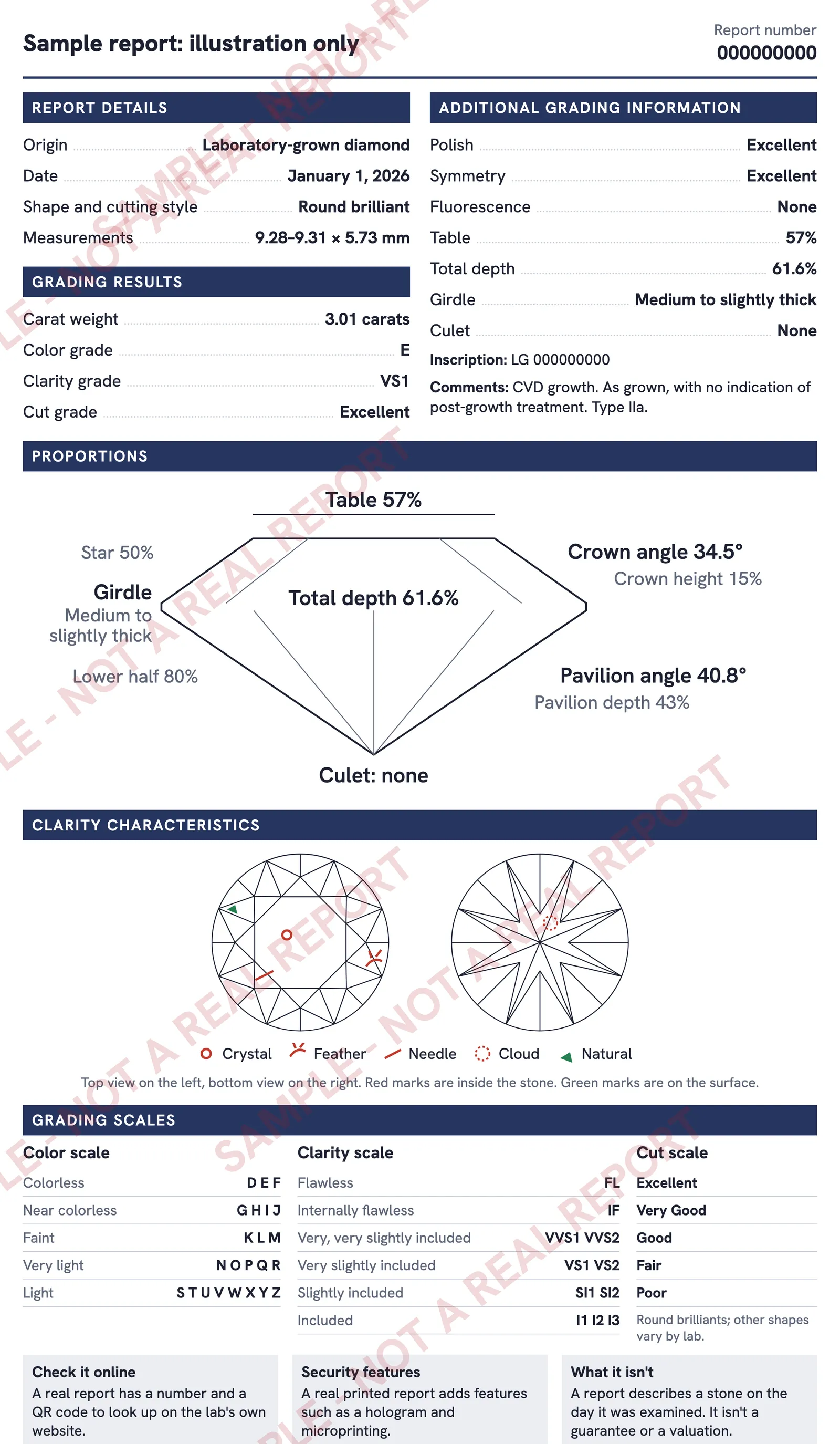
A full sample report, with made-up values, showing everything a complete report usually carries. Illustration of a typical report, not an actual lab document. On a phone, pinch to zoom.
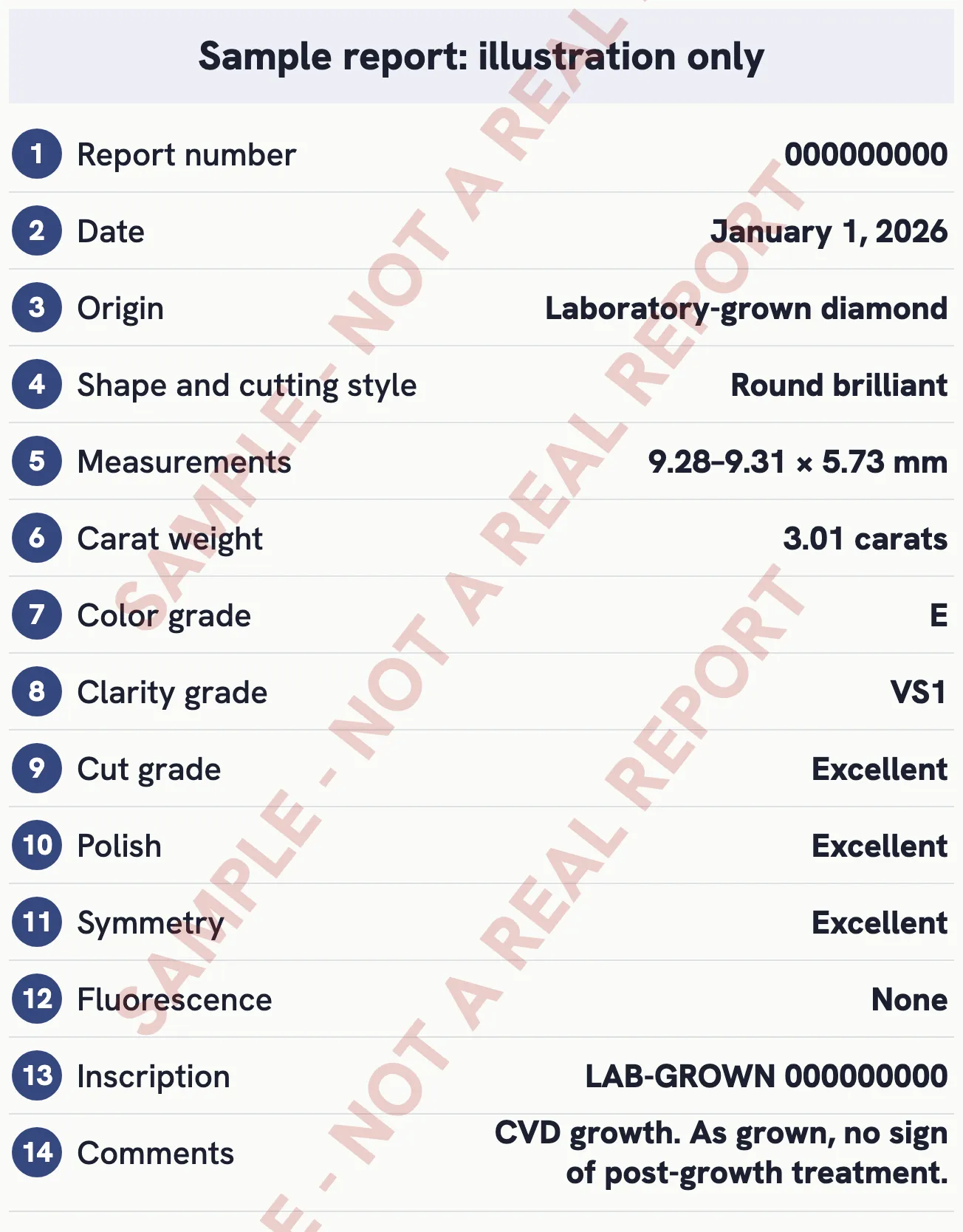
Illustration of a typical report layout, not an actual lab document.
| Line on the report | What it tells you |
|---|---|
| 1. Report number | The stone’s ID in the lab’s records |
| 2. Date | When the lab examined the stone, so what it describes is the stone on that day |
| 3. Origin | Whether the stone is natural or laboratory-grown |
| 4. Shape and cutting style | Outline and facet pattern, such as round brilliant |
| 5. Measurements | Size in millimeters, which shows how large the stone will look |
| 6. Carat weight | Weight to the nearest hundredth of a carat |
| 7. Color grade | D (colorless) down the alphabet to Z |
| 8. Clarity grade | Flawless down to Included, judged at 10× magnification |
| 9. Cut grade | How well a round brilliant is proportioned and finished |
| 10. Polish | How smooth and well finished the facet surfaces are |
| 11. Symmetry | How exactly the outline and facets line up |
| 12. Fluorescence | Whether the stone glows under ultraviolet light, and how strongly |
| 13. Inscription | Text laser-cut on the stone’s edge, usually the report number |
| 14. Comments | Anything else worth knowing, such as treatments or growth method |
Report number and inscription
Start here, because this is how you confirm the document is on record. Enter the number in GIA’s Report Check at gia.edu or IGI’s Verify Your Report at igi.org, and the online record should match the paper line for line. If the stone has a laser inscription on its girdle, the thin edge around its widest point, a jeweler with a loupe can confirm it matches. An inscription alone isn’t proof: IGI has reported finding a lab-grown stone inscribed with a number from a natural diamond’s report. The stone, the inscription and the online record all need to agree.
Printed reports also carry security features you can’t easily judge at home. GIA lists microprinting, security screens, watermarks, a two-dimensional barcode, a hologram and numbered sheets. IGI lists security paper with at least five features, including tear-proof paper, microprinting and holograms. Both use a QR code that links to the lab’s record, which is the practical check for most buyers.
Measurements and carat weight
Carat is weight, so two stones of the same carat can look different in size. On a round stone, measurements read as the smallest width, the largest width and the depth, such as 6.41–6.43 × 3.97 mm. Other shapes show length × width × depth. A stone cut deep carries weight where nobody sees it, so compare the millimeters across the top as well as the carats. Our 3 carat diamond price guide shows how a round stone’s width changes with its weight.
Color and clarity
Color runs from D to Z. Colored diamonds use a different scale, which our guide to colored diamonds covers. D, E and F are graded colorless and G through J near colorless, and the difference between neighboring grades is hard to see once a stone is set. Clarity runs from Flawless and Internally Flawless through VVS1, VVS2, VS1, VS2, SI1 and SI2 to the Included grades. Our diamond clarity chart shows what each one means. Graders judge it at 10× magnification, so a VS stone usually looks clean to the naked eye. Step cuts such as emerald cut engagement rings have large open facets that show inclusions more readily, so clarity deserves more attention there.
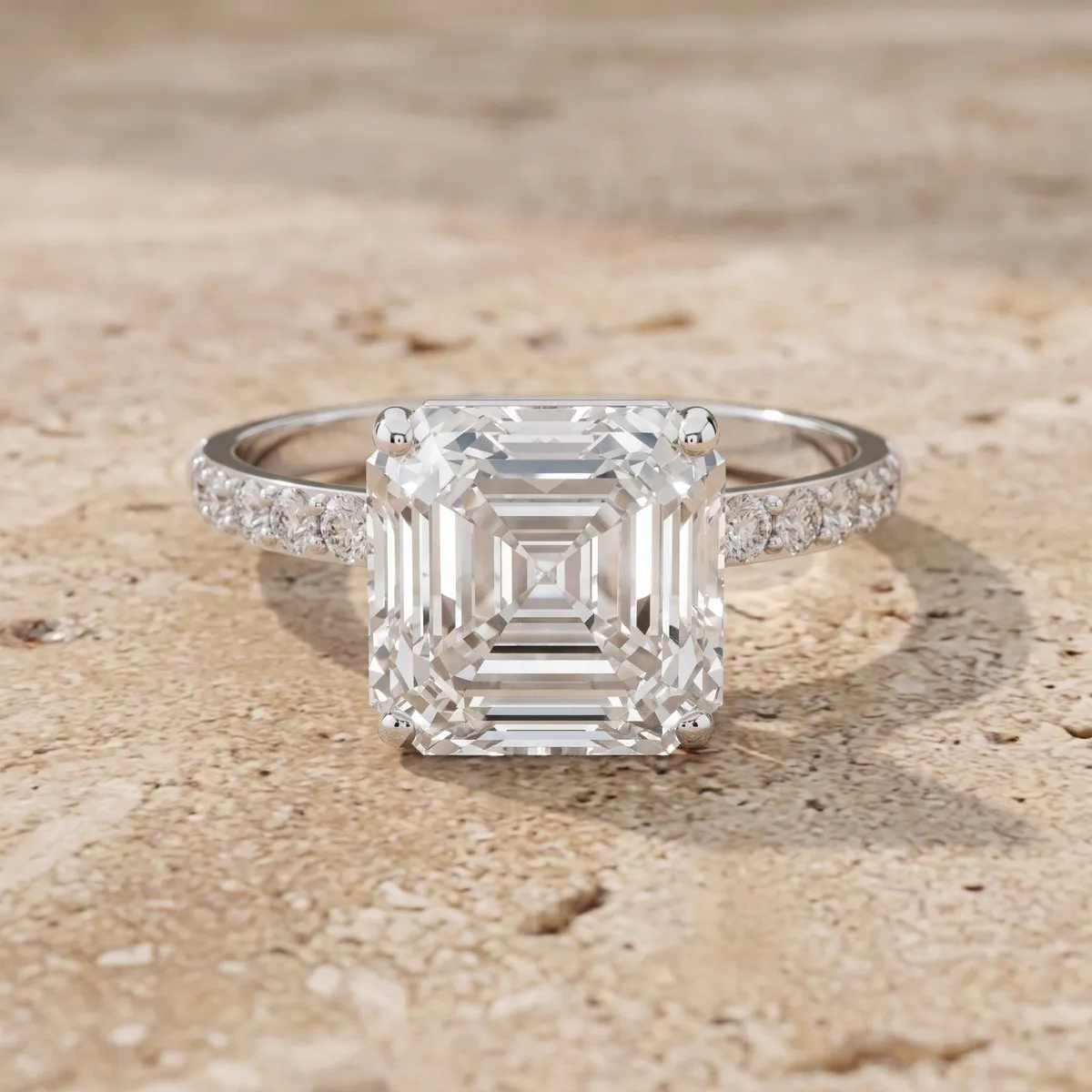
An Asscher cut. Step cuts like this have open facets that show inclusions more readily than a brilliant cut. Image created from the ring’s design.
The clarity plot
The plot is a map of the stone, seen from the top and from the bottom. On a GIA report, red symbols mark internal characteristics, called inclusions, and green or black symbols mark surface ones, called blemishes. The key beside the map lists what each symbol means, most important first. Look at where the marks sit: one near the edge may hide under a prong, while one in the middle of the top facet is easier to spot. Some shorter reports leave the plot out, so a missing plot isn’t a warning sign. If a stone ever looks hazy, the plot and clarity grade help explain why, once cleaning the diamond ring at home has ruled out ordinary film.
Here is how a simple plot reads, in our own drawing with made-up marks. The numbers match the list below it.
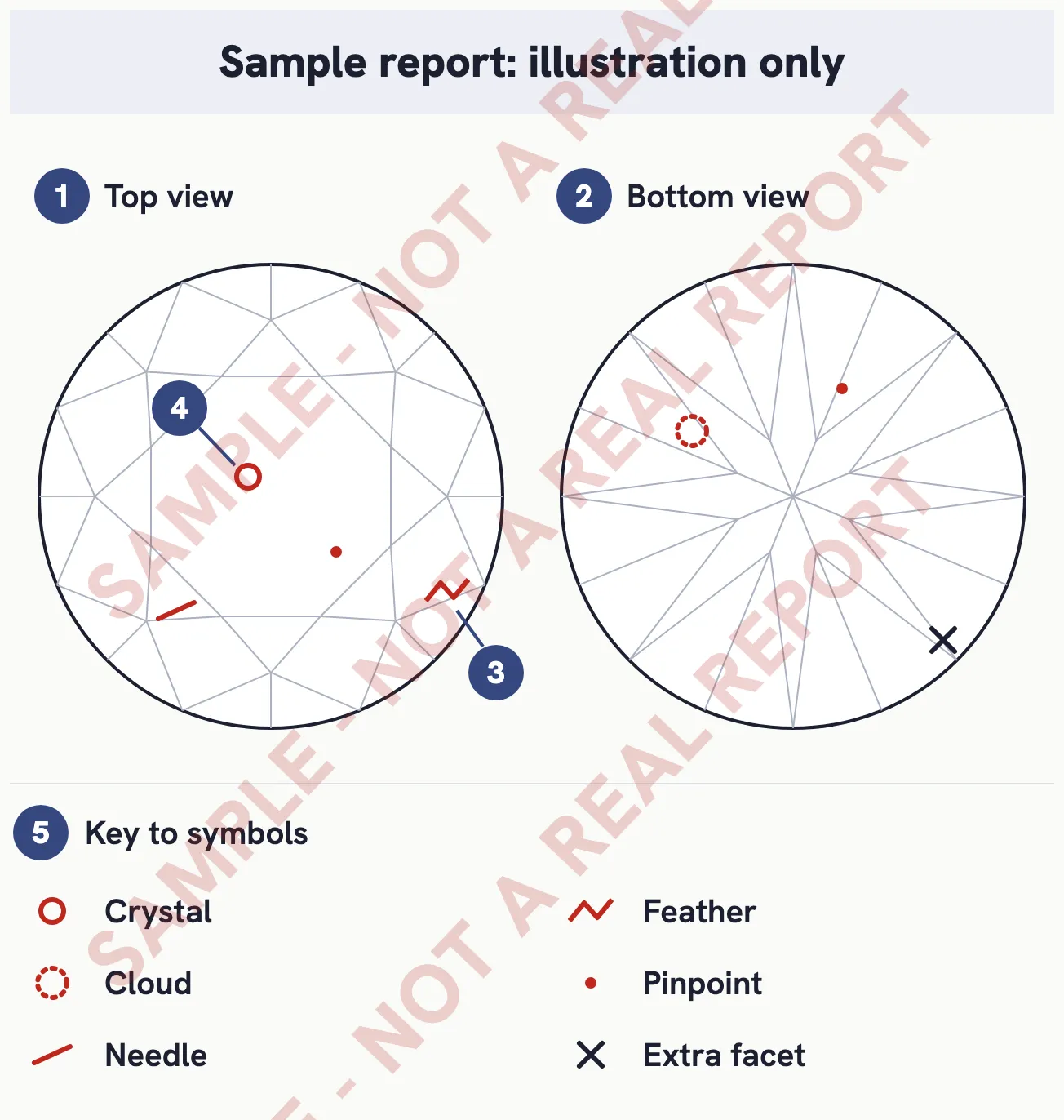
Illustration of a typical report layout, not an actual lab document.
- Top view. The stone seen from above, through the table. This is the view you get once the stone is set.
- Bottom view. The same stone seen from below. Marks drawn only here can be harder to spot from above.
- A mark near the edge. A feather here may hide under a prong, though a break at the edge deserves a second look because that is where a knock could start a chip.
- A mark under the table. A crystal in this spot is easy to find. GIA says the closer an inclusion sits to the center of the table, the greater its effect on the grade.
- Key to symbols. The names of the marks on this stone. GIA’s plot may leave off marks that are widespread or faint, and those can be noted under comments.
Cut, polish and symmetry
Cut has the biggest effect on sparkle, and the cut grade applies to round brilliants. GIA grades them from Excellent to Poor, and some IGI reports use Ideal at the top. That makes this line most useful when you shop round engagement rings. GIA gives no overall cut grade to fancy shapes, so for oval engagement rings and other shapes, rely on polish, symmetry, measurements and a good look at the stone. Excellent or Very Good polish and symmetry are what you want on any shape.
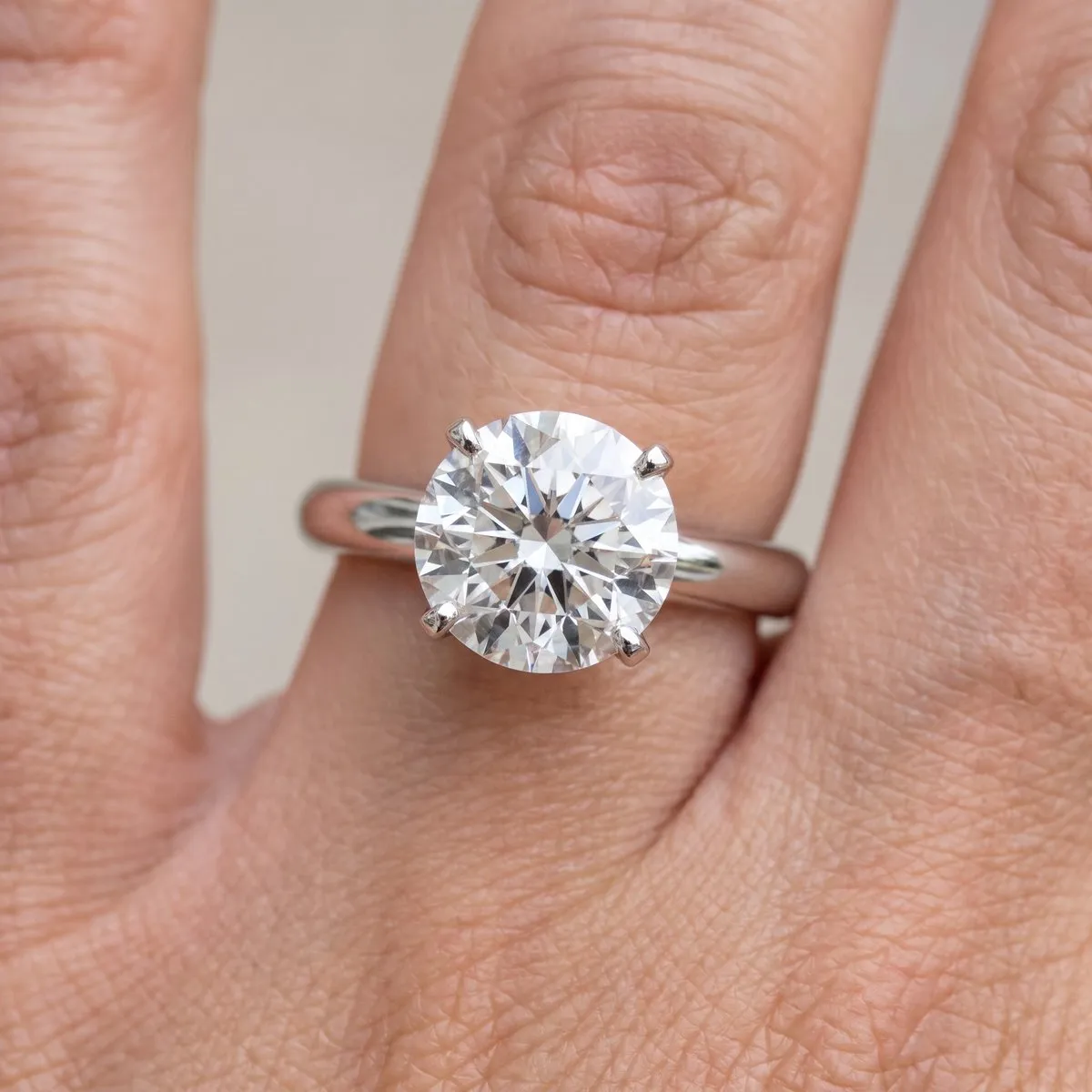
A round brilliant, the shape that receives an overall cut grade at GIA. Image created from the ring’s design.
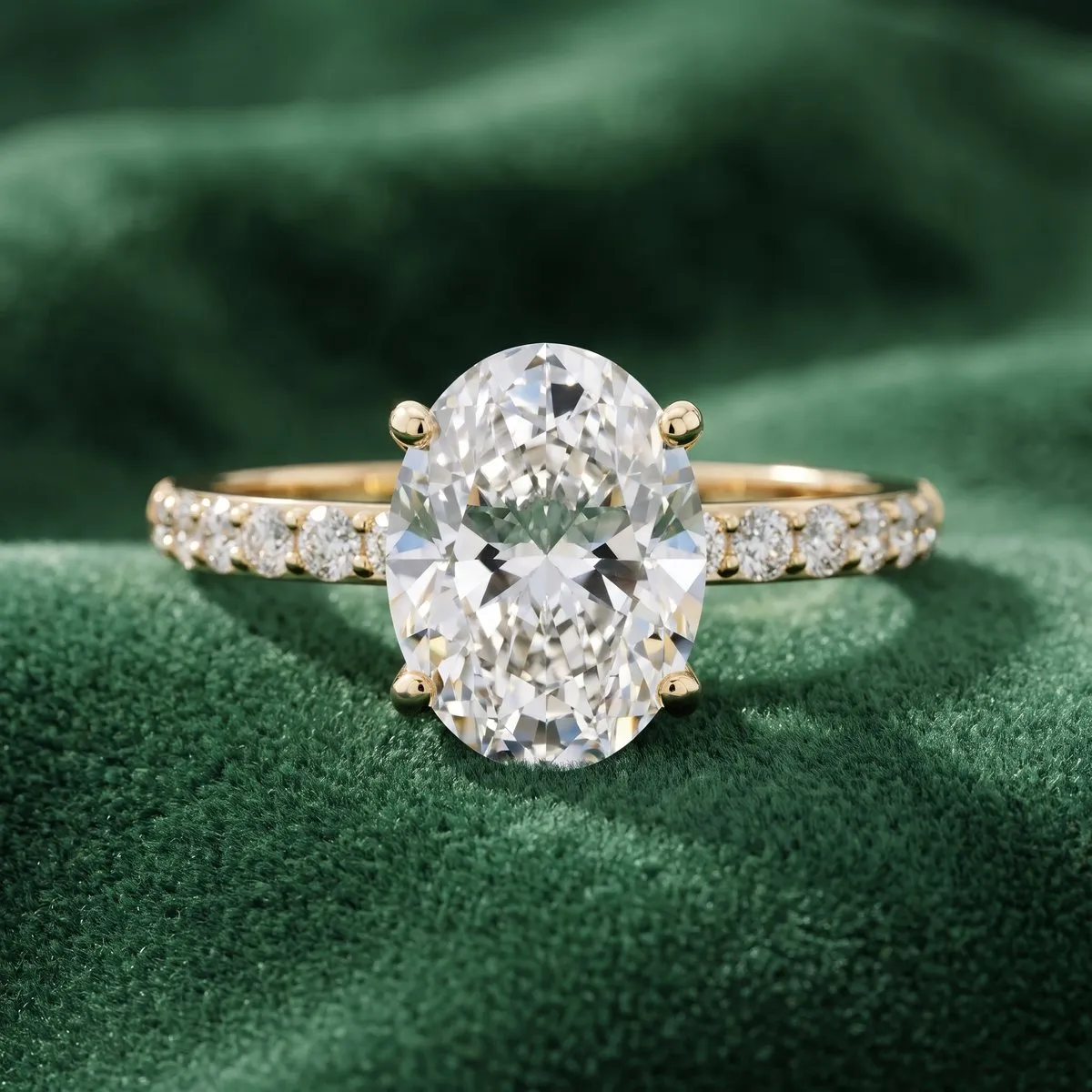
An oval, where polish, symmetry and measurements do more of the work. Image created from the ring’s design.
Polish and symmetry have their own vocabulary. Polish covers surface marks such as polish lines, scratches, pits and abrasions. Symmetry covers an out-of-round outline, a table or culet off center, misaligned or misshapen facets, and extra facets. GIA’s five steps for both run Excellent, Very Good, Good, Fair and Poor, and it found that one step lower than the rest of the cut grade couldn’t be reliably seen with the unaided eye.
Fluorescence
Fluorescence is a glow, usually blue, that some diamonds show under ultraviolet light. Reports grade it from None to Very Strong. GIA found that about 25% to 35% of more than 26,000 diamonds it studied showed some fluorescence, and in separate viewing tests, average observers couldn’t consistently pick out its effects. A very strong grade can occasionally make a stone look hazy, so ask to see that stone in daylight.
Diamond proportions: what each number on a report means
The proportions diagram shows a stone from the side, with angles in degrees and lengths as a percentage of its average width. Two stones of the same carat weight can be built very differently, and these numbers explain why one looks larger or livelier than the other. The ranges in brackets are GIA’s published limits for an Excellent cut grade on a round brilliant. They make a useful yardstick, though they don’t apply to fancy shapes, and a stone inside every range can still grade lower. On ovals, pears and marquises, our guide to the bow-tie effect covers what no report shows. The numbers match the drawing, which is our own illustration with made-up values.
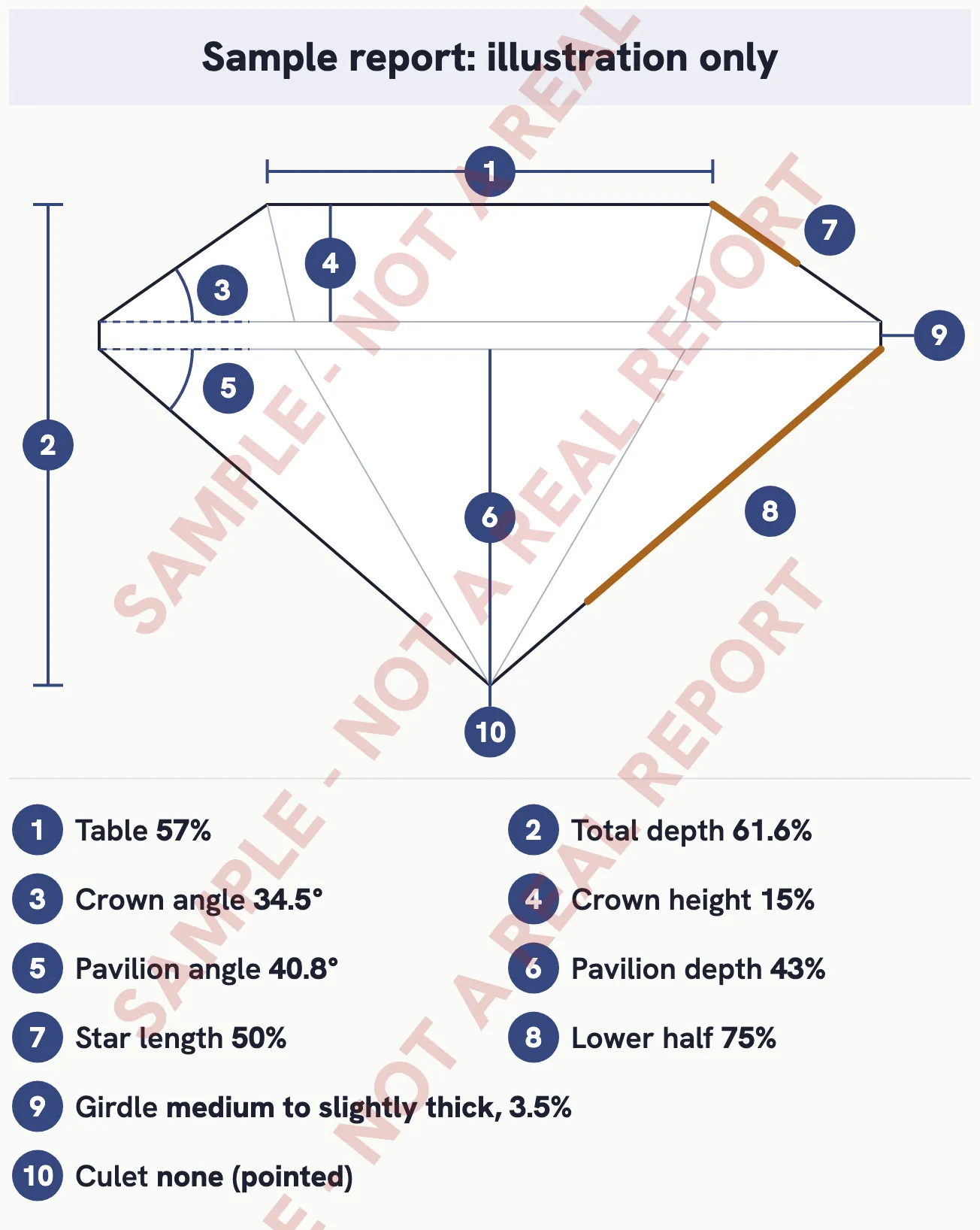
Illustration of a typical report layout, not an actual lab document.
| Number and term | What it is |
|---|---|
| 1. Table (52–62%) | The width of the flat top facet as a share of the stone’s width. |
| 2. Total depth (57.5–63%) | Height from table to culet as a share of width. A deep stone hides weight below the girdle and can look small for its carats. |
| 3. Crown angle (31.5–36.5°) | The slope of the upper facets. GIA’s examples show a shallow crown angle darkening a stone. |
| 4. Crown height (12.5–17%) | How tall the section above the girdle stands. |
| 5. Pavilion angle (40.6–41.8°) | The slope of the lower facets, and the tightest range here. A shallow angle darkens the stone too. |
| 6. Pavilion depth (about 43%) | The distance from girdle to culet, which follows from the pavilion angle. |
| 7. Star length (45–65%) | How far the small star facets reach from the table edge toward the girdle. |
| 8. Lower half length (70–85%) | How far the lower half facets reach from the girdle toward the culet. |
| 9. Girdle (about 2.5–4.5%) | The narrow edge between crown and pavilion, where a setting holds the stone. Reports give a range from thinnest to thickest: Extremely Thin, Very Thin, Thin, Medium, Slightly Thick, Thick, Very Thick or Extremely Thick. A word such as Faceted, Polished or Bruted can describe its surface. Thin girdles chip more easily, and thick ones add weight without adding width. |
| 10. Culet (None to Small) | The tip at the bottom: None, Very Small, Small, Medium, Slightly Large, Large, Very Large or Extremely Large. None, sometimes printed as Pointed, means the facets meet at a point. GIA notes that an eye-visible culet can disrupt the face-up pattern. |
Every inclusion and blemish a report can list
Inclusions sit inside a stone or reach in from the surface, and blemishes stay on the surface. Together they are called clarity characteristics, and graders weigh their size, number, position, relief and nature. These are GIA’s terms, which other labs mostly share. Only some will appear on any one report, and most never trouble the person wearing the ring.
Inclusions
| Mark | What it looks like, and whether it matters |
|---|---|
| Feather | A break in the stone, often white and feathery. Look closely at long ones and at any that reach the surface near the girdle or a prong. Tiny ones well inside the stone usually don’t matter. |
| Crystal | A mineral grain trapped inside as the stone grew, clear, white or dark. Look closely if it is large, dark or under the table. Small clear ones rarely show. |
| Needle | A thin crystal that looks like a tiny rod at 10×. Usually minor unless several gather under the table. |
| Pinpoint | A very small crystal that looks like a tiny dot at 10×. Rarely matters on its own. |
| Cloud | Many tightly grouped pinpoints with a hazy look. Small ones usually don’t matter. Look closely at large ones, since a big cloud can dull a stone. |
| Knot | A white or transparent crystal that reaches the surface after polishing. Look closely at its size and position, because it breaks the surface. |
| Cavity | An angular opening left when part of a feather breaks away or a surface crystal falls out during polishing. Look closely: it is an open hole that can collect dirt. |
| Chip | A shallow opening from damage, usually at the girdle edge, a facet junction or the culet. Look closely, as it shows the stone has taken a knock. A small one at the girdle may sit under a prong. |
| Bruise | A small impact mark, usually at a facet junction, with tiny root-like feathers. Usually very small; check it isn’t on the table’s edge. |
| Bearded girdle | Very small feathers running in from the girdle, which can come from cutting. Minor unless heavy. |
| Indented natural | A patch of the rough crystal’s original surface that dips below the polish, usually at the girdle. Usually minor, and a prong can cover it. |
| Twinning wisp | A ribbon of pinpoints, clouds or crystals tied to distortion in the crystal’s growth. It can set the clarity grade. GIA calls it unique to natural diamonds and saw none on the CVD stones in its 2016 review, so ask about one on a lab-grown report. |
| Internal graining | Faint lines, angles or curves from irregular crystal growth. Usually minor, though strong graining can reduce transparency. |
| Grain center | A small, concentrated area of crystal distortion that can look white or dark. Usually minor. |
| Etch channel | A narrow channel running in from the surface, usually etched in nature, that can resemble a laser drill hole. Uncommon, and GIA has described only unusual cases on CVD stones. Look closely, since it is an opening in the stone. |
| Laser drill hole | A tiny tunnel from the surface, made by a laser to reach a dark inclusion so it can be removed or bleached. Look closely: this is a permanent treatment, and GIA lists it first on the key and describes it under comments. |
Blemishes
| Mark | What it looks like, and whether it matters |
|---|---|
| Natural | A patch of the rough crystal’s original surface left on the finished stone, usually at the girdle. Usually minor. The name describes the mark and not the stone’s origin, so read the origin line for that. |
| Extra facet | A facet the cutting style doesn’t call for, usually near the girdle. Usually harmless. |
| Polish lines | Fine parallel lines left by polishing, transparent or white. Minor when faint. Heavy white lines lower the polish grade and can dull the surface. |
| Surface graining | Graining lines that show on the surface. Usually minor. |
| Nick | A small notch on a facet edge, usually at the girdle or culet, with no visible depth at 10×. Minor. |
| Abrasion | Minute nicks along facet edges that leave a fuzzy white line instead of a crisp one. A sign of wear, and minor unless widespread. |
| Scratch | A thin, dull white line with no apparent depth at 10×. Usually minor. |
| Pit | A tiny opening that looks like a white dot. Usually minor. |
| Burn mark, lizard skin, rough girdle | Less common finish marks: a whitish haze from polishing heat, a wavy texture on one facet, and a granular girdle surface. They count against the polish grade when heavy. |
The marks to look at closely
- Anything under the table. This is where a mark is easiest to see and counts most toward the grade.
- Anything that reaches the surface near the edge. GIA notes a stone struck on a feather or other surface-reaching inclusion might chip, and very deep feathers can be a durability concern. Ask where the prongs will sit.
- Large clouds. A plot may not show every faint mark, so a stone can look hazy without an obvious symbol. Check the comments and ask for a photo or video.
- Dark marks on step cuts. The long open facets of an emerald or Asscher cut show them more readily than a round brilliant does.
- Treatments. Laser drill holes should be listed, and GIA doesn’t grade fracture-filled diamonds at all. Read the comments line every time.
Marks on lab-grown diamonds
Lab-grown diamonds are graded with the same vocabulary, and GIA’s research points to a few typical features. CVD stones often hold dark graphite or other mineral specks, which graders plot as pinpoints, clouds, crystals or needles. HPHT stones can hold metal left from the growing process: black and opaque in transmitted light, with a metallic shine in reflected light, and sometimes strong enough to respond to a magnet. GIA cautions that most of these marks don’t settle origin by themselves, which is why labs rely on instruments and why the origin line on the report matters more than any mark on the plot.
How a lab-grown diamond report is different
A lab-grown diamond report states the stone’s origin plainly and often adds how it was grown. Look for “laboratory-grown” in the report’s title, comments or inscription. If a report or a seller leaves the origin unclear, ask before you buy. From there, the two labs part ways.
What an IGI lab-grown report shows
IGI grades lab-grown diamonds on the same D-to-Z color and Flawless-to-Included clarity scales it uses for natural stones. It inscribes “LG” ahead of the report number on the girdle. The comments line names the growth process, either CVD (chemical vapor deposition) or HPHT (high pressure, high temperature). It may also say the stone is “as grown” with no indication of post-growth treatment, or that it may have had post-growth treatment, a step some growers use to improve color. Read that line when you compare prices, so you are comparing like with like. Our guide to lab-grown vs mined diamonds explains what the growth methods mean for energy use, and our IGI certificate guide reads that report line by line, including what the growth and treatment wording means.
What a GIA lab-grown document shows
Since October 1, 2025, GIA has issued a Laboratory-Grown Diamond Quality Assessment in place of D-to-Z and Flawless-to-Included grades. Each stone is classed as Premium or Standard, and a stone below the minimums gets no assessment. The girdle is inscribed with “Laboratory-Grown” and the assessment number. Older GIA lab-grown reports with letter grades remain valid, so you may still see both formats for sale. GIA’s published sample also says the stone’s lab-grown status was disclosed and that no further testing was done. Our GIA certificate guide covers this document, the older reports and natural diamond reports in full.
| Measure | Premium | Standard (minimum) |
|---|---|---|
| Color | D | E to J |
| Clarity | VVS or higher | VS |
| Polish | Excellent | Very Good |
| Symmetry | Excellent | Very Good (Good on fancy shapes) |
| Cut grade, round only | Excellent | Very Good |
As published by GIA for the October 2025 launch.
Standard spans E to J in color, so two Standard stones can look quite different. A letter grade from IGI and a class from GIA can’t be compared line by line, which makes seeing the stone itself more important.
IGI vs GIA: which lab is better for a lab-grown diamond?
Neither lab is better for every shopper. GIA is the usual benchmark for natural diamonds and now sorts lab-grown stones into two broad classes, while IGI gives lab-grown stones full color and clarity grades, which makes one stone easier to compare with another. Our diamond color chart explains what each letter means.
| Compare | IGI | GIA |
|---|---|---|
| Founded | 1975 | 1931 |
| Lab-grown document | Laboratory Grown Diamond Report | Laboratory-Grown Diamond Quality Assessment |
| Color and clarity | Letter grades | Premium or Standard (letter grades on older reports) |
| Inscription | LG plus the report number | “Laboratory-Grown” plus the assessment number |
| Online check | Verify Your Report, igi.org | Report Check, gia.edu |
You will often read that IGI grades more generously than GIA. That is a common view among jewelers, and we haven’t found a recent independent study that settles it. The practical answer is to treat any grade as a close description and compare stones graded by the same lab. Our full comparison of IGI vs GIA for a lab-grown diamond goes deeper.
The lab also affects the price. On November 2, 2026, a 3 carat E VVS2 lab-grown diamond with a GIA report cost about two and a half times as much at Whitemoon as an IGI-graded stone of the same grade, though few GIA stones were listed. Most center stones in the Whitemoon ring builder carry an IGI report, and a smaller number carry a GIA report.
How to compare two stones using their certificates
- Verify both numbers. Look each one up on the lab’s website before anything else.
- Match the lab. The same letter grade from two different labs isn’t a strict match.
- Match shape and size. Compare millimeters across the top as well as carat weight.
- Check cut, polish and symmetry. These shape how lively the stone looks.
- Then weigh color and clarity. Most people can’t tell VS2 from VVS1 without magnification, so mid grades are a sensible place to save.
- Read the plot and comments. Note where inclusions sit and whether any treatment is listed.
- Look at the stone. A photo or video of the actual stone shows what a grid can’t.
A report covers one stone. A center stone’s report says nothing about the small accent stones around it or about the metal, so judge those separately.
Your report and a Whitemoon ring
The center stone of a Whitemoon engagement ring comes with an IGI or GIA report, and the report ships with your piece. That applies whether you start from solitaire engagement rings and choose the center in the next step, or pick a ring with the center already set, such as 1 carat lab-grown diamond rings or 2 carat lab-grown diamond rings. Keep the report with your purchase papers: a return needs it, and an appraiser will ask for it. Our 1 carat diamond price guide shows how the report changes what a stone costs.
If you would like help reading one, call or message us, book a virtual consultation, or book a visit at 1177 Sixth Avenue in New York, and we will go through it with you. Most Whitemoon rings are made to order in about 10–15 days and ship free with insurance both ways, with 30-day returns on unworn pieces and one free resize within 60 days of delivery.
Diamond certificate questions
What does it mean when your diamonds are certified?
It means an independent gemological lab examined the stone and recorded its qualities in a report with its own number. “Certified” describes the paperwork, so read the grades to judge quality. The report isn’t an appraisal and doesn’t state a value. Look up the number on the lab’s website to confirm the record exists and matches the stone you are buying.
Which is better, GIA or IGI?
It depends on the stone. GIA is the usual benchmark for natural diamonds. For lab-grown diamonds, GIA now gives a broad Premium or Standard class, while IGI still gives letter grades for color and clarity, which helps when you compare stones. Whichever you choose, compare stones graded by the same lab, since grades from different labs aren’t a strict match.
Is an IGI diamond good?
An IGI report describes a stone’s quality without making it good or bad. A high-grade stone with an IGI report can be an excellent buy, and a low-grade one gets no help from the paperwork. Read the color, clarity and cut grades, check the comments for any post-growth treatment, and verify the number on IGI’s website.
Does GIA still certify lab-grown diamonds?
Yes, in a new format. Since October 1, 2025, GIA has issued a Laboratory-Grown Diamond Quality Assessment that classes a stone as Premium or Standard in place of color and clarity letter grades. Stones below the Standard minimums receive no assessment. Earlier GIA lab-grown reports with letter grades remain valid, so both formats are still in circulation.
How do you check an IGI number on a diamond?
Find the report number on the paper report, then enter it on the Verify Your Report page at igi.org and compare the record line by line. To tie the report to the stone itself, ask a jeweler to read the laser inscription on the girdle under a loupe. On a lab-grown diamond, IGI puts “LG” ahead of the number.
What is a GIA number?
A GIA number is the unique number GIA assigns to a report and keeps in its database. It appears at the top of the report, and it is often laser-inscribed on the stone’s girdle as well. Enter it in GIA’s Report Check at gia.edu to see the same results online, which confirms the report is on record.
Are lab-grown diamonds certified?
Many are, though a report is a choice the seller or grower makes, and small stones often go without one. IGI and GIA both examine lab-grown diamonds, among other labs. Look for the words “laboratory-grown” on the report and in the inscription. At Whitemoon, the center stone of an engagement ring comes with an IGI or GIA report.
What is a diamond flaw called?
Gemologists call them clarity characteristics. Those inside the stone or reaching in from the surface are inclusions, and those on the surface alone are blemishes. Feathers, crystals and clouds are inclusions, while scratches, nicks and polish lines are blemishes. A report’s plot shows where they sit, and GIA treats them as useful identifying features as well as flaws.
What are black spots in diamonds?
They are usually small dark crystals or graphite-like inclusions trapped as the stone grew. On lab-grown stones, CVD material can hold dark graphite specks and HPHT material can hold dark metallic ones. Whether one matters depends on its size and position: one under the table is easy to see, while one at the edge may hide beneath a prong.
Do lab-grown diamonds have inclusions?
Yes. Lab-grown diamonds form as crystals, so they can hold inclusions and blemishes, and labs describe them in the same terms. GIA found clouds, pinpoints, crystals and needles common on CVD stones, and crystals, feathers and metallic flux on HPHT stones. Clarity still varies from stone to stone, so read the grade and look at the stone.
What are the worst clarity characteristics of diamonds to avoid?
The ones most worth avoiding are large dark crystals under the table, big clouds that make a stone look hazy, and long feathers or other surface-reaching marks near the girdle or a prong, which can raise the risk of a chip. GIA’s lowest clarity grades, I1 to I3, describe inclusions that may affect transparency, brilliance and durability.