
How to Tell if a Diamond Is Real: Which Tests Actually Work
The only sure way to tell if a diamond is real is to have it tested, by a jeweler with the right instruments or by a gem lab. Our guide to choosing a jeweler you can trust lists what to check before you buy. At home you can sometimes prove a stone isn’t a diamond, but no home test can prove that it is. Several well-known tests don’t work at all, and a few can damage the stone.
We sell diamonds, so we have an interest in people trusting them. We checked each test against published gem data, mostly from GIA, and we’ll say where popular advice doesn’t hold up. Below are what each test really shows, which imitations pass it, how to check a set piece, and where to get a firm answer.
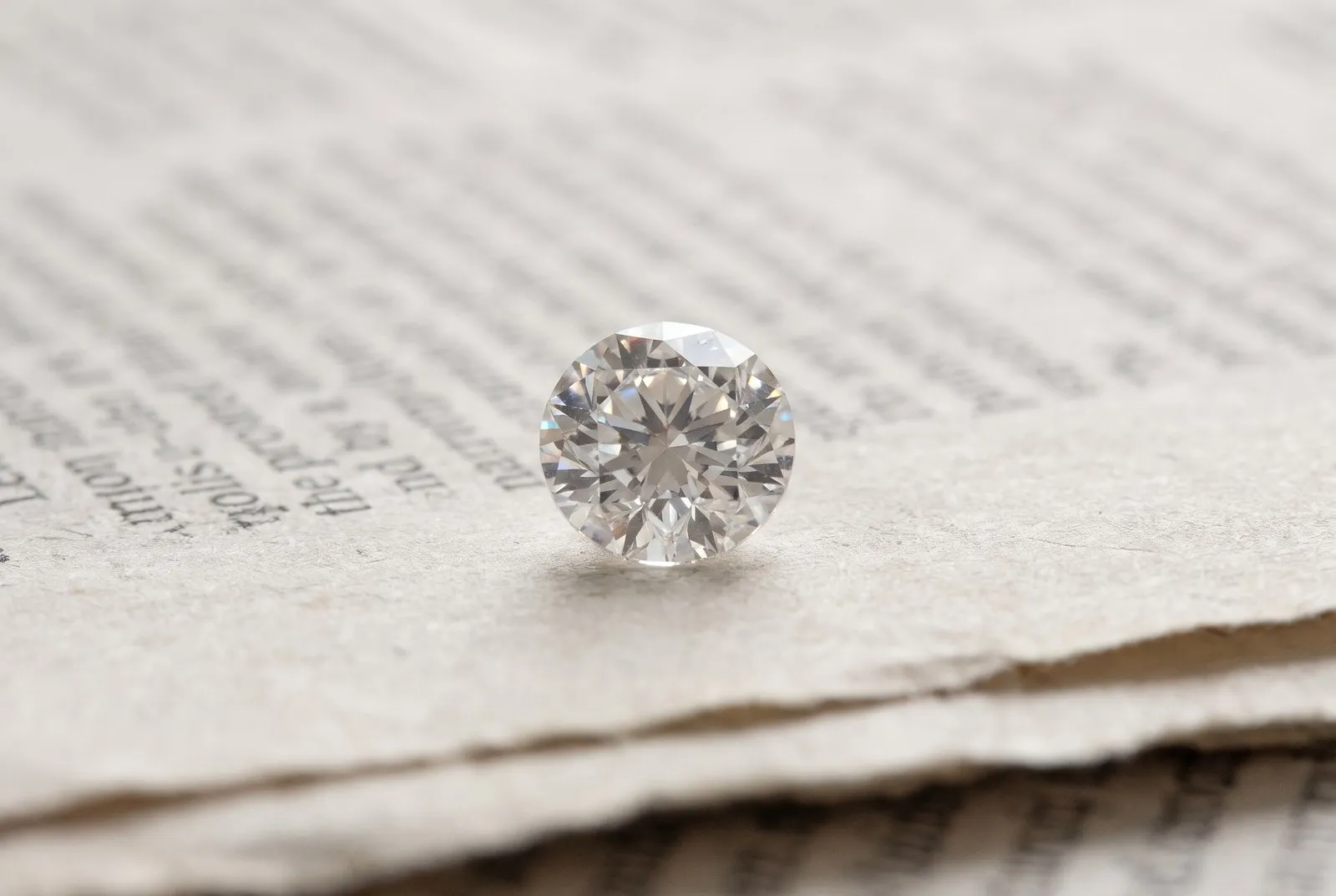
Pictured: a loose round diamond on newsprint. Illustrative image.
What does “real” mean here?
Here, “real” means a diamond and not an imitation. A diamond can be mined or grown in a lab. The FTC defines a diamond as “a mineral consisting essentially of pure carbon crystallized in the isometric system”, and it removed the word “natural” from that definition in 2018. So a lab-grown diamond isn’t a fake. An imitation, also called a simulant, is a different material that looks similar, such as cubic zirconia. Our guide to diamond simulants compares the common ones side by side.
The same FTC guides warn sellers against calling a lab-made product “real” or “genuine”, which is why careful jewelers write “lab-grown diamond”. Telling a lab-grown diamond from a mined one is a separate question, and we cover it further down.
Which diamond tests actually work?
No single check catches every imitation. Diamond, moissanite, cubic zirconia (CZ), white sapphire and glass all sink in water, and nearly all of them scratch a window. A thermal tester catches CZ, sapphire and glass, but not moissanite. The chart shows how each one behaves, using figures from GIA’s published comparison.
Read across any row and you’ll see the problem. A check can rule a stone out, but passing one tells you very little, which is why a jeweler uses more than one.
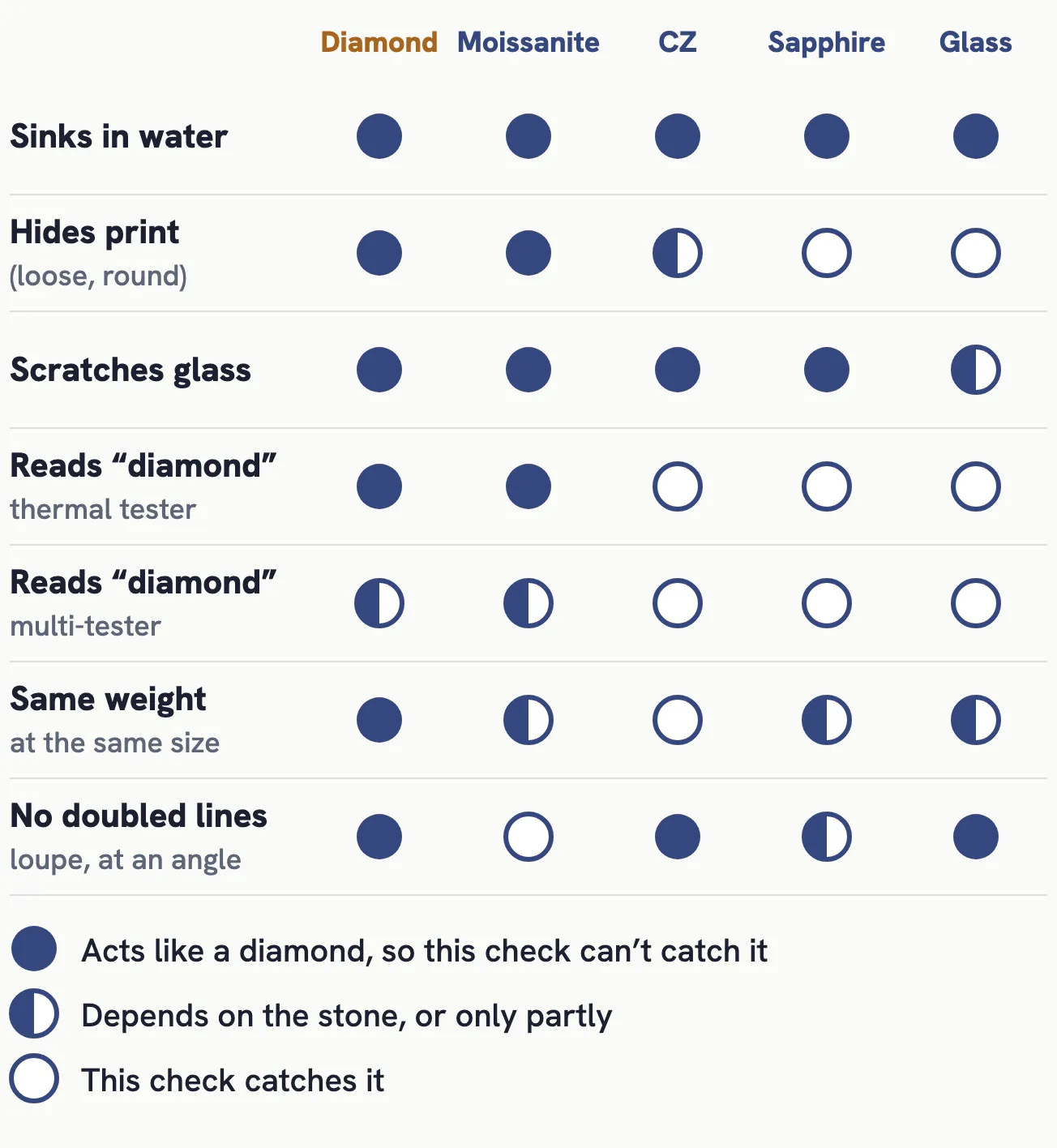
Which checks catch which imitation. From GIA’s published gem data.
Home tests that can rule a stone out
The read-through and dot tests
Place a loose round stone point up on newsprint, or over a dot on white paper, and look down through it. In GIA’s table, diamond shows no read-through, and neither do moissanite, rutile or strontium titanate. CZ shows slight read-through, while synthetic sapphire and spinel show a lot. So if print shows clearly through a well-cut round stone, it probably isn’t a diamond. If print doesn’t show, that proves nothing.
The test has two more limits. Fancy shapes such as ovals and pears let some print through whatever they’re made of, so a diamond can fail it. It also needs a loose stone, because a setting gets in the way.
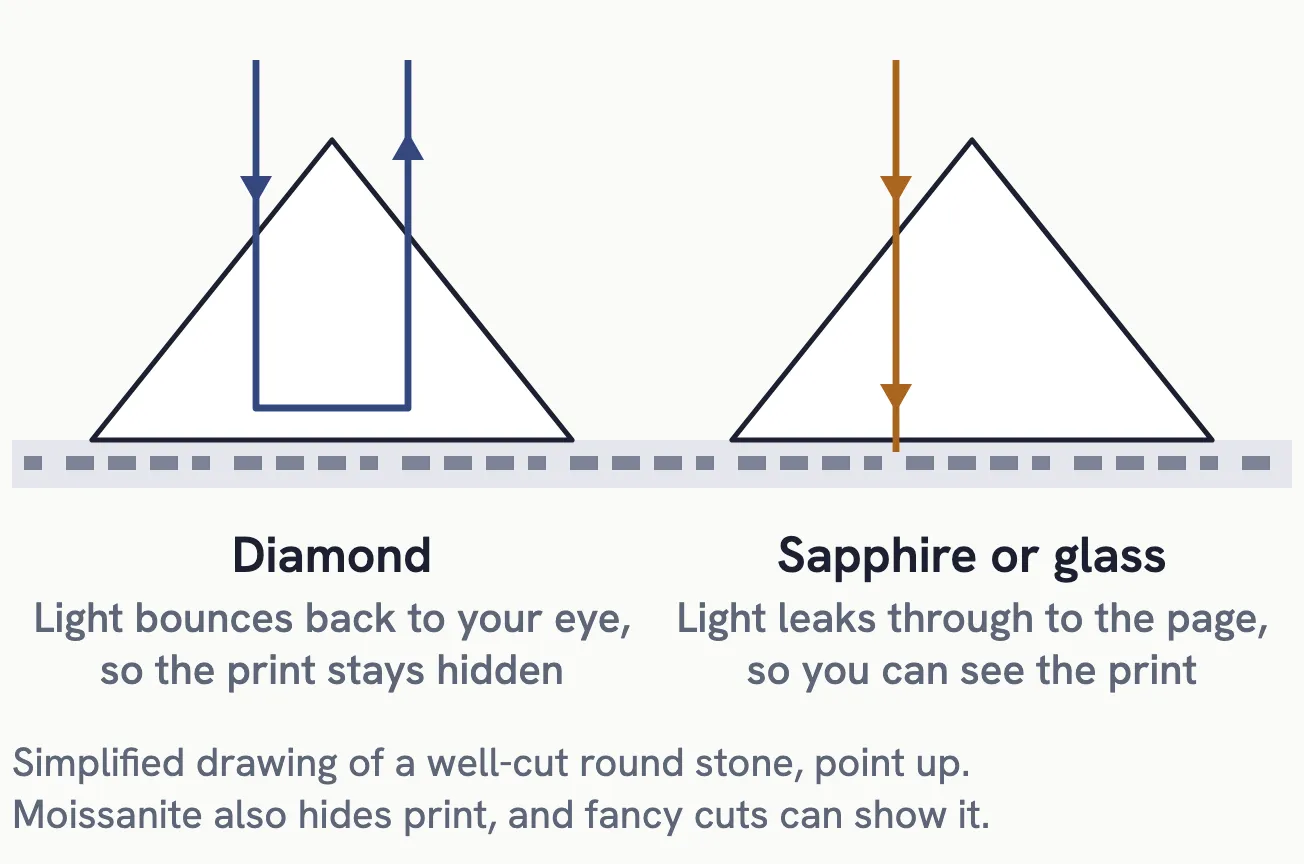
Why a well-cut diamond hides print. Our own simplified drawing.
Weight against size
If a stone is loose, weigh it and measure it, because materials weigh different amounts at the same size. A round diamond 6.5 mm across, mined or lab-grown, weighs about 1 carat. CZ of that size weighs 1.58 to 1.70 carats. You’ll need a scale that reads to 0.01 carat and a pair of calipers, and the result is only a guide because cut proportions change the weight too. Moissanite is close, at about 0.91 carat, so this check is far better at catching CZ.
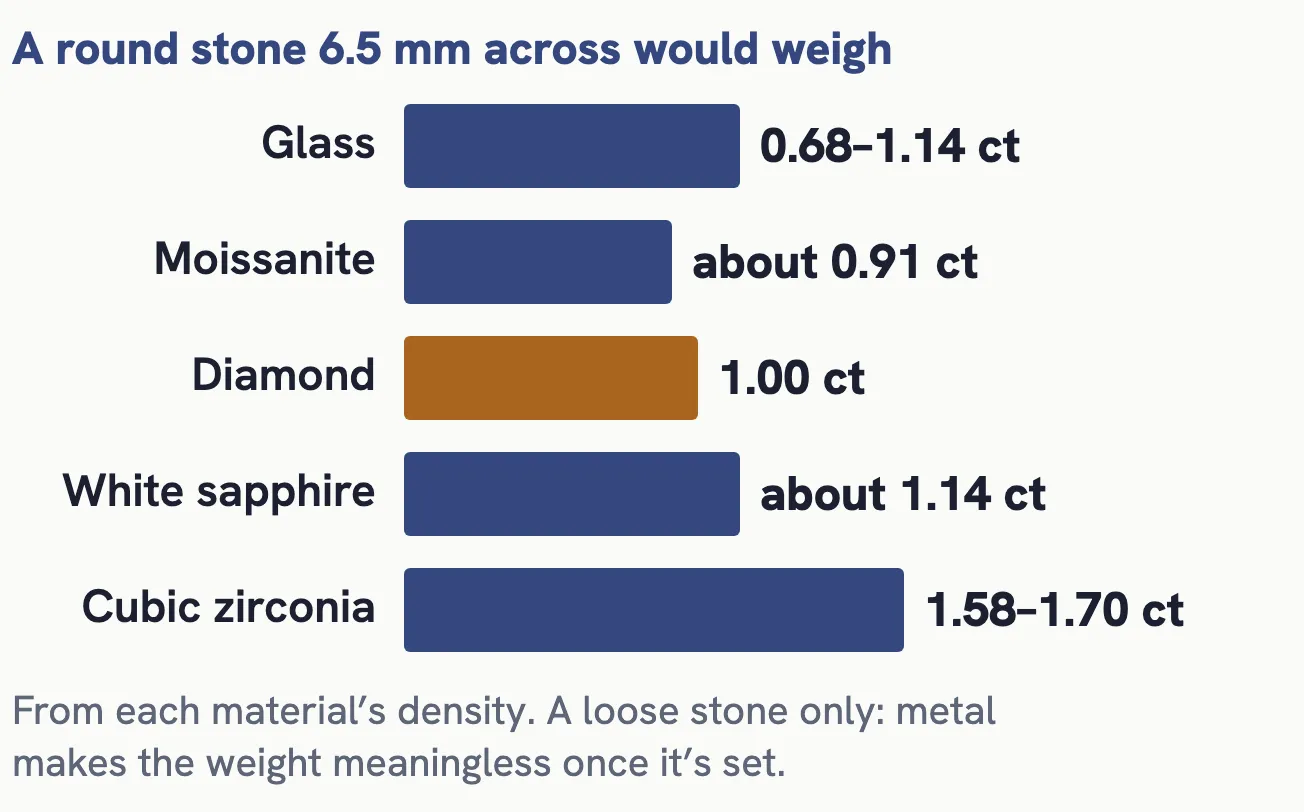
The same size, different weights, worked out from each material’s density.
The fog test
Breathe on the stone, and a diamond is supposed to clear first because it moves heat so well. Gem texts from the 1980s describe this as a crude check to run beside a known diamond. GIA now says the results can’t be repeated consistently and that humidity interferes. We couldn’t find any published timing behind the popular claim that a diamond clears in about a second, so treat fog as a hint at most.
A 10x loupe
A loupe is the most useful cheap tool, though it takes practice. Look for gas bubbles, which can point to glass or CZ, and for scuffed or rounded facet edges, which softer stones can show with wear. Then tilt the stone and look through a side facet at the lines on its back. In moissanite they look doubled. Straight down through the top you may see no doubling at all, because of how moissanite is usually cut, and most guides leave that out.
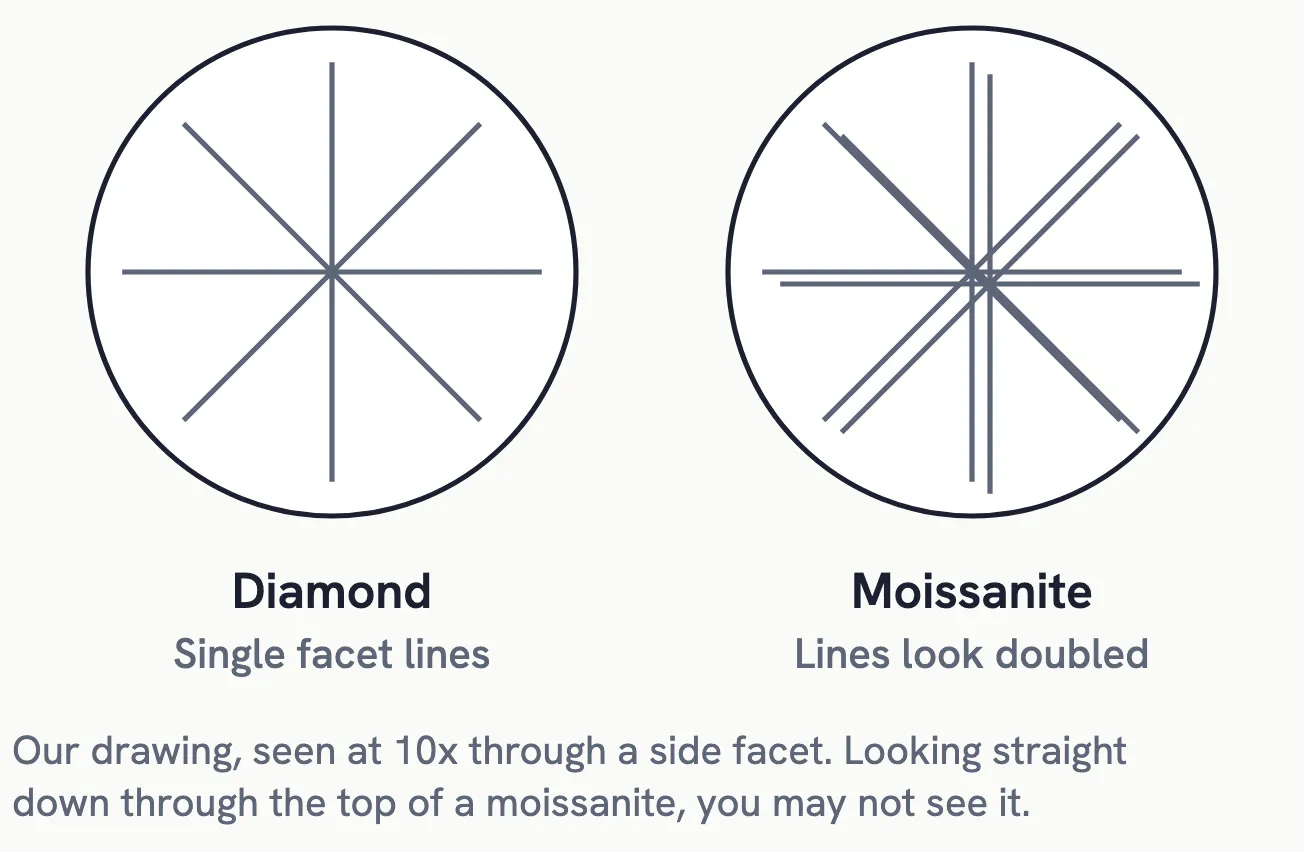
Doubled lines are a moissanite giveaway, if you look at an angle. Our own drawing.
Two popular clues don’t work. Sharp facet edges don’t prove a diamond, since CZ can be sharp too, and an old diamond can have worn edges. Inclusions don’t prove anything either, because mined diamonds, lab-grown diamonds and imitations can all have them. Our diamond clarity chart shows what the common marks are.
Tests that don’t tell you anything
- The water test. Everything sinks. Even the lightest glass is more than twice as dense as water. Moissanite’s density is 3.22, diamond’s is 3.52 and CZ’s is 5.56 to 6.00. The claim that fakes float is false, and CZ is denser than diamond, not lighter.
- Sparkle and rainbow tests. Sparkle depends on cut, cleanliness and light as much as on the material. CZ and moissanite both throw more rainbow color than diamond, with dispersion of 0.058 to 0.066 and 0.104 against diamond’s 0.044. A greasy diamond can also look dead. Very strong color on a large stone is only a reason to look closer.
- Sunlight, flashlight and mirror tests. These are the sparkle test under another light. We found no gem authority that gives a standard for any of them, so there’s nothing to judge the result against.
- UV or blacklight. Roughly a quarter to a third of diamonds glow under long-wave UV, usually blue, and most don’t. CZ and other imitations can glow too. So a glow proves nothing, and neither does the lack of one.
- Toothpaste and phone apps. We found no gem authority that describes a toothpaste test, and no independent test of any phone app. A phone has no thermal or electrical probe to read a stone with.
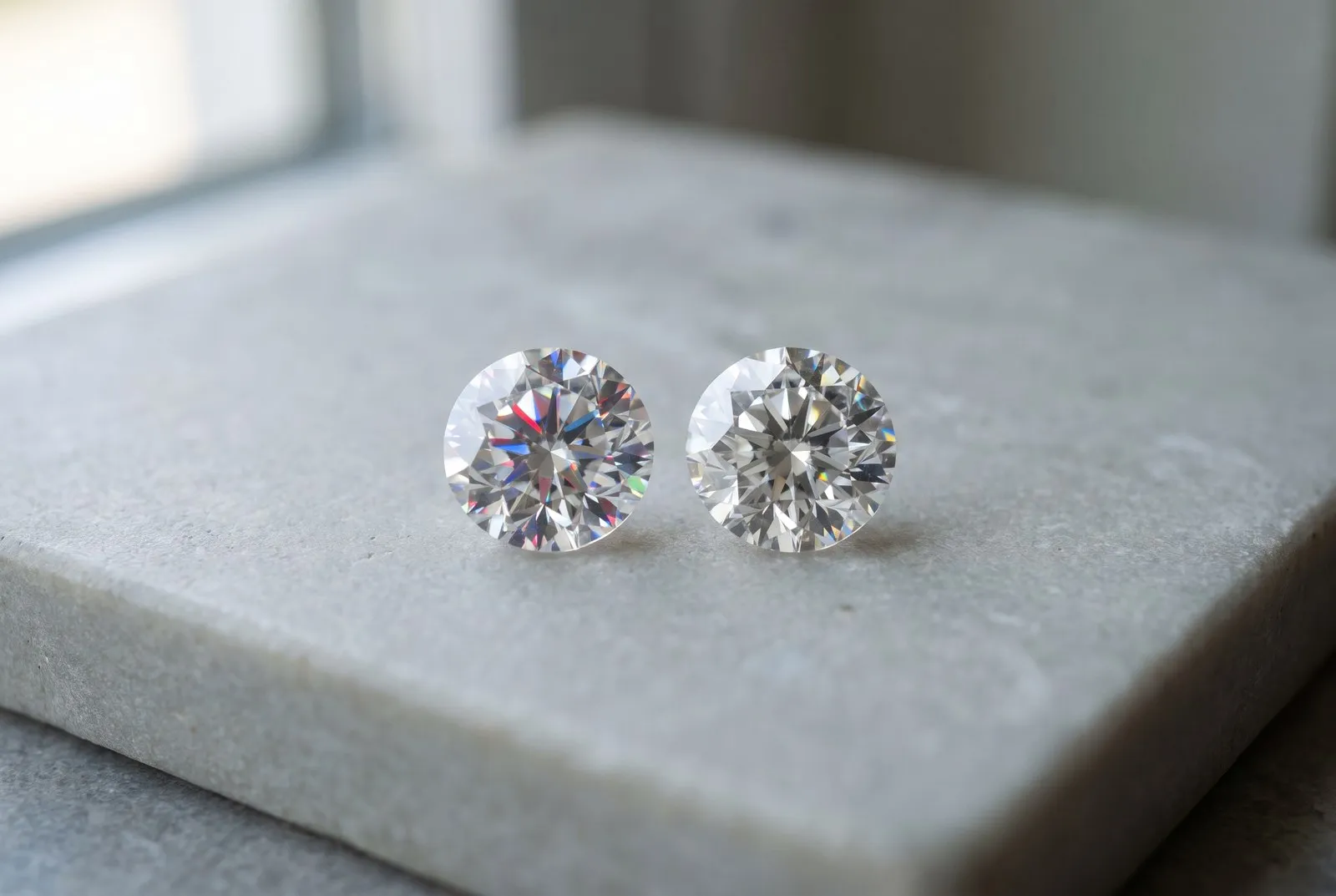
More rainbow color doesn’t make a stone more of a diamond. Illustrative image.
Tests that can damage the stone
Skip these three. The scratch test proves nothing, because moissanite, sapphire and CZ are all harder than glass, and the blow can chip a diamond. GIA calls the sandpaper test destructive and says never to use it. Heat tests are worse: a sudden temperature change can crack a diamond, a torch can burn one at about 850°C (1,562°F), and fillers or coatings can be ruined.
Hard isn’t the same as tough. Diamond is 10 on the Mohs scale, yet it can still chip at a thin edge or a point. GIA’s table rates moissanite’s toughness as excellent and diamond’s as good to excellent, so a chip doesn’t mean a stone is fake.
What are fake diamonds made of?
Most imitations today are CZ or moissanite, GIA says, and white sapphire and glass turn up too. YAG, GGG, strontium titanate and rutile are older imitations and are rare now. Here’s how they compare with diamond.
| Material | Mohs | Refractive index | Dispersion | Density |
|---|---|---|---|---|
| Diamond | 10 | 2.42 | 0.044 | 3.52 |
| Moissanite | 9.25 | 2.65–2.69 | 0.104 | 3.22 |
| White sapphire | 9 | 1.76–1.77 | 0.018 | 4.00 |
| Cubic zirconia | 8–8.5 | 2.15–2.18 | 0.058–0.066 | 5.56–6.00 |
| YAG | 8.25 | 1.83 | 0.028 | 4.55 |
| GGG | 6.5 | 1.97 | 0.045 | 7.05 |
| Rutile | 6–6.5 | 2.62–2.90 | 0.330 | 4.26 |
| Strontium titanate | 5–6 | 2.41 | 0.190 | 5.13 |
| Glass | 4–6 | 1.48–1.70 | varies | 2.39–4.00 |
A stone sold openly as CZ or moissanite isn’t a fake. It’s a different stone sold under its own name. The problem starts when one is sold as a diamond, and the FTC says the plain word “diamond” can’t be used for anything that isn’t one.
How to check diamond earrings, pendants and tennis bracelets
Most home tests fail on set stones, because read-through, weight and water all need a loose one. The metal doesn’t settle it either. Diamonds are set in sterling silver as well as gold and platinum, and our sterling silver lab-grown diamond earrings are one example. A good clasp or a heavy chain tells you about the metal and nothing about the stones.
For stud earrings, test each stone. For a tennis bracelet or a pavé band, ask a jeweler to test a sample across the piece, including any stone that looks different, since a tester reads one stone at a time and a repaired piece can hold a replacement. Small stones usually have no report of their own: GIA’s Dossier, for one, starts at 0.15 carat. A lab’s jewelry report is the formal option if the piece is worth it. Our tennis bracelet guide covers clasps, repairs and prices.
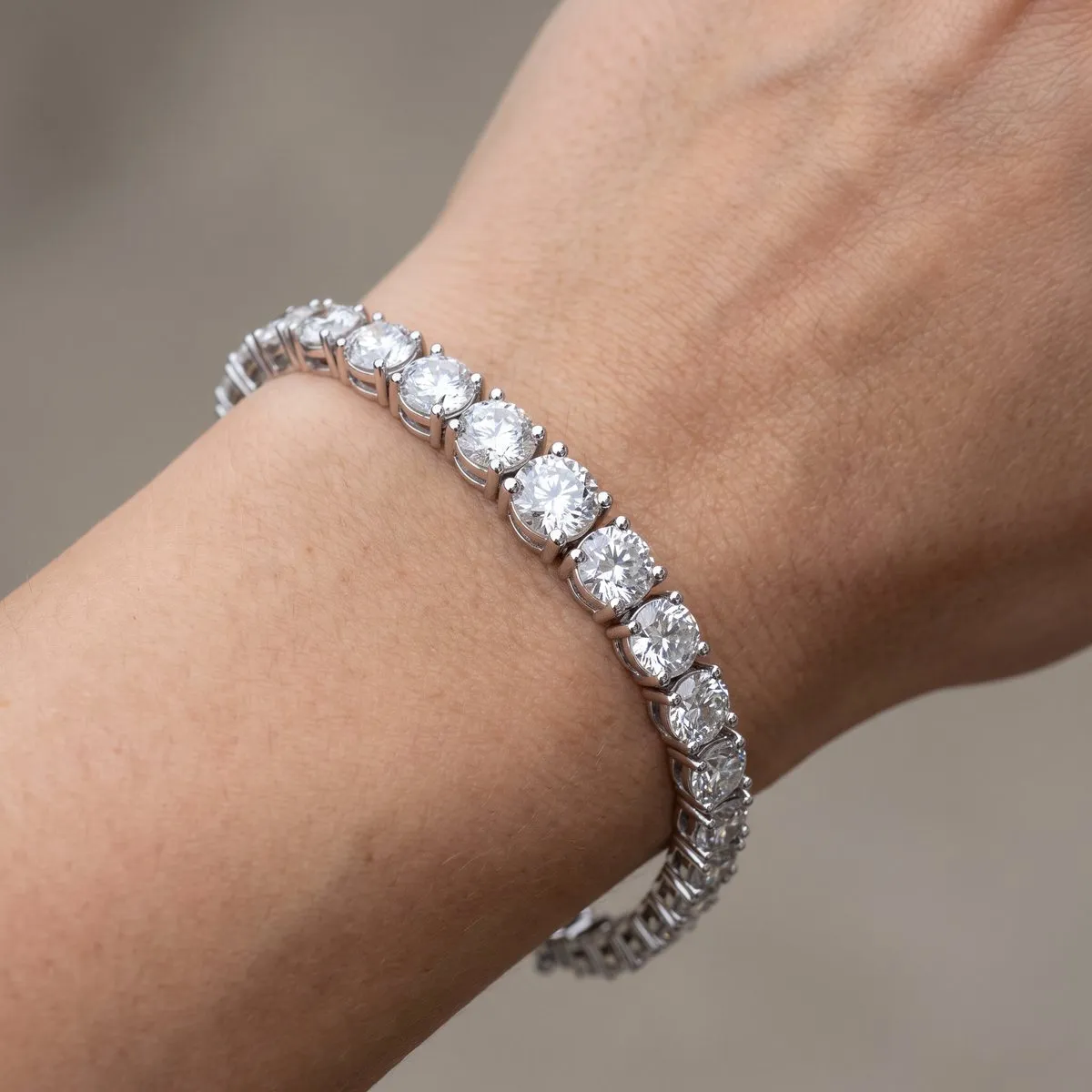
A piece with many stones needs testing across the piece. Pictured: a round lab-grown diamond tennis bracelet in white gold. Image created from the design.
Stamps are worth reading, as long as you remember they describe the metal.
| Stamp | What it tells you |
|---|---|
| 10K, 14K, 18K (or 417, 585, 750) | Karat gold |
| 925, Ster., Sterling | Sterling silver, at least 92.5% silver |
| PT, PT950 | Platinum |
| GEP, HGE, RGP, GP | Gold plating of some kind, not solid gold |
| GF | Gold filled, a thick layer of gold over another metal |
| Vermeil | Sterling silver coated with gold |
| CZ | Usually cubic zirconia, so not a diamond |
| DEW | Diamond equivalent weight, a size comparison used for substitutes, so a strong clue it isn’t a diamond |
A stamp can be false or missing, so a 14K mark doesn’t mean the stones are diamonds, and no mark doesn’t mean they aren’t.
What a diamond tester can and can’t tell you
A thermal tester measures how fast heat moves through a stone. Diamond moves heat far better than CZ, sapphire, YAG or glass, so those read as “not diamond”. Moissanite doesn’t give itself away: in GIA’s 1997 study, every moissanite read as diamond on every thermal tester used.
A multi-tester adds an electrical check, because many moissanites conduct electricity and most near-colorless diamonds don’t. That still isn’t clean. Only 13 of the 23 moissanites in that study conducted. Diamonds containing boron, known as type IIb, conduct too, mined or lab-grown. GIA found that many colorless lab-grown diamonds grown under high pressure are this type, and trade suppliers report that some of them read as moissanite. So a tester can be wrong in both directions.
Pen testers cost roughly $100 to $350 online as of November 2026, and we found no independent study of how accurate they are. They need a clean stone at room temperature and a tip held straight on it, and touching the metal can give a false reading. For a one-off check, a jeweler is the better route.
Can a jeweler tell a lab-grown diamond from a mined one?
Not by eye, and not with a pen tester. GIA says the two can look the same to the eye, and that it takes a lab with advanced equipment to settle where a stone came from. Screening instruments such as GIA’s iD100 read a stone in seconds and either pass it as natural or refer it for more testing. A “refer” isn’t a verdict of fake, because lab-grown diamonds get it too. Our guide to whether lab-grown diamonds are real diamonds covers how the two differ.
How to check a diamond report or laser inscription
If a stone comes with a report, look the number up on GIA Report Check or IGI’s verification page. Many stones also carry a tiny laser inscription on the girdle, the thin edge at the widest part. You’ll need a 10x loupe and good light, and a setting may hide it. IGI’s lab-grown inscriptions start with LG, and GIA’s say “Laboratory-Grown” beside the number.
A matching number isn’t final proof. GIA has documented a 3.07 carat lab-grown diamond carrying a counterfeit inscription copied from a natural diamond’s report, and IGI has reported a similar 6 carat case. So compare the weight, measurements and clarity plot too, and have the stone rechecked if a lot of money is at stake. A missing inscription doesn’t mean a fake, since many diamonds don’t have one. Our guides explain how to read a diamond certificate, including IGI reports and GIA reports, line by line.
Why a diamond can look cloudy, yellow or dark
A stone that looks wrong isn’t always an imitation. These are the usual causes.
- Grease. GIA calls diamonds natural magnets for grease. Skin oil films the stone and dulls it, and the back collects the most. A soak in warm water with mild dish soap usually brings it back, and our guide to cleaning a diamond ring at home has the steps.
- Fracture filling. Fillers hide cracks in some diamonds, but they aren’t permanent. Heat, UV or ultrasonic cleaning can break them down or darken them, and GIA doesn’t grade filled stones.
- Coatings. A coating added for color can scratch and wear off.
- The metal. Silver tarnishes, and a tarnished setting can make a stone look darker. White gold’s bright plating can also wear with time.
If a stone stays dull after a proper clean and its facets look scuffed, have it checked. Softer imitations scratch at the facets, and GIA notes that CZ can yellow over time.
Where to get a diamond tested, and what it costs
| Where | What you get | Typical cost |
|---|---|---|
| Local jeweler | A quick check with a tester, often while you wait | Many do it free, but call first |
| Independent appraiser | A written identification and opinion of value | About $75 to $200 a piece |
| Gem lab | Full identification and grading of a loose stone | Often around $100 for a 1 carat natural diamond, plus shipping and insurance |
Costs are rough, so check before you go. To find an appraiser, try the directories at NAJA or the American Society of Appraisers, and be wary of anyone who charges a percentage of the value. A pawn shop’s number is an offer to buy, not an appraisal.
Buying a diamond at Whitemoon
Our engagement ring diamonds come with an IGI or GIA report, so you can check the number yourself. The ring builder lists lab-grown and natural center stones, and our finished jewelry uses lab-grown diamonds. Most Whitemoon rings are made to order in about 10–15 days and ship free with insurance both ways, with 30-day returns on unworn pieces and one free resize within 60 days of delivery.
How to tell if a diamond is real: questions
How can you tell if a diamond is real at home?
You can’t confirm it at home, but you can sometimes rule a stone out. If a loose round stone lets you read print through it, or it’s far too heavy for its size, it probably isn’t a diamond. For a firm answer, take it to a jeweler.
How to tell if a diamond is real with water?
You can’t. Diamond sinks, and so do moissanite, CZ, sapphire and glass, so dropping a stone in water shows nothing. The idea that a fake floats is a myth.
How to tell if a diamond is real with a flashlight?
A flashlight can’t tell you either. It shows how a stone returns light, which depends on the cut and how clean it is, and imitations can flash more color than a diamond. No gem authority gives a standard for reading the result.
Can you scratch a real diamond?
Only another diamond will readily scratch one, but diamonds can still chip, and old stones can show worn facet edges. Please don’t try it as a test, because it can damage the stone and it proves nothing about the material.
What are fake diamonds made of?
Most are cubic zirconia, a man-made zirconium oxide, or moissanite, a man-made silicon carbide. White sapphire, glass, YAG, GGG, rutile and strontium titanate have also been used. None of them is carbon crystallized as diamond.
Is moissanite a fake diamond?
Moissanite isn’t a diamond, but it’s a stone in its own right, not a fake, when it’s sold under its own name. It becomes a problem only when someone sells it as a diamond. Thermal testers can’t always catch the difference, so the seller’s paperwork matters.
Do fake diamonds shine in the dark?
No. A stone returns light and doesn’t make it, so neither a diamond nor an imitation shines in true darkness. Some diamonds do keep glowing briefly after strong UV, including some lab-grown stones, so a glow isn’t a sign of a fake.
How are diamonds graded?
Labs grade diamonds on the 4Cs: cut, color, clarity and carat weight. A report also states whether the stone is a diamond and whether it’s mined or lab-grown. GIA now uses a separate assessment for lab-grown stones, and our IGI vs GIA guide compares the two.