Complimentary insured shipping, both waysEngagement ring diamonds certified by IGI or GIAGrown by light. Conflict-free by natureComplimentary insured shipping, both ways
Engagement RingsWedding BandsEarrings
NecklaceBraceletsAbout
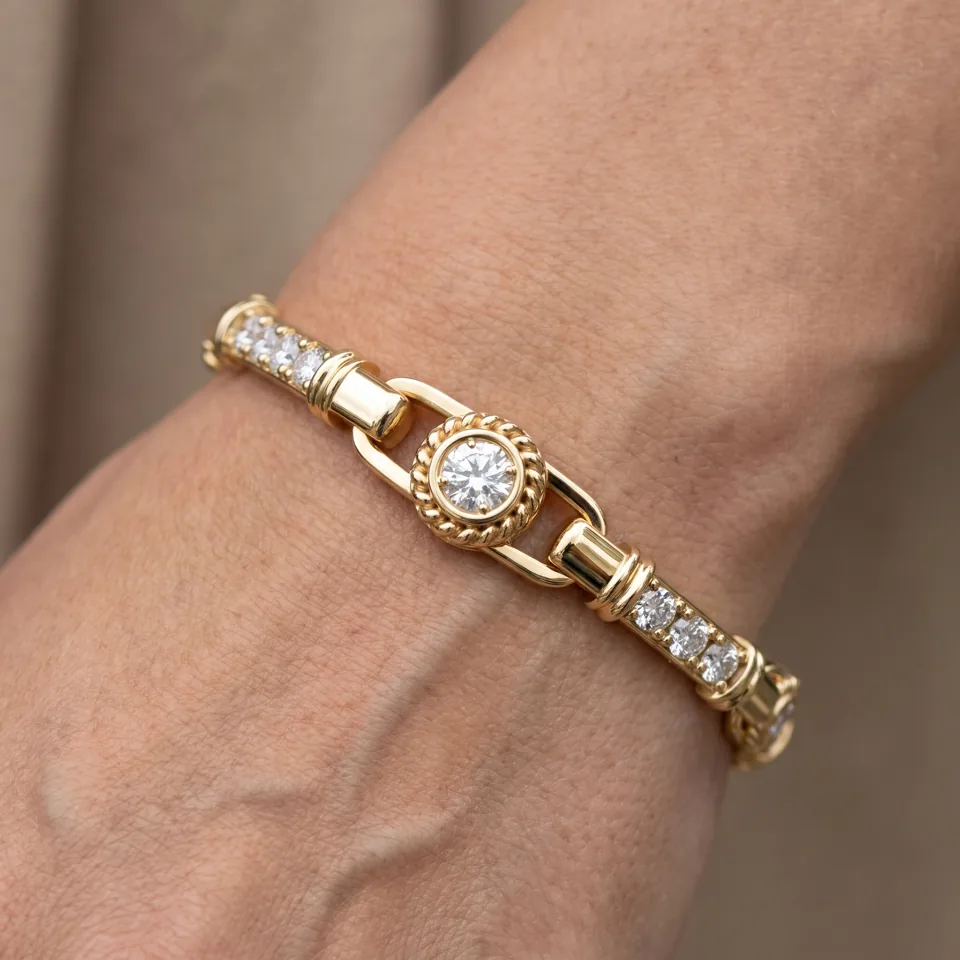
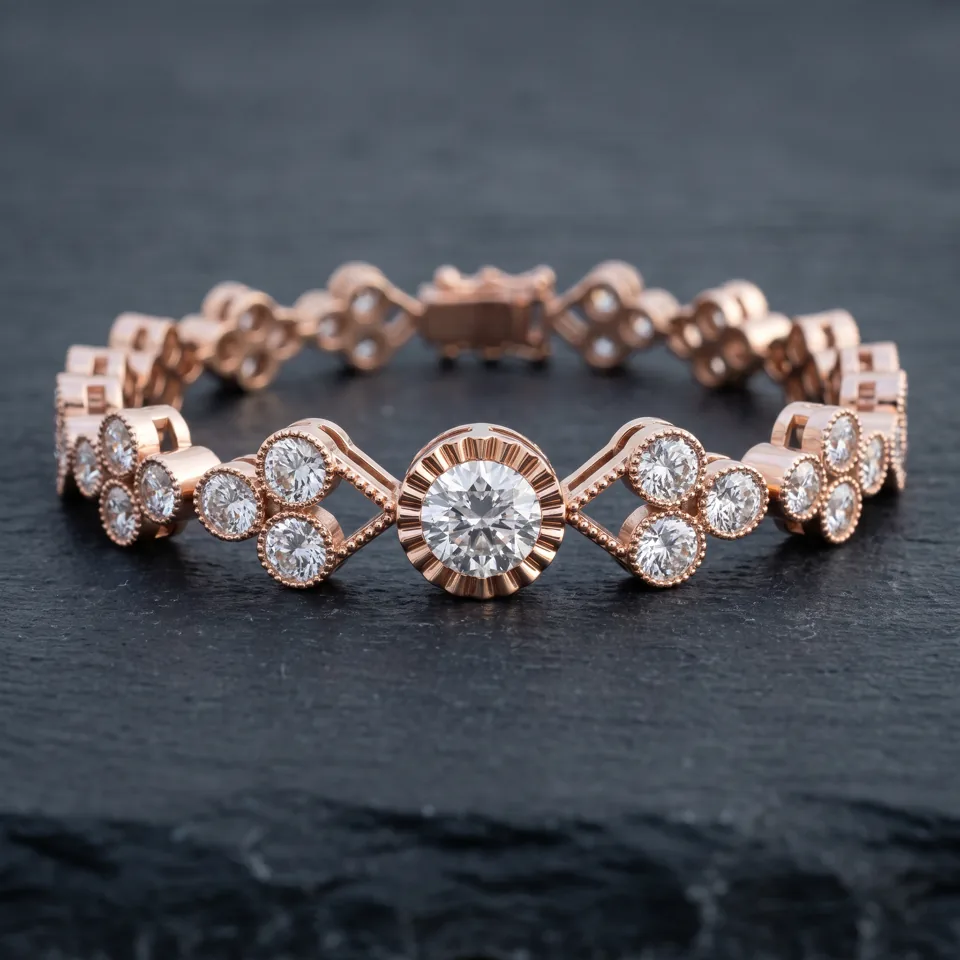
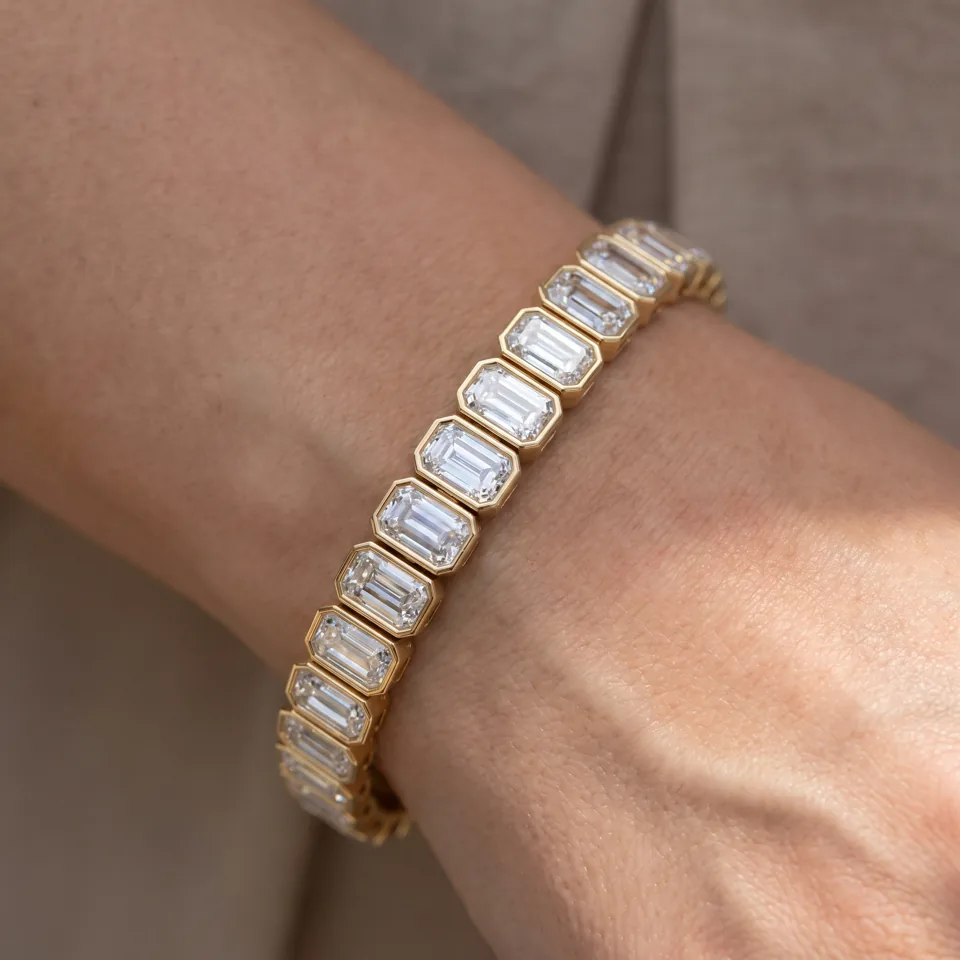
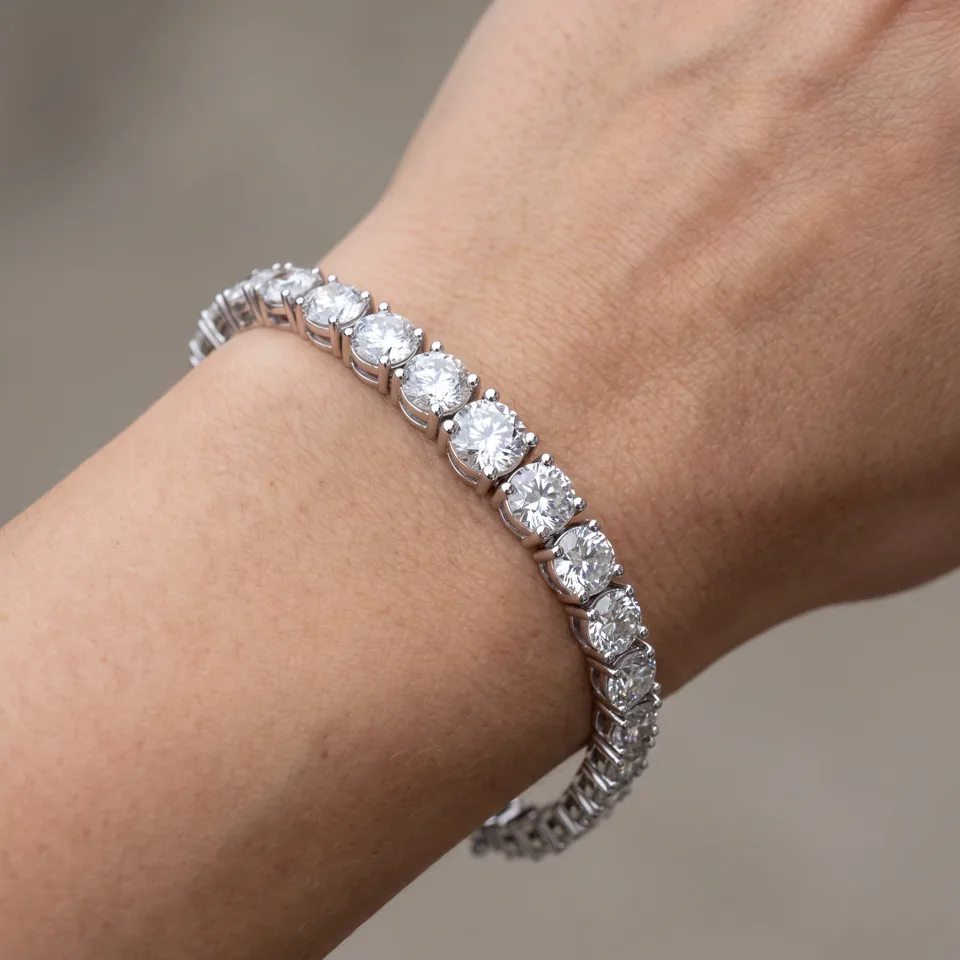
A tennis bracelet is one continuous line of stones, and here every stone is a lab-grown diamond. Our guide to whether lab-grown diamonds are worth it compares prices with natural stones. Our guide to whether lab-grown diamonds are real diamonds explains what that means. Pick from classic prong-set rows, bezel lines, heart and circle links, and a few cluster designs. Then decide between gold (rose, yellow or white) or Silvadium, a tarnish-resistant sterling silver, then settle on a total carat weight; most designs run from 3 up to 15 carats.
Four-prong settings hold each round stone with as little metal as possible, so the row looks like an unbroken stream of light. Bezel tennis bracelets circle each stone with a rim of metal; they look more graphic, sit smoother against skin and protect the stone edges. Several bezel designs add milgrain, a beaded edge with a vintage finish.
Sizing the stones to your wrist
Total carat weight decides how big each lab-grown diamond is, because the length of the row stays about the same. At 3 to 4 carats total weight the stones are small and the bracelet stacks easily. In the middle of the range, 5 to 8 carats, every stone is clearly visible on its own. From 10 carats up the line becomes the main event, and you'll feel its weight. Measure your wrist snugly and add a little room so the bracelet moves without sliding over your hand.
Clasp checks and cleaning
A tennis bracelet takes knocks on desks and door frames, so check the clasp and safety catch every few weeks. Our tennis bracelet guide explains where these bracelets wear and how the name came about. A few designs use a box clasp, and there's also a version with an adjustable slider. Rinse the stones in lukewarm water with a drop of dish soap, brush gently behind each one, and leave the bracelet at home on gym or garden days. The same routine is covered step by step in our guide on how to clean a diamond ring.
Color and clarity options
On most designs the color choice is E–F or F–G, and clarity is VVS–VS or VS–SI. Higher color keeps a long row looking icy white; at the stone sizes used in a tennis line, VS–SI already looks clean to the eye.
Ordering from Whitemoon
Each bracelet is made for you in 10–15 days and travels with free insured shipping, out and back. You have 30 days to return it unworn with its certificate. If the length is off, we remake the bracelet at the length you need once, free, as long as you ask within 60 days of delivery.
FAQ
Questions about Lab-Grown Diamond Tennis Bracelets
How much are diamond tennis bracelets?
Our lab-grown diamond tennis bracelets start under $800, and most cost between about $2,100 and $3,200 at their lowest carat option. Price climbs with total carat weight, so a 10-carat line costs much more than a 3-carat one, and gold costs more than silver for the same design. Lab-grown stones keep the price far below a mined diamond bracelet of the same weight.
How many carats is a good size tennis bracelet?
For everyday wear, 3 to 5 carats total weight is a comfortable size: visible, but light enough to wear with anything. From 7 carats up suits evenings or anyone who wants a bold line. Our designs mostly span 3 up to 15 carats, so match the size to how often you plan to wear it.
Are diamond tennis bracelets still in style?
Yes. The tennis bracelet has stayed a staple for decades and is worn widely today, alone or stacked with watches and chain bracelets. Bezel-set lines and shaped links like hearts give the classic a current feel, while a plain prong row stays the most versatile.
Do men wear diamond tennis bracelets?
Yes, and it's common. Men often choose a bezel or prong line in white gold or silver with stones toward the heavier end, around 5 to 8 carats total weight, which suits a larger wrist. Wear it with a watch on the same arm or on its own; just order the length to fit your wrist rather than guessing a standard size.
Do diamond tennis bracelets hold their value?
Not as an investment, especially with lab-grown stones. Lab-grown diamonds resell for a small fraction of what they cost, so buy a tennis bracelet because you'll wear it. The gold in the links and clasp keeps its metal value. What lab-grown does give you is far more carat weight for your money than a line of mined stones.