Complimentary insured shipping, both waysEngagement ring diamonds certified by IGI or GIAGrown by light. Conflict-free by natureComplimentary insured shipping, both ways
Engagement RingsWedding BandsEarrings
NecklaceBraceletsAbout
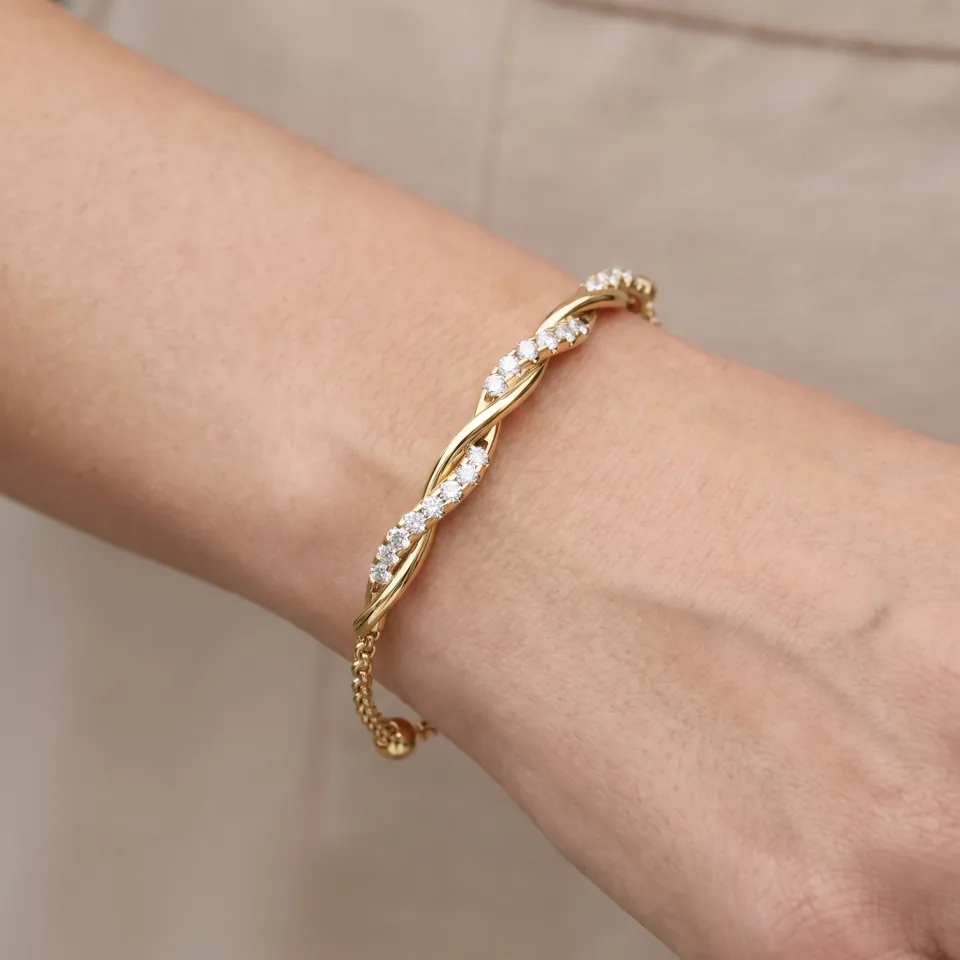
This is our full bracelet range: lab-grown diamond tennis lines, open heart and circle links, bezel-set rows and a few chain bracelets. Gold versions come in yellow, rose or white, at 10K or 14K, and most designs can also be ordered in Silvadium, a tarnish-resistant sterling silver.
Start with the look you want on your wrist, then settle the metal and a total carat weight, from 3 carats on most styles up to 15.
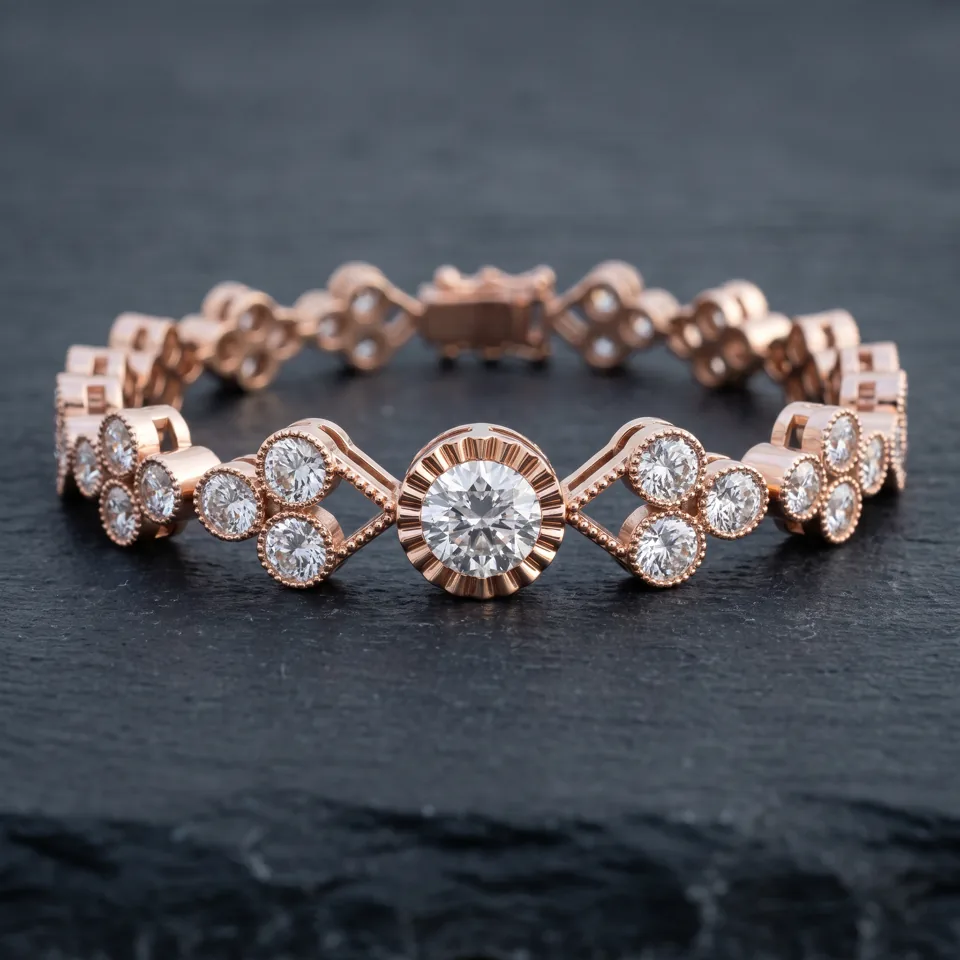
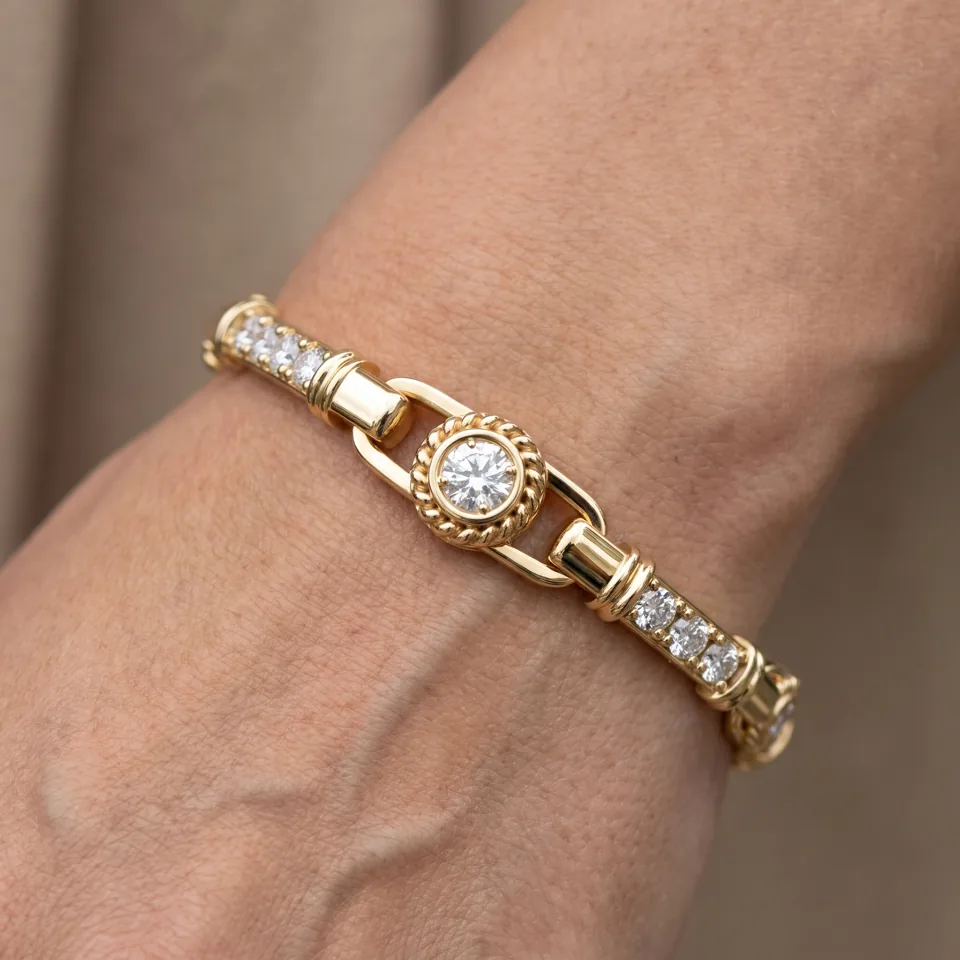
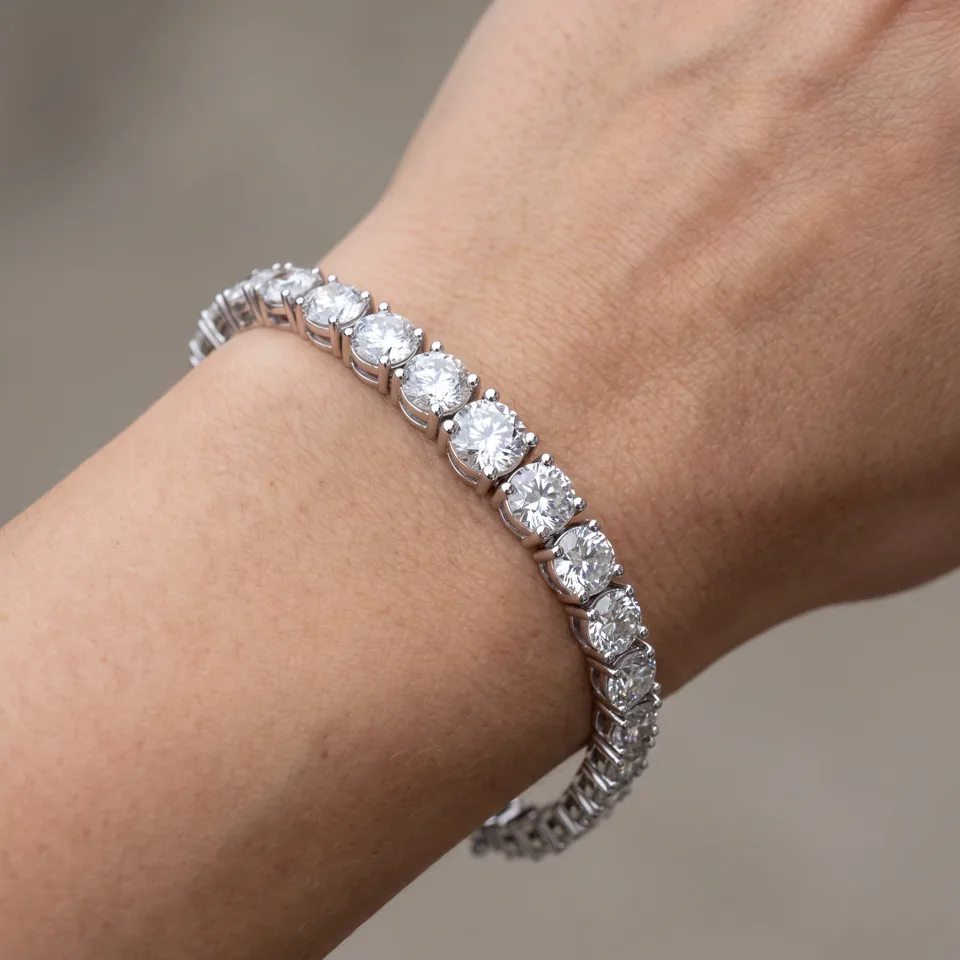
A tennis bracelet is a single flexible row of lab-grown diamonds set one after another, so it shows sparkle all the way around. It's the bulk of what we offer here. Link bracelets space the stones out in shapes such as hearts, circles, X links and petals. They show more metal and feel lighter, which suits stacking beside a watch.
Setting styles and everyday comfort
Prongs grip each stone with small claws, leaving it as open to light as possible.
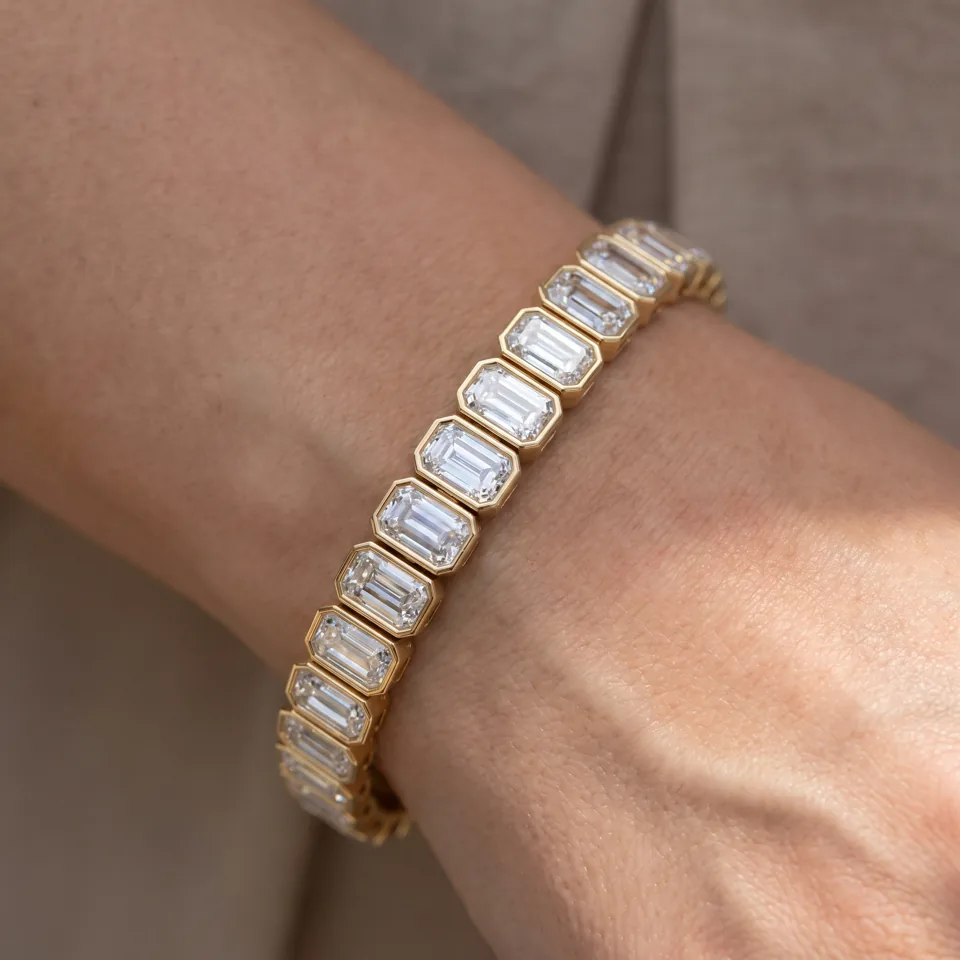
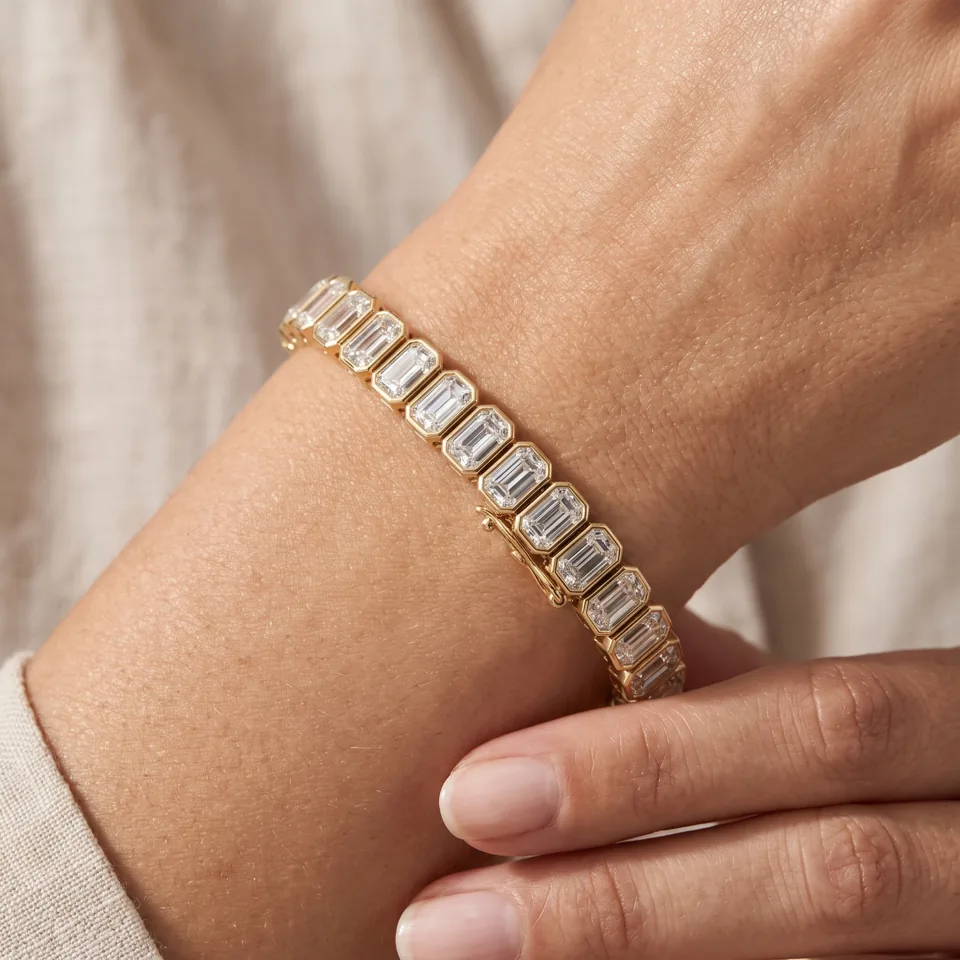
Bezel settings enclose every stone in a slim collar of metal, so edges are protected and nothing catches on knitwear.
Bar and channel settings line the stones up between strips of metal, giving a smooth, flat profile.
If you type all day or never take the bracelet off, a bezel or channel row is the easiest to live with.
How heavy a line to choose
The carat figure on a bracelet is every lab-grown diamond on it, weighed together. At 3 to 5 carats total weight the stones are fine and delicate; 7 to 10 carats gives a bolder line you notice across a room; 12 to 15 carats is a statement piece. Depending on the option you pick, stones are graded E–F or F–G in color and VVS–VS or VS–SI in clarity, so the row looks bright and even.
Gold or silver on your wrist
Gold in 10K or 14K is hard-wearing and keeps its color; 10K is a little tougher, 14K a little richer in tone. Silver keeps the cost down and suits occasional wear. Check the clasp now and then, and store the bracelet flat so the links don't kink.
Ordering from Whitemoon
We make your bracelet after you order, which takes 10–15 days, and you pay nothing for insured shipping either way. Returns are open for 30 days on unworn pieces with the certificate. A bracelet can't be resized, so if the fit is wrong within 60 days of delivery, we remake it once at the new length for free.
FAQ
Questions about Lab-Grown Diamond Bracelets
How much do diamond bracelets cost?
Ours start under $800 for the smallest option, with most landing between about $2,000 and $3,200 at their starting carat weight. Adding carat weight raises the cost, and gold costs more than silver. Lab-grown diamonds cost far less than mined diamonds of the same size, which puts a full tennis line within reach.
How much is a 1 carat diamond bracelet worth?
Very little on resale if the stones are lab-grown, and that's worth knowing before you buy. Lab-grown diamonds sell for far less than mined ones and have a small resale market; the gold keeps its metal value. Most of our bracelets begin at 3 carats total weight, with 1 carat offered on only a few designs, so buy one to wear, not as an investment.
Do men wear diamond bracelets?
Yes. Plenty of men wear a lab-grown diamond bracelet, often a slim tennis line or a bezel row next to a watch. For a quieter look, go for white gold or silver at around 3 to 5 carats total weight; yellow gold and a heavier row read bolder. Measure your wrist before ordering, and remember the length can be changed once for free in the 60 days after delivery.
What is the most popular bracelet right now?
The tennis bracelet is the most widely worn style, and it fills most of this collection. Bezel-set tennis lines, which hold each lab-grown diamond in a metal rim, feel especially current because they look modern and wear smoothly. Heart and circle link designs are a lighter choice if you like to stack.