Complimentary insured shipping, both waysEngagement ring diamonds certified by IGI or GIAGrown by light. Conflict-free by natureComplimentary insured shipping, both ways
Engagement RingsWedding BandsEarrings
NecklaceBraceletsAbout
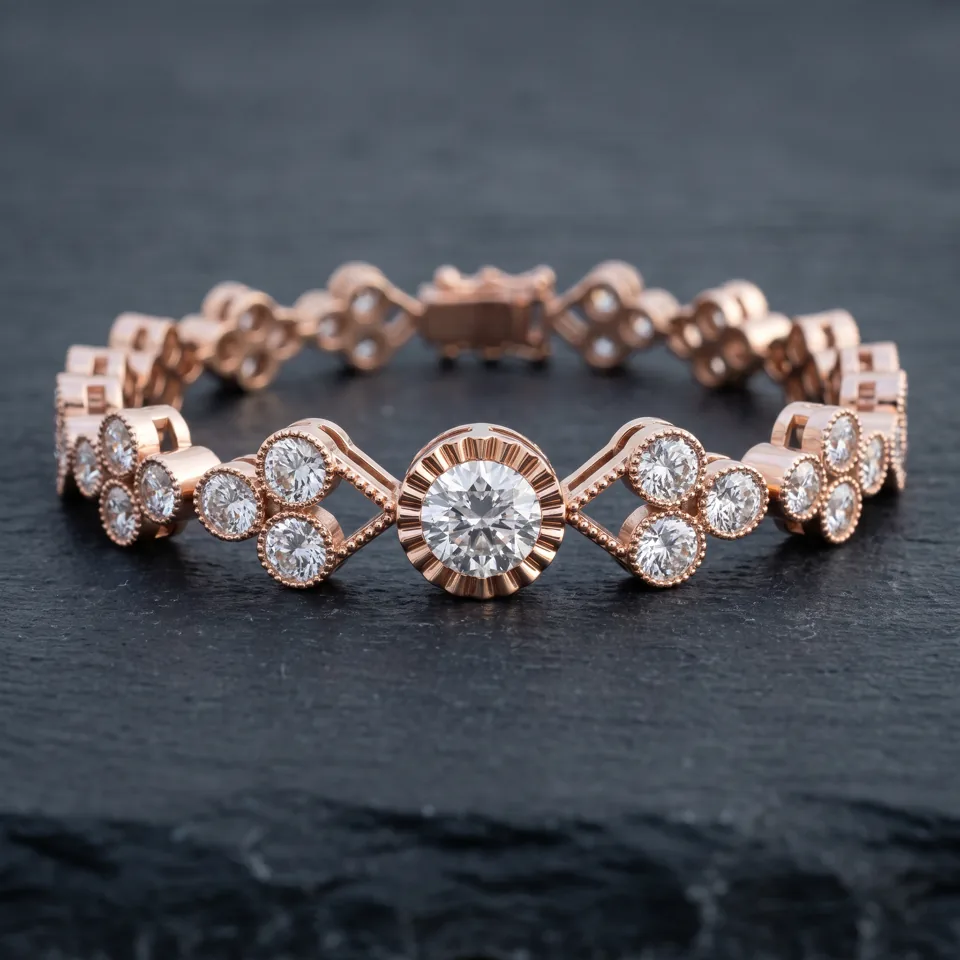
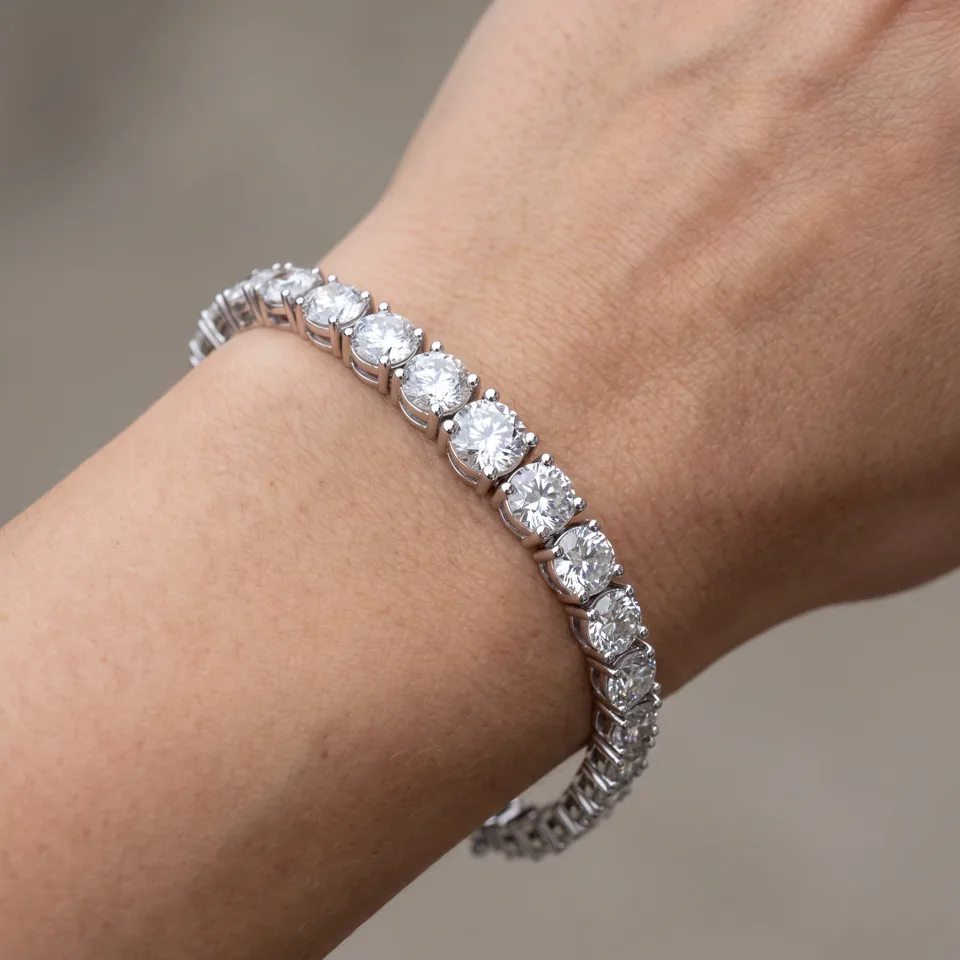
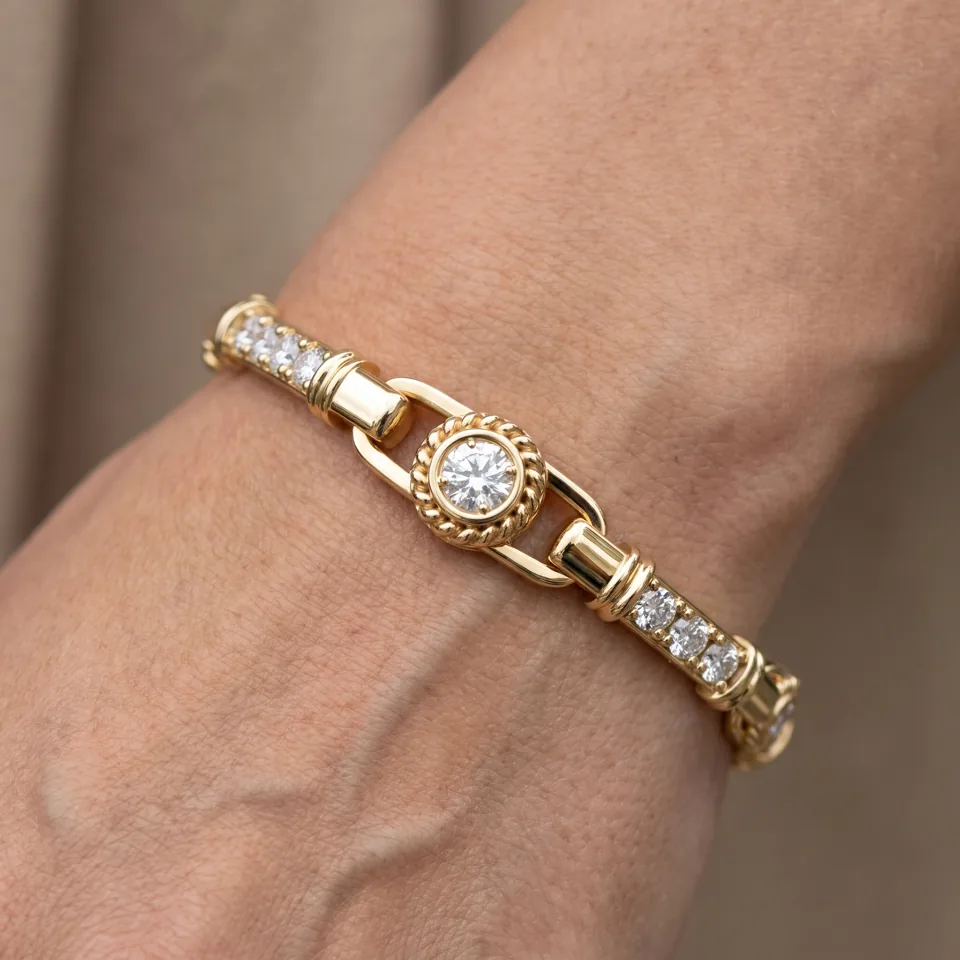
Think of a gold tennis bracelet as a supple row of lab-grown diamonds, each held in its own hinged link, circling the wrist. Here you can have it in rose, yellow or white gold at 10K or 14K, mostly with round stones and occasionally with emerald or princess cuts.
Your two big decisions are the setting style and the total weight, which on most designs runs anywhere between 3 and 15 carats. Our tennis bracelet guide shows how weight and karat change the price.
Prongs and shared prongs leave the most of every lab-grown diamond on show and make the familiar unbroken line. Bezel links close a thin gold collar around every stone, so they snag less on knitwear and protect the edges. Open frames, heart links and X-links break the row up with little gold shapes for a more playful, less formal feel.
How many carats on the wrist
Every carat figure sums up the lab-grown diamonds around the whole bracelet. Around 3–5 carats total weight the stones stay small, and the bracelet stacks happily next to a watch. Between 7 and 10 carats each stone grows noticeably and the line looks bolder. At 12–15 carats it becomes a statement worn on its own. On most designs, clarity runs VVS–VS or VS–SI and color E–F or F–G. Expect a starting price near $1,700; most designs open somewhere from $2,950 to $3,750.
Getting the fit and clasp right
The bracelet should shift a little on your wrist without being able to slip over your hand. Wrap a soft tape around the wrist bone, then allow roughly half an inch of ease on top of that number. Inspect the clasp every few months, since a tired clasp is the usual reason a bracelet falls off. Some designs close with a box clasp, and one uses an adjustable slider.
Ordering from Whitemoon
Allow 10–15 days for your bracelet to be made. Insured shipping is free both ways, and returns are accepted for 30 days. Since a tennis bracelet can't be resized the way a ring can, the single free size change you get within 60 days of delivery means we remake it at the new length.
FAQ
Questions about Gold Lab-Grown Diamond Tennis Bracelets
Is 14K or 18K better for a tennis bracelet?
14K is the more practical pick for a tennis bracelet. It's harder than 18-karat gold, so the links, hinges and clasp keep their shape longer under daily wear, while the richer-colored 18-karat alloy scratches and stretches more easily. Whitemoon makes its gold tennis bracelets in 10K or 14K: the 10K version is harder still and costs less, and 14K contains more gold.
Are tennis bracelets better in white or yellow gold?
Neither wins outright; it depends on your skin tone and the jewelry you already own. White gold makes colorless lab-grown diamonds look their brightest and matches steel watches. Yellow gold puts a warm, vintage edge around the stones, and rose gold lands somewhere in between. Most Whitemoon designs come in all three golds, so you can match the ring or watch you reach for daily.
How much is a 14 karat gold tennis bracelet worth?
On resale, far less than its retail price, because lab-grown diamonds fetch very little once bought. The part that holds value is the gold, set by how much 14K metal sits in the links. Treat the bracelet as jewelry to enjoy, since it won't behave like an investment. At Whitemoon, gold tennis bracelets start near $1,700 at 3 carats total weight, and the price climbs with each step up in carats.