
Hypoallergenic Jewelry: Which Metals Are Safest for Sensitive Skin?
Hypoallergenic jewelry is jewelry less likely to cause a skin reaction, but in the United States the word has no legal definition and no required test. For most people with sensitive skin the real issue is nickel. The metals dermatologists usually point to are platinum, high-karat yellow gold, implant-grade titanium and sterling silver, and the safest choice is a piece whose exact alloy you know, including the earring post and back.
At Whitemoon, we make lab-grown diamond jewelry in Silvadium, our tarnish-resistant sterling silver, in 10K, 14K and 18K yellow, white and rose gold, and in platinum. For this guide we read the dermatology research on nickel and piercing, the FTC’s jewelry guides and Europe’s nickel limits, and we priced the same designs in each of our metals, so you can see what a switch to a lower-risk metal costs. This is general information, not medical advice: a dermatologist can tell you what your skin reacts to.
What does hypoallergenic mean on jewelry?
Less than it sounds. The FDA says there’s no federal standard or definition for “hypoallergenic” on cosmetics, and the FTC’s jewelry guides don’t define it for jewelry either. The guides mention “hypoallergenicity” once, in the rules for lower-purity platinum. There’s no federal limit on nickel in adult jewelry. On a US label, “hypoallergenic” is a marketing word, so look for the name of the metal instead.
Europe does set a limit. Under its REACH nickel restriction, earrings, rings, necklaces and other jewelry worn against the skin may release no more than 0.5 micrograms of nickel per square centimeter per week, and posts that go through a piercing less than 0.2, measured by the EN 1811 sweat test. It worked: Denmark limited nickel in jewelry in the early 1990s, and among Danish girls tested in 1999–2000, nickel allergy fell from 17.1% in those pierced before the rule to 3.9% in younger girls pierced after it.
Why nickel is the problem
Nickel is the most common cause of allergic skin reactions found in patch-test clinics. The North American Contact Dermatitis Group found nickel allergy in 18.2% of the patients it tested in 2019–2020 and in 24.9% in 2021–2022, the top result both times, and an earlier analysis of its data named jewelry as the most common source of contact. Those are people referred because they already had a rash, not the general public.
The best general-population figure comes from Europe. The EDEN study patch-tested adults in five countries and found nickel allergy in 14.5% of them: 22% of women and 5.3% of men. Piercing is the best-known driver.
The more piercings, the higher the rate: 6.4% of people who had never been pierced were allergic, against 27.6% of those with three or more piercings.
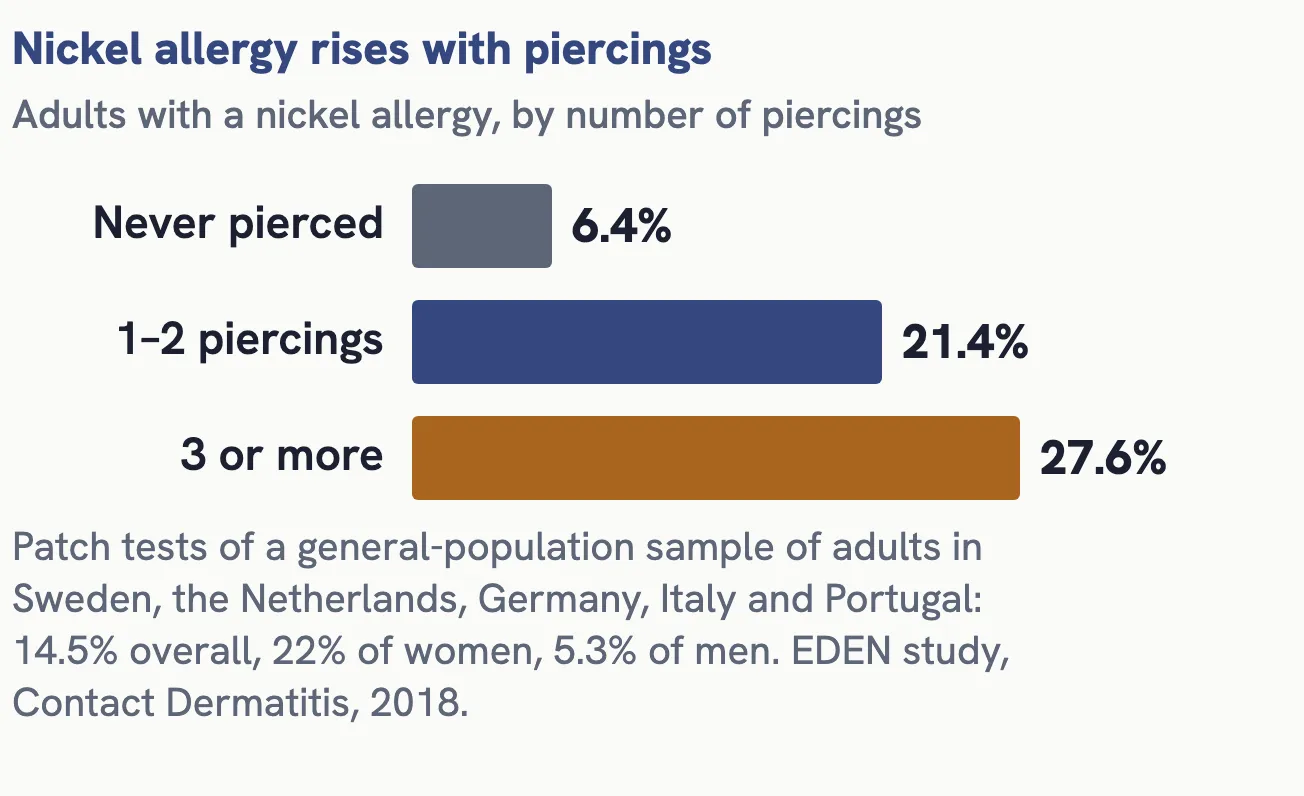
Nickel allergy by number of piercings, general-population sample in five European countries. EDEN study, Contact Dermatitis, 2018.
A few things to know about a nickel allergy:
- It’s a delayed reaction. Cleveland Clinic says the itchy, red, bumpy rash usually appears 12 to 72 hours after contact, so the cause isn’t always obvious.
- Once you have it, it doesn’t go away. You manage it by avoiding nickel.
- The American Academy of Dermatology names earrings, earring backs and watches among the biggest culprits, and suggests seeing a board-certified dermatologist if a rash blisters, gets infected or keeps coming back.
- A patch test confirms it: small amounts of common allergens are taped to your back and checked over several days.
Which metals are safest for sensitive skin?
It depends on the alloy, not just the name of the metal. Here’s how the common jewelry metals compare for someone who reacts to nickel:
| Metal | What’s in it | For nickel-sensitive skin |
|---|---|---|
| Platinum | At least 95% platinum to be stamped “Platinum” in the US; the rest varies | Standard alloys contain no nickel; one common alloy uses cobalt |
| 18K and higher yellow gold | 75% gold or more | On the AAD’s list of safer choices |
| 14K and 10K yellow or rose gold | 58.3% and 41.7% gold | Depends on the alloy; rose gold gets its color from copper |
| White gold | Gold with nickel or palladium, usually rhodium plated | May contain nickel; plating wears |
| Sterling silver | At least 92.5% silver, the rest usually copper | On the AAD’s list; nickel isn’t part of the standard recipe |
| Implant-grade titanium, niobium | No nickel by design | Accepted for new piercings |
| Stainless steel | Implant grade 316L is about 13–15% nickel | Low-release grades are usually tolerated; others vary |
| Brass, copper, plated base metal | Copper and zinc, often under nickel plating | Highest risk |
Gold: the karat tells you how much is something else
Karat measures gold out of 24, so 18K is 75% gold and 14K is 58.3%. The rest is other metals, and the lower the karat, the more of them there is. Our gold karat guide covers the differences in color, wear and price.
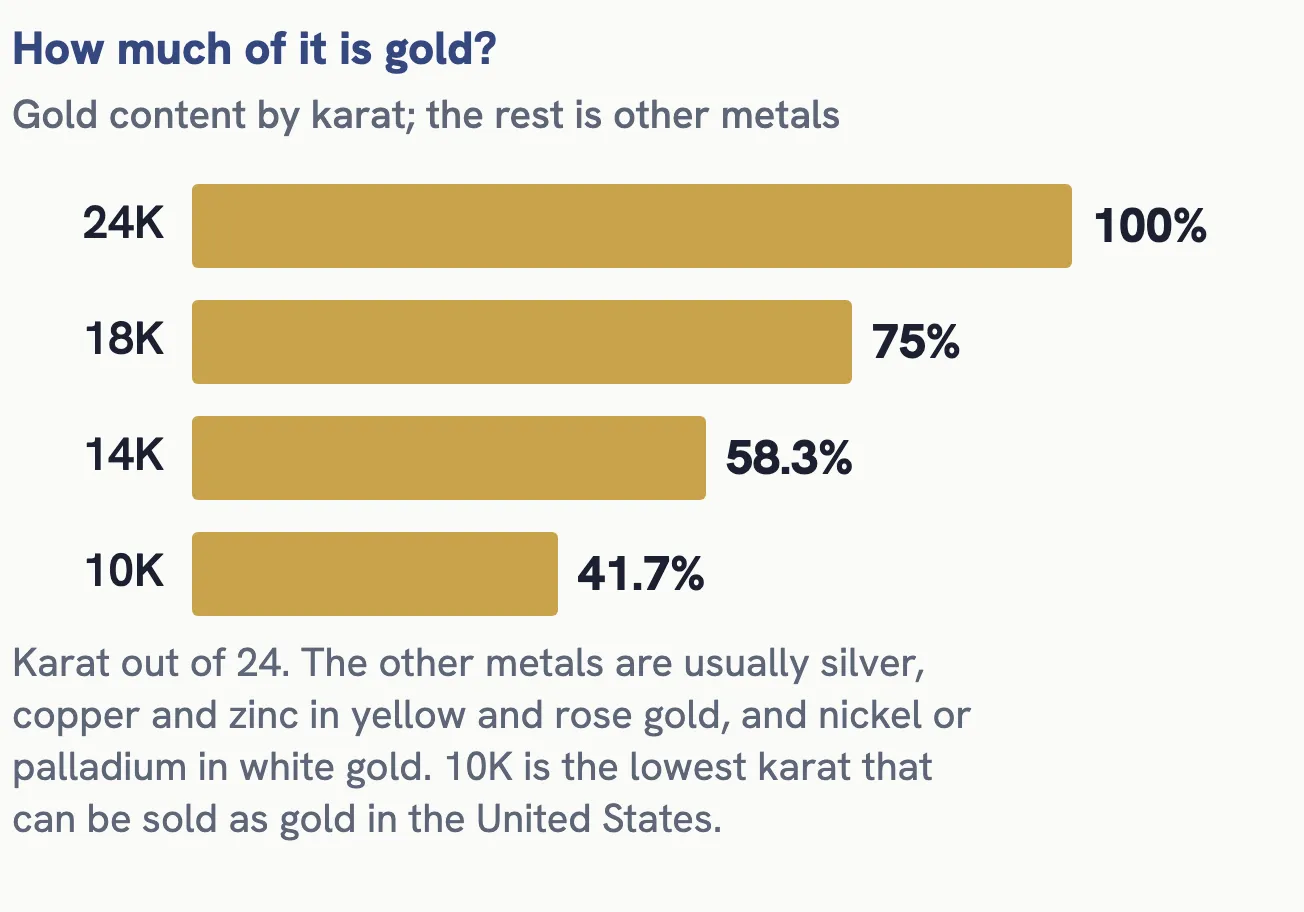
The lower the karat, the more of the piece is other metals.
In a 2007 test of white gold alloys for piercing jewelry, most 14K and 18K nickel white golds met Europe’s strict piercing limit, while the 10K samples did not. Palladium white gold avoids nickel altogether but costs more. Rhodium plating covers the alloy at first, then wears away where a ring rubs, as our guide to rhodium plating explains.
Stainless steel isn’t nickel-free
“Surgical steel” is often sold as hypoallergenic, but implant-grade 316L steel contains about 13–15% nickel. What matters is how much comes out. In two studies from the 1990s, low-sulfur grades such as 304, 316L and 430 released very little nickel and caused no patch-test reactions in nickel-allergic patients, while high-sulfur 303 steel released far more and did cause reactions. “Stainless” on a label doesn’t tell you the grade.
Platinum and cobalt
Platinum jewelry stamped “Platinum” in the US is at least 95% platinum. The other 5% is often ruthenium, iridium or cobalt. Standard platinum alloys contain no nickel, but cobalt is itself a common allergen, found in 9.2% of patients patch-tested in North America in 2021–2022. If you know you react to cobalt, ask which platinum alloy a piece is made in.
Can you be allergic to gold?
Yes, but true reactions to gold jewelry are uncommon. In a North American patch-test series from 1996–1998, 9.5% of patients reacted to a gold test compound, mostly women. Reviews since then say such results often don’t match any reaction in daily life, and that the clearest link is to dental gold rather than jewelry. When “gold” jewelry causes a rash, the other metals in the alloy, nickel in some white golds or base metal under thin plating, are the more likely cause.
Why does jewelry turn skin green or black?
Neither is an allergy. A green ring on your finger comes from copper: sweat, soap and lotion react with copper in brass, rose gold, lower-karat gold or sterling silver and leave green copper compounds on the skin. It washes off with soap and water. Black marks are usually “black dermographism”: makeup and sunscreens containing hard powders such as zinc oxide wear tiny particles off the metal, which look black on skin. That happens with solid gold too, so it doesn’t mean a piece is fake.
An allergy looks different: an itchy, red, bumpy or blistering rash where the metal touches.
Ring rash under a wedding band
A red, itchy patch under a ring is often not an allergy at all. Soap, water, sweat and lotion get trapped under the band and irritate the skin, a problem dermatologists call irritant or occlusion dermatitis. Take rings off to wash your hands, do dishes or put on lotion, and dry the skin under the band. If the rash keeps coming back, a patch test tells irritation and allergy apart.
We found no medical evidence that a wider or comfort-fit band prevents ring rash, so we won’t claim it does. Our men’s wedding band guide covers widths and fits for comfort.
Earrings for sensitive ears
Ears are where most nickel allergies start, and the post sits in the skin all day, so the post and back matter more than the front. For a new piercing, the Association of Professional Piercers sets minimum standards: implant-grade titanium or steel, niobium, platinum, or solid 14K or higher gold that is nickel- and cadmium-free. It doesn’t accept gold-plated, gold-filled or vermeil jewelry for fresh piercings.
Once ears have healed, the AAD’s list of safer metals applies: 18K and higher yellow gold, sterling silver, platinum and surgical-grade stainless steel. Our guides to types of ear piercings and earring backs explain the posts and backs for each style.
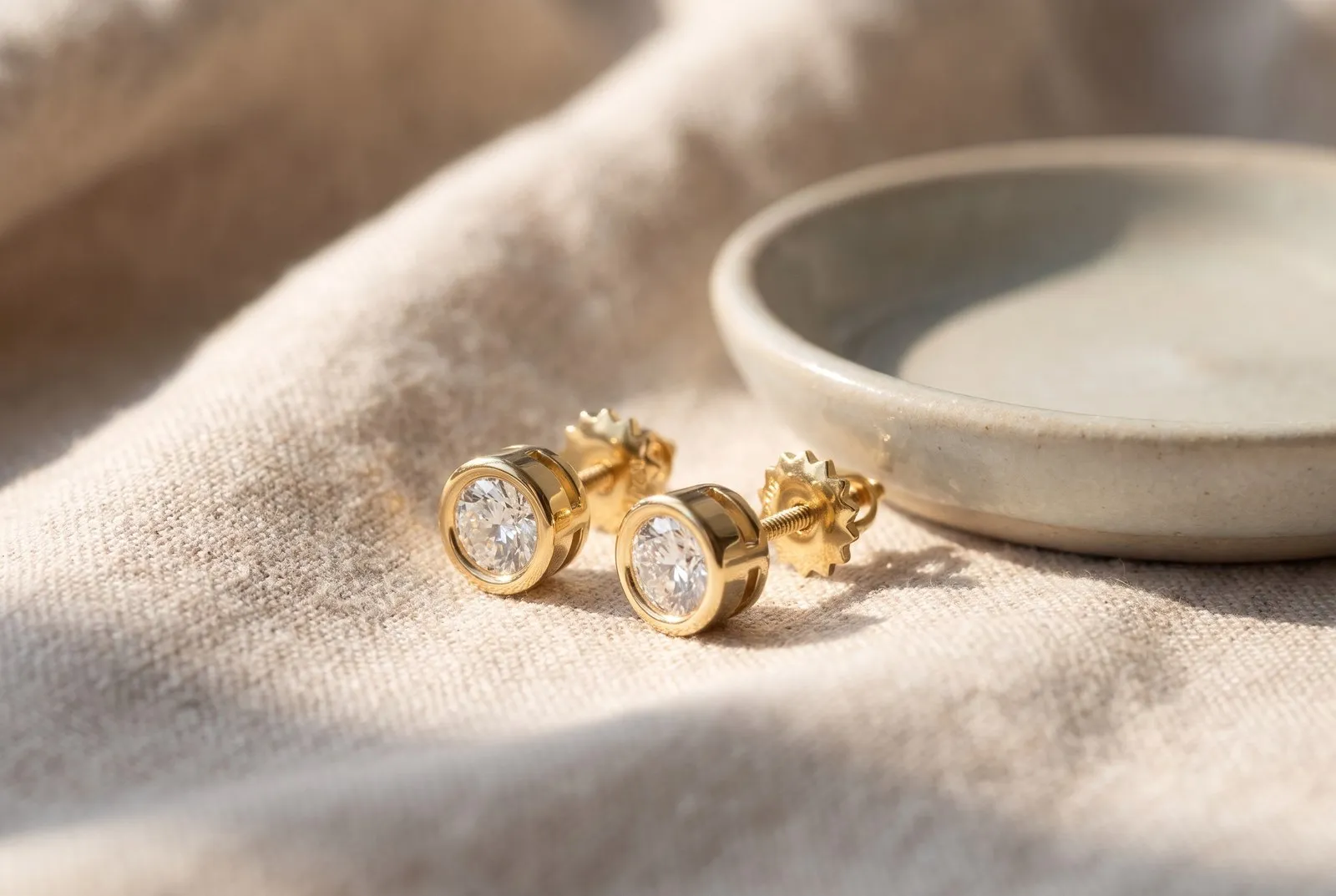
The bezel studs we priced for this guide come in Silvadium and in 10K, 14K or 18K yellow, white or rose gold, with a screw back or a push back. See our lab-grown diamond earrings and choose the karat and color with the post in mind.
Hypoallergenic wedding and engagement rings
For a ring you’ll wear every day, platinum and 18K yellow gold are the usual picks for nickel-sensitive skin. White gold suits many people, but it may contain nickel and its rhodium plating wears, so if you’ve reacted to jewelry before, ask about the alloy first.
We’re open about what we know of our own metals. Only our white gold is rhodium plated; our Silvadium, yellow and rose gold and platinum aren’t. We haven’t published the full alloy of our Silvadium or our white gold, so we don’t call either of them nickel-free or hypoallergenic. If you have a diagnosed allergy, show the metal list to your dermatologist before you order.
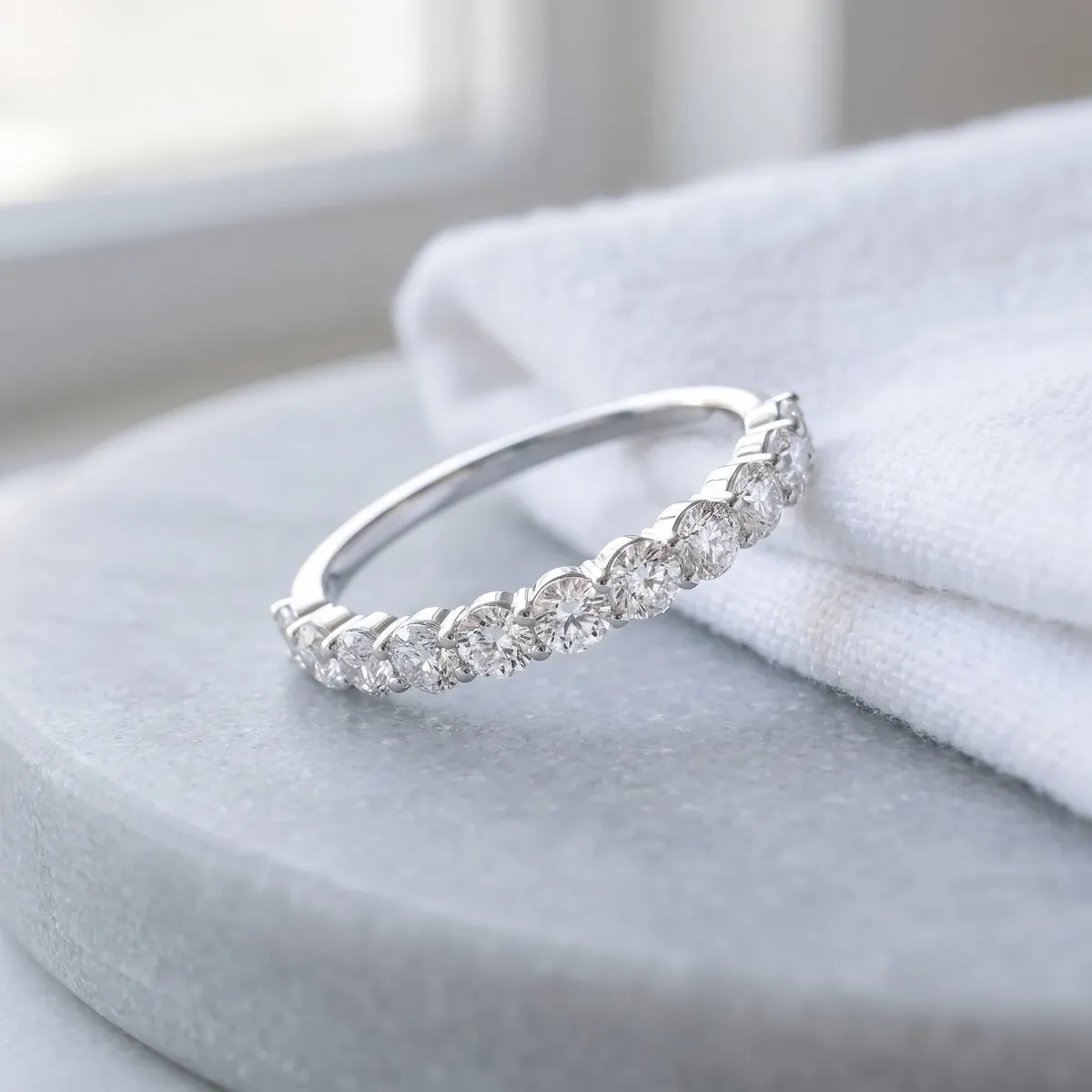
Image created from the design: a prong-set half eternity band in platinum with 0.35 carat of lab-grown diamonds.
Moving to a lower-risk metal costs more. On November 22, 2026, our half eternity band with 0.35 carat of lab-grown diamonds cost about 4.1 times as much in 18K gold as in Silvadium, and 4.8 times as much in platinum.
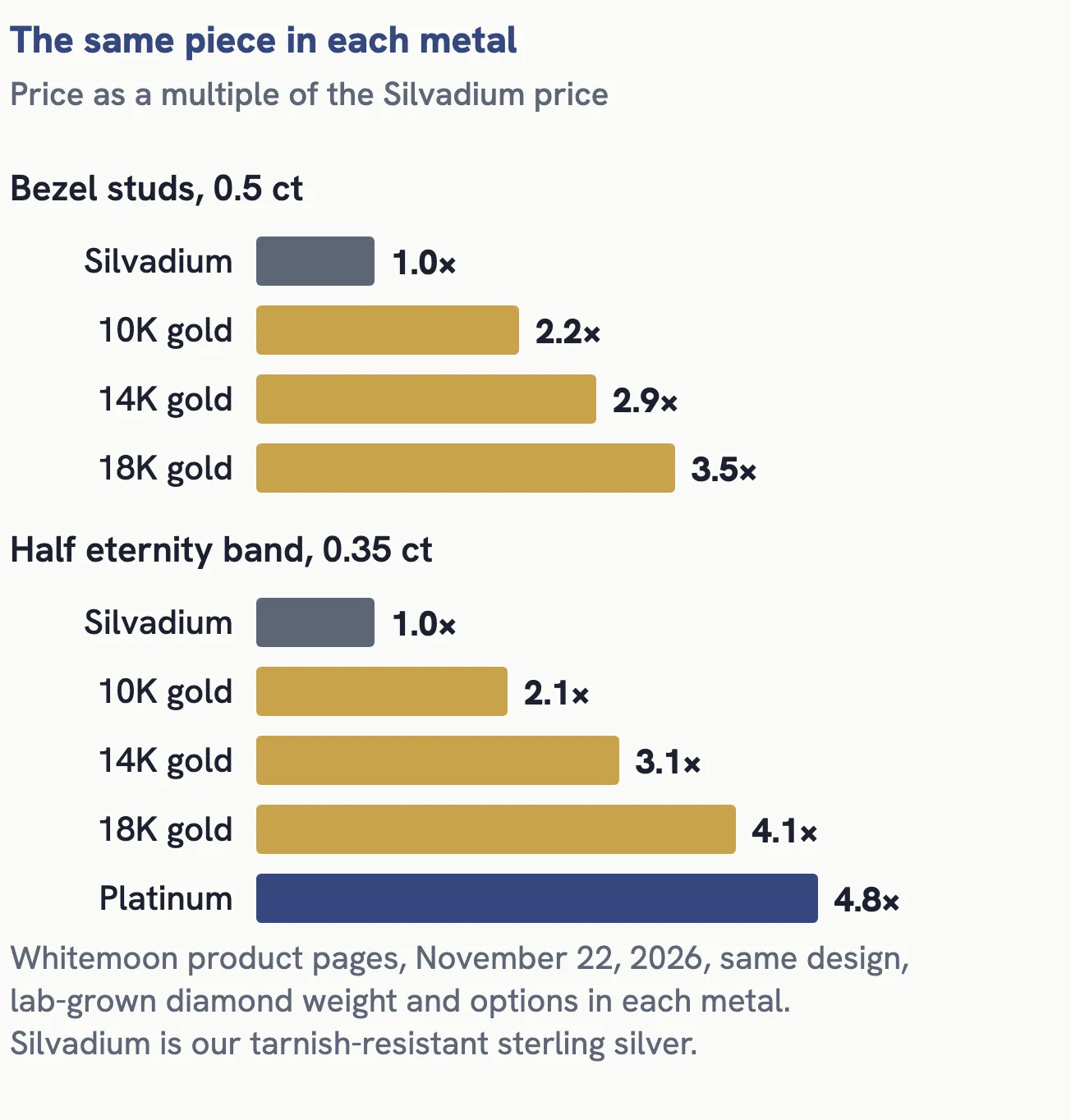
The same designs in each metal, Whitemoon product pages, November 22, 2026.
See our platinum wedding bands, yellow gold wedding bands and yellow gold engagement rings. Our guide to white gold vs silver compares the two white metals in more detail.
How to test and protect your jewelry
- Nickel spot test. Drugstore kits with dimethylglyoxime turn pink when nickel comes off a piece. A pink result is reliable, but a 2010 study found the test caught only about 59% of items that released too much nickel, so no color doesn’t prove a piece is safe.
- Clear nail polish. The AAD suggests it as a barrier on things like snaps and clasps, but it wears off and needs reapplying often. It’s a stopgap, not a fix, and not for a post that goes through your ear.
- Know the metal. Buy pieces whose metal and karat are stated, and keep the receipt, so you can tell a dermatologist what you were wearing.
- Get a patch test. If you keep reacting, it’s the only way to know whether it’s nickel, cobalt, gold or irritation.
Whitemoon jewelry is made to order in about 10–15 days and ships free with insurance both ways, with 30-day returns on unworn pieces.
Common questions about hypoallergenic jewelry
What metal is most hypoallergenic?
Implant-grade titanium and platinum are the usual answers, with high-karat yellow gold close behind. No metal is guaranteed for everyone.
Is sterling silver hypoallergenic?
Standard sterling is at least 92.5% silver with copper and no nickel, and the AAD lists it among safer metals. It can tarnish, and copper can leave a green mark, but that isn’t an allergy.
Is stainless steel hypoallergenic?
Not always. It contains nickel; low-sulfur grades like 316L release very little and are usually tolerated, but the label rarely tells you the grade.
Can I wear 14K gold if I’m allergic to nickel?
Often yes for yellow and rose 14K, which normally have no nickel. 14K white gold may contain nickel. Ask what the alloy is.
Is white gold hypoallergenic?
Not reliably. Many white golds contain nickel, and the rhodium plating that covers it wears off. Palladium white gold avoids nickel. Our white gold guide compares nickel and palladium white golds.
Is nickel-free the same as hypoallergenic?
No. Nickel-free is a specific claim about one metal. Hypoallergenic has no legal definition in the US.
What is the most common jewelry metal to be allergic to?
Nickel, by a wide margin. Cobalt causes reactions too.
What metals turn your skin green?
Metals with copper: brass, copper, rose gold, lower-karat gold and sterling silver. It’s harmless and washes off.
Can you be allergic to gold?
Yes, but it’s uncommon, and a rash from gold jewelry is more often caused by the other metals in the alloy.
What are the best earrings for sensitive ears?
Posts in implant-grade titanium, niobium, platinum or nickel-free solid gold, with backs in the same metal. Avoid plated posts.
What is the best metal for a wedding band if I have sensitive skin?
Platinum or 18K yellow gold. If you react to cobalt, ask which platinum alloy is used.
Why does my ring give me a rash?
Often it’s soap and moisture trapped under the band, not an allergy. Take the ring off to wash and dry under it; if the rash continues, see a dermatologist.
Is Silvadium hypoallergenic?
We don’t make that claim. Silvadium is our tarnish-resistant sterling silver, and we haven’t published its full alloy.
Does clear nail polish stop a nickel reaction?
For a while. It wears off and has to be reapplied often, so it’s a short-term fix.