Complimentary insured shipping, both waysEngagement ring diamonds certified by IGI or GIAGrown by light. Conflict-free by natureComplimentary insured shipping, both ways
Engagement RingsWedding BandsEarrings

NecklaceBraceletsAbout
A tension ring makes the center look as if it hovers in the gap where the band's two ends meet, with little or no metal around it. These tension set rings are settings: you settle the design and metal on this page and select the center diamond afterward.
Nearly every design accepts ten center shapes, heart and marquise included, on wide, sculpted bands.
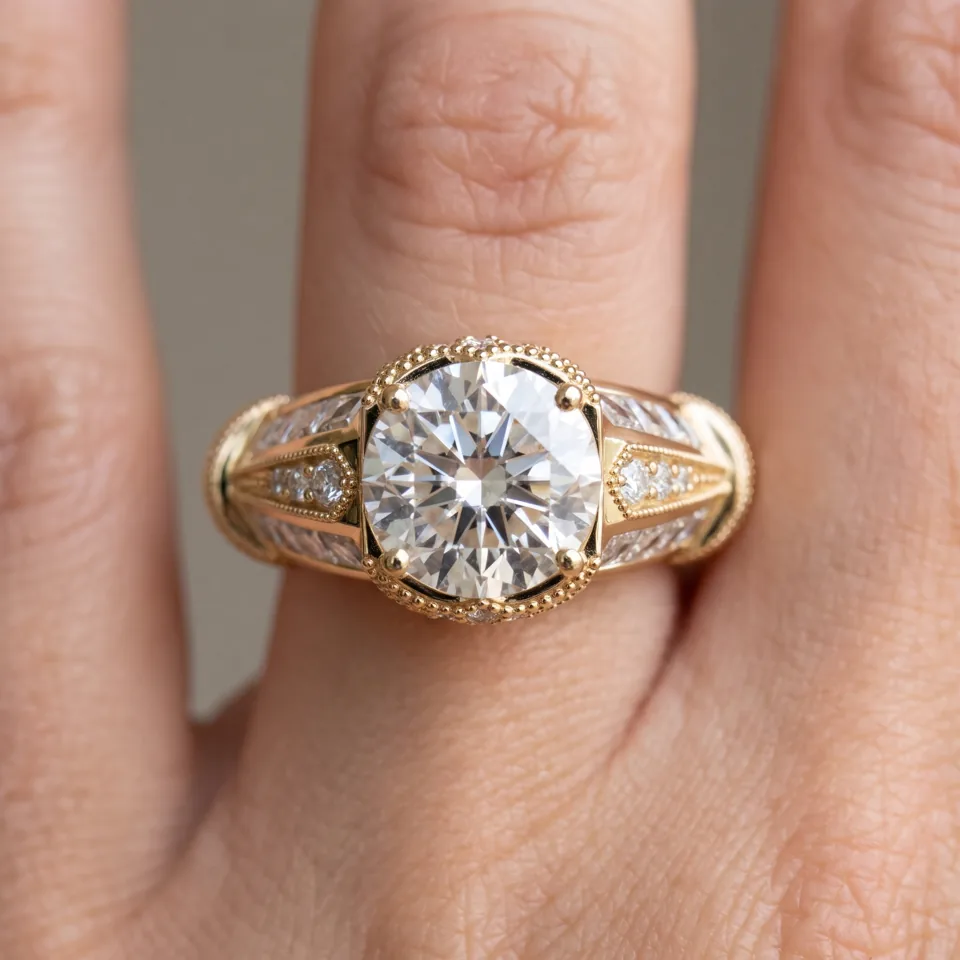 Vintage Engagement Rings
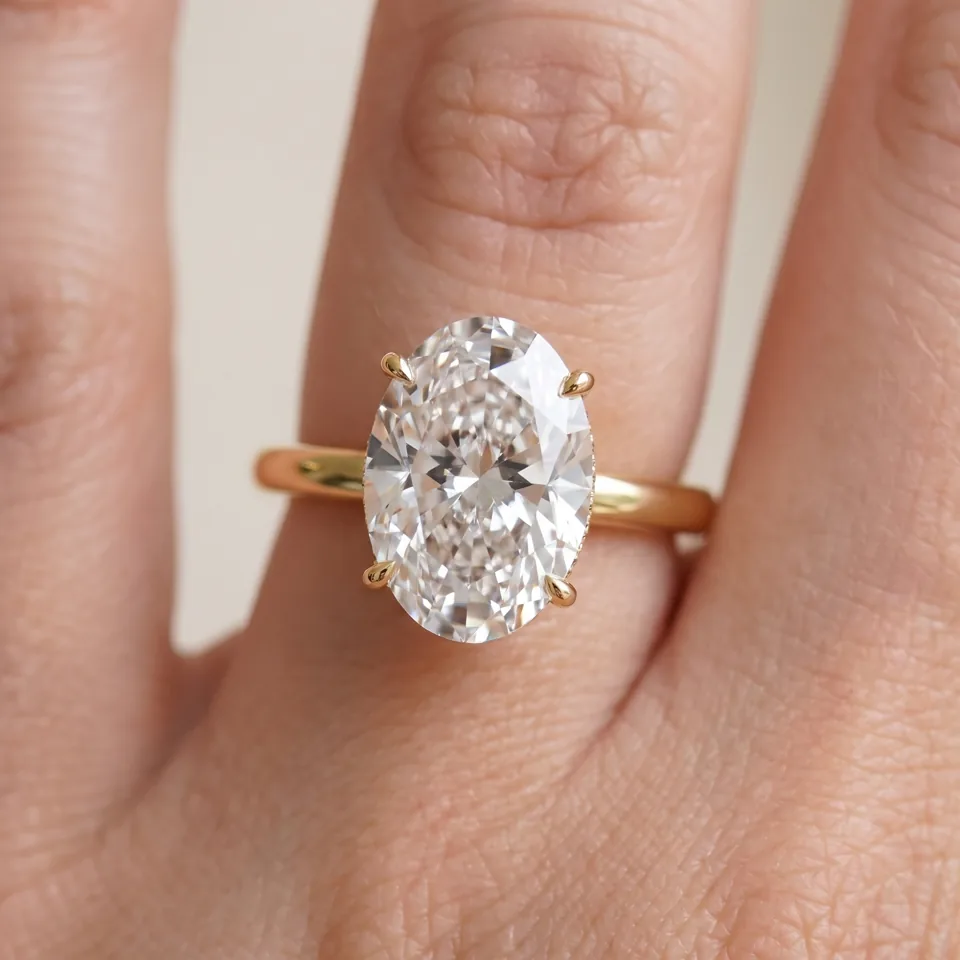 Solitaire Engagement Rings
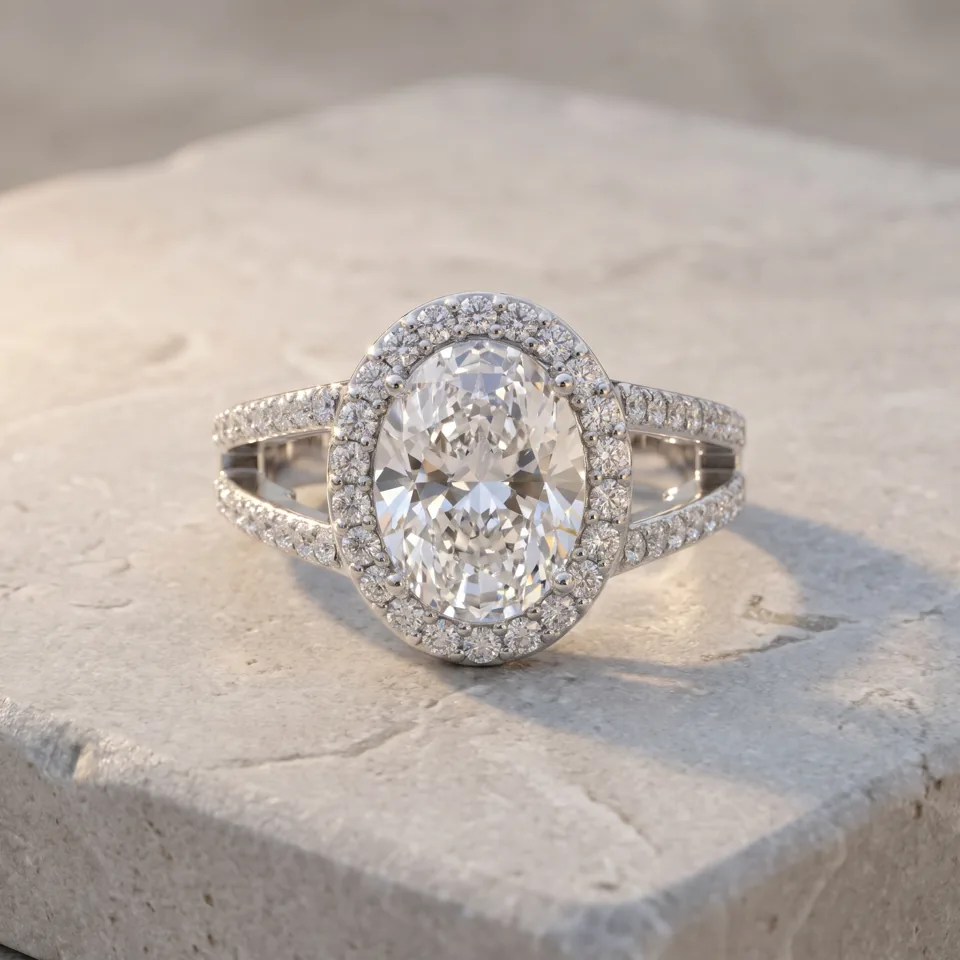 Halo Engagement Rings
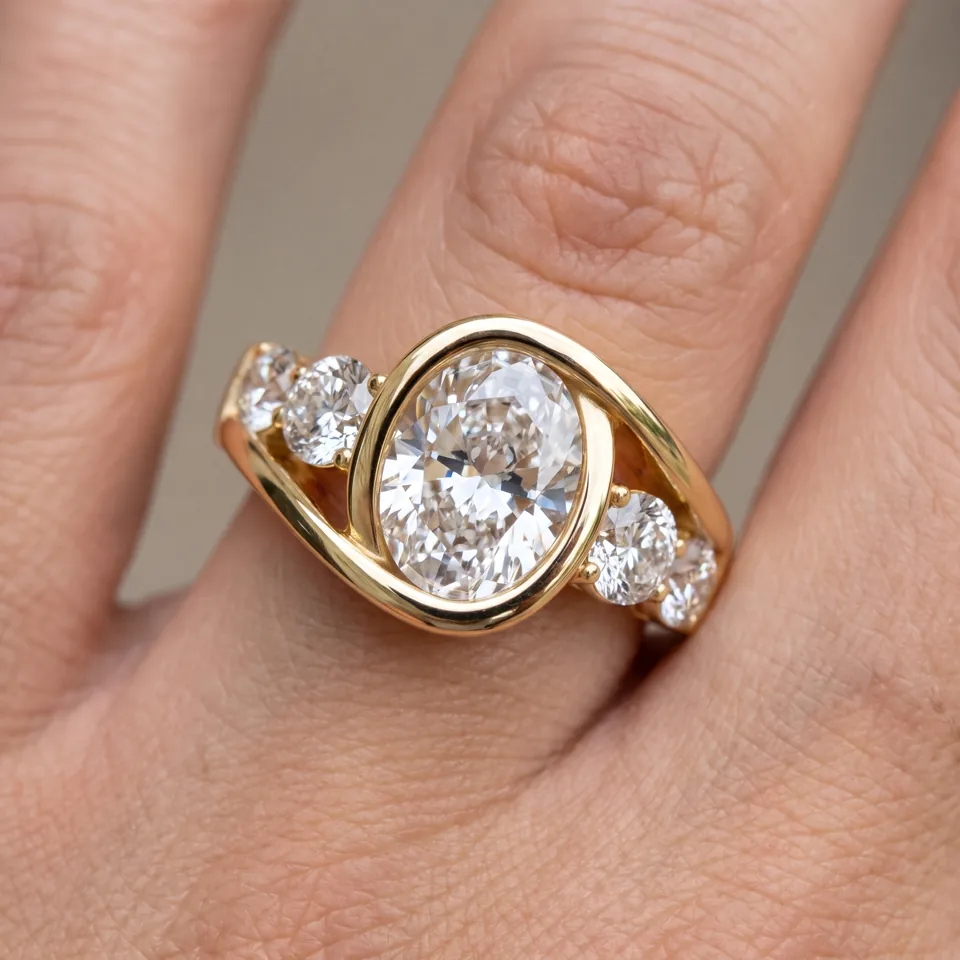 Bezel Engagement Rings
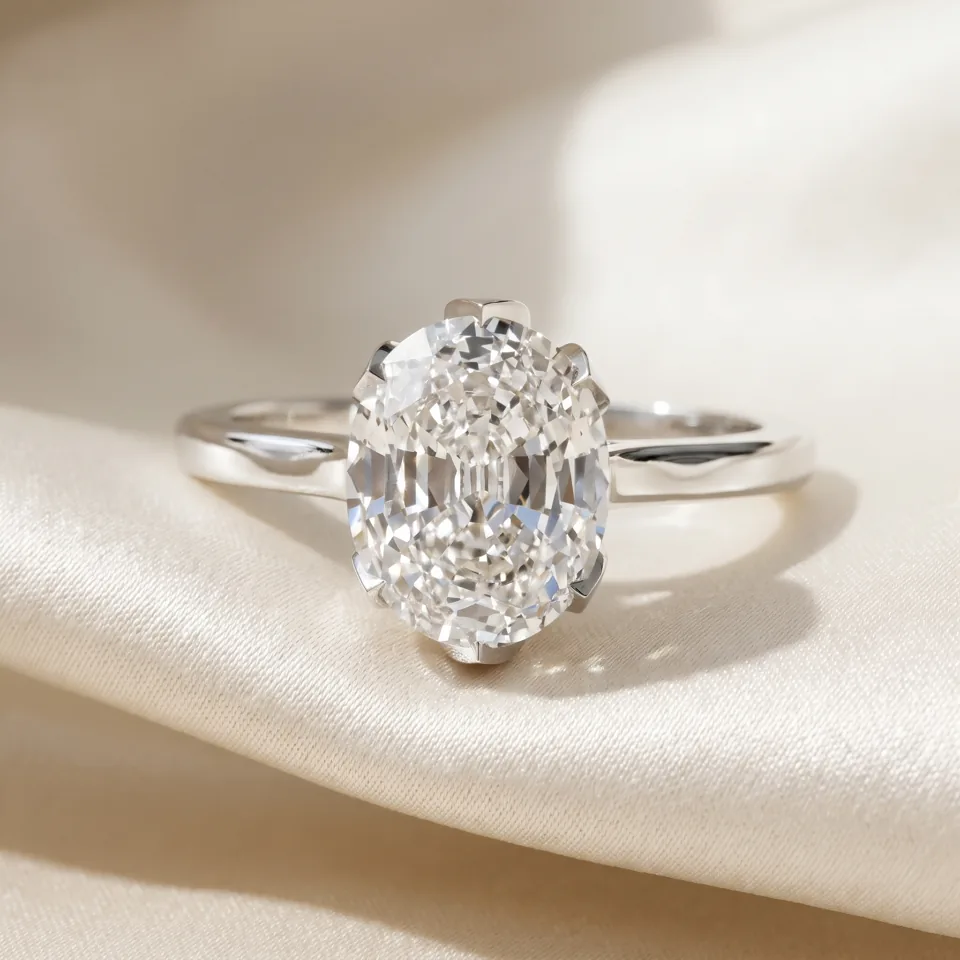 Floral Engagement Rings
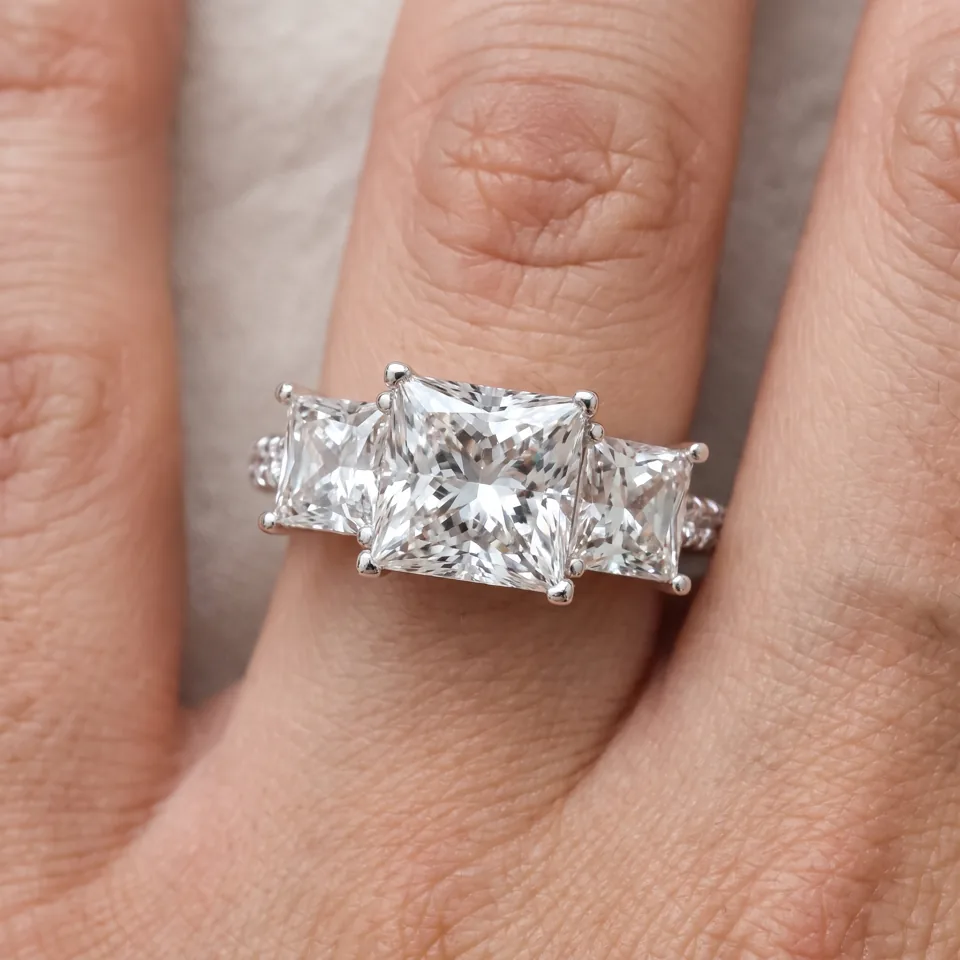 Three Stone Engagement Rings
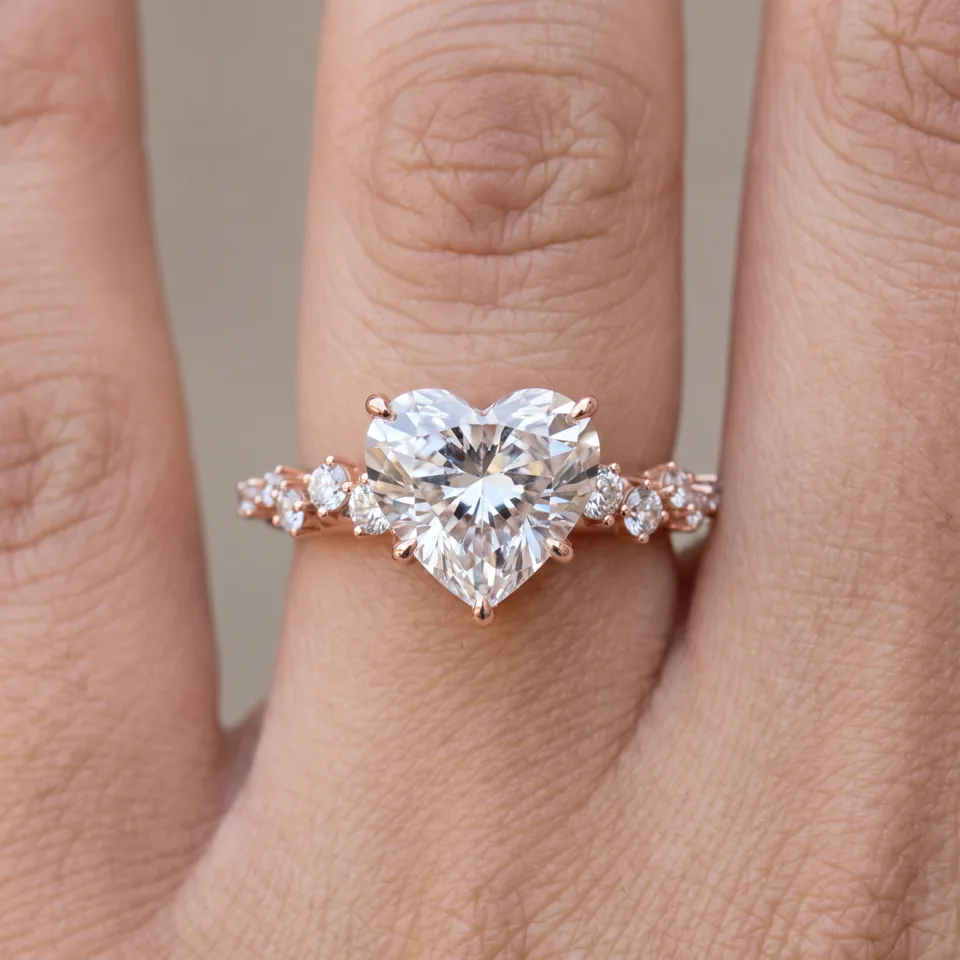 Cluster Side Stone Engagement Rings
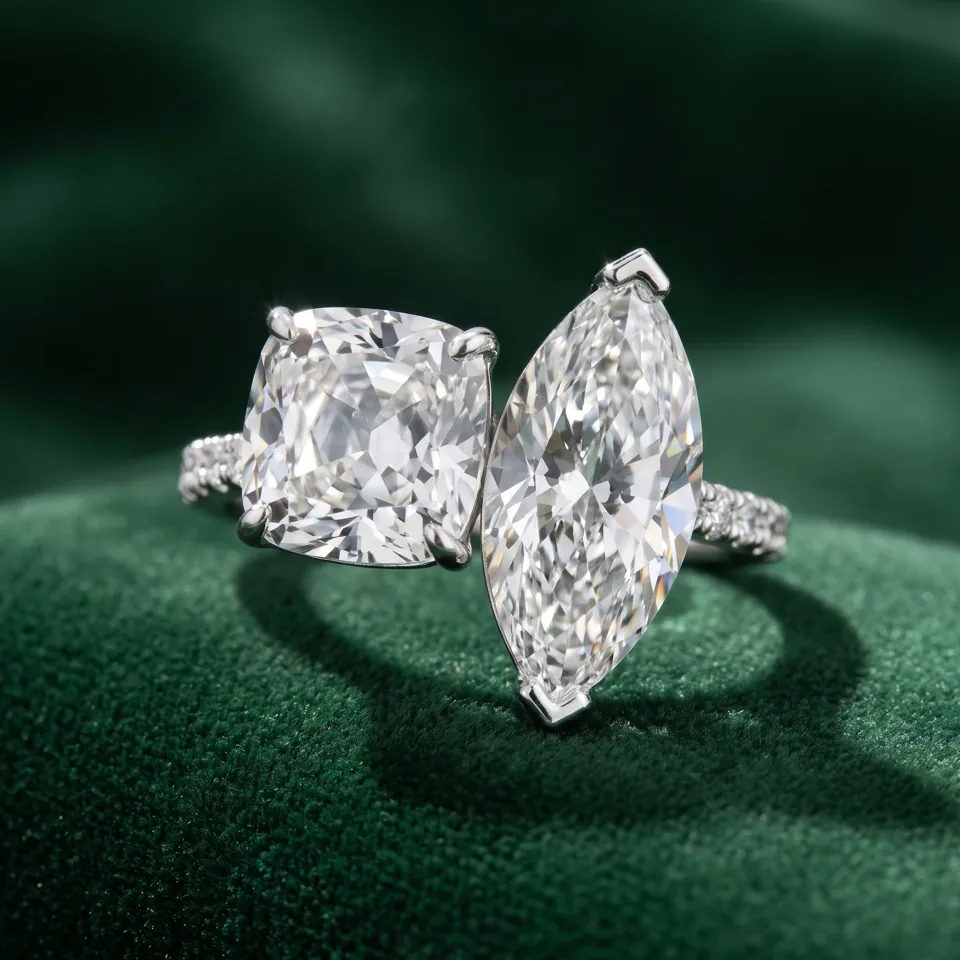 Toi et Moi Two Stone Engagement Rings
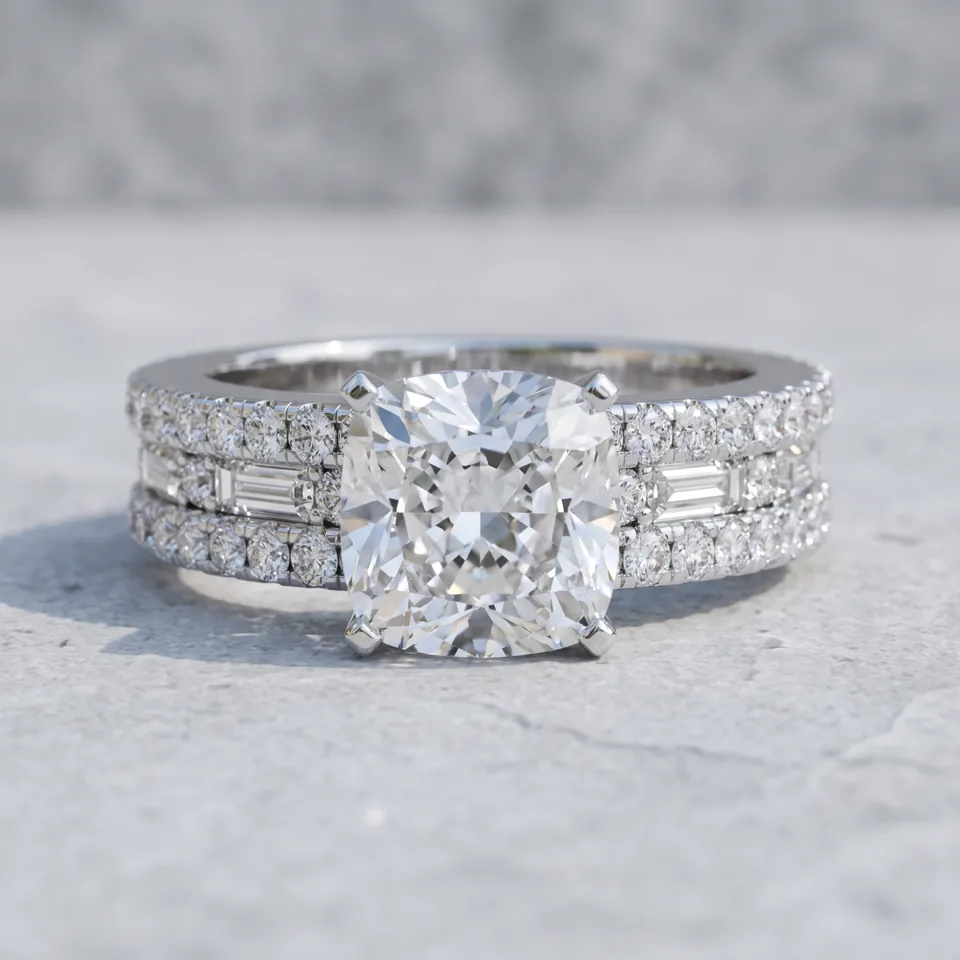 Engagement Rings with Baguette Side Stones
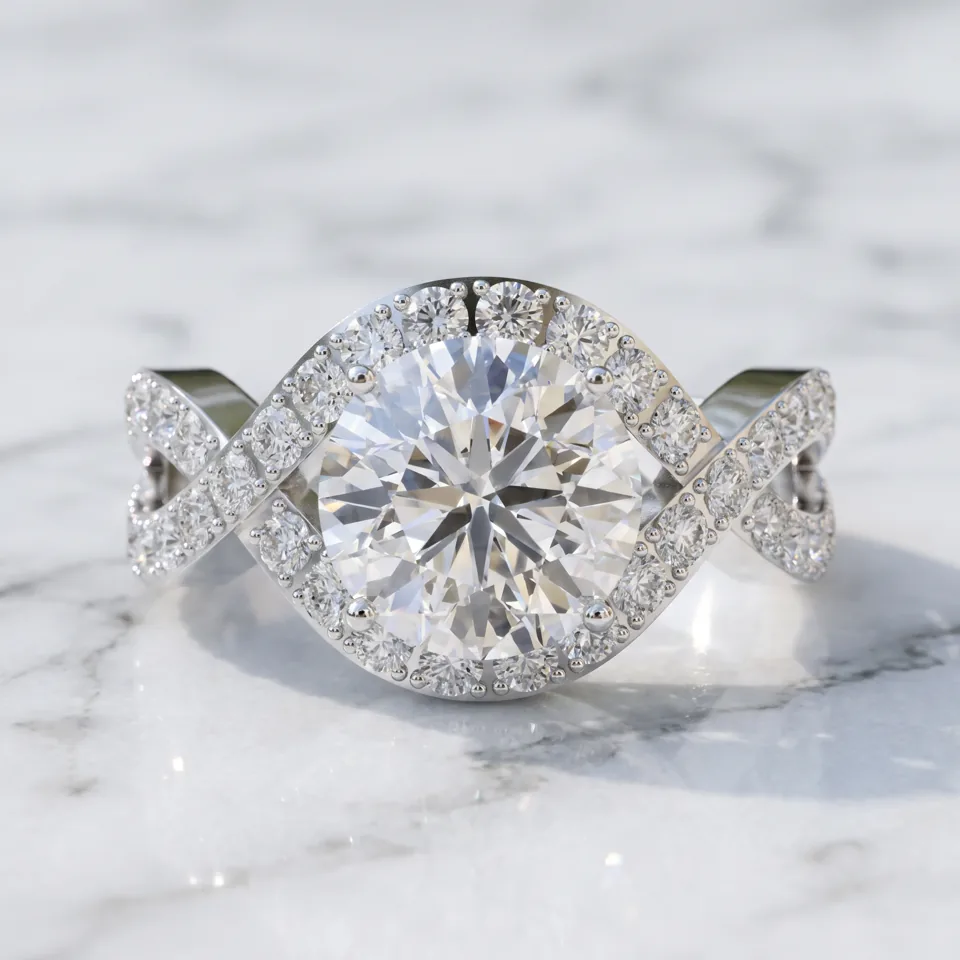 Infinity Rings
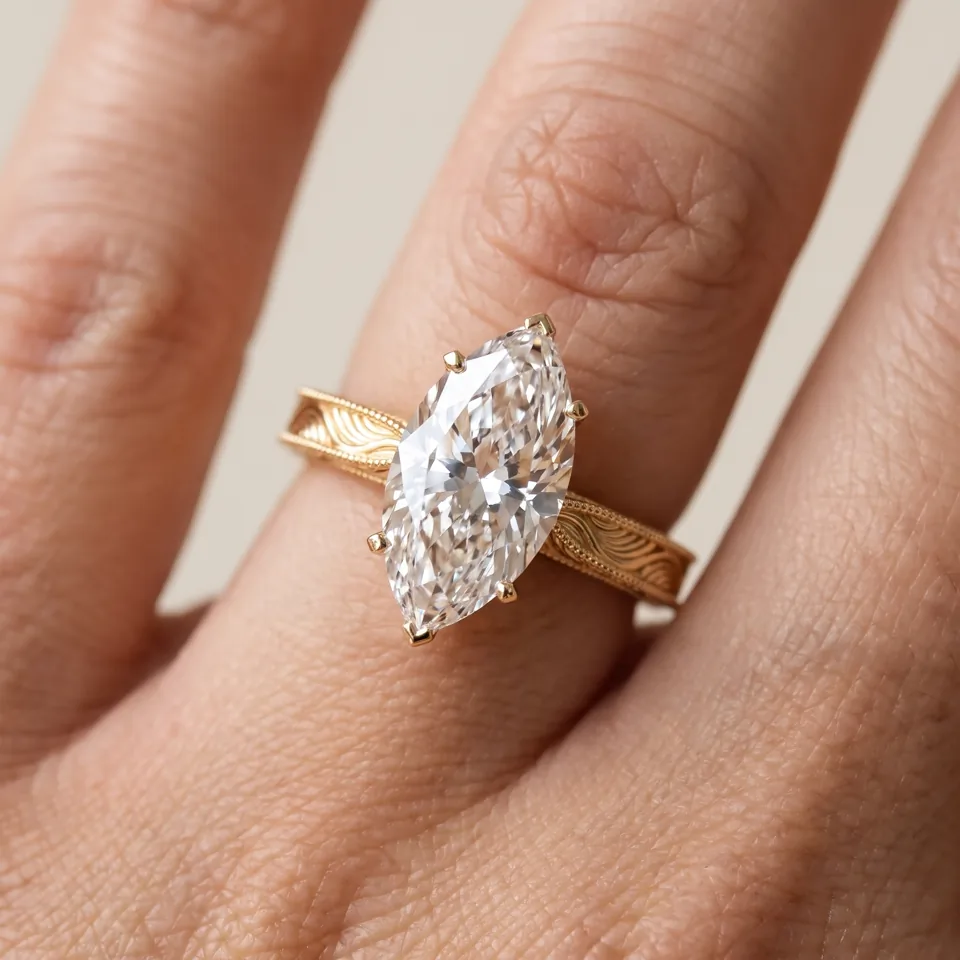 Engraved Rings
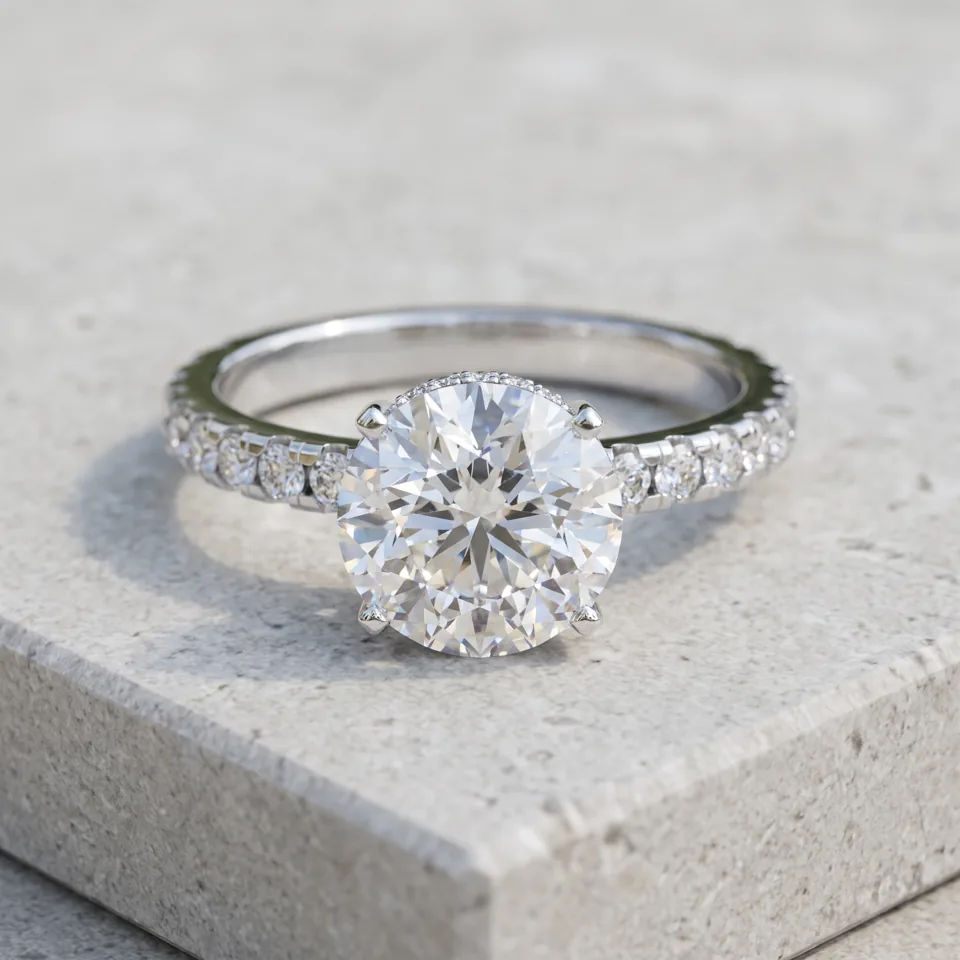 Pave Engagement Rings
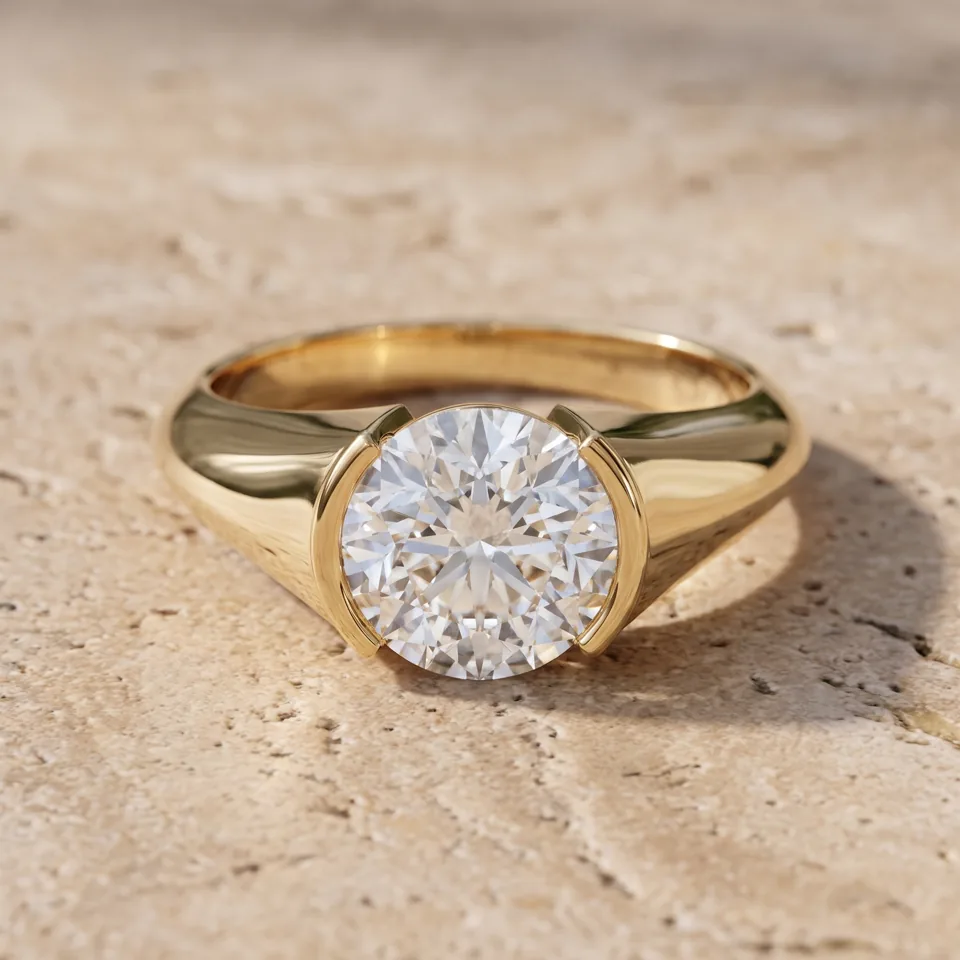 Gold Tension Rings
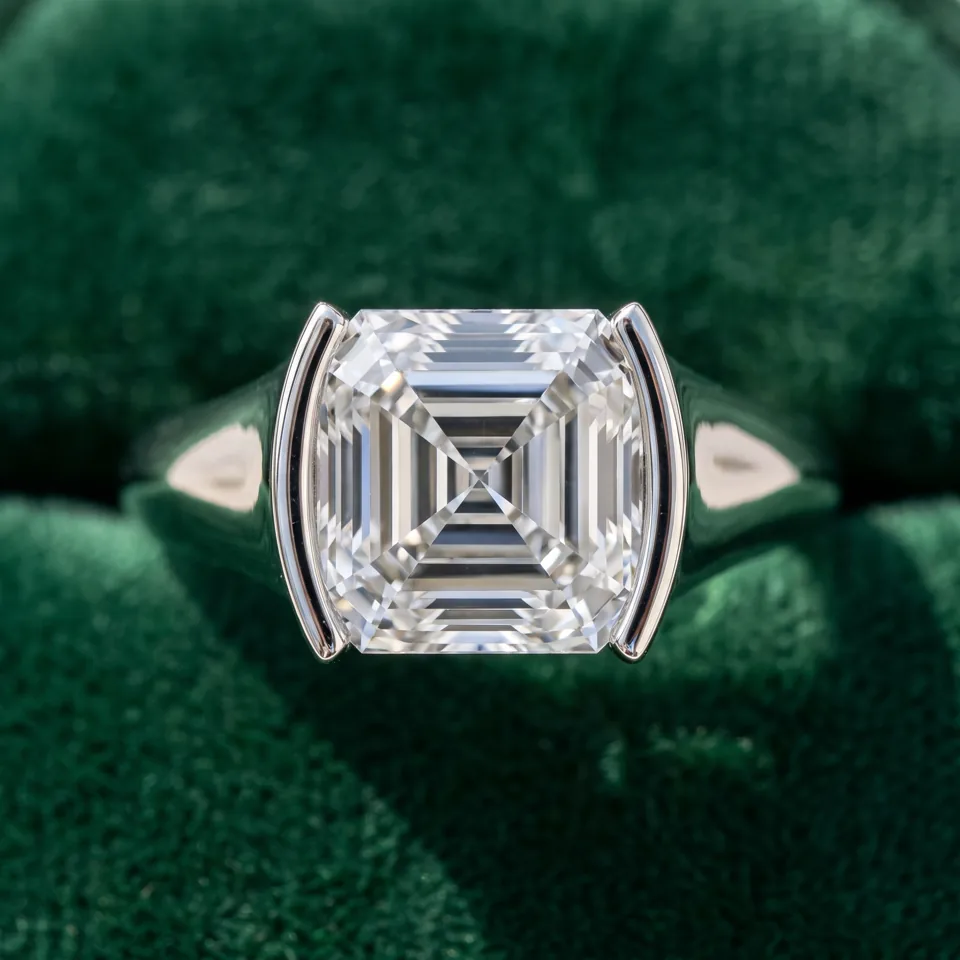 Platinum Tension Engagement Rings
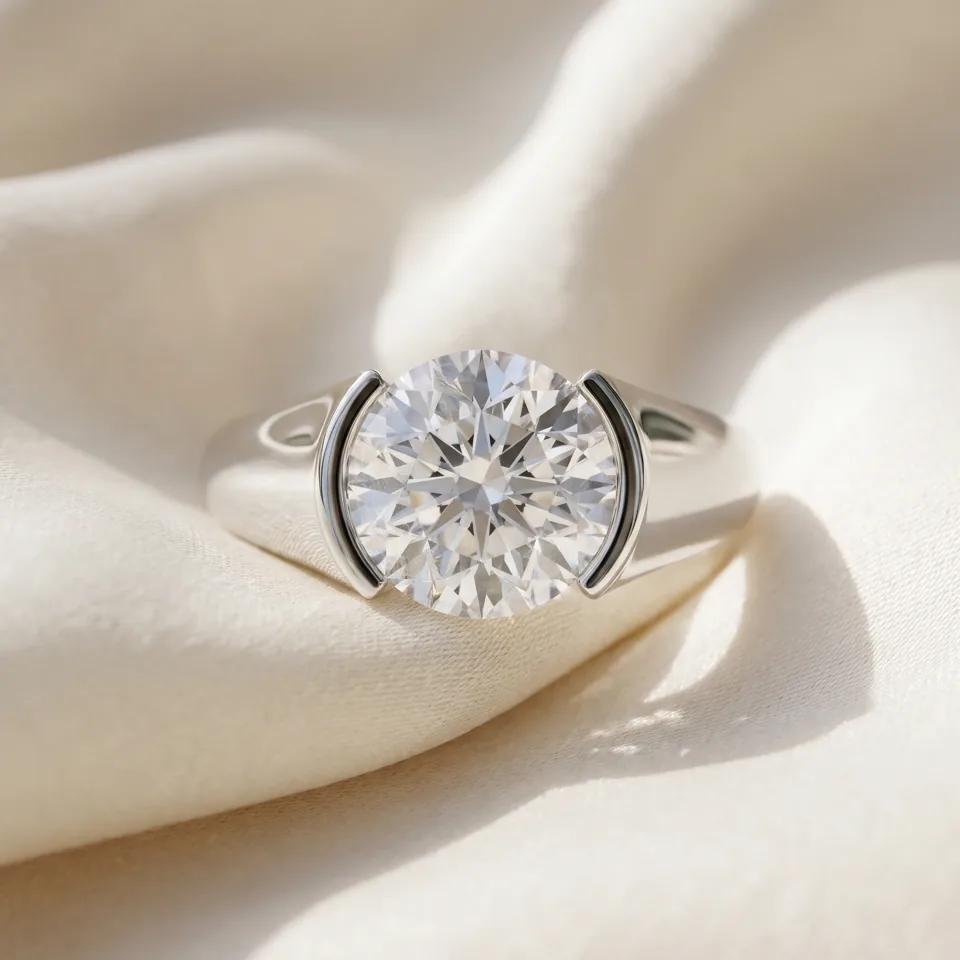 Solitaire Tension Rings
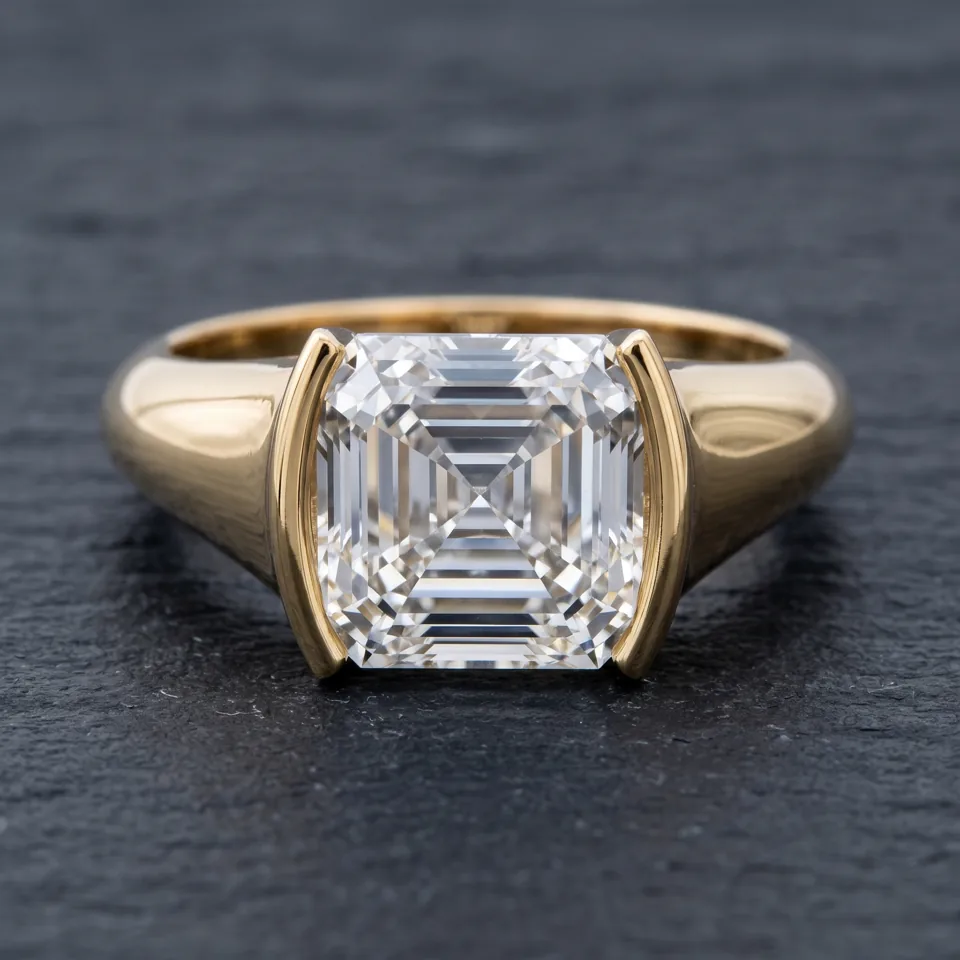 Yellow Gold Tension Set Engagement Rings
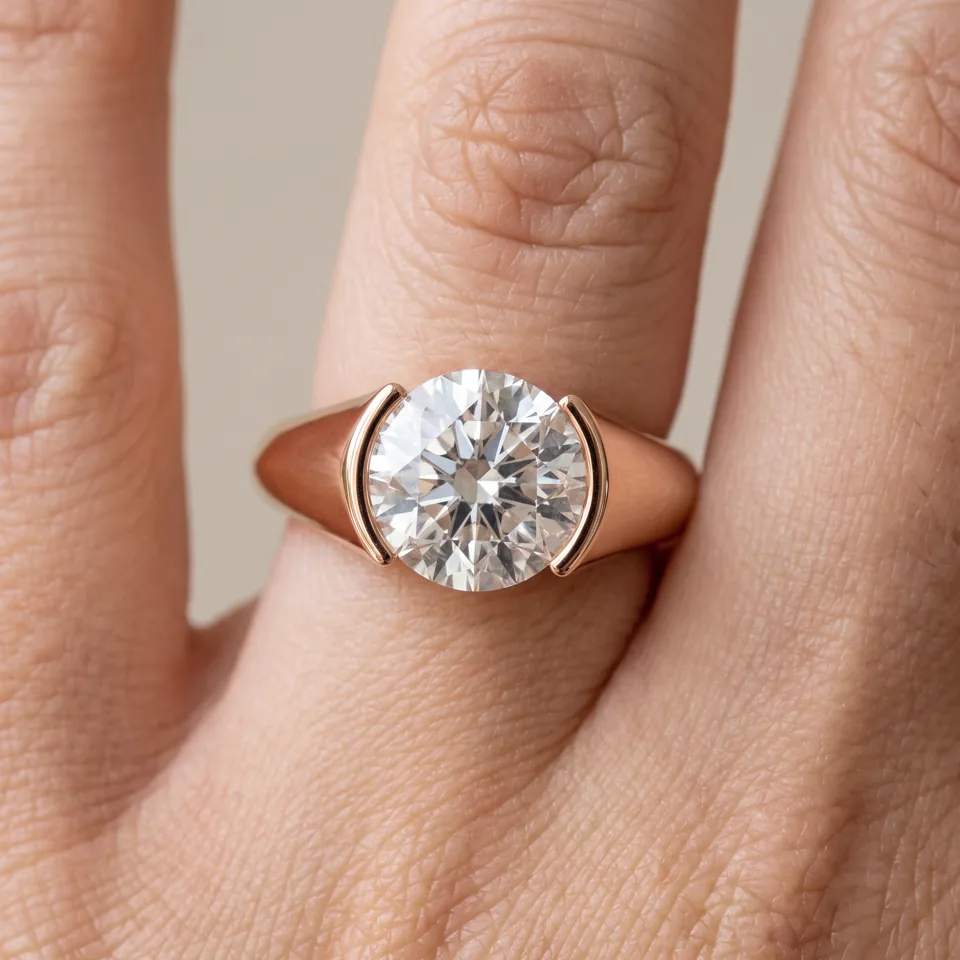 Rose Gold Tension Rings
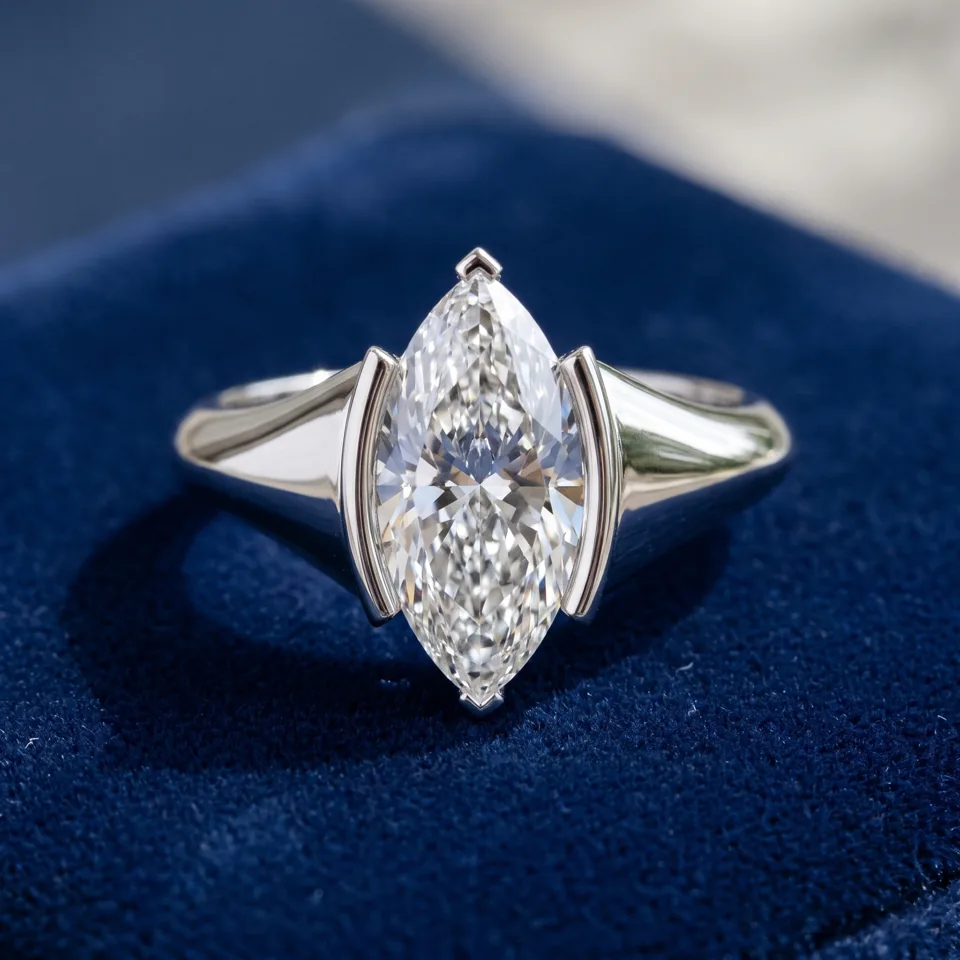 White Gold Tension Rings
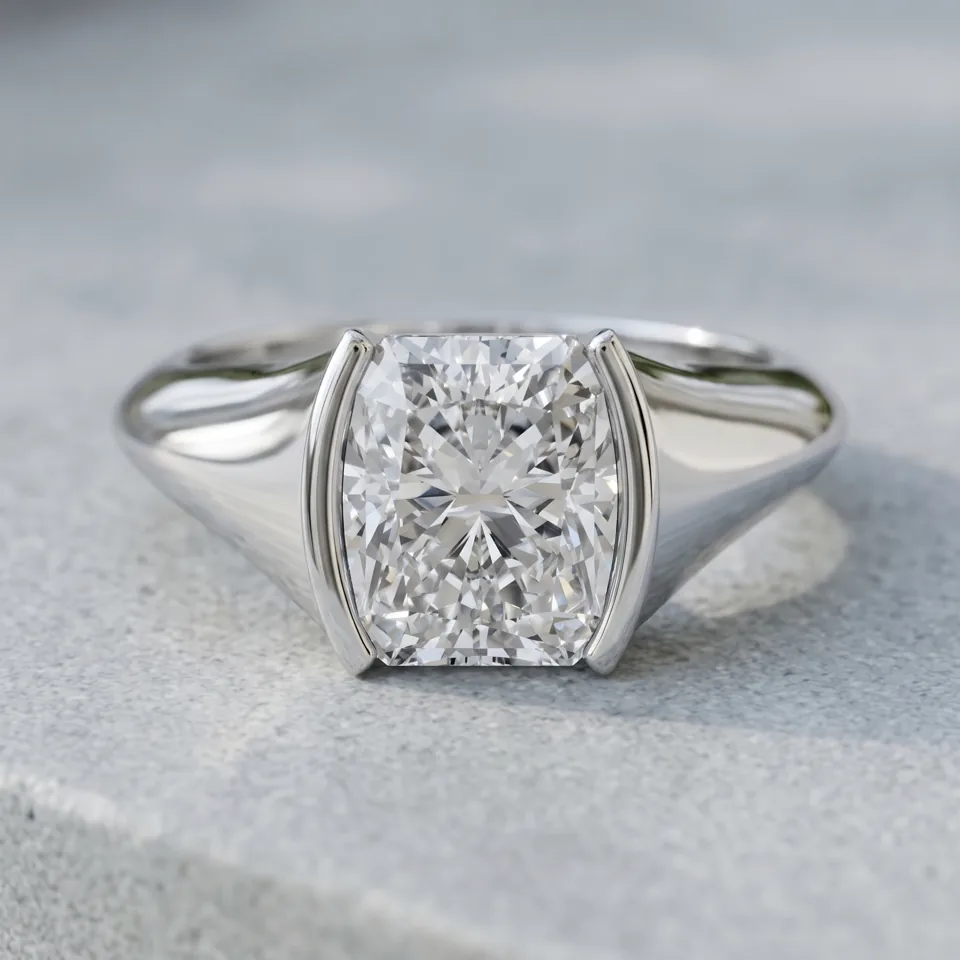 Sterling Silver Tension Rings
In a true tension setting, the band's own spring pressure grips the stone in small grooves on each side. A tension style design keeps that floating look but adds metal support under or around the center. Both appear in this collection, so read each product title and photos to see how the stone is held. One design pairs the tension look with a fluted men's band.
Most designs accept heart, pear, marquise, radiant, round, oval, cushion, asscher, princess and emerald centers. Shapes with flat sides, such as emerald and princess, give the band a broad surface to press against. Pointed shapes need their tips kept clear of knocks. Diamond's hardness, 10 on the Mohs scale, is what lets it handle the pressure this style puts on a stone. Most designs also accept fancy pink, blue, green or yellow centers, and some take black.
Tension engagement rings need a thick, wide band to keep their grip, so expect more metal across the finger than on a slim solitaire. Try a wide band size before ordering, since wide rings fit more snugly than thin ones of the same size. Wedding bands usually sit straight beside them rather than curving under a raised head.
Each design can be ordered in platinum, in Silvadium, a tarnish-resistant sterling silver, or in rose, white or yellow gold at 10K, 14K or 18K. Settings start under $450, and most cost about $1,450 to $1,600 because of the extra metal. That amount is for the band and head; the center adds its own cost when selected.
Your tension setting is made to your size and ships in 10–15 days with free insured shipping, both out and back. Return it unworn with its certificate within 30 days if it isn't right, and one resize within 60 days of delivery is free. The center diamond includes an IGI or GIA report.
They are if you love the floating look and accept a wider, heavier band. A tension ring shows more of the center from the side than almost any other setting and has a clean, modern profile. The costs are more metal, a tighter fit to get right at the start, and fewer options for later changes. Settings here run from under $450, with most around $1,450 to $1,600 before the center.
Yes, when they are made well and sized correctly. Spring pressure in the band keeps the stone gripped, and a diamond's hardness lets it bear that squeeze without damage. A sharp blow to the band could still shift the center, so remove it before lifting weights or moving furniture. Some designs here are labeled tension style; the product photos show how each center is held.
Pros: the center looks suspended, more light reaches it from the sides, and there are no prongs to snag. Cons: the band has to be wide and thick, the stone's edges are exposed to knocks, resizing is limited, and adding a curved wedding band is harder. If you want the look with more support, compare the tension style designs on this page and check how each holds its center.
Only within limits. Changing the size alters the pressure that holds the center, so a true tension ring often has to be remade to a new size rather than stretched or cut. Whitemoon includes one free resize within 60 days of delivery; a change of more than one size is a remake, which takes 10–15 days. Measuring carefully before you order is the best way to avoid it.
In a tension ring, the band's two open ends squeeze the center stone and keep it in place through the metal's own pressure, so it appears to float. The purpose is mostly visual: less metal around the stone lets more light in and shows off the diamond's full outline. It also gives a smooth, modern look without prongs, which is why these designs pair the center with wide, sculpted bands.


