Complimentary insured shipping, both waysEngagement ring diamonds certified by IGI or GIAGrown by light. Conflict-free by natureComplimentary insured shipping, both ways
Engagement RingsWedding BandsEarrings

NecklaceBraceletsAbout
A cluster ring groups small diamonds together, either as the main shape or as accents beside your center stone. In these cluster engagement rings the groups mostly sit on the shoulders, in halos or in floral and leaf heads, and you choose the center diamond in the next step.
Pick a center shape, with round on nearly every design, then a metal: gold in three colors, platinum or silver.
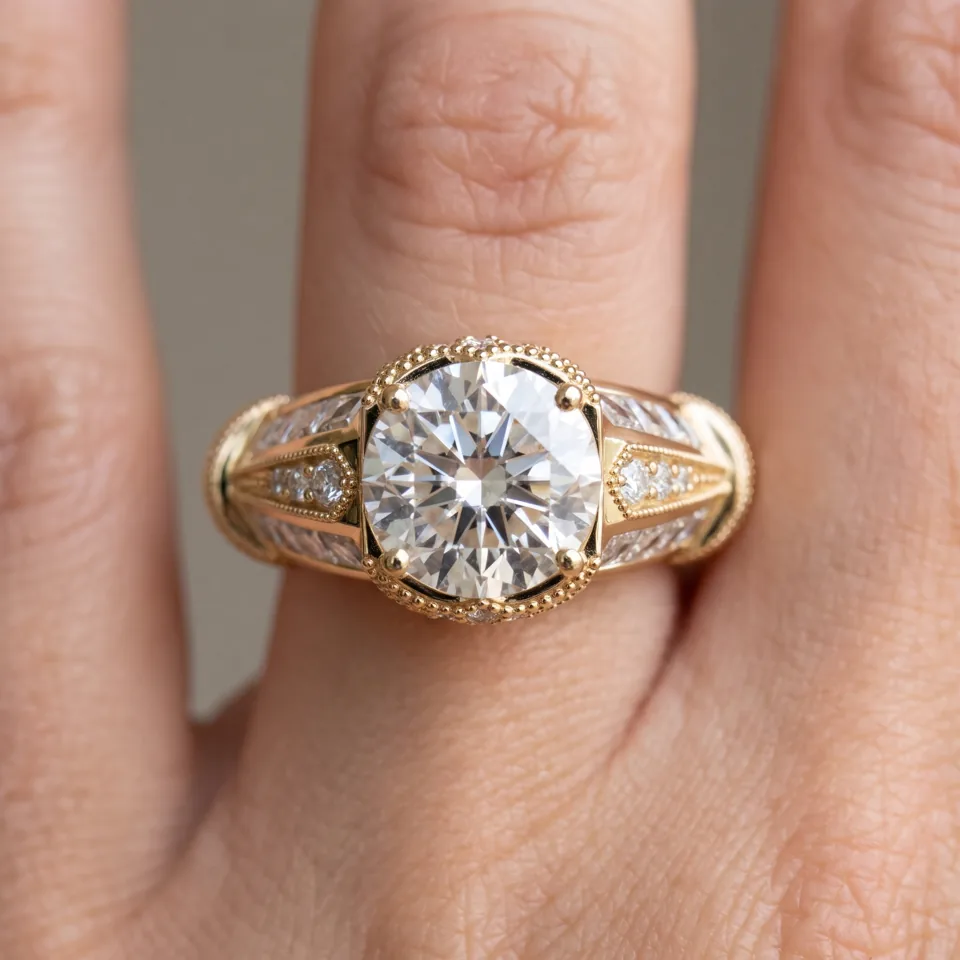 Vintage Engagement Rings
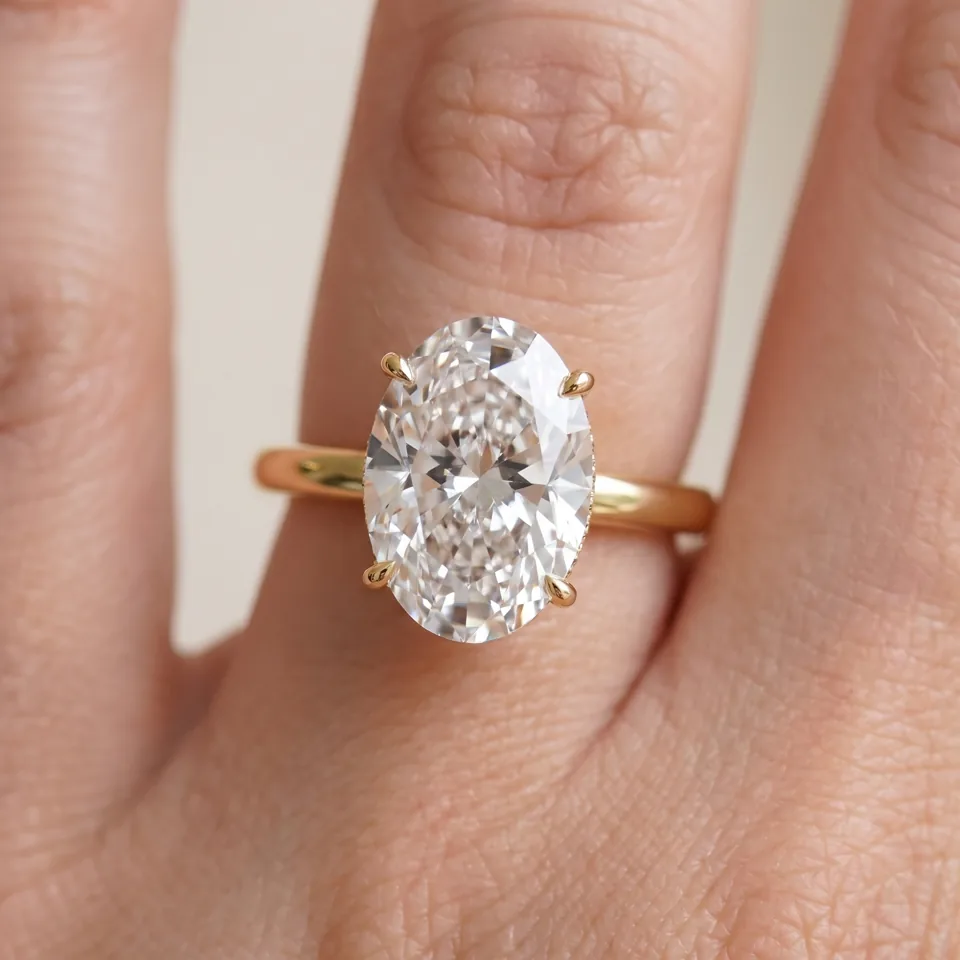 Solitaire Engagement Rings
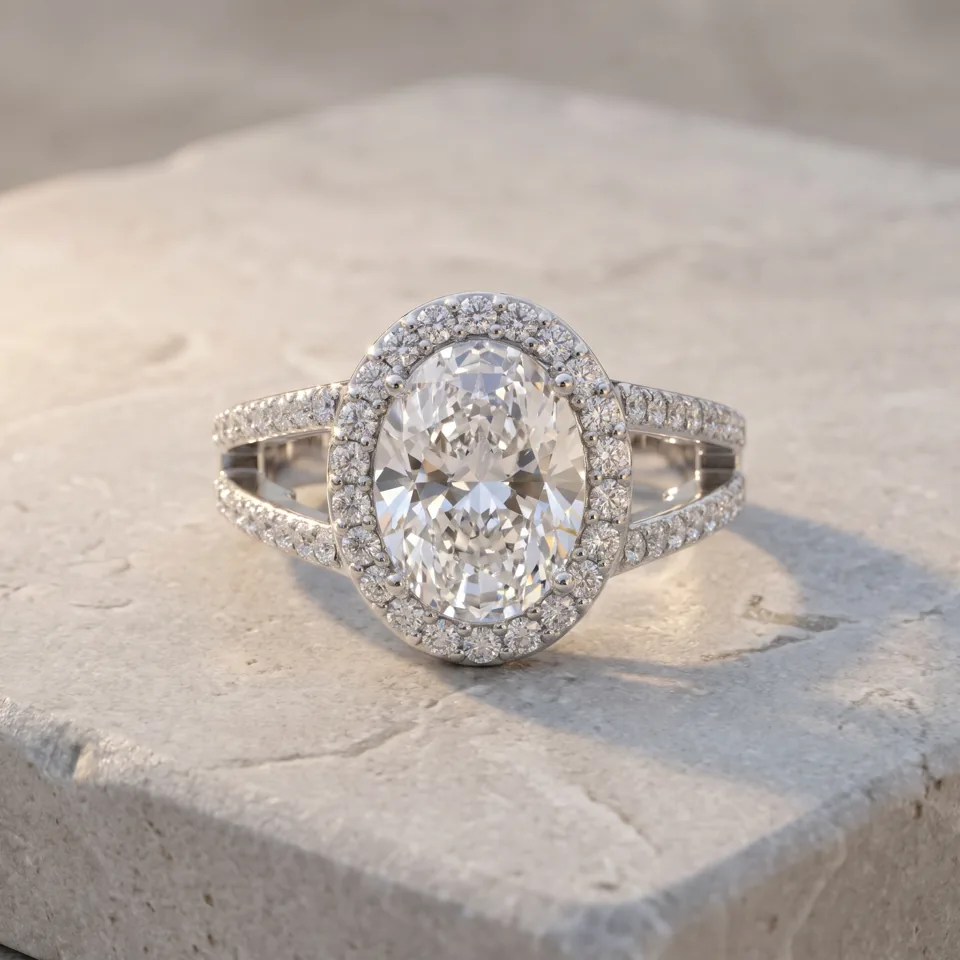 Halo Engagement Rings
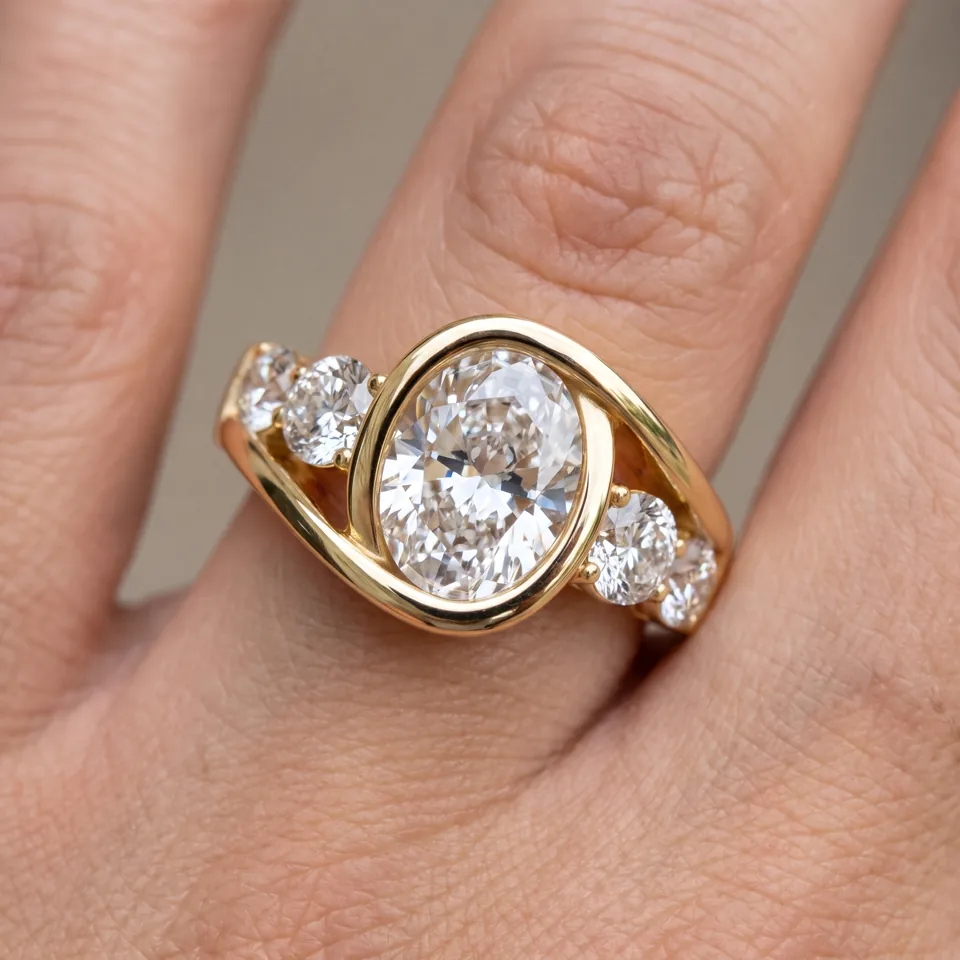 Bezel Engagement Rings
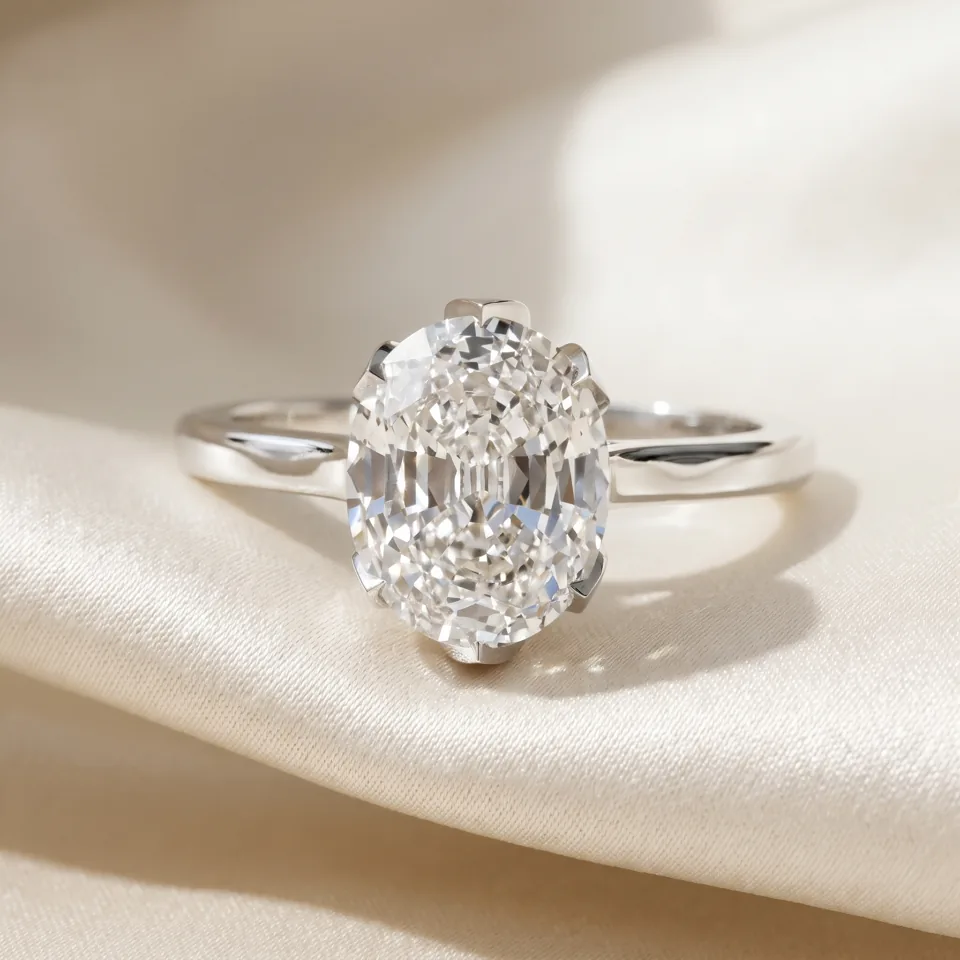 Floral Engagement Rings
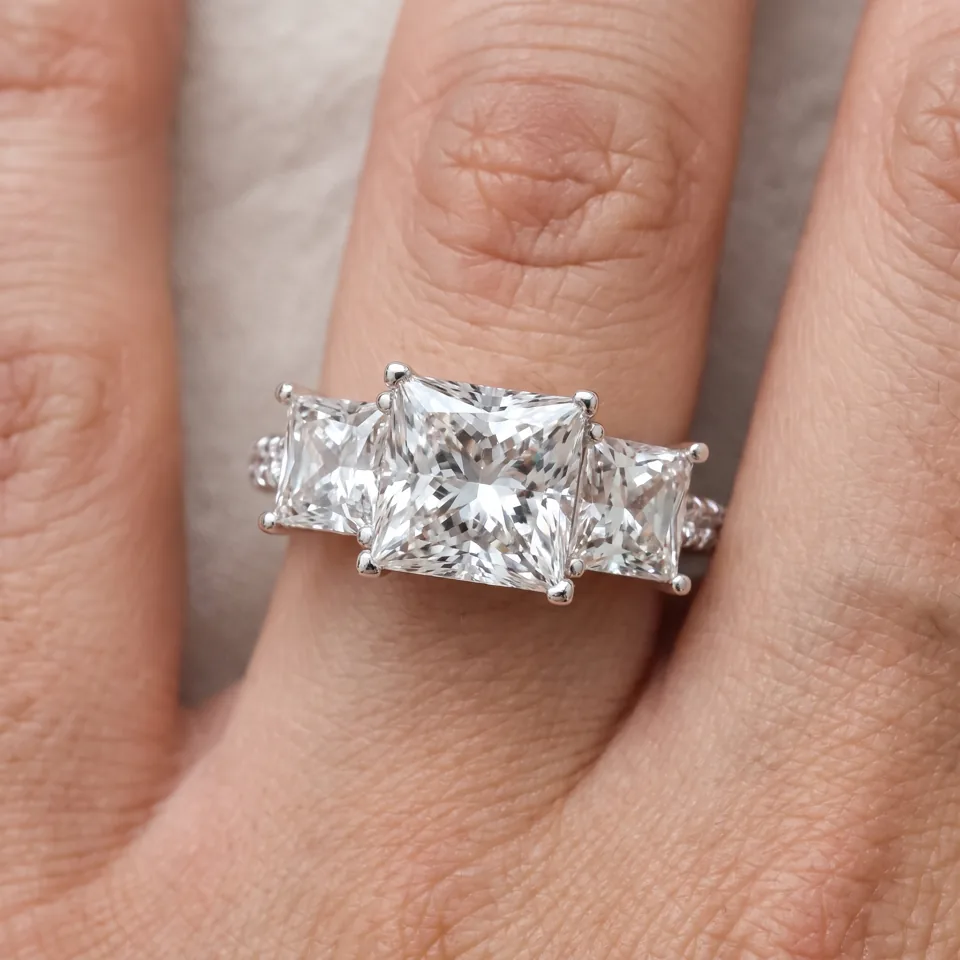 Three Stone Engagement Rings
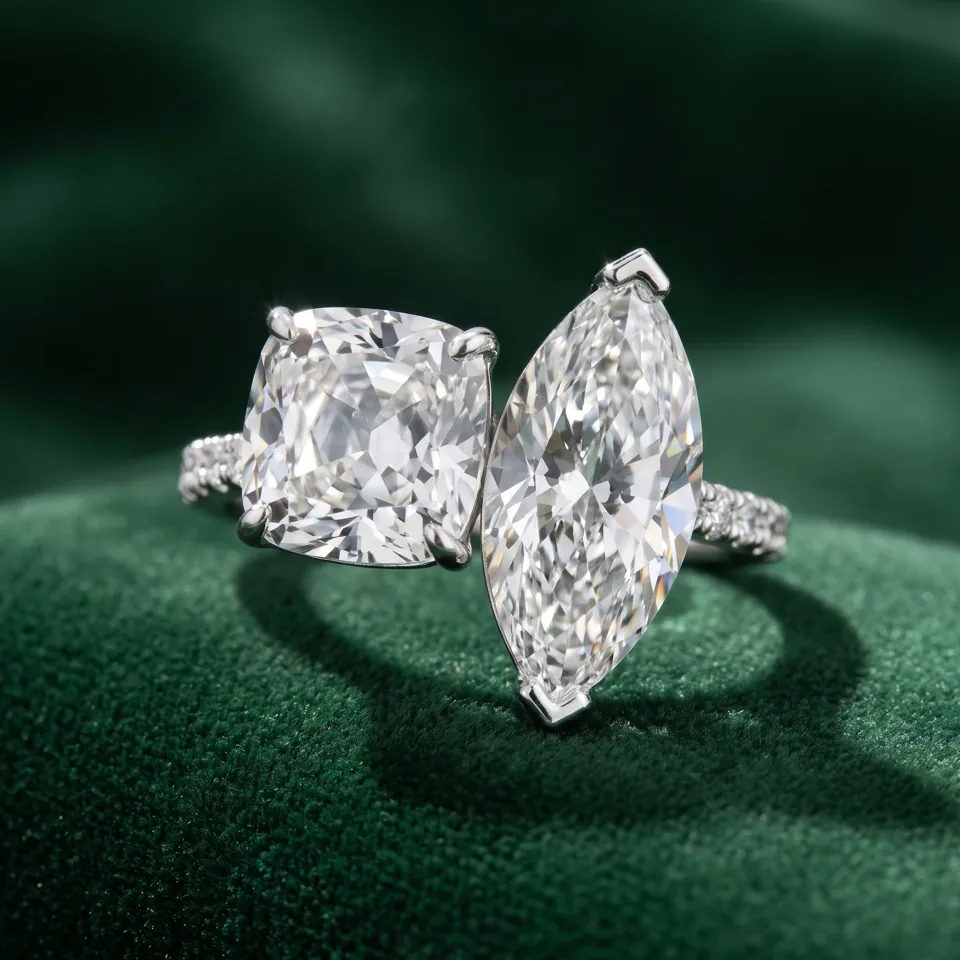 Toi et Moi Two Stone Engagement Rings
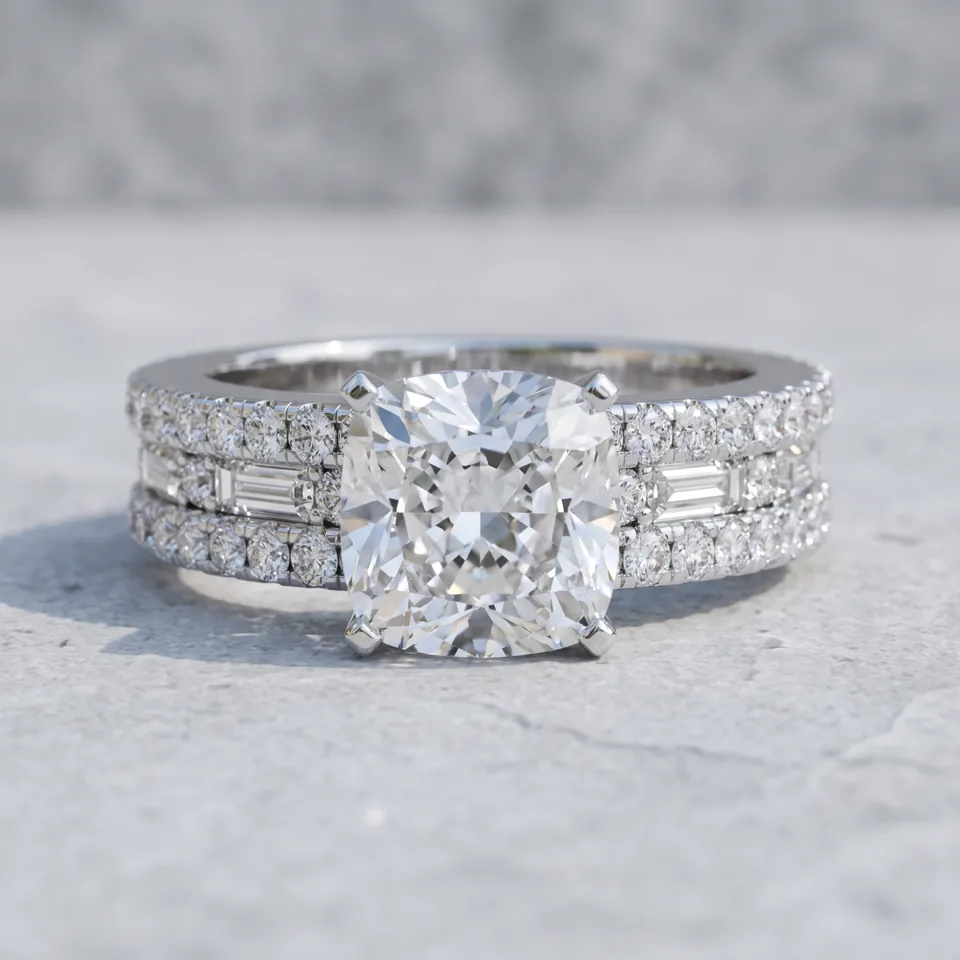 Engagement Rings with Baguette Side Stones
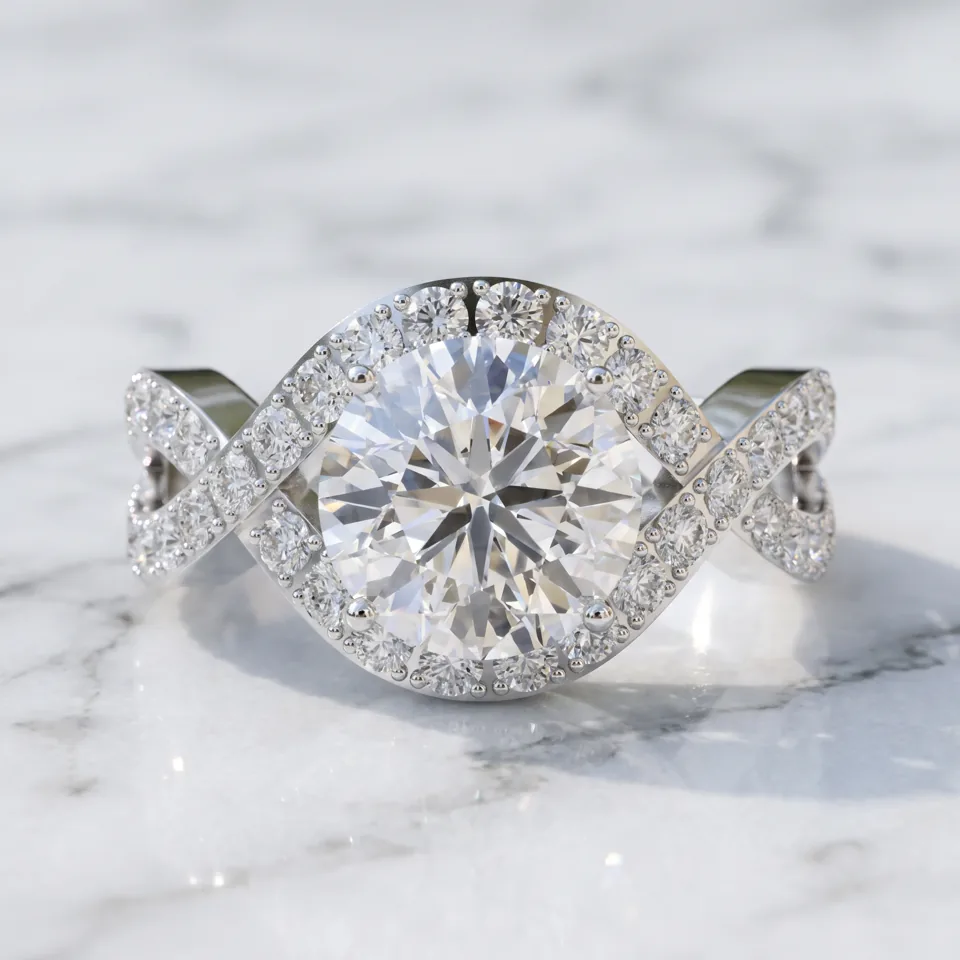 Infinity Rings
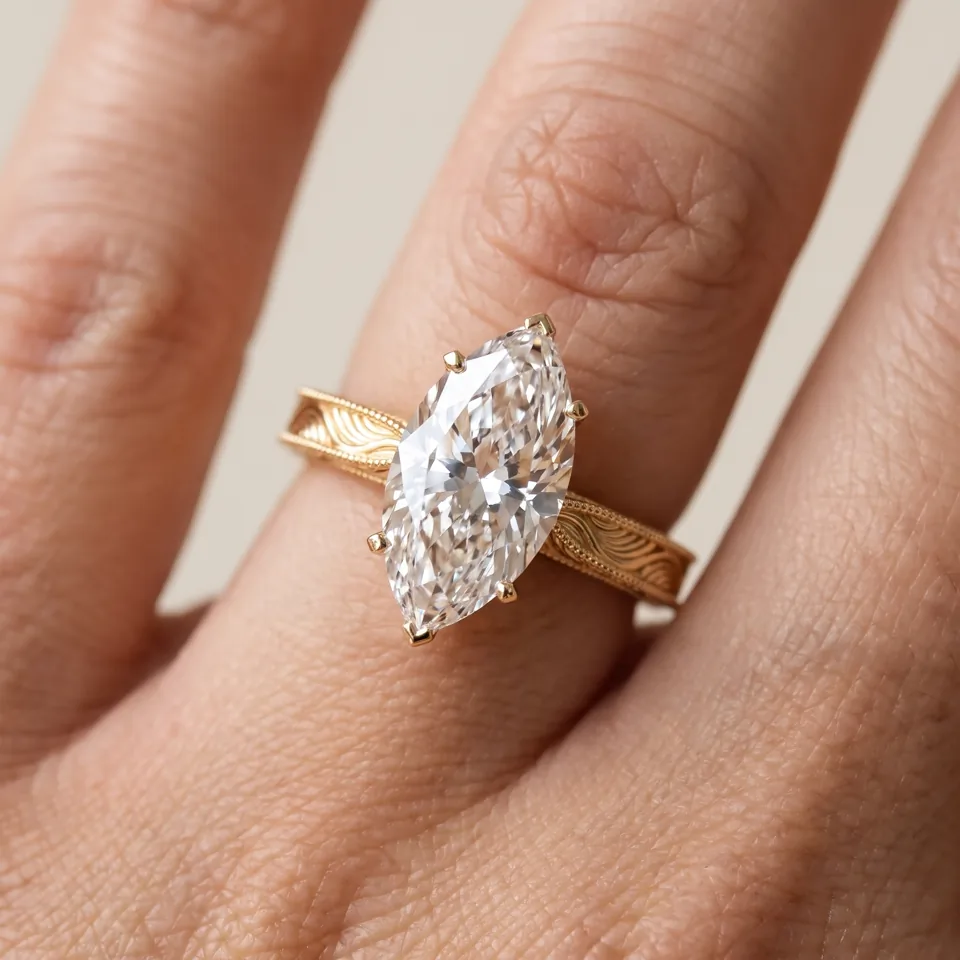 Engraved Rings
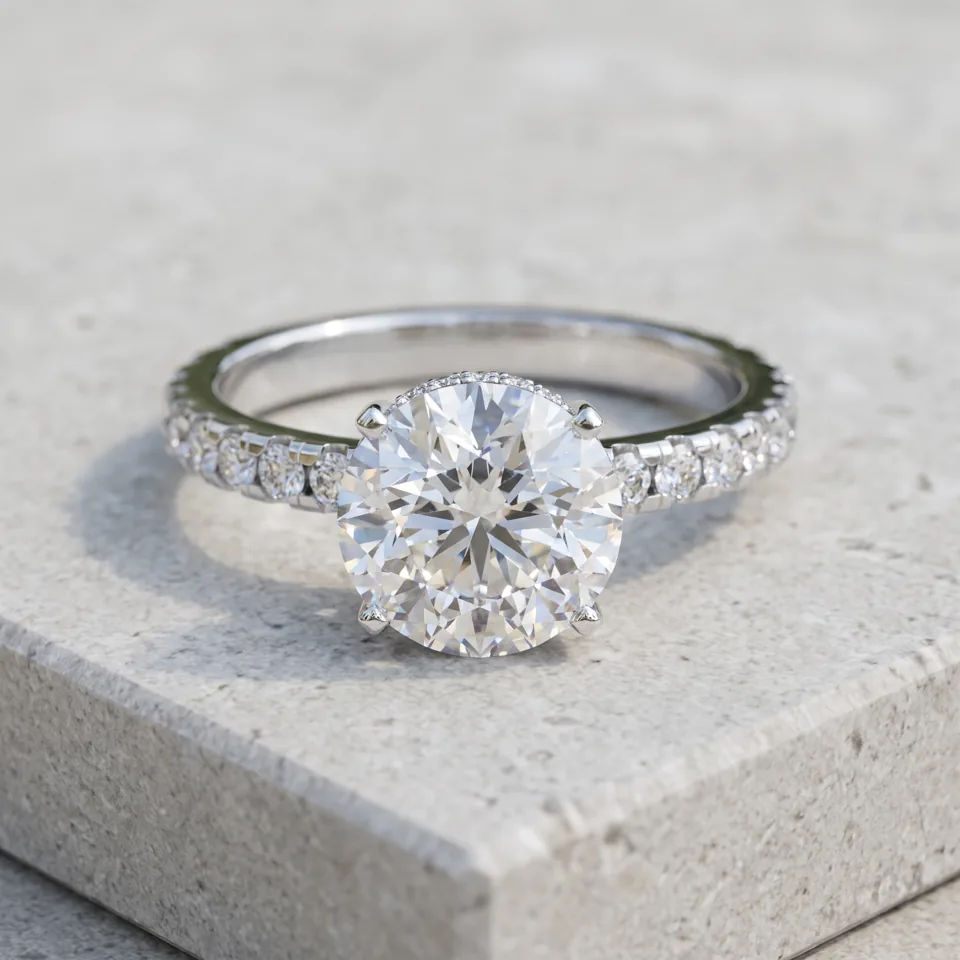 Pave Engagement Rings
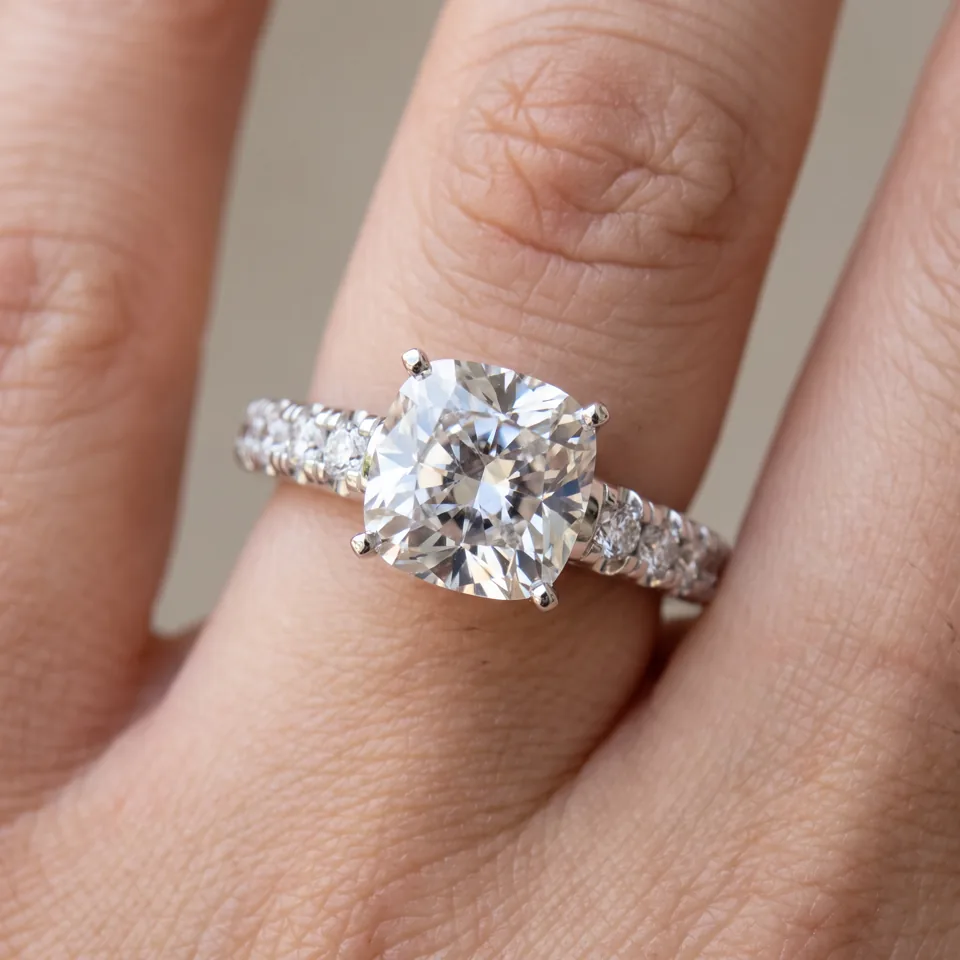 Cathedral Setting Rings
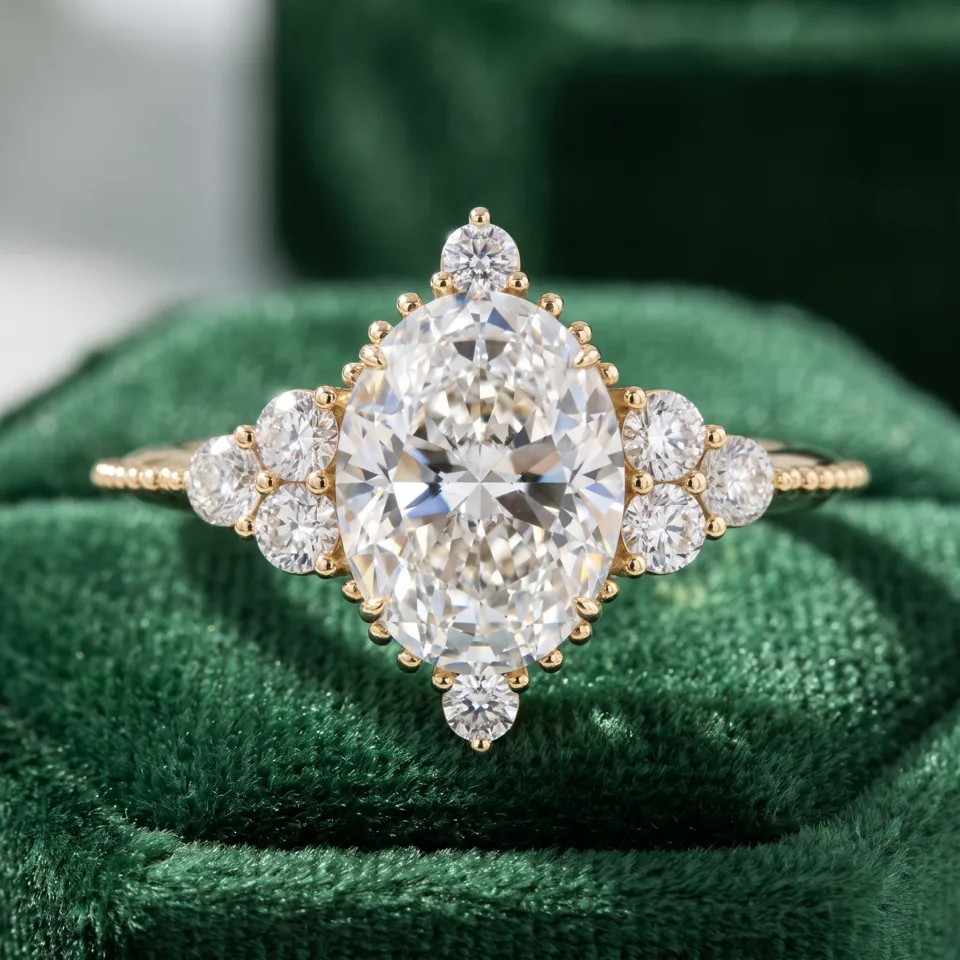 Vintage Cluster Engagement Rings
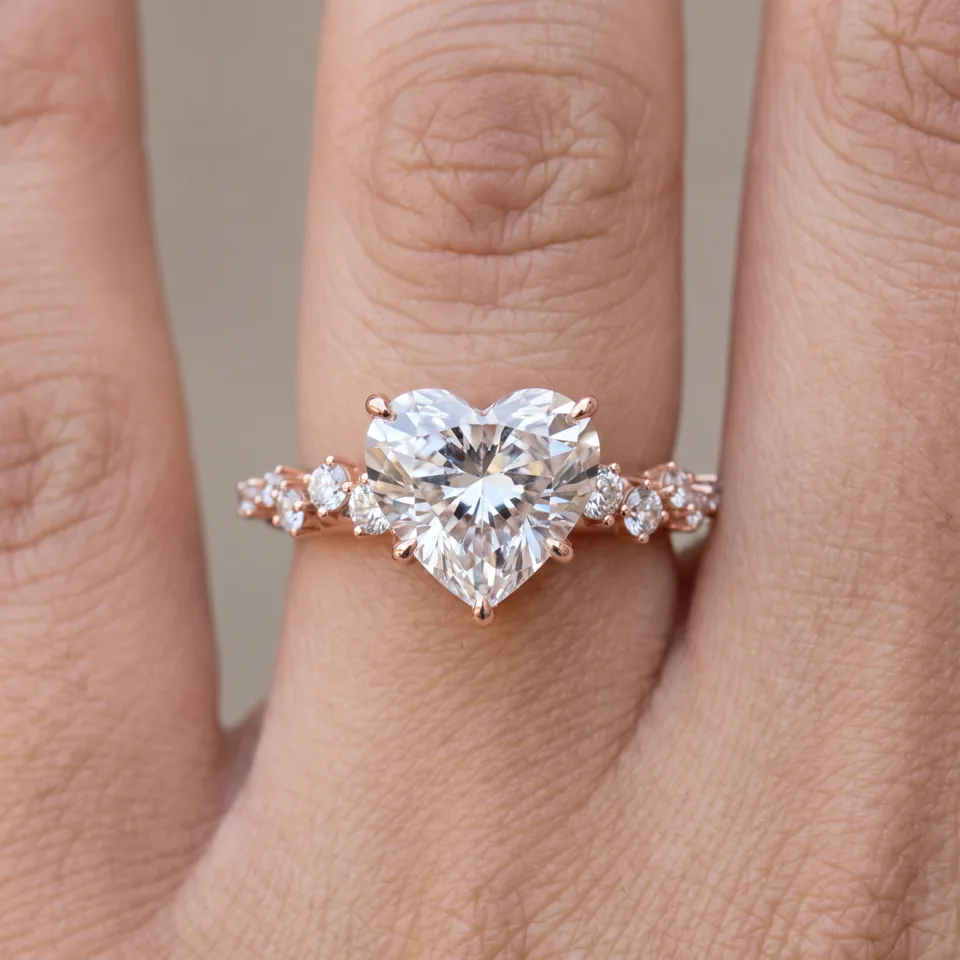 Gold Cluster Rings
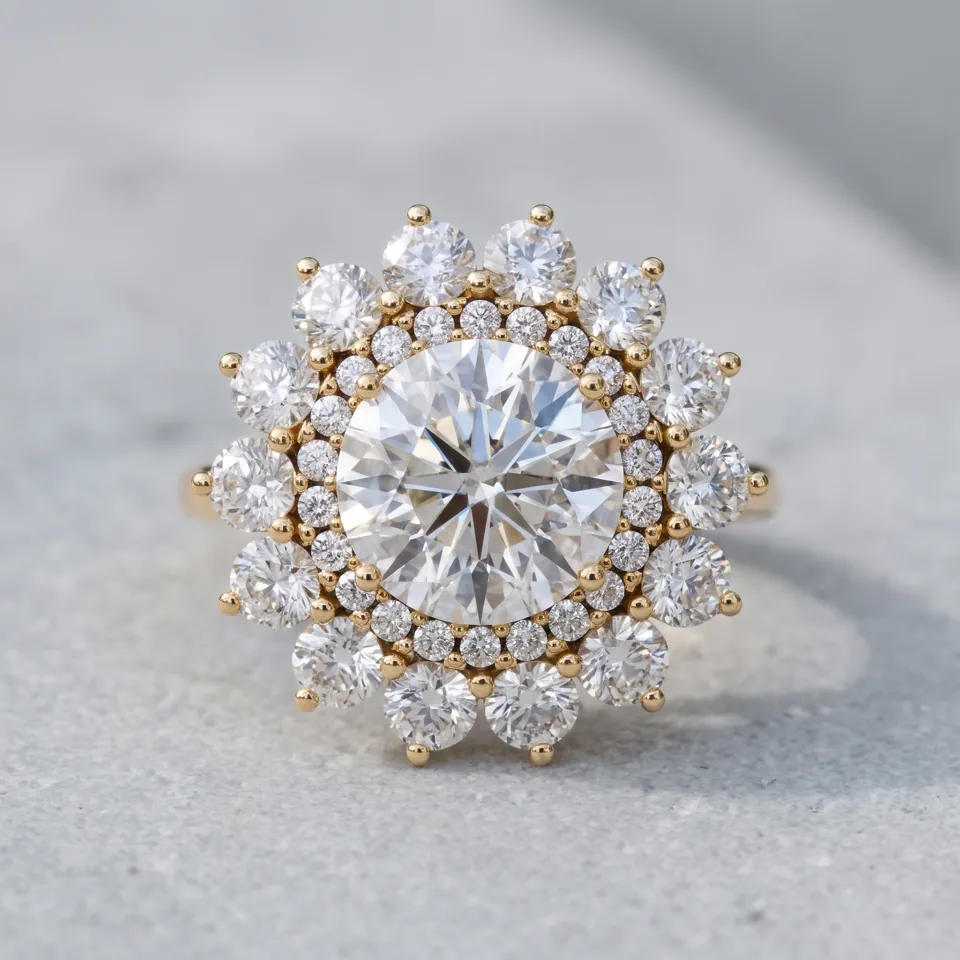 Floral Cluster Engagement Rings
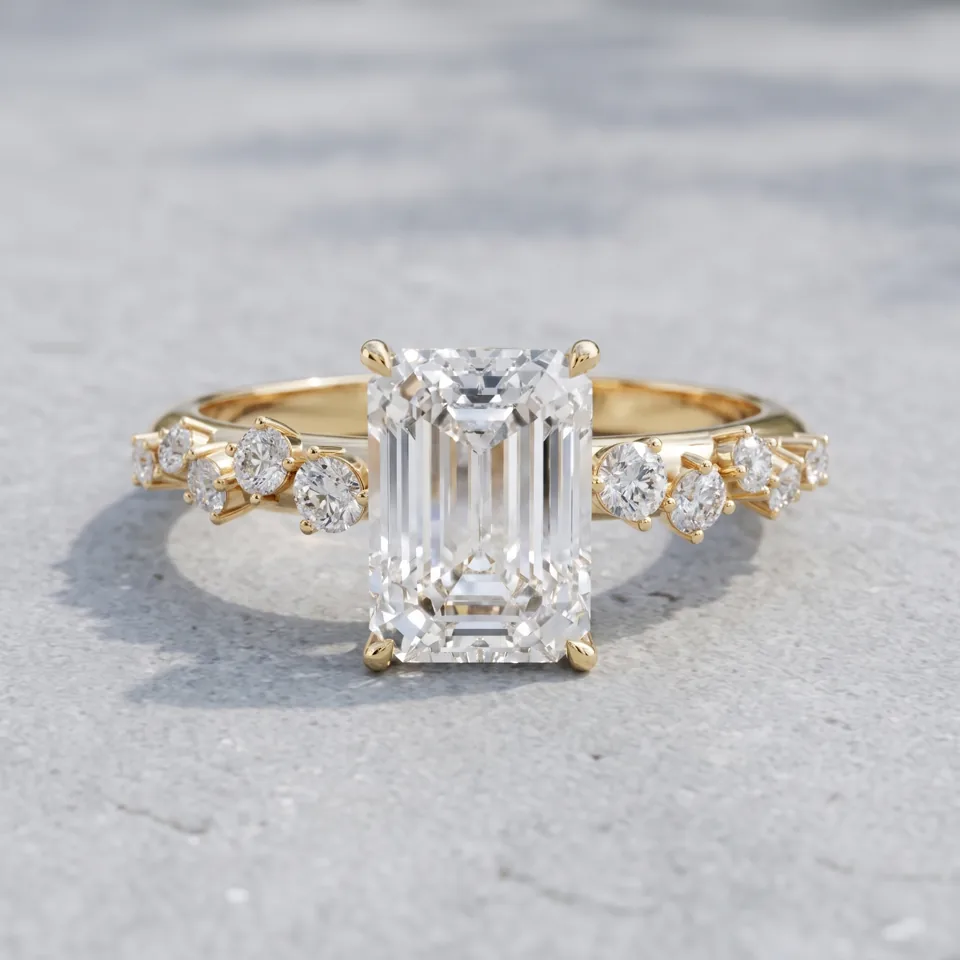 Yellow Gold Diamond Cluster Rings
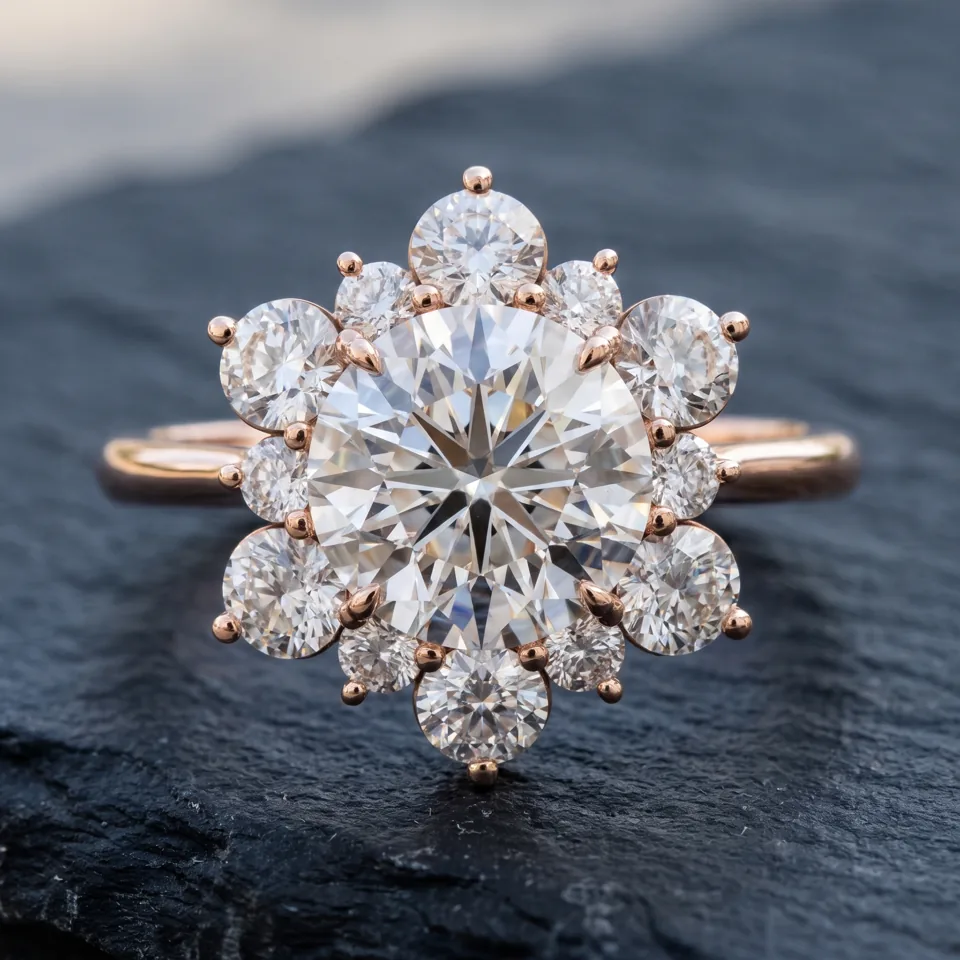 Cluster Halo Rings
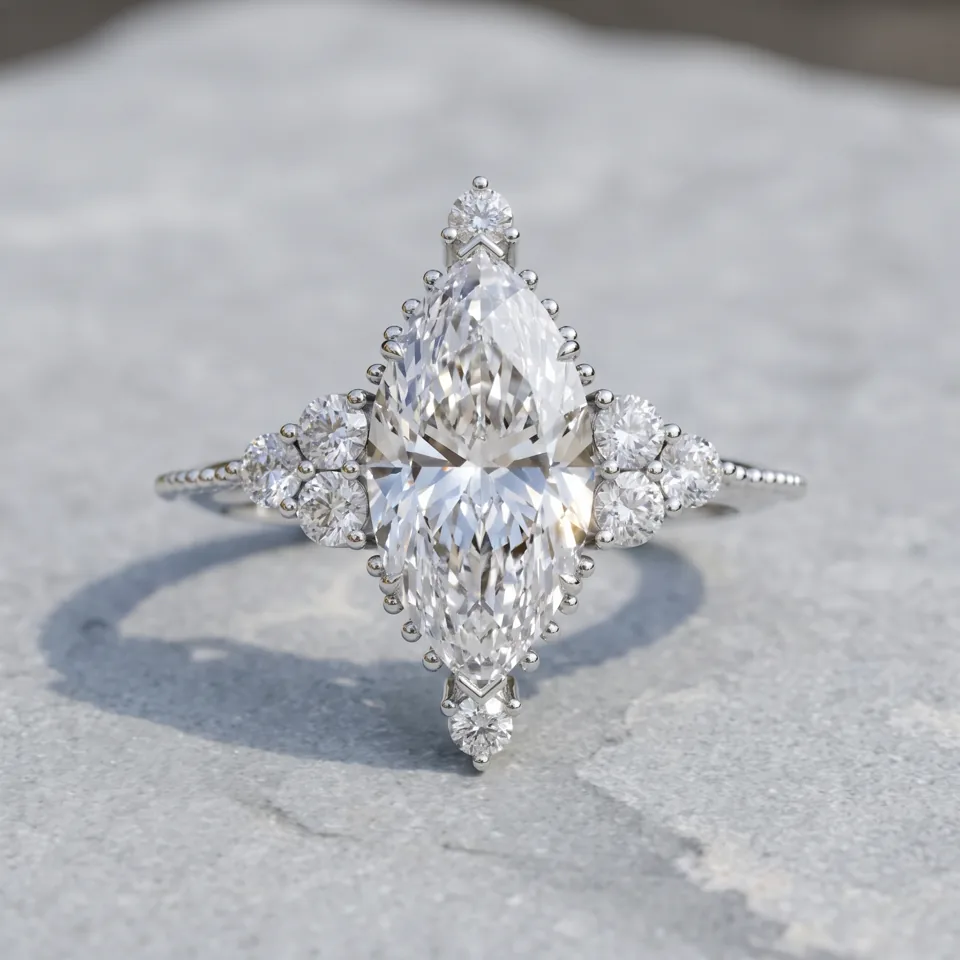 White Gold Cluster Rings
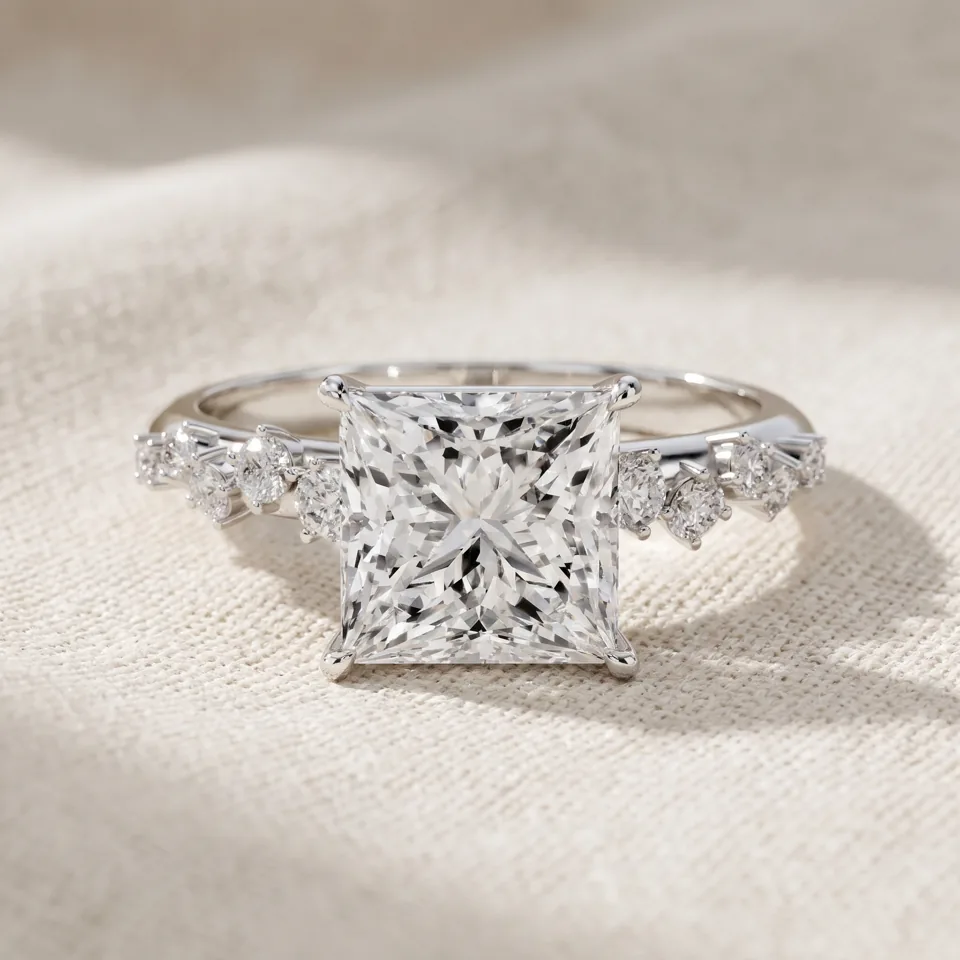 Sterling Silver Cluster Rings
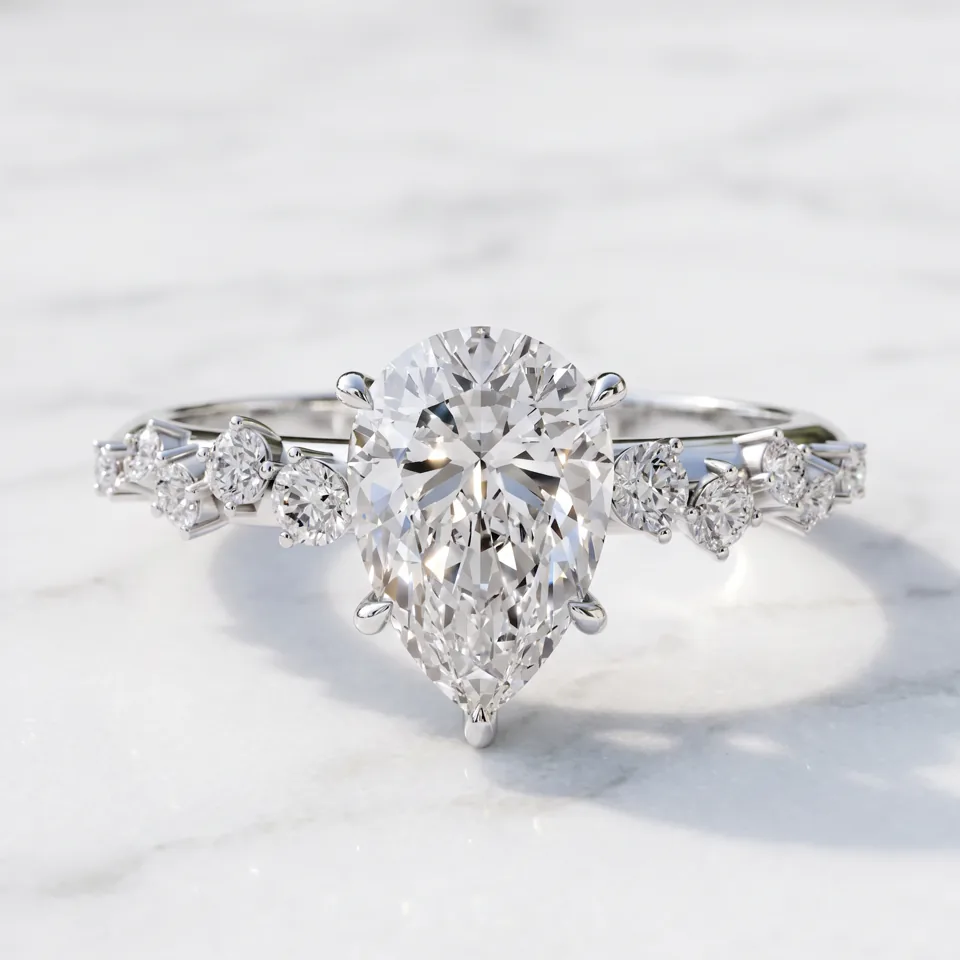 Platinum Cluster Rings
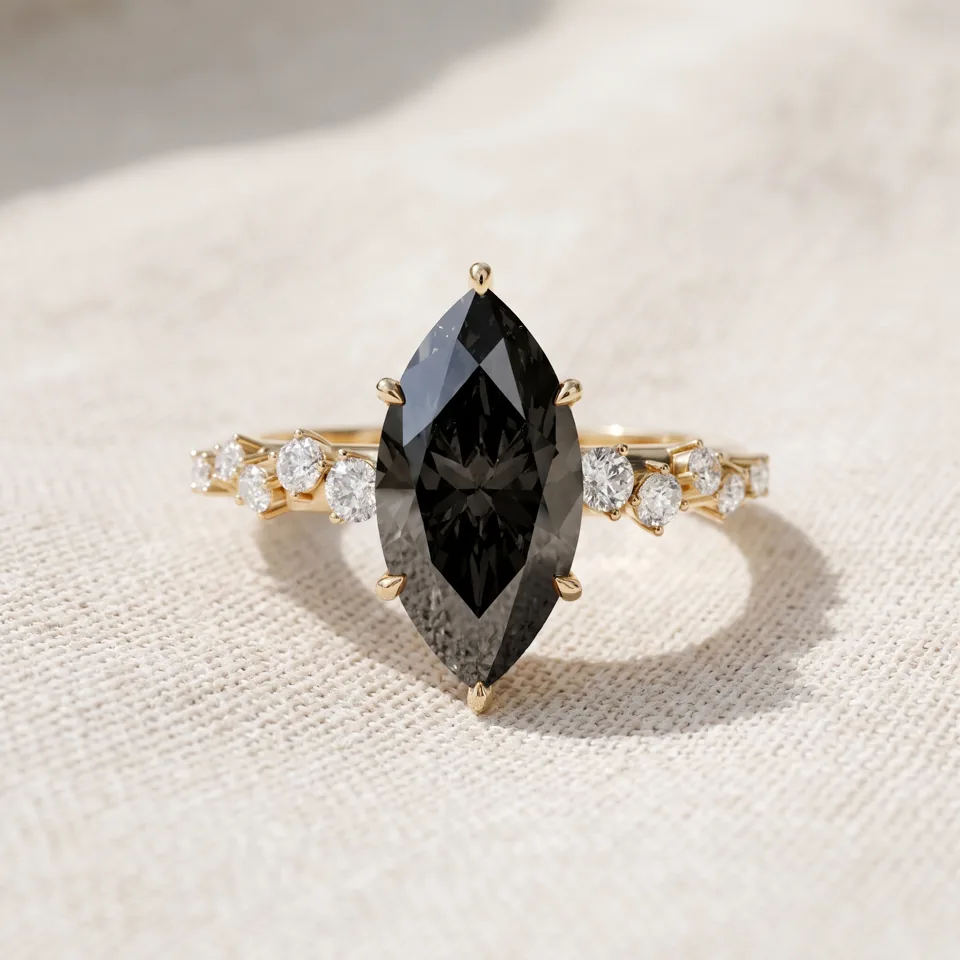 Black Diamond Cluster Rings
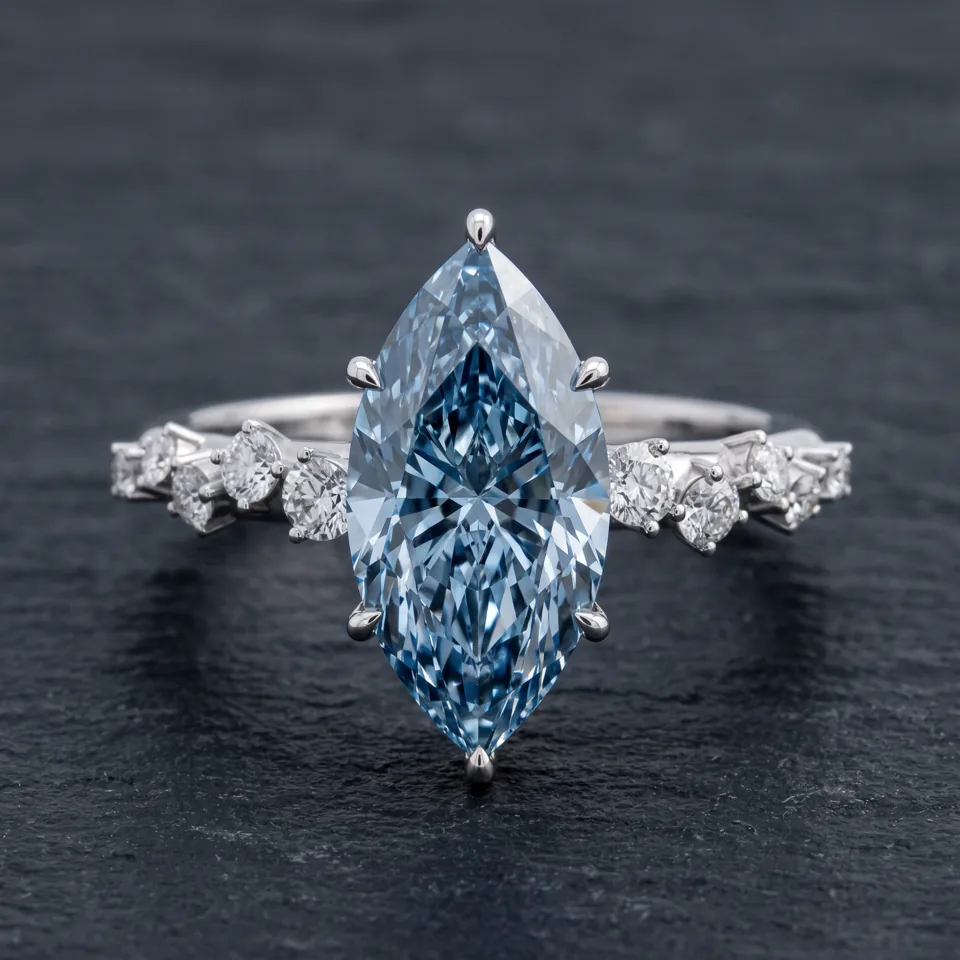 Blue Diamond Cluster Rings
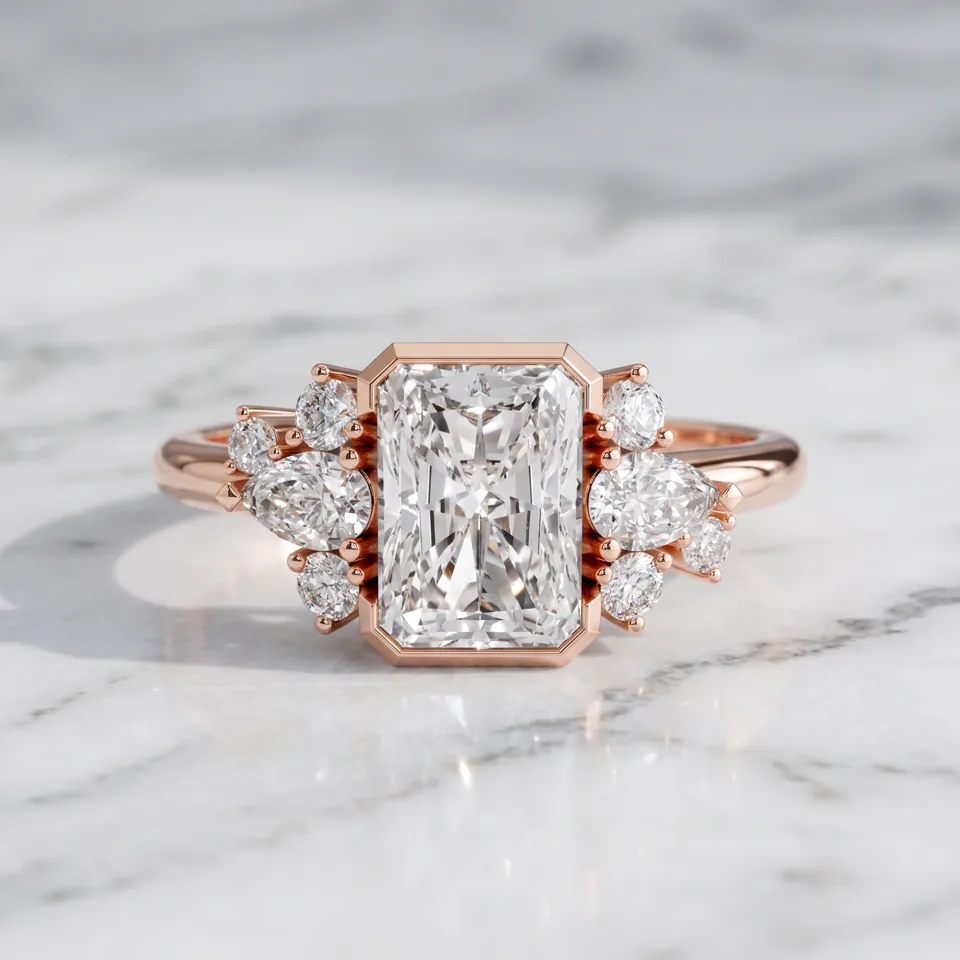 Rose Gold Cluster Rings
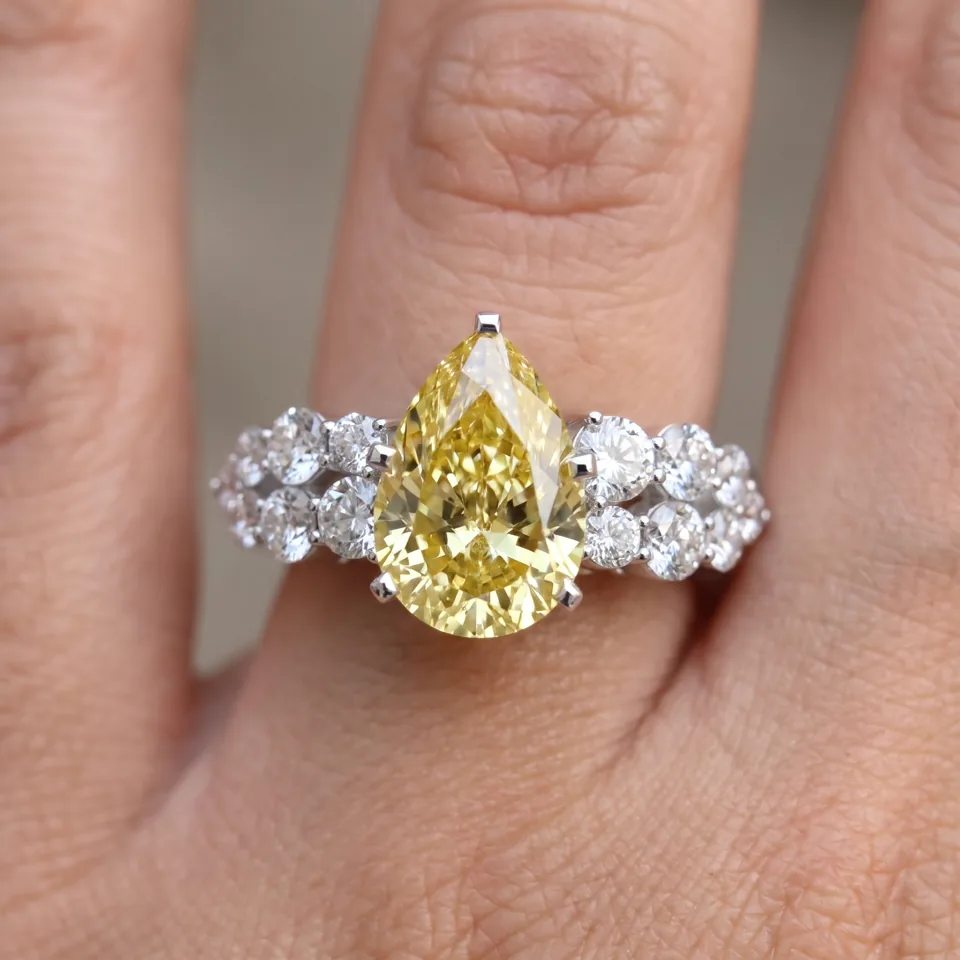 Yellow Diamond Cluster Rings
Shoulder clusters keep the center as the focus. A cluster halo adds the most width on the finger.
Several designs add milgrain (a fine row of metal beads along the edge) or bezel-set lab-grown diamond accents with an older look. Others pair the clusters with a plain band, so a wedding band can nestle beside it. If you plan to stack, look at the side view and see whether the clusters reach past the band line.
Round centers fit almost every design here, and most also take cushion, oval, radiant, princess, asscher or heart shapes. Many settings offer a fancy color center in pink, green, yellow or blue, and a few take black. A colored center stands out against white clusters, especially in yellow or rose gold.
Every one of these settings can be ordered in platinum or in rose, white or yellow gold at 10K, 14K or 18K. Silvadium, a tarnish-resistant sterling silver, gives a lower-cost route. Small accents hold best in harder metals, so for daily wear 14K gold or platinum is a sounder choice than silver.
We craft your setting over 10–15 days, and it travels with free insured shipping in both directions. The center diamond arrives with an IGI or GIA report, you have 30 days to return the ring, and one resize within 60 days of delivery costs nothing.
No. A cluster ring builds its look from several smaller diamonds, and that is a deliberate design choice with a long history. Small stones do cost less per carat, which is why clusters can give a large look for a lower price. On Whitemoon's cluster settings the accents surround a center you choose yourself, so the ring can be as modest or as large as you like.
Yes. Clusters bring extra sparkle and a wider face to the hand even with a modest center, and they suit anyone drawn to vintage or floral looks. The main care point is the small prongs: have them checked once or twice a year and clean grime from between the stones. A center held by sturdy prongs or a bezel, with clusters on the shoulders, works well for daily wear.
A halo is one even ring of small diamonds around the center stone. A cluster arranges stones in groups or irregular patterns, often in different sizes and shapes, and the groups may sit on the shoulders rather than circling the center. Whitemoon's cluster halos combine both ideas: a frame around the center built from mixed or scalloped accents in place of a uniform row.
No. Cluster rings have been worn since the Georgian and Victorian eras and return with each revival of vintage jewelry. Current designs lean toward mixed shapes, floral heads and clusters on the shoulders. If you want a ring that still feels personal in twenty years, choose the cluster pattern you like most and let trends follow their own course.
Cluster settings at Whitemoon begin from about $300, while the typical one lands between about $800 and $950 without the center. You pick and pay for the center diamond as a separate step, so its size, shape and grade decide the final total. Metal moves the price as well: platinum and 18K cost more than 10K or 14K gold, and silver is the least expensive.


