Complimentary insured shipping, both waysEngagement ring diamonds certified by IGI or GIAGrown by light. Conflict-free by natureComplimentary insured shipping, both ways
Engagement RingsWedding BandsEarrings

NecklaceBraceletsAbout
In bezel engagement rings, a slim collar of metal hugs the center's whole edge where prongs would normally sit, so the stone feels smooth and stays guarded. Choose the shape first, with round, radiant, emerald, oval and pear among the options, then a style: plain solitaire, vintage milgrain, pavé or halo. Your center diamond is selected afterward and is sent with an IGI or GIA report.
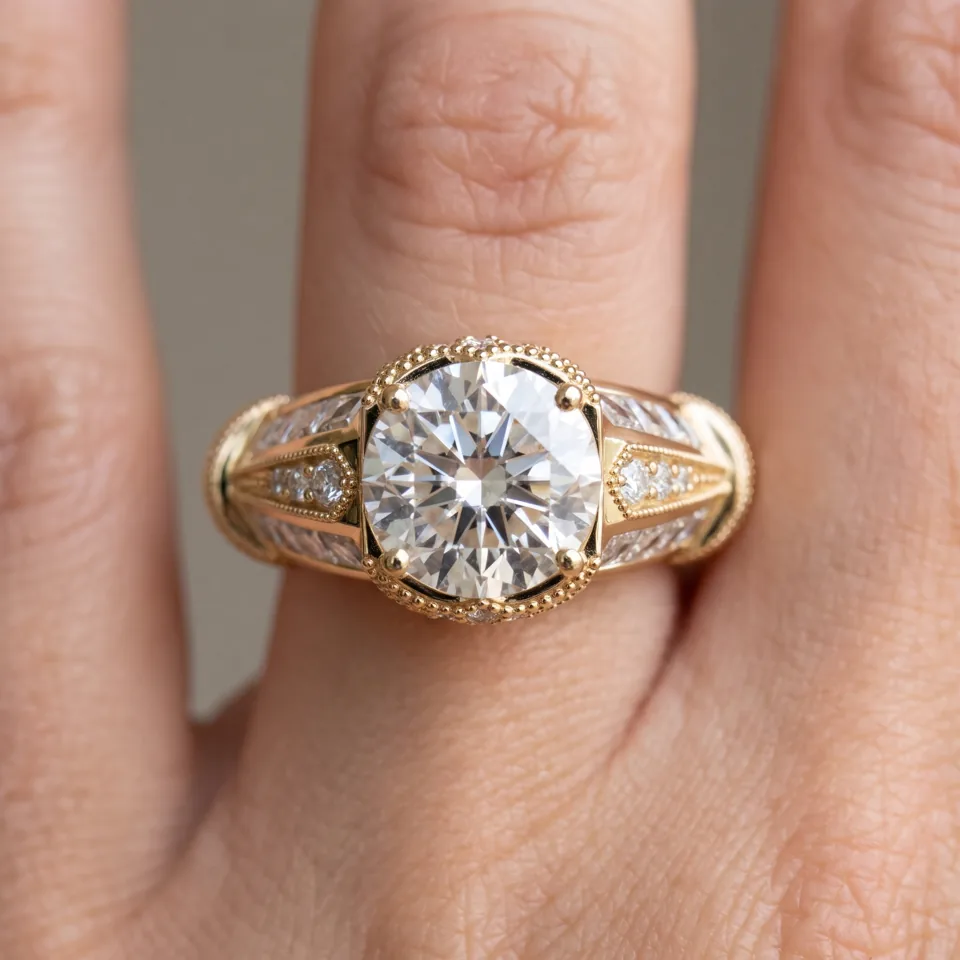 Vintage Engagement Rings
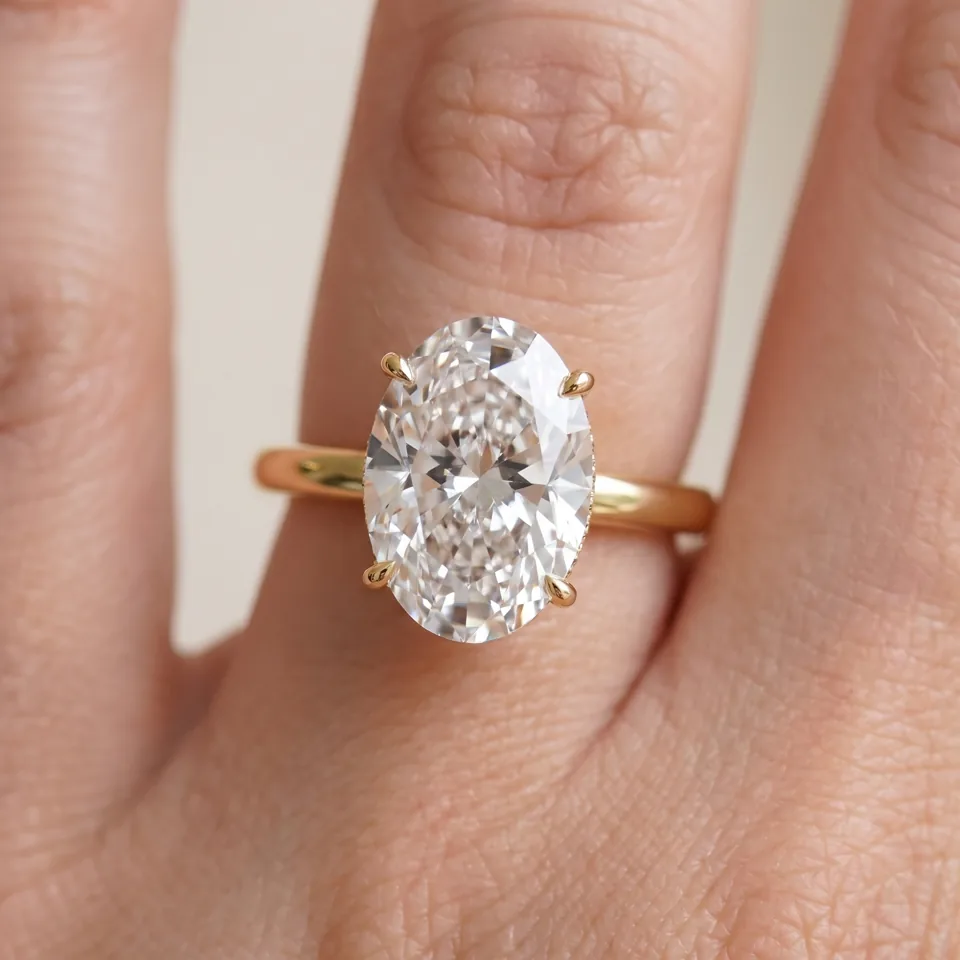 Solitaire Engagement Rings
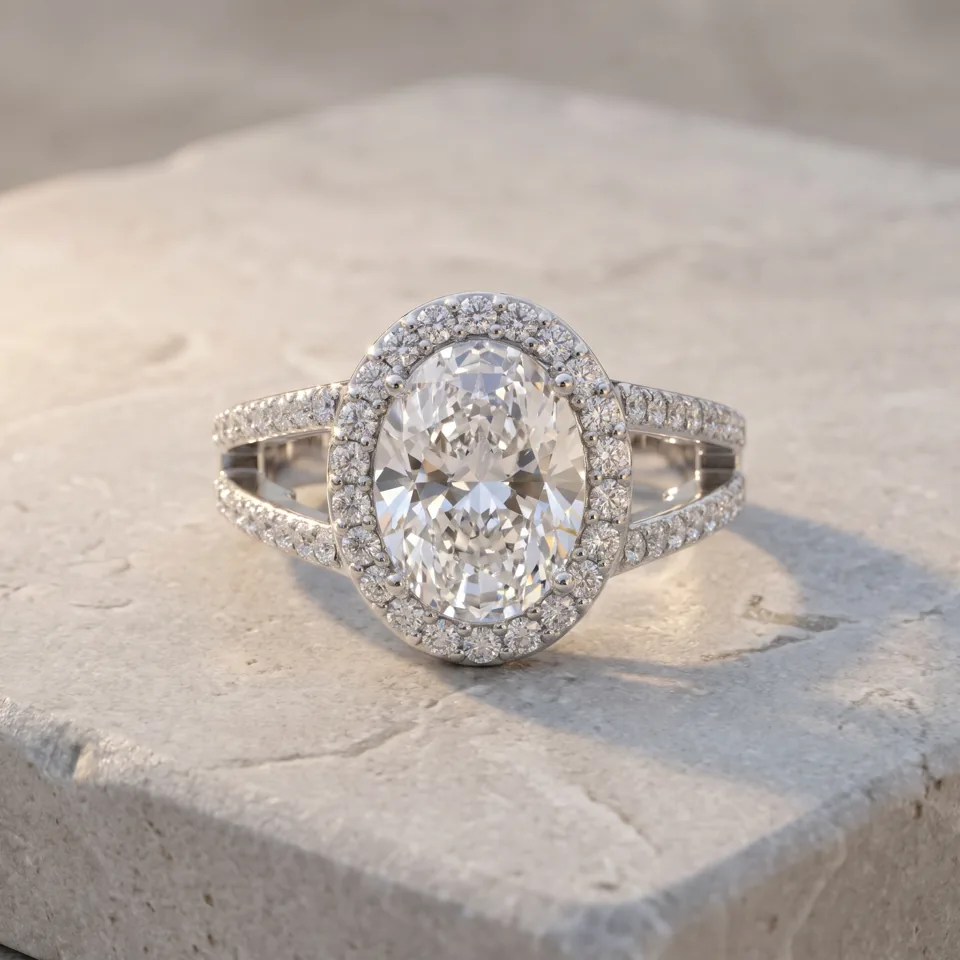 Halo Engagement Rings
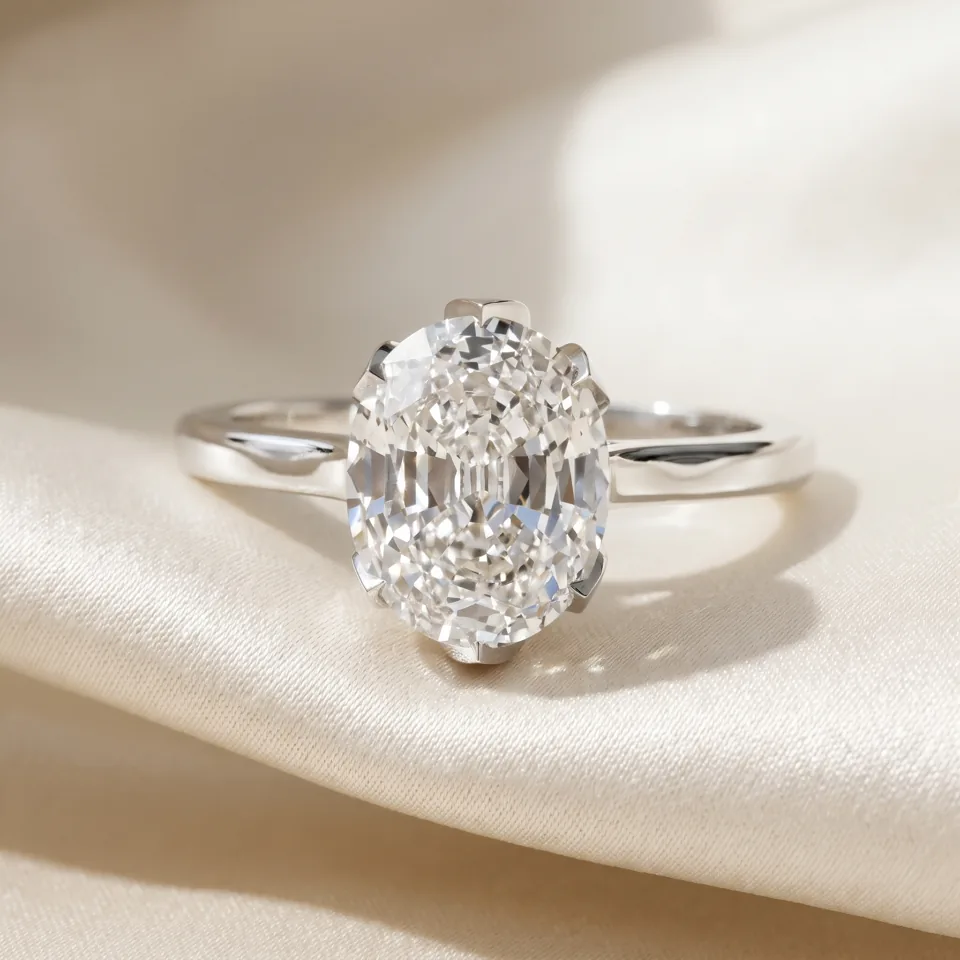 Floral Engagement Rings
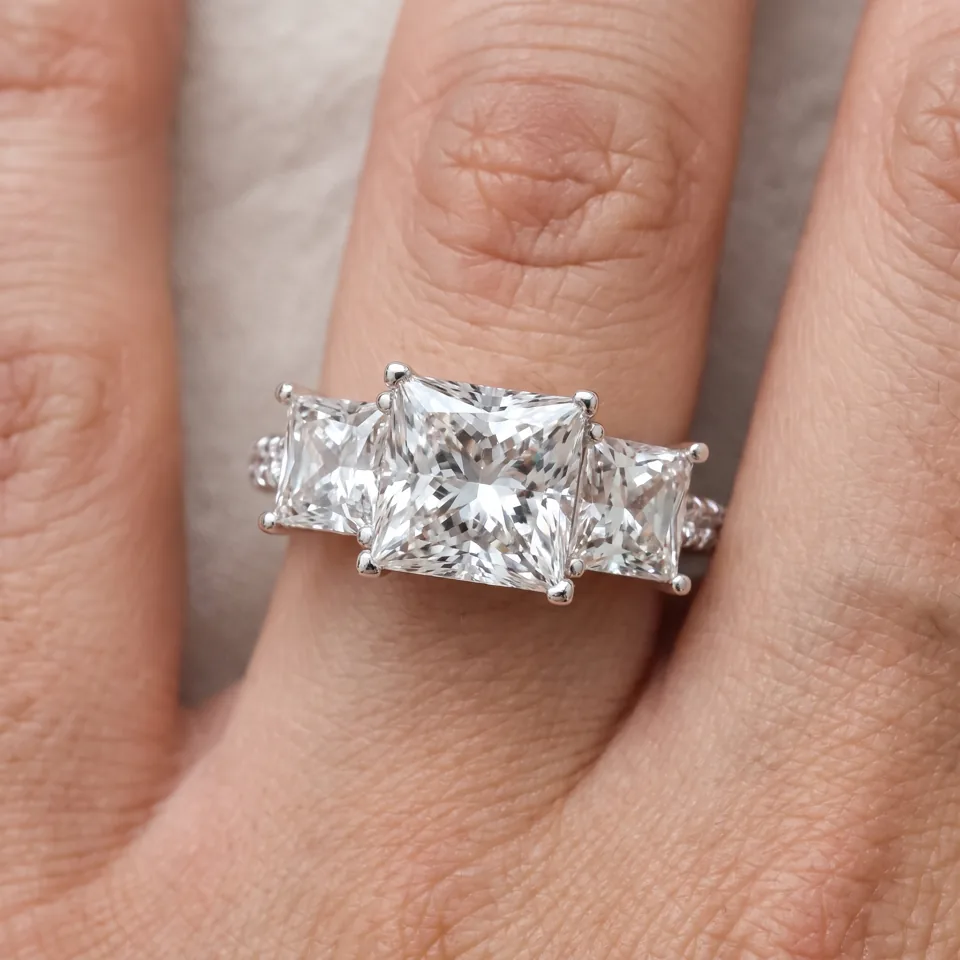 Three Stone Engagement Rings
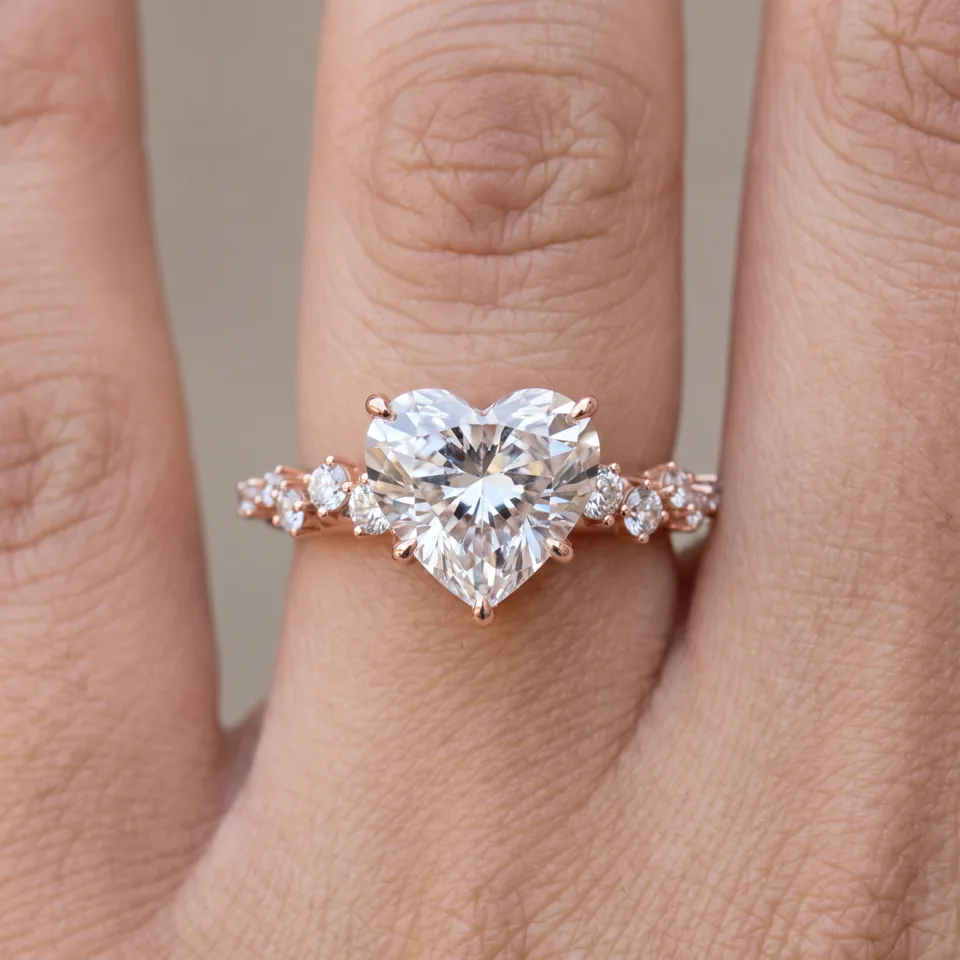 Cluster Side Stone Engagement Rings
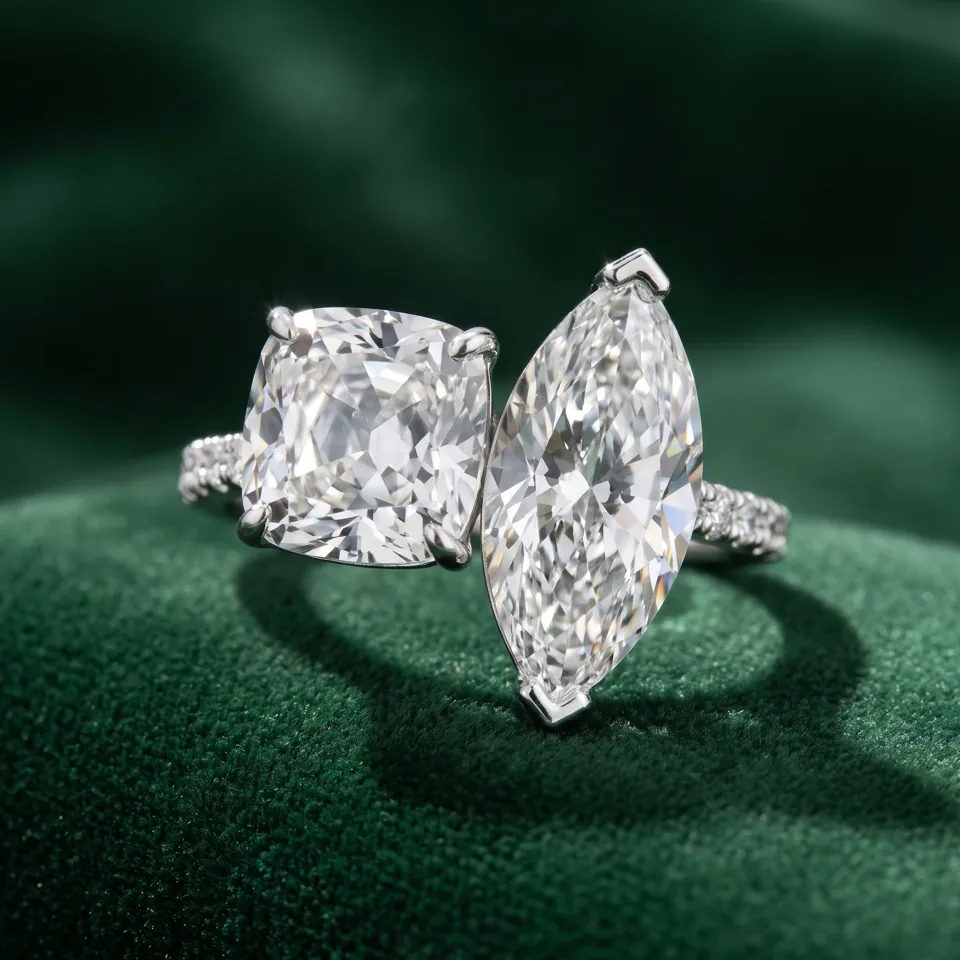 Toi et Moi Two Stone Engagement Rings
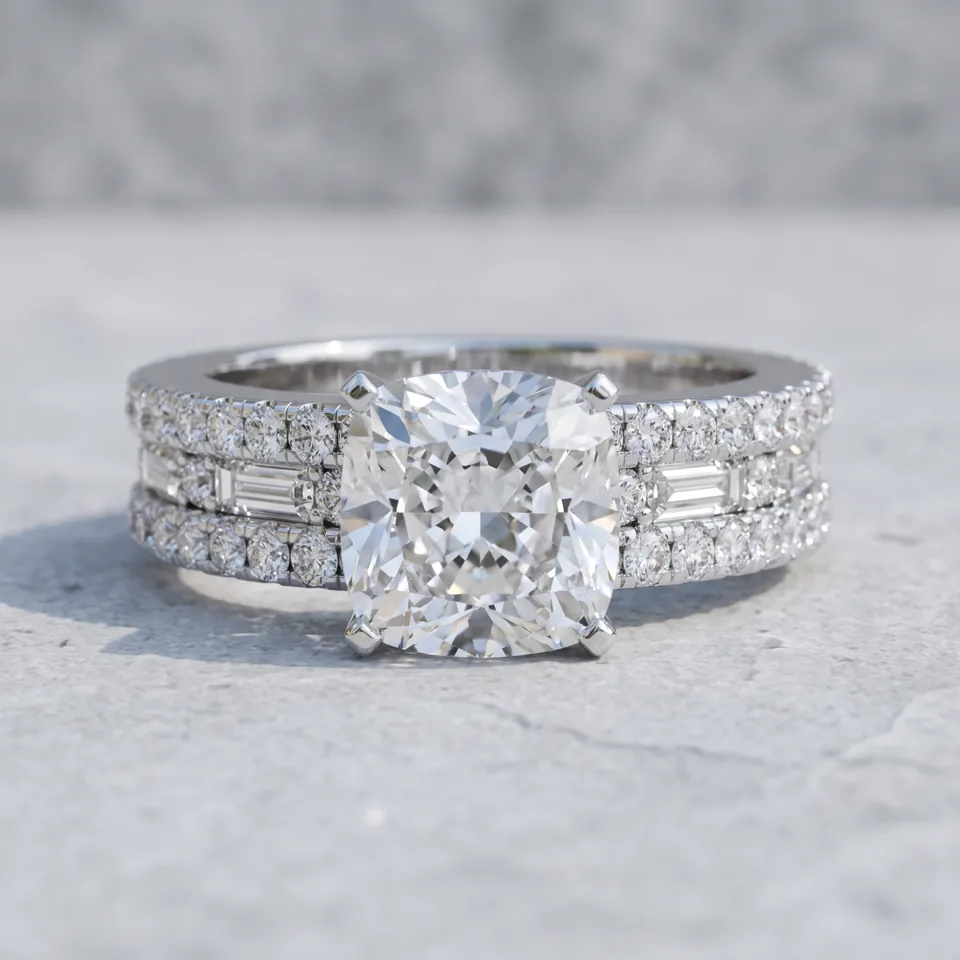 Engagement Rings with Baguette Side Stones
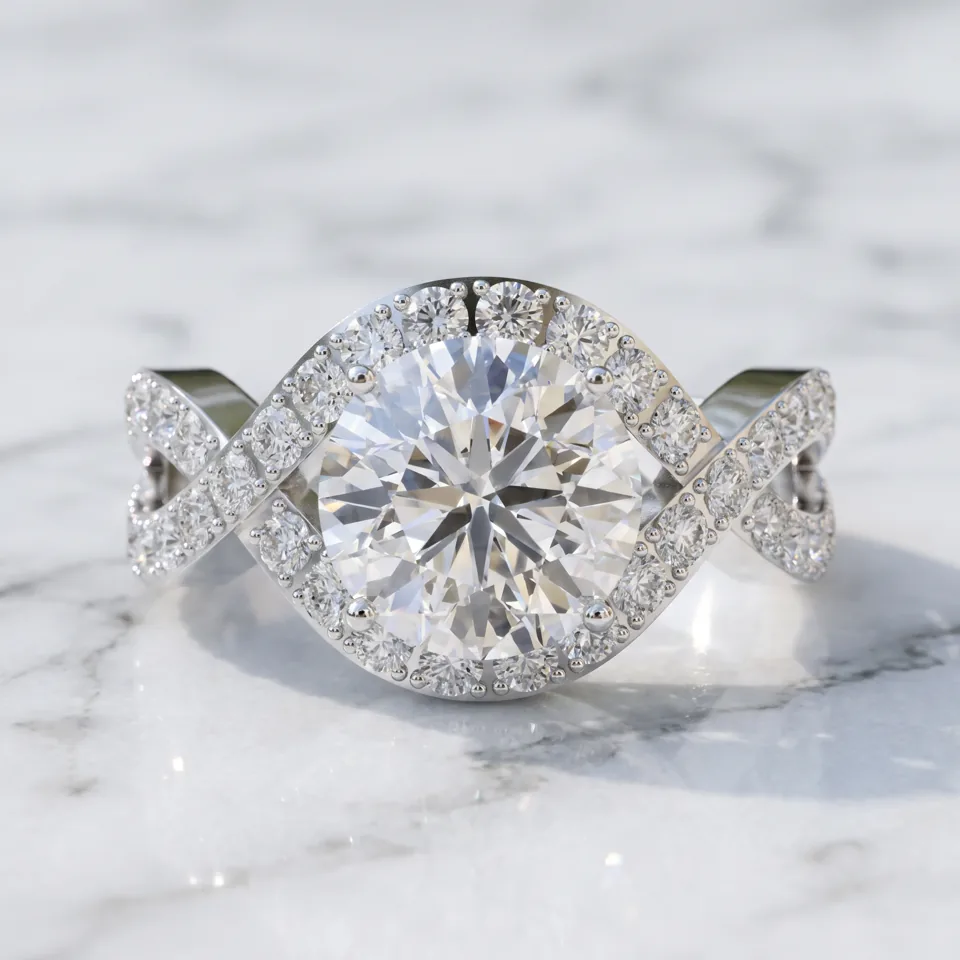 Infinity Rings
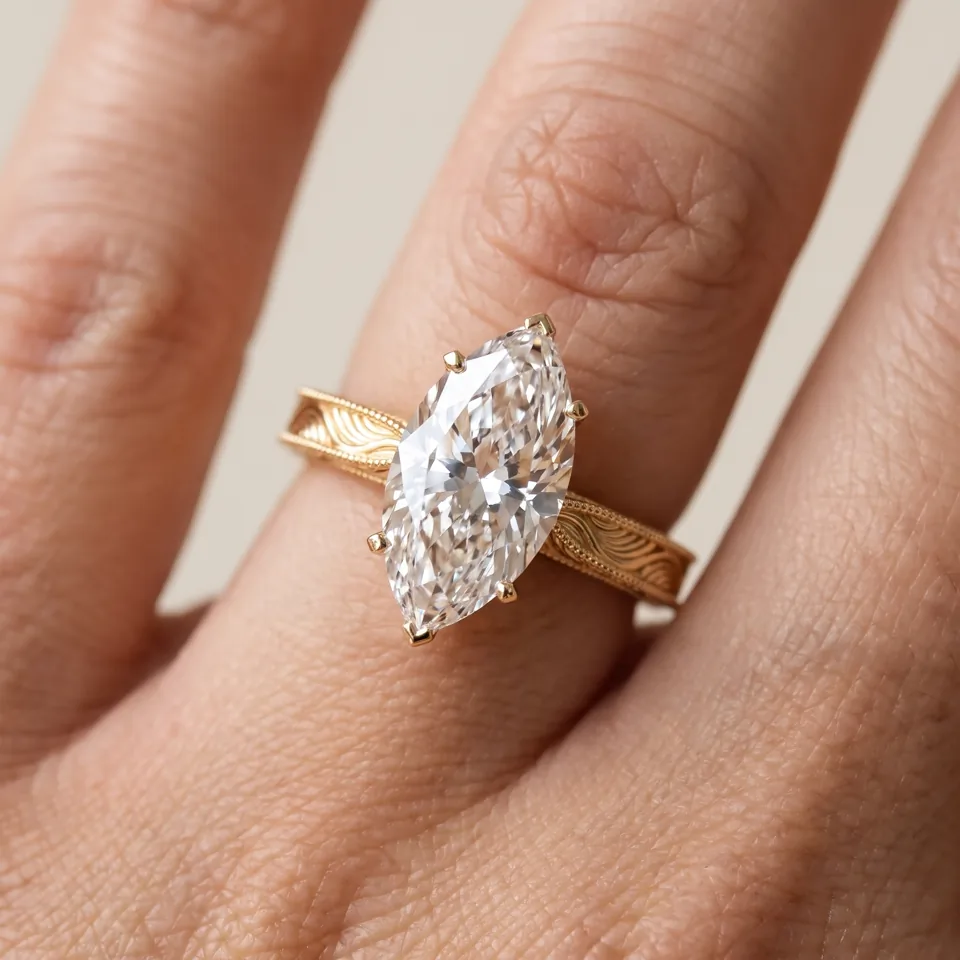 Engraved Rings
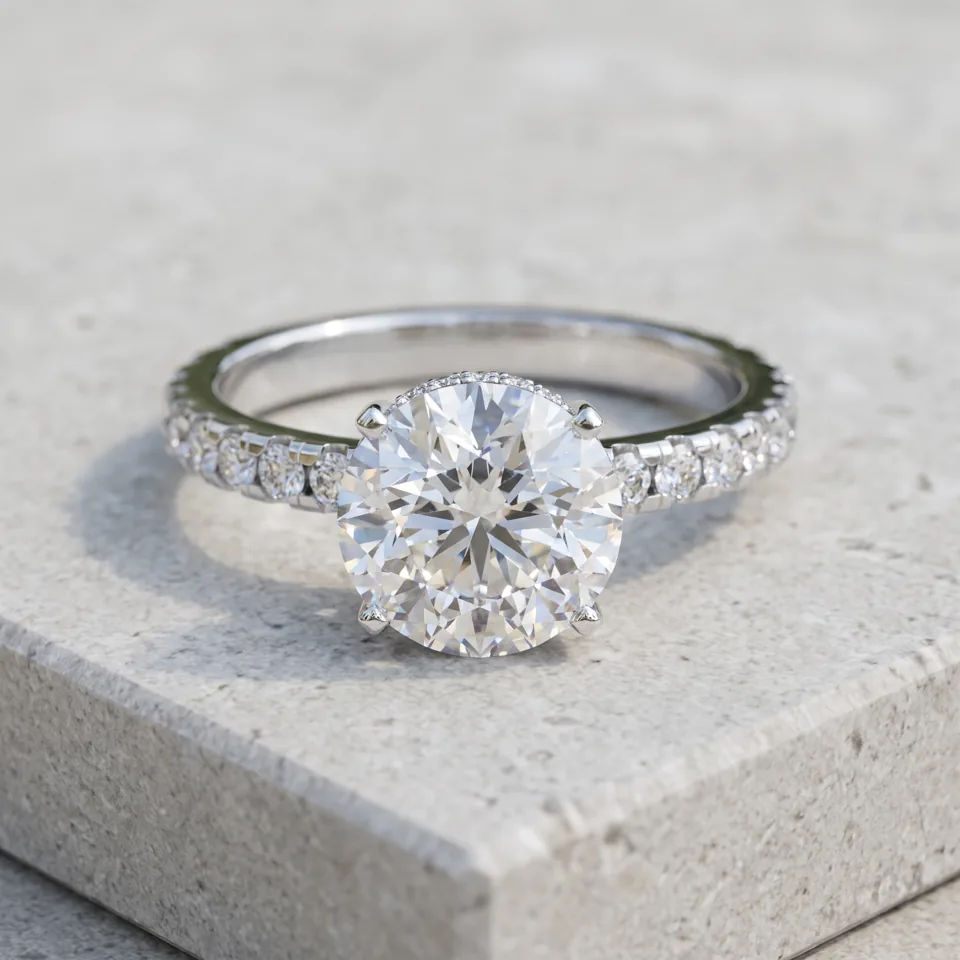 Pave Engagement Rings
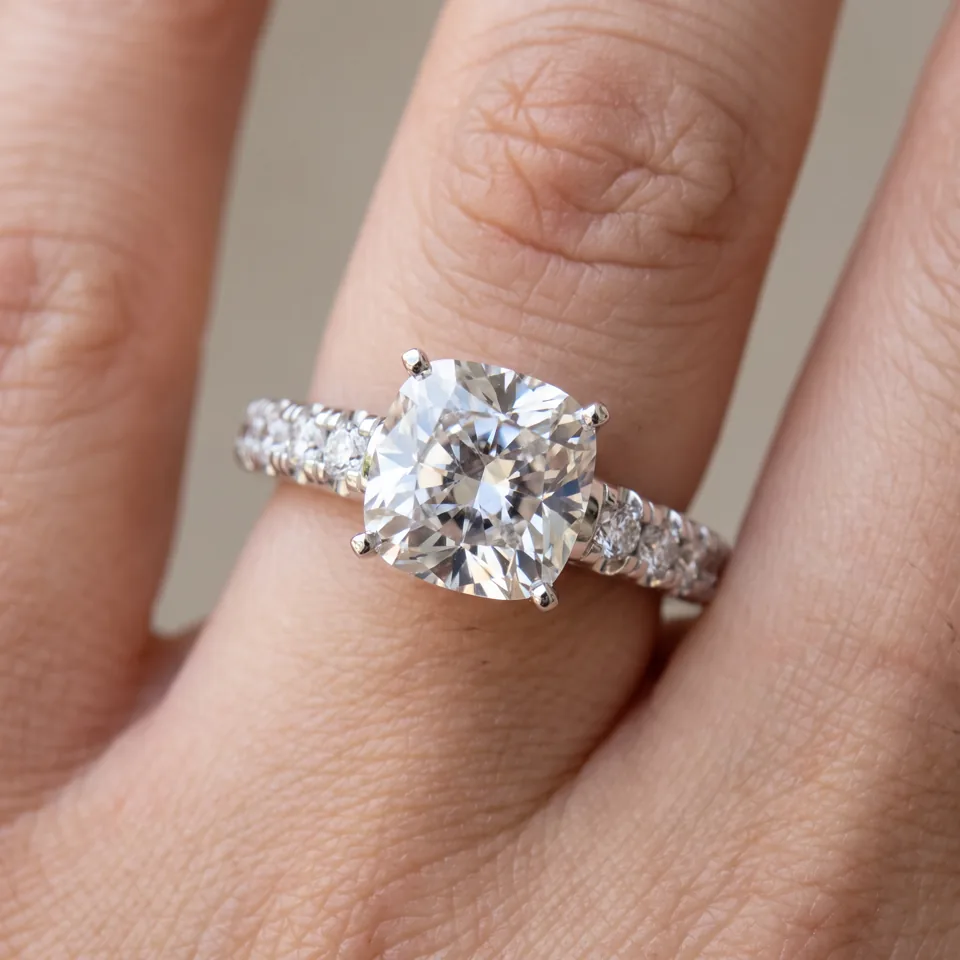 Cathedral Setting Rings
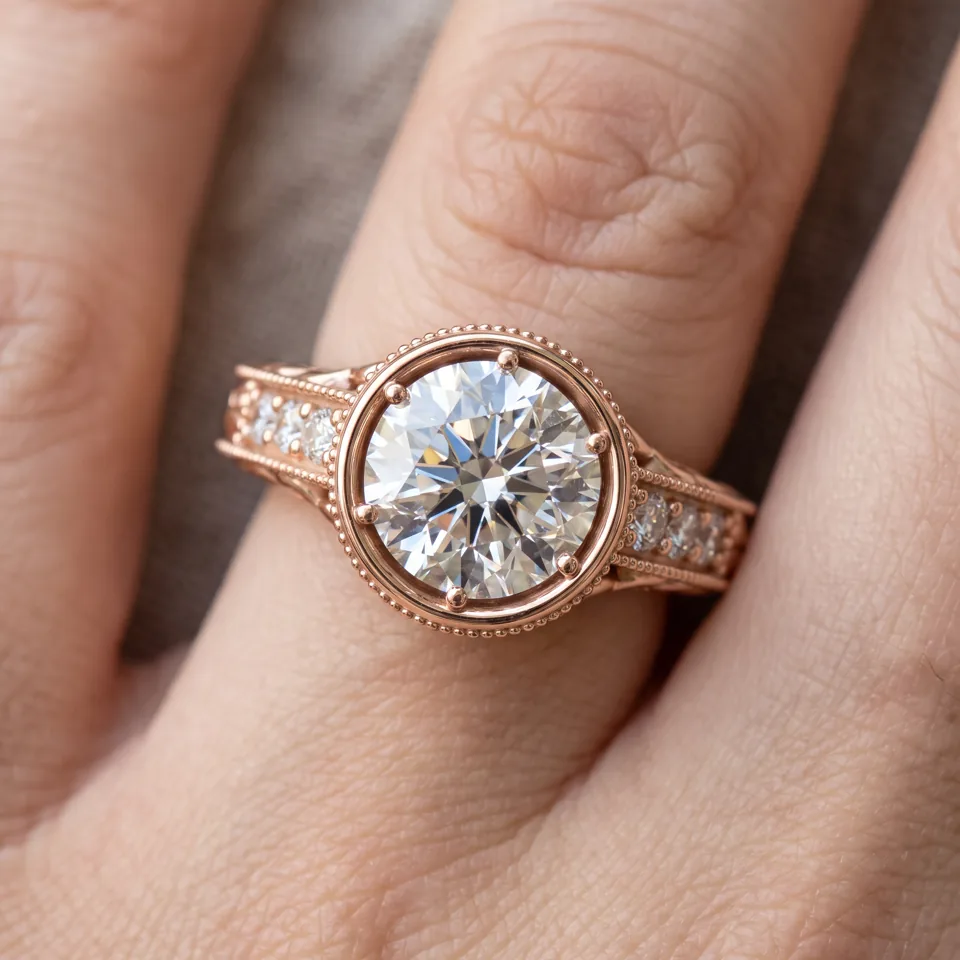 Vintage Bezel Engagement Rings
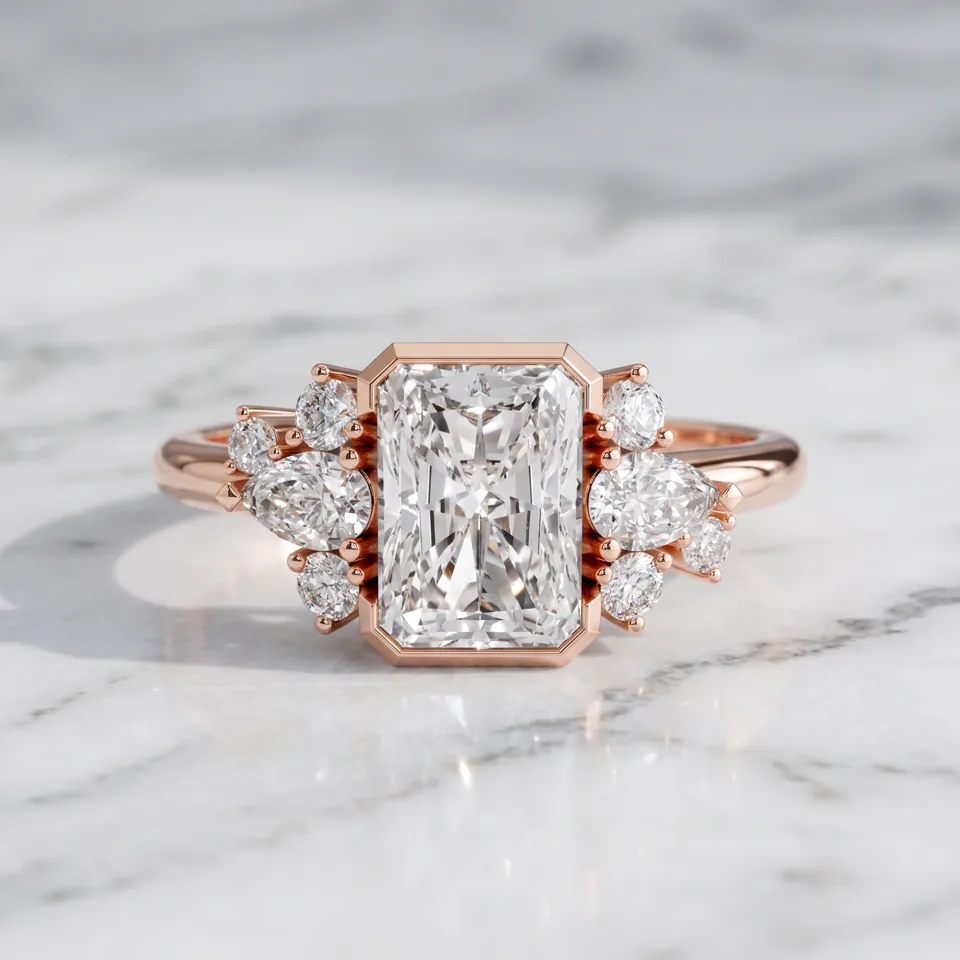 Gold Bezel Rings
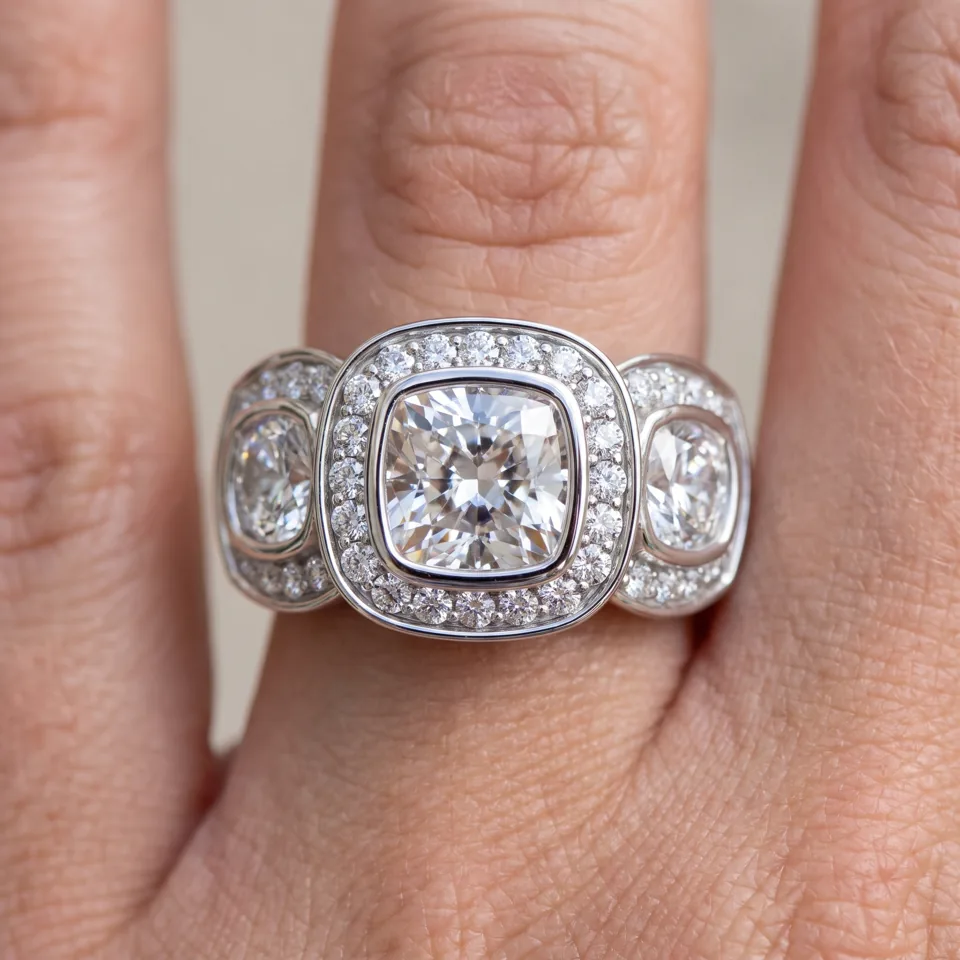 Bezel Three Stone Rings
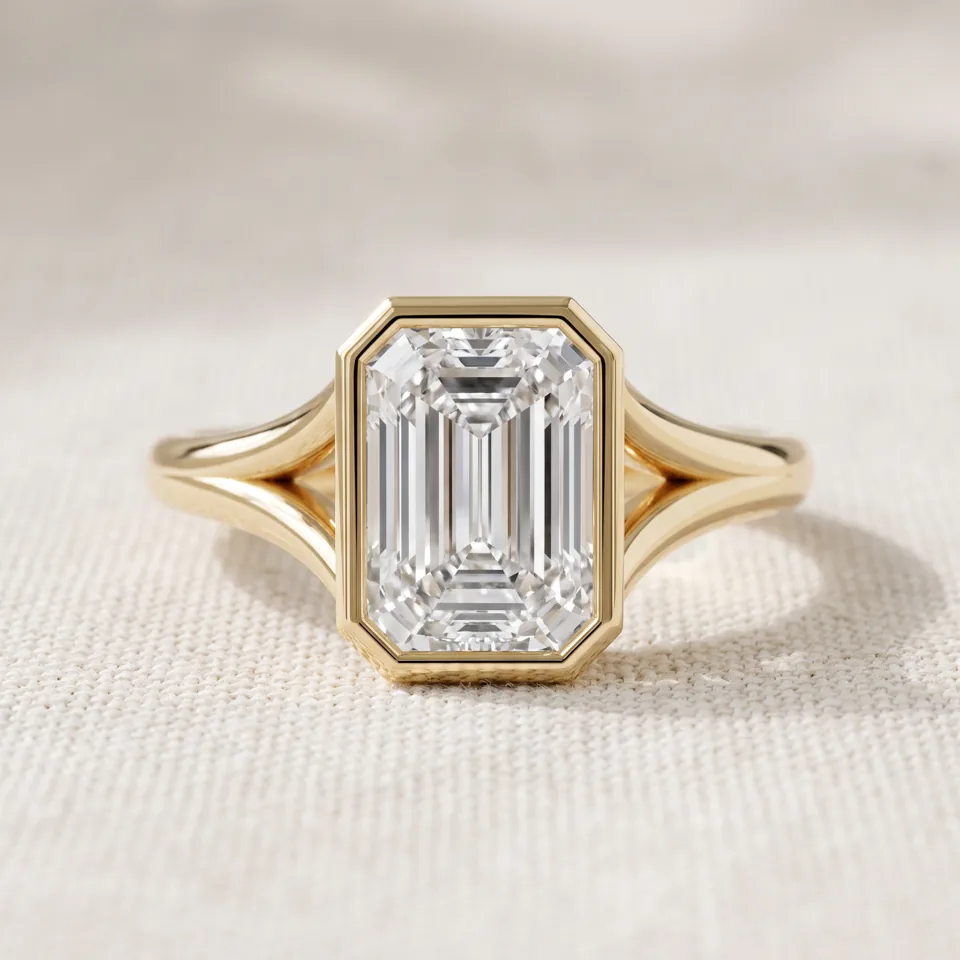 Yellow Gold Bezel Engagement Rings
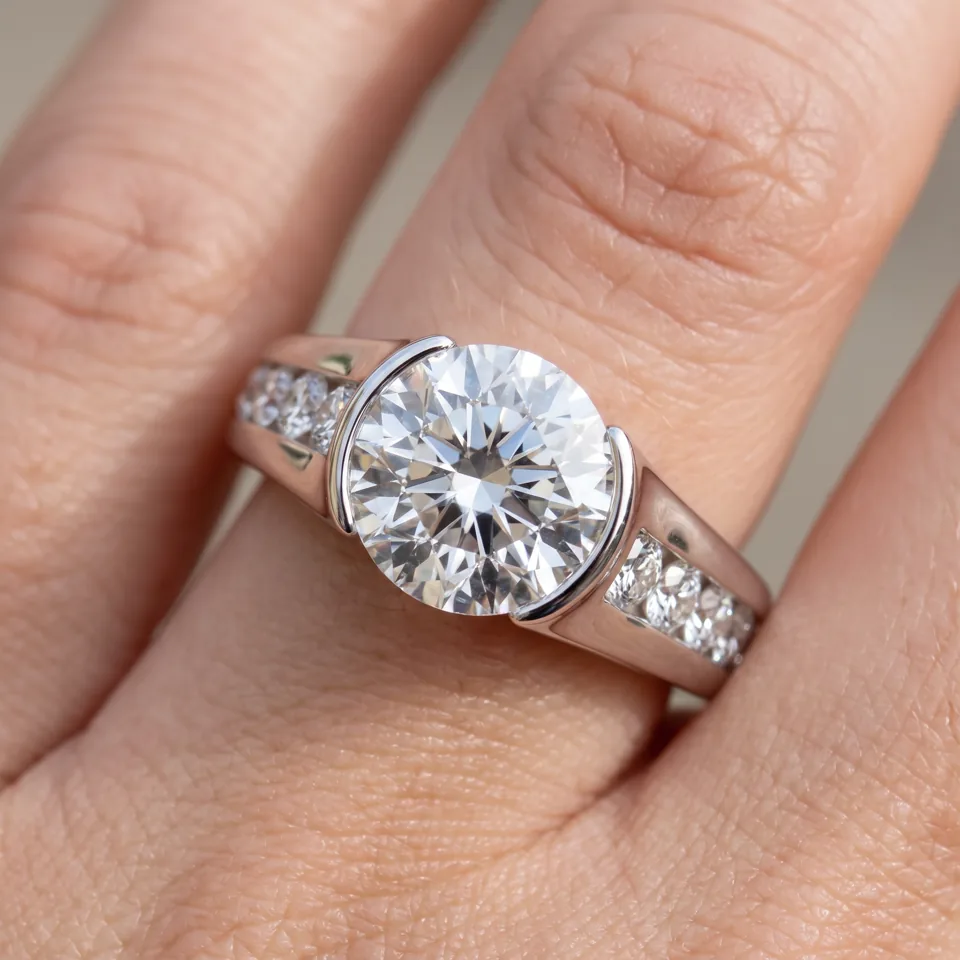 Platinum Bezel Engagement Rings
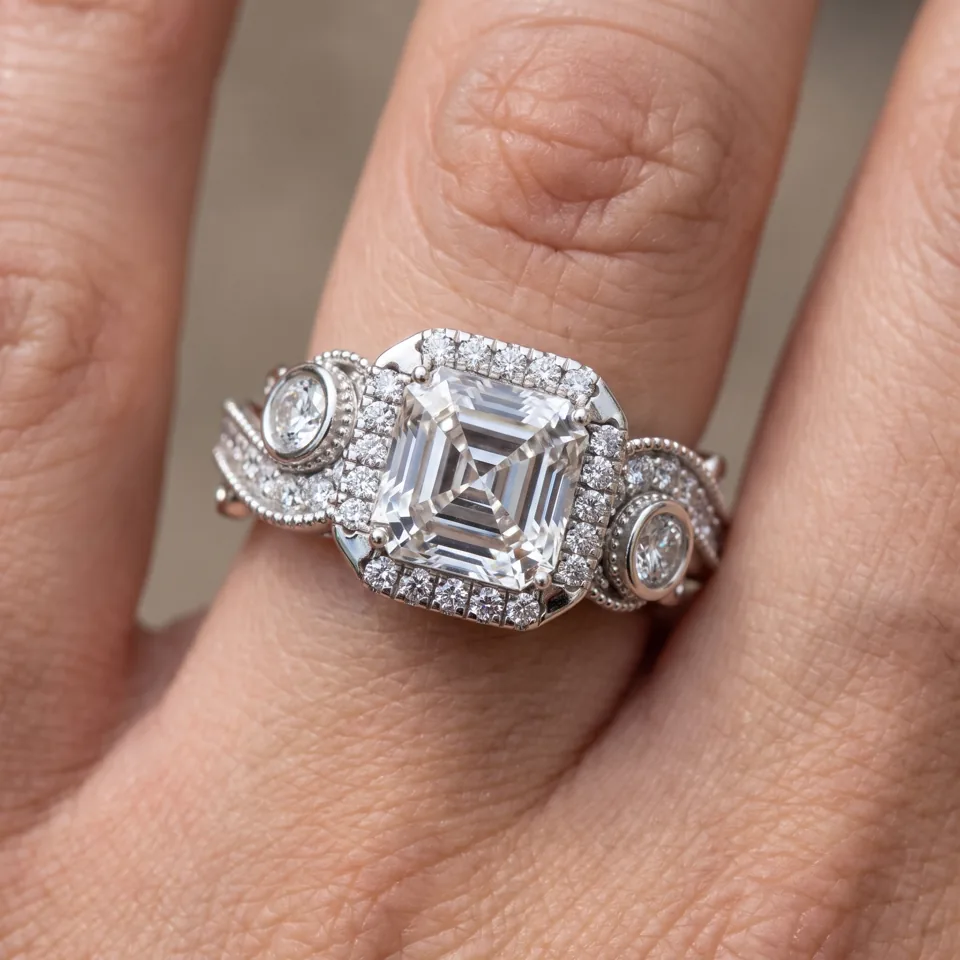 Bezel Halo Engagement Rings
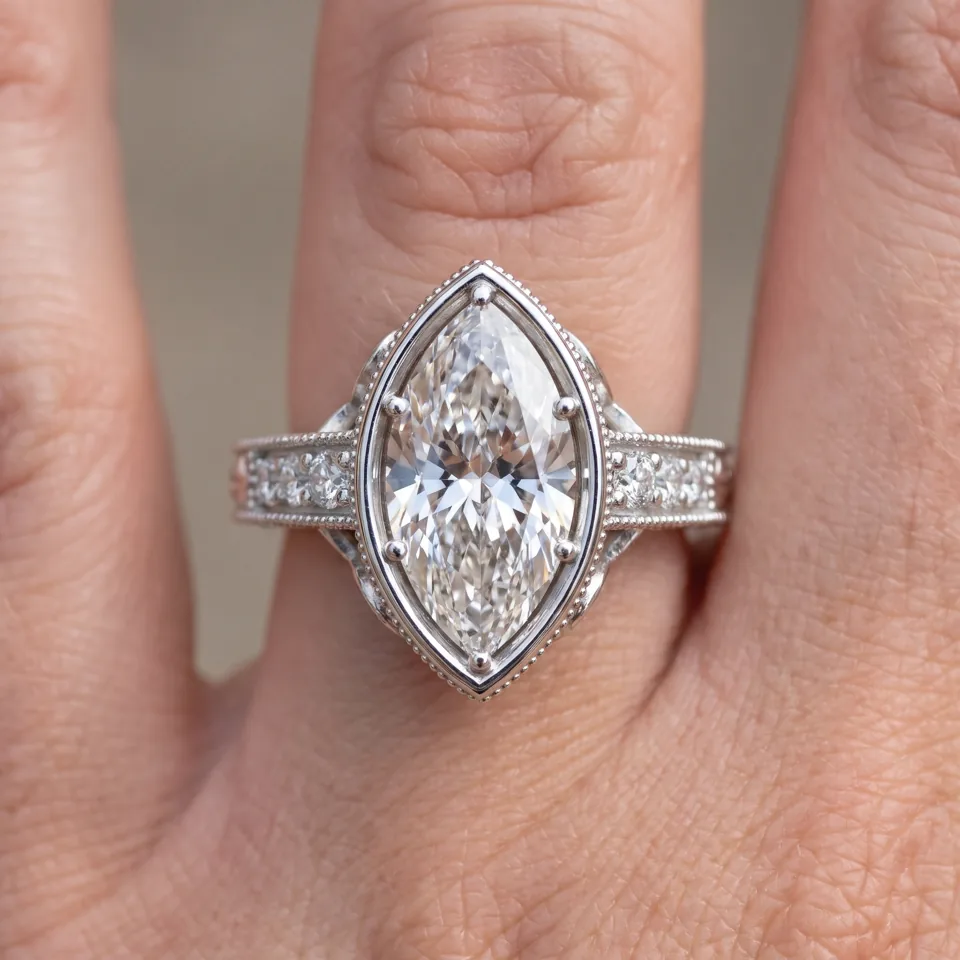 Silver Bezel Engagement Rings
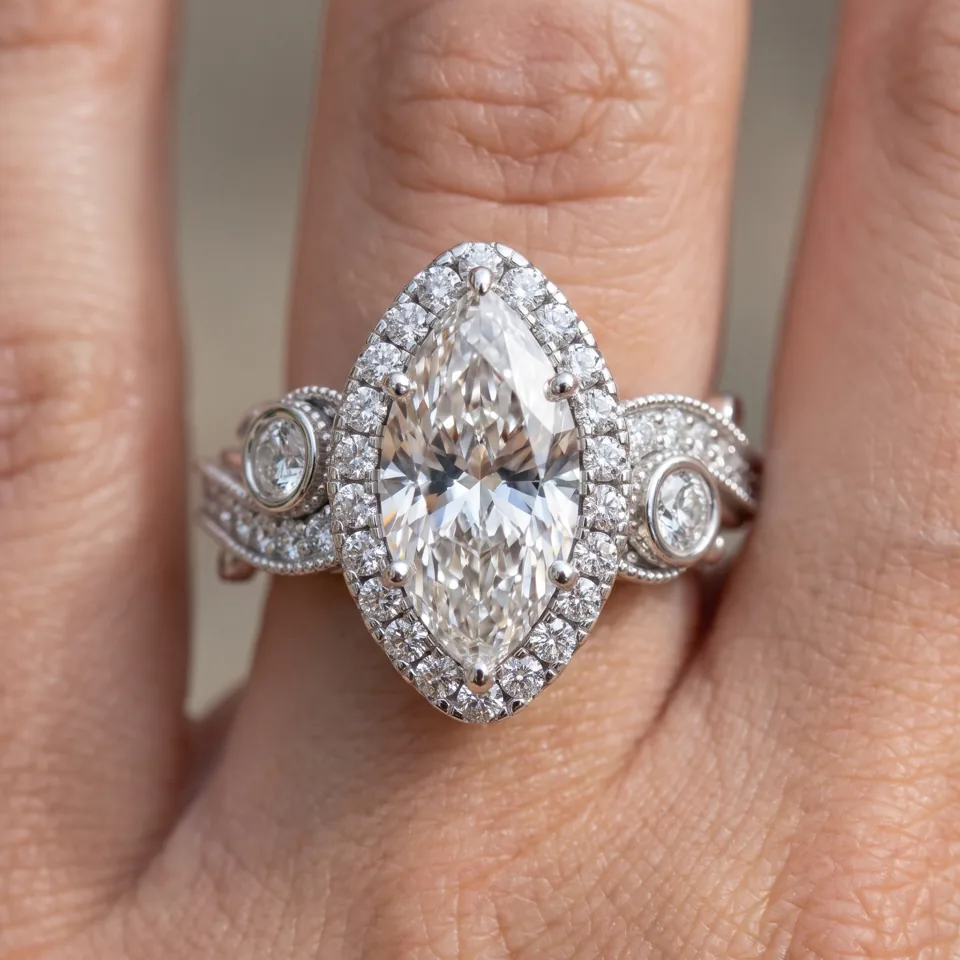 Milgrain Bezel Engagement Rings
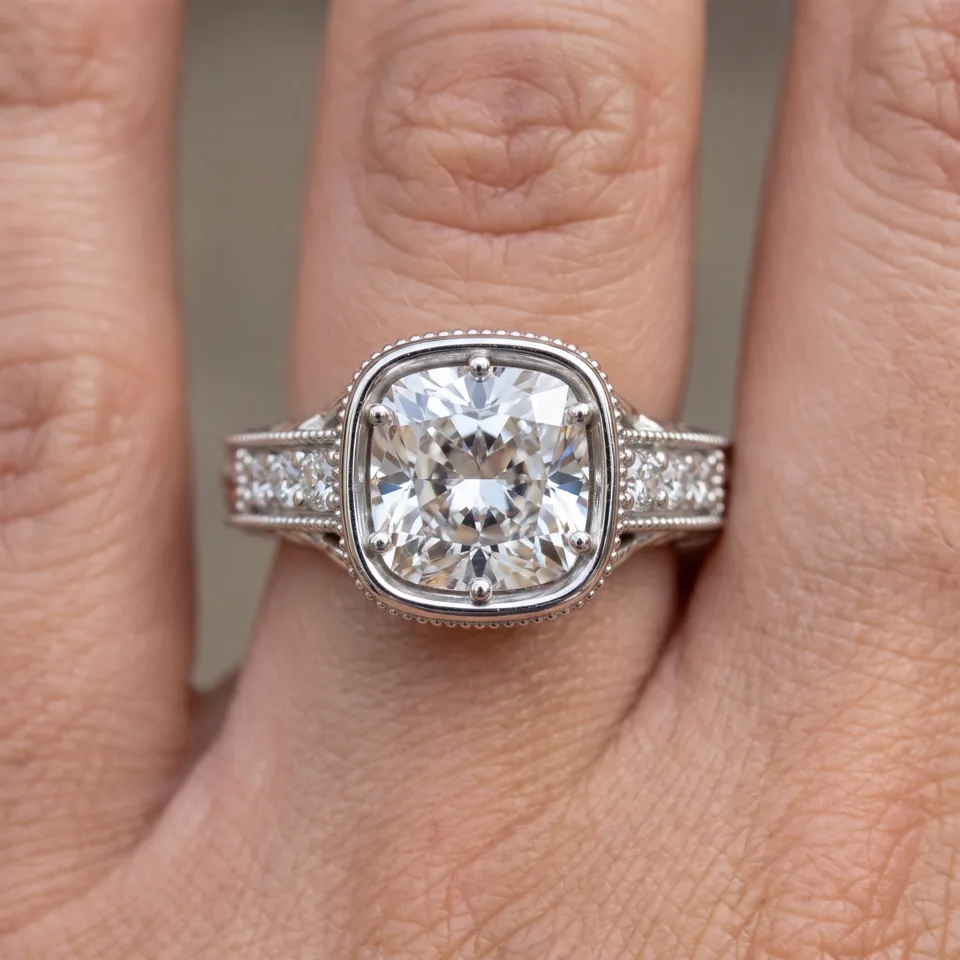 White Gold Bezel Engagement Rings
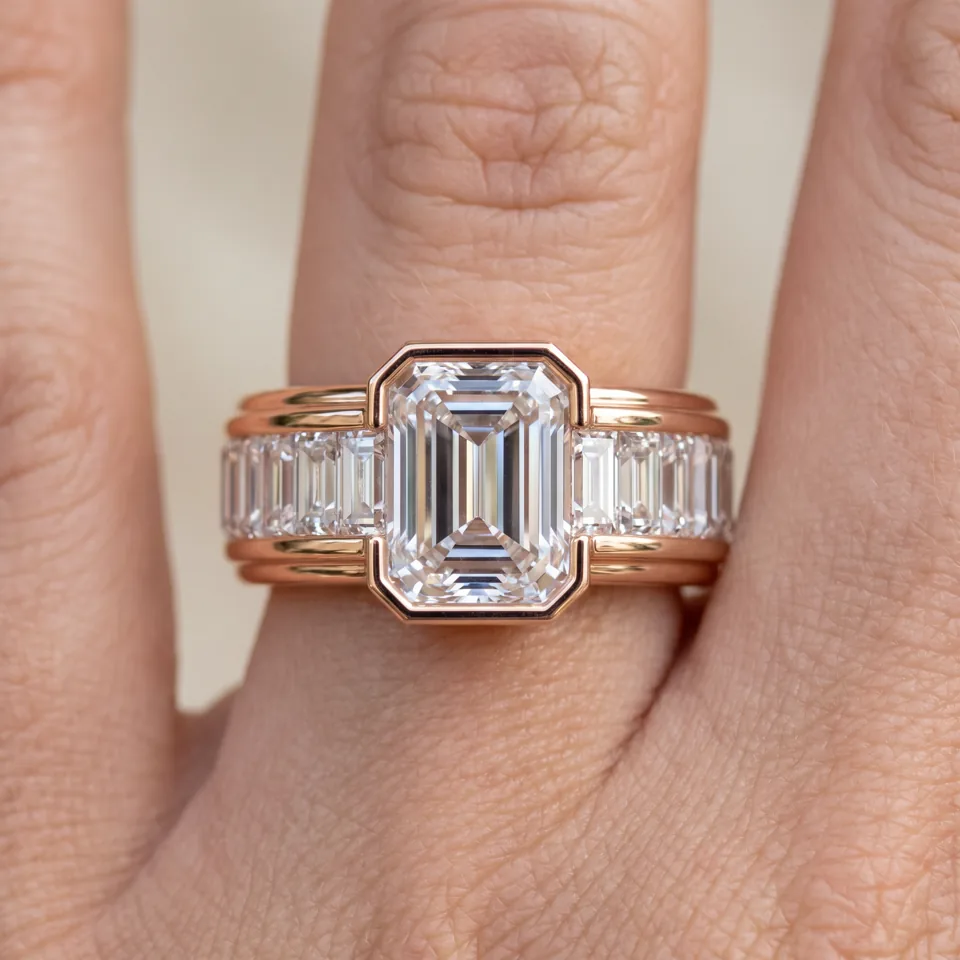 Rose Gold Bezel Engagement Rings
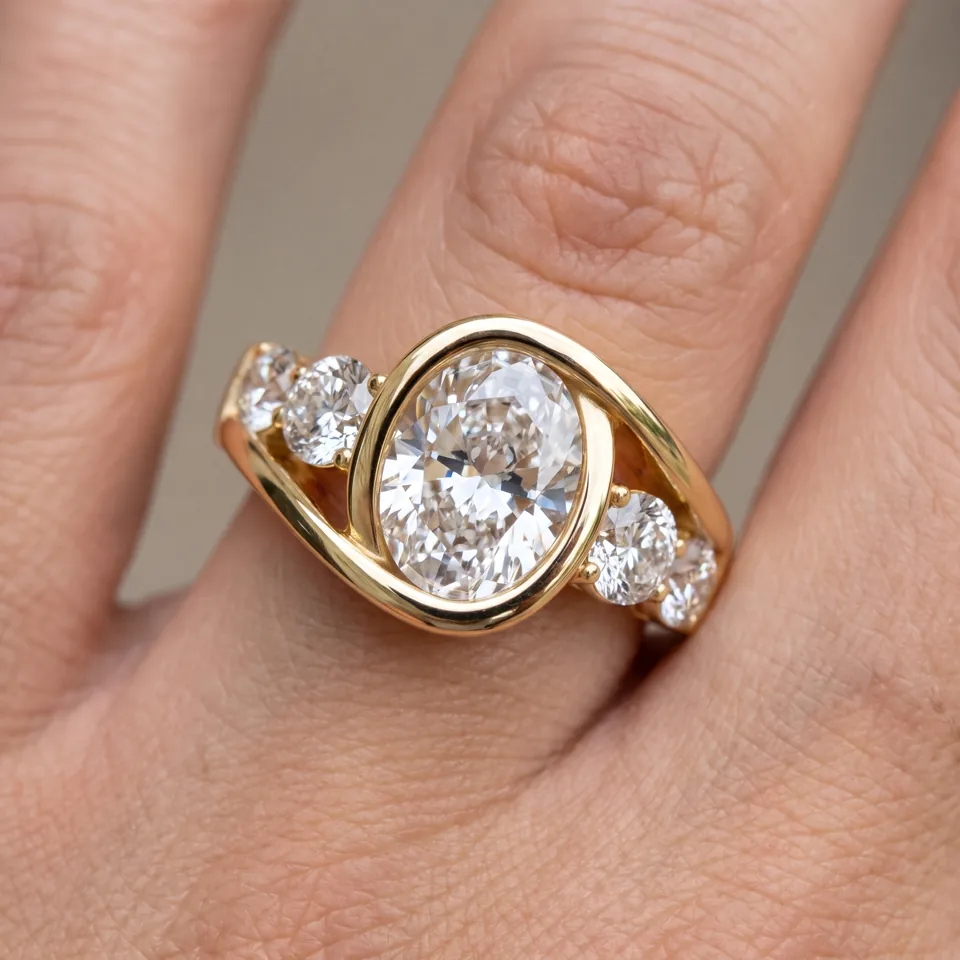 Bezel Set Engagement Rings with Side Stones
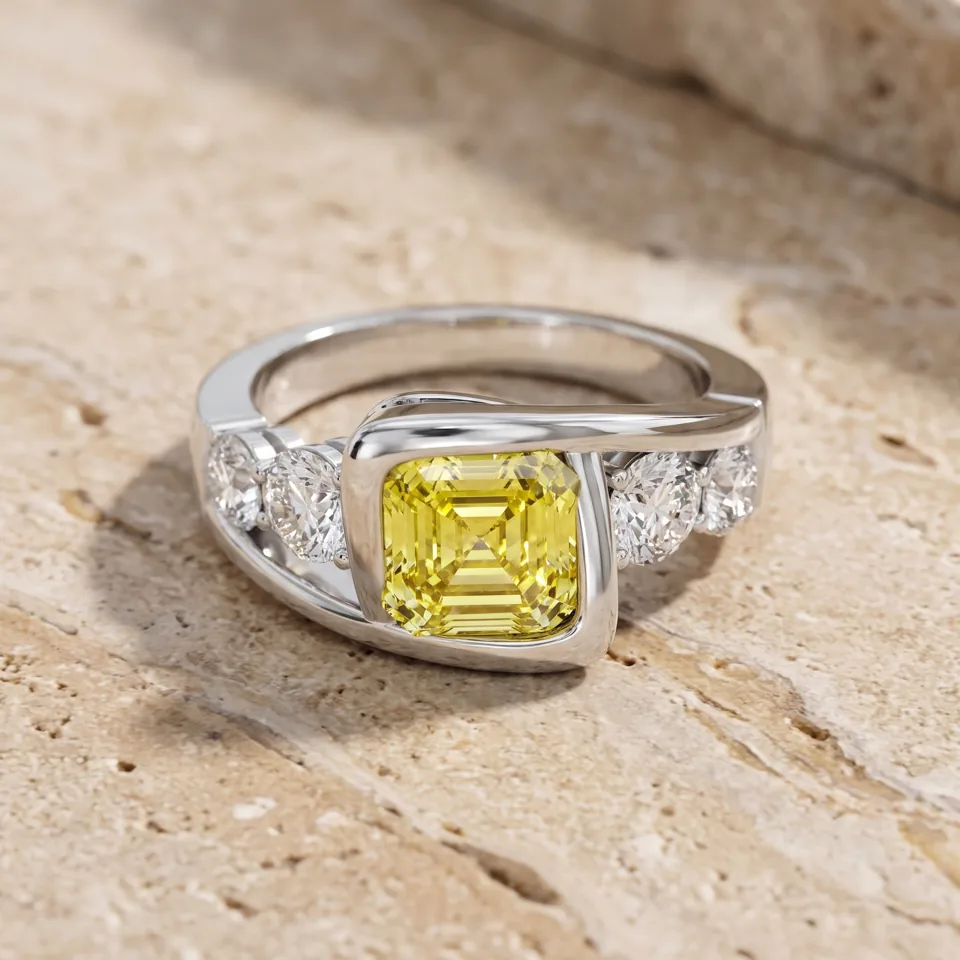 Yellow Diamond Bezel Rings
A bezel setting comes in two forms. A full bezel encloses the center's entire edge in metal, the most protective and snag-free option. A partial bezel wraps only two opposite sides, so light enters through the gaps and more of the stone is visible. The product photos show which one a design uses; if you work with your hands, the full rim is the safer pick.
A bezel hides a thin line of the center's edge, so many designs add laboratory-grown diamond accents to bring back extra sparkle. Pavé bands and halos surround the rim with small stones, and vintage designs trim the rim with tiny milgrain beads for texture.
The bezel's metal shows around the stone, so its color frames the center. Platinum, offered on every design, and white gold give a bright outline that makes a colorless center look larger. Yellow or rose gold outlines the stone with a warm border, and either can be made at 10K, 14K or 18K. Silvadium, a tarnish-resistant sterling silver, is the lower-cost choice, though a silver rim can dent more easily.
Round and oval centers make a clean circle or oval of metal. Pear, marquise and heart shapes gain the most, since the rim covers their fragile points. Emerald and radiant cuts look architectural in a straight-sided bezel.
Bezel settings are crafted for each order in 10–15 days and sent by insured shipping, free to you and free if you send the ring back. Your center comes with its IGI or GIA report. Returns are welcome within 30 days for unworn rings with the certificate, and one free resize applies within 60 days of delivery.
A bezel is a raised collar of metal that circles the center diamond's edge and grips it on every side instead of separate prongs. It can wrap the full outline or only part of it. The result is a smooth, low-snag ring with a modern look, and the metal rim acts as a frame that shows the stone's shape clearly.
The main pros are security and comfort: the rim protects the edge from chips, holds the stone firmly and won't catch on clothing or hair. The cons are a little less light entering the stone, a slightly smaller-looking face if the rim is thick, and more work for a jeweler when a stone needs resetting. Pavé on the band, or small lab-grown diamond accents circling the bezel, wins back the lost sparkle.
It can. A white metal rim in platinum or white gold blends with a colorless diamond and extends its outline, so the stone reads slightly larger from above. A thick or yellow gold rim does the opposite, drawing a clear border around the stone. A halo of small stones around the bezel adds the most visible size.
Slightly, in many cases. A bezel needs a whole collar of metal rather than four or six thin prongs, and fitting it snugly to the stone is skilled work. At Whitemoon, bezel engagement ring settings start under $200, with most between about $800 and $1,550, and the center priced separately when you choose it. Platinum and halo designs sit at the top of that range.
It is very unlikely. A bezel grips the whole edge of the stone, which makes it one of the most secure settings. A hard knock can bend the rim and loosen the stone, so if the metal looks dented or the center moves, take the ring off and have it checked. A yearly inspection keeps it safe.


