Complimentary insured shipping, both waysEngagement ring diamonds certified by IGI or GIAGrown by light. Conflict-free by natureComplimentary insured shipping, both ways
Engagement RingsWedding BandsEarrings

NecklaceBraceletsAbout
Emerald cut tension rings grip the stone from its two ends so it seems to float between the band's open shoulders. The center diamond is a separate choice you make once the setting is picked.
First you pick the band itself: a tapered shank, a wide sculpted one, a wide band with flush-set accents, or a fluted design with a bolder profile. Then you choose the metal.
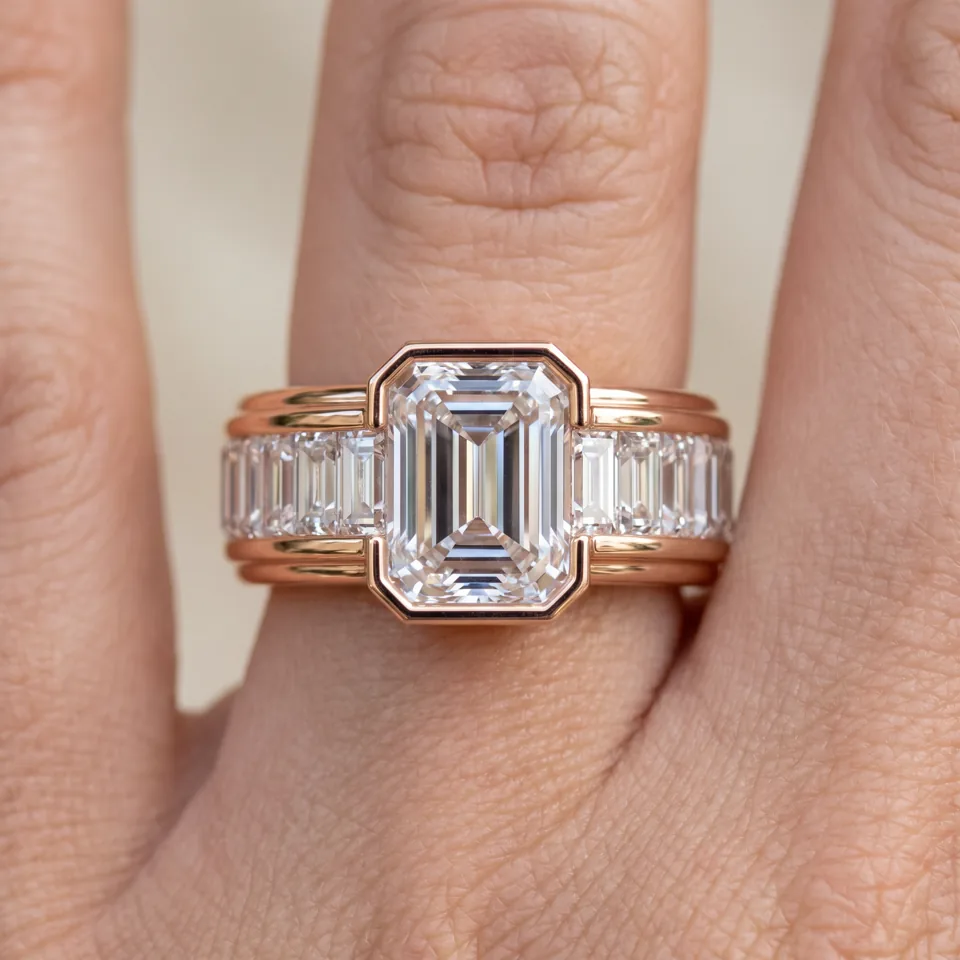 Emerald Cut Bezel Engagement Rings
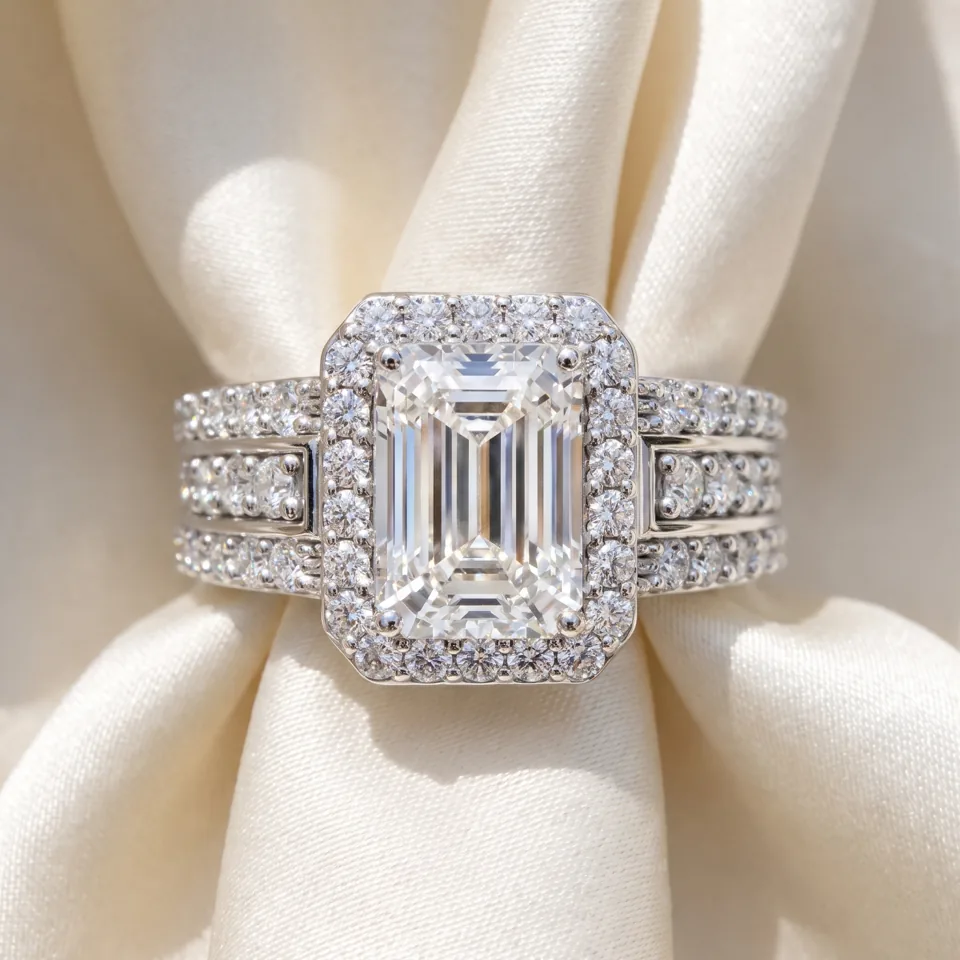 Antique Emerald Cut Engagement Rings
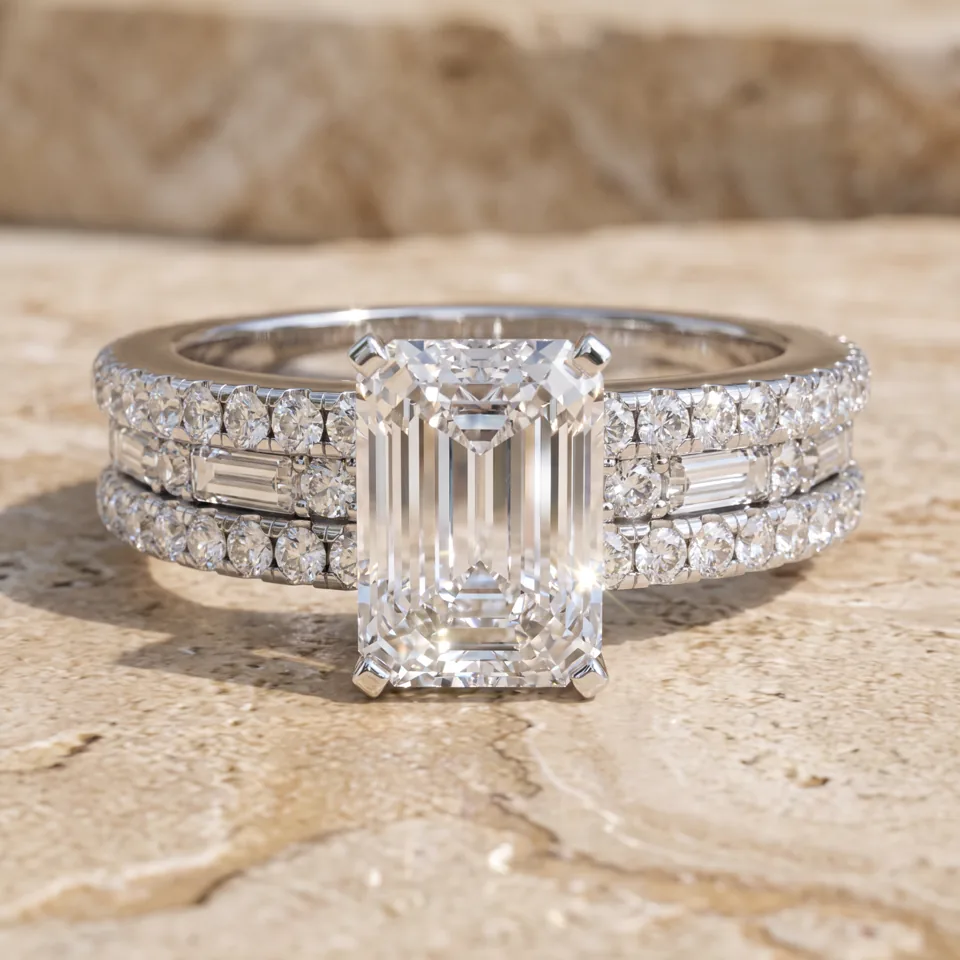 Emerald Cut Diamond Rings with Baguettes
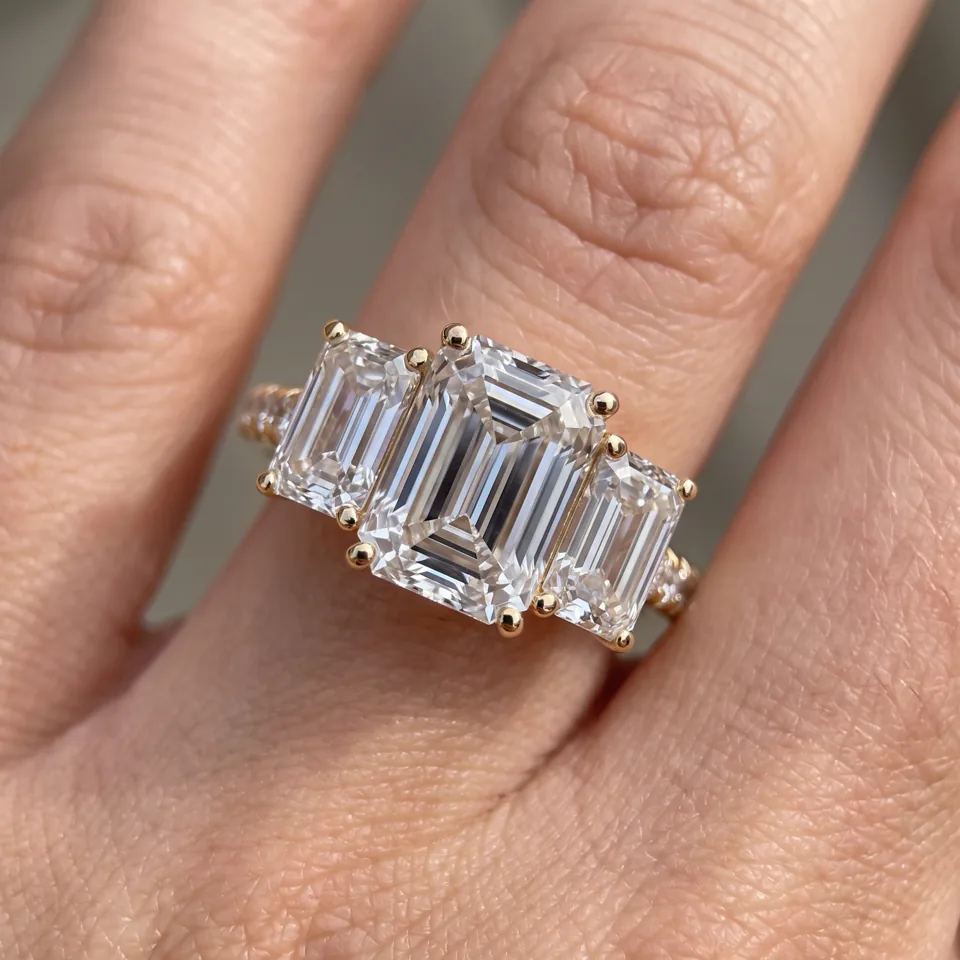 Emerald Cut Three Stone Engagement Rings
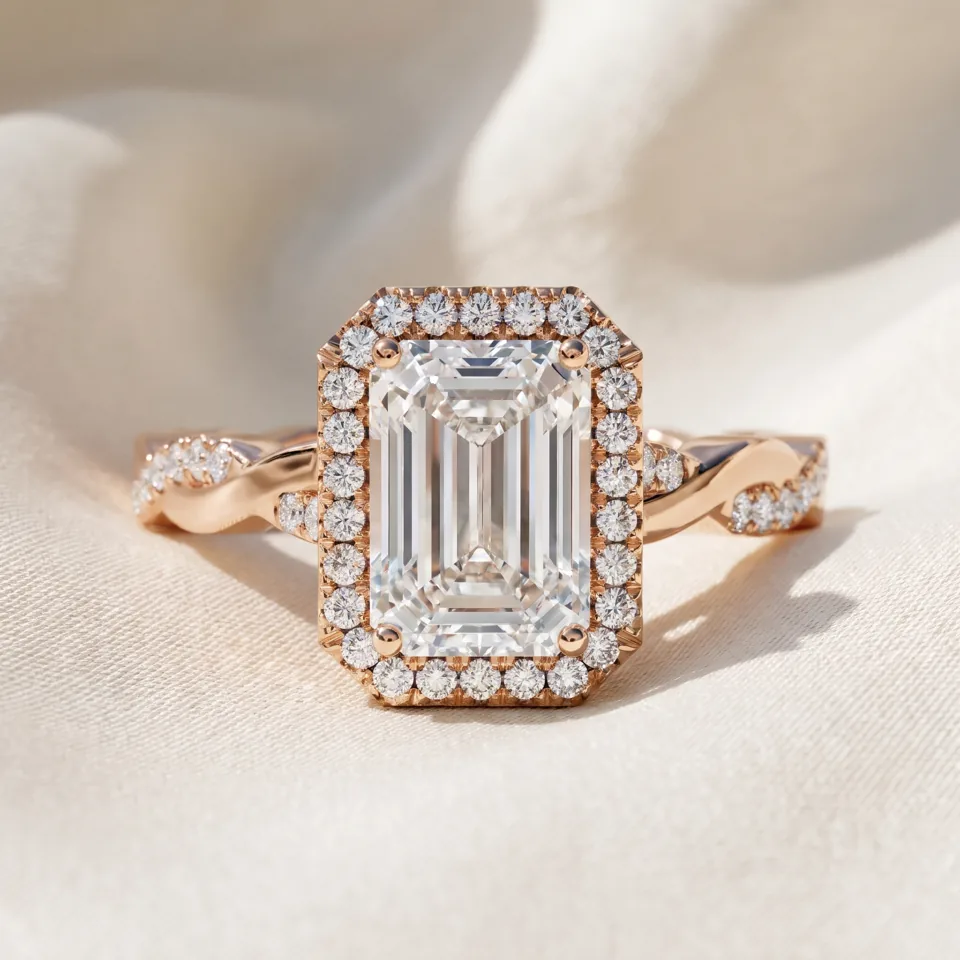 Emerald Cut Halo Engagement Rings
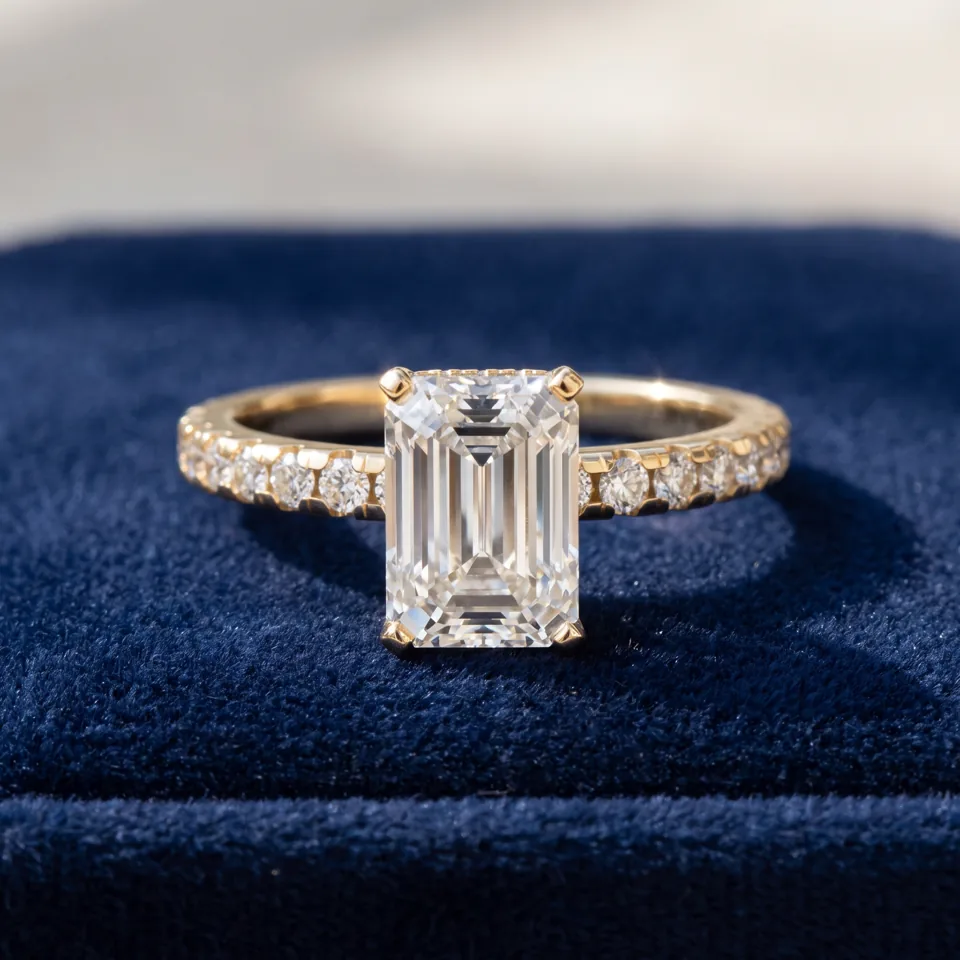 Emerald Cut Hidden Halo Engagement Rings
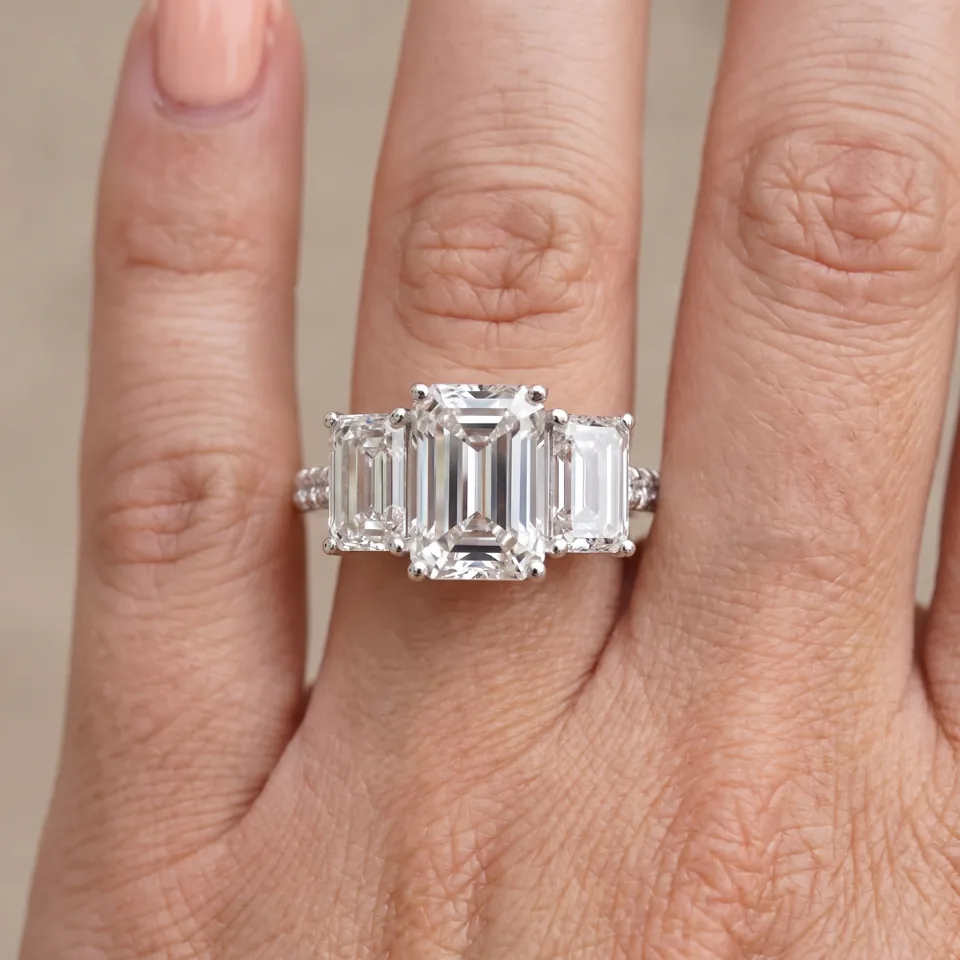 Emerald Cut Engagement Rings with Side Stones
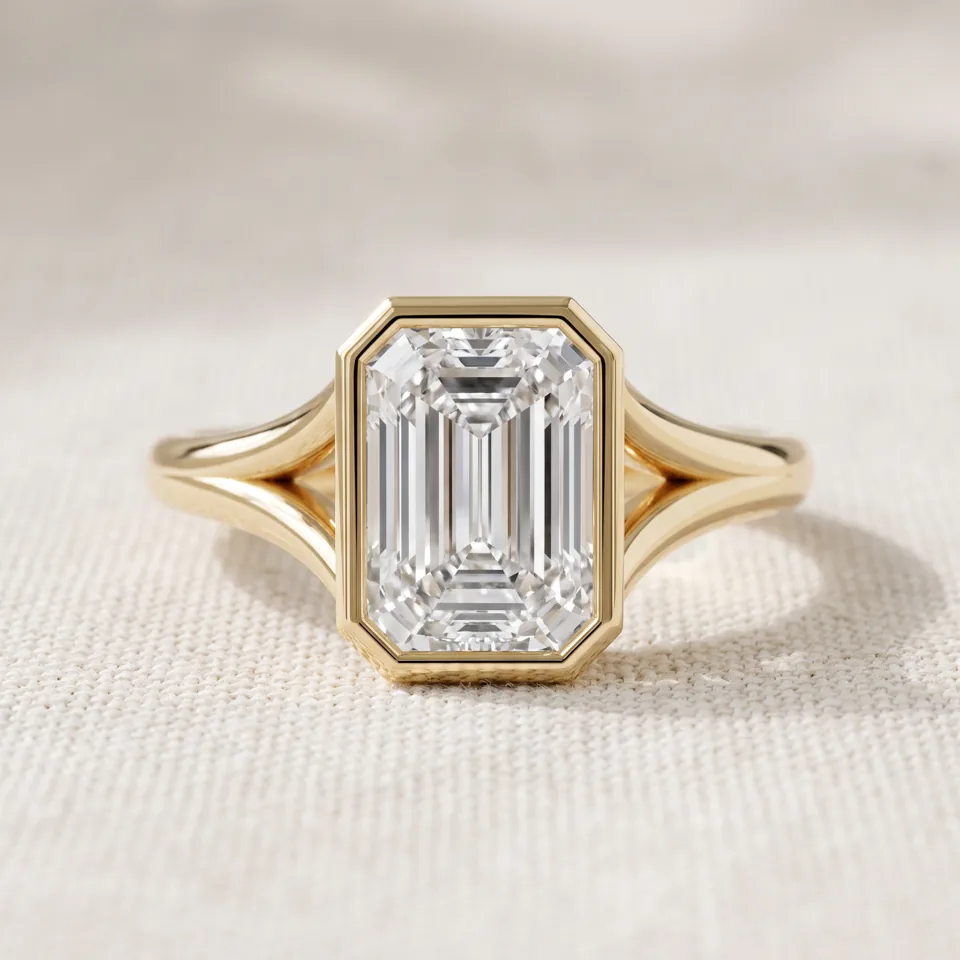 Emerald Cut Split Shank Engagement Rings
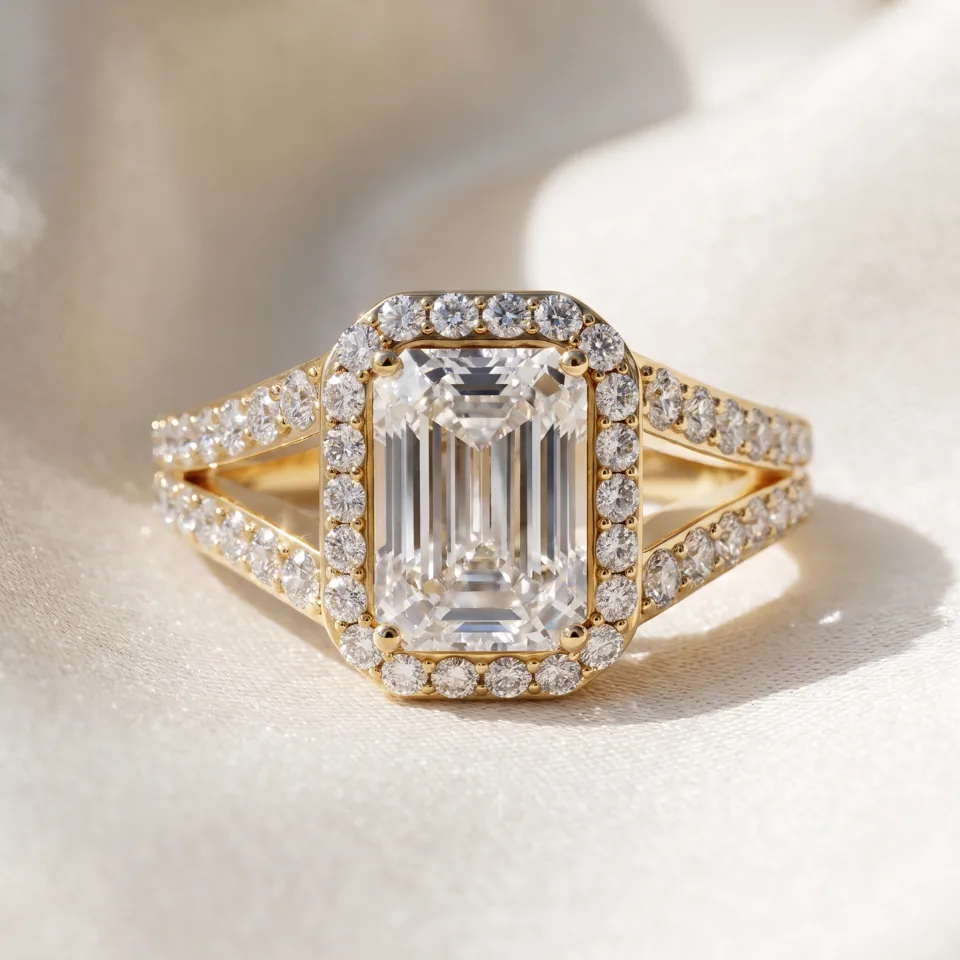 Emerald Cut Pave Engagement Rings
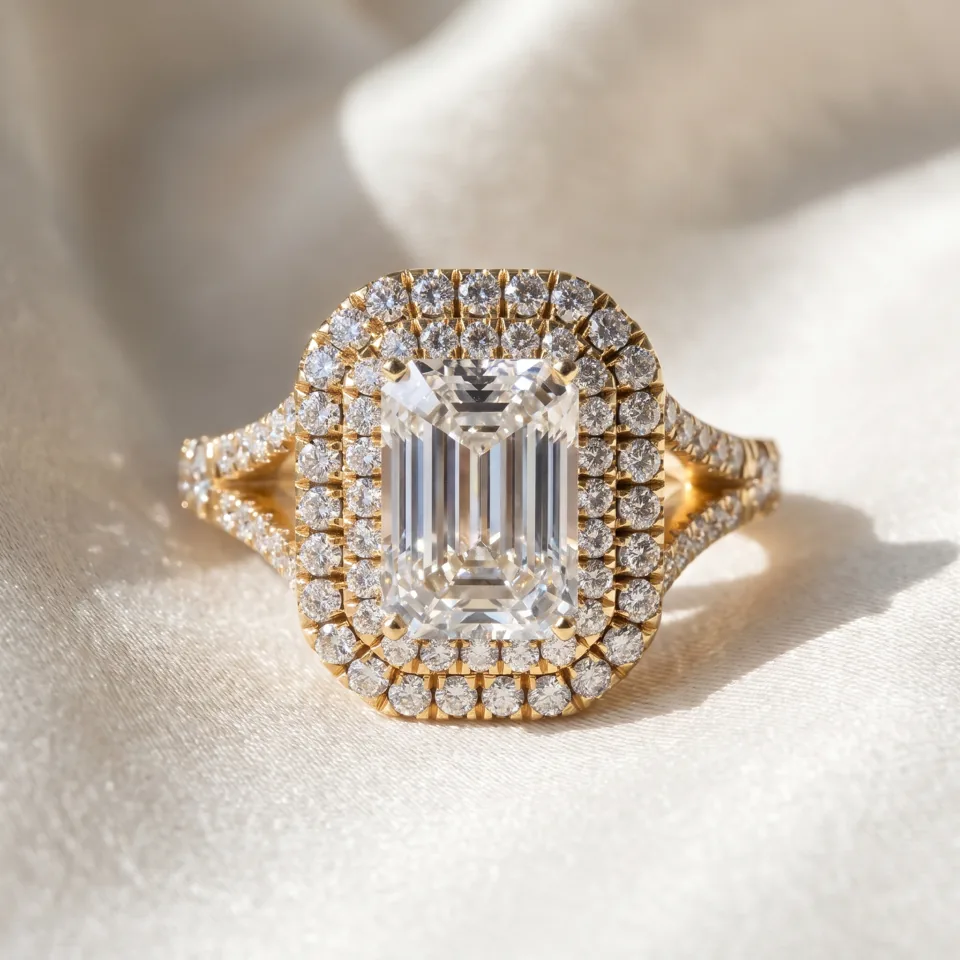 Emerald Cut Double Halo Rings
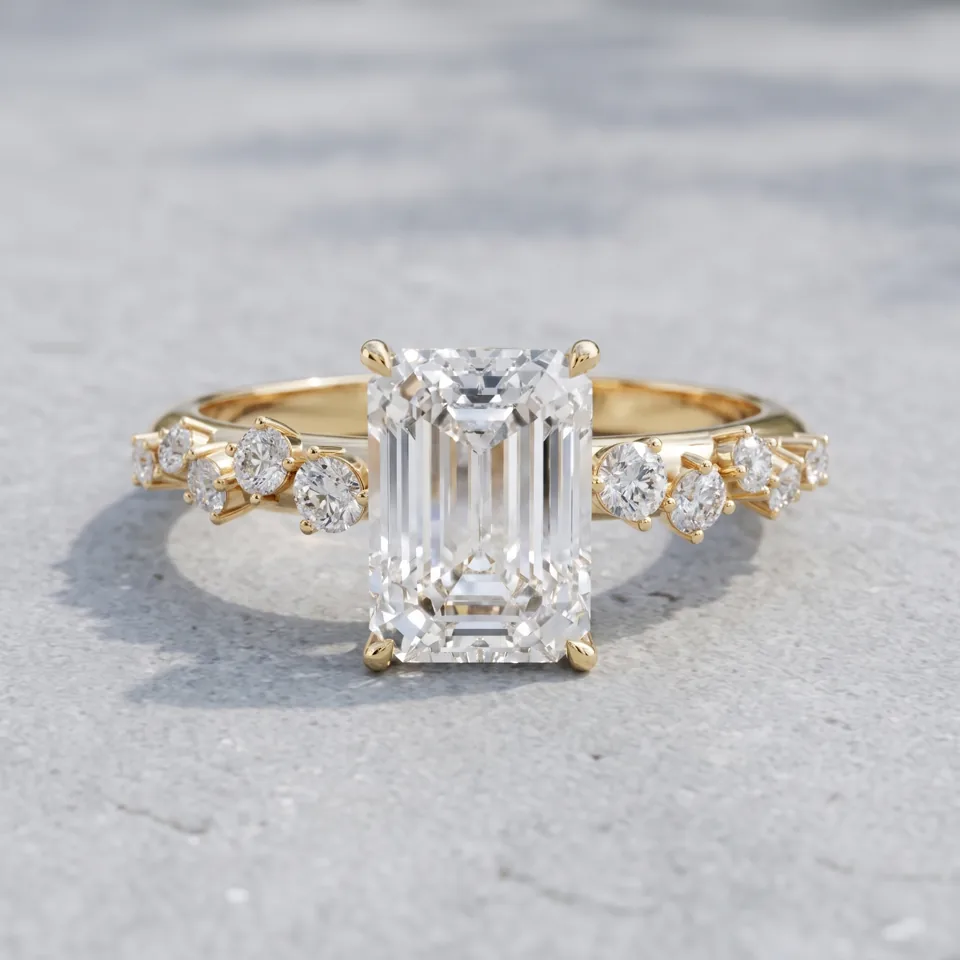 Emerald Cut Cluster Engagement Rings
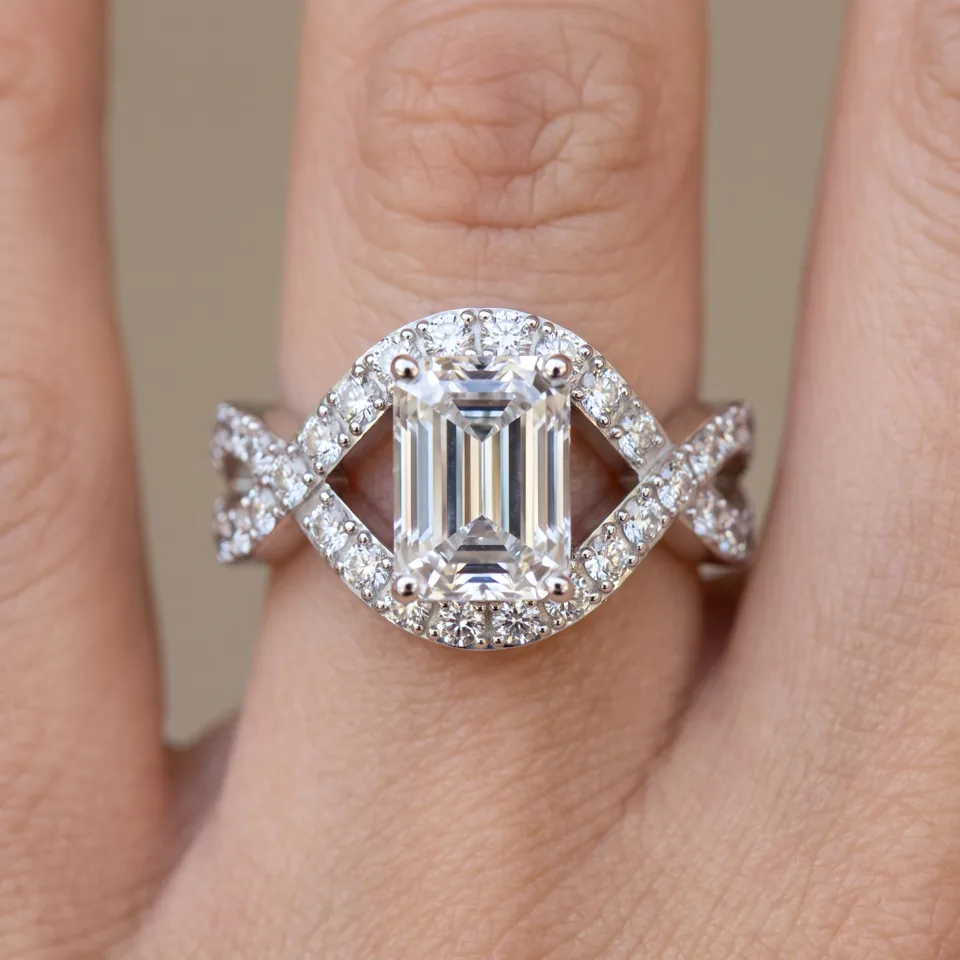 Emerald Cut Infinity Rings
An emerald cut has long, flat ends, which give the metal a broad surface to press against. Its step-cut facets show clean flashes of light instead of a glittery scatter, and the open sides of a tension style show off that hall-of-mirrors effect. Keep in mind that step cuts reveal inclusions more easily, so clarity matters more with this shape.
You can have any of these in platinum, in 10K, 14K or 18K gold (rose, yellow or white), or in Silvadium, a tarnish-resistant sterling silver. A tension-style head depends on stiff metal holding firm, so gold or platinum is the better pick for daily wear; silver suits a lighter-use ring. Half the designs also offer colored centers: black, green, yellow, blue or pink.
The exposed corners of an emerald cut are its weak spot. Take the ring off for sports or heavy lifting and have it checked once a year. Because the ends are held by metal, sizing must be done with care, so get your size right before ordering.
Every setting is made for you in 10–15 days, and your center comes with an IGI or GIA report. Insured shipping is free on the way out and on the way back. You can return within 30 days, and one resize within 60 days of delivery is on us.


