Complimentary insured shipping, both waysEngagement ring diamonds certified by IGI or GIAGrown by light. Conflict-free by natureComplimentary insured shipping, both ways
Engagement RingsWedding BandsEarrings

NecklaceBraceletsAbout
On a pear tension ring, the stone is gripped where the band's open tips meet it, so it appears to hover with air on each side. The look is modern and graphic, and the pear's point adds direction.
Here you choose the band shape and metal; your pear center diamond is picked in the next step, in a classic white or a fancy color.
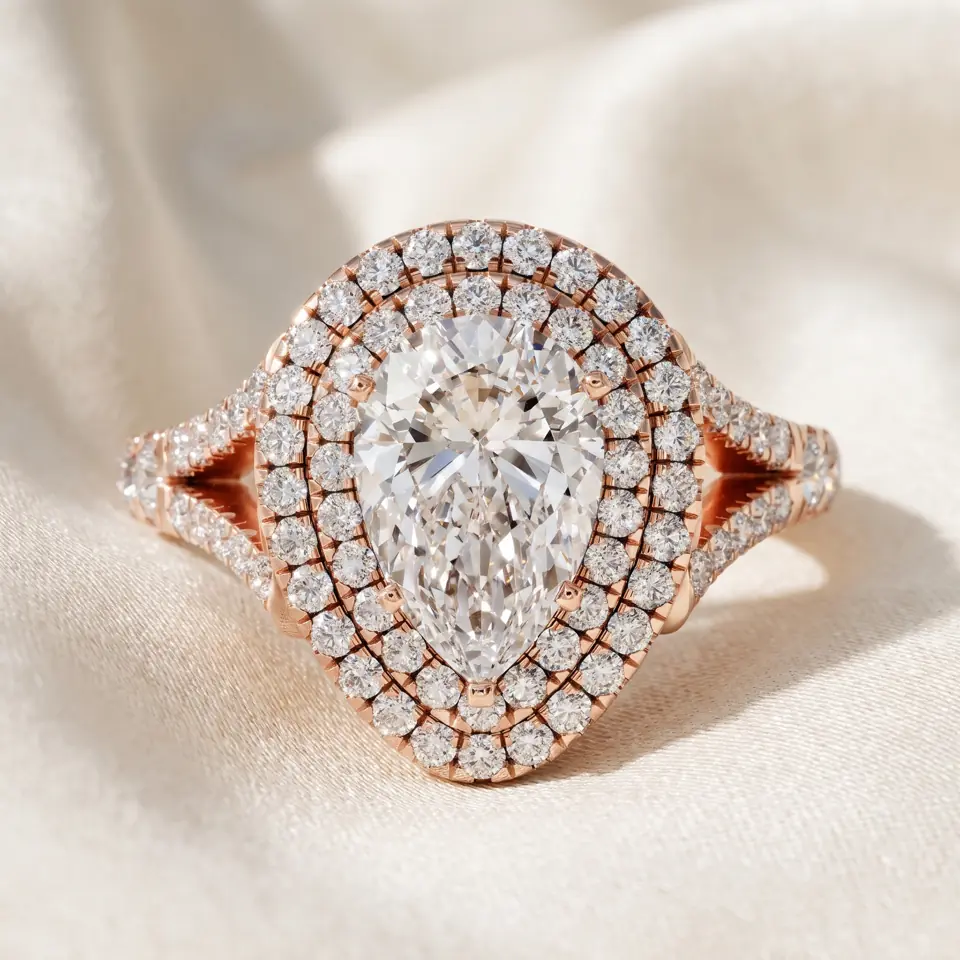 Pear Halo Engagement Rings
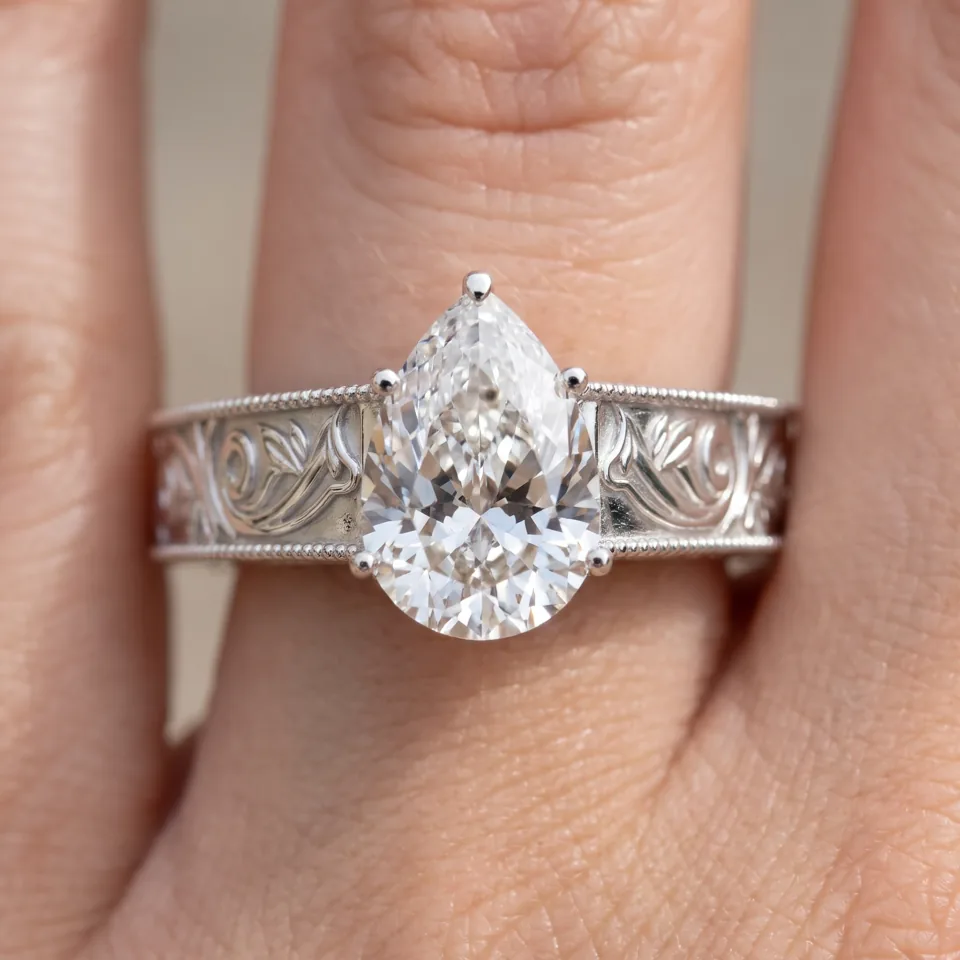 Vintage Pear Engagement Rings
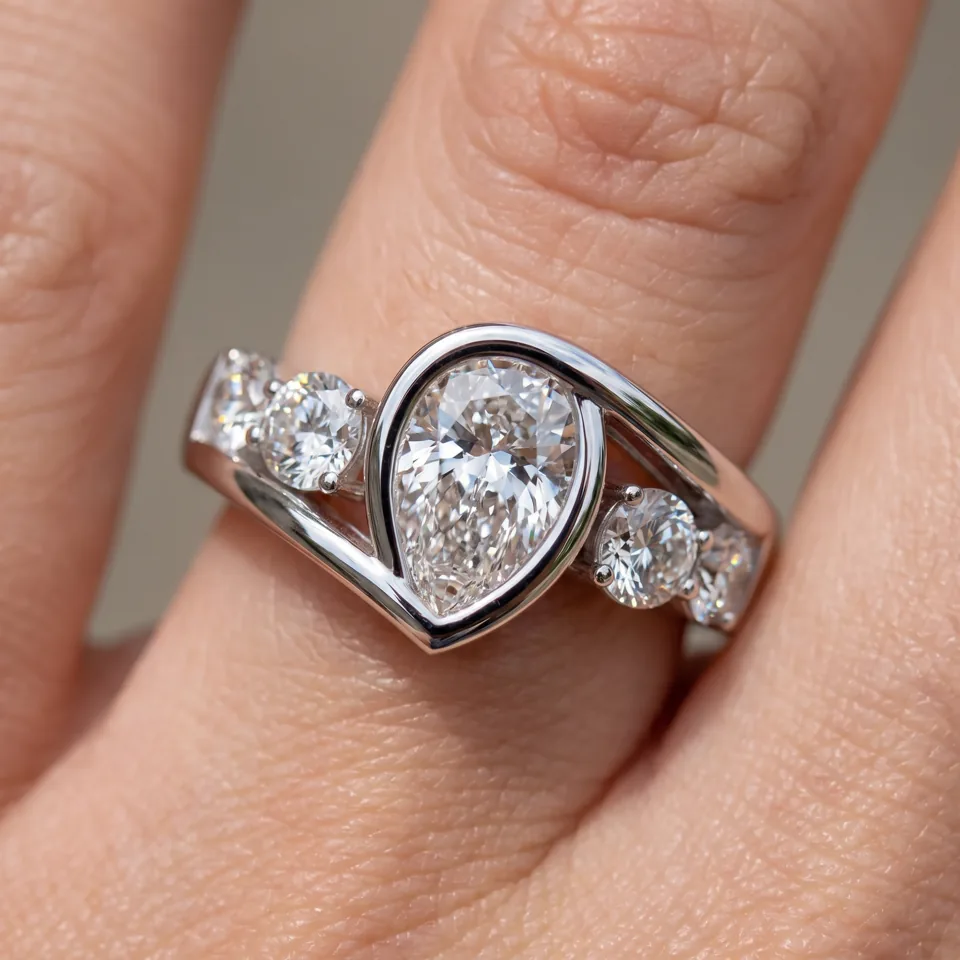 Pear Bezel Engagement Rings
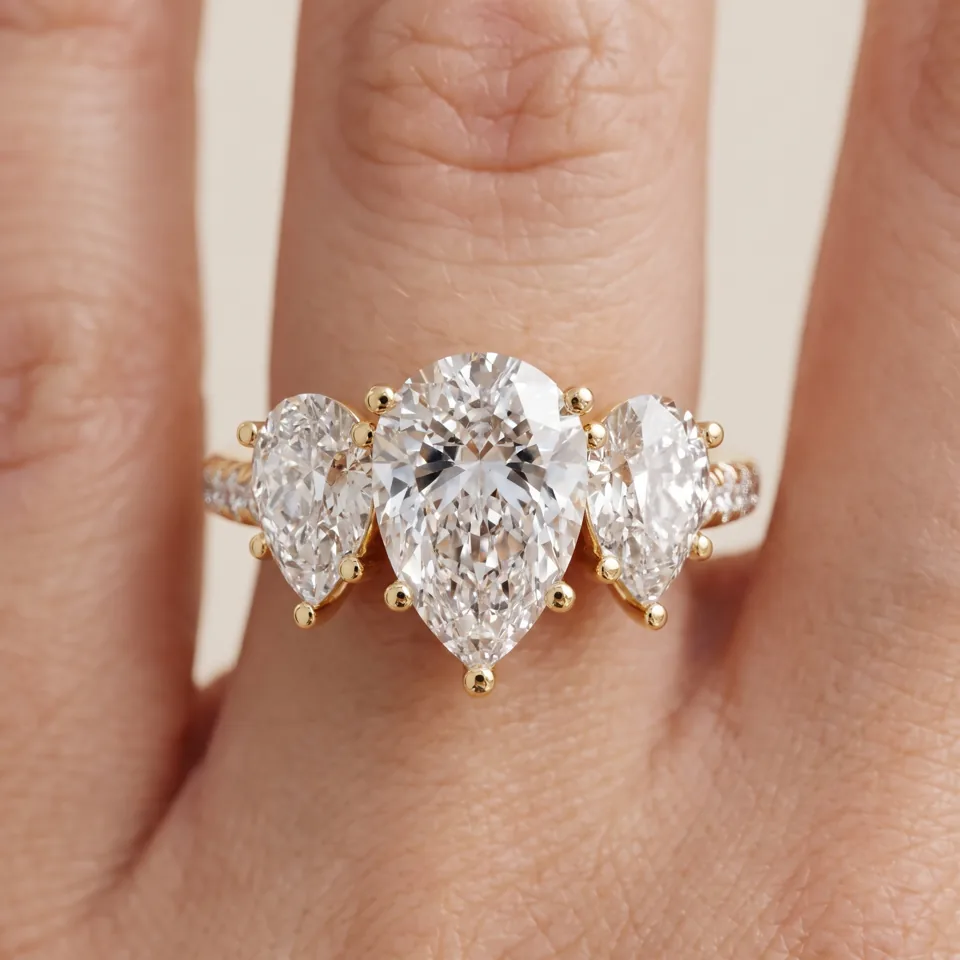 Pear Three Stone Engagement Rings
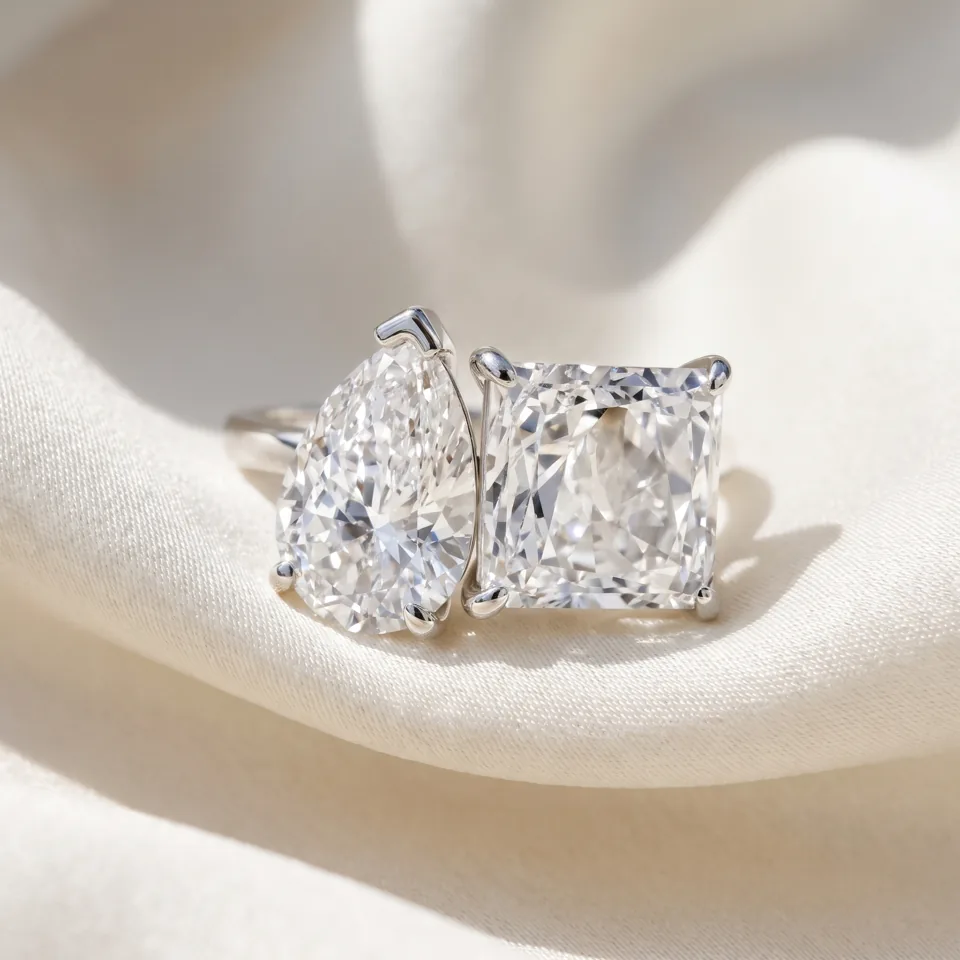 Pear Toi et Moi Rings
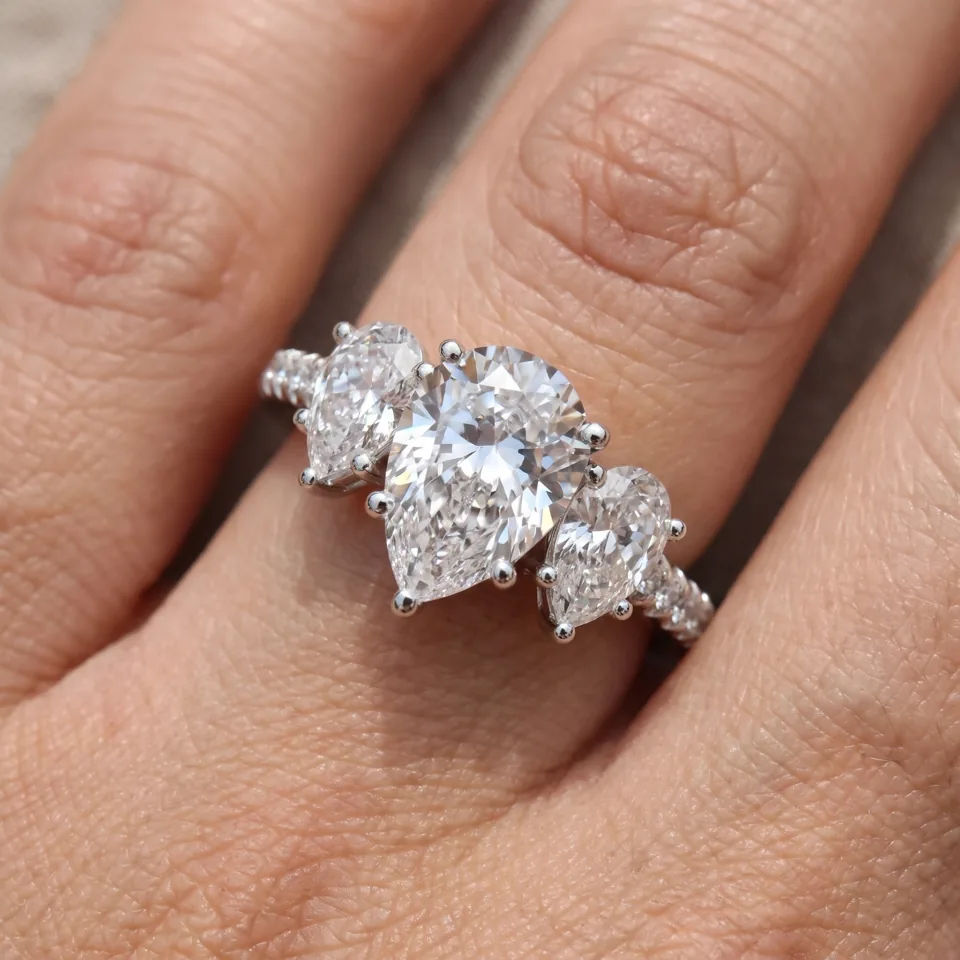 Pear Engagement Rings with Side Stones
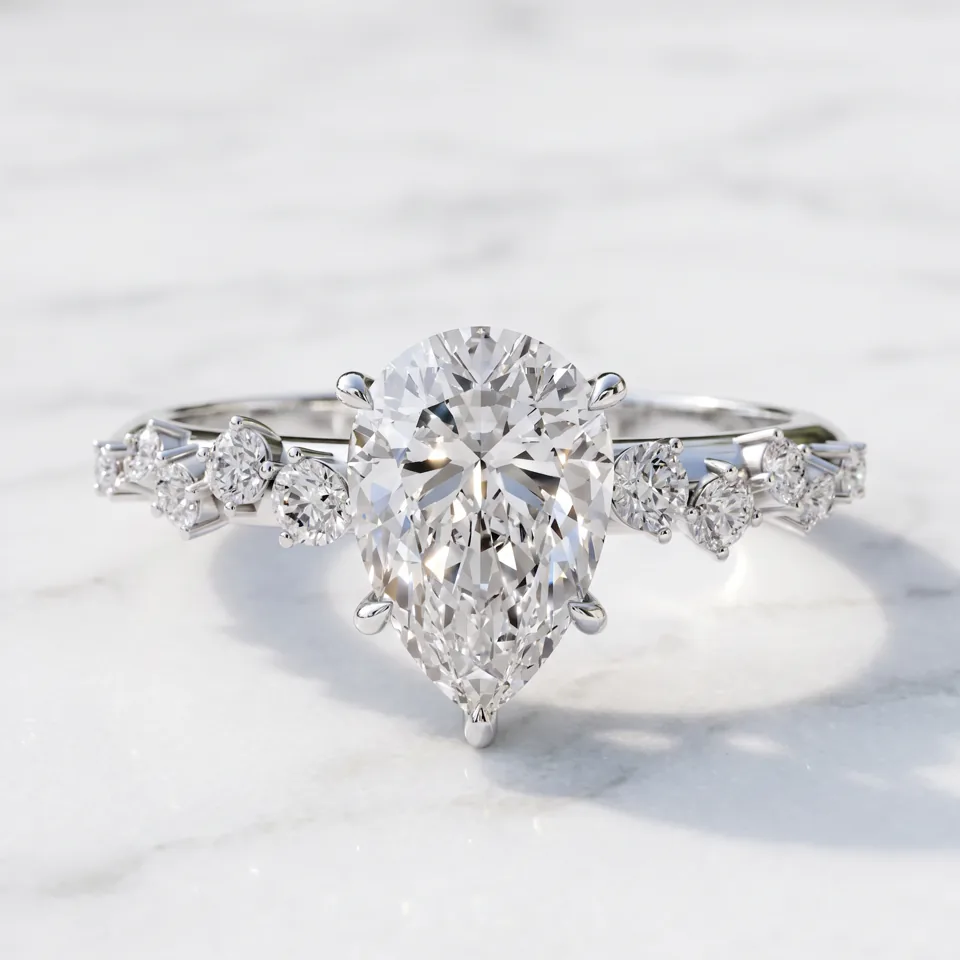 Pear Cluster Rings
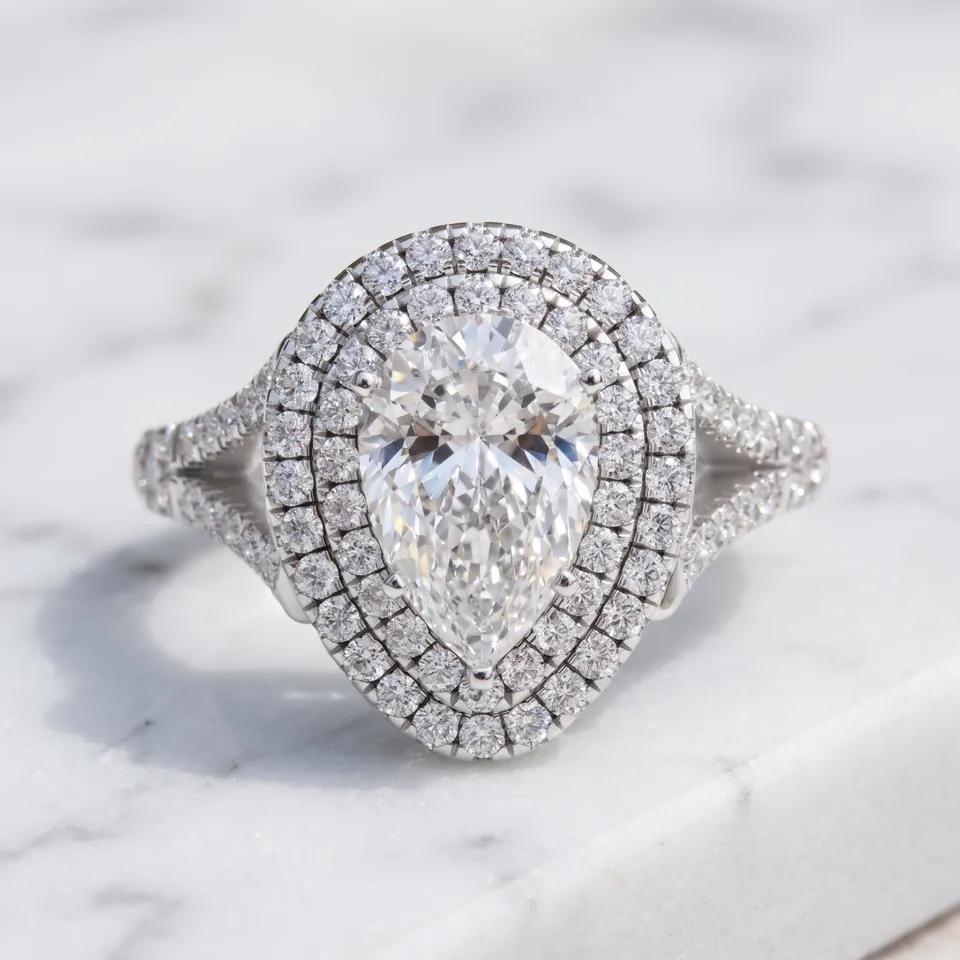 Double Halo Pear Engagement Rings
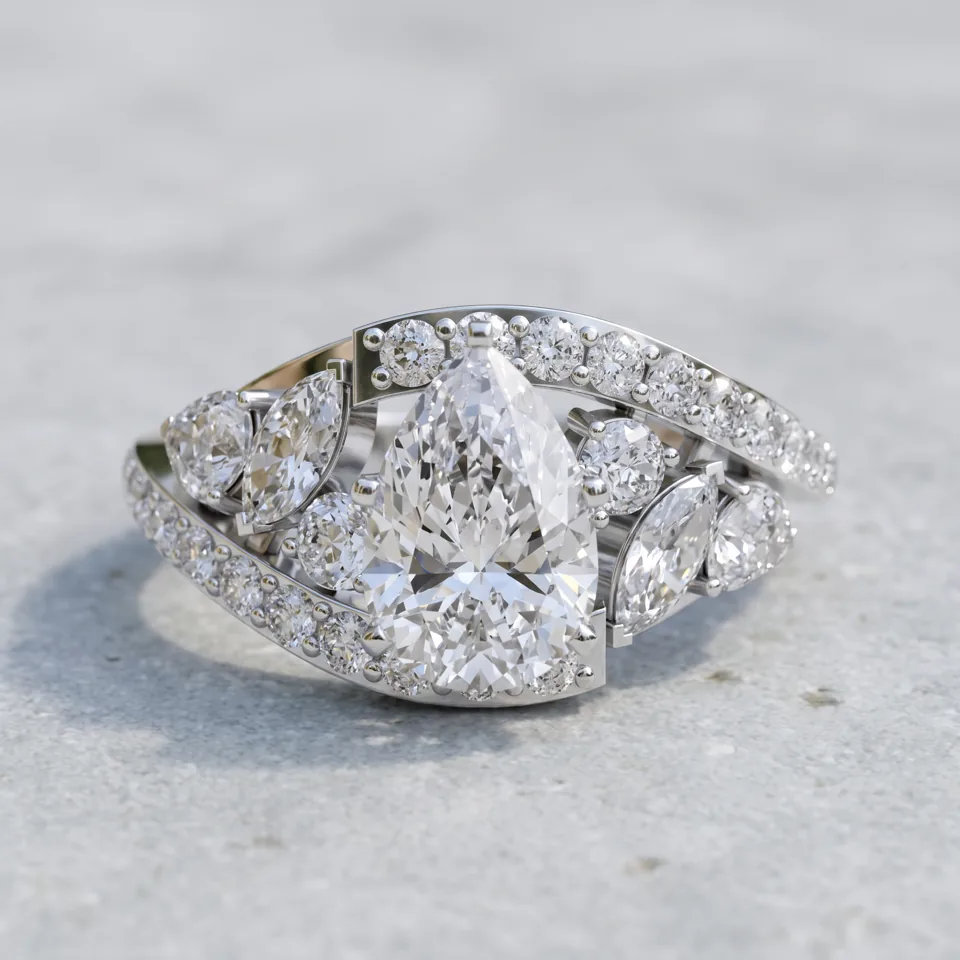 Pear Engagement Rings with Pear Side Stones
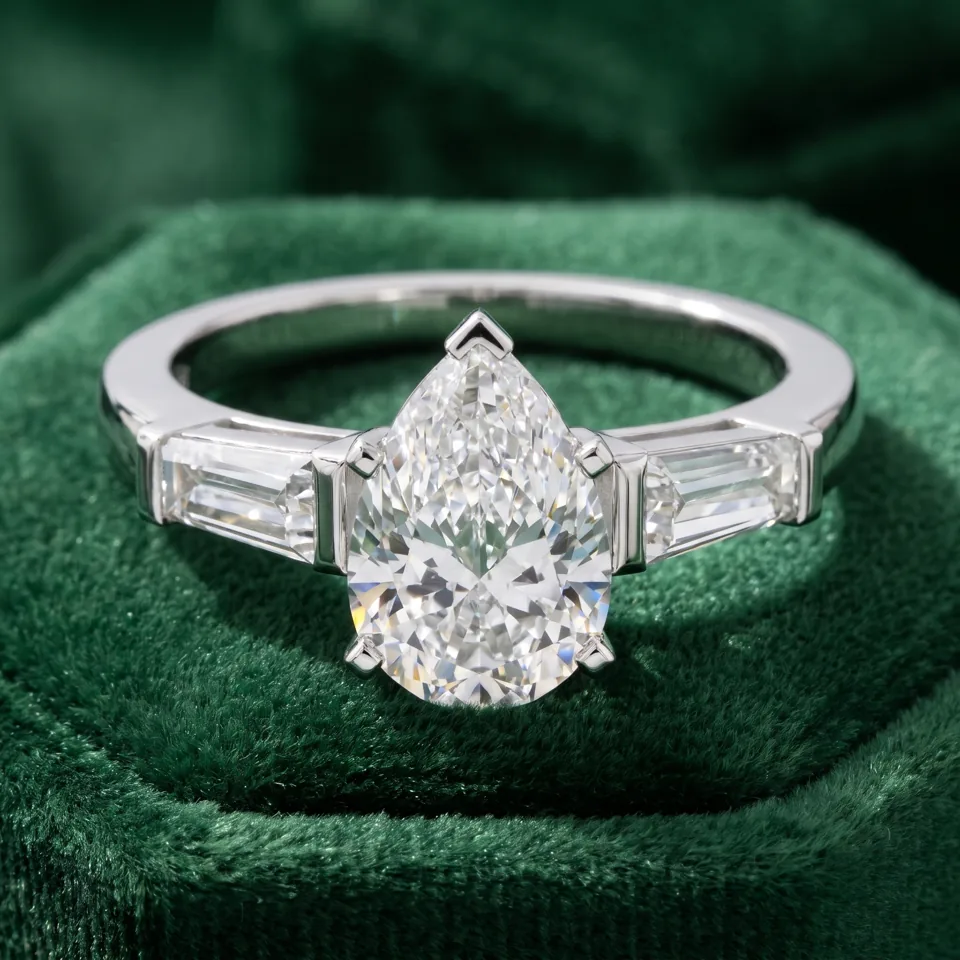 Pear-Shaped Rings with Baguette Side Stones
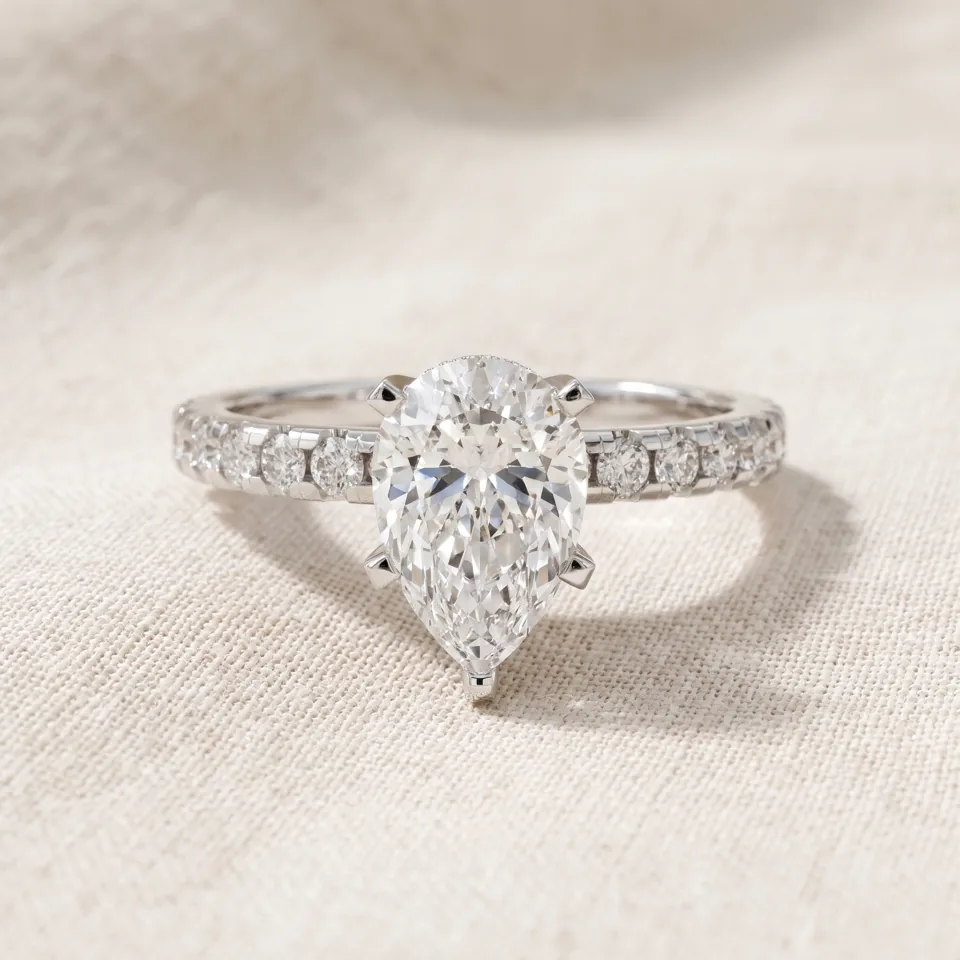 Pear Hidden Halo Engagement Rings
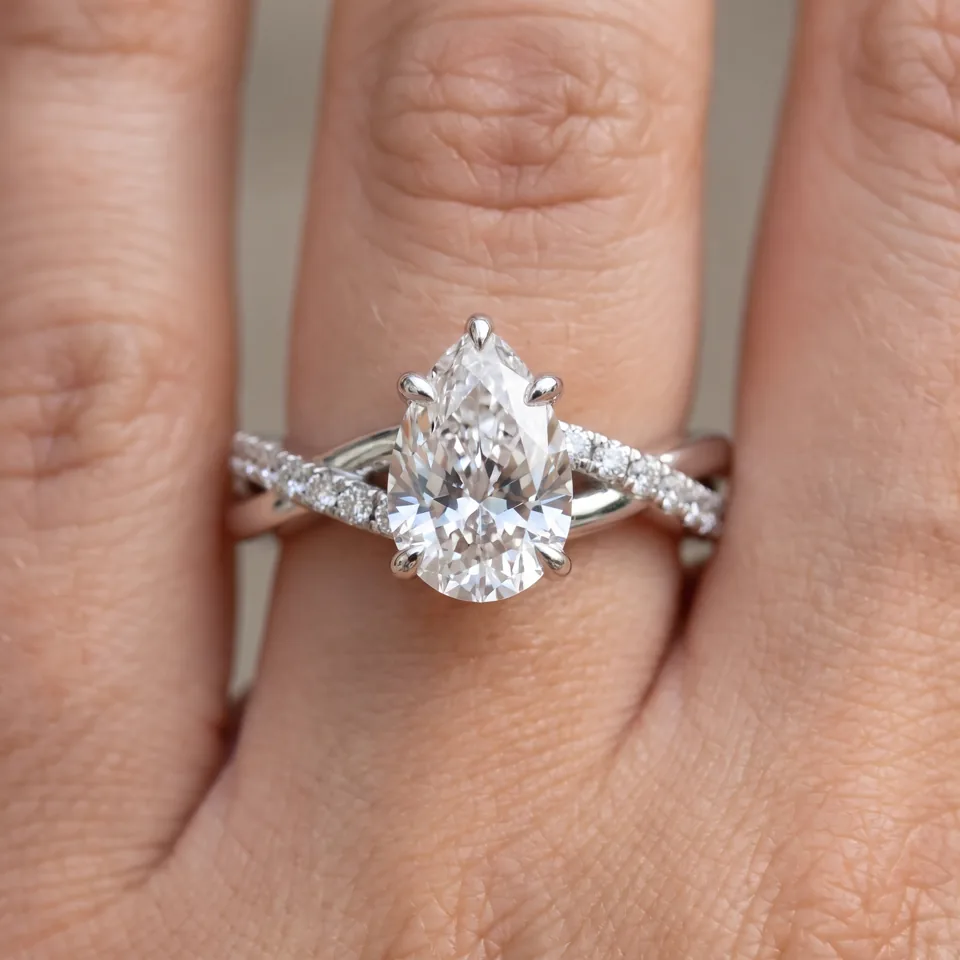 Pear Infinity Engagement Rings
The band does most of the design work on a tension-style ring. A tapered shank narrows toward the pear, which keeps the hand looking light and lets the center lead. A wide sculpted band makes a bolder statement and gives the setting more metal to grip. One design adds flush-set laboratory-grown diamond accents along a wide band; these sit level with the metal, so nothing snags.
Point the pear toward the fingertip for the classic look, which also makes fingers appear longer. Pears have a delicate tip, so these settings guard it with metal. Ask yourself how hard you are on your hands: a bezel-style design wraps more of the stone and suits busy days.
Several designs accept a fancy-color pear (green, yellow, blue or pink), and a couple also allow black. Warm golds flatter yellow and pink stones, while white metals sharpen blue and black. Gold and platinum versions mostly land around $1,400 to $1,550 for the setting, with your center added to that once you pick it.
We set your center and finish the ring in 10–15 days, and the center diamond arrives with an IGI or GIA report. You get free insured shipping each way, returns are accepted for 30 days, and one resize within 60 days of delivery costs nothing.


