Complimentary insured shipping, both waysEngagement ring diamonds certified by IGI or GIAGrown by light. Conflict-free by natureComplimentary insured shipping, both ways
Engagement RingsWedding BandsEarrings

NecklaceBraceletsAbout
A curved wedding band bows to make room for a raised center stone, closing the gap a straight band would leave. Every band here carries lab-grown diamonds, and the shapes range from a gentle arc to a sharp V.
Choose the curve that matches your engagement ring, then the metal and the total carat weight. Our ring soldering guide explains when joining the two makes sense. Our guide to engagement rings and wedding rings covers which one goes on first.
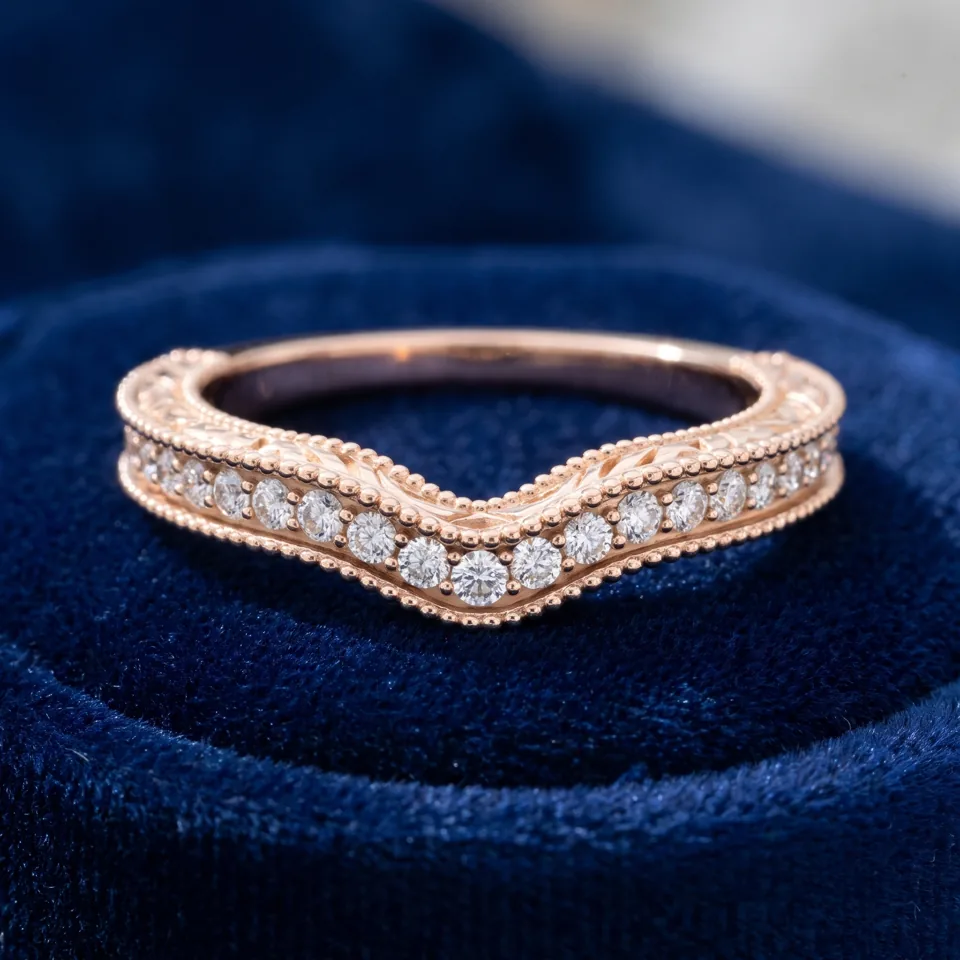 Lab-Grown Diamond Vintage Wedding Bands
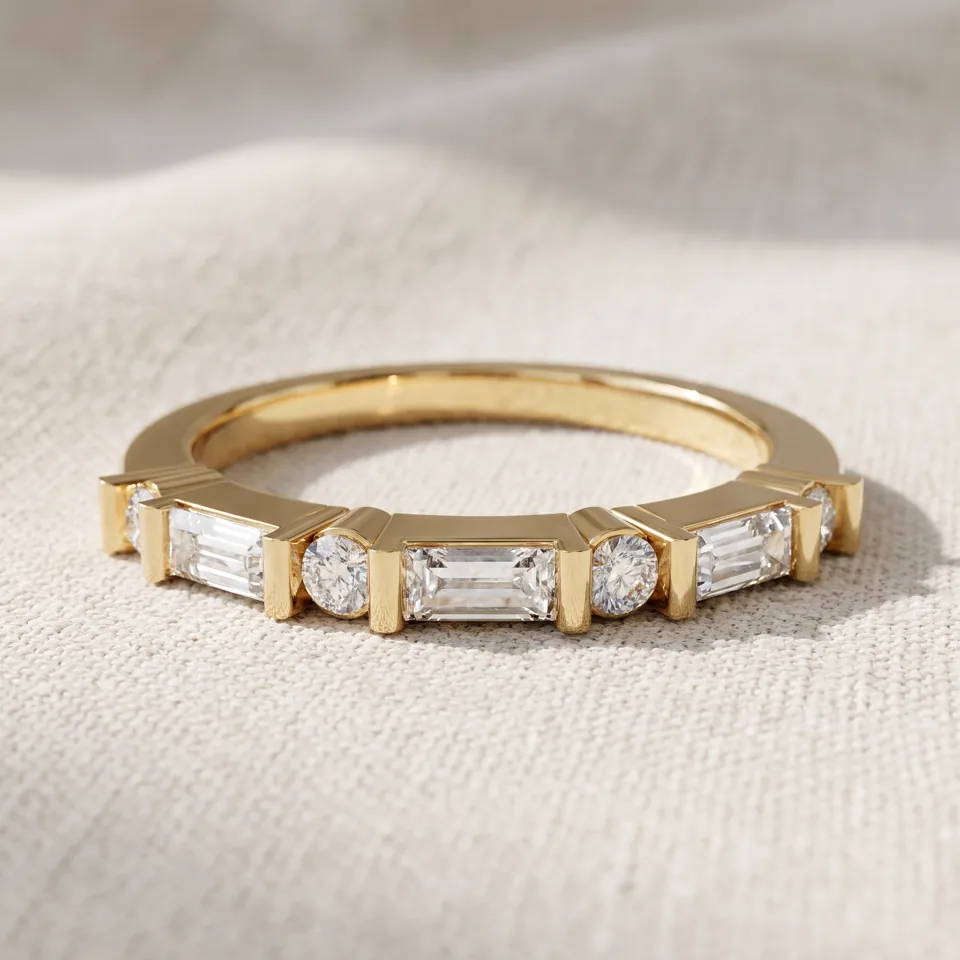 Baguette Lab-Grown Diamond Wedding Bands
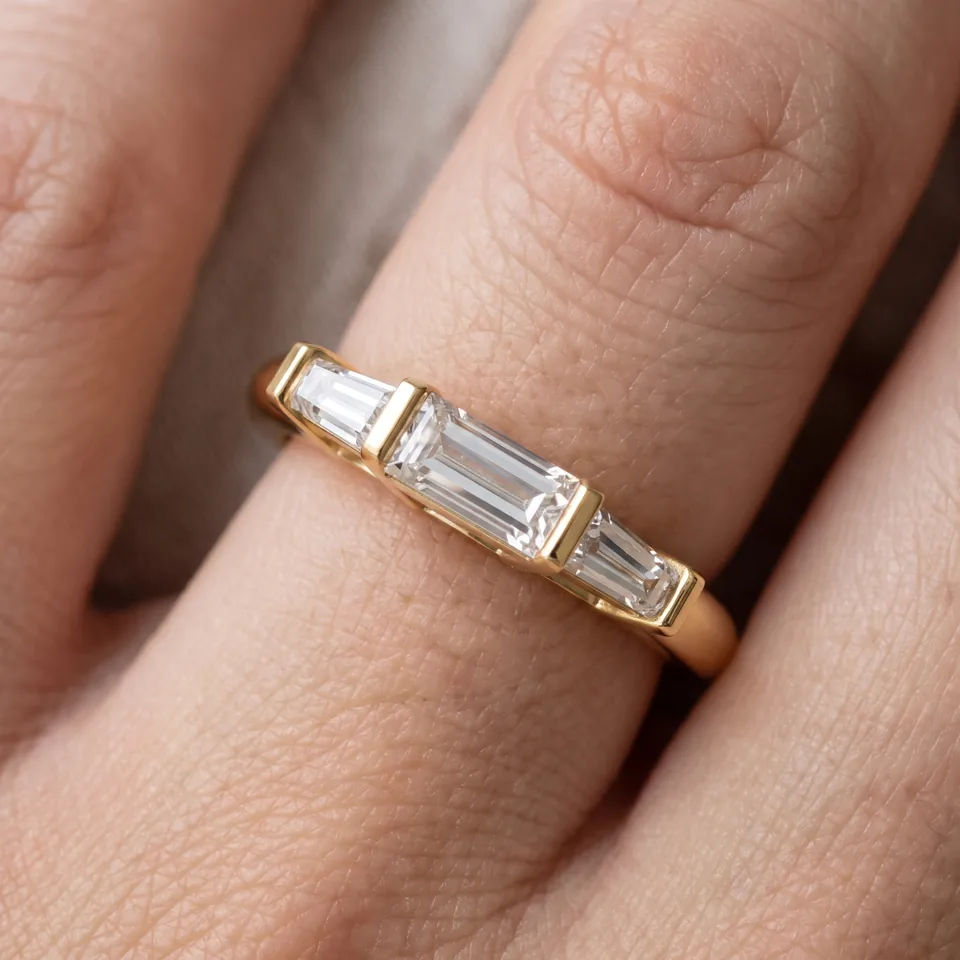 Lab-Grown Diamond Three Stone Wedding Bands
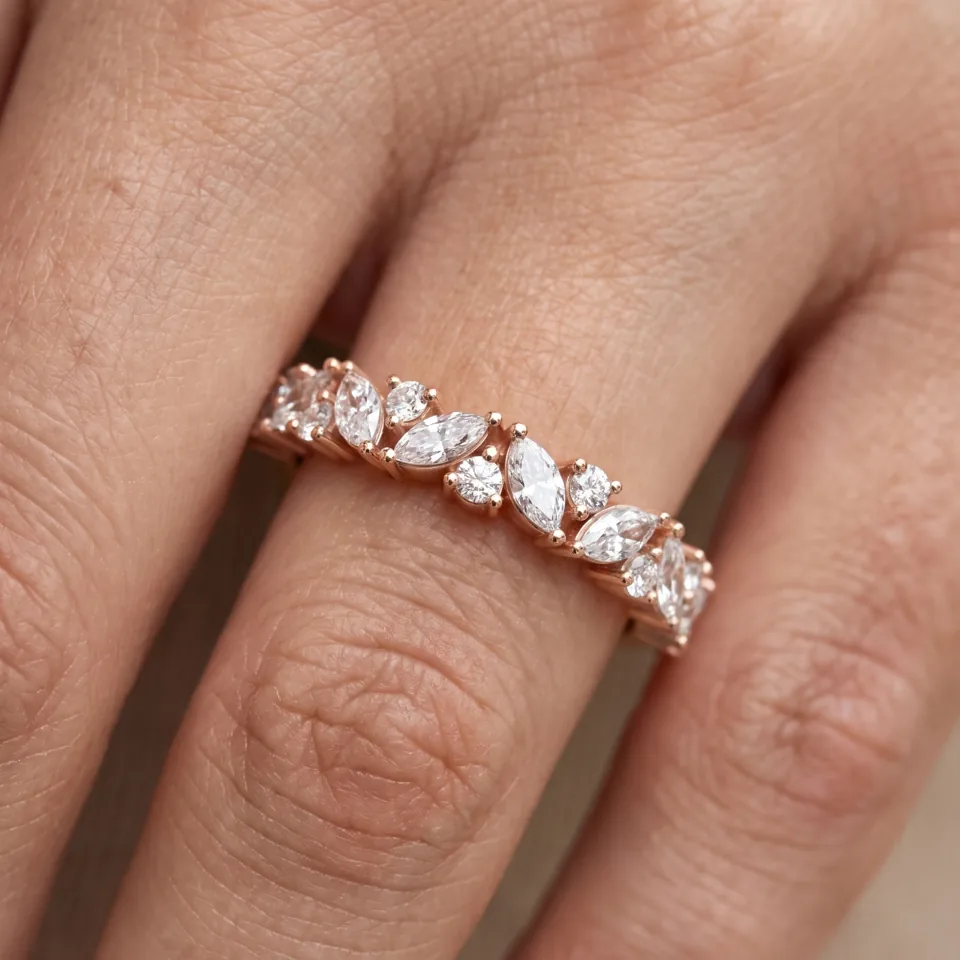 Nature Inspired Wedding Bands
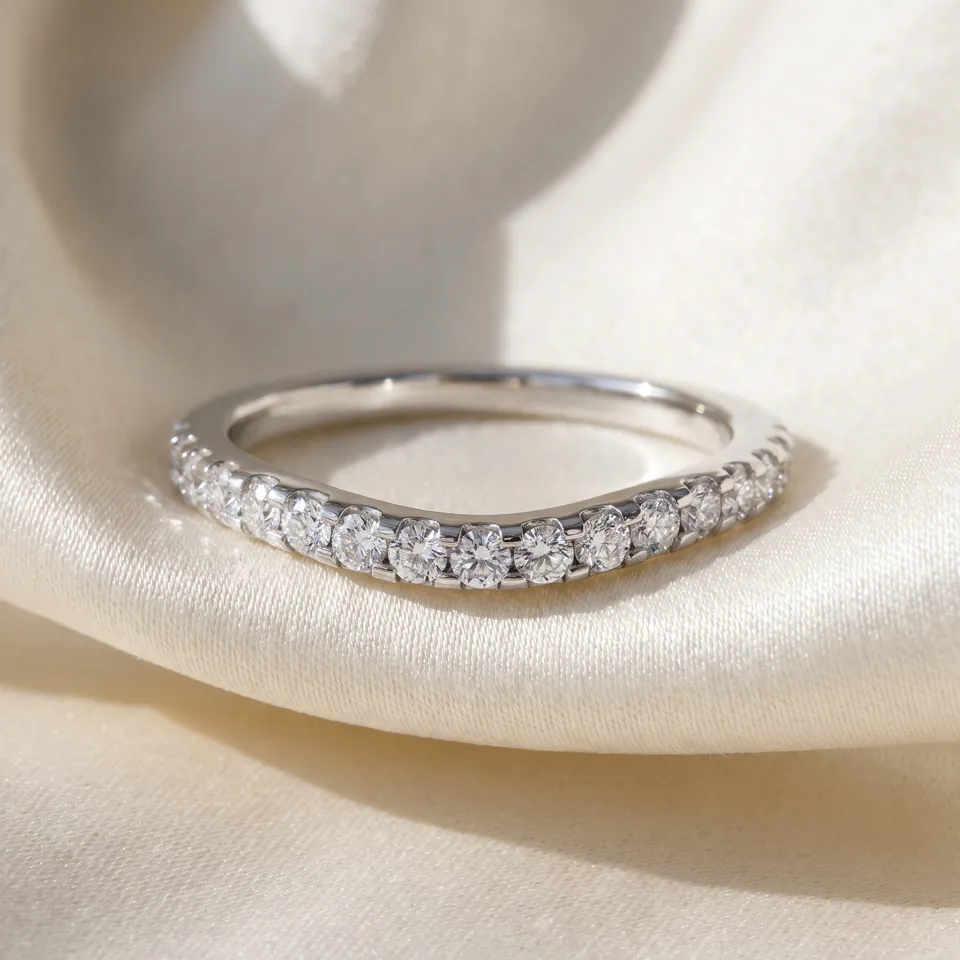 Lab-Grown Diamond Pave Wedding Bands
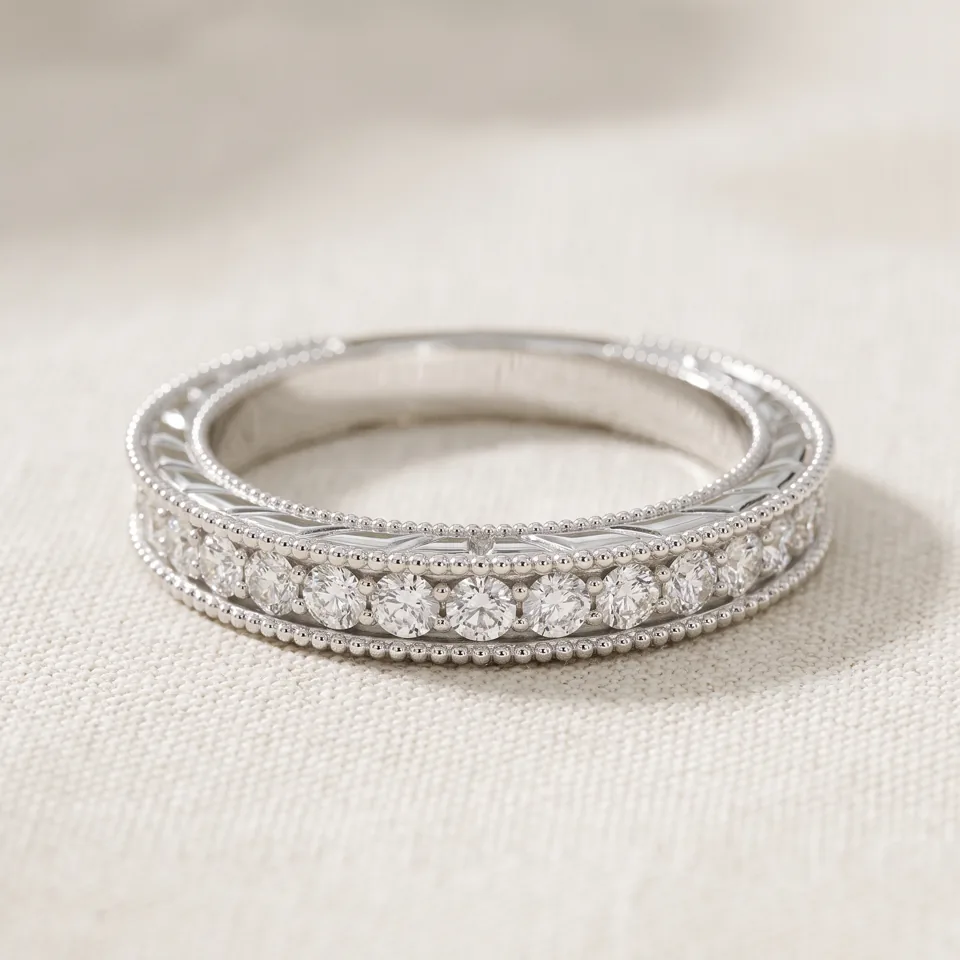 Engraved Wedding Bands
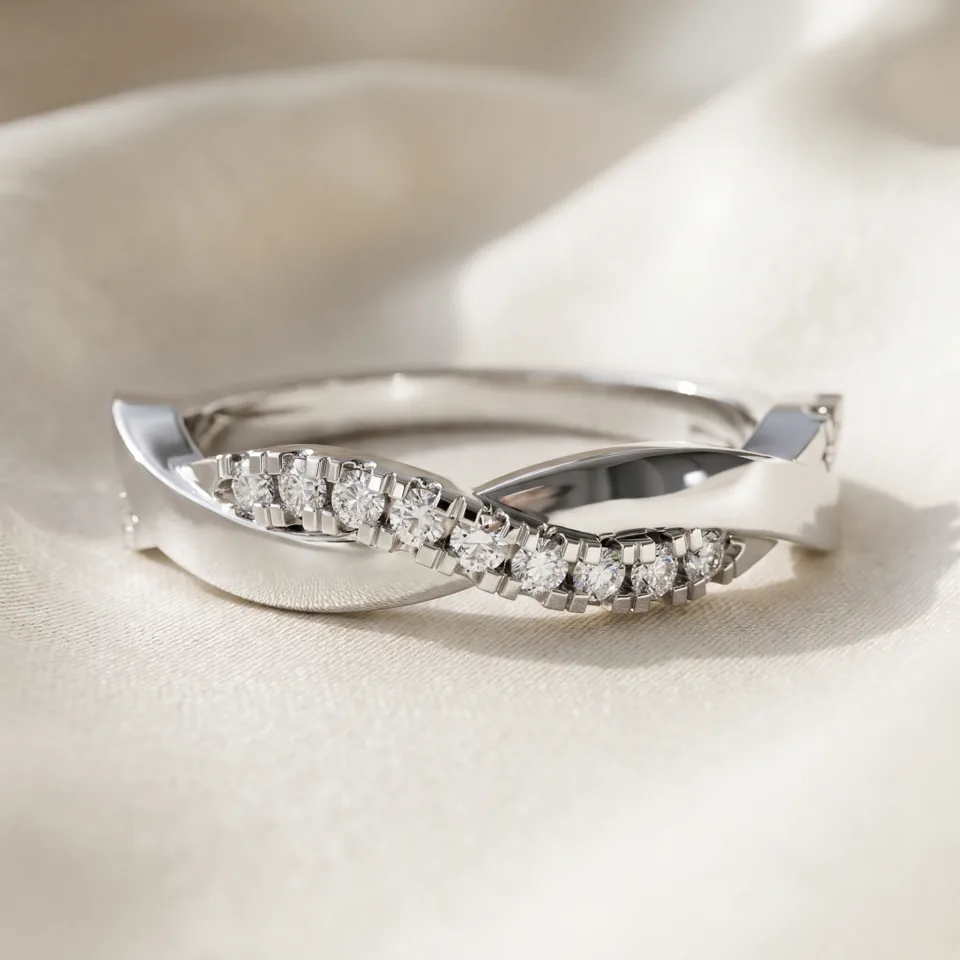 Lab-Grown Diamond Infinity Wedding Bands
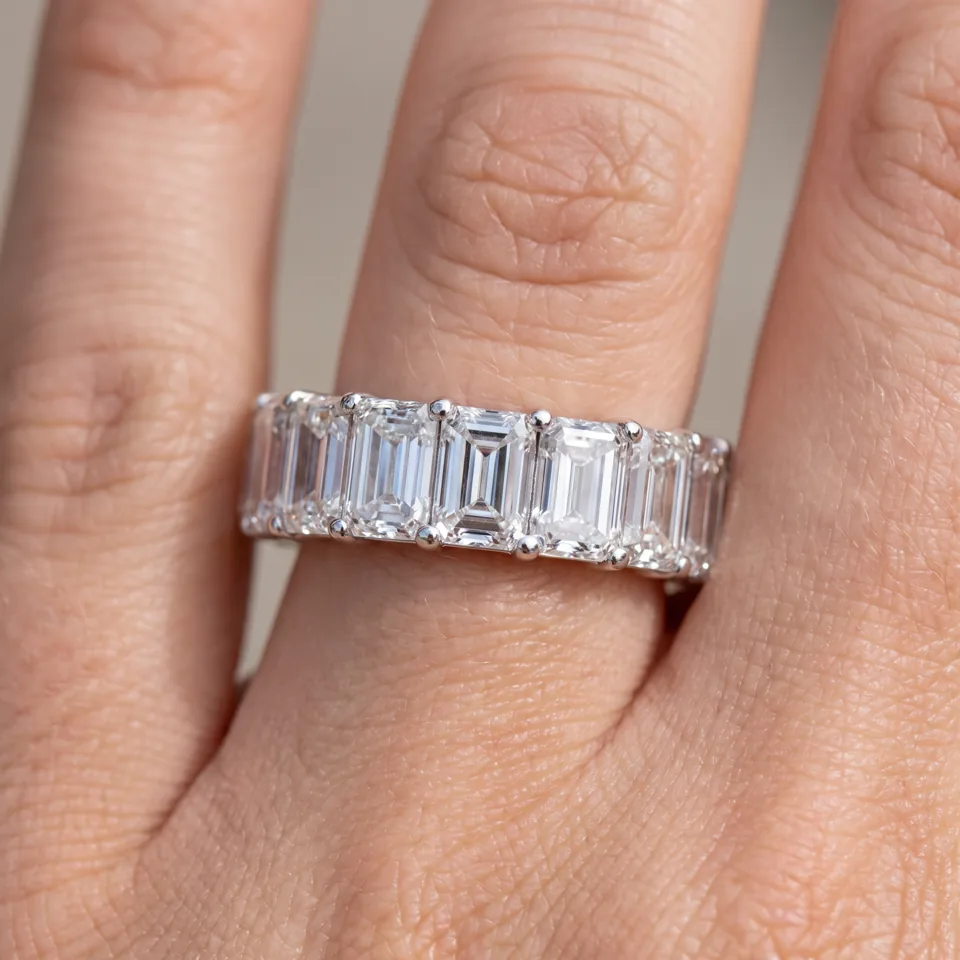 Lab-Grown Diamond Eternity Wedding Bands
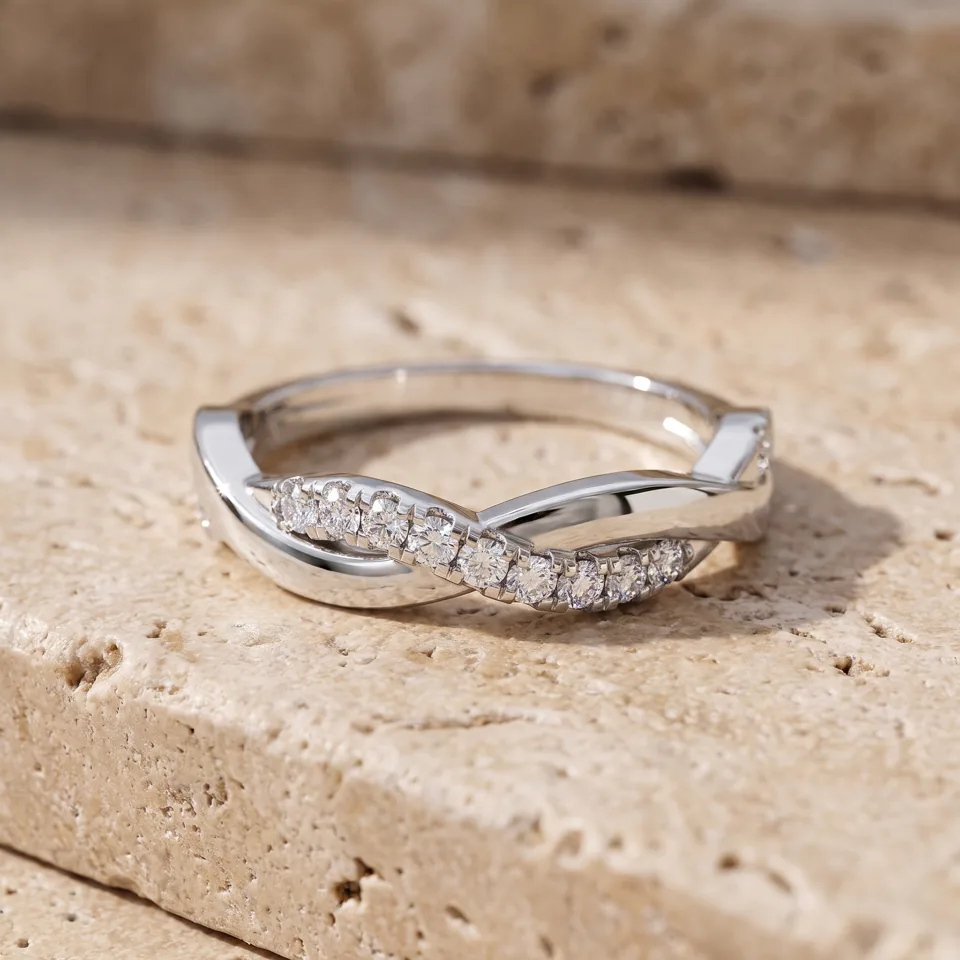 Twisted Wedding Bands
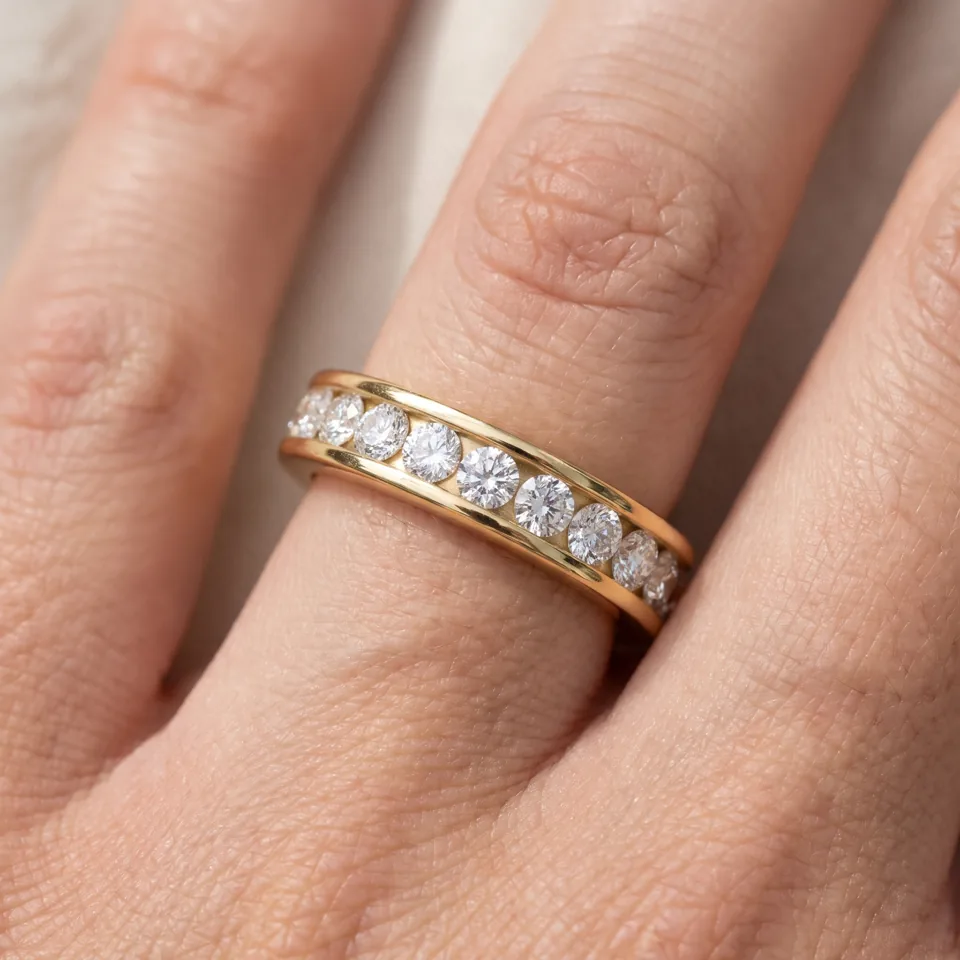 Channel Set Wedding Bands
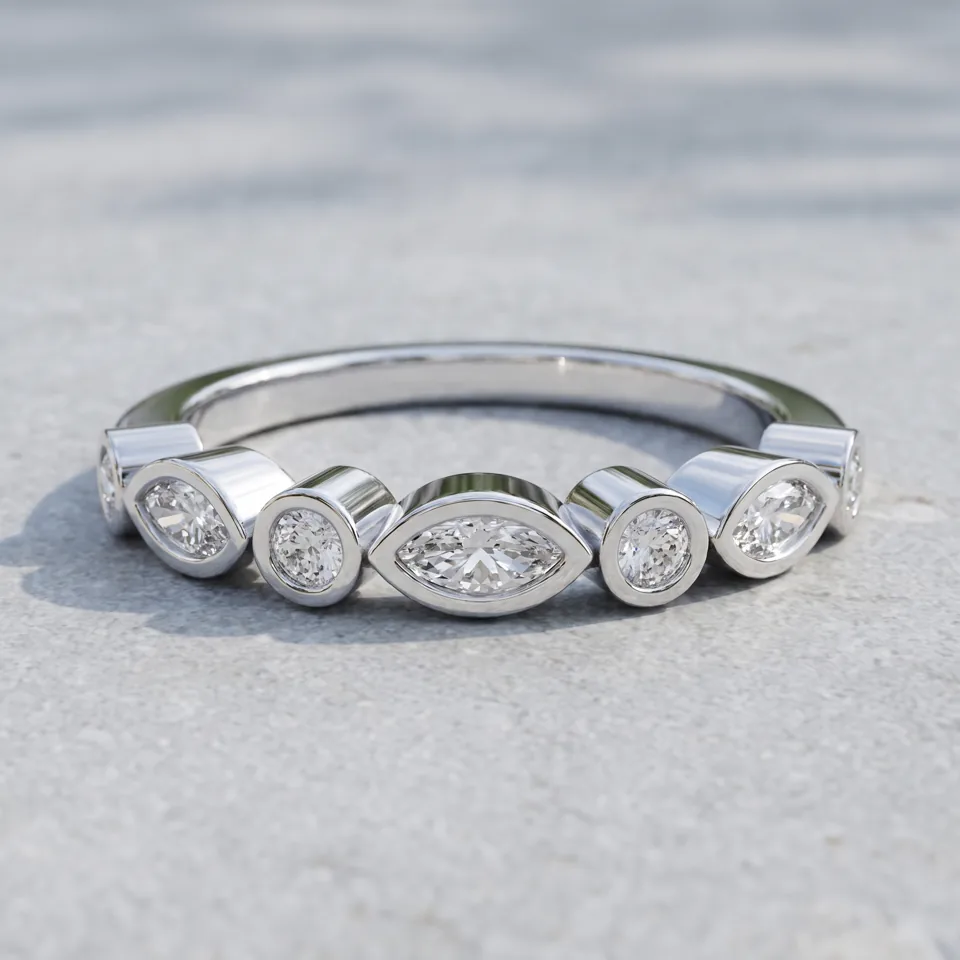 Bezel Set Wedding Bands
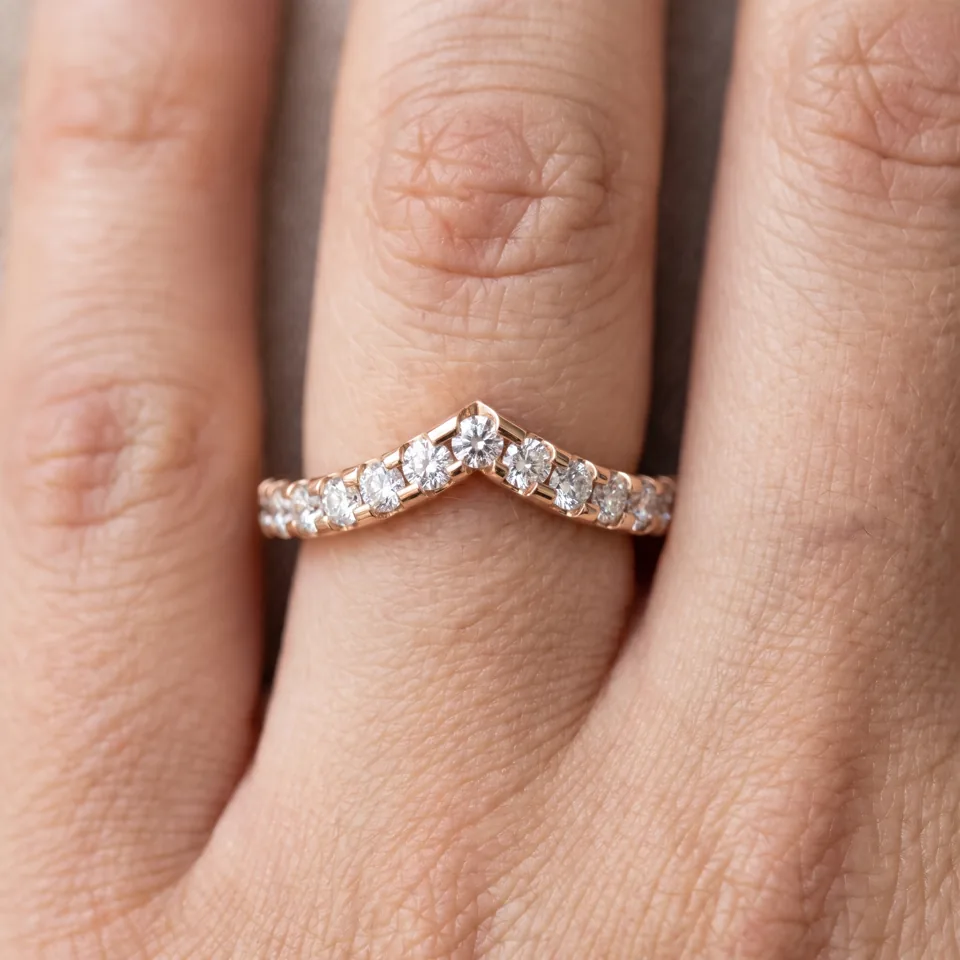 Chevron Wedding Bands
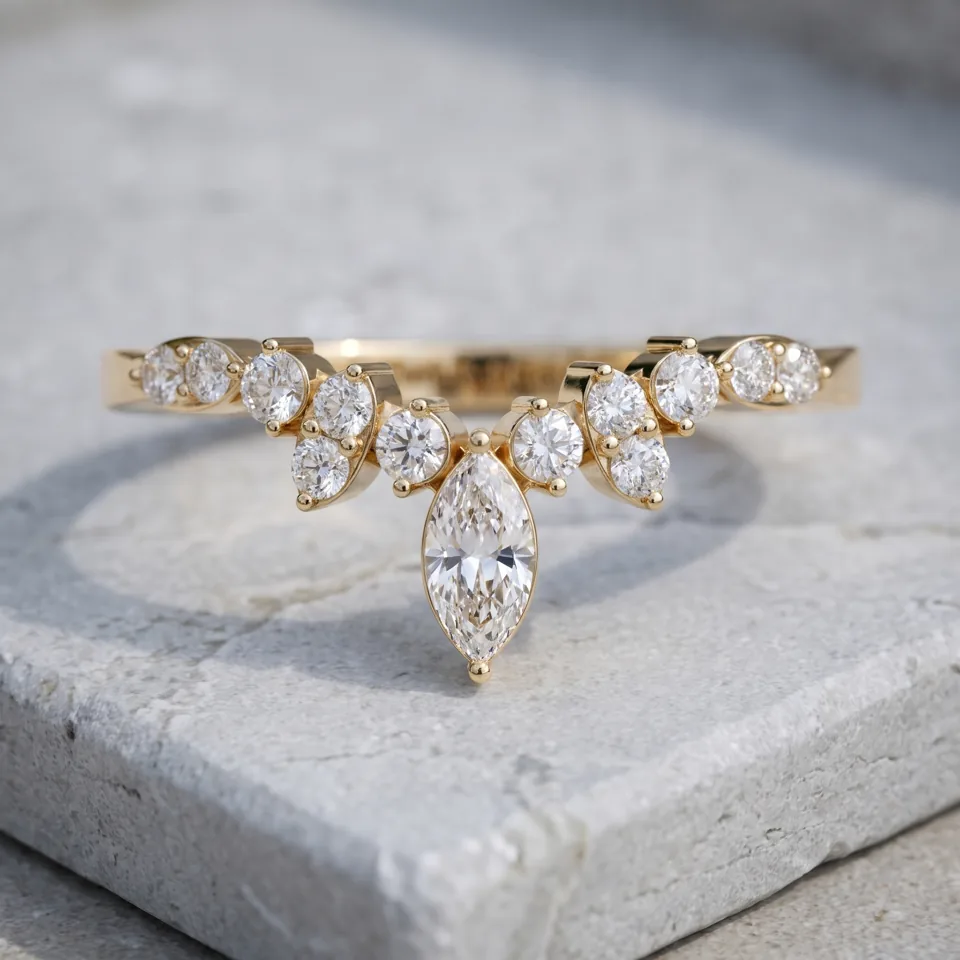 Yellow Gold Curved Wedding Bands
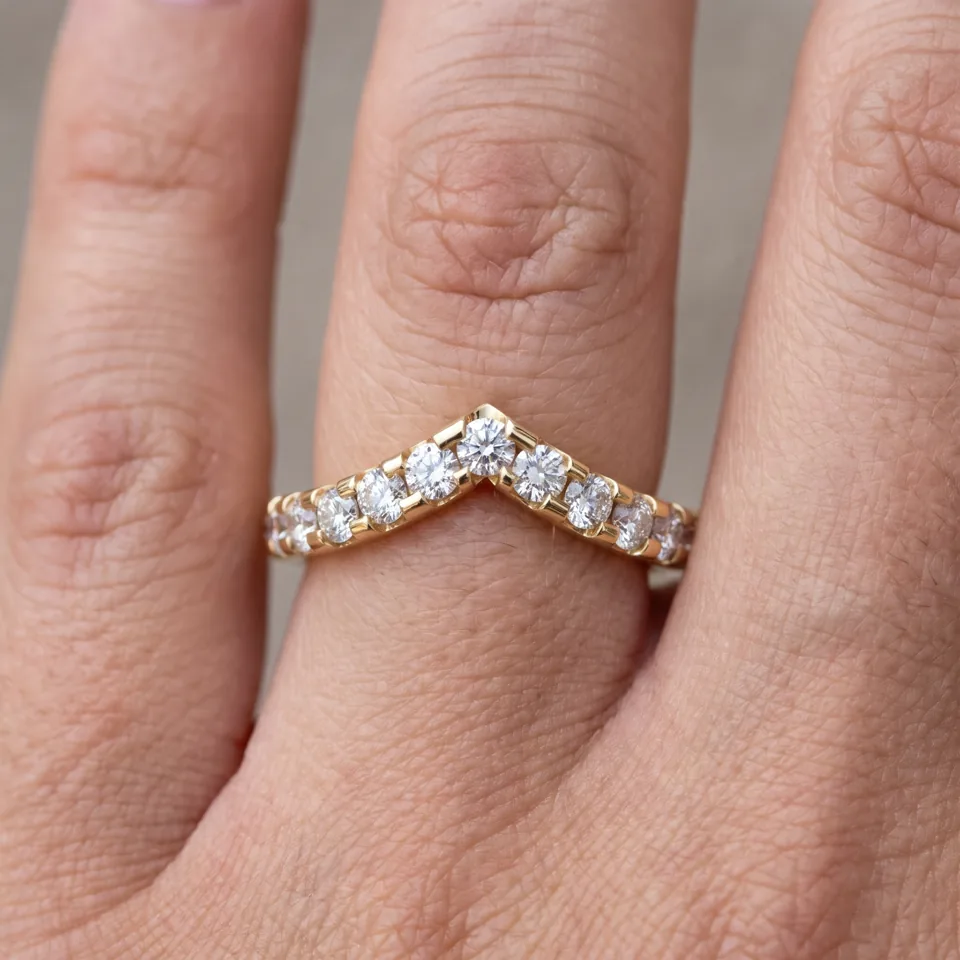 Gold Curved Wedding Bands
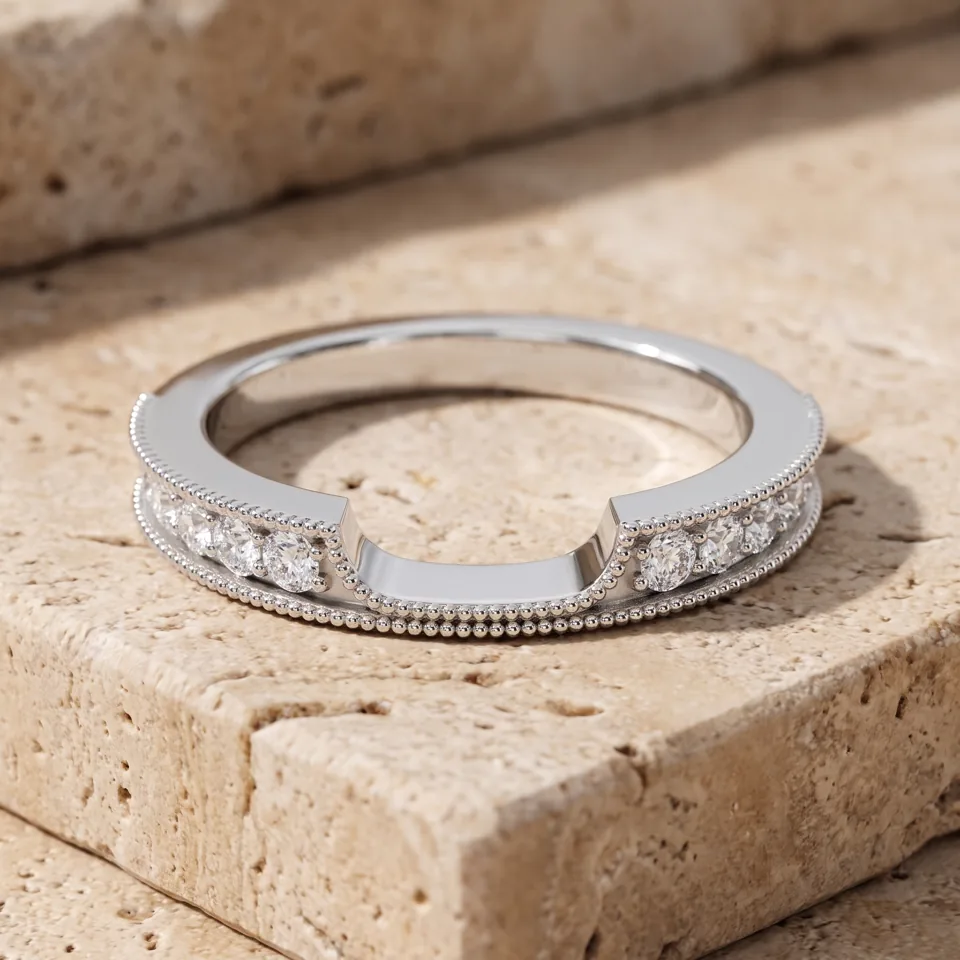 Vintage Curved Wedding Bands
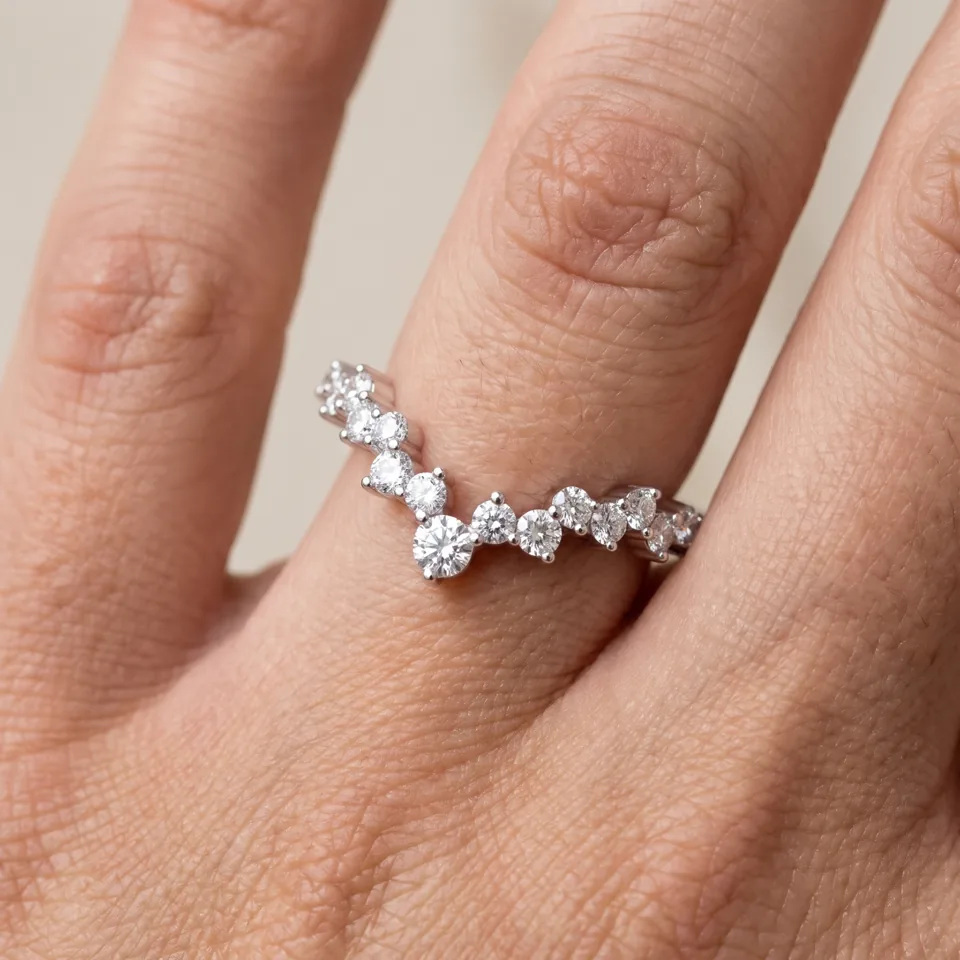 Platinum Lab-Grown Diamond Curved Wedding Bands
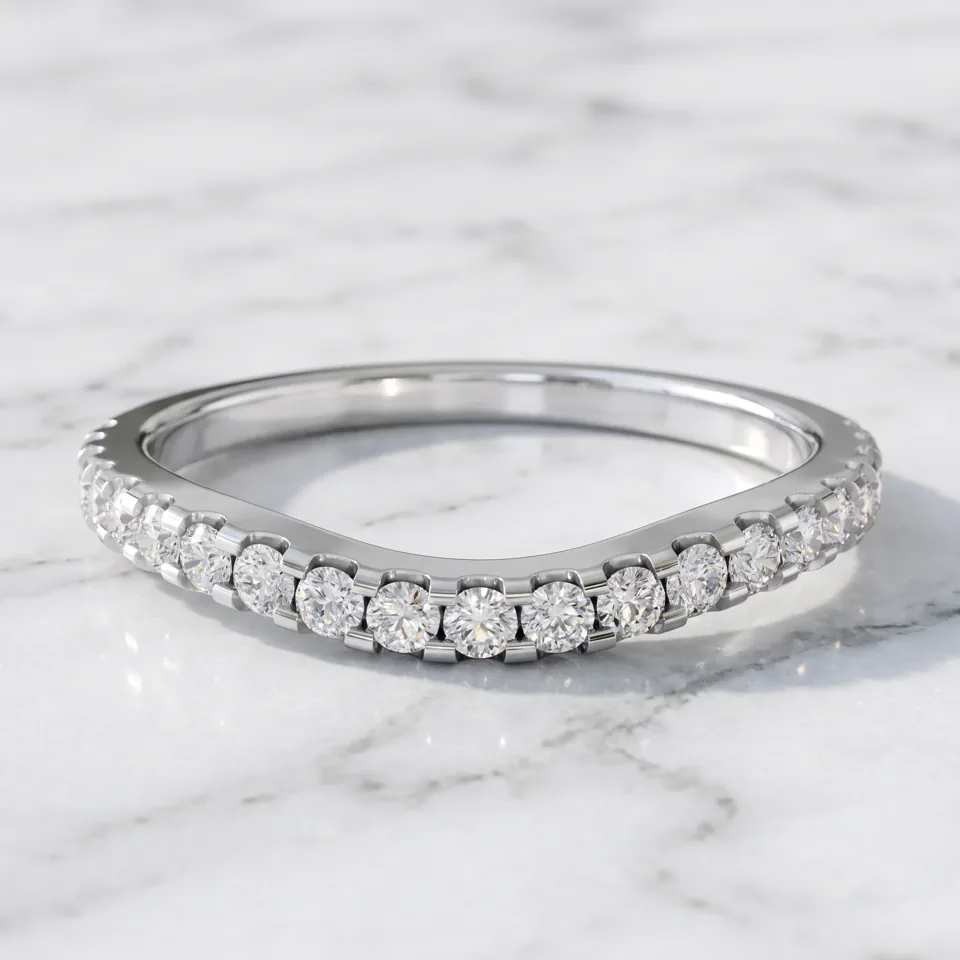 Lab-Grown Diamond Curved Pave Wedding Bands
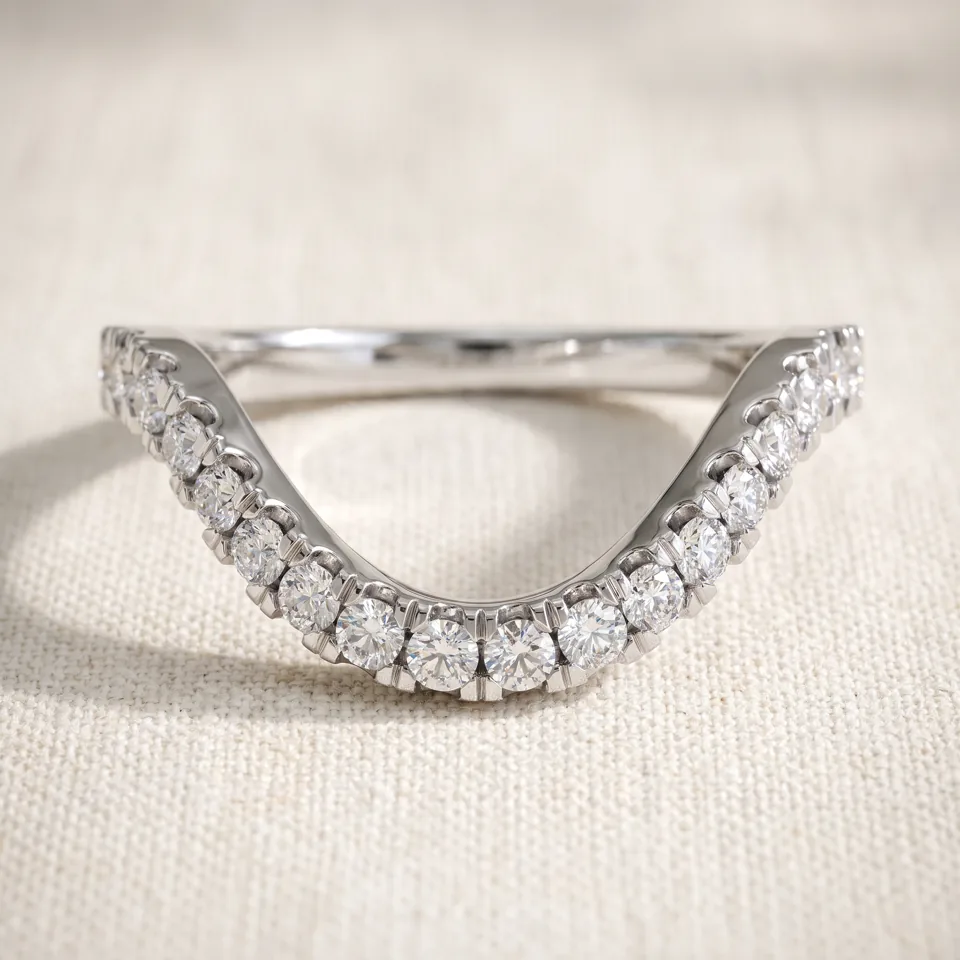 Curved Eternity Bands
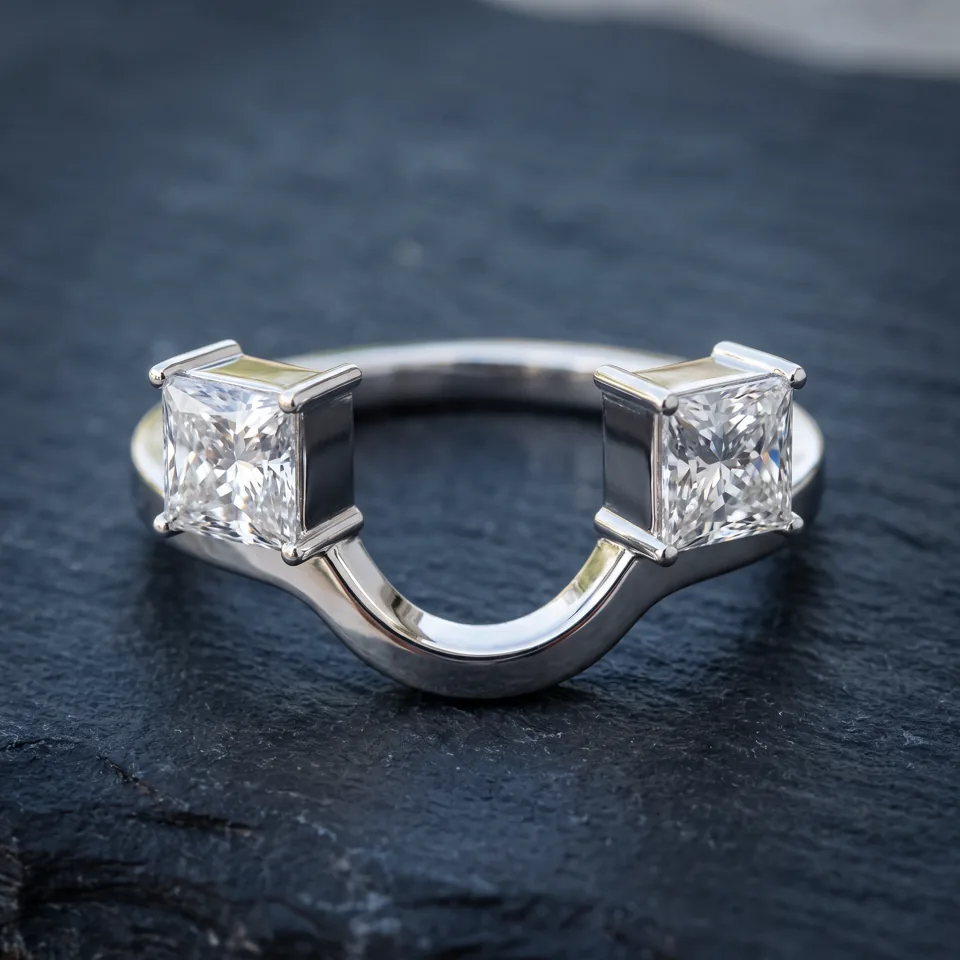 Sterling Silver Lab-Grown Diamond Curved Wedding Bands
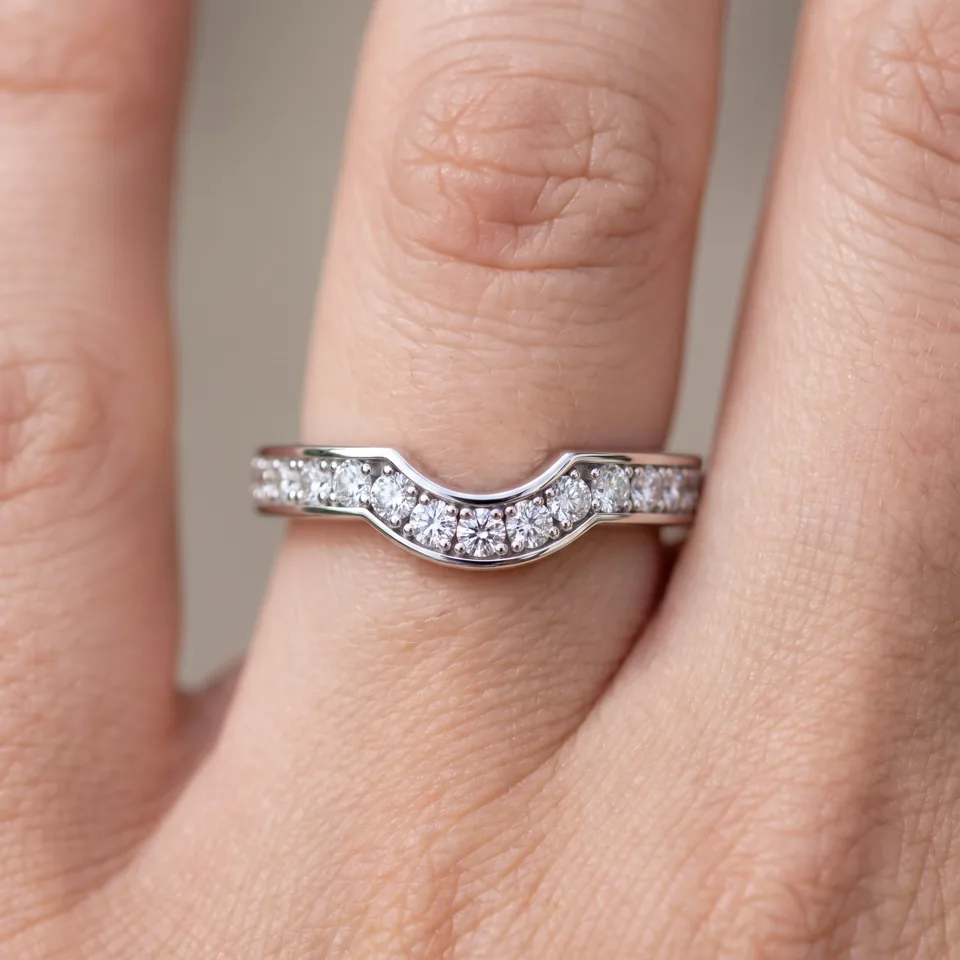 Lab-Grown Diamond Channel Set Curved Wedding Bands
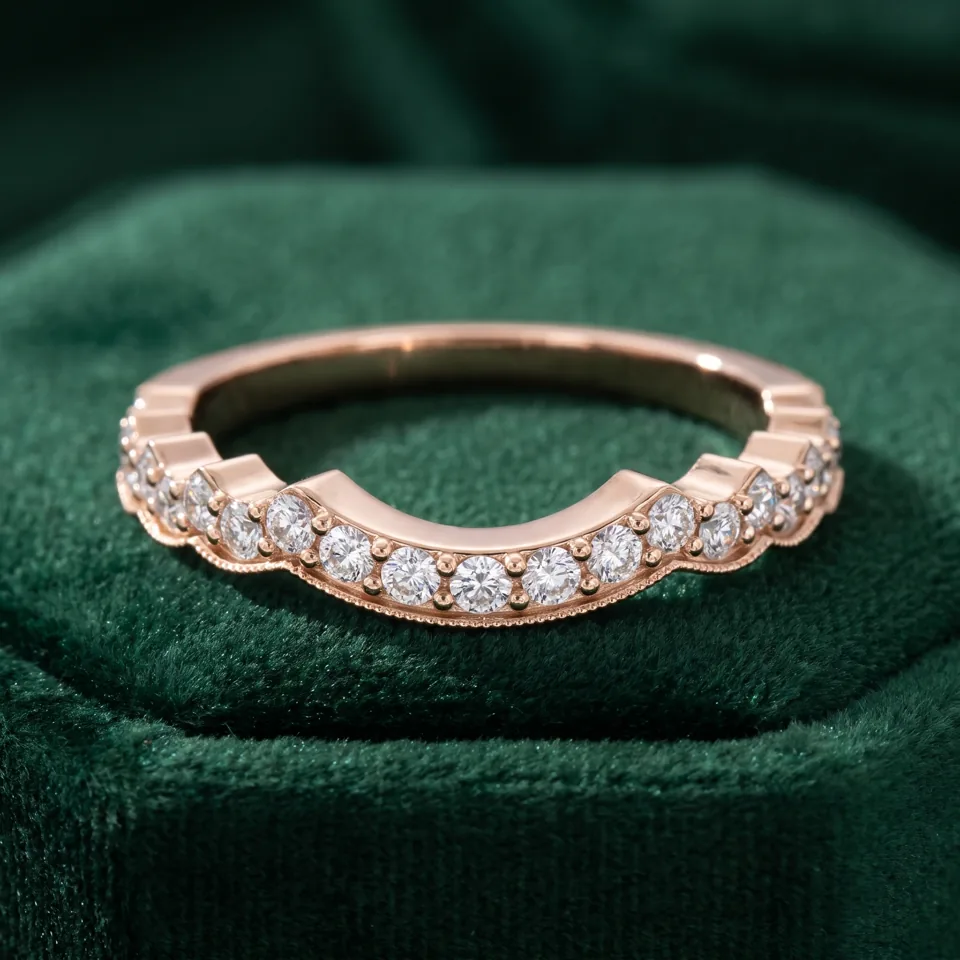 Milgrain Curved Wedding Bands
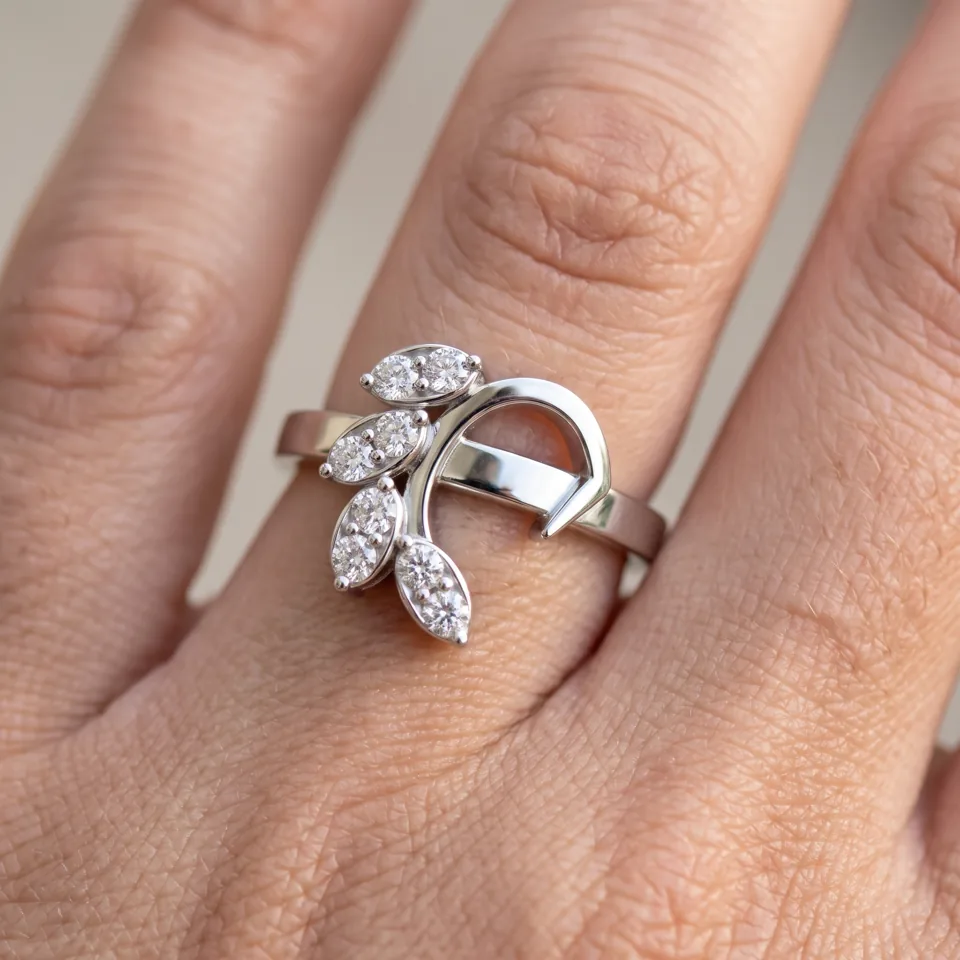 Curved Leaf Wedding Bands
Most bands here dip in a soft arc that clears a raised center. Chevron bands come to a point and pair well with pear, marquise and oval engagement rings. A few open wrap designs leave a gap at the front that frames the center from both sides, and some add marquise lab-grown diamonds at the tips. Leaf, floral and twist motifs show up on a handful of bands for a more romantic set.
Compare the shape of your engagement ring's head with the dip of the band. A wide halo needs a deeper, broader curve; a slim solitaire needs only a shallow one. Look at the profile, too: a low-set center may sit flush with almost any curve, while a tall head leaves room underneath. If in doubt, choose a slightly deeper curve, which still looks intentional when worn alone. For more pairing ideas, see our guide to wedding bands for a solitaire.
On most bands the lab-grown diamonds stop halfway around, in pavé or shared prongs, which leaves the back plain and comfortable. Most designs offer 0.25, 0.35 or 0.5 carat total weight; some go to 0.75 carat total weight. Higher weights mean larger stones along the curve rather than more of the band covered.
Pick the same metal as your engagement ring, since two metals rubbing together wear at different rates. Choose white, yellow or rose gold (10K, 14K or 18K), platinum, or Silvadium, a tarnish-resistant sterling silver. Bands start under $200, and most are about $600 to $750 at their smallest weight.
We craft your band after you order, in 10–15 days, and send it with free insured shipping both ways. You can return it within 30 days, and one free resize within 60 days of delivery is included.
It is most often called a contour band, and you will also see the names notched band, shadow band or chevron band for the pointed versions. All of them describe a band shaped to follow an engagement ring's outline. Ours are set with lab-grown diamonds, and you can choose anything from a soft arc to a V-shaped dip depending on the ring you are pairing it with.
It lets the wedding band sit tight against an engagement ring whose head or halo is too wide or low for a straight band. Without the curve, a gap opens between the two rings and they can twist apart. The curve also makes the pair look like one design. Many people also like the shape on its own, especially chevron styles set with lab-grown diamonds.

