Complimentary insured shipping, both waysEngagement ring diamonds certified by IGI or GIAGrown by light. Conflict-free by natureComplimentary insured shipping, both ways
Engagement RingsWedding BandsEarrings

NecklaceBraceletsAbout
White gold rings give a bright, cool frame that makes a colorless center look whiter. All of these are white gold engagement ring settings: you choose the design and the karat now, and pick the center diamond in the next step.
Most settings accept ten center shapes, round, oval, emerald, pear and heart among them, so you can start from the shape or from the band.
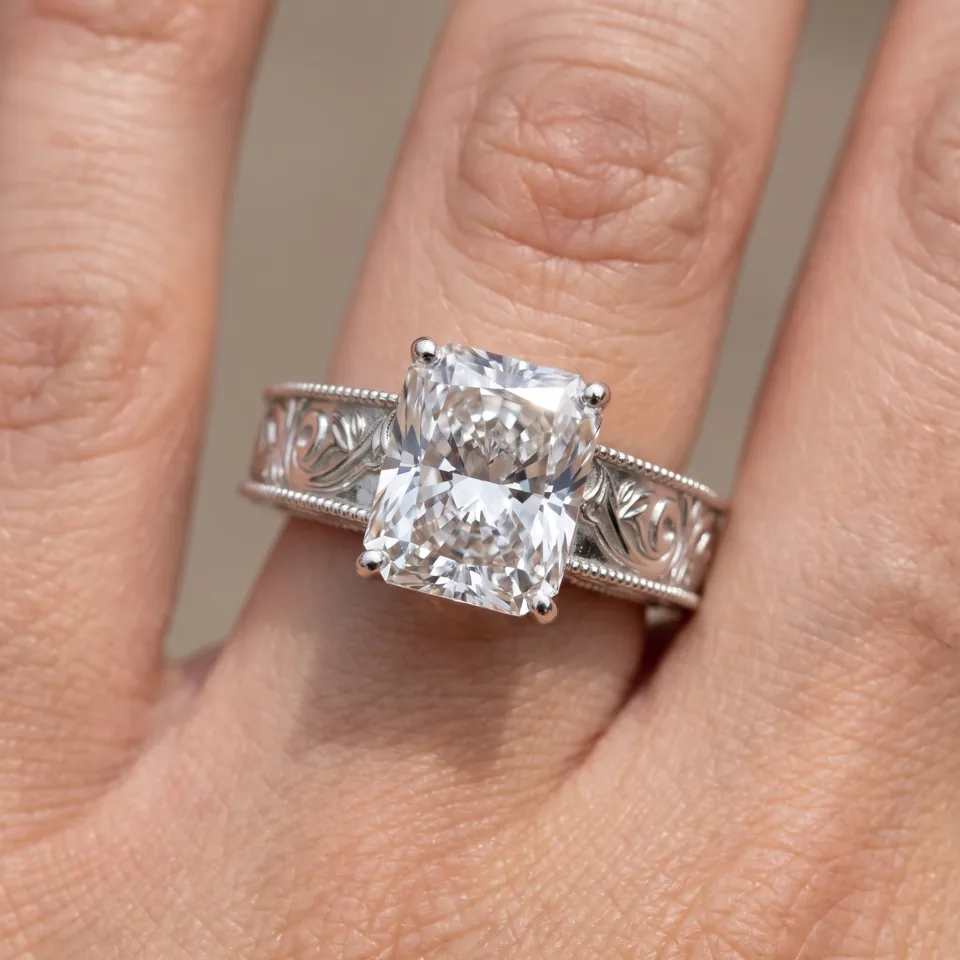 Vintage White Gold Engagement Rings
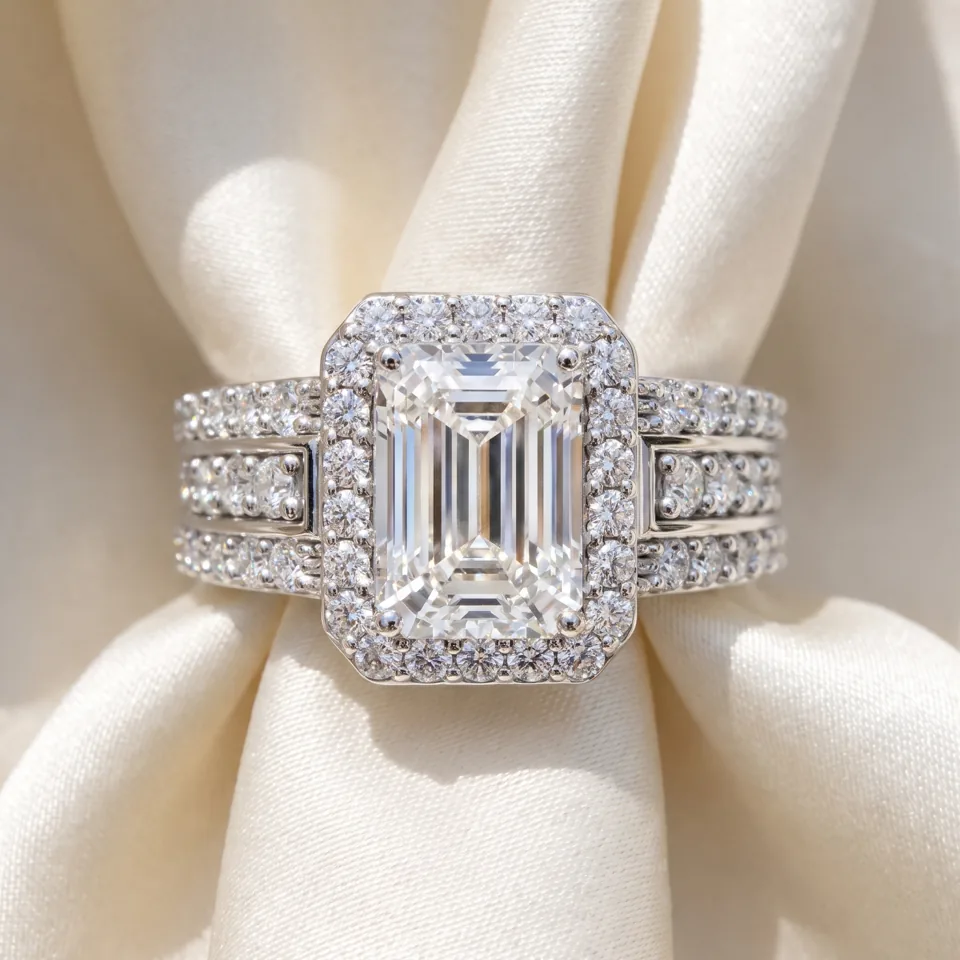 White Gold Halo Engagement Rings
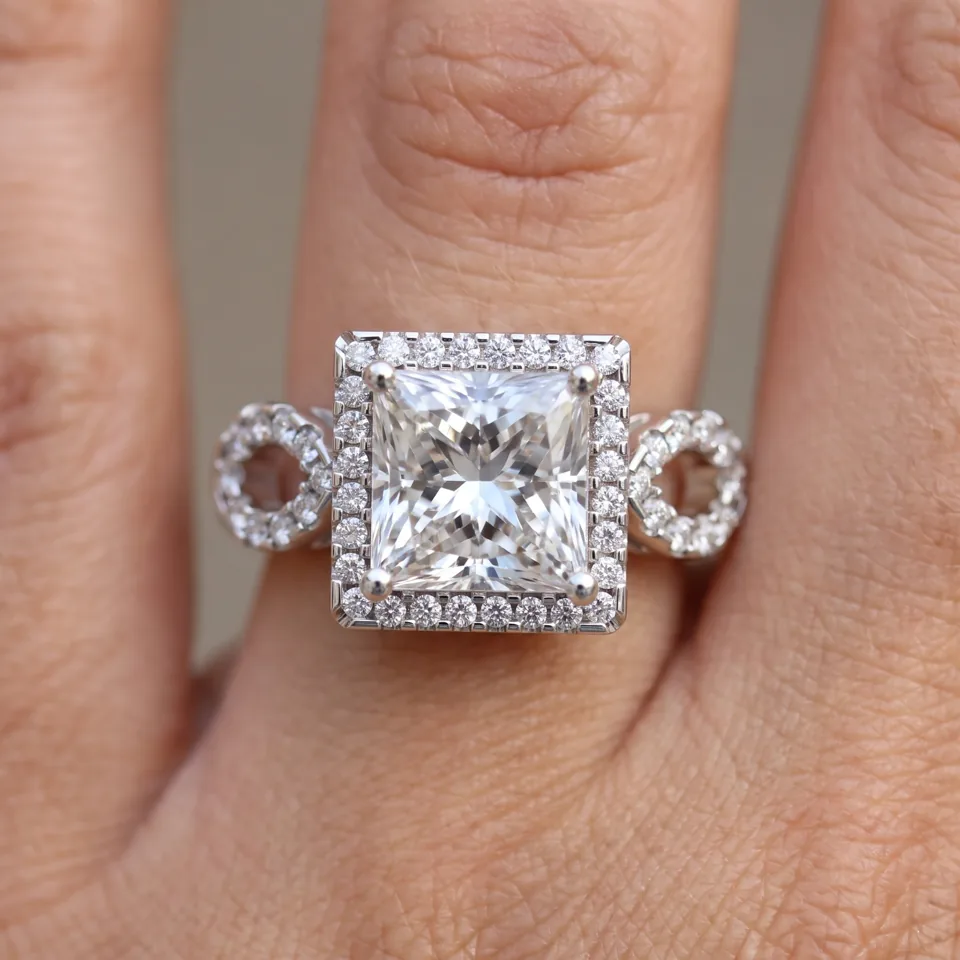 White Gold Infinity Rings
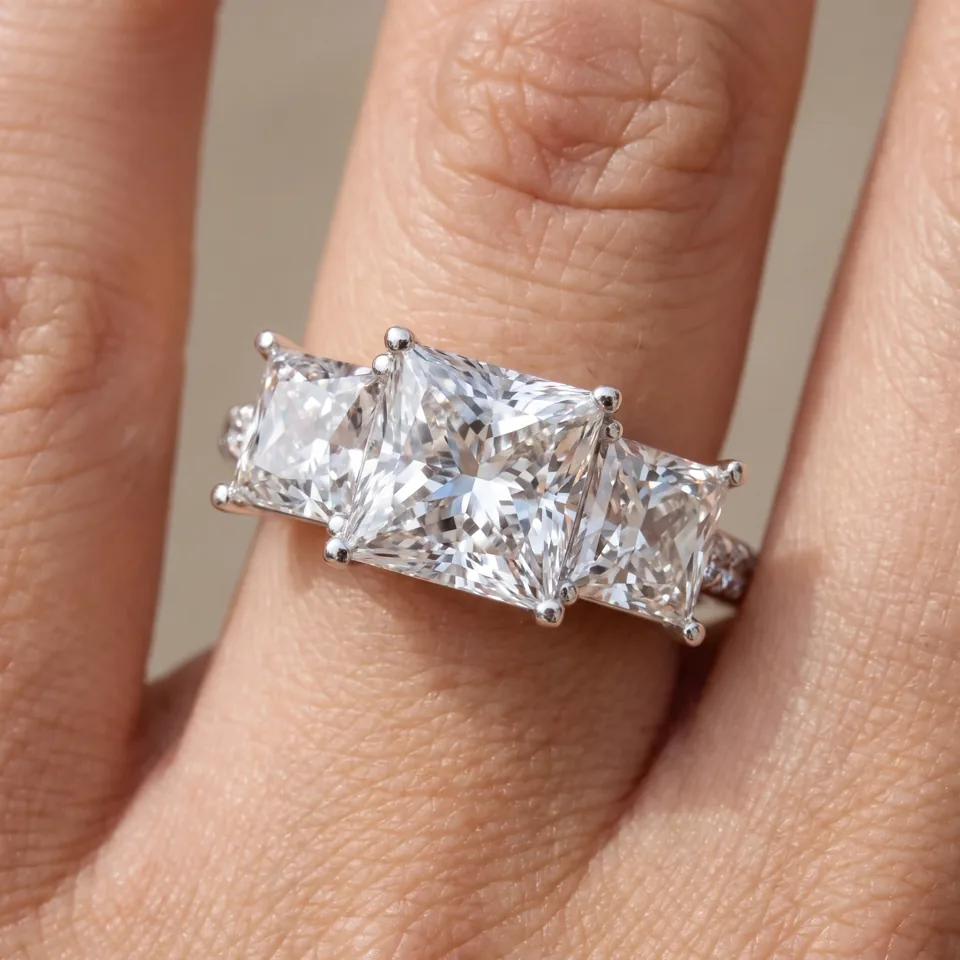 White Gold Three Stone Engagement Rings
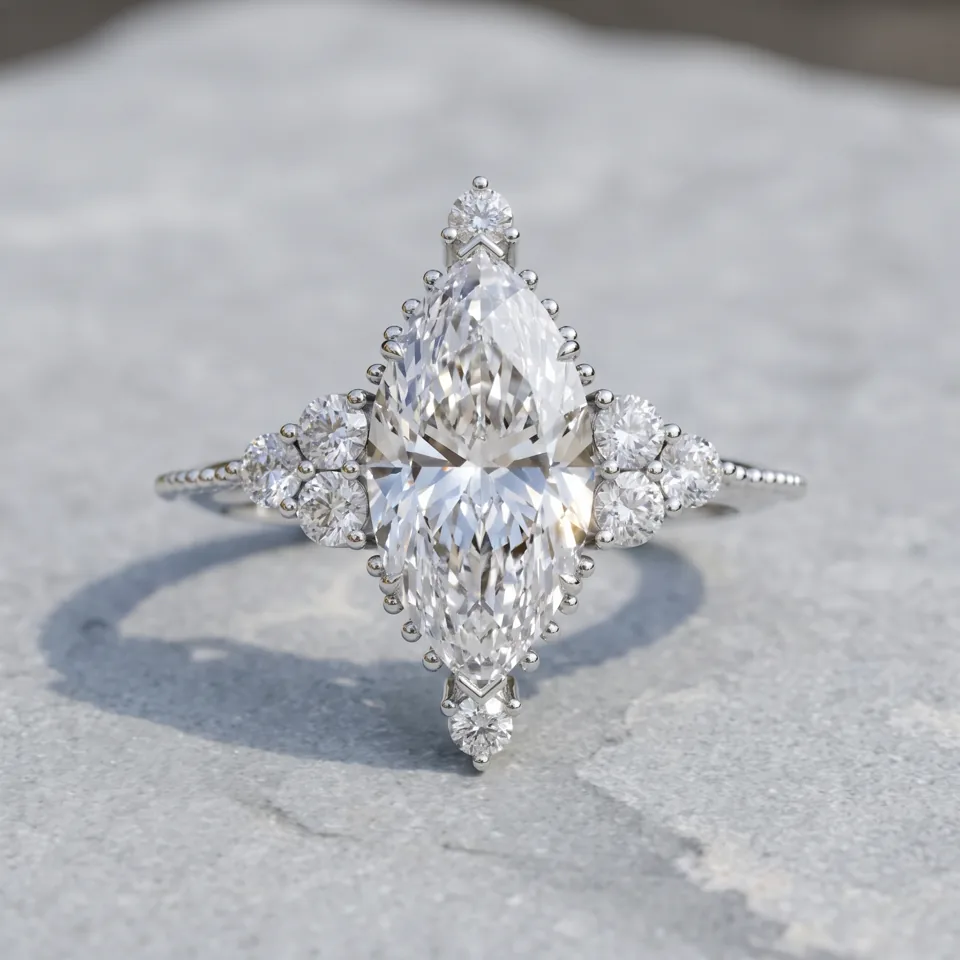 White Gold Cluster Rings
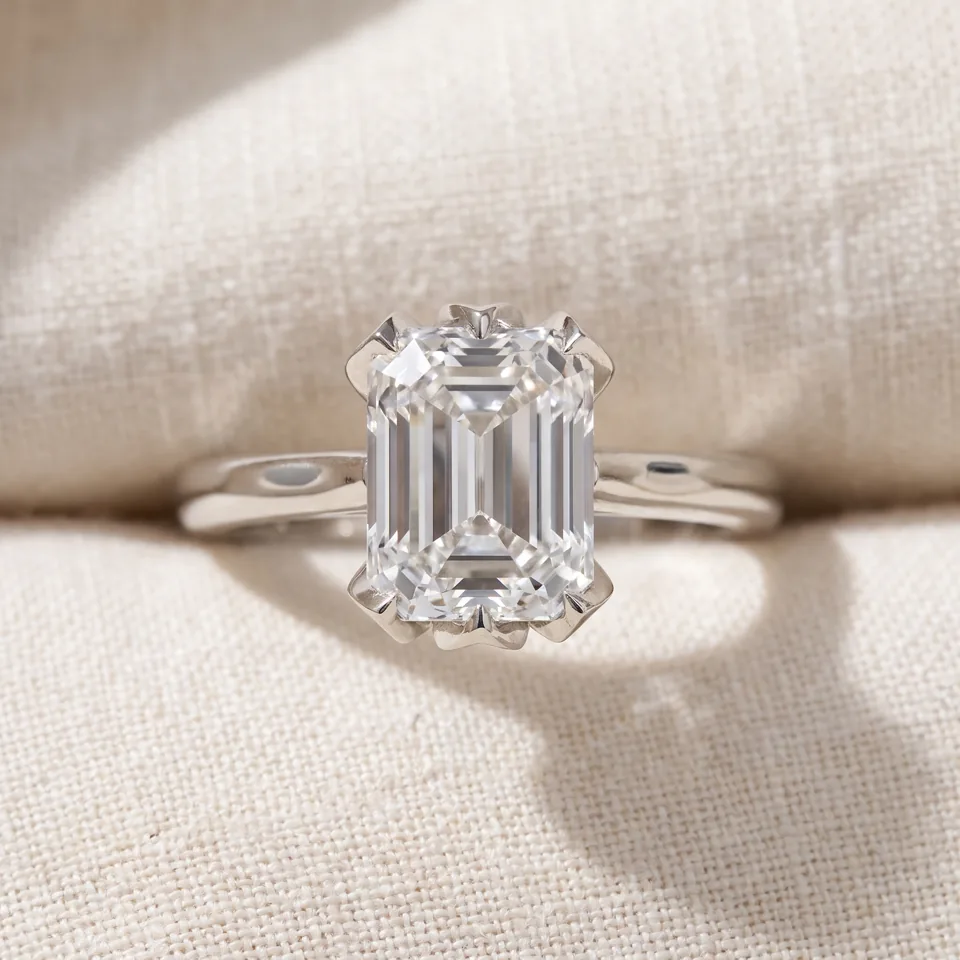 White Gold Floral Rings
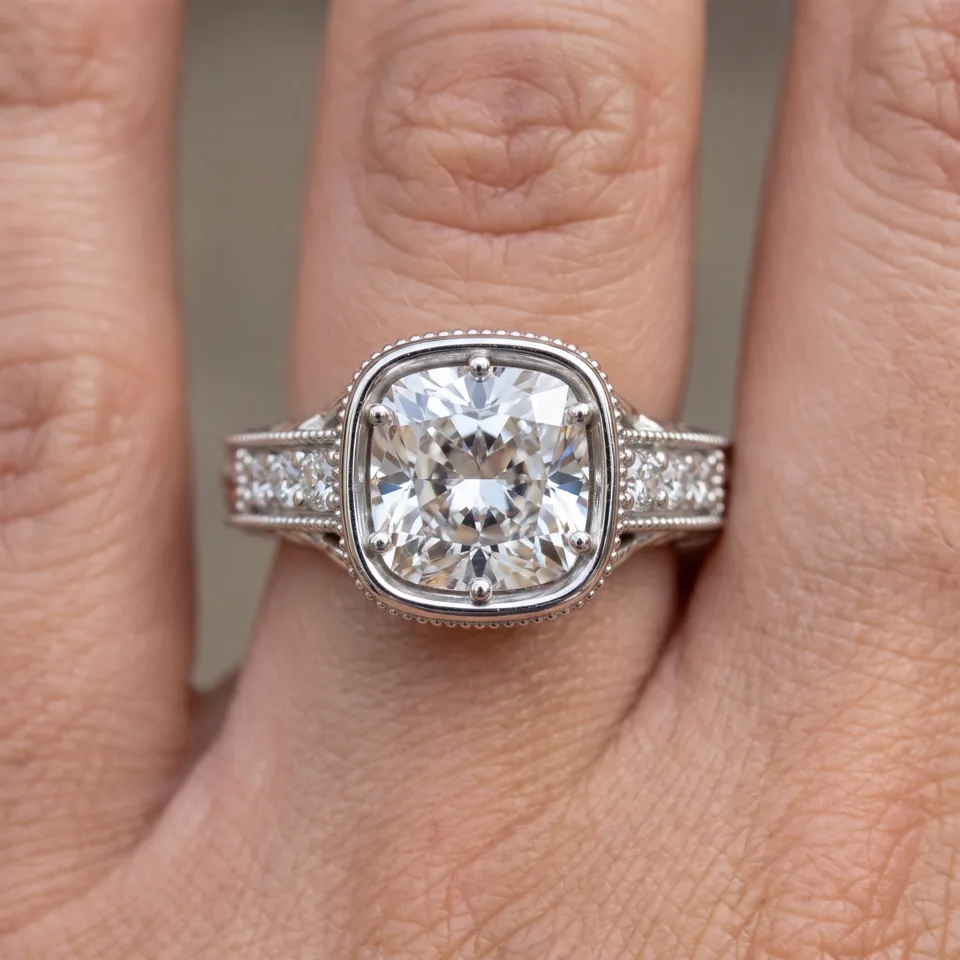 White Gold Bezel Engagement Rings
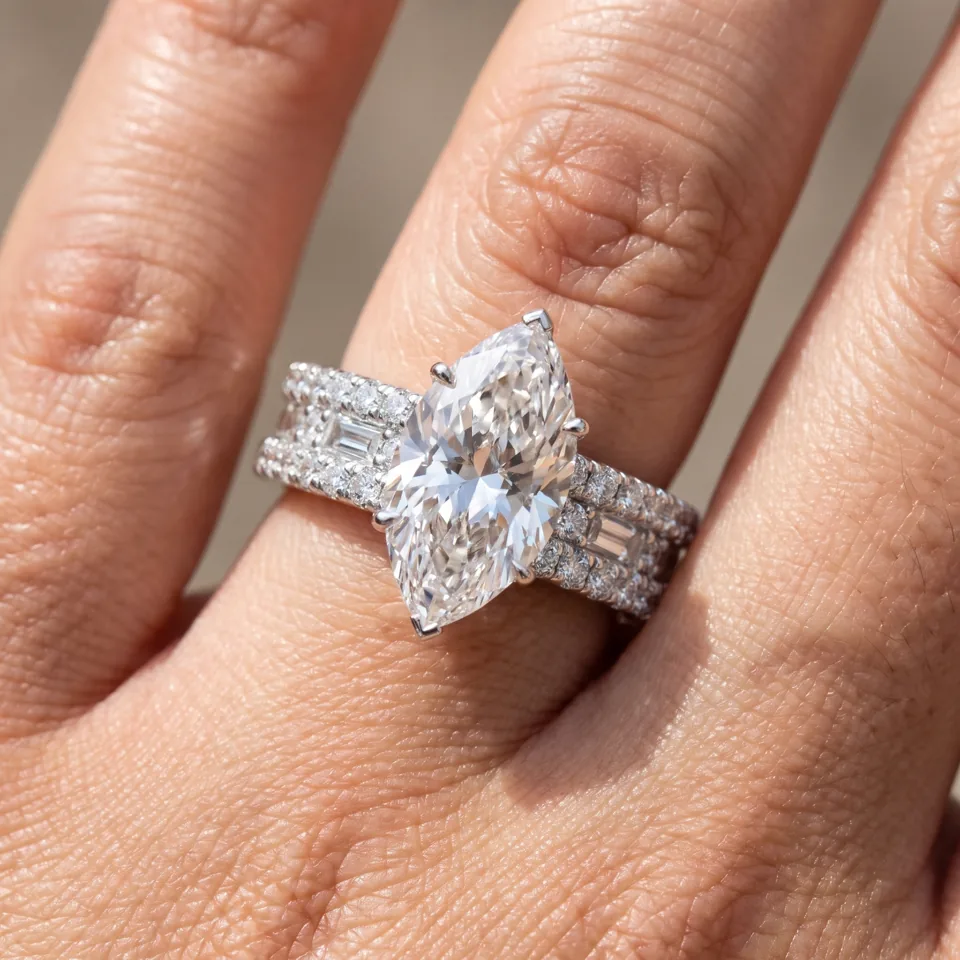 White Gold Baguette Diamond Rings
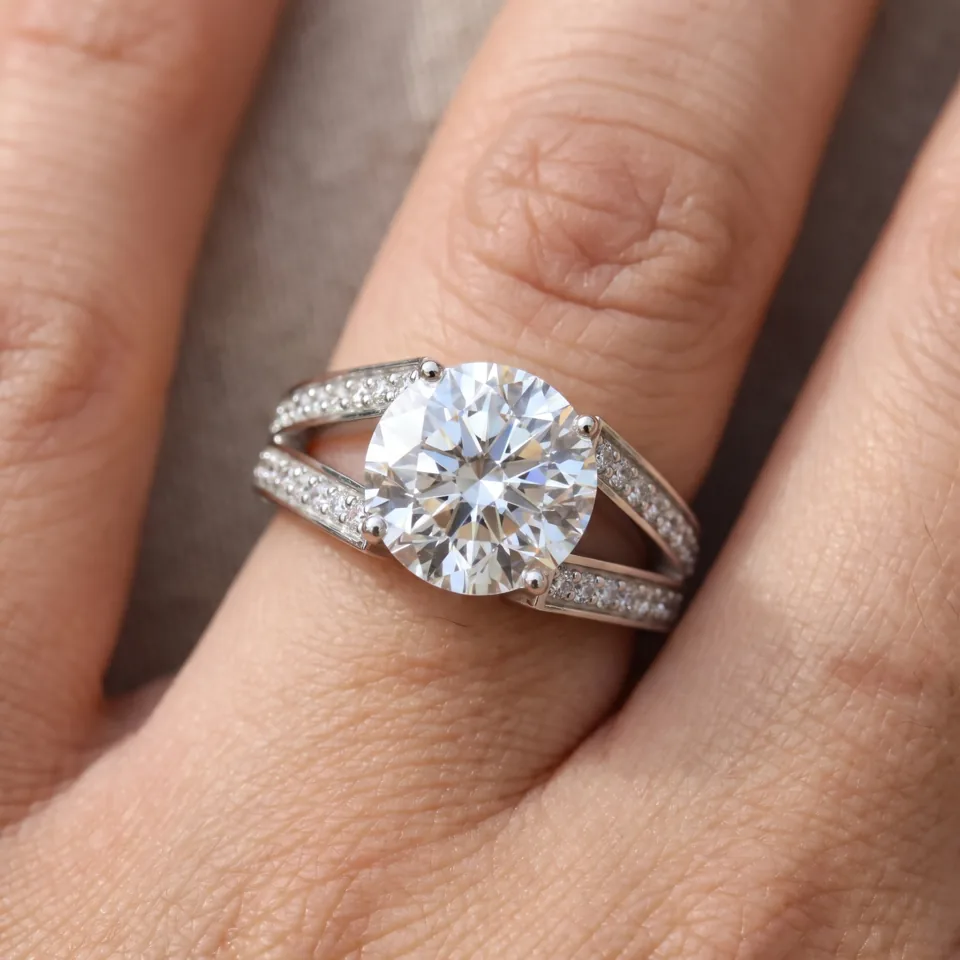 White Gold Engraved Rings
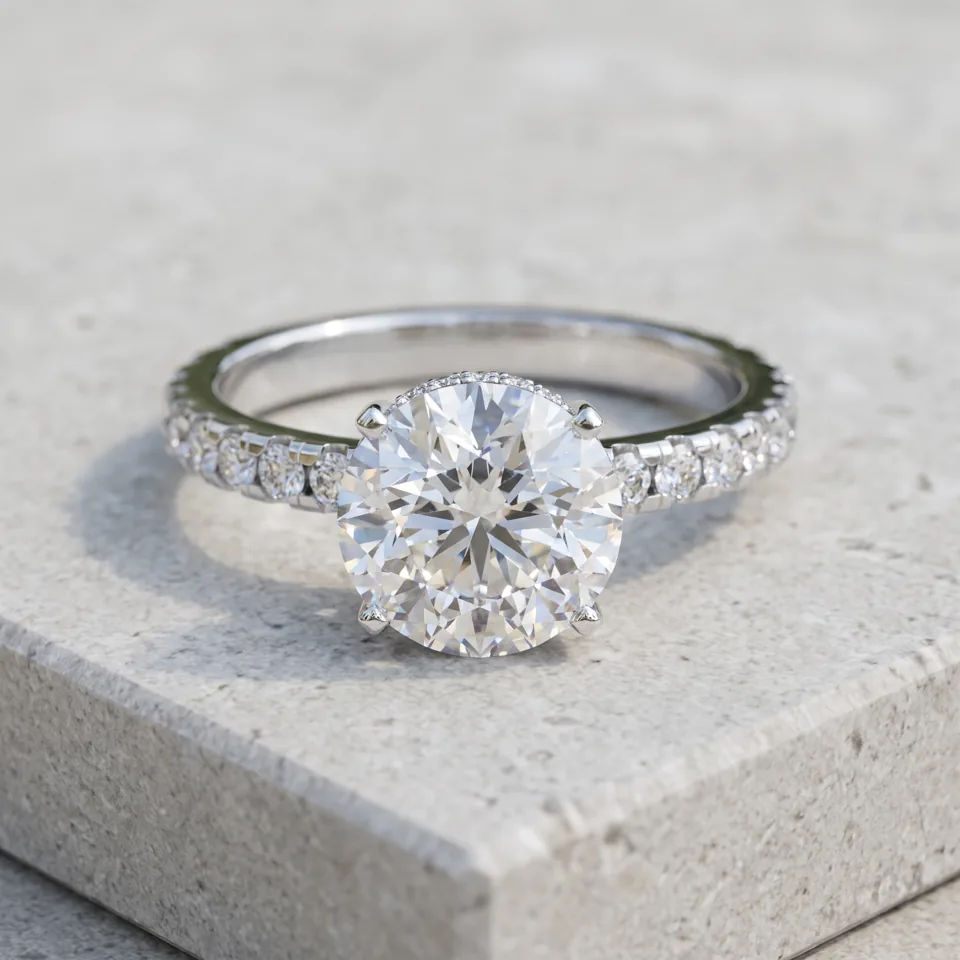 White Gold Pave Rings
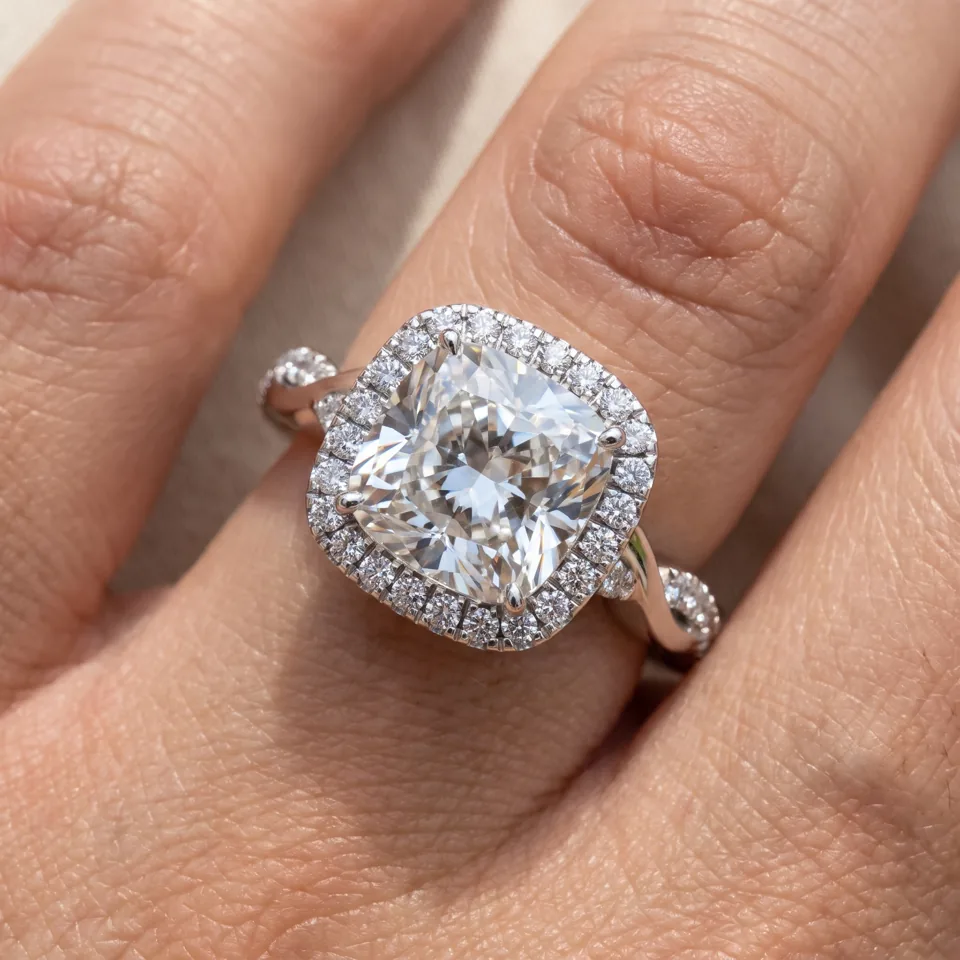 Twisted White Gold Rings
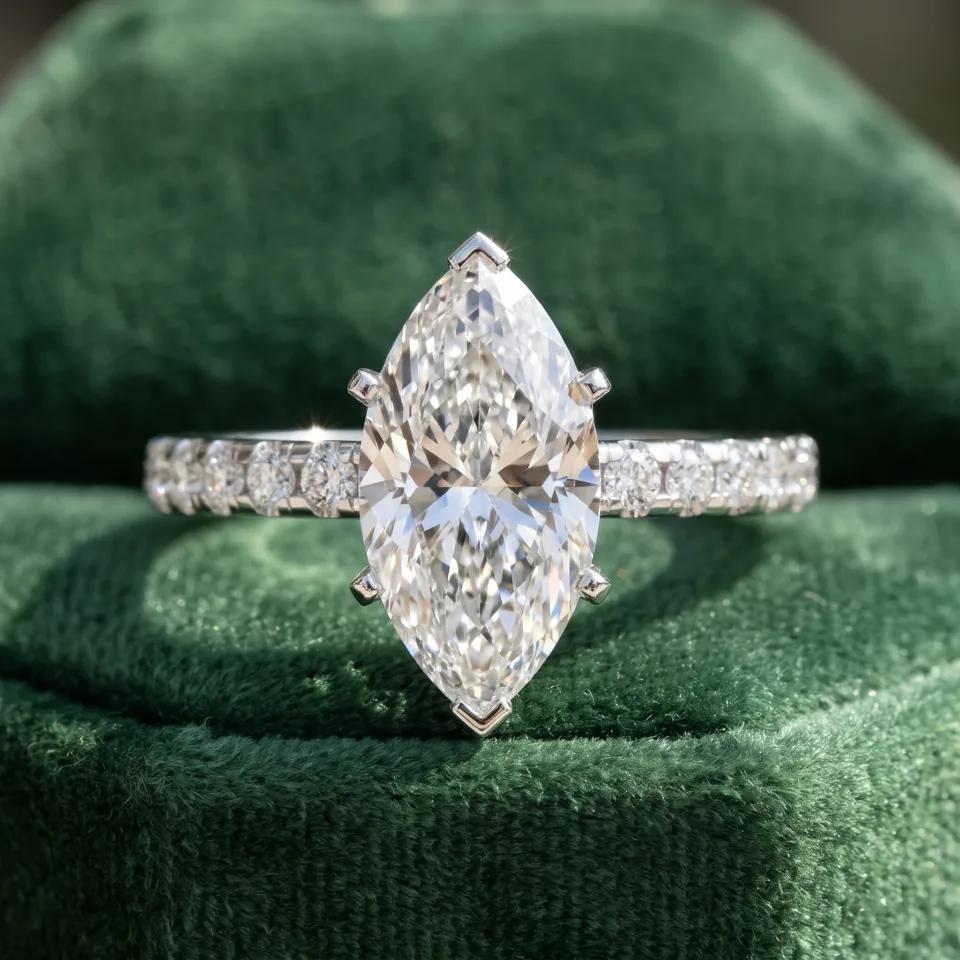 White Gold Hidden Halo Engagement Rings
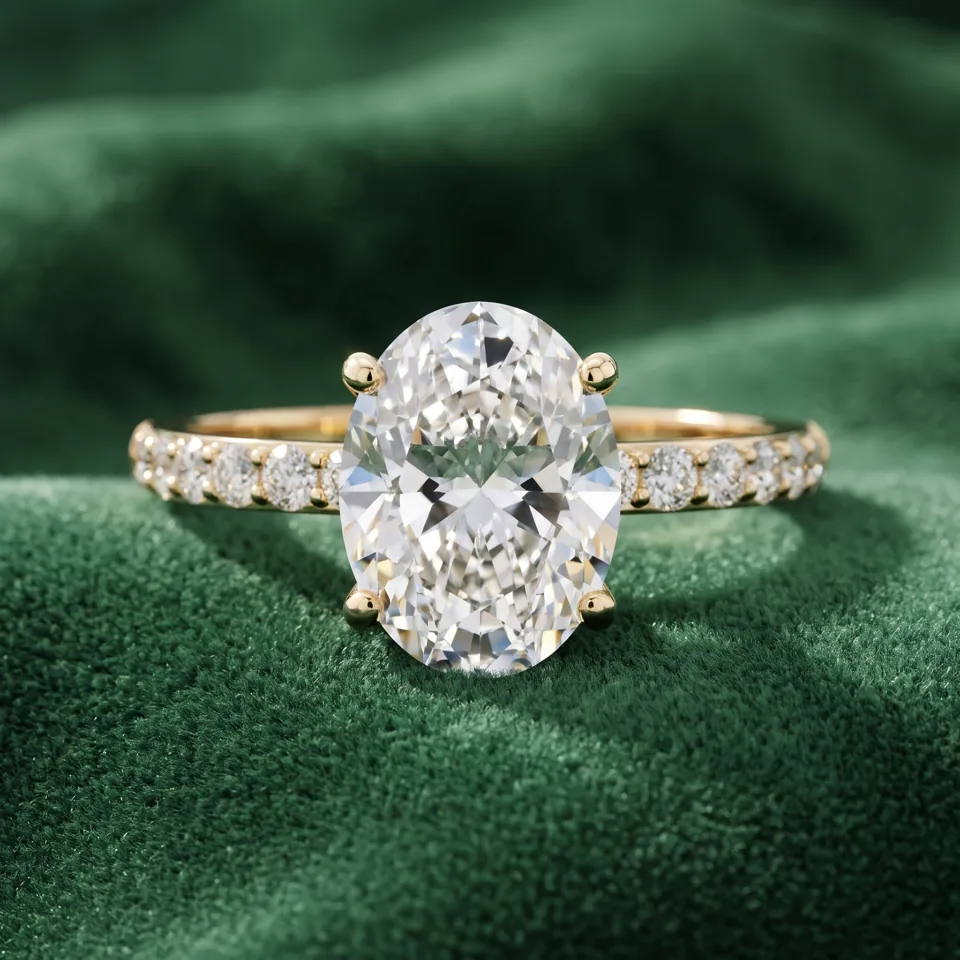 Gold Rings
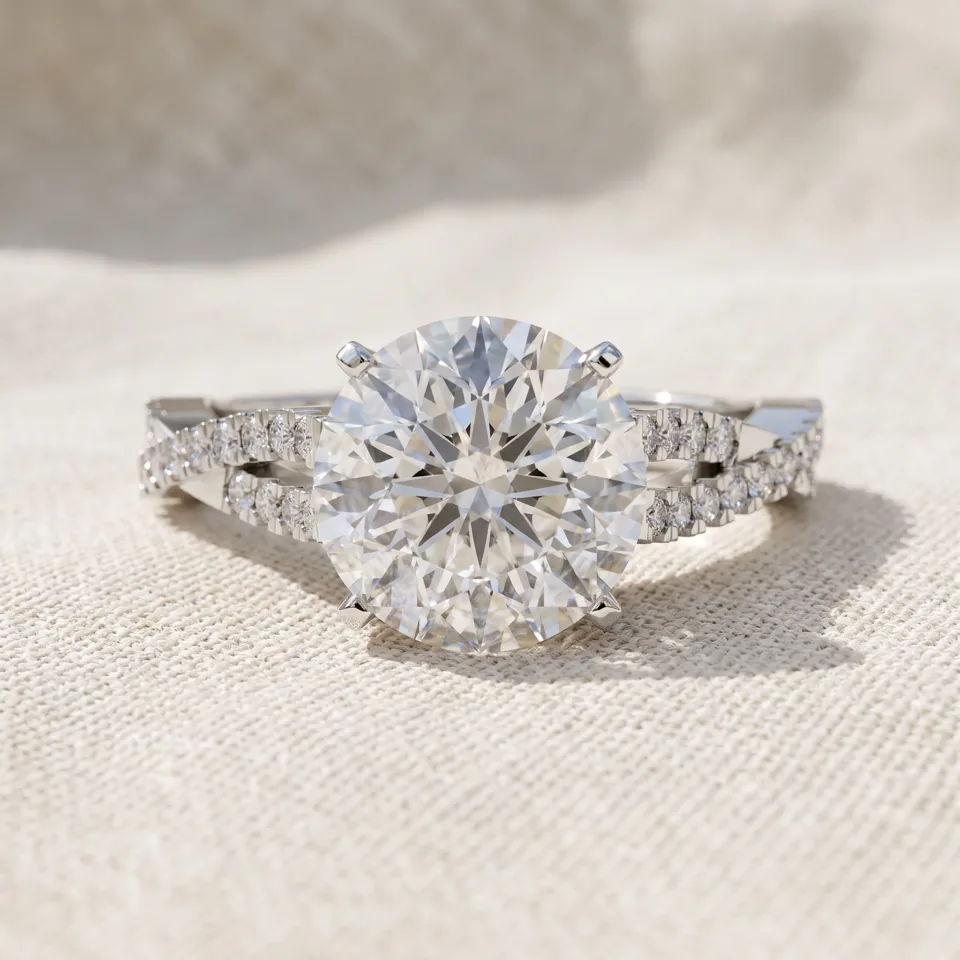 Sterling Silver Engagement Rings
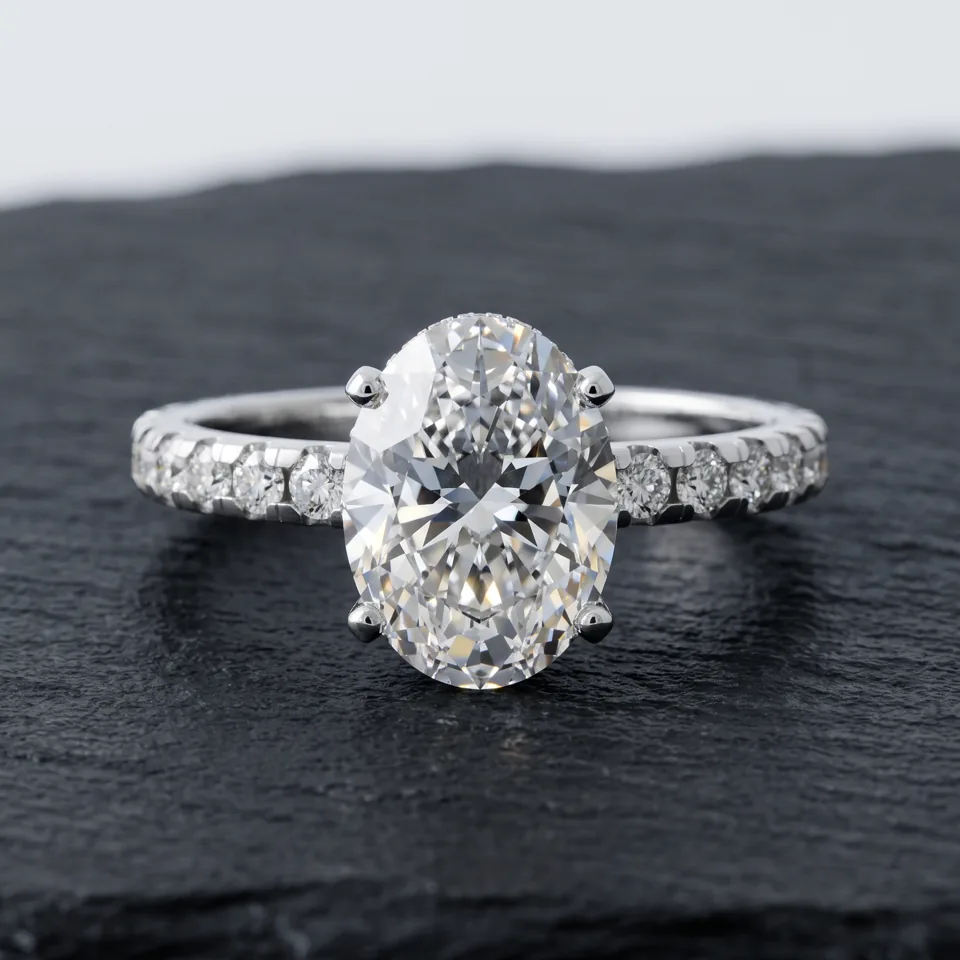 Platinum Engagement Rings
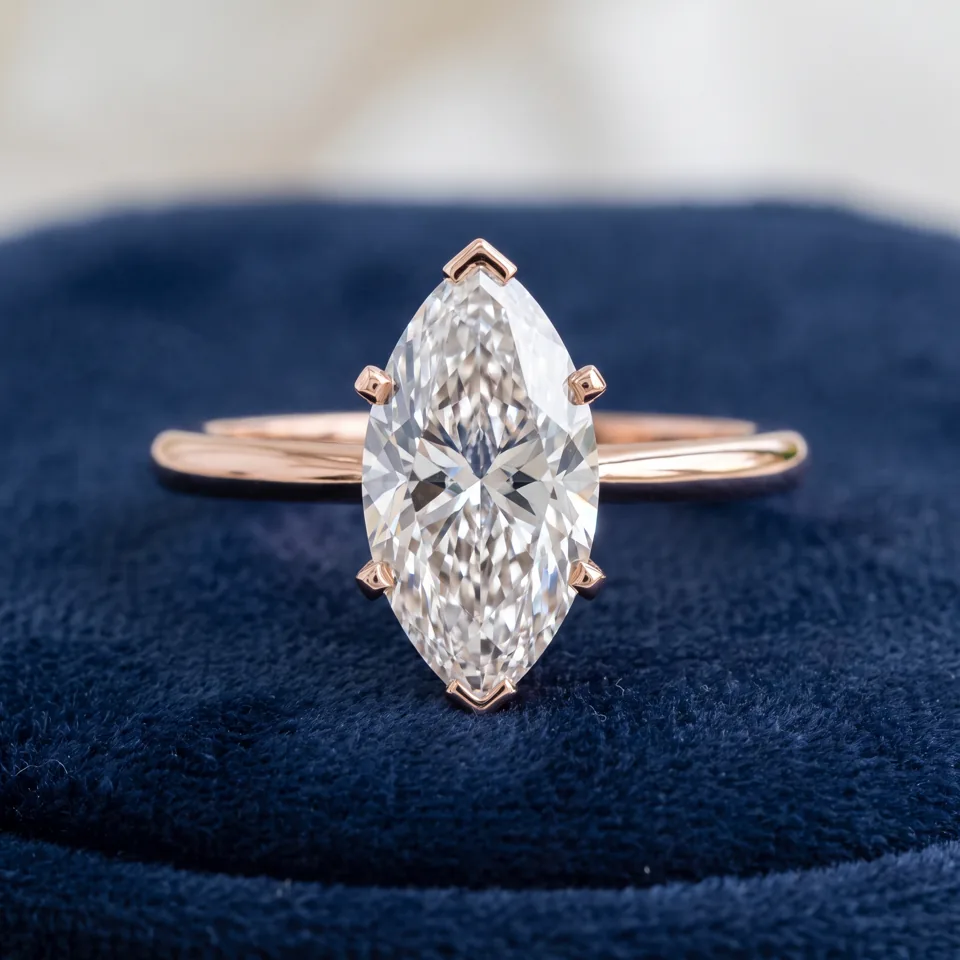 Rose Gold Engagement Rings
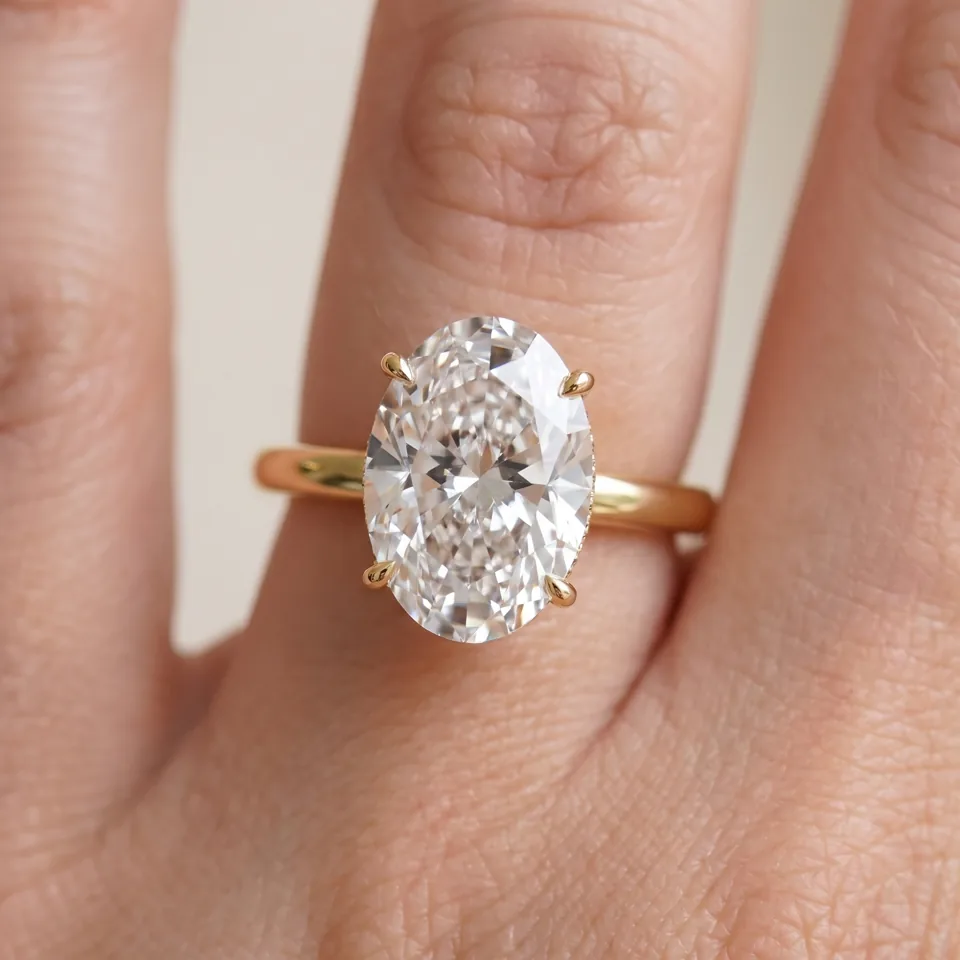 Yellow Gold Diamond Engagement Rings
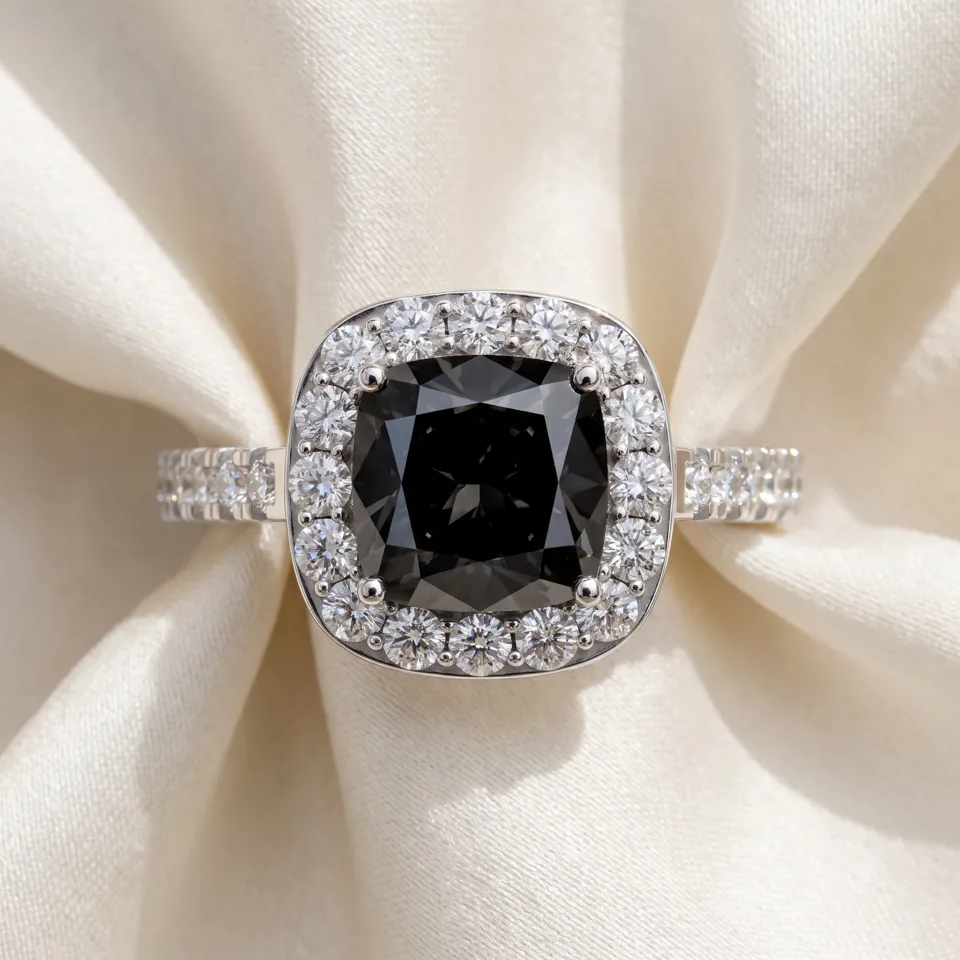 White Gold Black Diamond Rings
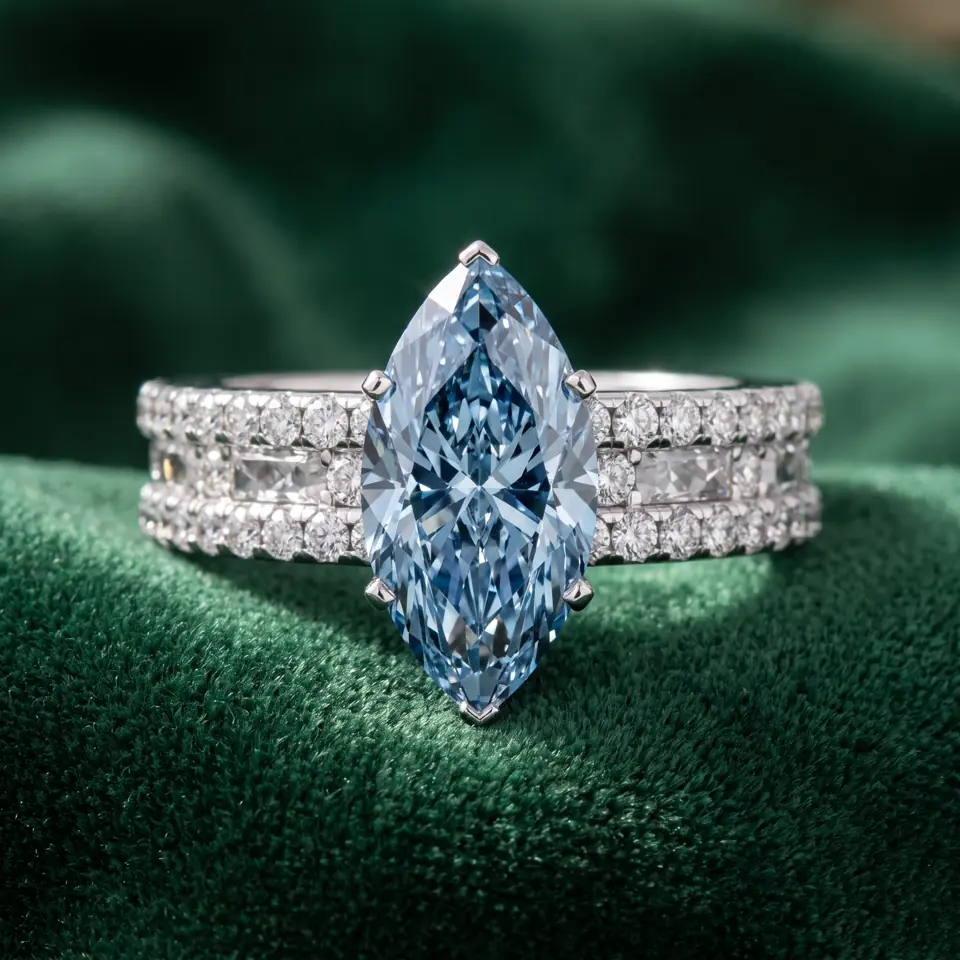 Blue Diamond Rings in White Gold
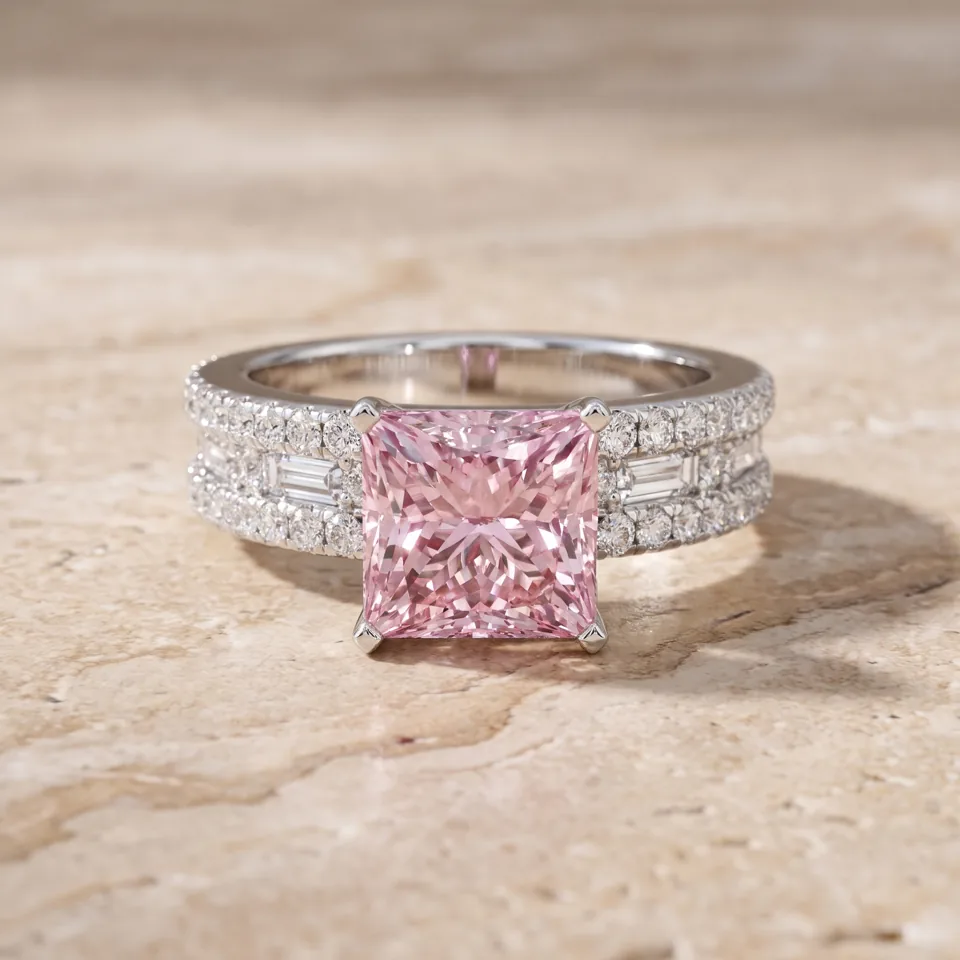 White Gold Pink Diamond Rings
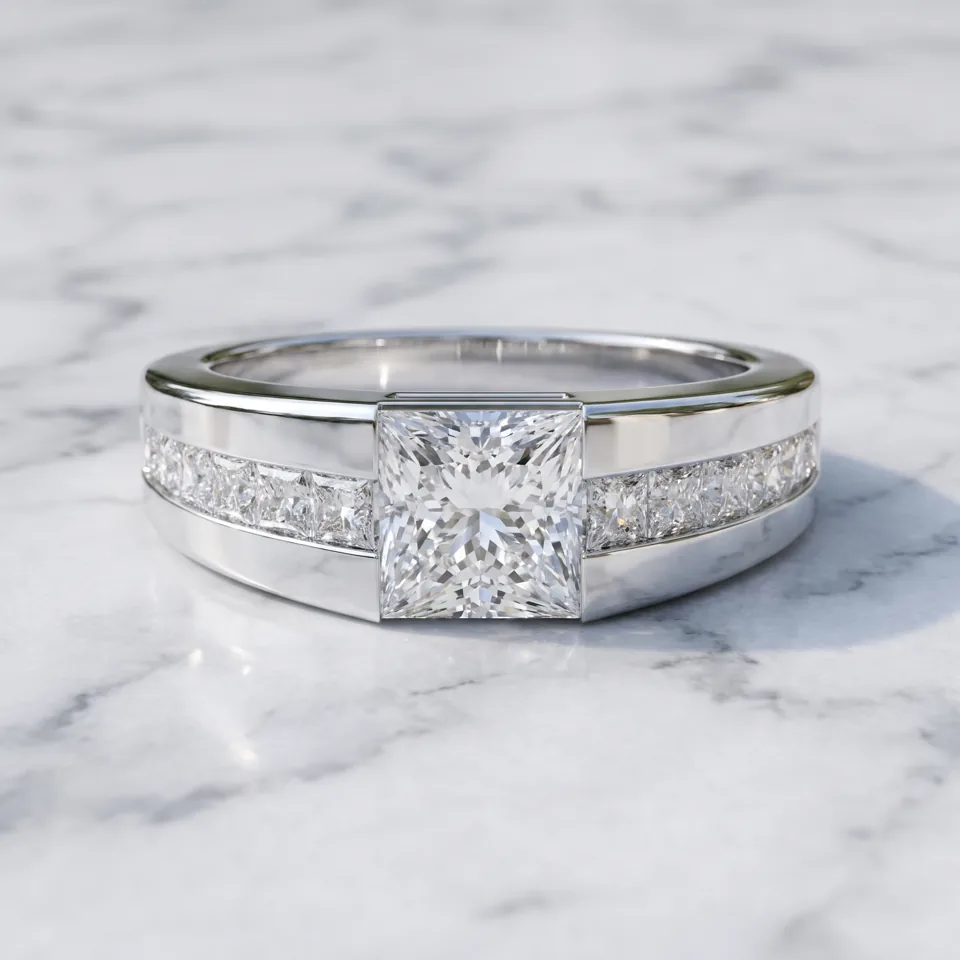 White Gold Men's Engagement Rings
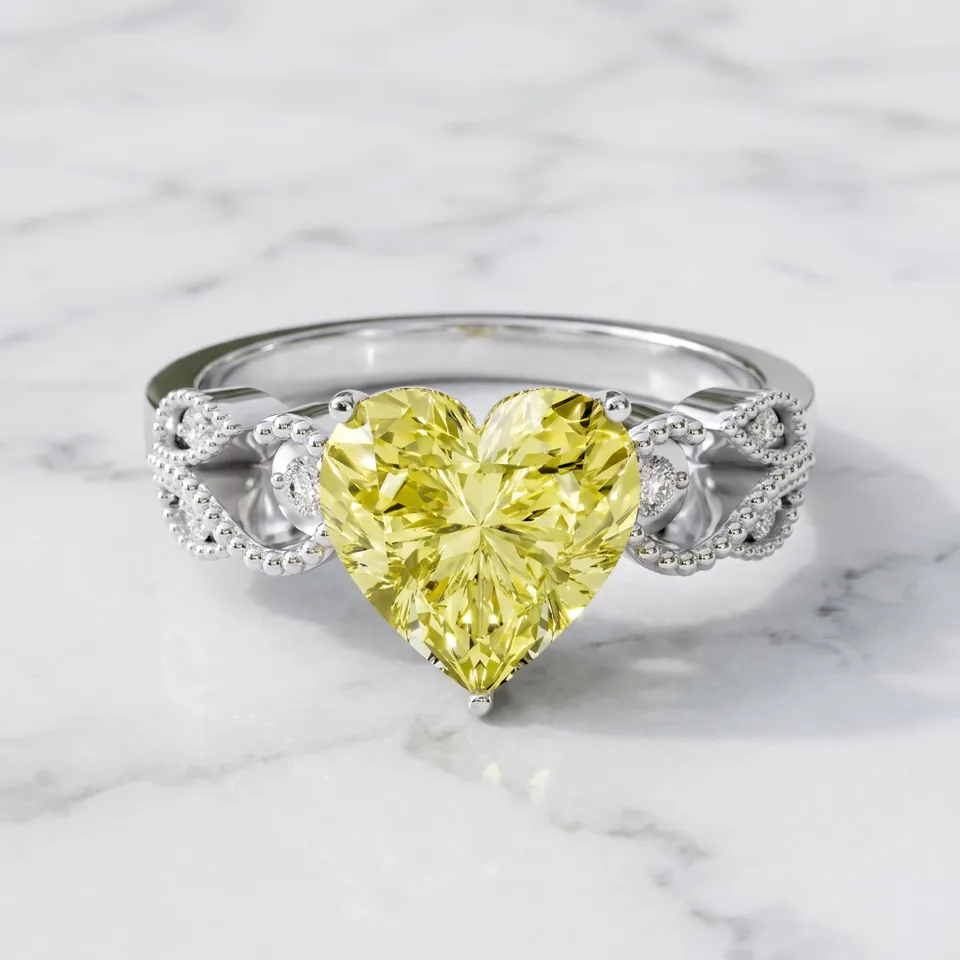 White Gold Yellow Diamond Rings
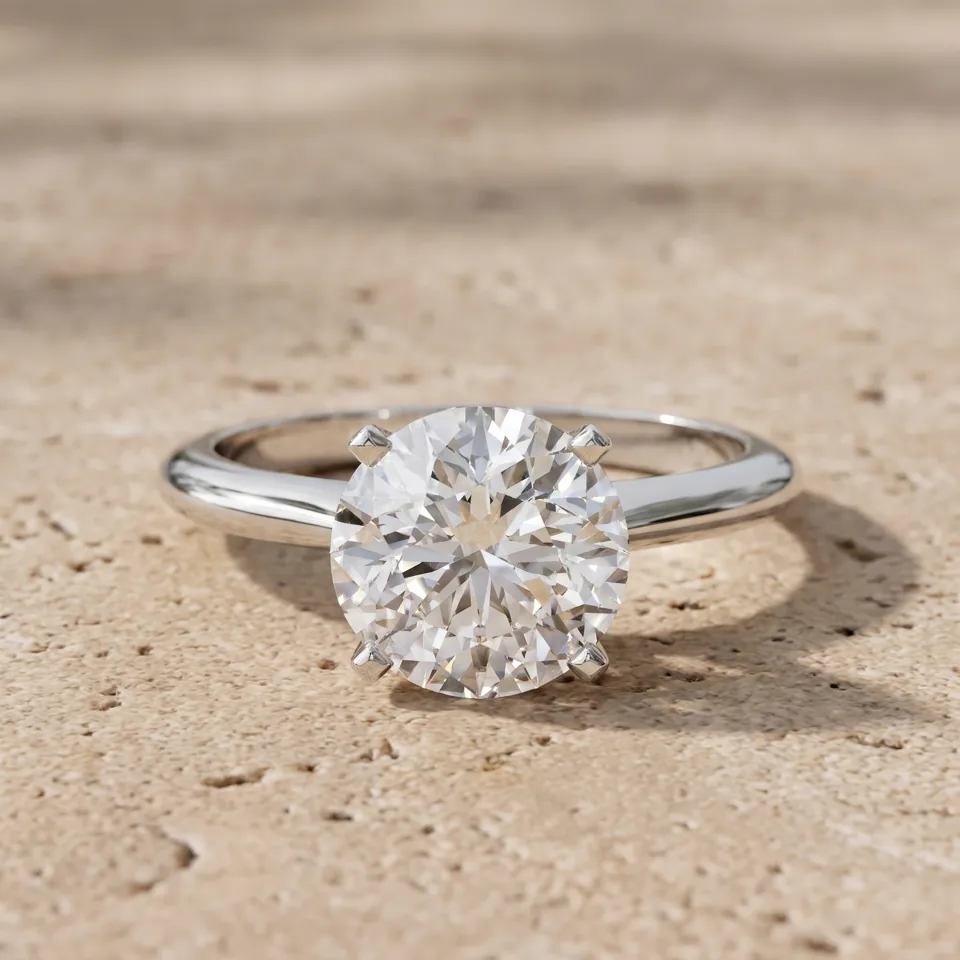 1/2 Carat Lab-Grown Diamond White Gold Rings
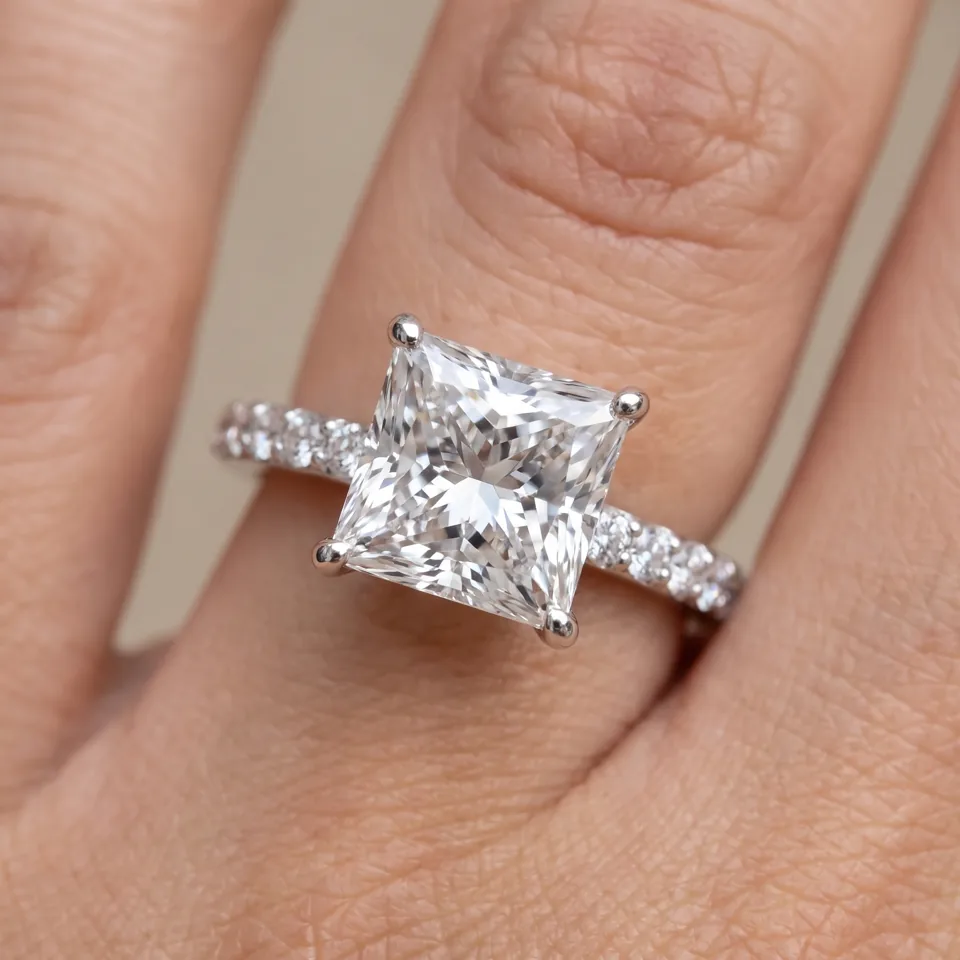 5 Carat White Gold Rings
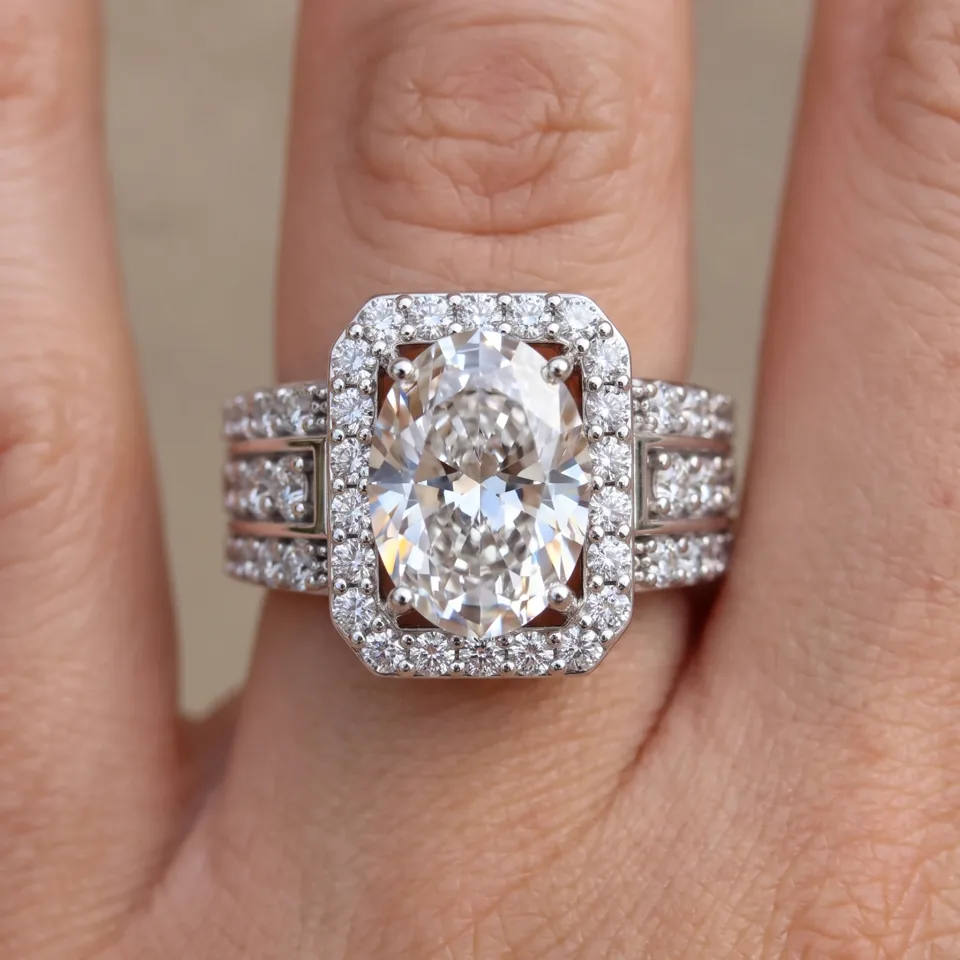 1.5 Carat Lab-Grown Diamond White Gold Rings
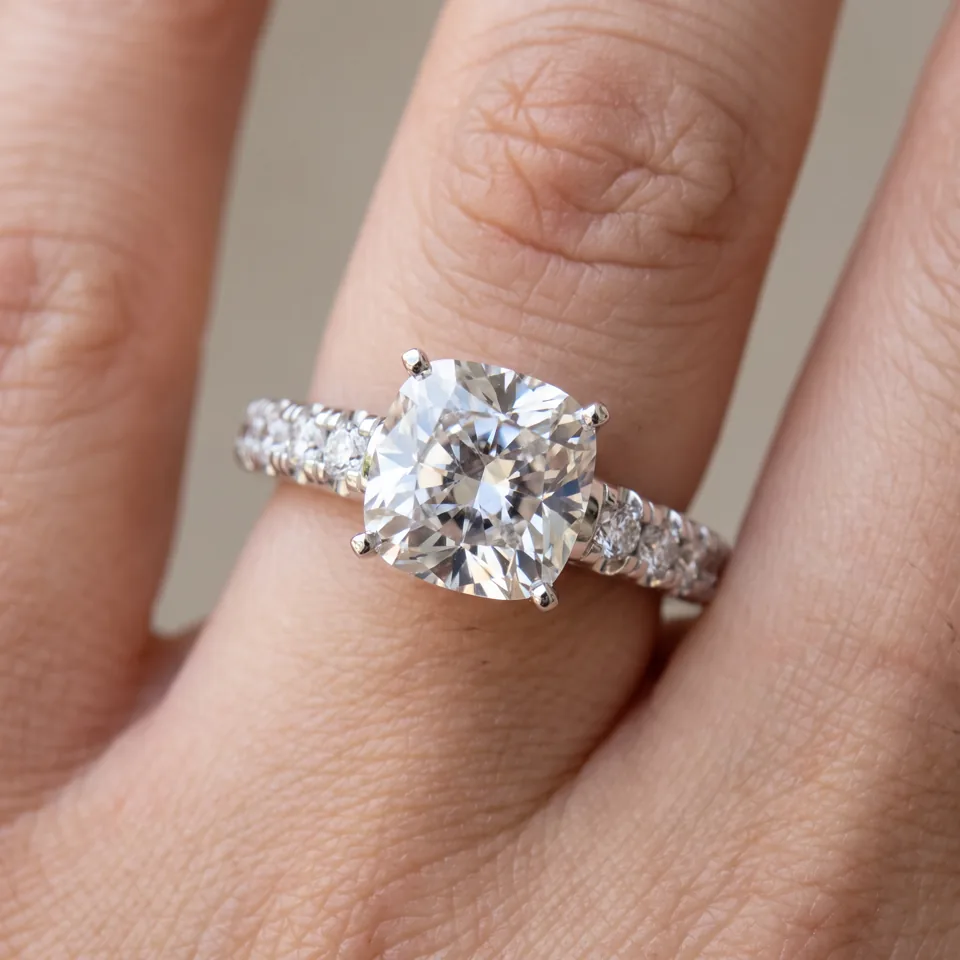 White Gold Cathedral Engagement Rings
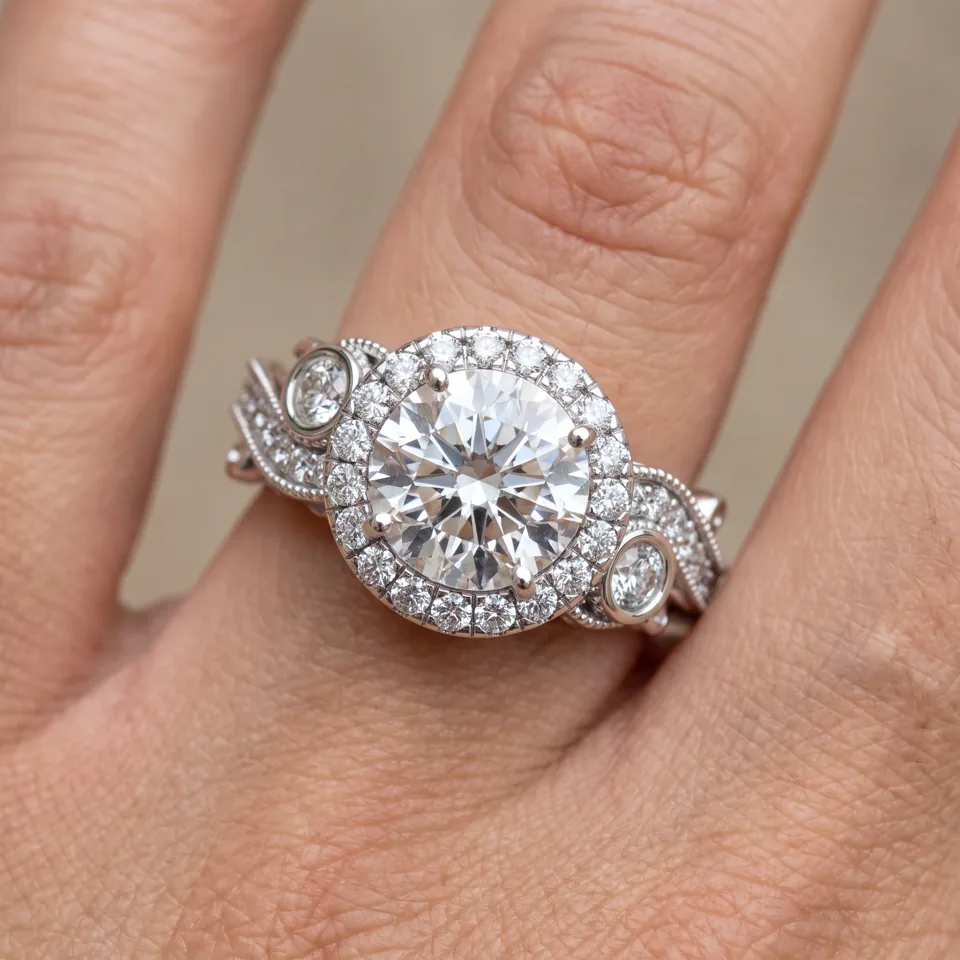 White Gold Bypass Rings
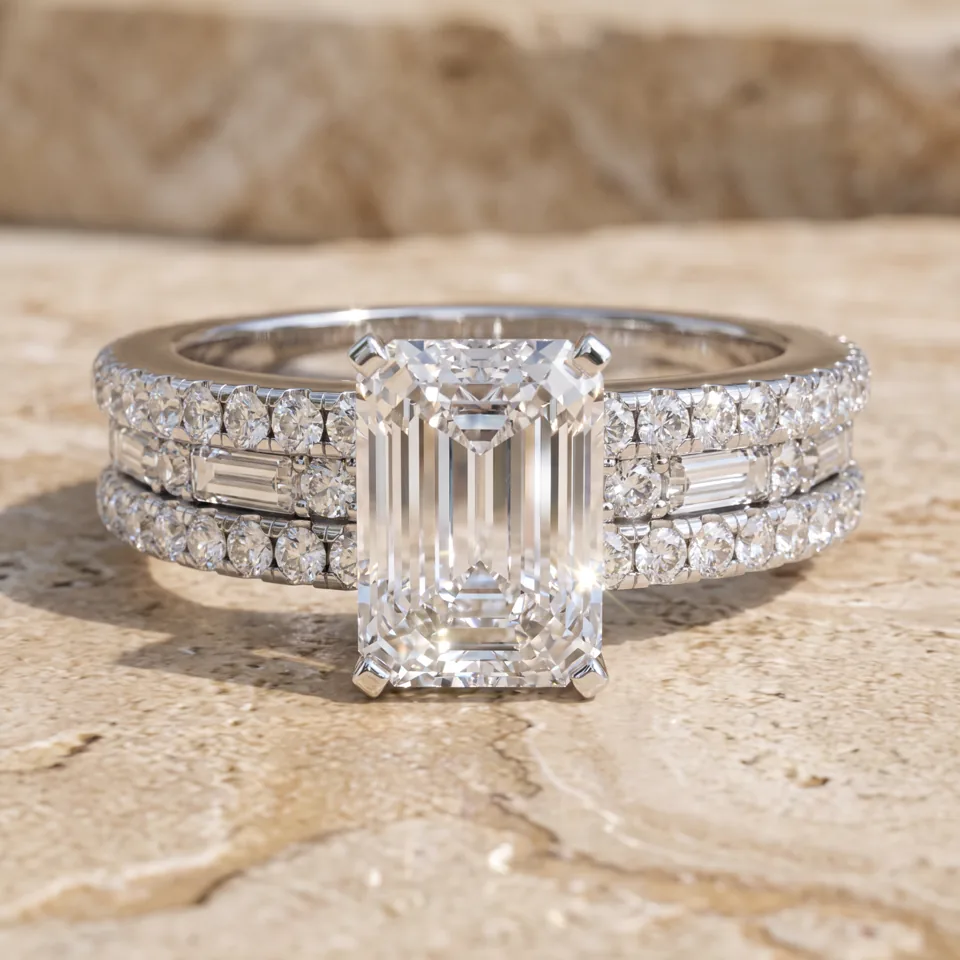 White Gold Channel Set Rings
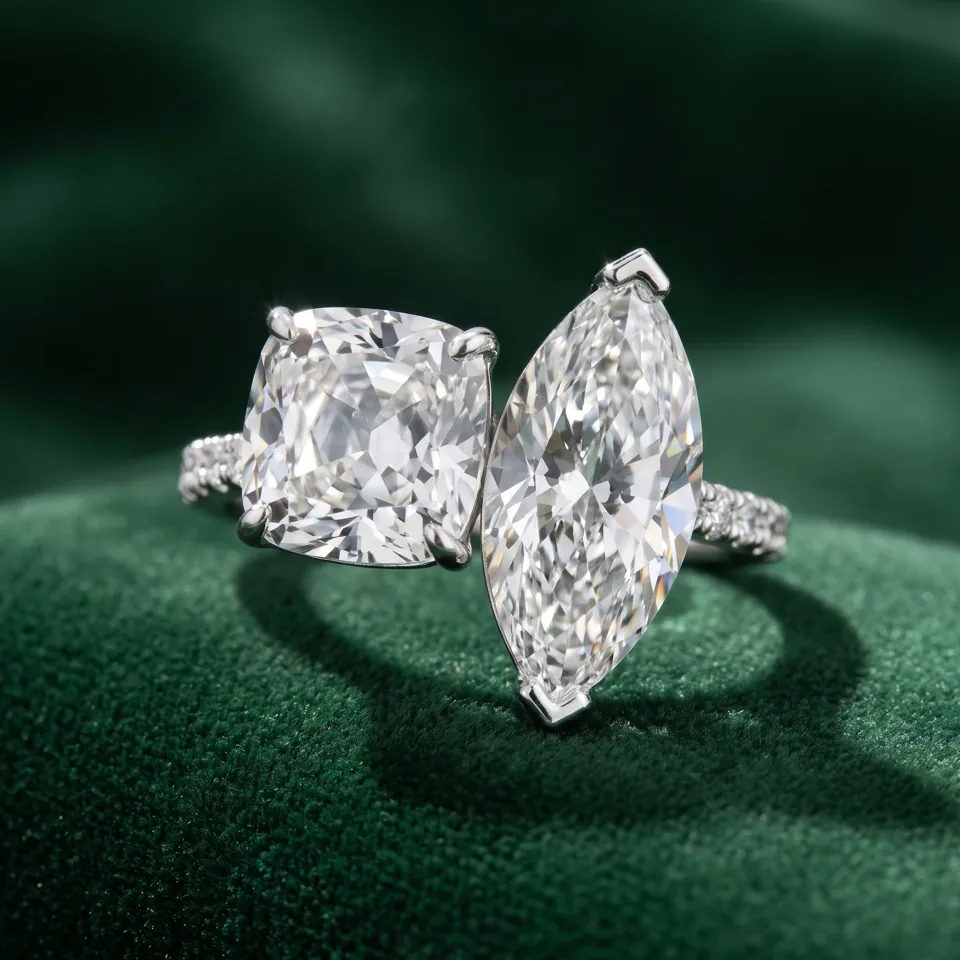 White Gold Toi et Moi Rings
All three are offered on every white gold design in this collection.
Pavé bands are the largest group here, and white gold makes the small laboratory-grown diamond accents blend into one bright line. Solitaires keep attention on the center. Halos, hidden halos and side stone settings add sparkle around it, and some toi et moi designs pair two centers side by side. A few rings are listed as men's engagement rings.
Expecting to add a wedding band later? Match the metal, so the pair ages alike and can go in for replating at the same visit. Check how close the band can sit: low settings and halos often need a curved band, while a raised solitaire leaves room for a straight one.
White gold is usually finished with a rhodium layer that gives it its mirror white color. Over months of daily wear, the layer thins on the underside of the band and a faint warm tone can show. A jeweler can replate it in a short visit. Take the ring off for gym sessions and cleaning with harsh chemicals to slow the wear.
Your white gold setting is crafted to order in 10–15 days, and insured shipping is free on the way to you and on any return. The center diamond includes an IGI or GIA report. One free resize is included within 60 days of delivery, and unworn rings with their certificate can be returned within 30 days.
The main reason is upkeep. Most white gold owes its bright finish to a rhodium coat; as that layer rubs away, a jeweler re-plates the ring to bring the whiteness back. Some white gold alloys also contain nickel, which a few people react to. If neither worries you, white gold is a durable, lower-cost alternative to platinum with the same cool look.
For colorless diamonds, often yes. A white metal reflects white light into the stone, so a near-colorless center looks whiter than it would in yellow gold. Prongs in white gold also disappear against the diamond. For a fancy yellow or pink center, yellow or rose gold can bring out the color more, so the best metal depends on the stone you choose.
Usually about one to three years, depending on how hard you wear the ring. Rhodium wears fastest on the underside of the band and on the palm side, where the ring rubs against surfaces. Rings worn daily with other rings tend to need it sooner. Replating is a routine jeweler job, and the ring underneath is still solid white gold.
For most engagement rings, 14K is the best balance. It holds prongs securely, resists scratches well and still carries plenty of gold. 10K is harder and costs less, which suits very active hands. 18K holds a higher share of pure gold and feels heavier in the hand, though it scratches a little more easily. Whitemoon offers all three karats on each white gold setting.
Slightly, at the same karat. The metals mixed with gold to whiten it tend to make the alloy a little harder, and the rhodium layer adds surface scratch resistance while it lasts. The difference is small, though. Karat matters more than color: 10K or 14K in either color will stand up to daily wear better than 18K.


