Complimentary insured shipping, both waysEngagement ring diamonds certified by IGI or GIAGrown by light. Conflict-free by natureComplimentary insured shipping, both ways
Engagement RingsWedding BandsEarrings

NecklaceBraceletsAbout
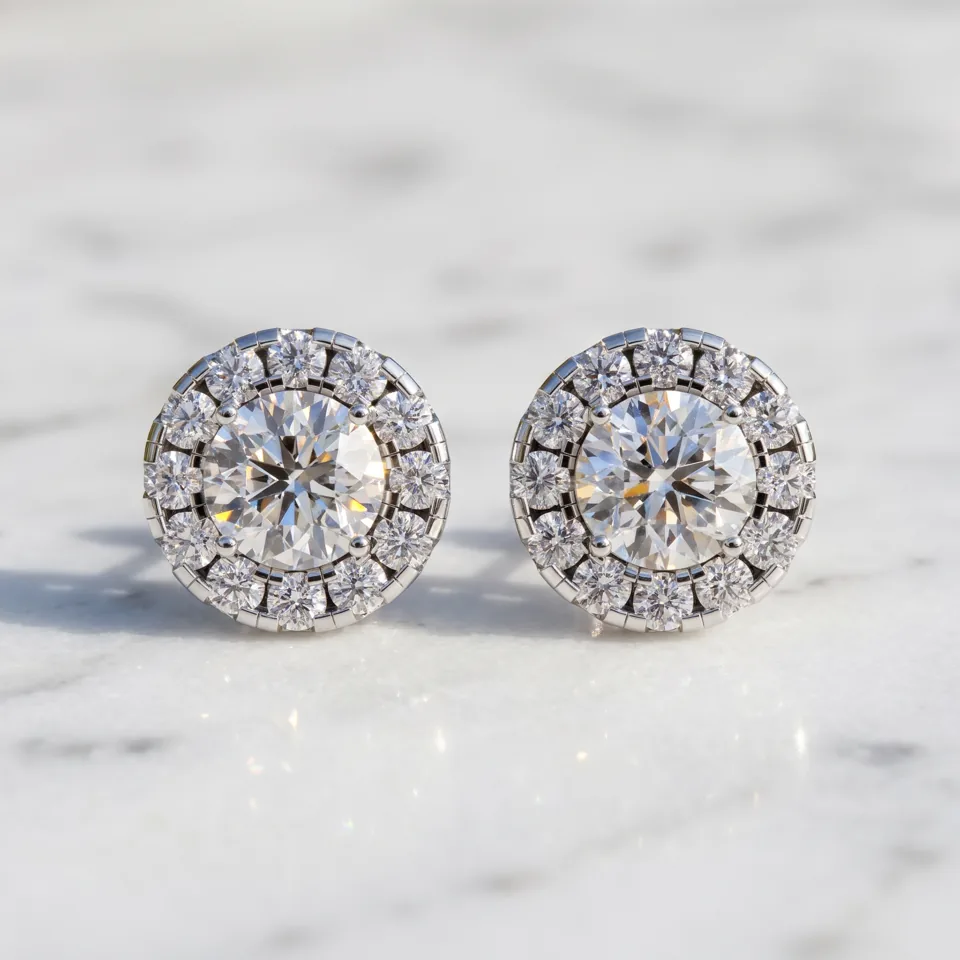
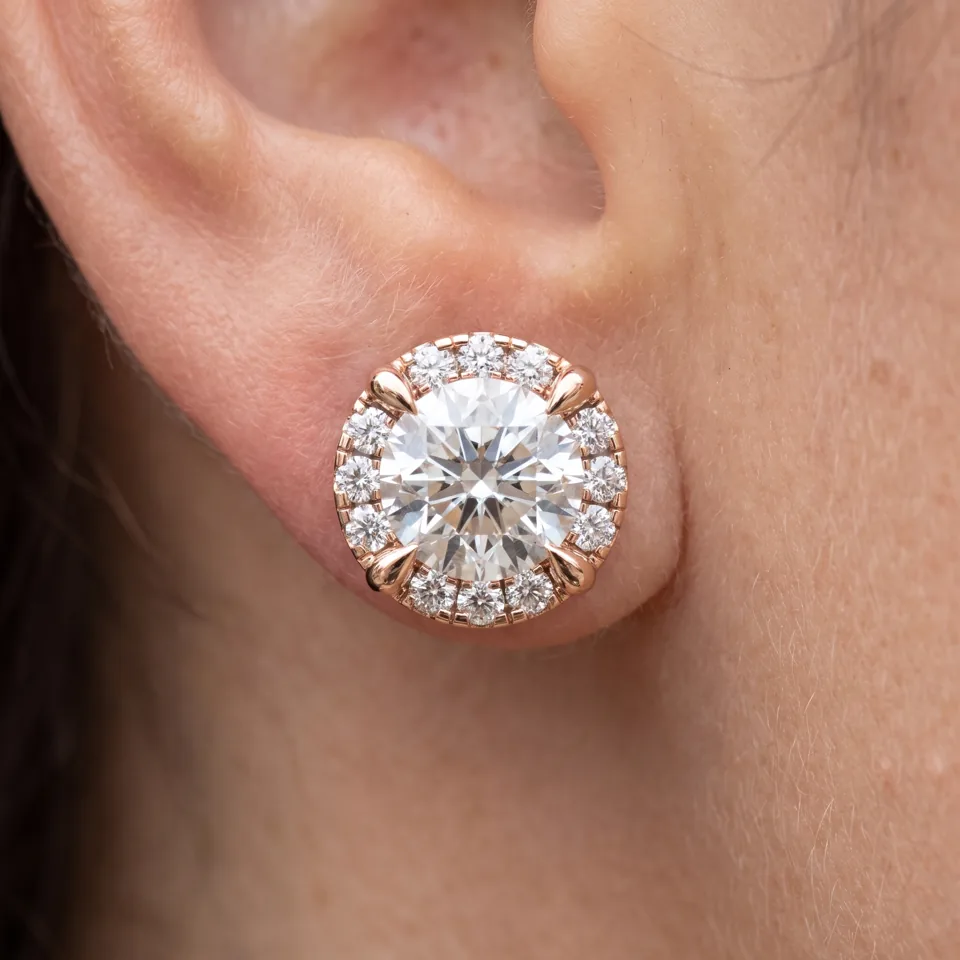
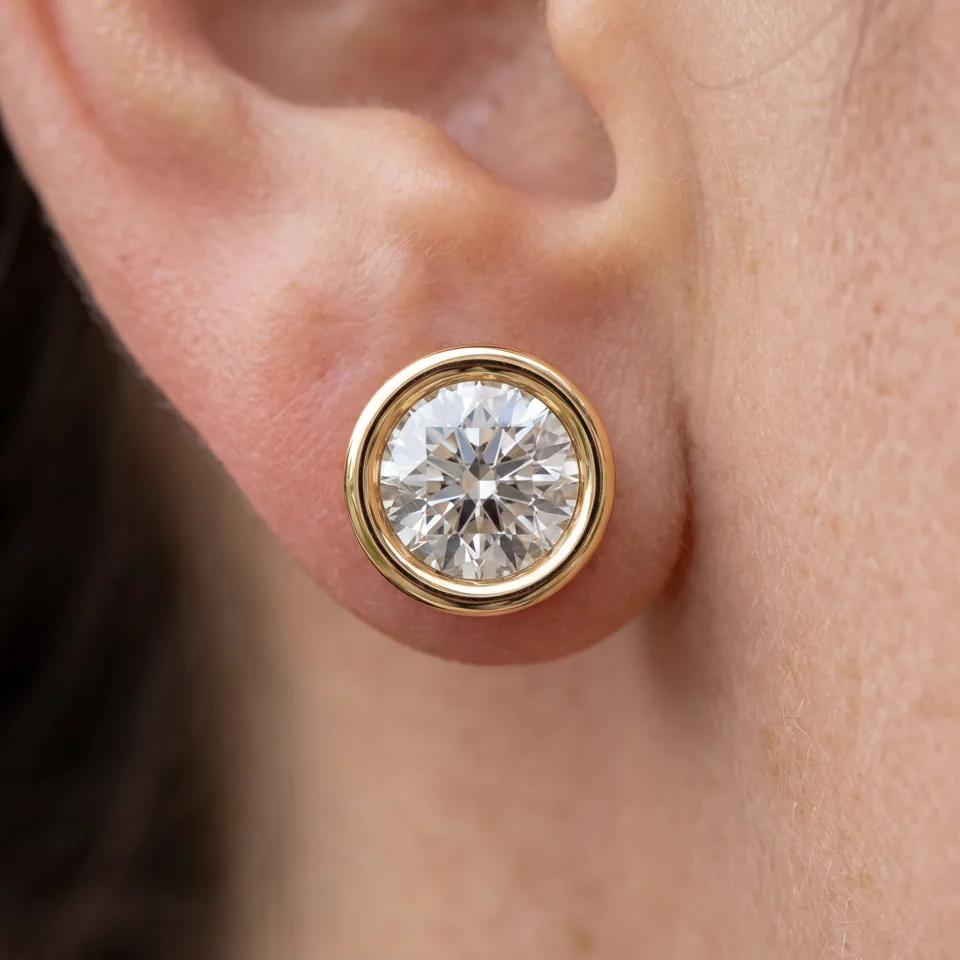
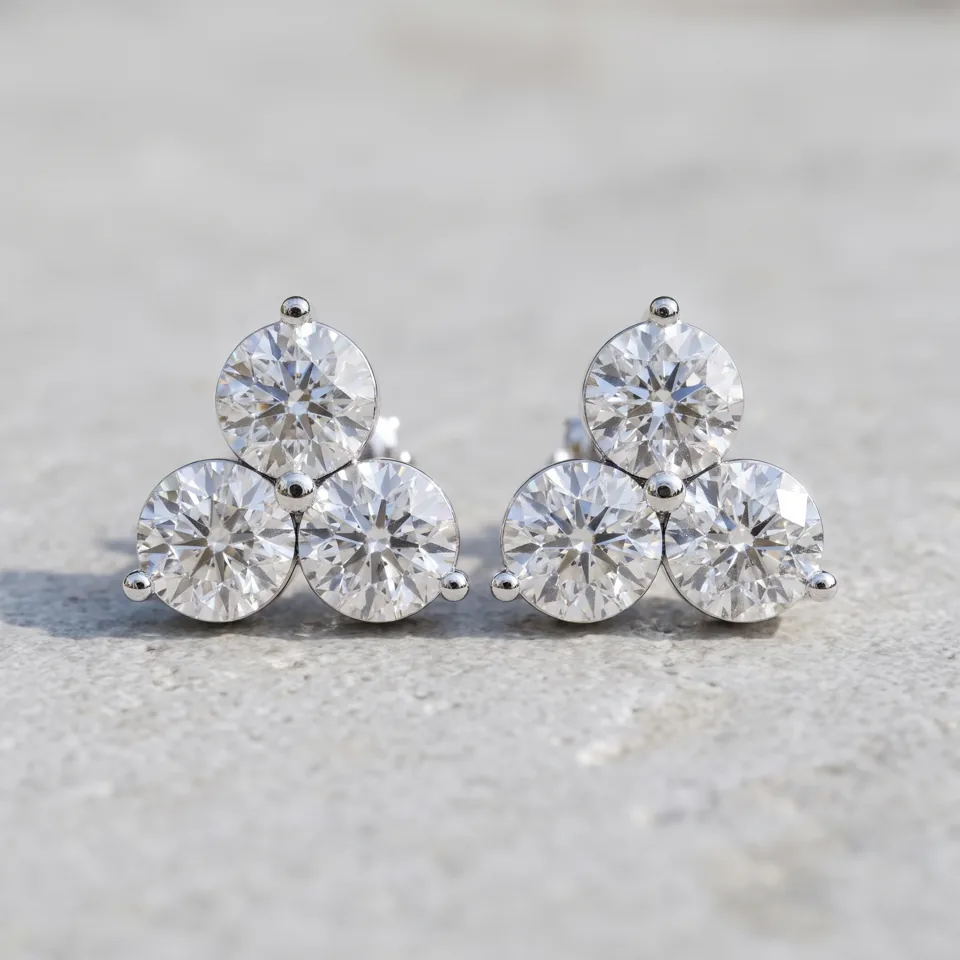
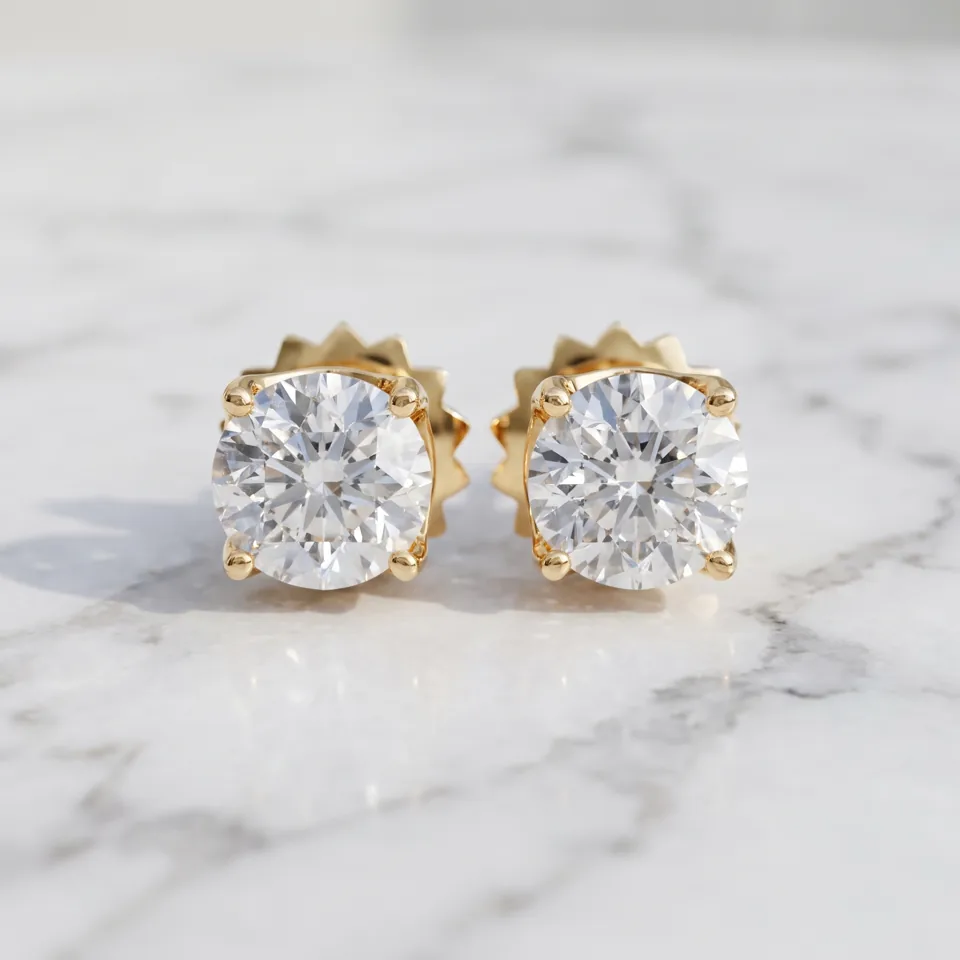
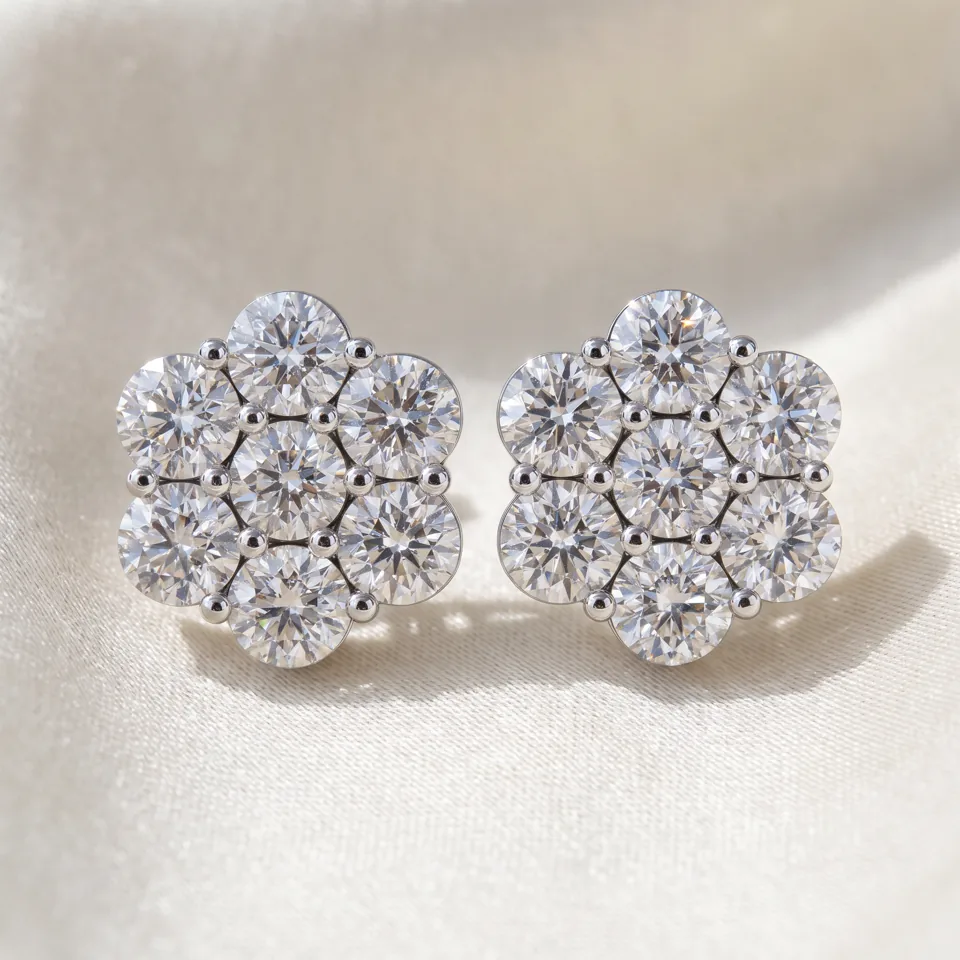
Round lab-grown diamond stud earrings are the most worn earrings there are, and this range covers every way to wear them: four-prong solitaires, bezel studs, cluster and floral studs, vertical two-stone and curved three-stone designs, and pavé shapes from hearts to waves.
Start with the setting, then choose a total carat weight and metal. Our guide to buying diamond studs online explains what total carat weight means.
Carat is the weight of both studs together. A 0.5-carat total pair suits daily wear and small lobes. 1 carat total weight, offered on nearly half the designs, is the most popular size. Many solitaire and bezel studs go from 2 up to 10 carats total weight. Tiny 0.05 to 0.2 carat studs are made for upper piercings. Our ear piercing chart shows the upper lobe, helix and other spots.
A lab-grown diamond is carbon crystal grown above ground; its hardness, fire and brilliance match a mined one, and only gem-lab tools can tell them apart. It costs far less than a mined diamond of equal size, so a 2-carat pair is a realistic choice rather than a splurge.
Pick from white, yellow or rose gold or Silvadium, a tarnish-resistant sterling silver; platinum is available on many. Gold is 10K, 14K or 18K. White metals make the stones look icier; yellow and rose add warmth. Prices start under $50 in silver; most pairs are about $340 to $640 at their smallest size.
Each pair is set to order in 10–15 days and sent with free insured shipping both ways. Return unworn studs with the certificate within 30 days if you change your mind.