Complimentary insured shipping, both waysEngagement ring diamonds certified by IGI or GIAGrown by light. Conflict-free by natureComplimentary insured shipping, both ways
Engagement RingsWedding BandsEarrings
NecklaceBraceletsAbout
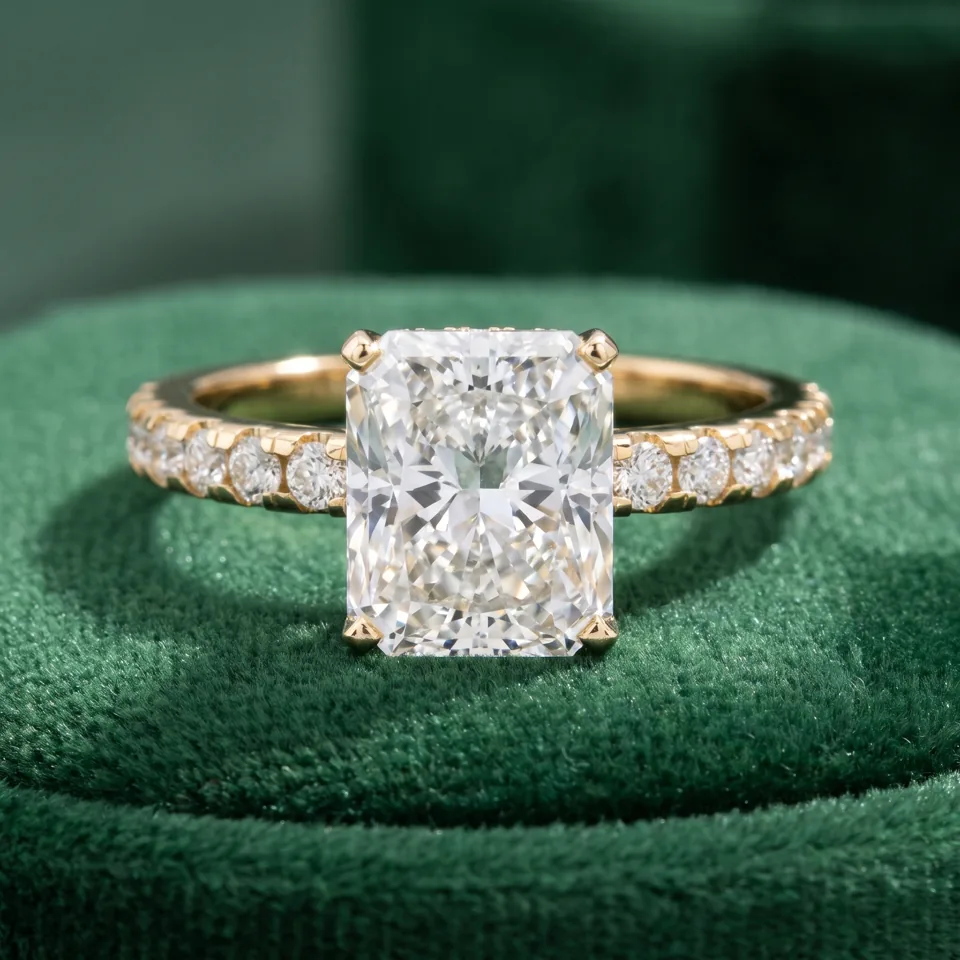
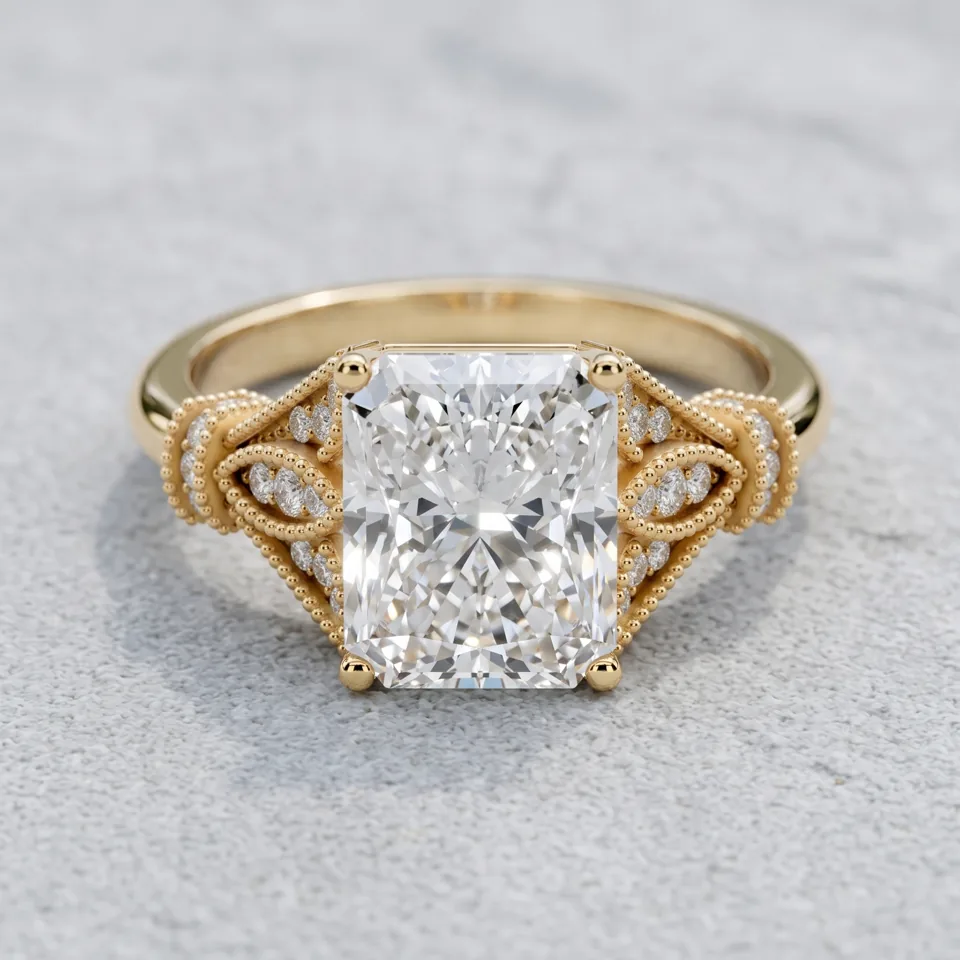
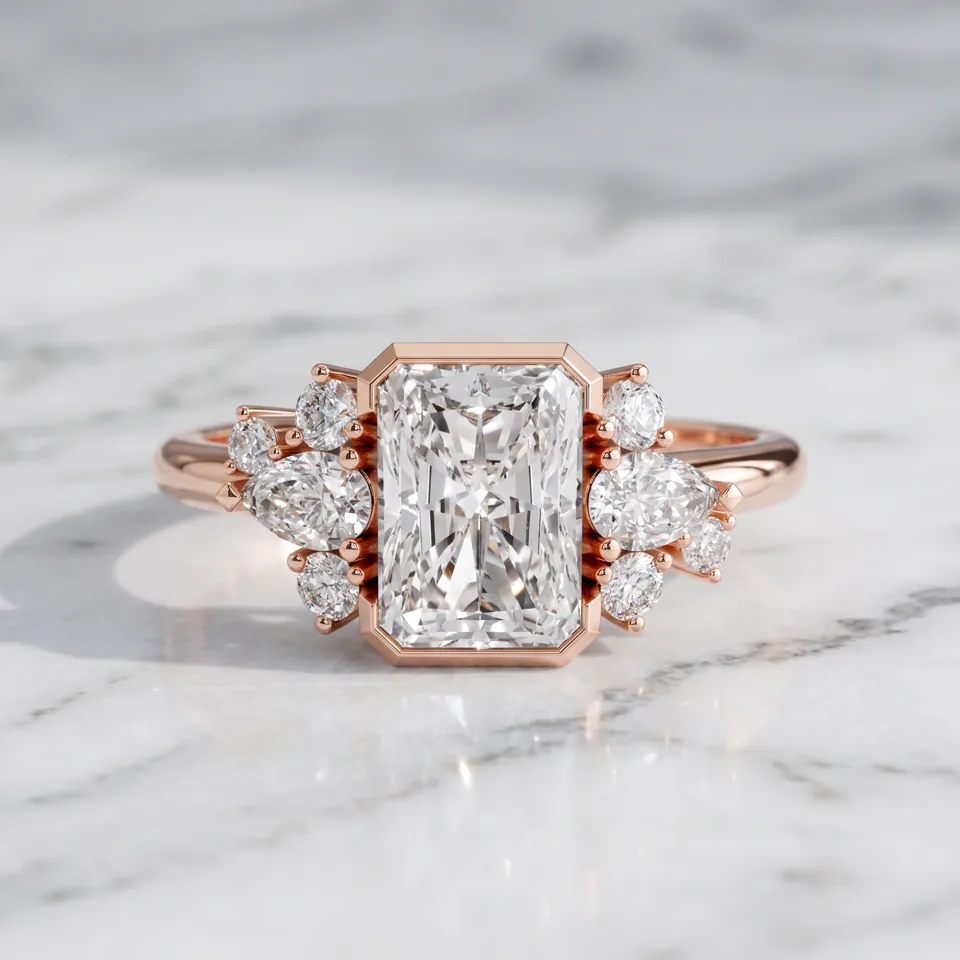
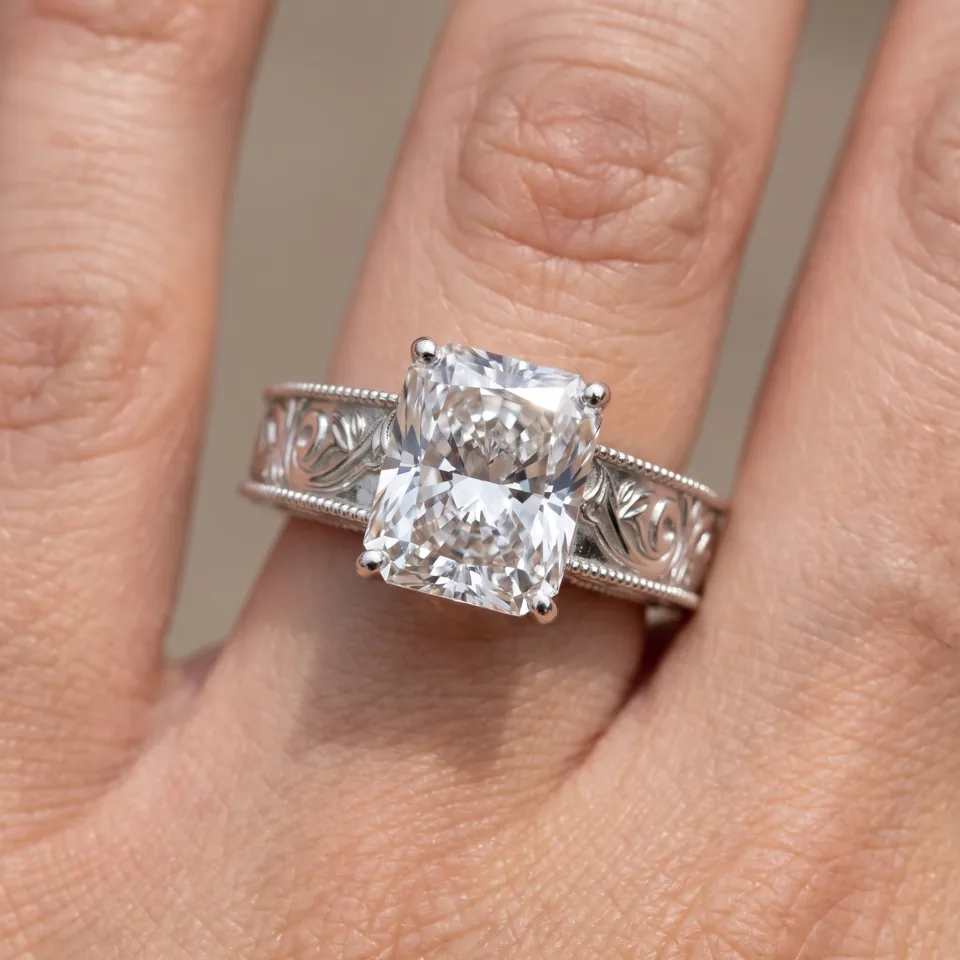
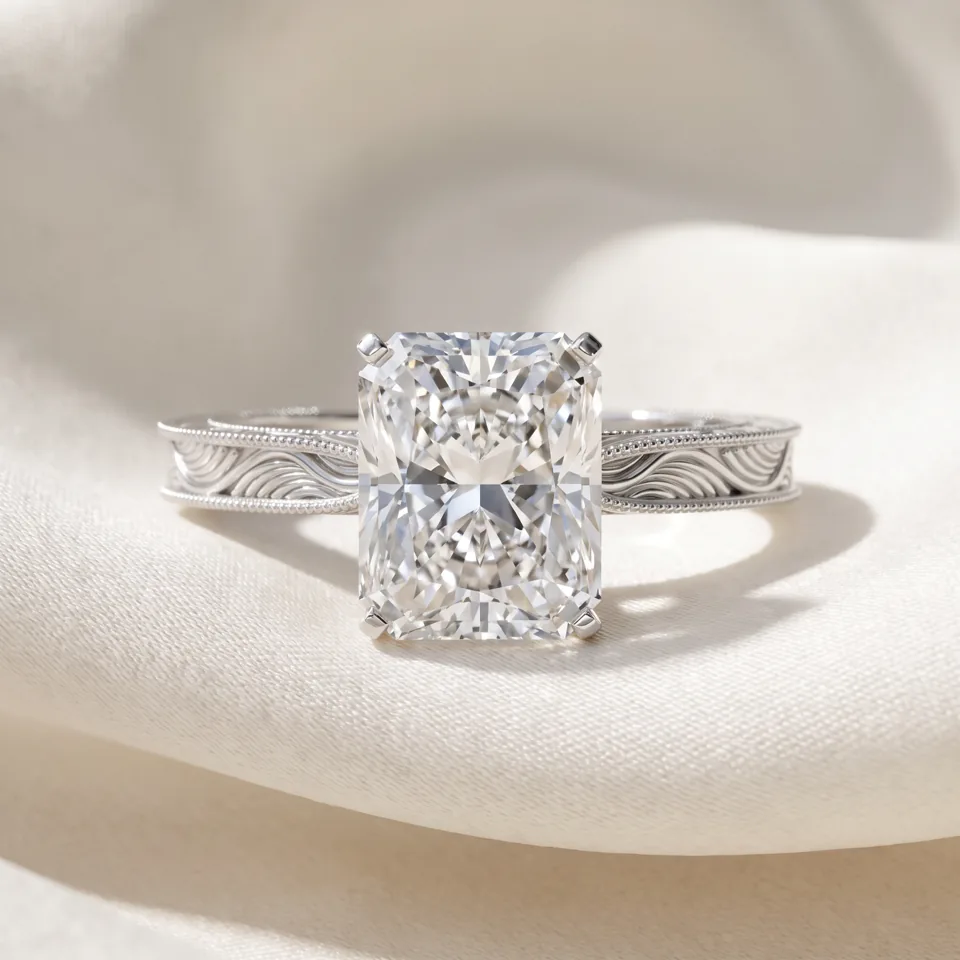
A platinum radiant cut engagement ring sets a clipped-corner rectangle or square into dense, bright white metal. Each mounting here is shaped for a radiant center, and you choose that stone afterward, colorless or in a fancy hue.
On this page, decide on the band, any halo or side stones, and how much glitter should surround the center.
Picture a step-cut rectangle that has been re-faceted like a brilliant: straight sides with lively, crushed-ice sparkle. Clipped corners mean no fragile points, a real advantage over a princess. Some radiants are nearly square and look bold; longer ones slim the finger.
Why platinum works for a radiant cut diamond
Platinum keeps a colorless center looking icy and feels substantial on the hand. Because it is so hard to wear away, prongs keep their grip for decades. Scratches move the metal around rather than removing it, leaving a matte patina that polishes out.
Solitaire, halo, three stone or pave
Solitaire: a cathedral, tapered or plain shank that leaves the radiant on its own.
Halo or hidden halo: a border of laboratory-grown diamond accents for extra size on top or a flicker in profile.
Three stone and side stone: more width and a longer line across the hand.
Pave or channel settings: small lab-grown diamond accents marching down the shank.
Choosing a center color
Beyond colorless, most mountings take fancy green, pink, yellow or blue, and a smaller group accepts black. Cool tones look especially clean in platinum. Mountings open just under $1,000; the middle of the range sits around $1,700 to $2,100, before the center you select.
Ordering from Whitemoon
We shape each platinum mounting to order in 10–15 days and cover insured shipping in both directions. Your chosen center arrives with an IGI or GIA report. Unworn rings are returnable for 30 days with the certificate, and a single free resize is available within 60 days of delivery.