Complimentary insured shipping, both waysEngagement ring diamonds certified by IGI or GIAGrown by light. Conflict-free by natureComplimentary insured shipping, both ways
Engagement RingsWedding BandsEarrings
NecklaceBraceletsAbout
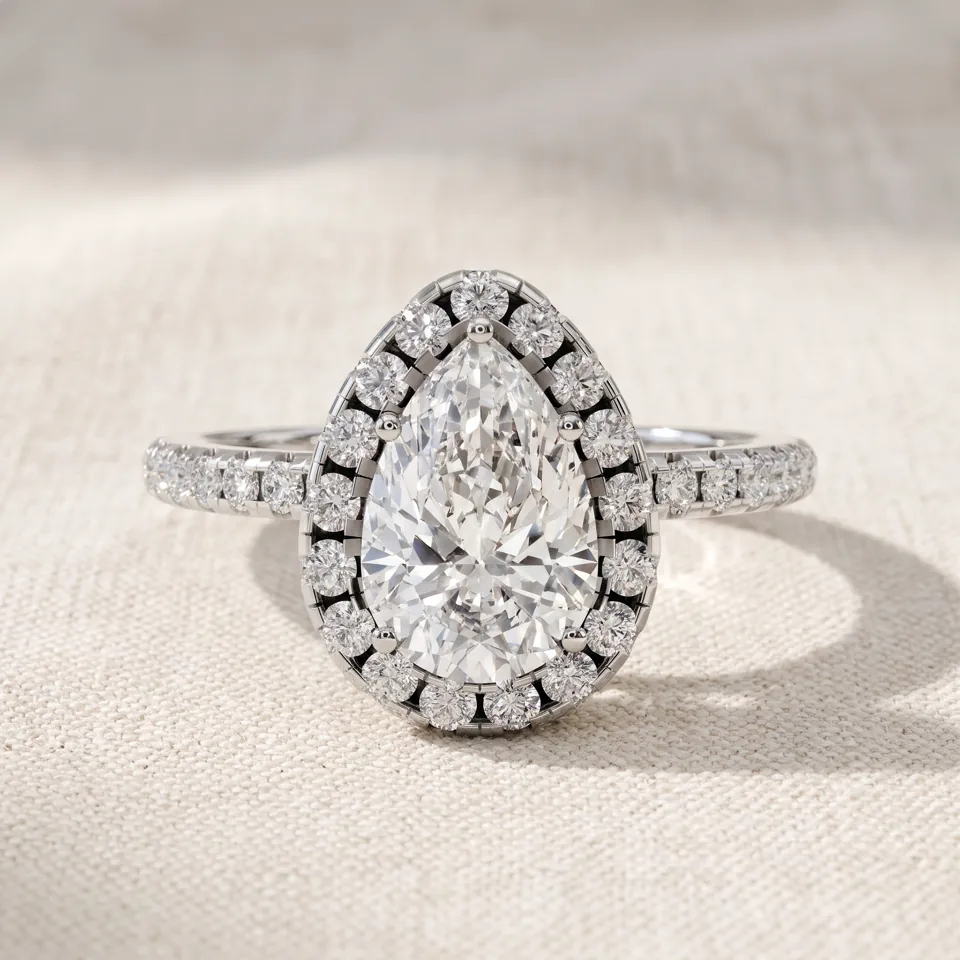
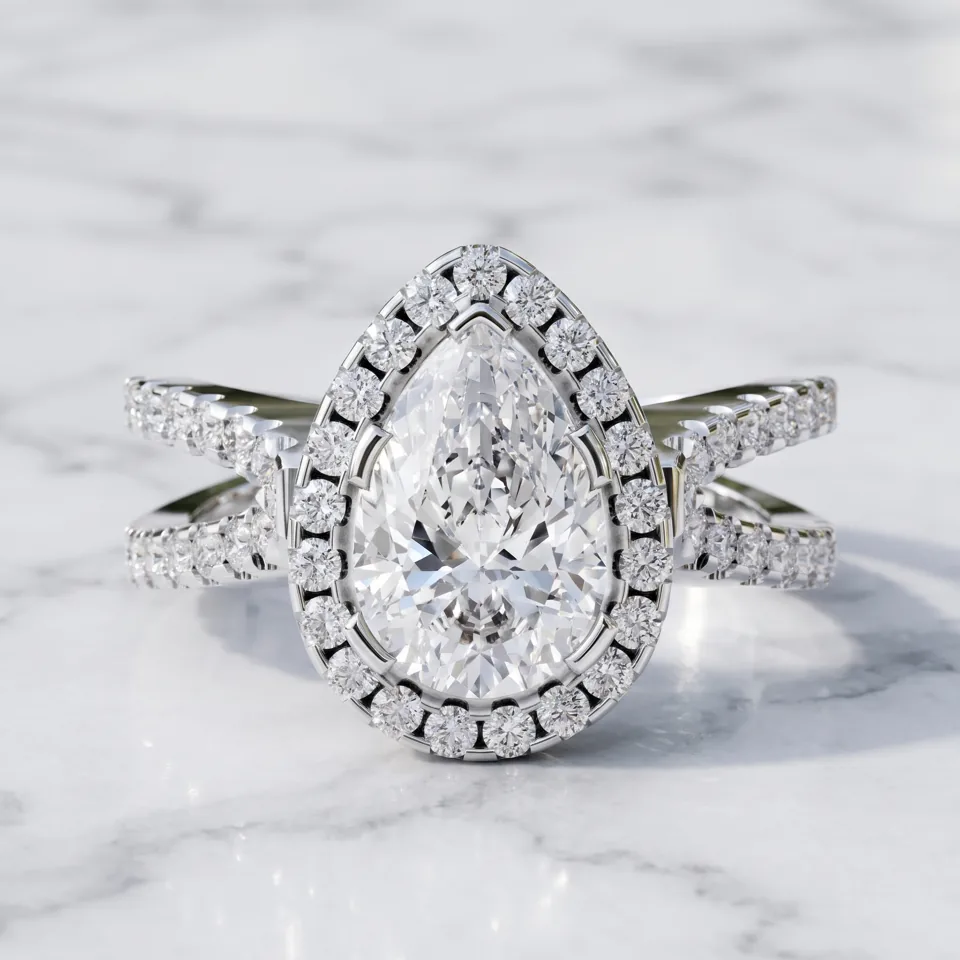
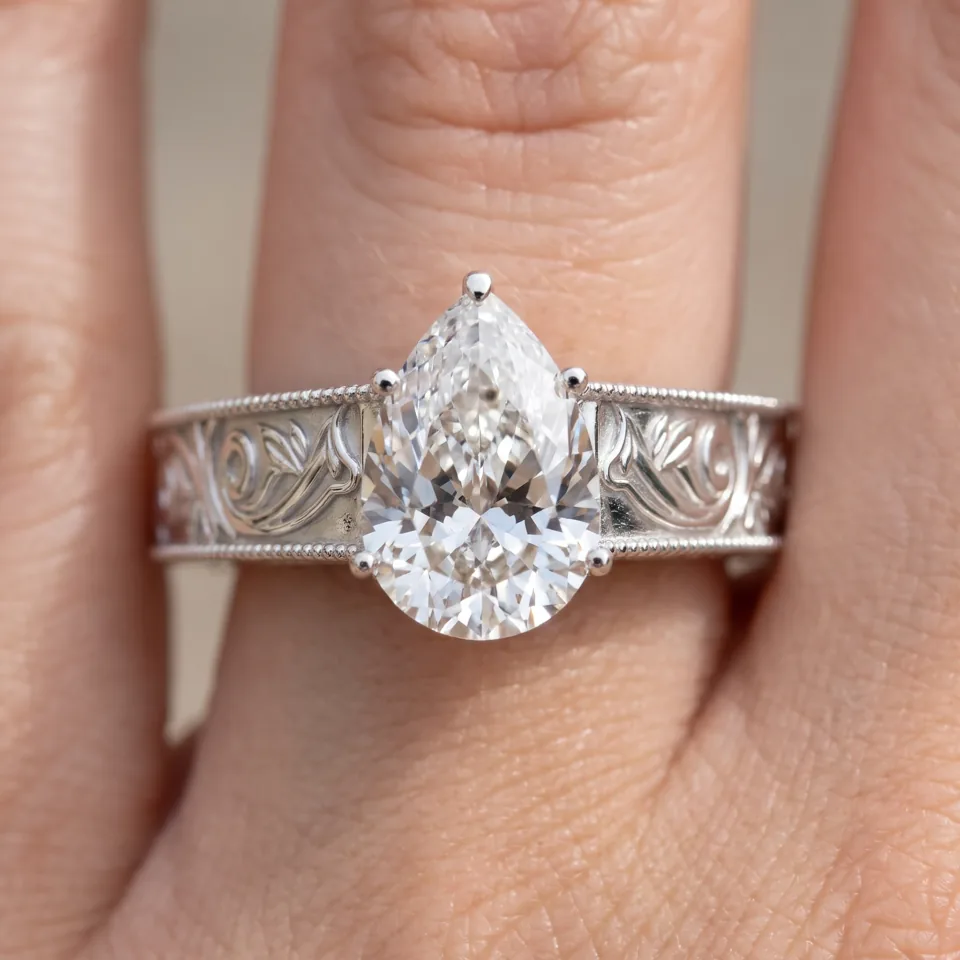
Pear-shaped platinum engagement rings cradle a teardrop center in tough, naturally white metal that keeps a firm hold on the fragile tip. You're choosing the mounting here; the pear itself, colorless or a fancy shade, is selected afterward.
Begin with what frames the teardrop, from a lone stone on a plain shank to a halo or side accents, then think about which way the tip should point.
A teardrop's narrow end is where chips start. A V-shaped prong capping the tip is the standard guard. Platinum is ideal for that job, because under a knock it bends instead of cracking. With a halo, the point also gets a cushion of metal and small accents around it.
Solitaire, halo or side stones with a pear
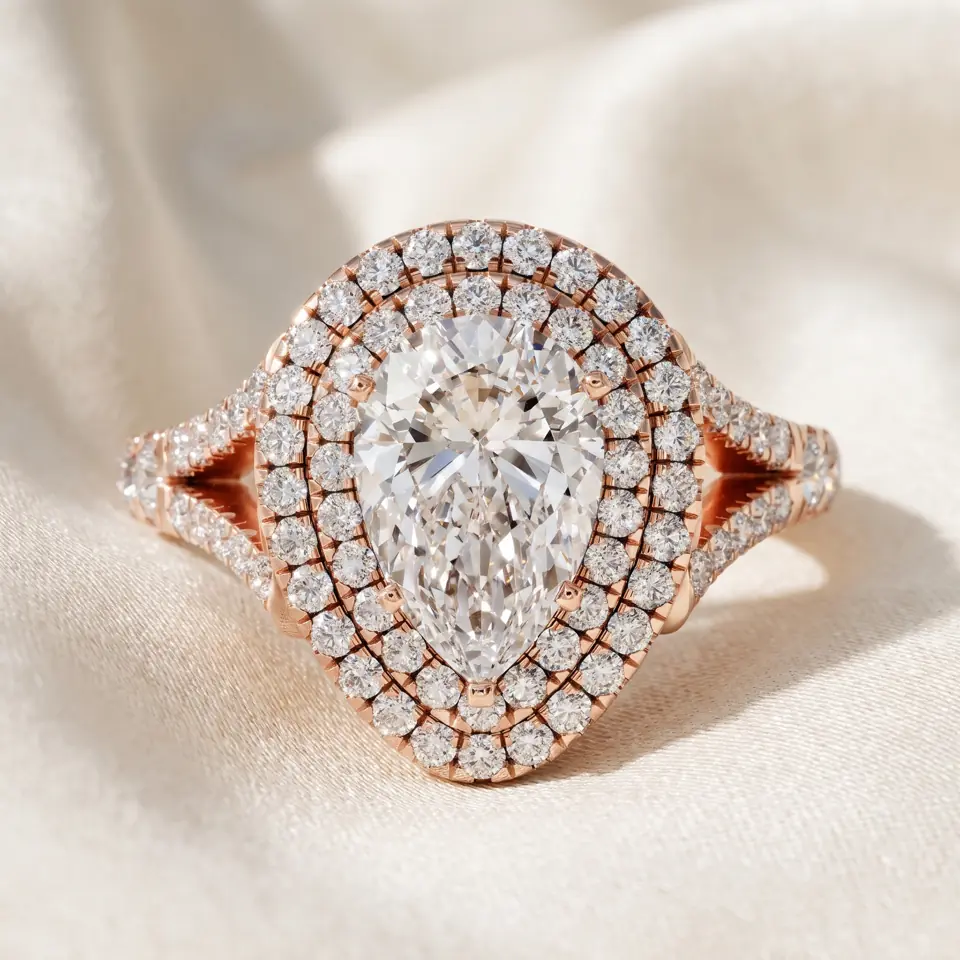
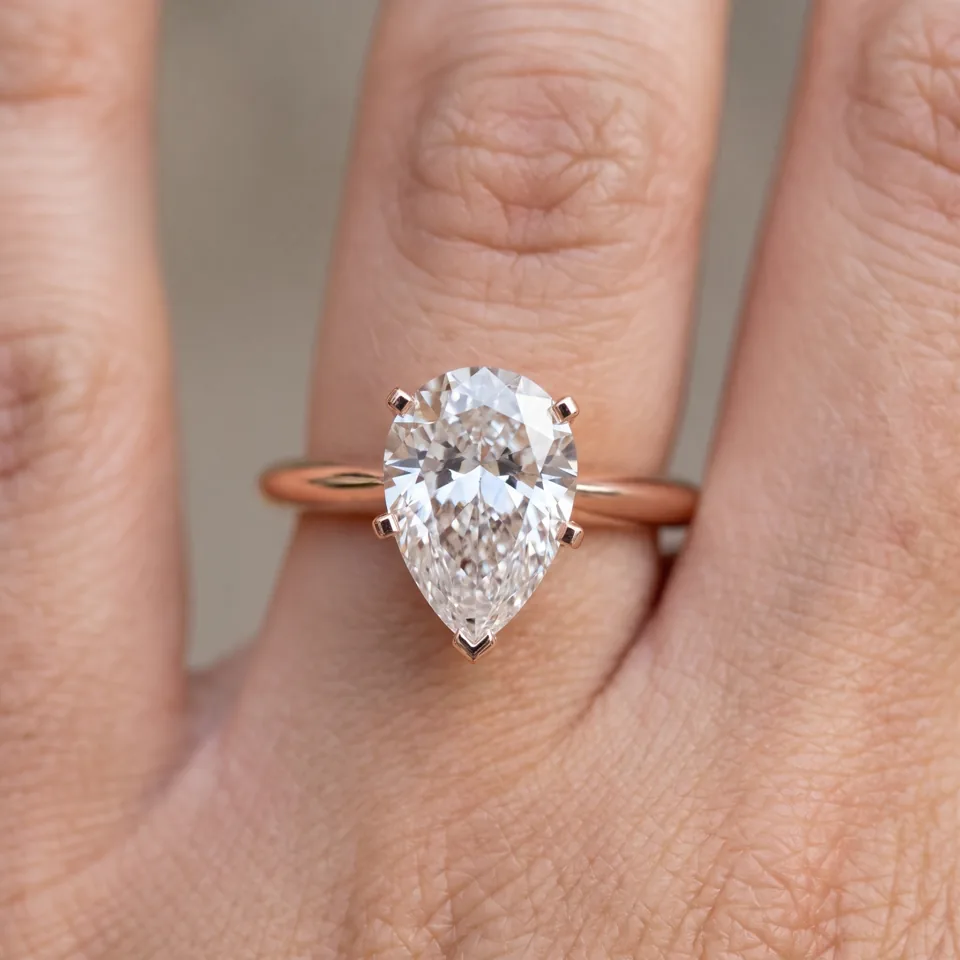
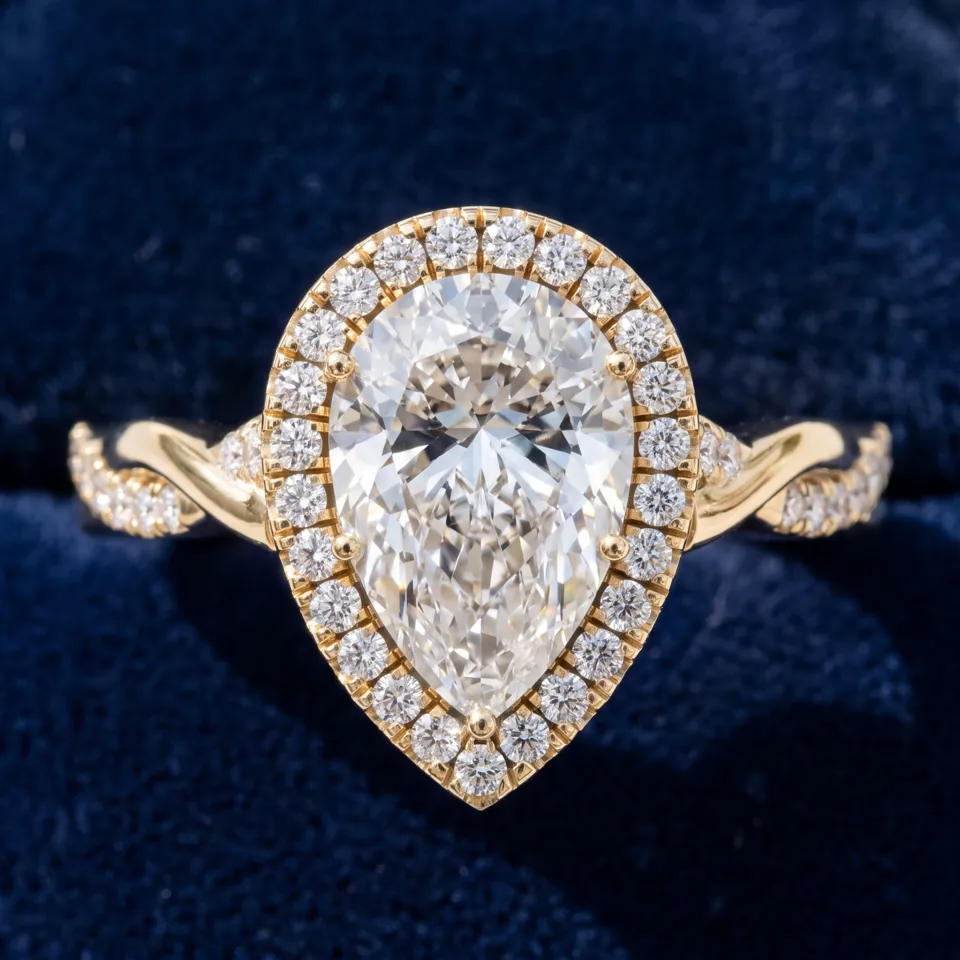
A solitaire on a tapered shank or basket head shows off the full teardrop outline. A halo of laboratory-grown diamond accents traces that shape and makes the pear read bigger. On side stone, graduated and three stone mountings, lab-grown diamond accents sit on the shoulders beside the pear, and vintage milgrain or twisted shanks soften the frame.
Which direction to wear the point
Tip toward the fingernail is the traditional choice and visually lengthens the hand. Tip toward the wrist feels less expected. Picture it beside a wedding band before you decide, since the band will sit against either the rounded end or the tip.
Center color and price
Colorless is the default, and most mountings can hold a pear in fancy pink, yellow, blue or green instead; a smaller group allows black. Platinum mountings start below $1,000, and the typical spread is about $1,700 to $2,000, with the center priced on its own.
Ordering from Whitemoon
Your platinum ring is made for you in 10–15 days, and delivery plus any return go by free insured shipping. The center you choose ships with an IGI or GIA report. You can return the ring unworn with its certificate within 30 days and get one free resize within 60 days of delivery.