Complimentary insured shipping, both waysEngagement ring diamonds certified by IGI or GIAGrown by light. Conflict-free by natureComplimentary insured shipping, both ways
Engagement RingsWedding BandsEarrings

NecklaceBraceletsAbout
Every gold wedding band on this page carries lab-grown diamonds and comes in yellow, white or rose gold. You'll mostly find half eternity designs, set with stones across the top only, plus some full eternity and curved bands.
Start with how the band will sit next to your engagement ring, then choose the gold color, the karat and the total carat weight.
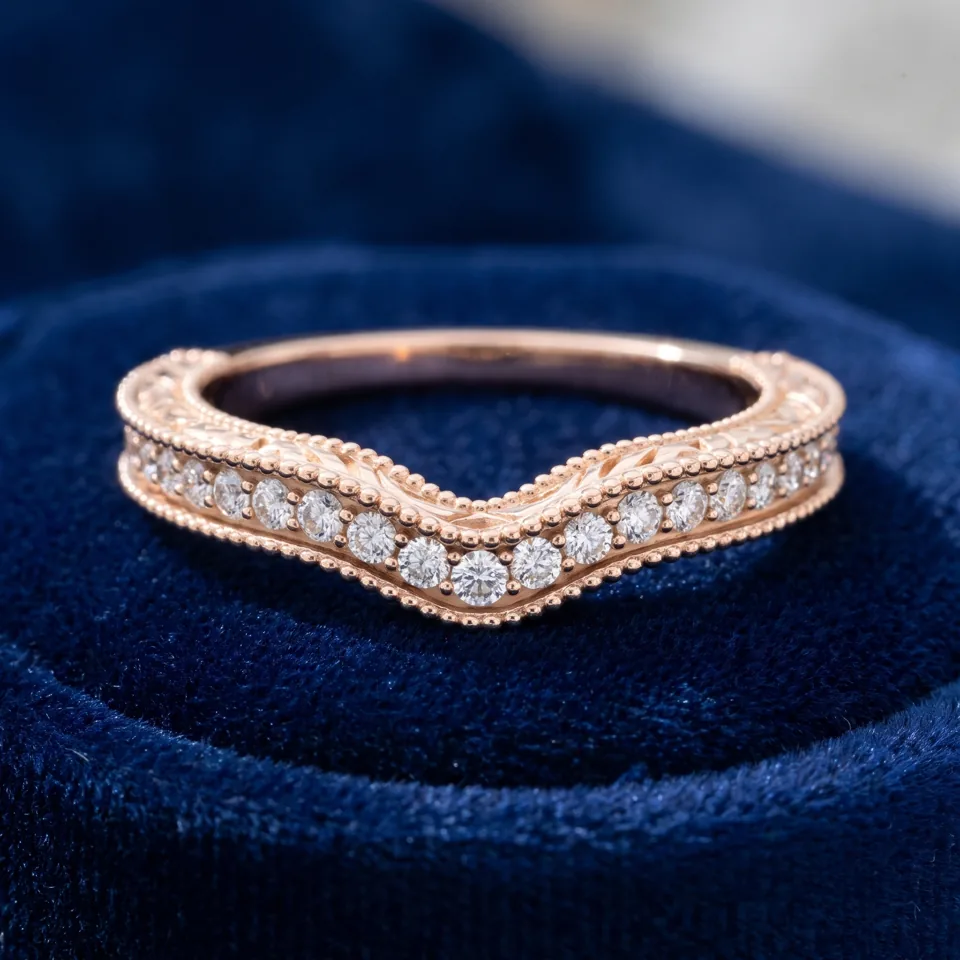 Antique Gold Wedding Bands
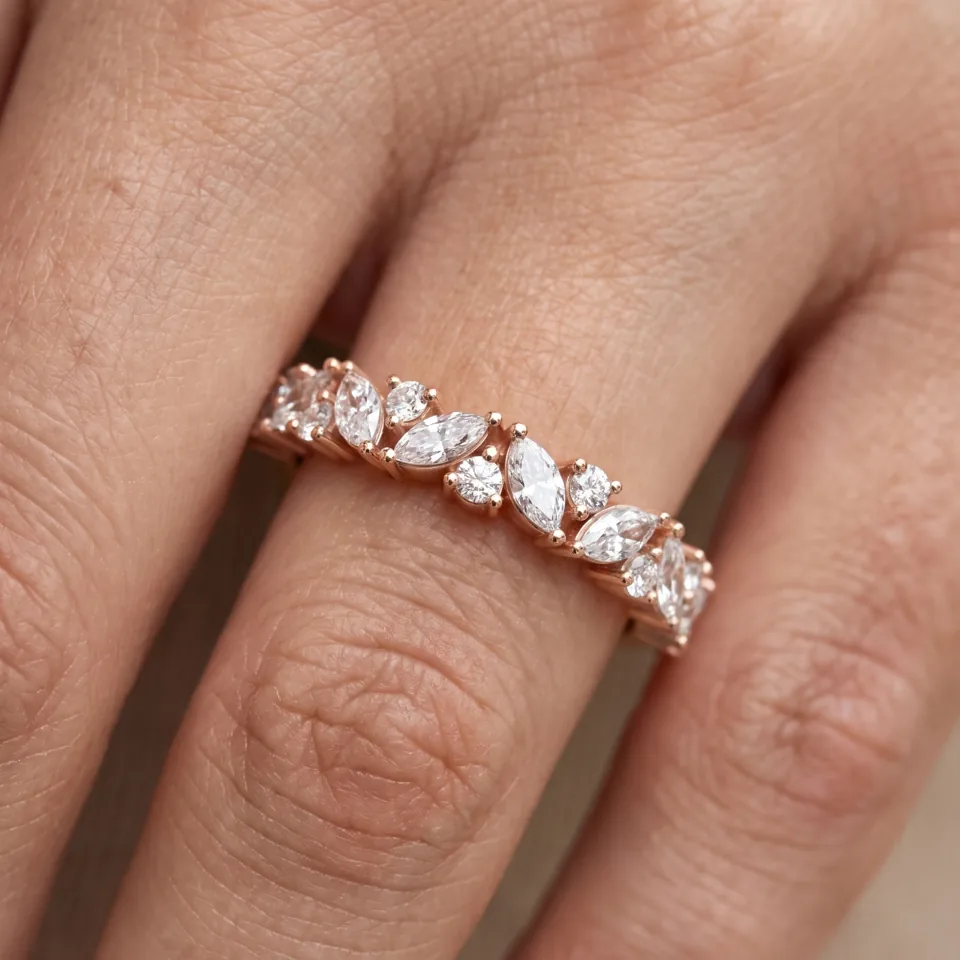 Floral Gold Wedding Bands
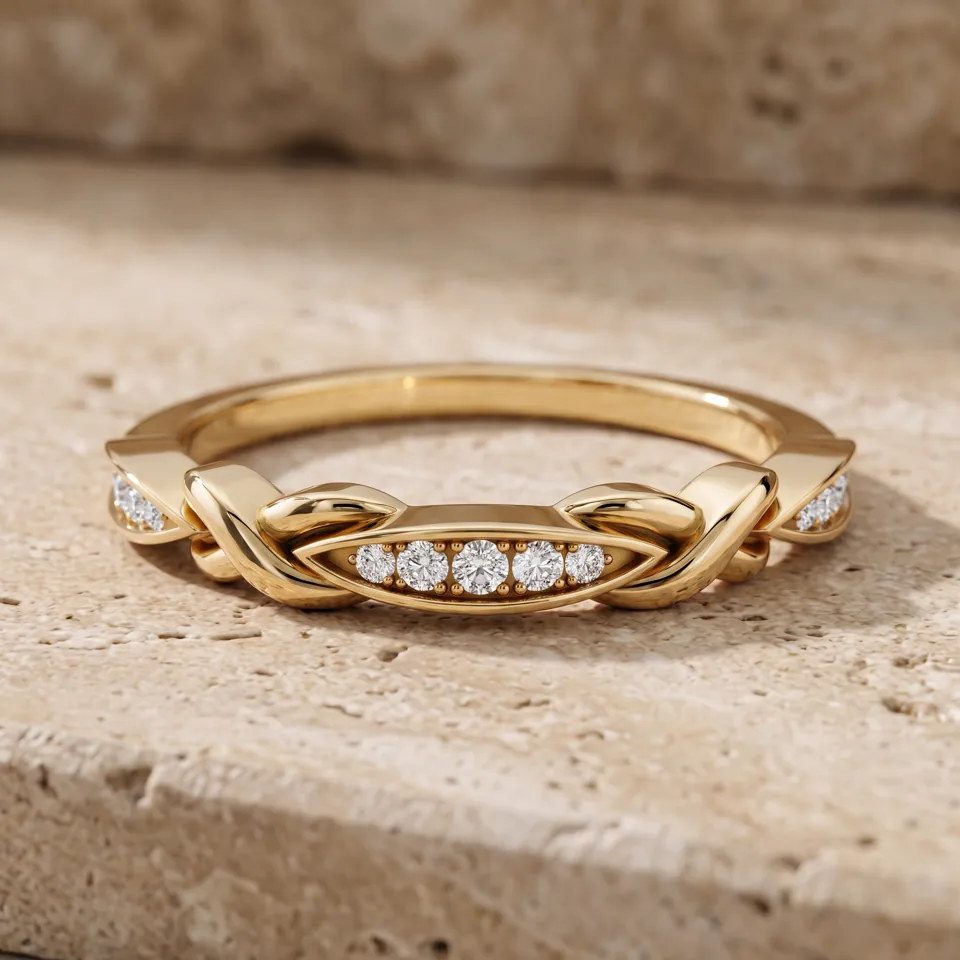 Twisted Gold Wedding Bands
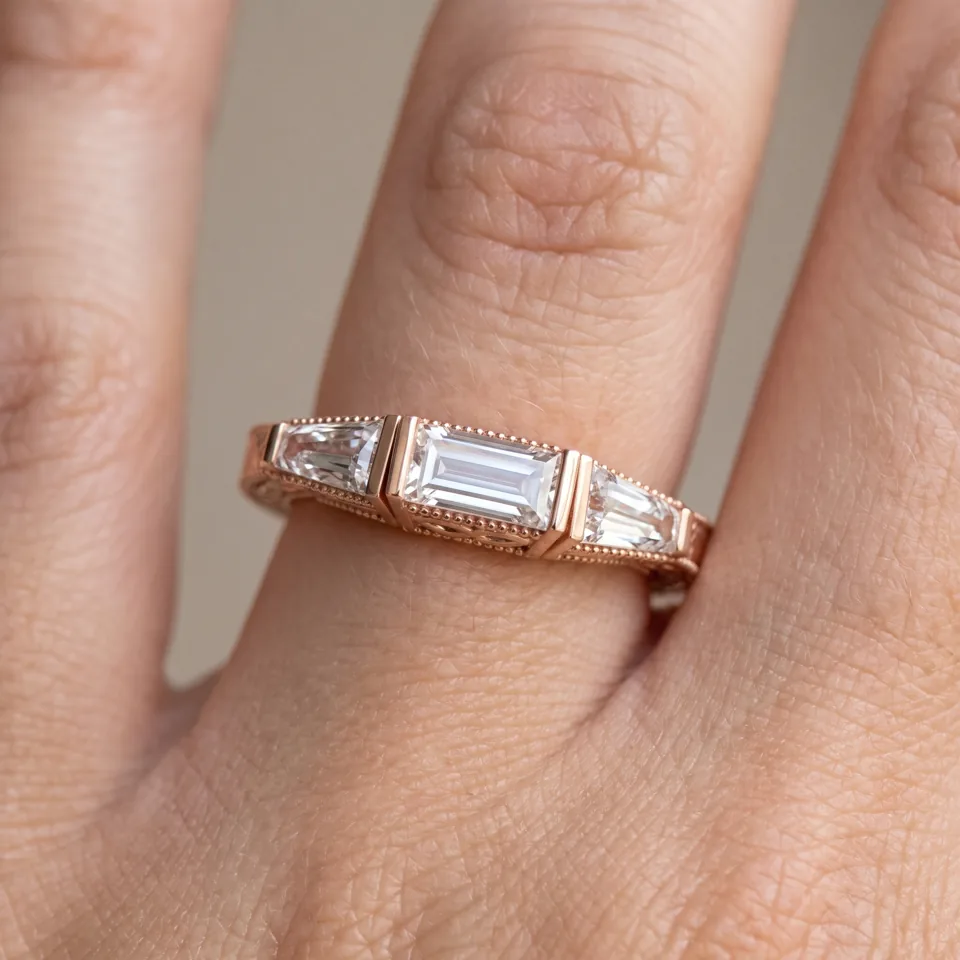
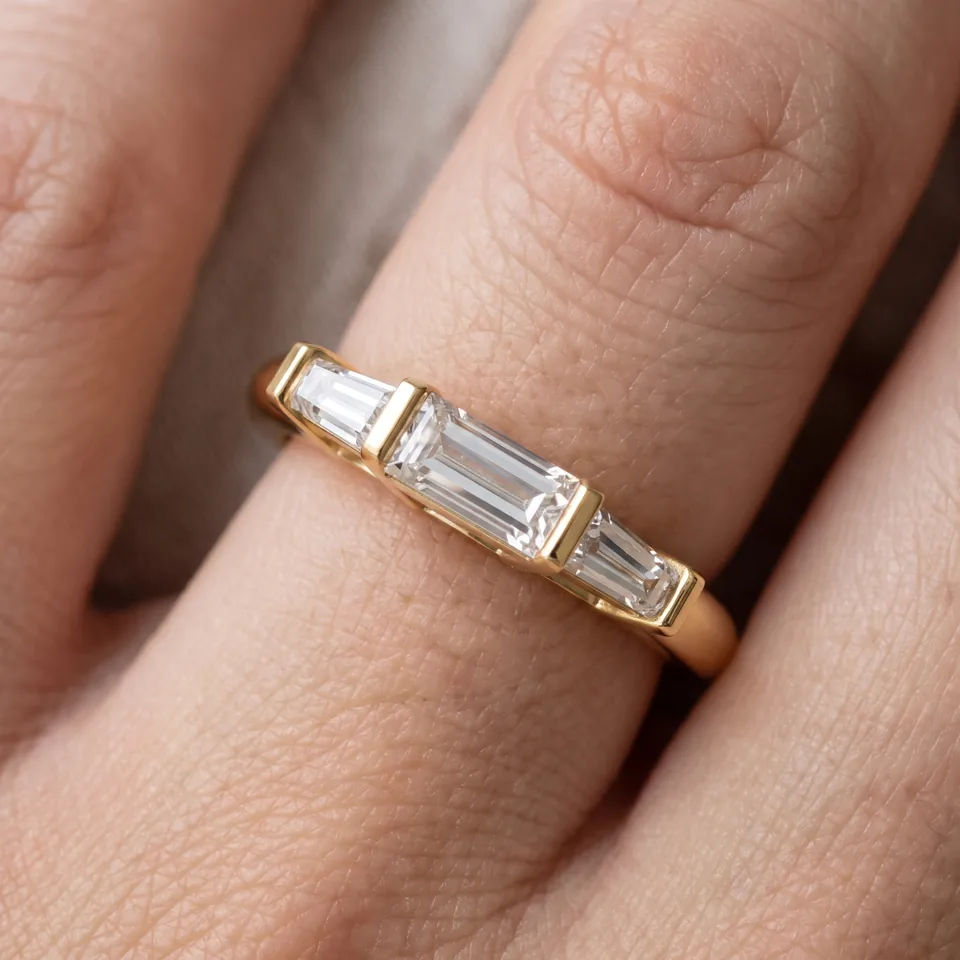 Gold Baguette Wedding Bands
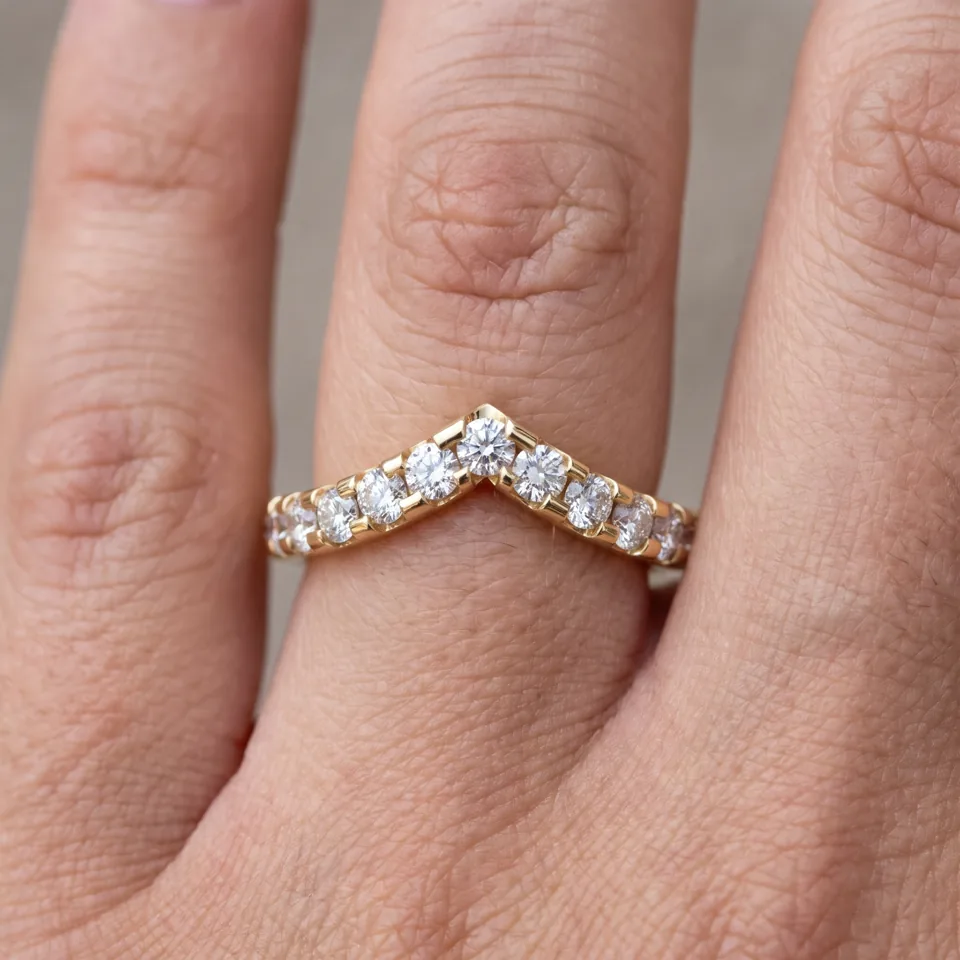 Gold Curved Wedding Bands
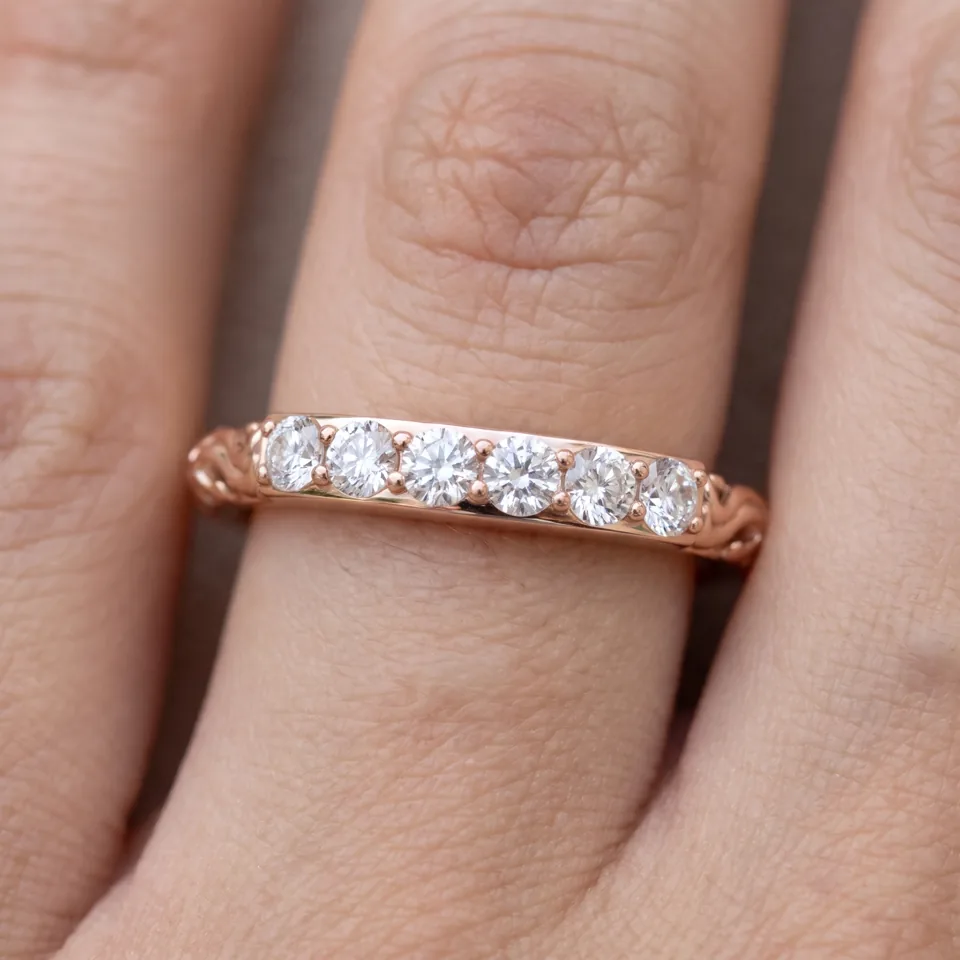 Gold Filigree Wedding Bands
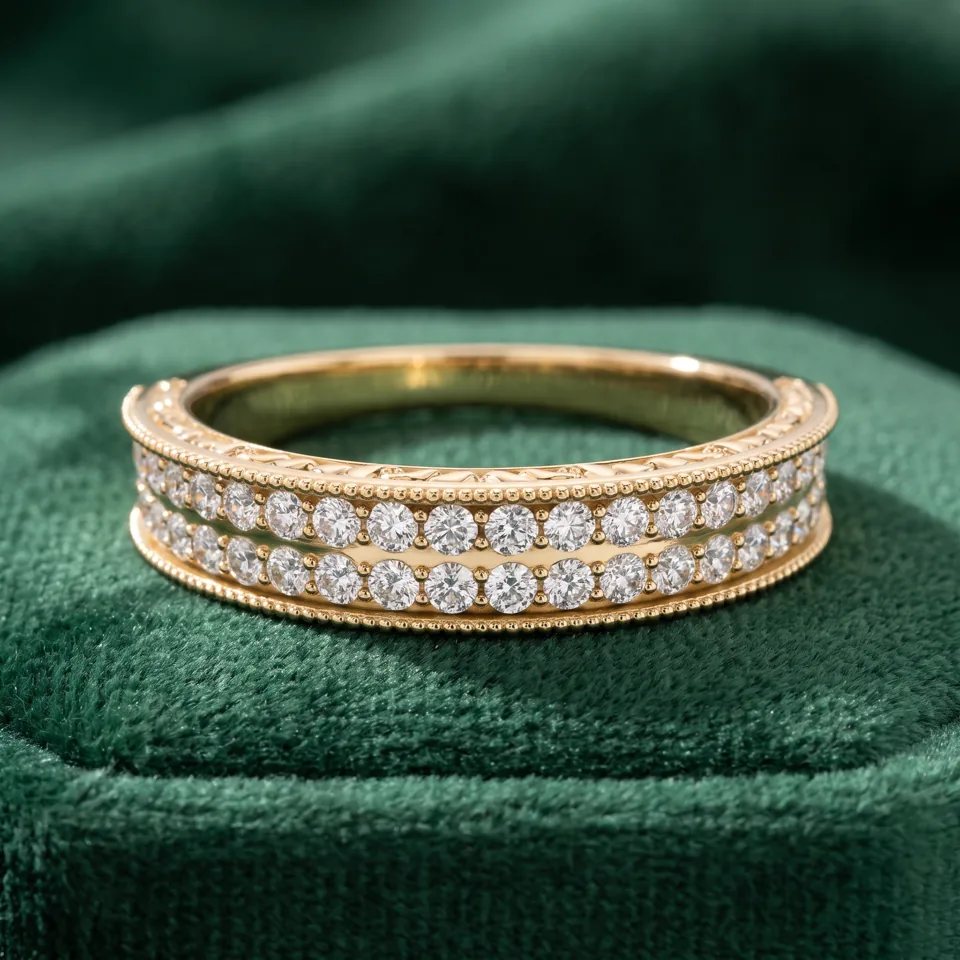 Gold Lab-Grown Diamond Milgrain Wedding Bands
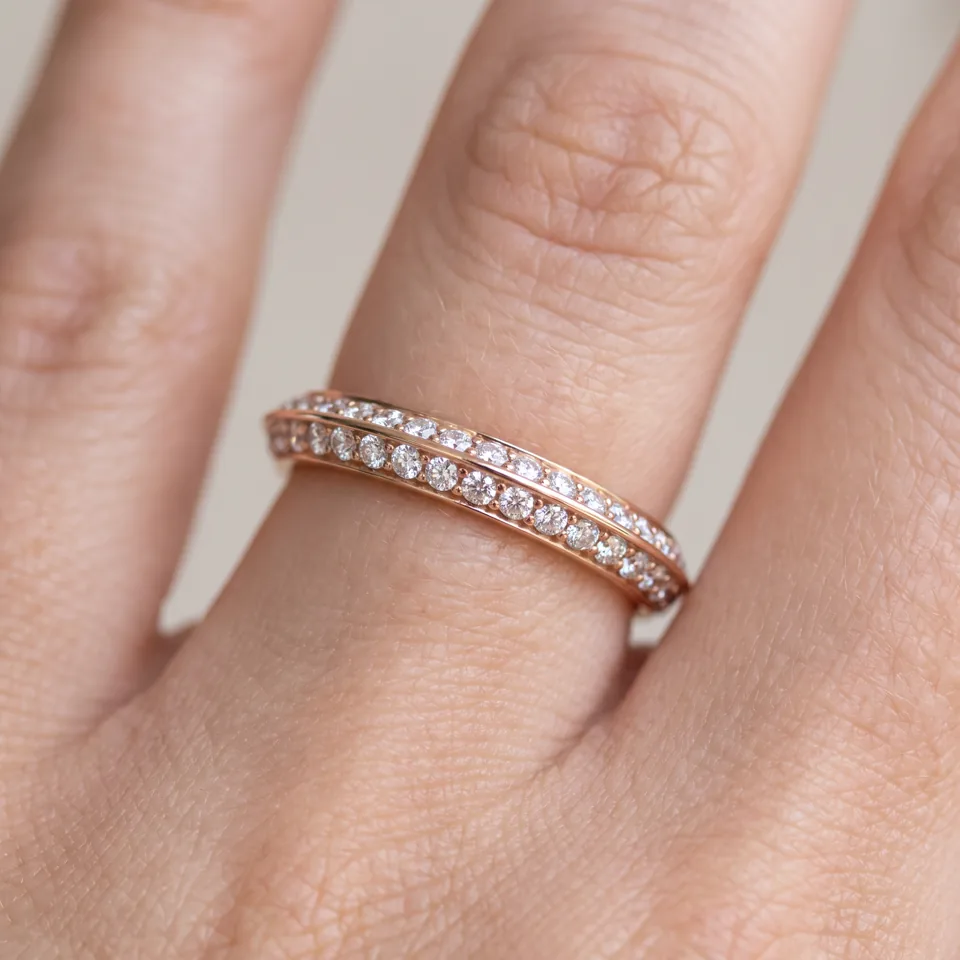
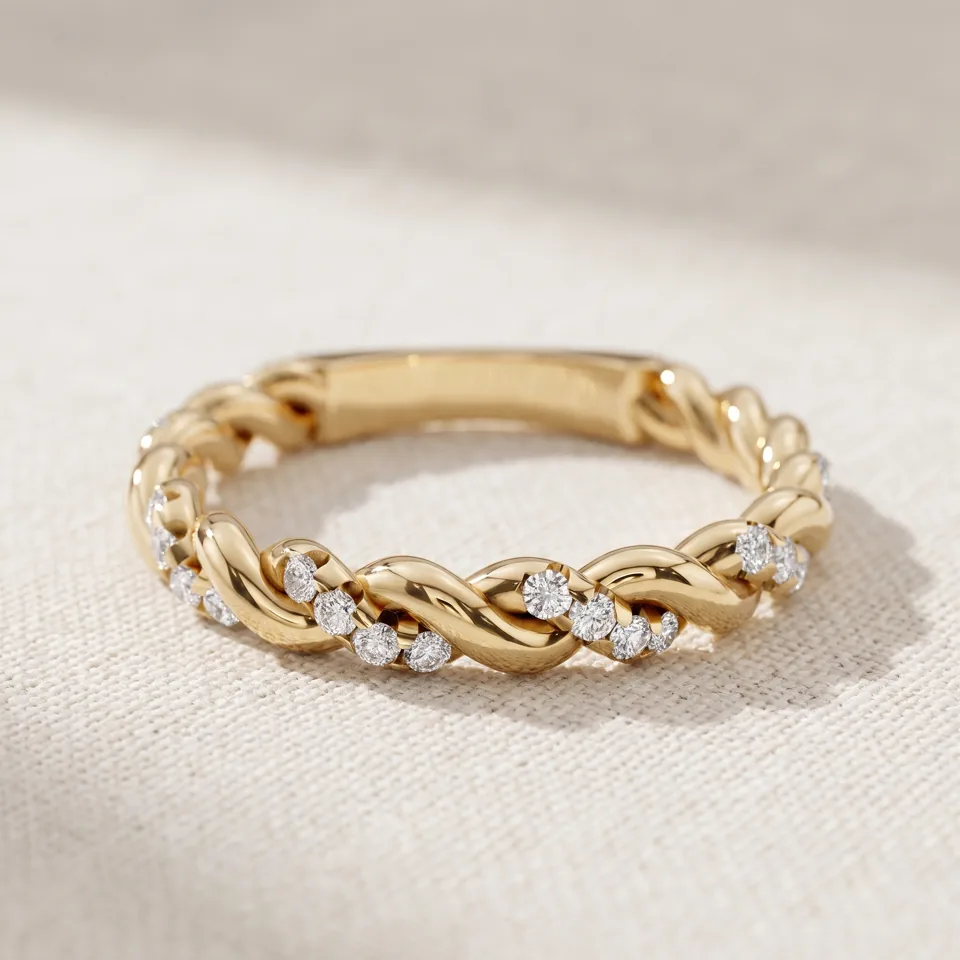 Gold Lab-Grown Diamond Pave Wedding Bands
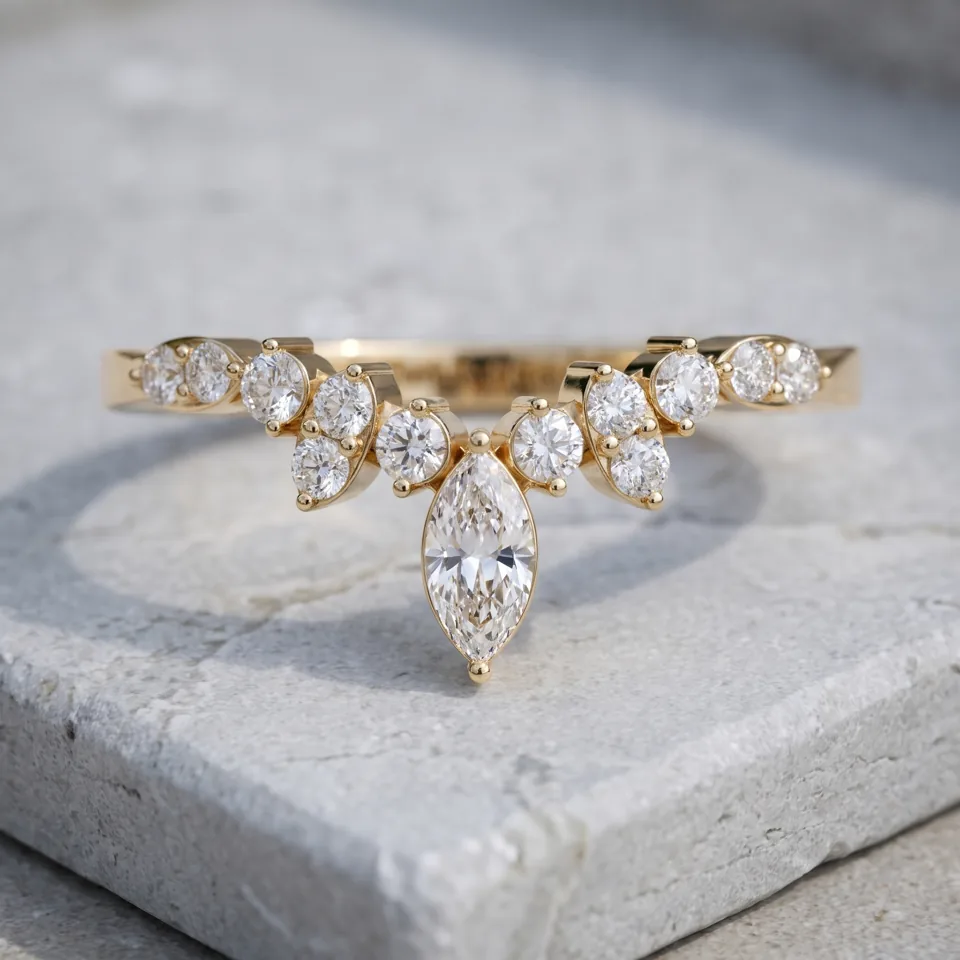 Gold Chevron Wedding Bands
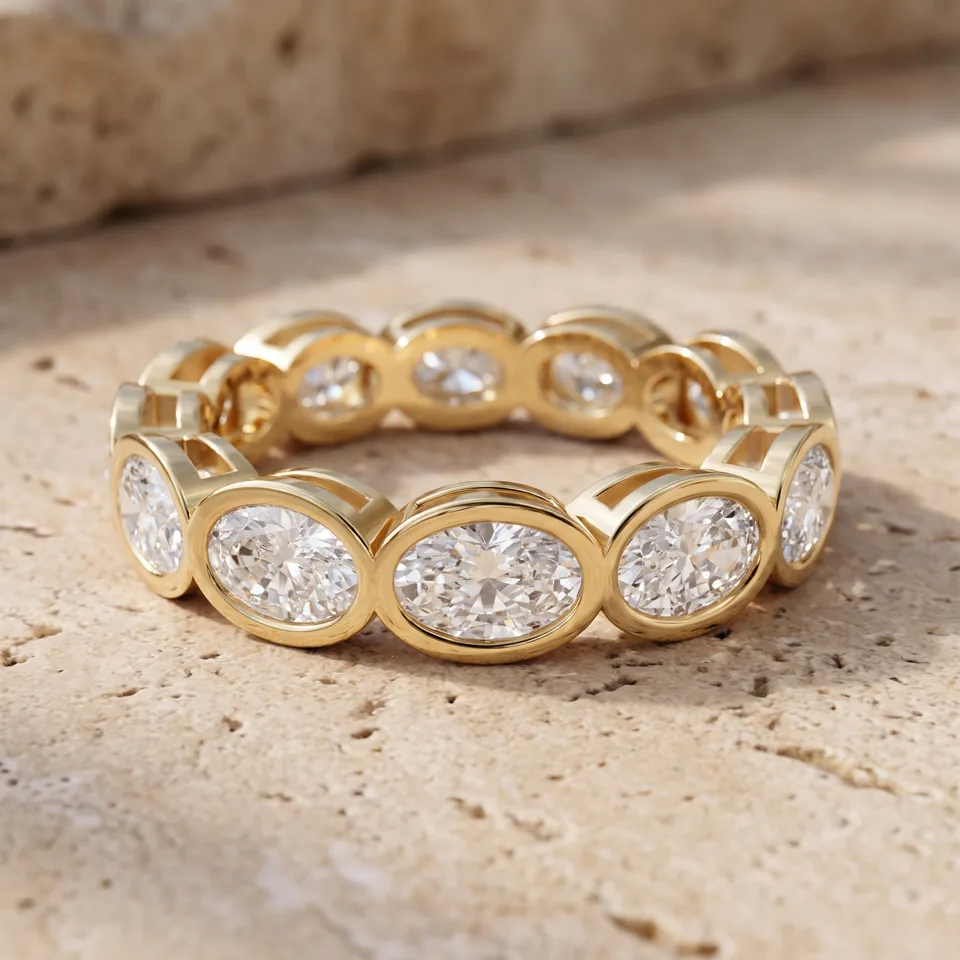 Gold Lab-Grown Diamond Bezel Wedding Bands
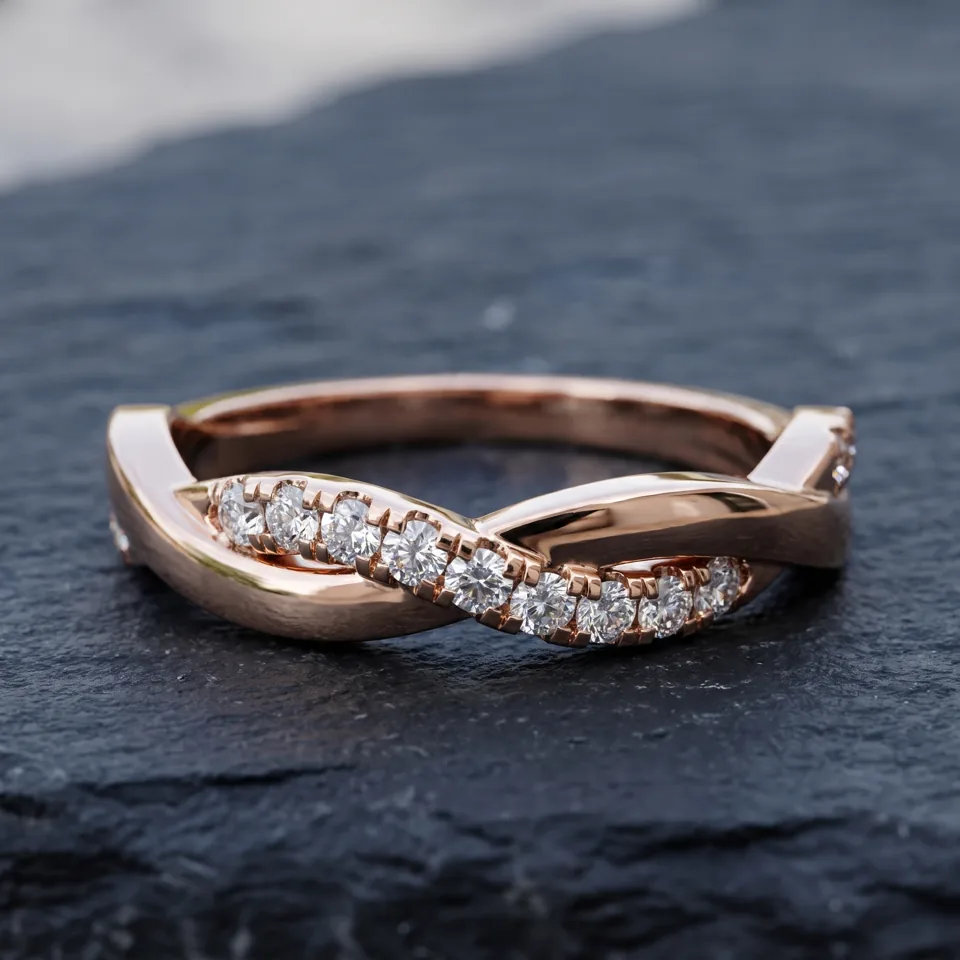 Gold Lab-Grown Diamond Infinity Wedding Bands
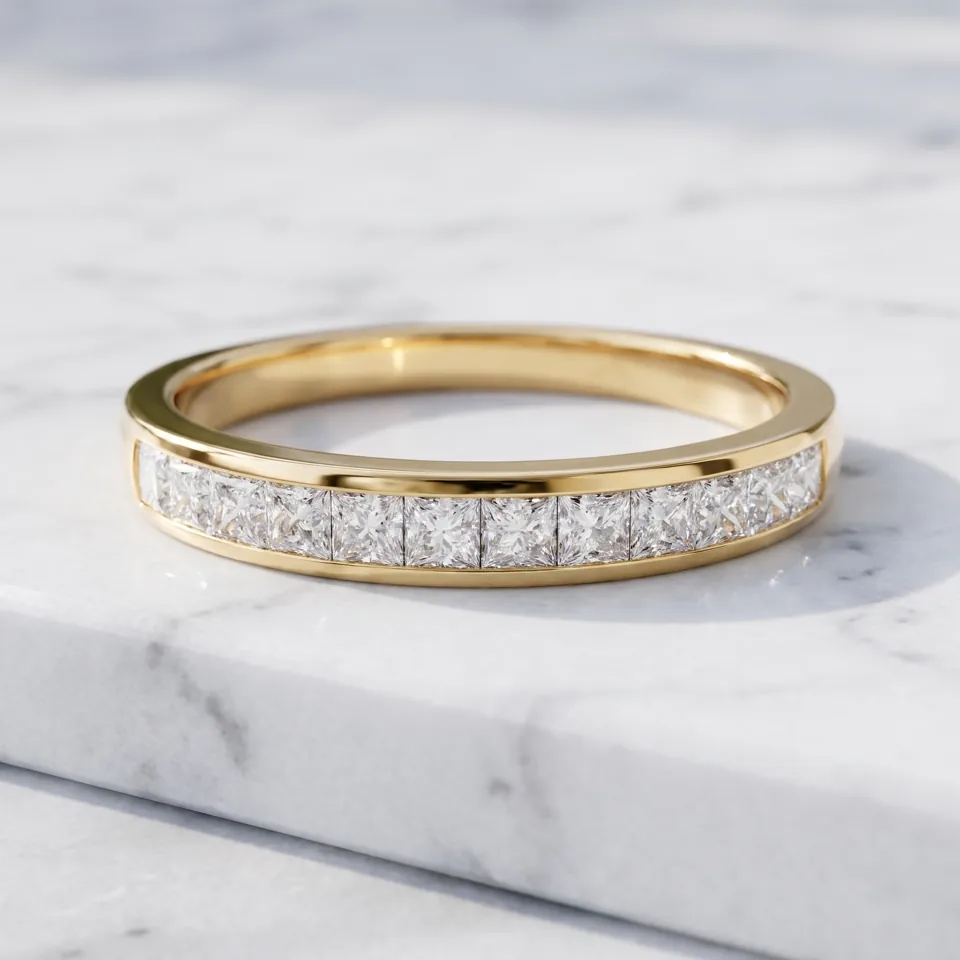
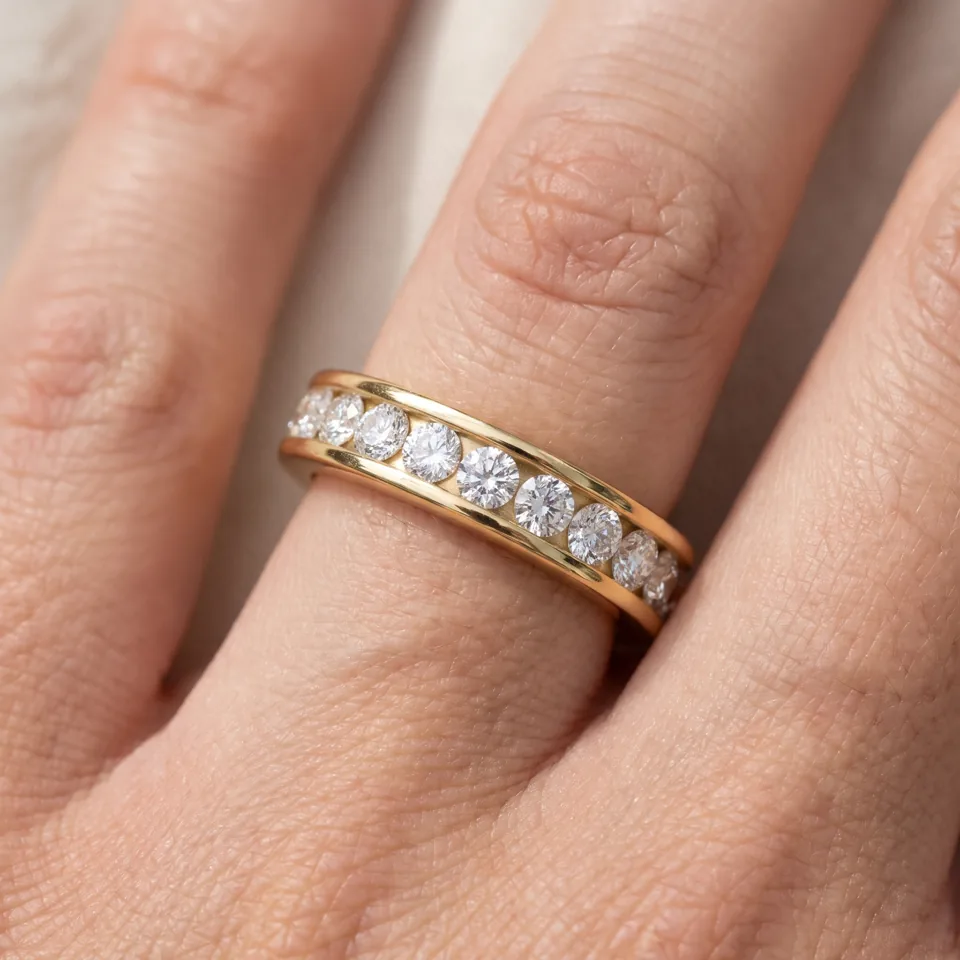 Gold Lab-Grown Diamond Channel Set Wedding Bands
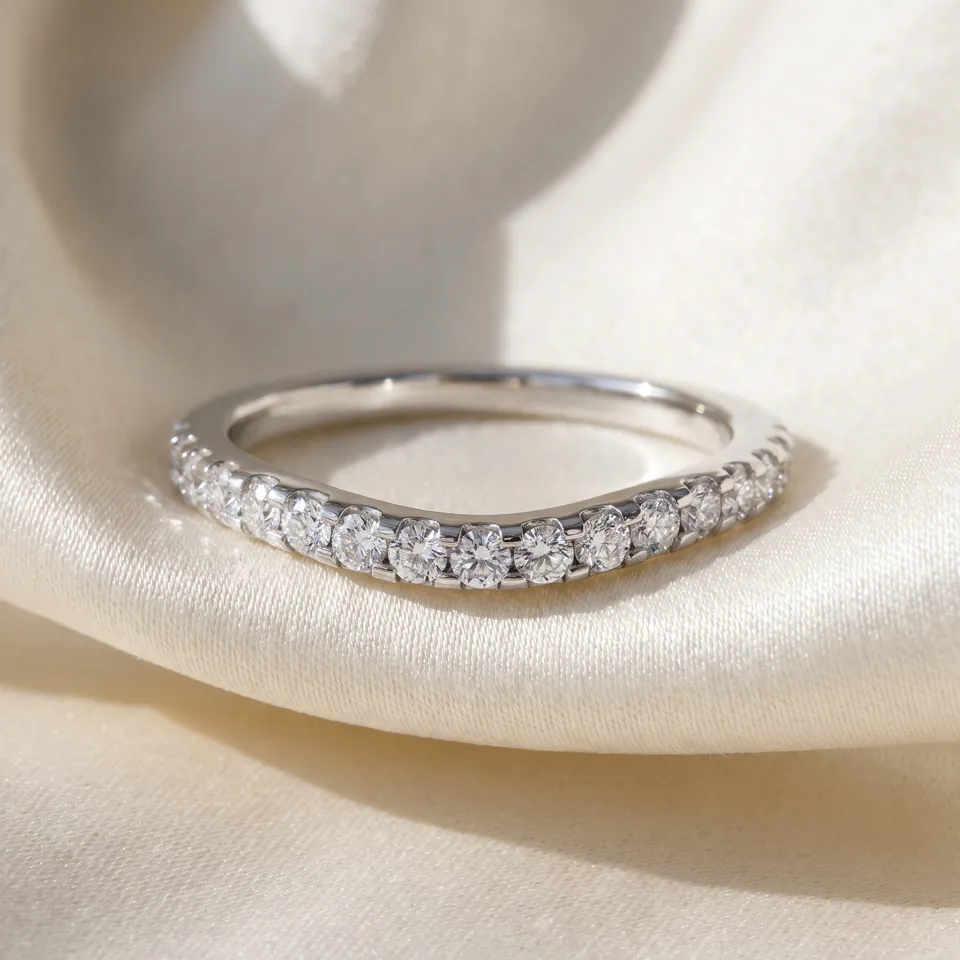 White Gold Lab-Grown Diamond Wedding Bands
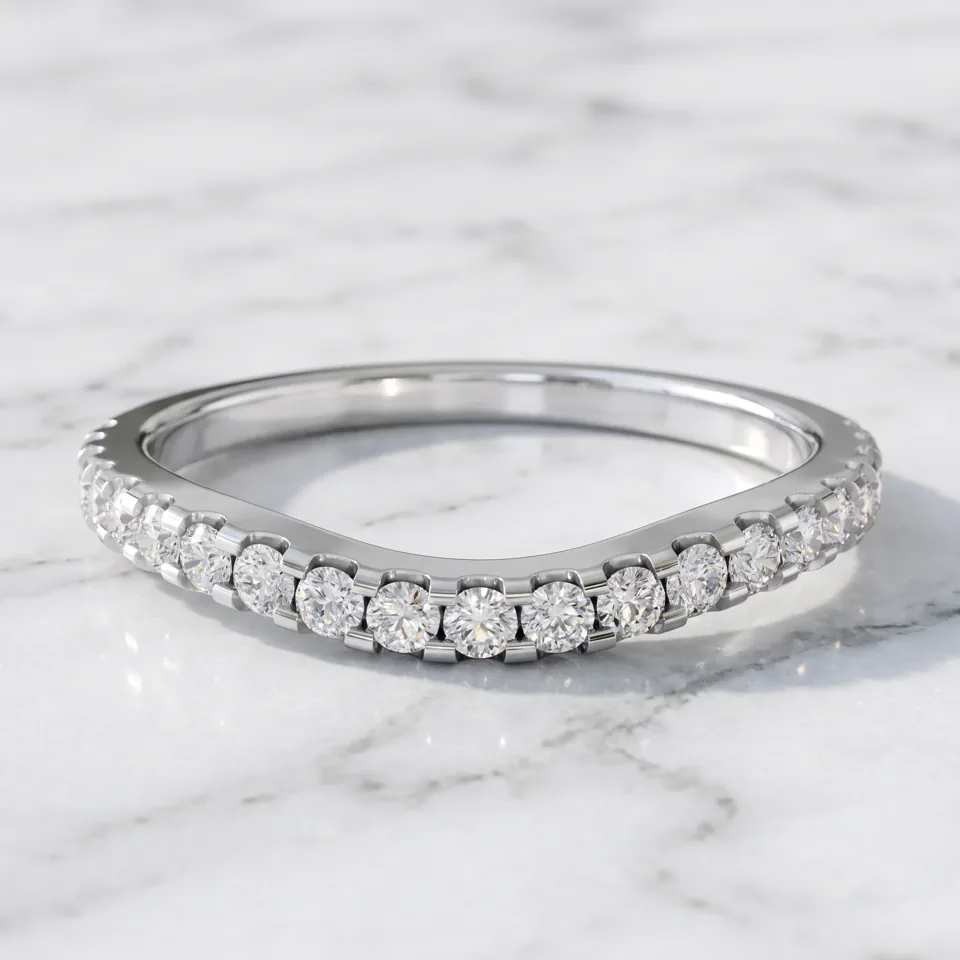 Platinum Lab-Grown Diamond Wedding Bands
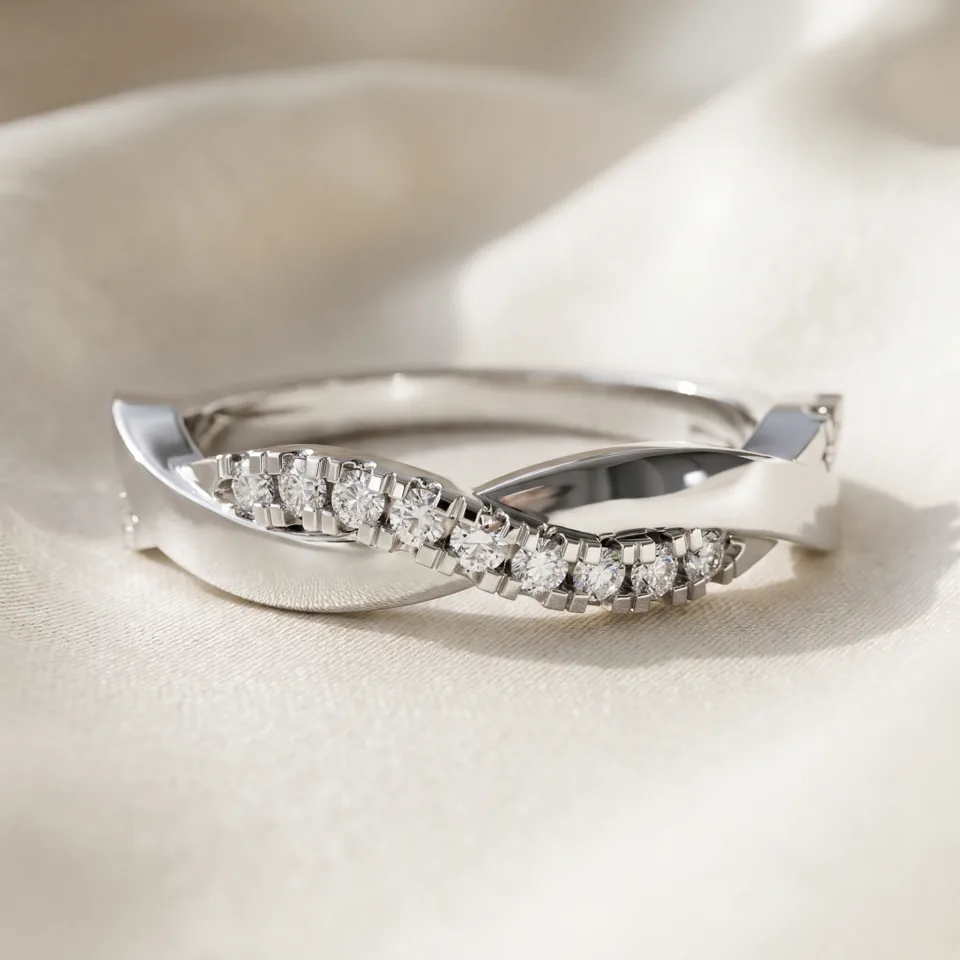 Sterling Silver Lab-Grown Diamond Wedding Bands
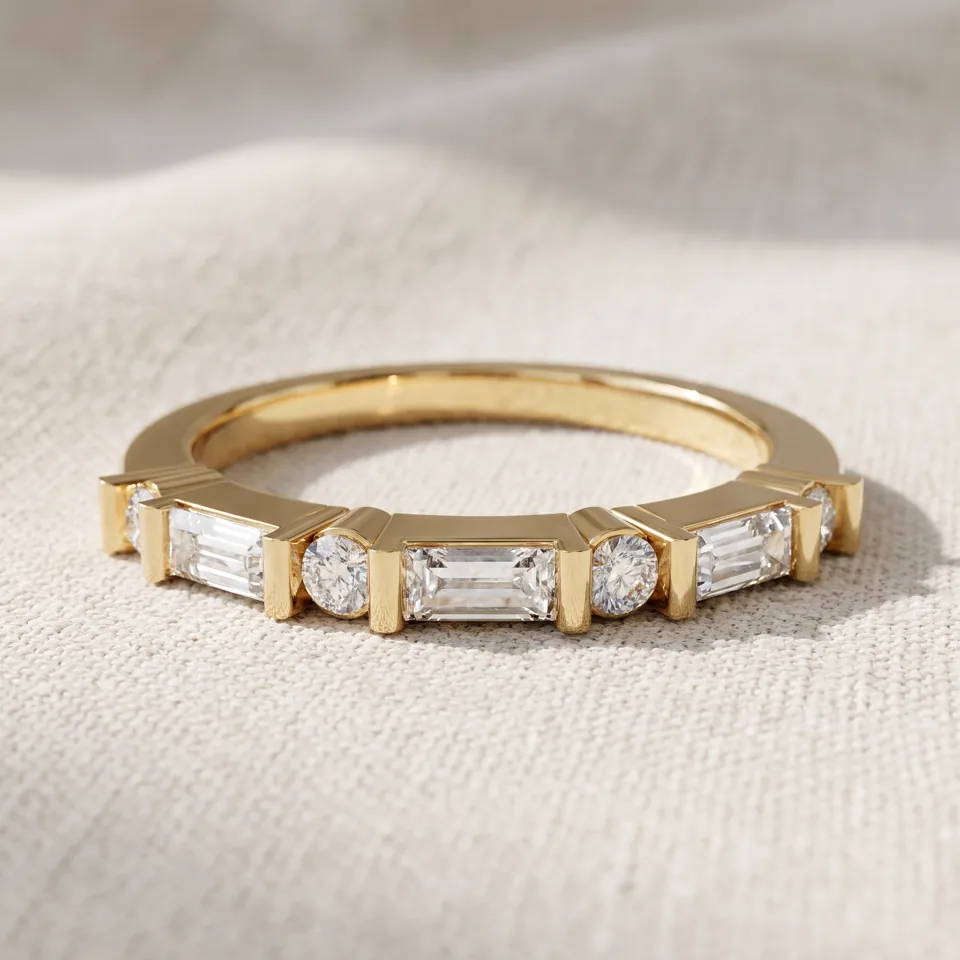 Yellow Gold Wedding Bands
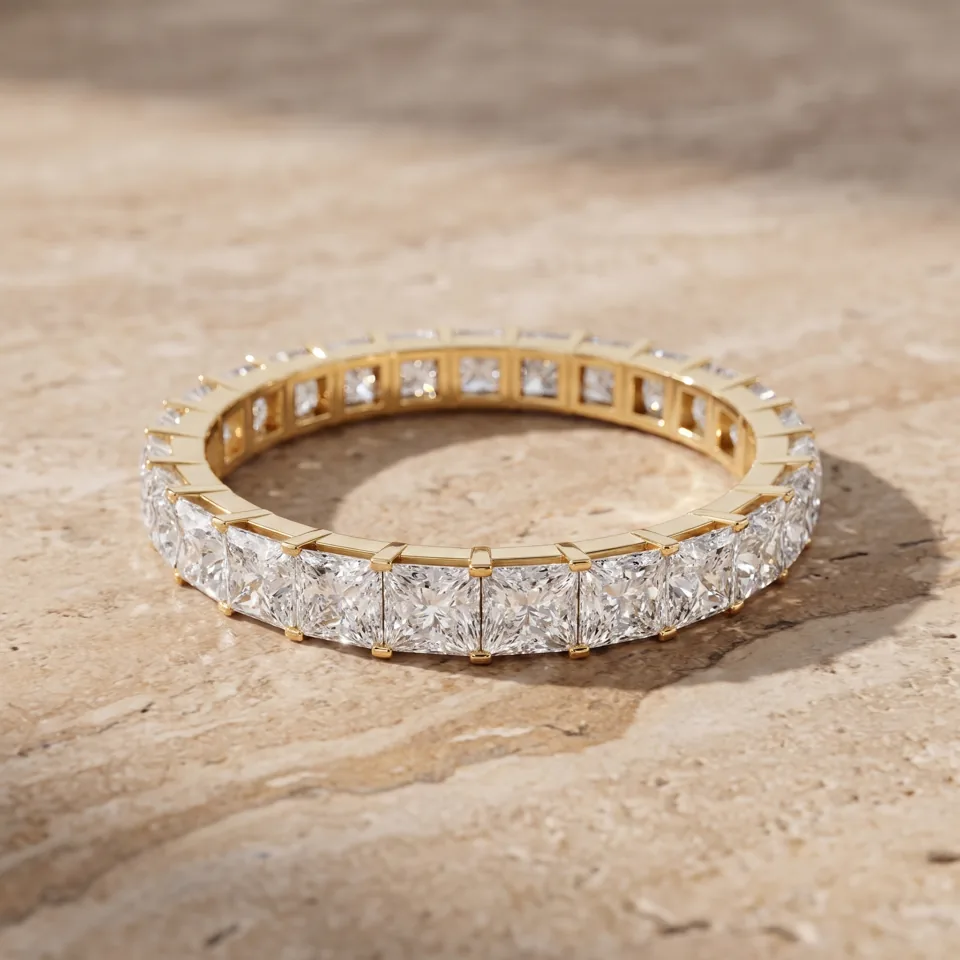
A half eternity band places lab-grown diamonds along the top only, with plain gold underneath. The bare underside feels smooth in your palm and leaves room for a resize later. Set the whole way round, a full eternity band shines from any angle, yet its size can't be changed without remaking it, so measure carefully before ordering.
When the engagement ring sits low or carries a halo, a straight band can sit apart from it with a visible gap. Curved and chevron bands bend around the center so both rings sit flush. Check your ring's profile before deciding: a high cathedral setting often lets a straight band slide underneath.
You can have any gold design on this page in 10K, 14K or 18K. Our 10K vs 14K vs 18K gold guide compares them side by side. A band rubs against desks, steering wheels and the engagement ring beside it, so hardness matters. 14K is the common middle, durable with good color. 18K looks deeper yellow or pinker but wears faster, and 10K is the toughest and the most affordable.
On a band the carat figure totals all the stones. Most designs here sit between 0.25 and 0.75 carat total weight, a delicate line that pairs well with a center stone. Some go to 1 or 2 carats total for a gold wedding band that holds its own when worn alone.
Bands are made for you in 10–15 days, and free insured shipping covers both directions. A single free resize is included if you ask within 60 days of delivery; on full eternity designs, that size change means remaking the band. Returns are accepted within 30 days, unworn and with the certificate.
For most people, 14K is the best karat for a wedding band. It copes well with everyday knocks while keeping a rich gold color. 18K, with a higher gold content, looks deeper in tone but scratches and bends more easily, and 10K, the hardest of the three, costs the least. All three are offered on Whitemoon gold bands, so you can match the karat of your engagement ring.
In the US, 14K gold is the most common karat for wedding rings, followed by 18K. 14K is about 58 percent pure gold, enough for good color while staying firm under everyday knocks. In many other countries, 18K and higher are more usual. Matching your engagement ring's karat keeps the two rings wearing at the same rate.
Whitemoon gold wedding bands with lab-grown diamonds start at about $400, and most designs at their smallest option fall between about $700 and $850. The price changes with karat, gold color and total carat weight, so choose 14K on the product page to see the figure for that band. Full eternity designs usually cost more than half eternity ones because they hold more stones.
Yes, the gold itself keeps value. Gold is priced by weight and purity, so an 18K band holds more metal value than a 10K band of the same size. The lab-grown diamonds add little on resale, though, so most of what you pay goes to the design and the making. Buy it to wear every day for decades, not as an investment.