Complimentary insured shipping, both waysEngagement ring diamonds certified by IGI or GIAGrown by light. Conflict-free by natureComplimentary insured shipping, both ways
Engagement RingsWedding BandsEarrings

NecklaceBraceletsAbout
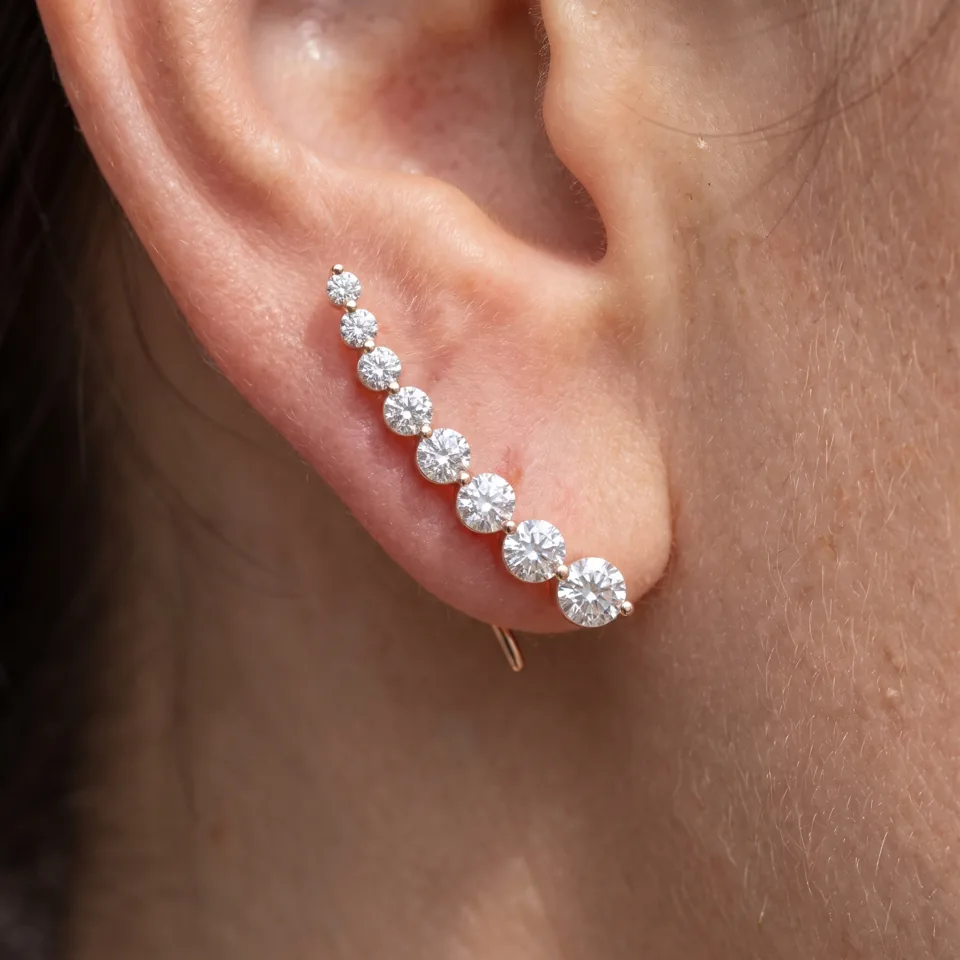
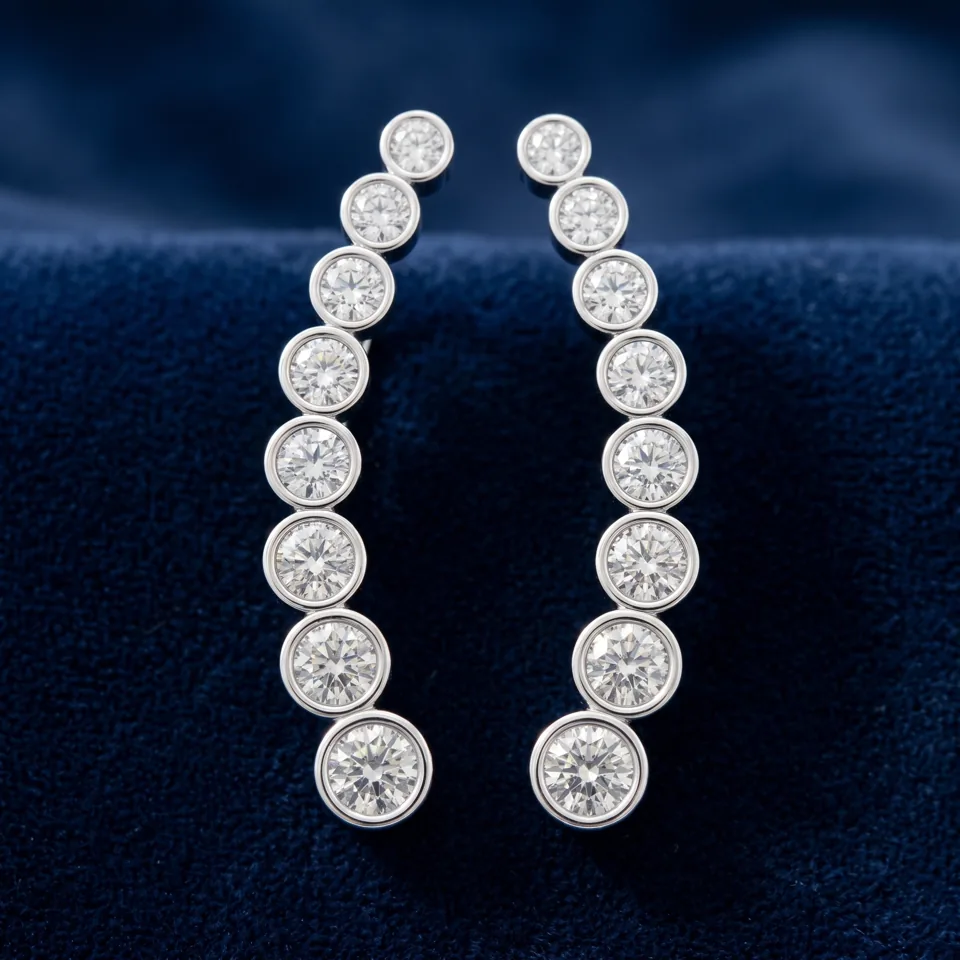
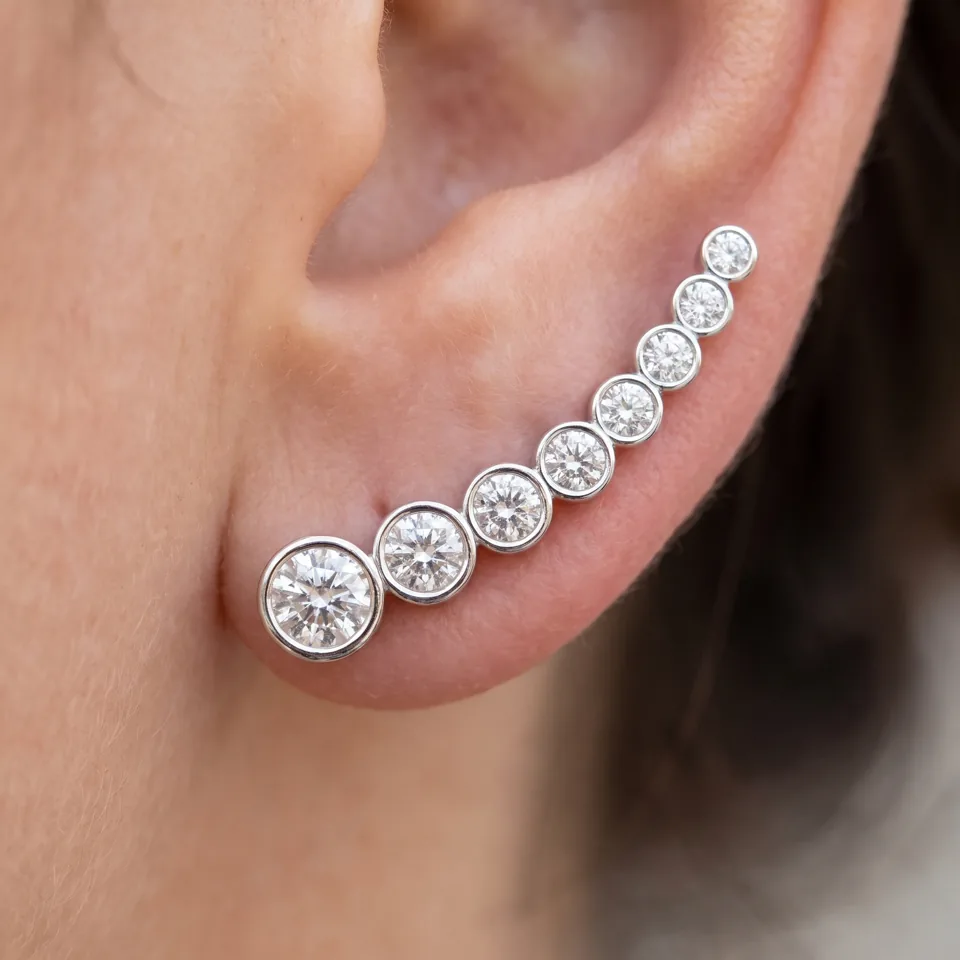
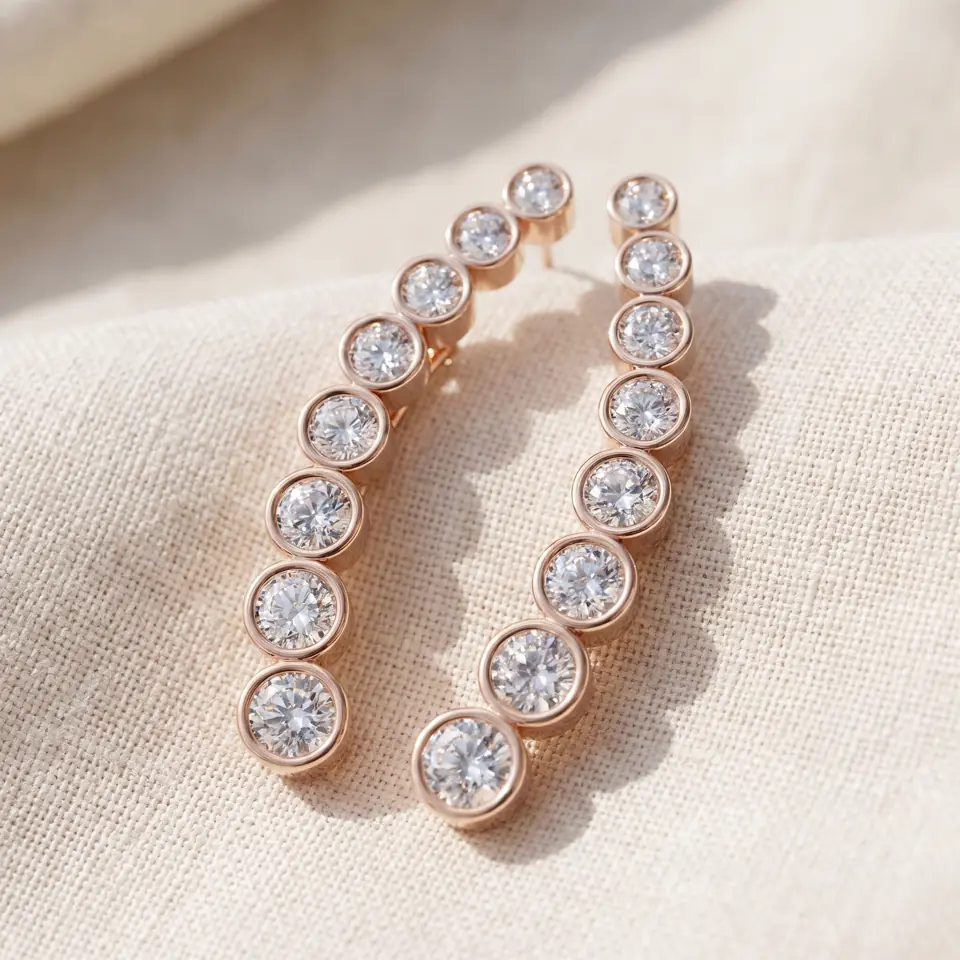
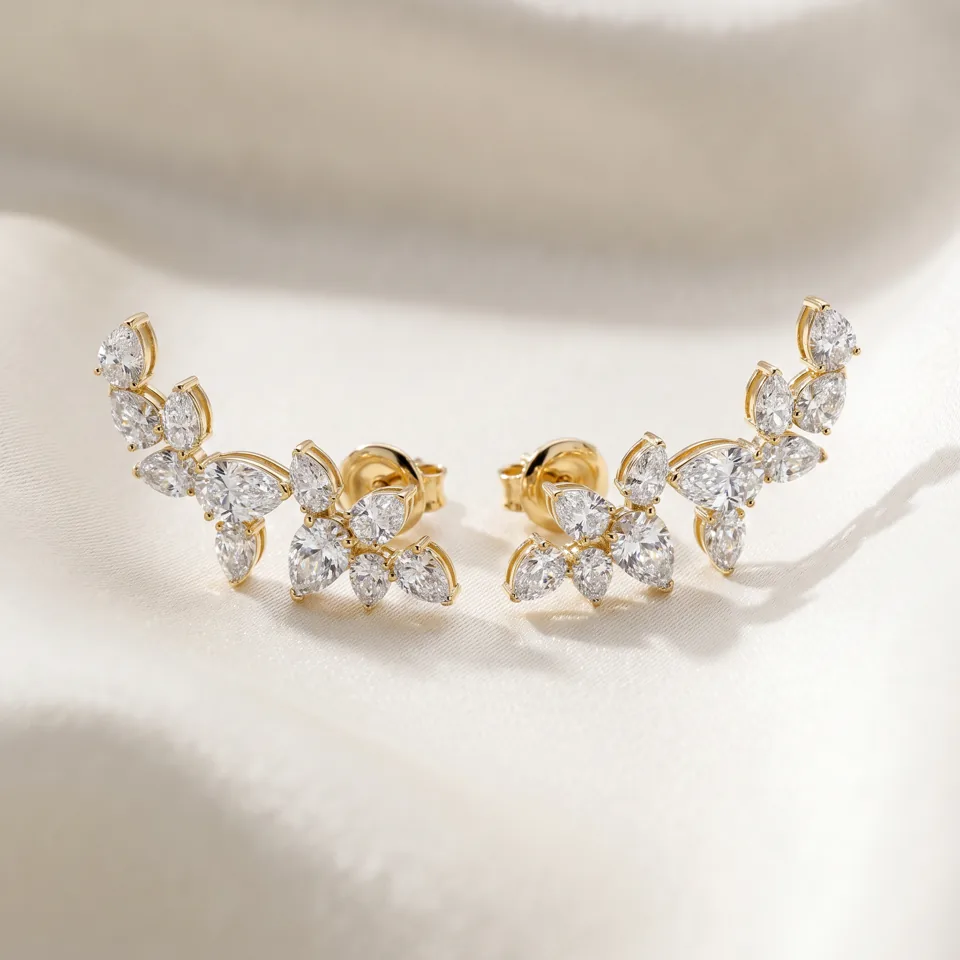
Climber earrings start at the lobe and trace the outer curve of the ear, so one piece looks like several studs in a row. These ear climber earrings carry lab-grown diamonds along curved wires, graduated lines and small floral clusters.
Pick the line you like, then the metal and how much carat weight you want.
Curved and graduated climbers follow the outer rim of the ear, with stones that shrink as they rise. They look tidy and suit a single piercing. Floral and cluster designs fill more of the lobe with small groups of lab-grown diamonds, giving a fuller, more decorative effect. Round stones appear on most designs, with marquise and pear shapes adding a pointed, leaf-like edge on a few.
Ear shapes vary a lot, so a climber sits slightly differently on everyone. A shorter climber stays close to the lobe and suits small ears; longer lines reach further up. The post goes through your usual lobe piercing, and the front follows the curve of the ear without a second hole. Our guide to types of ear piercings names each spot on the ear. Don't bend it yourself; if the angle feels off, a jeweler can adjust it.
That carat number counts every lab-grown stone across both earrings. On many designs, the menu offers 1-carat, 2-carat and 3-carat total weights; a few begin as light as 0.5 carat, and some climb as high as 10 carats for a bold lab-grown diamond ear climber. Pairs start under $200, and most cost between about $425 and $825 at their smallest option.
Your climbers are crafted to order and are ready in 10–15 days. Insured shipping is free in both directions, and you can send back an unworn pair with its certificate within 30 days.
An ear climber is an earring whose post sits in the lobe piercing while the front rises along the outer rim of the ear. The front is a line or curve of stones that looks like several earrings stacked together. Whitemoon's versions carry lab-grown diamonds in curved, graduated, floral and cluster designs.
Put the post through your lobe piercing with the line of stones pointing upward along the rim, and secure it with the back. Our guide to earring types and backs explains which backs stay in best. Let the front rest along the curve of the ear rather than pressing it flat. Wear it alone for a clean look, or pair it with a small stud or huggie in a second piercing.
Mainly through the post and back in your lobe piercing. The upper part rests against the ear and is held by the shape of the piece, so a secure back matters more than with a plain stud. If the top tips forward, the earring may be a little long for your ear, or the back may need tightening.
Yes, for most people, once the fit is right. Climbers weigh little and sit flat against the ear, so a full day in them is comfortable. Larger or heavier designs can tug on the lobe over time. Take them off before sleeping, and choose a shorter climber or a smaller total weight if your ears are sensitive.
Either way works. A climber in each ear gives a symmetrical, polished look. Many people wear one climber on a single ear and a simple stud on the other for a deliberately uneven style. It comes down to taste, your piercings and how much sparkle you want to show on each side.