Complimentary insured shipping, both waysEngagement ring diamonds certified by IGI or GIAGrown by light. Conflict-free by natureComplimentary insured shipping, both ways
Engagement RingsWedding BandsEarrings

NecklaceBraceletsAbout
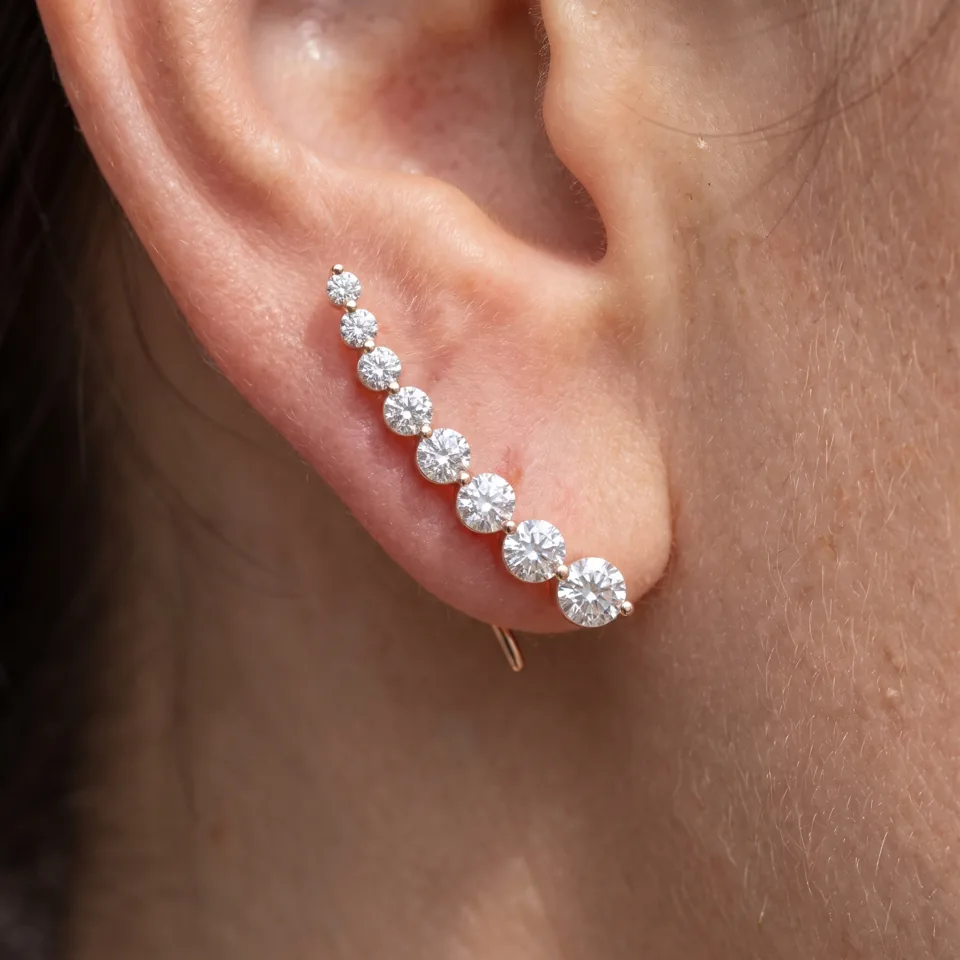
Yellow gold ear climbers begin at the lobe like a stud, then trail lab-grown diamonds up along the outer rim of your ear. You get the effect of a row of piercings from a single hole.
Round stones appear on most designs, with marquise or pear on a few. You'll choose the line's shape, 10K, 14K or 18K gold, and the carat weight.
A climber wears in an ordinary lobe piercing, and its front arm rises along the ear's curve. Ears vary, so a piece that hugs one ear closely may lift a little on another. Short, curved climbers usually lie flatter on more ears than long straight ones. Take them out before bed, since pressure from a pillow can bend the long front arm.
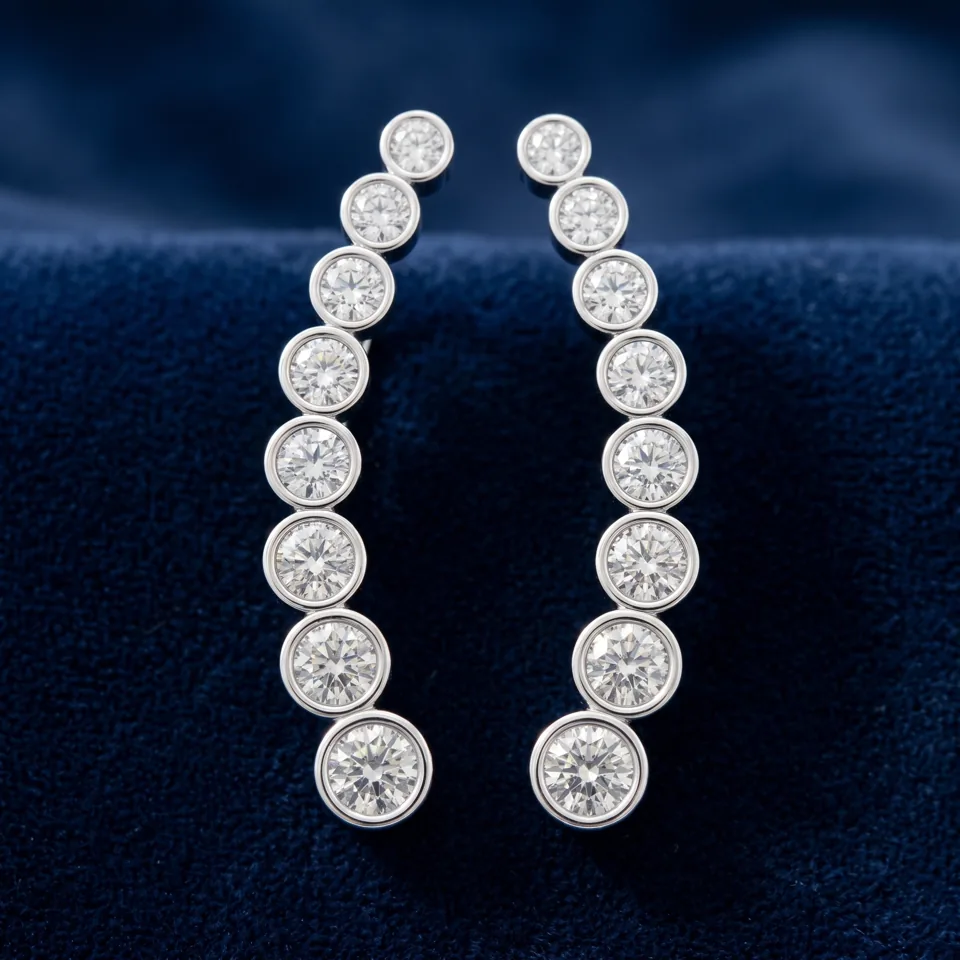
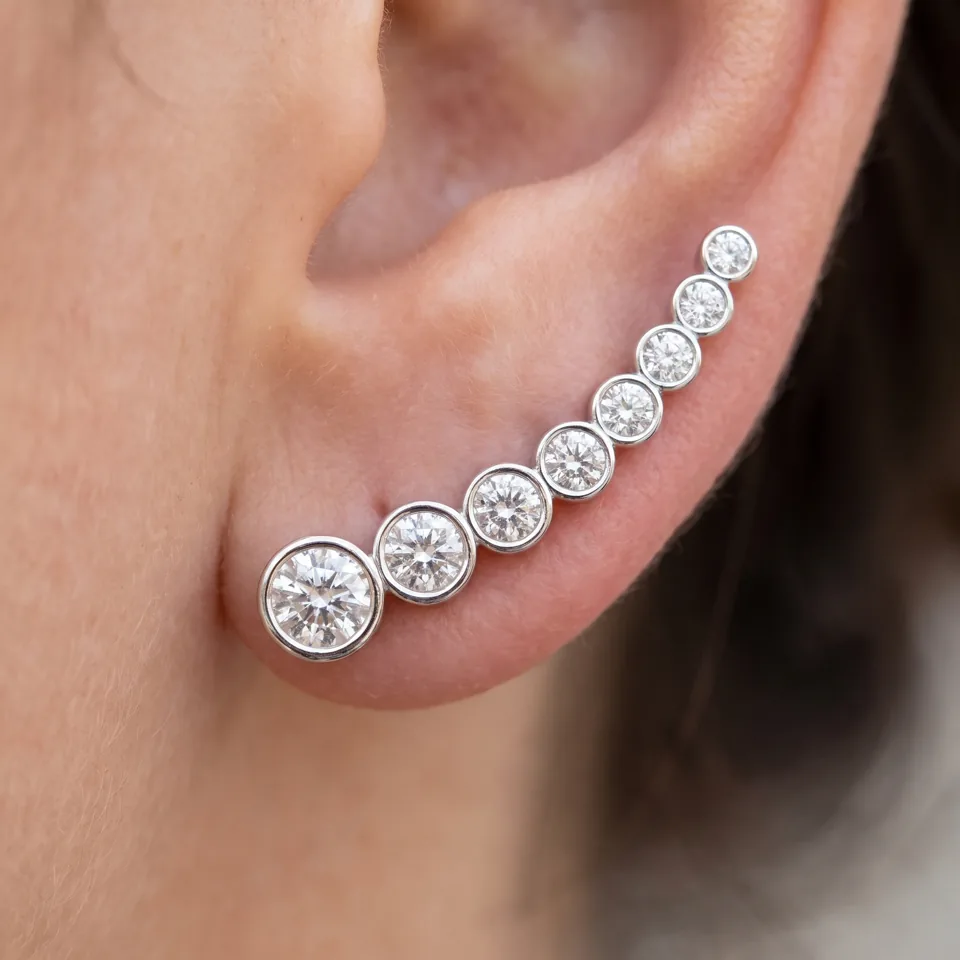
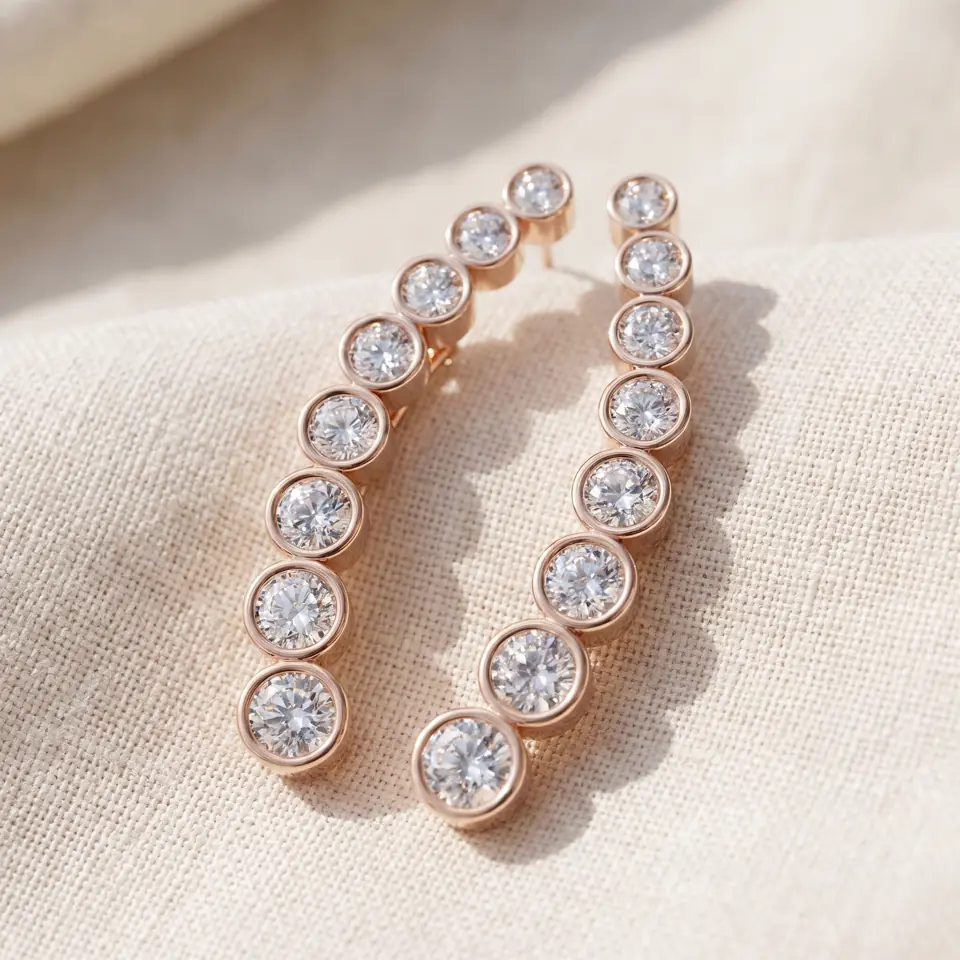
Curved designs trace the rim in a soft arc. Graduated designs put the biggest lab-grown diamonds near the piercing and taper them toward the top, matching how the ear narrows. Floral and cluster designs, such as a double plumeria or an ivy vine, bunch stones into motifs. One design holds its stones in bezels for a smooth edge.
For climbers, carat is the sum of every lab-grown diamond on the two pieces. A typical design here lets you choose 1, 2 or 3 carats in total weight; a handful start lower at 0.3 or 0.5, and some climb to 10. Because a climber covers more of the ear than a stud, even 1 carat shows plenty of sparkle. Prices start under $400, and the lightest option on most designs falls around $430 to $930.
Each pair is made for you in 10–15 days, with free insured shipping out and back. Unworn climbers can be returned with their certificate within 30 days.
Yes. They remain a popular choice, since one piercing can pass for a whole row, and they pair easily with studs or huggies. Curved and graduated lines look clean and understated, while floral designs read more decorative. In yellow gold with lab-grown diamonds, they work from daytime through to evening.
No. An ear climber wears in one ordinary lobe piercing. The post goes through the hole just as a stud would, and the front arm runs up along the curve of your ear, so it looks like a row of piercings. You can still add huggies or studs in any other holes you have.
It's better not to. Pressure from a pillow can bend the long front arm, and the stones can press into your ear. Climbers also catch on bedding more easily than a small stud does. Take them off at night and lay each pair flat so the arms keep their shape. A small stud or huggie is a better choice for sleeping.