Complimentary insured shipping, both waysEngagement ring diamonds certified by IGI or GIAGrown by light. Conflict-free by natureComplimentary insured shipping, both ways
Engagement RingsWedding BandsEarrings

NecklaceBraceletsAbout
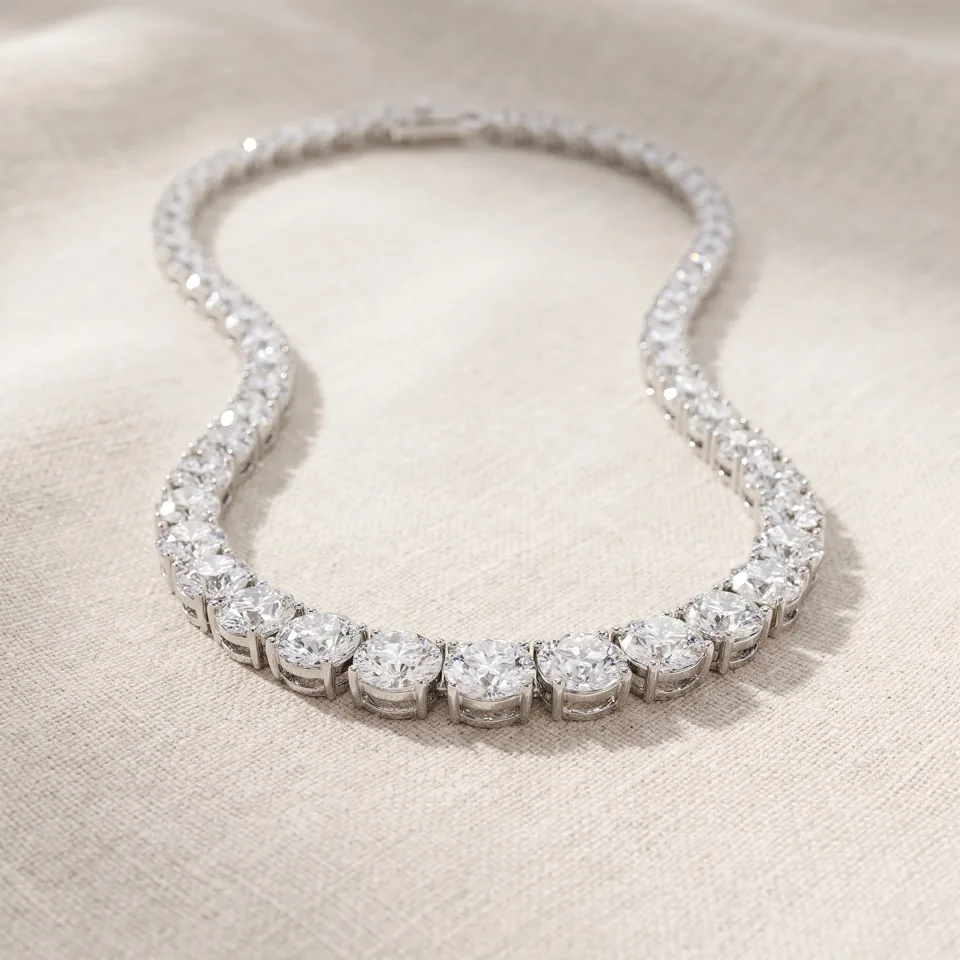
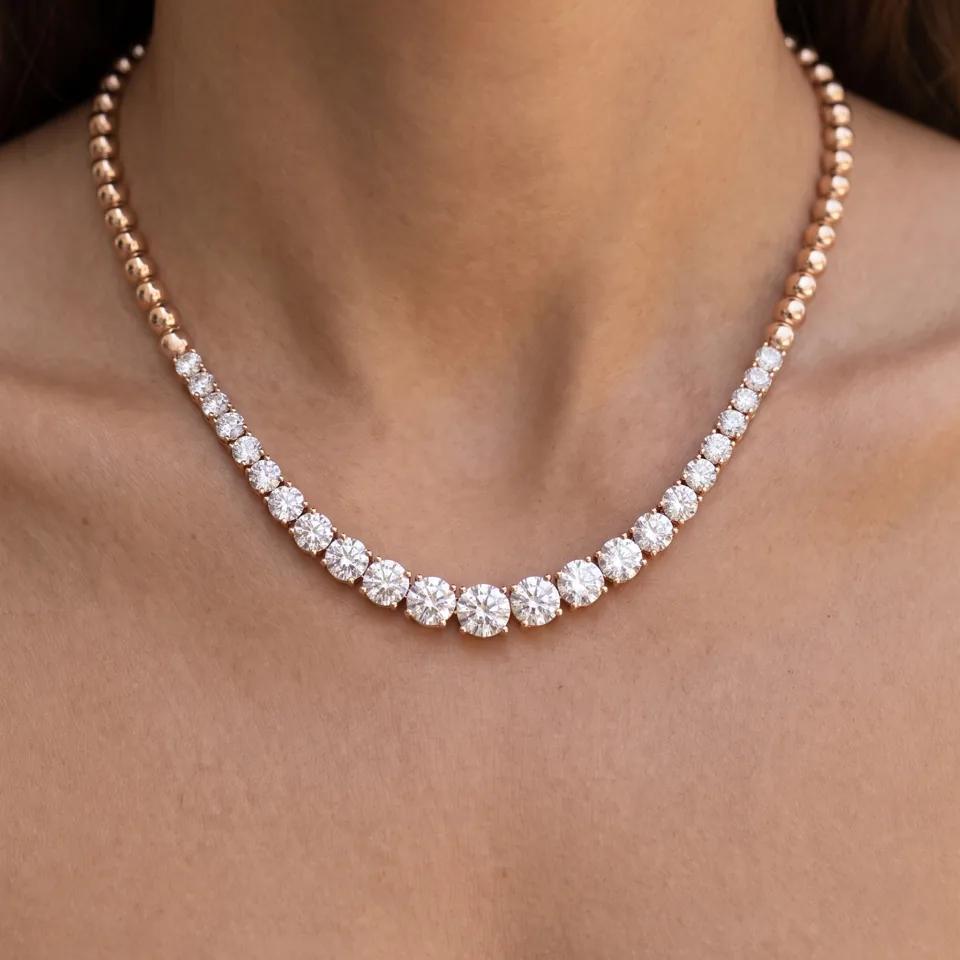
A tennis necklace is one supple strand of lab-grown diamonds linked from clasp to clasp. The name comes from the bracelet, and our tennis bracelet guide checks the story behind it. Most designs here use round stones, and many are graduated, with the lab-grown diamonds stepping up in size as they reach the front.
Start with the look you want, a uniform line or a graduated one. After that, settle on the metal color and the total carat weight.
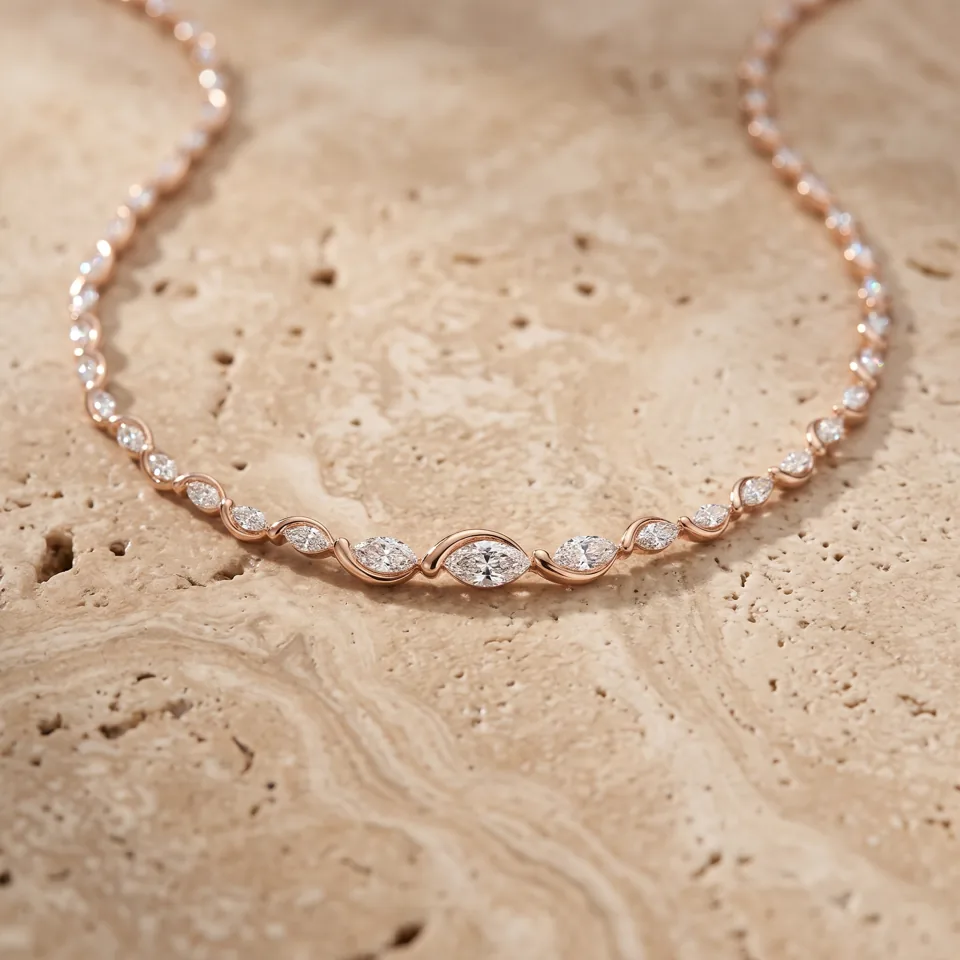
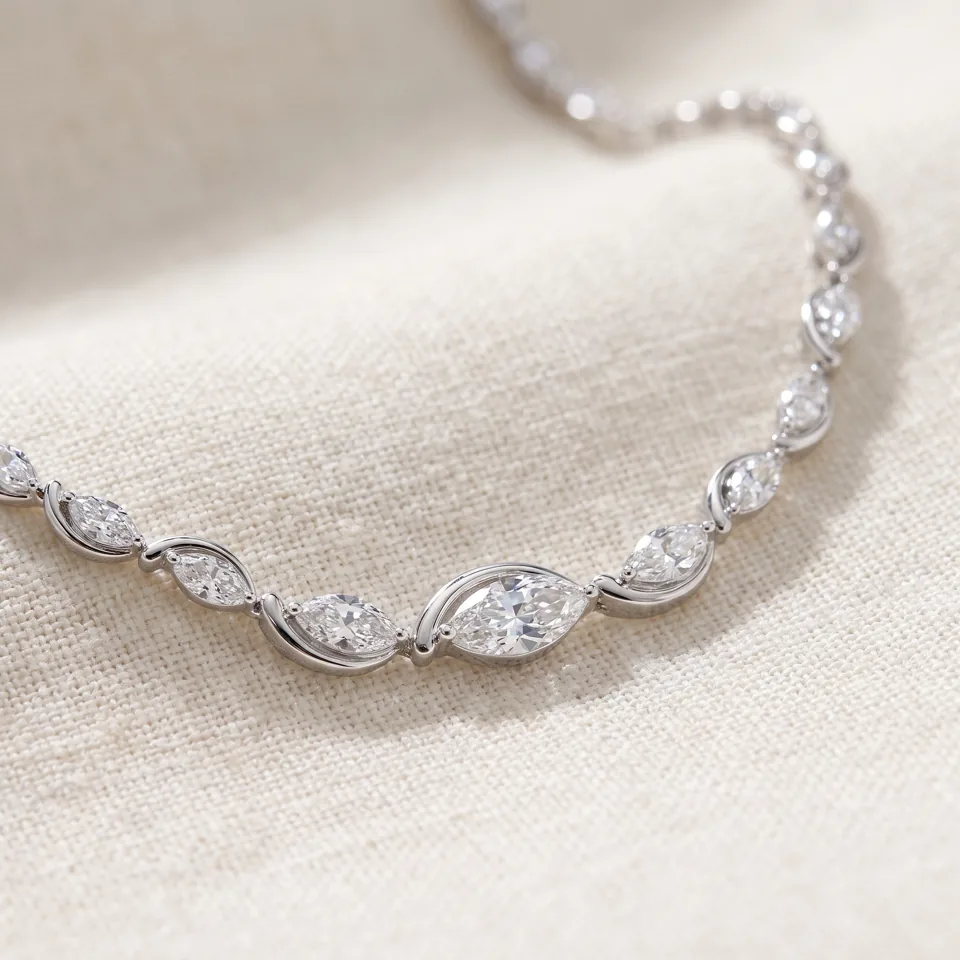
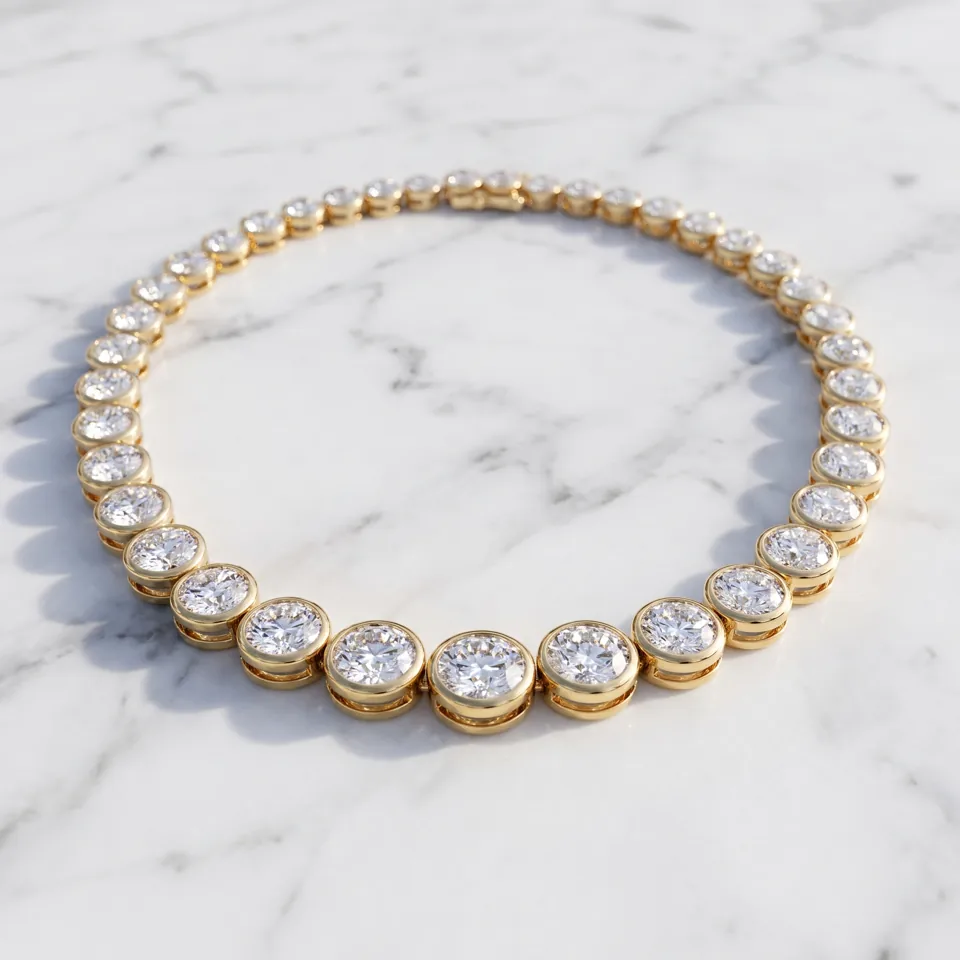
In a graduated design the biggest lab-grown diamonds rest just below your throat and shrink gradually toward the clasp. That draws the eye to the front and keeps the back light against the skin. An even line, where every stone matches, looks the same from any angle and reads as more classic. One design sets each stone in a bezel, a thin metal rim that gives a smoother edge and catches less on knitwear, and a riviera design links marquise lab-grown diamonds in a gentle wave.
Carat here adds together every lab-grown diamond on the strand. On most designs the weight choices are 10, 15 and 20 carats in total; a few add lighter options starting at 3 carats total weight. At 10 carats the line shows clearly from across a room without feeling heavy. Higher weights use bigger stones, so the necklace gets wider and weightier, which suits evenings more than a work day.
Each design can be ordered in 10K, 14K or 18K gold, white, yellow or rose. For a lower price there's Silvadium, a tarnish-resistant sterling silver. Both white gold and silver keep the strand cool and bright against the skin. Warm gold tones show a thin edge of color around each stone. If you can't decide, 14K sits in the middle: tougher than 18K, with deeper color than 10K.
Most designs grip each stone with prongs, leaving the lab-grown diamonds open to light from nearly every side. Look at how the links join, since flexible links let the necklace lie flat at the collarbone. Check the clasp once in a while, and store the piece flat or hanging so the links don't tangle.
Your necklace is crafted for you in 10–15 days and comes with free insured shipping to you and on any return. You have 30 days to return it unworn with its certificate. If the length is wrong, one size change within 60 days of delivery is free; since a tennis necklace can't be shortened or lengthened, it is remade at the new length. Our necklace length chart shows where each length sits before you choose.
Whitemoon's lab-grown diamond tennis necklaces begin near $1,200; at the smallest weight, most designs land somewhere from about $3,000 to $5,000. A lab-grown stone is chemically and physically a diamond, only its origin differs, and its price sits well below a mined stone of matching size. Total carat weight and gold karat shift the price most.
Yes. A single line of stones works with almost any neckline, from a T-shirt to an evening dress, which is why the tennis necklace has stayed a staple for decades. Graduated designs, where the stones grow toward the front, give the classic shape a slightly bolder outline, and the style looks equally at home in yellow, rose or white gold.
For most people, 10 carats total weight is a good place to start. It's the lightest option on most Whitemoon designs and gives a clear line of sparkle for both daytime and evening. Moving to 15 or 20 carats total weight uses noticeably larger stones for a bolder look, while a few designs start at 3 carats for a finer necklace.
Yes, with a little care. Lab-grown diamonds sit at 10 on the Mohs hardness scale, which keeps the stones themselves from scratching, but prongs and links do wear. Take the necklace off for sleep, swimming and workouts, and look over the clasp and prongs now and then. Gold holds up better to daily wear than silver, and 14K is a sensible pick for everyday use.
It is worth it if you'll wear it often and value it as jewelry rather than as an investment. Lab-grown stones resell for little, although gold always holds some worth as metal. What a lab-grown diamond tennis necklace gives you is a lot of sparkle per dollar: far more total carat weight than a mined necklace at the same budget.