Complimentary insured shipping, both waysEngagement ring diamonds certified by IGI or GIAGrown by light. Conflict-free by natureComplimentary insured shipping, both ways
Engagement RingsWedding BandsEarrings

NecklaceBraceletsAbout
Twisted split shank engagement rings combine two band ideas: the shank divides into strands as it reaches the head, and those strands twist around each other. Every design here lines them with pavé laboratory-grown diamond accents. Heads range from solitaires to a halo, a three stone and an infinity ribbon, with one rope-textured option.
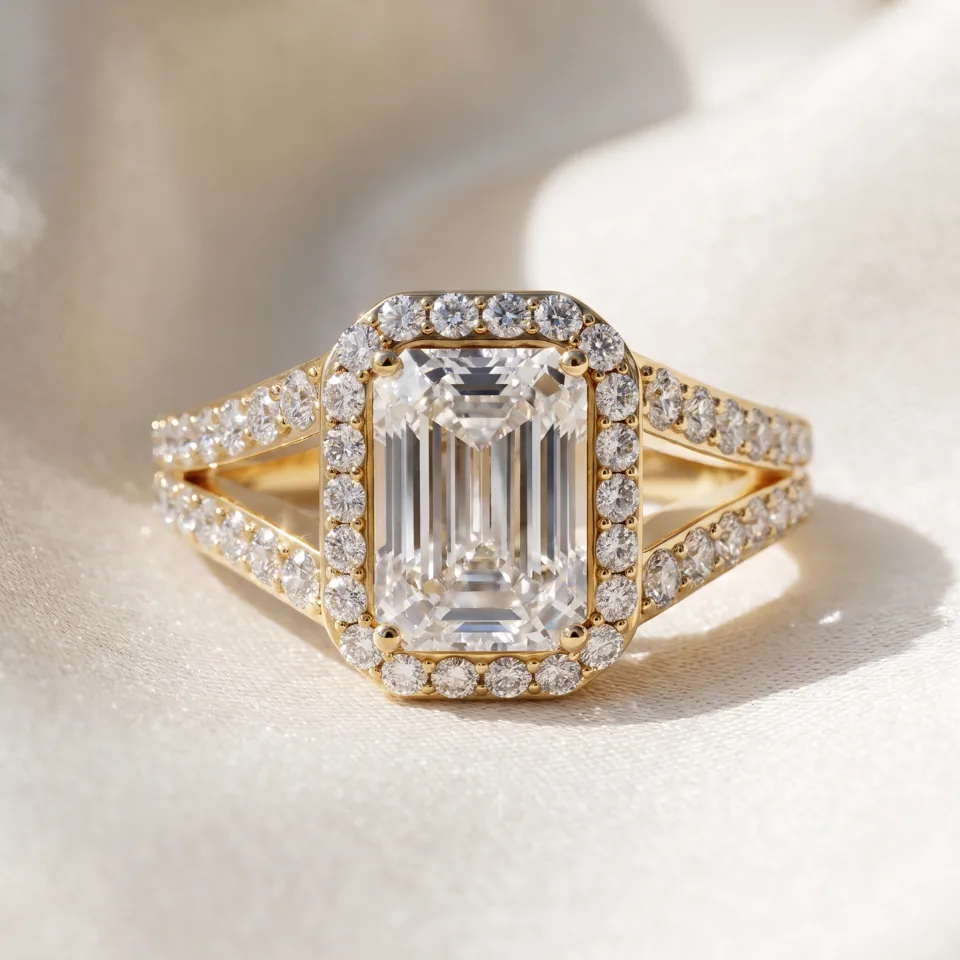 Halo Split Shank Engagement Rings
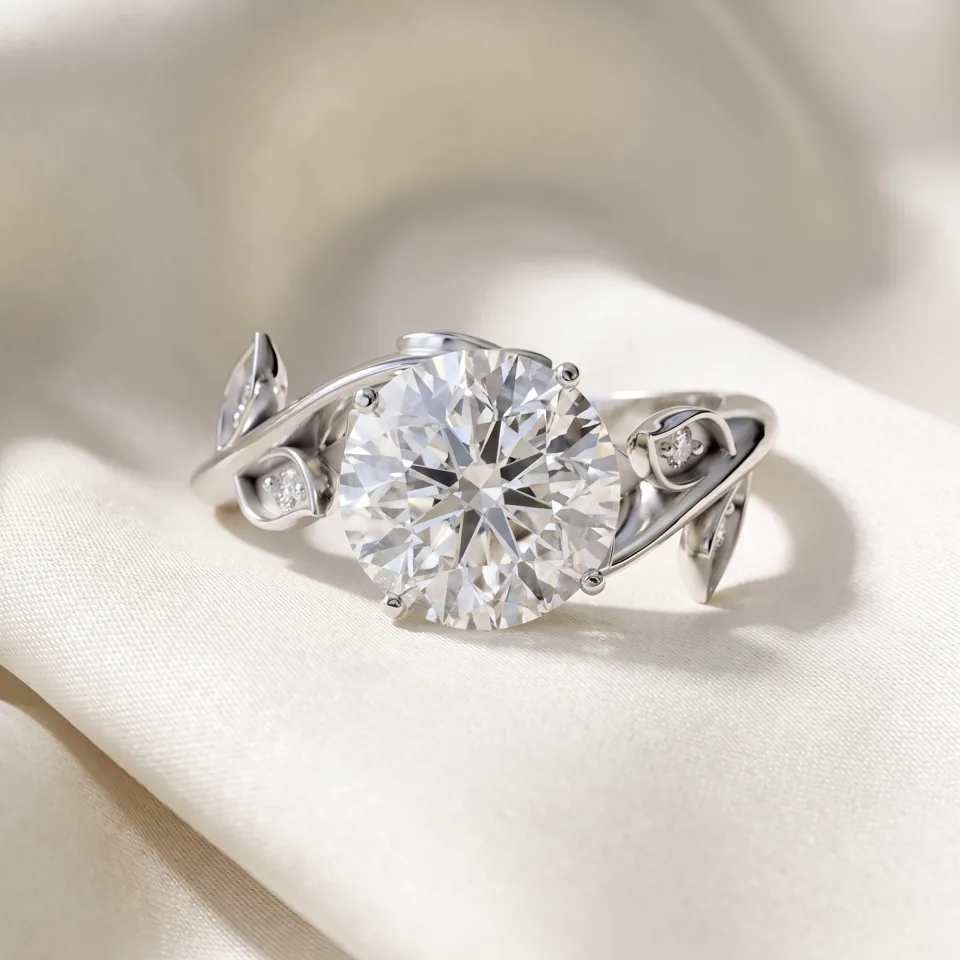 Twisted Vine Engagement Rings
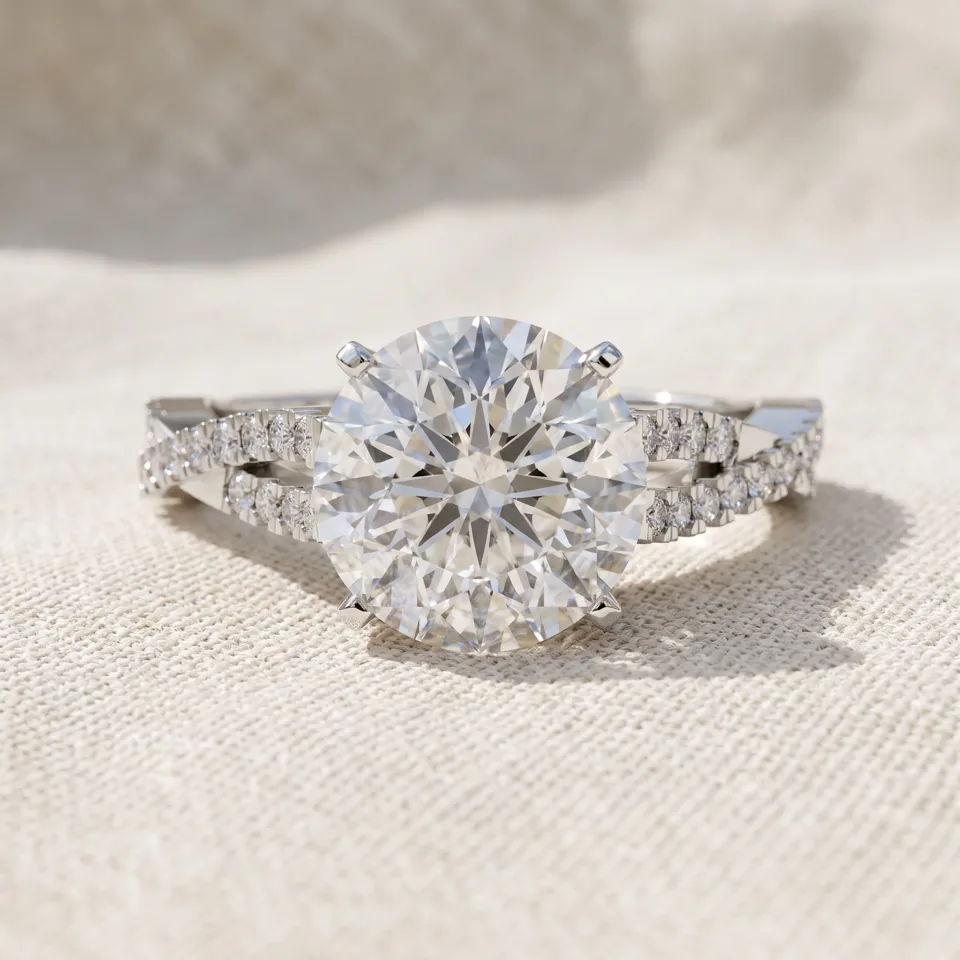 Pavé Twisted Engagement Rings
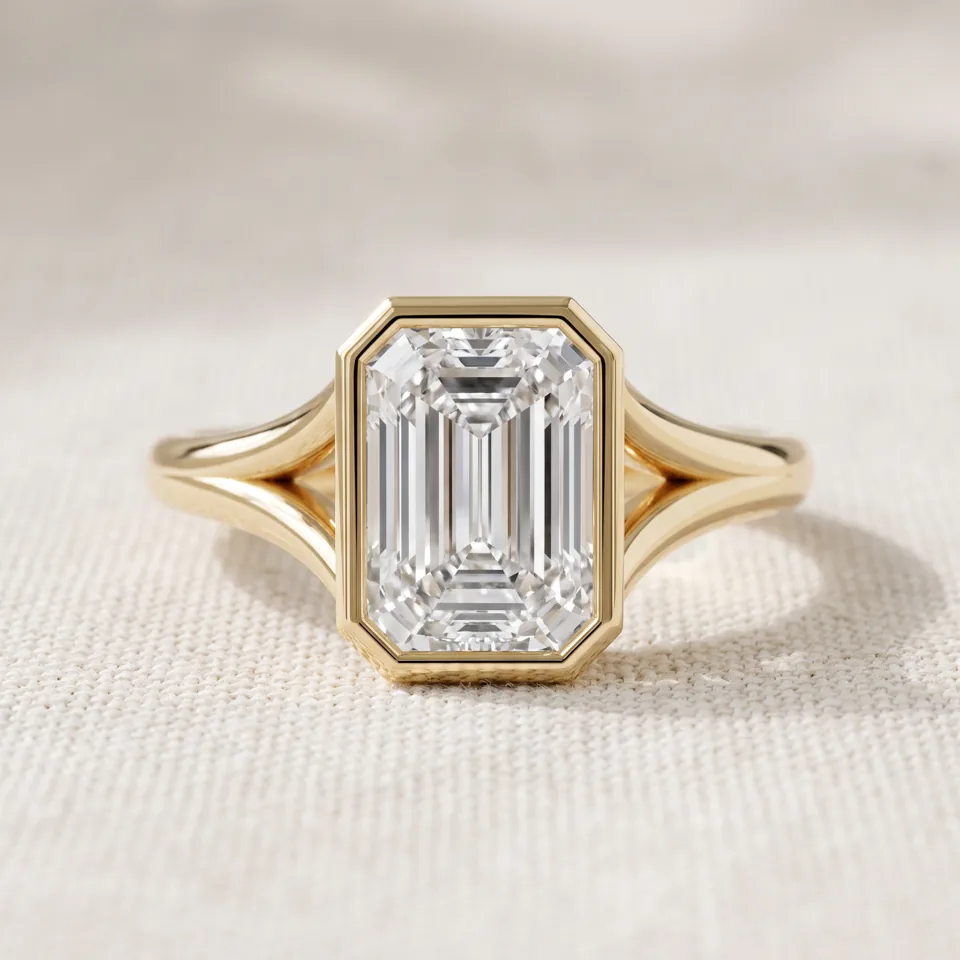 Bezel Split Shank Engagement Rings
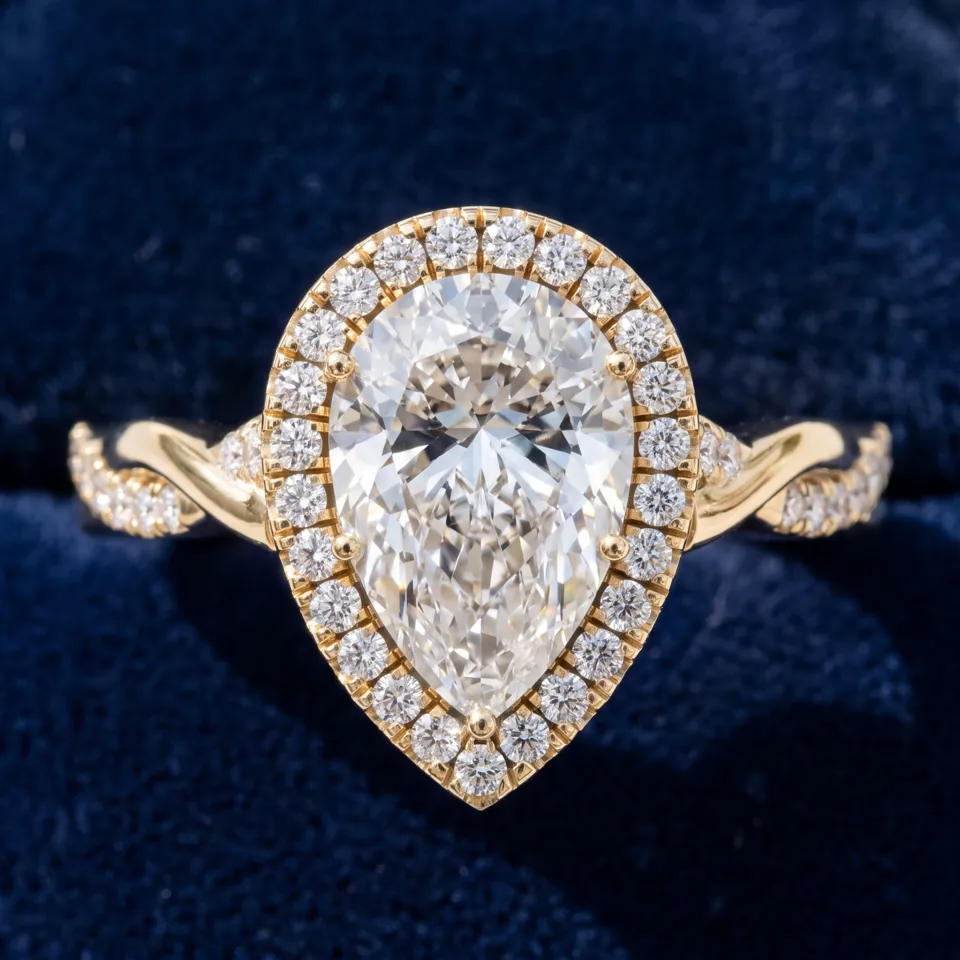 Twisted Halo Engagement Rings
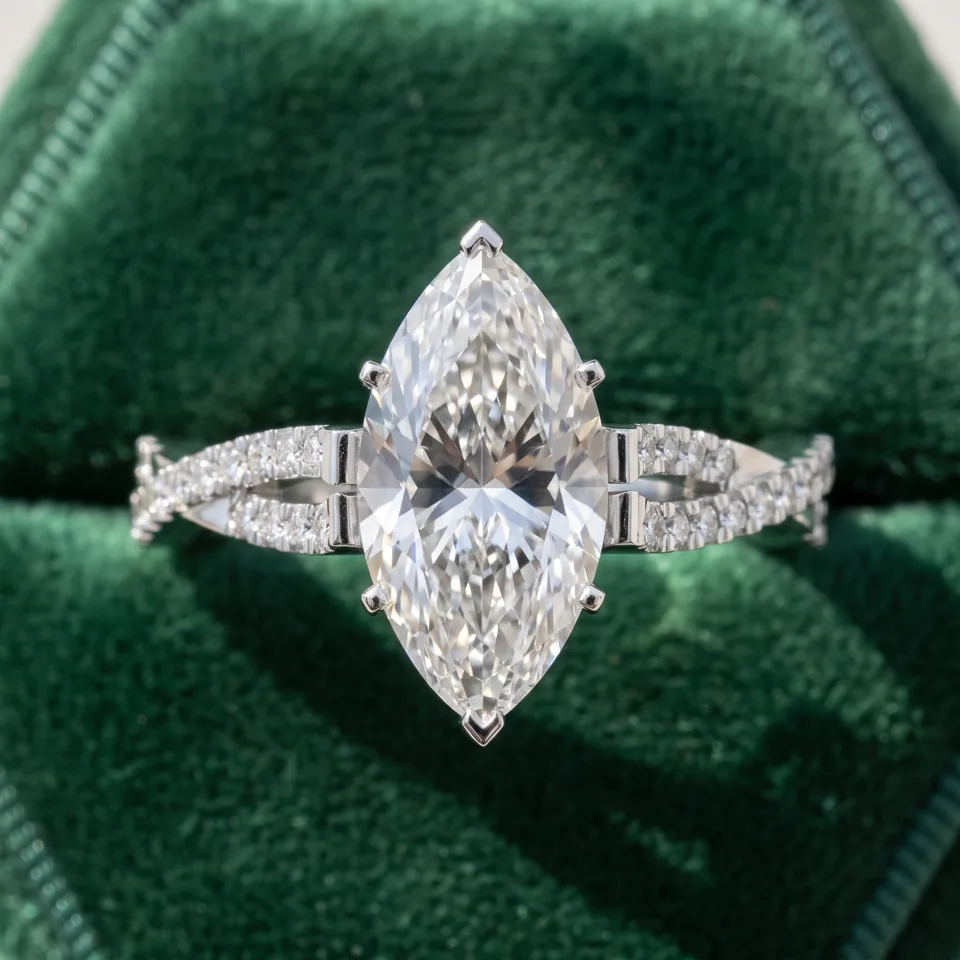 Solitaire Split Shank Engagement Rings
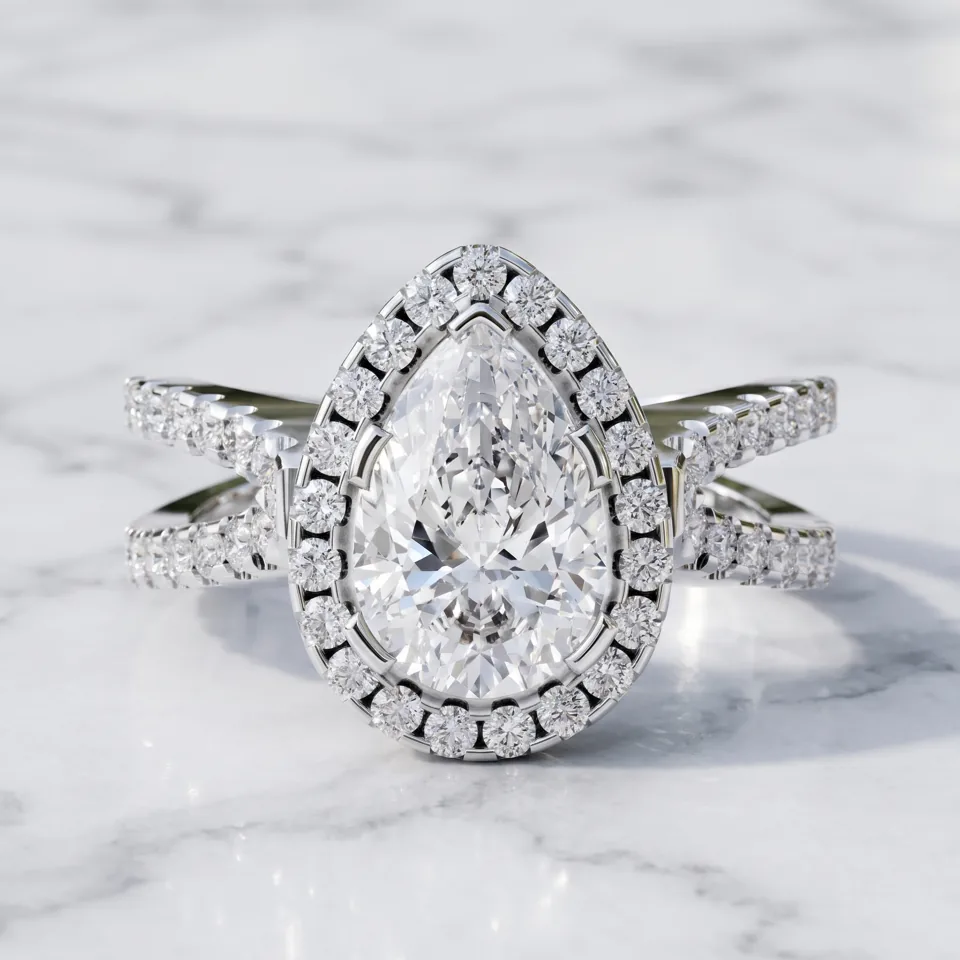 Pavé Split Shank Engagement Rings
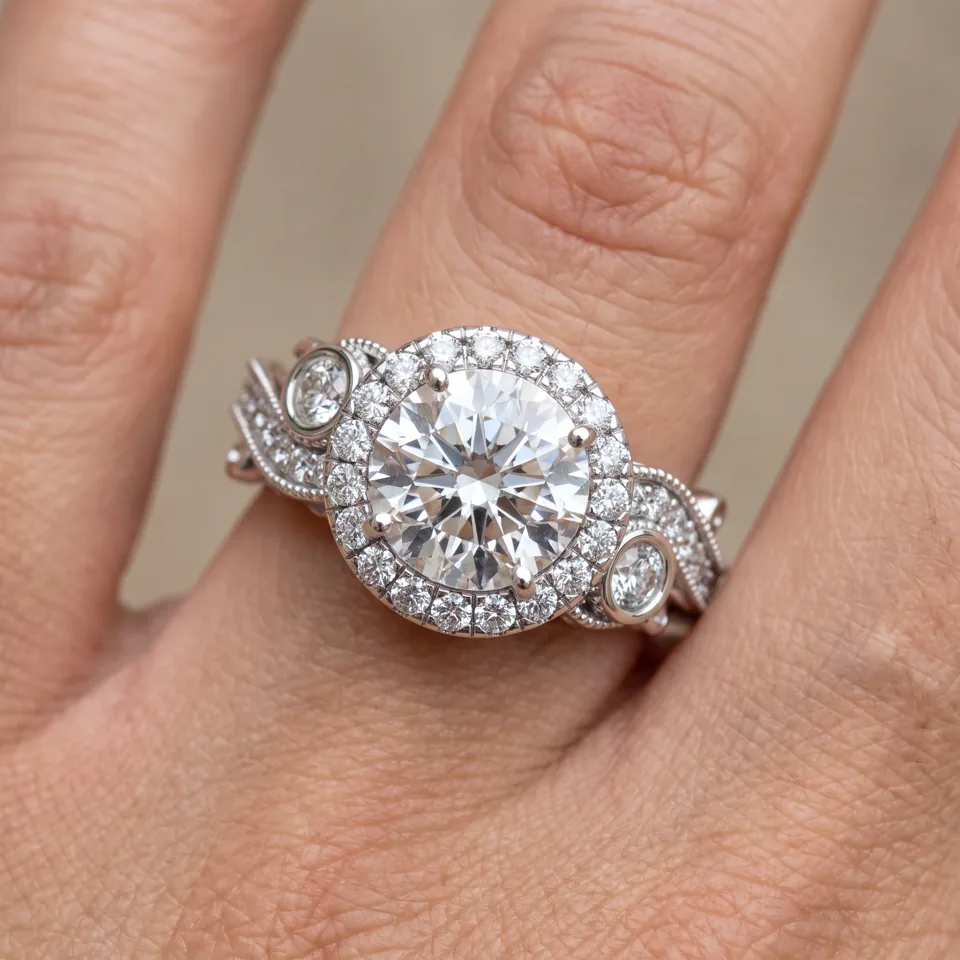 Split Shank Vintage Engagement Rings
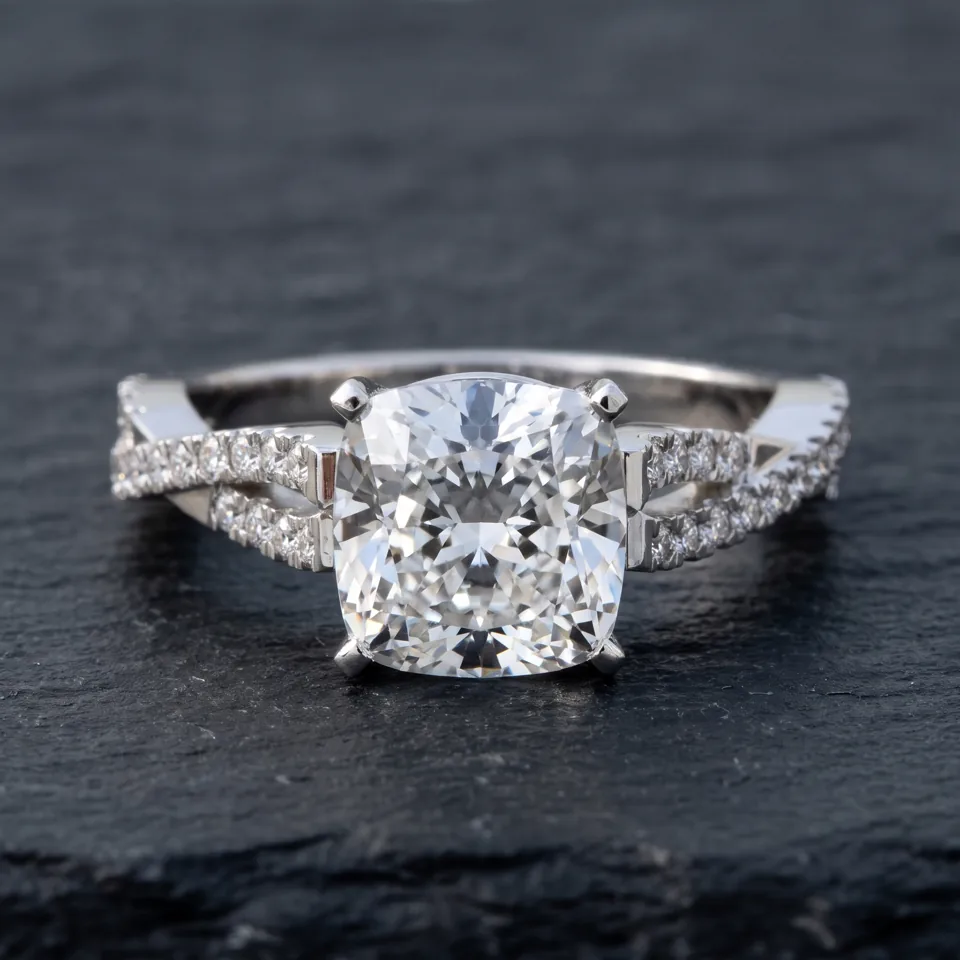 Solitaire Twisted Engagement Rings
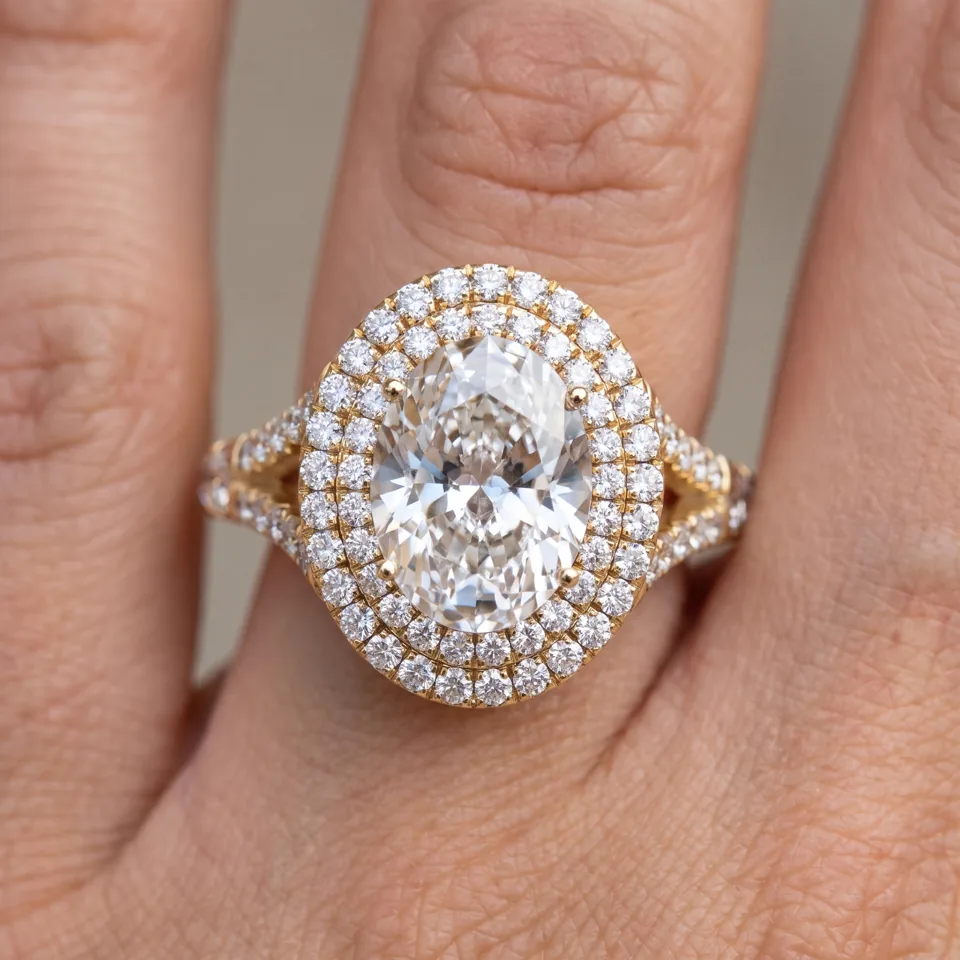 Double Halo Split Shank Engagement Rings
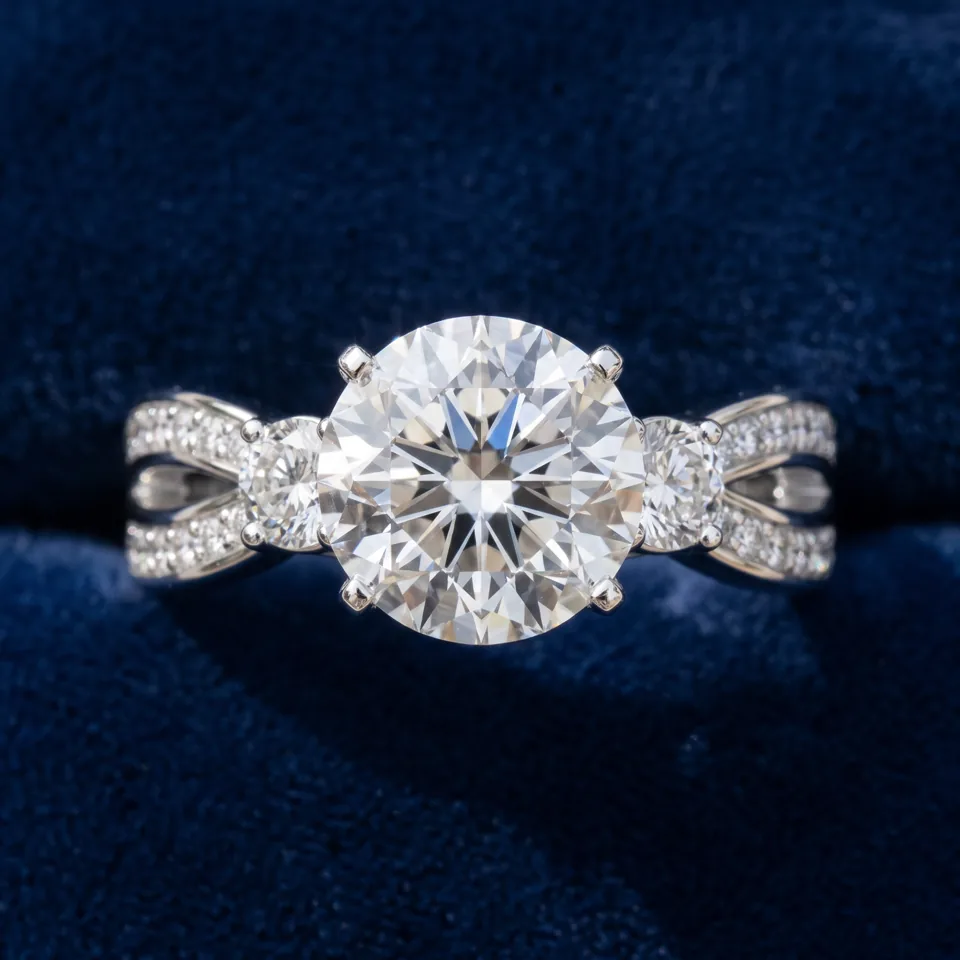 Split Shank Three Stone Engagement Rings
Forking the band gives the head a broader base to sit on. The twist adds movement and makes the pavé catch light from shifting angles. Together they create a band that looks rich and detailed even with a modest center.
Twisted pavé has more edges and gaps than a plain band, so lotion and dust can build up. Brush it gently with warm, soapy water every couple of weeks. The band sits slightly wider than a plain shank, so a curved or slim wedding band usually stacks best.
Each design comes in white, yellow or rose gold, platinum, or Silvadium, a tarnish-resistant sterling silver; gold is 10K, 14K or 18K. Fancy shades fit each one (pink, blue, green or yellow), and black fits a couple. Silver settings start under $400, and most settings run about $1,130 to $1,520, with the center priced on its own.
Your ring is made to size in 10–15 days and comes with free insured shipping both ways. You have 30 days to return it unworn and one free resize within 60 days of delivery. The center arrives with an IGI or GIA report.