Complimentary insured shipping, both waysEngagement ring diamonds certified by IGI or GIAGrown by light. Conflict-free by natureComplimentary insured shipping, both ways
Engagement RingsWedding BandsEarrings

NecklaceBraceletsAbout
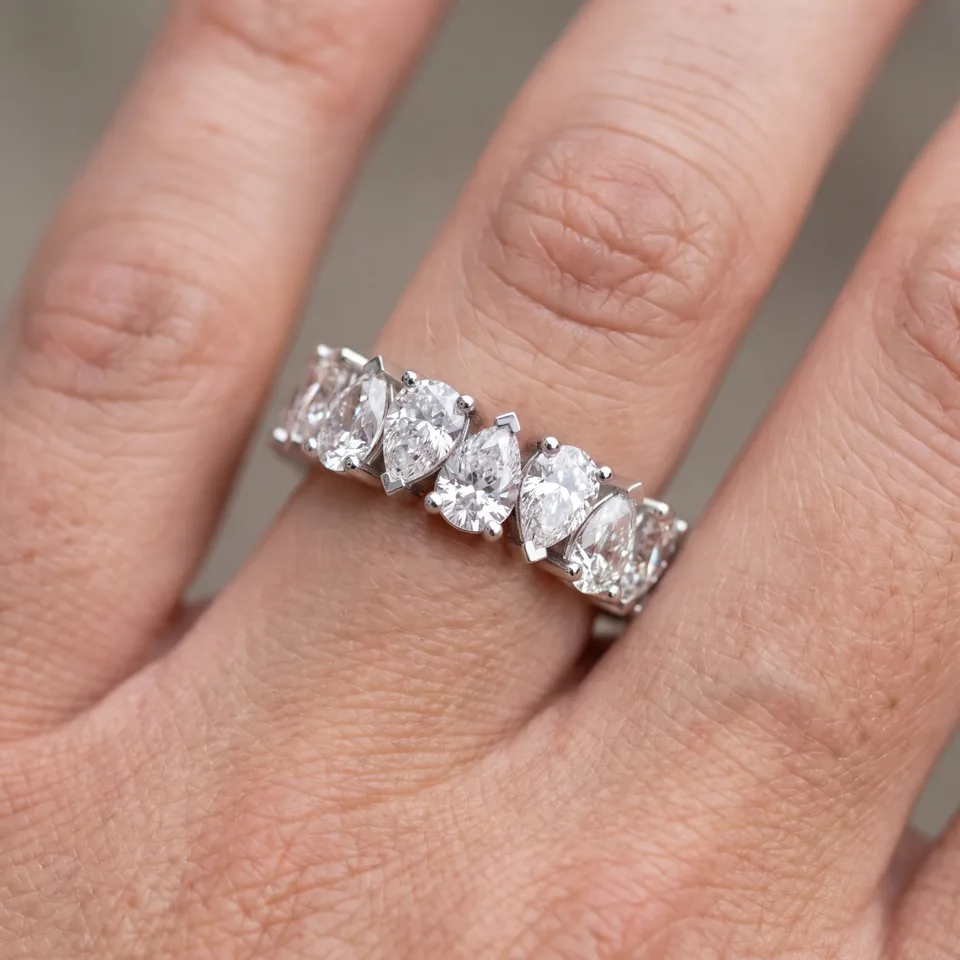
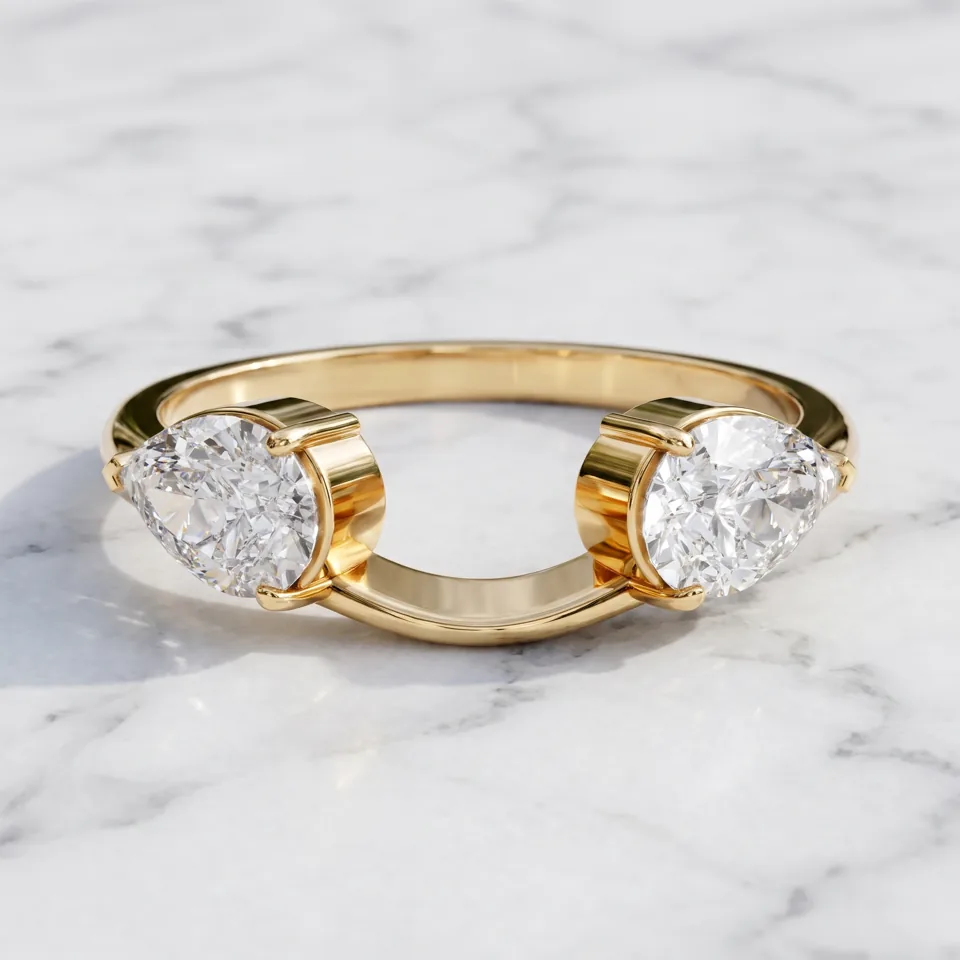
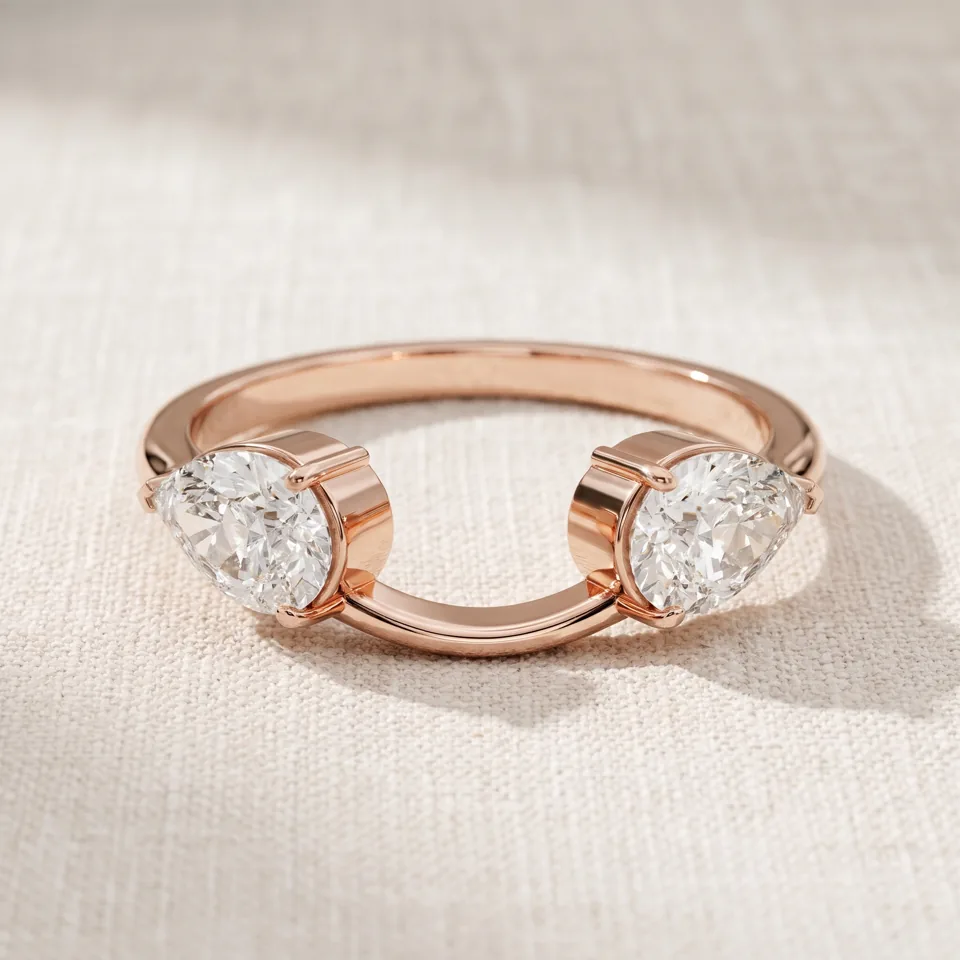
These pear lab-grown diamond wedding bands use the teardrop as the band's main stone. You'll find eternity bands with pears set nose to tail, a half eternity alternating pears and rounds, and a curved band with two pears facing each other.
Picture your engagement ring beside it before anything else; metal and carats come after.
The curved two-stone band dips in the middle, so it can hug an engagement ring's center instead of leaving a gap. Straight eternity bands stack flat against a low-set ring and look best worn alone or with a slim solitaire. Hold your engagement ring's profile in mind before you pick.
Some designs carry pear lab-grown diamonds all the way around. They look even from every side but can't be sized later. On the half eternity, pears stop at the sides and the underside stays plain, which makes resizing straightforward and feels smoother between fingers.
You can pick 0.25 to 1 carat total weight, with 0.5 and 1 carat offered most often. Prices start under $250; a typical band costs about $750 to $1,050 in its lightest version.
Platinum and gold handle the knocks a wedding band takes; gold is offered in white, yellow or rose, in 10K, 14K or 18K. Silvadium, a tarnish-resistant sterling silver, costs the least but wears faster. Match your engagement ring's metal so the two wear at the same pace and keep a matching color.
Your band is made for you in 10–15 days with free insured shipping, returns included, and you have 30 days to decide. One free resize is yours within 60 days of delivery; on a full eternity band that change means remaking the band.
A curved or contoured band usually works best, because it follows the pear's outline and sits flush instead of leaving a gap. The curved two-stone band here does that. A straight pear eternity band also suits a pear engagement ring if your setting sits high enough for the bands to touch, and a matching metal keeps the pair looking like one set.