Complimentary insured shipping, both waysEngagement ring diamonds certified by IGI or GIAGrown by light. Conflict-free by natureComplimentary insured shipping, both ways
Engagement RingsWedding BandsEarrings

NecklaceBraceletsAbout
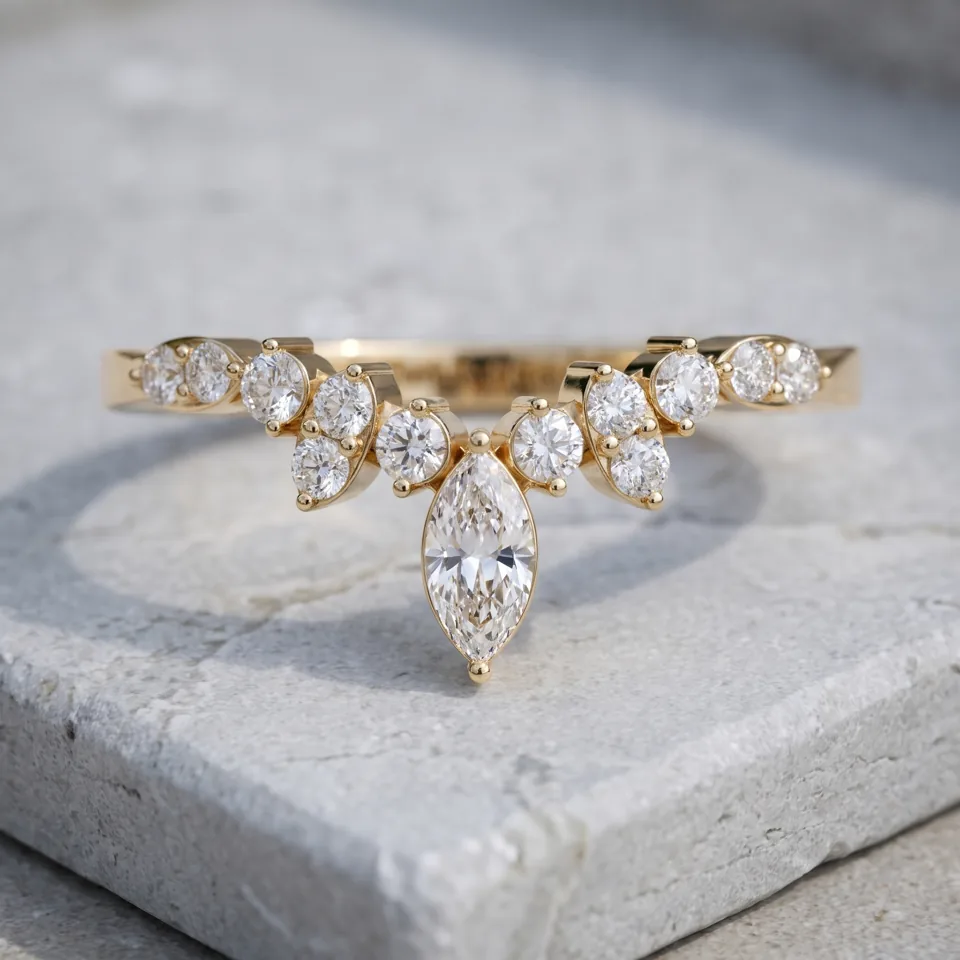
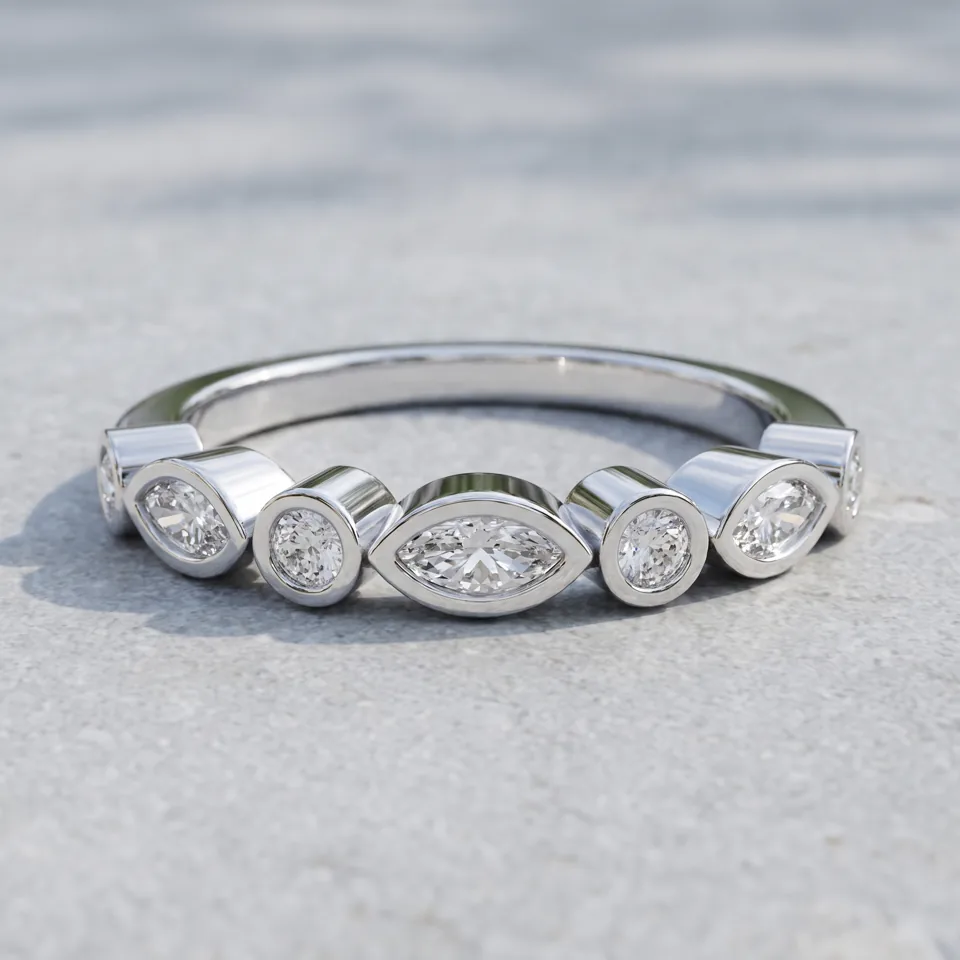
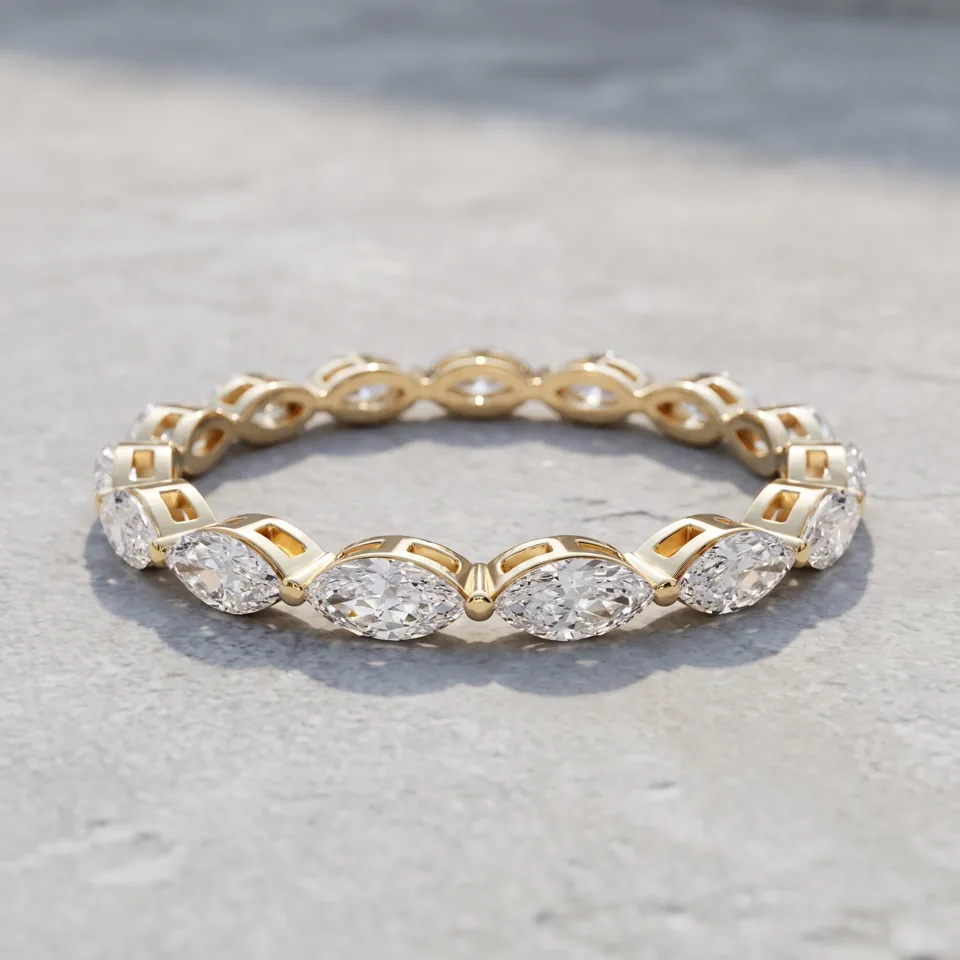
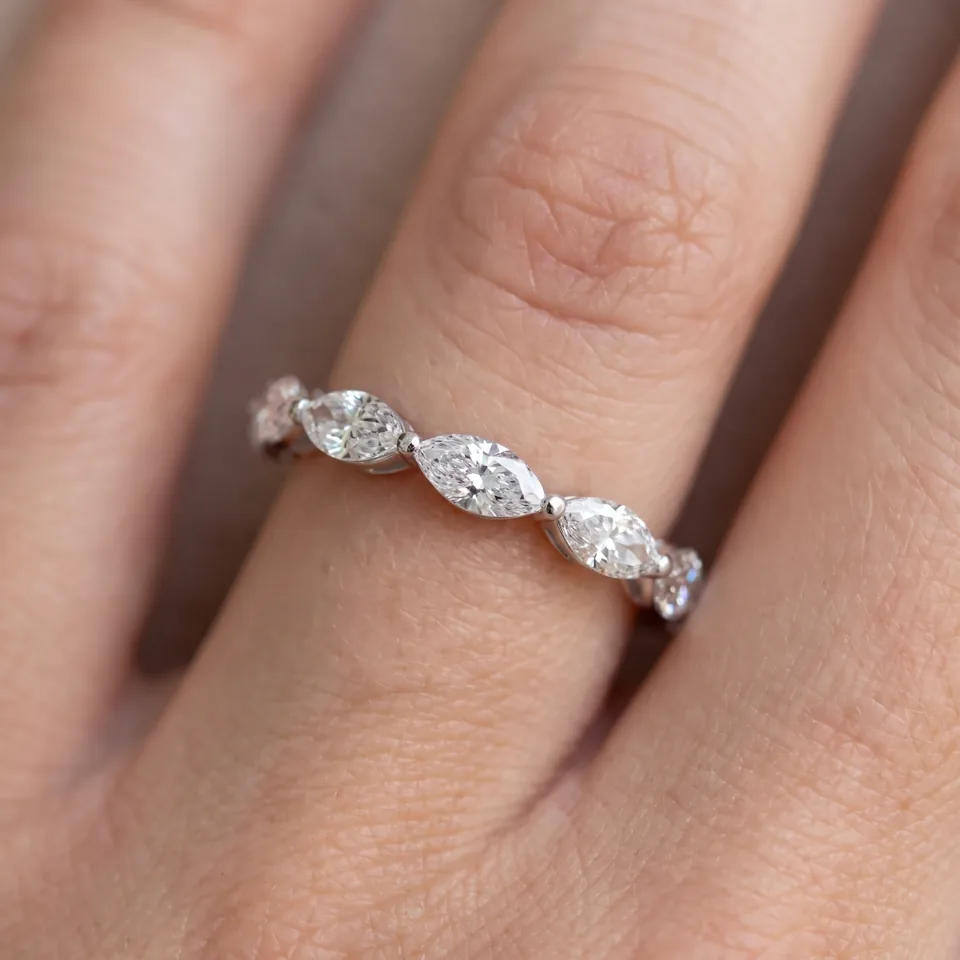
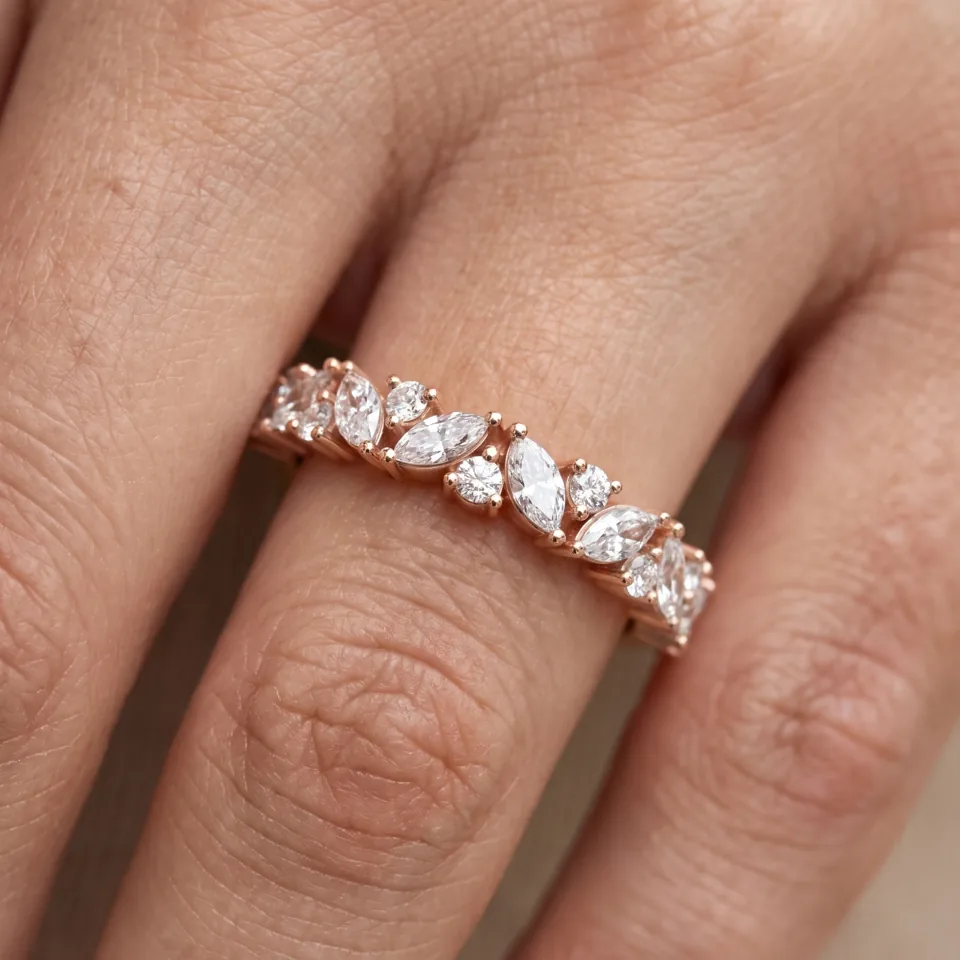
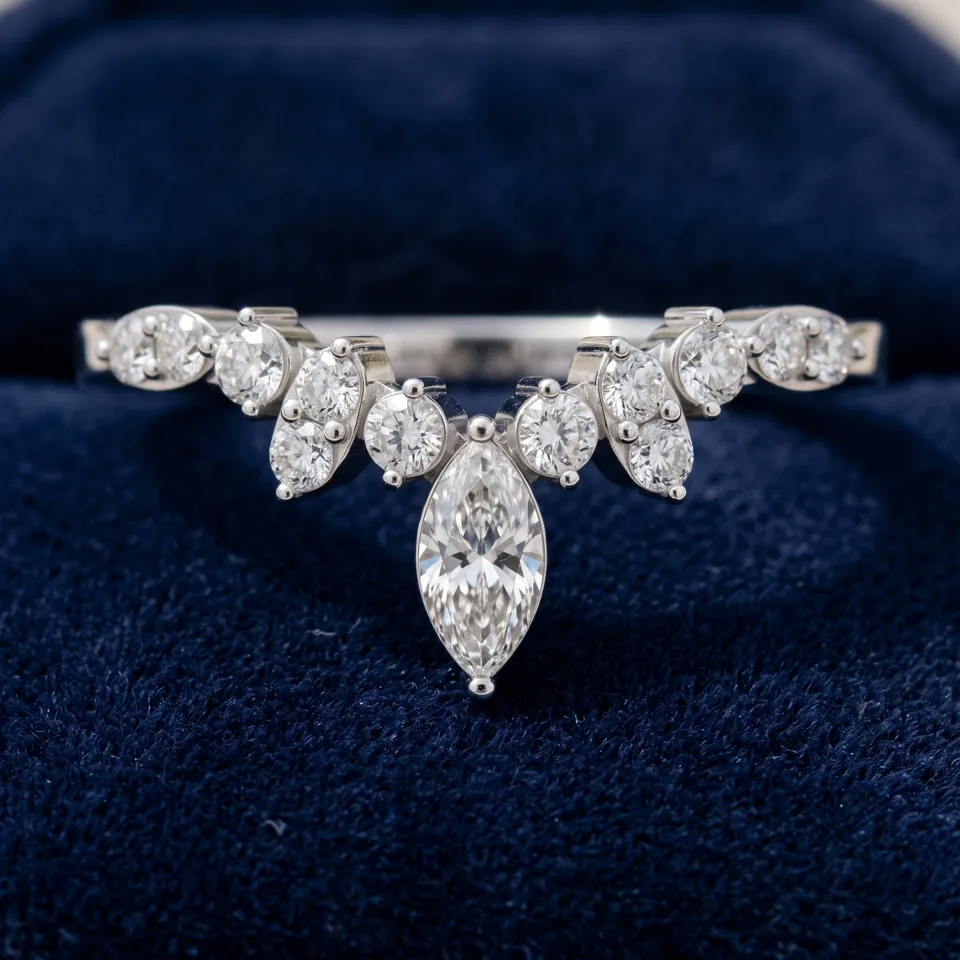
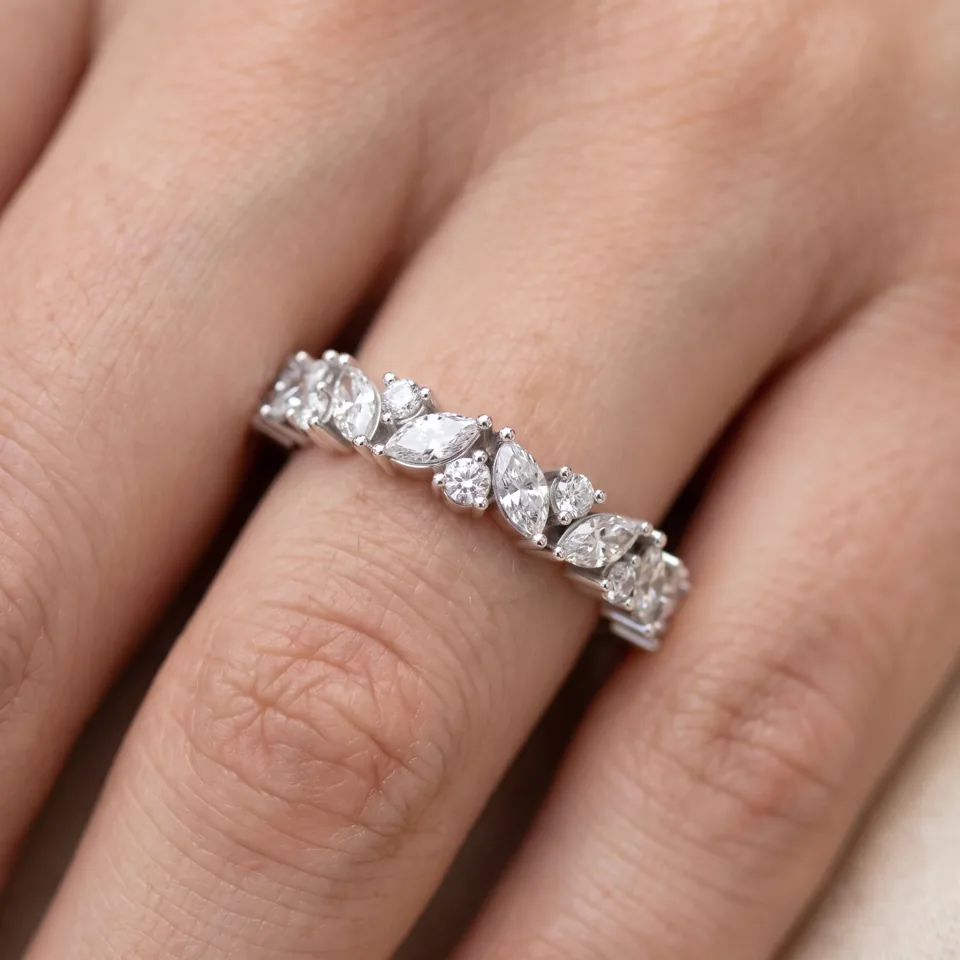
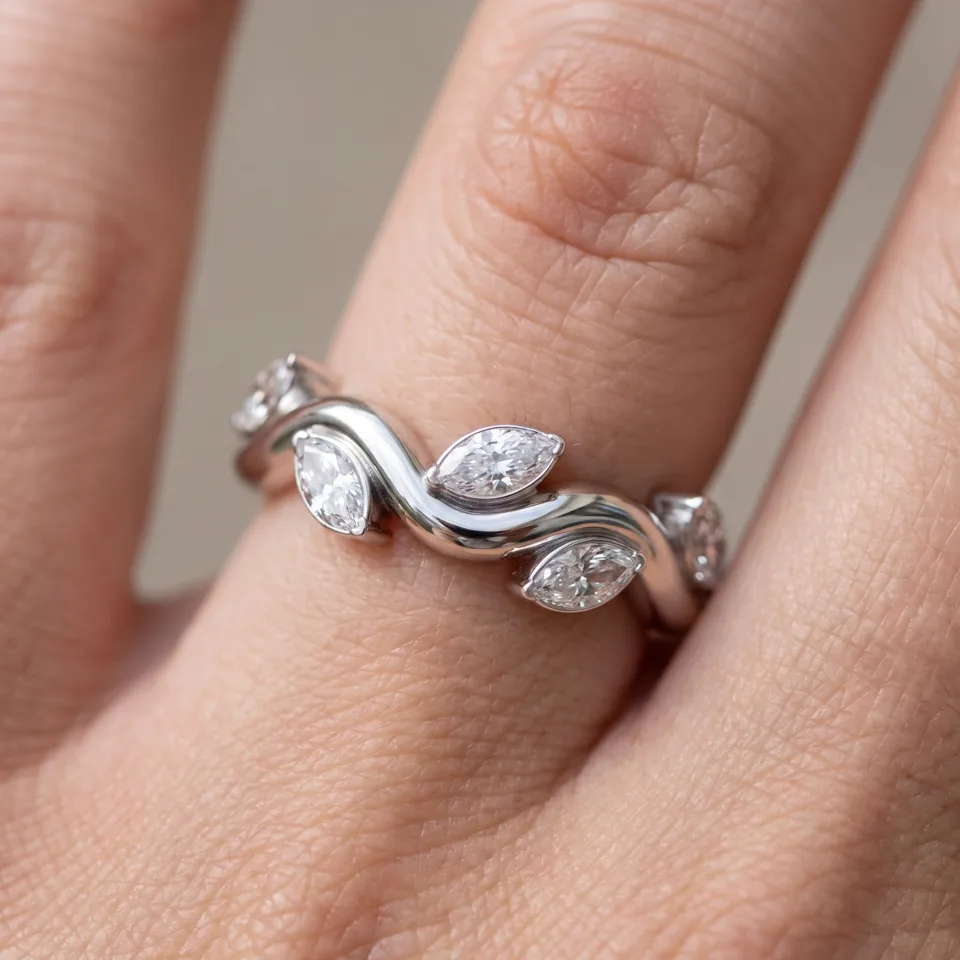
Marquise wedding bands set marquise lab-grown diamonds along the band, often tip to tip or in petal patterns. Most here are half eternity bands; curved and chevron shapes are here too, built to nestle beside a marquise engagement ring, plus floral, bezel and a couple of full eternity designs.
Start with how the band should sit beside your engagement ring, then pick the metal and total weight.
A straight band suits a marquise engagement ring raised enough that a plain line of stones fits below its head. If the center sits low or has a halo, a curved or chevron band follows its shape and closes the gap. Twisted and split-shank designs create their own outline and are often worn alone or stacked on the other side.
Most bands offer about 0.5 to 1 carat total weight, and a few reach 2.5 carats. Prices start under $200, and most cost between about $650 and $880 at the lightest option.
Every design comes in gold, 10K, 14K or 18K, and nearly every one is offered in white, yellow and rose, platinum, and Silvadium, a tarnish-resistant sterling silver. Choose the same metal as your engagement ring so both wear evenly. Mixing metals can work too if you like contrast, though softer metals rub down faster where two rings touch.
Your band is made for you in 10–15 days, with free insured shipping both ways and 30 days to return it. Most bands include one free resize within 60 days of delivery; full eternity bands can't be resized, and a size change on one of those is done by remaking it.
The best band is the one that sits flush against your ring without leaving a gap. For a low-set marquise or one with a halo, a curved or chevron band usually works best because it follows the pointed outline. For a higher solitaire, a straight half eternity band of marquise lab-grown diamonds slides underneath and matches the shape of the center.
Yes. Marquise stones have come back strongly in the last few years, especially in vintage-inspired and nature-themed jewelry. Marquise wedding bands set tip to tip, in floral clusters or in chevrons look current while nodding to the 1970s and earlier eras. Because the shape is less common than round, it also feels more personal.