Complimentary insured shipping, both waysEngagement ring diamonds certified by IGI or GIAGrown by light. Conflict-free by natureComplimentary insured shipping, both ways
Engagement RingsWedding BandsEarrings
NecklaceBraceletsAbout
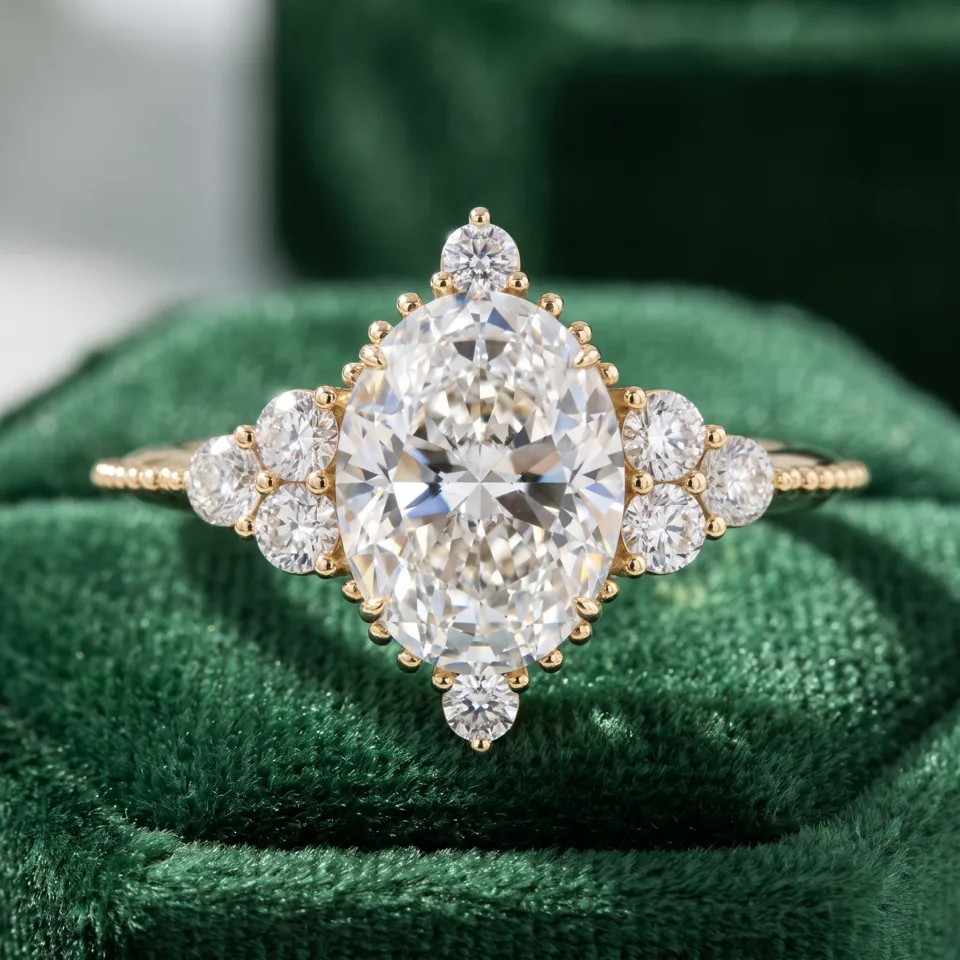
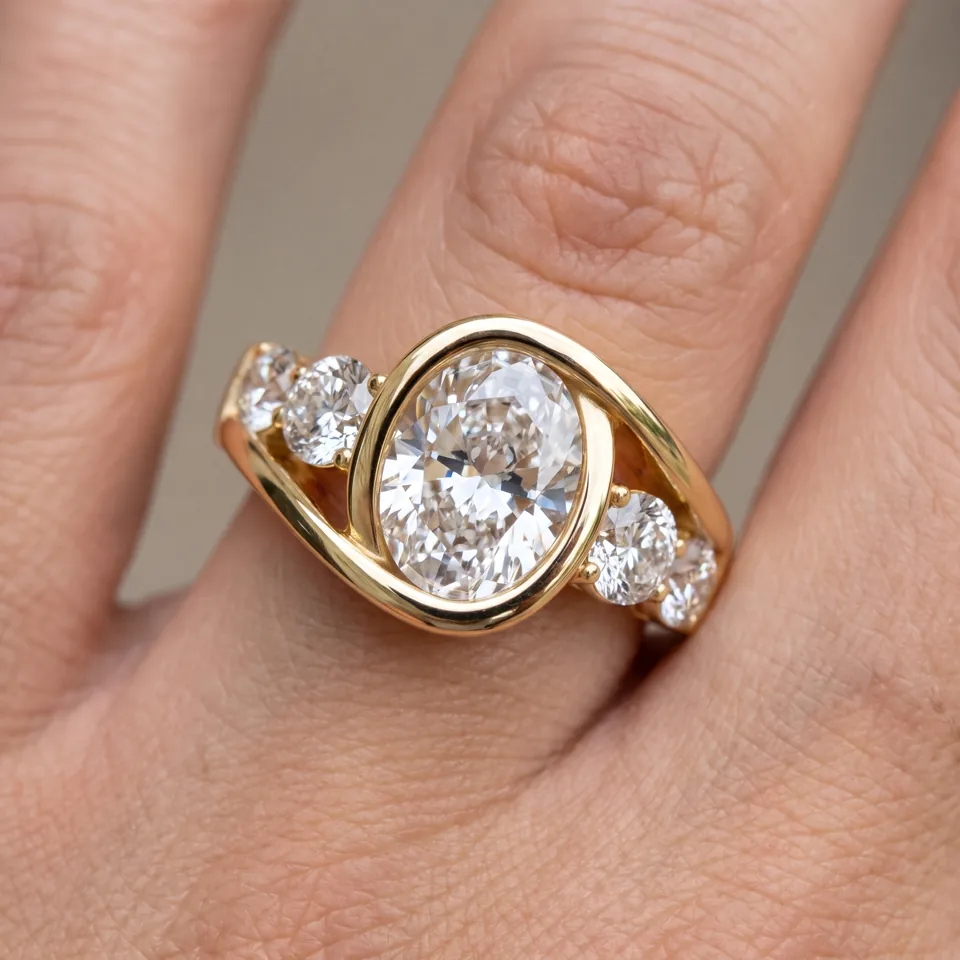
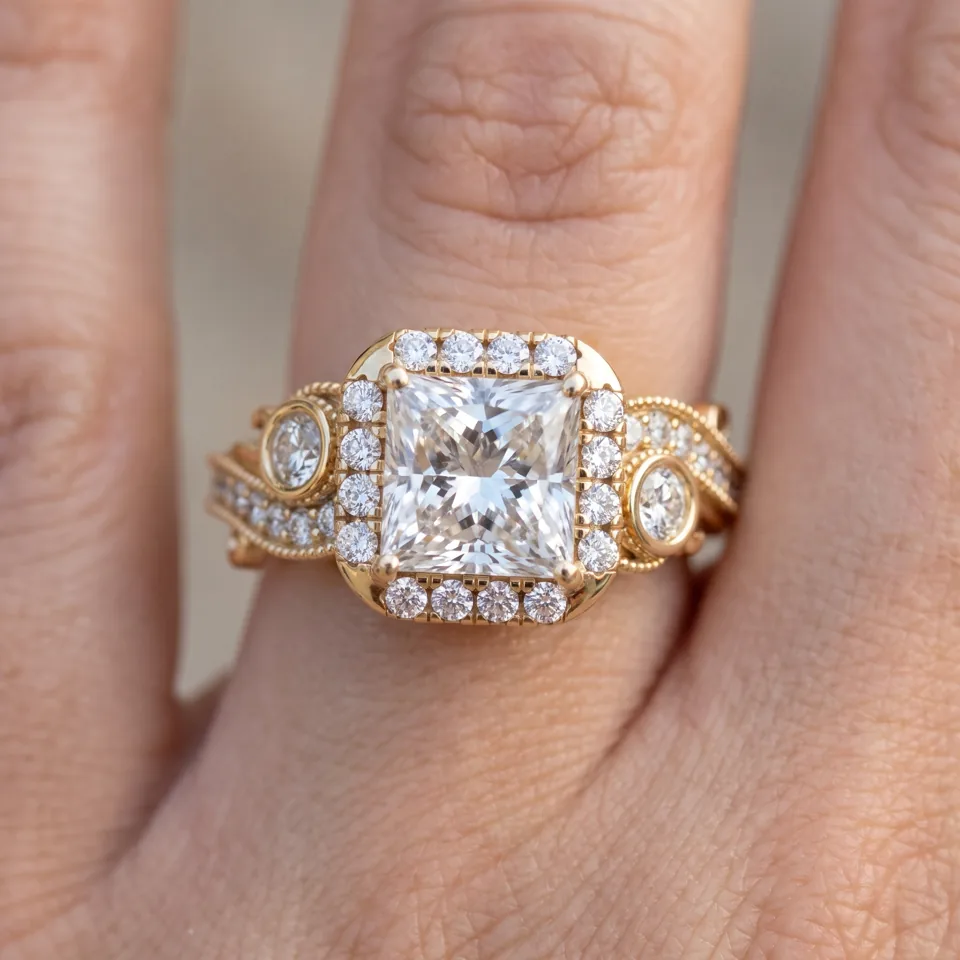
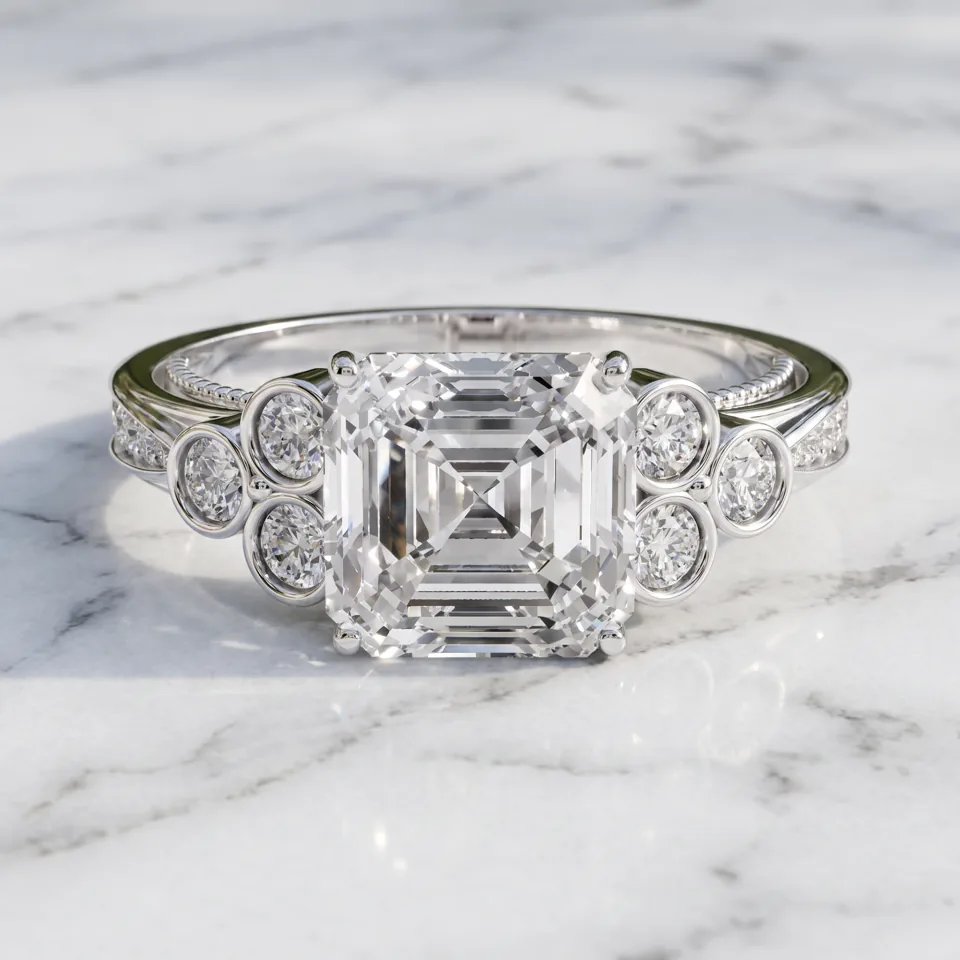
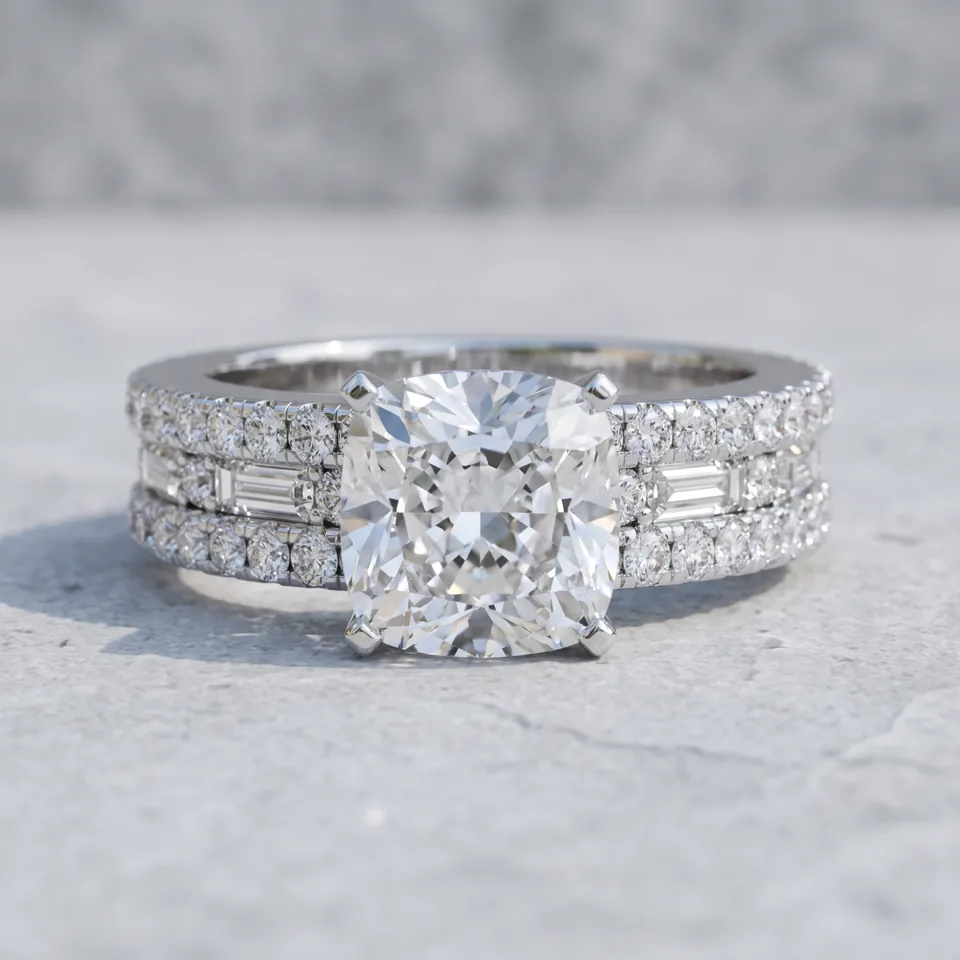
Instead of a single stone on each side, these settings group several small stones at the shoulders. Shoppers looking for a diamond ring with cluster side stones get more texture and a wider face than a classic three stone ring, while the center still stands apart.
Choose the cluster style and metal; the center diamond is what you pick in the next step.
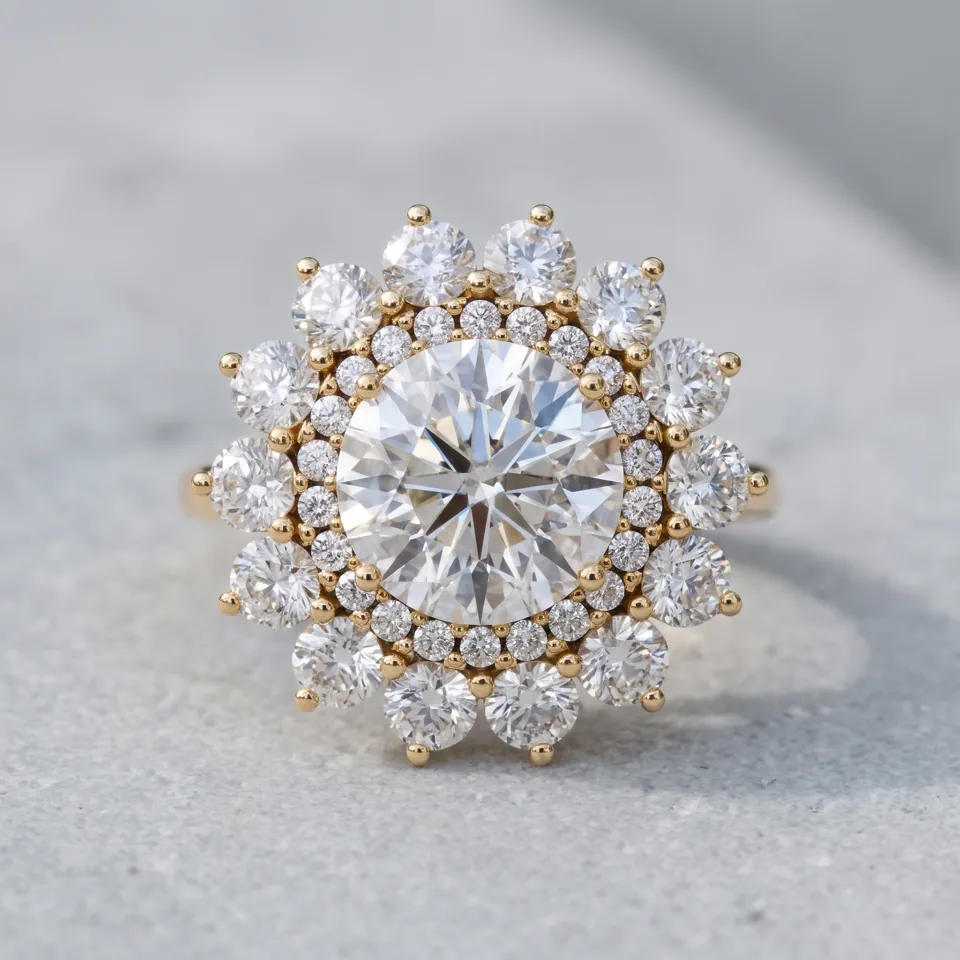
Round clusters: tight groups of small rounds, sometimes in two rows.
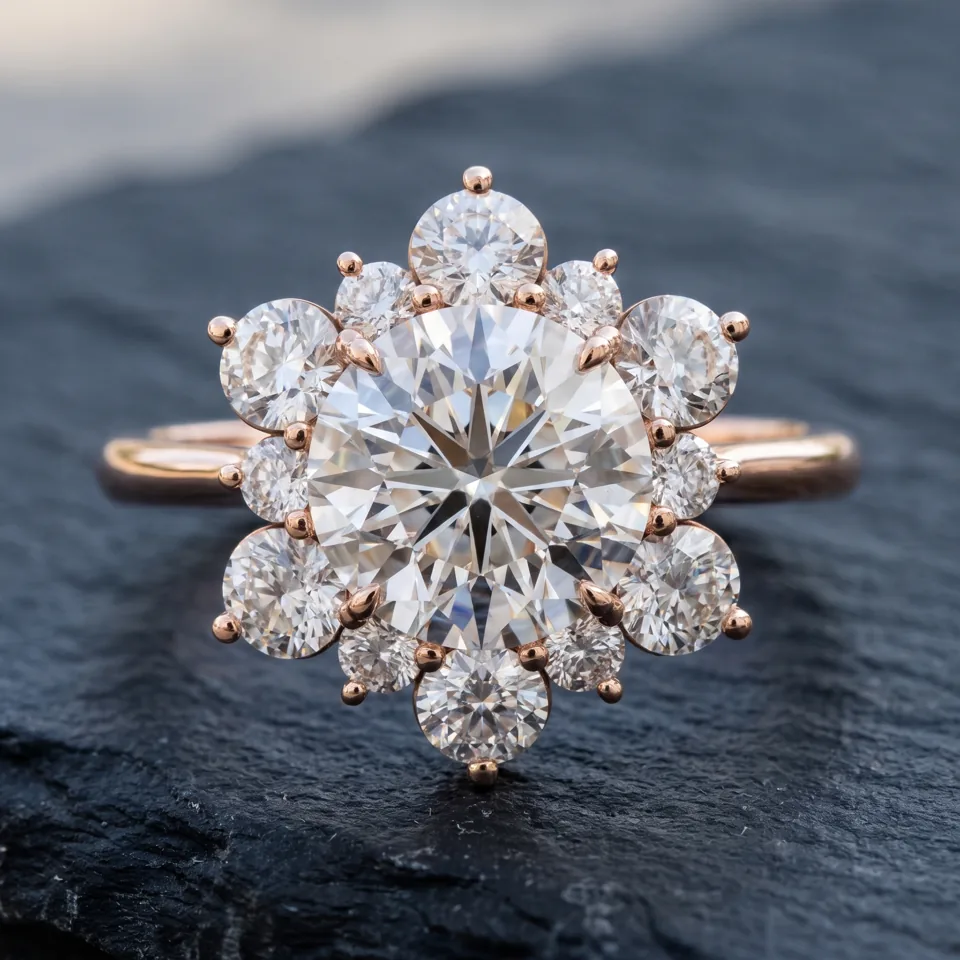
Marquise and round mixes: pointed stones fanning out among rounds, often in a floral pattern.
Pear groupings: soft teardrop shapes angled toward the center.
Bezel-set clusters: each small stone in its own metal rim, framed by milgrain.
How wide you want the ring to look
Clusters extend the sparkle out along the band, which makes the ring look broader across the finger. Two-row shoulder clusters give the widest face. Bezel-set groups stay flatter and sit lower. A few designs add a halo to the center as well, which makes the front look like one connected group of laboratory-grown diamond accents.
Choosing a center shape
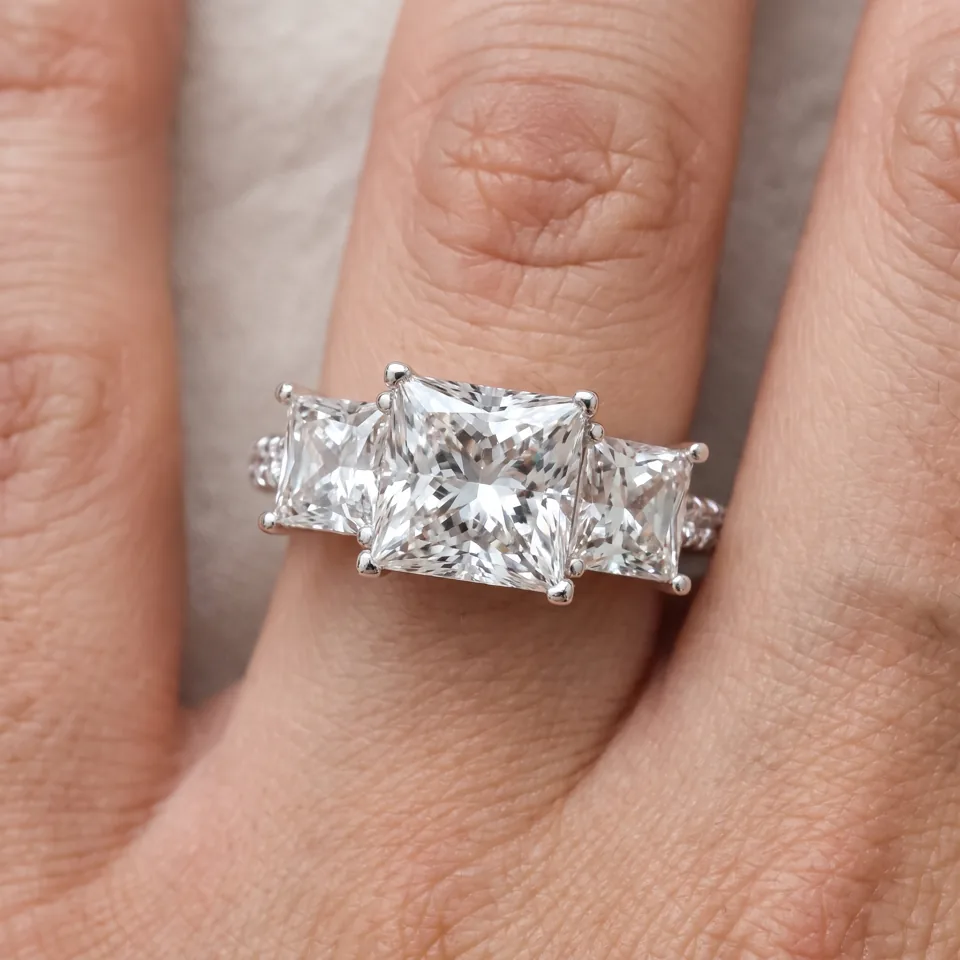
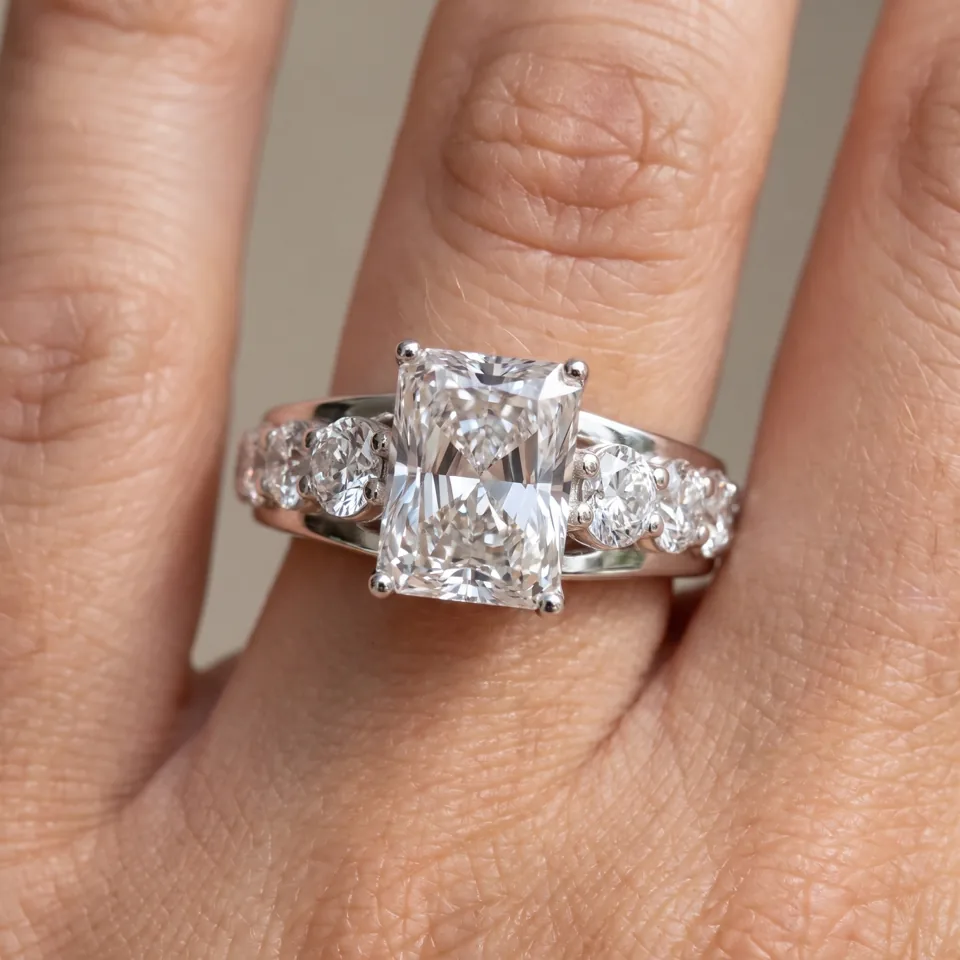
Radiant and round centers suit almost all of them; you will also find princess, heart, oval, pear, cushion, Asscher and marquise on most, and emerald on some. A round center gives the most even look next to round clusters, while an elongated oval or pear balances wide shoulders. For color, nearly all of them take a blue, green, yellow or pink center.
Metal and setting price
Each design is available in white, yellow or rose gold (10K, 14K or 18K), platinum, and Silvadium, a tarnish-resistant sterling silver. Settings start under $500; most cost between about $1,100 and $1,400 with their lab-grown diamond accents, before the center is added.
Ordering from Whitemoon
Each ring is made to your order in 10–15 days, comes with an IGI or GIA report for the center diamond, and travels with free insured shipping both ways. You have 30 days to return it and one free resize within 60 days of delivery.