Complimentary insured shipping, both waysEngagement ring diamonds certified by IGI or GIAGrown by light. Conflict-free by natureComplimentary insured shipping, both ways
Engagement RingsWedding BandsEarrings

NecklaceBraceletsAbout
Each blue diamond ring here is an engagement setting built to cradle a fancy blue center that you select after the ring. The designs range from bare solitaires to halos and pavé bands. Our blue diamond price guide shows what the center costs by carat.
Decide on a center shape, then a setting style, then the metal. White metals keep blue looking icy, while gold gives it a warmer cast.
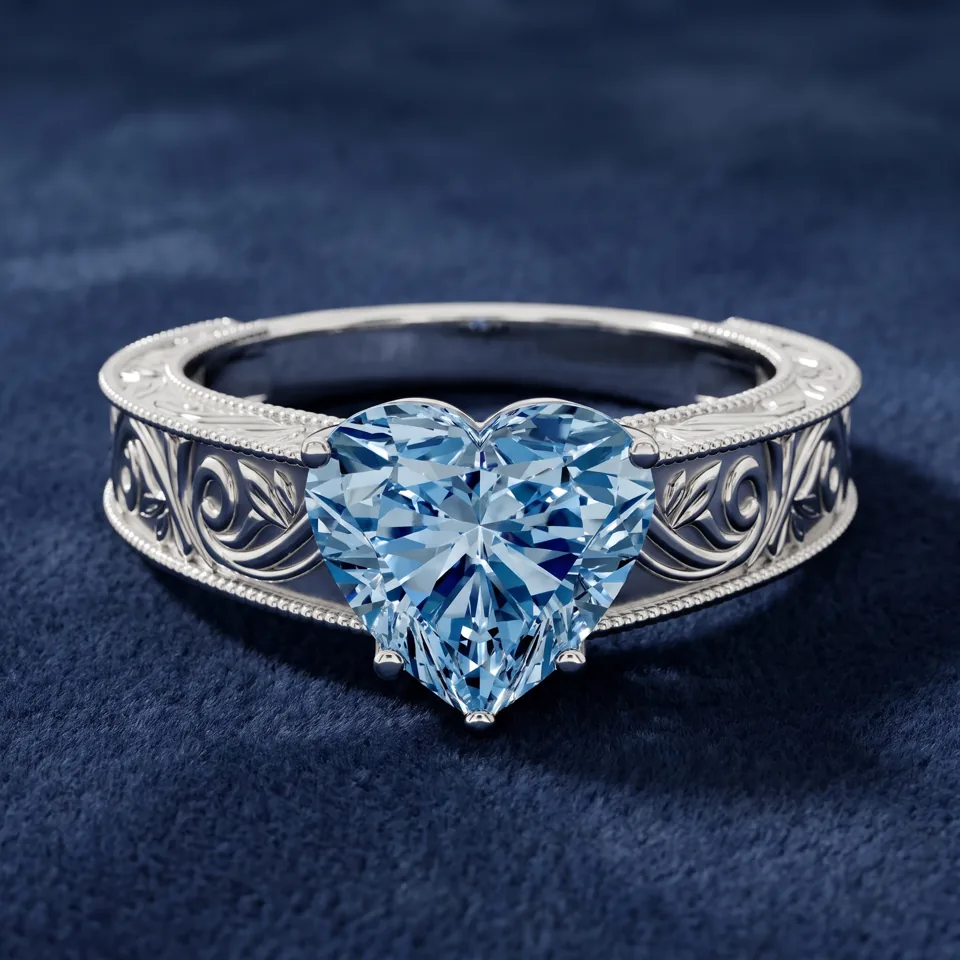 Vintage Blue Diamond Rings
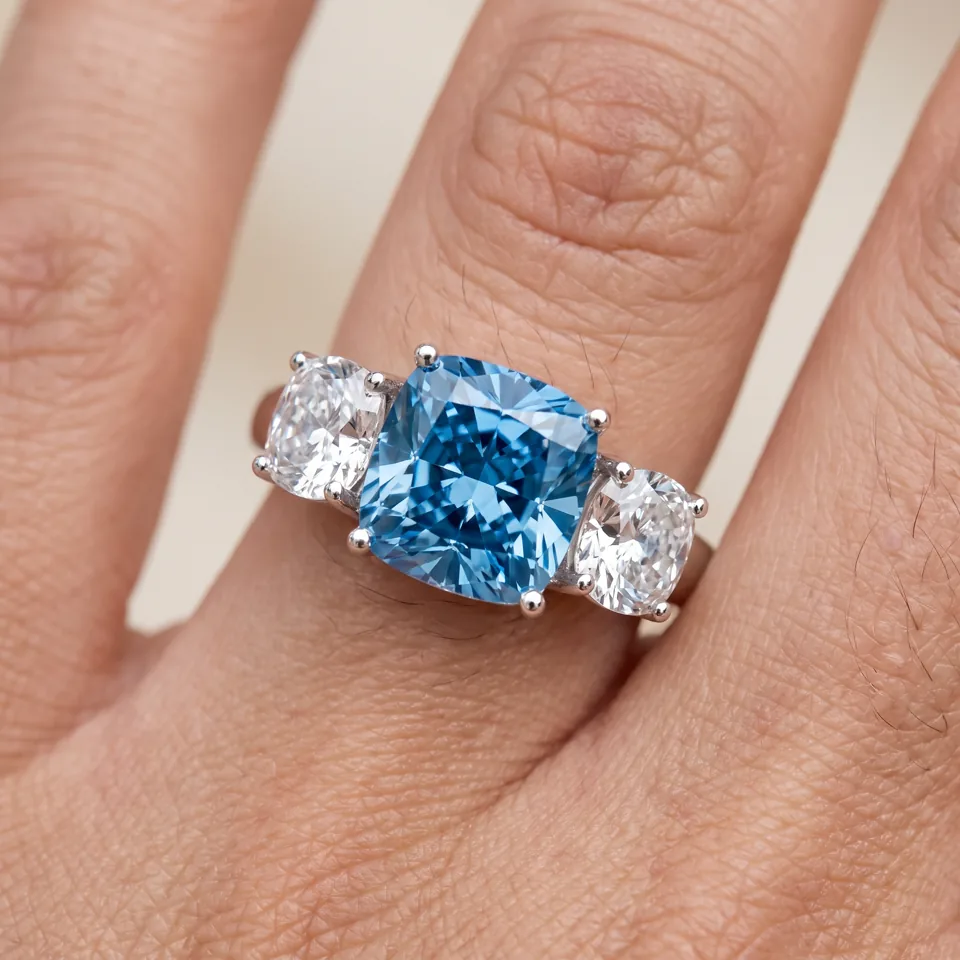 Blue Diamond Three Stone Engagement Rings
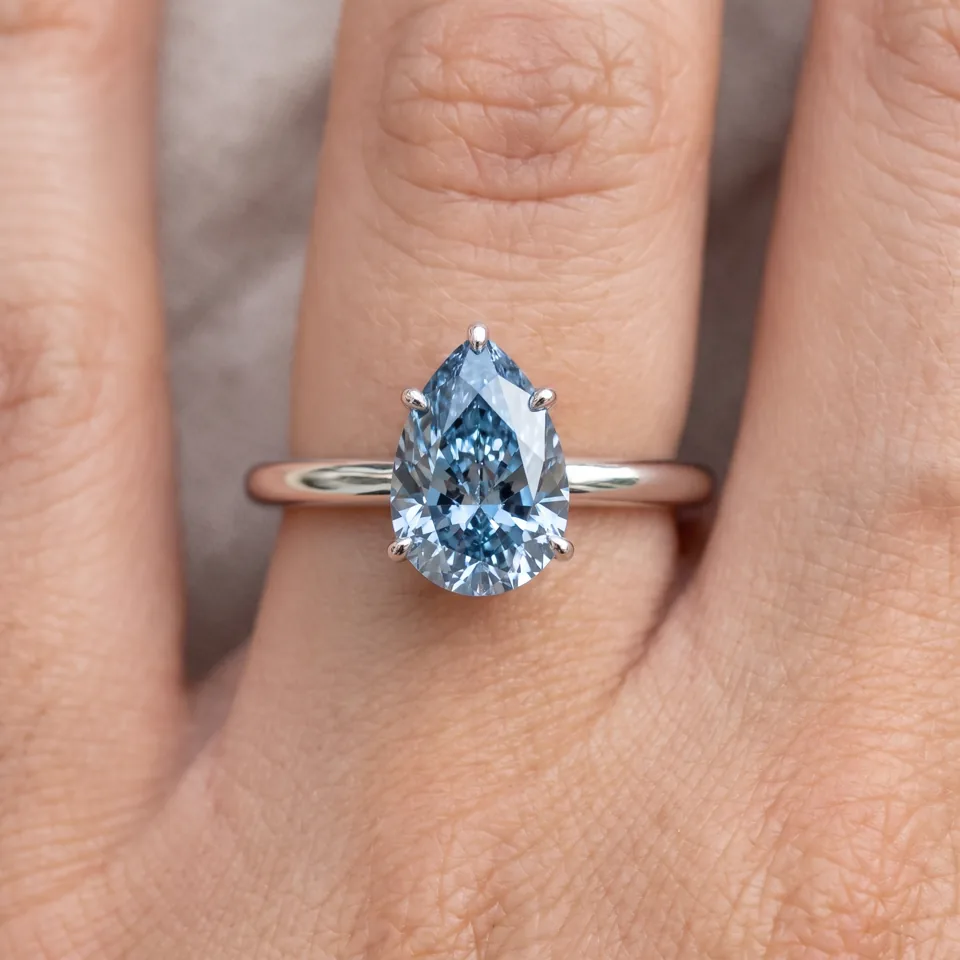 Blue Diamond Solitaire Rings
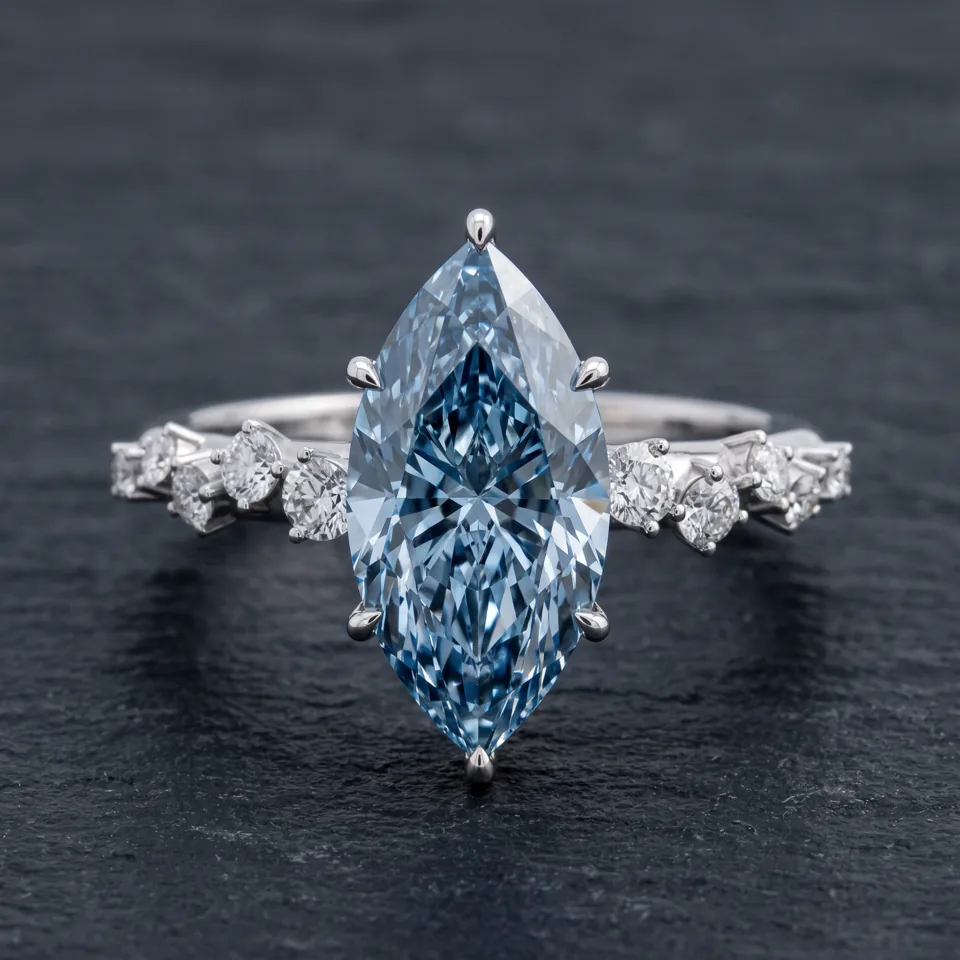 Blue Diamond Cluster Rings
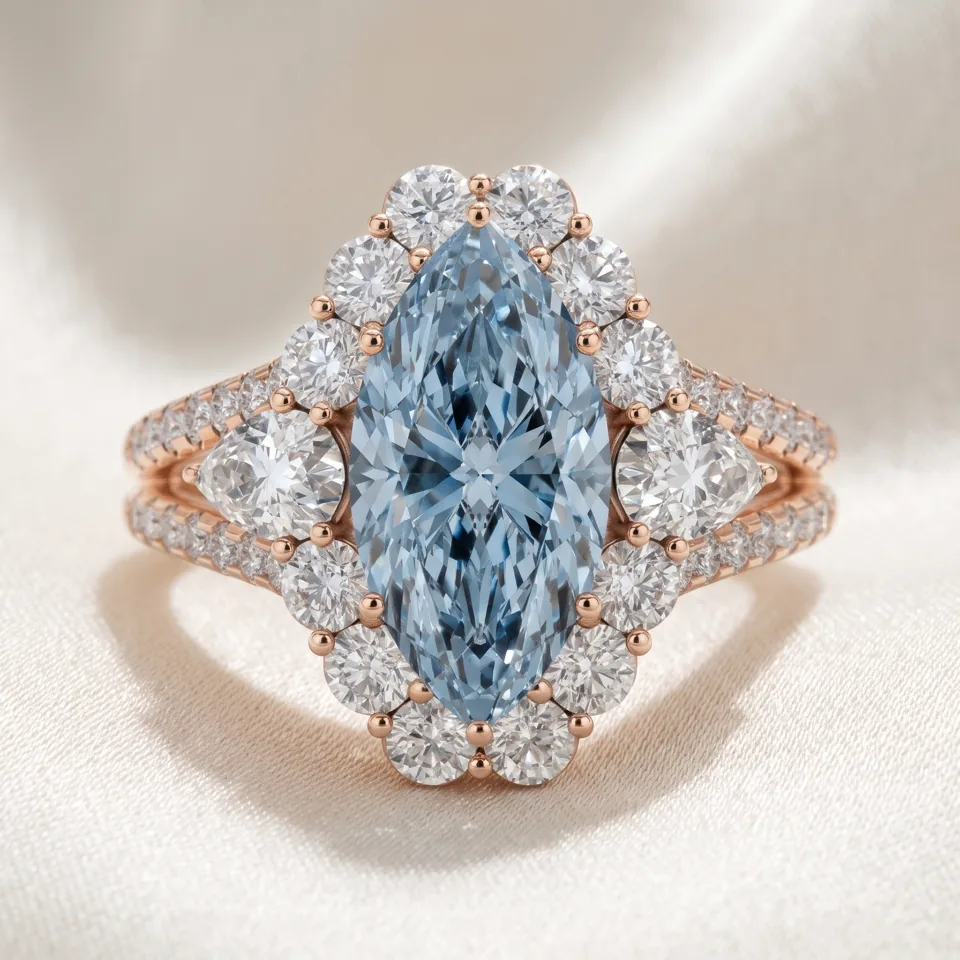 Blue Diamond Halo Rings
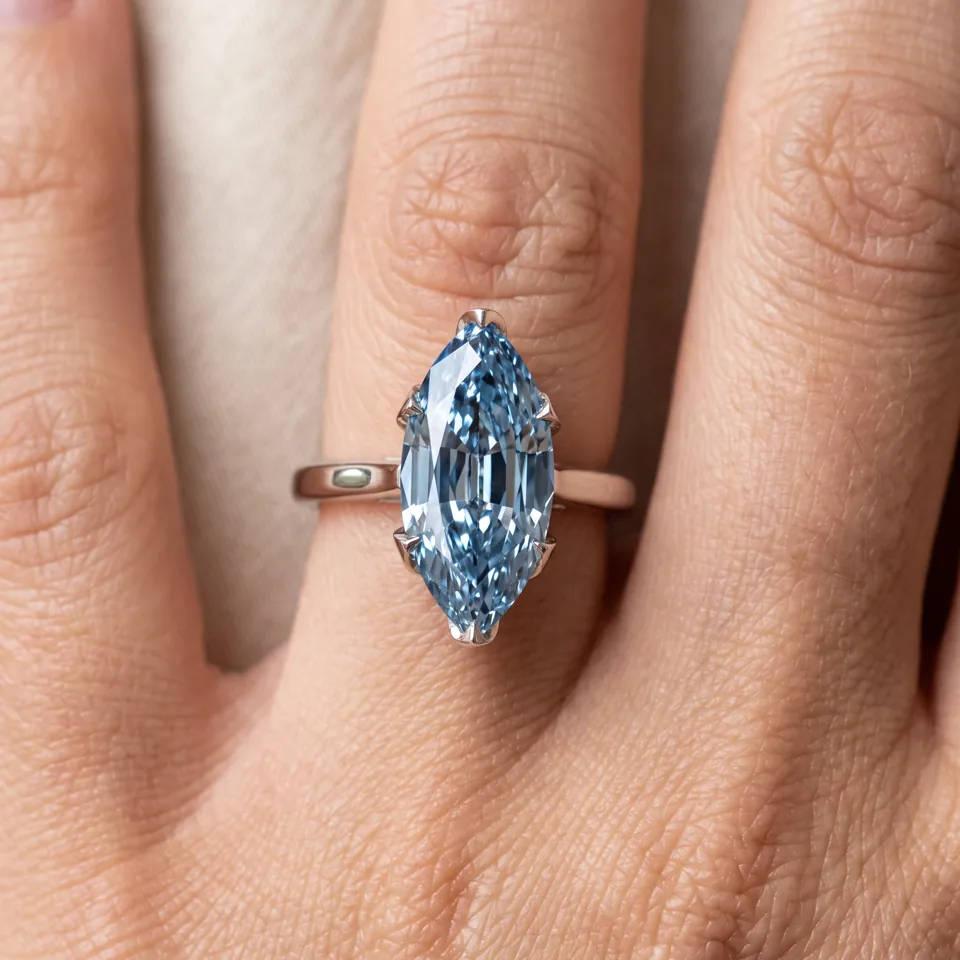 Blue Diamond Flower Rings
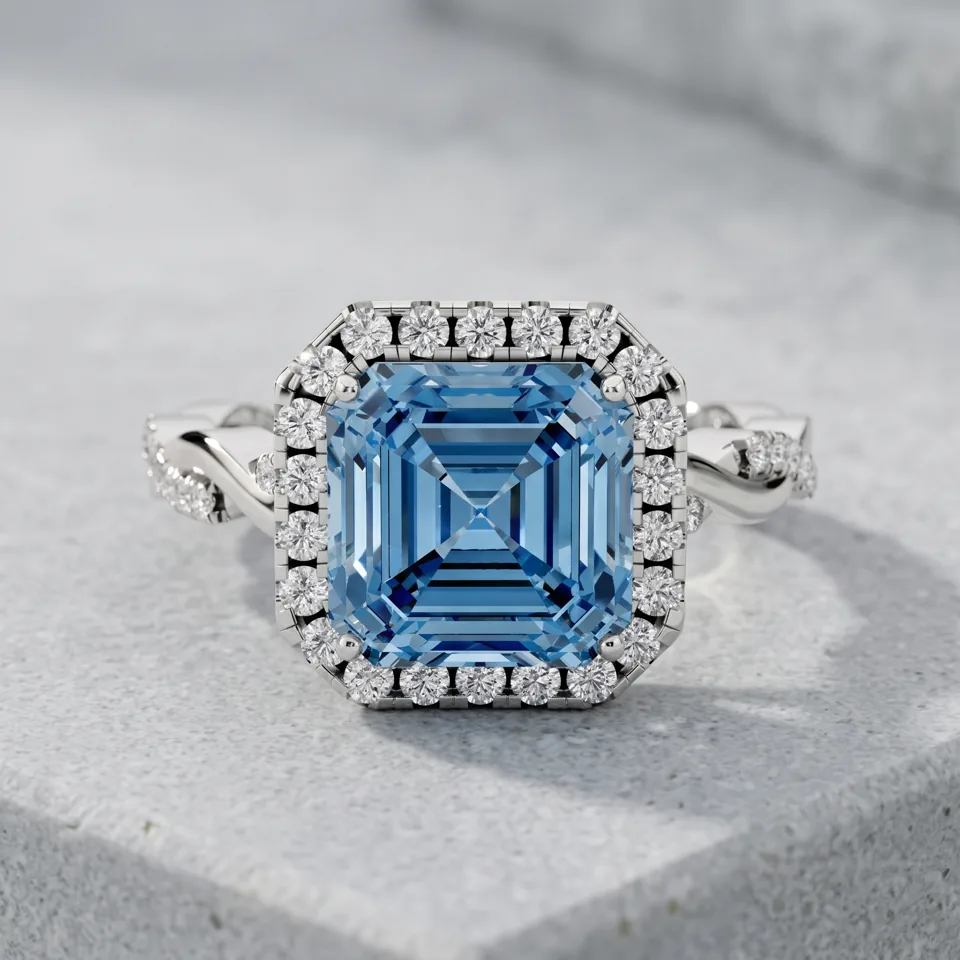 Blue Diamond Infinity Rings
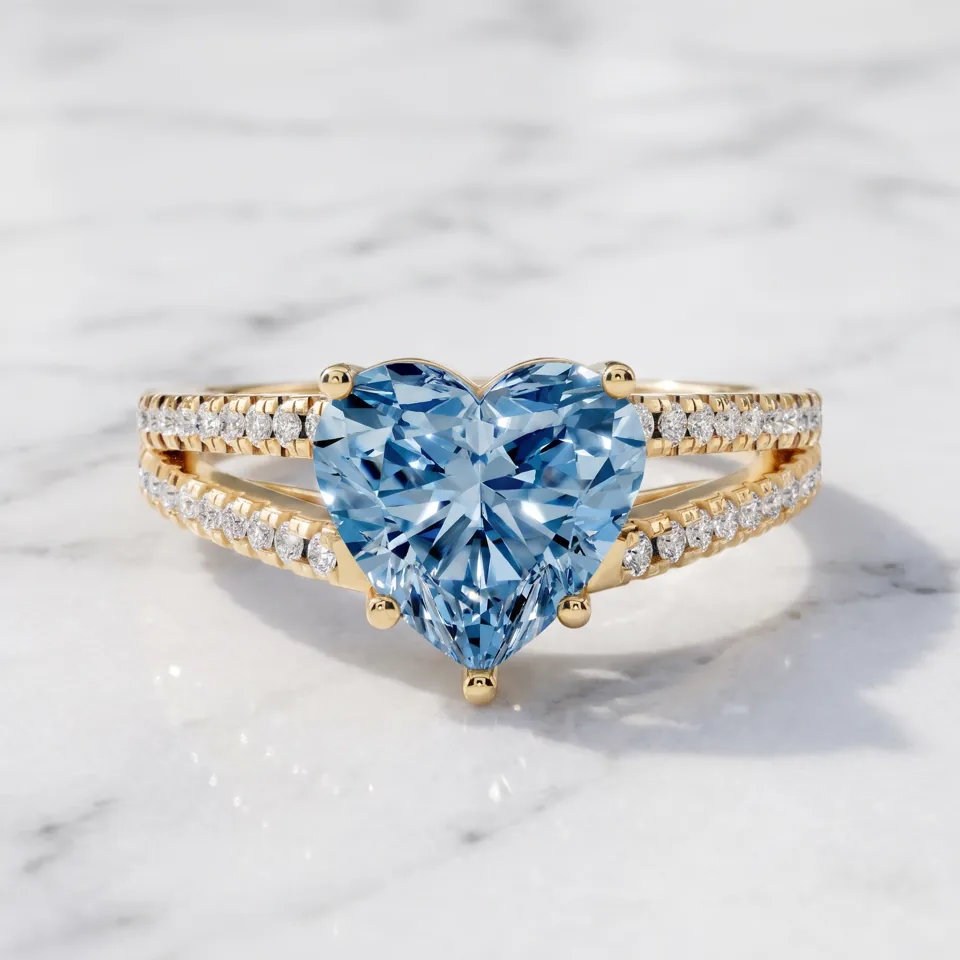 Blue Diamond Pave Rings
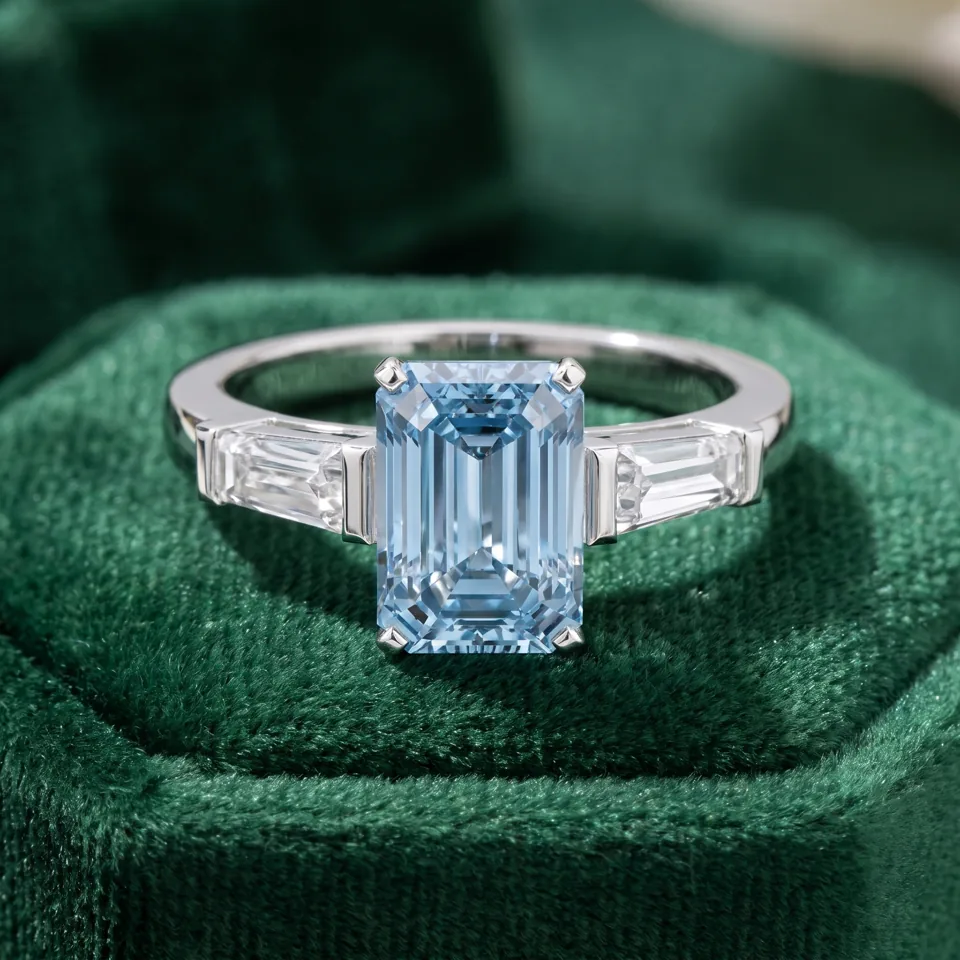 Blue Diamond Rings with Baguette Side Stones
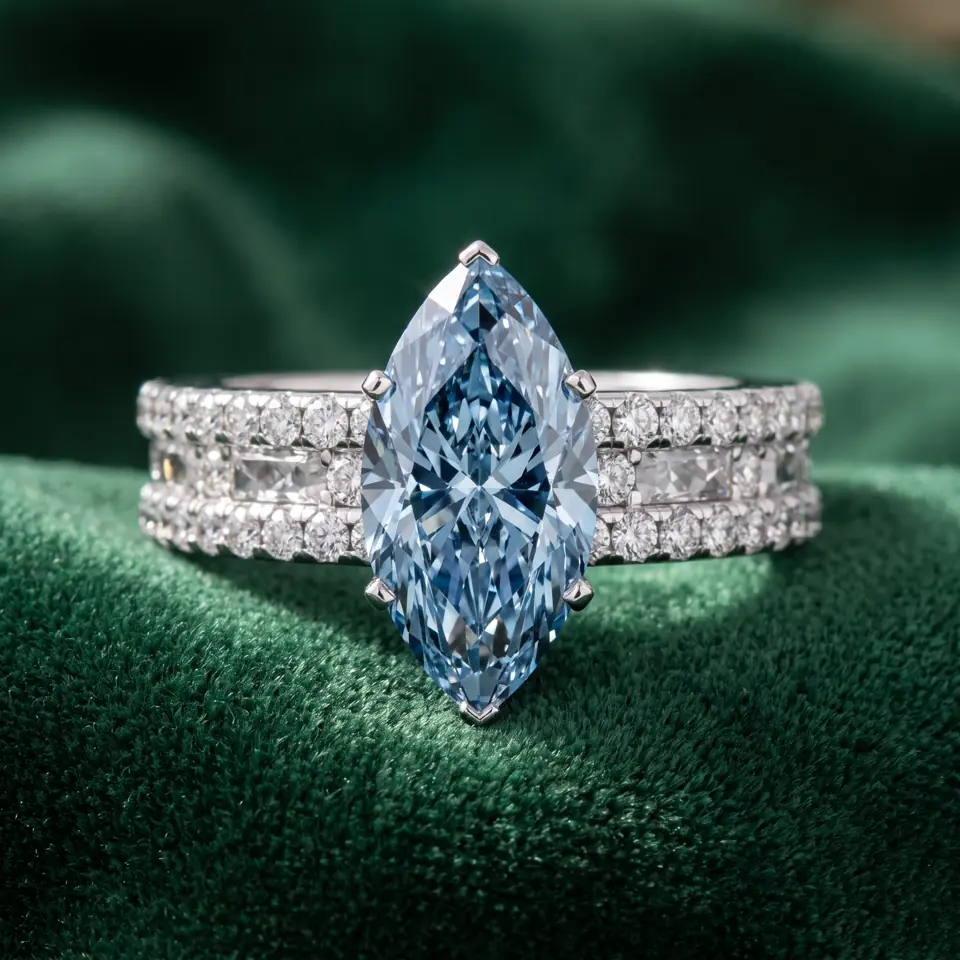 Blue Diamond Channel Set Rings
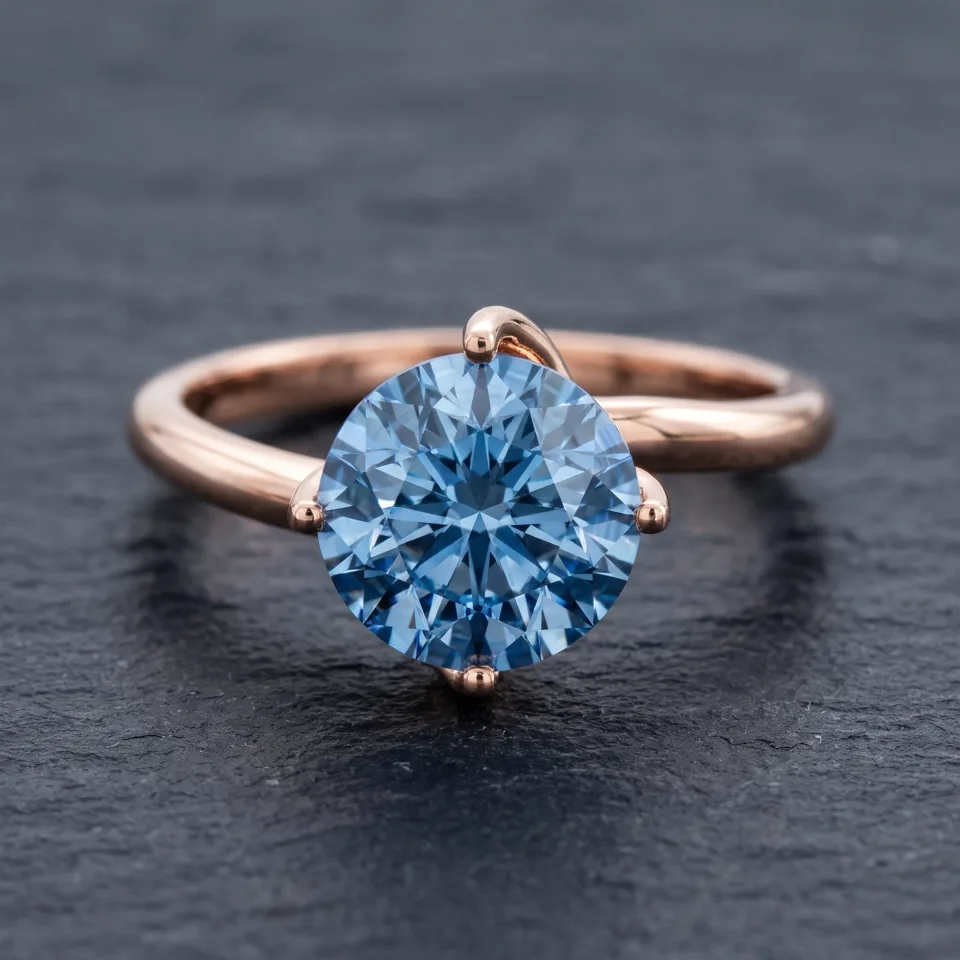 Blue Diamond Bypass Rings
Most designs accept ten shapes. Cushion and radiant cuts hold color well and make a blue center look saturated from edge to edge. To compare blue with other colors, see our guide to colored diamonds. Oval and pear stretch the color along the finger. A round brilliant gives the most white sparkle, so its blue can read lighter, which some people prefer for a softer, sky-like shade.
Each gold color is available at 10K, 14K or 18K. For a ring worn less often, Silvadium, a tarnish-resistant sterling silver, costs the least.
Give a blue diamond engagement ring a halo of laboratory-grown diamond accents and the color sits inside a white border, so it looks deeper. Pavé bands, the most common style here, scatter tiny lab-grown diamond accents along both shoulders. Solitaires keep every eye on the center. Three stone designs place a white stone either side of the blue for balance.
A blue diamond is exactly as hard as a colorless one and copes with everyday knocks. Clean it often, because a film of lotion hides color more than it hides sparkle. Swish it through warm water mixed with a little gentle soap, then brush behind the stone.
We build your setting to order in 10–15 days around the blue center you select. Free insured shipping applies in both directions, you can return the ring within 30 days, and we resize it once for free within 60 days of delivery. The blue center itself carries an IGI or GIA report, shown when you pick it and included with the ring.
On this page you pay for the setting and the center separately. Settings start under $150, with most costing roughly $850 to $1,150. The 1-carat blue center is selected and priced afterward, and its shape and depth of color drive that cost. A lab-grown blue diamond costs far less than a mined blue of the same size.
Mined blue diamonds rank with the costliest gems in the world, because so few are found. Lab-grown blue diamonds are a different story: they cost a small fraction of a mined blue and are closer in price to other lab-grown fancy colors. The blue center for these settings is priced when you choose it.
Yes. Natural blue diamonds exist and get their color from traces of boron in the crystal. Lab-grown blue diamonds are also produced, and they match mined ones in chemistry, hardness and how they handle light. Some blue stones on the market are colorless diamonds whose color was changed by treatment, so always check the grading report.
Yes. A blue diamond scores 10 for hardness, the top of the Mohs scale. Scratches are unlikely, so it suits a ring you rarely take off. The color is stable and won't fade. A halo or bezel gives the edges of the blue center extra protection.
Natural blue diamonds are extremely rare. They make up a tiny fraction of all diamonds mined, and only a few mines have ever produced them in gem quality. That scarcity is why they sell at very high prices. Lab-grown blue diamonds offer the same color and hardness without the scarcity, at a far lower cost.


