Complimentary insured shipping, both waysEngagement ring diamonds certified by IGI or GIAGrown by light. Conflict-free by natureComplimentary insured shipping, both ways
Engagement RingsWedding BandsEarrings

NecklaceBraceletsAbout
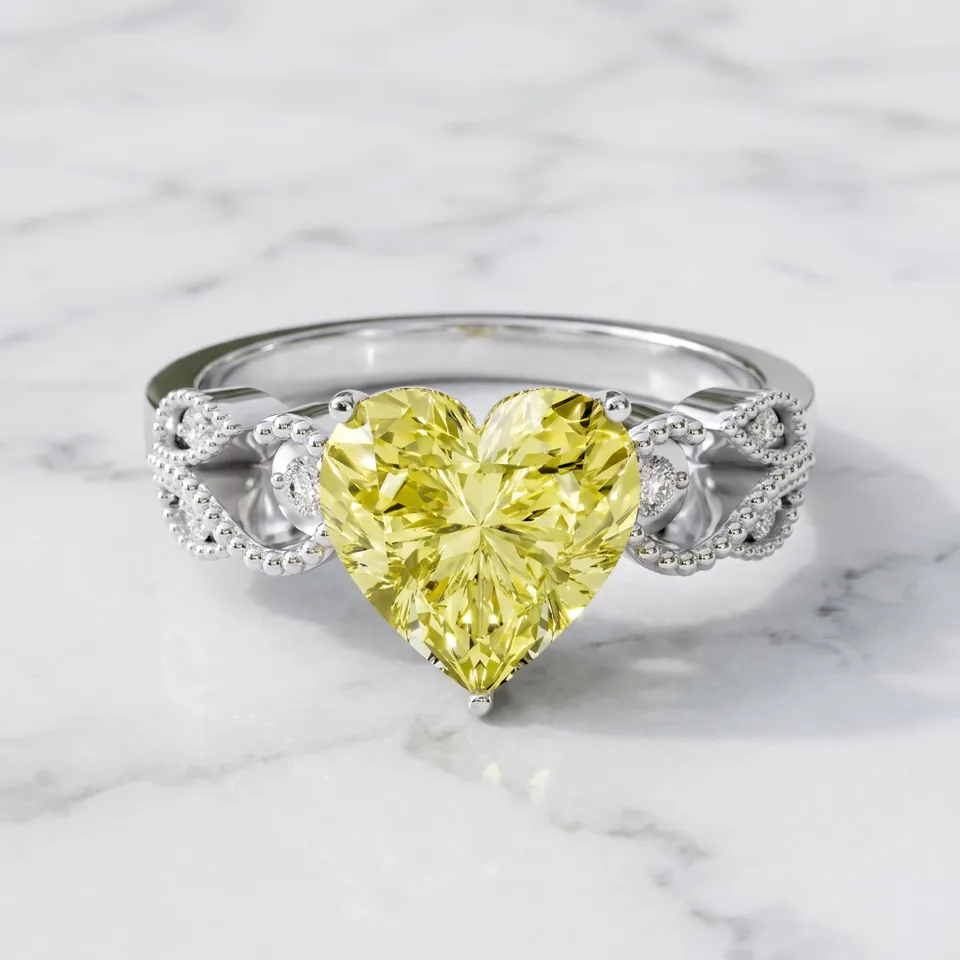
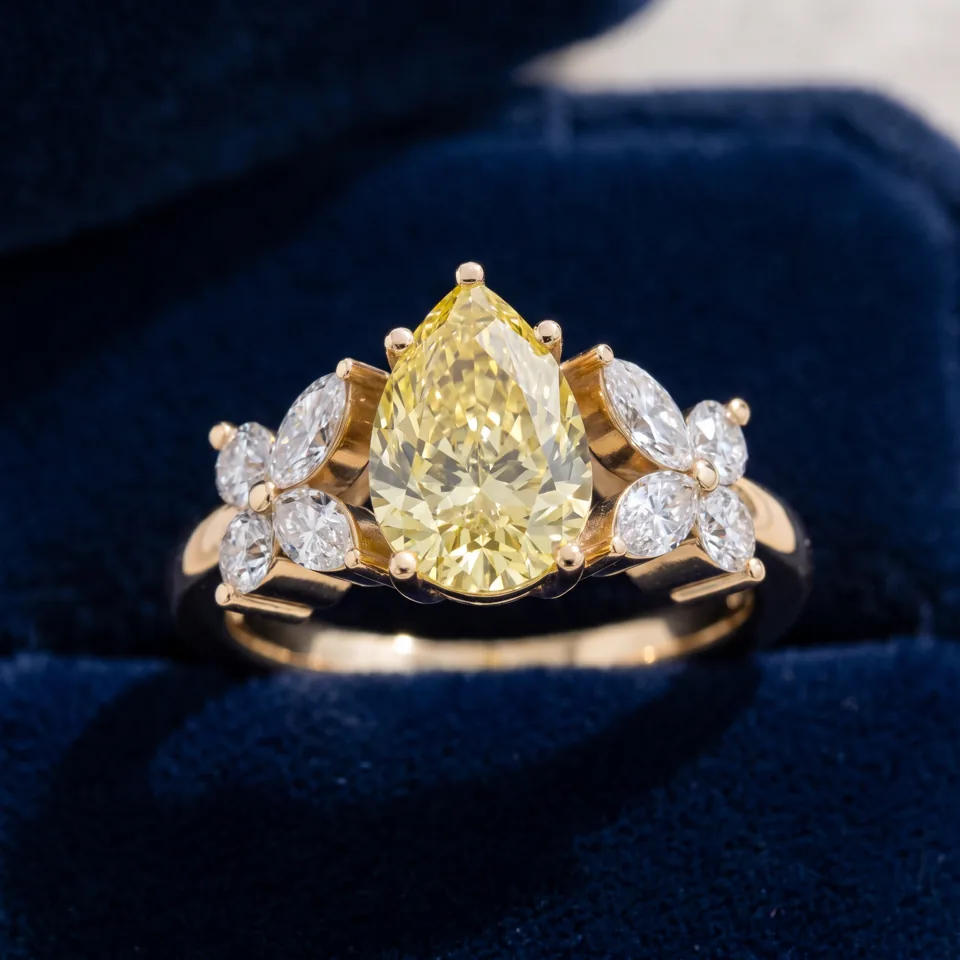
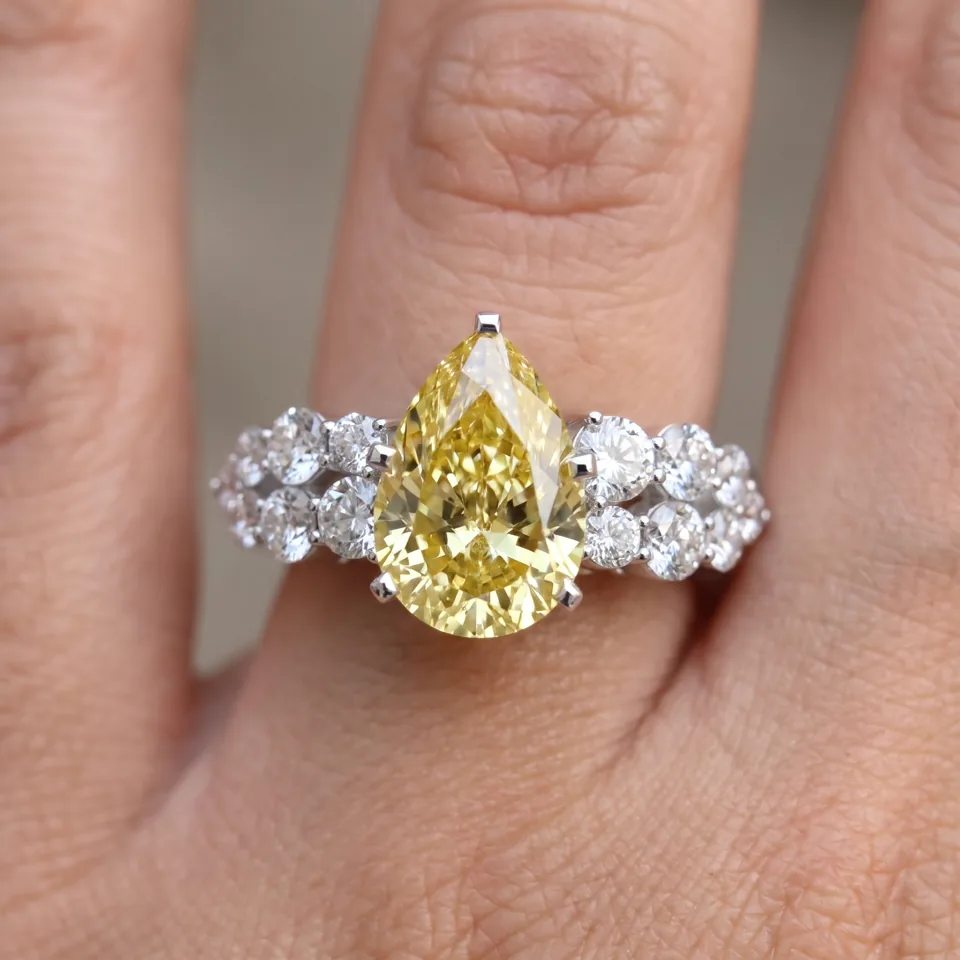
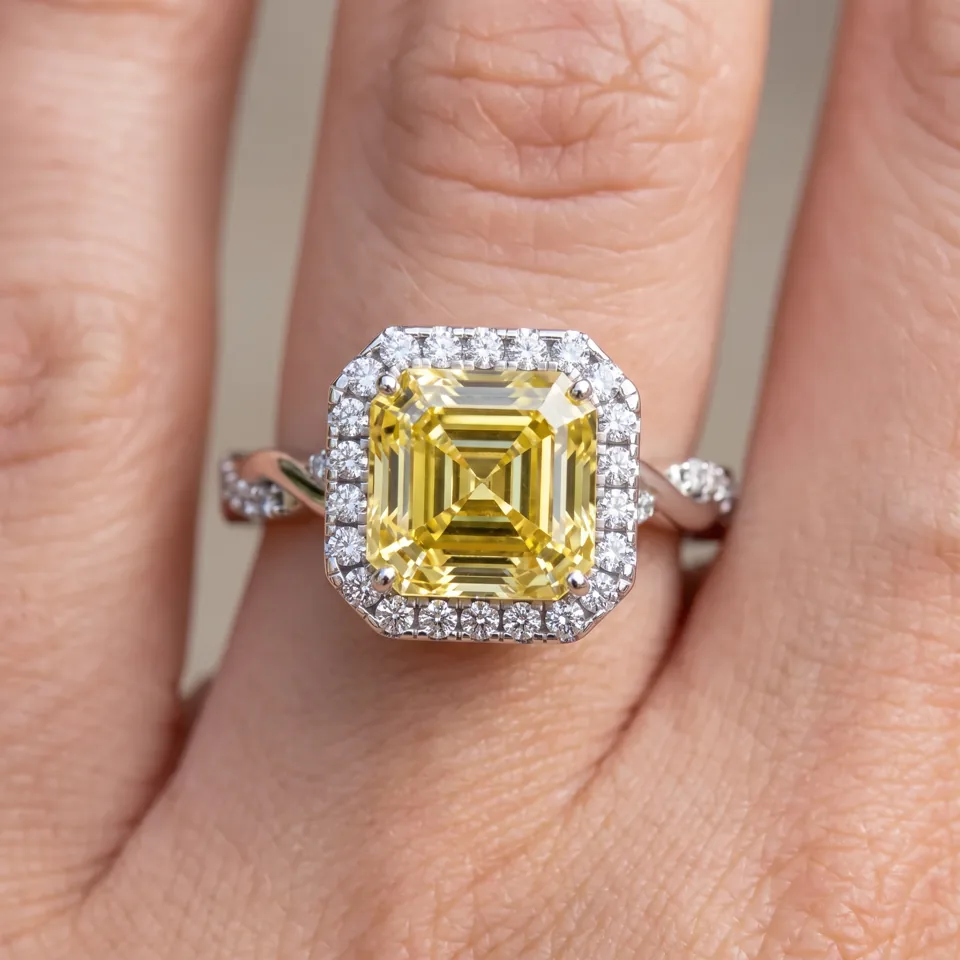
A double halo engagement ring wraps the center in two rings of small stones, and on this page every setting is drawn for a fancy yellow center that you pick in the next step. The two borders make the yellow look larger and more saturated.
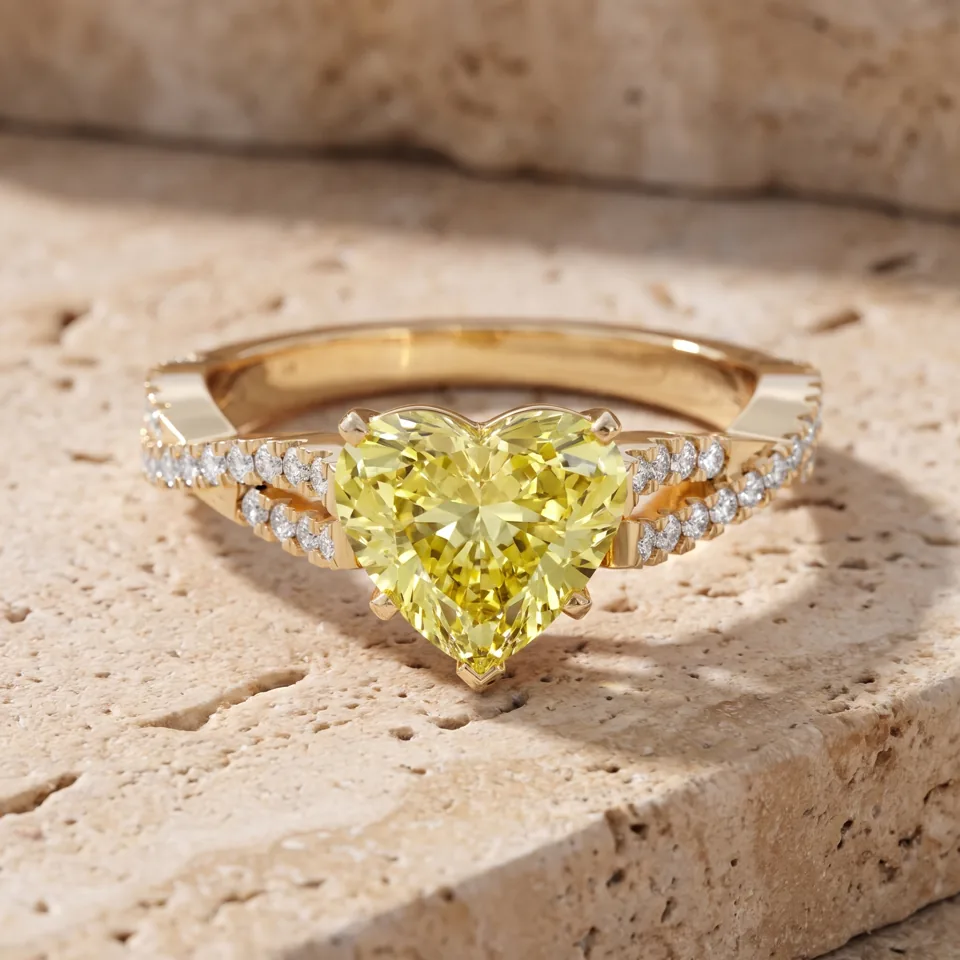
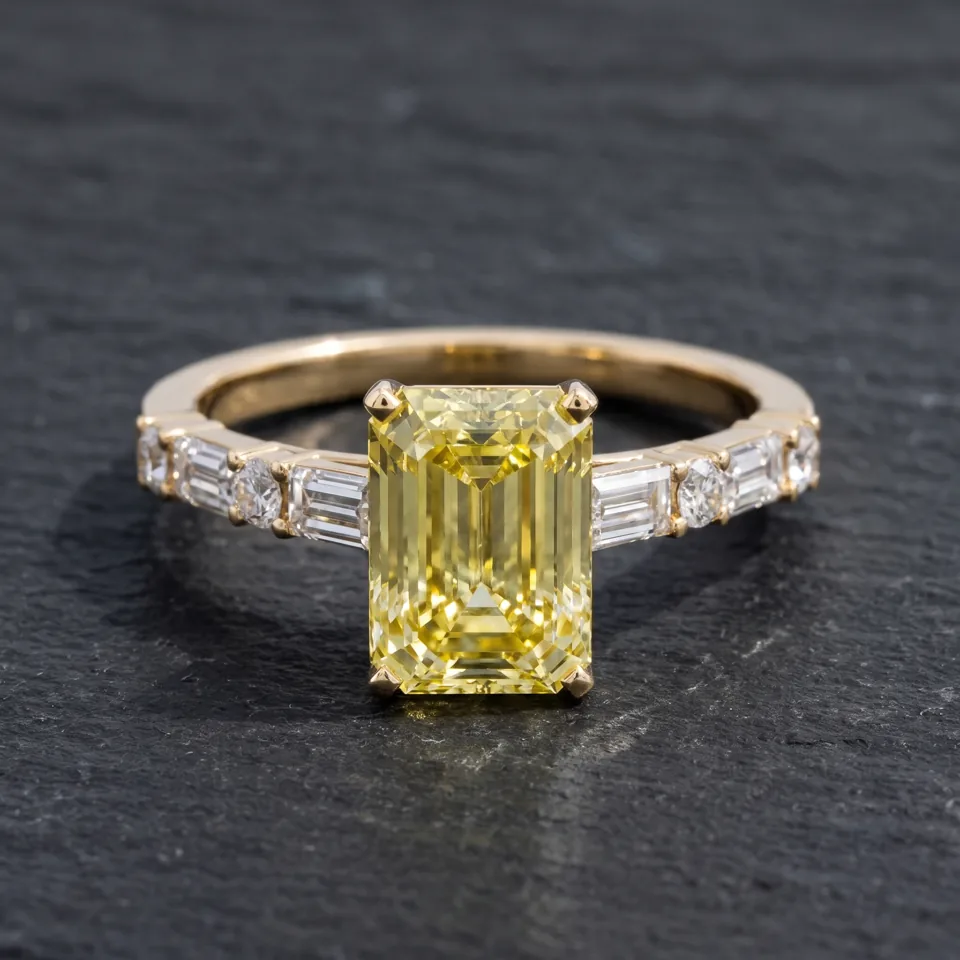
You'll choose a shape (ten are offered), a metal, and whether the band is split, pavé or plain.
Each halo is a frame of laboratory-grown diamond accents. The white sparkle next to the center makes its yellow read deeper, and two rows push the outline out further than one, so a modest stone takes up much more space on the finger. A double halo also spreads light across a wide surface, so the ring looks bright even in dim rooms.
Gold is offered in 10K, 14K or 18K.
Most designs here fork the shank into two arms just below the halos, which balances their width. Nearly all carry pavé on the shank. One design has a floral double halo on a plain band, and another uses a cluster look.
Every design takes round, oval, pear, cushion, radiant, emerald, heart, princess and marquise, and most also take Asscher. Prices open under $400, and the usual setting costs close to $950–$1,000. That covers the ring alone; the yellow stone is added and priced on its own.
Once you order, the setting is made and your center is mounted within 10–15 days. Free insured shipping covers the trip to you and any return. You have 30 days to return the ring and one free resize within 60 days of delivery. The yellow center you mount here carries an IGI or GIA report.