Complimentary insured shipping, both waysEngagement ring diamonds certified by IGI or GIAGrown by light. Conflict-free by natureComplimentary insured shipping, both ways
Engagement RingsWedding BandsEarrings

NecklaceBraceletsAbout
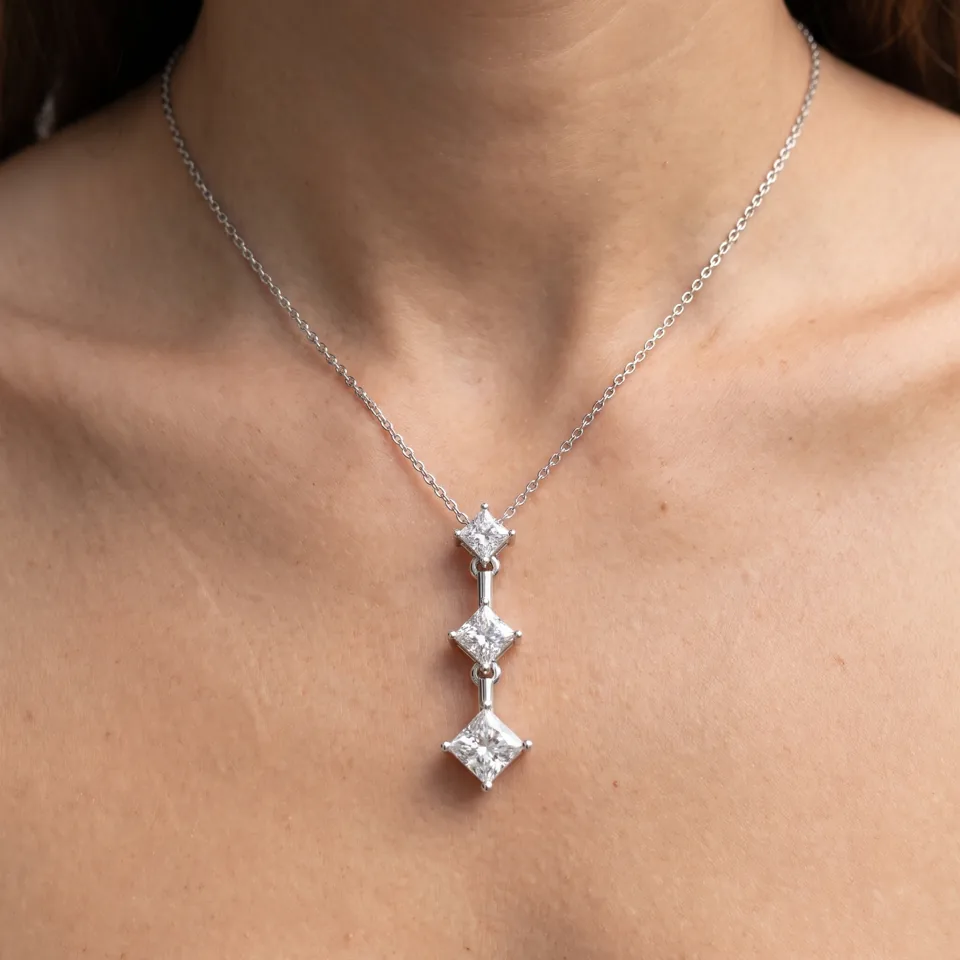
A pendant hangs one focal piece on a chain, and here that piece is set with lab-grown diamonds: a single solitaire, a three stone drop, a halo, a floral motif or a cluster. Gold versions are 10K or 14K in a choice of rose, white or yellow, and nearly every design can switch to Silvadium, a tarnish-resistant sterling silver. Then select the style, the metal and a total carat weight, usually between half a carat and 3 carats. Our diamond anniversary gift guide suggests pendants and other pieces by budget.
A solitaire pendant shows one lab-grown diamond on a simple bail and is easy to wear every day. It also makes a simple gift for an April birthday, since April’s birthstone is diamond. A halo pendant frames a center with small stones, so it looks larger at the same total weight. Cluster and floral pendants group many small lab-grown diamonds into one shape for a lot of surface sparkle. Three stone and graduated pendants arrange several stones in order of size.
The carat figure is the total of every lab-grown diamond on the pendant. Half a carat to 1 carat total weight makes a delicate piece for work; 1.5 to 2 carats is clearly visible at conversation distance; 3 carats and above makes a statement for evenings. A cluster spreads its weight over a wider area, while a solitaire puts it all into one stone that shows more fire.
A shorter chain places the pendant near the collarbone, which suits open necklines. A longer one drops it toward mid-chest and works over crew necks or layered with other chains. Think about what you wear most before you pick a length. Our necklace length chart shows where each length falls.
Pendants take far less wear than rings, so silver holds up well here and keeps the price down. 10K and 14K gold won't tarnish and keep their color over years. Clean the stones every few weeks with a soft brush and mild soap, since the back of a pendant collects skin oils.
Your pendant is made for you within 10–15 days and comes with free insured shipping, both to you and back if needed. Return it unworn with its certificate within 30 days. One free size change is included within 60 days of delivery, and for a pendant that means a new chain length.
Prices here begin under $250, and the typical lab-grown diamond pendant sits around $600 to $800 in its smallest size. A lab-grown diamond is a real diamond: the same carbon crystal and the same hardness as a mined one, at a much lower price. Going up in carat weight, or from silver to gold, raises the figure.
To buy, a 1-carat total weight pendant here costs more than our smallest options, with the exact figure on each product page; to resell, very little. Lab-grown diamonds have a small resale market, and only the gold keeps a clear metal value. Choose a pendant because you love wearing it; it won't hold value the way an investment would.
Not for most people. A 2-carat total weight pendant is noticeable without being oversized, especially as a halo or cluster where the weight spreads across several lab-grown diamonds. As a single stone it reads larger and suits evenings more than the office. For daily wear, 0.75 to 1.5 carats total weight is a comfortable middle.
For everyday wear, many people land between 0.5 and 1 carat total weight; for a gift or an occasion piece, 1.5 to 2 carats gives more presence. Think about your neckline and chain too, since a larger pendant needs a slightly sturdier chain. Most designs here offer half a carat up to 3 carats, with some reaching higher.
Yes, if the pendant's bail is large enough to slide over the chain and its clasp. Tennis chains are thicker than cable chains, so check the bail opening first. The pairing is heavy and very bright, so it suits an evening look more than daily wear. A pendant with a wide or hinged bail is the easiest to move between chains.