Complimentary insured shipping, both waysEngagement ring diamonds certified by IGI or GIAGrown by light. Conflict-free by natureComplimentary insured shipping, both ways
Engagement RingsWedding BandsEarrings
NecklaceBraceletsAbout
A green diamond ring is a rare sight, which is much of its appeal. Our guide to colored diamonds explains why natural green is so rare. Each setting here is built to hold a fancy green center; you pick that stone next, from ten shapes including oval, pear, emerald and heart.
Start with the look of the setting, from a bare solitaire to a halo or three stone ring, then choose the metal that sets off the green best.
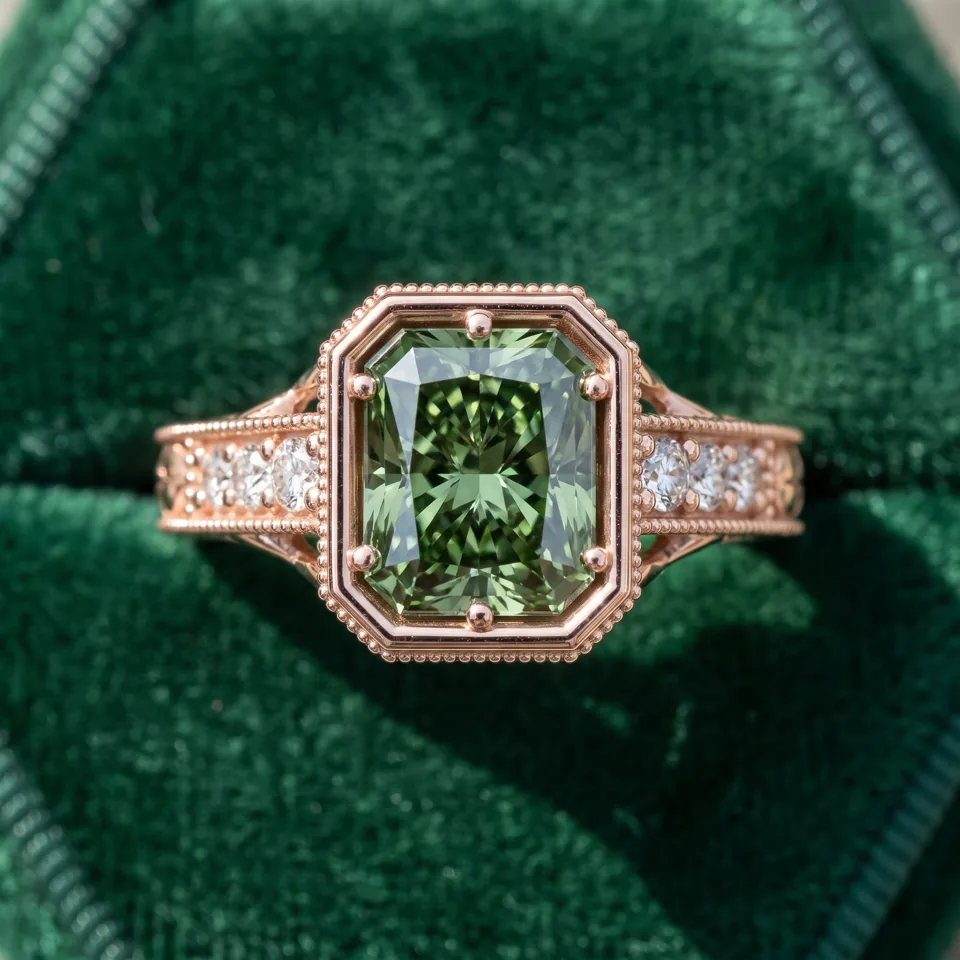
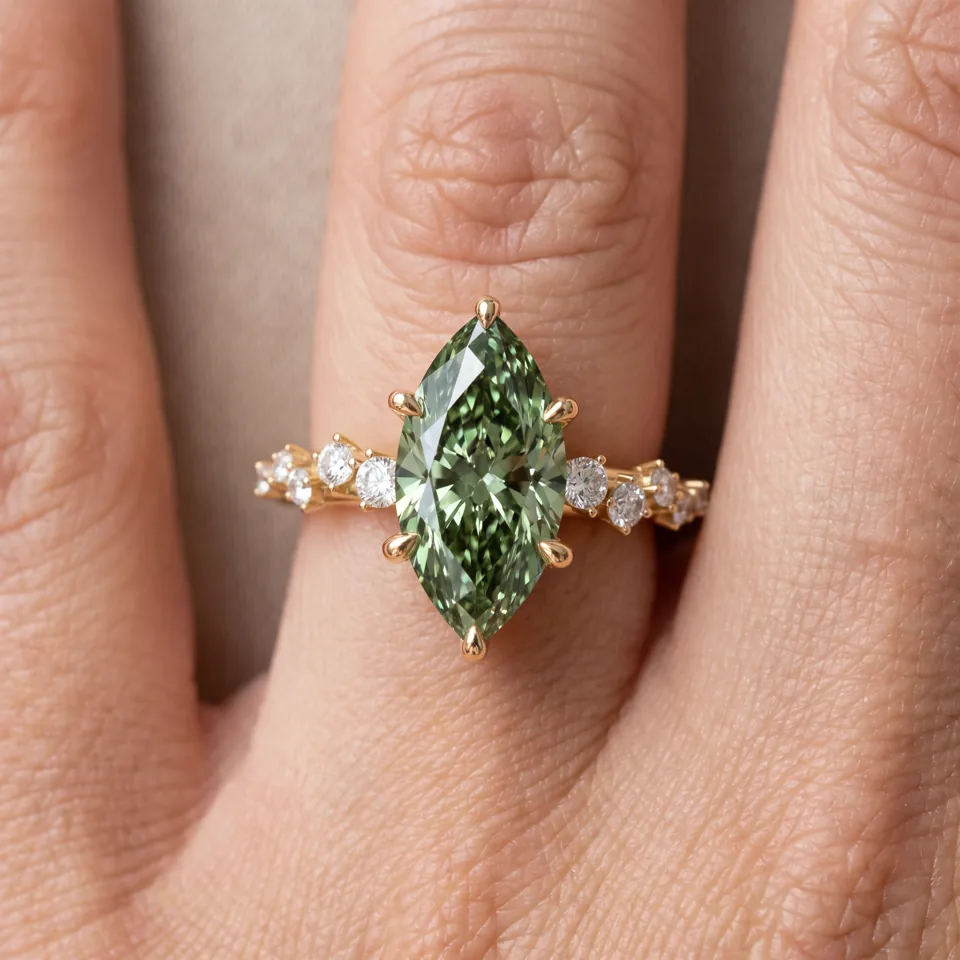
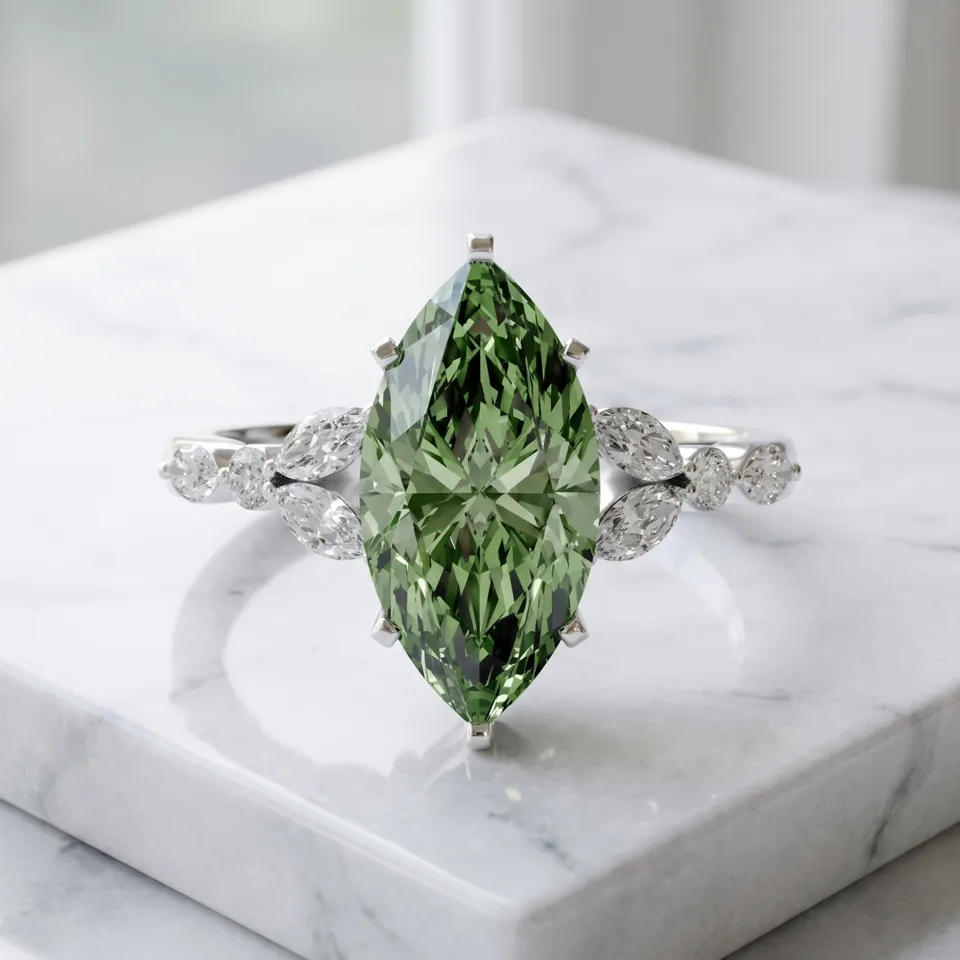
Yellow gold deepens the warmth of a green stone and gives an earthy, vintage feel. White gold and platinum keep the green cool and crisp, and they make a pale green look clearer. Rose gold gives pale mint shades a gentle, warm counterpoint. You can choose 10K, 14K or 18K gold, platinum is offered on almost every design, and Silvadium, a tarnish-resistant sterling silver, keeps the budget low.
Single stone, halo or a trio
A plain solitaire keeps attention on the color. A halo of white laboratory-grown diamond accents around the center makes a light green read more saturated by contrast, and it adds visible size. Three stone rings place white lab-grown diamond accents on either side, while side stone and pavé bands add sparkle along the shoulders. Vintage settings bring milgrain and filigree for an antique look.
Picking a shape for color
Color tends to gather in step-cut and deeper shapes. Emerald, Asscher, radiant and cushion cuts often show green more strongly, while a round brilliant favors sparkle over saturation. Pear, oval and marquise centers stretch the color across a longer outline. Every shape from round to heart is available on most settings here.
Setting price and the center
The least expensive setting is under $150, and the middle of the range runs roughly $850 to $1,150 for the setting by itself. Your green center gets its own price when you pick it, which lets you trade size against depth of color before committing.
Ordering from Whitemoon
Once you order, your green diamond ring is made in 10–15 days. Insured shipping is on us both ways. A first resize within 60 days of delivery is free, and unworn rings are returnable for 30 days. The green center you pick comes with an IGI or GIA report.
FAQ
Questions about Green Diamond Rings
Are green diamonds a real thing?
Yes. Green diamonds occur in nature, where long exposure to natural radiation underground gives the crystal its color. They are also produced in labs. Either way, a green diamond is still carbon with the hardness of any diamond. Each setting on this page is designed for a green center that you select in the next step.
How much is a green diamond ring?
It depends mostly on the center. Our settings begin below $150, and a typical one costs roughly $850 to $1,150. The green center carries its own price, shown once you select it, so the total turns on its size, shape and shade. Platinum and 18K gold raise the setting price compared with 10K or 14K gold.
Are green diamonds more expensive?
Natural green diamonds usually are. They are far rarer than colorless stones, and strong, even green commands a high premium per carat. Lab-grown diamonds cost far less than mined diamonds of the same size, color included. The price of a green center also climbs with saturation: a pale mint stone costs less than a deep, vivid one.
How much is 1 carat of green diamond?
There is no single figure, because the price swings widely with origin, depth of color and cut. A natural 1-carat green with strong color is a rare collector stone, while a lab-grown one costs a small fraction of that. Here you see the exact price of a green center as soon as you pick one for your setting.
How rare are green diamonds?
Natural green diamonds are among the rarest diamond colors. Many show only a light tint, and in some the green sits in a thin outer layer rather than through the whole stone. An evenly colored, vivid natural green is exceptionally rare and usually seen at auction. That rarity is why green centers stand out so much in an engagement ring.