Complimentary insured shipping, both waysEngagement ring diamonds certified by IGI or GIAGrown by light. Conflict-free by natureComplimentary insured shipping, both ways
Engagement RingsWedding BandsEarrings

NecklaceBraceletsAbout
A flower solitaire ring holds one center stone and lets the floral detail live in the setting: prongs shaped like petals, leaves sculpted on the shoulders, or a vine twisting around the band. The look is romantic, yet nothing competes with the center for attention.
Choose the motif, band width and metal; the center diamond is what you choose in the next step.
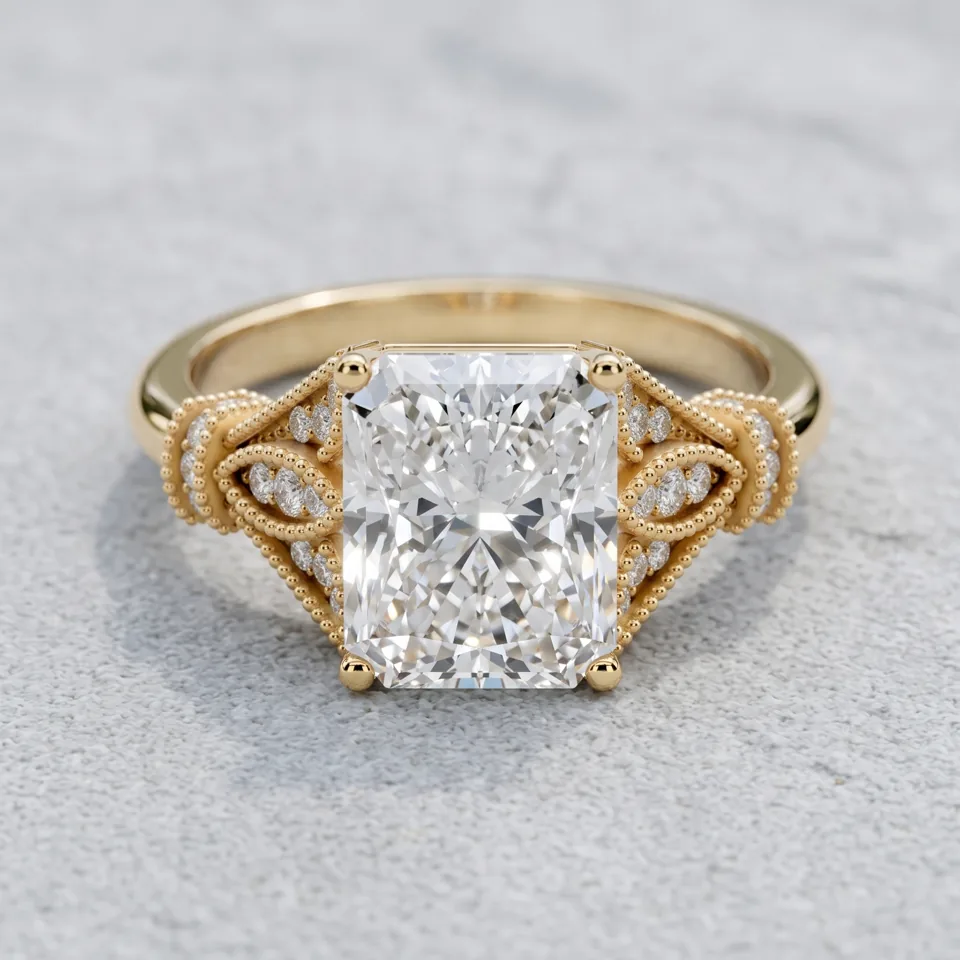 Vintage Floral Engagement Rings
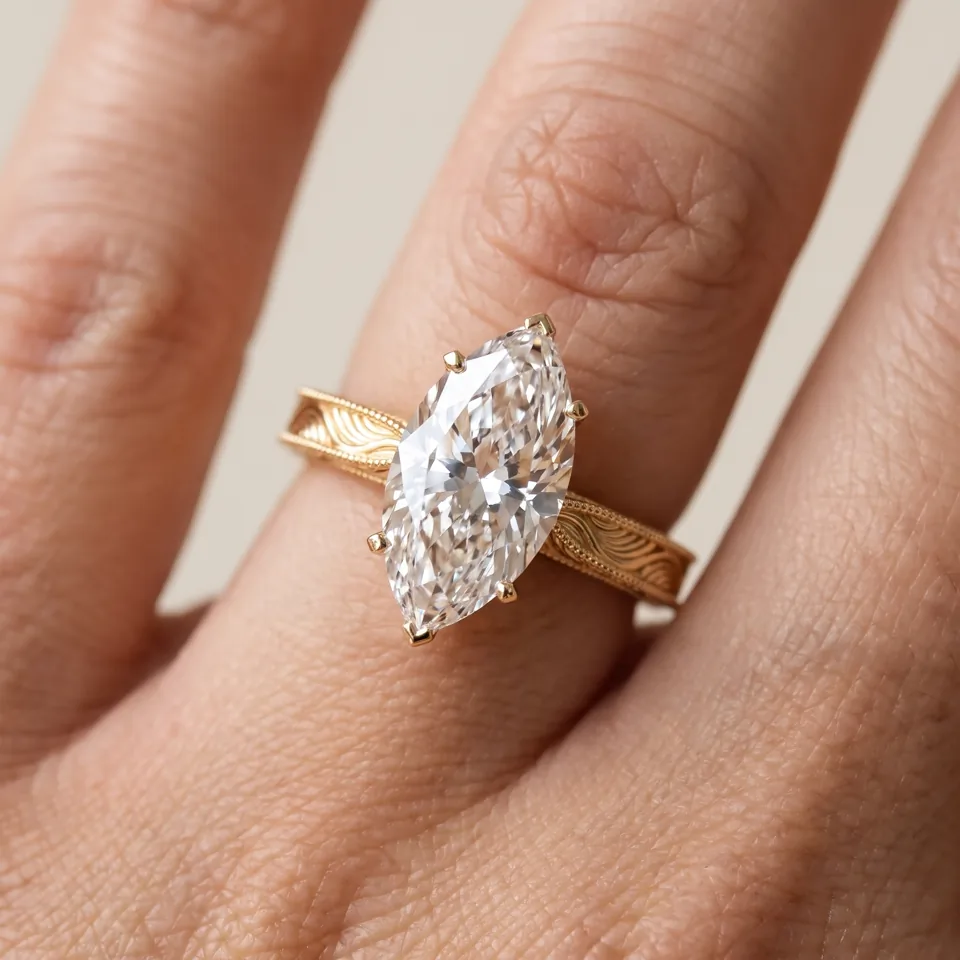 Solitaire Vintage Engagement Rings
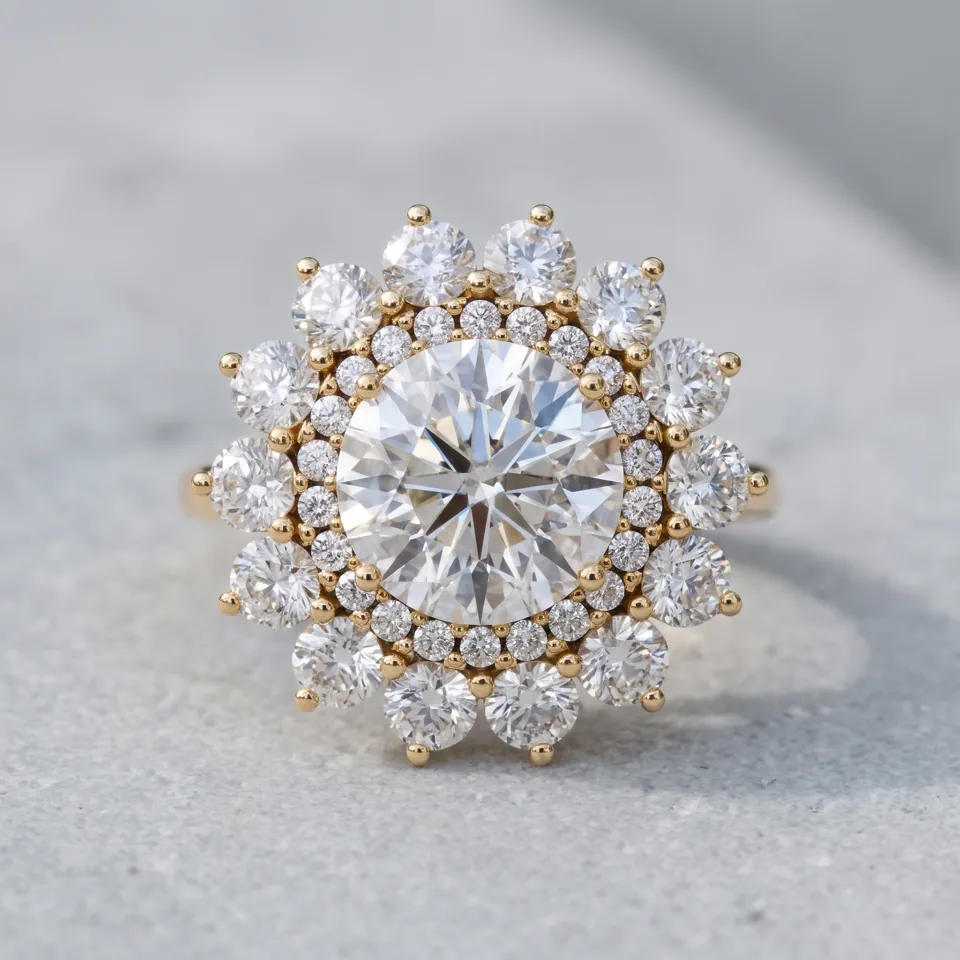 Floral Cluster Engagement Rings
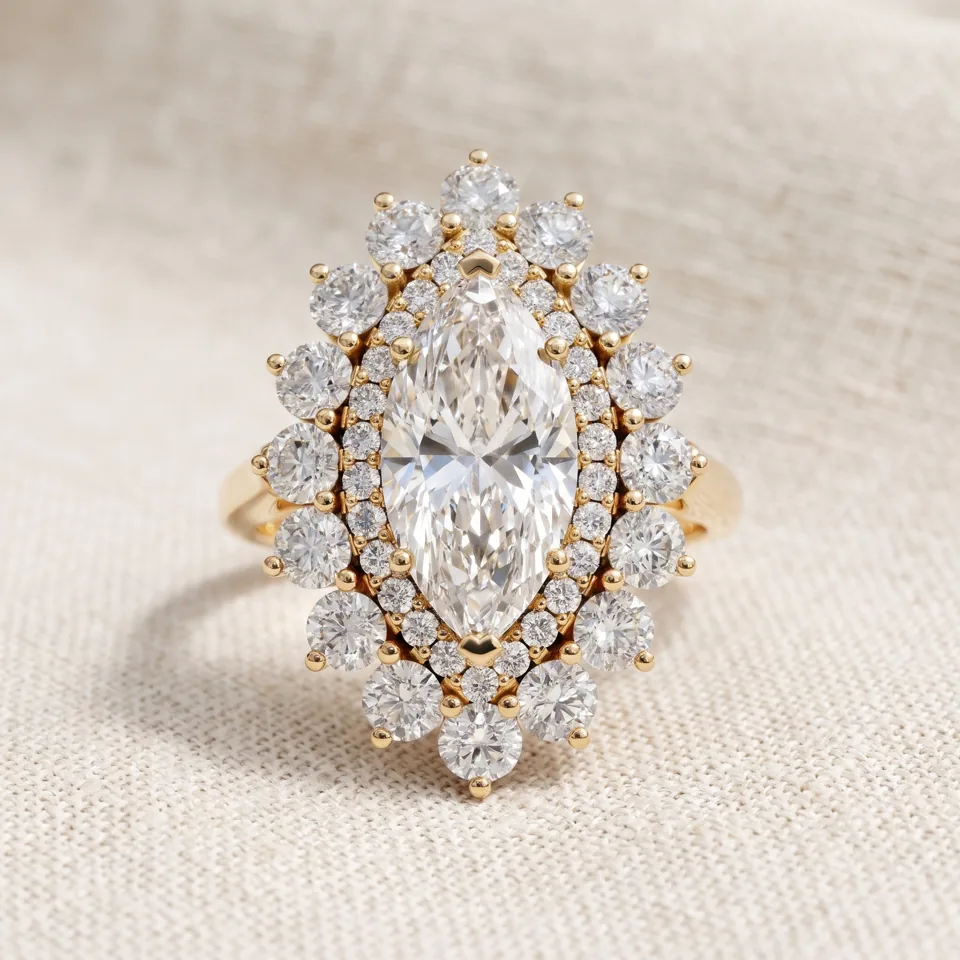 Floral Halo Engagement Rings
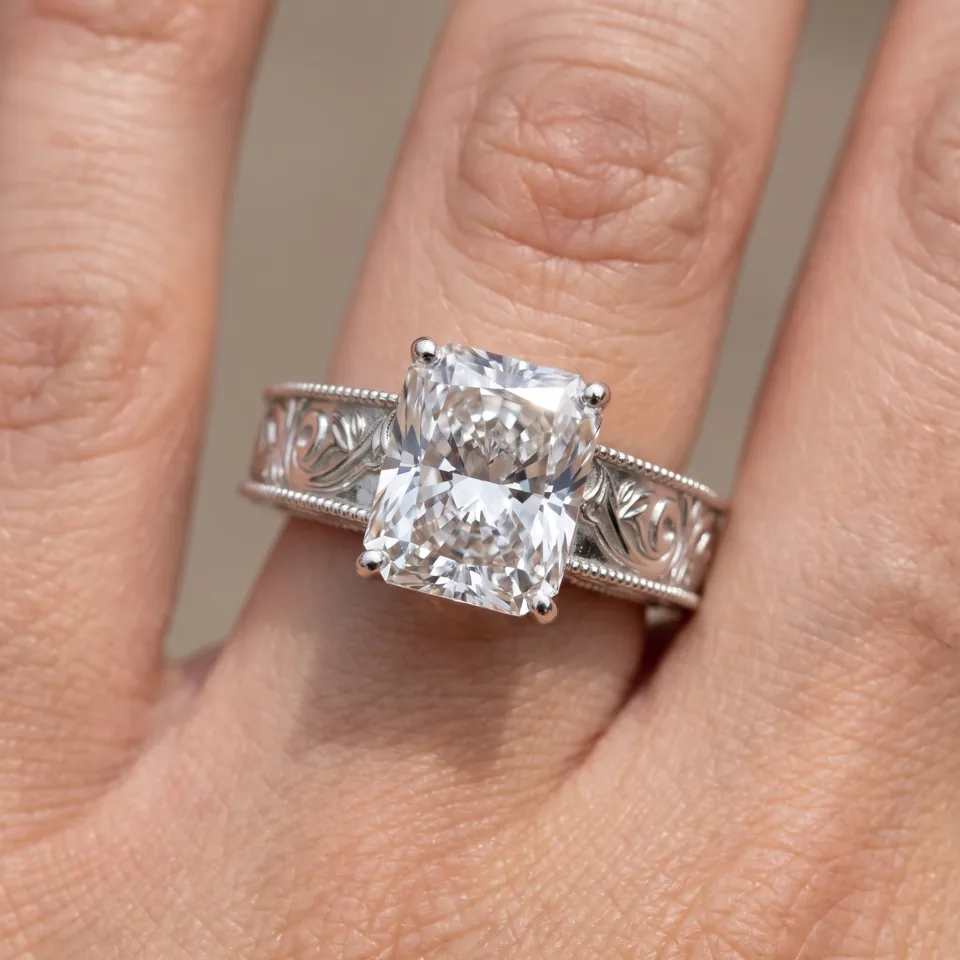 Engraved Flower Rings
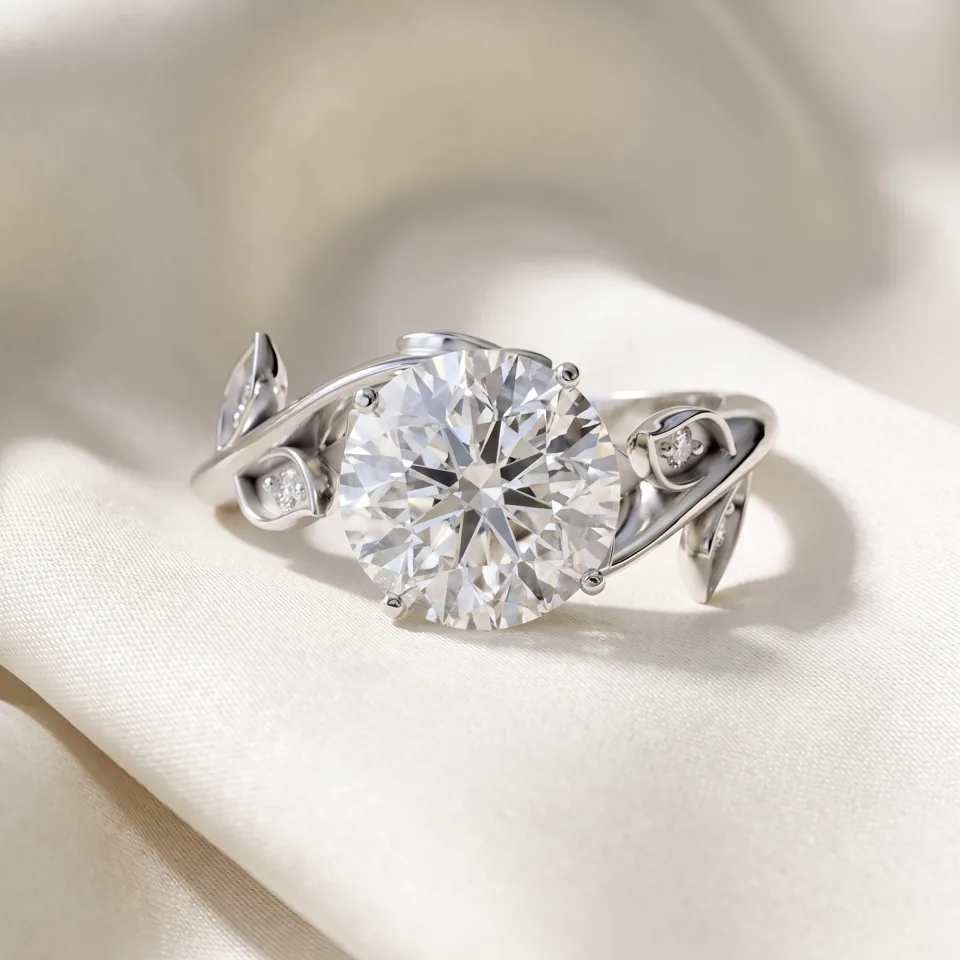 Twisted Vine Engagement Rings
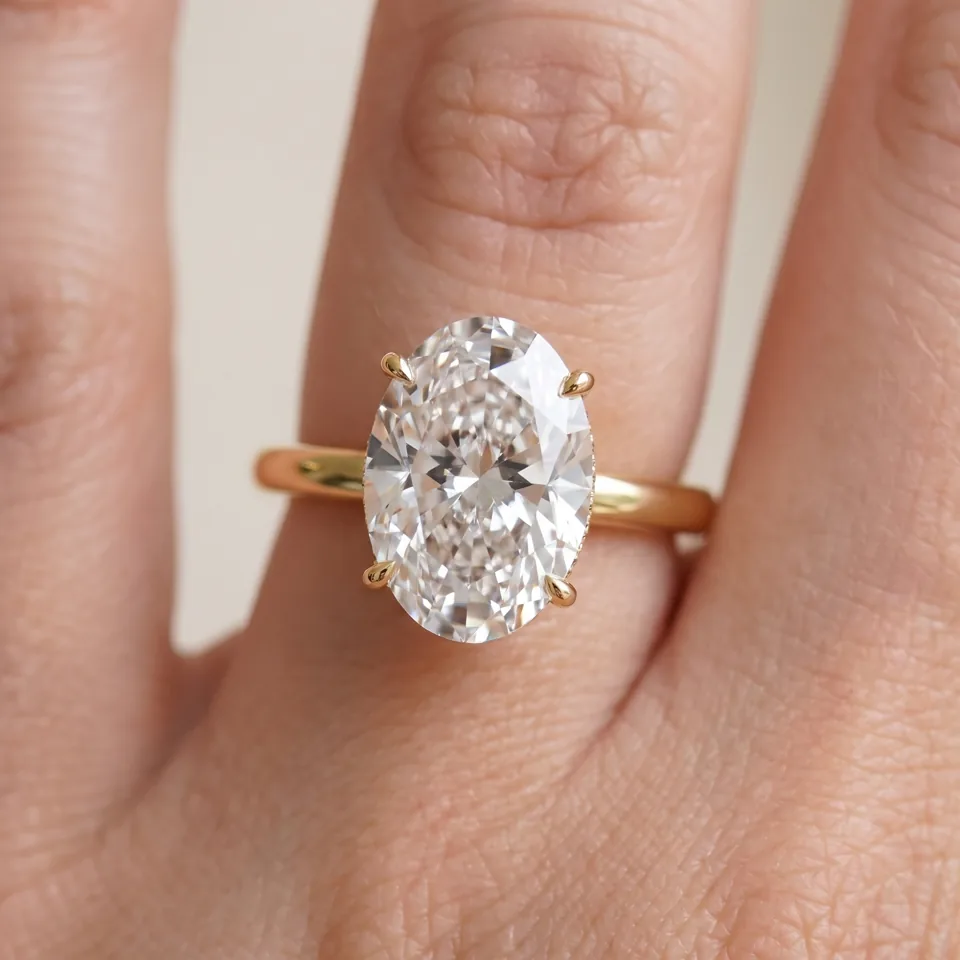 Hidden Halo Solitaire Rings
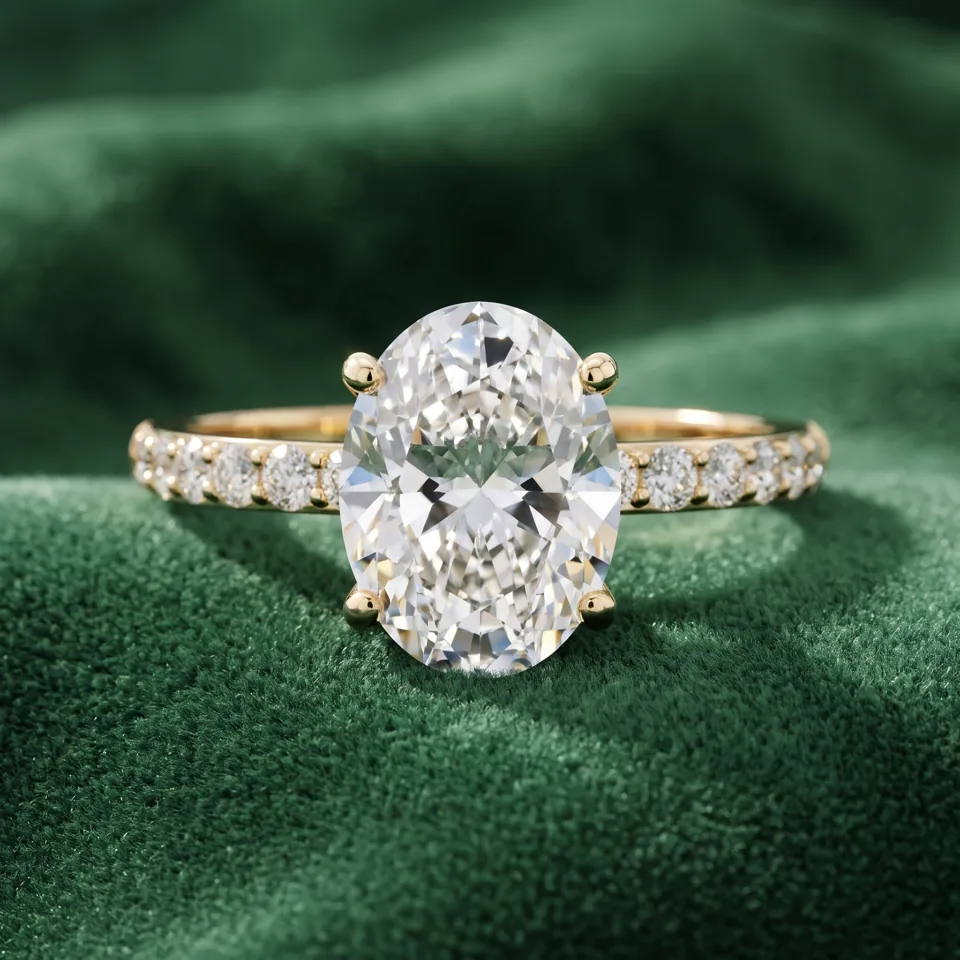 Pavé Solitaire Engagement Rings
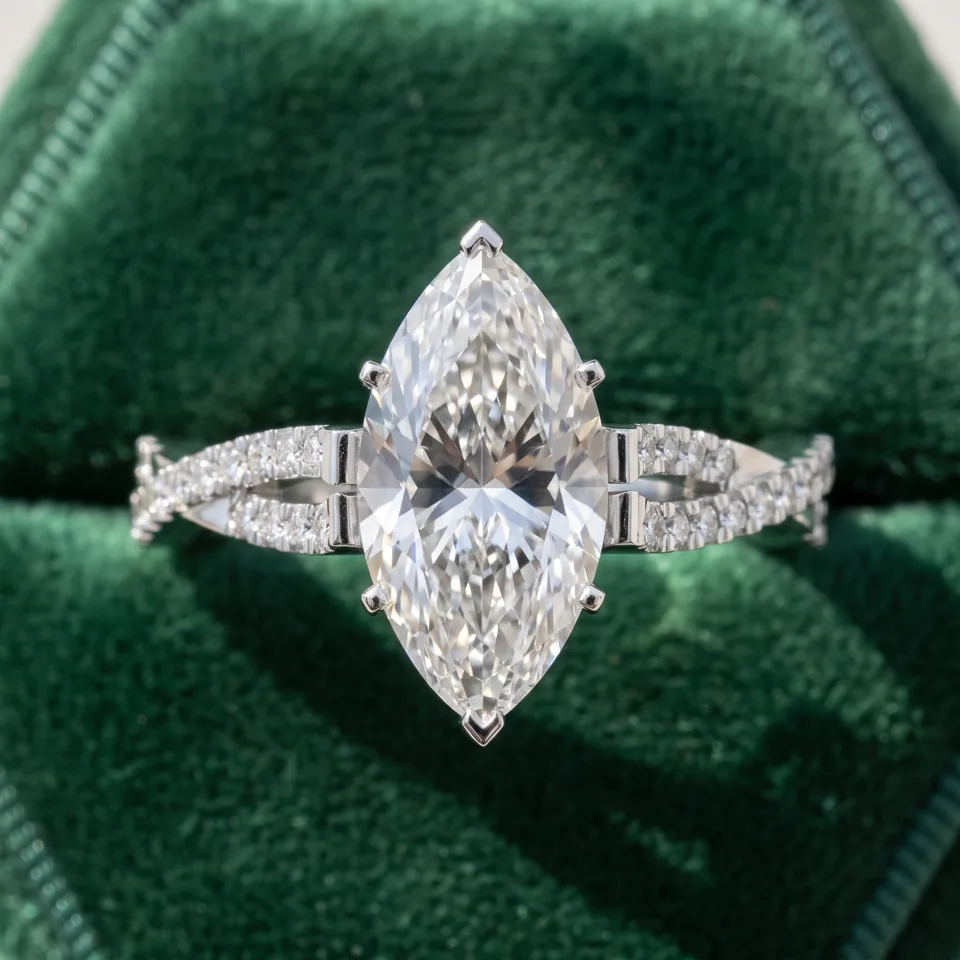 Solitaire Split Shank Engagement Rings
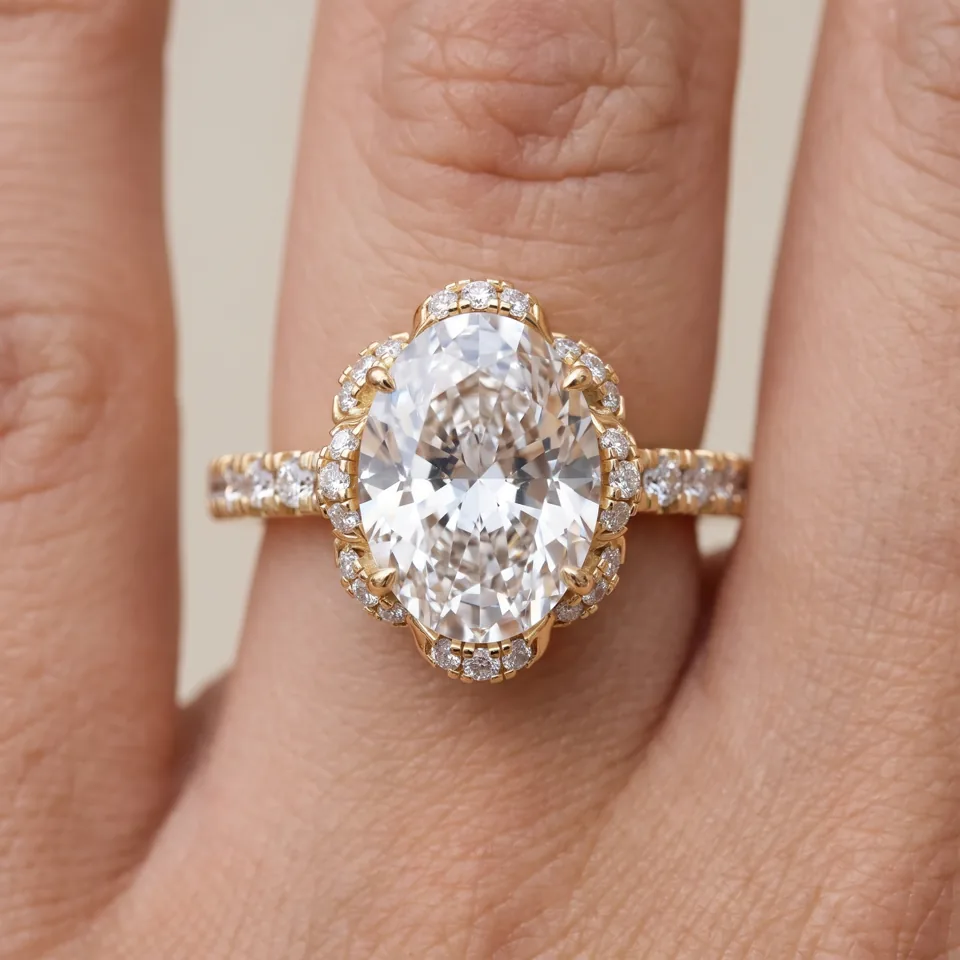 Pave Flower Engagement Rings
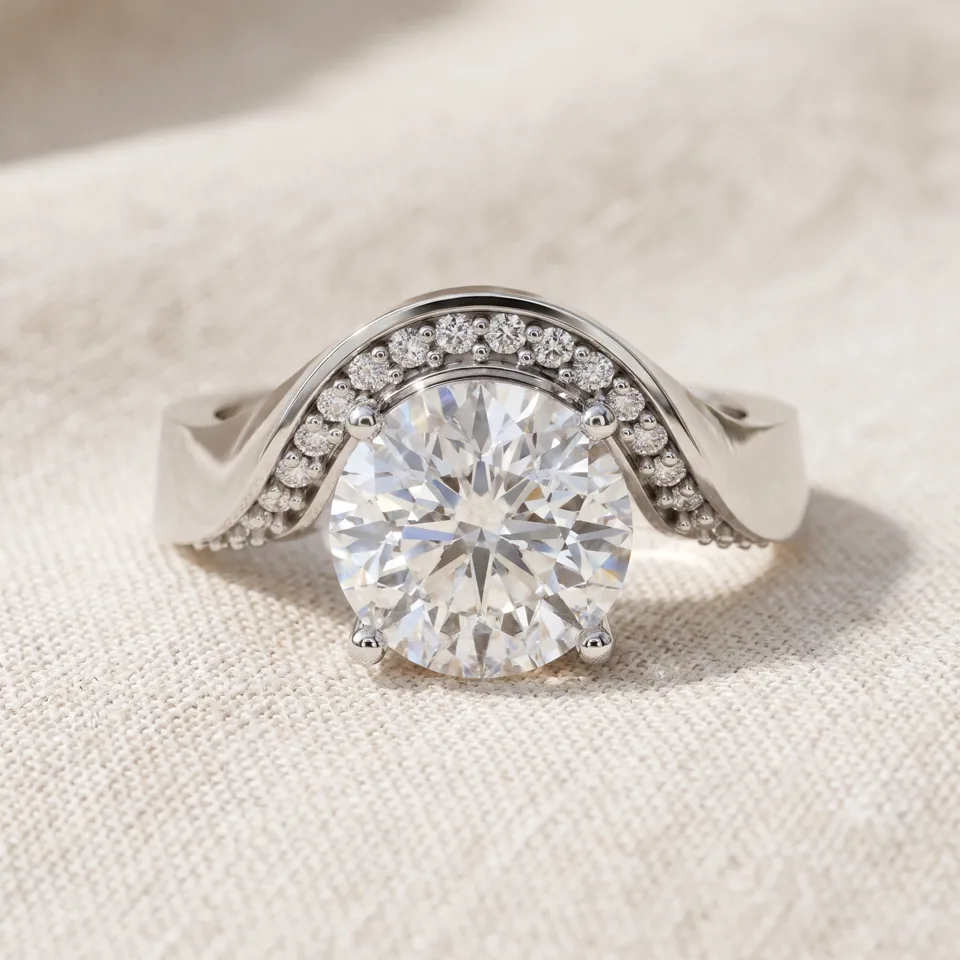 Bypass Solitaire Engagement Rings
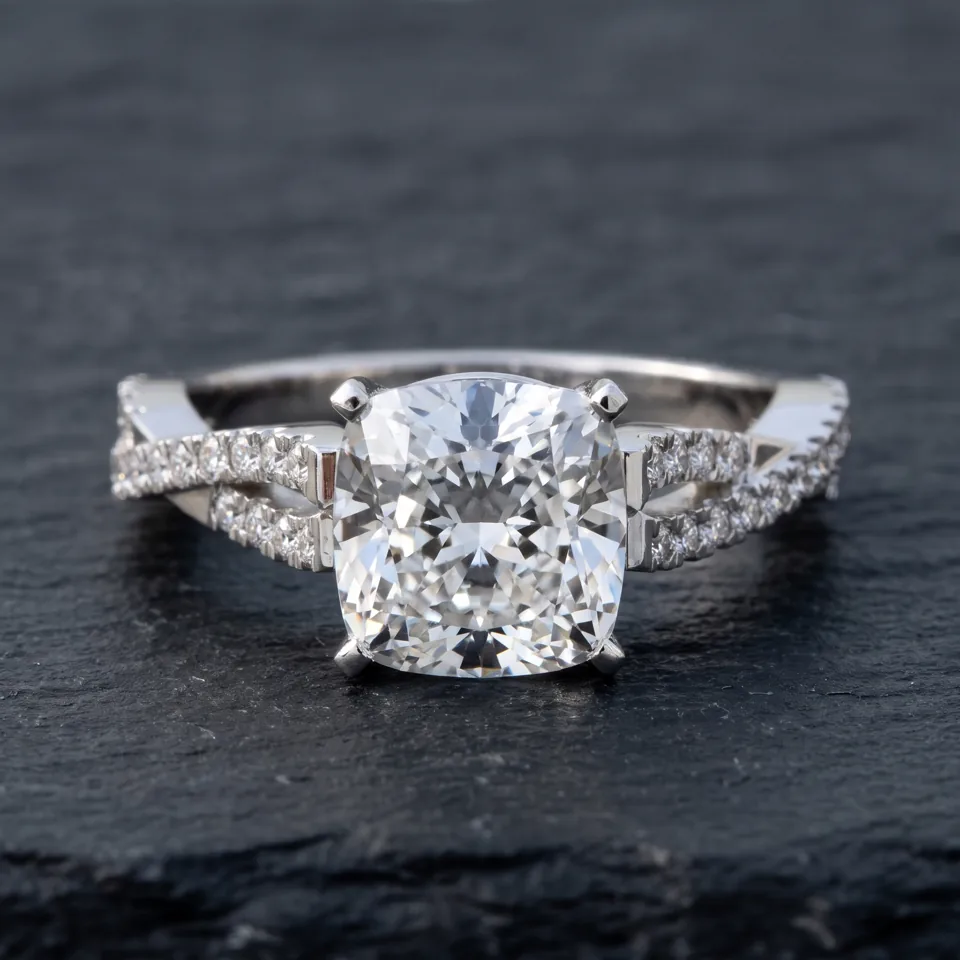 Solitaire Twisted Engagement Rings
A flower prong head turns the claws holding the center into petals, so the bloom shows from above. Sculpted leaves can also sit at the shoulders, where shank and head join. A vine twist band wraps the whole shank. Some designs pave the leaves with laboratory-grown diamond accents; others leave them in polished metal for a cleaner, sculptural look.
Bands on these designs range from 1.8 mm to 2.8 mm, with 2 mm the most common. A slim band lets the center look larger and suits small hands. A wider band gives the floral detail more room and wears better over time. If you plan to add a wedding band, a slimmer floral solitaire leaves space for it.
Oval, pear, marquise, cushion, round and princess fit every design, and heart, emerald, radiant and Asscher fit nearly all. Pear and marquise centers look like a single petal or leaf and suit the theme well. Colored centers fit every design too (green, blue, pink, yellow), with black on some.
Each design is offered in white, yellow or rose gold (10K, 14K or 18K), platinum, and Silvadium, a tarnish-resistant sterling silver. Settings start under $200, and most cost between about $750 and $1,200. The center is priced separately.
Each setting is crafted after you order, in 10–15 days, and the center diamond comes with an IGI or GIA report. We cover free insured shipping both ways, accept returns for 30 days and resize once for free within 60 days of delivery.