Complimentary insured shipping, both waysEngagement ring diamonds certified by IGI or GIAGrown by light. Conflict-free by natureComplimentary insured shipping, both ways
Engagement RingsWedding BandsEarrings
NecklaceBraceletsAbout
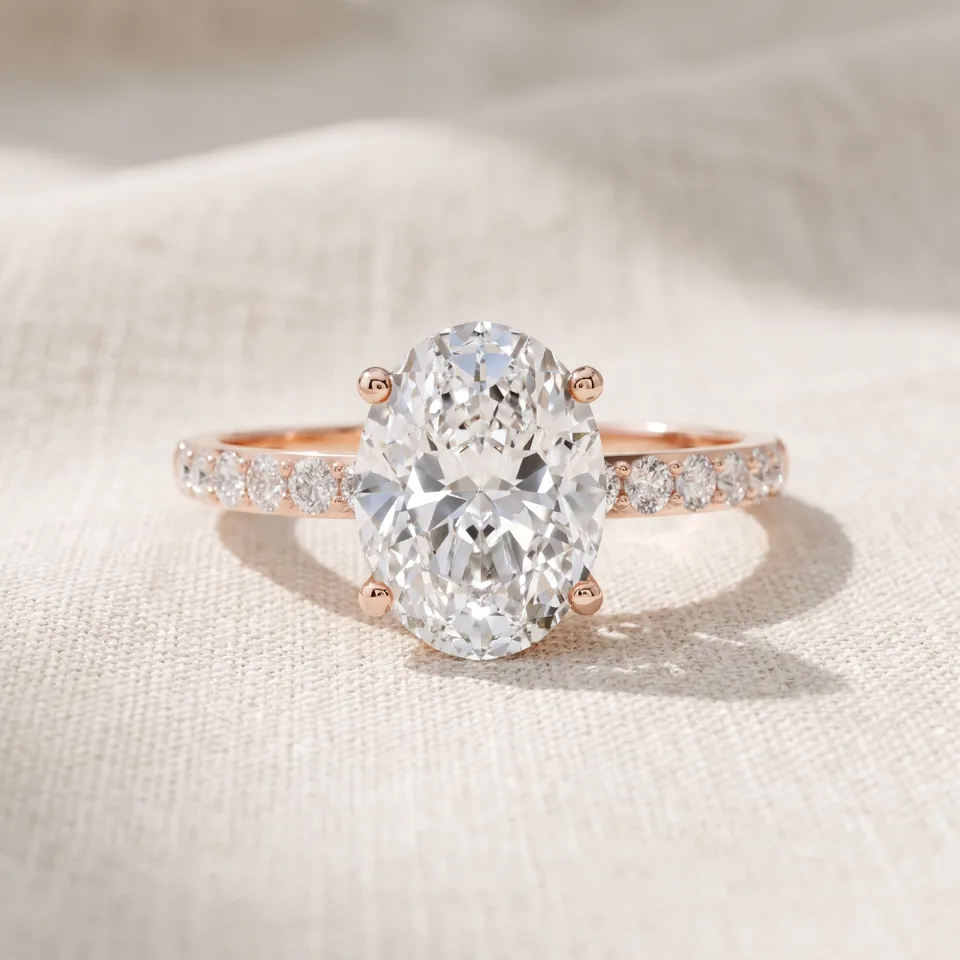
A rose gold 1 ct engagement ring from this page reaches you with its 1-carat laboratory-grown diamond already mounted; the stone's cost is built into what you see. Ten center shapes are open on each design, running from round through oval, pear and heart to Asscher.
Settle the outline first, then the band and karat. Pink gold around a 1 carat lab-grown diamond ring makes the white stone pop.
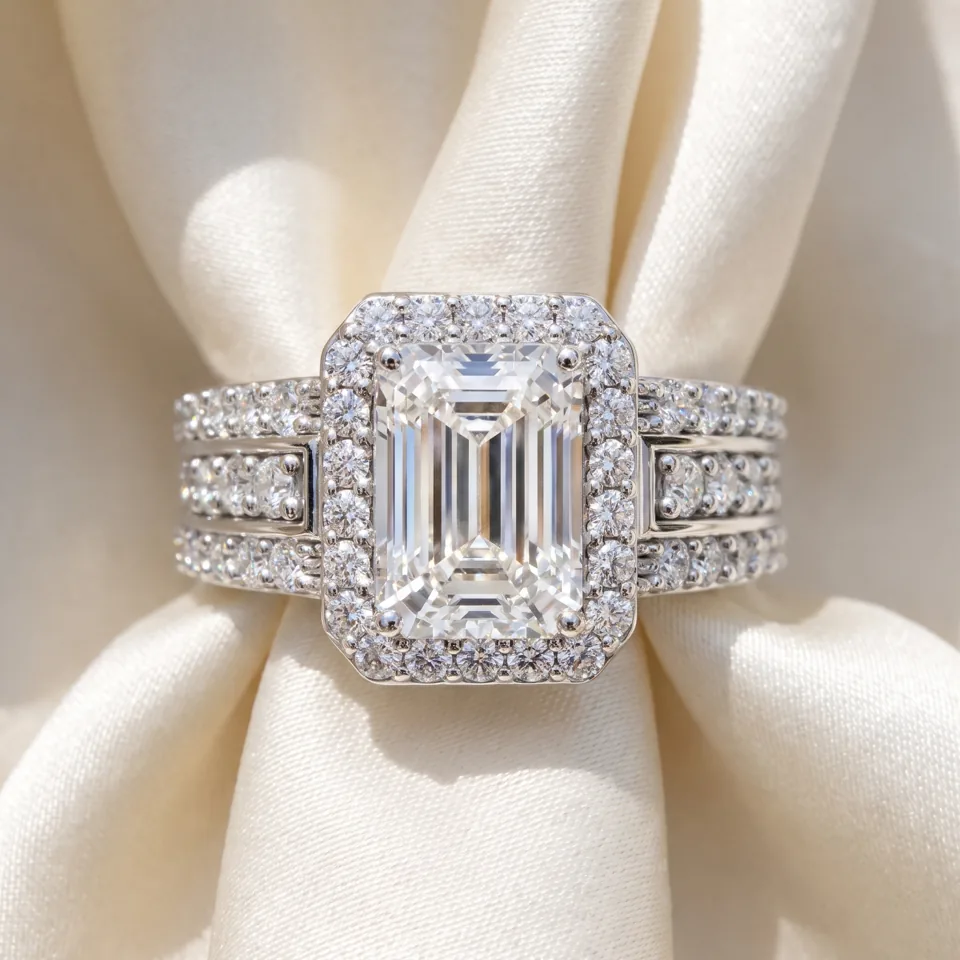
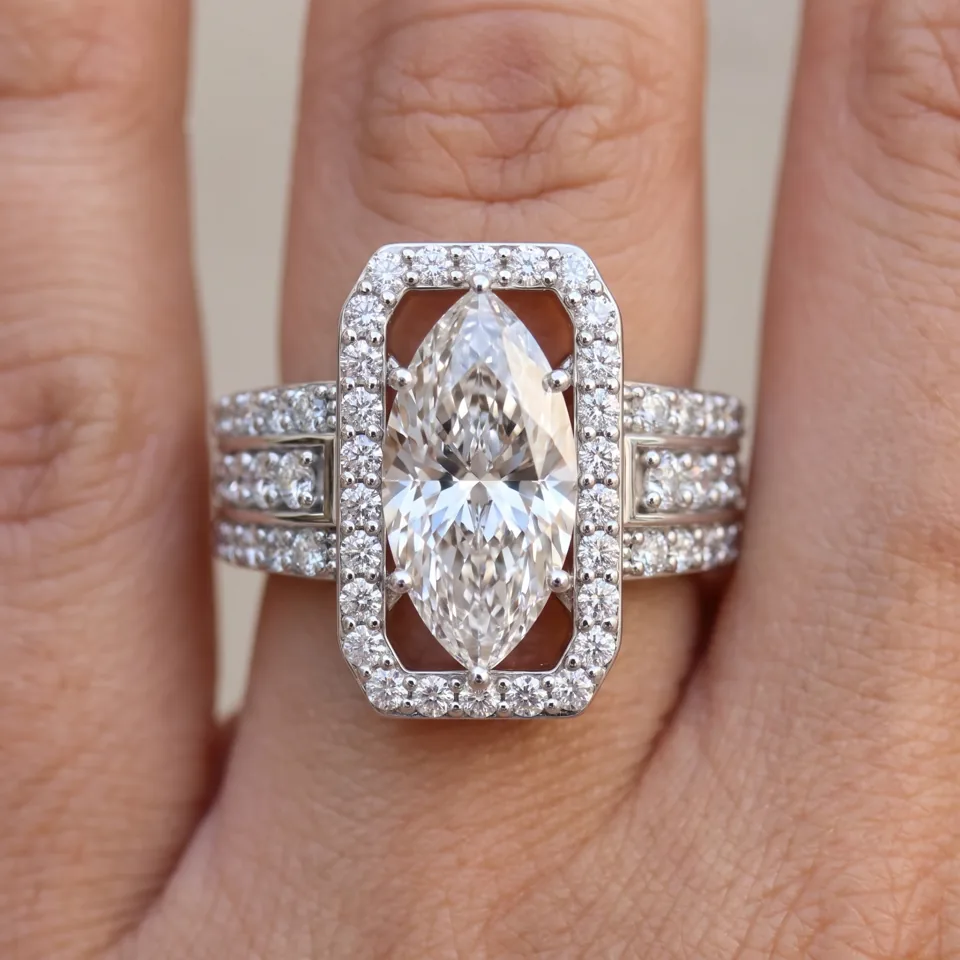
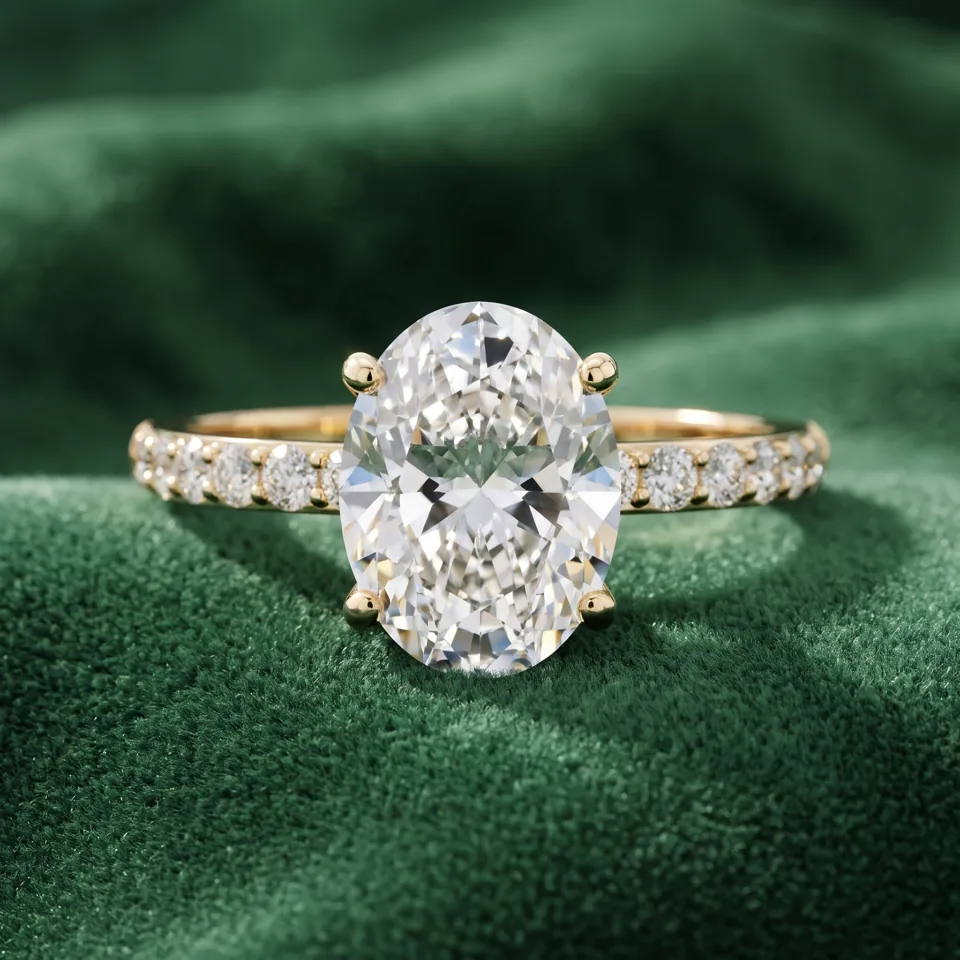
A round 1-carat lab-grown diamond spans roughly 6.5 mm. Oval, pear and marquise outlines pull that weight lengthwise, so they look longer on the hand. Emerald and Asscher step cuts show wide, mirror-like facets and a quieter flash, and princess and cushion fall between the two. A heart reads clearly at one carat, while much smaller hearts tend to blur.
Solitaire, side stones or a halo
Roughly half the range is solitaire: a smooth shank, or one fine line of pave. The rest bring in pear or marquise accents along the shoulders, a three stone row, a hidden halo tucked beneath the center, or a full halo above a three-row pave shank. Accents stretch the visual size of a 1-carat center. A bare shank keeps every eye on the stone and lets a wedding band sit snugly.
Rose gold karat and band width
10K: the softest pink color and the most durable alloy
14K: a clear blush, popular for daily wear
18K: the richest rose hue, a little more prone to scratches
Every design can be ordered at 2.2 mm, and many at 1.8 mm or 2 mm, with a 2.5 mm option on a few. Thin shanks flatter the center; broader ones feel solid.
Ordering from Whitemoon
Your ring is set and finished for you in 10–15 days, and the lab-grown center comes with an IGI or GIA report. Free insured shipping covers the trip to you and any return, returns are open for 30 days on unworn rings, and one resize is free within 60 days of delivery.